




Abstract
Aim: In this study, the effects of erdosteine (ED) on the platelet function and coagulation were investigated in adult rats. Materials and Method: Twenty-eight male Wistar albino rats were divided into four groups. The control rats in group I (n = 7) were given only 0.5 cc of normal saline daily through oral gavage. Group II (n = 7) rats were administered 3 mg/kg ED through oral gavage for 3 days; while group III (n = 7) rats were given 10 mg/kg ED through oral gavage for 3 days; and group IV (n = 7) rats were administered 30 mg/kg ED through oral gavage for 3 days. Prothrombin time (PT), activated prothromboplastin time (aPTT), international normalized ratio (INR), coagulation factors and complete blood counts were measured from the blood drawn. Results: There were a lot of differences between ED groups and control group, and among ED groups. The found differences were level of PT, aPTT, INR, coagulation factors, and number of platelets. Discussion: We consider that ED which is used as a mucolytic agent in child clinics may affect hemostasis and coagulation in a dose-dependent manner. ED should be used carefully by the patients with coagulation disorders, since there is no information available in the package insert and literature screening regarding the effect of ED.
Keywords
Introduction
Erdosteine (ED) is a derivative of thiol which belongs to the same group as that of acetyl cysteine. ED belongs to the group of mucolytic drugs and is also known for its antioxidant activity. 1 ED is a widely used agent in adult and child polyclinics as a mucolytic for the acute inflammation of sinusitis, chronic obstructive bronchitis and chronic bronchitis. When prescribing ED syrup for children, it is generally recommended to be used for 3–5 days. The toxicity studies performed have shown the antioxidant-protective activity of ED. 2 ED produces three active thiol group metabolites quickly as soon as it enters the body. 3 The first one is N-thioglycolyl-homocysteine (metabolite I), the second one is N-acetyl-homocysteine (metabolite II) and the third one is homocysteine (metabolite III). ED a thiol derivative, and N-acetylcysteine have mucolytic and antioxidant effects through their common metabolite N-thioglycolyl-homocysteine. Due to these properties, ED is used in children. 3,4
There is no information available in the package insert and literature screening regarding the effects of ED on the hemostasis and coagulation. However, there are data concerning abnormal hemostasis and coagulation in relation to the instability of the disulfide bond with N-acetylcysteine protein. 5 The increased homocysteine, which is found among the metabolites of ED, a derivative of thiol, containing disulfide bond, may increase the aggregation of platelets via inducing the adenosine diphosphate. 6
In this study, the effects of ED on the functions of platelets and coagulation were investigated in adult rats. Also, the complete blood count observations were included in the study.
Materials and method
This experimental study was performed in Mustafa Kemal University Medical Faculty Experimental Research and Application Center upon the approval of the ethics committee. Twenty-eight male Wistar albino rats were used in our study. The rats were fed with water and standard pelleted feed under optimum conditions in standard rat cages. The cages, beds, feed and water were sterilized before use, the room temperature was kept between 24°C and 27°C, and the lights were arranged to ensure 12 hours of day time and 12 hours of night time. Before initiating the experiment, the rats were weighed and the ones weighing 180–200 g were randomized into four groups.
Rats in group I (n = 7) were administered 0.5 cc of normal saline daily through oral gavage for 3 days. Rats in group II (n = 7) were administered 3 mg/kg/day ED through oral gavage for 3 days. Rats in group III (n = 7) were administered 10 mg/kg/day ED for 3 days. Rats in group IV (n = 7) were administered 30 mg/kg/day ED through oral gavage for 3 days. One ERDOSTIN® capsule was prepared at an appropriate concentration by diluting with sodium bicarbonate (NaHCO3). At the end of the fourth day, the rats were incised through the midline following the subcutaneous (sc) administration of general anesthetics with ketamine HCl (50 mg/kg) and xylasin HCl (15 mg/kg). Their blood samples were collected from the inferior vena cava. The animals were killed during the blood collecting process.
The blood samples collected were immediately placed in the tube containing 3.8% sodium citrate (a mixture of 4.5 ml blood sample and 0.5 ml citrate) for coagulation analyses. Plasma samples were collected by centrifuging at 3000 g for 10 min. Prothrombin time (PT), activated prothromboplastin time (aPTT), and international normalized ratio (INR) were measured by using the automated coagulation analyzer (automated coagulation analyzer system, Biomeireux I.C., USA). The normal range of reference was as follows: PT: 10–15 s, aPTT: 23–38 s, INR: 0.8–1.2. In respect of the peripheral smears, all areas were evaluated by light microscopy, and platelet counts, their sizes and aggregation tendencies were investigated and examined to analyze whether there was any statistically significant difference between the groups.
The mean values obtained were established as ± standard error. SPSS 12 statistics program was used to establish the statistical significance levels of differences between the mean values, and p < 0.05 was considered as statistically significant.
Results
The platelet count was found higher in the groups administered ED compared to the control group (p < 0.01). The highest ratio was found in ED 10 mg/kg among the groups who were administered ED (p < 0.01; Figure 1). The INR was higher in the ED groups when compared to the control, independent of the dose (p < 0.01; Figure 2). A significantly increased aPTT was detected in ED 3 mg/kg groups with regard to the other groups (p < 0.05; Figure 3). When the platelet counts were examined, the platelet counts of the rats in ED 10 mg/kg group were found to be significantly lower than those of the other ED groups (p < 0.05; Figure 4). The levels of factors II, VII, IX and X coagulation were also examined from the blood sample obtained. The levels of factor II were significantly lower in ED 10 mg/kg and ED 30 mg/kg groups when compared to the control group and the low-dose ED 3 mg/kg (p < 0.01). The level of factor VII was significantly reduced only in ED 3 mg/kg group when compared to the control group (p < 0.01). The level of factor VII were significantly lower in ED 3 mg/kg group compared to all groups and were significantly higher in ED 10 mg/kg group compared to other ED groups. The levels of factor X were significantly lower compared all groups and were found significantly higher in ED 3 mg/kg group compared to the ED 10 mg/kg and Ed 30 mg/kg groups. When no significant difference was observed between the factor IX levels of all groups, a significantly reduced level of factor X was seen only in ED 10 mg/kg group when compared to the control group (p < 0.01; Table 1). Additionally, the white blood cell (WBC), lymphocyte, neutrophil, hemoglobin (Hb) and hematocrit (Hct) levels were examined using the blood samples collected from the rats. While no difference was detected in any of the groups in terms of WBC, Lenfosit, Hb and Hct levels with respect to the control group, only the neutrophile count of ED 10 mg/kg group was statistically significantly reduced compared to ED 3 mg/kg and the control groups (Table 2).
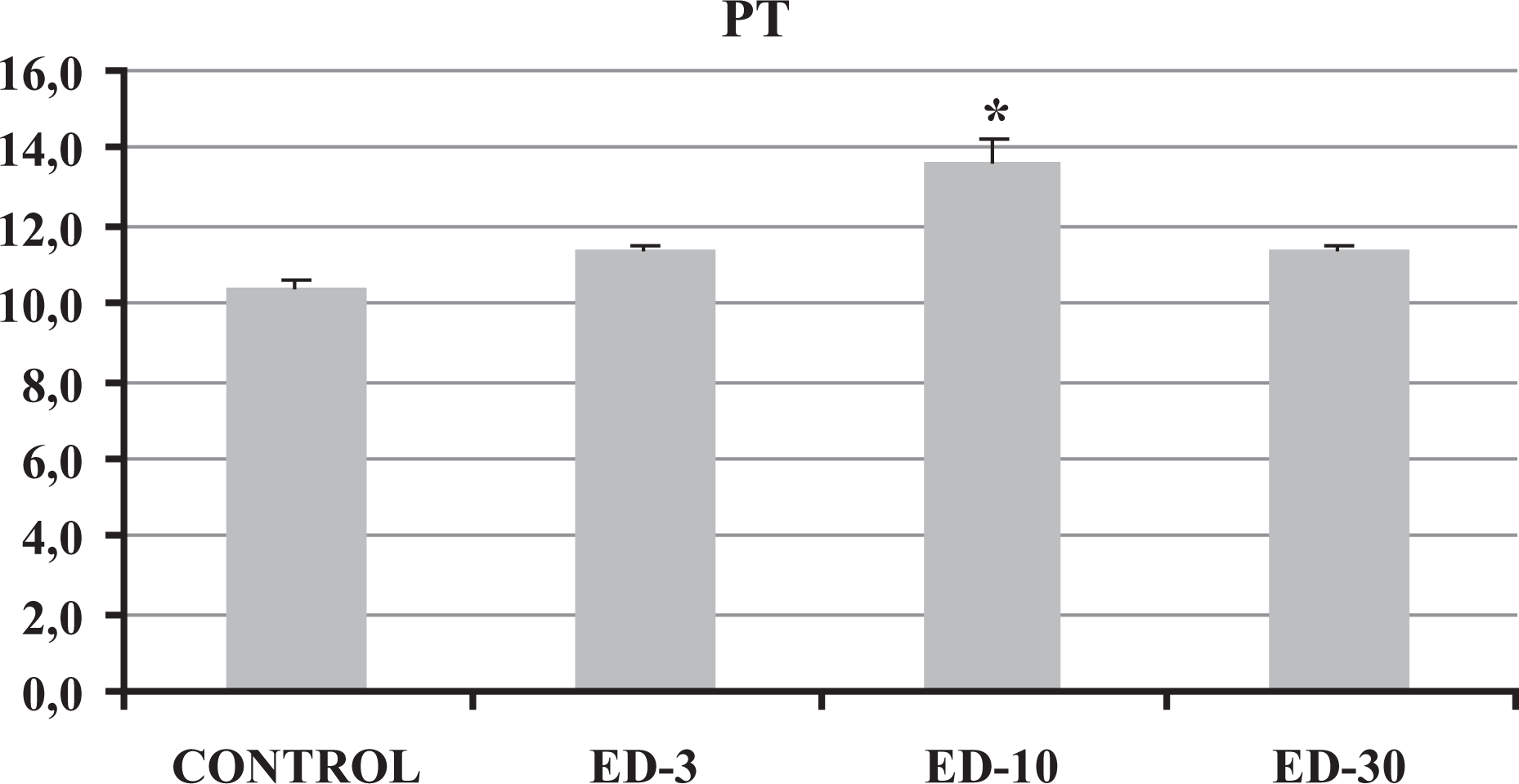
Prothrombin time in all groups. *: p < 0.05 when compared with the control group (ED-3: erdosteine 3 mg/kg group, ED-10: erdosteine 10 mg/kg group, ED-30: erdosteine 30 mg/kg group).
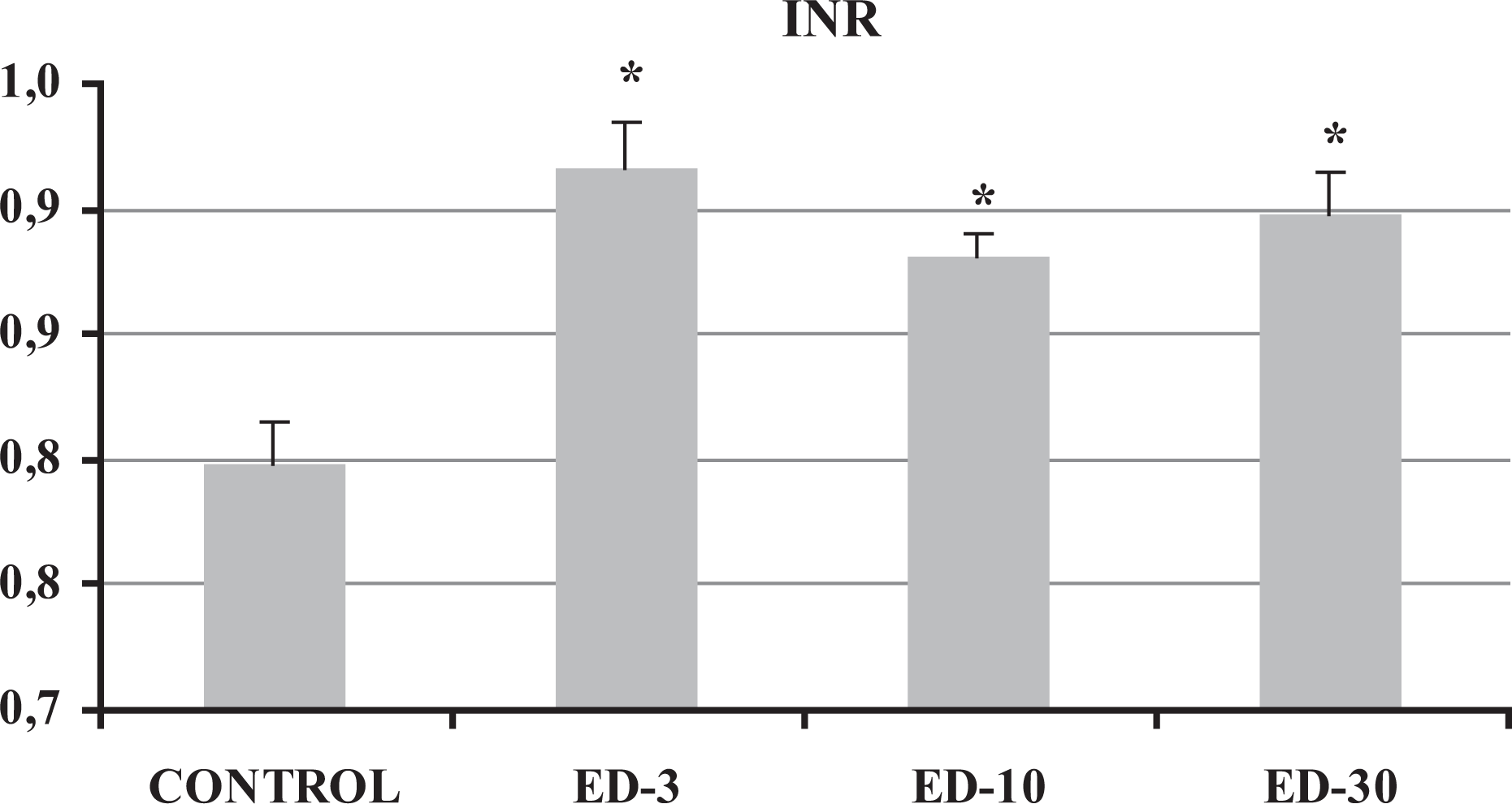
Levels of international normalized ratio (INR). *: p < 0.05 when compared with the control group (ED-3: erdosteine 3 mg/kg group, ED-10: erdosteine 10 mg/kg group, ED-30: erdosteine 30 mg/kg group).
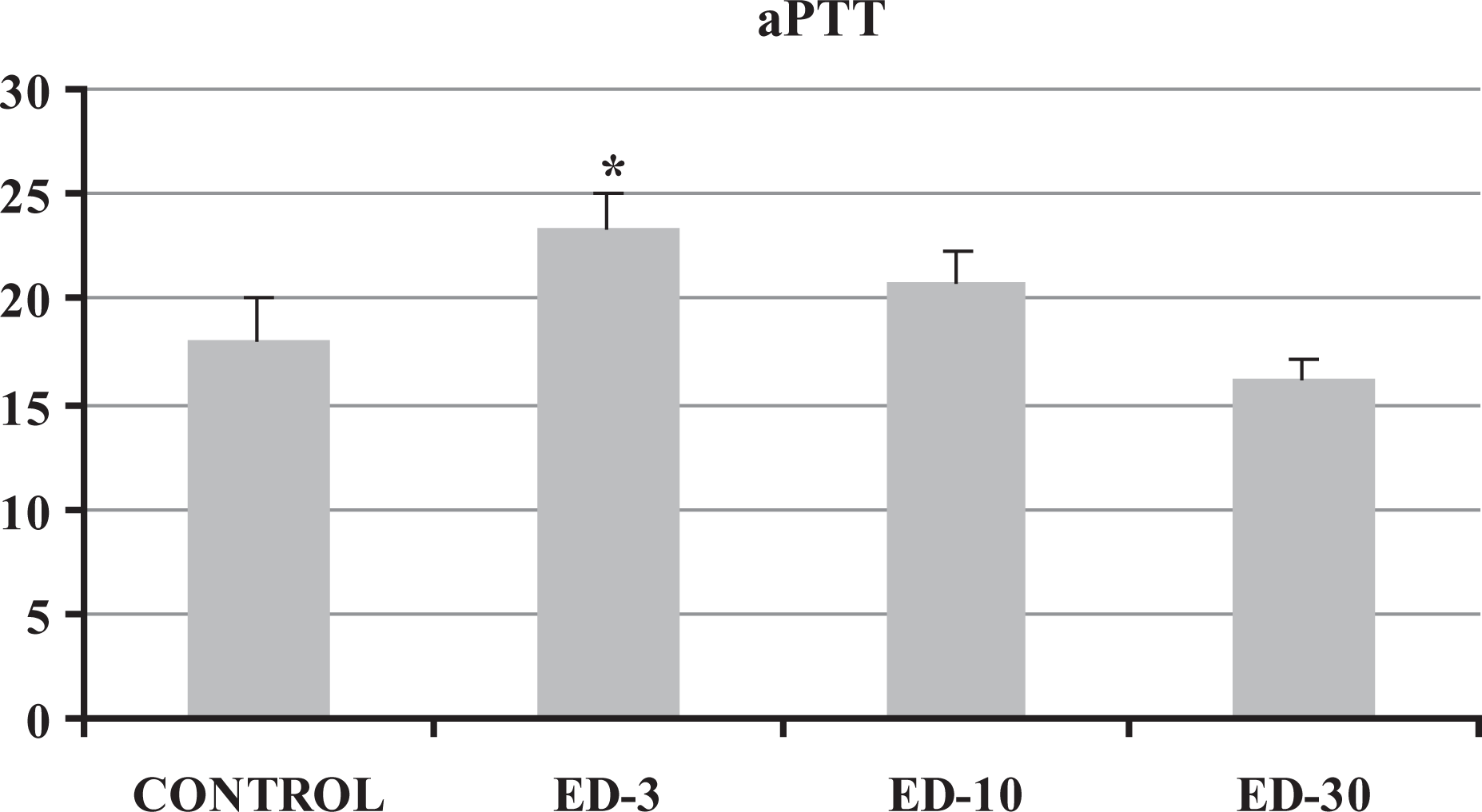
Level of activated prothromboplastin time (aPTT). *: p < 0.05 when compared with the other groups (ED-3: erdosteine 3 mg/kg group, ED-10: erdosteine 10 mg/kg group, ED-30: erdosteine 30 mg/kg group).

Levels of platelets (PLAT; X1000). *: p < 0.05 when compared with the ED-10 group (ED-3: erdosteine 3 mg/kg group, ED-10: erdosteine 10 mg/kg group, ED-30: erdosteine 30 mg/kg group).
Values of factors II, VII, IX and X for all groups a
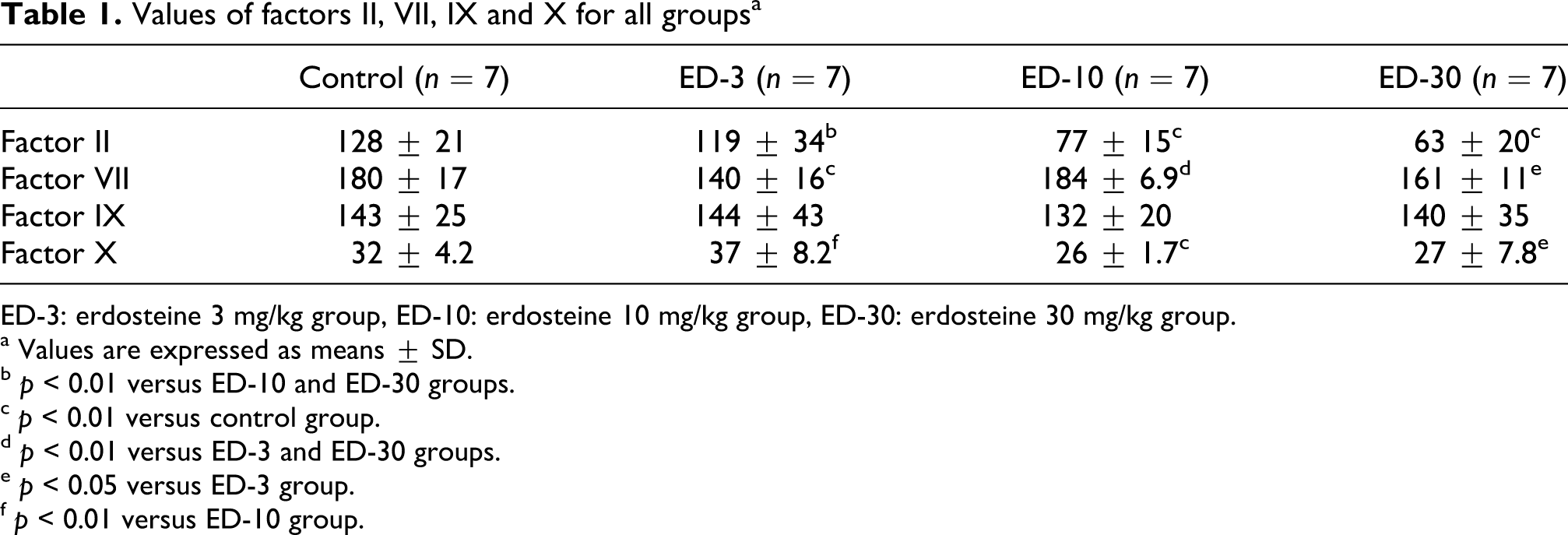
ED-3: erdosteine 3 mg/kg group, ED-10: erdosteine 10 mg/kg group, ED-30: erdosteine 30 mg/kg group.
a Values are expressed as means ± SD.
b p < 0.01 versus ED-10 and ED-30 groups.
c p < 0.01 versus control group.
d p < 0.01 versus ED-3 and ED-30 groups.
e p < 0.05 versus ED-3 group.
f p < 0.01 versus ED-10 group.
WBC, neutrophil, lymphocyte, Hb and Hct levels for all groups a

Hb: hemoglobin, Hct: hematocrit; WBC: white blood cell, ED-3: erdosteine 3 mg/kg group, ED-10: erdosteine 10 mg/kg group, ED-30: erdosteine 30 mg/kg group.
a Values are expressed as means ± SD.
b p < 0.05 versus ED-3 and control groups.
Discussion
Having been developed for the treatment of lung diseases, ED (N-carboxymethylthioacetyl- homocystein) belongs to the group of mucolytic drugs with known effects of diluting and regulating the mucous secretion and increasing mucociliary transport. 3,4 In addition, ED has a preventive effect on the production of free radicals and an inhibitory effect on the elastase enzyme activity. 7,8 The protective effects of ED on the respiratory tracts have been revealed through the human studies and the studies performed on experimental animals. 9,10
During the investigation of the effects of ED on testicular toxicity in young rats caused by methotrexate, the blood collected from the rats which were administered ED was observed to coagulate quickly, to be collected hardly and in a small amount when compared to the control group. 2 There is no information available neither in the package insert nor literature screening regarding whether ED has any effects on the hemostasis and coagulation. Another study performed on young rats indicated that ED may have effects on hemostasis and coagulation. Therefore, we have decided to research thoroughly the effects of ED on hemostasis and coagulation, including the hemogram and coagulation factors.
Our previous studies performed on young rats demonstrated that different unknown coagulation mechanisms of ED were activated in a dose-dependant manner, affecting the hemostasis. 11 However, there is no information available concerning the effect of ED on hemostasis and coagulation in literature. However, there are literature data regarding abnormal hemostasis and coagulation in relation to the instability of the disulfide bond with N-acetylcysteine protein in people. 5 The increased homocysteine which is among the metabolites of ED, a derivative of thiol, containing disulfide bond may increase the aggregation of platelets via inducing the adenosine diphosphate. 6
ED and N-acetyl cysteine have many common points such as thiol group and disulfide group affiliations, strong antioxidant effects and similar areas of use in clinical and polyclinical practices as mucolytics. N-acetylcysteine has been reported in the literature to be effective on the levels of particularly factors X, II, V, VII and IX. 12–14 In a study performed by Knudsen et al. 5 in which they administered healthy individuals a therapeutical dose of N-acetyl cysteine through intravenous route, they established reduced levels of factors II, VII, IX and X in the patients. Similarly, our study also showed decreased levels of factors II and VII. While a statistically significantly decreased level of factor X was detected in ED 10 mg/kg group, no significant difference was observed in the factor X levels of the other groups and factor IX levels of all groups.
The study performed by Knudsen et al. 5 is an important study demonstrating the relationship between N-acetyl cystein and coagulation and hemostasis in which they showed that extrinsic pathway was disrupted extending PT. In parallel with this study, our study also revealed that ED results in the extension of PT in a dose-dependent manner. PT and INR values were observed to be significantly increased particularly in ED 3 mg/kg group as distinct from the other groups.
Arica’s study showed that platelet aggregations were observed in the peripheral smears. 11 In our study, the difference in platelet counts was determined. There is no diversity between control and ED 10 mg/kg group. Inversely, ED 3 mg/kg group and ED 30 mg/kg group was different from the control group. But there was significant difference with ED 10 mg/mg group.
Jepsen et al. 15 and Burns et al. 16 demonstrated that the administration of N-acetyl cysteine did not have any effects on aPTT value in their particular studies. 15,16 In our study, a significantly increased level was only detected in 3 mg/kg group. However, ED was indicated not to affect aPTT value in other groups.
In the literature, N-acetylcysteine has been reported to be effective on factors II, V, VII and IX but mainly on factor X. 17–19 In our study, we observed, factor levels were affected by ED. Dose-related changes were determined for factors II, VI, X and platelets.
ED is known to have a protective effect through its antioxidant activity when administered to rats via oral route. 12–14,20 Nevertheless, no scientific study was performed or no package insert information is available concerning the effects of ED on coagulation and hemostasis. This study is one of the first studies in literature, demonstrating the effects of ED on hemostasis and coagulation mechanisms in a dose-dependent manner. On the basis of the results obtained in this experimental study, hemostasis and coagulation disorders caused by ED in a dose-dependent manner, which is constantly prescribed as a mucolytic in polyclinics, should be taken into consideration. We consider that more extensive studies about ED are necessary to be performed in order to support the results concluded in this study.
Footnotes
This research received no specific grant from any funding agency in the public, commercial, or not-for-profit sectors.