




Abstract
Furtherance to a previous report on the anti-trypanosomal properties of Psidium guajava aqueous leaf extract in rats experimentally infected with Trypanosoma brucei brucei, we have evaluated the effects of the daily intraperitoneal administration of P. guajava leaf extract to rats on the activities of alkaline phosphatase (ALP), aspartate aminotransferase (AST), alanine aminotransferase (ALT) and acid phosphatase (ACP) in the kidney, liver and serum. The results obtained revealed that the administration of the extract produced significant increase in the serum activities of AST, ALT, ALP and ACP when compared with the control (p < 0.05). Also AST, ALT and ALP and ACP activities in the tissues of animals administered the extract revealed inconsistent changes (p < 0.05) relative to control. The increase in the serum activity of ALP may be an indicator that there was a likely compromise to the integrity of the plasma membrane as a result of the ethanolic extract administration. This could have caused leakages of the other enzymes investigated, which may explain the corresponding increases in the serum activities of AST, ALT and ACP observed.
Introduction
The growing interest in herbal medicine 1 demands information on the toxicity implications of the various plant preparations used in the management of diseases. 2 Scientific evaluation of medicinal plants thus becomes a requirement to the discovery of novel drugs and also helps to assess toxicity risks associated with the use of either herbal preparations or conventional drugs of plant origin. Recently, we reported the anti-trypanosomal activity of the crude extract of Psidium guajava in experimental infections involving rat models. 3
P. guajava is a tropical plant belonging to the family Myrtaceae. Besides its broad spectrum antimicrobial activity, 4 other reports 5,6 indicated that P. guajava leaf extracts possess strong antioxidant and anti-inflammatory properties. Previous studies have demonstrated that P. guajava leaf extracts comprise effective source of natural antioxidants. 7 Preliminary studies have also implicated P. guajava extracts as having excellent anti-inflammatory and analgesic properties. 8 P. guajava extract is rich in tannins, phenols, triterpenes, flavonoids, essential oils, saponins, carotenoids, lectins, vitamins, fiber and fatty acids. 3,9 Phytochemicals confer pharmacological relevance on plants generally 10 and much of P. guajava's therapeutic activity may be attributed to the presence of these bioactive components. 3,11,12 Consequent upon the anti-trypanosomal activity of ethanolic extract of P. guajava, 3 this study was designed to evaluate and provide further scientific information on the safety/toxicity risk potential of the extract of P. guajava leaves on the liver and kidney of albino rats by assaying for the activities of selected marker enzymes. The enzymes considered in this study are useful marker enzymes of liver and/or kidney damage. 13 –17
Materials and methods
Forty Wister rats of average weight between 180 g-200 g were obtained from the small Animal Holding Unit of the Department of Biochemistry, University of Ilorin, Nigeria. The enzyme assay kits for acid and alkaline phosphatases, alanine and aspartate aminotransferases were as supplied by Randox Laboratories Limited, United Kingdom. Other reagents used were of analytical grade and were all prepared in double glasswares using distilled water except otherwise stated.
Plant authentication and extract preparation
P. guajava leaves were harvested at a local farm in Ilorin, Kwara State, Nigeria. The leaves were identified and authenticated at the Herbarium Unit, Department of Plant Biology, University of Ilorin, Nigeria, where the specimen voucher was also deposited for reference purpose. Sample of the leaves were air dried and ground into powder form using a shear blade electric blender. A known weight of the pulverized leaves was soaked in 80% ethanol (v/v) for 24 hours after which it was filtered and concentrated at 40°C according to the method described by Vieira et al. 18 The concentrate was then evaporated to dryness at room temperature to obtain a dry sample matter. An aqueous preparation of the extract corresponding to the reported trypanosome parasite clearance curative dose of 150 mg/kg body weight 3 was then made in distilled water before intraperitoneal administration to the rats. The dosage was chosen based on previous report 3 and following preliminary studies (not shown here).
Animal grouping/treatment
The rats were kept in plastic cages in well-ventilated house conditions (12 hour light and 12 hour dark cycle) with free access to normal rat pellets and clean water. The rats were randomly distributed into two (2) groups of twenty rats each. Rats in Group A were not were not administered P. guajava extract while those in Group B were administered with 150 mg/kg body weight of ethanolic extract of P. guajava. Five (5) rats were sacrificed from each group on days 1, 3, 5 and 7 respectively. All experiments conform to guidelines governing the handling of laboratory animals as laid out by the University of Ilorin Committee on Ethics for Scientific and Medical Research.
Serum and homogenate preparation
Rats were anaesthetized in glass jar containing cotton wool soaked in chloroform and blood samples collected into clean, dry centrifuge tubes by cardiac puncture. Blood samples were allowed to stand for 10 minutes at room temperature and then centrifuged at 1000 rpm for 15 minutes on laboratory centrifuge (SM 800B, Surgifriend Medicals, Essex, England) and the supernatant (serum) was carefully removed with pasteur pipette and stored frozen until needed for further analysis. The kidney and liver were excised, cleansed and then transferred into ice-cold 0.25 M sucrose solution. They were blotted with clean tissue paper and weighed. The tissues were cut finely with clean sterile blade before being homogenized in ice-cold 0.25 M sucrose solution (1:5 w/v) using Teflon homogenizer. The homogenates were kept frozen overnight to ensure maximum release of the enzymes. 19
Enzyme assays
The enzymes: alkaline phosphatase (ALP; EC 3.1.3.1), acid phosphatase (ACP; EC 3.1.3.2), aspartate aminotransferase (AST; EC 2.6.1.1) and alanine aminotransferase (ALT; EC 2.6.1.2) activities were assayed using diagnostic enzyme assay kits prepared by Randox lab. Ltd. 7,20 All measurements were done using UV 75 Series Spectrophotometer (Surgifriend Medicals, Essex, United Kingdom).
Statistical analysis
Data were presented as mean of 5 replicates ± standard error of mean (SEM). Multiple comparisons of the mean values were carried out using one-way analysis of variance (ANOVA) complemented with student t-test. Values of p < 0.05 were considered as statistically significant.
Results
When a foreign substance is introduced into a living system, the body interacts with it in an attempt to get rid of it. Usually, insults by foreign substances are commonly manifested by changes in enzyme levels and other cell components. The enzymes commonly involved include: AST, ALT and ALP.
The effects of administration of ethanolic extract of P. guajava leaf to rats on the activities of AST, ALT, ACP and ALP, respectively, are as shown in Figures 1–12. There was a significant increase (p < 0.05) in the activities of aspartate aminotransaminase, alanine aminotransaminase, ALP and ACP in the serum of all animals treated with ethanolic leaf extract throughout the course of study relative to control. However, inconsistent changes (p < 0.05) were observed for the activities of the same enzymes in the kidney and liver of the animals that received ethanolic extract treatment relative to control animals (Figures 1–12). There was decrease in activities of aspartate aminotransaminase and alanine transaminase in the kidney and liver compared to control group (p < 0.05) (Figures 1 and 2). The changes observed in the activities of aspartate aminotransaminase, alanine aminotransaminase and ACP of animals that received ethanolic extract did not follow a definite pattern although changes (p < 0.05) in the ALP activities in the kidney, liver, and serum did indicate labilization of the plasma membrane when compared to the control group (Figures 7–9).

Effects of daily administration of ethanolic extract of Psidium guajava leaf on the aspartate aminotransferase (AST) activity in rat kidney. Values are mean of five determinations ± SEM. Bars with different alphabets differ significantly at p < 0.05.

Effects of daily administration of ethanolic extract of Psidium guajava leaf on the aspartate aminotransferase (AST) activity in rat liver. Values are mean of five determinations ± SEM. Bars with different alphabets differ significantly at p < 0.05.

Effects of daily administration of ethanolic extract of Psidium guajava leaf on the aspartate aminotransferase (AST) activity in rat serum. Values are mean of five determinations ± SEM. Bars with different alphabets differ significantly at p <0.05.

Effects of daily administration of ethanolic extract of Psidium guajava leaf on the alanine aminotransferase (ALT) activity in rat kidney. Values are mean of 5 determinations ± SEM. Bars with different alphabets differ significantly at p < 0.05.
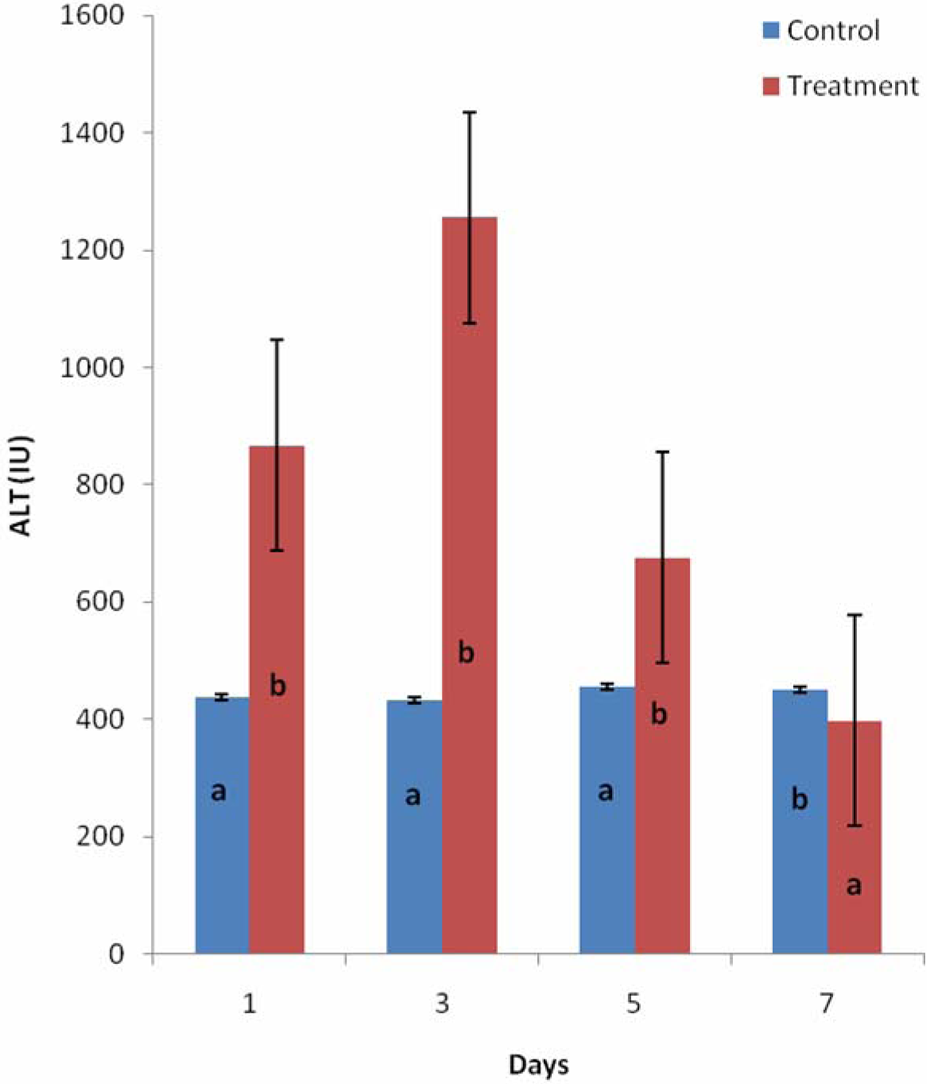
Effects of daily administration of ethanolic extract of Psidium guajava leaf on the alanine aminotransferase (ALT) activity in rat liver. Values are mean of five determinations ± SEM. Bars with different alphabets differ significantly at p < 0.05.

Effects of daily administration of ethanolic extract of Psidium guajava leaf on the alanine aminotransferase (ALT) activity in rat serum. Values are mean of five determinations ± SEM. Bars with different alphabets differ significantly at p < 0.05.
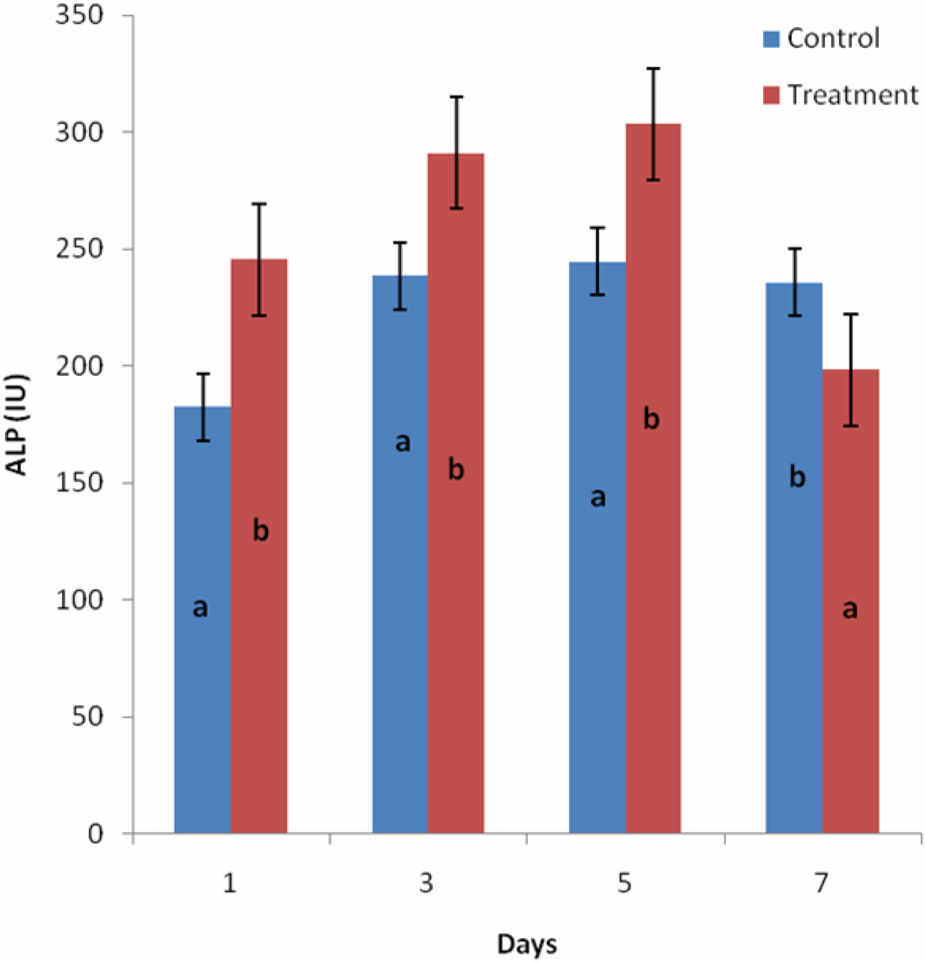
Effects of daily administration of ethanolic extract of Psidium guajava leaf on the alkaline phosphatase (ALP) activity in rat kidney. Values are mean of five determinations ± SEM. Bars with different alphabets differ significantly at p < 0.05.
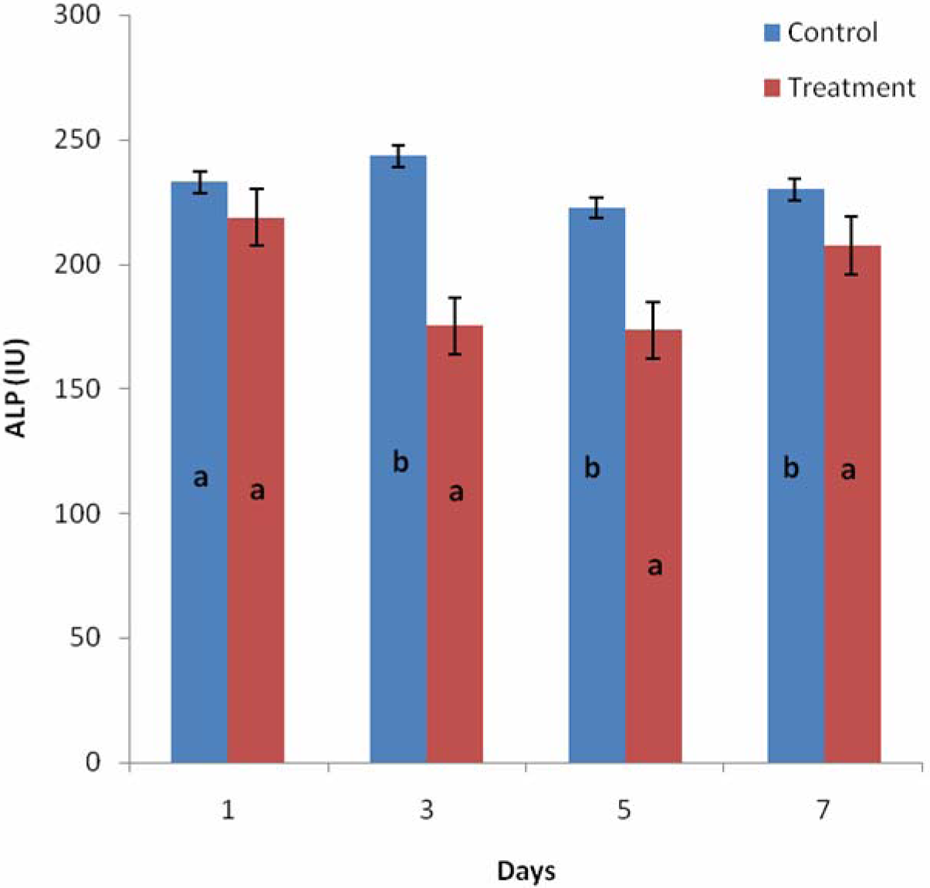
Effects of daily administration of ethanolic extract of Psidium guajava leaf on the alkaline phosphatase (ALP) activity in rat liver. Values are mean of five determinations ± SEM. Bars with different alphabets differ significantly at p < 0.05.
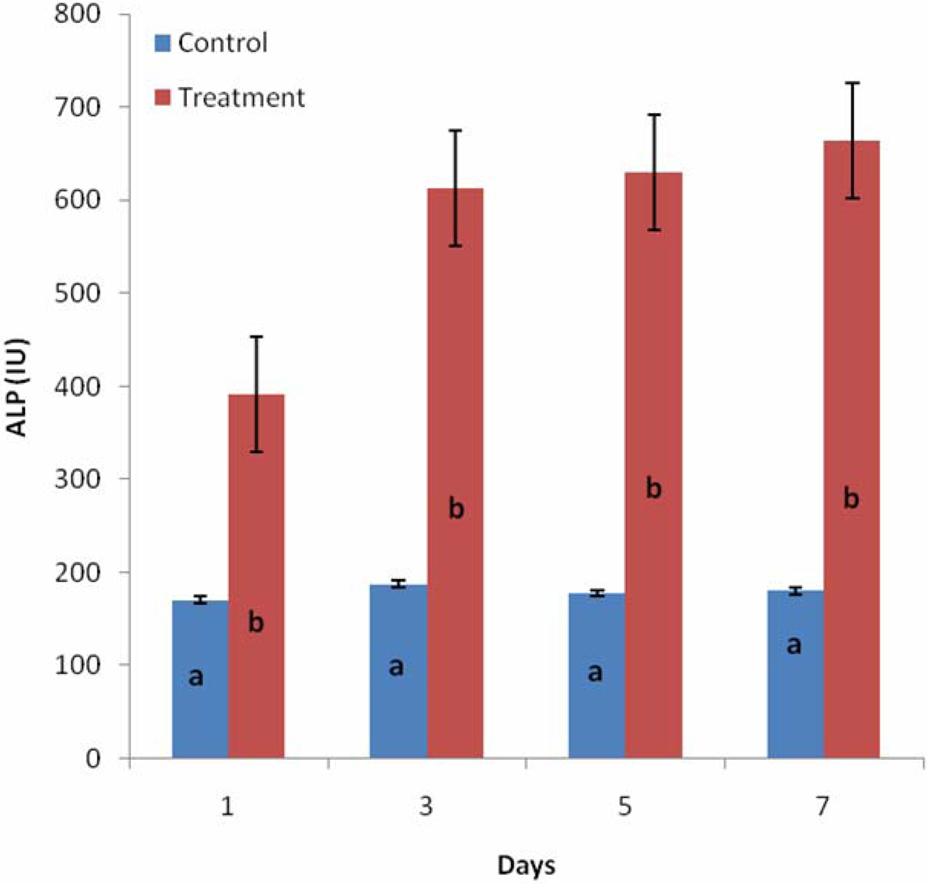
Effects of daily administration of ethanolic extract of Psidium guajava leaf on the alkaline phosphatase (ALP) activity in rat serum. Values are mean of five determinations ± SEM. Bars with different alphabets differ significantly at p < 0.05.

Effects of daily administration of ethanolic extract of Psidium guajava leaf on the acid phosphatase (ACP) activity in the rat kidney. Values are mean of five determinations ± SEM. Bars with different alphabets differ significantly at p < 0.05.

Effects of daily administration of ethanolic extract of Psidium guajava leaf on the acid phosphatase (ACP) activity in the rat liver. Values are mean of five determinations ± SEM. Bars with different alphabets differ significantly at p < 0.05.
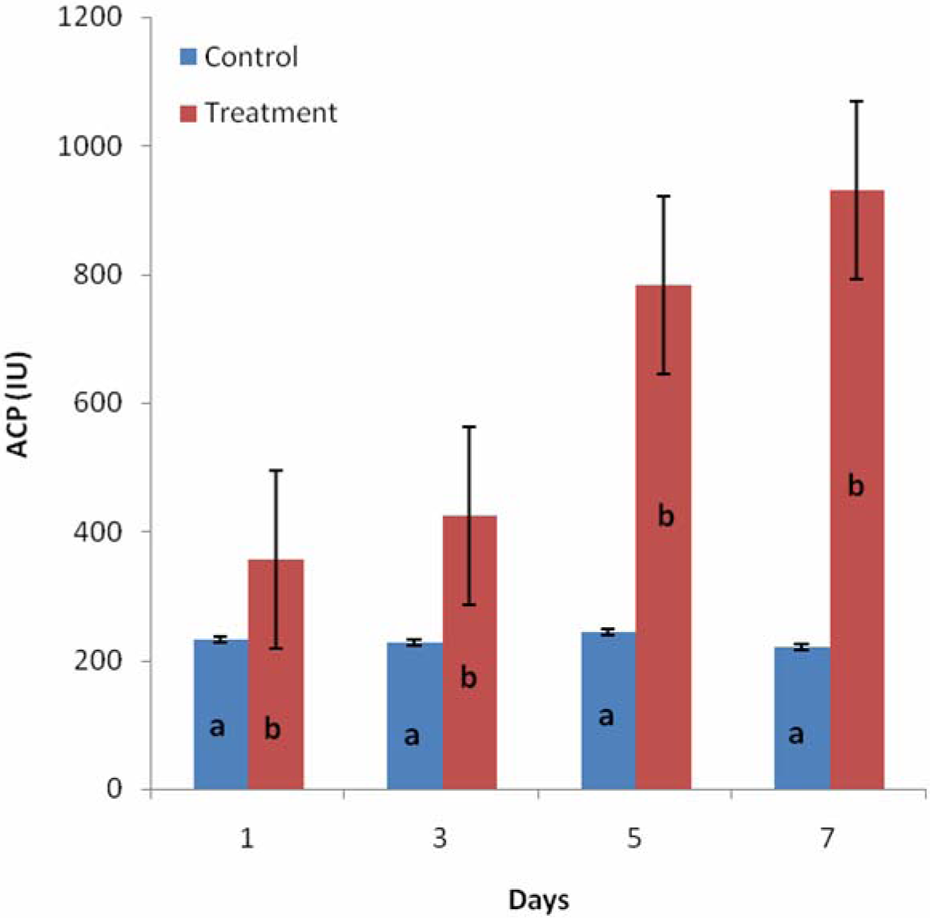
Effects of daily administration of ethanolic extract of Psidium guajava leaf on the acid phosphatase (ACP) activity in the rat serum. Values are mean of five determinations ± SEM. Bars with different alphabets differ significantly at p < 0.05.
Discussion
The measurement of the activities of marker or diagnostic enzymes in tissues plays a significant and well-known role in diagnosis, disease investigation and in the assessment of drug or plant extract for safety/toxicity risk. More so, tissue enzyme assay can also indicate tissue cellular damage long before structural damage is revealed by some other conventional techniques. 21 Tissue damage is usually associated with the release of enzymes from the affected organ or tissue into circulation. The enzymes considered in this study are useful marker enzymes of tissue cytolysis and damage. 14 –17,22,23 ALP is a marker enzyme for the plasma membrane and endoplasmic reticulum. It is often employed to assess the integrity of plasma membrane, 24 since it is exclusive to the microvilli of the bile canaliculi, located in the plasma membrane. Both aspartate aminotransaminase (AST) and alanine aminotransaminase (ALT) are excellent markers of liver damage caused by exposure to toxic substances. 25 AST is not specific for the liver only but is also located in other organs like the heart, brain, kidney and skeletal muscle. ALT is the more liver-specific enzyme for diagnostic use when the integrity of the hepatocellular membrane is compromised, there is extrusion of the enzyme into the plasma. 26 In separate studies 27,28 it has been reported that changes in enzyme levels are a good marker of soft tissue damage. Damage to body cells may result in the alteration of membrane permeability and consequent release of enzymes into the extracellular fluid. The ethanolic extract caused significant increase in serum concentration of AST, ALT, ALP and ACP (Figures 3, 6, 9 and 12) probably as a result of extrusion of these enzymes from tissues that may have been damaged. Elevation of serum ALP activity has been implicated in hepatobiliary diseases 22,29 while increases in serum ALT and AST activities have been indicated in conditions involving necrosis of hepatocytes, myocardial cells, erythrocyte and skeletal muscle cells. 30
The initial increase (p < 0.05) in activities of AST and ALT observed (Figures 1–6) may be as a result of stress likely imposed on the liver and kidney as a consequence of the metabolism and excretion of the extract by the liver and kidney, respectively. 31 The tissues in a bid to offset the stress introduced by exposure to the ethanolic extract could have increased de novo synthesis of the enzymes. Increased activity of various enzymes was reported in some tissues under various conditions of stress. 32 Another possibility may be the stimulatory action of the extract of P. guajava on the enzymes in these tissues, which could arise if the ethanolic extract was capable of reducing oxidative stress. This makes the localized environment conducive, which thus enhanced metabolic activities of these enzymes. 22 The changes (p < 0.05) in activities of ALT and AST in the liver and kidney of rats following administration of P. guajava leaf extract on days 5 and 7 could be due to inactivation of the enzymes by the extract or its metabolites, which might have inhibited the synthesis of the enzymes. It has been suggested that chemical compounds might enter into reaction with key molecules in membranes (enzymes inclusive) and then inactivate or denature them. 22,33 It is also possible that the ethanolic leaf extract caused membrane damage which allowed the enzymes to leak through the cell membrane into extracellular compartment.
Increase in the activity of serum ALP suggests that the integrity of the plasma membrane could have been compromised since corresponding significant alterations were also observed for serum AST, ALT and ACP relative to the control, respectively (Figures 3, 6 and 12). There were inconsistent changes in the liver AST, ALT and ACP activities, which may be indicative of enhancement of enzyme activities as well as leakage into extracellular fluids via altered membrane permeability. Cellular damage arising from plant extract administration can result in leakage of the marker enzymes to the extracellular fluid. 34 Since there was a corresponding significant increase in the serum enzyme activities (Figures 1–12), it may be plausible to infer leakage of the enzymes more so that the pattern of ALP activity (Figures 6–9) did indicate labilization of the plasma membrane. The increased serum AST, ALT and ACP activities may simply be attributed to contribution from the tissues. The serum ACP activity also showed a similar trend with serum ALP activity suggesting that the integrity of the lysosomal membrane in the cells of the various tissues may have been compromised. ACP is a lysosomal enzyme, which is often used to monitor prostatic cancer. 35 AST and ALTs are normally localized within the cells of the liver, heart, gill, kidney, muscles and other organs. The enzymes are of major importance in assessing and monitoring liver cytolysis. Their presence in the serum may give information on organ dysfunction. 36,37 The ethanolic extract of P. guajava leaves produced a significant (p < 0.05) increase in the levels of AST and ALT in the serum (Figures 3 and 6), respectively. Elevation in the treated animals of AST activity may also be associated with necrosis of tissues. For example, pathology involving the skeletal or cardiac muscle and/or the hepatic parenchyma allows for the leakage of large amounts of this enzyme into the blood. 38 Elevated level of ALT, in this study, may indicate hepatic damage caused by the administration of the ethanolic extract of P. guajava leaf. The ratio in the level of serum ALT and AST at times may be adopted as diagnostic of tissue damage. 29 Primary and secondary hepatic tumors have been shown to cause an elevation of both enzymes with AST higher than ALT. The significant increase in serum ALT activity that was observed in all the treated groups could be an evidence of hepatotoxicity caused by the extract. Our results are at variance with a previous report by 39 which demonstrated the hepatoprotective properties of ethanolic extract of P. guajava leaf in acute liver injury induced by carbon tetrachloride. The reason for this difference may not be unconnected with the route of exposure, dose, duration of administration and/or phytochemicals present in the extract administered, which possibly may be a consequence of extraction method employed and environmental differences. 40 More so, a correlation has been made between kidney irritation and/or liver damage and consumption of herbs with high tannin concentrations. 41 Also, in a separate study for safety/toxicity testing of an ethanolic extract in albino rats, it was demonstrated that the toxicity potentials observed could be attributed to the high presence of tannins. 34 The alteration in the serum and tissue enzymes as revealed in this study may be due to the action of phytochemical constituents of the ethanolic extract. 21
Conclusion
Results from this study revealed that intraperitoneal daily administration of the ethanolic extract of P. guajava leaf over a period of 7 days at the dosage of 150 mg/kg body weight could have altered the activities of AST, ALT, ALP and ACP enzymes and also induced their leakage into the extracellular fluid. Whereas there are several studies that demonstrated the medicinal benefits of P. guajava leaf extract. Our investigation has demonstrated that the ethanolic extract of P. guajava leaf was capable of producing alterations in the biochemical parameters investigated.
Footnotes
This research received no specific grant from any funding agency in the public, commercial, or not for-profit sectors.