




Abstract
Diabetes mellitus promoted an overproduction of free radicals and an increased incidence of both diabetic nephropathy and liver disease. In this report, we evaluated the effects of Chinese and Brazilian propolis on streptozotocin-induced hepatorenal injury in rats. The results demonstrated that Chinese propolis-treated rats had a 7.4% reduction in the glycated hemoglobin (HbAlc) level compared with untreated diabetic rats. Additionally, Chinese propolis induced an increase in the serum superoxide dismutase (SOD) level significantly while Brazilian propolis raised serum SOD and reduced level of malonaldehyde (MDA) and nitric synthetase (NOS). Of the measurable decrease in serum alanine transaminase (ALT), aspartate transaminase (AST) and microalbuminuria demonstrated the propolis-mediated improvement of hepatorenal function, which was further confirmed by histological examination. We also observed that Chinese and Brazilian propolis increased hepatorenal glutathione peroxidase (GSH-px) level and inhibited MDA production significantly. These results suggested that propolis may prevent hepatorenal injury by inhibiting lipid peroxidation and enhancing the activities of antioxidant enzymes.
Introduction
Diabetes mellitus or simply diabetes is a metabolic syndrome characterized by hyperglycemia. Long-term hyperglycemia promotes general oxidative stress and increases in the incidence of diabetic nephropathy (DN) and liver disease. 1,2 DN is a microvascular diabetic complication that leads to end-stage renal disease. Multiple factors are involved in the onset of DN; oxidative stress is believed to link these factors. 3,4 Free radicals also prompted the development of liver diseases by inducing hepatocyte apoptosis, hepatic inflammatory response and fibrogenesis. 5,6 Therefore, elimination of free radicals is believed to prevent and treat hepatorenal lesion.
Propolis is a resinous mixture collected from plants by honey bees. Various studies have proved the effects of propolis such as antibacterial, anti-oxidative, anti-tumor, anti-mutative, anti-inflammatory, liver-protective and immunoregulatory. 7 –9 Recent reports indicated propolis mediated a hypoglycemic effect of in diabetes patients and animal model. 10,11 Propolis can ameliorate hepatorenal function by reducing oxidative stress in liver and kidney, 12 –14 but the effect of propolis on hepatorenal function in diabetic rats is uncertain. Some reports have suggested that activity of propolis varied due to constitutes, plant source, geographical origins and collecting bees. 15 –18 Chinese propolis, mainly originating from poplar (Populus sp.), contains multiple kinds of flavonoids and phenolic acid esters, whereas Brazilian green propolis are mainly composed of terpenoids and prenylated derivatives of p-coumaric. 19 In this article, we compared the protective effects of Chinese and Brazilian propolis on hepatorenal function in streptozotocin (STZ)-induced diabetic rats, and the inhibitory effects of propolis on oxidative stress were also analyzed.
Materials and methods
Drugs and reagents
Chinese propolis (mainly from Populus sp.) and Brazilian propolis (green propolis), collected by Apis. mellifera bees, were purchased from Hangzhou BEEWORDS Apiculture Ltd. STZ was purchased from ALEXIS Corporation in Switzerland. Kits to measure the levels of alanine transaminase (ALT), aspartate transaminase (AST), blood urea nitrogen (BUN), creatinine and urine albumin were purchased from DiaSys Diagnostic Systems (Shanghai) Co., Ltd., in China. Kits to measure levels of superoxide dismutase (SOD), glutathione peroxidase (GSH-PX), catalase (CAT), malonaldehyde (MDA), nitric oxide (NO) and nitric synthetase (NOS) were purchased from Nanjing Jiancheng Biology Engineering Research Institute, China. NycoCard(r) HbA1c Test kit were purchased from Axis-shield Poc AS, Norway.
Induction of diabetes mellitus
Male Sprague Dawley (SD) rats (5 weeks old, weighing 230−280 g) were maintained at the Research Center of the Laboratory of Animal Science, Zhejiang College of Traditional Chinese Medicine (Hangzhou, China). The experiments were performed in accordance with the guidelines of Helsinki accord and the Animal Ethics Committee of Zhejiang University. Rats were injected intravenously with a dose of 50 mg/kg STZ. 20 Seven days later, 32 rats with a fasting blood glucose level between 15 and 27 mmol/L were used for experiments. Animal were divided into groups of model, A, B, and positive groups. An additional 8 healthy rats were selected as normal group.
Drug administration
Ethanol extracted propolis were given to rats by oral intubation twice daily, continuously for 8 weeks. The dosage was designed according to daily propolis intake. The group A rats were intubated and treated with a dose of 100 mg/kg Chinese propolis; the group B rats were intubated and treated with a dose of 100 mg/kg Brazilian propolis. The positive group rats were treated with a dose of 10 mg/kg glucobay. Normal group rats and the model group rats were given with 10 mL/kg physiological saline.
Measurements
Every 2 weeks, all rats were fasted for 10 hours prior to collecting blood intravenously for the determination of blood biochemical indexes; then rats were housed in metabolic cages to collect 24-h urine for the measurement of urine biochemical indexes. Serum was isolated by centrifugation at 1000 g for 20 minutes and stored at −20°C for subsequent use. Once rats were sacrificed, hepatic and renal tissues were immediately collected for the evaluation of tissue levels of oxidative stress. Small pre-weighed pieces of liver and kidney were fixed in 4% paraformaldehyde fixative for histological study. Level of BUN, serum creatinine (SCr), urine creatinine and urine microalbumin were common indexes for measuring renal function while ALT and AST are determined clinically as a part of a diagnostic liver function test. These indicators were determined using Hitachi 7,020 entire automatic biochemistry analyzers (Hitachi Co. Ltd, Japan). Level of MDA, CAT, GSH-PX and SOD were measured using BT-815A semi-automatic biochemical analyzer (Shanghai Sanco Instrument Co. Ltd, China). Glycated hemoglobin (HbAlc) was determined using NycoCard Reader II (Axis-Shield Company, Norway). The endogenous creatinine clearance rate (CCR) was calculated from the values of SCr, urine creatinine and total 24-h urine volume. Twenty-four-hour urinary albumin excretion rate (UAER) was calculated by urinary albumin concentration ×24-h urine volume (mL). All the measurements were carried out in accordance with the instructions from manufacturers.
Histopathological study 21
For histology, 4-μm thick paraffin sections of liver and kidney tissues were made for hematoxylin and eosin (HE) staining. H&E-stained slides were visualized under a light microscope (Nikon eclipse 80i) and images were acquired using the attached camera.
Statistical analysis
Results were expressed as means ± SD. Data were analyzed using SPSS 16.0 software. A one-way ANOVA test was performed and post-hoc multiple comparisons were conducted using least significant difference (LSD). Significance was set at p < 0.05 for all analysis.
Results
Effects of propolis on blood oxidative stress, HbAlc, NO and NOS level in diabetic rats
Compared to the normal control animals, the significantly higher HbAlc level in the STZ-treated animals indicated that diabetes was effectively induced (p < 0.01; Figure 1). Chinese propolis-treated rats displayed a 7.4% reduction of HbAlc level (p < 0.05). As shown Table 1 , treatment with either Chinese or Brazilian propolis resulted in reduced oxidative stress in diabetic rats. Compared to model group, Chinese propolis increased serum SOD level significantly (p < 0.05) but showed no marked effect on NO, NOS, CAT and MDA levels; treatment with Brazilian propolis increased the SOD level and decreased the NOS and MDA levels (p < 0.01) but had no obvious effect NO and CAT levels. Furthermore, GSH-px level did not differ between diabetic rats and normal rats.
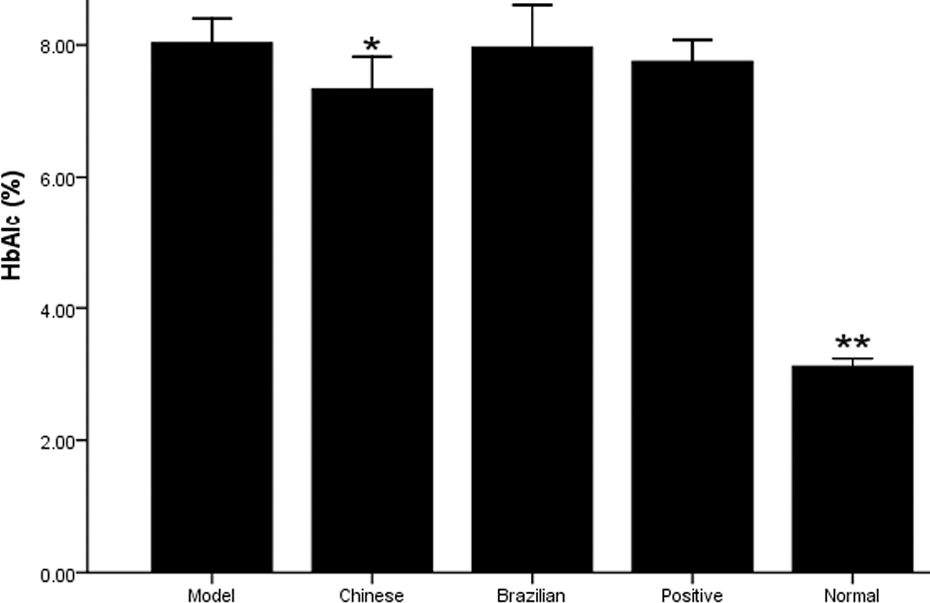
Effects of propolis on glycated hemoglobin (HbAlc) level in diabetic rats. Values represent the means ± SD, n = 8. * p < 0.05 and ** p < 0.01, compared with model group.
Improvement of propolis on blood oxidative stress in diabetic rats a
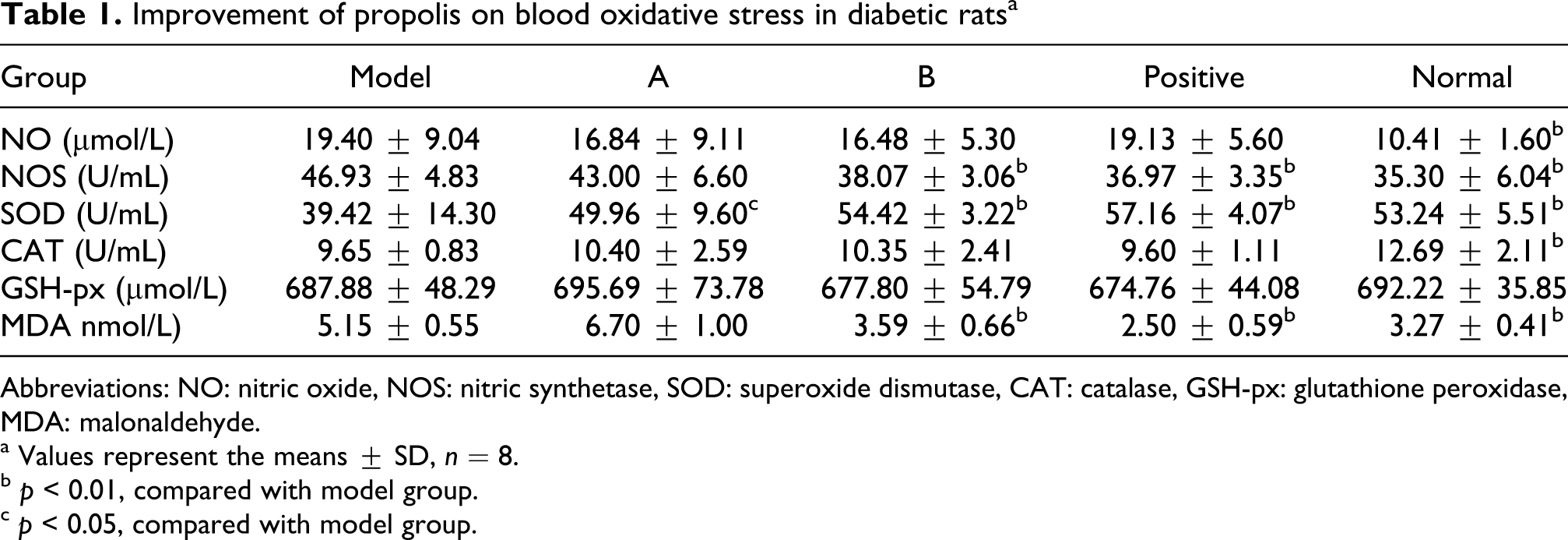
Abbreviations: NO: nitric oxide, NOS: nitric synthetase, SOD: superoxide dismutase, CAT: catalase, GSH-px: glutathione peroxidase, MDA: malonaldehyde.
a Values represent the means ± SD, n = 8.
b p < 0.01, compared with model group.
c p < 0.05, compared with model group.
Effects of propolis on renal and hepatic function in diabetic rats
ALT and AST level in diabetic rats obviously increased compared with normal rats (p < 0.01; Figures 2 and 3). Compared to diabetic rats, AST and ALT levels of Chinese propolis treated rats were significantly decreased at 6 and 8 weeks post-treatment with Chinese propolis (p < 0.01 and p < 0.05); treatment of Brazilian propolis significantly suppressed AST level at the 6th week obviously (p < 0.05) but showed no effect on ALT level; Glucobay had no obvious effect on either ALT or AST level.
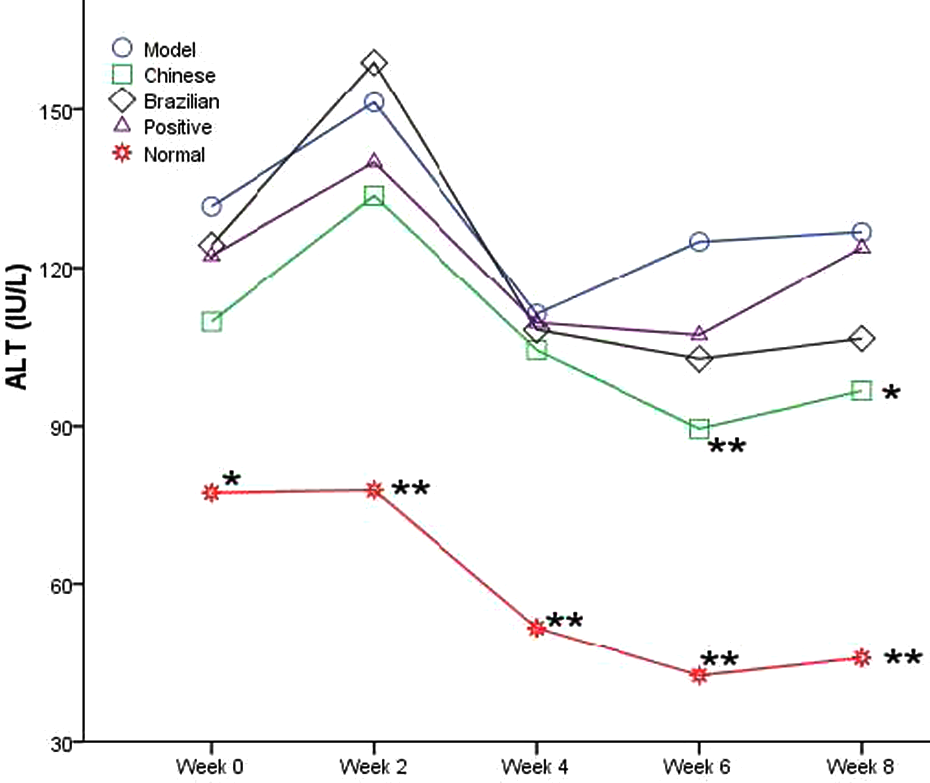
Effects of propolis on alanine transaminase (ALT) level in rats. Values represent the means ± SD, n = 8. * p < 0.05 and ** p < 0.01, compared with model group.
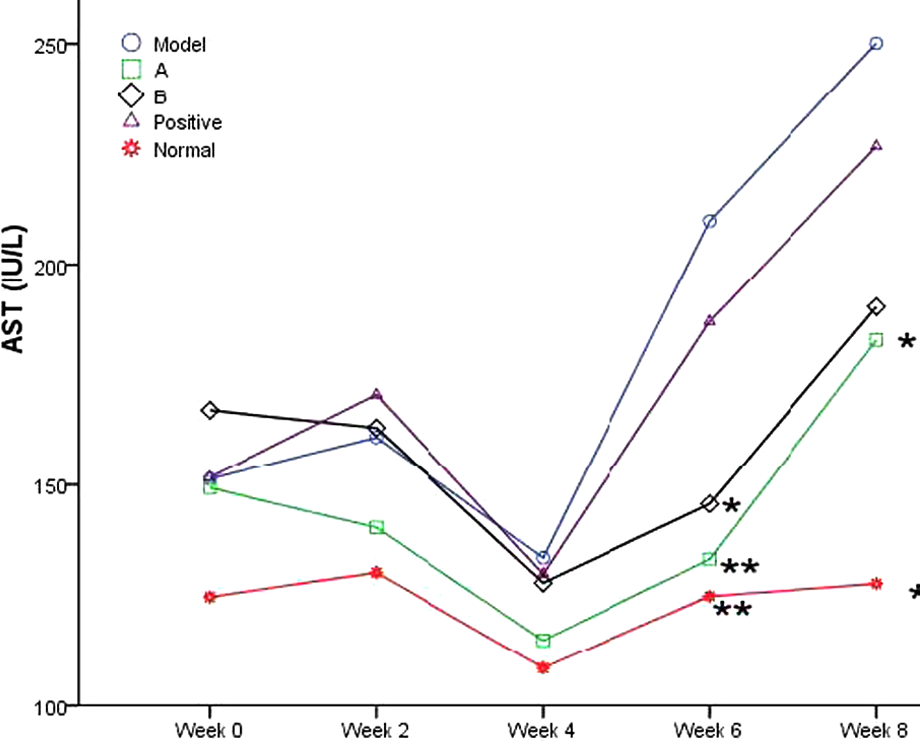
Effects of propolis on aspartate transaminase (AST) level in rats. Values represent the means ± SD, n = 8. * p < 0.05 and ** p < 0.01, compared with model group.
In non-diabetic, healthy rats, CCR, BUN and UAER level were clearly lower than in diabetic rats (p < 0.01), though, SCr level did not differ significantly between diabetic rats and normal rats (Figures 4–7). Compared to diabetic rats, glucobay helped to inhibit the increment of CCR, BUN and UAER level significantly (p < 0.05). Though Chinese and Brazilian propolis-treated rats had a lower UAER level at the 8th week of treatment (p < 0.05), it neither induced an insignificant reduction in CCR level nor showed on effect on BUN level in diabetic rats.

Effects of propolis on blood urea nitrogen (BUN) level in rats. Values represent the means ± SD, n = 8. * p < 0.05 and ** p < 0.01, compared with model group.

Effects of propolis on (SCr) level in rats. Values represent the means ± SD, n = 8. * p < 0.05 and ** p < 0.01, compared with model group.

Effects of propolis on creatinine clearance rate (CCR) level in rats. Values represent the means ± SD, n = 8. * p < 0.05 and ** p < 0.01, compared with model group.

Effects of propolis on urinary albumin excretion rate (UAER) of diabetic rats at the 8th week. Values represent the means ± SD, n = 8. * p < 0.05 and ** p < 0.01, compared with model group.
Effects of propolis on hepatorenal oxidative stress of diabetic rats
Compared with normal rats, there was an obvious increase in the hepatorenal MDA level, which was indicative of tissue oxidative stress (Tables 2 and 3). In comparison to rats treated only with STZ, Brazilian propolis, but not Chinese propolis, significantly inhibited the hepatic MDA level (p < 0.05). However, the hepatic SOD level in propolis-treated rats did not appear to increase. Treatment with Chinese or Brazilian propolis notably increased hepatic GSH-px level, whereas normal rats displayed a slightly increased GSH-px level (p > 0.05). No obvious difference in the hepatic CAT level was observed between STZ-treated rats and normal rats.
Inhibition of propolis on hepatic oxidative stress in diabetic rats a

Abbreviations: SOD: superoxide dismutase, CAT: catalase, GSH-px: glutathione peroxidase, MDA: malonaldehyde.
a Values represent the means ± SD, n = 8.
b p < 0.05, compared with model group.
c p < 0.01, compared with model group.
Amelioration of propolis on renal oxidative stress in diabetic rats a
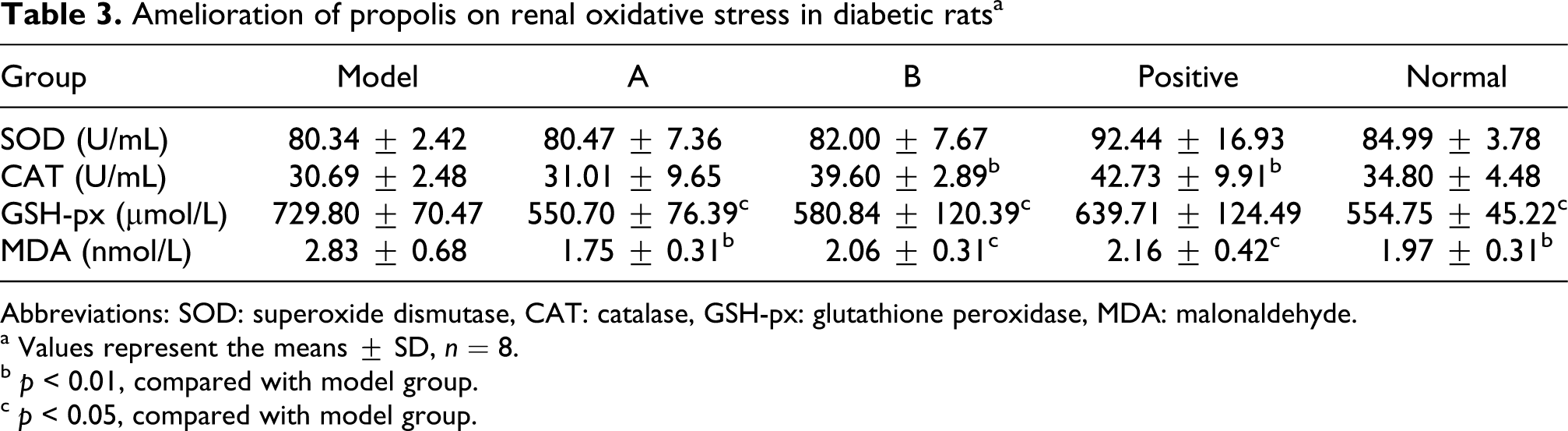
Abbreviations: SOD: superoxide dismutase, CAT: catalase, GSH-px: glutathione peroxidase, MDA: malonaldehyde.
a Values represent the means ± SD, n = 8.
b p < 0.01, compared with model group.
c p < 0.05, compared with model group.
Compared with diabetic rats, propolis- and glucobay-treated rats had an obviously reduced renal MDA level (p < 0.01 and p < 0.05, respectively; Table 3). Additionally, compared to renal GSH-px level in healthy rats, both Chinese propolis- and Brazilian propolis-treated groups had obviously suppressed levels (p < 0.05). Renal SOD and CAT level did not differ distinctively between diabetic rats and normal rats though treatment with Brazilian propolis markedly elevated CAT level in diabetic rats (p < 0.01).
Histopathological study
STZ treatment induced mild liver damage and treatment with Chinese propolis, Brazilian propolis or glucobay resulted in similar improvement of the liver lesions (Figure 8). Furthermore, STZ also induced moderate alterations in the kidneys (Figure 9). Treatment with either Chinese propolis or glucobay resulted in a better improvement of kidney health than treatment of diabetic rats with Brazilian propolis (Figure 9).

Effects of propolis on streptozotocin (STZ)-induced liver damage in rats. (A): in normal rats. The fine hepatic lobule clearly shown with the central vein (CV) in the center. The hepatocytes (H) are organized into cords or plates, separated by hepatic sinusoids (S). The plates of hepatocytes and hepatic sinusoids radiate from the CV (×400); (B): In the STZ-treated rats, severe alterations in hepatic histology are not seen. The hepatic lobule presented with cloudy swelling of hepatocytes (CS), hyperemia of hepatic sinusoid and increased binucleated cell (B) (×400); (C): The liver of the Chinese propolis-treated STZ-treated rats exhibited an obvious central vein, less binucleated cell, better arranged hepatocytes and sinusoids (×400); (D): The liver of the Brazilian propolis-treated STZ-treated rats displayed massive dilation of hepatic sinusoids, less binucleated cell, obvious central vein and better arranged hepatocytes and sinusoids (×400); (E): The liver from the Glucobay-treated STZ-treated rats displayed dilation of hepatic sinusoids, less binucleated cell, obvious CV and better-arranged hepatocytes (×400).

Effects of propolis on streptozotocin (STZ)-induced renal damage in rats. (A): In normal rats. The glomerulus (G) displayed a normal volume and normal mesangial cells (M) numbers. Normal renal tubules (RT) surround the glomerulus (×400); (B): In the STZ-induced diabetic rats, there was moderate alteration in kidney histology. The glomerulus showed an increased volume and proliferation of mesangial cells. Surrounding renal tubule displayed vacuolization of renal tubular epithelial cell (V) and renal tubular epithelial casts (C) (×400); (C): The kidneys from the Chinese propolis-treated diabetic rats had proliferation of mesangial cells in the glomeruli, but no other obvious histopathology changes were found. (D): In the kidneys of the Brazilian-propolis-treated diabetic rats, in addition to the proliferating mesangial cells in the glomeruli, renal tubule also exhibited vacuolization of renal tubular epithelial cell (V). (E): In the kidneys from the Glucobay-treated diabetic rats, proliferating mesangial cells in the glomeruli were visible but no other obvious histopathology changes were found.
Discussion
Hyperglycemia can induce renal lesion by stimulating reactive oxygen species (ROS)-mediated pathways such as NF-κB, protein kinase C (PKC), ANG II synthesis, polyol pathway flux, hexosamine pathway flux and advanced glycation end-product formation. 3 Hyperglycemia can also promote the progression of liver fibrosis in nonalcoholic steatohepatitis patients by up-regulation of connective tissue growth factor. 22 HbA1c is the gold standard for assessing long-term glycemic control and is considered a key target for the treatment of diabetes-related complications. 23,24 Obvious reduction in HbAlc in A group demonstrated the anti-diabetic effect of Chinese propolis and suggested that propolis may reduce the hepatorenal lesion in diabetic rats by hypoglycemic effect. Our findings suggested that Brazilian propolis had no significant inhibition on HbAlc at a dose of 100 mg/kg; however, in another article Brazilian propolis was reported to obviously ameliorate the serum glucose in STZ-induced diabetic rats at a dose of 200 mg/kg. 25 Additionally, suppression of water-soluble fraction of Brazilian propolis on postprandial blood glucose revealed that Brazilian propolis-mediated hypoglycemia effect was due to its function as glucosidase inhibitor. 26
Overproduction of ROS, induced by hyperglycemia-activated mitochondrial electron transport chain and NADPH oxidase, is considered a common upstream event in the onset of diabetic nephropathy. 3,27 Furthermore, through stimulation of NADPH oxidase, high glucose induced-ROS resulted in the proliferation of hepatic stellate cells and collagen formation, suggesting a possible pathogenesis of hepatic fibrogenesis in diabetes. 28 In addition to ROS, reactive nitrogen species (RNS, e.g. NO) is implicated in diabetes. NO is an important signaling biological molecule and excessive NO can react with superoxide producing peroxynitrite, a highly reactive oxidant that prompte pathogenesis of diabetes, diabetic nephropathy and liver injury. 29
Antioxidant supplement for diabetic patients or animal model helps to control blood glucose, improve oxidative stress and reduce hepatorenal lesion. 27,30,31 Propolis is a strong antioxidant and several investigations demonstrated that propolis can inhibit lipid peroxidation and enhance the activity of antioxidant enzyme in diabetic rats. 10,25 Our finding supported these researches. Brazilian propolis reduced serum NOS markedly, which was shown previously. 10 There are three NOSs: inducible (iNOS), endothelial (eNOS) and neuronal (nNOS), and among threes thress, iNOS is strongly induced by proinflammatory cytokines. 29 Propolis has a strong anti-inflammatory effect 32,33 and can directly suppress the activity of iNOs and inhibit the expression of iNOS gene by action on NF-κB. 34 Propolis and its flavones also showed inhibitory effect on expression of IL-1β and iNOS mRNA in macrophages. 35 Additionally, pinocembrin, a flavonoid from propolis, protected rat brain lesion by suppressing the increment of NO, nNOS and iNOS. 36 These combined results suggested that the effect of propolis on NOS may work, at least partially, via action on iNOS by the anti-inflammatory ability of propolis.
Recent publications have highlighted that propolis and caffeic acid phenethyl ester (CAPE), an active component of propolis, can alleviate hepatic or renal lesion induced by chemicals such as CCl4, alcohol and acetaminophen by reducing tissue oxidative stress. 12,37 –39 CAPE also relieved ischemia/reperfusion injury and electromagnetic radiation-induced renal impairment via antioxidant properties. 40,41 Moreover, propolis and pinocembrin can prevent thioacetamide-induced liver cirrhosis and are considered a potential anti-fibrogenic agent for ethanol-induced liver fibrogenesis by down-regulating the expression of transglutaminase. 42 In our experiments, the propolis-treated reversal of the alteration of serum hepatic enzyme and microalbuminuria also had protective effect on hepatorenal function. These result are in agreement with a newly published article that demonstrated a dose-dependant protective effect of Brazilian propolis on renal function in diabetic rats. 43 Both Chinese and Brazilian propolis alleviated renal tissue lesion and the histological changes supported the results of biochemical indexes. As mentioned above, mitochondrial electron transport chain play a crucial role in the incidence of DN. Propolis can decrease oxidative stress in heart and liver by protecting the mitochondria. 44 Propolis may restore heart mitochondrial respiration rate by diminishing activities of respiratory chain complexes and/or ADP/ATP translocator. 45 These combined results suggested that propolis may prevent renal lesion in diabetic rats by acting on mitochondria in the tissue.
In conclusion, Chinese propolis displayed an obvious hypoglycemic effect. Both Chinese and Brazilian propolis improved serum oxidative stress level. The reverse of serum ALT, AST and UAER demonstrated the protective effect of propolis on hepatorenal function. The histological changes supported the biochemical findings. Hepatorenal oxidative stress also indicated that propolis may prevent hyperglycemia-induced hepatorenal injury by inhibiting lipid peroxidation and by enhancing the activities of antioxidant enzymes. Further studies will focus on whether propolis exerts protection against hepatorenal injury in diabetic rats via its anti-inflammatory properties.
Footnotes
The research was supported by the grant from Chinese Ministry of Agriculture (Project number: NYCYTX-43) and Zhejiang Provincial Natural Science Foundation of China (Project number: R3090332).