




Abstract
A number of small middle-Neolithic (3300–2800 BC) settlements flourished in the Oldenburger Graben area of northern Germany. The excavations yielded large amounts of crop remains, suggesting that agrarian production was a cornerstone of subsistence economy. Until about 3000 BC, Oldenburger Graben was a fjord, which over time was separated from the Baltic Sea and became a lagoon. The location of the settlement in the wetlands would have been highly favourable, offering a range of terrestrial and aquatic resources. Nonetheless, it may have been challenging to the Neolithic farmers, as perhaps not much dry land was available for crop growing. The success of agrarian production likely depended on the methods employed. This is an initial attempt at reconstructing strategies of agricultural land use during the middle-Neolithic occupation of the Oldenburger Graben lowland. We combine information on the habitat preferences and life history of arable weeds, and the recently obtained carbon and nitrogen stable isotope values on crop grains from one of the sites. The evidence allows us to glean practices that crop cultivation may have entailed, including potential strategies aimed at improving productivity of arable land such as tillage, weeding and manuring. Although preliminary, the observations point at potentially different management of emmer and barley, perhaps due to their variable importance to the Neolithic residents. This is the first time that stable isotope analysis on crops from northern Germany is used to elucidate agricultural practices of the Funnelbeaker communities of the middle-Neolithic.
Introduction
Recent analyses of stable carbon and nitrogen isotope composition of emmer and barley grains recovered from early and middle-Neolithic sites in southern Scandinavia (Bogaard et al., 2013; Gron et al., 2017; Kanstrup et al., 2014) have revealed that, manuring of crop fields was inherent to food production systems at the northern fringes of the Funnelbeaker cultural network. Emmer and barley represented staple crops throughout the duration of the Funnelbeaker period (4100–2800 BC), and their importance in subsistence economy in northern Germany and southern Scandinavia remained high later in the Neolithic and in the Bronze Ages (Effenberger, 2017, 2018; Kirleis et al., 2012; Kirleis and Fischer, 2014). It is plausible that early farmers in the region would have aimed to secure the basis of their plant food economy on a long term, and would thus invest in manuring, but also potentially in other ethnographically and agronomically known practices, such as thorough tillage and weeding of arable plots. The need for additional effort at maintaining/increasing crop yields may have been amplified by the nature of the soils that were cropped. For instance, sandy soils are considered ‘light’ because they are tractable and thus easy to work, but they are also light in the sense that they are highly porous, they dry out quickly and, depending on the underlying base, leach nutrients, all of which makes them less fertile than, for example, loamy or clayey soils (Fließbach et al., 2014). Vast parts of northern Germany and southern Scandinavia consist of morainic sediments composed of variable quantities of sand, silt, loam and gravel, sometimes overlain by luvisoil and brown earth (Blume and Brümmer, 1986). Manuring and other strategies that can improve productivity of arable land likely were standard components of early farming systems, as demonstrated for many parts of Europe (e.g. Bogaard et al., 2013), but the level of manuring may have differed within and between sites (e.g. Styring et al., 2016). In addition to the limiting factors, such as the availability of manure and of the labour/technology for its transportation and spreading, this may have had to do with the properties of arable soil and the varying importance/role of the manured crop.
The study area and sites
The Neolithic sites located in and around the Oldenburger Graben area in northern Germany date to the period between 3300 and 2800 BC (middle-Neolithic). They include a number of small settlements, mostly comprising houses, huts and outdoor activity areas, and burial sites, represented by megalithic tombs (Figure 1). Oldenburger Graben is an elongated wet depression extending approximately in the north–south direction across the Wagrian peninsula in north-east Schleswig-Holstein, or Östliches Hügelland (Figure 2). The area around represents a low-altitude (up to c. 150 m), undulating Young Drift (morainic) landscape dissected by small rivers and streams. Up until c. 3000 BC, the west part of the Graben was a fjord; it was afterwards separated from the Baltic Sea by a barrier reef and became a lagoon that received freshwater from the inflowing watercourses, which turned the lake brackish. The Neolithic settlements occupied islands and shores of the lagoon, taking advantage of the environment rich in aquatic and terrestrial sources of food and raw materials (Brozio, 2016; Brozio et al., 2014). The lagoon shores are covered by lowland moor (fen) deposits composed of peat laid over sandy morainic sediments (Figure 3); the extent of peatland increased following the formation of the lagoon. Peaty soil potentially stored nutrients but, fed by ground- and surface water, it would have been unsuitable for crop cultivation while an ideal substrate for wet grassland. Precipitation rates on the Wagrian peninsula are up to 600 mm, which is the lowest value recorded across Schleswig-Holstein. Despite the relatively low precipitation, the Oldenburg depression retains moisture, as it serves as a drainage area from which surface water is directed towards the bays to the northwest and southeast of the Graben (Jakobsen, 2004: 11). Nowadays, agricultural land is here created through artificial reduction of the groundwater level (Petersen, 2008).
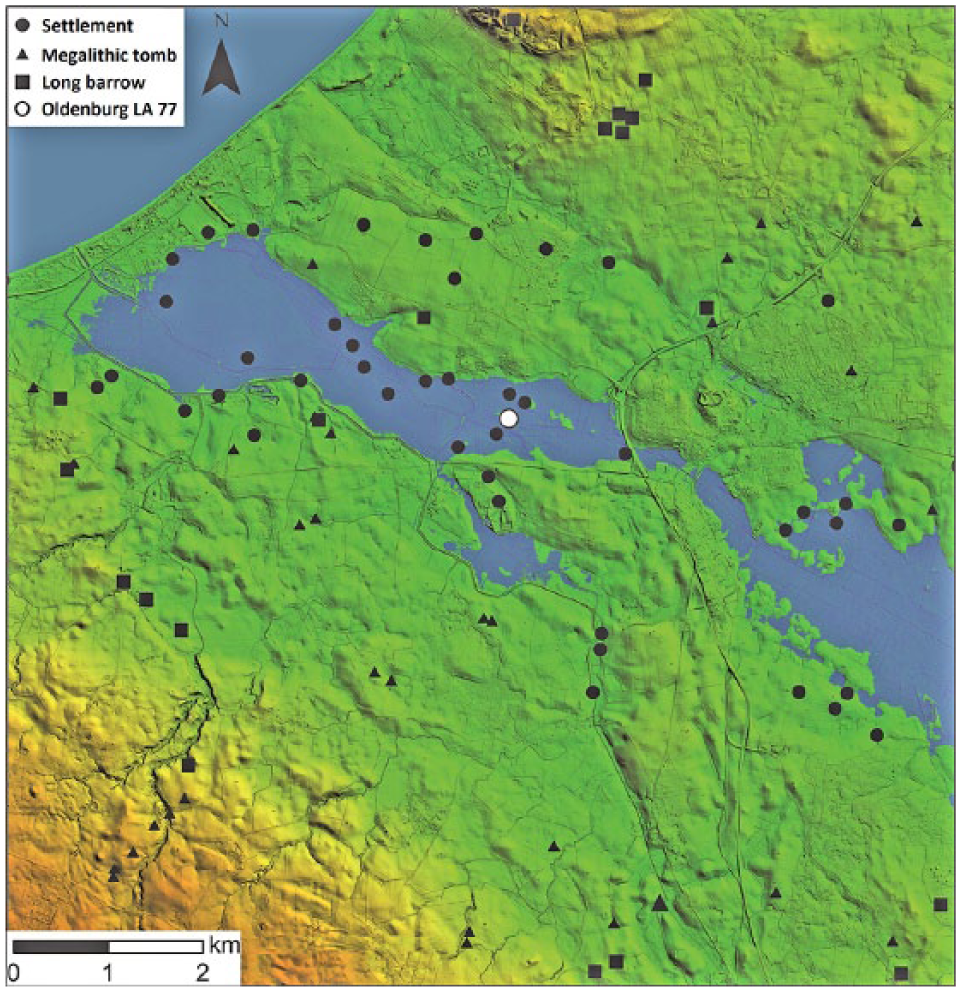
Map showing the Oldenburger Graben depression and the lake, and indicating locations of the Neolithic/Funnelbeaker settlements and burial sites.
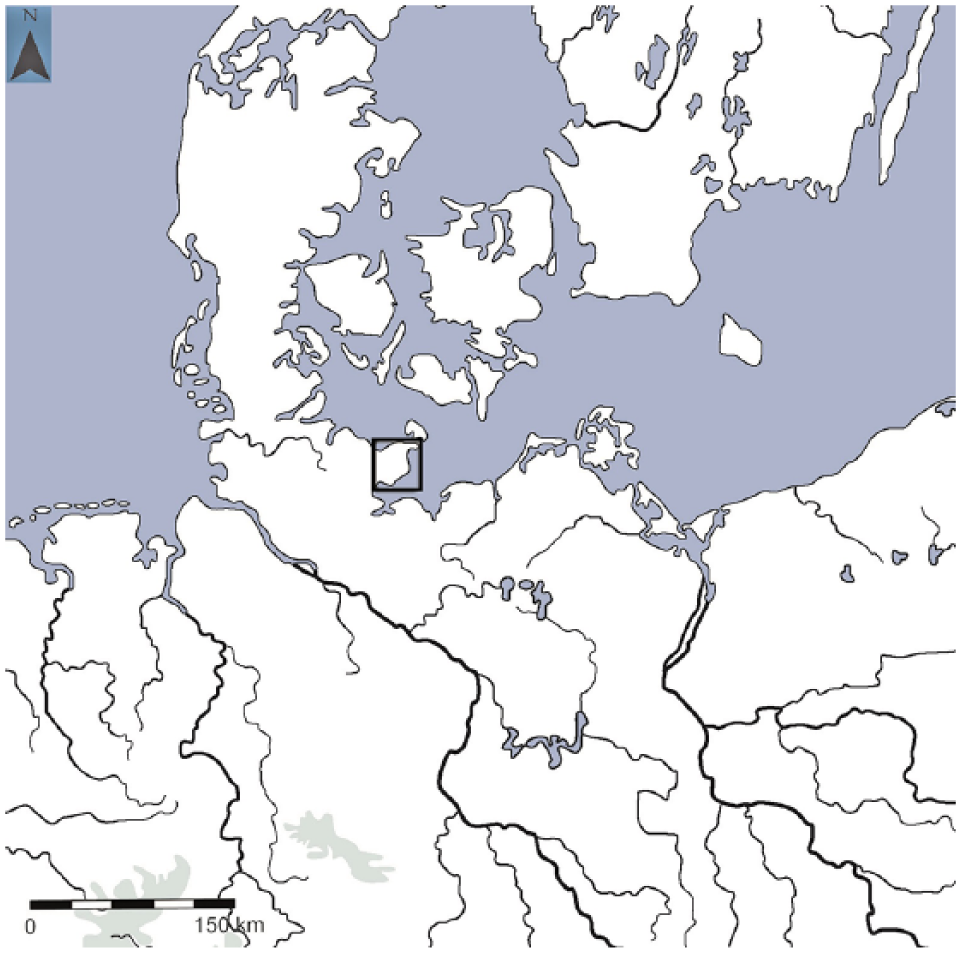
Map of northern Germany with the Wagrien peninsula highlighted.
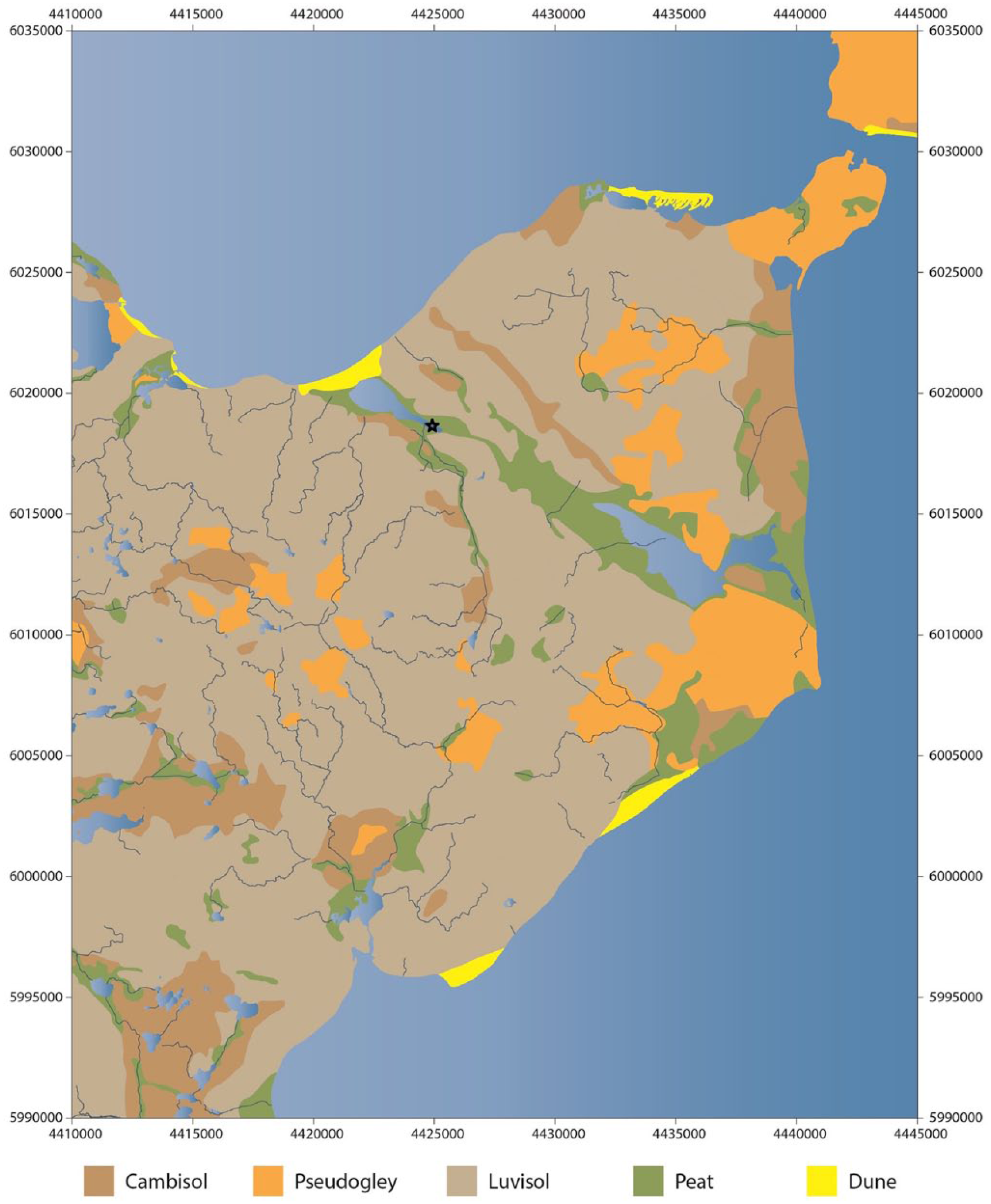
Map showing the distribution of summarised soil types in and around Oldenburger Graben.
Research goal and background
The water-saturated soils within the Oldenburger Graben depression may have restricted the extent to which the area around the Neolithic settlements could have been used for growing emmer, barley and other documented crops. Perhaps more suitable and offering more extensive land for crop cultivation were the low slopes lining the depression, which would have been covered by (sparse) forest (cf. Knitter et al., 2019; Rickert, 2007). Erosion by running water would here have been negligible because the slopes are mild (cf. Frielinghaus and Vahrson, 1998), whereas the loamy and sandy soils would have been well drained. In such a scenario, the fields would have been located at some distance from the settlements, and this may have had a bearing on the intensity of the farming regime. That is, perhaps not all fields would have received the same level of care expressed as, for example, manuring and weeding (cf. Bogaard et al., 2010).
This study is our first attempt to gain an understanding of Neolithic agricultural management in the Oldenburger Graben micro-region. The ultimate goal is to assess the scale of crop production, identify specific farming practices employed and explore whether they changed over time. As an initial step towards this aim, detailed archaeobotanical data for one of the Oldenburg sites – LA77 – are examined along with the first results of the analysis of carbon and nitrogen stable isotope composition of emmer (Triticum dicoccon Schrank ex Schübl.) and barley (Hordeum vulgare L.) grain from this site.
The Neolithic settlement at Oldenburg LA77 existed in the period 3270–2920 cal BC. There was no break in the c. 350-year-long occupation, which underwent several phases – from a ‘hamlet’ consisting of two to three structures termed houses, to a ‘village’ made of 16 houses and up to 10 smaller structures termed huts (Brozio, 2016). This community practised crop and animal husbandry, hunting, plant and shell gathering; they made tools and pottery, and engaged in an elaborate funerary ritual that entailed construction of megalithic tombs.
The identification of manuring practice as a component of Neolithic/Funnelbeaker agroecological system points at close integration of crop and animal husbandry, in which domestic animals would have also served as manure producers. A subsample of faunal remains from Oldenburg LA77 was analysed and showed dominance of cattle, and a smaller contribution of sheep and goats (Brozio, 2016; Brozio et al., 2014: 113). At the neighbouring settlement of Oldenburg LA232, the modest faunal assemblage was composed mainly of sheep bones (Brozio et al., 2018). Keeping of animals within or near the settlement would have facilitated the collection of dung, which would have been particularly convenient if dung was to be spread on arable plots located close by. Some Funnelbeaker houses in northwestern Germany have ‘anteroom’ that likely served as workspace for different activities, but could have also been used as a temporary/occasional stalling area (Mennenga, 2017: 276). This element of architecture has not been registered in Oldenburger Graben. It is not until the mid-late Bronze Age of the region that the so-called byre-dwelling type of housing (Wohnstall) occurs (Fokkens, 1999; Weinmann, 1994: 38–39; Zimmermann, 1999). Whether some form of free-standing stalls or pens for animals existed at the Oldenburg settlements could not be inferred from the preserved archaeological record. It is, however, possible that a part of the livestock was kept within the area of Oldenburger settlements or in their immediate vicinity, at least during the winter – perhaps small animals (e.g. sheep, goat, calves) and cattle used for traction. The zooarchaeological assemblages from southern Scandinavian Neolithic sites are strongly dominated by cattle remains (Hinz, 2018). The strontium isotopic record from middle-Neolithic/Funnelbeaker settlements in southern Sweden demonstrated high mobility of cattle, similar to sheep and unlike pigs (Sjögren and Price, 2013). The practice of moving of cattle across considerable distances may have been of greater antiquity, as it seems to have also characterised the earliest Neolithic in southern Scandinavia (Gron et al., 2016). To the south, at the Neolithic settlement of Arbon Bleiche 3 on Lake Constance, multiple cattle herding strategies have been identified from the isotopic record, involving keeping of the animals both locally and away from the residential area (Gerling et al., 2017). At the late 4th/early 3rd millennium BC site of Hundisburg-Olbetal in central Germany, cattle most likely grazed in areas close to the settlement and was perhaps seasonally moved between floodplain pastures and post-harvest arable fields (Winter-Schuh et al., 2018). A limited number of the remains of domestic animals from LA77 was subjected to stable isotope analysis, and the results are expected (Makarewicz et al., in preparation). Given the varied evidence from the broader region, it should be allowed that residents of the Oldenburger Graben settlements might have kept their animals both near and away from the settlement. The areas along the lagoon shores and the sea would have abound in low vegetation and grassland (Rickert, 2007) and no clearance would have been required for animal grazing purposes. (Cattle) dung could have accumulated in the locations proximal to the arable land.
Materials and methods
Biology and ecology of potential weeds
For the purpose of elucidating crop-growing conditions and agricultural management, arable weeds are a prime piece of evidence (e.g. Bogaard, 2004, 2010; Filipović, 2014; Jacomet et al., 1989: 180–189; Jones, 2002; Jones et al., 1999; Kreuz, 2012; Kreuz and Schäfer, 2011; Maier and Vogt, 2001: 86–100; Wasylikowa, 1981). In this study, the wild taxa were identified as potential weeds (cf. Kreuz, 1993) based on their association with crops in the selected archaeobotanical samples – mostly with emmer and/or barley, as these two types dominate the crop assemblages from Oldenburg sites (Filipović et al., 2019; Kirleis and Klooß, 2014). This classification is only preliminary, since the crop processing status of both the crops and the associated wild taxa in the samples should be determined first (Bogaard, 2004: 60; Hillman, 1991), and only where the two correspond can the case be made that the wild herbaceous taxa could represent arable weeds. This work is under way and the outcomes will refine the observations presented here. The trees and bushes represented in the assemblage (the ‘wild-gathered’ category in Supplemental Table, available online) have edible fruit that was most likely gathered and consumed (e.g. crab apple, blackberry). It is fully acknowledged that some of the plants in the ‘wild/weed’ category (see Supplemental Table, available online) may also have been collected for their edible fruit and/or leaves (for instance, some species of Polygonum, Rumex, Chenopodium). At Oldenburg LA77, they are most abundant in the contexts rich in crop remains and so it is assumed that, in the past, they were associated with crops. There, however, remains a possibility that such combinations of crops and ‘weeds’ result from the mixed nature of the analysed deposits.
For now, lifecycle and habitat preferences of the potential weeds were taken into consideration; the information was extracted from several relevant published sources, cross-compared and combined (Oberdorfer, 1970; Rauh and Senghas, 1968; Rothmaler, 2013). Field surveys and experimental work have shown that long-established arable plots tend to be dominated by annual weeds, whereas in short-term plots, such as those used in shifting cultivation, weed flora is predominantly perennial and mostly composed of woodland perennials (Bogaard, 2002; Ellenberg, 1988; Grime, 2002). In this study, the prevalence of annual weed taxa is understood as indicative of cultivation of the same plot for extended periods. The type of habitat occupied by the potential weeds – disturbed (i.e. anthropogenic) versus undisturbed – points at the practices employed in the preparation of crop fields and their maintenance. Plants of undisturbed habitats can generally not survive in fields that receive thorough tillage, weeding and hoeing, which are methods characterising intensive farming regimes and fixed plots (Bogaard, 2004). As a preliminary step, the potential arable weeds identified at Oldenburg LA77 were grouped into general categories: annual, perennial, annual/perennial; occupying dry or wet places or both; and growing in disturbed or undisturbed habitats. For the identifications at the level of genus or the ambiguous ones (such as Phleum pratense/Poa annua), characteristics of all possible taxa are summarised (e.g. annual/perennial). The high proportional representation of different wild/weed categories in the selected samples is taken as a possible reflection of the crop-growing conditions. This work is purely exploratory. A future aim is to apply an objective approach to ecological interpretation of archaeological weeds – the Functional Interpretation of Botanical Surveys (FIBS; Charles et al., 1997).
Selection of the samples for consideration of potential weed content
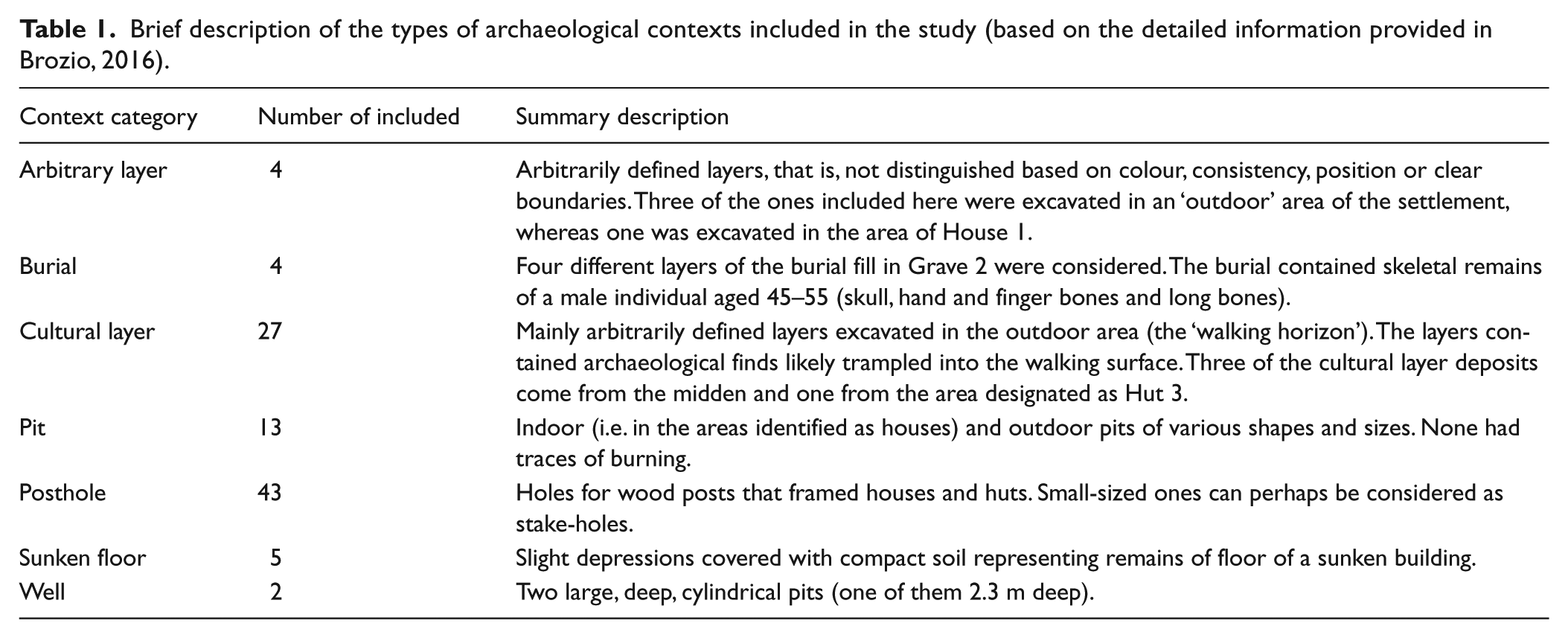
The samples selected for the analysis of their potential weed content originated from the archaeological contexts that yielded 50 or more identifiable charred crop remains – both well-defined ones such as pits, postholes, wells, floors of structures and burials, and some of the arbitrarily defined excavation units (see Table 1 for a brief description of the context types). At least some of the selected archaeological features were filled with detritus from different activities (e.g. pits filled with rubbish), which means that their botanical content is ‘mixed’. Nonetheless, for the purpose of the present analysis, archaeobotanical samples from the same context were amalgamated even if deriving from different layers/deposits within the context. This was done because a ‘generic’ view of agricultural practice for the site/period was seen as a first step in the study. Moreover, this allowed inclusion of more contexts in the analysis, since more of them satisfied the ⩾50 crop items criterion, as well as a greater number of different wild/weed taxa (of which charred remains only are considered here). No threshold for the quantity of remains (i.e. seeds) of wild/weed taxa was applied at this stage because these remains are generally rare in plant assemblages from northern Germany (Kirleis et al., 2012). The intention was to evaluate as many different wild/weed taxa as possible. The list of the selected contexts and their charred non-wood botanical contents is given in Supplemental Table, available online.
Brief description of the types of archaeological contexts included in the study (based on the detailed information provided in Brozio, 2016).
Of the selected contexts, those containing 60% or more of emmer or barley remains were classified as respective ‘emmer-’ or ‘barley-contexts’. The rest are considered ‘mixed’. The wild/weed taxa present in the emmer-contexts are assumed to have grown in emmer fields, and those found in barley-contexts as potentially accompanying barley. This decision is arbitrary, but is justified by the fact that the assemblage is almost entirely composed of emmer and barley, whereas the other recorded cultivated plants are much less visible. It is, therefore, considered unlikely that the recovered seeds of wild/weed taxa arrived as accompaniments of the less-represented crops (unless the minor crops grew together with the major crops in the field, perhaps as contamination – cf. Jones and Halstead, 1995: 109). The prevalence of a certain category of wild/weed taxa in the contexts is determined based on the proportional representation (percentages were calculated using absolute counts of the remains).
Selection of the samples for carbon and nitrogen stable isotope analysis
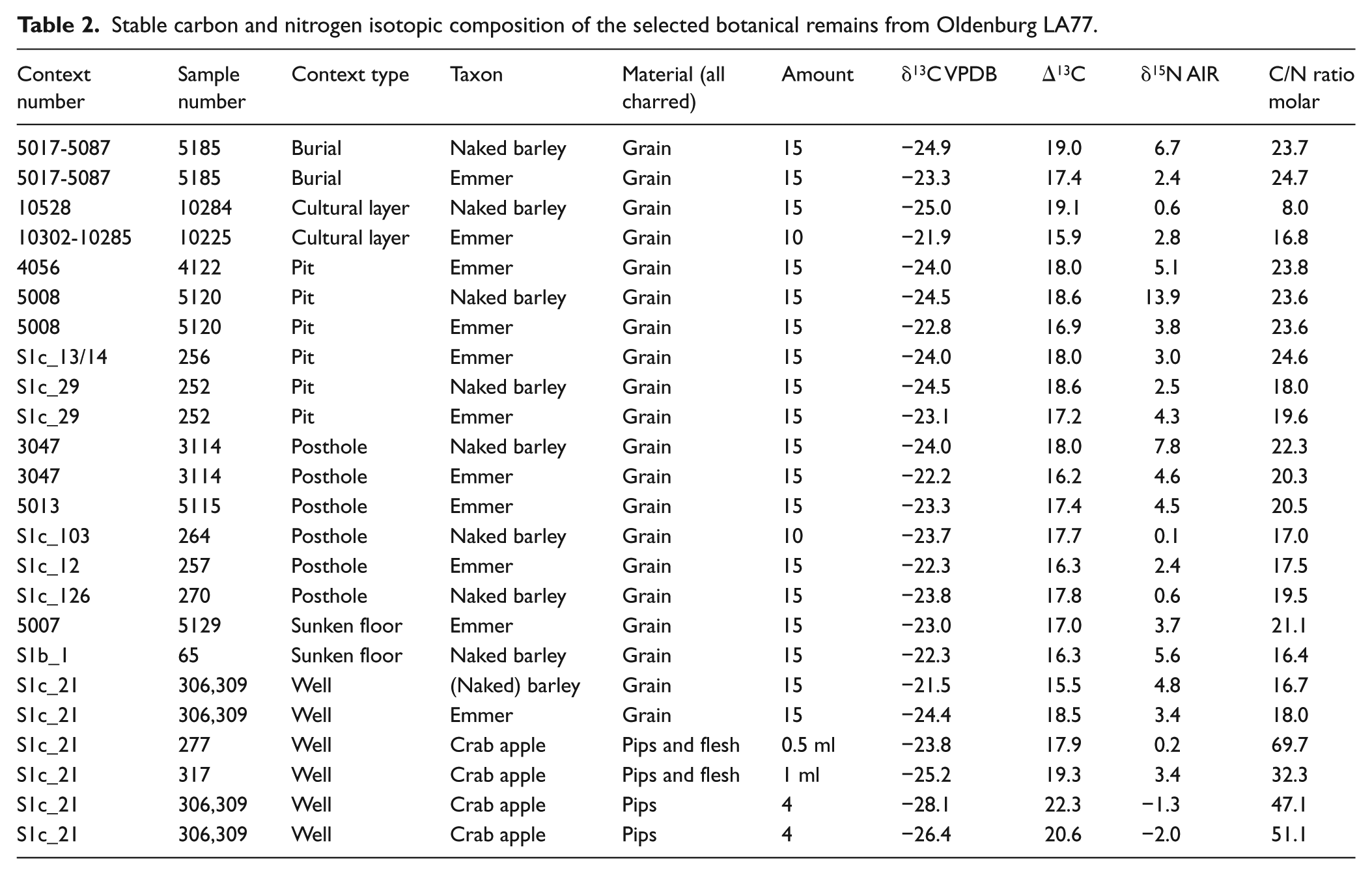
The analysis of carbon and nitrogen stable isotopic composition of cereal and pulse grain have successfully been used to reconstruct crop-growing conditions and identify specific agricultural practices (from a much longer list, e.g. Bogaard et al., 2013; Styring et al., 2018; Wallace et al., 2015). Initial application of this method in this study encompassed measuring of carbon and nitrogen stable isotope ratios on grains of emmer and barley, and on pips and fruit flesh of crab apple (Malus sylvestris (L.) Mill.) recovered from Oldenburg LA77. A total of 10 or 15 grains per cereal type were selected from 22 archaeobotanical samples taken from 15 different archaeological contexts that included postholes, pits, floors, burial and a well (Table 2); in some cases, both emmer and barley grains could be extracted from the same context. Noteworthy, from an archaeobotanical perspective, these contexts can be considered secondary, because they did not show evidence of in situ burning. Thus, their charred content arrived from one or more different locations/features where the burning actually took place (such as ovens or hearths) and likely represents mixed outcome from different plant-related activities. It is, in turn, possible that the combined grains derived from different harvests and/or arable plots. The physical appearance of the selected grains seems to reflect their origin from secondary contexts, that is, they are altered in shape because of charring but also damaged or broken (in the past), possibly in the process of relocation from the charring spot into a pit, posthole and so on. Compared with the ones described as well preserved after experimental charring at c. 230°C for up to 24 h (Charles et al., 2015), the Oldenburg grains in general look as if they burned at higher temperatures: they are clearly distorted, the epidermis is often missing and some grains have bulges on the surface (Figure 4(a) and (b)). As a whole, they could be placed into class 3 of the preservation scale devised by Hubbard and Azm (1990: Table 1). However, as also noted by Hubbard and Azm (1990: 103), the different grains within a single sample may have had distinct charring and depositional history, and this is highly relevant to the Oldenburg material (see above). Therefore, any significant variations in the stable isotope values for the combined grains may (also) be a result of the differential origin, charring conditions and state of preservation of individual grains.
Stable carbon and nitrogen isotopic composition of the selected botanical remains from Oldenburg LA77.
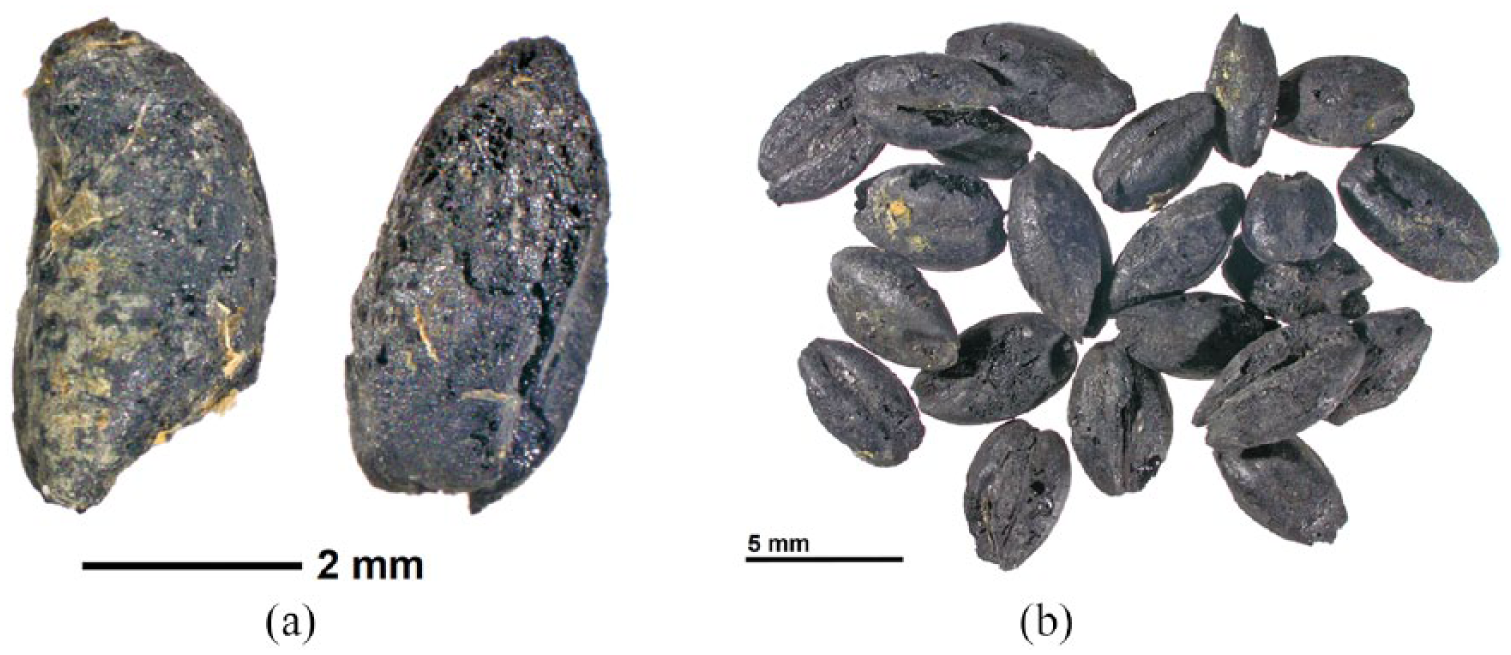
(a) Examples of the emmer grains from Oldenburg LA77 submitted for carbon and nitrogen stable isotopic analysis. (b) Some of the barley grains from Oldenburg LA77 submitted for carbon and nitrogen stable isotopic analysis.
One of the two wells (deep cylindrical pits) discovered at the site yielded a substantial amount of the remains of crab apple (Brozio et al., 2014; see Supplemental Table, available online). A subsample of these remains (fruit flesh and pips) was also submitted for the analysis of stable carbon and nitrogen isotope composition. The obtained measurements are here taken as very crude indicators of the growing conditions of uncultivated plants, since crab apple trees would not have been managed, or at least not in the ways cereal crops would have been.
The material was pretreated with 0.5 M HCL at 70°C for 60 min (5-min-long effervescing was observed in two samples), then rinsed in distilled water thrice and left to air-dry. The samples were prepared at Geomar-Helmholtz Centre for Ocean Research in Kiel; the stable isotope analysis was conducted at the Research Laboratory for Archaeology and the History of Art in Oxford. Analysis was done on the combined grains of individual cereal types and combined pips and flesh of crab apple fruit, with the exception of a sample in which the ratio in apple pips was measured separately (as indicated in Table 2).
The δ15N values presented here were not adjusted for the possible charring effect (Fraser et al., 2013; Nitsch et al., 2015) since, following Gron et al. (2017), the charring and depositional conditions at Oldenburg LA77 may have been different from those created in the experiments, which is implied by the relatively poorer preservation of the selected grains (see above). It is, however, acknowledged, that the charring offset is likely higher in more distorted grains (Nitsch et al., 2015: 12). Noteworthy is the observation made based on the extensive experimental work, that δ15N values increase in emmer grains as the temperature and period of charring increase (Nitsch et al., 2015: 6); this is taken into account when discussing the obtained δ15N values for emmer from Oldenburg LA77. Importantly, for the direct comparison of the here shown δ15N ratios with the cereal δ15N ranges reported by Bogaard et al. (2013) as indicative of different manuring levels, the same δ15N charring offset used in the said study, that of 1‰ (following Fraser et al., 2013), was subtracted from the Oldenburg LA77 δ15N values.
The 13C discrimination independent of CO2 source was calculated using the AIRCO2_LOESS system (Ferrio et al., 2005) and is expressed as Δ13C using the formula below (Farquhar et al., 1989), where δ13Cair was −6.35‰ for the respective period

Results and discussion
Crop growing conditions inferred from potential arable weeds
From Oldenburg LA77, 98 contexts satisfied the ⩾50 crop items criterion; 72% of them were classified as emmer-contexts, 16% as barley-contexts and 11% as mixed. The relative proportions of the above-described different classes of wild/weed taxa were considered for the contexts in which these classes are represented by five or more seeds. Only 21 contexts contained ⩾5 seeds of the classified wild/weed taxa; 19 of those are dominated by emmer (emmer contexts) and three by barley remains (barley contexts). The proportions of different groups of wild/weed taxa (based on their lifecycle, habitat and growing conditions) are in Figure 5 shown for the combined emmer- and combined barley-contexts. Annuals preferring dry habitats and adapted to life in disturbed places dominate the wild/weed plant component of the selected contexts. They include the wild taxa that are most frequent and abundant in the assemblage (Chenopodium and Bromus species, see Supplemental Table, available online). Annuals of disturbed habitats would be expected to be dominant in a fixed-plot regime (cf. Ellenberg, 1988). It is, thus, possible that emmer and barley were grown in long-lived, permanently cultivated fields located in dry areas. Perennial taxa are slightly more visible in barley contexts and perhaps indicate less thorough tillage and/or weeding of barley fields compared with those sown with emmer. Interestingly, the majority of perennial taxa in the assemblage can thrive in both dry and wet areas and they may here indicate somewhat moister soils used for cropping barley, as perhaps also signalled by the carbon stable isotope ratios in barley grains (see below).
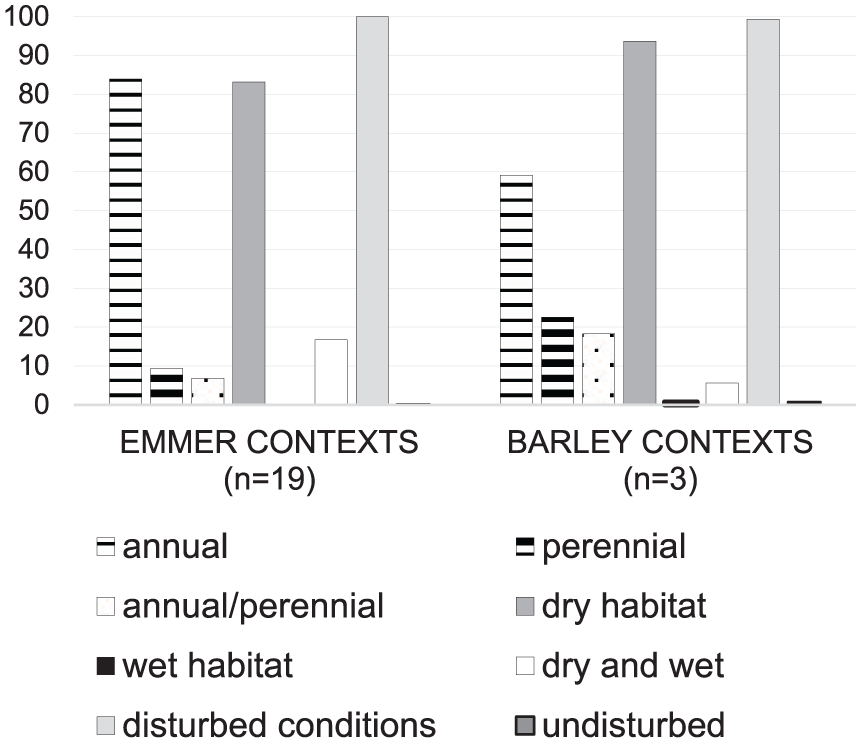
Relative proportions of different summary classes of potential weeds in the ‘emmer-’ and ‘barley-contexts’ from Oldenburg LA77.
Arable practices inferred from carbon and nitrogen stable isotopes
Stable carbon and nitrogen isotope values so far obtained on emmer and barley grain (shown in Figure 6) indicate potential differences in the management of emmer and barley fields. In Figure 7, the nitrogen values (after subtraction of 1‰, see section ‘Selection of the samples for carbon and nitrogen stable isotope analysis’) are directly compared with the ranges of δ15N values extracted from modern wheat and barley grown in fields receiving moderate and high quantity of manure (Bogaard et al., 2013). As expected, the values for crab apple fruit fall in the ‘unmanured’ range (⩽3‰), as does a certain number of emmer and barley values. Another set of emmer and barley values suggests that cultivation in some cases included medium level of manuring (resulting in δ15N values between 3–6‰). This corresponds well with the previously reported both ‘unmanured’ and ‘medium manuring’ nitrogen values for emmer and barley grains from Neolithic sites in southern Scandinavia (Bogaard et al., 2013; Gron et al., 2017). However, the considerable variability in δ15N measurements obtained on barley from Oldenburg LA77 requires further work in order to understand what the values reflect. If they are taken as an indication of adding nutrients to the soil, then the initial impression is that barley was sometimes manured to a considerable degree (producing δ15N values well above 6‰). Noteworthy, similarly elevated δ15N values have been reported for barley and emmer from several Bronze Age sites in the Netherlands (Bakels, 2018). The extremely high δ15N value of 13.8‰ of barley from Oldenburg LA77 raises a possibility that, in some cases, seaweed or dung of seaweed-eating animals served as fertiliser; however, the validity of this value is questionable, since the analysis of three single barley grains from the same context produced δ15N values of between c. 2.13‰ and 5.29‰ (not shown in the graphs).
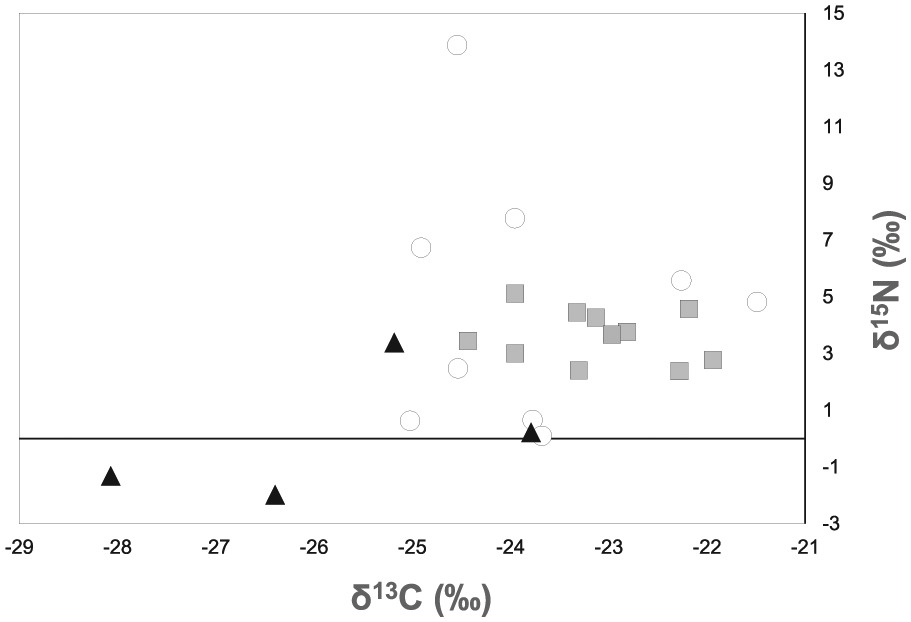
Stable carbon and nitrogen isotope values measured on emmer grain (squares), barley grain (circles) and crab apple fruit (triangles) from Oldenburg LA77.
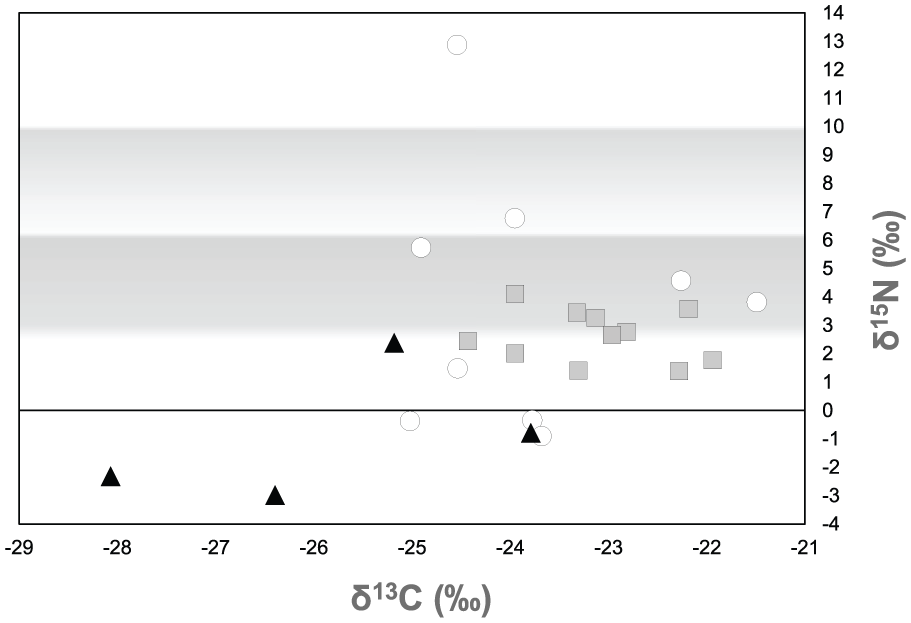
Stable carbon and nitrogen isotope measurements for emmer grain (squares), barley grain (circles) and crab apple fruit (triangles) from Oldenburg LA77 after the subtraction of the 1‰ charring offset from the δ15N values, in order to directly compare with those indicating varying manuring levels (shaded areas) established by Bogaard et al. (2013).
The high variance in nitrogen values between individual grains of the same crop instructed us to continue this form of analysis on single grain samples; this work is under way. There is evidence that the ‘sea spray’ effect and limnic influence can lead to enrichment of nitrogen content in terrestrial organisms, including plants (e.g. Göhring et al., 2018; Göhring, pers. comm.; Richards et al., 2006). Modern studies have shown that plant nitrogen stable isotopic values can vary widely within a single habitat or ecological zone as a result of differences in soil properties and water status (e.g. Amundson et al., 2003). In this vein, perhaps the wide range of δ15N values in barley from Oldenburg LA77 is a consequence of different growing conditions regardless of the presence/absence of manuring. The different archaeological contexts may have captured this variability; although, as noted above, the potential effect on the isotopic composition of the charring environment and preservation state of the grains must be kept in mind. To this end, it is worth highlighting the narrower range of emmer δ15N values compared with barley. Whereas this could be understood as a result of taphonomy, it may also, or instead, be an indication of the more-or-less consistent growing conditions and treatment of emmer. Perhaps the dry upland zone nearest to the settlement was used for growing emmer (cf. Knitter et al., 2019). The vicinity of the plots to the residential areas would have facilitated higher investment into maintenance of the crop (Jones et al., 1999). If animals were kept near to arable plots, for instance, in pens, then dung would have been well within reach and could have been used as manure. The animals could also have deposited dung directly on the fields if/when grazing on stubble or left penned overnight on arable land (Jones et al., 1999).
The Δ13C values (Table 2) for most of the emmer and barley samples fall in the ‘well-watered’ range (Wallace et al., 2015), which, however, was determined for part of the world with very different environmental and climatic conditions to those characterising Oldenburger Graben. Yet, high soil moisture can be expected in this hydrologically rich environment. Tentatively, emmer may have been grown on relatively drier soils. This echoes the impression from the properties of the potential arable weed flora, where the perennials that may have accompanied barley in the field are plants generally associated with, or at minimum tolerant of, elevated soil moisture (e.g. sedges).
Summary and conclusion
In the Oldenburger Graben wetlands, in the middle-Neolithic, emmer and barley may have been grown on soils of different quality and moisture status. The methods applied in the cultivation of the two major crops may have differed. Emmer fields (or gardens) perhaps received greater care, whereas barley cultivation may have been less intensive, or less demanding. It is possible that emmer cultivation on sandy morainic soils would have been risky without additional effort in the form of thorough tilling and manuring, and/or securing emmer yield was of greater importance to the residents of the Neolithic settlements.
In northern Germany and southern Scandinavia, the middle-Neolithic was the period when agricultural production consolidated and when many of the numerous megalithic tombs were constructed, perhaps as a statement of land ownership and permanence of habitation. Increased investment into arable land would have complied with this perspective and could have supported territorial claims. In this view, it is essential to reconstruct the nature and intensity of the farming regimes. The observations presented here remain preliminary until the analytical work is expanded and the initial assumptions tested through more detailed consideration of the relevant characteristics of potential arable weed flora, as well as of the carbon and nitrogen stable isotopic content of further cereal grains from Oldenburg LA77 and other sites in this region.
Supplemental Material
Filipovic_et_al_Supp._table_corrected – Supplemental material for Middle-Neolithic agricultural practices in the Oldenburger Graben wetlands, northern Germany: First results of the analysis of arable weeds and stable isotopes
Supplemental material, Filipovic_et_al_Supp._table_corrected for Middle-Neolithic agricultural practices in the Oldenburger Graben wetlands, northern Germany: First results of the analysis of arable weeds and stable isotopes by Dragana Filipović, Jan Piet Brozio, Peter Ditchfield, Stefanie Klooß, Johannes Müller and Wiebke Kirleis in The Holocene
Footnotes
Acknowledgements
Dr Rebecca Fraser is sincerely thanked for initiating this work and for the guidance along the way. Dr Michael Wallace provided useful advice and this is highly appreciated. The authors are grateful to the two anonymous reviewers for their careful reading of the manuscript and highly perceptive comments and recommendations. These are preliminary results and in the future work we will strive to correct any errors.
Funding
The author(s) disclosed receipt of the following financial support for the research, authorship, and/or publication of this article: This work and its continuation are funded by the Deutsche Forschungsgemeinschaft (DFG–German Research Foundation, Project Ref. 2901391021 – SFB 1266).
Supplemental Material
Supplemental material for this article is available online.

References
Supplementary Material
Please find the following supplemental material available below.
For Open Access articles published under a Creative Commons License, all supplemental material carries the same license as the article it is associated with.
For non-Open Access articles published, all supplemental material carries a non-exclusive license, and permission requests for re-use of supplemental material or any part of supplemental material shall be sent directly to the copyright owner as specified in the copyright notice associated with the article.
