Abstract
With the decline of unionization and collective bargaining coverage rates across advanced economies, governments increasingly make use of statutory minimum wages to ensure adequate compensation for low-wage workers. This state intervention reflects the liberalization of labour markets and the rise of an ‘employment rights’ regime, where state regulation in the low-wage sector plays a growingly important role as the influence of social partners diminishes. This article investigates the factors that drive increased governmental involvement in minimum wage-setting mechanisms (MWSMs). Through a combination of historical large-N statistical analysis and an in-depth review of ruling parties’ justifications to changes in MWSM, we find that economic and industrial relations variables – such as lower economic growth, higher inflation, and declines in unionization and collective bargaining coverage – primarily explain the shift towards greater governmental discretion. Partisanship and electoral cycles appear less significant. A media analysis of policymakers and social partners’ statements in Germany, the United Kingdom, Ireland, and Spain reveals that governments justify intervention by emphasizing their responsiveness to changing economic circumstances. These findings have implications for the study of partisan politics and low-wage regulation, highlighting the growing role of governments in wage-setting practices.
Introduction
In recent years, the statutory minimum wage has gained significant popularity amongst political parties and governments throughout Europe. Across the political spectrum, policymakers have vigorously campaigned for minimum wage increases in various countries and, indeed, minimum wages as a proportion of median wages have steadily risen across most advanced industrialized economies. The recent introduction of the EU directive on fair and adequate minimum wages has further underscored the significance of statutory minimum rates of pay within the European context, sparking intense debates across European countries about the regulation of the low-wage sector as well as the nature of the European Social Model, more generally. Amid the widespread support for this policy, a crucial but often overlooked aspect is the mechanism by which minimum wages are set. The actors involved in setting the statutory minimum wage play a vital role in shaping a country’s minimum wage policy; in fact, research suggests that whether the government or social partners take the lead in the wage-setting process influences the level and generosity of the minimum wage and impacts the frequency of its adjustments (Boeri, 2012; Dickens, 2023).
In this article, we focus on two research questions: first, we examine what conditions lead to changes in minimum wage-setting mechanisms (MWSMs), which result into greater governmental control, and second, we study how these changes are then communicated by policymakers and stakeholders. This focus is particularly relevant in an era in which the role of social partners in the labour market has weakened and the role of the state in industrial relations has become increasingly important. Scholarly research generally suggests that government involvement in labour market regulation and wage-setting practices tends to increase when social actors weaken and/or when economic fundamentals worsen. An example of the former is Germany’s implementation of a statutory minimum wage in 2015, which occurred after a significant drop in the country’s collective bargaining coverage rates (Marx and Starke, 2017). In contrast, examples of the latter have been seen in the growing state interventions in employment regulations and wage-setting practices during the Eurozone crisis (Afonso, 2019; Meardi, 2018). Another important explanatory variable which has historically explained increased governmental intervention in the regulation of the labour market is partisanship; (Kjellberg, 2009; Zohlnhöfer and Voigt, 2021) have thus illustrated that the ideological leaning of the incumbent matter for employment protection legislation or in arbitrating whether the state or social actors are responsible for unemployment insurance. Following this conceptual roadmap, this article investigates, first, which factors are the most likely to explain instances in which MWSMs reform result into increased governmental intervention and, second, how increased governmental discretion in the setting of the minimum wage rate is communicated by policymakers.
This article is structured as follows. First, we chart the remarkable trajectory witnessed by statutory minimum wages across OECD economies. As illustrated by the descriptive evidence, we find that as the incidence of low-wage work has declined across most advanced economies, minimum wages have become progressively more generous. From a bare minimum often lower than most workers’ reservation wages and set at a level that was significantly lower than collectively bargained wages, the statutory minimum wage has, in many countries, become an increasingly important measure not only for the low-wage sector but also for better remunerated jobs through the spillover effects that minimum wages engender across the income distribution. Second, by drawing on descriptive evidence of minimum wage-setting mechanisms across the world, we show that governmental control of MWSM has progressively increased. We then proceed with the empirical analysis, which is divided into two components: the first examines what socio-economic and political variables are associated with an increase in governmental control of statutory minimum wages, while the second examines the way in which governments and social actors discuss changes in the minimum wage-setting regime, which result into greater governmental control.
By running a battery of statistical tests utilizing a range of control variables, we find that changes in the minimum wage-setting process leading to increased governmental control are more likely to occur: 1. At times of economic downturns, when GDP decreases and inflation increases and 2. when the importance that social actors wield in the economy decreases. Although recent years have marked a politicization of the minimum wage-setting process, our statistical analysis does not find evidence that changes to the minimum wage-setting regime are linked to electoral and party-political variables.
In the second part of this article, we complement this statistical analysis with a media analysis that explores how political parties justify, and how social partners react to, increased governmental involvement in minimum wage regulation in four European countries: Germany, United Kingdom, Ireland, and Spain. To do this, we utilize quantitative text analysis and natural language processing (NLP) techniques to gather insights from a large corpus of text containing politicians and stakeholders’ statements discussing increased governmental intervention in MWSM. While a panel data regression analysis helps us identify what factors are the most likely to be associated with changes in minimum wage-setting regimes resulting into enhanced governmental control, the systematic analysis of press statements enables the identification of overarching cross-national themes in discussions on this topic. This in turn facilitates the comparison of the policy preferences of political and institutional actors across countries with different market economies and labour markets.
The focus of our media analysis is the period of 2020–2024. During this time frame, although the institutional arrangements designed to set minimum wages, primarily minimum wage-setting commissions, remained unaltered in our four country case studies, governments nonetheless took greater ownership of the issue. This was evident through actions such as implementing one-off minimum wage increases or setting specific targets for minimum wage growth. Our findings indicate that politicians tend to prioritize the discussion of economic factors, such as rising inflation or the need to address low-wage work, when justifying increased governmental discretion in setting minimum levels of pay. Additionally, for Ireland and Spain, we extend the analysis to examine how policymakers approached minimum wage policy during the Eurozone crisis: a period when policymakers decided not to increase minimum wages. This allows us to highlight how governmental (non)-intervention in the minimum wage was discussed across two distinct periods in which the minimum wage served divergent policy objectives. During the COVID-19 crisis and the subsequent period of inflation, the minimum wage acted as an expansionary policy, which could also combat in-work poverty at a time of weaker social actors and rising inflation. In contrast, during the financial crisis, some EU member states utilized state intervention in minimum wage-setting mechanism as a tool to reduce labour costs and enhance competitiveness.
Industrial relations, the state, and the minimum wage
Increased government involvement in setting statutory levels of minimum pay reflects a broader transformation in the relationship between the state and social actors, a transformation that extends beyond wage-setting practices and can, most conspicuously, be observed in the overall regulation of employment relations. Historically, across many advanced industrialized countries, the state played a relatively marginal role in employment matters. However, as numerous industrial relations researchers have noted, the state has, in recent decades, become a pre-eminent actor in regulating work relations (Bosch, 2009; Gumbrell-McCormick and Hyman, 2013). The wave of deregulation or ‘employer-enhancing’ reforms that swept through Western democracies in the 1980s significantly expanded the state’s influence in shaping employment rights. A well-established body of research has directly linked increased state involvement in the labour market to the ascendancy of the neoliberal economic model. Scholars have argued that the weakening of social actors was crucial for the development of growth models that could serve as alternatives to the post-war, wage-led Fordist growth model (Baccaro and Howell, 2017; Howell, 2019). As part of this shift, the decline in collective self-regulation systems of the labour markets has led to the state assuming increased responsibility for the legislation of employment rights, social protection, and levels of statutory pay (Colvin and Darbishire, 2013; Heyes, 2013; Piore and Safford, 2006).
This growingly important role of the state in employment relations can be well understood through Sengenberger’s (1994) influential distinction between ‘protective’ and ‘participative’ forms of state intervention in regulating work relations. A ‘protective’ state establishes legal frameworks such as statutory minimum wages and employment rights, which directly regulate the terms of employment. In contrast, a ‘participative’ state promotes codetermination and consultation, thus enabling unions and employers to shape workplace conditions. By maintaining participative standards, the state thus allows social partners to determine employment practices on its behalf. With the weakening of social partners, many European countries have in recent decades increasingly shifted towards a ‘protective’ state model, where governments play a more direct role in regulating the labour market (Bosch and Lenhdorff, 2017). From this perspective, as the influence of social actors diminishes, due to policy decisions and economic shifts, the state takes on a more active role not only in regulating work relations but also in overseeing compensation mechanisms for workers whose wages are the least likely to be covered by collective bargaining agreements – often low-wage workers (Hayter and Weinberg, 2011). As perhaps most compellingly illustrated by the introduction of a statutory minimum wage in Germany in 2015, the need for state involvement in setting minimum rates of pay usually stems from the inability of social partners to autonomously ensure adequate compensation mechanisms for low-wage workers. This trend is especially pronounced in Central and Eastern European and Anglophone countries, where the state plays a crucial role in regulating labour markets and in structuring compensation mechanisms for low-wage workers (Soulsby et al., 2017).
While the weakening of collective bargaining institutions and the rise of non-unionized low-wage sectors explain state intervention in minimum wages, these factors alone cannot fully account for the growing politicization of the issue. Indeed, electoral and party-political dynamics appear to be significant drivers behind the recent increases in minimum wages observed in several European countries, such as Poland, the United Kingdom, and Germany. Moreover, it is important to note that the recent prominence of the minimum wage in the electoral arena has emerged despite the presence of mechanisms designed to restrict government discretion in setting minimum wage levels. As noted by Eurofound’s annual review on minimum wages ‘ad hoc rates that were made in some countries tended to happen outside the regular system of minimum wage setting, and therefore with less social partner involvement’ (Eurofound, 2023 [p. 26]). While indicative of the changing power dynamics between the state and social actors, the increased politicization of the minimum wage should also be positioned against the backdrop of its unquestioned popularity as a policy. The strong electoral appeal of slogans like ‘make work pay’, which is often used in minimum wage campaigns (Weishaupt, 2018), along with the widespread popularity of minimum wage increases amongst the electorate, undoubtedly helps explain the heightened politicization surrounding the issue (Marx and Starke, 2017).
Beyond the party-political and electoral dynamics, it is worth reflecting on economic factors that could help address why governments have increasingly found it expedient to increase their discretion on the level of the minimum wage. While concerns about the potentially negative employment effects of raising the minimum wage were prevalent in past decades, recent empirical evidence has shown that moderate minimum wage increases often seem to result in no or negligible negative employment effects (Card and Krueger, 2016). Moreover, given the growing financial significance of the minimum wage – reflected in higher minimum wages as a share of median/average wages as well as the increased share of workers affected by minimum wage rates – it is increasingly viewed as a policy that can stimulate aggregate demand (ECB, 2022). Indeed, minimum wages play a crucial role in boosting household consumption, as low-income workers, which stand to benefit the most from increases to the minimum wage, tend to have higher marginal propensities to consume. Finally, a key theme that has been found to be important in explaining policymakers’ shifting considerations on the minimum wage in liberal market economies such as United Kingdom, Ireland, and Australia pertains to the fiscal perspective: raising minimum wages forces employers to pay higher wages, thereby reducing the reliance on taxpayer-funded in-work benefits to supplement the income of low-wage workers (Mabbett, 2023; Wilson, 2017).
As illustrated by Figure 1, we note that minimum wages as a share of median wages have steadily increased in the past two decades. The generosity or ‘bite’ of the minimum wage, commonly measured by the Kaitz index, that is, the ratio of the minimum wage as a share of the median wage, has risen for most countries in the past 20 years. This has been the case for countries with very different minimum wage-setting processes and labour markets. Figure 1 also reflects an interesting trend: while researchers have found that the erosion of collective bargaining institutions and declining unionization rates have led to higher within-country income inequality rates and the emergence of a growing low-wage sector in the 1990s and 2000s (Aidt and Tzannatos, 2008; Bosch, 2009), it now seems that while not being the only solution, higher minimum wages can be conducive to reducing the incidence of low-wage pay (Pedersen and Picot, 2023). Furthermore, the EU’s recent directive on fair and adequate minimum wages has also diffused the norm of the need to introduce higher minimum wages by advising member states’ governments to set the minimum wage to an ‘indicative reference value’ of 60% of the median wage: an important level, as workers earning below this threshold are commonly considered as being at the risk of in-work poverty. Minimum wages as share of median wages in 2000 and 2023 (top) and incidence of low pay in 2005 and 2023 (bottom). Source: OECD.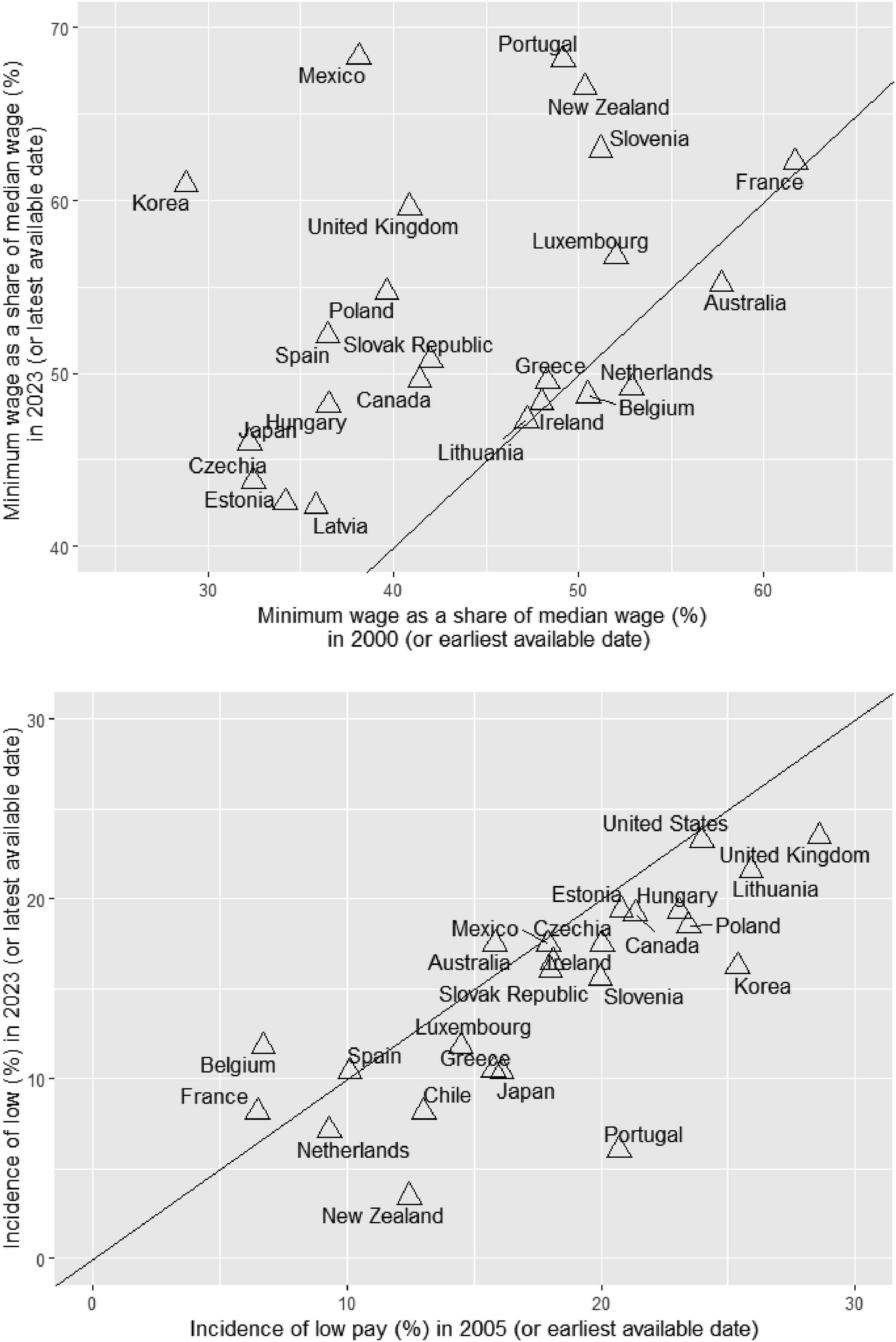
But does increased governmental control of MWSM lead to higher minimum wages? The few studies which have explored this question reach different conclusions. In his pioneering analysis of the question of the way in which different MWSMs are responsible for different levels of generosity of the minimum wage, Boeri (2012) finds that, historically, in countries where social actors play a more important role in setting the minimum wage, the minimum wage does tend to be higher. In other words, greater governmental control of MWSMs is associated with a lower wage premium. A recent contribution by Kozak and Picot (2021) has however found that the interaction between left-wing parties in government and governmental control of minimum wage-setting mechanism translates into higher minimum wages as operationalized by increases in the real levels of statutory minimum wages. In her review of the recent history of the minimum wage in Germany and the United Kingdom, Mabbett (2023) also suggests that greater government intervention in wage-setting practices might be correlated with higher minimum wages.
The governance of minimum wage-setting mechanisms
Compared to the rich literature on the determinants of minimum wage hikes (Bartels, 2012; Kozak and Picot, 2021) and the even larger one of the economic consequences thereof (Neumark, 2019), little research has been conducted on minimum wage-setting mechanisms. Indeed, in one of the few academic articles on this topic, the economist Tito Boeri has written that ‘theory and applied work have devoted to date little, if any attention, to the process leading to the determination of the minimum wage’ (Boeri, 2012, [p. 3]). This neglect is unfortunate, as the changing landscape of minimum wage-setting mechanisms is not only indicative of changes occurring in today’s labour market in the relations between the state and social partners but is also of importance in determining which actors are responsible for addressing the issue of low pay.
The international landscape of minimum wage-setting mechanism is very mixed, as countries have adopted a range of different methods in determining what the right level of a minimum wage is. By categorizing countries’ minimum wage-setting mechanisms based on the level of government discretion involved, it becomes clear that countries have adopted a variety of models and approaches. On one extreme, we find countries, such as Austria and Sweden, where the government has no discretion in setting minimum wage levels. These countries operate under a system of collective bargaining that excludes the presence of statutory minimum wages, relying instead on bilateral negotiations to establish sector-specific wage minima. On the other extreme, there are countries such as the United States, where elected officials alone without the need to consult social actors or experts or align minimum wage levels to economic developments, independently set minimum levels of pay. While it stands to reason that the politicization of the minimum wage would be most pronounced in these countries, they are also the countries where, without institutionalized mechanisms in place to ensure regular increases, minimum wages risk failing to keep in line with economic developments (Bartels, 2012). Most countries, however, fall somewhere in between these two extremes, as in most cases, government discretion in setting minimum levels of pay is restricted by a combination of factors, including the involvement of social actors, mechanisms that automatically link wage increases to cost-of-living changes, or the delegation of decision-making to an independent expert body.
The trend that has been observed in recent years across numerous advanced economies has been that of an increased professionalization of the MWMS. Indeed, it has become increasingly common for countries to rely on the recommendations of an expert body, which includes different stakeholders from the sides of employers, employees as well as independent experts (Dickens, 2023). These expert bodies have been established with the goal of preventing the politicization of the minimum wage, promoting evidence-based policymaking and ensuring that different stakeholders participate in the decision-making process. This, however, does not preclude the possibility that the decision-making remit of these expert bodies undergoes significant changes in time. Mabbett (2023) compellingly illustrates the way in which electoral and social policy priorities have led German and British governments to override the recommendations issued by their respective expert minimum wage-setting commissions. As she argues, the cooperation between social partners under the aegis of an expert body designed to advise governments on the level of the minimum wage has proven to be difficult to reconcile with the electoral pay-offs that parties obtain by advocating for a more generous minimum wage policy. As she concludes, in both countries, government interventions represented ‘significant deviations’ from the original objectives that guided the establishment of the expert commissions.
Theory and hypotheses
As Figure 2 illustrates, minimum wage-setting mechanisms have undergone considerable changes in the past decades. For the most part, the number of countries in which governments play a more important role in the setting of minimum wages has increased. Nonetheless, the key question of what factors are associated with these changes remains largely unaddressed. The few academic investigations into this topic have either focused on country-specific analyses (Mabbett, 2023), charted countries’ adoption of different minimum wage-setting mechanisms descriptively (Dickens, 2023), or have sought to investigate the economic consequences that different types of minimum wage-setting mechanism regimes might have (Boeri, 2012; Kozak and Picot, 2021). To address the determinants of increased control of the setting of minimum wages, in this article, we turn to a quantitative analysis in which we consider how different political and economic variables relate to changes in MWSM regimes. Minimum wage-setting mechanisms. Source: ICTWSS.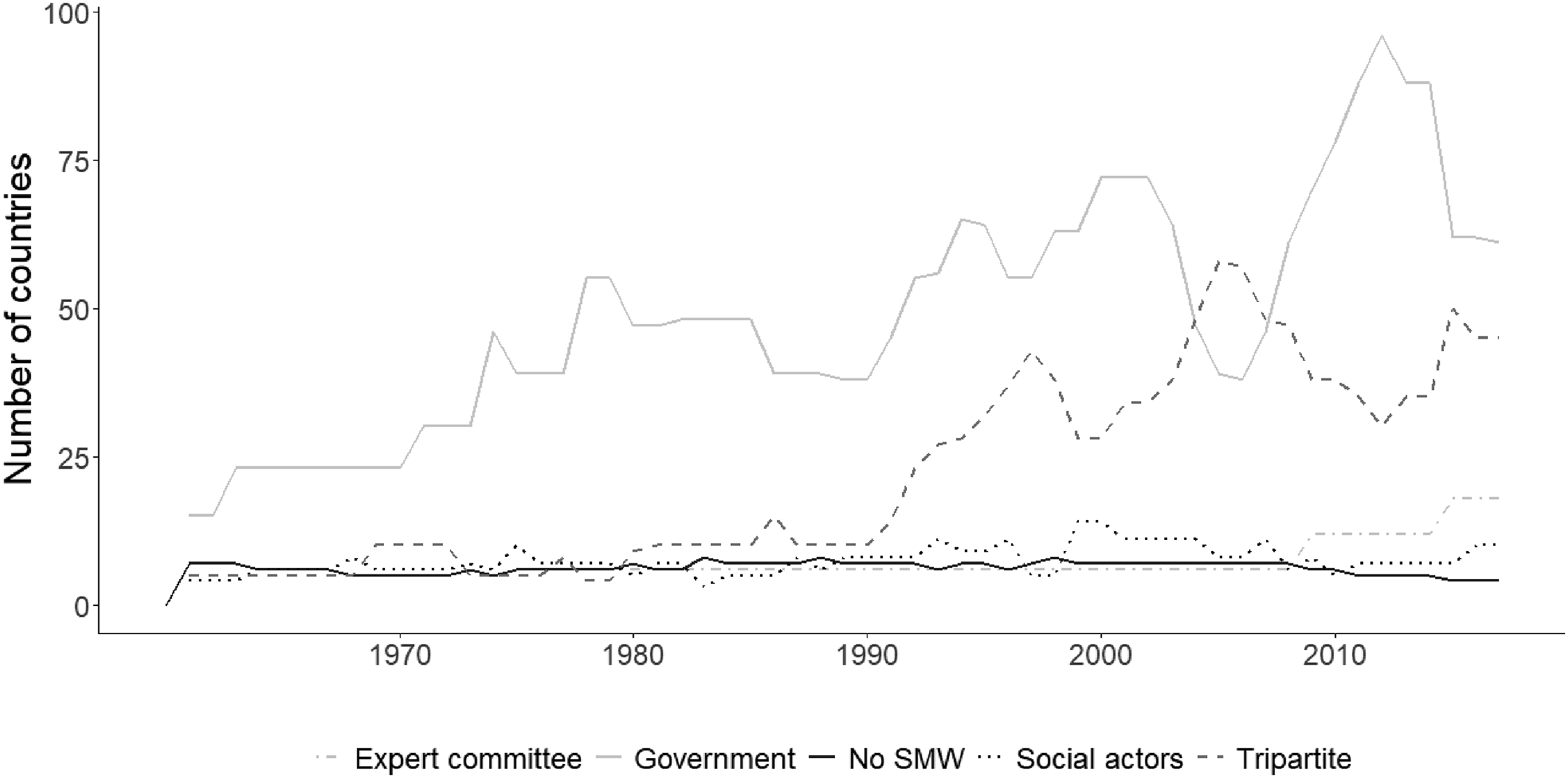
Based on the studies illustrated above discussing increased government involvement in industrial relations, generally, and minimum wages, specifically, we can formulate the following hypotheses on the linkage between industrial relations, economic and political variables, and increased government intervention in minimum wage-setting mechanisms.
As declining unionization and reduced collective bargaining coverage have been recognized as key factors driving the need for increased state involvement in regulating work relations, we expect that:
Declining trade union density and lower collective bargaining coverage rates increase the likelihood of increased governmental control of minimum wage-setting mechanisms. The relationship between changes to minimum wage-setting mechanisms and economic circumstances has elicited significant attention at the time of the Euro sovereign debt crisis. During the crisis, several EU governments embarked upon macroeconomic and labour market reforms, which resulted into a weakening of the role of social actors in wage-setting (Maccarrone et al., 2023; Meardi, 2018). However, while these interventions were made to constrain wage growth and reduce labour costs, it is important to note that greater control of the minimum wage can also be conducive to creating expansionary policy effects and thereby safeguard workers’ purchasing power in the event of higher inflation. This leads us to expect that:
Lower GDP growth and higher inflation increases the likelihood of increased governmental control of minimum wage-setting mechanisms. The relationship between partisanship and minimum wage-setting mechanisms is prone to competing explanations. Conventional political science theories would suggest that left-wing parties have a greater incentive to highlight the issue of statutory minimum wages, especially given left-wing parties’ traditional attention to the topic of low-wage work (Cova, 2023). However, greater political control over the minimum wage-setting process may come at the cost of diminishing the role of social actors in the labour market, who have traditionally been allies of left-wing parties. Relatedly, a well-established body of literature argues that the impact of left-wing partisanship on inequality-reducing policies is mediated by the strength that social actors wield in the labour market. Thus, in countries where social actors are weak, the partisanship of the incumbent becomes a more significant factor in explaining economic inequality outcomes (Rueda, 2008). Notably, however, the ties between social democratic parties and unions have loosened in many countries (Allern and Bale, 2012; Rathgeb, 2018). At the same time, while traditionally advocating for reduced state intervention, many right-of-centre parties, including right-wing populist parties, have increasingly embraced positions that blend market-oriented and statist solutions (Rathgeb and Busemeyer, 2022). This shift has led right-of-centre parties in countries such as Great Britain, Poland, and Hungary to actively campaign for raising the minimum wage. Two interrelated mechanisms seem to drive this transformation: first, electoral realignments in advanced democracies have led to increased working-class support for right-of-centre parties (Oesch and Rennwald, 2018). Second, by embracing labour-friendly policies, right-of-centre parties can disintermediate the role of unions in representing workers’ interests and concerns (Meardi et al., 2021). Consequently, right-leaning parties might have strong electoral incentives to claim ‘ownership’ of the minimum wage as a policy issue, which may motivate these parties to seek greater influence over wage-setting processes.
Research design and data
The empirical focus of this article rests on examining what factors are associated with increases in governmental control of the minimum wage-setting process. We will investigate this question by initially conducting a time-series cross-sectional analysis with country ‘fixed effects’ and where the dependent variable is constituted by a change that results into greater governmental control of the minimum wage-setting process. The dependent variable is operationalized by using the ordinal variable adapted from the Institutional Characteristics of Trade Unions, Wage Setting, State Intervention and Social Pacts (ICTWSS) database, which ranges from no statutory minimum wage, which would be indicative of no governmental control in setting minimum rates of pay to unfettered governmental control of the minimum wage-setting agenda. The resulting dataset encompasses the period 1970–2023 and includes 34 advanced economies. 1
In line with the hypotheses, the covariates of interest can be grouped into three broad explanatory categories: economic, industrial relations, and political variables. Let us consider these in turn. To assess the importance that industrial relations wield in the economy, we examine the yearly growth rates in the trade union density and the collective bargaining coverage rates, which we obtain from the OECD/ICTWSS database. However, since in most countries the indicators used to measure the strength of industrial relations have declined, we also employ an index of corporatism (Jahn, 2016) as a broader measure to assess the influence that social actors wield in economic policymaking.
We account for the potential impact of economic factors on increased government involvement by incorporating several variables. We use annual GDP growth to gauge the overall performance of the economy. We also analyze the current account balance to assess whether the increased economic significance of exports results in greater government intervention in wage-setting mechanisms; indeed, wage-setting mechanisms are an important lever for lowering labour costs and maintaining export competitiveness. Additionally, we account for inflation, measured by the yearly increase in the consumer price index (CPI). A decline in living standards might highlight the need for stronger government intervention in setting minimum wage levels, especially since low-wage earners tend to have a higher marginal propensity to consume. We obtain these standard economic variables from World Bank and OECD databases.
Finally, we include a variety of different political and electoral variables to assess the extent to which political characteristics determine the likelihood of changes in MWSMs that result into greater governmental discretion on setting the levels of the statutory minimum wage. We use two different sources to measure and operationalize the ideological position of incumbent parties: the ParlGov database on parties, cabinets, and elections in OECD countries (Döring and Manow, 2016) as well as the Comparative Political Data Set (Armingeon et al., 2018). Partisanship is assessed by a continuous variable, where low values indicate left-wing incumbents and high values instead indicate right-wing incumbents. We also control for the timing of the election, as an extensive literature on political budget cycles has examined the question of whether incumbents are more likely to engage in expansionary policies in the run-up of an election (Klomp and De Haan, 2013).
In the second part of our empirical analysis, we consider instead the way in which different actors discuss changes (and proposed changes) to existing minimum wage arrangements that result into greater governmental discretion on statutory minimum rates of pay. Using the LexisNexis News Media database, we collect information on press releases and official statements made by politicians and social actors on changes to existing minimum wage-setting arrangements as communicated in newswires, newspapers, and news agencies. By utilizing custom code, we extract only direct quotes from these media documents, allowing us to focus exclusively on policymakers’ statements. In a second step, we trace each quote back to the body of the article to identify the speaker, ensuring that in the resulting database, every quote is annotated and linked to the group every speaker belongs to. In our analysis, we consider three groups: 1. Government politicians, 2. Representatives of trade unions, and 3 Representatives of employers’ associations. This enables us to tease out policy positions regarding changes to minimum wage-setting mechanisms as expressed by a diverse range of actors. Based on this cross-national data collection, outlined in Table A1, we analyze the most frequently occurring themes and keywords in discussions centred on changing existing minimum wage-setting mechanisms.
For our four country case studies, our analysis focuses on the years 2020–2024, as, as discussed below, during this period, all the countries, which are the objects of our study, experienced episodes where governmental control over minimum wage-setting mechanisms increased. Additionally, for Ireland and Spain, our analysis also includes the 2009–2012 period. During this period, the Irish and Spanish governments used their discretion to control minimum wage growth, but in a markedly different direction compared to 2020–2024. In contrast to the expansionary focus of the more recent period, government intervention in minimum wage-setting mechanisms in 2009–2012 was primarily aimed at reducing labour costs.
The historical determinants of increased governmental intervention in MWSM
To examine what factors are connected to increased governmental intervention in minimum wage-setting, we conduct a series of regression analyses. We treat our dependent variable as a continuous variable, where increases are associated with increases in governmental control in MWSMs. In Model 1, we conduct a pooled OLS regression, while in Models 2–5, we perform a panel data analysis that incorporates country fixed effects and tests for how different combinations of control variables affect the propensity to increase governmental control in MWSMs. Thus, in the initial model specification, which serves as our baseline estimation model, observations are pooled across countries and over time to evaluate the overall average treatment effect of the explanatory variables. In the subsequent models, we utilize fixed effects approaches to address country-specific unobserved heterogeneity. In this way, these models can control for time-invariant factors and focus on capturing variations within countries over time.
The Determinants of Increased Governmental Intervention in MWSMs.
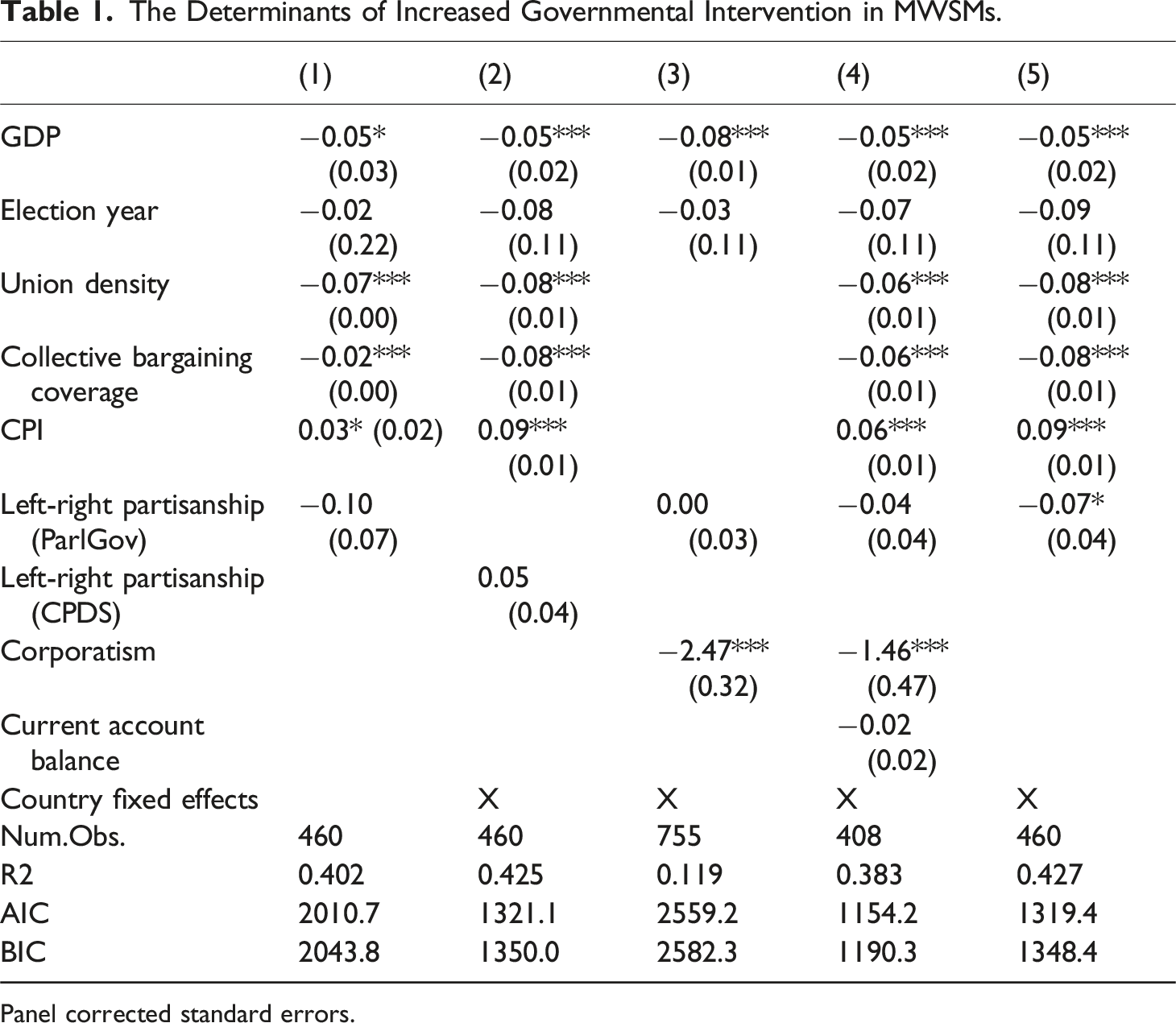
Panel corrected standard errors.
Justifying change: Examining the way in which changes to MWSMs are communicated
While the large-scale panel data regression analysis presented above has the advantage of covering a broad range of countries over an extended period, it comes with the limitation of being unable to capture more subtle changes within existing MWSMs, which may nevertheless signal increased state involvement. Thus, although the formal mandates of minimum wage commissions in the United Kingdom and Germany have remained unchanged, recent years have seen a notable rise in the levels of governmental involvement. To explore this aspect further, we now turn to a collection of media statements made by policymakers and social partners to explore how stakeholders justify and react to changes to minimum wage-setting mechanisms in four countries: Ireland, the United Kingdom, Germany, and Spain. These four countries have not only experienced increased political involvement in the setting of the minimum wage in recent years but have also witnessed significant increases in minimum wages (see Figure A1 in the appendix). Our country case selection not only enables us to include countries with diverse labour markets and market economies but also countries that, during the period studied in this article, were governed by parties with different ideological orientations. In Germany and Spain, it was centre-left/social-democratic governments that drove greater government involvement in setting the minimum wage, either by unilaterally raising wage levels or by assigning new objectives to the expert bodies responsible for wage determination. In contrast, in the United Kingdom and Ireland, it was centre-right/liberal-conservative incumbent parties that intervened in the work of their countries’ respective Low Pay Commissions.
Our corpus of policymakers’ positions on reforms to MWSMs that introduce greater government control over wage levels consists of direct quotes from politicians, as well as representatives of trade unions and employers’ associations. As outlined in Table A1, this large multilingual corpus contains over 100,000 words. Due to its size, we employ automated methods of quantitative text analysis to identify which topics and words are emphasized in policymakers’ discussions. Empirically, we analyze the most frequently used keywords by applying the Rapid Automatic Keyword Extraction (RAKE) algorithm to the corpus. This natural language processing tool identifies keyword pairs by examining the frequency with which words co-occur. The higher the score, the more frequently do words co-occur, reflecting their prominence in the discourse of different institutional actors. This systematic approach to large-scale text analysis thus provides valuable insights into how increased governmental control in minimum wage-setting mechanisms is framed and the key focus areas associated with this. Before illustrating the results of our text analysis, let us first briefly consider the way in which governmental intervention in the minimum wage-setting processes in these countries has increased in the recent past.
In response to a growing low-wage sector and declining collective bargaining coverage, Germany introduced a statutory minimum wage in 2015. Since its introduction, the policy has gained widespread popularity amongst political parties and the electorate. In 2022, the SPD delivered on its campaign pledge to raise the hourly minimum wage to €12, a substantial increase. This adjustment was framed as a necessary response to the ongoing cost-of-living crisis, emphasizing the increased need to align the minimum wage to the target of 60% of the gross median wage. This approach was seen as essential for ensuring adequate living standards and was in line with the recommendations set forth in the EU directive on fair and adequate minimum wages. In contrast to previous years, when governments simply implemented the recommendations of the Mindestlohnkommission (MLK), recent trends indicate a shift towards a more politically driven process for setting the minimum wage. This has included government-led discussions about revising the commission’s role and a proposal to instruct the MLK to raise the minimum wage to two-thirds of the median wage.
While the United Kingdom is often presented in comparative political economy research as the opposite of Germany, the two countries share remarkable similarities in the trajectories that their minimum wage policies have undergone. When a statutory minimum wage was introduced in the United Kingdom in 1999, the government assigned the responsibility of determining the appropriate wage level to the independent Low Pay Commission (LPC). For years, British governments (both Labour and Conservative) implemented the LPC’s recommendations without intervening in the process. However, this changed in 2015 when the Conservative Party introduced a higher ‘living wage’ for adults (Schulten and Müller, 2019; Weishaupt, 2018). Since then, political actors have become increasingly active in proactively defining the objectives of the LPC, thus encroaching upon the commission’s decision-making autonomy (Mabbett, 2023). Considering the severity of the recent cost-of-living crisis on the country, policymakers have instructed the LPC to recommend increases that would gradually raise the minimum wage to 60% of the median wage, while also formalizing the requirement to consider cost-of-living increases and reduce the wage gaps which exist between age-specific minimum wage rates.
A similar trajectory can be observed in Ireland, where a statutory minimum wage was introduced in 2000 and a UK-styled LPC was established in 2015. During the Eurozone crisis, when the focus laid in reducing labour costs, the Irish government froze minimum wage growth (Maccarrone, 2024). More recently, however, there has been growing political involvement in the work of the LPC. In 2022, the Irish government thus announced its intention to reform the minimum wage system by introducing a national living wage and by instructing the LPC to develop a roadmap for how the minimum/living wage should reach 60% of the hourly median wage in the coming years.
Although the statutory minimum wage in Spain had been of limited economic significance for a long period, covering only a small proportion of the workforce during the Eurozone crisis, for example (Afonso, 2019), in recent years, the minimum wage has experienced significant increases, both nominally and in real terms (see Figure A1). Although Spain’s minimum wage-setting process is not as clearly articulated as that of other European countries, it has historically involved consultations with social partners. However, while the overall structure of the MWSM remains unchanged, the government has in recent years focused on directing its minimum wage policy to attain the level of 60% of the median wage.
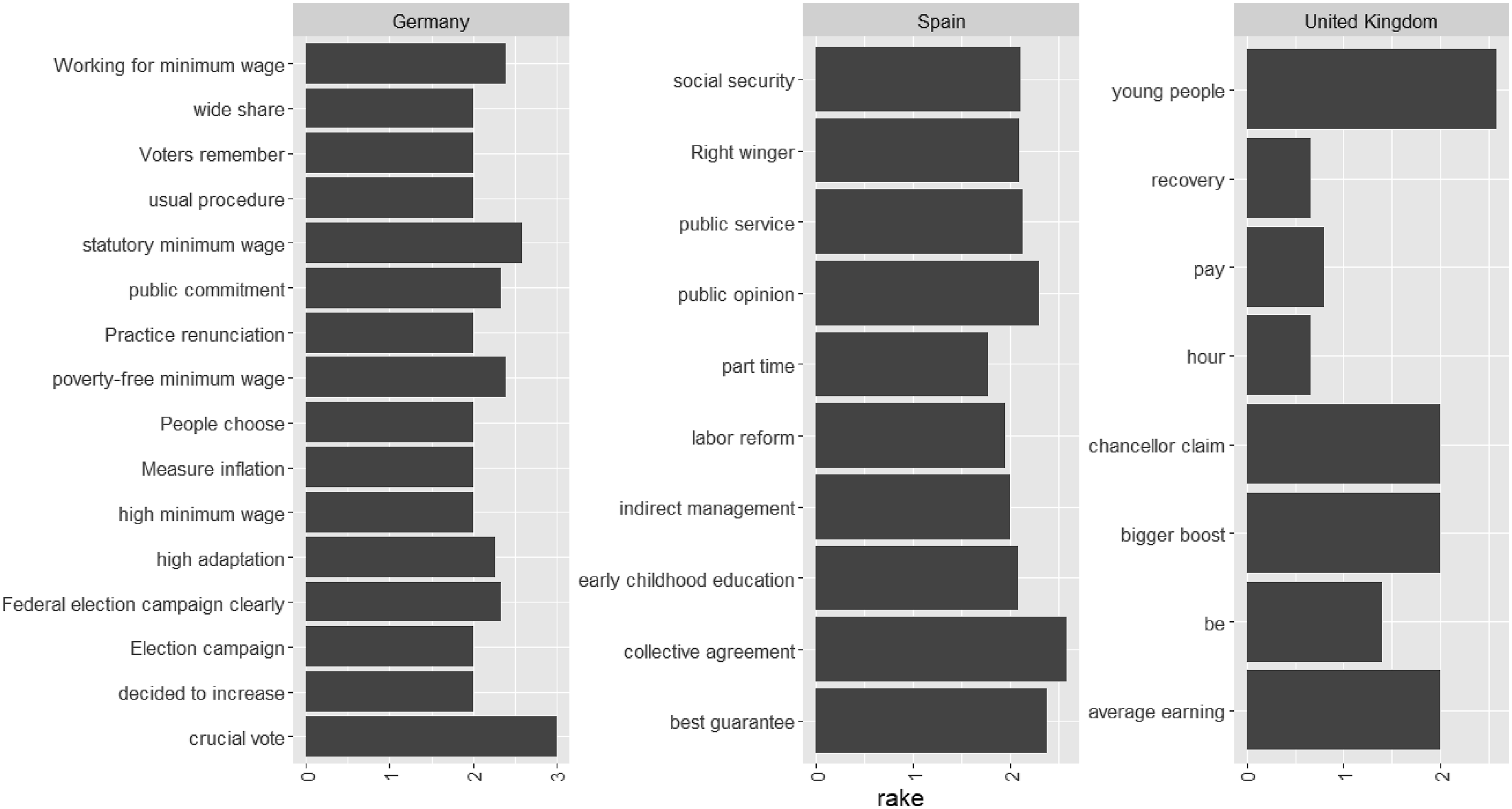
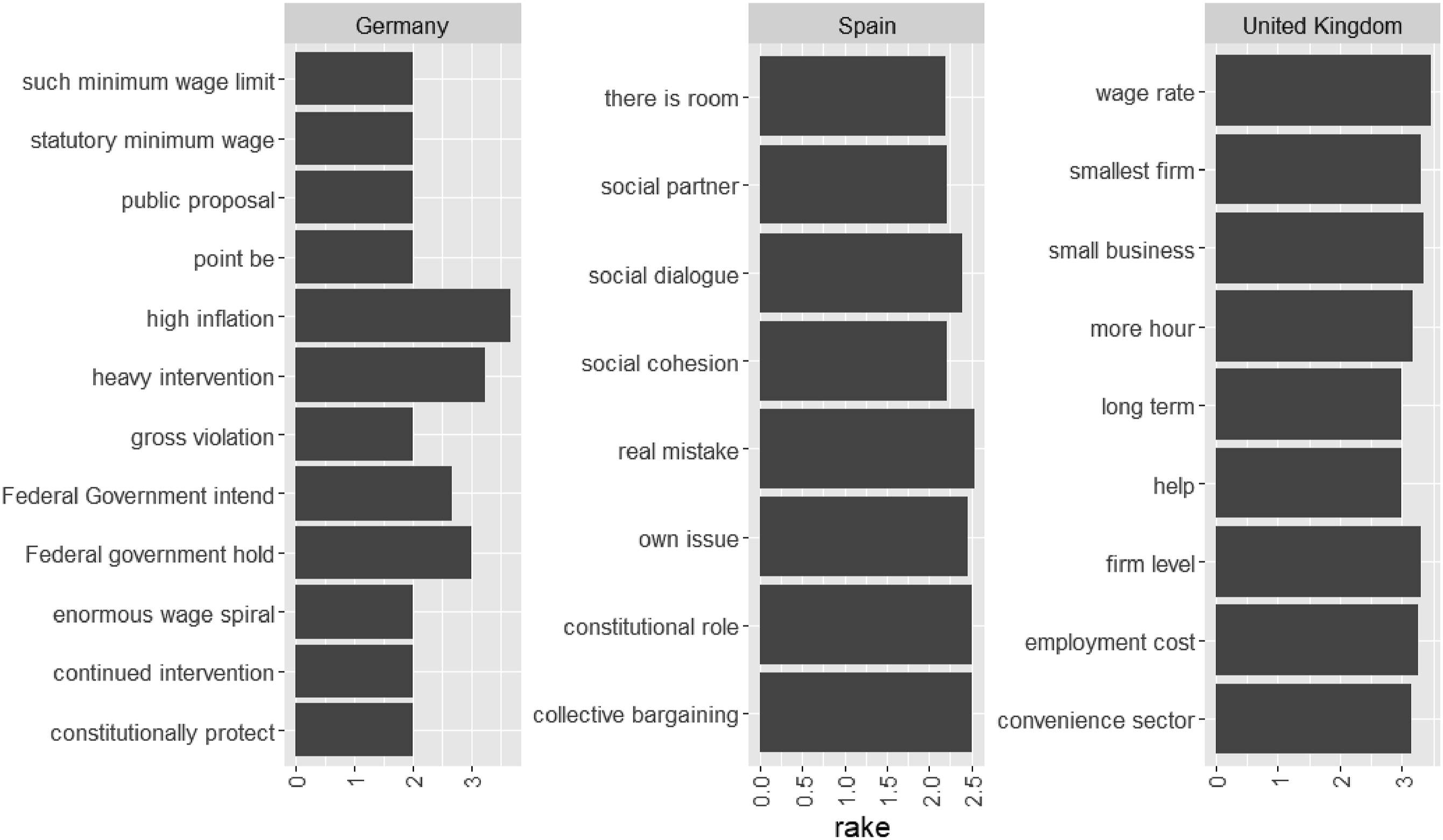
Our analysis of a large corpus of media documents, which compiles statements from government officials, employers, and union representatives, reveals significant cross-country similarities in how increased governmental interventions in MWSMs are discussed. In both Spain and Germany, government politicians frequently employ keywords related to European themes, while in Spain, terms such as ‘social security’ and the ‘social charter’ hold particular importance for government parties when discussing and justifying minimum wage policies (Figure 3). 2 All governments emphasize words related to an adequate standard of living, supporting their decisions by frequently referencing economic evidence (e.g. keywords such as ‘expert’ and ‘proven procedure’ in Germany, and ‘economic evidence’ in the United Kingdom). This indicates that government parties are clearly focused on the social dimension and recognize the need to integrate changes to minimum wage policies within evolving economic conditions. From the keyword analysis, it is also apparent that employers prioritize very different topics, focusing on collective bargaining autonomy and the autonomy of social actors, while also highlighting alleged governmental overreach in Germany and Spain. Presumably due to the weakness of unions, employers in liberal market economies (Ireland and United Kingdom) tend to focus their statements more on the negative effects of wage increases on businesses, particularly small enterprises, rather than emphasizing the importance of collective bargaining autonomy (Figure 4).
In addition to the keyword analysis, in the appendix we present an analysis of the most frequently used words in policymakers’ statements about changes to existing MWSMs. While this analysis may be less insightful than one presented on keywords, which focuses on word co-occurrences, it nevertheless highlights the frequency with which different words, carrying different connotations, appear in policymakers’ discourse. As shown in Figure A2, A3, A4 and A5, while government representatives highlight words such as ‘low-wage’ and ‘inflation’, employers’ associations stress words such as ‘costs’ and ‘productivity’. Moreover, in Germany, terms like ‘populism’ and ‘political football’ in employers’ association discourse leaves little doubt as to what employers think about increased governmental involvement in the setting of the minimum wage.
3
Trade unions are more likely to emphasize the social dimension and draw attention to the economic circumstances by emphasizing words such as ‘poverty-free minimum wage’ and ‘inflation’ (Figure 5). Keywords identified via the RAKE algorithm in Keywords identified via the RAKE algorithm in Keywords identified via the RAKE algorithm in 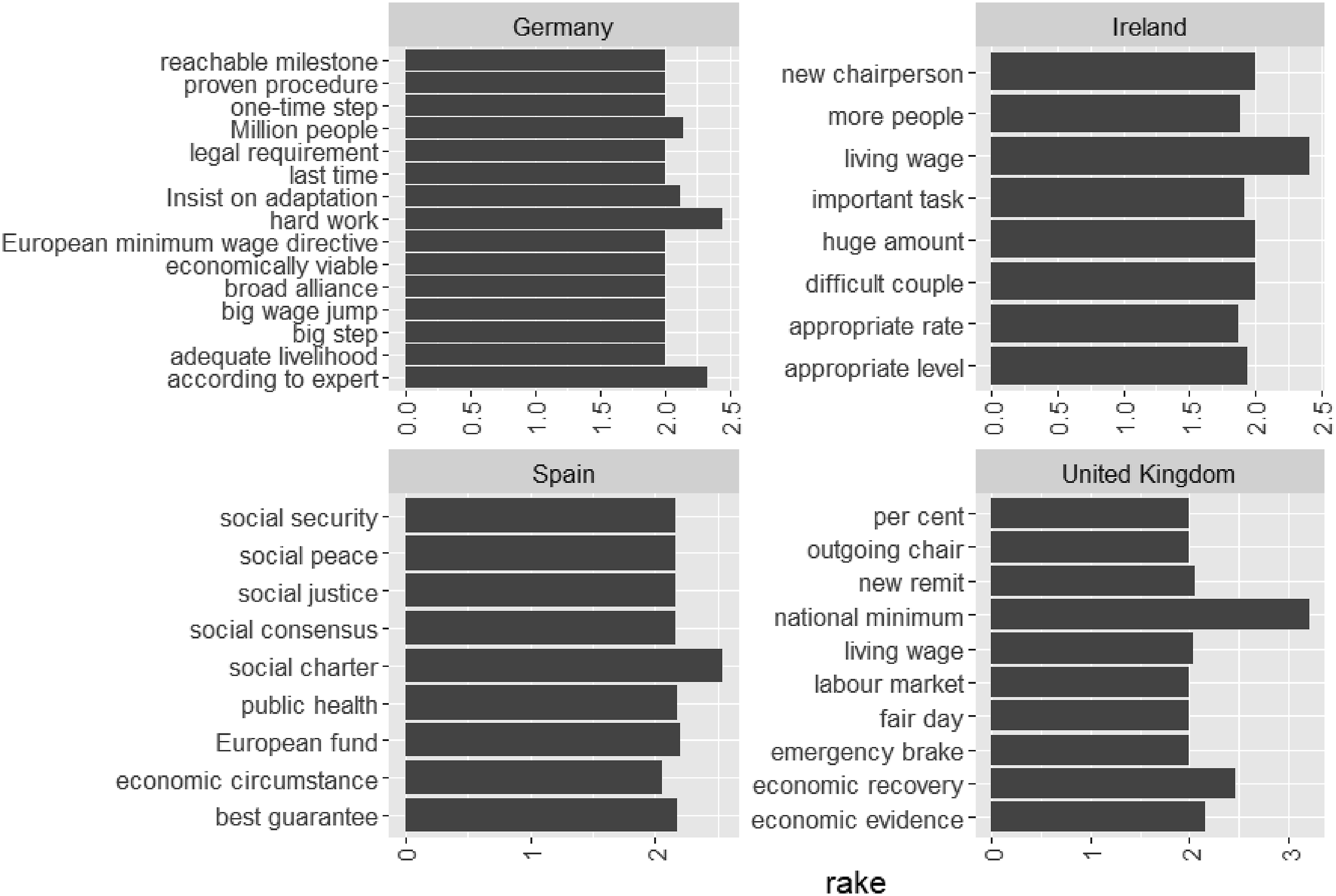
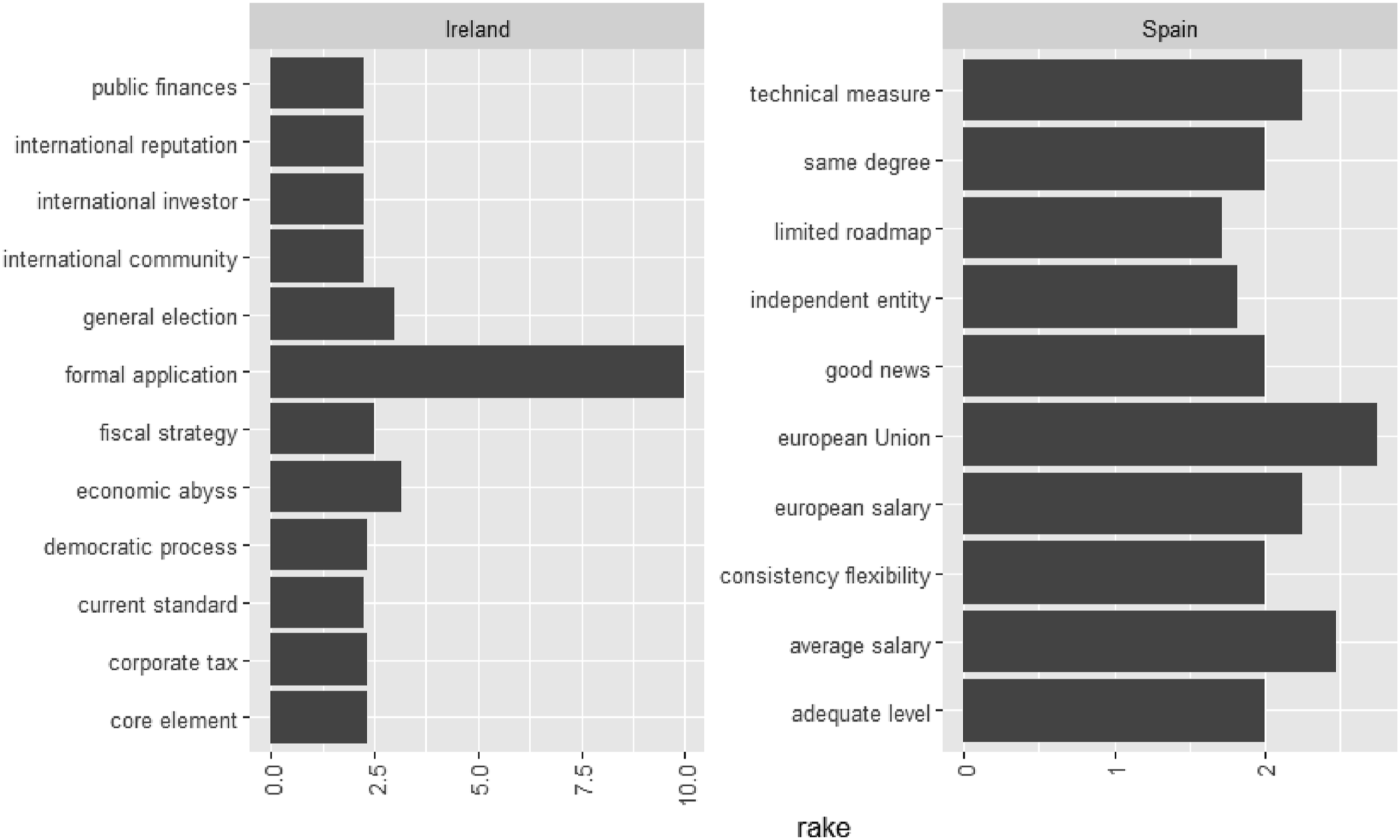
Finally, we compare the charts presented above with an analysis of the discourse of Irish and Spanish policymakers on the minimum wage during the 2009–2012 period, when governments intervened in wage-setting practices with the intention of reducing labour costs. By conducting the same keyword analysis presented earlier, we observe that in Ireland, government policymakers framed their discussions on the minimum wage within the country’s broader macroeconomic context, highlighting terms such as ‘international reputation’ and ‘public finances’. For Spain, as noted by Afonso (2019), the statutory minimum wage was less significant at the time, as it covered a small proportion of the workforce. This is also reflected by the smaller size of the Spanish media corpus, as well as the focus on technical language, such as ‘technical measure’ and ‘adequate level’. We also find evidence for an emphasis on the European dimension, with references to terms such as ‘European Union’ and ‘European salary’.
Conclusion
In recent years, governments across the political spectrum have raised minimum wages and increased their control over the wage-setting process. While there are clear electoral incentives that can motivate political parties to pursue a more vigorous minimum wage policy, it is important to note that the increased governmental control of the minimum wage also reflects the weakening hold that social actors have in the compensation mechanisms of the low-wage sector. Indeed, as suggested by our quantitative analysis, historically, there is evidence for an inverse relationship between the strength of social actors and governmental involvement in minimum wage-setting mechanism.
As highlighted by our media analysis, government politicians often reference their responsiveness to changing economic circumstances and frequently speak of their ambition to raise minimum wages as a share of median wages when justifying increased governmental involvement in this area. This is also reflected in our statistical analysis, which finds that governmental control of MWSMs increases when economic conditions worsen. Across all our country case studies, employers’ associations typically express concern over the rising governmental role, emphasizing the erosion of collective bargaining autonomy and criticizing government interference (Germany and Spain). In the United Kingdom and Ireland, where wage-setting is more decentralized and unions are weaker, employers focus instead on the putative negative economic consequences of the minimum wage.
This article has aimed to contextualize the drivers and discourses shaping the growing governmental focus on minimum wage policies across several countries by utilizing automated quantitative text analysis to systematically identify cross-national discursive patterns. While this approach facilitates the identification of key terms, it has limitations, particularly its inability to uncover the causal mechanisms driving national variations in the salience of specific topics related to changes in minimum wage-setting mechanisms – a task more appropriately addressed through qualitative methods. Moreover, given the often historically contentious relationship between trade unions and the statutory minimum wage in several European countries, an analysis that includes a more detailed examination of how unions have responded to the growing governmental ‘ownership’ of the minimum wage issue could enhance our understanding of this topic.
This study contributes to the broader literature on the increased state involvement in industrial relations. Amid the declining influence of social actors, the state has taken on a more prominent role in regulating work relations and addressing wage-related issues in the low-wage sector. Nonetheless, greater governmental discretion in wage-setting does not determine policy direction. Recent labour market policies in European countries demonstrate that enhanced governmental discretion in regulating low-wage work can lead to either commodifying or de-commodifying outcomes. Indeed, the commodifying labour market interventions adopted during the financial crisis have, in some ways, laid the groundwork for a different set of policies during the COVID pandemic and the cost-of-living crisis (Maccarrone et al., 2023; Moreira and Hick, 2021). The trajectory of these developments remains to be seen, yet it is evident that, amidst the decline of trade unions and collective bargaining, the role of the state and party politics in industrial relations has become increasingly pronounced, as reflected in the increased importance that governments play in different countries’ minimum wage-setting mechanisms.
Footnotes
Acknowledgements
The author would like to thank the two anonymous reviewers and the editor for their excellent reviews. The author would also like to thank Anke Hassel, Licia Bobzien and Georg Picot for their insightful comments on earlier drafts of this article.
Declaration of conflicting interests
The author(s) declared no potential conflicts of interest with respect to the research, authorship, and/or publication of this article.
Funding
The author(s) received no financial support for the research, authorship, and/or publication of this article.

Notes
Appendix
Descriptive statistics for the media analysis. The third column refers to the total number of words contained in policymakers/stakeholders’ direct quotes on the topic of increased governmental involvement in the setting of the minimum wage.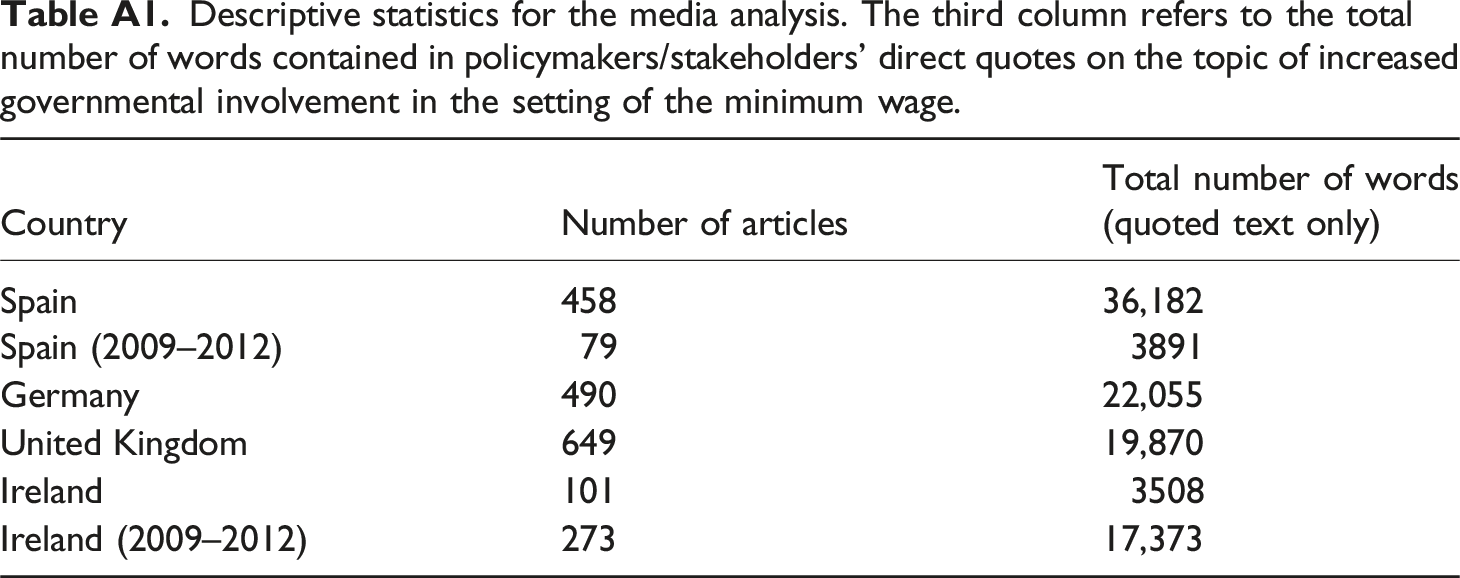
Country
Number of articles
Total number of words (quoted text only)
Spain
458
36,182
Spain (2009–2012)
79
3891
Germany
490
22,055
United Kingdom
649
19,870
Ireland
101
3508
Ireland (2009–2012)
273
17,373
The growth trajectories of minimum wages in Germany, Ireland, Spain, and United Kingdom (2000–2024). Source: WSI.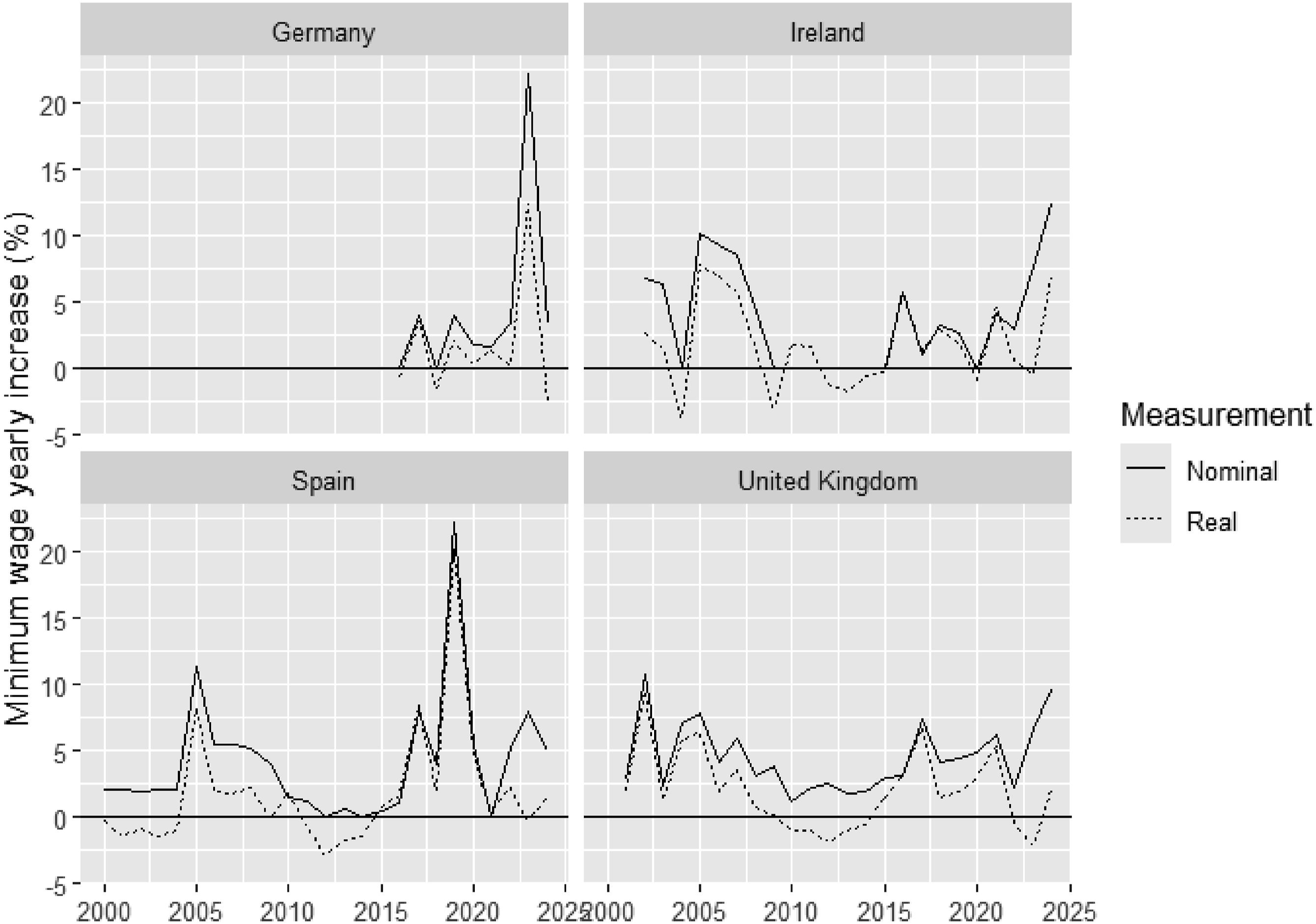
Most frequently employed words used by 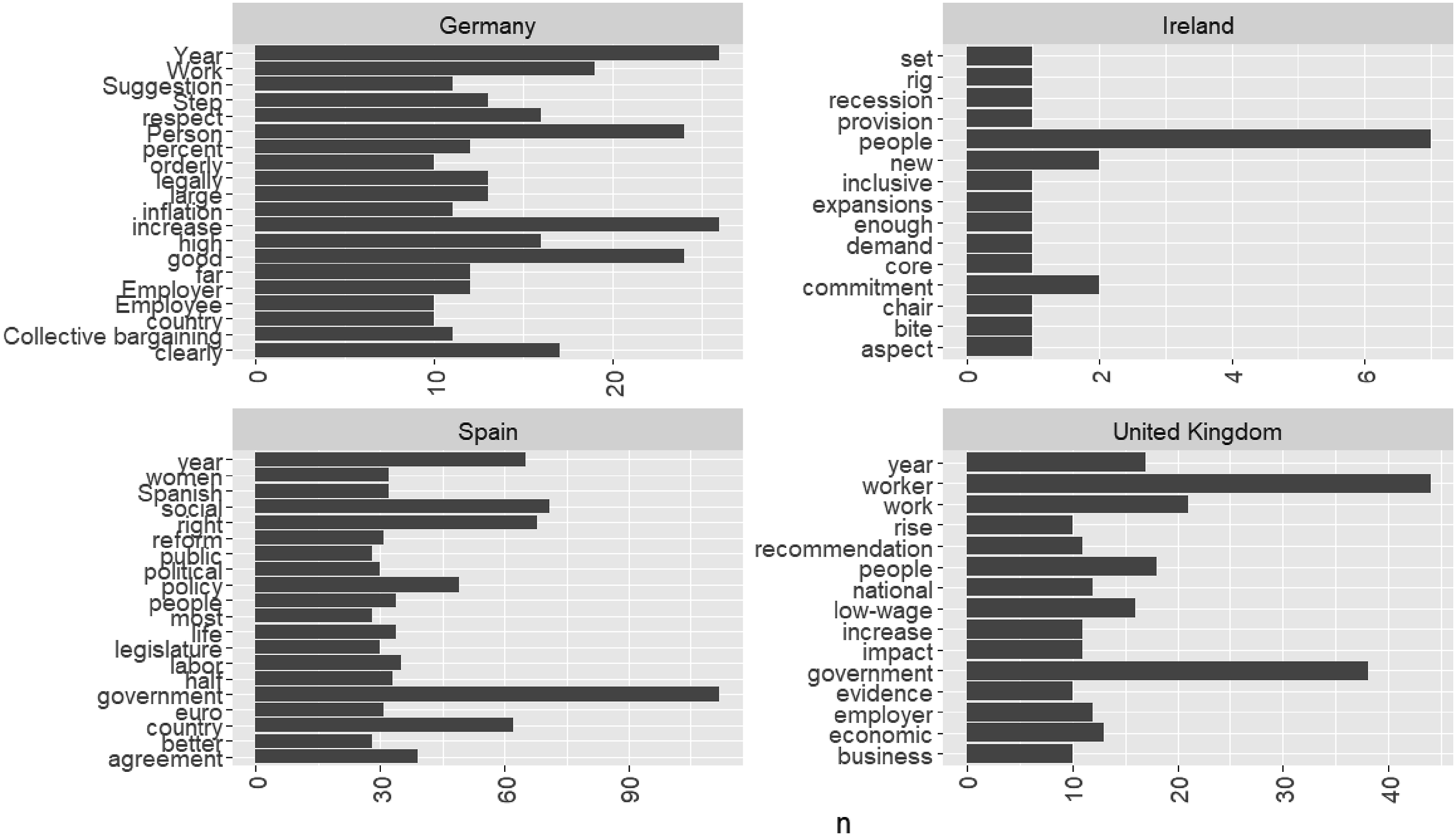
Most frequently employed words used by 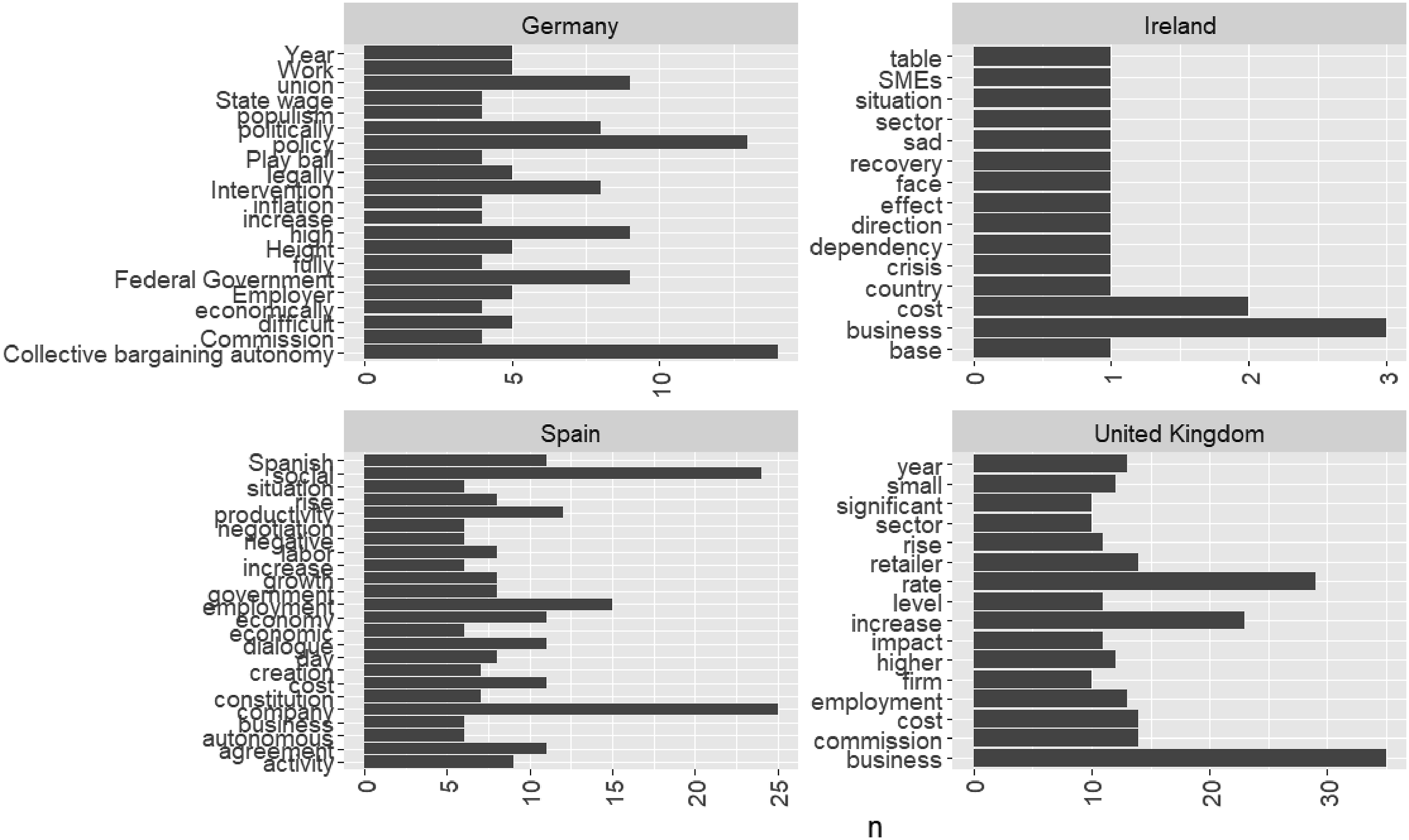
Most frequently employed words used by 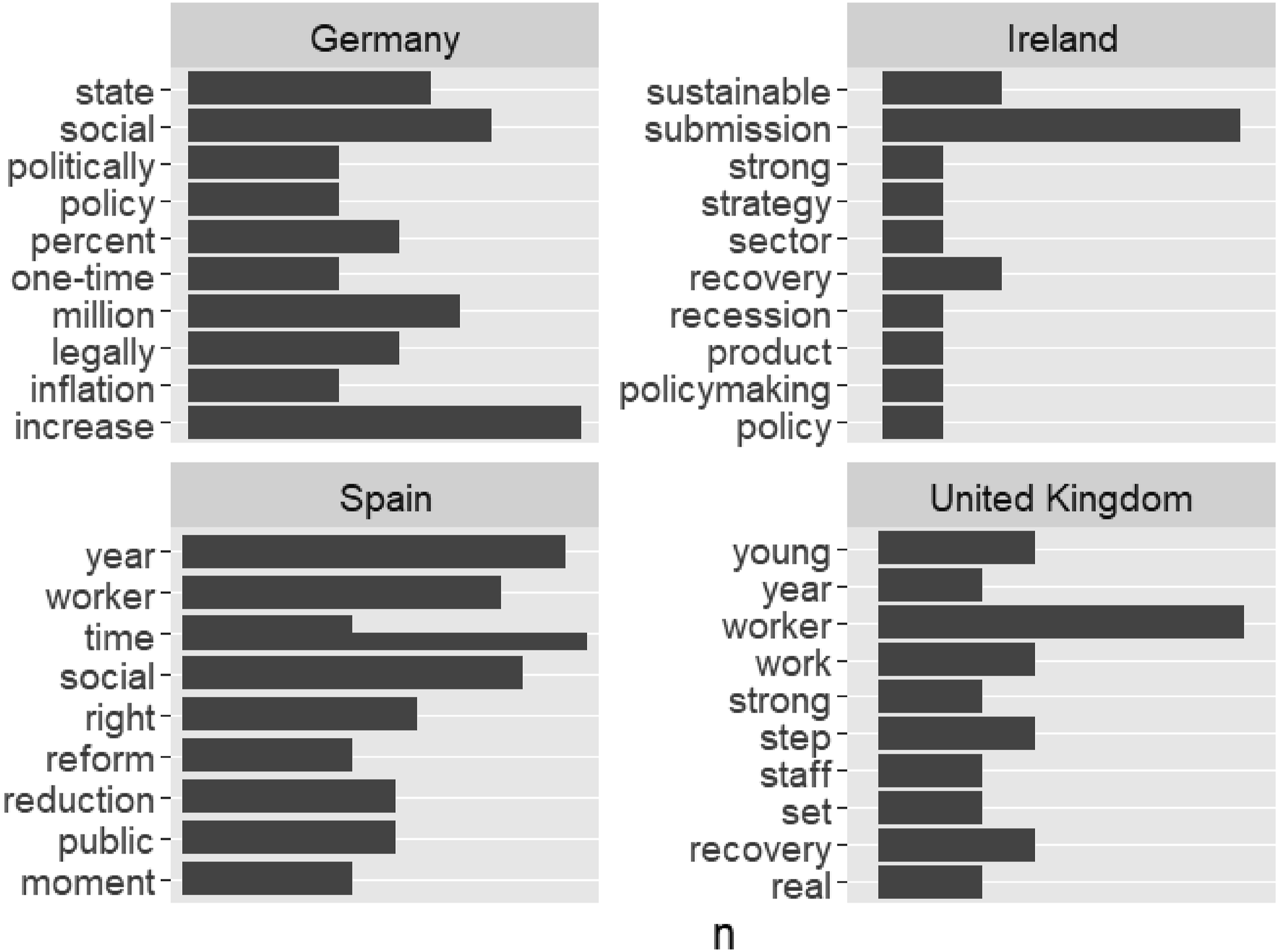
Keywords identified via the RAKE algorithm in