




Abstract
The article traces the passage of the legislative amendment that changed the rules of the intra-EU posting of workers, proposed by the Juncker Commission in 2016. Using data gathered from the news media and 11 interviews, it reconstructs the policy-making process, finding that this was shaped by means of intergovernmental interactions between executives of (groups of) member states. A key turning point occurred in August 2017, when the then newly elected French President, Emmanuel Macron, embarked on a highly publicized tour in a select group of eastern European states, with the stated aim of building support for the amending Directive. Eventually, the coalition of Eastern European member states that had initially challenged the Commission’s proposal was dismantled, clearing the way for its adoption. Extra-institutional intergovernmental negotiations propel contested policy initiatives forward by limiting the range of actors involved in the policy process, by relaxing the complex decision-making rules characteristic of the EU, and by providing opportunities to instrumentalize media attention.
Introduction
In the project of European integration, market making has been a priority (Crespy and Menz, 2015), though, from the second half of the 2010s onwards, the project of ‘Social Europe’ has arguably gained some momentum as well (Zeitlin and Vanhercke, 2018). However, building broad support for EU social initiatives has not been an easy task. The present study investigates one such instance, the reform of the rules on the intra-EU posting of workers, initiated by the Juncker Commission in March 2016 and adopted in June 2018. This episode is taken as a point of entry to the general problématique of decision-making in the EU’s multilevel governance, shedding light on the ways in which political leaders find viable solutions and push through reforms in highly contested policy areas.
A posted worker is an employee who is temporarily sent by their employer to carry out a service in another EU member state. Like conventional worker mobility, posting takes place predominantly from the EU’s low-wage Eastern member states towards the West. However, posting does not entail integration into the host state’s labour market as posted workers continue to be formally employed ‘back home’. Posting is meant to encourage more integration and competition in European service markets (Maslauskaite, 2014). However, large differences between employment conditions in various member states, compounded by legal uncertainties, paved the way for the emergence of a business model relying on cheap labour, that is, hiring workers from low-wage member states on the terms of their home countries while circumventing the employment laws of the receiving countries (Arnholtz and Lillie, 2019). Moreover, even though posting comprises a minor share of the EU labour market in terms of absolute volume, it concentrates in certain places and sectors which can accentuate the effects of its overall small volume. In addition, while posting has the potential to enable workers to exercise their free movement rights (Bogoeski, 2021), in practice, it tends to become a formulation that allows employers to eschew labour regulations and to keep workers in precarious conditions, in (hyper-)flexible, poorly paid jobs (Caro et al., 2015: 1601). Posting has attracted very high levels of politicization, especially since the EU’s eastern enlargement (Comte, 2019), as the interests of sending and receiving states in re-regulation diverge.
The amending Directive was not the Commission’s first attempt to address the tension between economic market freedoms and social rights in this policy area, but earlier reforms were either watered down or failed – despite being less extensive in the scope of the changes that they sought to introduce. When the Commission published its new proposal, which tilted the balance decidedly towards worker protection and a ‘level playing field’, it was not immediately evident that this time the outcome would be different (Cremers, 2016: 161). The final text was approved more than 2 years after its introduction, with some modifications but nevertheless retaining the original outlook. Persisting shortcomings aside, the amended Directive was nonetheless seen as an important reform, a ‘sea change to the previous approach’ (Picard and Pochet, 2018: 1). What made this shift possible, especially given that similar, less ambitious proposals had previously failed?
Using data gathered from the news media and 11 interviews with individuals who were involved in or closely followed policy making, this paper traces the process that led to the passage of the amending Directive. It points to the relevance of a territorially based, intergovernmental conflict between groups of member states, the divisions of which had already transpired in the policy formulation stage. Soon after the Commission’s proposal was published, a group of Eastern European governments, spearheaded by the Visegrád Four (V4), and especially Poland (the largest net sender of posted workers in the EU), mobilized against it, resulting in delays and, eventually, a deadlock in the Employment, Social Policy, Health and Consumer Affairs (EPSCO) Council configuration. Direct bilateral or multilateral negotiations conducted between national government officials characterized the entire policy episode but reached a high point in August 2017, when the then newly elected French President, Emmanuel Macron, embarked on a highly publicized tour of a select set of Eastern European states, with the stated aim of building support for the reform. Eventually, the coalition that had initially challenged the Commission’s proposal was dismantled, clearing the way for its adoption. The study demonstrates the capacity of executive actors to forge policy-specific coalitions through transnational negotiations to effectively propel contested EU initiatives forwards.
What is intra-EU posting and why is it contentious?
Intra-EU posting is a form of labour mobility that falls within the freedom to establish and provide services in the single market. While, in the case of typical worker mobility, persons taking up work in a member state other than their own do so under the same conditions as natives (Schmidt et al., 2018), workers posted temporarily to another member state remain mainly under the sending country regime, with the receiving state regime also regulating certain aspects of their employment relationship (Arnholtz and Lillie, 2019; Cremers, 2016). Posting is primarily (but not exclusively, see Mussche et al., 2018) driven by economic disparities between the EU member states and occurs predominantly from East to West (Figure 1).1 In Eastern member states, posted workers make up a larger proportion of the economically active, outgoing postings tend to last a long time and posted workers are mainly situated in the lower segment of labour markets in the host states (European Commission, 2016b). Conversely, member states in Western and Northern Europe are net recipients of posted workers; the labour market significance of received posted workers is small overall but highly concentrated in certain sectors, while outgoing posted workers tend to be high-skilled professionals posted for brief time periods (European Commission, 2016b). Number of posted workers in EU member states, sent, received and net, 2016. Source: Own elaboration based on European Parliament: https://www.europarl.europa.eu/infographic/posted-workers/index_en.html#overview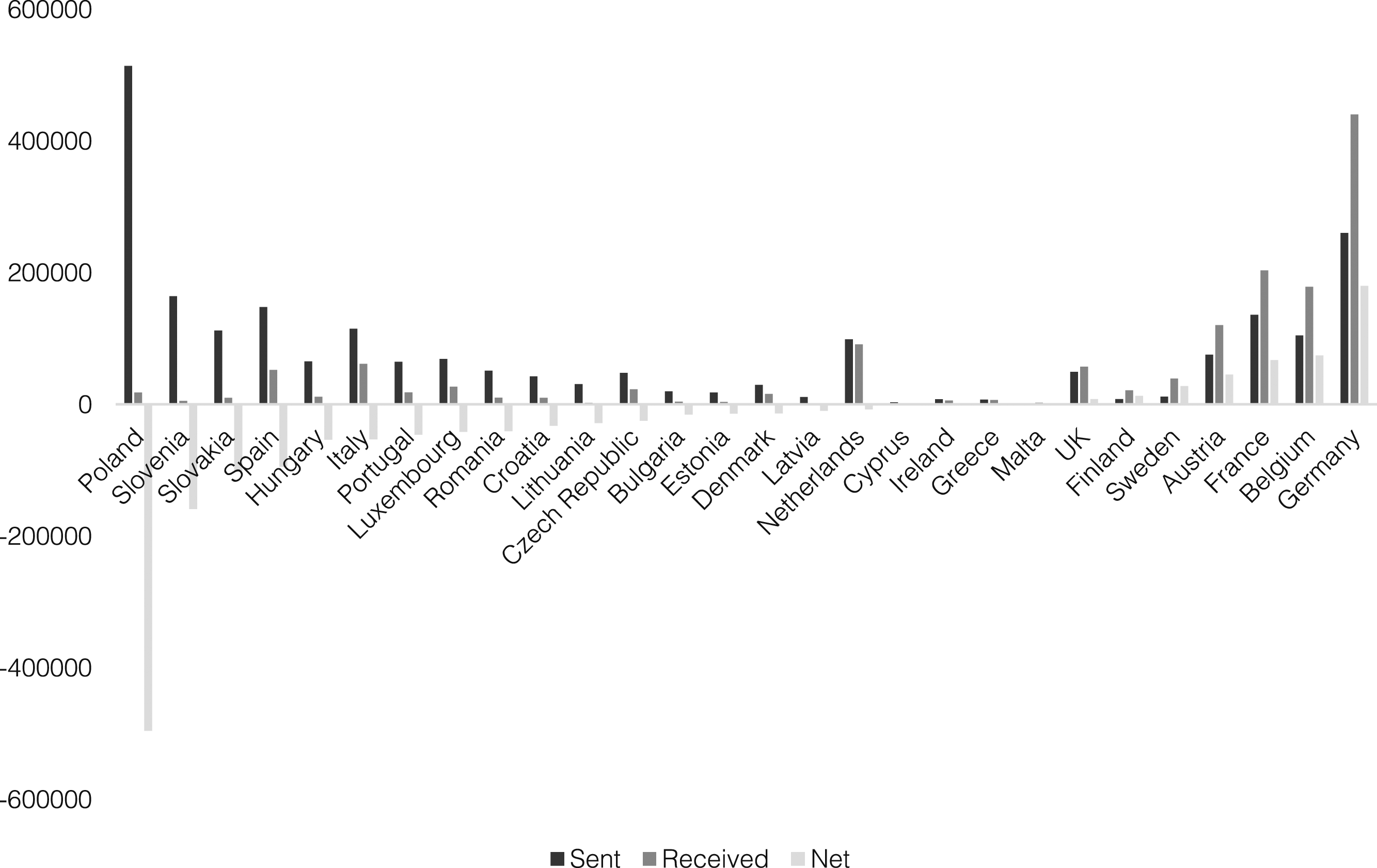
Beyond the labour market demand and shortages, labour cost differentials constitute important drivers of posting. Service providers that are established in countries with lower wages and social security contributions gain a competitive advantage vis-à-vis those that are established in countries with higher wages and more social protection. This type of ‘competition posting’ (Lens et al., 2022) is dominant in low value chain sectors, such as construction (the sector absorbing most postings), transport and agriculture (European Commission, 2016b), and it is the one that tends to be politically controversial. Additionally, unions face organizational challenges in developing transnational cooperation, while inspectorates must handle complex cases and may find it difficult to compel foreign service providers to respect the regulations applicable to posted work (e.g. Seeliger and Wagner, 2020). Intra-EU migrant workers from the new member states often occupy precarious and marginal labour market positions in general (Meardi, 2012), but the working conditions of posted workers are especially poor (see Arnholtz and Lillie, 2019: 8‒9 and the references therein). While Western European member states worry that channelling cheap labour into their labour markets undermines social standards and constitutes unfair competition, many Eastern European actors see their objections as protectionism.
Posting is a multifaceted issue that involves a wide range of stakeholders (trade unions, employer associations, EU institutions and national governments). Employers generally favour minimal regulation to secure low wages, while trade unions seek to protect the existing industrial relations systems. Low-wage Eastern European member states favour deregulation to benefit their firms and workers, while high-wage Western European member states wish to shelter their social models. Moreover, these lines of conflict can clash in various ways. Employers can be cross-pressured, weighing the advantage of cheap labour against increased competition (Afonso, 2012) or improved competitiveness against labour shortages due to emigration (Interview 6). Posting has the potential to undermine pan-European labour solidarity as trade unions and progressive political forces in eastern member states may favour deregulation, focusing on the benefits that it brings for workers and the project of ‘catching up’ with the West – a position that may draw intense criticism from Western allies (Czarzasty and Mrozowicki, 2018). Beyond purely material interests, the staunch opposition of some Eastern European governments to strengthening worker protection is, at least in part, rooted in the strong appeal of neoliberal ideology that prevails in the region (Chelcea and Druţǎ, 2016).
As this cursory discussion makes clear, building a majority that could support a change in the status quo and transcend the ‘East–West symbolic and material divide’ in this policy area (Adamczyk, 2018: 198) was not an easy task. The next section turns to the scholarly literature that grapples with the politics of ‘Social Europe’ to guide the subsequent analysis of what made the change possible.
The drivers of ‘Social Europe’: A literature review
There is an ongoing scholarly debate about whether in recent years there has been a shift towards socially oriented policy interventions in labour market regulation and industrial relations, on the one hand, and regarding the drivers of social policy change at the EU level, on the other hand. In terms of the overall direction of change, scholars broadly agree that liberal market building has been the long-standing goal of the EU policy agenda (Crespy and Menz, 2015). Nonetheless, the expansion of social objectives promoted by the Juncker Commission (Zeitlin and Vanhercke, 2018), continued also by the von der Leyen Commission (e.g. Natili and Ronchi, 2022), is taken to indicate a more recent shift towards market correction. By contrast, others argue that the previous paradigm continues unabated and that the EU’s substantive policy interventions are therefore still geared towards liberalization and the commodification of labour (Jordan et al., 2021). In terms of the drivers of change, the main unanswered question is whether an entrepreneurial Commission or the member states/Council is chiefly in charge, with empirical studies obtaining contradictory results (e.g. Copeland and James, 2014; Mailand, 2021).
Another related question is how multiple (territorial and ideological) divides over ‘Social Europe’ (Ferrera, 2017) play out in the field of EU-level social policy. Several studies engage with the subject of service mobility and the formation of political coalitions in relation to posted work. A common thread in many of these studies is the absence of monolithic interests and neat divisions, as argued by Afonso (2012) on employers, Seeliger and Wagner (2020) on the trade union movement and Crespy and Gajewska (2010) on MEPs’ positioning on the Services Directive. The latter propose that neither the left–right cleavage nor a territorial one can fully capture actors’ positions but that a cross-cutting opposition between ‘regulators’ and ‘liberals’ offers the best fit. Examining the same initiative in the Council, Miklin (2009) reminds readers that ministers’ ideological profile matters, especially when parliamentary and intra-governmental control is low. Analysing observations submitted to the CJEU hearings of the Laval and Viking cases (see below), Lindstrom (2010) detects a conflict structured along transnational lines, separating old and new member states based on the extent to which they oppose or favour further liberalization, respectively.
While these studies provide a wealth of insights, many are quite dated, conducted before the adoption of the amending Directive and the supposed socialization turn. The exception is the study by Corti (2022), which nonetheless examines posting policy evolution long durée, and therefore the 2016 reform is only one part of the analysis. This article, by contrast, reconstructs the policy process in its entirety, from the Commission’s proposal to the eventual passage of the amending Directive. Furthermore, the article seeks to advance the literature on the drivers of (social) policy change in the EU by drawing attention to the role of member state governments in particular. It departs from the observation that governments’ EU policy preference formation cannot be derived entirely from domestic conditions, that is, conceived as a somehow automatic aggregation of patterns of national interest and political competition, but constitutes an open-ended, context-sensitive process (Kassim et al., 2020). If member state governments are ‘persuadable’ and their positions can shift over time, then the question is ‘to what is this shift owed?’
This takes us to the dynamics of interactions between member state executives. Relevant here is the broader debate on the evolution of EU politics post-2008, which some see as having engendered the relative decline of supranationalism and the parallel empowerment of executive actors from the member states (Bickerton et al., 2015; Kassim et al., 2020). By virtue of their dual role in the EU polity, at the same time representing their member state in EU institutions and representing the EU in domestic contexts, executives provide a key link between the national and supranational levels of the EU multilevel system of governance (Kriesi et al., 2021: 8; Van Middelaar, 2013). Furthermore, executive actors can occasionally step outside the formal decision-making arenas of the EU and engage in direct interactions with a select few, forming coalitions of varying degrees of formality and permanence (Kaeding and Selck, 2005). These subsequently feed back into decision-making at the EU level, that is, the Council formations. It is therefore useful to distinguish conceptually between two modes of intergovernmental negotiations: those conducted around the Council table (supranational), with the participation of all member state executives, and those conducted instead in a bilateral or multilateral setting, among a smaller set (transnational). This is an important distinction because the existing literature suggests that the strategic choice of a policy arena (i.e. where certain conflicts over policy initiatives play out) shapes outcomes in various ways, for example, through the manipulation of the range of actors (Grande and Kriesi, 2016: 290) or the degree of public scrutiny a certain arena typically attracts (cf. Hooghe and Marks, 2009). The present study builds on and extends these insights to advance the argument that transnational negotiations are a mode of policy making in EU politics that is particularly suitable for resolving high-intensity intergovernmental conflict and policy deadlock.
Research strategy
To reconstruct the policy process in detail, I draw on two complementary sources of empirical evidence: media coverage and elite interviews. I collected newspaper articles published in the English-language press, including newswires, specialist press and quality press with broad coverage of European affairs 2 in the time period between March 2016, when the Commission announced the amending Directive, and June 2018, when the passage of the final version by the EPSCO Council configuration took place. Media data are routinely used for the study of policy making and can be especially valuable in contexts of high politicization. Multiple sources were used to increase the volume of information as well as to reduce possible reporting bias. The texts were downloaded and manually sorted, discarding false positives and duplicates, leading to the selection of 141 articles. These were used to reconstruct the public debate surrounding the amending Directive and to trace the policy-making process. To complement and contextualize the public face of the policy-making process as reconstructed from the media data, I also use 11 semi-structured in-depth interviews with key actors who were involved in or closely followed the policy-making process (listed in the Appendix). These participant accounts allowed me to capture the less salient aspects of the policy process, which may have been unreported by the media. Before presenting the results of the empirical analysis, a few notes are in order to provide further context regarding intra-EU posting.
Policy legacies and the Commission’s reform proposal
The legal framework for posting was set out in the 1996 Posting of Workers Directive, which was itself a product of intense negotiations that lasted for no less than 5 years (Cremers, 2004). It stipulated that companies posting workers needed to comply with the laws of the host states (under the general rule Lex Loci Laboris), including an obligation to ensure ‘minimum rates of pay’ for posted workers. The Directive did not elaborate on this concept, clarifying, for example, whether it included allowances, supplements etc., nor did it recognize local collective agreements setting pay rates higher than those for local workers. Over time several legislative gaps became evident regarding a variety of issues, such as the conditions of employment of posted workers, or the extent to which companies posting workers had a genuine link with the state in which they were established (for details see: Corti, 2022). Furthermore, there was a mismatch between the posted workers directive and a tangent regulation on the coordination of social security (Reg. No. 883/2004), which set the rules of social security payments for posted workers. While the posting of workers directive did not place an upper limit on the duration of posting, stipulating merely that it shall be temporary, the regulation on the coordination of social security exempted posted workers and their employers from paying social security contributions in the receiving member state during a posting period of a maximum of 24 months (De Wispelaere and Pacolet, 2015: 4).
Until the numbers of posted workers were low and EU member states relatively homogenous, posting was not seen as a significant problem. However, this was to change with the EU’s Eastern enlargement. A major backlash related to posting broke out in 2004 concerning a proposal by Internal Market Commissioner Fritz Bolkestein, which sought to facilitate the free movement of service providers by allowing them to operate under the regulation of their home country on a temporary basis (i.e. the general rule Lex Loci Domicilii). This ignited protests against EU-led economic liberalization in several countries, especially France, where fears of ‘Polish plumbers’ coming to work in France under Polish labour law contributed to the rejection of the Constitutional Treaty in the 2005 referendum (Böröcz and Sarkar, 2017). Next, in a series of decisions taken by the Court of Justice of the EU between 2007 and 2008 (Laval, Viking, Rüffert and Commission v. Luxembourg), the court consistently defended EU market freedoms against national social policy (Martinsen, 2015).
In response to amplifying calls to revise the existing EU law, the second Barroso Commission attempted to balance the conflicting priorities of free competition and worker protection, with limited success. A plan regarding the right to collective action in the context of free movement provisions (the so-called Monti II regulation) was proposed, but eventually withdrawn. The Commission managed to pass a new instrument, the 2014 Enforcement Directive, which sought to tackle posting-related fraud and regulatory evasion. This was eventually adopted in a watered-down form, leaving the main parameters of the extant rules unchallenged (Corti, 2022). More importantly, the Enforcement Directive did not address practices beyond outright fraud, leaving room for regulatory evasion and ‘rule bending’ (Arnholtz and Lillie, 2019) based on the ambiguities and contradictions in the legal framework.
By contrast, the amending Directive proposed in 2016 introduced several key changes, which drastically reduced employers’ competitive advantage based on pay and social security differentials across the EU. The proposal replaced the reference to workers’ ‘pay’ with that of ‘remuneration’, including ‘all the elements […] rendered mandatory by national law’, that is, an obligation to pay bonuses and allowances as applicable to posted workers too (European Commission, 2016a: 12). The rules set by domestic collective agreements were also extended to posted workers. The document further proposed that, if the duration of a posting exceeded 24 months, and if favourable to the posted worker, the labour conditions of the receiving state would apply. The amendment brought temporary agencies that posted workers under the control of the legislation of the host state. Finally, it allowed member states to introduce legislation stipulating that subcontractors would grant their workers the same pay as the main contractor (European Commission, 2016a). The Commission framed the issue in terms of fairness and social justice in the EU. Juncker’s political guidelines already stated that ‘in our Union, the same work at the same place should be remunerated in the same manner’ (Juncker, 2014) – a powerful slogan that was repeated often during the policy-making process.
The road to passing the amending directive: An account of the policy-making process
Agenda setting: A continuation of unresolved issues
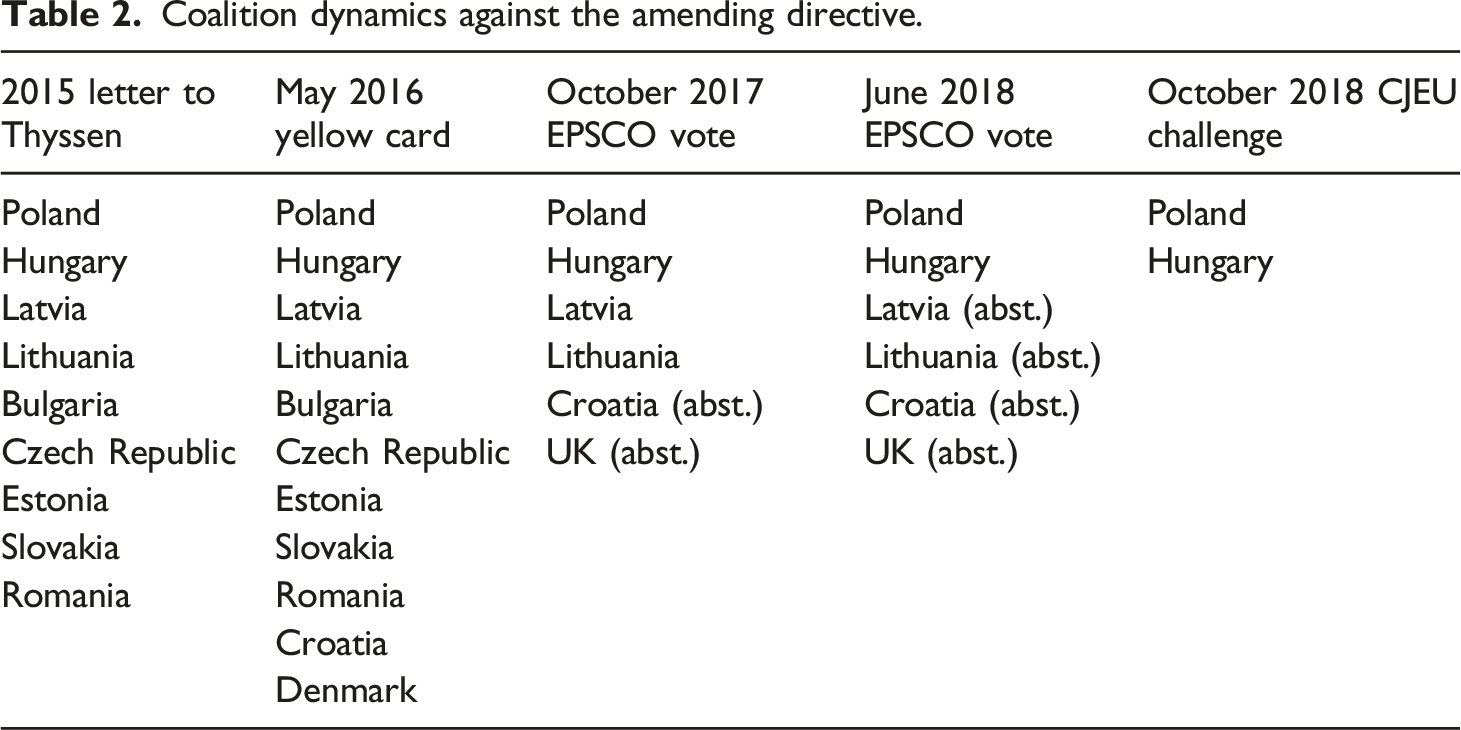
Several interrelated factors propelled the amending Directive onto the Commission’s agenda. Incoming Commission President Juncker aimed to build a new legitimating narrative, centred on a more socially just EU that sought to remedy some of the most adverse social consequences of the protracted economic crisis that had been ongoing since 2010. As a long-serving Luxembourgish politician (including the post of Minister for Work and Employment between 1984 and 1999), Juncker was especially receptive to the arguments from member states that were predominantly on the receiving end of labour mobility, where the issue of posting was politically salient (Interview 7). Additionally, there was a perception that outstanding issues lingered in the field of posting that the Enforcement Directive had not solved (Interview 6) while, at the same time, the number of posted workers was increasing and the difference between the wages of local and posted workers were growing (Interview 3). Commissioner for Employment, Social Affairs, Skills and Labour Mobility Marianne Thyssen had already received member state input in the mandatory consultation phase: one signed by the labour ministers of Austria, Belgium, France, Germany, Luxembourg, the Netherlands and Sweden, inviting stricter rules on posting, and one signed by the labour ministers of Bulgaria, the Czech Republic, Estonia, Hungary, Latvia, Lithuania, Poland, Romania and Slovakia, arguing that the existing framework was adequate (Fromage and Kreilinger, 2017: 147). The camps of support and opposition were, thus, already set when the Commission published its proposal in March 2016.
The first challenge: Subsidiarity concerns
Immediately after its release, Polish and Hungarian government officials made their opposition to the proposal clear.3 By 10 May 2016, 14 parliamentary chambers from 11 member states had informed the Commission that they were objecting to its proposal on the grounds of the principle of subsidiarity, triggering a ‘yellow card procedure’. 4 The parliaments of all the Eastern European member states but Slovenia participated, including Bulgaria, Croatia, the Czech Republic, Estonia, Hungary, Latvia, Lithuania, Poland, Romania and Slovakia. The Danish parliament, which raised subsidiarity concerns but opposed the proposal on different grounds from the rest, was the only non-Eastern European parliament in this group (Fromage and Kreilinger, 2017: 148). Formally, the complaints challenged the EU’s competence to deal with posting. However, they were generally understood as a reflection of deeper discontent with the substance of the proposal (Fromage and Kreilinger, 2017: 133; Interview 1). Six contrary opinions were also sent to the Commission asserting that no breach of subsidiarity had occurred (Fromage and Kreilinger, 2017). The strongest reaction to the ‘yellow card’ procedure came from the French government, driven by the high salience of posting in domestic politics as the then Prime Minister Manuel Valls threatened to stop applying the extant legal framework if the Commission would not modify it ‘swiftly’. 5 In July 2016, the Commission rejected the subsidiarity concerns. 6
The yellow card procedure meant the suspension of the work of the rotating Council presidency, held by the Netherlands at the time. The process resumed under the presidency of Slovakia, the government of which had been openly critical of the amendment. While, according to participant assessments, the Slovak presidency was an ‘honest broker’ (Interview 1), the process nonetheless stalled. 7 A compromise bill put forth by the subsequent Maltese presidency also failed, with some progress made on certain key issues, such as remuneration, collective agreements, and temporary work (Corti, 2022).
In the EP, legislative work had been making progress since spring 2016 in the EMPL Committee, though not entirely effortlessly. More than 500 amendments were submitted to the draft report prepared by the co-rapporteurs, Elisabeth Morin-Chartier from the European People’s Party (EPP) and Agnes Jongerius from the Progressive Alliance of Socialists and Democrats (S&D). Remarkably, territorial rather than ideological divisions transpired in the parliamentary arena, too, splitting the EPP and ALDE party groups, which had generally endorsed the Commission’s proposal. In these party groups, several Eastern European MEPs expressed their criticism at various stages, and a sizeable number eventually rebelled in the final roll call vote. The consent of Eastern European S&D delegations was not a given either but was forged in a series of debates and meetings within the party group (Interview 10). In any case, the risk that the amending Directive would be significantly watered down or blocked in the EP was small: while the amending proposal could move forwards with a majority in the EP, a qualified majority was needed in the EPSCO Council, and it was here that deadlock occurred.
The shift to the transnational arena
By this time, France had entered the presidential election campaign, during which East European labour and service mobility became salient campaign issues. In May 2017, then presidential candidate Emmanuel Macron declared that he intended to review the EU law on posting. 8 Following his win, he made posting a key element of his early policy agenda. Almost immediately after his election, Macron met with Juncker, urging him ‘to do more’. 9 The two leaders continued to be in ‘tight contact’ (Interview 1). As the presidential campaign was unfolding in France, the V4 alliance, composed of the governments of the Czech Republic, Hungary, Poland, and Slovakia, emerged as the nucleus of opposition in the East. In May 2017, the V4 premiers released a joint statement challenging the proposed amendment, seeking ‘to safeguard freedom to provide services as enshrined in the Treaties against protectionist practices infringing fundamental rules of the internal market’. 10
Executive meetings with relevance to intra-EU posting.
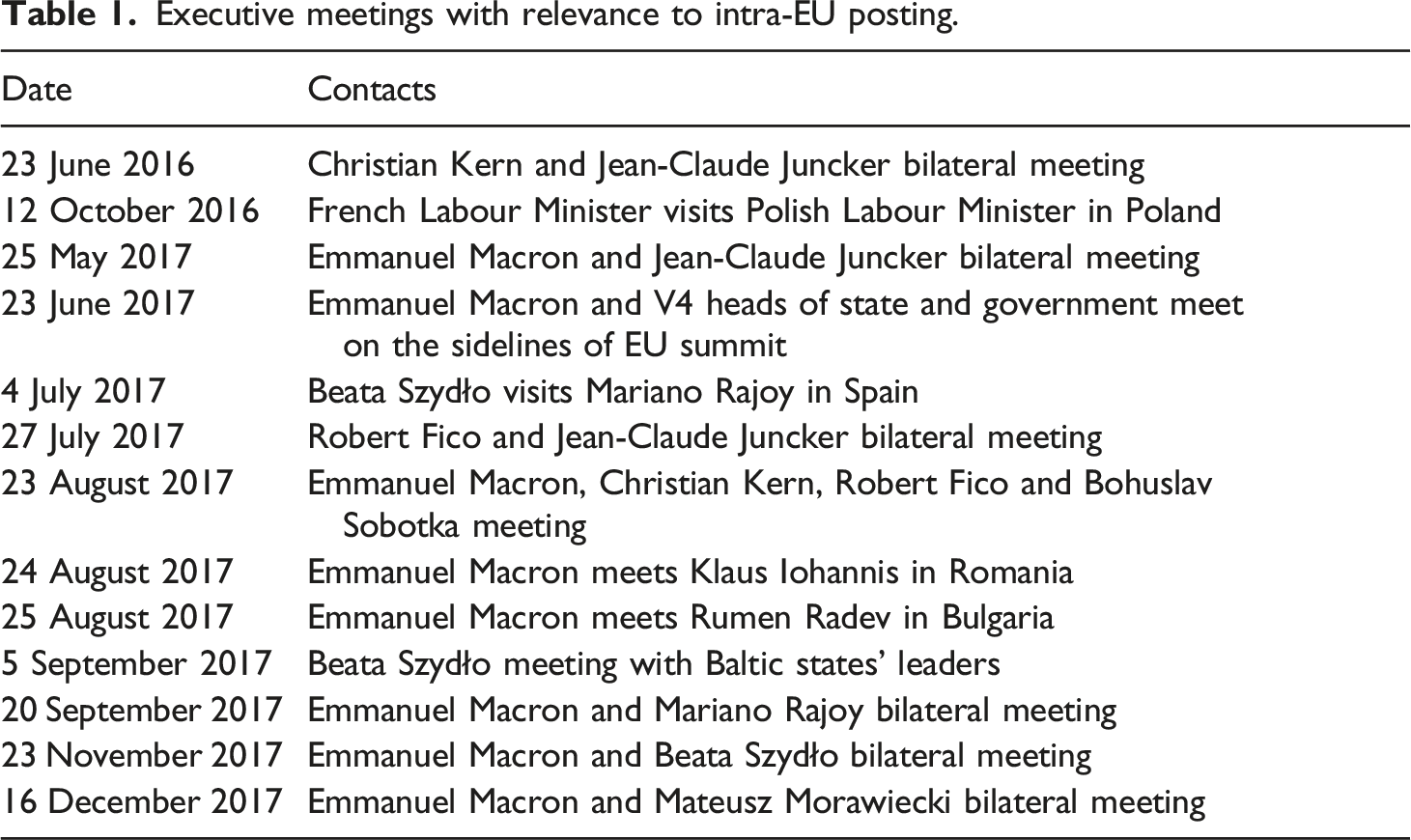
It was in this context that, in late August 2017, Macron embarked on a tour of Eastern Europe with the stated aim of convincing key states in the region to support the amendment.13 Meetings were held with the leaders of Austria, Slovakia, the Czech Republic, Romania and Bulgaria; conspicuously absent from this list were Poland and Hungary, suggesting the intention to divide the V4 after an unsuccessful first contact with the alliance in June. The tour marked a period of peak salience, which the press covered extensively (Figure 2). It began with a meeting between Macron and the Austrian Chancellor Christian Kern, who needed little convincing on the matter of the amending Directive, which he had resolutely supported. The Slovak and Czech prime ministers, conversely, had publicly opposed the amendment individually and as part of the V4. Still, they were eager to meet the freshly elected French president and to discuss key EU policy issues with him. Reportedly, the Czech government raised with Macron the refugee quota system, which it staunchly opposed at the time.
14
On behalf of the Slovak government Prime Minister Robert Fico stated that, despite being ‘very much interested in regional cooperation within the Visegrád four, [nonetheless] Slovakia’s vital interest is the EU’
15
– foreshadowing his government’s willingness to shift its positions on the matter. Number of newspaper articles on posting, by date (N = 141).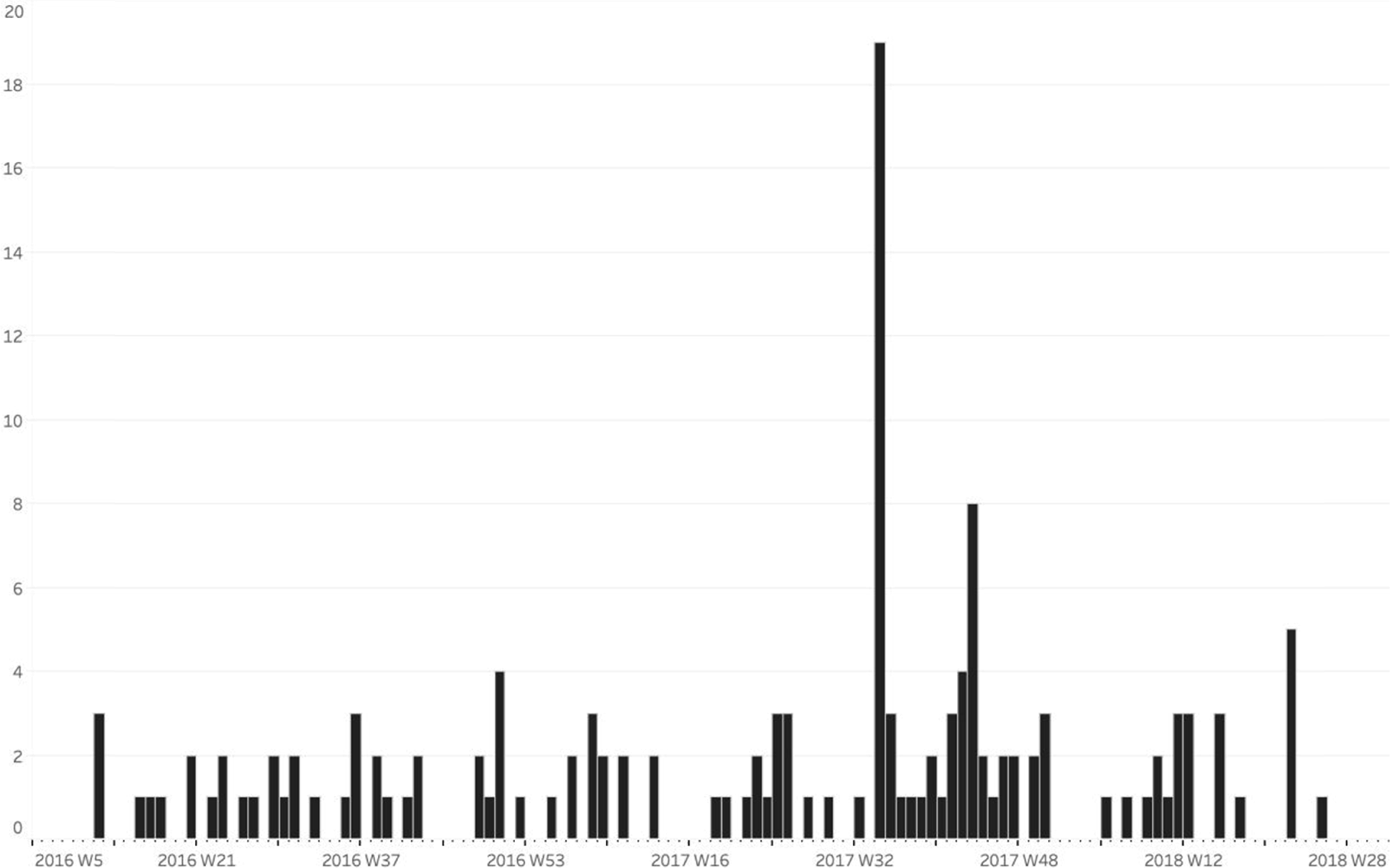
Next on Macron’s list were Romania and Bulgaria, the premiers of which also appeared to warm to the amending Directive. 16 Schengen membership, which the two countries had sought for a long time, was among the handful of issues discussed by the leaders beyond posting. 17 Concurrently, the conflict between the Polish and the French government escalated to an unprecedented level in a war of words, with Macron declaring that ‘Poland was isolating itself in Europe and that Polish citizens deserved better’, 18 which Polish Prime Minister Beata Szydło characterized as ‘arrogant’. 19
As the coalition that had hitherto opposed the reform appeared to be crumbling very publicly, two more meetings were held in which leaders from the East-Central European region sought to reenergize the alliance and to find common ground, albeit on a limited set of issues: between the government officials from Poland and Hungary 20 and those from Poland and the Baltic states. 21 Closing the phase of transnational negotiations, in September 2017, Juncker confirmed that the Commission would press ahead with the amending Directive, announcing the plan to create a European Labour Authority (ELA) tasked with overseeing intra-European labour mobility. 22 This was intended as a sign of appeasement: once the legal framework was judged to be fit for purpose the emphasis would turn to the correct enforcement of the rules (Interview 7). He also declared that it was time to let Bulgaria and Romania into the EU’s Schengen zone of passport-free travel. 23 In the last noteworthy bilateral meeting in October 2017, Macron visited Rajoy in Spain, discussing, among other topics, posting. 24 This suggested that the Spanish conservative government that had previously appeared to waver was now ready to back the proposal fully.
Towards the final agreement
The Estonian presidency was able to finalize the compromise text, putting it to a vote in the EPSCO Council held on 23 October 2017. After a long and polarized debate, only a handful of ministers voted against the proposal (those from Hungary, Poland, Lithuania and Latvia). The Irish, British and Croatian government officials abstained. 25 The ‘general approach’ left key points unchanged, though some concessions were made on the maximum duration of posting (12 months but with a possibility to extend by another 6 months), and the decision to deal with most of the issues surrounding road transport in separate, sector-specific legislation (Riesco-Sanz et al., 2020).26 Thus, the EPSCO agreement allowed the amendment to progress. The immediate reaction in the French press was positive, with the result being interpreted as a success delivered by Macron, 27 despite French truck drivers protesting the exclusion of the transport sector from the agreement. 28 At the same time, Beata Szydło sought to mitigate the blow, denying that this result was the ‘end’ of or a ‘fiasco’ for the V4. 29
The Polish and the Hungarian government representatives, occasionally joined by other Eastern European officials, would continue to oppose the amending Directive at every legislative step, achieving a few further concessions but being unable to change it drastically. In May 2018, the EP passed the amending Directive with a large majority (70% for, 23% against and 8% abstaining).30 While a significant share of mainly Eastern European MEPs in EPP and ALDE rebelled, voting down the reform, the S&D remained united. The formal approval of the EPSCO Council came in June 2018; 22 member states voted in favour and only two against: Hungary and Poland. Croatia, Latvia, Lithuania, and the UK abstained.31 In October 2018, the Hungarian and Polish governments challenged the amending Directive in the CJEU to no avail.32
Discussion: Transnational negotiations in EU policy making
Coalition dynamics against the amending directive.
What propelled the shift to a mode of decision-making that privileges intergovernmental negotiations between a select few? It appears that domestic politicization of the policy area is a key condition in this respect. The high salience of posting in high-wage Western European member states compelled political leaders’ engagement, triggering a response from Eastern European governments, which similarly organized against the proposal. This set off a dynamic of executives becoming progressively more (visibly) involved in the decision-making process.
In terms of the impact and effectiveness of extra-institutional intergovernmental negotiations, three relevant channels emerge, comprising substantive and performative aspects. At the more substantive end is the opportunity to manipulate the range of actors (Grande and Kriesi, 2016: 290): in transnational negotiations, the number of participants is drastically reduced as interactions occur between a limited set of actors, typically between government officials of a subset of the member states. Moreover, while meetings of heads of state and government tend to receive the most media attention (as I discuss below), these are typically replicated further down the entire echelon. This practice facilitates the building of relationships and the exchange of ideas between national officials and possibly feeds into the convergence of positions.
Second, relatedly, even though the transnational arena is not an entirely rule-free environment, the complex set of rules that characterize the EU institutional arena are significantly relaxed. Bilateral or multilateral talks provide room for negotiations that can even transcend a given policy area. In the case of posting, we have registered a varied mix of compensation and side payments, brokered by the French executive, which was exceptionally active in the negotiations inside and outside the EPSCO Council as well as, informally, in the European Council (Interview 7). According to the media reports analysed, bargains could have involved the refugee quotas, in the case of the Czech government, and possibly the prospect of Schengen membership, in the cases of the Bulgarian and Romanian governments, though we can only speculate about this. Similarly, the consultation between Szydło and Baltic states’ leaders that took place in early September 2017 (see Table 1) reportedly focused on the transport sector as a common ‘red line' on which all participants could agree. The persistent and concerted opposition on this front certainly contributed to channelling this issue into subsequent sector-specific legislation. Transnational negotiations thus feed into the EU institutional arena, with groups of governments appearing at the negotiation table with mature positions.
The third key aspect of transnational negotiations relates to public salience as meetings conducted at the highest level of political leadership regarding a divisive topic is bound to attract extensive media coverage. Newspaper data demonstrate that Macron’s East European campaign was the most widely covered period in the entire policy episode, with the greatest salience at the end of August 2017 (Figure 2). The second spike in Figure 2 represents the key EPSCO Council meeting at which EU employment ministers voted in favour of the general approach, giving the green light to opening negotiations with the EP and moving the amendment towards its eventual adoption. Normally, public scrutiny is thought to impose constraints on decision-making, by limiting the ability and willingness of participants to use of exactly those negotiation tools that were mentioned before, that is, the package deals and side payments ‘that have long characterized international negotiations’ (De Vries et al., 2021: 322). It also narrows actors’ room for manoeuvre by committing them to their prior statements and positions. However, under certain conditions, it can aid governments to shift their positions credibly by constructing a narrative of persuasion and compromise. Furthermore, public attention can be utilized strategically in negotiations to ‘name and shame’ certain actors and for symbolic performance, which is then taken up and disseminated by the news media. The freshly elected Macron instrumentalized the media spotlight to shun his opponents (the Polish and Hungarian governments), appearing side by side with their long-standing allies from the region. Claims that certain leaders are ‘isolated’ in Europe are frequently made by critics in all sorts of contexts, but the imagery of transnational meetings among a select few really drives home this point by making certain actors’ absence conspicuous and imposing high reputational costs on them. Furthermore, in the shifting post-Brexit landscape, the Czech and Slovak governments’ decision to ‘side’ visibly with Macron on this issue was likely a means of expressing their commitment to the EU and setting themselves apart from the bilateral ‘illiberal’ alliance forged between the Hungarian and the Polish governments (Holesch and Kyriazi, 2021; for a similar point, see Mailand, 2021: 260).
Indeed, Brexit seems to have influenced the posted workers directive in more ways than one, most obviously by neutralizing the British government’s traditional opposition to the extension of the EU’s social agenda, but also because it prompted a broader problematization of the EU’s free movement regime. Macron’s assessment that ‘part of Britain’s Brexit vote was down to the poor functioning of the single market on posted worker rules, and the rules we have on social rights’34 was meant to signal just how high the stakes were, while at the same time pushing the Polish government towards an ever-more defensive position, given also that the high number of Polish mobile citizens in the UK was widely believed to have contributed to the referendum outcome.
This is not to say that increased media attention necessarily brings transparency. In fact, talks took place behind closed doors, and actors’ motivations are far from obvious. The point is that the performative nature of extra-institutional negotiations, in the form of joint news conferences and photo opportunities, but also the trading of accusations, carries its own benefits and risks. Macron’s role in brokering the agreement was acknowledged by the French press and in the academic literature (Arnholtz and Lillie, 2019: 19). Nonetheless, while the activism of the French government has indeed contributed to moving the amending Directive forwards, evaluations of Macron’s Eastern European campaign are more mixed. Some participant accounts suggest that not only it did not change much on the substance, but also that it may have been counter-productive, by causing further delays (Interview 3) and by alienating rather than seeking to convince reluctant actors (Interview 8). At the same time, one cannot overlook the fact that this mode of decision-making serves the interests of major countries, such as France, which wield considerable influence and network capital on the European political stage. Moreover, while this mode of resolution may have contributed to the push for a more ‘Social Europe’, in the long run, it may produce externalities that have a destabilising side, too: if conflicts continue to solidify between (coalitions of) member states, or are presented to the publics as such, and national executives deliver either ‘win’ or ‘lose out’, this could intensify nationalist opposition to European integration over time.
Concluding remarks
This paper sheds light on the politics of ‘Social Europe’ by detailing an episode that resulted in the strengthening of the EU’s social dimension and by providing insights into the dynamics of the major conflicts unleashed by this political project. The reform better aligns the working conditions of posted workers with those of local workers especially as regards ‘remuneration’ (Rocca, 2019), though its practical implications may turn out to be quite ‘modest’ (Arnholtz and Lillie, 2019: 20). Several conditions converged to enable the revision of the rules for intra-EU posting in a more socially oriented direction, and there is not a single causal factor explaining this outcome. The Commission’s entrepreneurship certainly played a role by proposing an ambitious amending Directive and by vigorously engaging with actors on both sides of the divide, making a conscious effort to bridge differences and bring opponents on board with concessions and technical solutions (Interviews 3 and 7). At the same time, the Commission’s confidence stemmed from the fact that key capitals were fully backing (if not pushing) it in this direction. The ensuing conflict was structured predominantly along the territorial dimension, and the important developments took place in the intergovernmental field. Transnational organizing among member state governments was an especially dominant mode of policy making as both opponents and proponents of the reform sought to build and break coalitions among sets of member state governments with a view to influencing the outcome in the EPSCO (and to some extent also in the EP).
The argument advanced here contributes to the existing literature on ‘Social Europe’ by underscoring the agency of national governments in driving EU policy making (Crespy and Menz, 2015; see also Maag and Kriesi, 2016). However, further research is needed to establish the extent to which the present result generalizes to other instances of policy change. It could well be that there are different pathways to passing initiatives and/or that different actors drive the process at different stages. For example, in their study of the Just Transition Fund (JTF), Kyriazi and Miró (2022) find that, after a small group of actors propelled the JTF onto the policy agenda in the service of narrow domestic interests, the von der Leyen Commission took it upon itself to devise an instrument that would garner broader support. It is also worth distinguishing between the types of initiative in question, rather than speaking of social policy in general, as the ensuing conflict configuration and coalition dynamics can vary from one proposal to the next. A case in point is the Directive on Adequate Minimum Wages, which juxtaposed Continental and Southern European member states against Nordic and (to a lesser extent) Eastern European member states (Natili and Ronchi, 2022). Clearly, there is a need to synthesize these insights from a comparative and longitudinal perspective.
Footnotes
Declaration of conflicting interests
The author declared no potential conflicts of interest with respect to the research, authorship, and/or publication of this article.
Funding
The author disclosed receipt of the following financial support for the research, authorship, and/or publication of this article: The author acknowledges financial support from the research project “Policy Crisis and Crisis Politics: Sovereignty, Solidarity and Identity in the EU Post-2008,” funded by an Advanced Grant of the European Research Council (Grant no 810356 ERC-2018-SyG).