




Abstract
This article explores the application of Deleuze and Guattari to the practice of psychotherapy and attempts to consider how Deleuzoguattarian theory might inform a therapeutic understanding of the ways in which the digital—that is, social media platforms, mediated communication devices, smartphones, and so forth—influences subjectivity and interrelationality in the networked age. A review of the relevant literature explores historical approaches to case formulation and highlights the field’s limited acumen towards the interplay between online technologies and the therapeutic encounter. Following a brief overview of Deleuze and Guattari’s philosophy, a four-stage analytical model is put forward and applied to a case vignette taken from my own therapeutic practice, the analysis of which demonstrates the possibility of understanding the contemporary therapy meeting—and the contemporary “digital” subject—through a Deleuzoguattarian lens.
The “digital” psychotherapeutic subject
Digital culture and social networking sites are actively changing the subject of psychotherapy (Sweet, 2014). Within my own private psychotherapy practice, I have observed that when I enquire into the lives of my clients, I am not exclusively dealing with coherent, copresent identities, but with an extensive network of online experiences, discourses, and personas mediated through social media platforms (Pontes & Griffiths, 2014). Having maintained a caseload of clients ranging in age from 18 to 70, I have witnessed the ways in which “the Digital” (Berry, 2015)—that is, the social media platforms and networked devices that define the modern internet age—is not just a preoccupation of the young or the technologically minded but is an increasingly constant presence within the therapy dialogue, one which brings about affects within the processes of subjectification of clients and between the members of therapeutic dyad. This continued appearance of online technologies has motivated this research to explore digital practices as mutually constitutive of the subjectivities encountered in psychotherapy, and to examine online activities as processes through which the contemporary digital subject is assembled.
It is well rehearsed that an increasing amount of both public and private life is conducted online (Elwell, 2014). Smartphones and wireless internet devices allow for endless opportunities for connectivity, while the expansive “internet of things” (Ashton, 2009) has embedded computing and mediated communication within the material world itself. Despite this, most seminal psychotherapy texts were written long before the advent of the internet (Swartz & Novick, 2020), leaving practitioners of all counselling modalities unprepared to assist clients in navigating the psychic and relational realities that emerge within online spaces. As ubiquitous computing and the mobility of new electronic devices transcends distance and manipulates time, this work argues that new paradigms are needed to conceptualise how ideas around subjectivity and relationality are produced, sustained, and dissolved in the interplay between the digital and analogue realms. It also seeks to establish that the digital engagement of clients is worthy of the same consideration as those evaluative concepts—the unconscious, conditions of worth, existential givens, core values, and so forth—that have served as the theoretical centre of the “talking” therapies for nearly 140 years (Olivier, 2017). This work proceeds with assumption that, to understand our clients—their desires, their fears, their relational entanglements—what is needed, and what this article will attempt to put forward, is an actionable method of incorporating “the digital” into the case conceptualisation process.
What is yet to come: A “rhizomatic” understanding of the psychotherapeutic subject
This research endeavours to make meaning of the therapy meeting as both subject to, and the product of, a complex array of discourses, emotions, actors, relationships, technologies, and algorithmically mediated social exchange. To establish this framing, an abridged introduction is needed to the work of Gilles Deleuze and Felix Guattari, which provides a basis to comprehend the complexities at play within the modern therapeutic encounter. In A Thousand Plateaus, Deleuze and Guattari (1980/1987) put forward a philosophy centred around the dynamic multiplicities that they assert occur in all entities and across all strata of reality and matter (Kleinherenbrink, 2020). Central to this conceptualisation is the rhizome, or the relations and connectivity of all things (Malins, 2004). Through this lens of radical heterogeneity, the therapy meeting—as well as the subjectivities of both members of the dyad—cannot be reduced to a singular notion of the self, a volley of unconscious drives or an exchange of discourses, but is seen as a multiplicity of actors, forces, and affects, all of which are in a state of flux (Fox & Alldred, 2022). This de-privileging of human agency refocuses attention away from structural or systemic “explanations” of how entities—societies, institutions, families, relationships, individual psyches—work and towards the relational character of “events,” that is, how the relations between entities—of bodies, of material objects, of technologies, of emotions and of discourses—produce the world around us (Fox & Alldred, 2013).
Thus, a Deleuzoguattarian approach to psychotherapy case conceptualisation frames the therapeutic subject as a rhizomatic entity, one that emerges from the relations in which they are situated, including those connections, discourses, and affective phenomena that occur in online and offline spaces. It also provides a means of assessing the interplay between the multiplicity of forces in the therapeutic meeting through a lens not of unity—that which is orderable or recognisable—but of difference, in which ruptures to subjectivity, relationship, and events might open up the horizon to what is “yet to come,” thereby opening up new and unexpected combinations of experience and encounter (Nichterlein, 2021).
The psychotherapeutic “assemblage”
A Deleuzoguattarian framing of the modern psychotherapy subject is as a contingent entity, one which emerges as the product of the interaction between a range—or “assemblage”—of phenomena, materials, and relations (Nichterlein, 2018). In this light, “bodies”—that is, things, people, organisations, systems, and so forth—are “assemblages,” or a gathering or grouping of things whose “function or potential or ‘meaning’ becomes entirely dependent on which other bodies or machines it forms an assemblage with” (Malins, 2004, p. 85). The emphasis is on defining a body not by its internal relations—or interiority—but by its capacity to combine and interact with other assemblages or machines (DeLanda, 2006). For Deleuze and Guattari (1972/1983), “everything is a machine” (p. 2), ranging from atoms to planets, hydrogen particles to rivers, and marriages to nation states. Even the human subject is an assemblage or machine, one connected to a range of biological, social, emotional, material—and, of particularly interest to this project—technological entities.
When viewed through this lens, the psychotherapy assemblage can be surmised as being comprised of a range of components, each of which represent independent machines. These might include: affective-machines (the embodied sense of feeling experienced between the therapy dyad, or exchanged between digital relations), social-machines (the interpersonal relationship at play in the therapy room and online), physical-machines (the room’s geographical, spatial, environmental location, or the presence of a digital device) and psychological-machines (the unconscious phenomena or emotions emerging during the therapy act, and during online engagement). When applied to the therapy meeting, such an orientation is not interested in what the psychotherapy assemblage is made of, but the interpersonal communication, the actions or passions, the material transformations, and the affective capacities—for change, awareness, emotion, understanding, and so forth—that emerge from its assembled relations (Nichterlein, 2018).
A “flattened” therapeutic discourse
Given the primacy of language in the talking therapies, the work of Deleuze and Guattari also affords a lens to consider how the therapeutic discourse itself—not just the therapeutic subject(s)—emerges as a product of the interaction between a multiplicity of objects, actors, technologies, interpersonal relationships, memories, and embodied experiences (Mischke, 2021). The range of material that emerges between the dyad is not privileged over other aspects of existence but flattened and treated as material within a plane of immanence (Fox, 2002). As such, entities at all levels of scale, whether natural or cultural, physical or artificial, animate or inanimate, material or semiotic, are afforded an equal ontology footing, with none given more primacy over or significance than the other (Fuglsang, 2006). Within this flat ontology, emotions, discourses, statements, and feelings are not mere screens for human signs and intentions but are themselves full-blown actors, ones capable of creating affects in the material world (Fox & Alldred, 2016).
The Deleuzoguattarian collapse of the material/discursive divide is a rejection of contemporary psychotherapy’s dominant epistemological positions (Pilgrim, 2010)—social constructionism and poststructuralism—both of which presuppose that language produces existence, including the worldviews and desires on which individuals act (de Freitas, 2016). Such a framing posits that language—indeed, the entirety of the psychotherapeutic discourse—does not represent, reflect, or create states of affairs, but rather is made possible by them (Feely, 2020). Similarly, language does not make—or create—sense; it is only one element in the process in which events occur (Bogard, 1998). Thus, language, embodied sense, and representations are ultimately the transformational result, or emergent product, of a mixing of bodies (Fox, 2002).
Traditional approaches to case conceptualisation
According to Eells (2015), case conceptualisation—or case formation—is broadly defined as a process through which therapeutic practitioners develop hypotheses about the “causes, precipitants, and maintain influences of a person’s psychological, interpersonal and behavioural problems, as well as a plan to address those problems” (p. 2). Such a conceptual apparatus should afford clinicians with a blueprint for psychological change and provide a framework to organise all relevant information about their clients (Eells, 2015). As with all forms of therapy, the details deemed to be relevant are dependent upon the modality used to guide the conceptualisation and the theoretical basis that informs the clinical decision making of individual therapists. For example, psychodynamic formulations (Messer & Wolitzky, 2007) might focus upon unconscious processes, attachment style, interpersonal engagement, and developmental trauma history. Conversely, humanistic approaches (Cotter, 2021) might place a greater emphasis on self-concept, conditions of worth, and reception of unconditional positive regard from others. Finally, Cognitive Behavioural methods (Grant et al., 2008) might be uniquely interested in the interplay between a client’s thoughts, emotions, and bodily sensations.
While modern advances in integrative (Faris & Van Ooijen, 2011) and pluralistic (Cooper & Dryden, 2015) models have incorporated sociocultural factors, such efforts remain largely disinterested in the role of technology and, as such, relegate digital devices, processes, and activities to, at best, mere contextual factors, ones subordinate to the psychic and interpersonal experience of clients. Perhaps more critically, a preponderance of modern psychotherapeutic thought—even that from intersubjectivist or relational paradigms—persists in viewing the human subject as a relatively unitary ‘self’ defined by consistency and stability, rather than a processual entity composed of a host of fluctuating elements and defined by the difference that emerges as a result of the transformation in their relations with other entities (Price-Robertson & Duff, 2016).
What is missing from psychotherapeutic theory—and what this work seeks to redress—is a more expansive view of the production of subjectivity in the networked age, and of the case conceptualisation process writ large, one that is not interested in separating the real from the unreal, the analogue from the digital, the human from the humanoid. A Deleuzoguattarian understanding of case conceptualisation is not concerned with the role of the therapy process as an effective means of pushing clients towards a more authentic or true version of themselves, or with that claim that the self that enters the therapy space is any more or less performative or seeking of coherence than that which appears online. Rather, such a view of the psychotherapeutic subject seeks to avoid the pitfalls of trying to “either integrate or oppose” (Brown, 2012, p. 118) and to sit—much like the psychotherapeutic act itself—in between worlds, so as not to consider the technologies that have come to define so much of modern social exchange with blind enthusiasm or uncritical contempt, but to wrestle with the digital’s ambiguities and contradictions, its pitfalls and possibilities, its ironies and inner tensions, its affordances and possibilities. In doing so, practitioners might be presented not only with an actionable framework to consider how they might conceptualise the digital as an affective force within the psychotherapeutic encounter, but also with an apparatus of resistance to the contemporary orthodoxies—of pathology, of subjectivity, of selfhood—that dominate the field and so often constrain the production of new signs, affects, and modes of thinking (Lambert, 2012).
A Deleuzoguattarian alternative
The philosophy of Deleuze and Guattari is perhaps best conceived of as a tool-box, that is, as a collection of machinic concepts that can be plugged into other machines or concepts and made to work (Malins, 2004). When seeking out an appropriate framework to understand the psychotherapeutic encounter, a variety of sources and academic disciplines were consulted. Given the primacy of Deleuzoguattarian studies in the social sciences (Tucker, 2012), I first considered adapting a host of analytic methods from the humanities, including Taguchi’s (2012) diffractive analysis, de Freitas’ (2016) Deleuzian/Guattarian communication analysis, Jackson and Mazzei’s (2013) posthumanist/postqualitative approach, the Deleuzian-informed work of Renold and Ringrose (2011), and the neo-materialist research of Braidotti (2003), Fox and Alldred (2016), and van der Tuin and Dolphijn (2012). I then consulted a range of work from the field of critical psychology, including the contributions of Brown (2012), Nichterlein and Morss (2016), Price-Robertson and Duff (2016), and Tucker (2012), amongst others. Whilst all this scholarship made compelling use of Deleuze and Guattari’s philosophy, I felt that none put forward a model that was both coherently structured and—due to the field’s preoccupation with social and political ontology—actionable within the context of the talking therapies.
Following this investigation, I considered the use of Feely’s (2020) Assemblage Analysis, which draws together a wide range of neo-materialist theory to analyse qualitative accounts. While this three-step approach provided a basic rationale and analytic sequence, I thought its framing of the materiality—and affective capacities—of discourses within assemblages to be underdeveloped in relation to Deleuzoguattarian theory and, more pressingly, its integration of all processes of territorialisation to obscure a fuller examination of “lines of flight,” which, as will be subsequently explained, are moments within the therapy setting when the assembled relations and established subjectivities of the psychotherapy assemblage break down, thereby creating new personal and relational possibilities (Nichterlein & Morss, 2016). Despite these points of concern, this work seeks to build on Feely’s model to develop a practical means of mounting an analysis of the therapy meeting underpinned by four points of Deleuzoguattarian scholarship, each of which are briefly detailed below and related to the case of Rachel, a client taken from my own private caseload, whose unique engagement with social media illustrates the emergent subjectivity and interrelatedness produced in online spaces.
In this study, data collection consisted of naturalistic recordings of therapy sessions and anonymised case studies of clients from my own private psychotherapy practice. The encounters referenced in this work took place during March and April 2021 and were conducted to facilitate candour and improvisation between the therapeutic dyad, to manage ethical considerations implicit in my role as both therapist and researcher, and to maintain the agency and anonymity of clients. The project was given approval by the Cardiff University School of Social Sciences Research Ethics Committee on 29 April 2019 (approval number SREC/3212), which outlined recruitment, process of obtaining consent, data collection and analytic methods, anonymisation strategies, data retention protocols, and dissemination.
Stage one—Identifying components
The first stage of a Deleuzoguattarian conceptualisation of the psychotherapy encounter entails the identification of the disparate components that make up a given phenomenon within the psychotherapeutic-assemblage. Given the complexity of the dyadic meeting, this might include: affective and bodily capacities, the physical materials and subjectivities, the algorithms of electronic media, online and ‘offline’ discourses, the unconscious forces within the subject, and micropolitics of institutions, culture, and social positioning.
Stage two—Mapping flows
Deleuze and Guattari (1980/1987) contend that assemblages comprise and are acted upon by “continuous flows and partial objects that are by nature fragmentary and fragmented” (pp. 5–6). These flows may be semiotic, material, algorithmic, social, interpersonal, or—in the case of the psychotherapy meeting—unconscious or grounded in past relational experiences. The charge of this mode of case conceptualisation is not to ask what a given therapeutic body means or signifies but rather to map the affects or flows that emerge between the components of a given assemblage. Such an orientation is not solely on the discursive interactions that emerge within the dyad but towards situating the phenomena of the therapeutic meeting—including words, accounts, statements, feelings, embodiments, and so forth—within the techno-social assemblages of clients.
When applied to this research, a social media-assemblage is mediated through a client’s smartphone, which acts as a container for flows of “paralinguistic digital affordances” (Hayes et al., 2016), such as likes, comments, follows, and shares. As a result of their digital engagement, clients might express a heightened motivation to receive and exchange those same artefacts in response to an unmet need for validation from others. Continuing, their reception to such material might not only be contingent upon their historical pattern of relationship but also on their sociopolitical context or the normative codes that govern their social assemblages, including those regimes of discipline that striate behaviours in different online spaces. Finally, their understanding of these discourses is mediated through the affective “economy”—of embodiment, unconscious processes, discursive material, and so forth—that emerges between client and therapist. Deleuze and Guattari’s ontology avoids reducing any of these complex flows that appear in the psychotherapy assemblage to simple products of algorithmic processes, social networking service (SNS) design features, discourses, or interpersonal communication (Mischke, 2021). Instead, it enables a view of subjectivity in the networked age as dependent on the interplay between digital and analogue relations and provides a flexible set of tools to address the flows of affect, discourse, and subjectivities that emerge within the therapy setting.
Perhaps there is no more important “flow” within Deleuze and Guattari’s ontology than that of desire (Fox & Alldred, 2022). In a rejection of the psychoanalytic commitment to the unconscious as a space where individual desires are staged, the pair assert the idea that the longing of the subject is more like a machine or factory, one engaged in the cyclical production of desire (Toscano, 2006). As such, attractions, wishes, dreams, and fantasies are not simply evidence of the subject’s longing for a lost object or developmental trauma but are treated as components within a dynamic multiplicity of conscious and unconscious forces (Watson, 2016). To Deleuze and Guattari (1972/1983), the desiring-production of the subject is not bound by libidinal forces but rather is the “production of production” (p. 4), a process that is seeking of difference and newness within the desiring-machines in which it exists. Put another way, desiring-production—including that which emerges in the therapy-machine—is social production (Watson, 2016).
The concept of desiring-production allows for the array of material that emerges in the therapy meeting to be analysed without any reduction of the therapeutic subject—or the therapist themself—to an essential I or self (Tuck, 2010). Equally, it affords a framework through which online technologies might be analysed in terms of the desires they facilitate or channel—by what they do—rather than attributing this desiring-production to an essential technological character. Thus, one might consider the passions and contradictions of individual clients as components within a social field—including that which is mediated by digital devices and network platforms—whilst also examining the ways in which those online technologies shape and produce new flows of desiring-production within the digital subject (Mischke, 2021).
Stage three—Exploring processes of territorialisation
Essential to any rhizomatic framing of the therapy subject is an understanding of the regulatory processes which serve to stabilise—or territorialise—order in and between the disparate flows and forces in assemblages, including: processes of subjectification; the discourses and emotions which emerge in the dyad and the social codes; and market forces and technologies that govern desire in online spaces (Fox & Alldred, 2016). Within Deleuze and Guattari’s ontology, processes of territorialisation are viewed not as the result of human action but as the emergent product of complex interactions amongst material and semiotic assemblages (Kleinherenbrink, 2020). This extends to the Deleuzoguattarian image of the human being as a schizophrenic or schizoid subject situated at the fluctuations between one thing and another, including the affective dynamics unleashed by capitalism and the reigning institutions of society (Massumi, 2002).
When applied directly to the therapy meeting, the concept is a clear rejection of the teleology that features so heavily in humanistic psychology (Cotter, 2021) as its frames the identities and desires of clients—that is, the “I” they describe online and in therapy—as contingent on dynamics and flows, on potentialities, and on “what is to come” in their assembled relations (Fox & Alldred, 2013). As a result of the recursive shaping and reshaping that occurs between the subject and the reality they inhabit, any rational explanation of the agency and desire—or of a stable, unitary self—is rendered futile (Nichterlein, 2021), as “the subject emerges only as an after effect of the selections made by desire . . . not as the agent of selection” (Holland, 1999, p. 33).
The function of language within this dynamic understanding of the territorialisation processes of the techno-social assemblages of clients is not to represent or refer but to performatively enact what Deleuze and Guattari (1980/1987) call “incorporeal transformations” between material and expressive bodies. Expressive machines—a memory, a feeling, an attachment—must be mediated, or repeated through corporeal activities of material inscription—speech, text, neurological activity, physicality—in order to exist (Stratford, 2002). To Deleuze and Guattari, reality—that is, the ways in which things and phenomena come into being—is not a fixed exchange between senses and entities but an emergent property, one which emerges out of the transformative interaction between a vast field of bodily relations and individual moments (Brown, 2012). Thus, a Deleuzoguattarian mode of case analysis is concerned with the reality not solely of the construction or features of psychotherapeutic talk but also of the affective capacities of a given discourse—whether online or in the therapy meeting—to bring about changes in other bodies within relational and technological assemblages of clients (Fox & Alldred, 2016).
Stage four—Identifying “lines of flight”
The Deleuzoguattarian acuity towards the macro and micro forces at play in therapy meeting spaces affords a view of the process by which the therapy subject might be constrained by the categorisation that occurs of their various techno-social assemblages, as well as how they might produce relations and identities outside such definitions (Nichterlein, 2018). This process of “going beyond” is informed by what the pair term “lines of flight” (Deleuze & Guattari, 1980/1987). If multiplicities are defined by relations of exteriority—that is, their relation to and between other external assemblages—the line of flight represents a path of deterritorialisation, through which the nature, or character, of a given assemblage is changed through its interaction with other assemblages (DeLanda, 2006). To Deleuze and Guattari (1980/1987), the line of flight is the revolutionary line—a line of escape—one signalling the production of new arrangements, connections, and affective capacities between machines. While the pair take great pains to point out that lines of flight “always risk abandoning their creative potentialities and turning into . . . a line of destruction” (Deleuze & Guattari, 1980/1987, p. 558), they contend that this transformative action occurs at every stratum of life, including at the level of the psychic, where lines of flight afford an escape from the Oedipal tyranny of the family, thereby releasing the productive and creative capacities of desire (Tucker, 2012). Thus, the Deleuzoguattarian logic of becoming is interested in both the processes that regulate assemblages, as well as those that reach outside of the structure in which they are situated (Nichterlein, 2021).
In seeking to analyse these lines of escape, this research was orientated towards the movement away from systems of control that striate the subject and towards the possibility of the creation of new relations, of becoming-other between new assemblages (Tucker, 2010). When applied to the case conceptualisation process, the concept of the line of flight facilitates an examination of those moments when the structures that govern categorisations—about the self-concept of clients, about normative behaviour, about expectations of the “other”—are transformed into something new (Brown, 2012). While one should be wary of assuming that such revolutionary acts are linear or of a teleological nature, the concept of the line of flight points to a study of bodies—whether political, intellectual, social, sexual, psychological—that is orientated not towards that which is cohesive but rather towards those forces which are fluid and flexible (Nichterlein & Morss, 2016). The inclusion of this final analytic stage affords a view of the regimes and relations that regulate the assemblages of clients, as well as what Nichterlein (2022) refers to as thinking otherwise, or the processes by which such control is subverted, thereby opening the possibility of new, creative becomings.
“Perverting” the observed/observer binary
It is important to note that such an expansive view of the therapy meeting presents an implicit challenge to the notion of what constitutes a case conceptualisation. As previously explored, traditional approaches to clinical formulation are useful insofar as they bolster the therapist’s comprehension of the client. Whilst a rhizomatic analysis seeks to satisfy that requirement, it proceeds with the assumption that any attempt to understand the therapy meeting should not be concerned with establishing an objective truth about an external client but is, rather, a cartographical effort, one in which the desires, discourses, and subjectivities of both analysand and analyst are mapped, so as to better comprehend the organisation of—and interaction between—entities. According to Deleuze and Guattari, the observer of any phenomenon is an active component within the system in which that phenomenon occurs (Fox & Alldred, 2013). As a result, that which is observed—or, in this case, the conceptualised—is affected by the questions and examinations put to it by the observer, who is, in turn, affected by the responses.
As will be explored, my own desires, experiences, and unconscious processes were an active component in the psychotherapy assemblage, one which produced a range of psychic and clinical affects, including those which have emerged during the analytic process. Put another way, my observation of my client, Rachel—in this case, my conceptualisation—is not neutral. Nor, as analysis will demonstrate, is it ever truly complete. To consider how the digital subject is produced through techno-social relations is to proceed with the knowledge that reality—including any analytic evaluation thereof—is a social production, the arrangement of which is contingent on the intermingling of multiple subjectivities. As such, this mode of conceptualisation seeks to wipe out the hierarchy of the observed/observer in order to create radical new understandings and to “pervert” traditional methodologies for the purposes of critical engagement (Biddle, 2010).
Case example: Rachel and the eternal summer of Facebook
“It’s like it’s always last summer. . .”
It was towards the end of one of our sessions that Rachel said exactly this. They 1 had been my client for over a year and had brought a particularly challenging set of personal—and relational—difficulties to our work. Barely 20 years old, they had already lost both parents; Dad from a heroin overdose when they were just a newborn and Mum by suicide a few years later. Their indulgence in drugs and alcohol was a constant fixture in our discussions, as were their ongoing financial anxieties. They were chronically under- or unemployed and had exhausted most of the inheritance they had received following their mother’s death. In addition to their crippling panic attacks, they had a history of self-harm and twice during our work had attempted suicide by taking an overdose of paracetamol. Each attempt had resulted in protracted stays in the hospital, from which they would call and leave sheepish, apologetic messages that, despite their best efforts, they would not be making our session as planned.
Desperately thin and nearly six feet tall, they resembled a Diamond Dogs-era David Bowie and—much like the man himself—wildly altered their makeup, hair colour, and clothing from week to week. Their sense of identity seemed to be in a similar state of flux. Rachel was genderfluid and, depending on the day, was equally comfortable with being referred to as “she,” “he,” or “they,” though the latter designation was the one we agreed upon for our work together. They were also polyamorous and mired in a series of fraught sexual relationships with multiple partners, nearly all of whom identified in a similarly amorphous manner. Despite this constant shapeshifting, their presentation in therapy was remarkably uniform. No matter the chaos in themselves or their relationships, they remained quiet during sessions, rarely moving except to slowly rustle their hair.
We had ended one session talking about a recent breakup. Two of their former partners—one male, one female—had both suddenly left them to begin their own exclusive relationship. In their distress following their rejection, Rachel pored over the pair’s Instagram, Facebook, and Snapchat accounts looking for evidence of the pair’s new life together and—as they relayed with some embarrassment—clues that their new love might be under strain without them. They reported that this obsessive checking and rechecking of accounts—particularly those on Facebook—was consuming more and more of their waking hours and had even found its way into the therapy space, as on several occasions they stopped in midsentence to open a notification on their smartphone. This preoccupation had peaked in recent weeks as their former lovers had been trolling them online, sending pictures of themselves in various stages of undress through Facebook messenger, along with comments mocking them as the odd person out. Despite being the target of such sustained cruelty, Rachel went to great pains to describe how much they missed the pair and quietly cried as they scrolled through a library of Facebook photos of the trio taken the previous summer.
After a silence, I asked them if it was in their best interests to keep in contact with people who seemed so determined to ridicule them. Perhaps they could unfollow or unfriend them on Facebook, I suggested. “Why would I do that?” they replied, staring at their phone. “It’s like they never broke up with me. It’s like . . . it’s always last summer.”
A brief rhizomatic case conceptualisation
Identifying components
To put forward an understanding of Rachel, one must first attempt to make sense of the components that comprise the psychotherapeutic assemblage. Given that this work attempts to put forward a novel framing of the modern therapy subject, it is worth seeing how a traditional mode of case conceptualisation—such as the one below, which is formulated in line with Messer and Wolitzky’s (2007) psychoanalytic model—might evaluate the relevant therapeutic elements, as pictured in Figure 1.
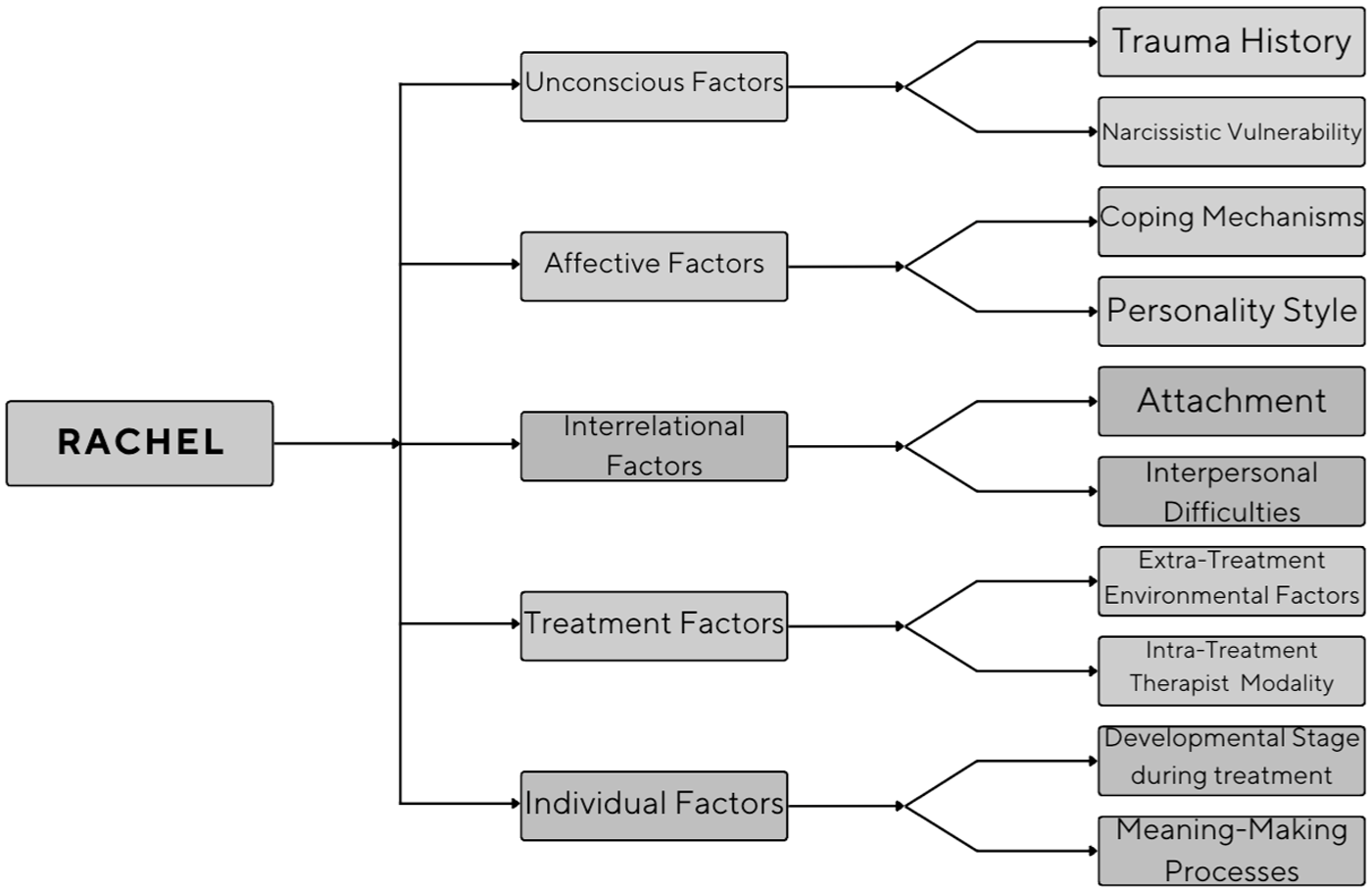
A psychoanalytic case conceptualisation.
Given that such an approach is perfectly aligned with psychoanalytic theory, it is not surprising the primacy afforded to processes that occur within the individual (Pilgrim, 2010). As such, all digital relations, technologies, materials, and so forth are relegated to being mere extratreatment environmental factors. Thus, facets of personality and corresponding psychic symptomology are considered without any recognition of the technological methods by which they are produced and reproduced online, nor of the techno-social realities in which that experience occurs. Continuing, if one were to call upon a pluralistic framework (Cooper & Dryden, 2015), which advocates a relational, multimodal approach and incorporates a temporal understanding of psychic development, such a framing might appear as pictured in Figure 2.
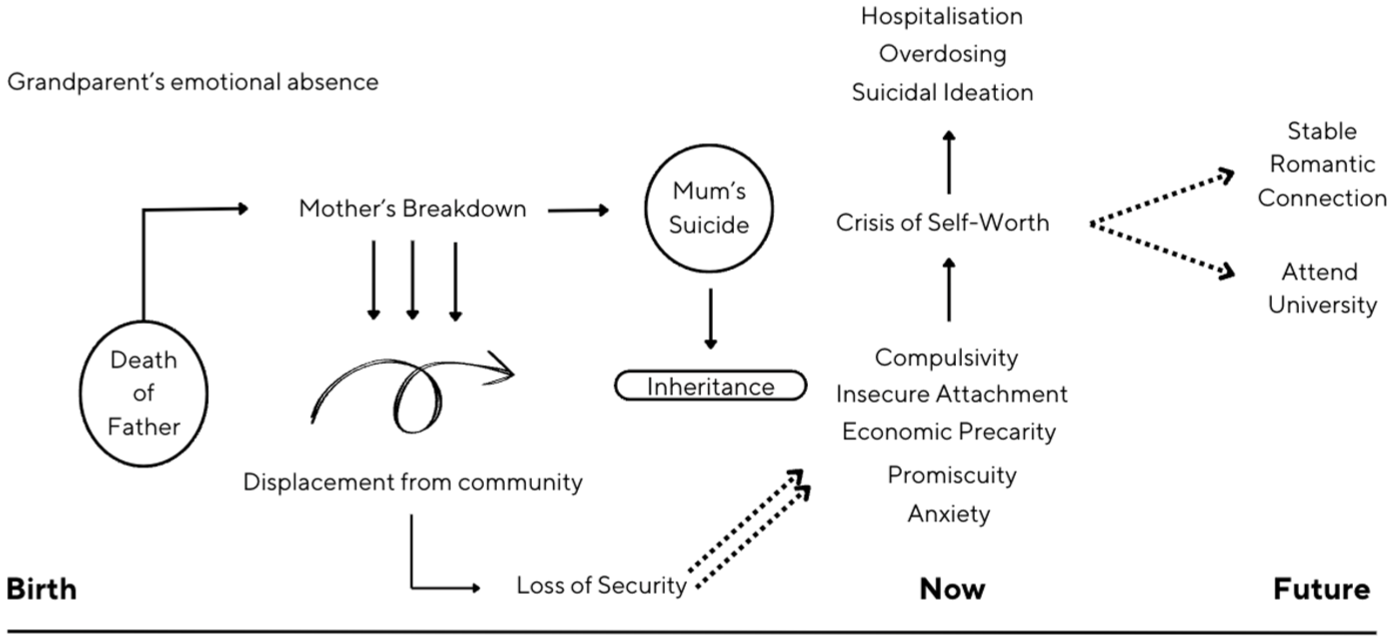
A pluralistic case conceptualisation.
While such an approach is inclusive of the interrelatedness of actors, events, and affective experience—and the ways in which such phenomena evolve across the lifespan of individual clients—it remains, like the psychoanalytic model which preceded it, tethered to a vision of the human subject that is essentially decontextualised from the political, ecological, linguistic, and technological realities that shape subjectivity. Furthermore, in positioning the subject along a temporal axis, such an approach imposes an overly simplified, if not naïve, causality in which the past neatly shapes both present action and future desires without regard for the interplay that occurs between different strata of existence across a lifespan.
The Deleuzian subject can then be conceptualised as occupying two temporalities at the same time: it is not fully in the objective present or a preobjective past, but in the becoming-other that occurs when one contemplates difference between the two: “we exist only in contemplating—that is to say, in contracting that from which we come” (Deleuze, 1994, p. 74). Building on this, Fox and Alldred (2019) assert that engagement of the past through the production of memories can be itself viewed as a material process, as “rememberings” of past events, even those that are inaccurate representations, hold the capacity to produce corporeal, cognitive, and/or emotional affects within the affective economy of the present (Fox & Alldred, 2019). In leaping the interval of time that “separates the actual situation from a former one” (Deleuze, 1988, p. 57), the subject locates itself within the past experiences that best accommodate its immediate circumstances. As will be demonstrated, such an understanding of the past affords an analytic lens through which the memories of clients can be analysed not for their accuracy but as affective components—with affective capacities—within various assemblages and processes of becoming in the present (Fox & Alldred, 2019).
To reconcile this inattention to the complexity of subjectivity in the networked age, one might attempt to document the psychotherapy machine through an onion-like arrangement of assembled relations and subjectivities, as pictured in Figure 3.
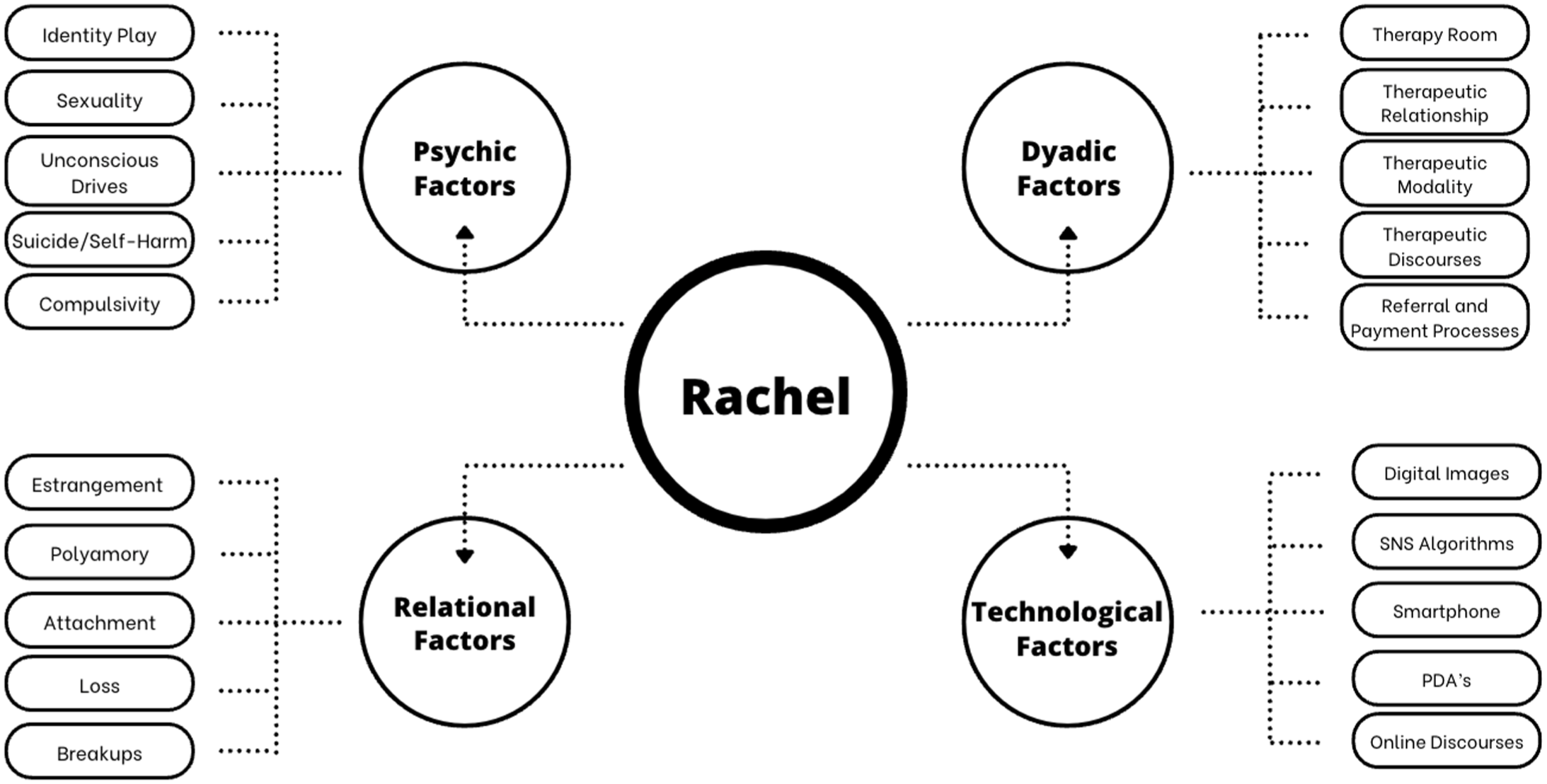
A “fascicular” case conceptualisation.
From this, one can see the more multiplicitous range of feelings, discourses, behaviours, and technologies that make up the psychotherapeutic assemblage, including those psychic (within part of themself), relational (between others), technological (mediated by the smartphone), and dyadic (active within the therapy dyad). However, while such a construction illustrates the complexity of the “machines” in Rachel’s case, it ultimately presents a fascicular account of reality, one that is still based upon discrete, clustered categories of knowledge and anchored to a structurally coherent view of selfhood. As such, it does little to show the interactivity between the various components that comprise different techno-social assemblages, including, as will be explored later in this work, my own desiring-production and unconscious processes that emerged within the therapeutic meeting.
“Mapping” flows
Deleuze and Guattari put forward a “flattened” view of subjectivity, one that emerges out of the intensities and discontinuities between components and assembled relations (Nichterlein, 2018). As previously noted, a Deleuzoguattarian therapy—a “schizo” therapy attuned to flows and fluxes that emerge within and around the modern subject—is one of cartography, in which relational fields can be considered, evaluated, and mapped (Tucker, 2012). This mapping of the psychotherapy assemblage represents an event in itself, one orientated towards an evaluation of the multiplicity of technological, emotional, unconscious connections and mutually affecting interactions that occur within its boundaries (Mischke, 2021). The cartographical question is, as ever, not to ask if the digital is true or real or human but rather to investigate the productive capacities and emergent qualities at play within a given assemblage (Kleinherenbrink, 2020). One could assert that such a flattened conceptualisation, one inclusive of this contingency, might appear as pictured in Figure 4.
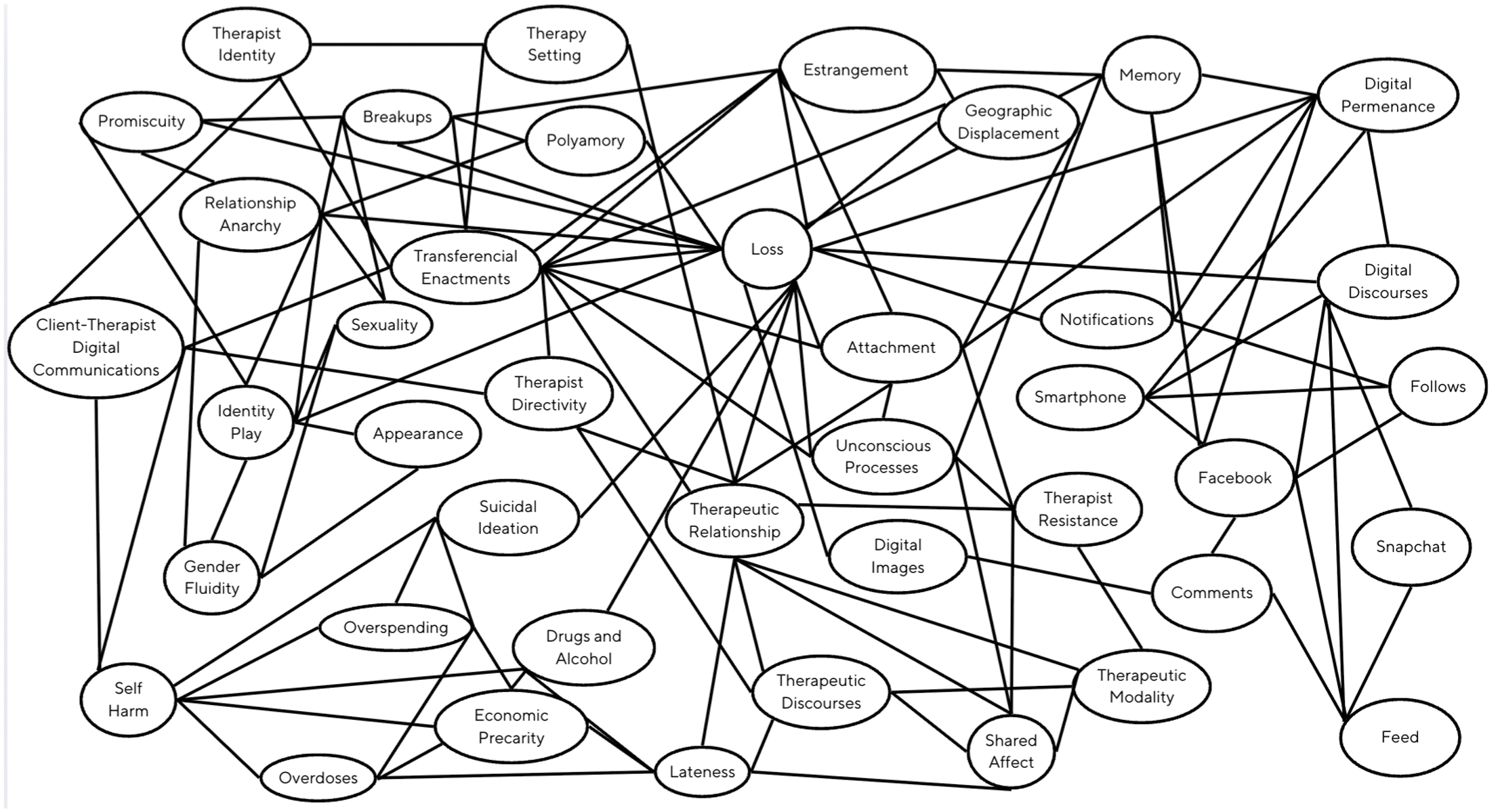
A “flattened” rhizomatic case analysis.
What emerges is a far more open-ended representation of the therapy-machine, from which the subjectivities and desires that emerge online and within the therapy encounter are situated in a dynamic social, material, and expressive field. Rather than assume a linearity between past and present, or a distinction between objective and subjective realities, the parts of Rachel’s experience can be evaluated for their productive capacities to produce flows that interact with other entities in a diagrammatic fashion. Not only does such a framing avoid the determinism that dominates so much of psychotherapeutic orthodoxy around selfhood but it affords a vision of subjectivity as processual, as an event comprised of “inseparable variations, it is itself inseparable from the states of affairs, bodies, and lived reality in which it is actualized or brought about” (Deleuze & Guattari, 1994, p. 159).
From Figure 4, one can see the flow of loss that permeates through Rachel’s account, as it branches out and makes dendrite connections between nearly every assemblage in their life, including that of the therapy-machine. Both Rachel’s parents died before Rachel was 5 years old. Rachel had been displaced from their home. They had attempted to end their own life multiple times. They had adopted a lifestyle that saw them cycle through, and eventually lose, a multiplicity of identities, relationships, sexual connections, and social communities. They had continually been late to sessions, which prompted me to challenge that they were unconsciously trying to get me to exclude them from my practice. Even their digital engagement—which held the promise of maintaining intimacy with former lovers through the exchange of mediated images and text—seemed to only invoke the feeling of things falling apart and of others slipping away. Whether in the analogue or the digital, Rachel wasn’t confronted by loss; they were actively reproducing it.
Exploring processes of territorialisation
What this flattened conceptualisation affords is a unique perspective of the near omni-presence, and omni-production, of loss across Rachel’s various assemblages. One could argue that their engagement on social media was territorialised by a desire to end that cycle of loss, to escape the crises that had defined their life up to that point. The “machine” of Facebook afforded them a means to territorialise a mode of desiring-production—and a corresponding network of digital relationships—without the trauma of the past or the alienation of the present. In maintaining a link to the online worlds of their former partners, they were sustaining a worthwhile, if not essential, fantasy; that the people they loved had not left them and that things were as they wanted them to be. As they said, what was lost in their material life—hope, connection, continuity—had been restored and made new again in their online worlds. In the process, one could argue that on social media they too were restored as an object worthy of the desires of others. In a sense, Rachel couldn’t forget. And why would they want to? Provided that the Facebook-machine was able to produce predictable flows of digital artefacts between their online relations, no matter how turbulent the storms in their analogue life might be, in the eternal sunshine of social media it was always last summer.
Such a process of restoration could be seen as a type of neurotic territorialisation (Deleuze & Guattari, 1972/1983), through which Rachel’s productive connections, particularly those that occurred online, appeared to be motivated by the desire to defend against the feelings of isolation and disillusion that dominated their historical relating. However, the hope mobilised by the speed and ubiquity of the digital quickly soured into their own intolerable vision: that the connection and the permeance they desired might not be possible and that their restoration of intimacy with others had failed. Further demonstrating the processes of territorialisation, the pain brought about from digital artefacts on Facebook initiated a profound incorporeal transformation, as the precarity and subjugation that defined their historical offline relations appeared to be reproduced in their online assemblages, only to, in turn, be rearticulated in their face-to-face relating and within the therapy-machine itself.
Identifying lines of flight
It could be argued that despite this near-constant rearticulation of disaffection, Facebook presented Rachel with a line of flight par excellence. Provided that the relations in their online assemblage were stabilised through the flows of discourses and images, their smartphone became an apparatus of difference, through which they could be surmised to have encountered themselves and others in a new, if not transformative, way. As evidenced by their tears, obsessive checking and rechecking, and frenzied attempts at managing online discourses, Rachel’s engagement with—and affective response to—Facebook could be framed as what Deleuze (1994) refers to as “chains of resonance,” that is, communication systems that signify the pure intensity that their bodies produced. This embodied aspect is informed by the intensity that Deleuze and Guattari (1972/1983) associate with a body without organs (BwO). The body can be understood as a type of container, a surface, upon which disparate patterns of lines of flight are produced, recorded, interrupted, and redirected (Watson, 2016). In its most elastic form, the BwO can be taken to mean, literally, anything: a physical space, a political body, a material object, a feeling, and even the psychic and affective phenomena within the subject and between their relations (Bogard, 1998). On one hand, Rachel’s Facebook-assemblage could be framed as a mediated surface through which their body became intense through its capacity to act and affect others in new ways. On the other hand, when that hopeful order was smashed, when the relations and identities produced through the exchange of the quantifiable assurances of the digital were disrupted, the apparatus of the phone became nothing more than a machine of the same flow of humiliation, isolation, and shame.
Any rhizomatic framing of the therapy-machine would be incomplete without an exploration of how my own response to this cycle of re-production brought about a host of affects within the therapeutic assemblage. My first clinical response to Rachel’s unwillingness to curtail—or even abandon—their exposure to Facebook and Snapchat could best be described advocating a type of digital abstinence. If what they were encountering online was hurting them—and driving them to hurt themselves—had they considered not engaging in those online spaces? Perhaps they could focus on activities and relationships in the “offline” world? Such interventions had, unknowingly, established a horizontalist practice, one emphasising intra-subjective transformation—of that which was within Rachel—over relations between bodies. Perhaps more importantly, they were part of the imposition of a hierarchy informed by my clinical training: unlike the “realness” of face-to-face encounters, digital technologies were “unreal” and were ultimately thwarting Rachel’s own processes of authentic self-formation and hindering their capacity to take responsibility for themselves, despite the pain of the past or the chaos of the present.
In this, one could assert that the therapy-machine was territorialised around the trap of the observed/observer binary. More punitively, it framed Rachel’s difficulty as a simple crisis of individual agency. “If only they could put their damned phone down,” I thought. Not only is such a framing rooted in my own personal distaste for online culture—to say nothing of the naivete of a middle-aged therapist telling a 20-something client to put their phone away and get some good, old-fashioned fresh air!—but it reduced Rachel to a therapeutic object to be solved or a constellation of behaviours to be modified, rather than a multiplicity to be mapped. It also ignored the ways in which their pain and their longing for intimacy—and their capacity to make choices—was a dynamic form of social production.
Such a framing aligns with Deleuze and Guattari’s (1972/1983) assertion that the agency of the subject is constituted through interactions between human, cultural, unconscious, and technological forces. As Bonta and Protevi (2004) point out, this corresponds with the Deleuzoguattarian notion of desire as processes of connection—or couplings—between bodies in networks of production, out of which patterns of organisation and behaviour are coded and territorialised. Through this lens, the ordering processes within territorialised assemblages produce certain propensities, so much so that certain behaviours or desires become salient, while other possibilities are limited and therefore become more unlikely (Hayles, 2001). Thus, agency—of the action of “agencing”—is a process by which flows of desire create new affective connections and new desires with other entities.
Transference to transversality
Perhaps most critical to my work with Rachel—and my attempts to mount a rhizomatic framing of the therapy meeting—was my awareness that I was an active component in their social assemblages, and, as a result of my discursive and affective presence in the therapy space, was unknowingly rearticulating the same flows of loss and helplessness which dominated their on- and offline relating. One can see from Figure 4 that the only component of the therapy assemblage more productive—and more territorialising of the therapy assemblage—than loss is that of the transferential enactments that emerged between me and Rachel. In the classical psychoanalytic sense, my response to Rachel’s helplessness was a projection of my own unconscious resentment of my sister, whose struggles with drugs and alcohol and suicide ideation had produced a profound sense of helplessness within my own family-assemblage and rendered me invisible in the eyes of my parents. The more Rachel appeared to be immobilised in sessions, the more disillusioned I became and reverted to the same problem-solving posture with which I had attempted to soothe my sister’s difficulty. I also began to blame Rachel for my mounting feelings of incompetence and would find myself daydreaming that they might be better suited working with another practitioner. To resolve what appeared to be an intractable stuckness, I suggested ways in which she could distract herself in the real, analogue world, and relied upon a highly interpretive mode of practice, often drawing upon elaborate Oedipal metaphors and labyrinthine models of the unconscious to conceptualise their distress.
In Deleuzoguattarian terms, I had reterritorialised the same flows of abandonment and stasis that had emerged in nearly all of Rachel’s relations. What is more, I had embodied Guattari’s (1972/2015) critique of transference as imposing a power asymmetry—me as the diagnostic “expert,” they as the diagnostic “object”—which ultimately constrained the desiring-production that could occur in the therapeutic assemblage. Therapy had become a correction, one centred around an interpretive frame that reduced desire to an expression of familial representation, rather than an experiment, through which subjectivities, discourses, and affect might emerge in a more multiplicitous and expressive manner.
Through supervision, I became aware that my understanding of Rachel—and my increasingly rigid facilitation of our work together—was being blinkered by my own transferential material. As a result, the desiring-flows between us were being blocked. What I, and we, as a dyad, were missing was an empathic exploration not just of the complexity of them—Rachel’s lives, their relations, their history, their entanglements—but also of the complexity of the material, economic, and technological assemblages that framed their reality. Thus, what was required was a far more rhizomatic endeavour, one that rejected a granular accounting of discrete memories, feelings, and behaviours and considered Rachel as an emergent product of context, not of lack. With this, we began to look outward. We discussed life in the village in which they spent their formative years. We explored the circumstances of the economic precarity and joblessness that contributed to the demise of both their parents and the terror that accompanied their accumulation of debt in the present. We talked about the joy and comfort that came from the images on their Facebook feed and even selected a few to analyse together on their smartphone. We talked about their desire to make polyamory work, despite their mounting fears that it might never satisfy. We recounted how scared they were in the poisons wards and how few people ever came to visit. I disclosed my own feelings of incompetence and my concerns that my ancient fears about my sister might be blocking our progress. In response, they were able to voice an awareness that they were increasingly looking to me as an all-knowing oracle and that I was not the first authority figure onto which they had projected this desperate hope in both analogue and digital settings.
While it would be foolish to assert that these liberated therapeutic flows resolved the decades of hurt that defined Rachel’s past and present, such a movement aligns with Guattari’s (1972/2015) advocacy for a transversal therapeutic encounter, in which communication and desire are circulated freely between subjectivities without hierarchal roles or intellectual constraints. What is clear, and what this research contends, is that the potential for the therapy-machine to heal—that is, to point towards new modes of becoming and affective capacities—was contingent on its capacity to become nomadic; to explore the ways in which Rachel—their desires, their pain, their capacity for action—emerged as a result of the intermingling of these assembled techno-social relations. Perhaps, then, my efforts to look beyond my own transferential response and ideological assumptions to see the complexity of Rachel—and the therapy-machine itself—constitutes its own unique line of flight. It also affirms that a Deleuzoguattarian approach to case conceptualisation does not end with the production of a diagnostic device but is a transversal entity, one continually created and recreated through the interactivity between a range of flows, actors, technologies, discourses, and affects.
As evidenced by Figure 5, this processual, interrogative framing avoids the algorithmic reduction of traditional approaches to case analysis and instead evokes the analytic-militant cartographies advocated by Guattari (1996, p. 132), that is, the maps and metamodels that might illuminate positive transformation and change—for both therapist and client—and that can indeed even bring about liberatory mutations.
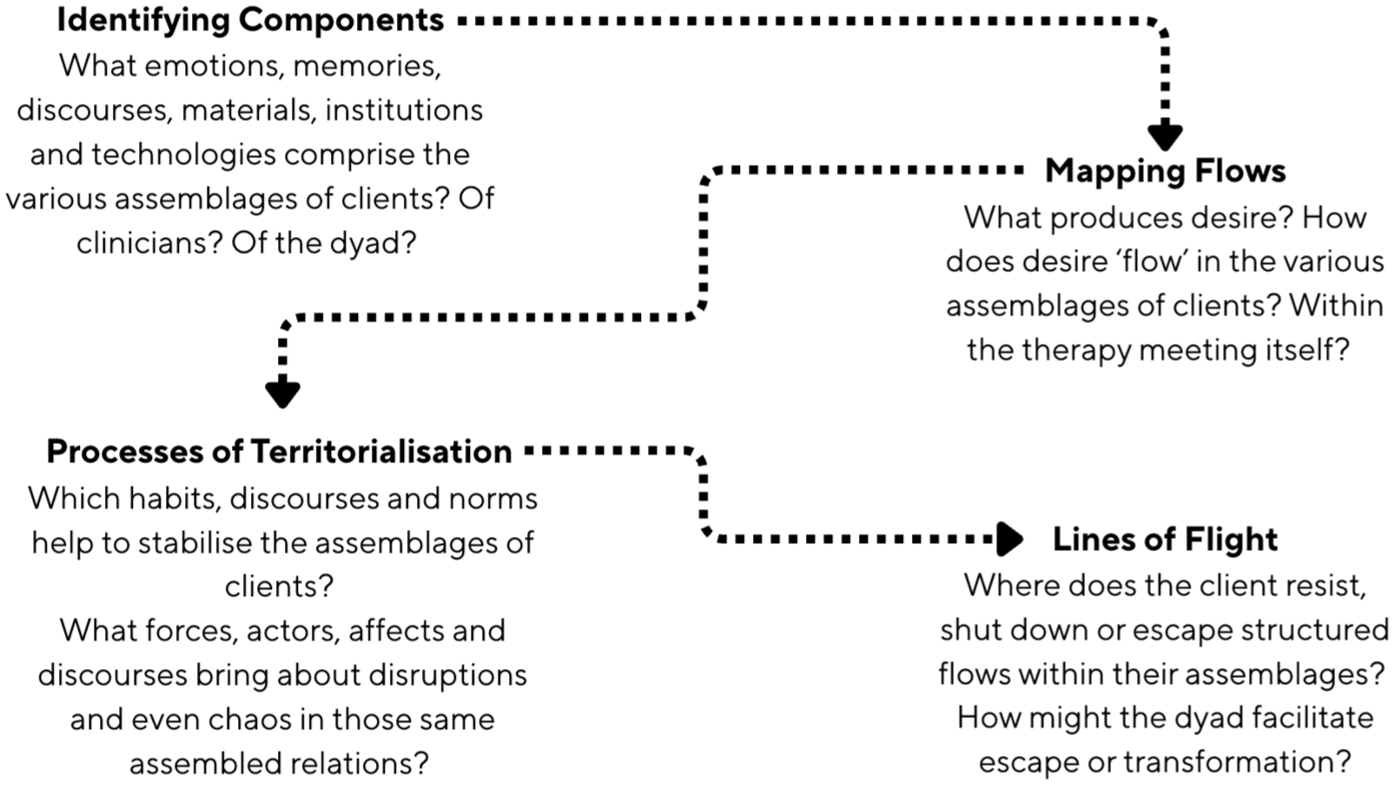
The “flow” of a rhizomatic analysis.
What emerges is an analytic sequence that is not bound by the precategorisation of psychic or relational phenomena—nor one that even attempts to assert the uniqueness of digital technologies in the production of subjectivity—but rather a map through which the nomadic movements within and around the therapy subject and between the dyad might be charted and better understood. In framing therapeutic action as such a flow of experience, of discourses, and, indeed, of technologies, it could be asserted that the work of a Deleuzoguattarian therapy is to facilitate what Massumi (2002) terms a “shock to thought”—an affective jolt that is less orientated towards revealing the truth as towards propelling both members of the dyad “involuntarily into a mode of critical inquiry” (Bennett, 2005, p. 11). In the case of Rachel, the “shock” was that their online assemblages were territorialised by the same unmet desire for intimacy and stability that defined their childhood, and that the comfort of digital images in their Facebook-assemblage were not only illusory—in so far as they gave, at best, the fleeting impression of a “loss-less” present—but were reproducing a pattern of self-destructiveness that was limiting their capacity to produce new modes of relationship and meaning making in the future. My own shock was the awareness that my unconscious distress was being actively reproduced in the therapy-machine, which, in turn, was reterritorialising Rachel’s historical pattern of abandonment and constraining the flows of relational and affective entanglement that could occur in the dyad (Figure 6).
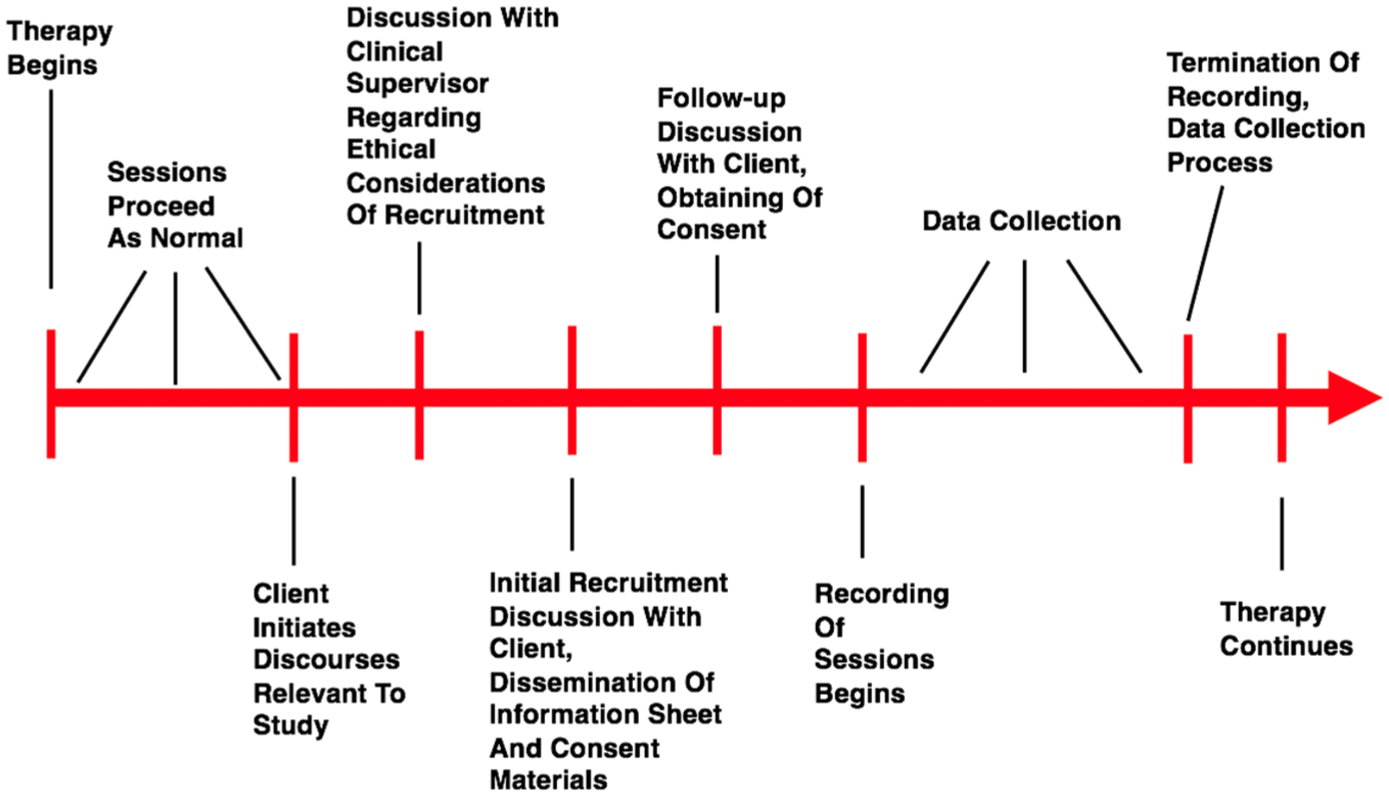
Timeline of consent and data collection process.
Thus, the task of conceptualising the “schizoid” conditions of Rachel as an immanent subject was not to seek out grand theories to diagnose their difficulties but, rather, to engage in a “molecular” mapping of the flows of desire, affect, and relationship that comprised their techno-social assemblages—including the therapy-machine—and through which lines of flight might emerge (Renold & Ringrose, 2011). Put another way, it is a cartography of the relational, the interaffective, and of the unpredictable. If, as Deleuze and Guattari assert, no single model of schizoanalysis is transposable (Biddle, 2010), then any attempt to conceptualise the therapy encounter—and the subjectivities produced therein—should proceed as a one-off, a singular experiment with unduplicatable results, emerging from a unique configuration of assembled relations.
Conclusion
This work has endeavoured to demonstrate that the contemporary therapy “subject” emerges from—and is contingent upon—a dynamic assemblage of discourses, affects, and technologies. In this, a Deleuzoguattarian framing of the psychotherapeutic resonates with the posthuman assertion of the individual human as a “hybridised” subject, that is, one contingent on the affective connections of different force relations between human and nonhuman entities at play in digital communication (Braidotti, 2003). The therapeutic task is, then, to consider the experience of clients beyond the determinism of familiar binaries—real/unreal, digital/analogue, success/failure, conscious/unconscious—and to initiate a space of “composed” chaos, where a “complex web of divisions, bifurcations, knots and confluences” (Serres, 2000, p. 51) might materialise and be usefully conceptualised.
In a Deleuzoguattarian frame, the “event” of therapy produces a surface in which the mediated affordances of the digital—the speed, the ethereality, the connectivity—can be evaluated through the flows and sensations that emerge between the dyad. However, the internet technologies in which clients are engaged are not merely media that disseminate meanings or discourses but are productive sites of new realities, subjectivities, and identities which, in turn, shape, constrain, and liberate the therapy meeting (Mischke, 2021). Thus, a therapeutic conceptualisation sensitive to the affective realities of the digital is not possessed with the establishment of “facts”—about individuals, psychic processes, technology, or society—but is attuned to the flows and instabilities that Brown (2012) calls “implicatives” (p. 117) that comprise the complexity of experience. Such a psychology of “individuation” (Tucker, 2012) holds the potential to make way for a processual, relational encounter, in which the contingencies, capacities, and contradictions of the “rhizomatic” therapeutic subject can be traced and understood in a new way.
Footnotes
Funding
The author received no financial support for the research, authorship, and/or publication of this article.
