




Abstract
Women's body shame and body dissatisfaction increase in the premenstrual phase of the cycle, associated with premenstrual distress. However, the meaning and consequences of premenstrual body dissatisfaction remain underexplored. The aim of this study was to explore how women who report premenstrual body dissatisfaction construct and experience their bodies, using qualitative arts-based methods. Four hundred and sixty women completed online open-ended survey questions and 16 women took part in body-mapping and an interview. Thematic analysis identified three major themes: construction of the premenstrual body as abject, manifested by positioning of the body and self as fat, leaking and dirty; self-policing and self-regulation through increased scrutinising and concealment of the premenstrual body; and resistance of cultural constructions of idealised femininity. These findings emphasise the need to acknowledge changes in body dissatisfaction across the menstrual cycle, and the implication for women's feelings about the self. Internalisation of negative constructions of the female body plays a role in women's experience of premenstrual change and distress. There is a need for further research to examine the role of body management behaviours in premenstrual body dissatisfaction and distress.
Body image concerns are a prominent issue particularly among young women in the 21st century (Madden & Breny, 2016). Studies report that over 70% of young women disclose dissatisfaction with their bodies, with the majority wishing to be thinner (Kaczmarek & Trambacz-Oleszak, 2016). Body dissatisfaction has detrimental consequences for women's mental health; it is associated with low self-esteem, poor mental health and quality of life, higher weight concern and body-consciousness (Griffiths et al., 2017; Shagar et al., 2017). Lasting impacts of body dissatisfaction in adolescence include depressive symptoms remaining into adulthood (Sharpe et al., 2018). Women report higher rates of body dissatisfaction than men (Griffiths et al., 2017), one explanation for higher rates of depression reported by women (Ussher, 2011). Body dissatisfaction can precipitate eating disorders, particularly in women, and is associated with dietary restraint, eating disorder symptomology and a drive for thinness (Burnette et al., 2018).
Previous research has reported that internalisation of societal expectations of idealised feminine bodies is associated with body dissatisfaction and disordered eating behaviours in women (Douglas et al., 2019; Seekis et al., 2020). Within Western culture, the ideal white hetero-feminine body is the thin, toned, attractive, controlled body, leading to positioning of the fat body as monstrous, disgusting, undisciplined and out of control (Bordo, 1993; Colls, 2007). Women are expected to constantly manage and discipline their unruly bodies through engagement in self-policing and self-regulation informed by cultural discourses of idealised femininity (Tolman et al., 2014). This includes adherence to culturally located beauty ideals and self-management through diet and exercise (Churruca et al., 2016). However, many women experience feelings of failure associated with these regulatory practices, with negative consequences for body satisfaction, sense of self and mental health (Fahs, 2018).
Body dissatisfaction has been found to vary across the menstrual cycle, becoming highest during the premenstrual phase in the general female population (Kaczmarek & Trambacz-Oleszak, 2016). For example, it has been reported that adolescent girls are 2.4 times more likely to experience body dissatisfaction during the premenstrual phase than at any other time (Kaczmarek & Trambacz-Oleszak, 2016). Body dissatisfaction has also been associated with premenstrual distress, and self-diagnosis with premenstrual syndrome (PMS), with premenstrual symptom severity associated with higher body image disturbance (Muljat et al., 2007) and body dissatisfaction (Kleinstäuber et al., 2016). Premenstrual distress involves affective, behaviour and physical changes such as anxiety, depression, feelings of loss of control, abdominal bloating, breast tenderness and fluid retention during the premenstrual phase (Rapkin & Lewis, 2013; Ussher & Perz, 2017). Premenstrual distress has also been found to be associated with higher body shame, which is highly correlated with physical symptoms, suggesting that the materiality of embodied premenstrual change plays a role in women's body shame and distress (Ryan et al., 2020).
There are a number of explanations for increases in body dissatisfaction premenstrually. One theory is that it is associated with women's perception of their body size. In a study that found women's ideal body size was smaller than perceived body size in all phases of the menstrual cycle, body size dissatisfaction was higher in the premenstrual and menstrual phases (Kaczmarek & Trambacz-Oleszak, 2016). Other studies found that women's ideal body size remained relatively stable across the menstrual cycle; however, perceived body size was largest at the end of the premenstrual phase (Teixeira et al., 2013). Faratian et al. (1984) reported that women reported high levels of bloating premenstrually, accompanied by increased body size estimations, but that there was no increase in objective measures of body weight.
An emerging body of feminist research has focused on the discursive construction and meaning of women's premenstrual embodiment, as part of broader research examining premenstrual distress. Women who self-identify as PMS sufferers commonly describe their premenstrual bodies as “fat”, “ugly”, “sluggish” and “unattractive”, value laden terms associated with reduced self-worth, self-repulsion and self-criticism (Ryan et al., 2020; Ussher & Perz, 2017, 2020b). This suggests an internalisation of the cultural construction of the premenstrual body as abject (Ryan et al., 2020), through a process of subjectification (Ussher, 2006). The abject is a concept used to describe bodies and objects that are deemed to be repulsive or disgusting, signifying a threat of a primal and animalistic nature, and which are cast out and separated from the self in order to preserve one's identity (Kristeva, 1982). In the context of the premenstrual phase, this represents the horror of the materiality of the female reproductive body, a messy, polluted, grotesque body that threatens to disturb the boundaries of what is considered to be culturally and morally acceptable (Kristeva, 1982). There is a dearth of research focusing on the meaning and experience of premenstrual body dissatisfaction and women's negotiation of premenstrual body changes. This study addressed this gap in the research literature, using the arts-based method of body-mapping.
Arts-based research methods are a useful tool to empower participants to creatively express emotions and embodied experiences (Boydell et al., 2012). Body-mapping involves tracing around a person's body, creating a life-sized outline to which participants use arts supplies to fill with words, images and colours that artistically express experiences or phenomena (De Jager et al., 2016). Body-mapping has been used across a range of areas and is effective in drawing attention to participants’ embodied experience (De Jager et al., 2016). This is because it provides the opportunity for participants to pinpoint and visually display the areas of their body in which feelings and sensations are experienced, allowing for a rich description of embodied experience without the constraints of language (Dew et al., 2018). The aim of the present study was to answer the research question; how do women who report premenstrual body dissatisfaction construct and experience their premenstrual body?
Method
Participants
Four-hundred and sixty participants who self-identified as having experienced an increase in negative feelings about their bodies during the premenstrual phase of the menstrual cycle took part in an online survey. Participants were aged 18–45 with a mean age of 24.1 years (SD = 5.85); 76.5% identified as heterosexual, 17.6% as bisexual, 2.6% as lesbian and 3.2% identified as “other”, and most participants were partnered (63.3%). The majority identified their cultural background as “Anglo-Australian” (70.7%), with the remainder identifying as European (6.9%), Asian (6.7%), Arabic (5.4%), Indian (2.5%), Aboriginal and Torres Strait Islander (2.4%), African (2.0%), Latino (1.7%) and Polynesian (1.7%). Participants reported moderate-severe premenstrual distress with a mean score of 22.06 on the Premenstrual Symptom Screening Tool (Steiner et al., 2003), lower than scores in a sample that met diagnostic criteria for PMS (M = 26.60) (Ussher & Perz, 2017). Scores on the Eating Attitudes Test 8 (EAT-8) (M = 3.62) were higher than scores obtained in a community sample (M = 1.91) (Richter et al., 2016), indicating disordered eating attitudes. Further discussion of disordered eating in this study is reported in Ryan et al. (2021). At the completion of the survey, participants who reported rich accounts of increased body dissatisfaction during the premenstrual phase within open-ended survey items were invited to opt-in for a body-mapping session and follow-up interview. Sixteen women participated in a body-mapping session and completed a follow-up telephone interview. Sample sizes of 6–12 participants have been recommended for body-mapping research to capture rich data relevant to research questions and a range of experiences (Macken et al., 2021). Body-mapping participants were aged 19–39, with a mean age of 25.5 years; 68.8% identified as heterosexual, 31.2% identified as bisexual, and most were partnered (68.8%). The majority of participants were Anglo-Australian (white) (56.3%), with others identifying as Indian, Pakistani, Maltese, Samoan, Filipino, Lebanese and Italian/Greek. Culturally and sexuality diverse women were purposively invited; the majority of those who volunteered to complete a body-mapping session were heterosexual white women.
Materials and procedure
Survey
An online survey titled “Premenstrual Change and Feelings Towards Your Body” was advertised on social media, with the invitation directed at women who experienced premenstrual body dissatisfaction. This article reports analysis of five open-ended survey questions examining feelings towards the premenstrual body and body management practices. These questions asked women if they felt differently about their body, wore different clothing, if their exercise habits changed, how they cope premenstrually, and if they had anything else they wanted to share about their premenstrual experiences.
Body-mapping
Participants completed a face-to-face one-on-one body-mapping session. Firstly, the women were asked to brainstorm colours, textures, words and symbols that capture their experiences of their premenstrual and non-premenstrual bodies. Prompts included how it felt to be within their body, premenstrual changes, feelings about the body and coping and the location of these experiences, sensations or emotions within the body. Women were offered the option of having their body traced onto a large sheet of paper or to use a pre-drawn outline (Dew et al., 2018). Participants used arts supplies to represent experiences on the body-map, including paint, markers, glitter, crayons, pencils and magazines. Following the completion of the body-map, participants verbally described the artistic choices they had made and why, following established protocols for body-mapping research (Lys, 2018). Body maps took between 60–90 minutes and descriptions of body maps lasted between 4–11 minutes and were audio-recorded.
Interviews
Semi-structured telephone interviews within five days of completing the body map explored women's feelings about their premenstrual bodies and elaborated on descriptions of the body maps. Interviews lasted between 40–70 minutes and were audio recorded and professionally transcribed. Transcripts were integrity checked for accuracy, and all identifying information excluded, with pseudonyms assigned to participants.
Reflexivity
Reflexivity is a central tenet of feminist research (Lafrance & Wigginton, 2019), a process of critical self-reflection into the ways in which researchers’ social backgrounds, assumptions, positioning and behaviour may shape the research process. The authors are all cisgender white women, who have current or previous experience of premenstrual changes, including feelings of bodily discomfort or dissatisfaction. These experiences informed our development of the research design and our understanding and analysis of participant accounts. The first author (SR), a young woman of slender appearance, conducted the body-mapping sessions and interviews. In describing and talking through their experiences during the body-mapping process, many participants asked if the researcher shared their embodied premenstrual experiences. We had agreed that it was appropriate to answer these questions honestly without discussing the researcher's own premenstrual experiences in detail (Dickson-Swift et al., 2007). All participants informally reported having a positive experience completing their body map, allowing them to express their embodiment in a creative and visual way, facilitating deeper understanding and self-awareness, without feelings of judgement.
Analysis
Theoretical thematic analysis, involving searching for meaningful patterns within datasets (Braun & Clarke, 2006), was utilised for open-ended survey, interview and body-mapping data. We adopted a material-discursive-intrapsychic theoretical framework (Ussher, 2000) and a critical-realist epistemology (Bhaskar, 1989) which recognises the materiality of somatic, psychological and social experience but situates these experiences within cultural and historical discourse. An inductive analysis was undertaken in which themes identified were data driven, and not fitted into a pre-existing coding frame (Braun & Clarke, 2006). The first step involved familiarisation with the data through reading interview transcripts and open-ended survey responses. We identified initial codes within transcripts, such as “fat as unattractive” and “staying at home”, which were grouped to form the basis of the coding frame. The coding frame was developed, tested and refined, and all of the data was coded using NVivo software. Images of body-maps were coded with participants’ body-map descriptions and interview data, following recommendations by Dew et al. (2018). A coding summary was created, in which each coded set of data was summarised with reference to individual participant accounts. This was repeated with body-maps, grouping together commonalities in visual images, words and colours. The coded and summarised data was then re-examined and relationships and similarities across codes considered. Overarching themes and subthemes were collated within a table, along with the corresponding data, which was further discussed and refined. This led to the identification of three major themes: the premenstrual body as abject, self-policing the premenstrual body, and resistance of negative premenstrual embodiment.
Ethics approval for this study was granted by Western Sydney University Ethics Committee, H12976. Participation was voluntary and informed, and all participants provided written consent.
Results
The premenstrual body as abject
The majority of women positioned the premenstrual body as abject, through negative constructions of a range of physical premenstrual changes, including bloating, feeling fat, acne, sweating and having greasy hair, describing themselves as “ugly”, “unattractive”, “gross” and “disgusting”.
“I’m just a big blob”: The premenstrual body as sign of feminine excess
The premenstrual body was positioned as a manifestation of feminine excess through accounts of being “too fat”, “fatter” and “too big”, associated with bloating and accompanied by visual depictions of increased body size. Michelle represented “bloating” as sign of her body as “bigger” and “fatter” premenstrually, with “dark marks” on her body map used to demonstrate this (see Figure 1). She described: I’ve also got some dark marks on the chin and on the stomach in kind of a swirly motion. That's signalling feeling bloated … bigger and fatter really like a double chin, and around my stomach is the biggest parts, and there's also kind of around my left thigh as well … I really feel my thighs like thunder thighs.
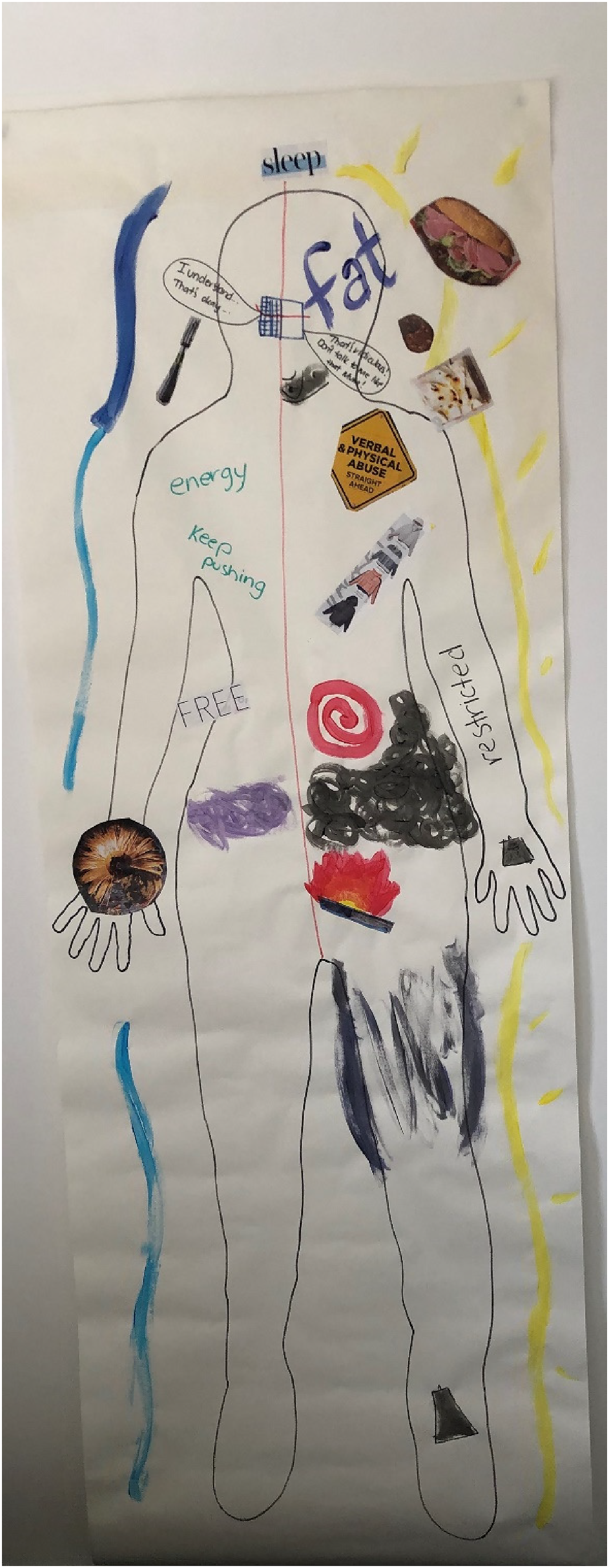
Michelle's body map.
Many women gave accounts of fearing that the sensation of premenstrual bloating indicated that they were gaining weight. For other women, perceived premenstrual weight gain was attributed to being less disciplined in their regular diet and exercise regime premenstrually, eating “bad food” associated with experiencing premenstrual cravings. Michelle described that outside of the premenstrual phase she will eat “planned meals and dainty kind of eating whereas in the premenstrual phase it's all big, not good food and I stuff my face”. For Michelle, this was followed by “guilt” in “feeling fat”. Others described feeling “lazy” and not wanting to exercise, associated with premenstrual pain and fatigue, as Shannon shared, “I don't want to exercise and then I worry about putting on weight.” Positioned as a “bad thing”, perceived weight gain exemplifies the threat of the abject fat body. For Lilly, feeling as though she had gained weight premenstrually was associated with increased self-criticism and dissatisfaction with her body, she said: Feeling more bloated and like weight, I don't weigh myself. I don't like to look at numbers … I just go like how I’m feeling, but I’m a bit more critical in regards – I just feel fatter. I feel like I don't look the way I would want to look.
An implication of constructing the premenstrual body as fat was women's self-positioning as “ugly”, “unattractive”, “unfeminine” and “unsexy”. This was associated with an array of negative emotions, reported to have had a detrimental impact on self-confidence, self-worth and self-esteem. Ashley positioned premenstrual bloating as making her “undesirable” and said “it just makes me feel ugly”. Rebecca described the experience of premenstrual bloating as “it's pretty rough, because I feel worthless I suppose when I’m in that phase”. A survey participant described feeling “ashamed” about looking “fat and ugly” premenstrually. Participants therefore demonstrated fat phobic attitudes in their constructions of premenstrual bloating and perceived premenstrual fatness.
Premenstrual bloating and fatness were positioned as monstrous, as evident in women's descriptions of the body as a “blob”, a “lump”, “squishy” and having “rolls” and “wobbles”. Caitlin described having “bingo wings where you shake your arm and it wobbles” and Megan said that she feels “so bloated” premenstrually, making her stomach feel like a “big green blob”, illustrated on her stomach on her body map (see Figure 2). She said: I just find that's the easiest way to describe it – a blob. So, the green representation – when it comes to mind thinking of the blob is the movie Flubber. So that's why it's just a big blob.
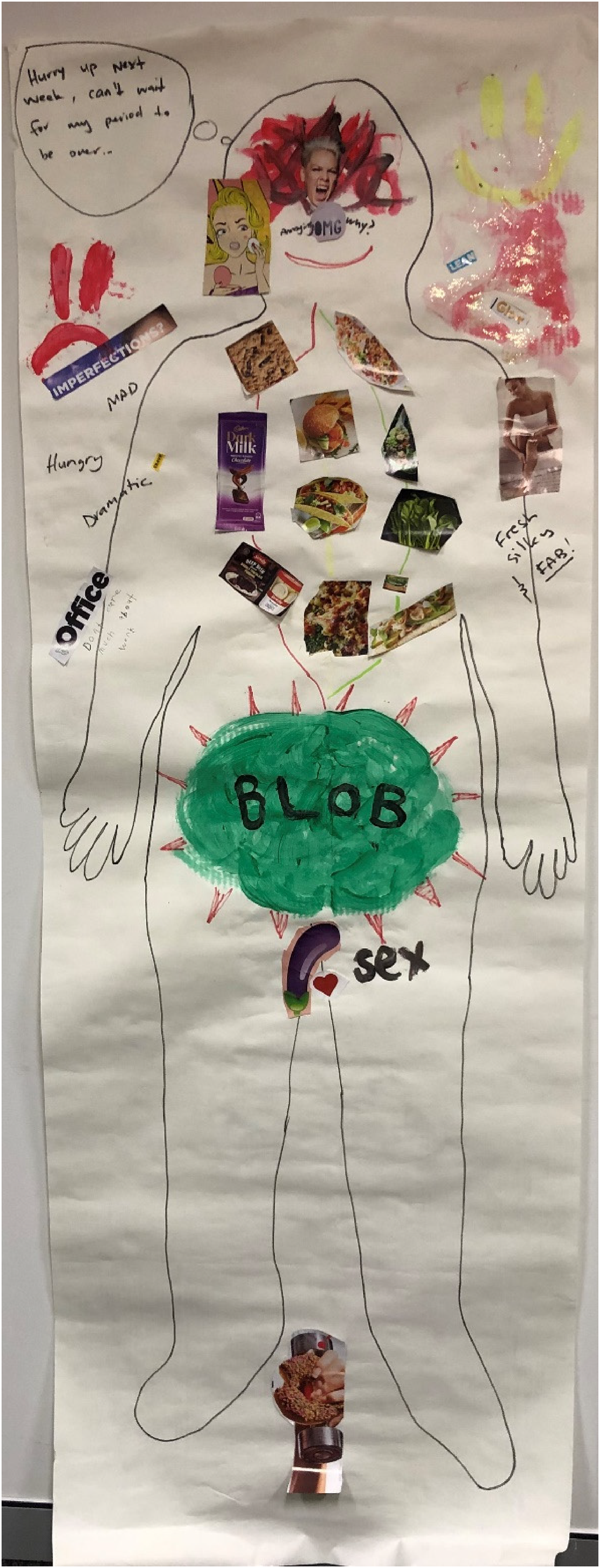
Megan's body map.
In constructing premenstrual bloating as abject and monstrous, women positioned themselves as “gross”, “yuck” and “disgusting”, as Caitlin said: “I feel gross and horrible about myself”. A survey participant associated feelings of disgust and failure with the “fat” premenstrual body and reported feeling “good” about her capable “slim” body outside of the premenstrual phase. The first week after my period I feel good, I feel slim and less bloated. I feel like my body is capable of doing more, it's capable of hiking and adventuring. When I’m premenstrual I feel fat, I feel disgusted with how I look, I feel like my body is going to fail me.
Fragmentation of specific body parts positioned as fat and unacceptable was evident in many accounts. Whitney illustrated this on her body map by placing red crosses and the word “FAT” with arrows pointing to these areas on the body (see Figure 3). She said, “So my thighs, my tummy and my upper arms. They’re a big thing, I feel like they’re an insecurity normally to an extent, but gets heightened during that time.” This suggests women may view themselves as a collection of defective body parts premenstrually, rather than as a whole body.
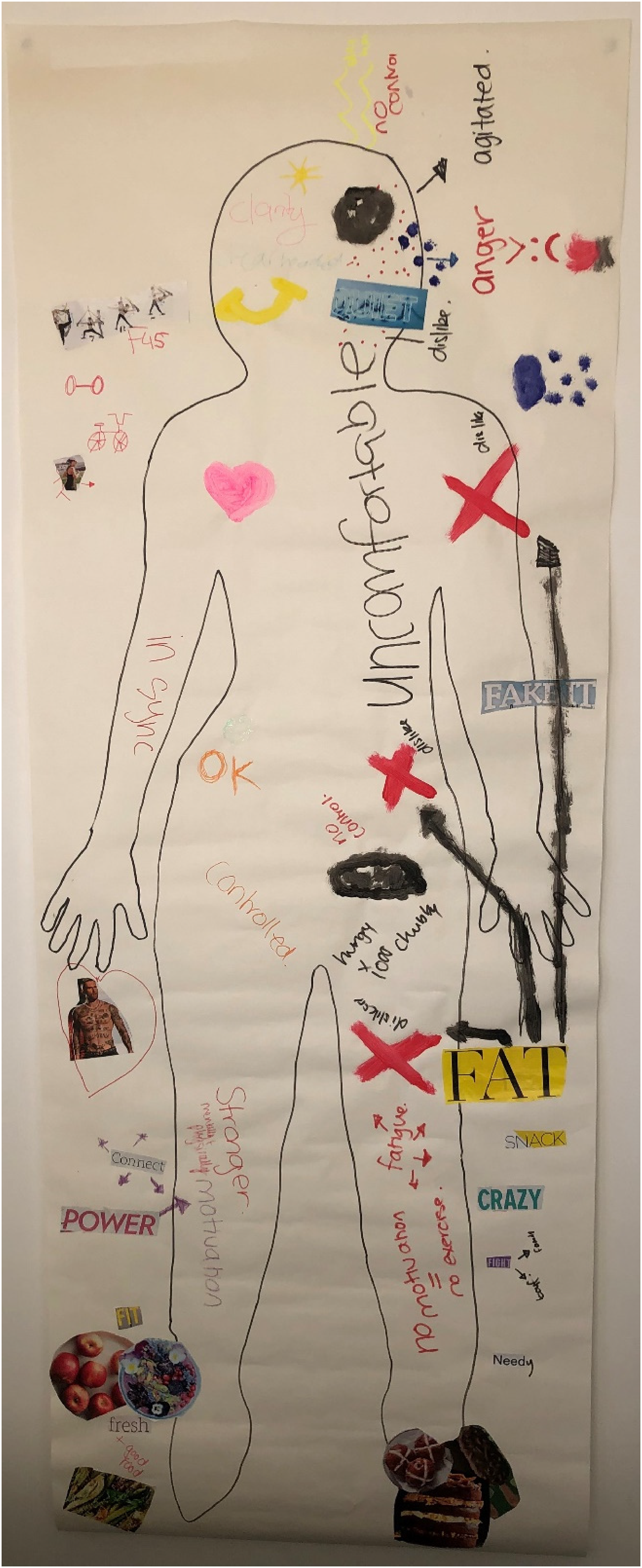
Whitney's body map.
“It feels slimy”: The leaking dirty body
Physical premenstrual changes including acne, sweating, body odour, vaginal discharge and greasy hair were associated with women positioning the body, and by association the self, as “dirty”, “unclean” or “disgusting”. Premenstrual acne was described as “unattractive”, “ugly” or an “imperfection”, contributing to women feeling “self-conscious” because of having “bad skin”. Kristy described the distinction between her “good skin” which was clear of pimples and “bad skin” during the premenstrual phase: Always growing up I’ve had really good skin, really nice skin. So now when I’m 24, and I have pimples popping up every time … I don't like the look of them. I don't like having bad skin at all.
Some women positioned the premenstrual body as letting them down, or being out of time, exemplified by Caitlin's account of acne in adulthood. She shared: “I feel awful. I’m a grown woman and here I am with acne, which I never had when I was a kid. It's weird. It seems like my body – I feel like it shouldn't be doing that”. The construction of acne as an issue confined to adolescence, assumes that adults will have “grown out of it”. Thus, experiencing acne outside of adolescence contributes to women feeling “awful” and that their bodies are “weird”.
Self-positioning as “gross” because of premenstrual sweating was reported by many women, including Rebecca, who described, “I just feel physically a bit gross … I’m sweating more than usual or having some sort of bodily changes”. Olivia described her hair as feeling “slimy” with increased “greasiness”, saying, “In a way it feels slimy, like if you haven't washed your hair in a couple of days and you feel that greasiness in your hair, I feel that for the whole week premenstrually.” The implications of the leaking, dirty body for women's experience of the self is illustrated in Caitlin's account, where she imagines public criticism of her body odour resulting in social positioning as “not a clean person”: People are very quick to judge you as – oh, you smell, so therefore, “you’re an unclean, dirty person”. But it doesn't mean that at all. You might have showered. It's just your physical body responds ten minutes after that shower you can't control [it]. … I feel like I smell, which is probably a lot of it in my head maybe because it's that whole association of period gross smell and maybe that's what it is.
These accounts suggest self-disgust with the “dirty” premenstrual body, as survey participants commented: “I feel ‘disgusting’ in it, that's the only word I can think of that I find myself saying about myself during this stage”; “I feel more disgusted with myself”.
Many women reported distress in experiencing the premenstrual body as abject, in feeling “stressed”, “sad”, “anxious”, “depressed” and having feelings of “darkness” about their premenstrual bodies. Perceived premenstrual fatness and leakage of the body was positioned as the body being “out of control”, reported as making women feel “helpless” and “hopeless” in reducing their distress surrounding their embodied premenstrual changes. How premenstrual embodiment was positioned therefore had intrapsychic implications for women's premenstrual distress.
Self-policing the premenstrual body
Women described engaging in self-policing of the premenstrual body through self-scrutinising and comparison of their premenstrual bodies to others. This was followed by self-regulation through concealment of the body through increased washing, wearing loose clothing and hiding away at home.
“I pay attention to the things I don’t like”: Premenstrual body-scrutiny
Many women reported increased scrutinising of the body during the premenstrual phase. This was exemplified by increased time spent looking at and evaluating the body in the mirror, which had intrapsychic consequences of feeling stressed, anxiety and having negative thoughts about the body. Rebecca described premenstrually “always looking in the mirror to see how big my legs are”, represented on her body map with a drawing of a “scale bar” next to her leg with the word “BIG” (see Figure 4). She said: I just feel more stressed and worried, and feeling not normal makes me worry more about how I look, and I pay attention to the things I don't like because I feel I’m standing out from the others and then I might worry about, for example my legs, and then I’ll just constantly check them to make sure that they’re looking normal.
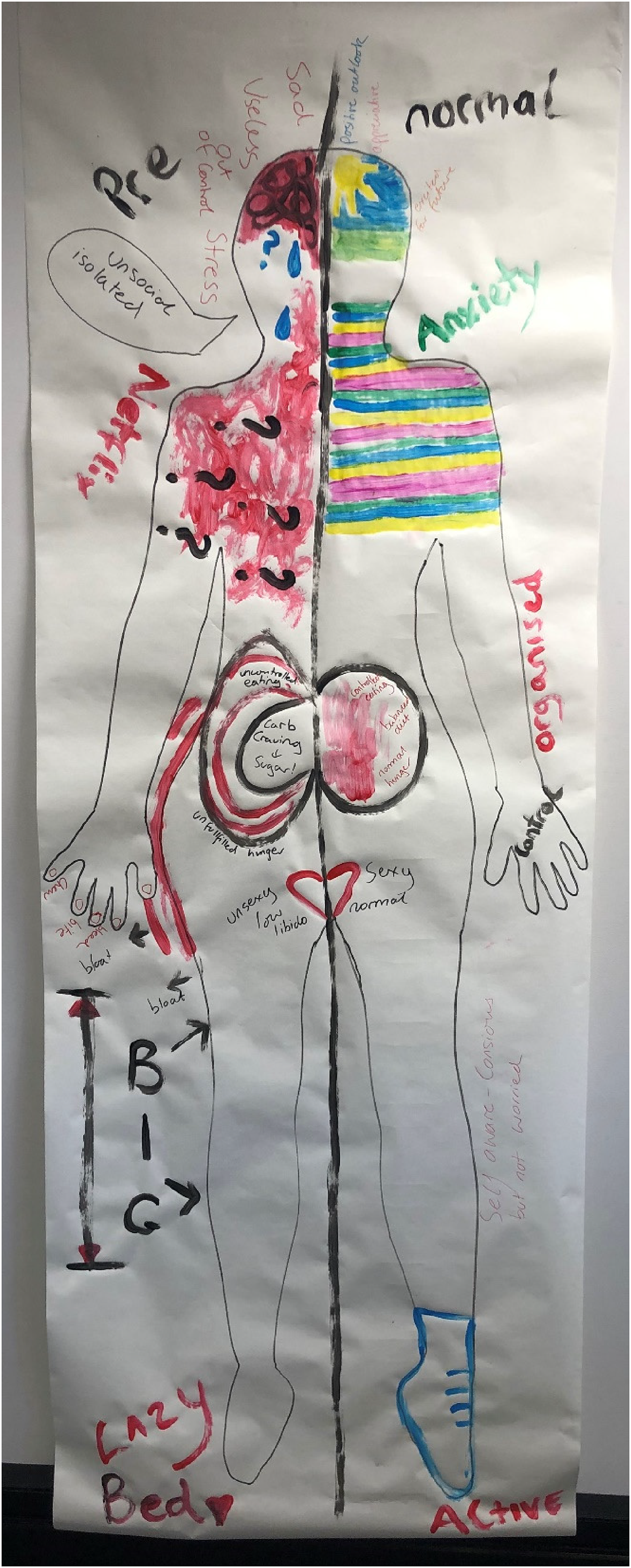
Rebecca's body map.
Here Rebecca describes consistent checking of a particular area of her body in the mirror for reassurance that she is not fat and therefore not risking scrutiny from the gaze of others.
In contrast, increased checking of the body in the mirror during the premenstrual phase made some women feel “worse” about their bodies, as Kristy described: I feel like I’m just constantly looking at my body. I think it's ’cause I am more self-conscious and more paranoid about how I look but then I translate that into looking at myself more [premenstrually], touching my body more and seeing where I feel these rolls which doesn't give me any benefit. It makes it worse.
Body scrutiny was also evident in accounts of women comparing their premenstrual bodies and experiences to those of other women. Sarah described comparing her premenstrual body to her friends’ bodies, telling us: “definitely a comparison, just because I’m thinking about the way that they’re going to look and why I don't look like that”. Kristy engaged in upward comparison of her own body to her sisters’ bodies, which she said she did “a lot more when I’m premenstrual”. She shared: I have two very skinny sisters that have very good bodies and I feel like I’m the biggest in the family, so I feel like I constantly wanna try and look as good as them, I don't wanna slip through the cracks.
Other women described engaging in negative social comparison with media images of seemingly perfect bodies. Michelle described feeling less able to resist negative social comparisons of her premenstrual body to women in magazines, sharing: I think it's something we all do as women, is compare yourself to the people in magazines to try and figure out how you feel that you should be looking. When I’m not premenstrual, I compare myself and I have these thoughts, but then usually I can convince myself that I’m fine the way I am. When you’re premenstrual, you don't have that patience with yourself. It's just automatic embarrassment and frustration and shame.
This critical body checking and comparison with others is the first step in self-policing, often followed by self-regulation through concealment.
“I don’t want other people to see me”: Concealment of the premenstrual body
Many women reported attempting to conceal the abject premenstrual body from the gaze of others through self-policing, reflecting a fear of being judged negatively. For example, Caitlin perceived an increase in vaginal discharge premenstrually which she described as having “a very strong smell”. To avoid being noticed by others she reported an increase in showering premenstrually, saying: Even my habits mainly change like I’ll shower maybe two to three times a day because I feel like there's that smell that I need to get rid of, or the discharge increases a bit more leading up to it … Just the body response seems to be making it unclean and the smell – I don't want anyone to smell it. I’d be embarrassed if anyone did.
Many women described wearing “loose” and “baggy” clothing, avoiding “tight” and “form-fitting” clothing to conceal premenstrual bloating and fatness. Ashley described spending time planning her clothing choices during the premenstrual phase in order to conceal her body as effectively as possible saying, “If I don't want my stomach to be seen, then I would have to spend more time to pull out the right clothes for me, try different things, and plan what I need to wear for the day.” Participants contrasted their choice of clothing that conceals premenstrual bloating with clothing they chose for the remainder of the month, which revealed their body shape. Tracey described wearing “loose” clothing that “hides everything” due to having “a lot of body issues” during the premenstrual phase juxtaposed to the “tight”, “skinny” clothing she wears outside this phase.
In order to further conceal the abject premenstrual body, many women described “hiding away” at home, because of feeling “ashamed” and “embarrassed” about their embodied state. This could result in social isolation and feelings of loneliness, as Caitlin reported: It makes you feel excluded and I guess lonely but … the last thing I want is someone [saying] ‘geez, what's going with all that acne, what's happening with all those pimples, is everything all right?’ Even though it's out of concern, they’re still drawing attention to it and it's something that I don't want attention drawn to. So, it's easier to avoid them than to be confronted and put in that position.
This suggests that having attention drawn to the abject nature of the premenstrual body is more aversive than the loneliness and social exclusion associated with isolating at home.
“Say no to looking like a poster girl”: Resisting negative premenstrual embodiment
Some women resisted cultural discourses which positioned the premenstrual body as abject, challenging constructions of idealised feminine beauty. One form of resistance was through identifying the absence of diverse body shapes in the media as the cause of feelings of shame and secrecy surrounding fatness and the materiality of women's reproductive processes. Caitlin was aware that this contributed to her own dissatisfaction with her premenstrual body, sharing: It just makes you feel less like the expectation … you’re bloated and you feel horrible in what you’re wearing and you walk out, you put on the news every morning and there's just female newsreaders that are in very good shape, that don't ever appear to alter from that. Then you go to work and you get on the internet and you see pictures of very thin girls as well. There's never a picture of a woman on her period feeling like shit. I guess in the media, it's kind of something that's hidden.
Tracey described cultural expectations surrounding policing of women's bodies in the context of clothing and behaviour as “sexism” and said: “It's not fun having someone always having something to say about what you’re doing or what you’re wearing and I feel like as women, people think that they’re entitled to their opinion about it.” Tracey described being “more aware” of sexist social pressures placed on women when she was premenstrual, “because I’m already in a shit state of mind” – an exemplar of women's underlying anger or frustration coming to the surface at this time.
Resistance was also evident in accounts of women choosing loose clothing for physical comfort, rather than as an act of concealment, in the premenstrual phase. Comfort dressing was positioned as a form of self-care in reducing pain, as a survey participant shared: “I tend to wear more comfortable clothing to alleviate some of the premenstrual cramps.” Choosing comfortable clothing was also described as taking a break from the regulation of femininity inherent in being fashionable. A survey participant said: “Often I’ll wear clothes [premenstrually] that are more comfortable rather than stylish, because I genuinely tend to not care about what others think anymore, because I don't feel good about myself and want to feel better, by being comfortable.” These accounts suggest that some women legitimise reduced self-policing through adopting a discourse of self-care in relation to embodied premenstrual changes.
Evidence of resistance was present in women's attempts to challenge negative thoughts about their bodies and their fears of judgement from others. Some women described being aware of unrealistic beauty ideals that contributed to their negative feelings about their premenstrual bodies but felt unable to resist attempting to meet these ideals. For example, Maria described negative thoughts about the premenstrual body as “irrational” and “exaggerated” but said she cannot avoid constructing her body as bigger than it really is, sharing: “I think because I’m already thinking about being bloated and being a little bit heavier but in my head, I probably built it up a little bit more than it is.” Olivia described reflecting on negative thoughts about her premenstrual body as an opportunity to “grow”. She said: “I know my body is different to what the model will be, or how someone else will be.” These accounts suggest that women can resist negative self-judgement and self-policing during the premenstrual phase, through having awareness of cultural constructions of women's bodies that may not reflect how their bodies actually are.
Discussion
This study examined how women construct and experience premenstrual embodiment, and how they manage negative feelings about the premenstrual body, in order to provide greater understanding of the role of body dissatisfaction in premenstrual distress. In the majority of accounts, women positioned the premenstrual body as abject. It has been suggested that the bodily excretions and changes associated with the reproductive cycle expose the abject corporeality of women's bodies, usually repressed within idealised material practices and constructions of femininity (Parton et al., 2016). For example, across cultures, menstruation is positioned as a sign of bodily “leakage”, considered dirty, the woman polluted, and menstrual blood the epitome of the abject (Kristeva, 1982). Findings of the present study suggest that positioning of women's reproductive bodies as abject extends to the premenstrual body, and that women internalise this discourse, with implications for negative self-evaluation and distress.
Women's positioning of premenstrual bloating as being “too big” reflects conceptualisation of fat bodies as abject, a sign of feminine excess in which the body risks being “too much” in terms of size (Fahs, 2017b). Fat phobic attitudes have been associated with the racialisation of fatness, through associating thinness with hegemonic white femininity, and the abjection and othering of black bodies (Strings, 2019). In constructing their bodies as squishy, wiggly and “flubbery”, women are drawing on Western discourses that position the white hetero-feminine fat body as monstrous, disgusting and out of control (Bordo, 1993). This also reflects self-positioning as the “monstrous feminine” in which the reproductive body is constructed as “other” and a site of monstrosity, problematising notions of the disciplined feminine body that respects borders (Ussher, 2006). Feelings of disgust are associated with women's feelings of failure in relation to discipline and control of the feminine body, in order to avoid fatness and self-abjection (Fahs, 2018). Perception of premenstrual bloating and fatness may thus disrupt and threaten acceptable bodily boundaries, causing distress for women in feeling unable to control and contain their bodies. This is further demonstrated by feelings of guilt surrounding reduced regulation of eating and exercise behaviours premenstrually, contributing to perceived weight gain. This is evidence of Western discourses that assert women must engage in constant monitoring of their food intake and exercise, ideas which encourage the development of disordered eating behaviours (Schwartzman, 2015).
The discursive construction and materiality of embodied premenstrual experiences had intrapsychic consequences for the women in this study. In constructing the premenstrual body as fat, out of control and abject, women positioned themselves as ugly, unfeminine, unattractive and undesirable. These were traits associated with feelings of shame and worthlessness, which was detrimental for self-esteem and self-confidence. This supports findings that women who position themselves outside of cultural beauty ideals experience shame and body dissatisfaction (Dakanalis et al., 2015). Feeling shameful about the body is also associated with poorer mental and physical health (Lamont, 2015). Experiencing shame in relation to constructions of the premenstrual body as abject may contribute to premenstrual distress and have negative consequences for women's health and experiences of the premenstrual self.
The materiality of embodied premenstrual change was associated with heightened awareness of aspects of the body with which women normally felt dissatisfied. Previous research found that women reporting premenstrual distress experienced somatosensory amplification during this phase, suggesting that some women may be more alert to material changes in the body (Kleinstäuber et al., 2016). Heightened awareness of premenstrual bodily changes such as bloating could draw women's attention to aspects of their bodies that are culturally positioned as fat and therefore abject, precipitating increased body dissatisfaction and self-judgement. This focus on the abject occurs during a time in which many women experience increased negative emotions, including premenstrual anxiety, depression and feeling out of control (Ussher & Perz, 2017). This could contribute to women's increased negative feelings about their bodies and, in turn, feeling badly about the body may increase premenstrual distress.
Signs of abjection were also evident in women's constructions of the leaking, dirty premenstrual body. Cultural positioning of menstruation as abject, disgusting and a hygiene crisis to conceal is associated with menstrual and body shame (Chrisler, 2011; Ryan et al., 2020). This was analogous with the sweat, grease, oil and slime of the premenstrual body, suggesting that positioning of menstrual blood as contaminating, shameful and abject extends to premenstrual bodily secretions. Women positioned these secretions as needing to be concealed from the view of others in fear of humiliation in being positioned as unclean, gross or disgusting, accompanied by feelings of stress, anxiety, sadness, darkness and self-disgust. The abject threatens the order between bodies and morality in that being “dirty” implies “humiliating moral connotations” (Waskul & van der Riet, 2002, p. 510). In this vein, disgust acts as a regulatory device to encourage women to contain their unruly bodies (Fahs, 2017b). The threat of the exposure of the abject was therefore a source of psychological distress during the premenstrual phase.
Previous literature has suggested that fat women, as well as individuals with acne, or those seen as dirty, are subjected to discrimination and marginalisation, feeling as though their behaviours are under the surveillance of others, regulated by the social normalising gaze (Lafrance & Carey, 2018; Tischner, 2013). In positioning embodied premenstrual changes as fat or dirty, women are internalising fat-shaming discourses that position fatness as the result of laziness and lacking self-discipline, and discourses that position acne as caused by uncleanliness (Lafrance & Carey, 2018; Tischner, 2013). This illustrates the importance of acknowledging the materiality and discursive construction of the body, as well as women's intrapsychic negotiation of perceived embodied change, as factors implicated in women's experience of premenstrual distress.
Foucault (1977) suggests that people learn about and conform to social norms through policing of themselves and of each other. In this vein, the gaze of others is internalised, leading to acceptance of the regulation of one's body in line with social rules (Chrisler, 2018). Engagement in self-policing behaviours was the first step in managing, containing and concealing the abject premenstrual body. Extra time spent washing and choosing concealing clothing supports ideas that women's engagement in body work is time-consuming (Chrisler, 2018), reflecting the strength of cultural pressures placed on women to manage their bodies to maintain secure bodily boundaries (Colls, 2007). Isolating the self confirms previous premenstrual research suggesting that women engage in avoidance of others as a form of coping, avoiding situations that have the potential to provoke anger and stress (Ussher & Perz, 2013). The present findings suggest that women may avoid others in fear of anticipated judgement of the premenstrual body. Wanting to conceal the premenstrual body associated with shame and embarrassment supports findings that these emotions generate an intense desire to escape the external gaze (Fredrickson & Roberts, 1997). For example, some fat women and people with acne describe wanting to be invisible from others (Lafrance & Carey, 2018; Tischner, 2013). Hiding of the premenstrual body may have functioned to avoid or reduce women's feelings of shame and embarrassment associated with discursive positioning of premenstrual changes as abject.
Women's increased self-scrutiny during the premenstrual phase is reflective of “body checking”, characterised by habitual monitoring of body size and weight (Shafran et al., 2007). Body checking was associated with increased negative feelings towards the body, reinforcing findings that scrutinising the body in mirrors can immediately increase feelings of fatness, body dissatisfaction and self-critical thoughts (Shafran et al., 2007). For women in this study, negative feelings associated with looking at the premenstrual body resulted in increased time scrutinising and criticising the abject premenstrual body, demonstrating a cyclic pattern to negative premenstrual embodiment. Fragmentation of specific body parts during the premenstrual phase confirms that many women view themselves as a collection of potentially defective body parts, rather than as a whole person (Colls, 2007), associated with negative embodiment (Chrisler, 2018). The parts of the body that women singled out for criticism in the present study – the stomach, thighs, arms and chin – are highly scrutinised body parts that women are often dissatisfied with, standing as visible signs of thinness within Western culture (Chrisler, 2018), and thus as a potential source of dread (Fahs, 2017a).
Women's self-judgement was also evident in relation to other women, reflective of social comparisons, in which individuals judge their adherence to cultural norms by using others as a point of reference (Chrisler, 2018). Social comparisons are often in reference to physical appearance, which can negatively affect self-esteem and embodiment (Chrisler, 2018). Young women are more likely to engage in upward appearance comparisons, associated with body dissatisfaction (Thøgersen-Ntoumani et al., 2017). In the present study, women described feeling less able to resist upward social comparisons and negative feelings about the body when they were premenstrual. This may be a consequence of negative emotional changes experienced premenstrually, which often include self-criticism (Ussher & Perz, 2013), or upward social comparison may be a factor which exacerbates premenstrual distress. In combination, fragmentation of body parts, self-scrutiny and upward social comparison suggest a form of self-objectification (Fredrickson & Roberts, 1997) previously found within the premenstrual phase (Ussher & Perz, 2020a).
In resistance and challenging of negative discourses surrounding premenstrual embodiment, women positioned themselves as agents in analysing their internalisation of cultural constructions of idealised femininity. However, at the same time, women still reported dissatisfaction with their premenstrual bodies and fear of the external gaze. This is reflective of the concept of “tightrope talk” in which women adopt a both/and position in negotiating experiences (McKenzie-Mohr & Lafrance, 2011). It has been suggested that a both/and position “honors women's agency and power while not minimising the impact of oppressive social discourses and social relations” (McKenzie-Mohr & Lafrance, 2011, p. 64). This allows for acknowledgement of women's agency in criticising discourses that encourage them to feel negatively about embodied premenstrual changes, whilst recognising that the consequences of not adhering to ideals of feminine beauty are so strong that women find it difficult to resist internalising them. Evidence of a both/and position has previously been identified in women's accounts of internalisation of bio-medical discourse which positions their negative emotions as PMS, whilst also attributing negative emotions to external factors, allowing women to deflect blame (Ussher & Perz, 2014).
Wearing clothes for comfort rather than for fashion purposes premenstrually is reflective of findings that women engage in “compromises” in negotiating fitting in with social norms whilst also wanting to maintain freedom from external pressures (Stuart & Donaghue, 2012). Taking a break from adhering to fashion norms during the premenstrual phase, legitimised by experiences of premenstrual cramping, may act as a compromise in women's conformity to these norms for the rest of the month. This suggests that for some women, the premenstrual phase is a time in which they can legitimise their resistance in taking a break from their usual conformity to harsh standards of beauty. Increased frustration with cultural expectations surrounding policing and scrutiny of women's bodies could be conceptualised as a rupture in self-silencing, in which underlying anger associated with enacting feminine ideals is expressed premenstrually (Ussher & Perz, 2014). Women have been previously found to criticise the lack of diverse representation of feminine bodies within the media, constructing idealised thin bodies as fake and unrealistic (Beale et al., 2016). For some women, experiencing the premenstrual body as abject and outside of beauty ideals, may highlight unrealistic pressures placed on them by the media to conform to a singular, thin body type, facilitating resistance.
Strengths of this study include the use of a community sample and multiple forms of qualitative data and arts-based methodology, facilitating a greater depth of understanding of women's experiences with their premenstrual bodies, and the association of embodiment and premenstrual distress. Drawing attention to embodied experience is a strength of body-mapping (De Jager et al., 2016). However, this process may be similar to body-checking used to self-regulate body weight (Petrucelli, 2015), suggesting sensitivity is needed in using this method when exploring topics associated with disordered eating behaviour. Limitations of this study include that participants responded to an advertisement asking about negative feelings about the premenstrual body, and were predominantly young, cisgender, heterosexual white women. Recruitment advertisements asked for “women” who feel differently about their bodies during the premenstrual phase. This may have excluded non-binary and transgender participants who do not identify as a woman but still experience premenstrual body dissatisfaction. There is a need for further research examining premenstrual embodiment in older women, non-heterosexual and non-binary people, and women from other ethnic groups.
In conclusion, our findings suggest that women's premenstrual body dissatisfaction is complex, multi-layered and goes beyond perceptions of body size. Cultural ideals of idealised feminine bodies, which lead to general body dissatisfaction and also position premenstrual embodied changes as abject, appear to play a role in women's premenstrual distress. These cultural discourses had implications for women's construction and experience of embodied premenstrual changes, and negotiation of these changes in the context of body management. Facilitating women's resistance of negative cultural discourses associated with embodied premenstrual changes may facilitate coping with negative emotions about the premenstrual bodies.
Footnotes
Acknowledgements
The authors would like to thank the study participants for their time and participation in the study.
Declaration of conflicting interests
The author(s) declared no potential conflicts of interest with respect to the research, authorship, and/or publication of this article.
Funding
The author(s) disclosed receipt of the following financial support for the research, authorship, and/or publication of this article: This work was supported by the Translational Health Research Institute, Western Sydney University.
