




Abstract
Background
Explosive power, an essential component encompassing both speed and strength, plays a fundamental role in various physical activities, crucial for both competitive sports and general fitness.
Objective
This research presents an investigation into methodologies for enhancing lower limb explosive power in children aged 6–12 years. It also employs data-driven techniques in correlation analyses and modelling.
Methods
The study involved an 8-week experiment of training lower limb explosive power using squat jump, 15-metre sprint, hurdle hop, etc. The explosive power was measured using a TENDO device. Combined with correlation analysis and linear regression, predictive models of children's lower limb explosive power have been developed through a data-driven approach using a fuzzy rule-based system.
Results
Correlation analyses reveal significant associations between changes in explosive power and metrics such as vertical jump height and 30-meter sprint time. Regression analyses produce predictive equations tailored to gender-specific differences. The predictive models derived with the fuzzy rule-based system demonstrate good accuracy.
Conclusions
The proposed training programme effectively contributes to the enhancement of the lower limb power in children, while the advanced modelling techniques furnish precise prognostic tools, facilitating nuanced and targeted training interventions.
Introduction
With the advancement of modern technology, including electronic products and the internet, children's time and desire of doing physical activities have become increasingly constrained. This change significantly hampers children's physical and mental development, leading to more pronounced health issues. The 2020 Physical Fitness Inspection Report indicates a rise in obesity, myopia, and spinal curvature rates among Chinese children, alongside a general decline in various physical health indicators. 1 Other reports also show declining physical activity levels in children in recent years across different counties 2 and in some countries, such as the UK and the USA, the data indicate declines in strength and endurance metrics among children over the past few decades.3,4
Physical activities are critical for the health development of children, particularly in fostering physical fitness and preventing life-style-related diseases. Children aged 6–12 years form the foundational stage for adolescent success, and a weak foundation can have serious future repercussions.5–8 Moreover, physical activities can offer significant psychological benefits for children. A study by Faigenbaum and Myer 6 found that increased physical fitness is associated with greater self-confidence and self-esteem in youth. Children who feel capable and competent in physical activities are more likely to engage in regular exercise, reducing sedentary behaviour and its associated health risks.
Among various physical attributes, lower limb explosive power is especially important, as it underpins fundamental motor skills such as running, jumping, and throwing. These skills are essential not only for a child's general well-being but also for participation in sports.9–12 Explosive power, representing one's ability to exert maximal force in the shortest time, is vital for athletic performance across diverse sports disciplines. It supports key movements that are crucial for success in sports ranging from track and field to team sports like basketball and football. 13 According to research by Behm and Sale, 14 improvements in explosive power lead to faster sprint times, higher jumps, and quicker changes of direction, all of which are essential in competitive sports environments.
Previous research has predominantly focused on the training methodologies aimed at enhancing explosive power in adult and adolescence. There is still a significant gap in research regarding tailored training methodologies for children, particularly those aged 6–12 years. This age group experiences rapid physiological growth and developmental changes, necessitating specialised approaches that address their unique physiological and psychological needs. Previous studies have explored modified training protocols specifically designed for children to enhance explosive power safely and effectively.15–17 For example, Faigenbaum et al. 18 advocate for the inclusion of age-appropriate plyometric exercises that emphasise technique and landing mechanics over intensity. Similarly, programs incorporating bodyweight exercises and games have been shown to improve motor skills and agility in children while reducing injury risks associated with high-intensity training. 19
This research aims to investigate and develop an effective training protocol for lower limb explosive power specifically tailored for children aged 6–12 years. Experiments are carried out to verify the effectiveness and the level of improvement is studied based on the experimental data. Furthermore, one would even like to anticipate the improvement in quantity for the children with different sex, age and physical conditions. The ability to achieve such anticipation will greatly benefit the planning of a training programme considering individual conditions and personalised requirements.
Therefore, as the second facet of this research, statistical methods are first employed to analyse the collected data to identify key factors that influence explosive power in this age group. Two predictive models are then developed for the designed training protocol, which can be used in two different scenarios. One linear regression model, a simple-structure model, is used in a relatively simple mapping scenario. This model can help estimate the explosive power value from one's performance in some standardised training practice, such as the time of completing a 30-meter sprint or the height in a vertical jump. One fuzzy rule-based model, a robust model good at reasoning, is used in a complex anticipation scenario. This model can help predict the rough training outcome before training, according to a child's basic information and his/her physical conditions.
Methods
Participants
In this research, a random sample of pupils from Years 1 to 6 of Chinese primary schools was selected. The sample comprises 22 girls and 23 boys, totalling 45 subjects. They were recruited and participated in China. All participants were in good health, with no recent injury records, and had not undergone any professional sports training. Ethics approval was obtained from the Ethics Committee of Shandong Sport University, dated 30.4.2022.
Experimental setup
This project presents a training protocol for children to improve the lower limb explosive power and carried out a set of training experiments with the participation of children with different age and gender. Before the experiments, experts specialising in children's physical education and training were interviewed and their feedback was utilised to help designing training and assessment methodologies for children's explosive power. Some traditional explosive power training methods were tailored and utilised, which involved a quantitative approach targeting individual muscles by reducing work time and manipulating loads. Training exercises included squat jump, 15-metre sprint, hurdle hop, etc. and the details can be found in Section 2.3.
The experiment of training was conducted over a total of 8 weeks. The training exercises were repeated 3 times every week. Before the start and after the end of the training scheme, some basic anthropometrics were measured, as shown in Tables 1 and 2. The height was measured with a stadiometer, the mass was measured with a weighing scale and the waist girth was measured with a flexible measuring tape. BMI (Body Mass Index) was calculated by dividing a child's mass (kg) by his/her squared height (m²). To measure the Achilles tendon length, one needs to identify the point where the Achilles tendon attaches to the heel bone and the other point where it transitions into gastrocnemius, and measure the distance between these two points using a measuring tape. The lower limb length was also measured using a measuring tape as the bone length from the hip joint to the ankle.
Pre-experimental physical performance and morphometric qualities for male students.
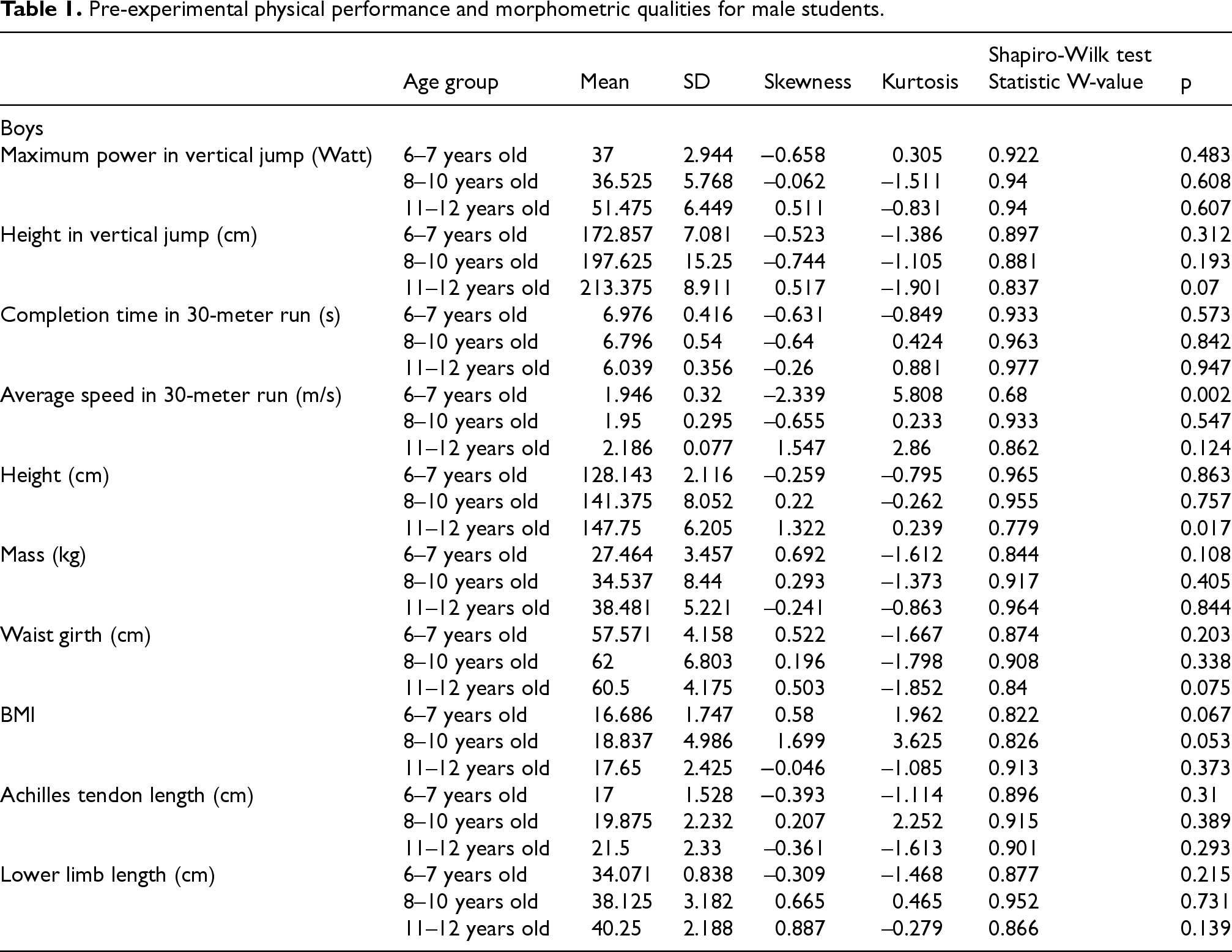
Pre-experimental physical performance and morphometric qualities for male students.
Pre-experimental physical performance and morphometric qualities for female students.
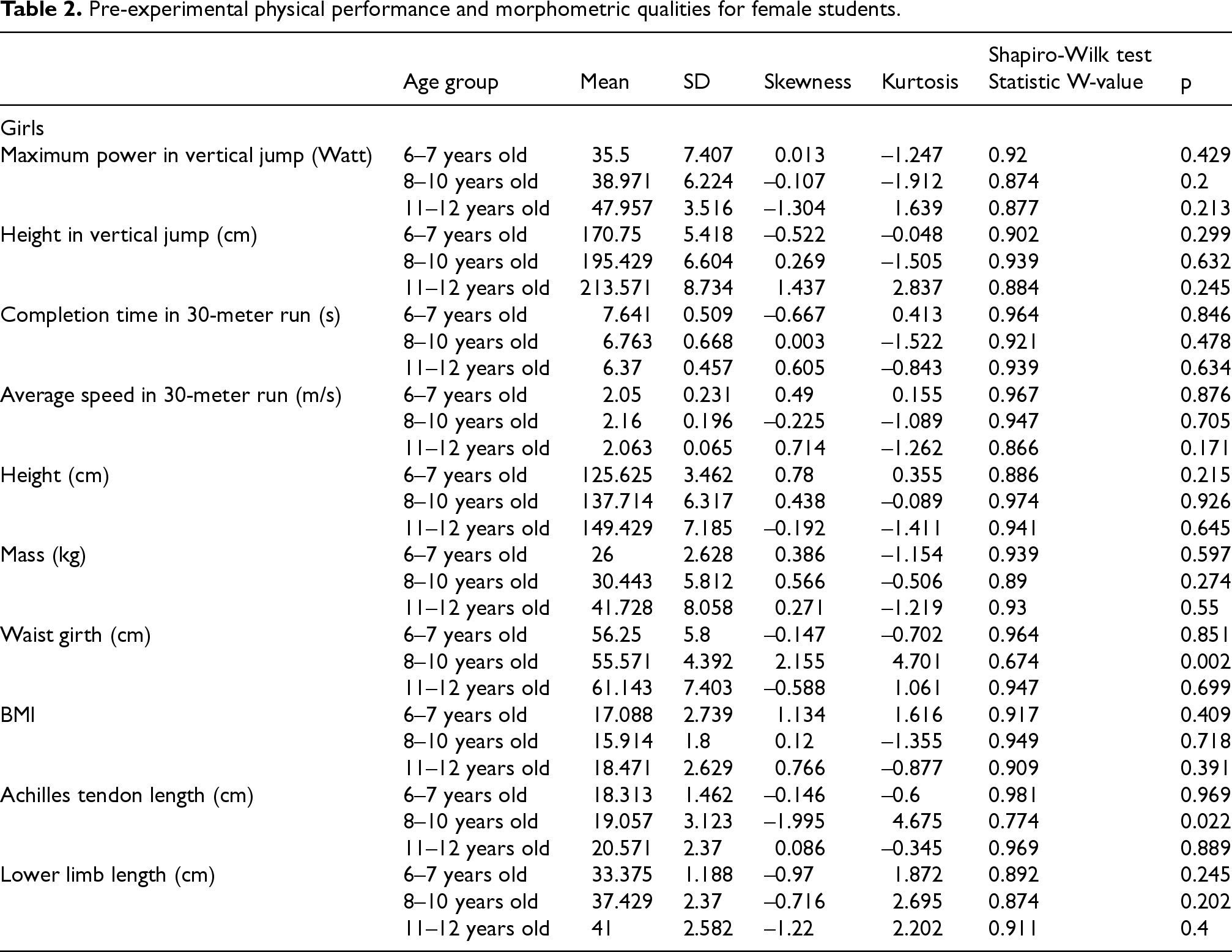
Besides the measurement of morphometric information, two activities were carried out to measure the physical performance of children. One was a 30-meter sprint and the other was a vertical jump. These two activities were carried out every 2 weeks, for a total of 5 times including one before the training and one at the end of the 8-week training period. For the 30-meter sprint, the completion time was recorded and the average speed was calculated. In the vertical jump, the subject was required to jump to reach as high as possible. The jump height was recorded, and the power and speed during the jump were measured using a TENDO unit.20,21 From these two measurements, the change of a child's speed and lower limb power during the training period can be observed.
The TENDO device is used to measure the average speed, maximum speed, average power, and maximum power of a training movement. In our tests, it was directly attached to a subject's body (see Figure 1) in the vertical jump test. The maximum power recorded was considered as the value of the lower limb explosive power.
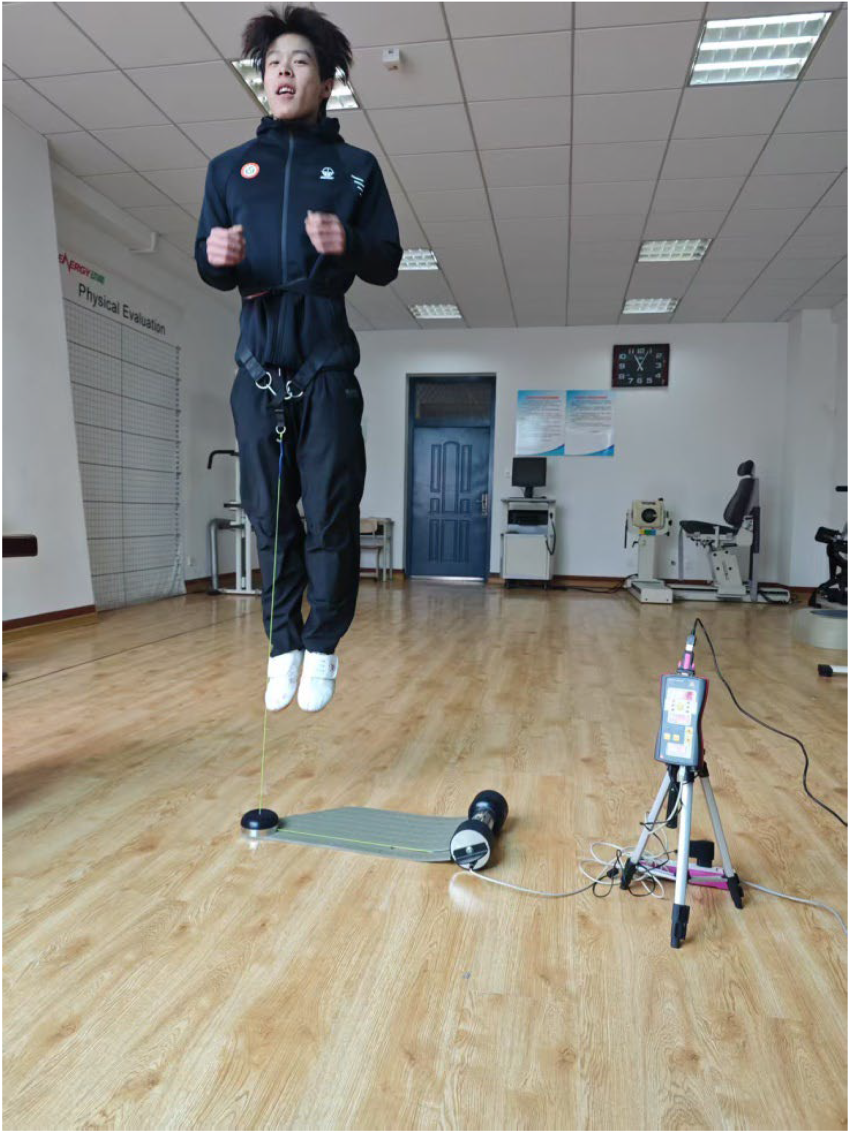
Illustration oyf using a TENDO unit.
The training regimen consists of the exercises for the lower limbs, performed three times a week following a training plan given in Table 3. Some details of the core exercises are introduced in the following sections (see Figure 2 for some examples).
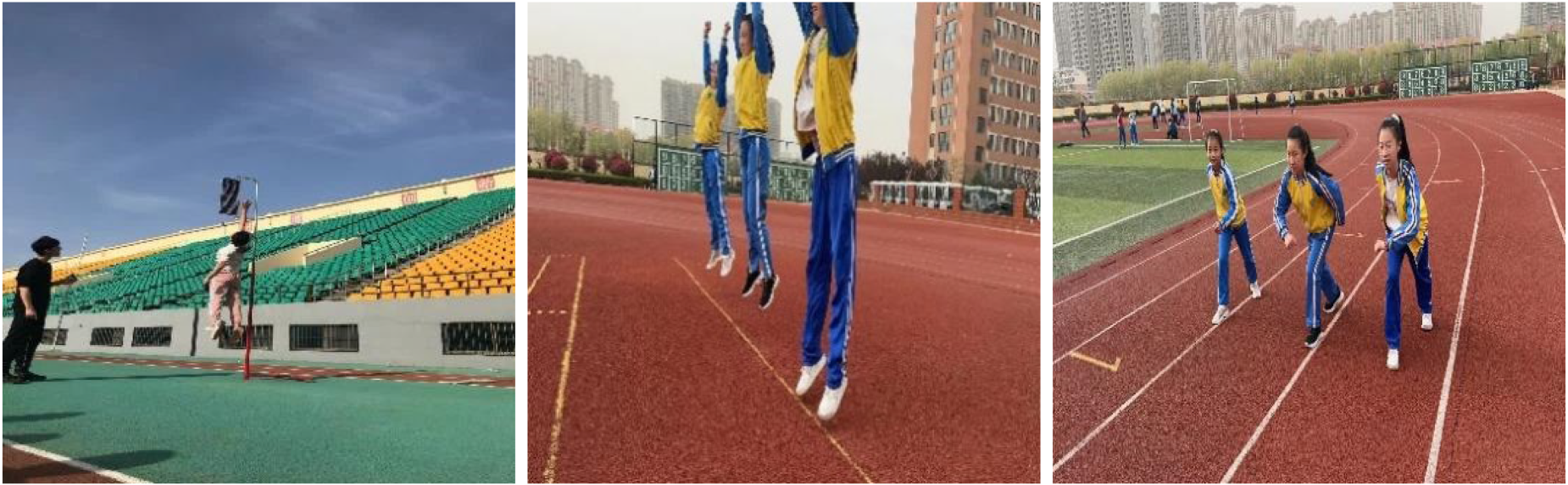
Vertical jump, squat jump and 15-metre sprint over an 8-week training period.
On a track field, participants initiate the sprint from a standing position and, upon the auditory cue “Ready, go” from the instructor, execute a rapid sprint to the designated 15-meter endpoint.
Hurdle hop
Ten hurdles are set, each with a height of 15 cm and spaced 40 cm apart on the field. Participants, without utilising arm momentum, rely on the strength of their lower extremities to flex their knees and hips, followed by a rapid extension of these joints to leap over each hurdle.
Squat jump
Participants place their hands on their hips, flex their knees and hips until their thighs are approximately parallel to the ground, and then perform a rapid vertical jump. The inhalation occurs during the squat, and exhalation occurs during the jump. Upon landing, the toes touch the ground first, followed by a gradual cushioning impact by the heels.
Vertical jump
A height-touch device is positioned at a secure location on the field. Participants flex their knees and hips while simultaneously swinging their arms backward. When their thighs are parallel to the ground, they rapidly extend their knees and hips, and swing their arms forward and upward to propel their bodies vertically, aiming to touch the height-touch device.
15-metre dash
Participants start from a standing position and, upon the instructor's command of “Ready, go,” sprint to the 15-meter mark, touch the midpoint line, and then rapidly return to the starting point.
The designed training programme for lower limb explosive power.
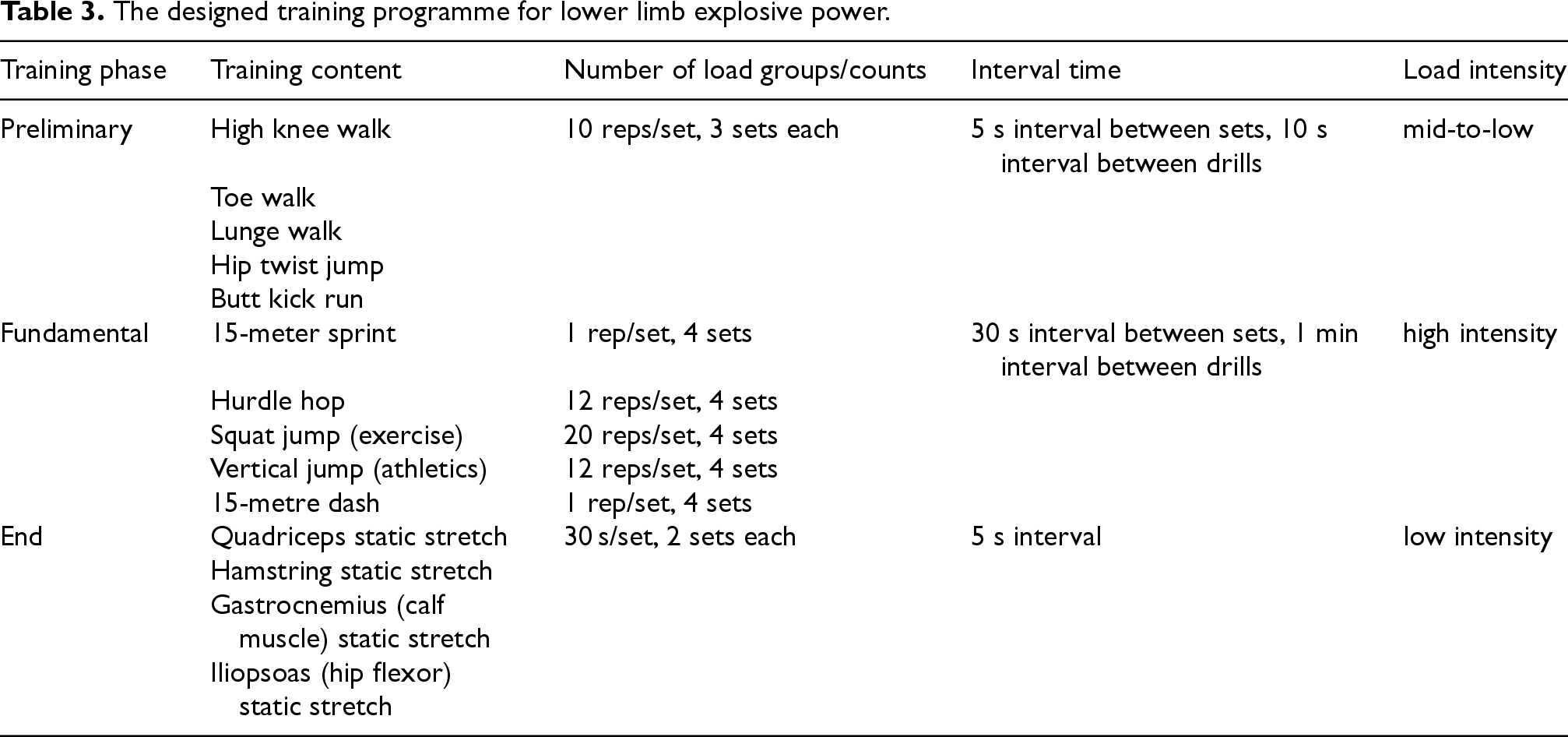
The designed training programme for lower limb explosive power.
The data collected from the initial, final and biweekly tests were saved in an Excel spreadsheet, and they were further collated and processed with SPSS 25.0 for data analysis and linear regression modelling.
Firstly, descriptive statistics was conducted on the data using SPSS software and the ratios of skewness to standard error and kurtosis to standard error were calculated. If these ratios fall between −1.96 and 1.96, the data conforms to a normal distribution. Secondly, correlation coefficient analysis was performed among various data, including the outcome measures from 30-meter sprint and Tendo jump, along with the individual characteristics and anthropometry, i.e., the height in vertical jump, completion time in 30-meter run, average speed in 30-meter run, children's height, body mass, waist girth, BMI, Achilles tendon length, and lower limb length. This tried to find variables with significant (sig < 0.05) correlation with the explosive power. Next, linear regression method was established for stepwise analysis, evaluating model fit with the R² value and determining statistical significance. Finally, the regression equations were validated in testing, where the obtained regression equations were used to predict for the cases that the models had not seen in training. The testing data here were some preserved data randomly selected from the original data set, and were not used in the training phase.
Data-driven modelling
In this study, data collected over the training programme were also analysed and utilised in constructing predictive models, which can facilitate early prediction and trend analysis of children's explosive power development. In this study, modelling was conducted using a Fuzzy Rule-based System (FRBS), known for its capability in mapping and generalisation. 22 FRBS can effectively learn and predict complex relationships from data. They offer greater transparency compared to most other black-box modelling techniques by employing linguistically descriptive “If-Then” rules.
In the data-driven modelling, the initial fuzzy system is derived by implementing clustering information generated from the samples. Subsequently, the structure and parameters of the first model is refined by using a Multi-Objective Reduced Spatial Search Algorithm (MO-RSSA).23,24 Additional information and detailed insights into the modelling approach can be found in the articles.25,26
In this work, two predictive models were developed to anticipate the training outcome in advance, according to a child's basic information and his/her physical conditions. Both of the FRBSs consist of 9 fuzzy rules. One model aimed to predict the increase in explosive power, while the other model focused on predicting the increase in the 30-meter speed during training. Both models utilised six input variables: gender, age (years), height (cm), mass (kg), leg length (cm), vertical jump height (cm), and training time (weeks). 70% of the collected experimental data were randomly selected and used in training the FRBSs, and the remaining 30% of the collected data were used in testing the developed models.
Results
Effectiveness of the training protocol
The experimental results show that the proposed training protocol is effective in improving the maximum power during the jump test, as well as improving the performance in activities such as jumping and running, i.e., vertical jump and 30-m sprint. As shown in Tables 4 and 5, after 8 weeks, boys’ vertical jump height has increased by 4.689 cm and girls’ vertical jump height has increased by 5.697 cm in average. Boys’ 30-m sprint time has increased by 0.423 s and girls’ 30-m sprint time has increased by 0.555 s in average.
Descriptive statistics of changes in each variable before and after the 8-week training (boys, n = 23).
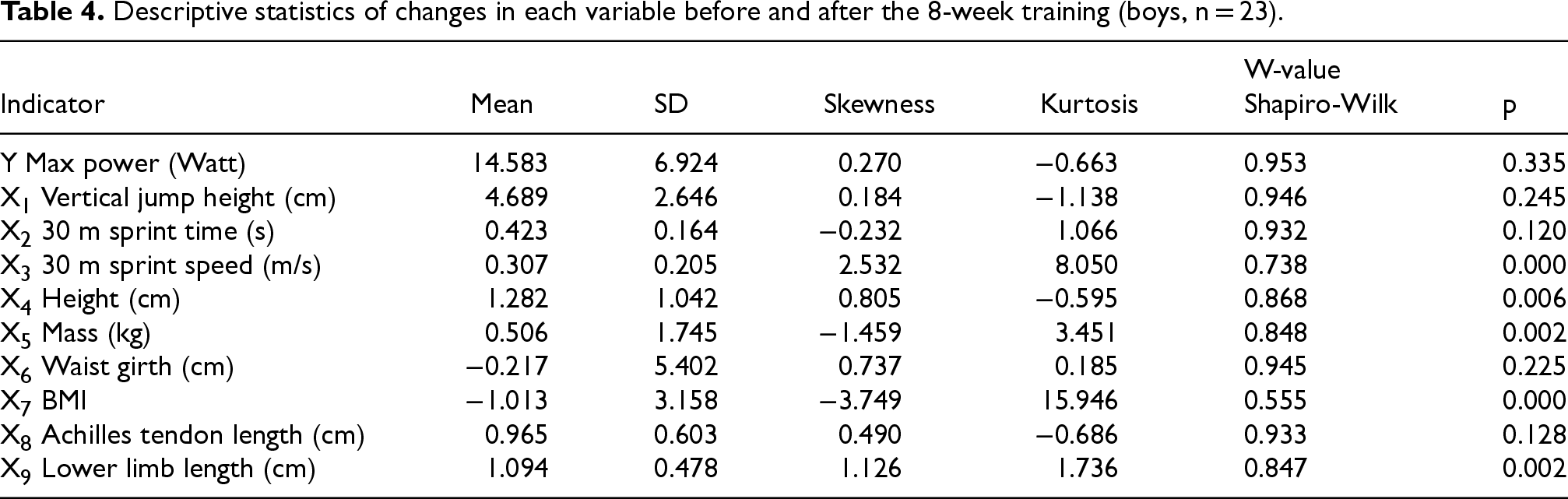
Descriptive statistics of changes in each variable before and after the 8-week training (boys, n = 23).
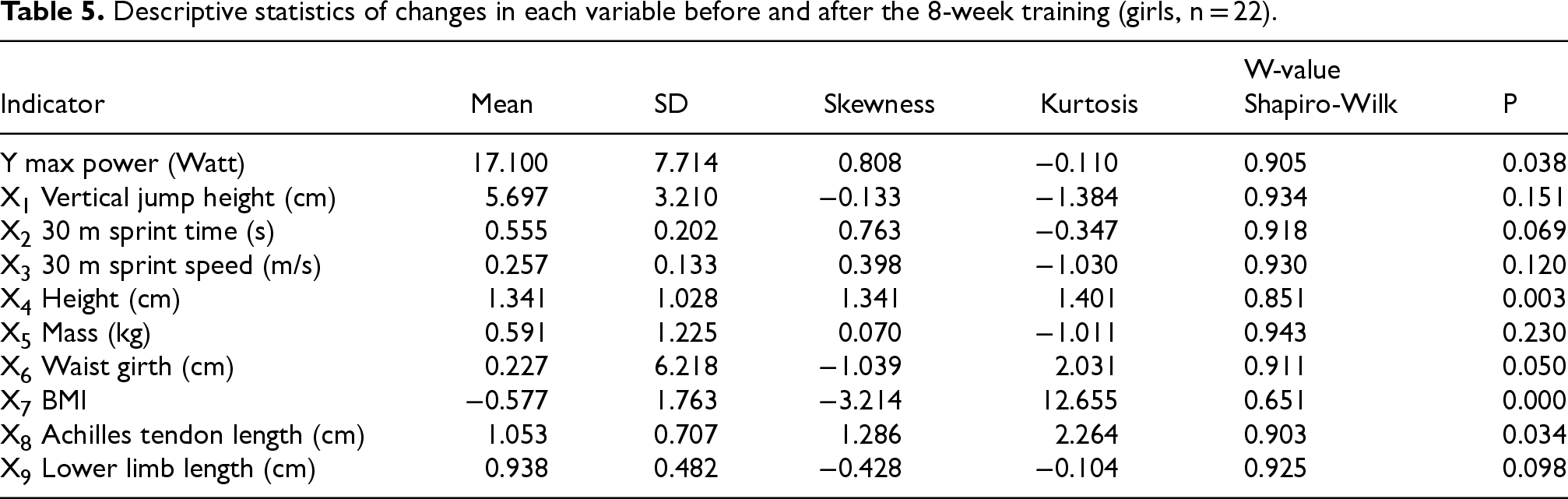
Descriptive statistics of changes in each variable before and after the 8-week training (girls, n = 22).
Correlation coefficient values among various variables (boys, n = 23).
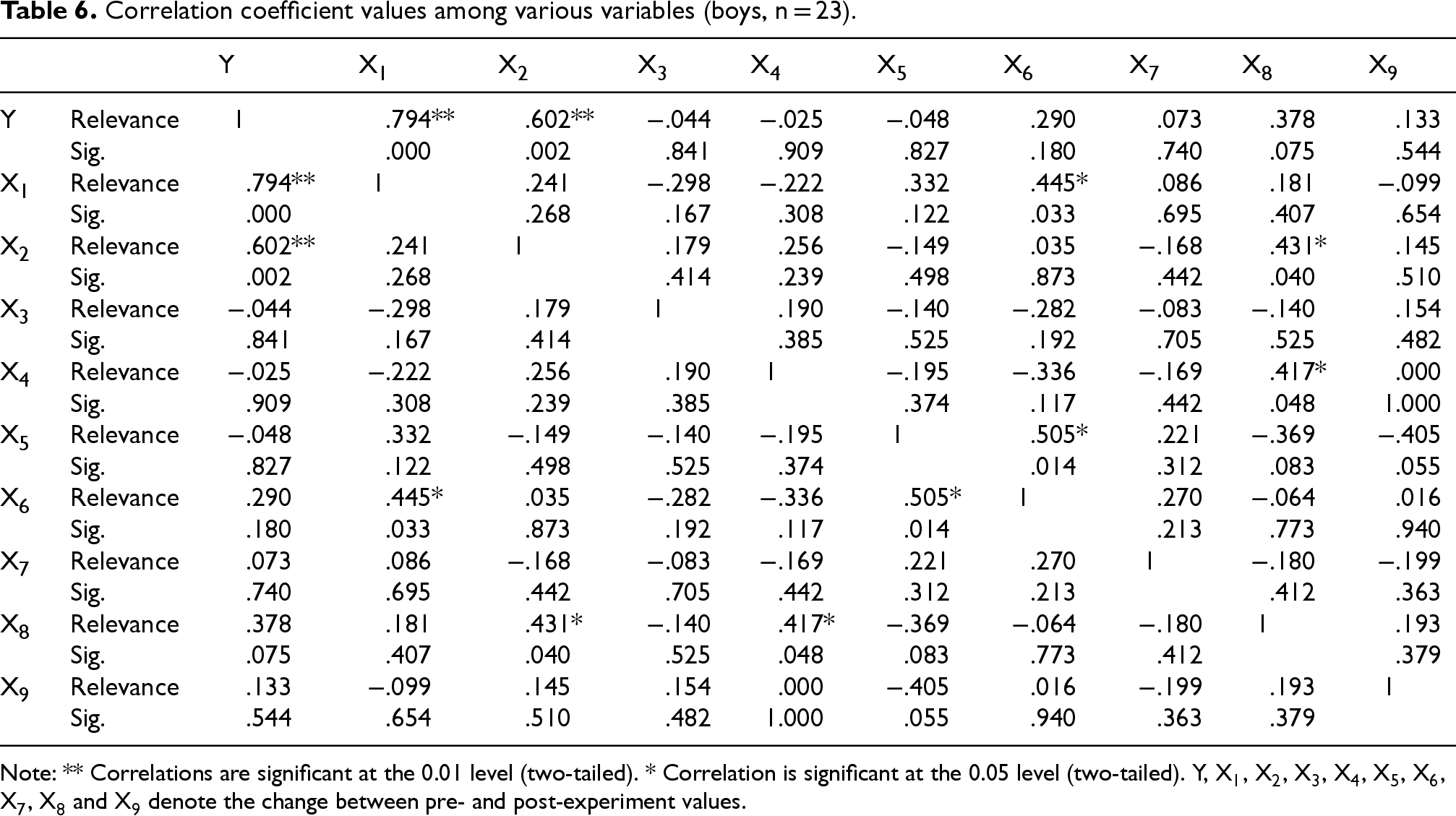
Note: ** Correlations are significant at the 0.01 level (two-tailed). * Correlation is significant at the 0.05 level (two-tailed). Y, X1, X2, X3, X4, X5, X6, X7, X8 and X9 denote the change between pre- and post-experiment values.
The maximum power shows a clear increasing trend during the 8-week training period. As shown in Tables 4 and 5, after 8 weeks, boys’ maximum power has increased by 14.583 Watts in average, which represents an increase of 35.6% of the original power. Girls’ maximum power has increased by 17.100 Watts in average, which represents an increase of 42.2% of the original power. In 8 weeks of time, the natural increases in the maximum power due to maturation are very small, only about 0.498 Watts for boys and 0.415 Watts for girls. They are estimated from the baseline data, i.e., the power differences between the children aged 7 years (37 Watts for boys and 35.5 Watts for girls) and the children aged 12 years (51.475 Watts for boys and 47.957 Watts for girls). Compared these values, one can clearly see the proposed training scheme is very effective.
This work evaluated various factors that may affect or be related to the explosive power (the maximum power in vertical jump Y). It studied the data distribution of the factors and tried to identify the ones have the strongest correlation with the explosive power. The factors included the height in vertical jump (X1), completion time in 30-meter run (X2), average speed in 30-meter run (X3), children's height (X4), body mass (X5), waist girth (X6), BMI (X7), Achilles tendon length (X8), and lower limb length (X9). The changes in these variables before and after the 8-week training were analysed using SPSS software with the Shapiro-Wilk test. The results are shown in Tables 4 and 5, relating to boys and girls, respectively.
From Table 4, it is evident that the change values of the maximum power, the height in vertical jump, the completion time in 30-meter run and Achilles tendon length adhere to a normal distribution (p > 0.05). The absolute values of kurtosis for average speed in 30-meter run, children's height, body mass, waist girth and lower limb length are less than 10, and the absolute values of skewness are less than 3, indicating that these variables essentially conform to a normal distribution. However, BMI exhibits a p-value less than 0.05, with an absolute kurtosis value exceeding 10 and an absolute skewness value exceeding 3, indicating departure from normal distribution.
From Table 5, it is evident that the change values of the height in vertical jump, completion time in 30-meter run, average speed in 30-meter run, body mass and lower limb length adhere to a normal distribution (p > 0.05). The absolute values of kurtosis for maximum power, children's height, waist girth and Achilles tendon length are less than 10, and the absolute values of skewness are less than 3, indicating conformity to normal distribution. However, BMI shows a p-value less than 0.05 and an absolute skewness value greater than 3, indicating departure from normal distribution.
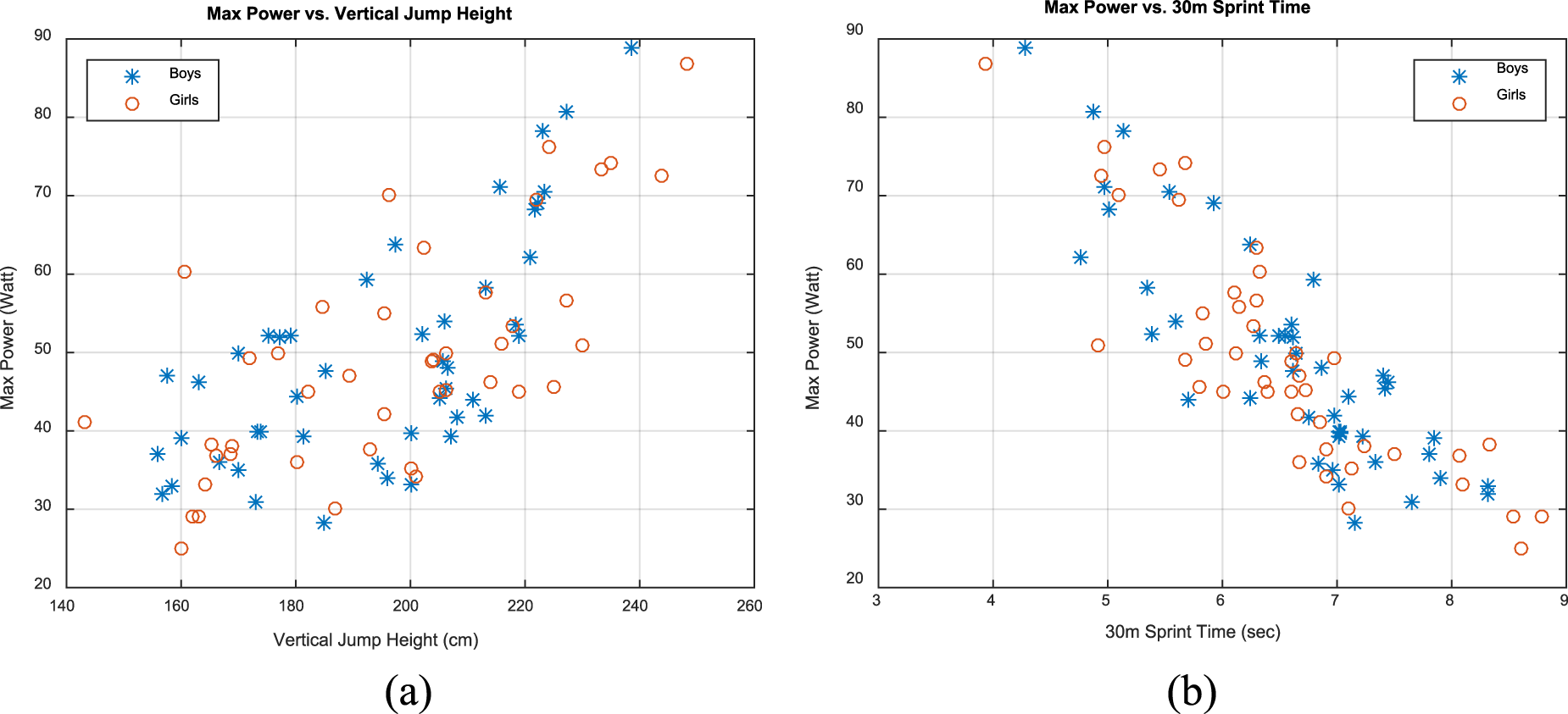
Scatter plots showing correlations: (a) maximum power vs. vertical jump height and (b) maximum power vs. 30 m sprint time.
Correlation coefficient values among various variables (girls, n = 22).
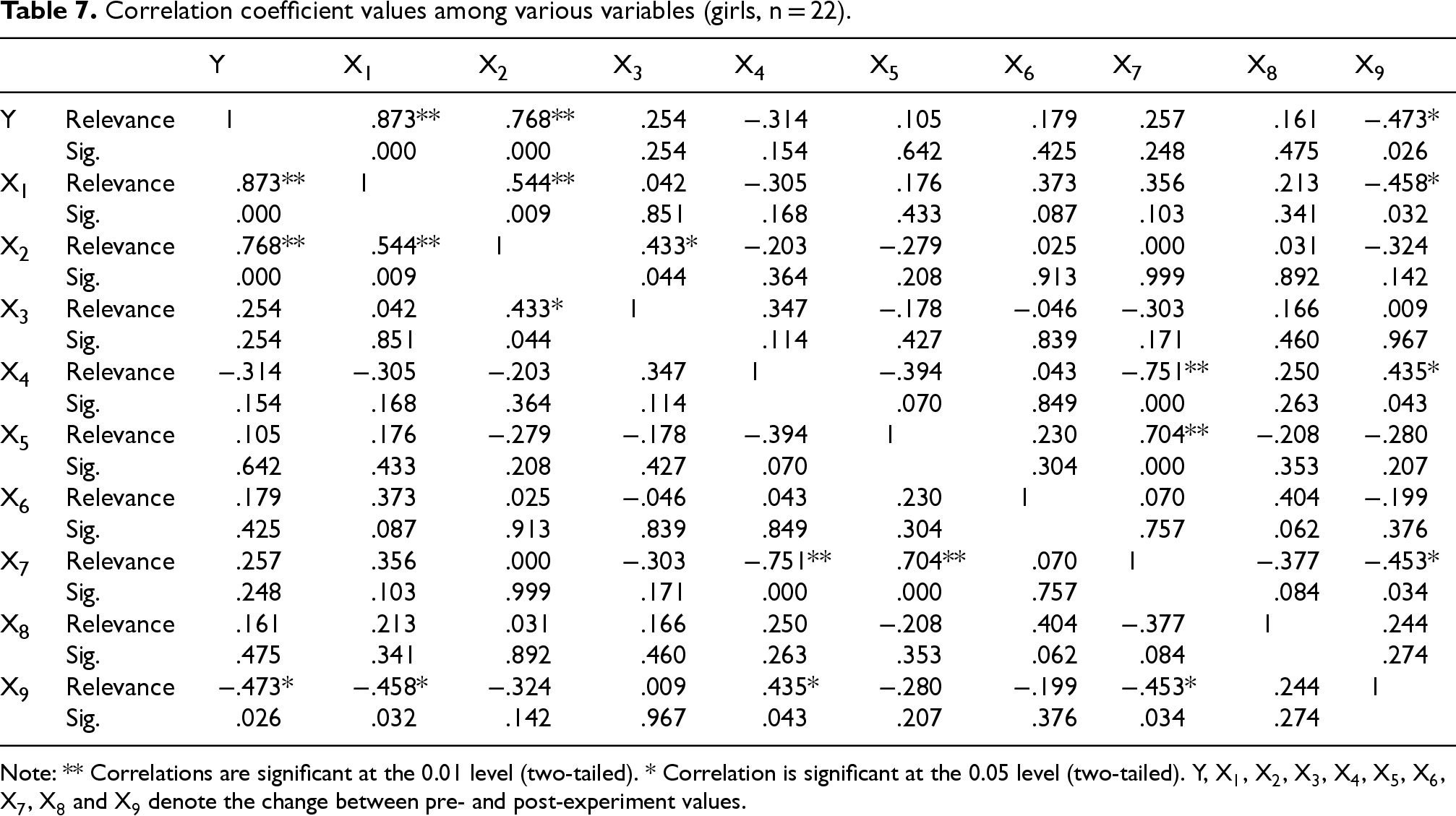
Note: ** Correlations are significant at the 0.01 level (two-tailed). * Correlation is significant at the 0.05 level (two-tailed). Y, X1, X2, X3, X4, X5, X6, X7, X8 and X9 denote the change between pre- and post-experiment values.
Correlation analysis was then conducted to explore the relationships between the changes of these factors. Pearson correlation coefficient was used to quantify these relationships, as detailed in the following results.
From Table 6 relating to the training of boys, it is evident that there is a significant positive correlation between the change of maximum power and the change in vertical jump height (r = 0.794, p < 0.01), as well as between the change of maximum power and the change in 30-meter run time (r = 0.602, p < 0.01). This can also be observed from the scatter plots in Figure 3. Additionally, the change in maximum power may have a little relation with the changes in waist girth, Achilles tendon length and lower limb length, with correlation coefficients of 0.290, 0.378, and 0.133, respectively. However, there is no significant correlation observed between maximum power and average speed in 30-meter run, children's height, body mass and BMI (correlation coefficients of −0.044, −0.025, −0.048 and 0.073, respectively; p > 0.05).
From Table 7 relating to the training of girls, it can be observed that the change of maximum power shows a significant positive correlation with the change in vertical jump height (r = 0.873, p < 0.01) and the change in 30-meter run time (r = 0.768, p < 0.01). This can also be observed from the scatter plots in Figure 3. Interestingly, the change of maximum power exhibits a negative correlation with the change of lower limb length (r = -0.473, p < 0.05). Moreover, the change in the maximum power may have a little relation with the change in average speed in 30-meter run, children's height, body mass, waist girth, BMI and Achilles tendon length, yielding correlation coefficients of 0.254, −0.314, −0.105, 0.179, 0.257 and 0.161, respectively, although these correlations were not statistically significant (p > 0.05).
Based on the correlation analysis results, the estimation of lower limb explosive power was achieved using regression equations incorporating the change values of the vertical jump height and the 30-meter sprint time. Such regression models can help estimate the explosive power values from the performance in exercises, without using any specific measurement device. In the case that one does not have the Tendo unit, he can still estimate the power value from the jump height measured by a ruler and the sprint time measured by a stopwatch. Stepwise regression was employed to select significant independent variables, eliminating non-significant variables from the model. The fit of the regression equation model was initially assessed using the R-square value. The results of the regression equation modelling are presented in the following paragraphs.
As observed from Table 8, the stepwise regression analysis using the change of explosive power as the dependent variable, and the change in vertical jump height, along with the change in 30-meter sprint time, as independent variables, resulted in two regression equation models for boys. As illustrated in Table 9, Model 1 is ΔY = 4.839 + 1.039*ΔX1, and Model 2 is ΔY = –1.672 + 0.901*ΔX1 + 18.42*ΔX2, where ΔY, ΔX1, ΔX2 denote the value change of the explosive power, the vertical jump height and the 30-meter sprint time, respectively. The R-square values for Models 1 and 2 are 0.631 and 0.810, respectively. Both models passed the F-test (F1 = 35.849, p = 0.000; F2 = 42.637, p = 0.000), demonstrating their validity in explaining the variance in explosive power.
Summary of regression models for lower limb explosive power in boys.

Summary of regression models for lower limb explosive power in boys.
Note: Case 1, independent variable: vertical jump X1; Case 2, independent variables: vertical jump X1 and 30 meters X2.
Regression model coefficients for lower limb explosive power in boys.
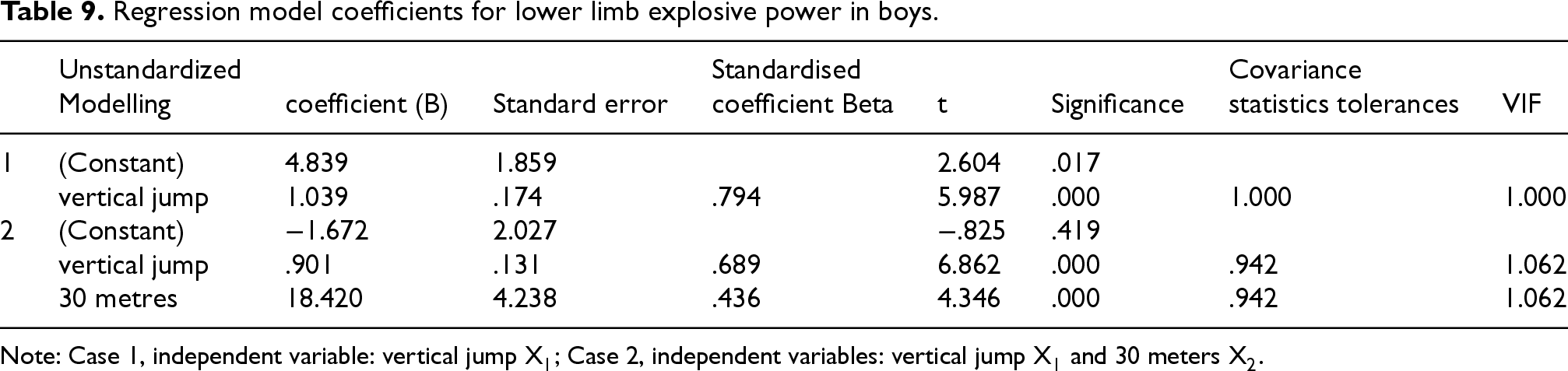
Note: Case 1, independent variable: vertical jump X1; Case 2, independent variables: vertical jump X1 and 30 meters X2.
Similar to the case of boys, the stepwise regression analysis for girls’ explosive power used the same dependent variable and independent variables. As can be seen from Table 10, the R-square values of Models 3 and 4 were 0.762 and 0.872, respectively. As shown in Table 11, Model 3 is ΔY = 5.145 + 1.049*ΔX1; and Model 4 is ΔY = –0.574 + 0.777*ΔX1 + 15.893*ΔX2. Both models passed the F-test (F3 = 64.172, p = 0.000; F4 = 72.845, p = 0.000), indicating that the models are valid.
Summary of regression models for lower limb explosive power in girls.

Note: Case 3, independent variable: vertical jump X1; Case 4, independent variables: vertical jump X1 and 30 meters X2.
Regression model coefficients for lower limb explosive power in girls.
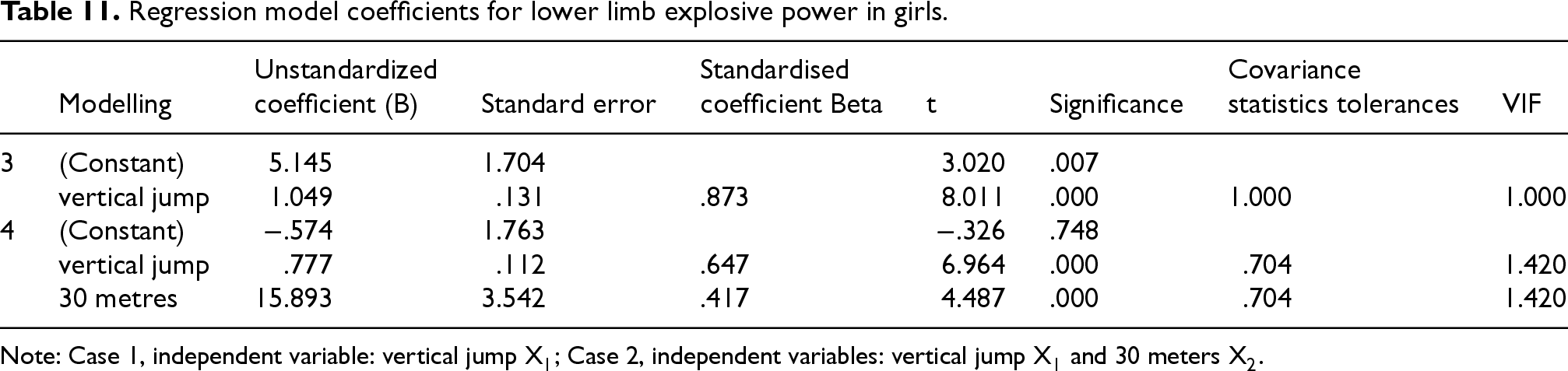
Note: Case 1, independent variable: vertical jump X1; Case 2, independent variables: vertical jump X1 and 30 meters X2.
Two predictive models were developed to anticipate the training outcome in advance, according to a child's basic information and his/her physical conditions. Both of the FRBSs consist of 9 fuzzy rules. One model aimed to predict the increase in explosive power, while the other model focused on predicting the increase in the 30-meter speed during training. Both models utilised six input variables: gender (binary variable, 0 represents boy and 1 represents girl), age (years), height (cm), mass (kg), leg length (cm), vertical jump height (cm), and training time (weeks). Seventy percent of the collected data was allocated for training the models, with the remaining 30% used for testing. The root mean square error (RMSE) for the power model during training and testing was 4.60 W and 5.08 W, respectively. For the speed model, the RMSE values were 0.0770 m/sec during training and 0.0832 m/sec during testing.
Figure 4 illustrates the prediction performance of both models, demonstrating that the predicted outputs closely align with the measured outputs, with the majority falling within a 15% error band. This error band represents a range of output values bounded by a central value ±15%. Figures 5 and 6 provide specific examples of how the models predict training improvements for selected experimental participants. These figures underscore the models’ effectiveness in forecasting the trajectory of training improvements.
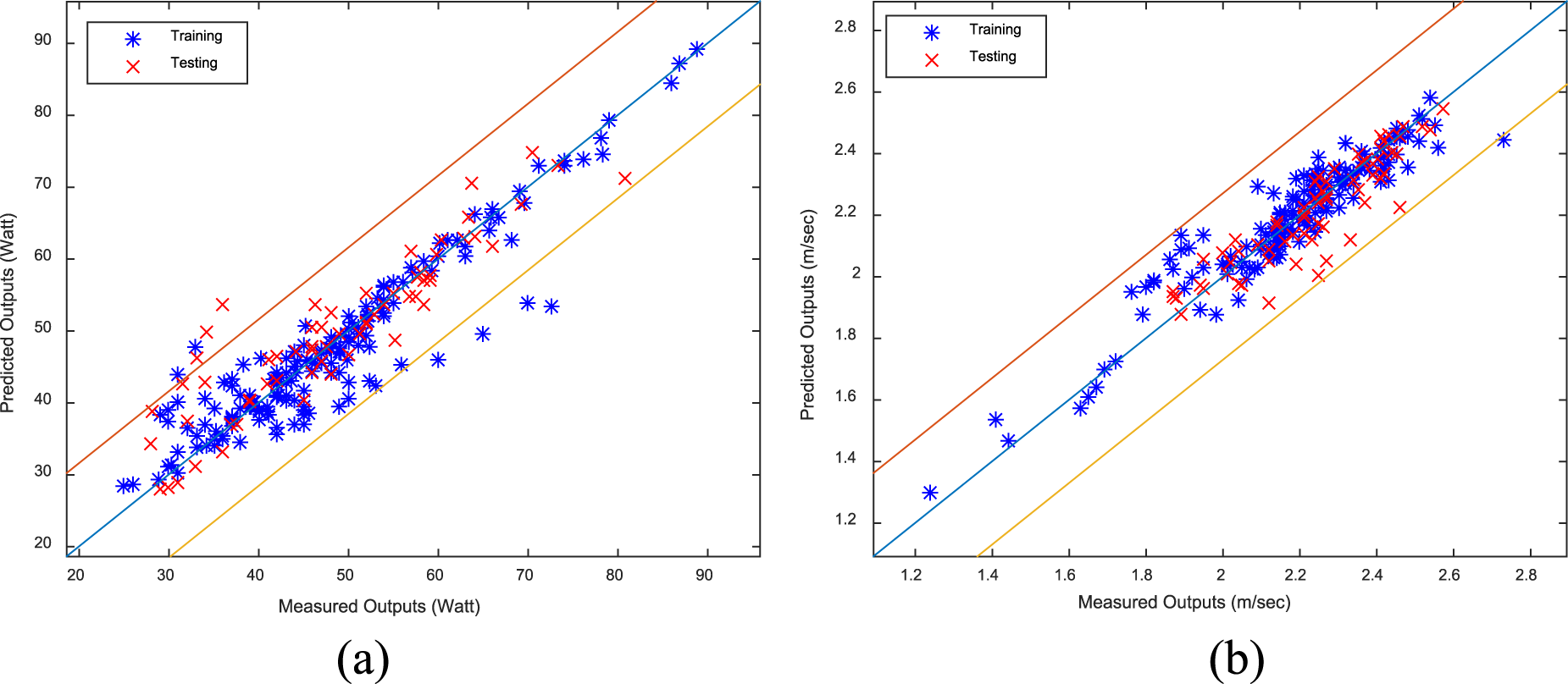
Predicted versus actual measured output of the model on training and test data: (a) maximum power (w) and (b) average speed (m/s).
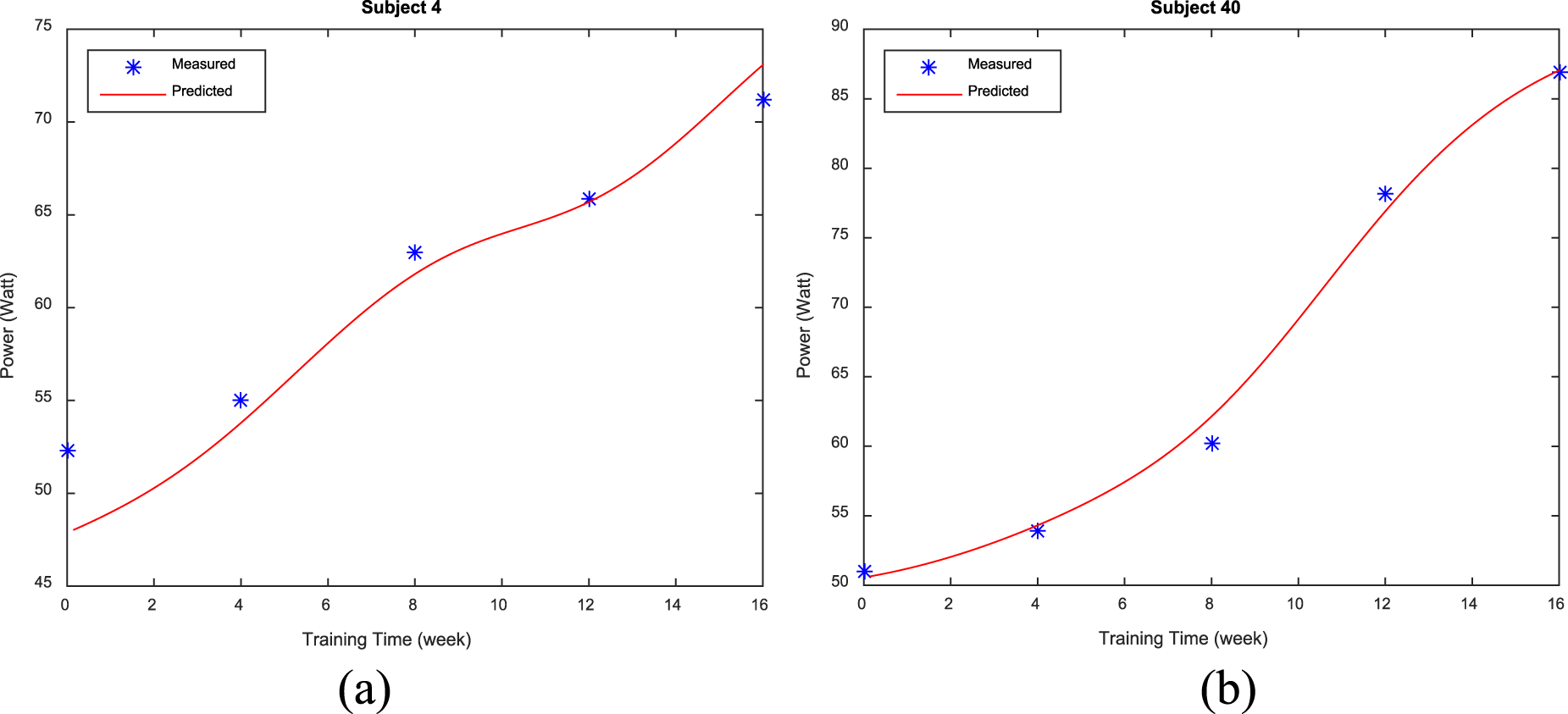
Examples of predicted maximum power using the generated fuzzy model: (a) subject 4 and (b) subject 40.
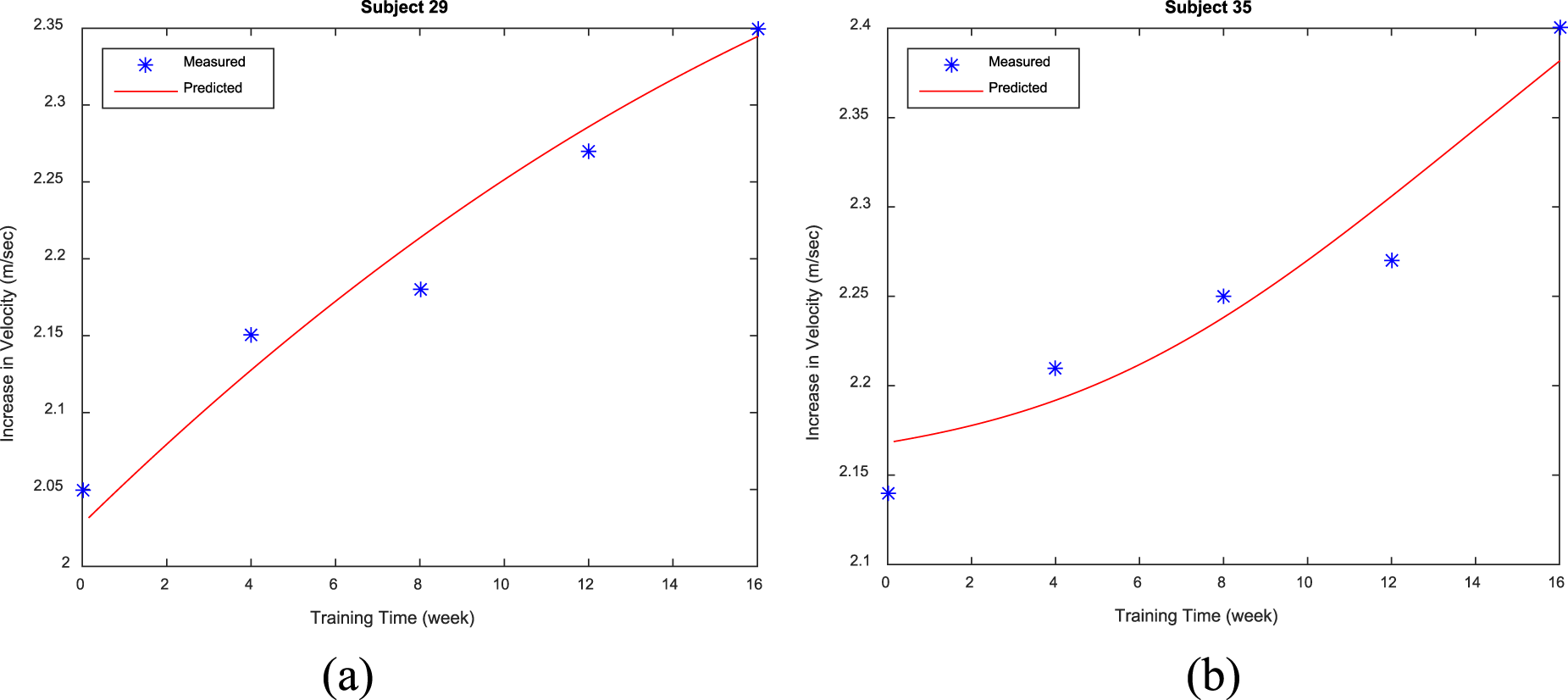
Examples of predicted average speed using the generated fuzzy model: (a) subject 29 and (b) subject 35.
Figure 7 illustrates five fuzzy rules for the power model as examples. Fuzzy rules may also be presented by linguistic rules including linguistic terms (such as small or high) and hedges (such as very or more or less). The details about the linguistic terms can be found from the fuzzy membership functions shown in Figure 7. As an example, the second rule in the power module R2 can be represented as follows, where the linguistic terms and hedges were decided by observing the location and the shape of the corresponding fuzzy membership functions: R2:
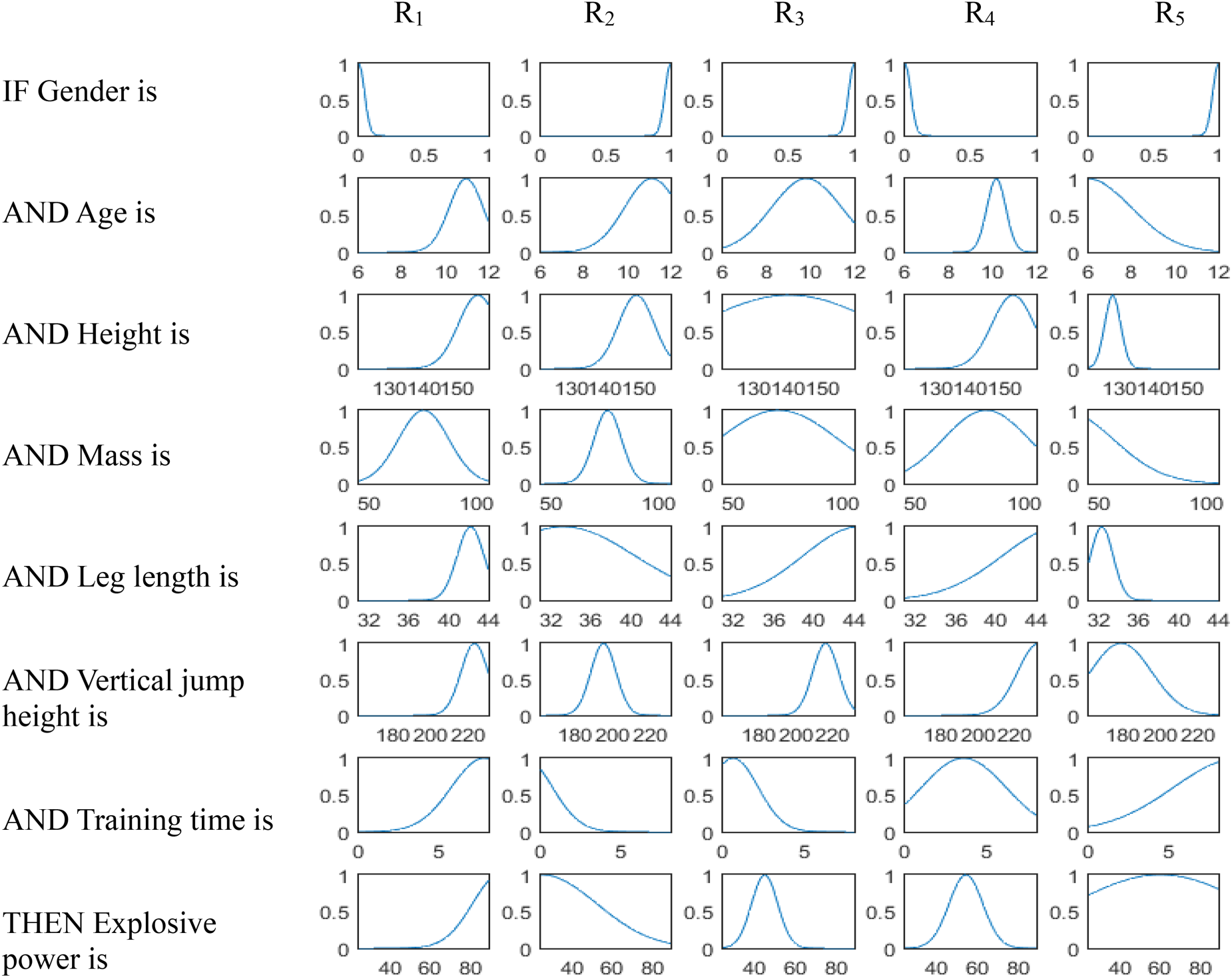
Examples of fuzzy rules in the generated fuzzy model.
Changes in children's body shape and motor qualities
Childhood represents a phase of growth and development, characterised by rapid changes. Referring to Tables 1 and 2, significant differences in height, mass and waist circumference are observed between boys and girls prior to training. Boys tend to be taller than girls, while differences in lower limb length and Achilles tendon length are less pronounced. This may suggest that during childhood, lower limb length contributes proportionately more to girls’ overall height.
As shown in Tables 4 and 5, after 8 weeks of training in this experiment, both boys and girls show improvements in overall height, mass, lower limb length, and Achilles tendon length. Additionally, girls exhibit a reduction in average BMI, whereas the decrease in boys’ BMI was less pronounced (p < 0.05). This indicates that physical exercise effectively reduces BMI in girls, which is beneficial for obese children.
Correlation between children's lower limb explosive power and training factors
Training focused on lower limb explosive power is closely linked to the body's anaerobic metabolism. Research has shown that anaerobic exercises, such as plyometric and sprinting, significantly enhance the explosive power of the lower limbs by improving fast-twitch muscle fiber recruitment and energy production in anaerobic pathways.27–30
The lower limb explosive power training program in this study was designed around exercises where children must overcome their body weight quickly, including squat jumps, hurdle runs, vertical jumps, sprinting and folding runs. These exercises were tailored to suit the intensity levels appropriate for children's growth and development characteristics.13,31,32
Tables 4 and 5 illustrate that after 8 weeks of training, both boys and girls showed significant improvements in explosive power and other performance in jumping and running. However, as shown in Tables 6 and 7, correlations between lower limb explosive power and body morphology variables (such as height, mass, waist firth and BMI) were not significant (p > 0.05). This suggests that improvements in lower limb explosive power in both genders are predominantly influenced by acquired training rather than natural developmental factors.
Moreover, exercises such as sprinting and running involve horizontal stresses that enhance children's abilities in horizontal plane motions, acceleration, and changes in direction. In Tables 6 and 7, correlations between changes in lower limb explosive power and 30-meter sprint time were observed (rboy = 0.602, p < 0.05; rgirl = 0.768, p < 0.05), suggesting a connection between lower limb explosive power and lateral motor skills for both genders.
Estimation and prediction models for lower limb explosive power
In this study, linear regression models have been successfully developed to estimate the explosive power value from one's performance in the training practice, such as the time of completing a 30-meter sprint or the height in a vertical jump. The models with one independent variable show R-square values of 0.631 and 0.762, for boys and girls, respectively, which indicate acceptable accuracy. The models with two independent variables show R-square values of 0.810 and 0.885, for boys and girls, respectively, which indicate good accuracy in prediction. Such models are very useful for estimation of the true explosive power values, in the case of only exercise performance known while specific power measurement device not available.
On the other hand, another predictive model for children's lower limb explosive power was developed using a fuzzy rule-based system, which can anticipate the training outcome considering a child's gender, age, height, mass, limb length, vertical jump height and training duration. This model demonstrates superior accuracy compared to traditional multivariate linear regression equations, particularly when including additional morphological indicators. Another advantage of this modelling paradigm is that it offers deeper insights into the complex systems by providing linguistic IF-THEN rules. This model is very helpful for predicting the training performance well in advance of the training and allows one anticipate the difference in training outcomes for different children with different age, gender, morphometric conditions and physical conditions.
Conclusion
In this study, a training protocol was proposed for improving the lower limb explosive power of boys and girls aged 6–12 years through an 8-week experimental intervention. The training regimen consisted of specific exercises including 15-metre sprint runs, hurdle hops, squat jumps, vertical jumps and folding runs, conducted 3 times per week. The designed protocol worked well in a case study conducted with Chinese children. Boys’ explosive power has increased by 14.583 Watts (35.6%) in average and girls’ explosive power has increased by 17.100 Watts (42.2%) in average.
Through correlation analysis, it was found that the change of children's explosive power was highly correlated with the change in 30-meter sprint time. Linear regression models have been developed to estimate the explosive power value from one's vertical jump height, or from vertical jump height and 30-meter sprint time. The obtained models showed good accuracy in prediction, and were practical for estimation of the true explosive power values without using any specific measurement device.
Furthermore, a fuzzy rule-based prediction model was developed to estimate the improvement in explosive power relative to training duration, incorporating children's age, height, mass, limb length, and other information. The developed model provided accurate predictions and enabled coaches or participants to anticipate the outcomes of lower limb explosive power training prior to initiating training programs, facilitating tailored interventions based on individual profiles.
Footnotes
Acknowledgments
We express our sincere gratitude to the funding organisations for their generous support and funding, which were instrumental in the successful completion of this study.

Ethics approval
Obtained from the Ethics Committee of Shandong Sport University, dated 30.4.2022.
Author contributions
CONCEPTION: Jiaojiao Liu
PERFORMANCE OF WORK: Jiaojiao Liu
INTERPRETATION OR ANALYSIS OF DATA: Chao Liu; Jiaojiao Liu
PREPARATION OF THE MANUSCRIPT: Qian Zhang; Jiaojiao Liu
REVISION FOR IMPORTANT INTELLECTUAL CONTENT: Chao Liu
SUPERVISION: Jiaojiao Liu
Funding
The author(s) disclosed receipt of the following financial support for the research, authorship, and/or publication of this article: This research was supported by the 2022 Ministry of Education Humanities and Social Sciences Research Youth Fund Project (Grant No. 22YJCZH104) and the 2022 Shandong Province Higher Education “Youth Innovation Team” Project (Grant No. 2022RW093).
Declaration of conflicting interests
The authors declared no potential conflicts of interest with respect to the research, authorship, and/or publication of this article.