




Abstract
Socioeconomic consequences of pension reforms have often been discussed without careful consideration of institutional contexts, despite the fact that institutional designs of public pensions differ substantially across countries. This study argues that the outcomes of pension reforms vary depending on the institutional structure of public pensions, by showing that the associations between public pension spending and old-age employment rates of different socio-demographic groups vary across different institutional contexts. Using time-series cross-section data from 20 European countries and the United States from 1998 to 2019, the study examines how changes in public pension spending ‘per older person’, a comparable measure for the welfare state effort towards old-age income security, are associated with gender- and education-specific employment rates in old age. The study also explores how these associations differ under different pension regimes, constructed based on the degree to which financing and benefit structures exhibit redistributive orientations. The results reveal complex gender and educational gradients in the relationship between public pension spending and old-age employment. Female employment rates, especially among the low-educated, are more sensitive to changes in pension spending in the ‘Beveridgean’ regime that focuses on basic income security. In the Bismarckian regime characterized by earnings-related pensions, educational differences in the marginal effects on male employment rates are, in particular, larger. Future pension reforms balancing the goal of activation and social equity should therefore consider the longstanding institutional design of public pensions.
Keywords
Introduction
Extending working lives and increasing labour force participation among older people have been major policy goals in advanced economies, primarily motivated by fiscal restrictions resulting from ageing populations and economic downturns. Since the 1990 s, when international organizations promoted restructuring public pensions and welfare programmes for ‘averting the old-age crisis’ (World Bank, 1994), mature welfare states have reformed public pensions and social policies to reverse the trend of massive early retirement and limit the growth of public spending (Ebbinghaus, 2006).
However, concerns have been raised as retrenchments in public pensions are also associated with rising economic inequality in old age (Been et al., 2017; Kuitto et al., 2023). Studies on the social stratification of retirement processes demonstrate that less-educated or lower-skilled workers are at higher risk of involuntary early exit from work due to unemployment and health-related issues (Radl, 2013; Riekhoff, 2018; Visser et al., 2016). Thus, simply raising the normal retirement age or reducing financial support for early retirement may disproportionately affect older people with low socioeconomic status (SES) and worsen income inequality (Etgeton, 2018). Older women with insufficient work history, especially those divorced or widowed, are also vulnerable to public pension cuts (Möhring, 2015). Without providing better labour market opportunities and working conditions, low-SES older workers may find it unjust to be forced to work longer due to financial hardships.
Therefore, investigating how public pensions shape old-age employment differently across different socio-demographic groups would offer significant policy implications for balancing the goal of activation and social equity. Two important gaps are identified in the existing literature regarding this issue. First, only a few studies explore heterogeneous outcomes among different SES groups when examining the impact of pension reforms (Etgeton, 2018). Most empirical studies, often in labour economics, focus on the aggregate labour-supply effects of pension reforms but less on their socioeconomic differences (Geyer and Welteke, 2021; Rabaté and Rochut, 2020).
Second, the literature has yet to investigate how different institutional structures of public pensions shape the consequences of pension reforms differently. Depending on the longstanding institutional design, for example whether the entitlement and benefit levels are conditional to contributions or whether public schemes crowd out private pension markets, the same reform may have different meanings for individuals with different SES. Even comparative studies that put emphasis on the role of institutions have been less concerned about the varying outcomes of pension reforms under different institutional structures of public pensions (Duval, 2003; Ebbinghaus, 2006; Hofäcker et al., 2016; Kuitto and Helmdag, 2021).
This study addresses these gaps by investigating how old-age employment among different socio-demographic groups responds differently to pension system changes, and how these relationships vary across different institutional contexts. Using time-series cross-section data from 20 European countries and the United States from 1998 to 2019, the study examines how public pension spending ‘per older person’, a comparable measure for the welfare state effort towards old-age income security, is associated with gender- and education-specific employment rates in old age. The study also explores how these associations vary under different pension regimes, constructed based on the degree to which the financing and benefit structures of public pensions aim for poverty alleviation as opposed to income maintenance after retirement.
The results show that female employment rates, especially among the low-educated, are more sensitive to changes in pension spending in the ‘Beveridgean’ regime that focuses on basic income security. In the ‘Bismarckian’ regime characterized by earnings-related pensions, educational differences in the marginal effects on male employment rates are, in particular, larger. Overall, our findings reveal complex gender and educational gradients in the relationship between public pension spending and old-age employment, depending on the institutional design of public pensions. In the end, we argue that future pension reforms balancing the goal of activation and social equity should consider the longstanding institutional design of public pensions.
Recent pension reforms in the context of active ageing
Recent decades have seen a shift in policy strategies from early retirement to active ageing across western welfare states, with the aim of increasing economic activity among older adults. To explain cross-national variations in the transition, comparative institutional studies since the 1990 s have approached the phenomena from push and pull perspectives (Ebbinghaus, 2006; Guillemard and Rein, 1993). The push perspective highlights structural constraints faced by older workers in the labour market. Those include augmented unemployment and health risks in old age, outdated skills due to technological changes and seniority-based labour costs that discourage employers from hiring older workers. On the other hand, the pull perspective problematizes public pensions with generous early retirement options and other welfare programmes, mainly unemployment and disability benefits, that impose ‘implicit taxes’ on continued employment (Duval, 2003; Gruber and Wise, 2004). The literature also recognizes the importance of active labour market policies such as lifelong learning and training, public employment services and subsidies for hiring older workers, referred to as retention factors (Ebbinghaus and Hofäcker, 2013; Hofäcker et al., 2016).
Among numerous institutional and structural factors, the focus of this study narrows down to public pensions – cash transfers provided by the state for retirement income security, either through benefits at a minimum level or in proportion to previous earnings and contributions. Public pensions are not only the biggest welfare state institution that accounts for about a third of social expenditures in OECD countries (OECD, 2019), but also represent the main pull factor that shapes financial incentives for older workers to stay in paid work. Therefore, extensive pension reforms have been implemented across western welfare states particularly during the 1990 s and 2000 s to enhance public pensions’ fiscal sustainability and promote older workers’ activation amid rapid demographic ageing, Most reform measures have involved gradual, parametric changes aimed at reducing the ratio of total benefits to total contributions in public schemes. Nevertheless, some structural reforms have expanded the role of private pension provisions or introduced market mechanisms into public pensions, such as defined-contribution principles (Hinrichs, 2021; Hinrichs and Lynch, 2021). Key adjustments in recent decades included terminating special early retirement programmes and restricting early pension withdrawals through actuarial deductions, primarily in continental Europe but also in Finland. Moreover, statutory retirement ages have been lifted to promote later retirement and limit the ratio of pensioners to workers. Notably, state pension ages for women have undergone significant increases as part of the EU-wide gender-neutral pension policy, as observed in Belgium, Italy, Sweden, Finland, Slovakia, Czechia, the UK and the USA (Carone et al., 2016; Dewitt and Berkowitz, 2014).
Overall benefit generosity has also been reduced by modifying the methods of benefit calculations. In many public earnings-related schemes, benefit levels are no longer determined based on one’s peak earnings but on average lifetime earnings. Contribution periods required for the full benefit entitlement have also been lengthened. Similarly, demographic parameters, such as life expectancy at retirement age or the system dependency ratio, have been incorporated into benefit calculations in Nordic countries as well as Germany, Austria, Spain and Portugal (Hinrichs, 2021). More radical shifts have occurred in Sweden and Italy, where notional accounts combining defined-contribution principles with pay-as-you-go financing have been established. Similar moves were also present in Eastern Europe (e.g., Poland, Hungary and Slovakia), although public schemes were quickly reinstated following the financial market crash of 2008 (Naczyk and Domonkos, 2016).
Heterogeneous effects of pension reforms by education level and gender
Most of these reform measures were oriented towards cutting public expenditures or limiting their growth. 1 They were also aimed at increasing older adults’ labour market participation by altering their financial incentives, which are often labelled as ‘implicit taxes’ on continuing work at older ages (Gruber and Wise, 2004). It is therefore straightforward to expect that a decline in public pension spending or other indicators of pension generosity would be associated with higher employment rates of older people.
However, the impact of these reforms may be heterogeneous depending on one’s SES. This is because low-educated or low-skilled workers are more likely to exit from work earlier than high-educated workers and more often rely on public early retirement benefits (Radl, 2013; Visser et al., 2016). Some reform measures, especially in continental Europe, were explicitly aimed at tackling this by terminating pre-retirement programmes or restricting pension withdrawals. Empirical studies confirm that raising the normal retirement age and reducing pension generosity tend to hit low-income groups hardest (Etgeton, 2018) and are associated with higher old-age poverty (Been et al., 2017; Kuitto et al., 2023). The employment effects of public pension reforms would thus be greater among low-educated older adults as they are more likely to experience financial hardships than high-educated groups due to retrenchments in public pension systems (Hypothesis 1).
Likewise, older women’s employment rates are anticipated to be more influenced by pension reforms than those of men, primarily due to differences in their reliance on public pension income. Older women in general have shorter employment histories and weaker attachment to the labour market than men, largely due to persistent gender norms and family obligations (Worts et al., 2016). Their frequently interrupted careers are strongly associated with inadequate wealth accumulation in later life (Gornick and Sierminska, 2021), which can be compensated by public pension schemes (Möhring, 2015). Furthermore, reform measures in many countries included raising the normal retirement age only for women to achieve gender-equal retirement age. Therefore, older women’s employment rates may show bigger increases following pension reforms and may be more strongly associated with public pension generosity than those of men (Hypothesis 2).
Cross-national variation in the structure of public pensions
The distributional consequences of public pension reforms and the related employment effects among heterogeneous social groups may also vary across countries with different institutional structures of public pensions. For example, the outcomes of activation and income inequality among older adults after reducing benefit generosity or limiting access to early pension withdrawals would differ between a system that guarantees only a basic level of benefits and a system that offers sufficient retirement income also for middle- and high-class workers. Even comparative studies in the literature have barely taken this aspect into account when evaluating the role of public pensions, often assuming similar effects across countries (Börsch-Supan et al., 2021; Duval, 2003; Kuitto and Helmdag, 2021).
The classic approach to understanding institutional variations in pension systems among western welfare states is the division between Beveridgean and Bismarckian regimes (Hinrichs and Lynch, 2021). This classification focuses on the redistributive orientations of public pensions reflected in their financing and benefit structures as well as their interactions with state-regulated occupational and private schemes.
The Beveridgean system is known for its explicit goal of poverty alleviation by providing basic income security in old age financed through general taxes. Typical cases include state pensions in the UK and Ireland, where the basic state pension is provided conditional to tax-like contributions. In the Netherlands and Denmark, public expenditures on old-age pensions are concentrated on residence-based universal basic pensions. Since public pensions in Beveridgean systems mostly offer flat-rate benefits regardless of previous earnings, the overall level of public spending is generally not very high. Moreover, private pension markets are well-developed for middle and high earners, either through (quasi-)mandatory occupational schemes (Denmark, Netherlands) or voluntary schemes (UK, Ireland).
On the other hand, Bismarckian systems feature contribution-based financing and earnings-related benefit structures, primarily aimed at consumption smoothing or status maintenance after retirement. Examples are found in most mature public schemes in continental and Southern Europe, including Germany, Austria, France, Italy and Spain but also Finland, along with East European latecomers. Sweden also joined this group in the late 1990 s after introducing notional accounts and restructuring the universal basic pension into a means-tested guarantee pension. The ideal-typical Bismarckian system would offer similar replacement rates for high- and low-wage earners with a low- or no-income ceiling. Thus, private pension schemes are usually underdeveloped.
However, the dichotomy between Beveridgean and Bismarckian pensions may oversimplify the reality, as contemporary pension systems often exhibit the features of both. Though most parametric reforms have not fundamentally altered the core financing and benefit principles within public schemes, some systems are now of a mixed nature. For example, basic or minimum pensions are supplemented by contributory schemes with low-to-median income ceilings (Norway, Belgium) or by highly redistributive defined-benefit schemes that provide low replacement rates for high earners (Czechia). Similarly in the USA, redistributive defined-benefit pensions are complemented by means-tested benefits. In Switzerland, public pensions offer earnings-related benefits, but its low maximum benefit effectively renders the system highly redistributive.
It is important to note that a high degree of redistributive orientation does not necessarily lead to generous payments for low-income households or equitable societal outcomes. The distinction between Beveridgean and Bismarckian regimes mainly considers the financing and benefit structures of public pensions, which pertain to the allocation of available budgets (or how given expenditures are distributed), not the size of these budgets. For instance, the Austrian public scheme, one of the most ideal-typical Bismarckian cases, provides significantly higher replacement rates for low-income individuals than do Beveridgean state pensions in the UK and Ireland (OECD, 2019).
Varying outcomes under different pension regimes
Based on the classification of pension regimes, our hypothesis is that the consequences of pension reforms among different socioeconomic groups would vary across pension regimes. This is because varying extents of redistribution achieved by a public system may shape different patterns in labour market outcomes among high- and low-SES older adults.
A related theoretical idea can be traced back to Korpi and Palme’s (1998) seminal work on the ‘Paradox of Redistribution’, suggesting that a high degree of low-income targeting in social policy tends to shrink the base of political support for overall redistribution, resulting in poorer redistributive outcomes. In the context of public pensions, earnings-related Bismarckian systems that encompass the middle and upper class are likely to crowd out private pension markets. A limited role of private pensions would lead to more redistributive outcomes in countries with Bismarckian pensions than in Beveridgean systems, where a greater reliance on private schemes tends to drive higher income inequality. Following this line of reasoning, educational differences in the impact of pension reforms may be more pronounced in Bismarckian systems than in Beveridgean systems (Hypothesis 3a). Differences in employment outcomes in Beveridgean countries are more likely to be determined instead by inequalities in private pension income.
However, one might argue that Korpi and Palme’s (1998) work did not measure the direct effects of specific policies and was merely comparing the overall societal outcomes of 11 countries cross-sectionally. Their idea has been challenged by empirical studies using more recent data and sophisticated methods, which demonstrate that targeting can be an effective tool for redistribution, especially in countries with high social spending (Brady and Bostic, 2015; Marx et al., 2013). Similarly, evidence on pension institutions using microdata shows that basic or targeted pensions effectively compensate for low pension accruals of older people with non-standard employment histories (Möhring, 2015). Therefore, an alternative hypothesis regarding the regime variation would be that educational differences in the impact of public pension retrenchment are larger in Beveridgean than in Bismarckian systems (Hypothesis 3b). This is because the low-SES group’s poverty risk and thereby labour force participation may be more sensitive to the changes in eligibility age or benefit generosity in Beveridgean pension systems that focus on basic income security.
Research design and methods
Construction of time-series cross-section data and the dependent variable
To investigate the heterogeneous effects of public pension changes and their variations across pension regimes, this study draws on pooled time-series data of country-level institutional and economic indicators along with group-specific old-age employment rates in 20 European countries and the USA from 1998 to 2019. Pooled time-series cross-section (TSCS) analysis is well-suited for examining the role of institutions by leveraging both cross-national and temporal variations in policy-related variables. The selection of country cases was based on the availability of harmonizable labour force survey data and macro-level indicators among OECD countries in recent decades. Countries with large numbers of missing values in the OECD data were excluded from the case selection.
The dependent variable is the group-specific employment rate estimated using micro-data from the European Union Labour Force Survey (EU-LFS) for European countries and the Current Population Survey (CPS) for the USA (Flood et al., 2022). Disaggregating the dependent variable by population sub-groups enables the examination of the heterogeneous effects of policy variables depending on one’s socio-demographic characteristics. Therefore, employment rates were disaggregated by gender and three education levels. 2
Two datasets were then created for the age groups of 60 to 64 and 65 to 69, respectively, since pension reforms may have predominantly affected the employment rates of older people in their 60 s. Given that normal retirement ages have been around 65 in most countries, the effects of pension system changes may differ between the two age groups. The two age-specific datasets contain six gender–education groups for 21 countries observed over 22 years, yielding 2772 observations in total when assuming no missing data. 3
Measuring public pension systems across countries and over time
Developing a comparable measure of public pension systems across countries and over time is the most challenging task in this macro-level TSCS study. Pension policies involve many dimensions, such as benefit generosity, eligibility criteria and coverage, and a single reform package tends to contain multiple measures in those dimensions. Thus, commonly used indicators, such as income replacement rates and normal retirement ages, can only partially capture the nature of pension systems across countries and their over-time changes. Moreover, these partial indicators may overlook complex or hidden details of pension reforms, including changes in benefit calculation formulas or demographic adjustment rules, conditions of early pension withdrawals and contribution requirements.
Therefore, this study instead develops a novel indicator of public pension spending per older person, conceptualized as ‘the overall welfare state effort towards old-age income security’. Despite criticisms on its conceptual ambiguity (Kühner, 2015), the comprehensive nature of pension spending has the advantage of encompassing every relevant dimension of pension policies. However, the problem with using public pension spending measured as a percentage of gross domestic product (GDP), a widely used OECD indicator, is that its variation is easily driven by structural factors rather than actual policy changes, such as demographic ageing and business cycles. This problem has already been discussed in the ‘dependent variable problem’ of comparative welfare state analysis (Clasen and Siegel, 2007). Dividing the aggregate spending by the number of older persons instead of GDP would account for varying population structures across countries and over time and are independent of economic cycles.
Public pension spending per older person, constructed as the main explanatory variable in this study, captures all public expenditures on old-age and survivors’ cash benefits as well as special early retirement programmes. 4 The total nominal spending was divided by the number of older persons aged 65 or over and then adjusted with constant price and purchasing power parity (PPP) using 2015 as the reference year to ensure comparability over time and across countries. The necessary data for the whole process were obtained from the OECD Social Expenditure Database (OECD, 2023). Since the full effects of pension reforms tend to materialize in the spending data with an extended time lag (Hinrichs, 2021), the impacts of major pension reforms implemented in the 1990s and early 2000s are expected to appear in relatively recent data.
Pension regimes and covariates
The pension regime is a categorical variable constructed based on the degree of redistributive orientations within public pension schemes. The variable is expected to moderate the relationship between public pension spending and group-specific employment rates. Country cases are classified into Beveridgean, Mixed and Bismarckian regimes, based on the qualitative description of financing and benefit structures in the OECD’s Pensions at a Glance (OECD, 2019). The Beveridgean regime includes public pension systems concentrated on basic flat-rate benefits financed by general taxes or tax-like contributions. Pension systems where contributory earnings-related benefits are the main public pillar are assigned to the Bismarckian regime. The Mixed regime consists of countries having both basic and earnings-related public pensions or those with highly redistributive earnings-related schemes.
Classification of countries in pension regimes.
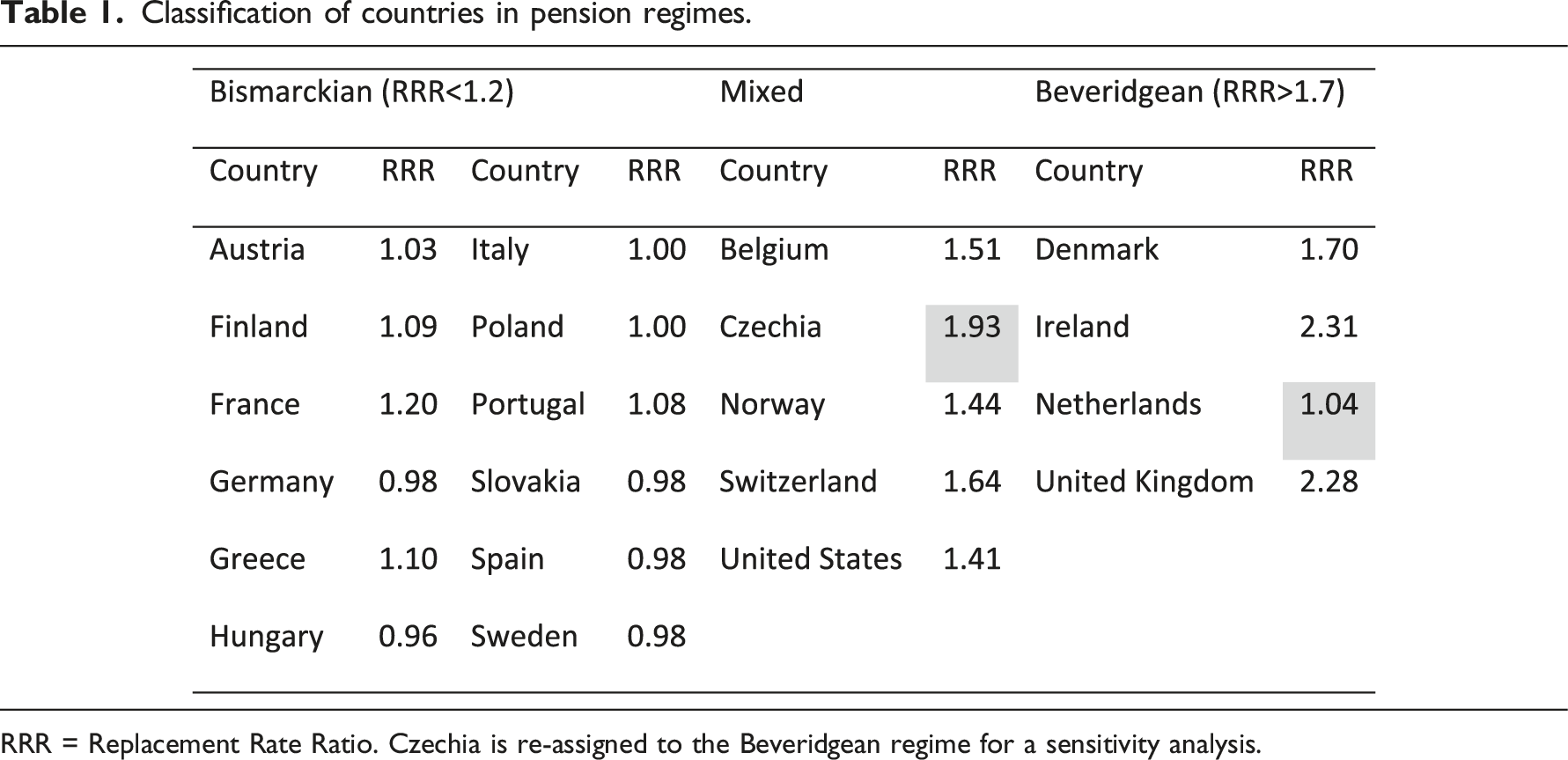
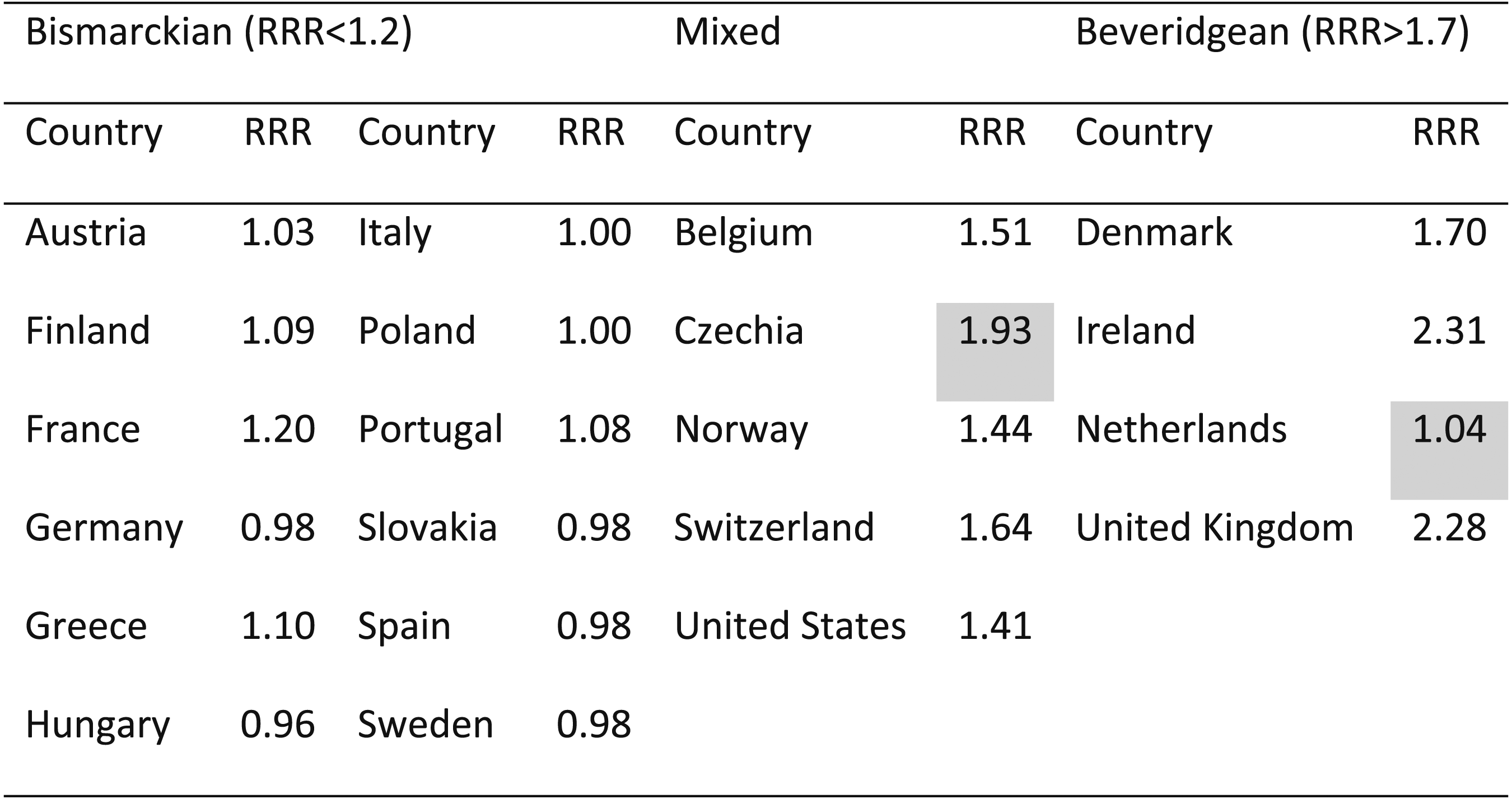
RRR = Replacement Rate Ratio. Czechia is re-assigned to the Beveridgean regime for a sensitivity analysis.
Covariates are mainly demographic and macroeconomic indicators, including the share of the older population, gender-specific healthy life expectancy, unemployment rates of prime-aged workers, OECD’s output gap and log GDP per capita. The age structure and population health are important structural factors in most countries that drive old-age employment rates upward over time. The prime-aged unemployment rate and the output gap reflect business cycles that often impose constraints on older workers’ labour market opportunities. The GDP per capita controls the level of economic development, which is correlated with country-level employment performances.
Other policy variables controlled are unemployment and disability benefit spending (both as a percentage of GDP), which are identified in the literature as alternative pathways to early retirement. Other pension-related variables, including statutory retirement ages or net pension replacement rates, are not controlled since changes in these parameters are already reflected in public pension spending. Finally, general government debt is controlled as a proxy for the state’s capacity to spend on other social transfers (see Table A2 for variable definitions and data sources).
Analytical strategy
Unlike in programme evaluation strategies based on the potential outcomes framework (Angrist and Pischke, 2008), estimating causal effects of policies in pooled TSCS analysis is inherently challenging due to endogenous variations in explanatory variables, raising concerns about unobserved confounders or reverse causation. Moreover, two time-series indicators often exhibit a spurious correlation without a substantive relationship, especially if they follow nonstationary processes (Box-Steffensmeier et al., 2014). In our case, old-age employment rates may naturally rise driven by structural factors including better population health, changing educational compositions and rising female labour force participation from younger ages. The upward trend in old-age employment may have simply coincided with or even reversely accelerated declines in public pension spending following pension reforms.
The main analytical strategy exploiting the TSCS structure to address these challenges is using error correction models (ECMs), which are modified specifications of the Engle–Granger method (Engle and Granger, 1987). The equation below is a simple model to display the basic features of ECMs:
Yit and Xit are dependent and independent variables, respectively, of group i at time t, and ∆ indicates the first-differencing of a variable (e.g., ∆Yit = Yit - Yi,t-1). The core advantage of this model lies in first-differencing the dependent and independent variables to rule out the possibility of spurious correlations, and then separately estimating the ‘equilibrium’ relationship by including the lagged level of Y and X. In other words, a permanent relationship between the two can be estimated by controlling short-term deviations from that relationship. While β1 indicates the transient effect of X, the permanent (equilibrium) effect can be estimated by β2 divided by -α. Another noteworthy aspect is that, though ECMs do not provide direct causal effects, their coefficients are highly conservative estimates for policy impacts, perhaps downward biased (Beck and Katz, 2011; Kittel, 1999), since the lagged dependent variable (Yi,t-1) is highly correlated with unobserved confounders and accounts for much of the variations in the dependent variable (Yit).
Based on this approach, our empirical models are specified as follows:
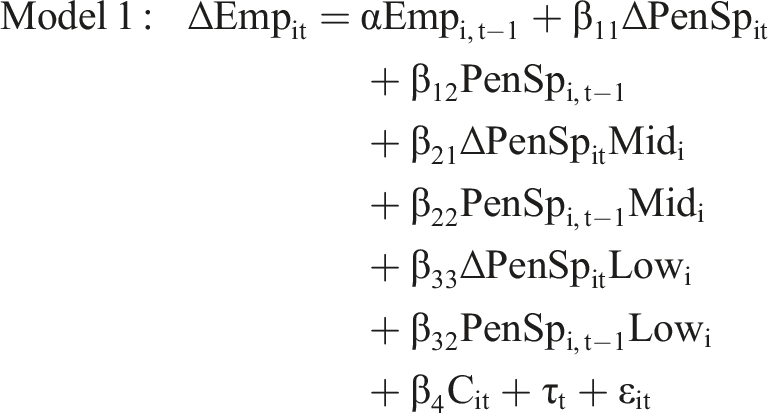
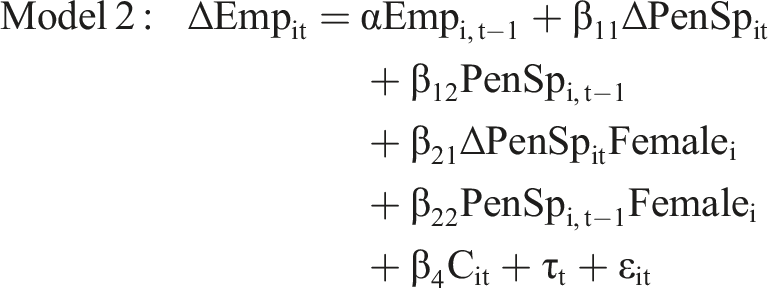
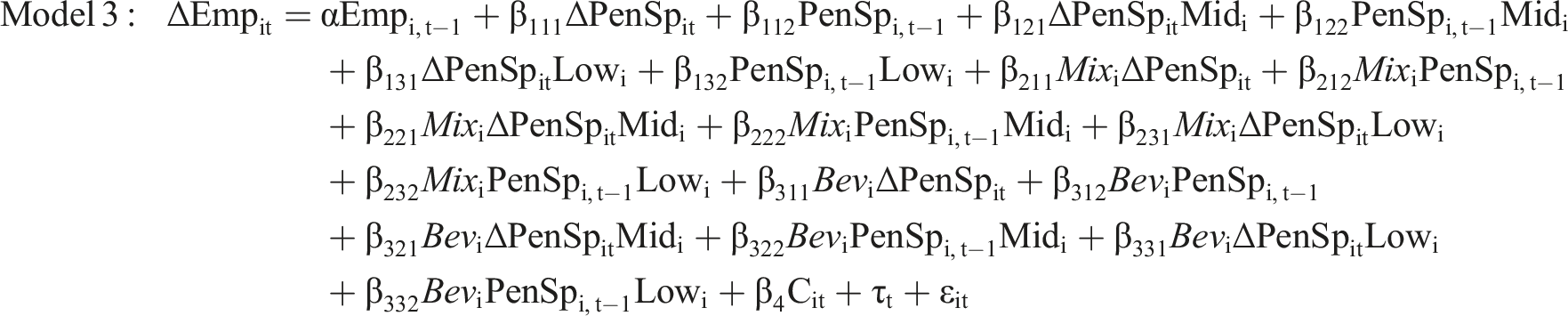
Considering the panel structure, standard errors in all models are clustered at the group level with small sample corrections. For a supplementary analysis, the effects of public pension spending on at-risk-of-poverty rates in Europe were also estimated using country-fixed effect models in Appendix.
Empirical findings
Public pension spending: Trends and cross-national variations
Figure 1 illustrates changes in public pension spending per older person in 20 European countries and the USA from 1998 to 2019. Most countries showed overall flat or mild upward trends until the early 2010 s, though the German data show a moderate decrease already from the 2000 s. In many countries, the trends flattened or turned downward in the 2010 s, but no country showed a steep decline over the period despite the waves of pension retrenchment in the 1990 s and early 2000 s. These findings reflect the fact that pension reforms were mainly about incremental changes and usually take decades to materialize their effects. Public spending on old-age pensions and early retirement programmes, per person aged 65 or over, 1998-2019.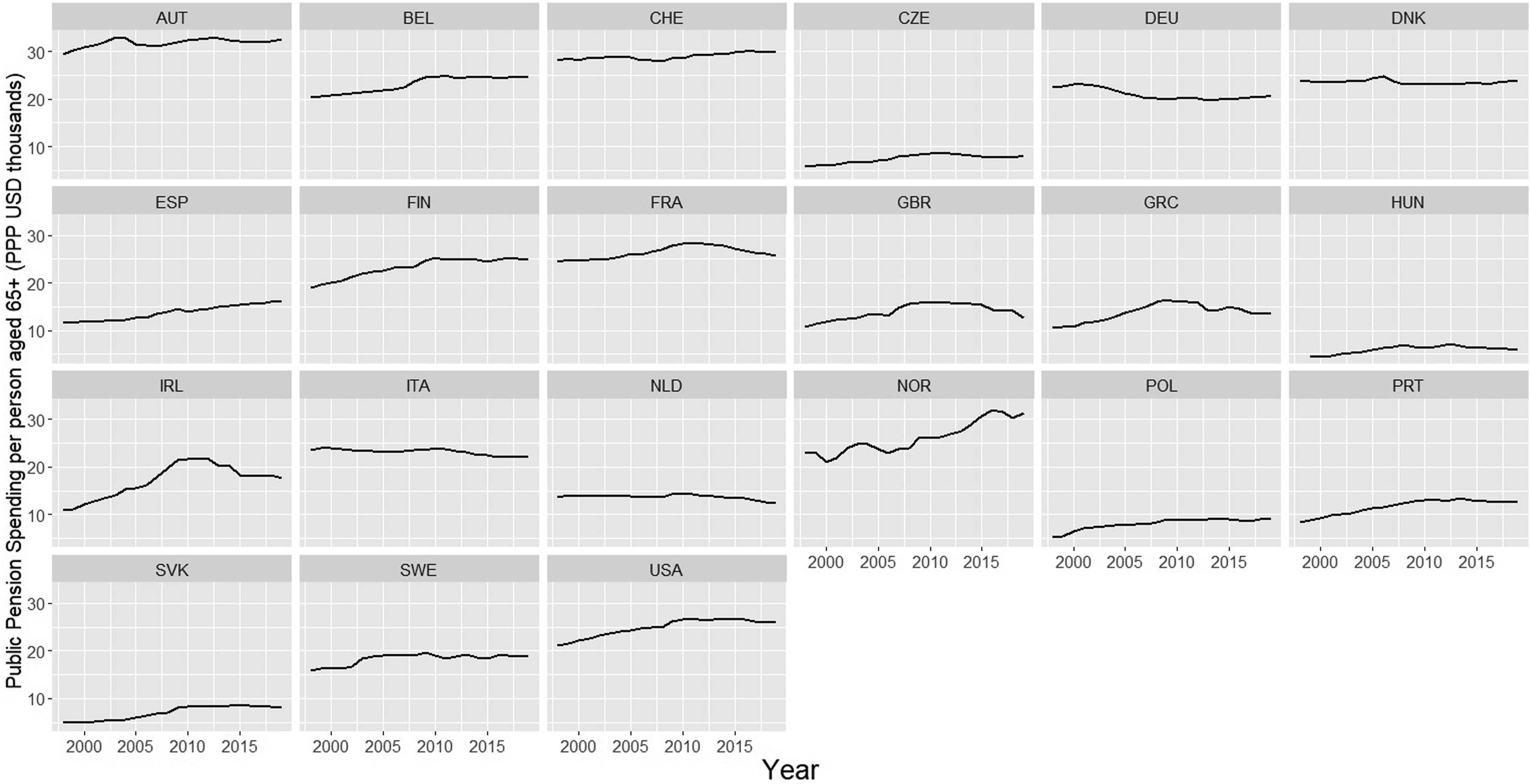
Looking at cross-national variations, Austria consistently marks the highest level of public pension spending per older person over the two decades, followed by Switzerland, France, Norway, the USA and Denmark. The lowest spenders are mostly in Southern and Eastern Europe but also include the UK and the Netherlands. Overall, higher levels of spending are not necessarily related to the Bismarckian system that covers high-income groups. For example, the highest (Austria) and lowest (Slovakia) spenders are both in the Bismarckian group, while the Beveridgean Denmark shows an above-average level of pension spending. Moreover, they do not correspond to higher or lower old-age employment rates across countries, as illustrated in Figures A1 and A2.
Compared to the same expenditures measured as a percentage of GDP (see Figure A3), notable differences in the trends are found in Greece and Portugal, where substantial GDP contractions following the Great Recession may have inflated the expenditures relative to GDP. Conversely, clear upward trends are present in Ireland and Norway in Figure 1 but not in Figure A3, presumably due to their strong GDP growth. Similarly, the rank of spending levels among countries in Figure 1 does not match that in Figure A3. Pension expenditures in the USA, Switzerland, Norway, Denmark and Ireland are in higher relative positions when population structures and GDP per capita are adjusted. In contrast, expenditures in Greece, Portugal, Italy and Poland look much lower, reflecting their poor economic performance and relatively aged populations.
Heterogeneous effects of pension spending by education level and gender
Marginal effects of public pension spending, by education level and gender.
Note:
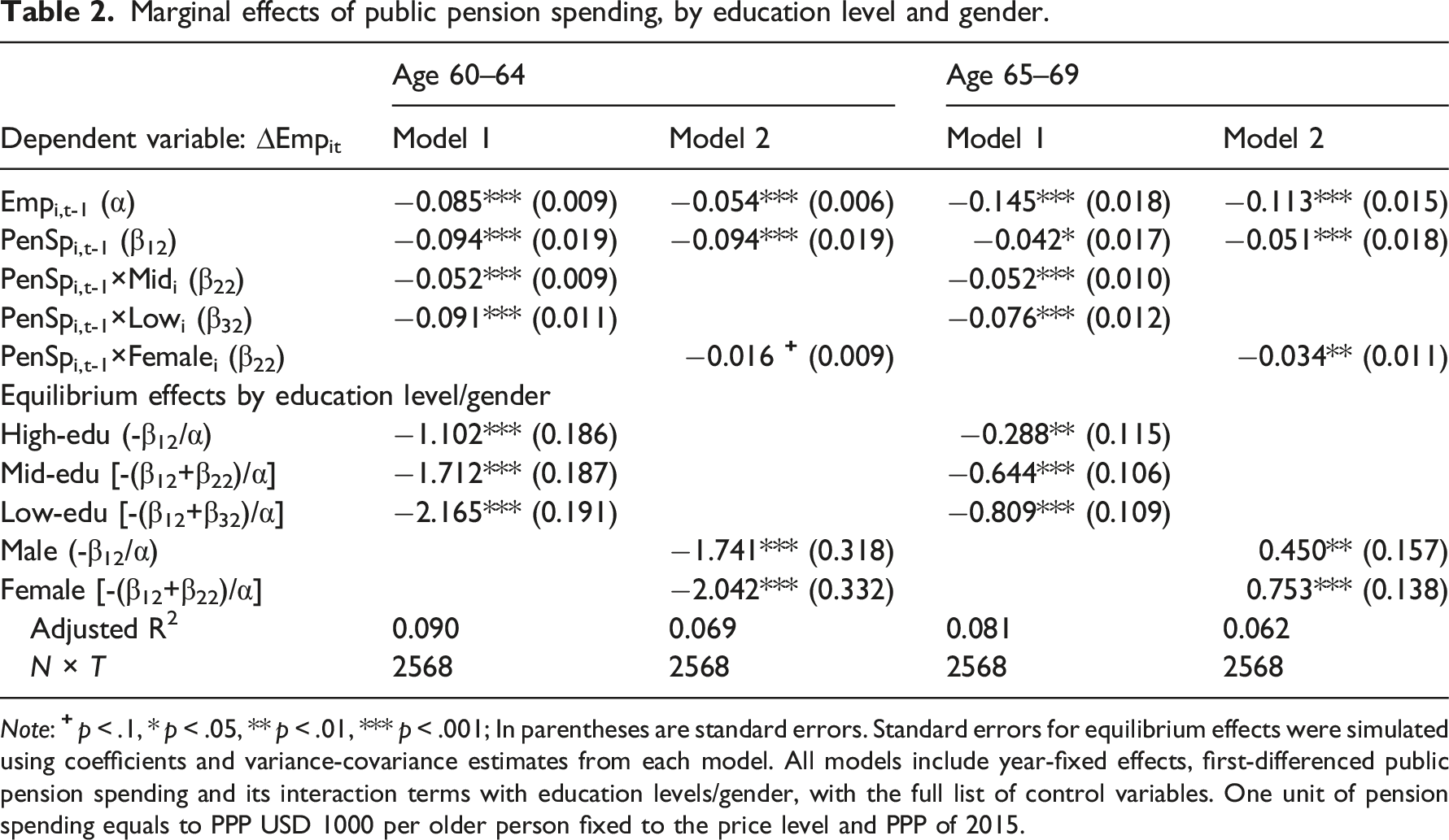
Consistent with Hypothesis 1, a lower level of education corresponds to a stronger (negative) effect of public pension spending. Educational differences in the effects of pension spending are both statistically significant between the high- and mid-educated and between the high- and low-educated. Holding other demographic, economic and policy-related variables constant, a reduction in pension spending by one unit (PPP USD 1000 of 2015) is associated with a permanent increase in employment rates by 2.165% points for the low-educated and by 1.102% points for the high-educated group among the aged 60 to 64. The effect sizes are smaller for the age Group 65 to 69, with the equivalent effects presenting 0.809 (high-educated) and 0.288 (low-educated), respectively.
Gender gaps in the marginal effects are also statistically significant (Hypothesis 2), more among those aged 65 to 69 than those aged 60 to 64. In the former, the (absolute) equilibrium effects are 0.450 for male groups and 0.753 for female groups. In the latter group, the effect sizes are 1.741 and 2.042, respectively, showing a smaller gender difference in relative terms.
Variations in the effects across pension regimes
Moderating effects of pension regimes and education levels (Model 3).
Note:
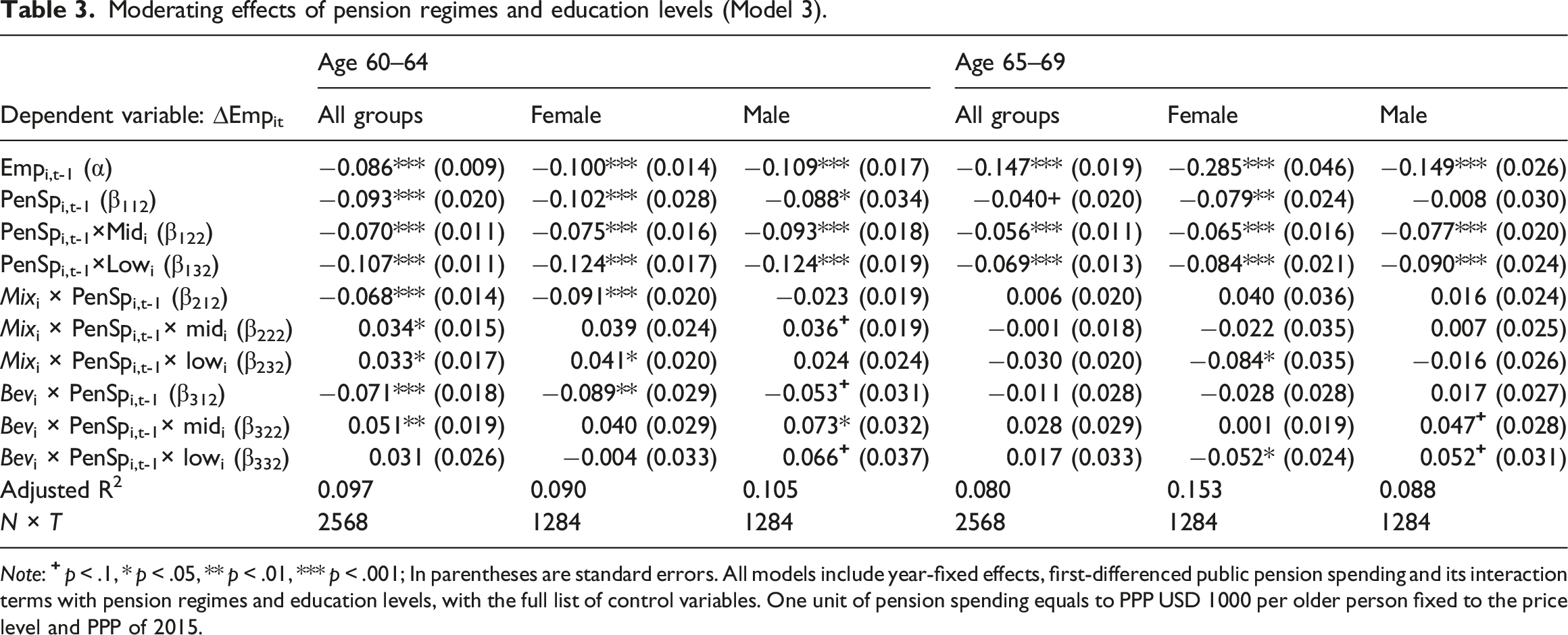
The results in Table 3 also demonstrate that the educational differences in the marginal effects significantly vary between different pension regimes, especially among those aged 60 to 64 (Hypothesis 3). Whereas the (negative) effects are augmented among the high-educated in the Mixed and Beveridgean regimes relative to the Bismarckian regime (by −0.068 and −0.071 on average, respectively), the negative educational gradients are significantly countervailed by the positive values of three-way interaction effects. In Beveridgean countries, the positive three-way interaction coefficients are statistically significant only among males but not among females. In the Mixed group, the countervailing effects are significant in the low-educated female group and the mid-educated male group.
The moderating effects of pension regimes are less clear in the 65 to 69 age group. However, the educational gaps between high- and low-educated female groups are greater in the Mixed and Beveridgean regimes (by 0.084 and 0.052, respectively). On the other hand, the educational gradients are significantly narrowed among males by about 0.050 in Beveridgean countries compared to the Bismarckian regime.
Figure 2 illustrates the equilibrium (permanent) effects of pension spending by the level of education, also varying between pension regimes, estimated separately for the four gender-age groups. Among females aged 60 to 64, the effect sizes are the largest in the Beveridgean regime, followed by the Mixed and Bismarckian regimes, though their educational gradients do not look significantly different. Among females aged 65 to 69, both the overall effect sizes and their educational differences tend to be larger in the Beveridgean and Mixed groups than in the Bismarckian cluster. Equilibrium effects of pension spending on employment rates by level of education and pension regimes.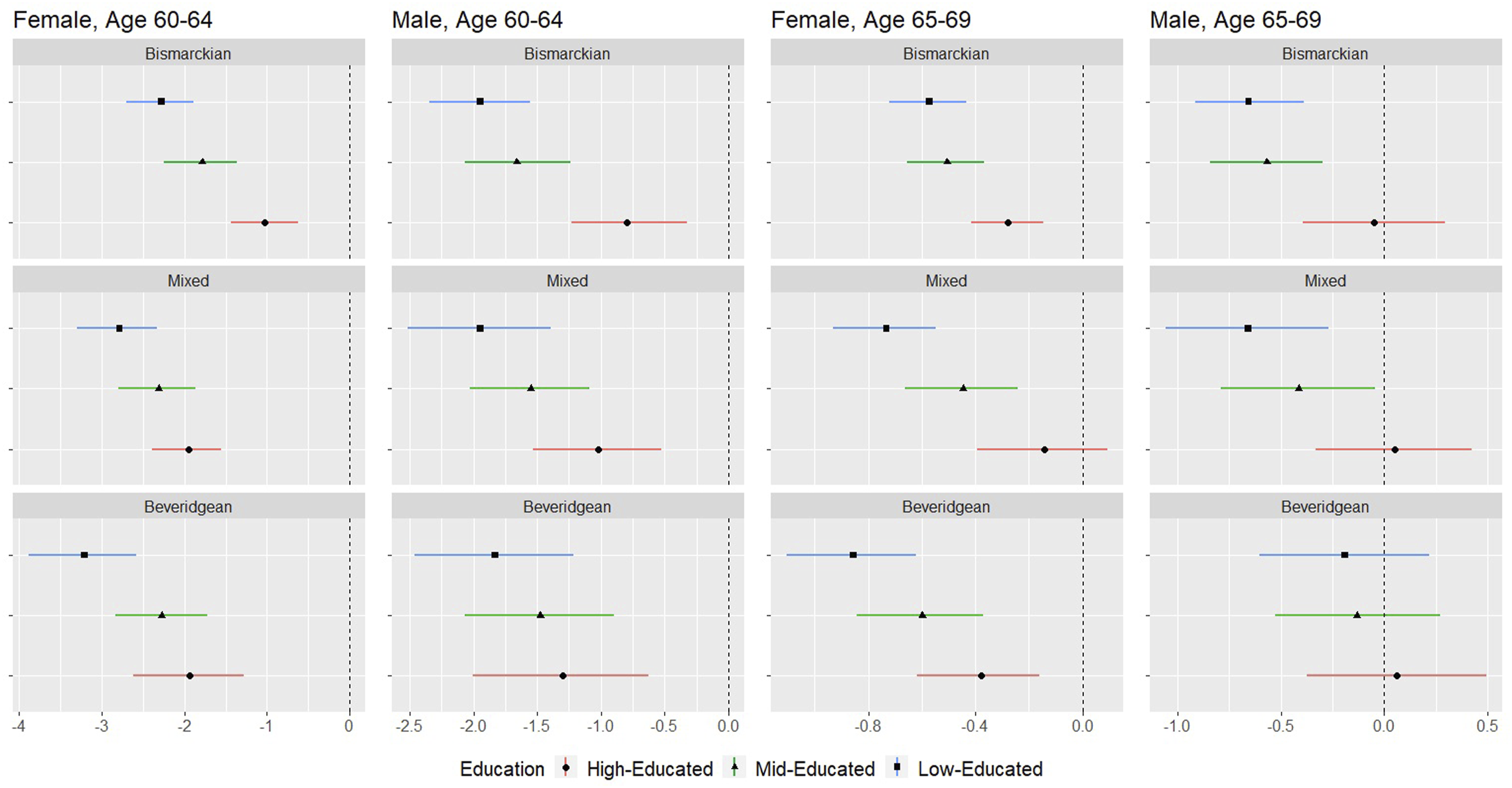
In contrast, among males in both age groups, the educational gaps tend to be wider in the Bismarckian and Mixed groups than in the Beveridgean systems. Among those aged 60 to 64, the large educational difference in the Bismarckian group is attributed to a particularly small employment effect of pension spending among high-educated males. Among the aged 65 to 69, null effects are observed across all education groups in Beveridgean countries. However, the effects on mid- and high-educated males’ employment are still substantial in the Mixed and Bismarckian regimes.
Discussion and conclusion
This study examined gender- and education-specific effects of public pension spending on employment rates of age groups 60 to 64 and 65 to 69, and how these effects vary across countries with different institutional structures of public pensions. The results showed significant educational and gender differences in the marginal effects of public pensions, confirming Hypotheses one and 2. Across all gender–age groups, the negative associations between public pension spending and employment rates were more pronounced among the low-educated compared to the high-educated. Similarly, pension spending was, on average, more strongly associated with female employment than male employment rates in both age groups. These findings imply that public pension cuts may disproportionately affect low-educated older adults and women in their financial situation and, thereby, their employment rates.
Unexpected but noteworthy patterns were also found regarding the moderating role of pension regimes. Overall, female employment rates were significantly more sensitive to changes in public pension spending in the Beveridgean system than in the Bismarckian regime, related to particularly large effects on the low-educated group in the former. Among males, educational differences in the marginal effects of pension spending tend to be smaller in the Beveridgean than in the other regimes. Particularly among males aged 65 to 69, the estimates were not statistically significant in all education groups in the Beveridgean regime, whereas the effects were still clear among low- and mid-educated groups under the Bismarckian systems.
Our findings offer substantive implications that public pensions in different institutional contexts may play distinct roles for women and men. Older women’s unstable work histories could be better compensated by non-contributory pensions (Möhring, 2015), which explains why female employment seems more strongly affected by public pensions in the Beveridgean system, especially among the low-educated. This idea is in line with our supplementary analysis of the poverty-reducing effects of public pensions. Beveridgean systems offer greater protection against older women’s poverty risk than other systems but not particularly against older men’s poverty (see Table A4 and Figure A4).
For older men, educational differences in the effect of public pensions are only marginal in Beveridgean systems relative to the Bismarckian. This may be because private pensions are the primary source of income inequality among older men in Beveridgean systems, which aligns with the logic of the ‘paradox of redistribution’ (Korpi and Palme, 1998). In Bismarckian countries, in contrast, private pensions play only a marginal role and remain a privilege of high-educated men, which explains why this group appears to be least affected by public pension spending. Moreover, common reform measures in Bismarckian countries, such as restricting access to early retirement programmes, may have affected low-educated workers disproportionately.
One caveat is that the pension regime is a simplified concept that reduces the idiosyncratic and complex features of public pensions for analytical parsimony. For example, the way public earnings-related schemes are managed varies hugely within the Bismarckian group. The redistributive effects of earnings-related schemes may differ between defined-benefit and defined-contribution systems and depend on the presence and generosity of means-tested social assistance. Moreover, some countries could be seen as ambiguous cases to fit into one group. Greece, for example, has gone through radical reforms since 2010, including the implementation of basic pensions, though the overall architecture has remained Bismarckian by nature. Czechia is another ambiguous case due to its exceptionally high RRR for a Mixed system. We therefore re-assigned Czechia to the Beveridgean group for a sensitivity analysis, which generated results that partly weaken but do not overturn our argument (see Table A3).
A related limitation is that the results may be changeable by including other non-European countries, such as Australia, Canada, South Korea and Japan, which were not selected due to data limitations. Moreover, the role of private pensions in different institutional contexts was not examined in this study and thus should be further investigated in future research. We also did not identify specific components of public pensions – that is, eligibility age or benefit generosity – that drive changes in employment rates, due to the all-inclusive nature of pension spending. Finally, the results do not attest to causal relationships, though the estimates from our models may be highly conservative. However, such limitations could be complemented by existing studies using microdata in a single-country context, mainly from the labour economics literature (Etgeton, 2018; Geyer and Welteke, 2021; Rabaté and Rochut, 2020). The main contribution of our study instead lies in demonstrating the role of long-established institutional structures, which is difficult to examine in a single-case study.
Given women’s career disadvantages in many countries and low-educated workers’ shorter retirement life spans (Shi et al., 2023), it is unjust if these groups are involuntarily working longer due to financial difficulties. Since our findings suggest that public pensions tend to hit women and low-educated workers disproportionately, future pension reforms should consider varying outcomes of different pension designs to balance the goal of active ageing with social equity. If the overall public expenditure needs to be cut, the minimum income floor should be the last component to be affected, as non-contributory basic or targeted pensions can effectively protect the most vulnerable group. Furthermore, state pension ages could be applied differently based on educational or occupational characteristics and prestige.
Supplemental Material
Supplemental Material - Varying effects of public pensions: Pension spending and old-age employment under different pension regimes
Supplemental Material for Varying effects of public pensions: Pension spending and old-age employment under different pension regimes by Kun Lee in Journal of European Social Policy
Footnotes
Acknowledgements
This article has benefited from numerous comments by many researchers. I especially thank my PhD supervisors, Bernhard Ebbinghaus and Marek Naczyk, for their continuous feedback and support. Gratitude is also extended to Kenneth Nelson, Bess Bukodi, Jane Gingrich and Tim Vlandas, who gave precious advice on how to improve this article. Members of the WZB writing group also offered helpful comments on how to frame and restructure the article. Constructive feedback from participants at the ISA-RC28, SASE and ESPAnet conferences, including Jonas Radl and Aart-Jan Riekhoff, is also appreciated. Finally, I appreciate four anonymous examiners of the JESP/ESPAnet Doctoral Researcher Prize 2023 and the final reviewer of this article.
Declaration of conflicting interests
The author(s) declared no potential conflicts of interest with respect to the research, authorship, and/or publication of this article.
Funding
The author(s) disclosed receipt of the following financial support for the research, authorship, and/or publication of this article: This work was supported by the Korea Foundation for Advanced Studies, Wolfson College, University of Oxford.

Supplemental Material
Supplemental material for this article is available online.
Notes
References
Supplementary Material
Please find the following supplemental material available below.
For Open Access articles published under a Creative Commons License, all supplemental material carries the same license as the article it is associated with.
For non-Open Access articles published, all supplemental material carries a non-exclusive license, and permission requests for re-use of supplemental material or any part of supplemental material shall be sent directly to the copyright owner as specified in the copyright notice associated with the article.
