




Abstract
Algeria's hydrocarbon-dependent economy faces significant challenges in diversifying its energy mix to achieve sustainability and reduce vulnerability to global energy market fluctuations. Despite abundant natural resources, the country's heavy reliance on fossil fuels has hindered progress toward energy diversification, as measured by the energy diversification index. This study investigates the asymmetric impacts of institutional quality, green technologies, and natural resources on Algeria's energy diversification from 1995/Q1 to 2022/Q4, addressing a critical literature gap. Using the Fourier nonlinear autoregressive distributed lag model, the study explores long-term equilibrium relationships and asymmetric dynamics between these variables and energy diversification. The analysis reveals that positive shocks in institutional quality lead to substantial increases in energy diversification, underscoring strong governance's crucial role in promoting energy transitions. Conversely, negative institutional shocks significantly reduce energy diversification, highlighting the detrimental effects of declining governance quality. Similarly, positive green technology shocks enhance energy diversification, while negative shocks diminish it. Natural resources exhibit dual effects: positive shocks result in modest energy diversification increases, suggesting resource revenues can support renewable projects; however, negative shocks lead to decreases, emphasizing fiscal volatility's destabilizing impact on energy diversification. These findings confirm asymmetric relationships, as positive and negative shocks significantly influence Algeria's energy diversification differently. Policy implications underscore the need for continuous governance reforms, enhanced anti-corruption measures, and transparent regulatory frameworks to attract renewable energy investments. Strategic reallocation of hydrocarbon revenues—through mechanisms similar to Norway's sovereign wealth fund model—could mitigate fiscal risks and support green transitions, providing actionable insights for transforming Algeria's energy landscape.
Keywords
Introduction
The global energy landscape is undergoing a transformative shift as nations grapple with the dual challenges of meeting rising energy demand and mitigating climate change. For oil-exporting countries, this transition is particularly urgent. Decades of reliance on hydrocarbon revenues have created economies vulnerable to price volatility, environmental degradation, and social inequities. Algeria, Africa's third-largest oil producer and a key supplier of natural gas to Europe, epitomizes this paradox: while its fossil fuel wealth has fueled short-term growth, it has also entrenched structural imbalances, stifled innovation, and left the economy exposed to global market shocks. 1
Globally, the imperative to diversify energy systems is underscored by the “planetary boundaries” framework, which warns that human activity—particularly fossil fuel consumption—is exceeding Earth's regenerative capacity. 2 This challenge is further compounded by the rapid advancements in renewable energy technologies and international climate commitments, necessitating a proactive and strategic approach to energy diversification. For Algeria, aligning with global decarbonization goals while ensuring energy security and economic resilience requires a fundamental restructuring of its energy policies, institutional frameworks, and technological capabilities. Without a decisive shift, the country risks long-term economic stagnation and environmental degradation.3,4
Achieving energy diversification requires exploring a variety of energy sources to meet growing demand. While previous studies have addressed some aspects of energy diversification,5–7 the impact of green technologies in this field has not received sufficient attention. Although research has demonstrated the influence of green technologies on the development of renewable energy, 8 energy efficiency, 9 and energy usage, 10 its direct impact on energy diversification remains unexplored. This study aims to fill this research gap by focusing on the energy diversification index (EDI) and incorporating key macroeconomic indicators, such as institutional quality and natural resource, to identify their role in promoting sustainable energy strategies.
Strong institutions are pivotal in orchestrating a coherent energy transition. Transparent regulatory frameworks, enforceable policies, and anti-corruption measures create an environment conducive to investment in renewables. For instance, robust institutions can streamline permitting processes for solar projects, enforce carbon pricing mechanisms, and allocate resources efficiently. Conversely, weak institutions—marked by bureaucratic inefficiency, rent-seeking, and political instability—undermine investor confidence. Algeria's Corruption Perceptions Index (CPI) score of 36/104 (2023) reflects systemic governance challenges, which have delayed renewable energy projects like the Tafouk 1 solar plant, originally slated for completion in 2020. Countries like Morocco, with stronger institutions (CPI: 38/97), have outpaced Algeria in solar capacity, achieving 800 MW through the Noor Ouarzazate complex, compared to Algeria's 500 MW. 11 These governance challenges highlight the critical need for institutional reform to unlock Algeria's renewable energy potential.12,13
Technological advancements play a crucial role in reducing costs and enhancing the efficiency of renewable energy systems. Breakthroughs in photovoltaic cell efficiency (now exceeding 22% for commercial panels) and AI-driven grid management enable higher renewable integration. However, Algeria's lag in green technologies (GT) is evident in its low R&D expenditure (0.7% of GDP vs. the global average of 1.8%), which stifles domestic innovation and adoption of emerging energy technologies. By contrast, Tunisia's adoption of smart metering and blockchain for energy trading has improved grid resilience. For Algeria, leveraging technological advancements could unlock its vast solar potential (3000 + annual sunshine hours) and wind resources (10 GW capacity potential), 14 but this demands targeted investments in R&D and partnerships with tech leaders like Germany's Fraunhofer Institute. 15 Without such efforts, Algeria risks being left behind in the global clean energy transition.16–18
While Algeria's hydrocarbon reserves (12th globally in proven oil reserves) have historically financed development, they have also perpetuated the “resource curse,” crowding out investments in renewables. Yet, its renewable resource base remains underutilized: solar irradiation levels (2200 kWh/m2/year) rival those of Saudi Arabia, but renewables account for just 3% of electricity production, compared to 20% in Egypt. Efficiently harnessing these resources requires institutional reforms to redirect fossil fuel revenues (which constitute 60% of the state budget) into renewable infrastructure and workforce training. The successful experiences of other energy-rich nations, such as the UAE, which has integrated renewables into its energy mix while maintaining economic stability, underscore the potential benefits of such an approach for Algeria.19,20
The interplay between institutions, technology, and resources underscores Algeria's energy crossroads. Weak governance has delayed solar projects despite abundant sunshine, while low R&D investment has left wind potential untapped. By contrast, Morocco's institutional reforms and tech adoption enabled its rise as a solar leader. For Algeria, replicating this success demands institutional accountability to channel hydrocarbon wealth into renewables, coupled with green technologies to optimize solar and wind yields. Without such measures, the country risks falling further behind in the global race for sustainable energy, a misstep with dire economic and ecological consequences. Algeria's energy future hinges on breaking free from the hydrocarbon trap. By fortifying institutions, embracing Green technologies, and strategically redeploying natural resource wealth, the country can achieve its target of 27% renewable electricity by 2035 while creating 100,000 jobs in the sector. 21 This transition is not merely an environmental imperative but a socioeconomic necessity to ensure long-term stability in a post-carbon world. The lessons learned from other resource-rich countries serve as valuable benchmarks, reinforcing the importance of proactive policies, strategic investments, and institutional reform in securing a sustainable energy future for Algeria.
This study makes several significant contributions to understanding the dynamics of energy diversification in Algeria through its examination of the relationships between GT, NR, IQI, and energy diversification.
First, a key methodological advancement lies in the application of the Fourier NARDL approach, which represents a departure from conventional linear modeling techniques prevalent in existing literature. This sophisticated econometric framework enables the detection of asymmetric relationships, allowing us to understand how both increases and decreases in GT, NR, and IQI differently impact energy diversification outcomes. Such nuanced analysis provides deeper insights than traditional linear approaches, revealing complex dynamics that might otherwise remain hidden. Second, this research breaks new ground by conducting the first comprehensive analysis of these factors’ roles in Algeria's energy diversification journey. By examining how GT, NR, and IQI interact with and influence EDI in various ways, the study illuminates critical pathways for policy intervention and strategic planning. This pioneering investigation establishes a foundation for understanding the unique characteristics of Algeria's energy transition challenges and opportunities. Third, the study's estimation of long-run asymmetric cointegration relationships among the variables offers more robust and reliable results compared to conventional time series methods. This enhanced analytical approach provides policymakers with a more accurate understanding of the long-term relationships between these crucial factors, enabling them to develop more effective strategies for managing energy demand while promoting diversification across the country. The findings directly inform policy design by highlighting how different factors may require distinct approaches depending on whether they are experiencing positive or negative changes.
In summary, this study substantially contributes to the understanding of the relationship between green technologies, natural resource management, institutional governance, and energy diversification in Algeria. It highlights the asymmetric effects of these factors, provides novel insights into their interdependence, and introduces advanced econometric techniques that enhance the reliability of its findings—thereby informing both policy design and strategic implementation for a sustainable energy future.
The remainder of the paper is structured as follows: Section 2 provides a comprehensive review of the existing literature. Section 3 outlines the empirical methodology and details the data sampling process. Section 4 presents the empirical findings and offers an in-depth discussion of the results. Lastly, Section 5 concludes the study by highlighting practical implications and acknowledging its limitations.
Literature review
In recent years, the global focus on environmental issues and energy diversification has intensified. This growing attention reflects a broader understanding that reducing reliance on fossil fuels and diversifying energy sources are essential strategies for tackling climate change and ensuring long-term economic stability. The energy diversification literature has evolved beyond examining basic environmental impacts, now delving into the complex interplay between institutional frameworks, green technologies, and natural resource availability in shaping countries’ energy transitions. Recent studies emphasize the importance of diversifying energy sources and transitioning to renewable energy technologies, particularly in resource-dependent economies like those in Africa. 22 However, as noted by Pata et al., 23 there remains a significant gap in identifying the optimal pathways for implementing energy diversification strategies, especially in regions heavily reliant on natural resources.
Institutional quality and energy diversification
The role of institutional quality in enabling energy diversification has emerged as a critical area of study. Rahman and Sultana 24 provide compelling evidence from 19 emerging economies that institutional effectiveness directly impacts renewable energy consumption. Their longitudinal study spanning 2002–2019 establishes that countries with more effective, corruption-free institutions demonstrate greater success in diversifying their energy portfolios. The research identifies a unidirectional causal link between institutional quality and renewable energy development, suggesting that institutional reforms should precede major energy diversification initiatives. Mukhtarov et al. 25 demonstrate through their analysis of Poland's renewable energy sector that institutional factors, particularly governance effectiveness and corruption control, significantly influence renewable energy adoption rates. Their research reveals that countries with stronger institutional frameworks achieve higher rates of energy diversification. A particularly significant contribution comes from Dong et al., 26 who examined how governmental capacity to formulate and implement policies affects the relationship between natural resource abundance and renewable energy adoption. Their analysis of 96 countries reveals a nuanced picture: the impact of natural resources on energy diversification follows a U-shaped pattern, but this relationship can be positively modified by strong institutional frameworks. Importantly, they find that institutional quality has the strongest effect in high-income countries, suggesting that institutional development must reach certain thresholds before it can effectively support energy diversification. Recent empirical research reinforces these conclusions. A cross-country study covering 87 nations from 2011 to 2020 finds that lower perceived corruption is significantly associated with higher public investments in renewable energy, particularly in middle-income economies. 27 Similarly, a panel analysis across 49 African countries demonstrates that institutional quality, in conjunction with green innovation and renewable energy consumption, contributes positively to long-term green growth. 28 These findings highlight that effective, transparent, and well-governed institutions are crucial not only for promoting renewable energy adoption but also for enabling broader energy diversification strategies.
Building on these insights, a growing body of research examining the interconnections between financial markets and energy systems highlights the crucial role of institutional quality in mitigating the effects of external shocks. Strong and resilient institutions serve as stabilizing mechanisms, helping energy markets absorb and adapt to global financial disturbances, thereby reducing their exposure to sudden fluctuations in resource availability and market volatility.
29
Beyond conventional financial risks, institutional frameworks also influence how energy markets respond to emerging uncertainties, particularly those related to environmental, social, and governance (ESG) considerations. Evidence suggests that ESG-related uncertainties can significantly affect fossil fuel price dynamics, creating additional layers of market complexity.
30
These findings collectively underscore that robust, transparent, and adaptive institutional structures are not only essential for market stabilization but also form a foundational element for pursuing effective energy diversification policies. In other words, energy security and diversification are strongly contingent on the ability of institutions to manage both traditional financial shocks and evolving sustainability-related uncertainties. Based on the above literature, the following hypothesis is proposed:
Green technologies and energy diversification
Technological innovation is a key driver of energy diversification, influencing both the development and adoption of renewable energy systems. Khan et al. 8 examined the bidirectional relationship between green technologies and renewable energy in Germany, finding that technological advancements generally promote renewable energy growth, although the magnitude of the effect varies across market segments and time periods. Building on this, Zhao et al. 31 investigated the impact of green technologies on renewable energy investment (REI), revealing that while enhanced technological capacity reduces risks and encourages renewable adoption, it may also improve the efficiency of conventional energy sources, highlighting the need for policies that specifically target renewable technologies.
Rasheed et al.
32
further demonstrate that artificial intelligence (AI) can significantly enhance renewable energy production in 22 leading innovative countries, particularly when combined with effective institutional frameworks and resource management strategies. Similarly, Dogan et al.
33
show that green technology and research and development (R&D) positively drive renewable energy innovation in BRICS nations, whereas the digital economy exerts a more nuanced effect, supporting some renewable ventures while negatively correlating with innovation in others. Additional evidence highlights the transformative impact of industrial AI and technological innovation on modern energy systems. Research indicates that AI-driven technologies can optimize energy consumption, enhance operational efficiency, and facilitate the rapid adoption of cleaner and more sustainable energy solutions.
34
In parallel, studies also emphasize the interaction between technological innovation and socioeconomic factors, such as income distribution, demonstrating that these dynamics play a critical role in improving access to modern energy services, increasing efficiency, and supporting comprehensive energy diversification strategies.
35
Collectively, these findings suggest that the integration of advanced technologies with inclusive socioeconomic policies can substantially accelerate the transition toward more resilient, efficient, and diversified energy systems. Drawing on the preceding literature, the following hypothesis is advanced:
Natural resources and energy diversification
The relationship between natural resource abundance and energy diversification presents significant challenges, often due to the “resource curse,” where countries rich in natural resources struggle to diversify their economies and energy systems. Yuan et al.
20
explored the role of natural resources in renewable energy consumption in N-11 countries from 1990 to 2020. They found that resource abundance can hinder energy diversification, as technological development and financial market growth are negatively related to renewable energy consumption in these countries. This suggests that natural resource wealth can create barriers to the adoption of renewable energy technologies, highlighting the need for strong institutional frameworks and technological capabilities to overcome these challenges. Dong et al.
26
further examined how the quality of governance influences the relationship between natural resource rents and renewable energy consumption. They found that enhancing regulatory quality and government effectiveness can mitigate the negative impact of resource rents on renewable energy, with the most significant effects observed in high-income countries. This indicates that effective policies and governance can reshape the impact of natural resource abundance, promoting renewable energy consumption despite resource wealth. Similarly, Rana
36
shows that the management of different types of resource rents (oil, gas, coal, forest) significantly influences sustainability outcomes, including renewable energy adoption, and that effective policy implementation and institutional quality are essential for transforming resource wealth into a driver, rather than a barrier, for energy diversification. Complementing these insights, evidence from time-frequency analyses indicates that different energy sources, including renewable and nuclear energy, exhibit varying environmental impacts over time.
37
Such heterogeneity underscores the need for nuanced and adaptive energy policies that account for temporal and sectoral variations in environmental outcomes. These findings further highlight the importance of integrating technological innovation with robust institutional frameworks to promote sustainable energy diversification. This approach is particularly critical in hydrocarbon-dependent economies, where carefully coordinated strategies can simultaneously enhance energy efficiency, reduce environmental pressures, and support the transition toward a more resilient and diversified energy system. In light of the reviewed literature, the analysis advances the following hypothesis:
Synthesis and gaps
Previous studies have primarily explored the effects of energy diversification in addressing environmental challenges and promoting economic development, while also highlighting its benefits. However, there is a noticeable gap in research that examines the determinants influencing energy diversification. Although existing literature has largely focused on regions such as Africa, the study examines how green technologies contribute to energy diversification, with particular emphasis on macroeconomic factors like institutional quality and the abundance of natural resources. The analysis is situated within the context of the Algerian economy over the period 1995–2022. By addressing theoretical and methodological gaps, this research aims to contribute to the existing body of knowledge. The following section will outline the methodological advancements introduced by this study within the academic discourse.
Materials and methods
Data
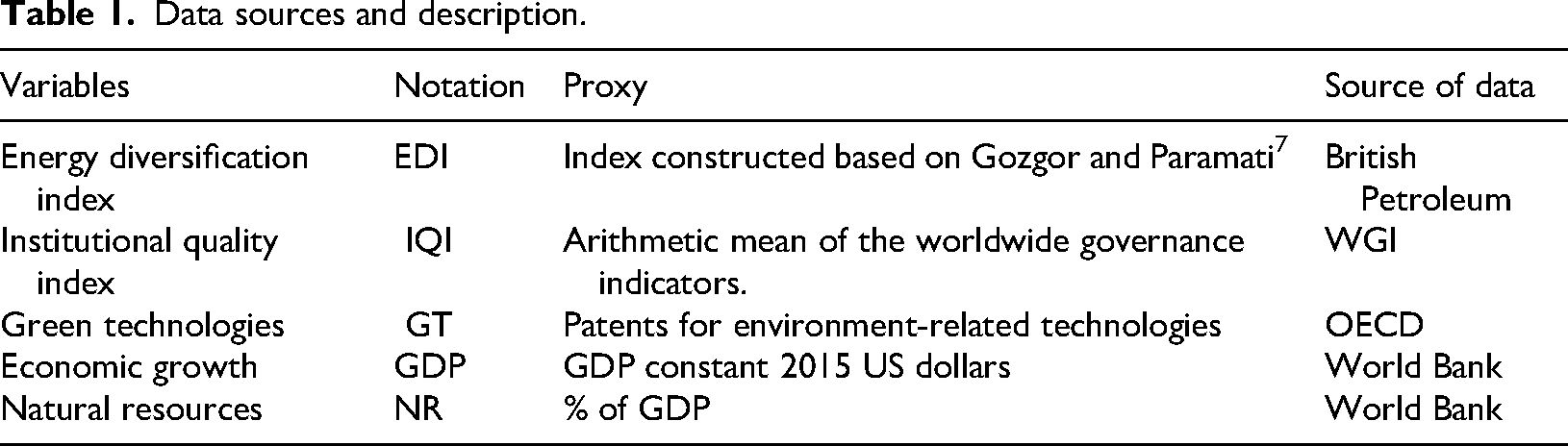
This study investigates the impacts of green technologies, institutional quality and natural resources on energy diversification index in Algeria. The dataset employed in this study focuses on Algeria, covering the period from the Q1-1995 to Q4-2022, while controlling variables GDP and EC. In order to grasp the connection between technological advancements and energy sources in Algeria. The data were obtained from three principal sources: the World Development Indicators, the International Energy Agency, and British Petroleum. Table 1 outlines the measurement approaches and data sources for each variable utilized in the analysis.
Data sources and description.
Justifications for variable selection
The selection of variables in this study is grounded in both theoretical frameworks and empirical evidence, ensuring that each variable aligns with the research objectives and contributes meaningfully to the analysis. Below, we provide detailed justifications for the inclusion of each variable, categorized into dependent, explanatory, and control variables.
Dependent variable: Energy Diversification Index (EDI)
In this study, the
Following the methodological frameworks of Akrofi
22
and Gozgor and Paramati,
7
energy diversification is quantified using an index based on the inverse of the Herfindahl–Hirschman Index (HHI). While the HHI is traditionally applied to assess market concentration, its inverse serves as a widely accepted measure for evaluating the degree of diversification within energy systems. This approach effectively differentiates between portfolios dominated by a single energy source and those exhibiting a more balanced distribution. Accordingly, the Energy Diversification Index is constructed using the inverse-HHI formulation as follows: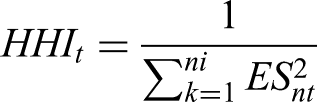
The EDI is calculated as the inverse of the Herfindahl–Hirschman Index (HHI) and is expressed as follows: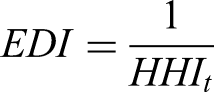
Explanatory variables
Control variables
The explanatory and control variables in this study are directly linked to
Methodology
This research aims to assess the effects of GT, IQI, and NR on Algeria's EDI using the Fourier NARDL approach, with GDP per capita and EC serving as control variables. The research follows a structured methodology, as illustrated in Figure 1.
First, data collection and description involve gathering and summarizing key characteristics of the sample data from various sources. Tests for stationarity and cointegration are carried out, where unit root tests are used to examine the stationarity of the variables and the bounds test is applied to verify the presence of long-run relationships among them. Third, the Fourier NARDL approach is applied to assess the long-term effects of GT, IQI, and NR on EDI. Finally, the empirical findings are thoroughly examined and discussed to draw meaningful conclusions.
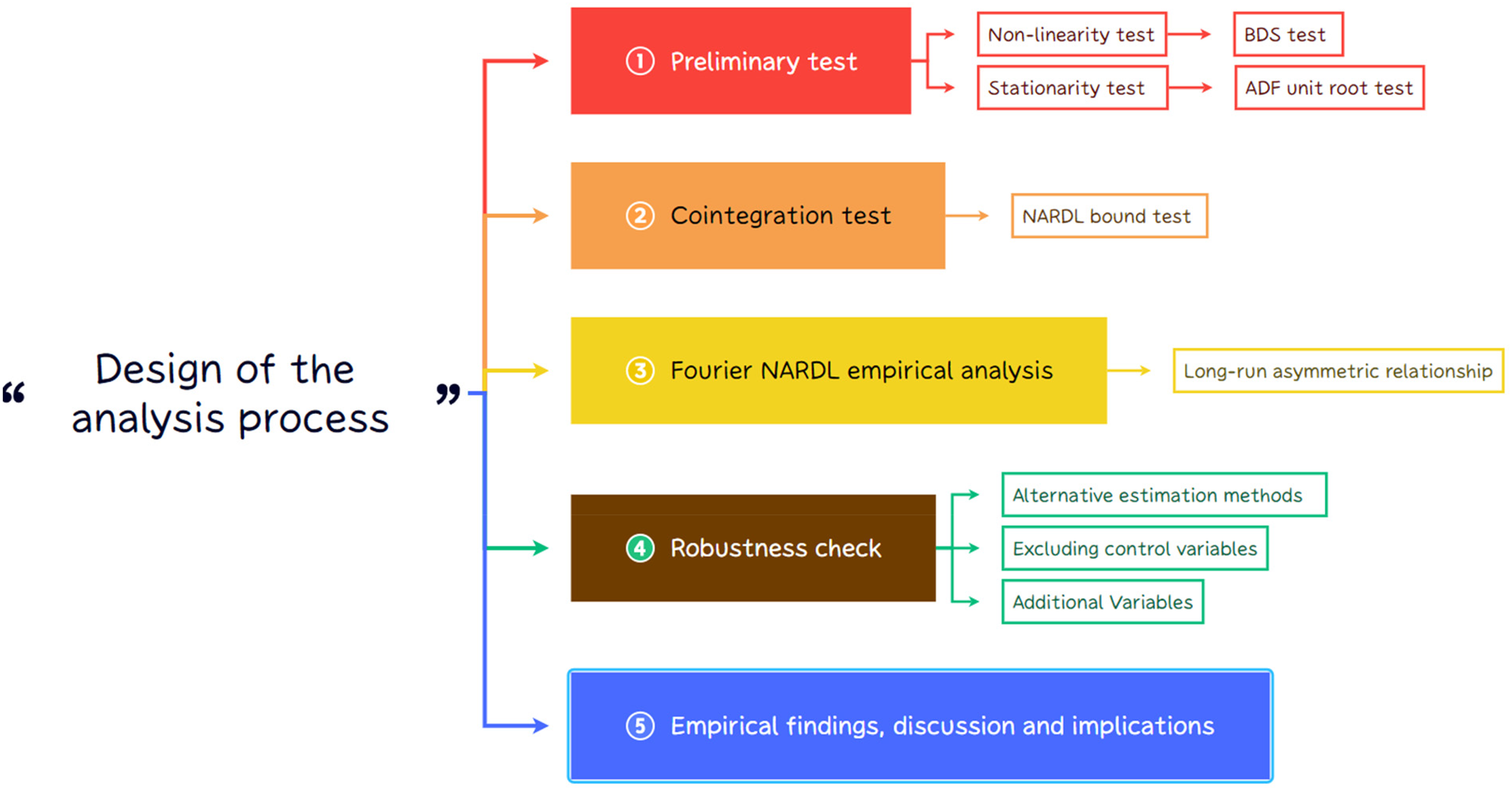
Analysis flowcharts.
Model specification and Fourier NARDL framework
In empirical analyses related to energy diversification, the relationships among key variables—such as institutional quality, green technologies, natural resources, and energy outcomes—often exhibit nonlinear and asymmetric behavior. Traditional linear frameworks, including the standard ARDL, assume proportional and symmetric responses; however, this assumption is frequently violated in real-world settings. Economic agents do not respond uniformly to positive and negative shocks: improvements in institutional quality may foster gradual diversification, whereas institutional deterioration can trigger disproportionately large setbacks. Similarly, expansions in green technologies tend to generate incremental progress, whereas disruptions in technological deployment or fluctuations in natural-resource revenues may induce substantial instability. These dynamics are further complicated by major global disturbances, such as the 1997 Asian financial crisis, the 2008 financial collapse, and the COVID-19 pandemic, all of which introduce structural breaks that linear models are unable to adequately capture.
While many nonlinear ARDL applications attempt to incorporate structural breaks, they typically assume that the number and timing of such breaks are known in advance, relying on ad hoc dummy variables. In practice, however, time-series data—particularly in resource-dependent economies like Algeria—are subject to multiple unknown structural shifts arising from geopolitical tensions, commodity-price cycles, and abrupt policy reforms. To address these complexities, our study adopts the Fourier NARDL approach, following recent methodological advances by Kathuria and Kumar, 44 Syed et al., 45 and Yilanci et al. 46 This specification enhances flexibility by approximating smooth and abrupt breaks using low-frequency Fourier terms while simultaneously modeling long-run and short-run asymmetries.
Furthermore, consistent with Shin, Yu, and Greenwood-Nimmo, 47 the NARDL framework accommodates variables integrated of order I(0), I(1), or a combination of both, removing the restrictive preconditions imposed by traditional cointegration techniques. By distinguishing between positive and negative shocks in institutional quality, green technologies, and natural resources, the model offers a more nuanced understanding of how Algeria's energy diversification responds to asymmetric and shock-driven dynamics.
Furthermore, consistent with Ref., 47 the NARDL framework accommodates variables integrated of order I(0), I(1), or a combination of both, removing the restrictive preconditions imposed by traditional cointegration techniques. By distinguishing between positive and negative shocks in institutional quality, green technologies, and natural resources, the model offers a more nuanced understanding of how Algeria's energy diversification responds to asymmetric and shock-driven dynamics.
This study examines the long-term asymmetric connections between GT, IQI, and EDI while controlling for the impact of GDP and natural resources in Algeria. The basic regression model in this study can be formulated as follows:

In this context,
The ARDL approach allows for the integration of independent indicators to be integrated at different degrees if the dependent variable is I (1). Eq. (2) presents the ARDL model utilized in this study.
The relationship of cointegration among the variables is analyzed by comparing the test statistics to the established lower and upper bounds, referred to as I(0) and I(1). The null hypothesis of no cointegration is rejected when the test statistic exceeds the critical upper bound values. Equation (2) presents the ARDL model utilized in this study.
Δ denotes the first difference operator, indicates the lag length, and et signifies the disturbance term characterized by zero mean and finite variance. The selection of the optimal lag length is determined through the application of the Akaike Information Criteria (AIC). Pesaran et al.
48
established the cointegration relationship through the application of the F test (

Equations (3) and (4) were revised by McNown et al.
49
to develop a novel F-test (
To establish the cointegration relationship, it is necessary to reject Eqs (4), (5), and (6). Nonetheless, compared to the conventional ARDL methodology, this method produces more reliable results. The variables’ degree of integration was disregarded by McNown et al..
49
Nonetheless, in comparison to the standard ARDL, this method yields more reliable empirical findings. Additionally, this approach uses Fourier functions to identify structural changes. Therefore, there is no need for any further structural change tests or modifications to the estimated model regarding structural change. Equation (7) illustrates the Fourier function introduced by Yilanci et al.,
46
which accounts for structural changes within the model.
“where ‘n’ denotes the number of frequencies,
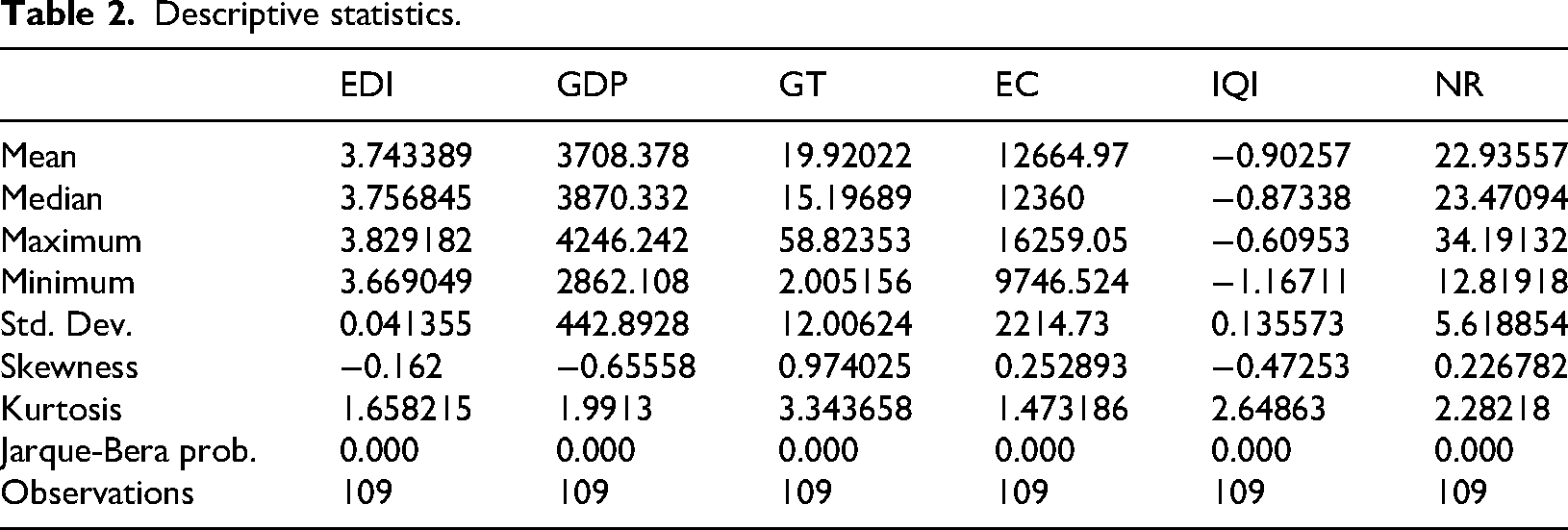
Descriptive statistics.
Nonlinearity BDS test results.
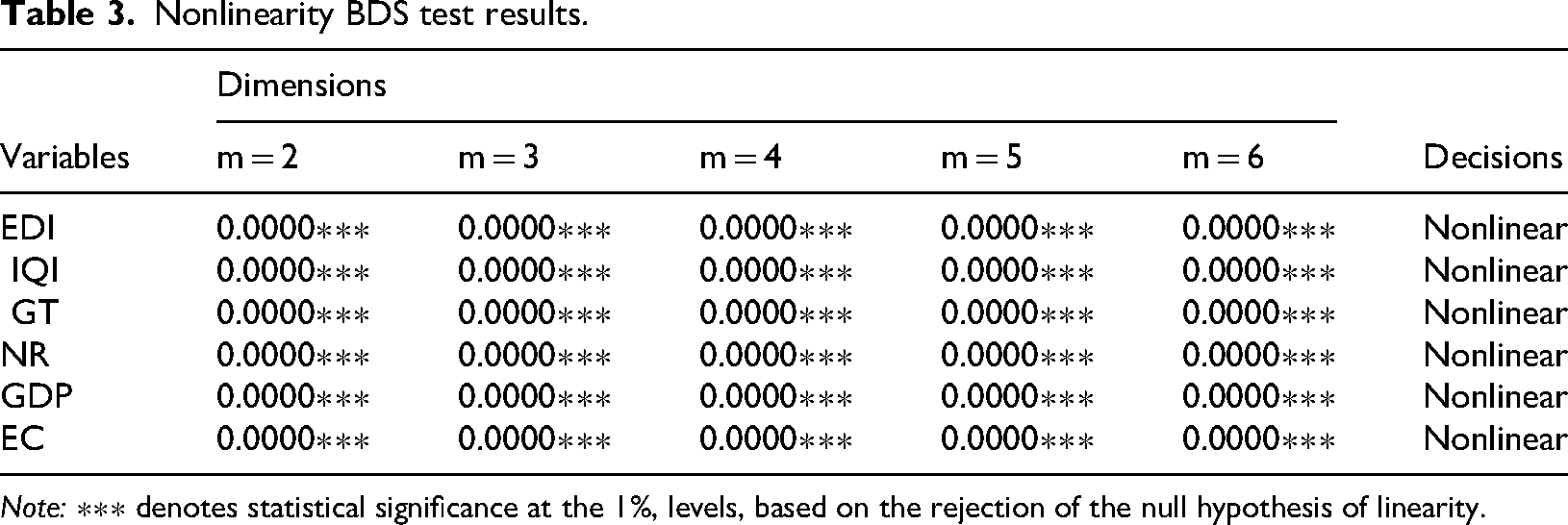
Note: ∗∗∗ denotes statistical significance at the 1%, levels, based on the rejection of the null hypothesis of linearity.
Empirical results and discussion
Pree-diagnostic test
Aligned with the core research objectives, this study examines how GT, IQI, and NR influence EDI in Algeria over the period from 1995Q1 to 2022Q4, while accounting for the effects of GDP and EC. Before conducting empirical analysis, it is essential to assess potential nonlinearities and evaluate the time series characteristics of the data. This ensures the proper choice of estimators and the accurate specification of the model.
Descriptive statistics
The descriptive statistics provide a comprehensive overview of the distributional properties of the variables in the dataset. The comparison between mean and median values suggests that most variables are relatively symmetrically distributed, but skewness and kurtosis values indicate deviations from normality. The skewness values show that GDP (−0.656) and IQI (−0.473) are negatively skewed, implying that their distributions have longer left tails. Conversely, GT (0.974) exhibits significant positive skewness, indicating a heavier right tail with a greater presence of higher values. Meanwhile, EDI (−0.162), EC (0.253), and NR (0.227) display relatively low skewness, suggesting a more symmetrical distribution.
The kurtosis values further reinforce the presence of non-normality in the dataset. Most variables, including EDI (1.658), GDP (1.991), EC (1.473), IQI (2.649), and NR (2.282), exhibit platykurtic distributions (kurtosis < 3), meaning they have flatter tails and fewer extreme values compared to a normal distribution. However, GT (3.344) has a kurtosis value slightly above 3, suggesting a leptokurtic distribution with heavier tails and a higher concentration of extreme observations.
The Jarque-Bera test results provide definitive evidence against normality. With p values of 0.000 for all variables, the null hypothesis of normality is strongly rejected at any conventional significance level. This confirms that the dataset exhibits non-normal distributions, necessitating further consideration in econometric modeling. These findings collectively suggest that the data are non-normal, which has implications for the choice of statistical methods and tests used in further analysis. Non-parametric methods may be required to address the non-normality of the data.
Nonlinearity test
To assess the presence of nonlinearities in the dataset, the BDS test is employed. The results presented in Table 2 reveal statistically significant BDS statistics, confirming the existence of nonlinear structures in the data. This finding suggests that relying exclusively on linear models may lead to biased and unreliable estimates. Consequently, identifying these nonlinear characteristics underscores the necessity of utilizing nonlinear methodologies to analyze the long-term relationships among EDI, GT, IQI, and NR, GDP, and EC.
Unit root test
In this research, we applied the Augmented Dickey-Fuller (ADF) test to examine unit roots, and Table 4 summarizes the results. The analysis reveals that the time-series variables, GT and EDI, are stationary at level I(0), while IQI, NR, GDP, and EC are stationary at first difference, I(1).This highlights a combination of integration orders among the variables. Due to this mixed integration order, the use of Fourier NARDL models is appropriate for our analysis. Subsequently, we assess cointegration among the chosen variables to explore how GT, IQI, and NR influence EDI in Algeria.
ADF unit root tests.
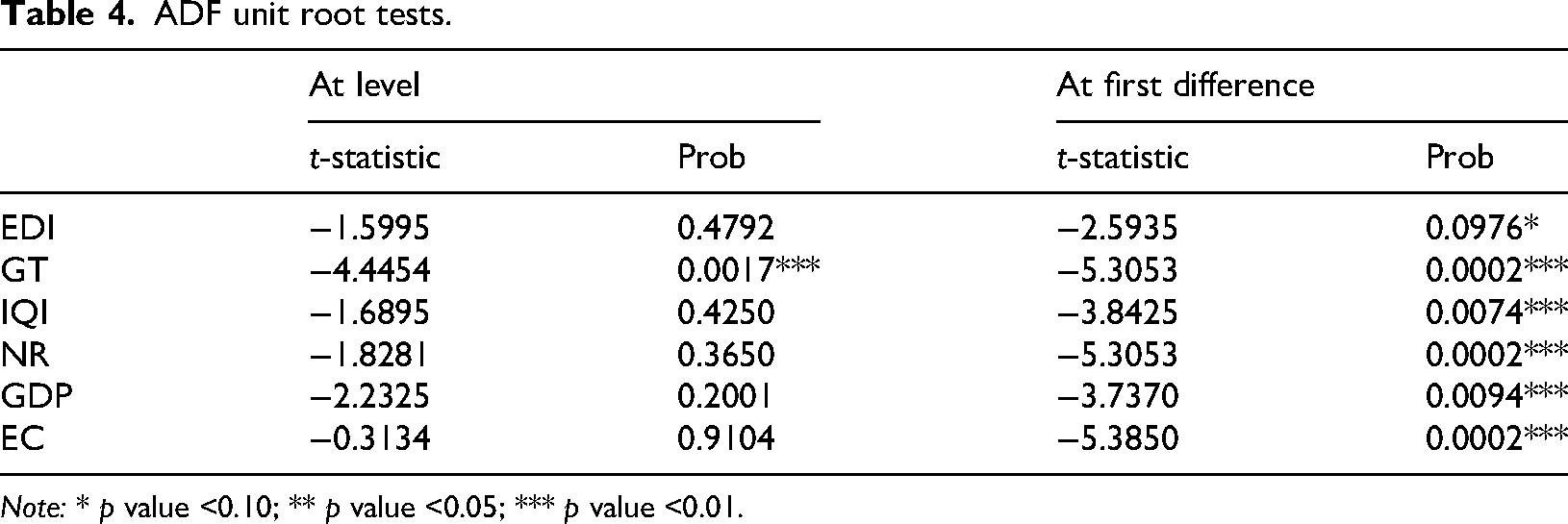
Note: * p value <0.10; ** p value <0.05; *** p value <0.01.
Fourier-NARDL bounds test
The Fourier NARDL bounds test is conducted to explore the possibility of cointegration among the variables, as the results of the unit root tests indicate the potential for such relationships. Table 5 presents the findings of the Fourier NARDL bounds test, which reveals an F-statistic of 2.997976 with k = 8, exceeding the 10% upper bound (I(1) = 2.850), which provides evidence of a long-run relationship at this significance level. At the 5% level, however, the statistic falls between the lower and upper bounds (2.110 < F < 3.150), making the results inconclusive, while at the 1% level, it remains below the upper bound, indicating no definitive confirmation of cointegration. Collectively, these findings suggest a plausible long-term association among the variables at the 10% significance threshold. Consistent with previous studies, such as Gyamfi et al., 50 the Fourier NARDL framework applied in this analysis offers robust insights into the long-run effects of green innovation, government quality, and natural resources on Algeria's Energy Diversification Index.
Fourier NARDL bounds test.

Asymmetric Fourier NARDL outcomes
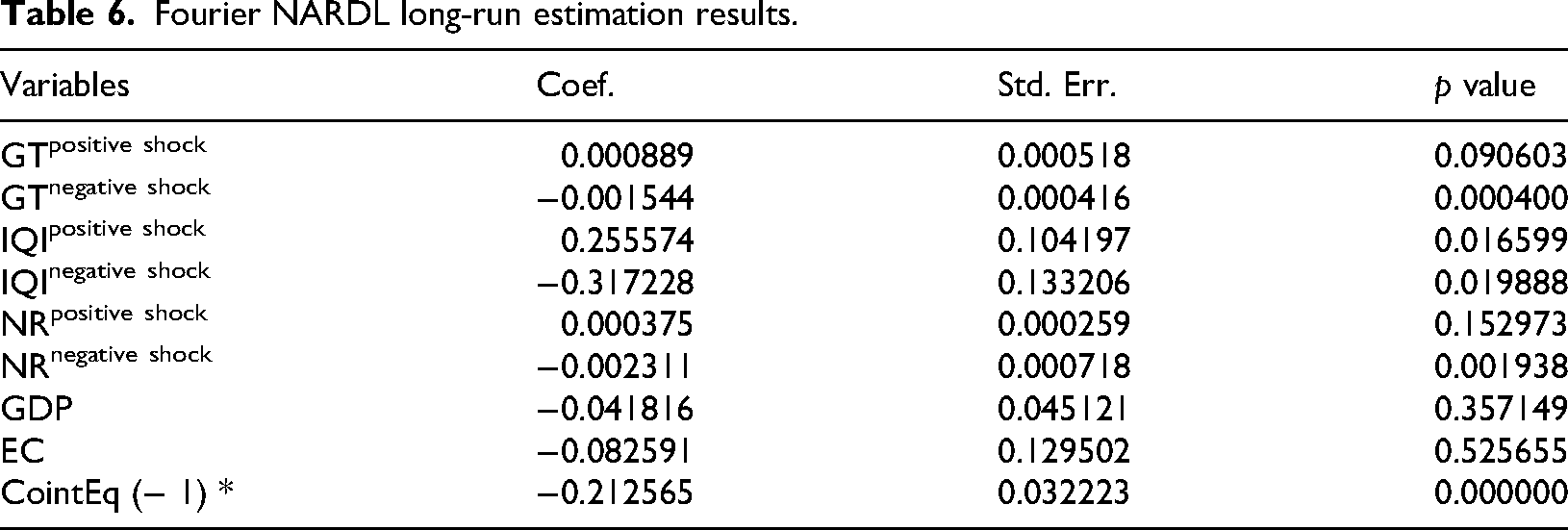
After confirming cointegration among the variables, we advance to evaluating the asymmetric impacts of NR, IQI, and GT on EDI using NARDL framework. The long-run Fourier NARDL results reported in Table 6 reveal a more complex relationship between Green Technologies (GT) and the Energy Diversification Index (EDI) than suggested in earlier drafts. A 1% positive shock in GT is associated with a small but statistically marginal increase in EDI (coef. = 0.000889; p = 0.0906), indicating that incremental improvements in green technology deployment tend to support diversification in the long run. In contrast, a 1% negative shock generates a significant decline in EDI (coef. = −0.001544; p < 0.01), implying that setbacks in GT adoption—such as delays in project execution, reduced financing, or technological disruptions—can meaningfully impede diversification efforts. Based on these results, Hypothesis H2, which posits that green technologies exert a positive and significant influence on energy diversification, is partially confirmed, as the positive effect is marginal, whereas the negative effect is statistically significant.
Fourier NARDL long-run estimation results.
This asymmetry reflects the structural sensitivity of diversification pathways: while gradual GT expansion provides incremental support to the energy mix, disruptions such as financing delays, stalled projects, or technological bottlenecks can impose disproportionate negative impacts. Such dynamics align with the findings of Javed et al., 51 who underscore the nonlinear and vulnerability-prone nature of GT's contribution to diversification in emerging economies. Furthermore, recent empirical evidence 52 indicates that in contexts where financial mechanisms are weak or inconsistent, renewable energy generation—and consequently energy diversification—is highly vulnerable to macroeconomic and policy-related shocks. These findings reinforce the notion that the deployment of green technologies alone is insufficient without robust financial and institutional support.
Algeria's recent experience illustrates this pattern. The progressive rollout of the 1 GW Tafouk 1 solar program demonstrates how sustained investment—despite initial implementation challenges—can steadily reinforce diversification outcomes. In contrast, recurrent delays in projects such as the 400 MW Skikda wind farm exemplify how negative shocks can outweigh incremental gains, exacerbating dependency on hydrocarbons. Strengthening institutional coordination and expanding technological partnerships (e.g., through initiatives comparable to the Desertec Industrial Initiative) can help mitigate these adverse effects and consolidate the long-term benefits of GT integration.
Transitioning from technological to institutional drivers, the analysis identifies IQI as the most influential factor shaping EDI. The empirical analysis reveals that a 1 % increase in IQI is associated with a 0.255 % rise in EDI, highlighting how governance reforms and institutional strengthening can substantially enhance the effectiveness of energy policies. Conversely, a 1 % decline in IQI corresponds to a 0.317 % reduction in EDI, demonstrating the vulnerability of energy diversification progress in the context of weakened institutional frameworks, these results confirm H1, indicating that institutional quality exerts a positive and significant effect on energy diversification. For example, Algeria's 2023 anti-corruption reforms at the state-owned energy giant Sonatrach unlocked approximately $300 million in misallocated funds, which were then redirected toward developing solar-hybrid power plants in the Sahara. This real-world instance illustrates how stronger institutional frameworks can create favorable conditions for renewable energy investments. Conversely, a 1% decline in IQI reduces the EDI by 0.317%, highlighting the vulnerability of progress when governance falters—as evidenced by the 2022 bureaucratic delays that led to the postponement of 600 MW of renewable energy tenders.
These outcomes reflect that genuine energy diversification depends not only on technological capacity but critically on institutional integrity—notably governance quality, transparency, corruption control, and regulatory consistency. Recent empirical investigations reinforce this interpretation. For instance, a global study of 87 countries (2011–2020) reveals that lower perceived corruption and higher institutional quality significantly increase public renewable energy investments, especially in middle-income economies. 27 Similarly, a panel study covering 49 African countries finds that institutional quality, together with green innovation and renewable energy consumption, exerts a positive long-term effect on green growth—indicating that institutional strength and green energy progress are mutually reinforcing in the African context. 28 Moreover, one of the most recent contributions (2025) illustrates that institutional quality plays a critical moderating role: in environments where governance is robust, green financing and sustainable development objectives align more effectively, suggesting that institutional quality magnifies the impact of green finance on sustainable outcomes. 53
These asymmetric effects underscore the critical importance of continuous institutional reforms. The World Bank (2023) has noted that improvements in institutional transparency can catalyze a 20% surge in renewable energy investments, a finding echoed by Vatamanu et al., 54 who argue that sustained governance upgrades, rather than one-off measures, are essential. Morocco's ongoing reforms, which facilitated the establishment of the Noor Solar Complex—Africa's largest concentrated solar facility—serve as a compelling example of how continuous improvements in IQI can drive energy diversification.
In summary, the evidence clearly indicates that robust institutional quality is a pivotal driver of energy diversification in Algeria. Strengthening governance through enhanced regulatory frameworks, rigorous anti-corruption measures, and increased policy transparency is not only necessary to attract foreign investments in renewable energy but also to ensure that Algeria can reduce its dependence on hydrocarbons and advance its sustainable energy transition agenda.
The findings reveal a nuanced dual role of NR in shaping Algeria's EDI, with outcomes contingent on the direction and magnitude of shocks. A 1% increase in NR corresponds to a 0.0003% rise in EDI, while a 1% decrease results in a 0.002% decline, highlighting asymmetric impacts. These statistically significant coefficients (at the 1% level) underscore the complexity of NR's influence. These results provide conditional support for H3, indicating that natural resource abundance can negatively influence energy diversification under adverse circumstances but may contribute positively when strategically reinvested. The positive effect may stem from hydrocarbon revenues being strategically reinvested into renewable energy infrastructure, enabling diversification. For instance, windfall profits from oil and gas exports—such as the $20 billion surplus in 2022—can fund renewable projects like the 4 GW Tafouk 1 solar initiative, demonstrating how resource wealth can catalyze diversification. Conversely, the adverse impact of NR reductions reflects Algeria's entrenched reliance on hydrocarbons: sudden declines in resource revenues, as seen during the 2020 oil price crash, destabilize fiscal budgets, forcing austerity measures that divert funds from renewables to essential services. This paradox mirrors the “resource curse” phenomenon, where resource abundance can paradoxically hinder structural economic transformation.
The International Monetary Fund's (IMF) 2024 report amplifies these concerns, emphasizing Algeria's macroeconomic fragility. Heavy hydrocarbon dependence—which constitutes over 90% of export earnings and 60% of fiscal revenue—exposes the economy to volatile global energy prices, undermining long-term planning for renewable energy projects. The IMF warns that without diversification, Algeria risks fiscal deficits, reduced foreign exchange reserves, and diminished capacity to buffer against external shocks, such as oil price crashes or geopolitical disruptions. This vulnerability is compounded by global decarbonization trends, which threaten the long-term viability of hydrocarbon-dependent economies.
However, the study suggests NR could be repurposed as a strategic lever for diversification. By channeling resource revenues into sovereign wealth funds or targeted subsidies for renewable energy, Algeria could mitigate fiscal volatility while accelerating its green transition. For example, Norway's success in using oil revenues to finance its Government Pension Fund Global—a vehicle for sustainable investments—offers a replicable model. Policy frameworks that prioritize transparency, such as public oversight of resource revenue allocation, could further enhance accountability and attract foreign investment in renewables. These insights align with Han et al., 55 who argue that resource-rich nations can achieve energy diversification through proactive governance. Their research emphasizes that institutional reforms, such as anti-corruption measures and regulatory stability, are critical to ensuring resource wealth translates into sustainable development. By adopting such strategies, Algeria could transform its natural resource wealth from a vulnerability into a catalyst for a resilient, diversified energy system, balancing economic stability with climate imperatives. This dual approach—harnessing NR benefits while mitigating risks—is essential for navigating the global energy transition and achieving carbon neutrality targets. The conditional nature of NR's impact is supported by recent empirical research. Yıldırım et al. 56 demonstrate that in advanced emerging economies, NR interact with energy-transition and globalization factors such that higher rents can bolster environmental welfare, but only under favorable structural and institutional conditions. Similarly, studies of African countries reveal that renewable-energy capital flows are strongly influenced by institutional quality, suggesting that resource-rich economies can only translate NR-derived revenues into sustainable energy investments when governance and regulatory frameworks are sufficiently robust. 57
In summary, while NR presents both opportunities and challenges for Algeria's energy diversification, its effective management through robust governance and strategic reinvestment can unlock significant potential. By learning from successful models like Norway's and addressing the structural vulnerabilities highlighted by the IMF, Algeria can leverage its resource wealth to build a sustainable and diversified energy future.
While GDP and EC exhibit negative coefficients (−0.0418 and −0.0825, respectively), their statistical insignificance (p values > 0.1) suggests that economic growth and energy demand alone are poor predictors of diversification. This paradox arises because Algeria's GDP growth remains tethered to hydrocarbons; for instance, the 4.2% GDP growth in 2023 was driven by oil price rebounds rather than renewable sector expansion. Similarly, rising energy consumption—such as the 8% annual increase in household electricity demand—reflects reliance on fossil fuels for power generation, not diversification. These findings challenge conventional growth-centric models and underscore the primacy of institutional and technological factors. For example, despite Egypt's lower GDP per capita, its targeted solar subsidies and feed-in tariffs enabled it to achieve 20% renewable penetration by 2023, outperforming Algeria's 3%. This divergence highlights that policy quality, not mere economic output, drives diversification.
The asymmetric effects across GT, IQI, and NR underscore that energy diversification is not merely a technical challenge but a governance and strategic prioritization issue. Positive shocks in IQI and GT yield compounding benefits, while negative shocks erode progress disproportionately. Meanwhile, NR's dual role as both a catalyst and a constraint highlight the need for institutional mechanisms to insulate diversification efforts from commodity volatility. Algeria's path forward lies in leveraging its resource wealth to fund renewables while embedding governance reforms that lock in long-term commitments—a lesson echoed in the UAE's successful integration of oil revenues into its Masdar City initiative. Future research should explore how regional collaborations, such as the African Continental Free Trade Area, could amplify these efforts through shared grids and cross-border investments.
Diagnostic tests
The robustness and reliability of the Fourier model were examined through a comprehensive set of diagnostic procedures. To assess the structural stability of the estimated parameters, both the CUSUM and CUSUMSQ tests were performed. The CUSUM plot presented in Figure 2 demonstrates that the cumulative sum of recursive residuals remains well within the 5% significance boundaries across the entire sample period, indicating the absence of structural breaks and confirming parameter stability. This is particularly important given the long-term perspective of the analysis and the sensitivity of Algeria's energy diversification trajectory to fluctuations in institutional quality, technological progress, and natural resource dynamics. Likewise, the CUSUMSQ test further validates the model's stability, as its values consistently fall within the confidence bands. Together, these findings indicate that the Fourier specification offers a robust framework for investigating the asymmetric shock effects on Algeria's energy diversification.
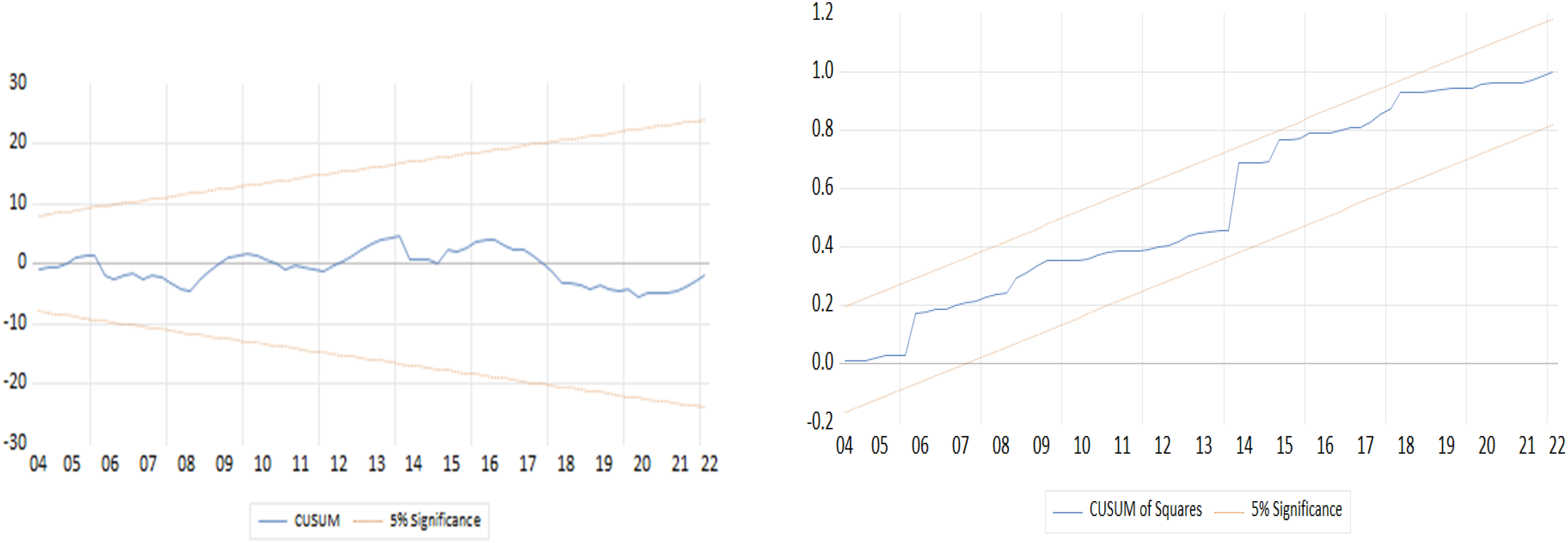
CUSUM and CUSUM of square test.
In addition to stability tests, several specification and residual diagnostics were performed to ensure the internal validity of the model. As reported in Table 7, the Breusch–Godfrey LM test yields an F-statistic of 0.128434 (p = 0.840738), providing strong evidence against the presence of serial correlation. The Breusch–Pagan–Godfrey heteroskedasticity test returns an F-statistic of 1.379617 (p = 0.145868), indicating homoskedastic residuals. Moreover, the Ramsey RESET test reports an F-statistic of 6.154560 (p = 0.1536), confirming that the functional form of the model is correctly specified. Collectively, these diagnostics verify that the estimated Fourier model is stable, free from major econometric issues, and suitable for inference.
Diagnostic result for the Fourier model.

The diagnostic evidence supports the model's credibility, which is crucial for devising strategies to diversify Algeria's energy sector—a key objective given the nation's heavy reliance on hydrocarbons. Diversification is vital not only for maintaining long-term economic stability but also for mitigating the impact of external shocks such as volatile oil prices. A deeper analysis of the interrelationships among EDI, GT, IQI, NR, GDP, and EC is imperative. Such an understanding will empower policymakers in Algeria to design targeted interventions that reduce dependency on fossil fuels, reinforce governance structures, optimize resource allocation, and ultimately drive a sustainable economic transition.
Robustness check
To validate the reliability of our findings, we conducted a series of robustness checks using alternative methodologies, variable specifications, and model configurations. These tests aim to assess whether the core relationships between GT, IQI, NR, and EDI remain consistent under varying analytical conditions. Table 8 summarizes the results of these robustness analyses, juxtaposed against the baseline findings for clarity.
Sensitive analysis results.
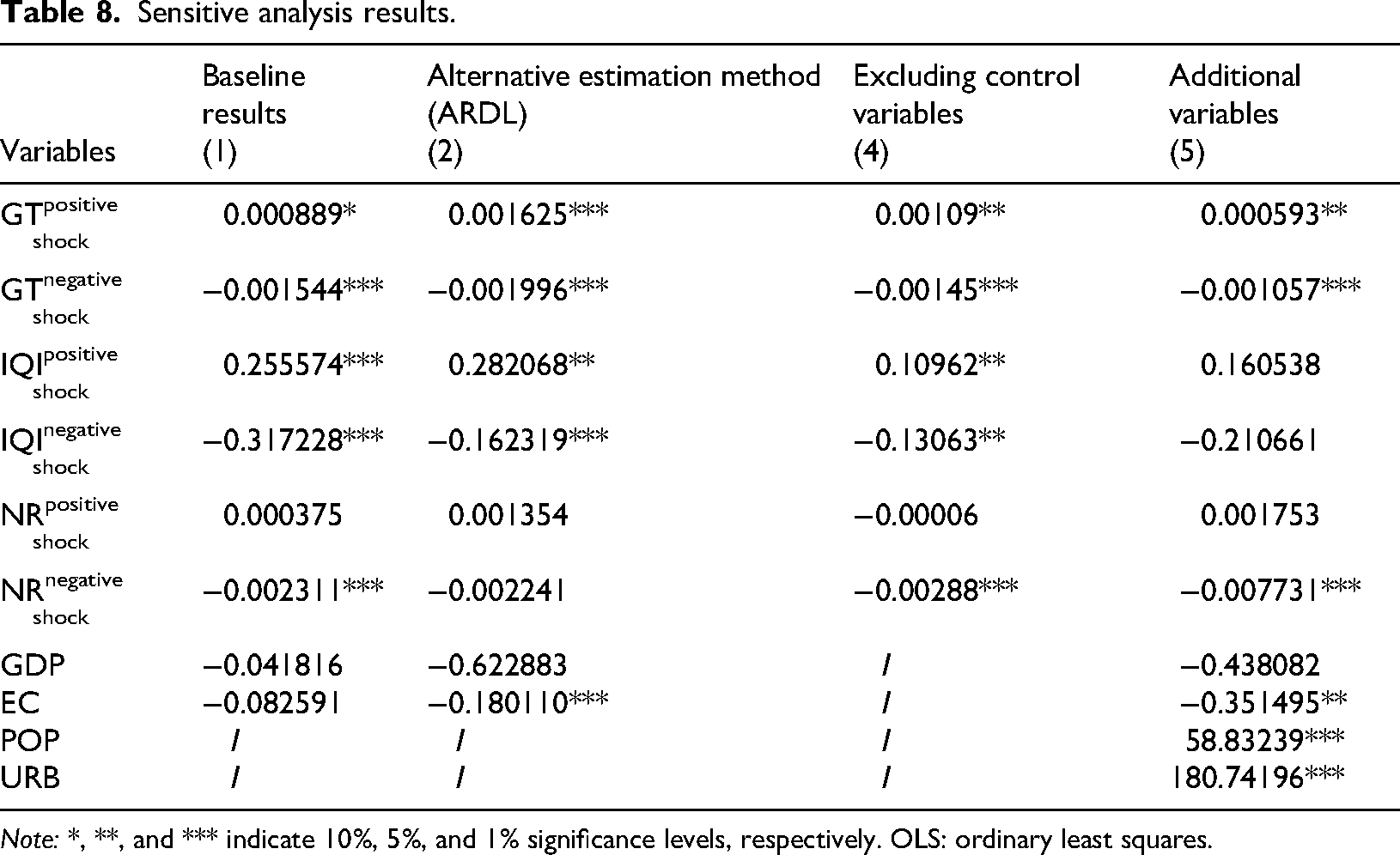
Note: *, **, and *** indicate 10%, 5%, and 1% significance levels, respectively. OLS: ordinary least squares.
Despite minor variations in coefficient magnitudes and significance levels, the core findings demonstrate remarkable resilience across methodologies. The consistency of GT and IQI effects, coupled with the stability of NR's adverse impacts, underscores the robustness of our conclusions. These results affirm that Algeria's energy transition and institutional reforms are pivotal to enhancing the EDI, even when accounting for model uncertainty and variable selection.
Conclusion, policy implications, and future research
Conclusion
This study provides a comprehensive examination of the interplay between green technologies (GT), institutional quality (IQI), and natural resources (NR) in shaping energy diversification, as measured by the Energy Diversification Index (EDI). Algeria represents a particularly instructive case for this analysis due to its status as a hydrocarbon-dependent, resource-rich country that faces persistent challenges in transitioning to a diversified energy system. Over the period 1995/Q1–2022/Q4, Algeria's energy sector has been characterized by heavy reliance on oil and gas, institutional bottlenecks, and uneven technological adoption, all of which have constrained the pace of renewable energy development. By employing the Fourier Nonlinear Autoregressive Distributed Lag (NARDL) model, the study rigorously investigates both long-term equilibrium relationships and asymmetric short-term dynamics among IQI, GT, NR, and EDI. The Fourier NARDL bounds test confirms the presence of a robust long-term relationship, validating the relevance of these factors for guiding effective energy diversification policy. The empirical results indicate that institutional quality is the most influential driver of energy diversification in Algeria. Specifically, positive shocks in IQI and GT significantly enhance the EDI, demonstrating that governance reforms, regulatory improvements, and transparent policy implementation can substantially increase the effectiveness of diversification strategies. For instance, Algeria's 2023 anti-corruption initiatives at the state-owned energy company Sonatrach unlocked approximately $300 million in previously misallocated funds, which were subsequently allocated to solar-hybrid projects in the Sahara. This example illustrates how institutional strengthening can create tangible conditions for renewable energy investment. In contrast, NR does not exert a statistically significant direct effect on EDI, indicating that natural resource endowments alone are insufficient to drive diversification without complementary institutional and technological frameworks. Furthermore, negative shocks in IQI, GT, or NR are associated with significant declines in EDI, highlighting the country's vulnerability to governance weaknesses or technological stagnation. The control variable analysis further underscores structural challenges in Algeria. Economic growth (GDP) and energy consumption (EC) display a negative, although statistically insignificant, relationship with EDI. This suggests that rising economic activity and energy demand often reinforce dependence on hydrocarbons, limiting the pace of diversification.
Policy implications
To transition from a hydrocarbon-dependent rentier economy to a diversified energy leader, Algeria must adopt a comprehensive, multi-pronged strategy that addresses institutional, technological, and resource-related challenges. The following policy recommendations are proposed:
Limitations and future research
While this study contributes significantly to the understanding of energy diversification dynamics in Algeria, it also highlights several limitations that warrant further investigation.
Single-Country Focus: The study's exclusive focus on Algeria limits the generalizability of its findings. Future research should employ panel data analysis incorporating multiple Arab or African countries to account for unobserved heterogeneity and region-sific dynamics. This approach would provide a more comprehensive understanding of energy diversification patterns and support the development of regionally tailored energy policies. Regional Spillover Effects: The findings suggest potential spillover effects of GT, IQI, and NR on neighboring countries through mechanisms such as trade, investment, and regional cooperation. Future studies should adopt advanced methodologies, such as panel spatial regression models, to explore these broader regional dynamics. This would deepen understanding of how these factors shape energy diversification across Africa and contribute to the development of sustainable and integrated energy systems. Broader Variable Inclusion: Expanding the scope of analysis to include additional variables, such as climate change policies, international trade agreements, and geopolitical factors, could provide a more holistic understanding of the drivers and barriers to energy diversification. Temporal Dynamics: Extending the study period and incorporating high-frequency data could enhance the robustness of the findings and provide insights into the evolving nature of energy diversification over time.
By addressing these limitations, future research can build on the findings of this study to develop more nuanced and actionable insights, ultimately supporting the global transition toward sustainable and diversified energy systems.
Footnotes

Funding
The authors received no financial support for the research, authorship, and/or publication of this article.
Declaration of conflicting interests
The authors declared no potential conflicts of interest with respect to the research, authorship, and/or publication of this article.