




Abstract
There is an urgent global need to shift toward renewable energy sources to address climate change and foster sustainable development. Understanding the factors crucial for enhancing renewable energy production is essential to prevent potential disruptions and ensure the future availability of these energy sources. This study investigates the potential role of mineral resources, green innovations, and education on renewable energy production in emerging economies from 1990 to 2019. The recently developed advanced panel data econometric method, a bias-corrected method of moments regression, is utilized for empirical estimation. The findings indicate that a 1% increase in mineral resources correlates with a 0.109% rise in renewable energy production (p < .01). Additionally, a 1% increase in green innovation and education can significantly enhance renewable energy production by 0.451% (p < .01) and 0.753% (p < .09), respectively. The results provide practical guidance for policymakers to advance progress toward sustainable development goal (SDG)-7 (Affordable and Clean Energy) by focusing on the sustainable use of mineral resources and promoting green innovation and education. This strategy helps reduce environmental vulnerability and aligns with SDG-13 (Climate Action).
This is a visual representation of the abstract.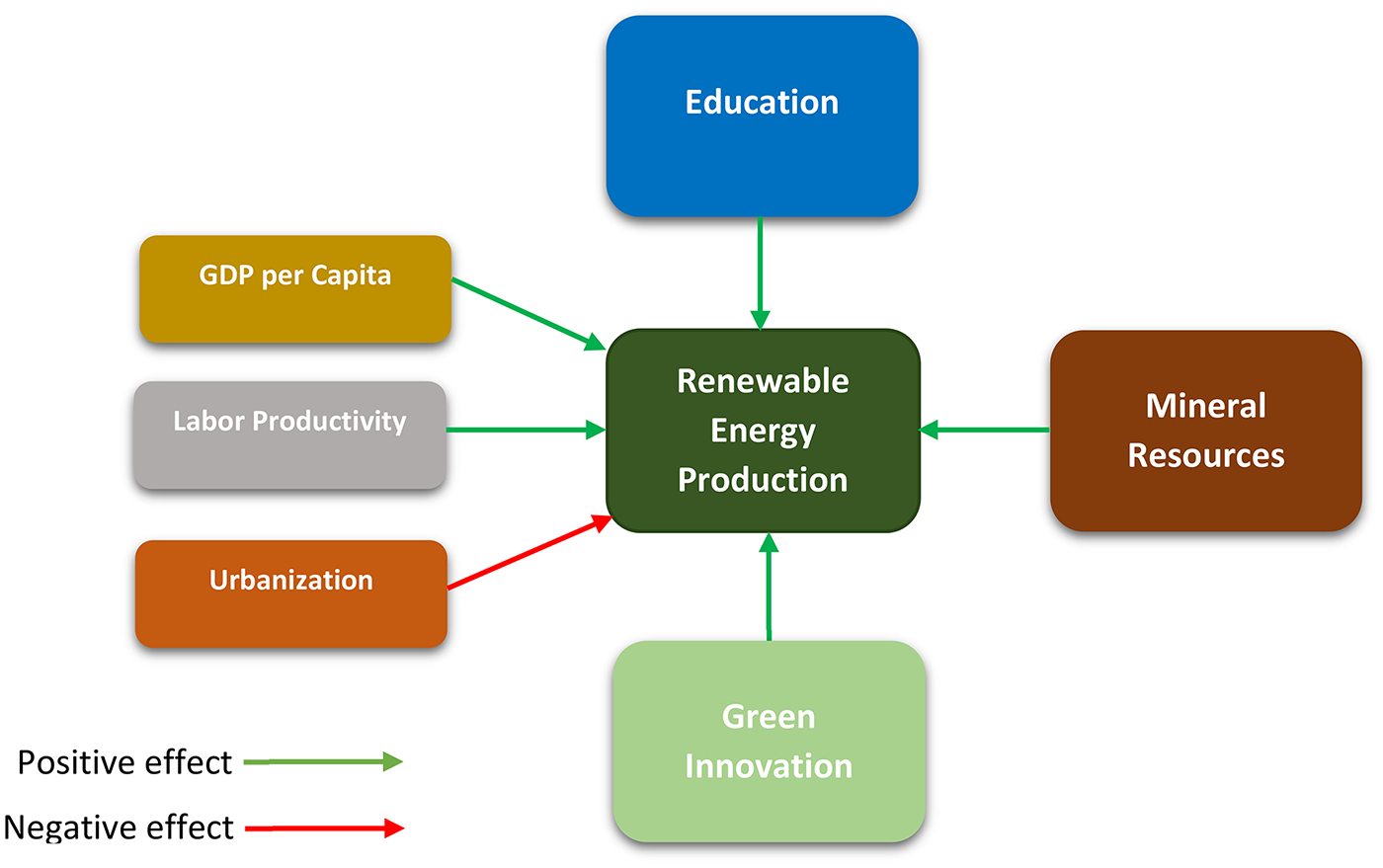
Get full access to this article
View all access options for this article.