




Abstract
Environmental degradation has been recognized as a global issue due to high energy consumption and economic growth. This situation needs researchers to focus on, thereby, the current article examined the impact of renewable energy production (REP), energy import, renewable energy consumption (REC), gross domestic product (GDP), inflation, and foreign direct investment (FDI) on the carbon dioxide (CO2) emission in China. The study considered secondary data and extracted it from the World Bank database covering the period 1981 to 2018. The current article has examined the stationarity of the constructs using Augmented Dickey-Fuller tests and investigated the association among constructs using the quantile autoregressive distributed lag (QARDL) model. The data revealed that REP, energy import, and REC, had a significant and negative linkage with CO2 emission in China. In contrast, GDP, inflation, and FDI are linked with CO2 emission in a positive manner. The article also guided the policymakers regarding the policy development related to reducing carbon emissions using renewable energy production and consumption.
Keywords
Introduction
Social prosperity and economic growth are influenced by the environment in which humans are to breathe and perform functions. Environmental influences have an impact on human health as well as the health of the living species on which people depend. Humans can actively participate in social activities while being healthy and fresh in a clean and healthful environment.1,2 It is argued that healthy living creatures, as well as high-quality natural resources, are not only utilized in economic processes but also help in attaining long-term development goals. The contaminating factors that spontaneously occur by nature or are caused by the social and economic activities of humans influence the efficiency of natural resources and the country's growth. CO2 emissions are considered to be the major factors that cause high level of environmental degradation.3,4 These emissions are also major contributor of global warming and disturb the climate balance, which negatively affect living bodies, human beings, and the environment. The gas functions as a blanket in the atmosphere, enveloping the world in heat and warming the entire planet. As a result of this, the global temperature rises to a significant height. The global warming caused by CO2 emissions affects the environmental situation, weather patterns, and food and water supplies, lowering the quality of natural resources and destroying the health of living creatures and humans.5,6 As a result, the country's overall development is jeopardized, as it requires a high-quality environment, environmental elements such as water and soil, the resources acquired through mining or bio-production, and human resources. By overcoming the CO2 emissions, environmental deterioration and related risks can be reduced.7,8
Many factors like renewable energy (RE) consumption, production, energy import, economic development, FDI, and inflation influence CO2 emissions and environmental degradation. The RE is a clean form of energy generated from renewable resources that can be replenished by nature within time if appropriately managed by humans. The consumption of RE resources reduces CO2 emissions into the air as this reduces the pressure on fossil fuel consumption within the country while performing many activities.9,10 Not only the consumption but for production of RE like wind power, waves power, solar power, geothermal power, biomass, and bioenergy, reduce the pollution as they absorb heat, take CO2 emissions, control wind, reduce excessive water in the soil, and by reducing the fossil fuels production also reduces CO2 emissions.11,12 Energy import refers to the purchase of energy from other states. The import of energy especially the renewable energy facilitates countries to make restrictions on the usage of uncleaned energy. This way the emissions of gases such as CO2 can be regulated, hence the damages to environment can be controlled. 13 Economic development and inflation increase the investment in the economic activities and consumption of resources. So, the increase in greenhouses gas like CO2 causes environmental degradation. FDI is the investment from foreign sources within domestic projects for profits. These projects give rise to economic activities, including infrastructure, transportation, production machinery, energy plants, ICT technologies, R&D technologies, etc., which cause an increase in the amount of CO2 mission and degrade the environment. 14
The study focus is on the impacts of RE consumption, RE production, energy import, economic development, FDI, and inflation on environmental degradation in China, the world's largest country in terms of population growth and areas, as well with an upper-middle-income. 15 China is an industrialized developing country. The nominal gross domestic products (GDP) put the country in the 2nd largest rank among the world economies, whereas the purchasing par parity put it first.16,17 China's nominal GDP for 2021 is $16.642 trillion. It represents the 8.5% rise in annual GDP. The three major sectors of the Chinese economy are agriculture with 7.9%, industry with 40.6%, and service with 51.6% share of the country's GDP. The activities of the enterprises in the agriculture sector have the negligible impact on the environment and improve the environmental quality. Contrary to this, the two other economic sectors degrade the environmental condition because of their increased reliance on energy, other resources, machinery, infrastructure, and employing several other business techniques which can cause pollution emissions. The country's total population is 1,443,995,000, according to the 2021 statistics. 18 The constant increase in the population and dramatic increase in the scope of the economy are the major causes of pollution emissions like CO2 emissions from the economy. The increased population, because of the respiration and increasing household and economic practices, adds to the amount of CO2 in the air. 19
When China is compared to other economies in terms of greenhouse gas emissions, China emits the largest CO2 in the air. Because of this act, many researchers, regulators, and governments are forced to take the economy as the largest responsible for climate change. However, the situation is not as simple as it seems to be. There is a need to ponder the situation from different sides. The observers have reached the point that China is the biggest cause of world planet destruction. 20 If the pollution spreading is measured simply, the condition of the Chinese ground is worst According to the measurement of the increased greenhouse gas emissions, China is at the top of the list among the countries. But if it is measured according to per capita emissions, China is the 48th largest country as it emits 7.10 tons of CO2. This measurement put the county behind, which causes the CO2 emissions in double quantity as it is 16 tons. 21 So, among the countries which emit CO2 insignificant amount, China has the 14th rank. The ecological statistics of 2019, China emitted 10.21 billion metric tons of CO2, whereas the US emitted 5.30 billion metric tons of CO2 that about half of China's CO2 emissions. According to these statistics, only China's emissions are 28% of the world's CO2 emissions. As per these emissions, China is the largest greenhouse gas emitter globally. 22 The situation of gas emissions in China is given in Figure 1.
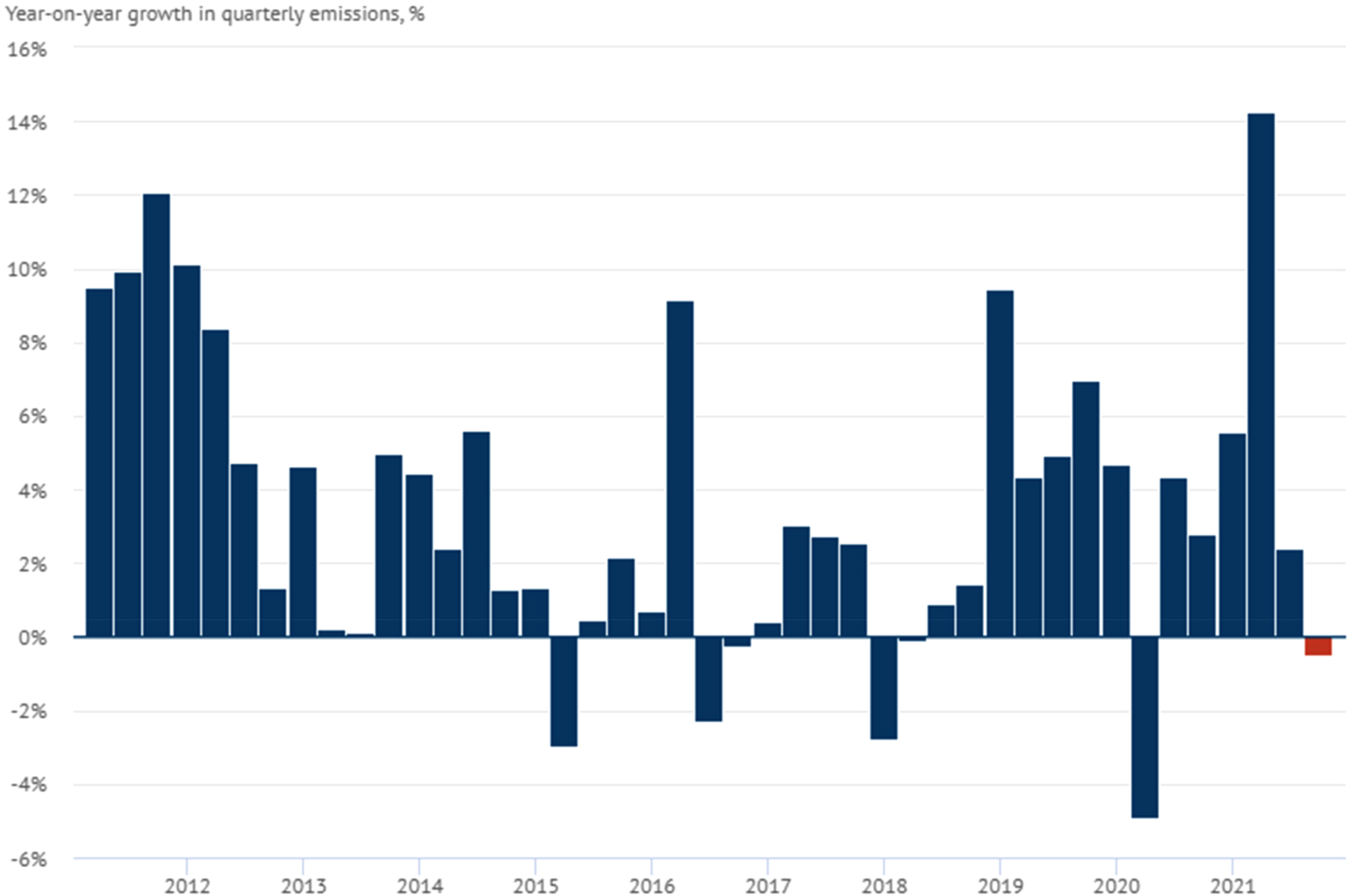
CO2 emission quarterly growth in China. Source: National Bureau of Statistics Data.
In China, the amount of CO2 emissions has been increasing as the population, transportation, and other economic activities that demand energy resources have grown.23,24 The quality of the natural environment is deteriorating due to the rise in CO2 emissions. It has a negative impact on the amount and quality of physical natural resources, as well as living organisms such as birds, animals, and fish, and human resources, all of which are required for the smooth and precise operations of commercial enterprises. 25 Reducing environmental degradation is necessary for sustainable economic development as it assures quality resources, large human capital, and an effective work environment for the future economy. To remove this issue of CO2 emissions and ensure environmental and economic sustainability, the study aims to explore the impacts of RE consumption, RE production, energy import, economic development, FDI, and inflation on CO2 emissions and environmental degradation.
Though environmental degradation has been discussed in the literature, there are still limitations in the previously conducted environmental literature: 1) In the previously conducted literature, only RE consumption in place of fossil fuel consumption in domestic and economic activities reduces environmental degradation. However, relatively little research has looked into the impact of RE production in reducing environmental degradation. The current research looks at the effect of both RE consumption and generation in minimizing environmental degradation, which is a significant contribution; 2) Mostly, in the existing literature, the authors’ focus is either only on factors that could cause environmental degradation or only on the factors which could reduce environmental degradation. In this study, the authors analyse RE consumption, RE production, and energy import's role in reducing environmental degradation and economic development, FDI, and inflation enhancing environmental degradation; 3) For a long time, China has struggled with fast-rising CO2 emissions and environmental destruction. However, some research is being done in this field to address environmental degradation. The present article initiates to address this issue in the setting of the Chinese economy as it examines the role of RE consumption, RE production, and energy import, along with economic development, FDI, and inflation impacts on CO2 emissions and environmental degradation in China.
The paper is composed of the parts as below. The second part reviews the previously conducted literature, which examines the RE consumption, RE production, energy import, economic development, FDI, and inflation impacts on environmental degradation. The third part are the processes employed during research for acquiring the quantitative data and the tests applied for estimation of the reliability of variables’ relation. Then, the study presents its outcomes about relations among the factors, and through comparison, the results are supported by other studies. Then the paper presents the overall view of the study along with its significance and limitations.
Literature review
A country's environment determines its richness in its natural resources like minerals, water, soil, air, sunlight, plants, animals, birds, and fish. The country's environment also determines the human capital.26–28 The natural resources and human capital provide for the economic resources and raw materials, which work like fuel to the economic engine. But the environment of a country has to face many threats primarily because of the population increase, expansion in economic activities, technology adoption, and energy consumption because all these factors cause pollution emissions. But through energy transition from nonrenewable to renewable and management of other factors, the adverse environmental impacts of sources of pollution emissions can be eradicated.29,30 The present study examines the impact of RE consumption, RE production, energy import, economic development, FDI, and inflation impacts on environmental degradation. Several authors have presented different views about the relationship between RE consumption, RE production, energy import, economic development, FDI, and inflation and environmental degradation. The present study looks at the past authors’ views on the nexus between RE consumption, RE production, energy import, economic development, FDI, inflation, and environmental degradation.
Renewable energy is energy from naturally found resources. When used for infrastructure, running machinery, transport vehicles, or different processes, it neither emits harmful gases like CO2 emissions nor leaves any harmful wastes because of its recycling feature. So, RE consumption is considered a clean energy source and does not cause environmental degradation.31,32 Younis et al. 33 investigated RE consumption, stock market, and urbanization's impact on environmental degradation. The dataset ranging between 1993 and 2018 were collected from BRICS countries, and for estimating the relationship between these factors and environmental degradation, generalized method of moment (GMM) estimation was used on the data collected. The results revealed that RE consumption in place of traditional sources of energy like oil, coal, gas etc., minimizes the CO2 emissions during activities being performed and thus, reduces environmental degradation. In addition, Sarkodie et al., 34 studied renewable energy's impact on the environment and exposed negative linkages among them and recommended that the future researchers must consider the economic factors to predict the environmental destruction. Hence, the study considered the economic condition with renewable energy to predict environmental degradation. In the research article, Sharif et al., 35 examined the relationship between RE consumption and environmental degradation by comparing RE and NRE consumption. Panel data of 74 countries for the period of 1990–2015 were taken, and the CIPS unit root test, Pedroni cointegration, Westerlund (2007) bootstrap cointegration, FMOLS, and heterogeneous panel causality techniques were employed. The findings stated that the consumption of RE like wind power, solar power, and bioenergy do not release harmful gases, which could affect the environmental balance and cause environmental deterioration. These results showed a negative connection between constructs.
Not only does the consumption pattern of the energy applied for undertaking different processes determine the quality of the atmosphere and environmental elements, but the energy production pattern also has significant environmental consequences as the production of energy of some sort have to go through some processes, and is also dependent on the resources used in these processes.36–38 The production of RE depends on weather conditions and natural resources. In some processes, RE production reduces the greenhouse gases like CO2 and harmful wastes. The production of RE reduces the factors causing environmental degradation and provides a sustainable environment suitable for the country's sustainable progress.39,40 The study of Doğan et al., 41 integrated the relationship between RE production and economic complexity with CO2 emissions and environmental degradation. The study sample for panel data consists of 28 OECD countries for the time of 1990 to 2014. The results showed a negative relationship between RE production and CO2 emissions as the tendency of the firms to utilize RE for energy purposes reduces the combustion of fossil fuels causing the CO2 increase in the atmosphere and environmental destruction. In addition, Koengkan et al., 42 examined the association among CO2 emission, renewable and non-renewable energy consumption, and economic growth in American countries from 1984 to 2014. They exposed positive nexus among them and suggested that environmental degradation is a changing phenomenon and needs to examine frequently. Therefore, the current article examined the environmental degradation using REW energy and economic factors. In the research of Magazzino et al., 43 the relation between wind and solar energy production, consumption of coal for energy production with CO2 emissions, and environmental consumption of coal for energy production with CO2 emissions and environmental degradation was sought out from China, India, and the USA. The study implied that in comparison to the energy from coal combustion, the production of RE in the form of solar energy is produced from absorbing heat; thus, it reduces the effects of CO2 emissions and saves humanity from environmental degradation.
Energy import provides the facility to purchase clean or renewable energy sources to produce clean energy. The import of clean and replenishing energy resources is an effective tool to eradicate the pressure on the domestic country's traditional and unclean energy sources. Hence, it minimizes the CO2 emissions in the country.13,44,45 Alola et al. 46 identified the impacts of energy import on quality of environment. To analyse energy import and environmental quality, the authors examined the international tourism in 9 Coastline Mediterranean Countries from 1995 to 2013. The study posited that the effect of energy import on environmental quality relies on the nature of energy which is imported from other countries. The import of fossil fuels like coal, petroleum, and ore, destroys the environmental quality because when fossil fuels are burnt, CO2 are emitted. While the import of replenishing energy like electricity, biomass, and biofuel reduces the unclean energy consumption within the country and saves the country's environment from pollution. Adewuyi and Awodumi 47 examined energy import, economic development, and environmental quality. This study assessed the energy import efficiency and GDP per capita impact on the CO2 emissions in a sample of Nigeria and South Africa at sectoral and aggregate levels over the period 1981–2015. According to the authors’ views, the petroleum import below the threshold level helps reduce the CO2, and thus, it has a direct relation to environmental quality. Whereas, the petroleum import is over the threshold level, gets the CO2 emissions increases within the country and thus, it has a diverse relation with environmental quality.
Economic development of a country has a significant relationship to environmental degradation as it affects the emission of greenhouse gases, chemical creation, and harmful wastes emissions as a result of the use of technologies, machinery, plants, vehicles, and energy consumption. 48 Adedoyin et al. 49 wrote on the influences of coal rents and economic growth on CO2 emissions and environmental degradation alone and with a covariate of environmental and energy-related regulations. The results revealed that energy growth with the increased use of energy and without the significant environmental regulations increases CO2 emissions and causes environmental degradation. But, the economic growth, if environmental regulatory initiatives are taken within the country, has the most negligible impact on the environment. In addition, the study of Kazemzadeh et al., 50 investigated the economic factors on the ecological footprint and exposed positive nexus, and suggested that the upcoming study must include more predictors to expand their scope. Thus, the current study fulfils this gap by adding renewable-energy variables to predict environmental degradation. In-depth research by Mikayilov et al., 51 investigated the economic growth of CO2 emissions and environmental quality. Cointegration analysis for the nexus among the variables was conducted in Azerbaijan for the time from 1992 to 2013, and the estimation techniques like Johansen, DOLS, FMOLS, ARDLBT, and CCR methods were employed for cointegration analysis. The linear, cubic, and quadratic specifications were used. The outcomes of different cointegration methods are similar. They indicated that economic development has positive connection with CO2 emission and environmental degradation as it increases the use of plants, machines, and transportation that require energy combustion. Wu et al. 52 also revealed a positive connection of EG with CO2 and environmental degradation in both developed and emerging economies.
FDI means the investment by foreign state-owned or private enterprises at the beginning of some economic project, business programmes, or developmental works within the domestic country, which could raise profits for them. FDI enhances economic activities, including infrastructure, transportation, production machinery, energy plants, ICT technologies, R&D technologies, etc. As these all require energy production and energy consumption, there are significant CO2 emissions where there is large FDI in the economy.53,54 In addition, Xu et al., 55 investigated the impact of FDI, renewable energy, and natural resources on ecological footprints and recommended that future studies should include economic factors to predict the environment. Hence, the present article has used the economic factors and renewable energy to predict environmental degradation. Shahbaz et al. 56 investigated the FDI impacts on environmental degradation and presented the view that if there is a large investment from foreign sources, the government can start the developmental and constructive works in the country. This raise demands for many things and starts the works in many concerned business and enterprises. Consequently, greenhouse gas is emitted and destroys the environment and its elements. He et al. 57 examined the trade, FDI, and CO2 emissions of BRICS (Brazil, Russia, India, China, and South Africa) countries. The analysis of the Bootstrap Autoregressive Distributed Lagged Model (ARDL) method was applied to the nexus of trade, FDI, and CO2. The study implied that foreign entities who have invested their money in businesses in the country are primarily concerned with their profits out of the definite projects. They pay more attention to economic goals than environmental and social wellbeing, which raises the use of resources and technologies to raise productivity, marketing, and profits, even though they cause greenhouse gas emissions. Thus, the environment within the country is adversely affected. Hence, the FDI positively influences CO2 emissions and environmental degradation.
Inflation is the rise in the prices of the products and services produced for a specific period. When there are high prices of goods within the country, the business enterprises are active in their functions. In these circumstances, many economic factors like energy production, energy consumption, technologies, transportation activities, and plants cause environmental degradation like air pollution, water pollution, soil pollution, climate change, and global warming. 58 In addition, a study by Suki et al., 59 examined the impact of technological innovation and renewable energy on the environment and suggested that future studies should add economic factors to predict the environment. Thus, the current article investigated the role of renewable energy and economic factors on environmental degradation. The study of Medeiros et al., 60 examined the impacts of inflation on environmental degradation. During the inflation period, the business enterprises have a greater number of profits. Therefore, they can expand the production and marketing activities for which a more considerable amount of energy is required. The increased use of energy resources like coal, oil, gas, and ore in these processes increases air pollution like greenhouse gas emissions, soil pollution with chemical creation, and water pollution with waste emissions. Hence, inflation has a positive relation to environmental degradation. Similarly, the study by Ahmad et al., 61 analysed the relation between inflation and pollution emissions. The sample of the study has 40 Asian economies for the period from 1990 to 2018. For empirical analysis, econometric methods like cross-sectional test statistics, cross-sectionally augmented Dickey-Fuller (CADF) and cross-sectional, Pesaran, and Shin (CIPS), Westerlund technique, and Fully Modified Ordinary Least Square (FMOLS) were adopted. The empirical outcomes depicted that inflation in the country encourages investment projects and the consumption of resources. This economic development stimulates the pollution emissions like CO2 and degrades the environment. So, inflation has a positive relationship to environmental degradation.
Though environmental degradation is not a new subject, many authors have written on environmental pollution. Still, the present study greatly contributes and removes many literary gaps. First, in the past literature, different authors have presented different opinions about the relationship between RE consumption, RE production, energy import, economic development, FDI, inflation, and environmental degradation. The present study presents the negative association between RE consumption, RE production, and energy import and the positive association of economic development, FDI, and inflation with environmental degradation. Second, pollution, greenhouse gas emissions, or environmental concerns are often used as a proxy for environmental degradation in the existing literature. CO2, which is a fatal pollution emission, the paper uses as a proxy for the environmental degradation and thus, analyses the impact of RE consumption, RE production, energy import, economic development, FDI, and inflation on CO2 emissions. Third, the individual relationships of RE consumption, RE production, energy import, economic development, FDI, and inflation with environmental degradation have been examined. The present study accumulates the RE consumption, RE production, energy import, economic development, FDI, and inflation impacts on environmental degradation. Fourth, the previously conducted research article has examined the role of these factors in environmental degradation in diverse world economies like BRICS countries, OECD countries, Asian countries, the USA, Azerbaijan, etc. The present study removes the literary gap and scrutinizes the effectiveness of REW energy and EG on ED in China context, as the country is the greatest emitter of environmental pollution. In past literature, diverse econometric and systematic approaches are applied to check the relationship among constructs. The present article contributes to the literature because it collects data from the World Bank database and Applies ADF tests and the QARDL model to analyse the factors and their relationship.
Methodology
The Paper examined the effectiveness of REP, EI, REC, GDP, inflation, and FDI on the CO2 emission in China context. The current article included the energy production, import, and consumption variables because the CO2 emissions highly cause the extensive use of energy. In addition, the study used economic factors such as GDP, FDI, and inflation because the high economic activities produced a high rate of CO2 emission, and inflation is also evidence of the high level of economic activities used in the study. The study used the carbon dioxide (CO2) theory that describes the amount of CO2 increases; the atmosphere becomes opaque over a larger frequency interval due to the high energy use and economic activities. This study also examined the energy and economic factor to predict CO2 emissions. The present article has employed the secondary data collection methods and extracted the data from the World Bank database from 1981 to 2018. The study has used the recent period in the study to expand the scope of the study in the near future. The study equation is given below:

CO2 = Carbon Emission
t = Time Period
REP = Renewable Energy Production
REC = Renewable Energy Consumption
EI = Energy Import
GDP = Gross Domestic Product
FDI = Foreign Direct Investment
INF = Inflation
The article considered environmental degradation as a dependent construct and used CO2 emissions per capita as its measurement. In addition, two predictors were used such as renewable energy and economic conditions. In contrast, economic conditions are measured as the GDP growth FDI net inflows and inflation, and consumer price. Table 1 shows the details of measurements.
Variables with measurements.
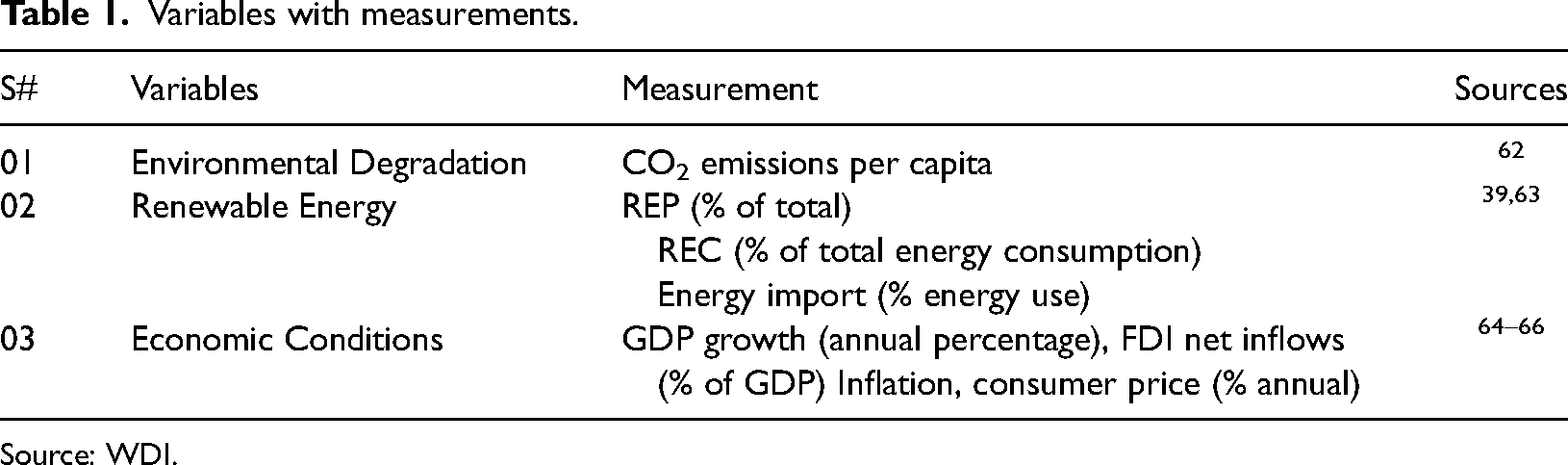
Source: WDI.
The present article ran the descriptive statistics by years that show the understudy variables’ details with respect to years. In addition, the current article also ran the descriptive statistics that show the average values using the mean and the minimum and maximum values with the number of observations. Moreover, the current research also applied the correlation matrix that shows the association among the variables. Additionally, the current article has examined the stationarity of the constructs using ADF tests, and the equations are given below:

















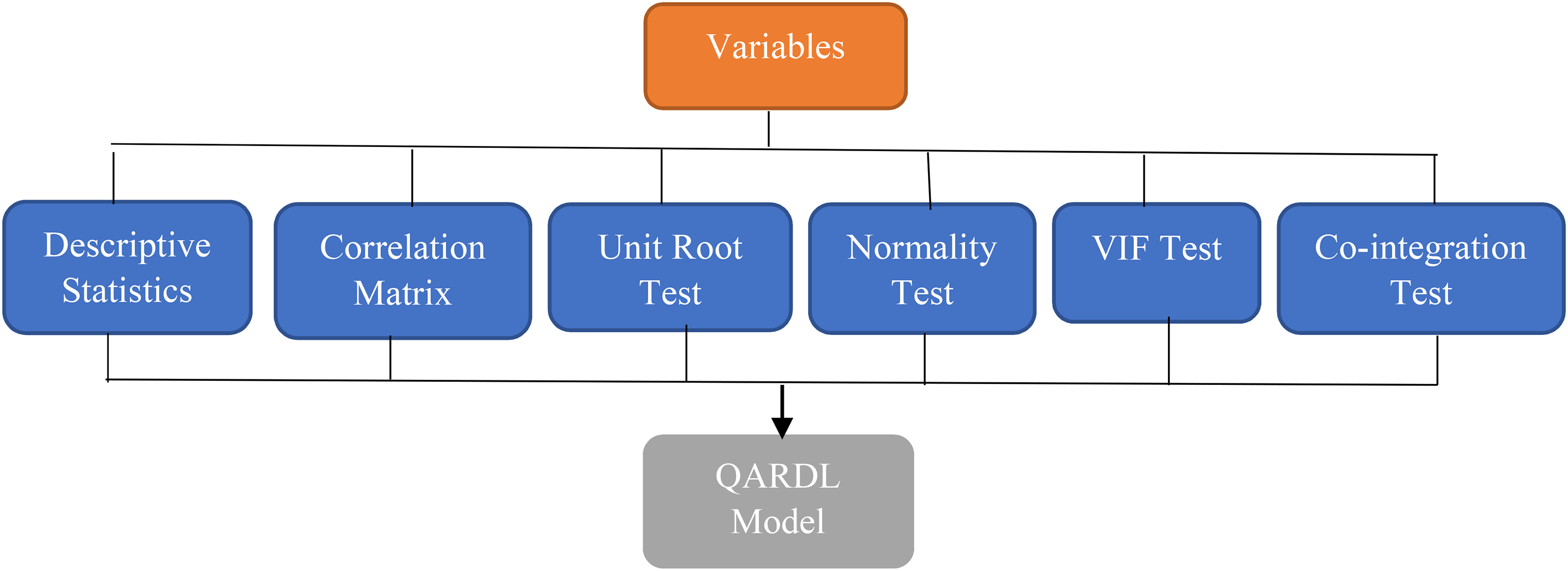
Conceptual framework. Source: Authors’ Estimations.
Research findings
The present article used descriptive by years to show the understudy variables’ details year wise. The results showed that the maximum CO2 emission was in 1981 (9.452), while the minimum CO2 emission was in 2018 (2.867). In addition, the results also showed that the maximum REP was in 2018 (26.372), while the minimum REP was in 1981 (13.504). The maximum and minimum REC were also obtained in 1981 (41.105) and 2011 (11.338), respectively. Furthermore, the results also showed that the maximum EI was in 2018 (21.559), while the minimum EI was in 1981 (−13.101). The results also showed that the maximum GDP was in 2001 (14.231), while the minimum was in 2018 (2.348). In addition, the results show that the maximum FDI was in 1993 (6.187) while the minimum FDI was in 1991 (1.139). Finally, the results show that the maximum INF was in 1994 (24.257), while the minimum INF was in 1999 (−1.401). Table 2 shows these results.
Descriptive by year.
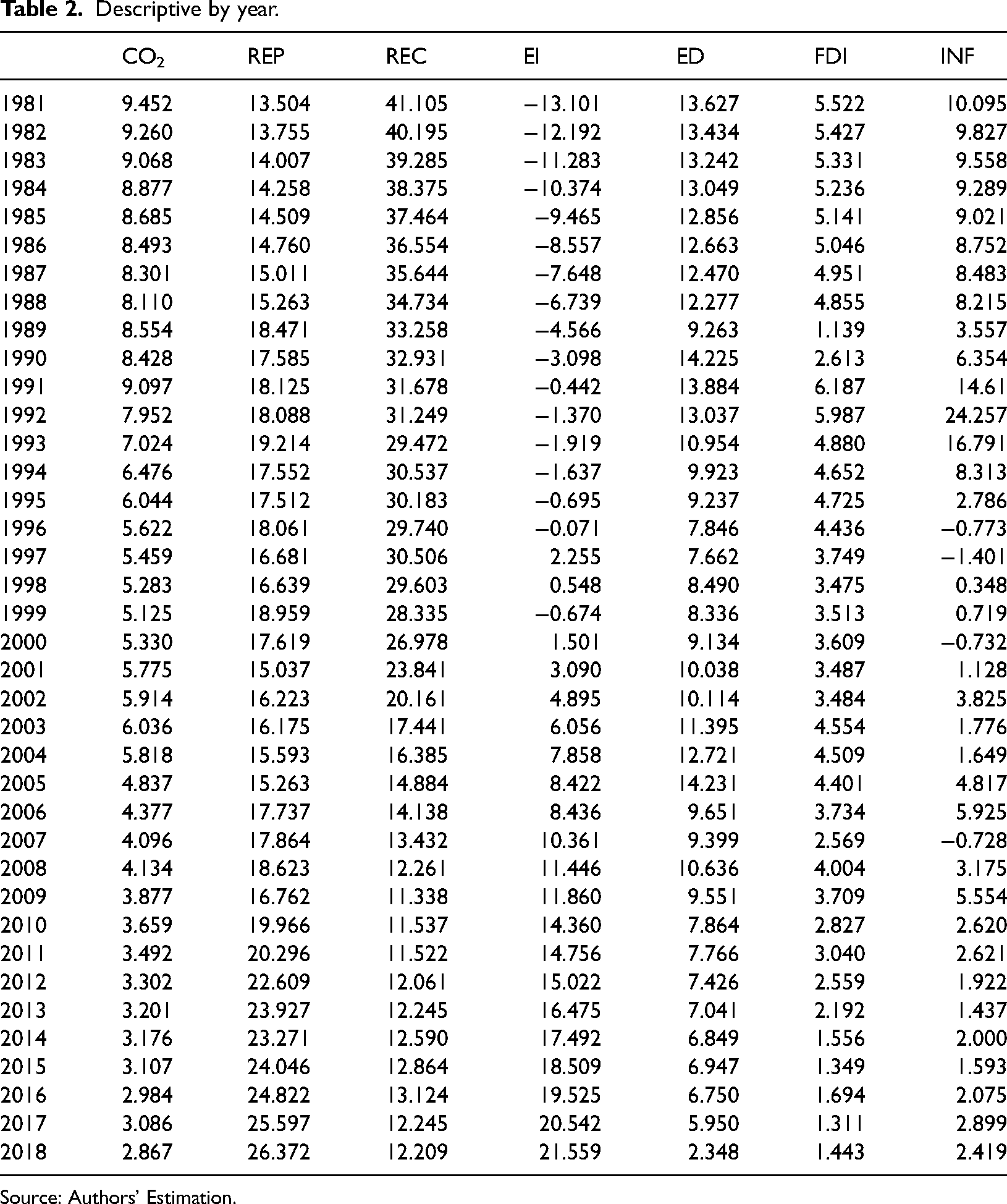
Source: Authors’ Estimation.
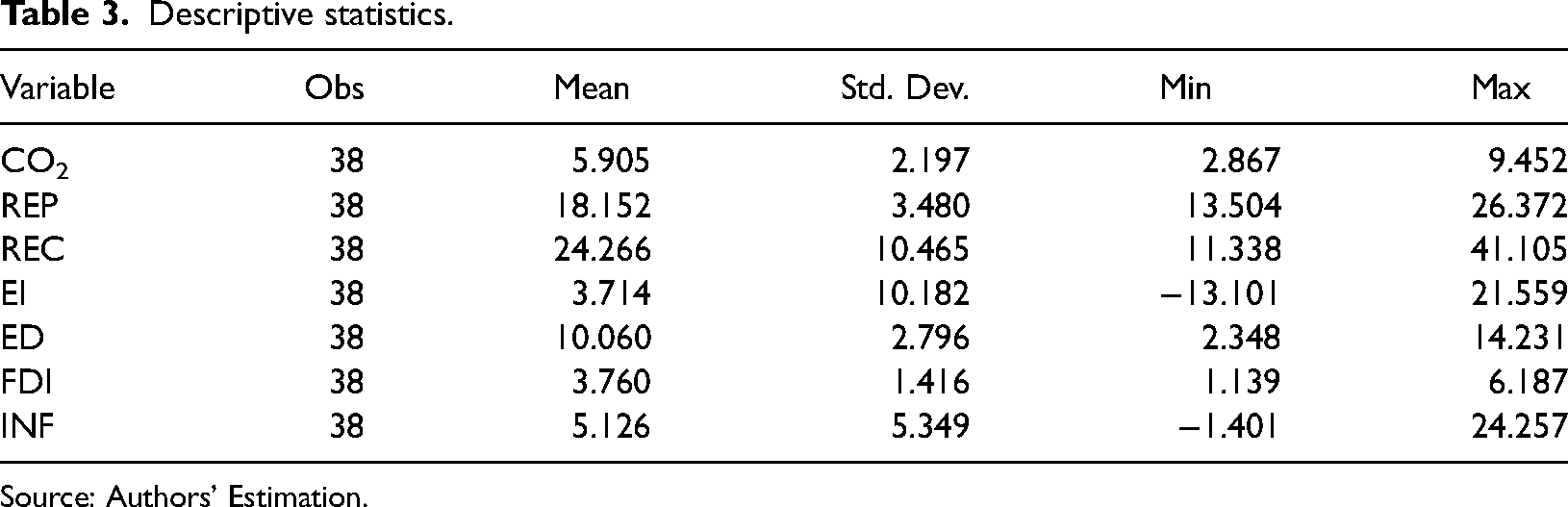
In order to find out the average values of each construct along with the minimum and maximum values, the study used descriptive method. The total observations considered in the study were 38. Discussing about average value CO2 value was 5.905 following REP was 18.152 following REC was 24.266, following EI 3.714, ED 10.060, FDI 3.760 and INF 5.126. The details can be easily seen in Table 3.
Descriptive statistics.
Source: Authors’ Estimation.
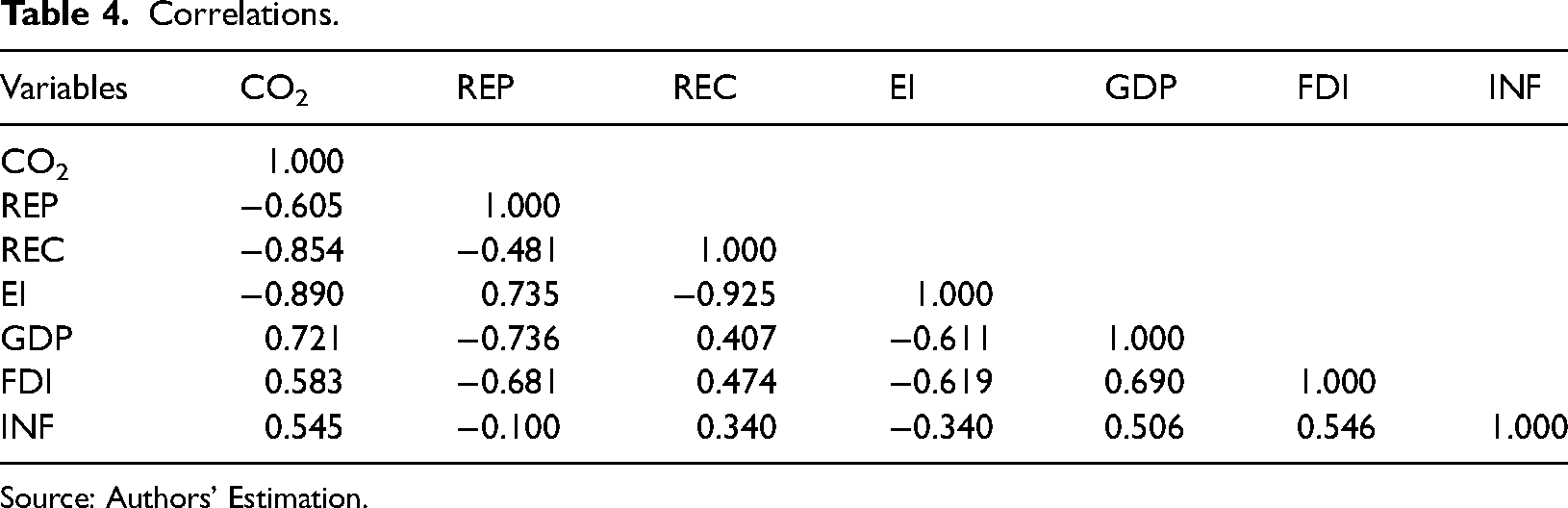
The correlation test was considered to evaluate the association among constructs. Findings indicate that REP, EI and REC has negative connection with CO2 emission. Whereas positive in case of GDP, INF and FDI. Table 4 shows these outcomes.
Correlations.
Source: Authors’ Estimation.
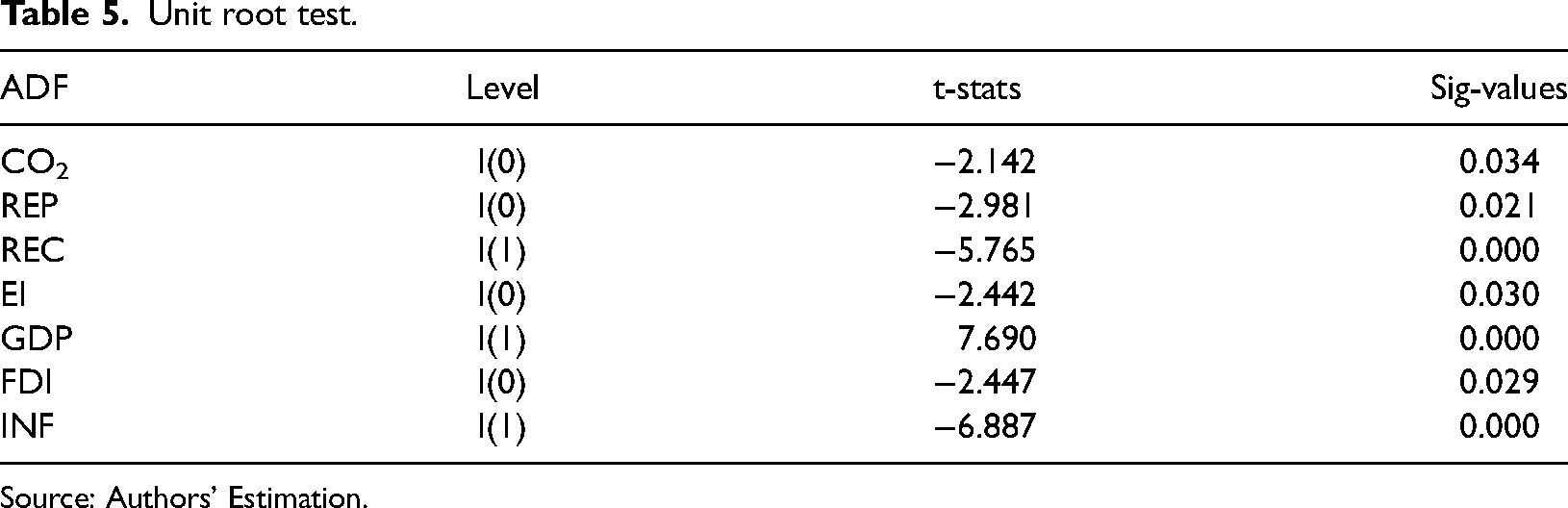
The ADF tests were used to examine the stationarity of the constructs. The results indicated that CO2, REP, EI, and FDI were stationary at the level while REC, GDP, and INF were stationary at the first difference that the exposed ARDL model is suitable, and Table 5 shows these results.
Unit root test.
Source: Authors’ Estimation.
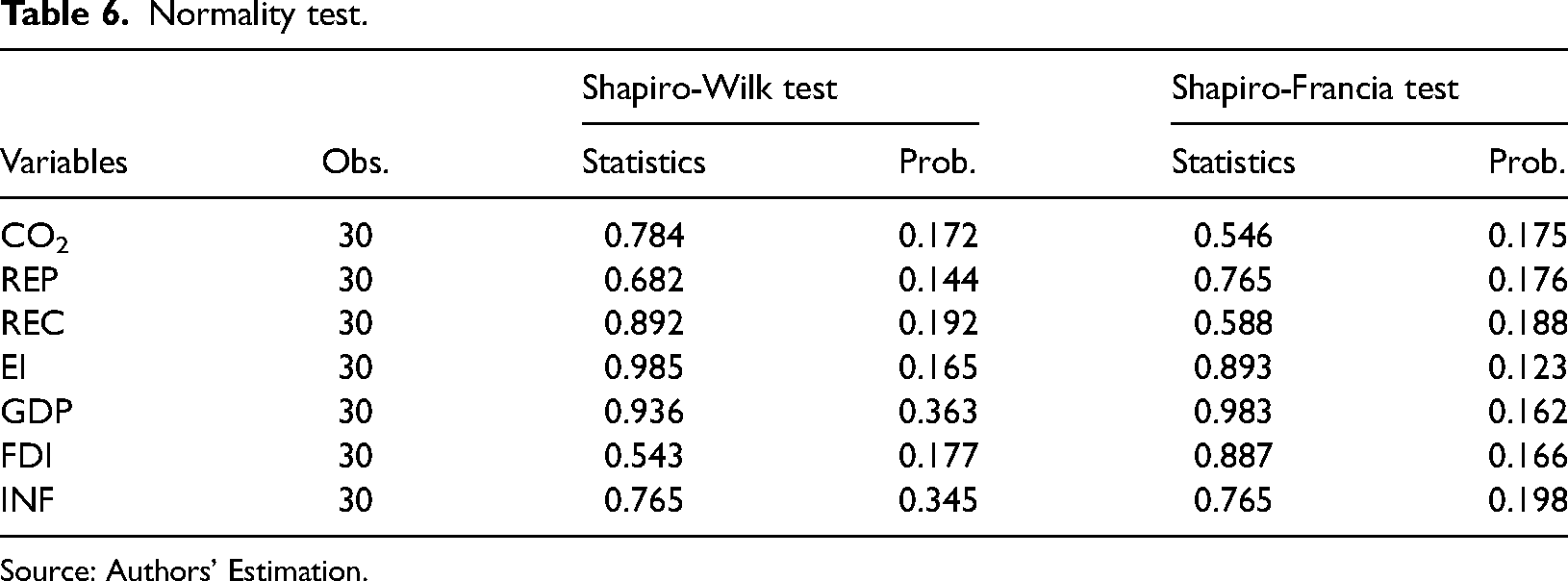
The current article has checked the normality of the predictive construct by implementing the Shapiro – Wilk, and Shapiro – Francia tests for normality. The results from Table 6 indicated that the probability values are larger than 0.05 and accept the null hypothesis that the data is normally distributed.
Normality test.
Source: Authors’ Estimation.
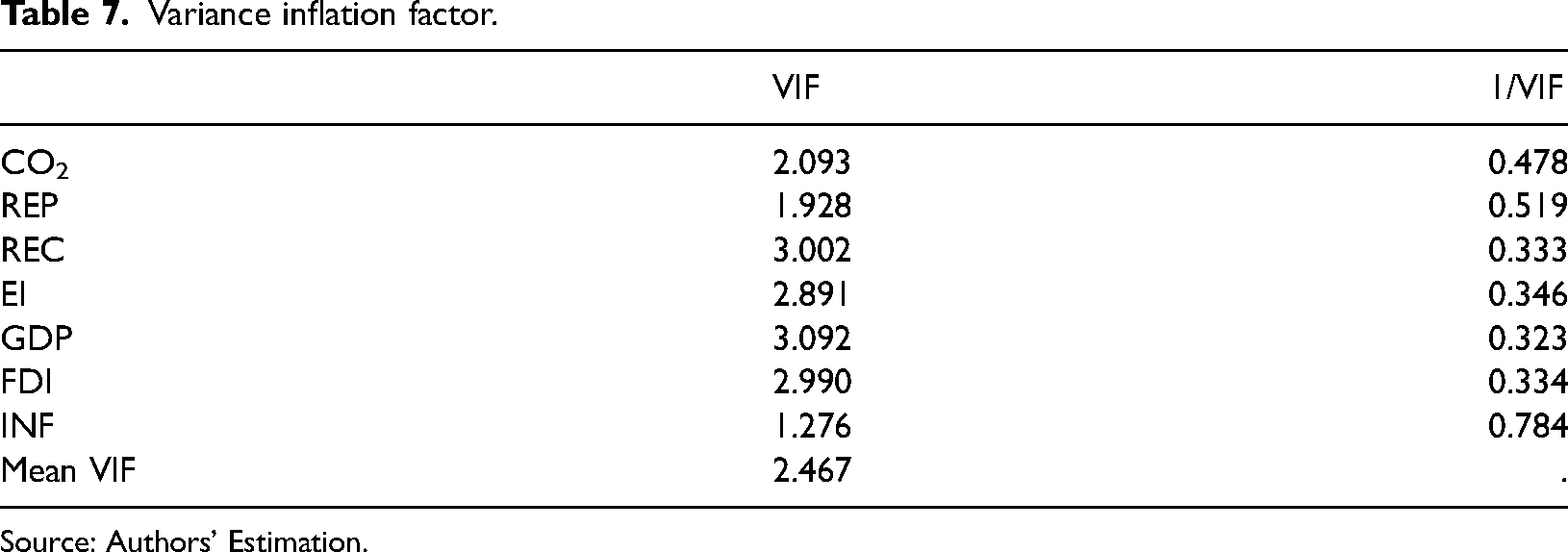
In addition, the article investigates the multicollinearity with the help of VIF. The results indicated that the VIF values are lower than five while the reciprocals of VIF values are higher than 0.20. These results exposed no issue of multicollinearity. Table 7 shows these findings.
Variance inflation factor.
Source: Authors’ Estimation.
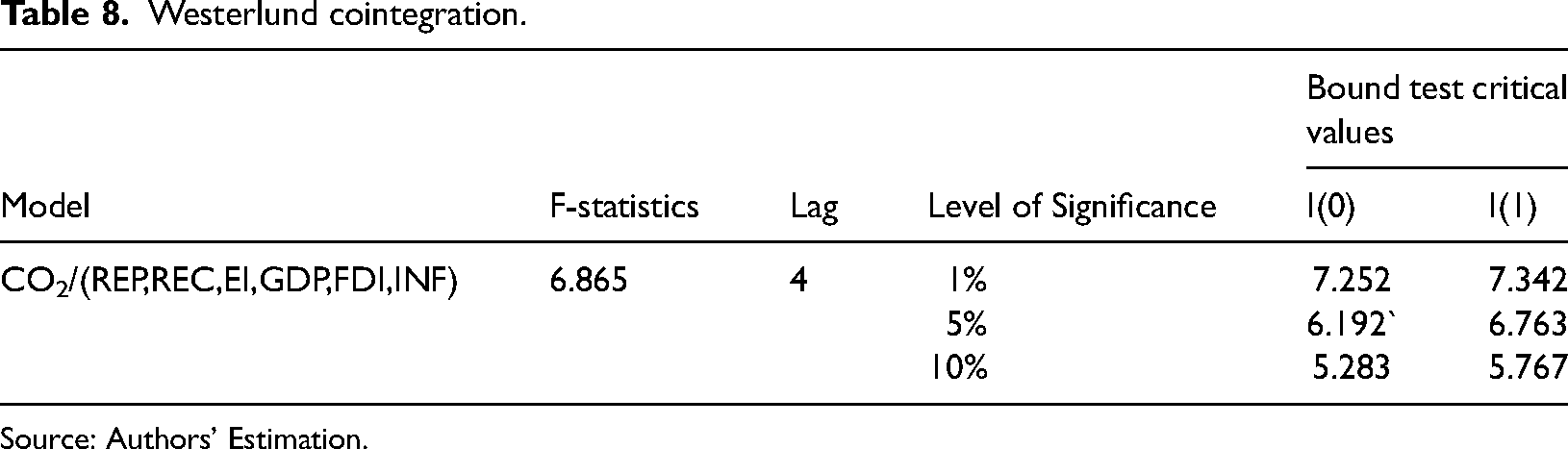
The study has also used the cointegration test that is necessary for the implementation of ARDL mode. The results exposed that the calculated f-statistics 6.865 is larger than the critical values at five percent significance level. The results exposed cointegration exists. Table 8 shows these findings.
Westerlund cointegration.
Source: Authors’ Estimation.
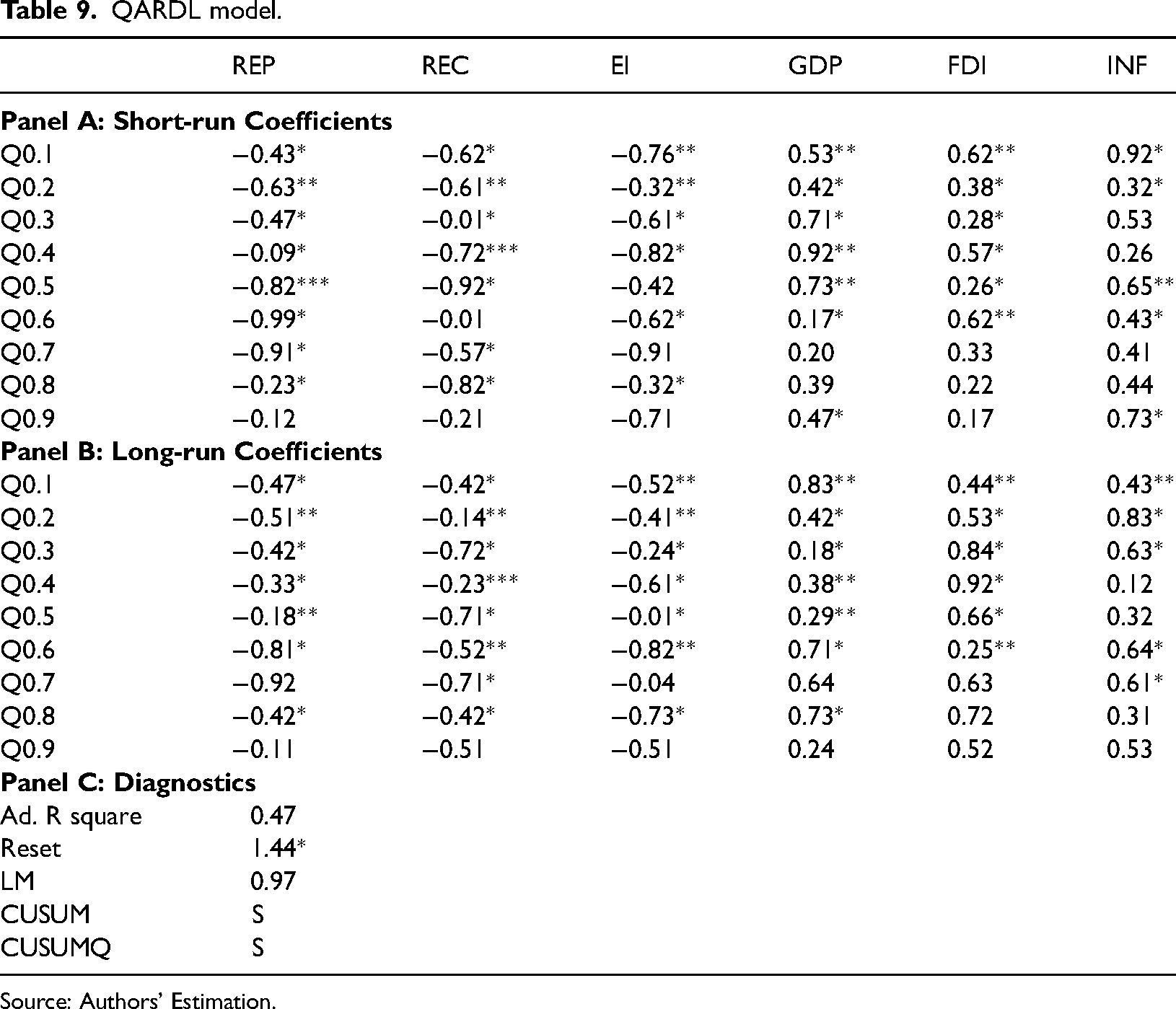
The results shows that in quartiles 1 to 8 (short run) and 1 to 6 and 8 (long run), REP and CO2 are negatively correlated. Similarly, REC also showed a negative linkage with CO2 emission in quartiles 1 to 5, 7 to 8 in short run case and 1 to 8 in long run. In case of energy import, the negative link also observed in 1 to 4 short run quartiles and 1 to 6 and 8 in long run quartiles. Whereas GDP has shown a positive association with CO2 emission in short run quartiles (1 to 6 and 9) and long run quartiles (1 to 6 and 8). Moreover, FDI and CO2 emission are shows to have positive connection in quartiles 1 to 6 in short run and long run both cases. Finally, INF also shows a positive connection in 1,2, 5 and 6 short run quartiles and 1 to 3 and 6 to 7 in long run. The clear picture of findings can be viewed in Table 9 (see also Figures 3 and 4).
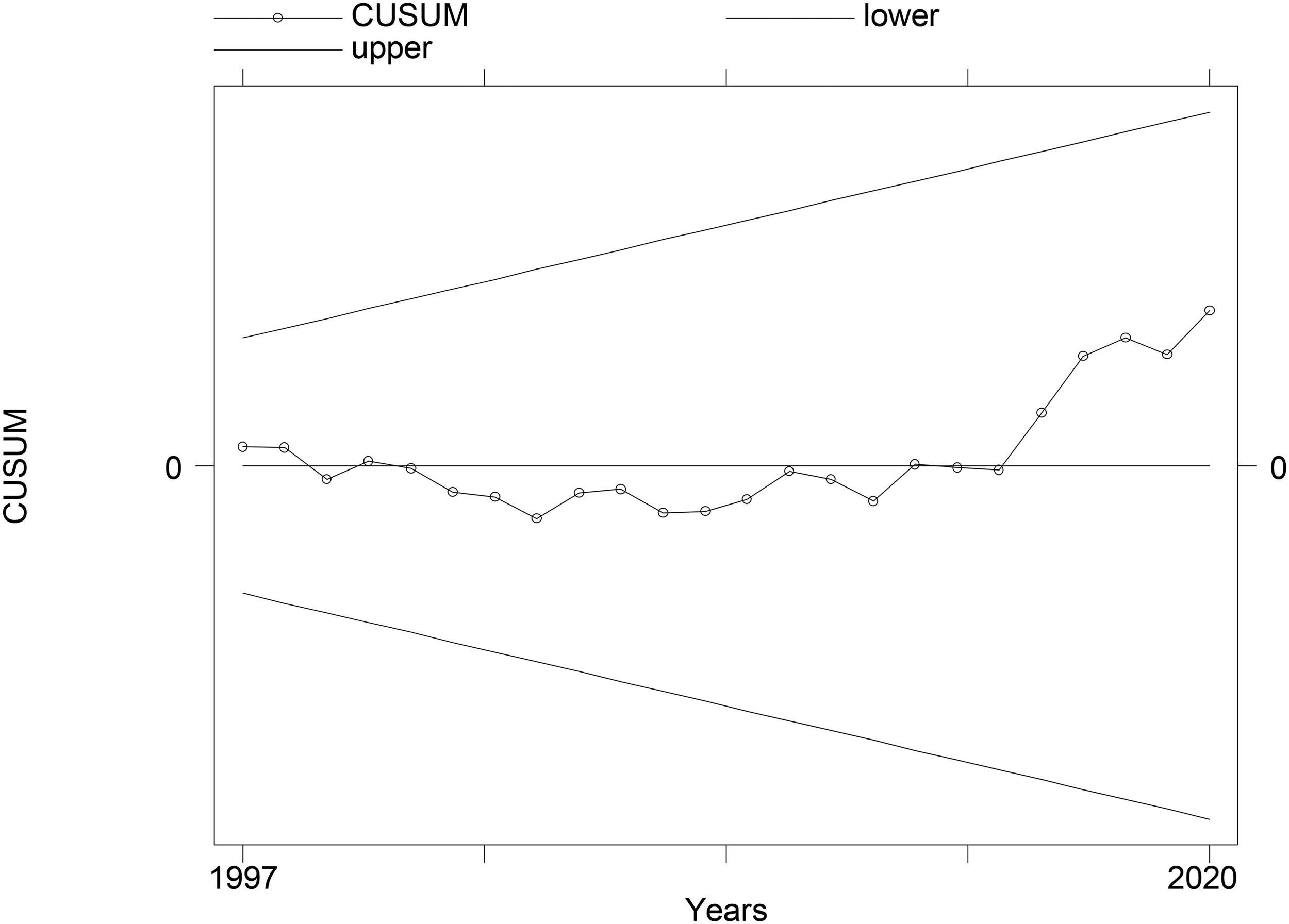
CUSUM. Source: Authors’ Estimation.
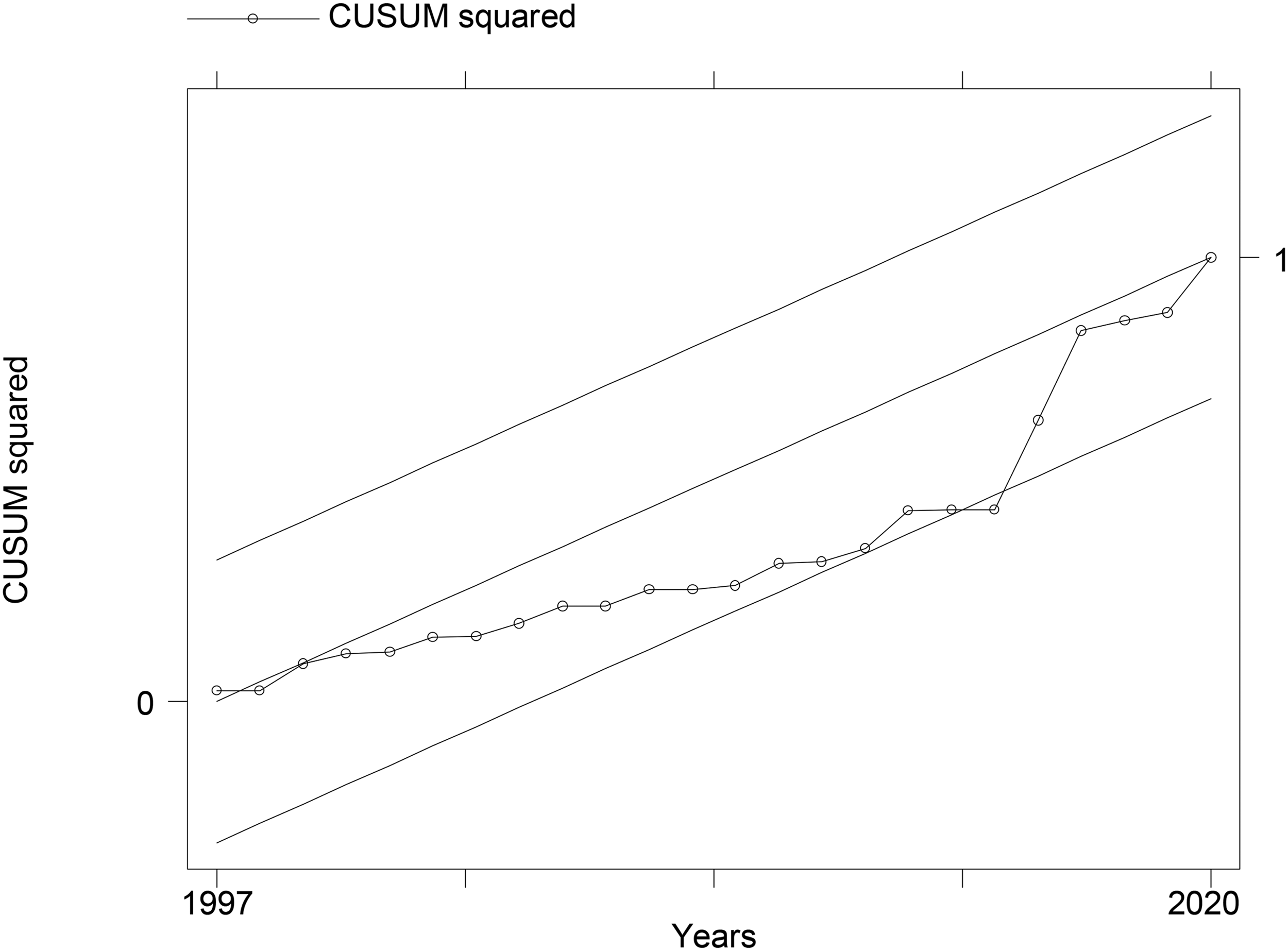
CUSUM square. Source: Authors’ Estimation.
QARDL model.
Source: Authors’ Estimation.
Discussions
The results indicated that RE consumption has a negative relation to environmental degradation. These results imply that using RE resources did not cause CO2 emissions. The use of RE helps the firms minimize fossil fuel utilization, which is one of the major causes of CO2 emissions and environmental degradation like the adverse quality of air, water, and soil, destruction of ecosystem, habitat, and wildlife. These results are in line with Nathaniel and Iheonu, 70 who also studied RE energy consumption and its impacts on the environmental quality. In light of this analysis, it argued that RE, like biomass, solar energy, and wind power, though they provide less voltage power, can provide for operating many technologies and reduce the fossil fuel energy usage to a large extent. Hence, greenhouse gas emissions are less and the environment is safe. These results are in agreement with Pata, 71 who viewed that RE is a replenishing and recyclable energy that is least likely to produce any harmful wastes. The reduction of wastes which could emit toxic substances like CO2 does not affect the environmental quality.
The results indicated that RE production has a negative relation to environmental degradation. These results meant that the production of RE from natural, clean, and replenishing resources, unlike fossil fuel production, does not cause emissions of greenhouse gases. Thus, it saves the ecosystems, habitat, wildlife, and greenery from destruction. These results match with Razmjoo et al., 72 who stated that the countries where the government pays attention to the production of RE instead of fossil fuels or nuclear energy have a clean environment consisting of clean air, water, and soil, a large area consisting of crops, forests, and greenery, and healthy living creatures. The reason for the clean environment is that RE production minimizes the amount of GHG emissions, maintains the water level, and reduces the heat. These results agree with Bamati and Raoofi. 73 This study examined the production of energy from food and non-food crops and crop wastes helps achieve a clean environment, as the agriculture production and reduction of agriculture wastes reduce the CO2 emissions. As a result, there is less environmental degradation.
Findings indicate a negative relation of energy import with environmental degradation. The results showed that when the country people are allowed to import the RE energy resources as they are available at cheap rates and through easy processes, energy purposes can be fulfilled by RE energy instead of fossil fuels. In this case, there is less greenhouse gas emission, including CO2, which destroys the balance of the atmosphere and quality of environmental elements. These results are consistent Zeng et al., 74 that importing energy reduces the production of energy within the country. The production of fossil fuels from decomposing dead bodies of animals or trees, which releases CO2 emissions, is reduced. Thus, the environmental quality is saved from being destroyed. These results are supported by Mahmood et al., 75 who stated that importing energy from other countries discourages the production and use of nuclear energy where the combustion of fossil fuels or ore emits CO2 emissions and crumbles the environment.
The results revealed that economic development has a positive relationship to environmental degradation. These results implied that in the increasing economic development, with the increase in the economic practices, transportation, which is the essential part of all businesses for the transformation of labour, resources, products, and services, increasingly creates CO2 emissions. These results also agree with the previous study by Belaïd and Zrelli, 76 who showed that during economic development, the businesses adopt different innovative technologies which require energy resources in diverse quantities. The increased use of technologies and energy resources enhances the CO2 emission within the country. These results are also in line with Zakaria and Bibi, 77 who analysed the economic development impacts on environmental degradation. The study implied that in the developing economy, the service and manufacturing sectors are making progress. These processes require energy resources and leave the wastes which emit CO2 emissions and adversely affect the environmental quality. So, economic development is the source of CO2 emissions and environmental destruction.
The results also indicated that environmental degradation and FDI are positively correlated. These results conveyed that FDI increases the financial based resources within the country and allows the state-owned or private entities to expand their businesses or carry out some new programmes within the country. However, executing these plans includes many technological resources and energy usage. So, there are more chances of greenhouse gas emissions, and the environmental quality is at risk. These results are also in line with Sabir et al., 78 whose focus is on reducing the FDI regulates environmental quality with the measurement of CO2 emissions. The study posited that countries that accept more investments from foreign countries for constructive or developmental works are the victim of CO2 emissions and environmental destruction.
Lastly, the results indicated that inflation positively relates to destruction of environment. The findings meant that in the countries where there is inflation, the enterprises that are making progress can expand their business practices and products, which require a large number of energy resources. These enterprises, unfortunately, contribute greatly to the CO2 emissions and cause environmental deterioration. These results match with Musarat et al., 79 a study examining inflation's influences on quality of environment. In longer run, inflation, which accelerates the EG rate within the country, enhances the use of machinery, plants, and logistics. To meet the energy requirements of these processes, energy resources like fossil fuels are used. While consuming these energy resources, many harmful substances like greenhouse gases were emitted. The GHG trap heat in the atmosphere of earth and destroy the balance of the climate. It disturbs the functioning of the different areas of the environment. Hence, the inflation increases cause environmental degradation.
Conclusion and policy implications
China is a country that is considered the most significant emitter of pollution for its large population and a grand economy as the increase in the population and consistent increase in economic activities like transportation, production activities, and technological processes cause CO2 emissions. Environmental degradation could affect the resources which are naturally found or created, the living bodies in soil, air, and water. Unfortunately, the lack of quality of these resources ultimately affects the health of human beings and the economic performance in the future. So, there is a need to address this issue in theory. The present study is an initiative in this regard. The study aimed to examine the role of RE consumption, RE production, and energy import in reducing environmental degradation. The study also checked the impacts of economic development, FDI, and inflation on environmental degradation. A quantitative research technique was applied, and the survey was conducted on the economy of China to get data about the RE consumption, RE production, energy import, economic development, FDI, and inflation and their relation to CO2 emissions and environmental degradation. The results showed a negative relation between RE consumption, RE production, energy import, and environmental degradation. When the firms tend to utilize RE resources for running most of the technologies or processes, the reduced consumption of fossil fuels decreases greenhouse gas emissions like CO2, and there is a sustainable environment. The findings depicted that the production of RE does not produce pollution emissions but is an effective source of reducing the CO2 emissions, heat, and an excessive amount of water from the soil; therefore, RE production reduces environmental degradation. The current research has guided policymakers regarding the policy development related to reducing carbon emissions using renewable energy production and consumption. Similarly, in the country where the businesses are allowed to import RE energy from abroad, they can adopt energy transition, and the environment is protected from degradation. According to the findings, economic development, FDI, and inflation negatively impact environmental degradation. The increase in economic development, FDI, and inflation stimulates the business practices like manufacturing, construction, transportation, and technology use. During these practices, there are pollution emissions like CO2, which degrades the environment.
This study has great significance to industrialized countries that are making rapid progress but still cannot control environmental degradation. The environment of a country is significant to its social welfare and economic progress. If there is continuous economic and household pressure on the environment, it loses its quality, the quantity of the natural resources, and the health of living creatures. Hence, though the economy is making progress and society has welfare in the present era, sustainable economic development is in jeopardy. The present study provides a guideline on how environmental pollution like CO2 emissions can be controlled and, thus, preserve environmental quality and natural resources. It reveals to the environmental regulators that they must reduce nonrenewable energy like fossil fuels and nuclear energy by encouraging RE consumption, production, and import whenever needed within the business enterprises. Subsequently, they can control CO2 emissions and environmental degradation. The significance of the study for the government and economists lies in the fact that they should form policies to minimize the environmental impacts of economic development and inflation so that with the decrease in CO2 emissions, environmental degradation can be removed. The study suggests that although the policymakers must attract the FDI, they must encourage the utilization of financial resources gained through FDI inflows in environmentally friendly practices so that environmental degradation can be reduced.
Limitations and future recommendations
The present study is not without several limitations. With some amendments in the present study, the authors could conduct a better study that is more reliable and widely applicable. The study examined only the role of energy transition factors like RE consumption, RE production, energy import, and economic growth elements like economic development, FDI, and inflation in environmental degradation. It does not consider factors like green finance, corporate governance, and government fiscal policies, which also impact environmental degradation. So, it is the academics’ duty to enlarge the scope of the study by including these significant factors for the true analysis of environmental degradation. Besides, the authors have not covered all possible aspects of environmental degradation. Moreover, the authors have addressed only the CO2 emissions out of many pollution emissions. This also restricts the scope of the study. It is recommended to the authors that they must take greenhouse gas emissions as a proxy for environmental degradation. In addition, this study only considered RE consumption, RE production, energy import, economic development, FDI, inflation, and environmental degradation in China and presented results depicting the relations. China is a large country in terms of population and area, and it is considered the largest CO2 emitter. At the same time, other countries have different geographical features, environmental conditions, and economic conditions. That is why the current study may be less applicable to other countries. Hence, the authors must consider the impacts of RE consumption, RE production, energy import, economic development, FDI, and inflation on environmental degradation in diverse economies.
Footnotes
Declaration of Conflicting Interests
The author(s) declared no potential conflicts of interest with respect to the research, authorship, and/or publication of this article.
Funding
The author(s) received no financial support for the research, authorship, and/or publication of this article.
