




Abstract
Nowadays, achieving environmental sustainability has become the top global concern of economies. In prior literature, researchers focused on investigating factors of carbon emissions (CE), ecological footprint (EF), and greenhouse gas emissions, but all these proxies ignore the supply side of nature. Therefore, the present study utilizes the concept of the load capacity factor (LCF) to measure the quality of the environment comprehensively. This study explores the effect of green production practices (GPPs), geopolitical risk (GPR), renewable energy consumption (REC), and foreign direct investment (FDI) on LCF verifying the load capacity curve (LCC) notion for G7 economies for the period of 1990–2020. For this purpose, we use panel quantile regression (PQR) along with fully modified ordinary least squares and poled mean group method. The outcomes confirm the application of the LCC hypothesis in G7 economies. The outcomes also reveal that the GPR, REC, and FDI enhance the environmental quality; however, GPP negatively affects the environmental quality. Relying on findings, this study recommends an inclusive policy agenda, which can assist in securing SDG 07 (affordable and clean energy), SDG 08 (decent work and economic growth), SDG 12 (sustainability in manufacturing of goods and services), SDG 13 (climate action), and SDG 16 (political instability) for acquiring peace to make development sustainable. This study intends to add to the existing literature by being the first to comprehensively address the impact of GPR and the efficient application of GPPs on environmental sustainability in G7 countries.
This is a visual representation of the abstract.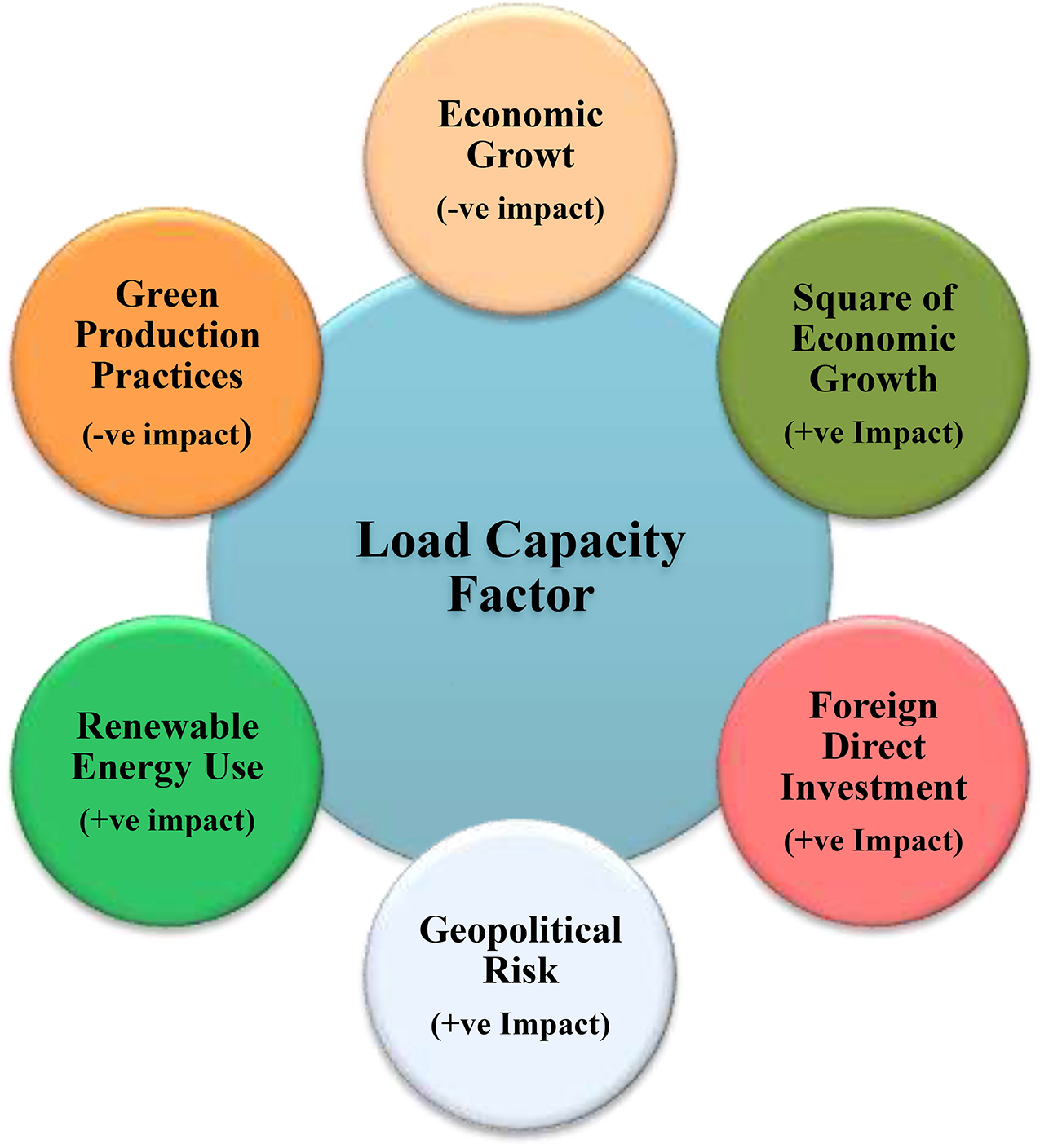
Keywords
Get full access to this article
View all access options for this article.