




Abstract
Macroalgae can be grown without the use of fertilizer, fresh water, or arable land. These qualities support its use for biofuel production because it frees up land for other traditional energy sources and food crops. It has been investigated as biogas feedstock to substitute for fossil fuels burning with attendant effects on the ecosystem. The microstructural arrangement of macroalgae biomass is restricting their conversion to biogas. Therefore, application of pretreatment before anaerobic digestion is needed to enhance their availability to microbial degradation and subsequent increase in biogas yield. Pretreatment application for substrate catalysis is vital to recovering eco-friendly and economical energy from macroalgae. This study summarizes the state of the art of various pretreatment methods employed to enhance macroalgae biomass's anaerobic digestion process. These methods were categorized as thermal, biological, chemical, nanoparticle additives, mechanical, and combined. Merits and challenges associated with each of these methods were also considered. The study shows that all the pretreatment methods considered can improve the biogas yield if the appropriate method is selected based on the type of macroalgae species. Pilot-scale studies that will assist in assessing their feasibility on the full-scale implementation are still missing.
Introduction
The global increase in population and the industrial revolution have led to a rise in energy demand. The major source of this energy is fossil fuels, producing about 80% of the total consumption. Due to the complete reliance on these fossil fuels, the sources have been depleted and greenhouse gas emissions have increased, contributing to global warming. 1 Environmental pollution of fossil fuels has also been identified as a major challenge resulting from the excessive burning of fossil fuels during energy production. Because of these challenges, the United Nations (UN) came up with Sustainable Development Goal 7 (SDG7), which focused on reliable, affordable, sustainable, and modern energy from sources like bioenergy, wind, solar, geothermal, etc., for all by 2030. 2 National governments of different countries under the UN have keyed into this goal. They are looking for low-carbon energy sources to replace fossil fuels in their energy mix. Bioenergy production from biomass has been considered a bright means of producing renewable and sustainable energy because it is available, does not compete with food sources, and is a means of waste management. 3 The amount of carbon dioxide present in biogas is almost the same as the quantity of carbon utilized by the plant during photosynthesis, and this is one of the merits that categorized energy from biomass as carbon neutral. 4 Biogas is a type of biofuel that is composed primarily of methane, with traces of hydrogen sulfide, hydrogen, ammonia, water vapor, and other gases. It is composed of 30–40% carbon dioxide and 60–70% methane. 5 Biogas can be generated from different organic wastes like agricultural residues, municipal solid waste, wastewater sludge, algae biomass, etc., through the biological and chemical process without oxygen called anaerobic digestion (AD), gasification, and hydrothermal liquefaction. 6
In recent times, attention has been shifted to the potential of algal biomass in biofuels and high-value chemical production. The third generational feedstock for biorefineries, which can be transform into various biobased products like biofuels, includes the plant-like organism known as algae. 7 Biogas, biodiesel, bioethanol, biohydrogen, bio-oil, and biobutanol are some of the biorefinery products of algae. 8 Algal can be classified into two major types using their cellularity: microalgae and macroalgae. Microalgae are the unicellular algal class that can live as an individual or in colonies. Algal species that are multicellular are referred to as macroalgae and are mostly called seaweeds due to their ability to grow profusely at any time. 9 Macroalgae are eukaryotic organisms that can be categorized into three taxonomical groups based on their photosynthetic pigments composition, which are green (Chlorophyta), red (Rhodophyta), and brown (Phaeophyta) algae. 10 Macroalgae storage components, lipids and carbohydrates, and a lower percentage of lignin composition portray macroalgae as a promising substrate for biogas generation. 9 Several studies have investigated macroalgae as biogas feedstock, which has been adjudged to be an appropriate biogas substrate. Some of the advantages of macroalgae as biogas feedstock in the previous studies include: (i) photosynthetic capacity is high compared to terrestrial feedstock and indicates high biogas production, (ii) they can be grown in brackish, saline, or wastewater and needs less water for development than terrestrial feedstock, (iii) it can be planted on non-arable soils and, does not put pressure on the food supply, and (iv) they can lower the carbon dioxide emission because they can be cultivated in an environment with high carbon dioxide.11,12
Despite several advantages of using macroalgae as feedstock in biogas production, biogas production from macroalgae commercially is not common. New ways of cultivation, harvesting, and downstream processes are needed to encourage biogas production from macroalgae. One of the most affordable and available substrates for the generation of biogas is macroalgae, and this process supports efficient waste management and is a principal source of bioenergy. 13 Despite the potential of macroalgae as biogas feedstock, it consists of complex structural arrangements that resist AD, a characteristic referred to as recalcitrance. 14 A lignocellulose material called macroalgae has cellulose, hemicellulose, and lignin that are interwoven to prevent effective breakdown. 15 Therefore, there is a need to apply techniques to reduce macroalgae resistance and improve the accessibility of macroalgae during AD. The cellulose conversion process requires pretreatment, and it is essential to disassemble the feedstock's rigid structure to make cellulose more accessible to the enzymes that produce fermentable sugars from carbohydrate polymers. 16 Pretreatment alters macroalgae arrangement at all levels when applying different techniques and improving the morphological characteristics and hydrolysis stage. Nevertheless, there is currently no clear favorite among these technologies in terms of cost-effectiveness and efficiency. The ideal macroalgae pretreatment considerations are also rarely highlighted. These findings are essential for the effective and lucrative use of various macroalgae that are easily accessible and inexpensive. This review discussed the foremost biogas production pathways using macroalgae and highlighted the challenges associated with the digestion rate. The utilization of various pretreatment techniques to improve the biogas yield of macroalgae was discussed, including their respective merits and demerits. Lastly, recent developments in pretreatment methods and their application on macroalgae were reviewed, and some recommendations that can make the biogas production process from macroalgae acceptable at the industrial scale were presented. Works of literature were sourced from many databases (Springer Nature, ScienceDirect, PubMed, and Scopus) and other free repositories (Google Scholar) with “macroalgae”, “anaerobic digestion”, “pretreatment methods”, “biogas”, and “methane” as the keywords.
Characteristics of macroalgae
Macroalgae are categorized into three taxonomical groups based on their photosynthetic pigments, and they are red (Rhodophyta), green (Chlorophyta), and brown (Phaeophyta) algae. 10 These types of macroalgae have distinctively different characteristics of structural and biochemical composition. 17 Red algae (Phylum Rhodophyta) are a group of red-colored algae that has sulfated polysaccharides in the cell wall, phycobilin pigments, floridean starch, unstacked thylakoids, and chloroplast without endoplasmic reticulum, but no flagella. 18 The red color of these macroalgae is because it contains phycoerythrin and phycobilin proteins that cover other photosynthetic pigments and allows red algae to absorb green and blue wavelengths. Most red macroalgae can be found in the marine; therefore, they are usually referred to as red seaweed. Only a small percentage (about 3%) can be found in freshwater. Due to multicellular thalli, red algae consist of relatively more complex structural arrangements than other macroalgae. It consists of cellulose fibrils dipped in gelatinous galactans, carragenans, and agar matrix. Thicker cell walls with extra layers of calcium carbonate were noticed on the outside of some Corallinaceae family. 19 This nature of cell walls hindered the availability of organic contents during the biodigestion of red macroalgae. Hypnea valentiae with 11.8–13%, 9.6–11.6%, and 11.8–12.6% of carbohydrates, lipids, and proteins, an example of red macroalgae. 20 Palmaria palmata consists of 39.4% carbohydrates, 3.3% lipids, and 22.9% protein, 21 while Acanthophora spicifera which is another type of red macroalgae, consists of 11.6–13.2%, 10–12%, and 12–13.2% carbohydrate, lipids, and protein, respectively. 22 It can be observed that the biochemical characteristics of the representative red algae varied with species, which is an indication that the effect of pretreatment techniques on red algae may not be universal.
The heterogeneous assembly of organisms from two different lineages (Streptophyta and Chlorophyta) is called green algae, and they currently have 12 different classes. They are filamentous with plant-like habits, usually found in freshwater and terrestrial environments, and play crucial ecological roles. 23 Green macroalgae consist of strong cell walls that are built from cellulose and other polysaccharides that resist the anaerobic digestion microorganisms. It was found that single, multinucleated seaweed Caulerpa sp., which can grow to be around 3 m long, and solitary green algae cells, which are typically larger than those of cyanobacteria and can have diameters of around 1 μm, are both found in the ocean. 24 A typical example of green algae is Ulva reticulate, which consists of 33.3%, 2.5%, and 6.9% carbohydrates, lipids, and protein, respectively. 22 On the contrary, Codium decorticatum has a different biochemical composition of 50.6%, 9%, and 6.1% carbohydrates, lipids, and protein due to species differences. 25 It was observed in another study that Halimeda macroloba, another species of green algae, has 32.6%, 9.9%, and 5.4% carbohydrates, lipids, and proteins, respectively. 26 This variation in the biochemical arrangement of different species of green macroalgae will significantly influence the pretreatment process and the subsequent biogas yield. Brown algae or Phaeophyceae are differentiated by the presence of chloroplasts that consist of four surrounding membranes, thylakoids in three stacks, fucoxanthin that covers chlorophyll-a and -c, alginates known as the wall matrix component, and laminarin as the photosynthetic reserve. 27 They are mainly thalloid and filamentous algae that are almost exclusively marine, with very few that can be found in freshwater, and they are attached to substrata such as rock. Brown algae do not have any species that are planktonic. 23 The biochemical contents of brown algae differs with species. For instance, Saccharina japonica has 51, 1, and 8% carbohydrates, lipids, and proteins, respectively, 28 whereas Laminaria digitata is a composition of 46.6% carbohydrates, 1% lipids, and 12.9% proteins. 21 The biochemical composition of Stoechospermum marginatum can be noticed to differ clearly from others, with 33.6%, 10.9%, and 3.9% carbohydrates, lipids, and proteins, respectively. 25 This variation in biochemical characteristics indicates that pretreatment techniques will have different influences on the microstructural arrangement and biogas yield of different brown algae.
Anaerobic digestion of macroalgae
Biogas is a renewable fuel that is produced through the biological and chemical process of anaerobic digestion, which converts organic carbon into organic acids. Anaerobic digestion is a biological and chemical process of degrading organic carbon into organic acids, and biogas is a renewable carrier. This process consists of four different stages, namely: hydrolysis, acidogenesis, acetogenesis, and methanogenic stages, as illustrated in Figure 1.
29
During hydrolysis, large molecules of organic polymers like fats, carbohydrates, and proteins disintegrate into smaller sizes, like fatty acids, sugars, and amino acids. This stage is considered the stage of rate restriction because it dictates the feedstock's biodegradation rate. It is a vital stage complicated organic substrates are hydrolyzed into digestible molecules by catalytic activities of the anaerobic microbes.
30
During acideogenesis stage, the products of the hydrolysis stage are broken down further, and anaerobic bacteria produce CO2, NH3, H2S, and H2, volatile fatty acids (VFAs) with shorter chains, organic acids, and other by-products that are in traces, in an acidic environment of the digester. At the third stage of biodigestion, which is acetogenesis, the acidogenesis products are catabolized into H2, CO2, and acetic acid, and reduce the substrate to the level utilized for methane release by the methanogenic bacteria. The methanogenesis stage is the last phase of digestion, where the acetogenesis products are converted into biomethane by the methanogenic bacteria.
31
At this stage, two different pathways can be followed to produce methane. In one of these pathways, carbon dioxide and acetic acid, the primary products of the stages one to three, can produce methane during the methanogenesis stage. The carbon dioxide in the earlier stages can also be converted into water and methane, as shown in equation 1, through the process illustrated in equation 1, and the primary mechanism to generate methane during this stage is the route that involves acetic acid (equation 2). This results in the production of methane and carbon dioxide, the principal compositions of biogas.
29
Some of the merits of anaerobic digestion include: the generation of renewable and sustainable energy that can be applied for cooking, heating, lighting, and a lesser quantity of digestate produced and can be reused as an organic nutrient in agriculture, proper waste management, pollution control, mitigating greenhouse gas emission, and the biogas produced can be purified (> 90% CH4) and injected into the national electricity grid.32–34 Carbon dioxide released through anaerobic digestion process can be converted to CaCO3 using carbonic anhydrase bacteria, and the synthesized CaCO3 can be used in filler material, paper and steel industries, and as construction materials.
35


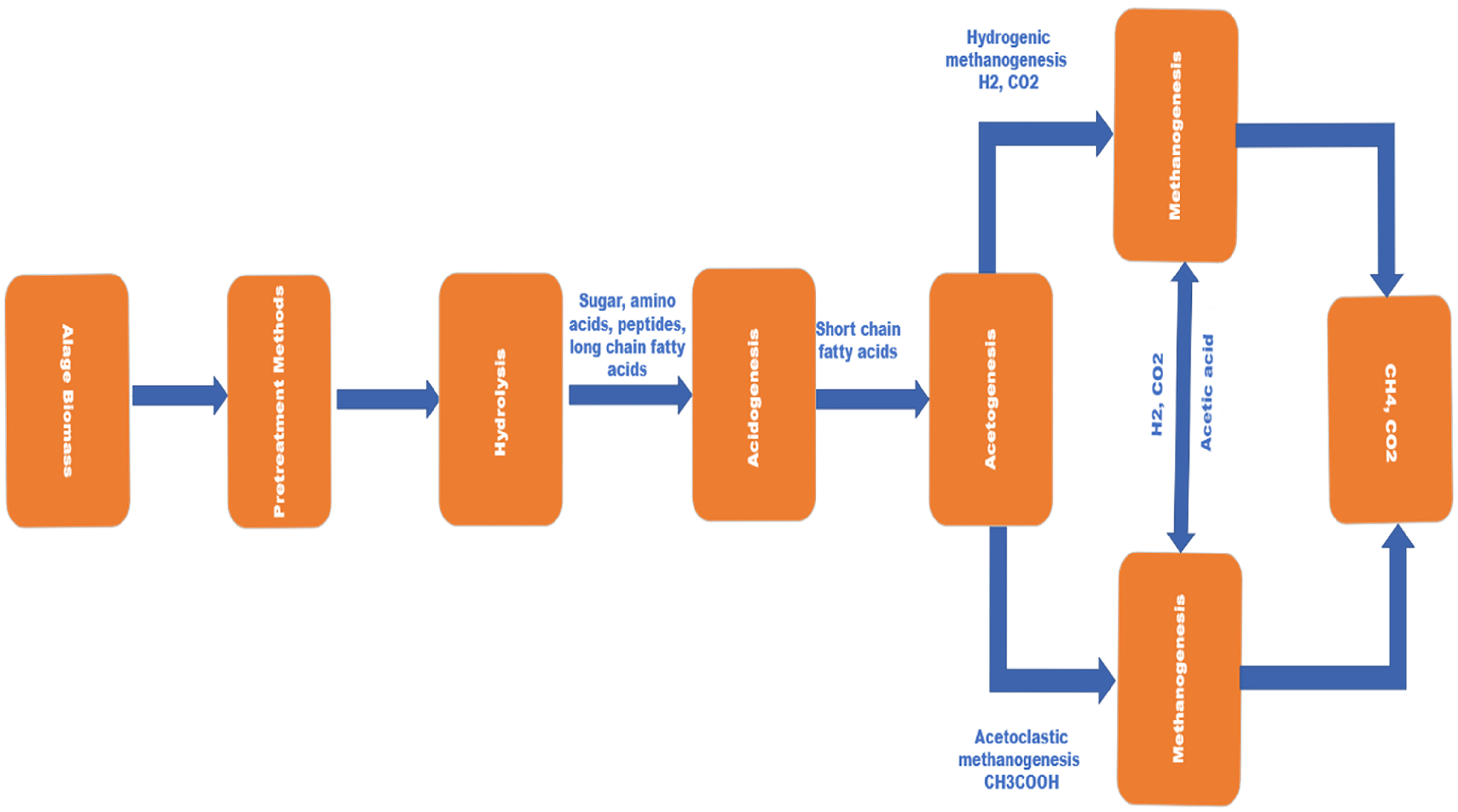
Flow chart of biogas and methane release from macroalgae.
The biogas production capacity of macroalgae was first investigated in the 1970s when different studies revealed their biogas potential.36,37 Macroalgae have been observed to be a suitable substrate for biogas production due to their very low/absence of lignin content, low lipid, high carbohydrate content, and high carbon–nitrogen ratio (above 30%, depending on the harvesting period).9,38 Different means of biogas production from macroalgae have been experimented with, and this includes (i) gasification, (ii) hydrothermal liquefaction, and (iii) anaerobic digestion. 9 The biogas production potential of different macroalgae has been experimented with using an anaerobic digestion process, and it was reported that they are found to have a superior prospect for biogas and methane yield. Green macroalgae Ulva sp. was digested through an anaerobic digestion process at mesophilic temperature (35 °C) using a batch digester, and a methane release of 132 ± 4 mL CH4/g volatile solid (VS) was recorded. 38 In another study, beach-cast seaweed was digested in a lab-scale batch reactor at mesophilic conditions (37 ± 2 °C), and a methane yield of 106 ± 1 mL/g VSadded was recorded after 35 days of retention time. 39 Red macroalgae Palmaria palmata was investigated for biogas production potential in a batch digester at mesophilic conditions, and it was reported that 308 ± 9 mL g−1VS was obtained. 40 Different species of macroalgae were studied for their biogas production potential by Tedesco et al., and these include Pelvetia caniculata, Fucus serratus, Gracilaria gracilis, Ffucus vesiculosus linnaeus, and Laminaria digitat. 41 The experiment was observed for 21 days in mesophilic conditions (37 °C). Biogas yields of 159.3 ± 24, 64.2 ± 21.1, 81.8 ± 32.5, 71.5 ± 4.9, and 103.3 ± 19.8 mL/g VS were recorded for Pelvetia caniculata, Fucus serratus, Gracilaria gracilis, Fucus vesiculosus linnaeus, and Laminaria digitat, respectively. 41
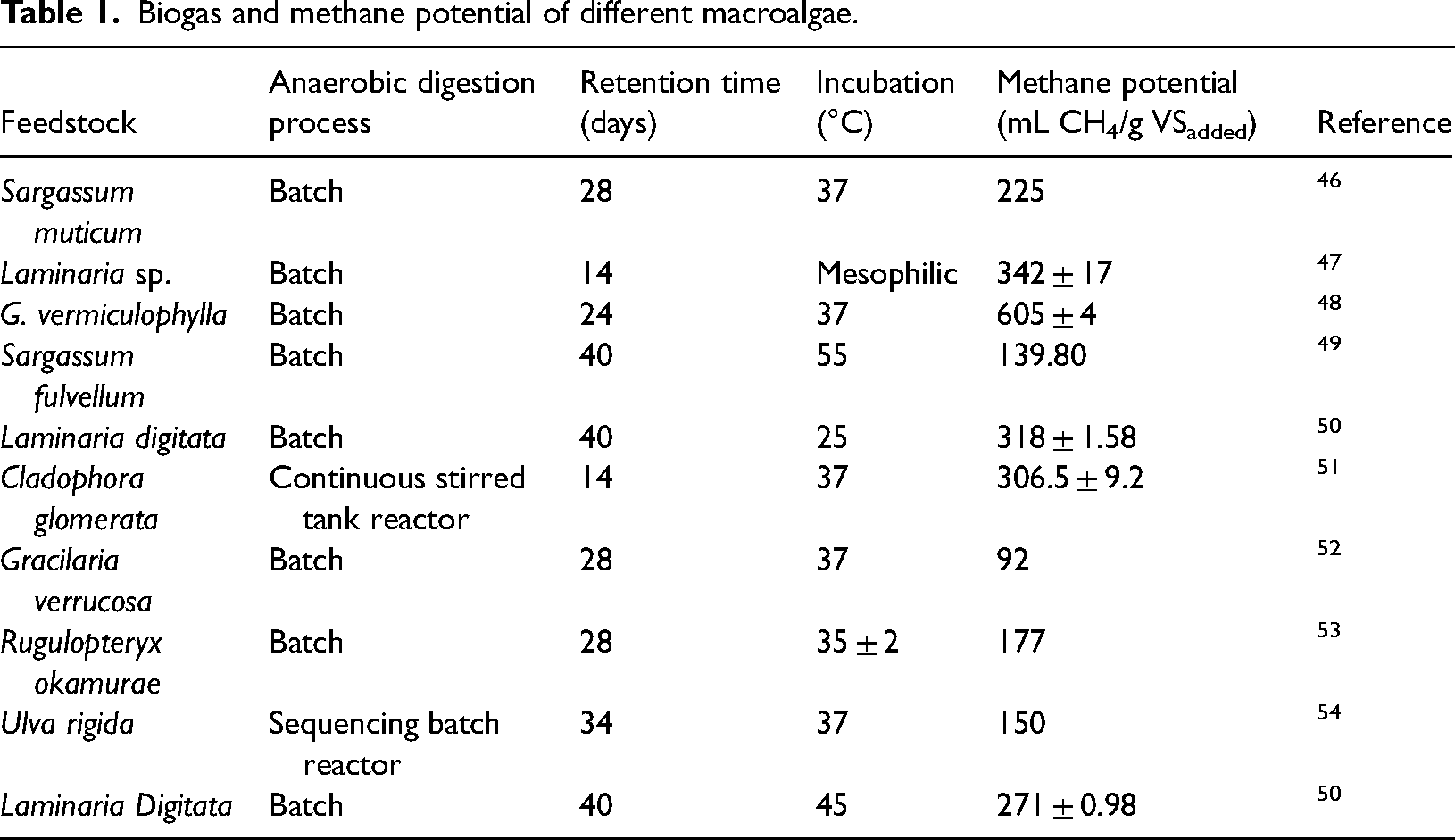
It can be noticed from the result of the biogas production potential studied that there is a clear variation in the biogas and methane yield potential of different species of macroalgae. This high variation can be linked to different macroalgae species’ cell wall characteristics and macromolecular composition. The variation in anaerobic digestion capacity because of macromolecular content depends on the strength of various organic contents in macroalgae cells. The organic compounds compositions can be utilized to determine the theoretical methane capacity of the feedstock stoichiometrically. Ulva sp. was reported to have a high theoretical methane strength with total carbohydrates of 33.2 ± 0.8% total solid (%TS wet weight), followed by proteins 11.4 ± 0.5 (%TS), and lipids 1.8 ± 0.05 (%TS). 38 Reports have shown that inducing a specific macromolecule accumulation in macroalgae can increase the methane yield of algae. 42 The methane potential of macroalgae has been observed to be in the range of 204 to 380 mL/g VS. Table 1 presents the specific methane potential of different macroalgae as observed in different literature. Despite producing higher methane yield when compared to animal waste and sewage sludge (247–293 mL/g VS), lignocellulose feedstock (101–258 mL/g VS), sugar crops (241 mL/g VS) and rice straw (281 mL/g VS), it releases less than 50% of the theoretical methane capacity. 43 The low biodigestion of macroalgae can be traced to the availability of uneasily digested polysaccharides, higher sulfur content polyphenols, salinity, and low carbo-nitrogen ratio.11,44 Considering macroalgae's cell wall properties, it consists of organic compounds with low digestion and/or bioavailability, like hemicellulose and cellulose. The hard cell walls inhibit methane release; since the organic matter needed for methane release is embedded in the cytoplasm and is not readily available for the anaerobic digestion of microorganisms. Various factors like lignin percentage, surface area, polymerization grade, crystallinity, and solubility determine the digestion efficiency of macroalgae. Degradation of the lignin–polysaccharide bonds and opening the feedstock for bacterial activities is the primary objective of pretreatment. Generally, pretreatment targets are to ease the accessibility of the microorganisms, avoid degradation or carbohydrate loss, reduce the generation of possible inhibitory compounds, lower the potential influence on the environment, and make the process economical. 45 Different pretreatment methods have been experimented with to degrade the macroalgae's cell wall and make the hemicellulose and cellulose accessible.15,38,39
Biogas and methane potential of different macroalgae.
Macroalgae pretreatment
Feedstock pretreatment before anaerobic digestion has been categorized into mechanical/physical, biological, chemical, thermal, thermochemical, and combined pretreatment methods. 45 The recent development in multidisciplinary research has reported the application of nanoparticles, natural deep eutectic solvents (NADES), deep eutectic solvents (DES), and ionic liquids for feedstock pretreatments as a new novel means of pretreating biogas feedstocks.55–57 Despite the successes recorded in the feedstock pretreatment, some demerits were observed. This includes the high energy inputs, particularly for thermal and mechanical methods, the release of inhibitory materials and corrosion/environmental challenges associated with a chemical pretreatment, the release of inhibitory compounds that lower the digestion rate, and the exorbitant cost of enzymes for biological pretreatments. 45
Biological pretreatment methods
Biological pretreatment techniques are the alternative technique reported to be environmentally friendly and need low/no energy. 58 This method employs microorganisms, enzymes, and consortia to improve macroalgae biodigestion, thereby increasing biogas and methane yields. Microorganisms are introduced to the feedstocks to debase the cell wall. Compared to other pretreatment methods, biological pretreatment is environmentally benign, requires little/no energy, and does not produce inhibitory compounds. Different hemicellulolytic and cellulolytic artificial microorganisms can be employed for this process. 59 Compounds of macroalgae cell walls like hemicellulose and cellulose are converted to compounds of lower molecular weight by hydrolytic enzymes, and these molecules are more readily accessible to methanogenic bacteria. Enzyme dose, treatment time, and temperature influence biological pretreatment. During biological pretreatment, the temperature and pH of the technique are set at the optimum condition that favors the particular enzyme in use. However, the variation in macroalgae cell wall composition and arrangement, enzyme-to-substrate specificity, and economy of producing enzymes are parts of the main limitations that require special attention before this method can be fully accepted in the biogas industry.
Fungi pretreatment during biological pretreatments employs various fungi, like soft-rot fungi, white, and brown, to debase biogas feedstock. The process needed minimal energy and chemicals with little inhibitory compound release. White rot fungi have the strength to release enzymes with a high hydrolytic capacity to debase feedstock cell walls, Lacasse, lignin peroxidase, and manganese peroxidase. 60 During the biomethane optimization of green macroalgal Ulva sp. was pretreated with Aspergillus fumigatus SL1, at a concentration of 7 mL/100 g/TS for 2–8 days at a temperature of 50 °C, with an initial pH of 5, and moisture ratio of 1:3. The pretreated Ulva sp. was then digested with solid-state fermentation in a batch digester at mesophilic temperature (35 °C) for 8 days. The optimum methane yield of 153 ± 3 mL CH4/g VS with an anaerobic degradation rate of 57% was recorded, and compared to the control experiment, methane released was improved by 15.91%. 38 Mexican Caribbean macroalgae consortiums were pretreated with Bm-2 strain (Trametes hirsuta) fungal during biological pretreatment before anaerobic digestion. The macroalgae consortium was inoculated in 5 mL of a mycelial suspension of T. hirsuta for 6 days at a temperature of 35 °C and was shaken at 150 rpm with an orbit shaker. The pretreated substrate was experimented at mesophilic conditions (38 °C) for 29 days in a batch digester and agitated once daily. It was noticed that a methane yield of 104 LCH4/kg VS−1 was observed, representing a 20% improvement in methane yield compared to the untreated substrate. 61 One of the quickest biological pretreatments is the utilization of enzymes, and it can perform within a very short period since the enzymes are smaller compared to microbes. Enzymes possess good solubility, mobility, and good interaction with feedstocks. All the enzymes containing exogluconase, β-glucosidase, and endogluconase can be used for biological pretreatment. 62 As acceptable as the use of enzyme pretreatment as it is, most times, it requires other pretreatment methods, such as sterilization, and the process is not always economical due to the high cost of enzymes. 63 1 mL of ViscamylTM Flow cellulase enzyme as a form of biological pretreatment was added to 1 L of Sargassum fulvellum macroalgae at a pH of 4.5 for 24 hours and was digested for 25 days retention time in a batch digester, at a temperature of 38 ± 0.5 °C. The result showed that pretreatment with enzymatic pretreatment of macroalgae lowered methane released by 9.49% compared to the control experiment. 13 Seaweed was pretreated biologically using L. digitate cellulase, and the biogas yield was decreased by 1%, but when 2.5% citric acid was added to the cellulase, a 6% increase in biogas yield was observed. 64 This result indicates that the combined pretreatment of cellulase and citric acid improved the biogas released compared to the single pretreatment of cellulase enzyme. This may be because of the chain behavior whereby the hydrolysis of one compound improved the bioaccessibility of the other, which may be further hydrolyzed. Some bacteria with high hydrolytic capacity have been examined during the biological pretreatment of biogas feedstock and have been observed to enhance the biogas yield. The likes of Pseudomonas, Salmonella, Escherichia coli, etc., have been experimented with as pretreatment agent for different biogas feedstock and have been adjudged to be suitable for biological pretreatment. 65
Another biological pretreatment method is microaerobic treatment. Recent research in biological pretreatment has observed that applying a small quantity of oxygen (or air) to the process during pretreatment or digestion can improve biogas and methane yields. Under microaerobic conditions, definite accessibility of class Clostridia, phylum Firmicutes, and order Clostridiales related to hydrolysis of anaerobic digestion are developed. This process can double the Oxytolerant (acidic resistant bacteria), and Methanobacterium (archaea bacteria that release methane as a metabolic by-product), and the biogas enhancement can be linked to the changes in the microbial community during microaerobic. 66 This method's amount of oxygen introduced to the anaerobic digestion process is vital because the inappropriate introduction of oxygen disturbs the activities of methanogenic bacteria and reduces the methane yield released. 67 During biological pretreatment, some exogenous microbes can be added to the microbial community, and this method is called bioaugmentation. This method can introduce a specific microorganism into the anaerobic digester to improve a particular stage of anaerobic digestion. 68 This process can be utilized to improve the start-up of a reactor, increase the anaerobic digestion process, or enhance the digestion strength of a consortium. One of the major merits of the process is that it does not need other pretreatment methods, therefore, simplifying the technique and giving space to develop other cost-effective methods. 62 Despite the strength of bioaugmentation to improve the accessibility to enzymatic and microbial attacks, their capacity has not been fully established. The digestible portions of the carbohydrate are majorly covered by lignin at the initial stage, thereby lowering their accessibility to enzymatic and microbial attack. Ensiling pretreatment is a biological technique that mostly uses stored wet feedstock before pretreatment. 69 During this process, soluble carbohydrates can be transformed into butyric, acetic, lactic, and propionic acid through the activities of microorganisms. During this process, pH is less than 4, which will harm the anaerobic digestion microorganisms’ growth while conversion is favored. 70 It was observed that ensiling could enhance methane release if the appropriate condition is selected. 69 One of the major advantages of this technique is that there will be feedstock throughout the year without waiting till feedstock's season. The major challenge is that about 40% of its methane potential can be lost if silage is not properly handled. Palamaria palmata screw-pressed with comparative wilted and chopped were ensiled with and without Safesil silage additive for 90 days. It was observed that the effluent volumes produced during ensiling were 26–49% of fresh weight which has 16–34% of the silage dry matter. 14 The influence of ensiling pretreatment method was investigated on Sargassum muticum before anaerobic digestion, and it was discovered the pretreatment had no significant effect on the biogas released. 71
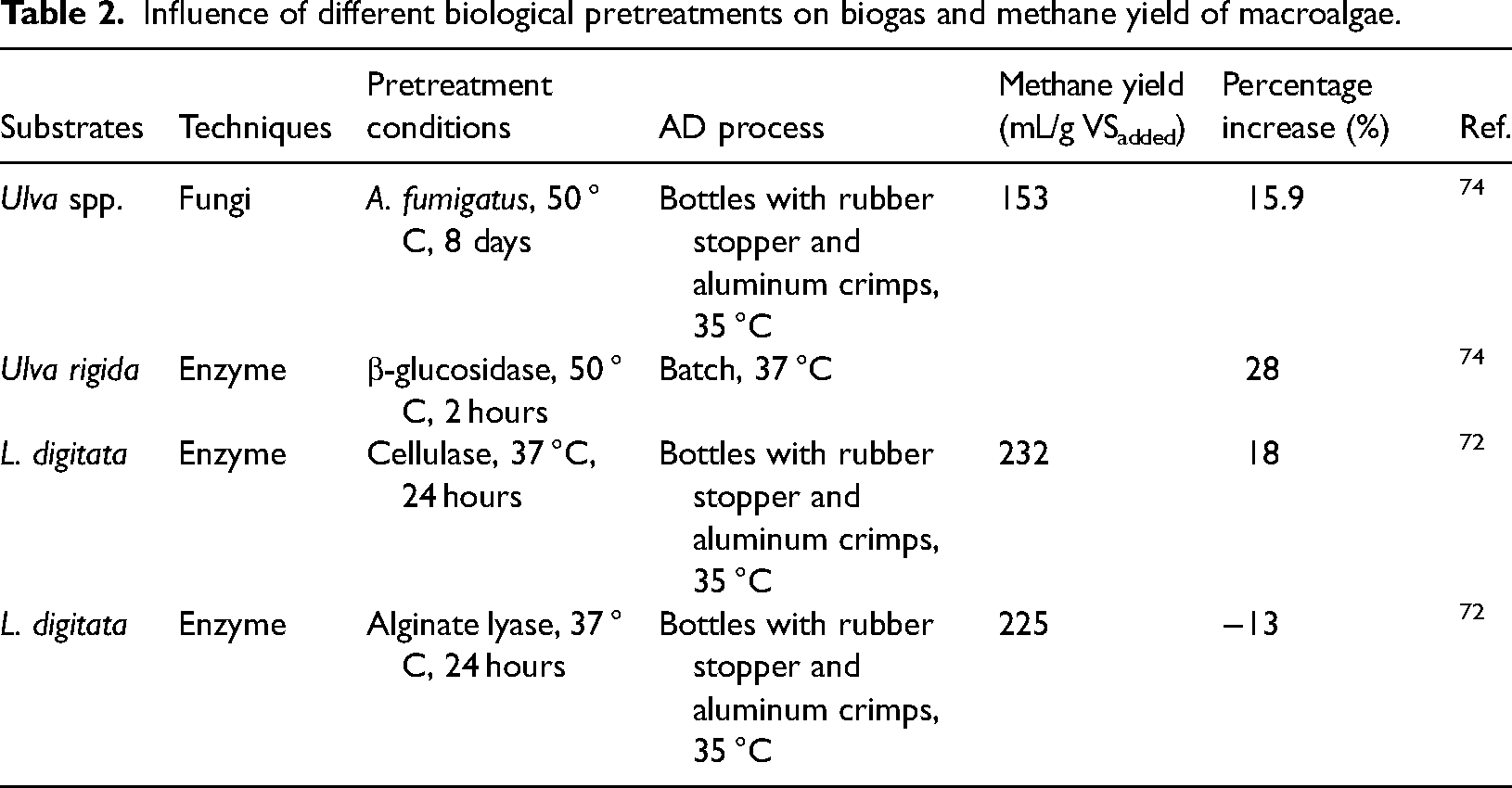
It can be deduced from the results of this literature that biological pretreatment has a different impact on the biogas and methane released from macroalgae. The impact depends mainly on the cell wall, temperature, pH, time, and enzyme dose. Our results from the search engines show that investigations on the influence of biological pretreatment of macroalgae is still limited. This implies that there is a need for more research in this field to harness the strength of macroalgae as biogas substrate using this environmentally benign pretreatment method to produce green and sustainable energy and decarbonize the world. Table 2 summarizes the impacts of biological pretreatments on macroalgae biogas and methane yield. Our findings show that there is a limited study on the biological pretreatment of macroalgae. It can be observed from Table 2 that enzymatic pretreatment of L-digitata with alginate lyase at 37 °C for 24 hours reduced the methane released by 13%. 72 This can be linked to the strength of the pretreatment to break down the lignin portion of the feedstock and make it easily accessible to the microorganism for digestion. The hydrolysis stage could be observed to improve tremendously, which led to over-accumulation of the digester and subsequent increase in VFAs that alter the pH of the process. The alteration of the pH beyond the acceptable range (6–8) was harmful to the methanogenic bacteria activities and reduced the gas yield.55,73 It was discovered that the majority of the algae biological pretreatments were focused on microalgae pretreatment. The few works of literature accessed were mainly on the application of fungi and enzymes. The use of bacteria, ensiling, microaerobic, and bioaugmentation is still missing in the literature. Some of these methods have been reported to be effective when experimented with on another biogas feedstock, which also needs to be investigated on macroalgae biomass. With the methods that have been experimented with, it is noticed that they are still limited to very few macroalgae species without any information on the influence of biological pretreatment on a good number of macroalgae species. The information on the influence of biological pretreatment biogas yield of macroalgae when other digesters are used could differ from batch type, and other conditions rather than mesophilic conditions are still limited. Research has shown that digester type and process condition determine the pretreatment methods’ efficiency. Therefore, there is a need to consider digester types and conditions before concluding the most suitable conditions in terms of pretreatment, digester type, and process condition. Most of the biological pretreatment methods investigated so far are still at the laboratory scale, which has not fulfilled the intended purpose of the research; therefore, this required further study at the industrial scale. Recent studies by Caxiano et al. 7 analyzed the scale impacts of creating a Sargassum muticum seaweed biorefinery using a thorough process modeling approach. It was observed that the economy of electricity production from the biogas yield was not attractive due to the low methane yield without pretreatment. But using the digestate from the process as organic fertilizer was more economical during the alternative study. 7
Influence of different biological pretreatments on biogas and methane yield of macroalgae.
The subsequent anaerobic digestion might be improved with noticeably higher biogas and methane yield if the biological pretreatment was chosen appropriately for a given feedstock and its application was optimized. Because of the maturing or cost-effective processes, full-scale biological pretreatment of macroalgae is not yet commonly used, but due to its intrinsic benefits, biological pretreatments continue to be a promising technique to increase the biogas and methane yield of macroalgae. More work in this area could result in biological pretreatment that is effective, affordable, and safe for the environment.
Chemical pretreatment
The chemical pretreatment method is popular in biogas production due to its ability to enhance the biodegradability of complex substrates and its effectiveness. 75 Different chemicals can be used for the chemical pretreatment of lignocellulose feedstock, and the process's efficiency depends on the substrate's microstructural arrangement. 76 Alkali and acid pretreatment methods are the primary chemical pretreatment techniques that have been studied extensively in macroalgae pretreatment. In some cases, chemical pretreatment methods are combined with heat for better efficiency. Alkali and acid reagents are mostly utilized to solubilize polymers and enhance the accessibility of organic compounds for methanogenic activities. 13 The small quantity of chemicals in the pretreated substrate may help control pH reduction during the acidogenesis stage of the anaerobic digestion stage. Nonetheless, it should be considered that the solubilized compounds can produce toxic by-products of methanogenesis. Acidic pretreatment is used chiefly for the pretreatment of biogas feedstock, either in dilute or strong form. It has been experimented with at high temperatures and with other pretreatment methods, like a steam explosion. 77 This method can solubilize lignin and hemicellulose when a strong acid is utilized, and recovery of acid is needed. When dilute acid is used in this process, lignin is redistributed instead of solubilized, and there is a need to neutralize the pH before anaerobic digestion. 78 One major disadvantage of acidic pretreatment is the release of inhibitory materials like aldehydes, phenolic acids, furfurals, and 5-hydroxymethylfurfural, which lower the biogas and methane produced. 45 Because of the toxic and corrosive nature of some of the acids, special digesters that have high resistance to these properties are required for the anaerobic digestion of acid-pretreated feedstock. Lignin removal with the application of alkaline pretreatment has been very effective, but the percentage of cellulose remained high. 76 This method enhances the available surface area of the feedstock through fiber swelling and lower crystallinity. The process also degrades the bonds between the lignin and carbohydrate and causes interruption of the lignin structure. 79 The influence of acidic pretreatment using dilute H2SO4 was experimented on Nizimuddinia zanardini macroalgae feedstock before anaerobic digestion.
The substrate was pretreated using 7.0% w/w of H2SO4 concentration at 30, 45, and 60 minutes exposure time, with varying solid loadings of 5 and 10% w/v, at a temperature of 121 °C. After anaerobic fermentation, biogas yield improved from 170 to 200 m3 per ton of dried Nizimuddinia zanardini, representing about 17.65%. 80 Macrocystis pyrifera was pretreated with hydrogen chloride (HCl) and methanol to enhance biogas yield. The feedstock was treated at 50 °C for 30 minutes, using 0.1 mol/L of HCl and 1% formaldehyde, respectively, and enhancement in hydrolysis rate was observed. 81 When 6% oxalic acid was used to pretreat seaweed before anaerobic digestion and biogas released was improved by 90.36%. 82 The strong ability of alkali pretreatment can produce a phenolic compound capable of inhibiting the anaerobic digestion process. 83 The alkali pretreatment technique is cost-effective but requires considerable water to eliminate salt from the feedstock, making the downstream process uneconomical.
The application of oxidizing agents such as H2O2, ozone, FeCl3, or air to disintegrate the solid arrangements of the feedstock and enhance biodigestion is a chemical pretreatment technique called oxidative pretreatments. The process aims to degrade hemicellulose partially and delignification the feedstock. 84 In this process, the feedstock can be soaked in water after an oxidizing agent like per-acetic acid or hydrogen peroxide is dissolved in it. The method's effectiveness depends on the concentration of the oxidizing agent, pretreatment duration, and feedstock structure. 45 Ozonolysis pretreatment of biogas feedstock is targeted at reducing lignin levels with ozone and mostly debases only lignin. It does not have a major influence on hemicellulose and cellulose. Compared to other chemical pretreatment techniques, it can be performed at ambient pressure and temperature. The process is eco-friendly and does not release toxic compounds but does not influence other processes like yeast fermentation. 85 Using porous glass sparger, ozonation pretreatment of Ulva latuca for biogas enhancement with a flow rate of 8.3 mgO3/minute. It was observed that a high dose of ozone at 15 and 30 minutes released the optimum yield of 498.75 and 492 mL/g VS. 86 The use of sulfite to lower the recalcitrance properties of the biogas feedstock, referred to as SPORL pretreatment, has been experimented with on some biogas feedstock and reported to be effective. This can be attained in two different stages; calcium or magnesium sulfite can be utilized to treat the feedstock to eliminate the hemicellulose and lignin portion in the first phase. The second stage required a mechanical disk miller to lower the particle of the previously pretreated substrate. 87 The cellulose conversion rate to glucose is very high, with good lignin elimination and recovery. By integrating them into accessible mills for the production of biogas, it may process a variety of feedstocks in high quantities for industrial output. 58 Organic solvent (organosolv) pretreatment is a chemical pretreatment technique that uses ethylene methanol, methanol, acetone, or glycol combined to pretreat biogas feedstock with the addition or without an inorganic catalyst at high temperatures. 88 Glycerol organosolv pretreatment of biomass was observed to selectively deconstruct the feedstock, effectively improving the hydrolysis stage. The process was observed to enrich lignin with reactive groups β-O-4 linkage and aliphatic groups. 89 The feedstock and catalyst's nature dictates the process's temperature. This pretreatment method eliminates lignin and generates hemicellulose and cellulose syrup of sugars C5 and C6. 90 During this pretreatment, the organic solvent alters the intra-molecular bonds and aids the accessibility of enzymes during anaerobic digestion. The system required recovery and reuse of the solvent to some extent, and this level of recovery and reuse determines the economy of the method. The degree of crystallinity, polymerization, fiber length, etc., of the pretreated feedstock are determined by the type of catalyst used, treatment time, solvent concentration, and temperature. 91 Carbon dioxide explosion pretreatment (supercritical fluid) of biogas feedstock is a chemical pretreatment process whereby feedstocks are subjected to supercritical carbon dioxide whereby the gas behaves like a solvent. This supercritical CO2 is released into a high-pressure container that contains the feedstock and is then heated to the required temperature and kept for 15–20 minutes at this high temperature. 92 The pressurized gas released on the feedstock disintegrates the feedstock arrangement and enhances the accessible surface area. 93 This technique is most suitable for feedstock with high moisture content since the hydrolytic process is optimal when the moisture content is high. This makes the process suitable for macroalgae. The method is bright and economical because low temperature is required, the low cost of CO2, and it does not generate inhibitory compounds. Nevertheless, the cost of a pretreatment reactor that can cope with the required pressure is a major drawback of the method. 94 Another important chemical pretreatment method is ammonia fiber explosion (AFEX) which uses liquid ammonia to pretreat biogas feedstock, and it is also called soaking aqueous ammonia (SAA), or ammonia recycles percolation (ARP). Recent multidisciplinary research has identified the use of ionic liquids, DES, and NADES as potential candidates for biogas feedstock pretreatment. 45 Ionic liquids are primarily composed of ions (cations and anions), which have low melting temperatures (less than 100 °C), low vapor pressures, high polarities, and higher thermal stabilities. 95 These solvents contend with the feedstock hydrogen bonds and disintegrate their network. If the appropriate ionic solvent is selected and applied to feedstock, up to 80% biodegradation can be achieved. 96 DES have similar properties to ionic liquids. DES are fluids with about two or three harmless and cheap substances that can self-affiliate, primarily through interactions with hydrogen bonds. DES and ionic liquids are similar in physical properties and behavior, but DES differ since their constituents are not totally ionic and can be produced from non-ionic materials. 97 Some natural products have been brought into DES and ionic liquids, such as choline, urea, sugars, amino acids, and some organic compounds. These solvents can be produced naturally and are called NADES. These solvents are easy to synthesize, biodegradable, economical, non-toxic, and harmless ammonium salts that can be liberated from biomass compared to ionic liquids. 56 Adding 3-hydroxy-2-naphthoic acid (3H2NA) during chemical pretreatment was reported to improve enzymatic digestibility by inhibiting polymerization and adding a carboxylic group on lignin, thereby enhancing the efficiency of the digestion process. 98
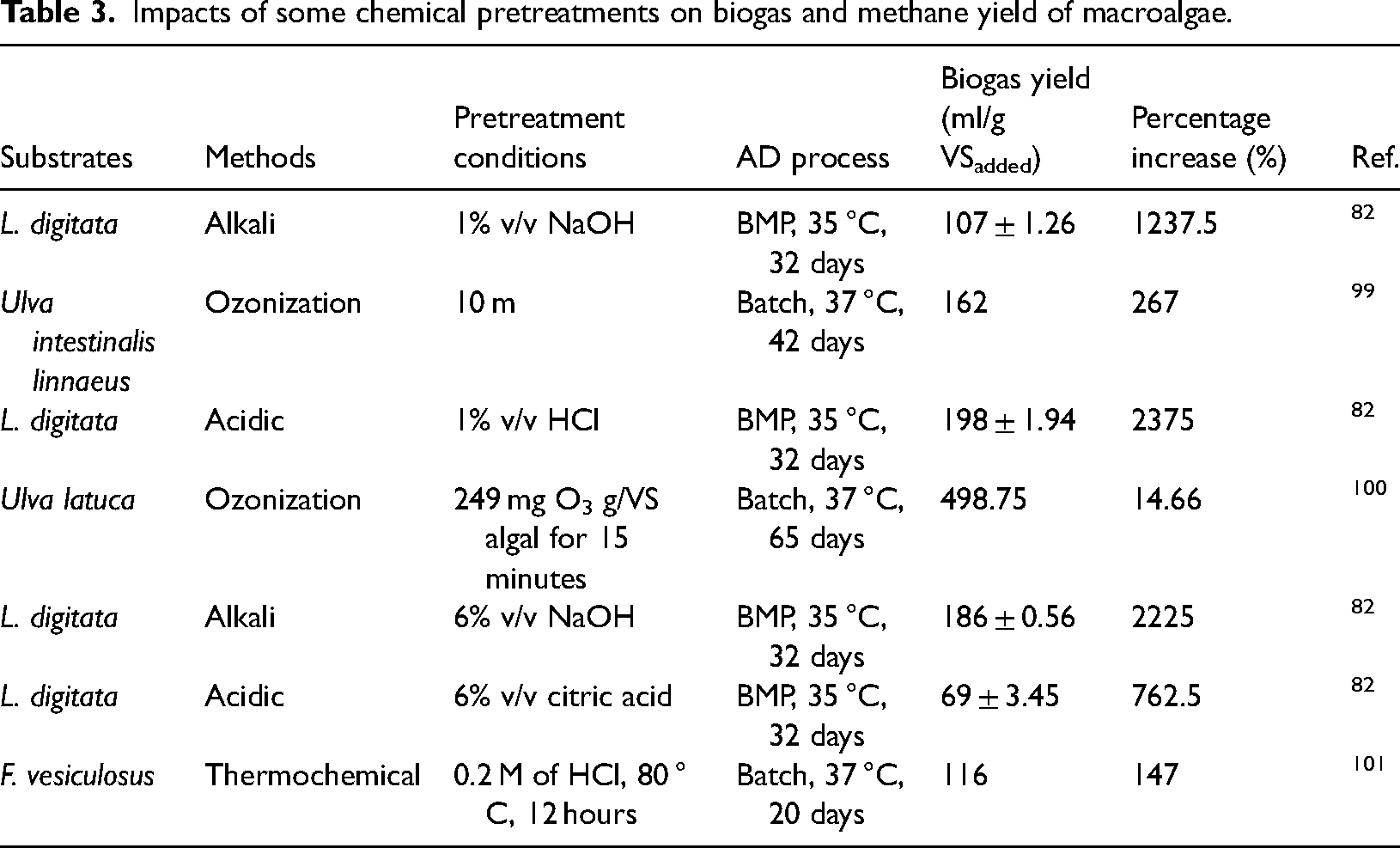
It can be noticed from the literature consulted that chemical pretreatment could enhance the biogas yield of macroalgae, and the result can be enhanced through a thermochemical process. Thermochemical pretreatment of P. palmata was carried out using 0.04 g/gTS of NaOH 0.02 and 0.04 g/g total solids (g/gTS) HCl at 160 °C for 30 minutes before anaerobic digestion. It was noticed that there was meaningful influence on the methane yield, 40 and this contradicts what was reported when a similar process was experimented with on lignocellulose feedstock. 76 Summarily, reports on chemicals pretreatment are limited and, most times, contradictory. Table 3 presents some chemical pretreatments’ effects on macroalgae biogas yield. It can be inferred from Table 3 that chemical pretreatment of macroalgae was limited to mostly alkali and acid. Most of the chemical pretreatment methods that have been experimented on lignocellulose materials and waste-activated sludge and adjudged to be suitable are still missing in macroalgae pretreatment. Findings show that the most recent chemical pretreatments methods like ionic liquid, DES, and NADES that are of natural origins are non-toxic, economical, easy to synthesize, and easily degradable have not been investigated with on macroalgae. Establishing the strength of these methods as potential pretreatment techniques for macroalgae will bring a turnaround interest in adopting macroalgae as biogas feedstock since some of the required materials are natural, and the process is non-toxic, with few toxic and artificial ones. Our findings in Table 3 indicate that the anaerobic digestion processes were carried out in batch digesters and at mesophilic temperatures. This necessitated further research that will consider other types of digesters and temperatures. It can also be observed from the table that the same concentration of different chemicals on the same feedstock does not have the same influence on their biogas yield. For instance, when 1% v/v (volume/volume) of NaOH and HCl were experimented with on L. digitata, the biogas yield was improved by 1237.5% and 2375%, respectively. 82 A varying percentage of the same chemicals on the same feedstock also produced different improvements, as observed when 1 and 6% v/v of NaOH was experimented with on L. digitata. 82 It was observed that different macroalgae have their optimum chemical pretreatment conditions for optimum biogas yield. This required more research in the chemical pretreatment of macroalgae to identify the appropriate conditions for improved biogas production for most macroalgae that are still missing in the literature.
Impacts of some chemical pretreatments on biogas and methane yield of macroalgae.
Mechanical/physical pretreatment
Mechanical pretreatment of macroalgae is one of the most common methods that break cells through physical force. This method improves the feedstock's available area, releases the complex sugars for enzymatic hydrolysis, and enhances the biogas yield. 15 This method is less reliable on the macroalgae species and have the tendency to contaminate lipid products than the chemical pretreatment method. 102 The main demerit of mechanical pretreatment is that it needs high energy consumption, which may make the process not economical. 103 Mechanical pretreatment employed different means to break the recalcitrance characteristics of the macroalgae and improve the biogas and methane yield. Milling or grinding can be used to enhance the crystallinity of the macroalgae. Feedstock size of 10–30 mm can be attained through chipping while milling and grinding can produce a smaller particle size of around 0.2 mm. 104 Extrusion is another mechanical means of feedstock pretreatment, and feedstock is subjected to shear force, heat, and compression that results in physical destruction and chemical alteration. 45 Before anaerobic digestion, Fucus vesiculosus and Fucus serratus macroalgae were pretreated with particle size reduction. The cumulative methane released after 20 days of retention time was 122 mL/g VSadded, which indicates a significant improvement (probability at 95% = 0.042) compared to the untreated Fucus vesiculosus and Fucus serratus macroalgae. 105 Laminaria spp. macroalgae were pretreated with beating to the most negligible gap of 76 µm with a milling pretreatment time of 10 minutes, and the total methane released was enhanced from 328 ± 9 NmL/g VSadded to 335 NmL/g VSadded, representing 2.13% improvement. 106 Milling of Laminaria spp. macroalgae to 1 and 2 mm particle sizes and the cumulative methane yield recorded were 241 ± 4 and 260 ± 15 mL/g VS, respectively. Compared to the control experiment, methane yield was reduced by 26.52% and 20.73%, respectively, for 1 and 2 mm particle sizes. 106 This shows that particle sizes of 1 and 2 mm reduce the cumulative yield of methane. This can be traced to the over-production of VFAs due to smaller particle sizes. An unbalanced VFA will result in an alteration of the pH of the process, and a pH value below or above 6–7 will negatively affect the activities of methanogenic bacteria, which will influence the subsequent methane yield negatively. 107
The ultrasound pretreatment method is a mechanical pretreatment technique that alters the microbial cell arrangement and opens the cellular materials for methanogenic activities. It consists of rapid compression and decompression cycles of sonic waves. A continuous cycle produces cavitation, generating regions with the liquid–vapor within the cell, regarded as microbubbles. 108 Using ultrasound pretreatment encourages macroalgae cell wall breakdown and organic matter solubilization; nevertheless, the improvement depends on macroalgae species and treatment conditions. The effectiveness of this method relied mainly on the energy level, frequency, and exposure time. 109 Ultrasound pretreatment of Fucus vesiculosus and Fucus serratus macroalgae before anaerobic digestion significantly improved methane yield. The feedstock was pretreated in an ultrasonicator with 110 V with an exposure time of 10, 15, and 20 minutes, and the optimum methane yield recorded was a 67% improvement compared to particle size reduction. 105
The pretreatment method that uses pressure that is distributed relatively on all areas of the substrate to alter the microstructure of the feedstock is referred to as high hydrostatic pressure (HHP). 110 The application of rays generated from radioisotopes (Cobalt-60 or Cesium-137) to disintegrate the recalcitrance properties of feedstock for biogas enhancement is called gamma-ray irradiation. Ionizing radiation can quickly enter the feedstock, modify the microstructure arrangement, and dislocate the cellulose crystal areas. 111 Another means of mechanical pretreatment that uses rays is microwave irradiation. These are short waves of electromagnetic energy with frequencies varying from 300 MHz to 300 GHz, with wavelength ranges between 1 mm and 1 m. 112 This method lyses cell walls and cellulosic crystallinity and enhances the accessible surface area. 113 It results from the rapidly vibrating electric field of a dielectric or a polar feedstock, which produces heat due to the frictional forces of molecular movement. Kinetic energy increase produces boiling water, and the quantum energy supplied by microwave irradiation cannot disintegrate the chemical bonds, but the hydrogen bonds can be disintegrated. In this process, dielectric polarization and induction heating altered proteins’ secondary and tertiary arrangement. 114 Like ultrasounds pretreatment, the major controllable process parameters that control the effectiveness of microwave pretreatment are treatment time and output power. Microwave torrefaction of biomass was simulated to determine the reactor design that allows feedstock to be heated and processed evenly. The simulated temperature profile produced three varying heating rates before 300 °C was reached. This includes 78.3 °C/minute (50–120 °C), 30.6 °C/minute (121–250 °C), and 105 °C/minute (250–300 °C). This has contributed to the study on the enhancement of microwave heating in feedstock torrefaction. 115 Microwave pretreatment of Fucus vesiculosus and Fucus serratus macroalgae during anaerobic digestion was observed to enhance methane yield from 5.93 mL/g VSadded to 30.49 mL/g VSadded. 105 In another related study, microwave pretreatment of Laminaria spp. macroalgae using a 560-W rated microwave until the liquid phase was attained and allowed to boil for 30 seconds. Methane yield from microwave-pretreated feedstock produces a better start-up yield than untreated feedstock, but cumulative methane yields were 244 ± 11 and 328 ± 9 NmL/g VSadded. 106 This implies that the pretreatment method reduces the cumulative methane yield by 25.61%, necessitating further research to identify the suitable conditions for the microwave pretreatment of Laminaria spp. macroalgae. The results indicate that, in contrast to the beating approach, which caused the process’ pH to rise during anaerobic digestion, the microwave pretreatment had no discernible impact on the pH of the process before and after the digestion process (7.48 ± 0.02). 106
To disintegrate the rigid structure of feedstock, the use of accelerated beam electrons to dislodge lignin, cellulose, and hemicellulose has been experimented with and referred to as electron beam (EB) irradiation. Radicals are created during this process and are free to move around, breaking cross-link bonds or causing chain scission, decrystallization, and/or lowering the level of polymerization. 116 The main merit of irradiation is the ability to easily penetrate the feedstock, while the major demerit is high electricity consumption, which may make the process uneconomical. The use of the pulsed-electric field (PEF) as a pretreatment technique in anaerobic digestion has been observed on some biogas feedstock. The method exposed the cellulose in the substrate by expanding the spaces in the cell membrane and improving its availability to the microorganisms that will convert them to constituent sugars. 60 During the PEF pretreatment method, the substrate is opened to an abrupt rupture of high voltage of around 5–20 kV/cm for a concise duration (nano to milliseconds). One of the merits of this technique is that it needs little energy because of its short duration (100 µs) and can be experimented at ambient temperature. In the same vein, the design of the PEF equipment is easy since there are no moving parts in it. 117 The impacts of mechanical pretreatment methods on some macroalgae are presented in Table 4. It can be noticed from the Table that no specified particle size is universal to all the macroalgae species considered. For instance, when <1 mm particle size was experimented with on L. digitata and S. latissima, it was discovered that biogas yield was improved by 19.74% and 22.82%, respectively. 82 But when the same <1 mm particle size was experimented with on Laminaria spp., it was reported that the biogas released was reduced by 26.5%. 106 It can also be discovered from the table that when the same Laminaria spp. was pretreated and beaten for 15 minutes at 40 °C, biogas yield increased by 47% under the same anaerobic conditions. 41 Table 4 shows that some pretreatment of macroalgae reduced the gas yield compared to the untreated feedstock. This indicates that inappropriate selection of pretreatment methods/conditions can harm the process. It can be inferred that particle size reduction beyond a particular limit improved the hydrolysis stage beyond what the digester can use for biogas production. This hyper hydrolysis produced over-accumulation of the VFAs and change the process's pH. 118 Over-accumulation of the VFAs caused digester imbalance and pH alteration, significantly influencing the activities of methane-released bacteria and lowering the biogas yield. 119 It can be observed that various mechanical pretreatment has varying influence on the same macroalgae biomass, and the same mechanical pretreatment effects on macroalgae biomass are influenced by the microstructural arrangement of the substrate.
Effects of some mechanical pretreatments on biogas and methane yield of macroalgae.
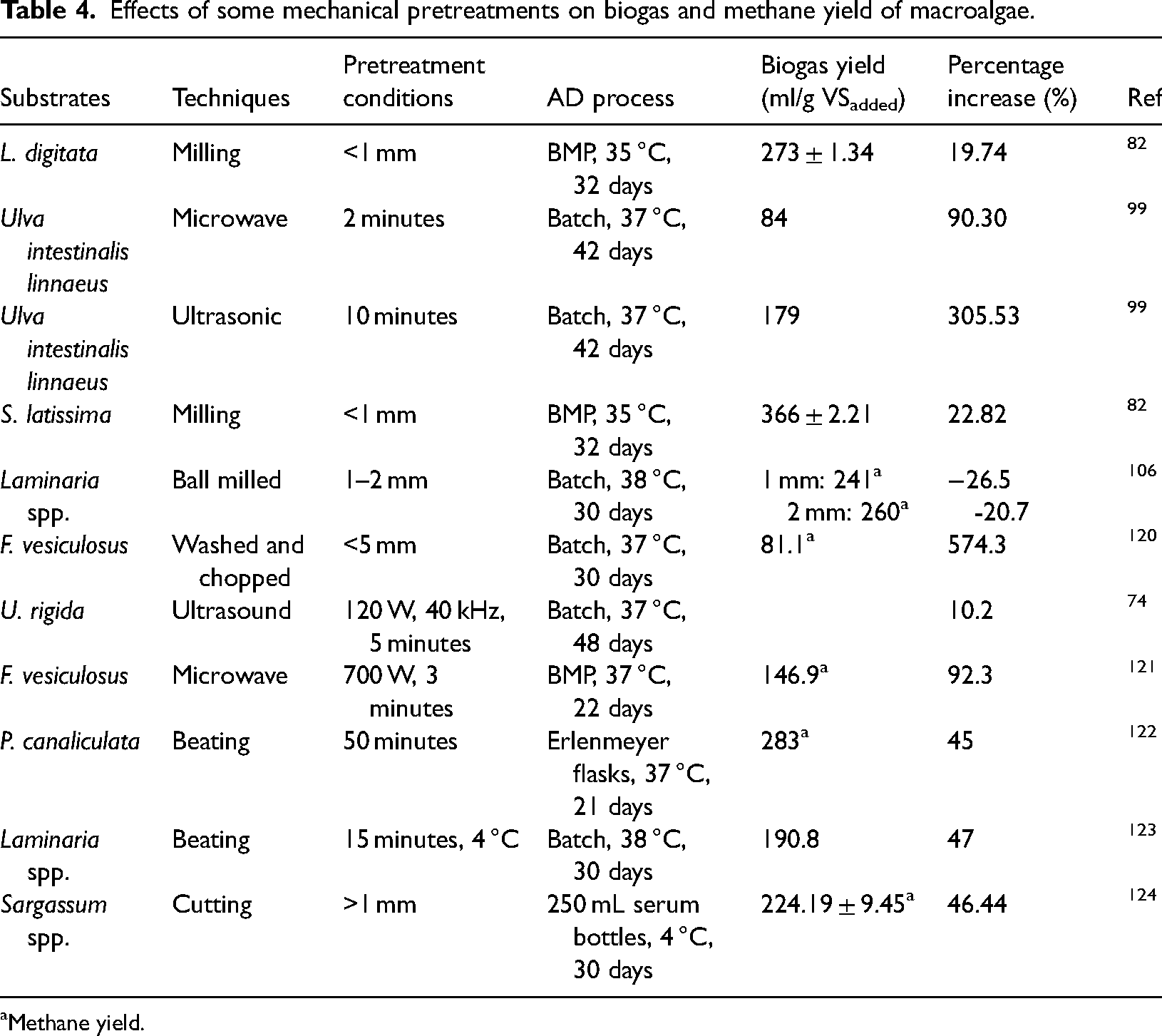
Methane yield.
Some of these methods that have been investigated require further research whereby the same feedstock will be considered with all these mentioned mechanical pretreatment methods and come up with the one with optimal biogas and methane yield. It was also noticed that most of the methods investigated so far were digested in the batch digester and at mesophilic temperature. This required further investigations whereby other types of digester and conditions (thermophilic and psychrophilic) are examined and establish the most suitable digester and process temperature. Our findings reveal that some of the recent mechanical pretreatment methods, such as HHP, EB irradiation, pulse-electric field, and high-pressure homogenization, have not been investigated on macroalgae biomass, and this needs to be researched to ascertain their ability to improve the biogas and methane yield of macroalgae that are still underutilized because of their recalcitrant properties.
Thermal pretreatment
Thermal pretreatment techniques whereby macroalgae are subjected to heat at high temperatures to break down the recalcitrance properties. They have been applied to improve particulate organic matter debasement at temperatures of 50–270 °C. At high temperature, lignin and hemicellulose started to solubilize, and the branching groups of the feedstock depict their structural composition. The optimum pretreatment temperature and time rely mainly on the microstructural arrangement of the feedstock. 16 For instance, sewage sludge pretreatment above 180 °C was reported to generate recalcitrant compounds, reducing the feedstock's anaerobic digestibility. 125 Lignocellulose feedstocks were observed to begin to solubilize at temperatures above 150–180 °C, and temperatures higher than 250 °C should be exempted when considering thermal pretreatment of macroalgae biomass. 126 Thermal pretreatment employs various means whereby heat treatment is applied to the feedstocks for pretreatment. Thermal pretreatment is categorized into different types depending on the process of heat application for pretreatment. The process whereby biogas feedstocks are subjected to compressed hot water at temperature (170–230 °C), and pressure (5 MPa), like steam pretreatment, is called liquid hot water pretreatment. This process hydrolyzes hemicellulose and eliminates lignin, thus exposing the cellulose to enzymatic activities. The temperature of the process can be controlled to minimize the formation of inhibitory compounds that hinders the biogas yield. 127 The steam explosion pretreatment method is thermal treatment, where the feedstocks are treated with steam at a particular temperature and pressure. In this method, pretreatment pressure rises with an increase in temperature, particularly above 160 °C. This pressure can be reversed rapidly or gradually, and this pressure change to atmospheric conditions alters the structural arrangement of the feedstock. This method has been adjudged to be an economical pretreatment technique for feedstock degradation, although, in some certain percentage of xylan degraded, the possibility of releasing inhibitory compounds is high. 128 To enhance the steam explosion pretreatment technique, a certain application volume of acid or alkali is advised. The use of air or oxygen combined with hydrogen peroxide/water at a temperature above 120 °C for about 30 minutes is called wet oxidation pretreatment. 129 The temperature, oxygen pressure, and exposure time all determine the efficiency of this method.
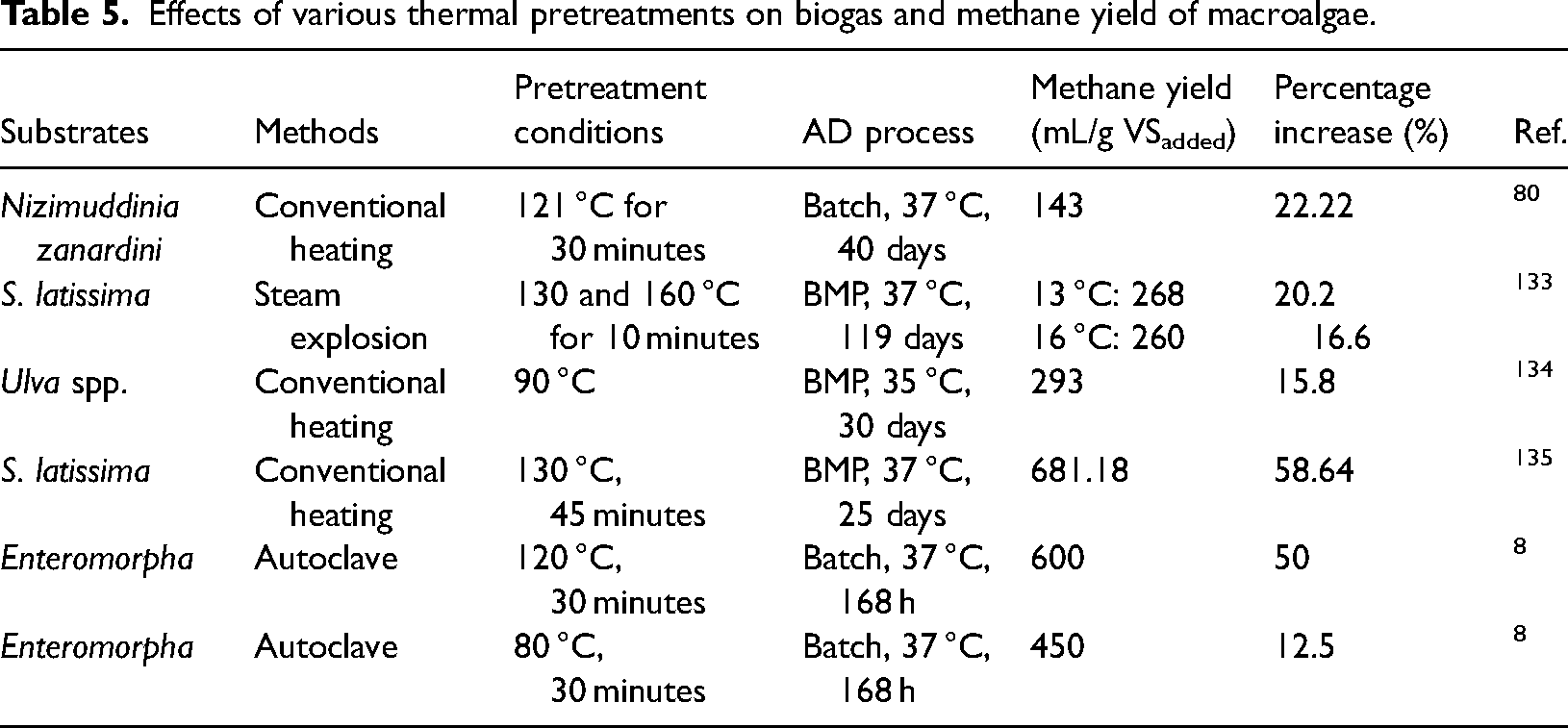
Recent development in thermal pretreatment technique has experimented with hydrothermal pretreatment in biogas feedstock treatment. The method effectively pierces the feedstock, cellulose hydration, hemicellulose elimination, and partial lignin removal. 129 The technique can eliminate the more significant portion of hemicellulose and a specific percentage of lignin in the feedstock through the degradation into soluble portions and breaking down the recalcitrant properties. It does not need chemicals addition and certain materials with high resistance to corrosion. Pyrolysis pretreatment is a thermal breakdown process that converts organic matter into biochar, which is rich in carbon, condensable liquids, such as bio-oil, and non-condensable volatiles, such as gases when heat is used without oxygen. This process depends on parameters like temperature, feedstock composition, exposure time, particle size, heating rate, pressure, and moisture content. 130 The main constituent of feedstock does not degrade evenly during the pyrolysis process; the rate and level of degradation devolve on the process conditions. Hemicellulose is mostly the first constituent to degrade, next is the cellulose, while lignin degrades at a higher temperature. Under this process, the glycosidic bonds that hold glucose portions of cellulose are easily debased at high temperatures and increase the degree of polymerization of the feedstock. The major demerits of this pretreatment method are the release of furans and levoglucosans that inhibit the activities of methanogenic bacteria during anaerobic digestion. 131 Findings showed little or no literature on applying pyrolysis as a pretreatment method on macroalgae. The use of oxygen/air combined with water/hydrogen peroxide at a temperature above 120 °C for 30 minutes is referred to as wet oxidation. 129 This technique has been experimented with on soil redress and wastewater, and it was observed that it is suitable for the pretreatment of lignin-rich feedstocks. 132 The efficiency of this process is influenced by the feedstock's structural arrangement, reaction time, oxygen pressure, and temperature. The technique's main problem and why it is not promoted on a commercial scale is that pure oxygen is inflammable and hydrogen peroxide is extremely expensive. 58 The influence of thermal pretreatment methods on the biogas yield of macroalgae is shown in Table 5. It can be noticed that literature on the thermal pretreatment of macroalgae is scarce, and findings show that there are more studies on the thermal pretreatment of microalgae than macroalgae. It can be reported from the existing works of literature that the influence of thermal pretreatment varied with methods and specific feedstock. The three major factors that are noticed to determine the effectiveness of thermal pretreatment are temperature, exposure time, and microstructural arrangement of the biomass. Biogas yield of S. latisima was reported to be 268 mL/g VSadded when the steam explosion was applied for 10 minutes, while 260 mL/g VSadded was observed when the same steam explosion was applied to the same feedstock at 160 °C for the same 10 minutes. 133 This shows that a lower temperature is more effective than a higher temperature during the steam explosion of this particular feedstock. On the contrary, Enteromorpha pretreated with an autoclave was observed to release the optimum biogas yield at a higher temperature. Autoclave pretreatment for 30 minutes was investigated at 120 and 80 °C on Enterromorpha, and the biogas yields were 600 and 450 mL, respectively. 8 This indicates that each species of macroalgae has its specified temperature and time and is not universal. The application of conventional heating was noticed to have different influences on different species of macroalgae, and the optimum conditions are not general. Thermal pretreatment methods applications on several macroalgae are still missing in the literature, and there is a need for further research on them. The recent interest in biogas production from macroalgae required more research to establish a standard where the optimal treatment conditions (temperature and time) for various thermal pretreatment techniques for individual macroalgae will be presented. This information will be easily available to researchers and industries in this sector.
Effects of various thermal pretreatments on biogas and methane yield of macroalgae.
Nanoparticle pretreatment
Multidisciplinary studies in nanomaterials science and technology have established that nanoparticles can revolutionize the structural arrangement of biogas feedstocks and enhance the methanogenic bacteria. 136 The enzymes’ catalytic activities can be improved by using nanoscale materials that can immobilize the enzymes, and they are called nanocatalysts. 137 The enzyme immobilization with the application of cross-linking molecules produces a spacer that minimizes stiff impediments between the solid base and enzyme, improving the flexibility of immobilized enzymes. 138 It has been observed that some nanoparticles can absorb and/or react with cell membranes and disintegrate them. These materials can enhance the immobilized enzyme's efficiency by creating a sufficient surface area for enzyme attachment and improving the enzyme loading rate on the feedstock particles. 139 Nanobiocatalysts application in biogas feedstock pretreatment is a bright means of feedstock hydrolysis and will turn around the research area. It was observed that nanoparticles of ZnO origin could destroy the bacteria cell membrane, 140 and another study reported that break down of cell membrane or cell death was because of the physical piercing of CeO2 nanoparticles and the oxidizing strength of the dissolved Ce4+ on the outside membranes of microbes in the anaerobic digestion process. 141 Nanoparticles such as ZnO, CuO, CeO2, Fe3O4, Fe2O3, TiO2, MgO, etc., have been experimented with as nanoadittives to enhance biogas and methane release during anaerobic digestion.142,143 Strong nanoparticles of Ag origins have been noticed to disturb nitrifying bacteria up to 86.3% inhibition rate, 144 and the higher dosage of ZnO nanoparticles was noticed to hinder the hydrolysis, acidification, and methanogenesis stages of anaerobic digestion process. Fe nanoparticles as nano additives have been observed to efficiently lower the amount of H2S in the gas yield, enhance methane yield, and reduce the lag period in some situations.136,142 Fe2O3's direct interspecies electron transfer capabilities have the potential to significantly enhance the anaerobic digestion process’ methanogenesis step. The majority of the reduced electron carriers is thought to be transformed into carbon dioxide, while the syntrophy route and methanogen electron exchange are thought to constitute interspecies electron transfers.143,145 In this process, accessible materials that exist naturally or artificially produced can be used for electron transfer. Mineral-type Fe2O3 nanoparticles can behave as electron conduits between electron acceptors and donors, hastening the methane production from reduced electron carriers and carbon dioxide. 143 The nanoparticles in this category function similarly to enzymes in a series of biological catalytic processes. 146 Inappropriate use of some of these nanoparticles during anaerobic digestion has been observed to release strong inhibitory compounds and lower the biogas yield. 147
Some of these nanoparticles have been experimented with in the pretreatment of wastewater and waste-activated sludge with little interest in lignocellulose materials. Extensive use of this method in commercial and consumer goods has generated fears about their expected influences on the environment; thereby, the impacts of different nanoparticles additive on the biogas and methane yield of macroalgae have not been studied intensely. When 5 mg/L of Fe3O4 nanoparticle additives were experimented with on Ulva intestinalis linneaeus during anaerobic digestion at mesophilic temperature (37 °C) for 42 days. The result indicated that the biogas production was improved from 44.14 to 154 mL/g VS representing a 248.89% increase. 99 In a related study, the biogas yield of Enteromorpha algae biomass was enhanced with a nanoparticle additive. 10 mg/L of Fe3O4 (<100 nm) was added to Enteromorpha digestion during biogas production at mesophilic temperature (37 °C) for 108 hours. The results show that biogas release was increased from 212 to 289 mL, representing a 36.32% improvement between treated and untreated Enteromorpha. 148 It can be deduced that different species of macroalgae required varying quantities of nanoparticle additives for optimum biogas and methane yield. Our literature search shows that there is very limited study on the application of nanoparticles as a treatment method during the anaerobic digestion of macroalgae biomass. This method has been experimented widely on anaerobic sludge with little interest in macroalgae pretreatment. Reports show that different nanoparticle additives affect different feedstock. 149 The nanoparticle's particle size and concentration have been observed to determine their effectiveness. Therefore, there is a need to encourage more studies in applying nanoparticle additives in the anaerobic digestion of macroalgae since they have been experimented with and adjudged to be suitable methods in other feedstocks.
Combined pretreatment
Combining two or more pretreatment techniques has been experimented with and adjudged to produce better results. It can be a combination of two categories or another type of pretreatment method. For instance, alkaline and enzymatic pretreatment can be combined; likewise, particle size reduction and ultrasound that belongs to the same mechanical pretreatment methods can be combined as a single pretreatment. 45 It has been reported that combined pretreatment methods produce better biogas and methane yields when compared to single pretreatment methods. 55 Despite the ability of this technique to improve the efficiency of the anaerobic digestion process, it can be noticed that the number of pretreatments used will determine the cost of pretreatment, which might make the process uneconomical and difficult to compete with fossil fuels. Combine pretreatment of Fucus vesiculosus and Fucus serratus macroalgae using ultrasonic and microwave was reported to improve methane yield from 122 mL/g VSadded to 260 mL/g VSadded (113.11% increase), and it is the highest yield compared to the results from single pretreatment methods. 105 The use of thermochemical pretreatment on F. vesiculous was experimented with using 0.2 mol/L HCl at 80 °C with 90 minutes exposure time and was reported to increase enzymatic hydrolysis and methane yield to 121 mL/g VSadded after 22 days retention period. This methane yield recorded was 39% improved compared to the untreated feedstock. Replacing HCl with flue gas condensate that is less acidic showed poorer effectiveness but enhanced methane yield by 24%.
Conversely, the use of acid with concentrations lower than 0.1 M was noticed to influence biodigestion negatively and lower the methane yield. 150 Table 6 presents some combined pretreatment methods that have been investigated on macroalgae biomass. Mechano-chemical and mechano-biological pretreatment was experimented with on Sargassum spp. It was observed that mechano-chemical pretreatment enhanced the methane yield by 7.19%, but mechano-biological treatment reduced the methane yield by 23%. 124 Mechanical pretreatment was combined with nanoparticle additive during the pretreatment of Ulva intestinalis linneaus, and it was discovered that methane yield was improved by 366.7%. 99 This is an indication that not all combined pretreatments can improve the methane yield of all macroalgae. Still, specific species have the combination conditions that favor biogas production. The combination of four pretreatment techniques was experimented with on Sargassum spp., and improved methane yield was observed. Mechanical-thermal-chemical-biological pretreatment methods were combined, and the methane yield was enhanced by 72.91%, which is higher than individual pretreatment methods. 124 Combined pretreatment methods show a bright promise and should be encouraged for further study as a candidate for improving the biogas yield of macroalgae. Nevertheless, it must be considered that the number of pretreatment methods applied will determine the cost of the process, and this can make the process costly and unable to contend with fossil fuels. Therefore, it is essential to look for easy, affordable, and efficient approaches that are both sustainable and cost-effective.
Effects of different combined pretreatments on biogas and methane yield of macroalgae.
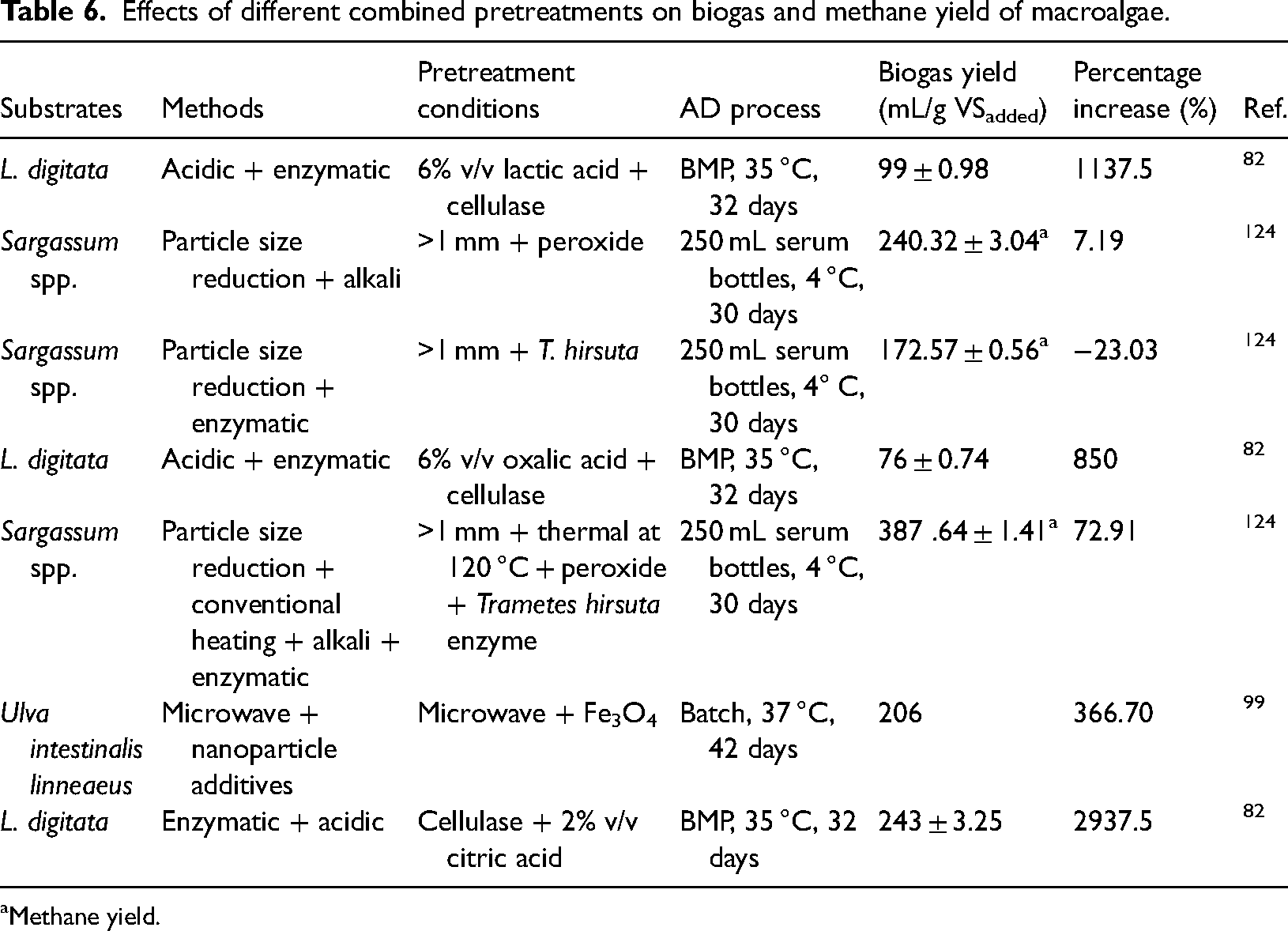
Methane yield.
Comparison of pretreatment methods
Feedstock pretreatment methods before anaerobic digestion have been observed to be effective in enhancing feedstock degradation and biogas yield when appropriately selected.76,151,107 Nevertheless, the transfer of most of these methods from the laboratory to the commercial scale is restricted by different technical, environmental, and economical challenges.43,152 Each pretreatment technique's efficiency has been found to be influenced by the feedstock's microstructural configuration. Comparison of pretreatment methods is very difficult because some of the literature was reported on different macroalgae and with different anaerobic digestion conditions. Nevertheless, few authors considered different pretreatment methods for the same macroalgae species. For example, Nemr et al. investigated the nano additives using Fe3O4 at 5, 10, and 20 mg/L, microwave pretreatment at 2 and 4 minutes, ultrasonication for 10, 15, and 30 minutes, ozonization at 10, 15, and 30 minutes and in combination on Ulva intestinalis Linnaeus. When considering their individual yields, it was observed that ultrasonic pretreatment for 10 minutes produced the optimum biogas yield of 179 mL/g VS, and the overall optimum yield of 206 mL/g VS was noticed when 5 mg/L of Fe3O4 was combined with microwave pretreatment. 99 Compared with single microwave pretreatment that releases 84 mL/g VS, adding Fe3O4 can cushion the effects of inhibitory compounds that might have been released during the microwave pretreatment. Ramirez 82 compared mechanical and chemical pretreatment methods on L. digitata under the same anaerobic conditions, and it was observed that biogas yield varied with pretreatment methods. L. digitata was milled to < 1 mm before anaerobic digestion, and the biogas yield recorded was 273 ± 1.34 mL/g VS, while the same feedstock pretreated with 6% v.v−1 NaOH produced 186 ± 0.56 mL/g VS. 82 This variation in biogas yield from the same feedstock digested under the same condition can be traced to the toxic nature of NaOH and the tendency to produce inhibitory compounds during the pretreatment process. 45 Combined pretreatment of Sargassum spp. using mechanical with chemical and mechanical with biological was also compared. Particle size reduction to >1 mm combined with peroxide on Sargassum spp released 240.32 ± 3.04 LCH4/kg VS, while particle size reduction to >1 mm combined with T. hirsuta produced 172.57 ± 0.56 LCH4/kg VS. When these results were compared with the untreated feedstock, it was observed that mechanical pretreatment with peroxide improves the methane yield by 7.19%, whereas the combination of mechanical and biological pretreatment reduced methane yield by 23.03%. 124 This difference in their influence can be linked to the ability of T. hirsuta to solubilize the feedstock beyond normal, thereby losing some of the organic matter meant for methane production to the pretreatment process. The impacts of thermal, chemical, and thermochemical pretreatment methods experimented on P. palmata was observed that thermal pretreatment at temperatures of 20, 70, 85, and 12 °C does not significantly impact the methane yield. The addition of 0.04gNaOHgTS−1 at temperatures of 20, 70, and 85 °C improved the methane yield by 11–13%. But when NaOH and HCl were added at 160 °C, methane yield was reduced by 8.44% and 12.99%, respectively. 40 It was noticed that thermal pretreatment on P. palmata between 180 and 200 °C lowers the methane yield. This can be traced to the formation of inhibitory compounds in the liquid fraction. It can be observed that thermochemical pretreatments performed better than the thermal pretreatment method on the same feedstock, but it could be inferred that the cost of thermochemical pretreatment would be higher. The influence of four different pretreatments methods of mechanical (particle size reduction), microwave (600 W, 2 minutes), ultrasonic (110 V, 15 minutes), and combined microwave and ultrasonic methods were investigated on the methane yield of Fucus vesiculosus. The cumulative methane after 20 days retention time was observed in905, 2598, 2644, and 2920 mL for mechanical, microwave, ultrasonic, combined pretreatment methods, and untreated substrate, respectively. 105 It can be inferred that all the pretreatment techniques considered had varying degrees of impact on the methane yield reported. This could be traced to the strength of each method to break down the cell wall for easy accessibility for microorganisms and the level of inhibitory compounds released during pretreatment. Apart from combined pretreatment, ultrasonic pretreatment can be noticed to perform better, followed by microwave and mechanical. Although, all the treatment methods enhance the methane yield compared to the control experiment. But before the best pretreatment can be identified for this feedstock among the techniques investigated, there is a need to determine the net energy balance for each pretreatment method. In general, pretreatment techniques comparison is more accurate when the same macroalgae with the same anaerobic digestion process are compared since pretreatment influences are specie-specific and not easy to extrapolate. Furthermore, microstructure analysis of pretreated feedstock using microscopes would assist in establishing the impact of individual pretreatment methods on the cell structural arrangement.
Microalgae is another algae group that can be used for biogas production. They are unicellular organisms that have complicated and strong cell walls that mainly consist of cellulose, hemicellulose/xylan, and chitin arranged in several layers. Both compounds have low biodegradation, whereas the intracellular content principally consists of lipids (20–30%) and proteins (50–60%).153,154 But macroalgae, conversely, comprise complex structures like terrestrial plants where hemicellulose and cellulose are composed of a crystalline structure that does not degrade easily. When it comes to microalgae, the cell walls can be broken down to make the feedstock more accessible for enzymatic hydrolysis, as opposed to when the specific surface area is increased, and the crystalline structure is broken down in macroalgae. 155 When compared to non-pretreated feedstock, pretreatment procedures have been shown to increase the process effectiveness of micro and macro algae while lowering the overall cost. 156 Because of the variation in the structural configuration of micro and macro algae biomass, the pretreatment technique does not have a universal influence. To date, literature available on ultrasound and microwave pretreatments was only applied to microalgae, while that of macroalgae is missing. Breaking down the cell wall is surely easier in simpler feedstock composed of unicellular microorganisms like microalgae, but it is difficult in macroalgae. 155 Mechanical pretreatment is the primary technique for macroalgae since these techniques produce smaller particle size of the feedstock, which is the best means of enhancing in the case of lignocellulose feedstocks, but for microalgae, thermal pretreatment produced the optimum methane yield with lesser energy input.157,158
Limitations to macroalgae pretreatment methods
The effectiveness of macroalgae pretreatment techniques has been observed to depend on the microstructural arrangement of the macroalgae. It is difficult to ascertain the particular pretreatment technique(s) that will release the highest yields. Biological pretreatment of macroalgae releases the least inhibitory materials, and mostly the restriction effects on the subsequent phase of anaerobic digestion are very low compared to chemical and physicochemical methods. This method has several advantages with some demerits like extended treatment time, specific conditions of microorganism growth, loss of carbohydrates, and larger space required. 159 The high price of enzymes/fungi/bacteria is a major obstacle to improving the economical sustainability of this process in biogas generation. 160 The main challenge of chemical pretreatment is the exorbitant price of chemicals and other steps such as neutralization and the requirement to use corrosion-resistant digesters. 159 Releases of inhibitory compounds that hinder methane yield release by forcibly reducing the conversion effectiveness during the hydrolysis stage of macroalgae are a challenge that requires further studies. To improve the efficiency of chemical pretreatment of macroalgae, there is a need to reduce the level of inhibitory compound released during pretreatment by using a lower concentration of chemicals and combination with other pretreatment methods to lower the cost of the process. Alkali pretreatment can reduce lignin content effectively, and the small quantity of alkali reagent left on the feedstock after washing with water assisted in pH neutralization during acidogenesis stage of anaerobic digestion. This makes alkali pretreatment more productive with subsequent anaerobic digestion than acid pretreatment techniques. 161 Alkali pretreatment is usually considered unattractive economically but may be utilized for lignin-rich biomass that otherwise cannot be degraded. Concentrated acid is highly effective in cellulose hydrolysis; nevertheless, it requires high energy and cost. Special equipment is required for the digester construction because of the concentrated acid's toxicity level. Dilute acid is more economical for lignocellulose feedstock pretreatment because it can hydrolyze up to 100% of the hemicellulose to its component sugars. 162 When organic solvent pretreatment of macroalgae is considered, every constituent of macroalgae can be recovered, but the process releases a huge amount of downstream residues, and specific equipment is needed, which are some of the challenges. 163 Ionic liquids are more effective for different ranges of use in extreme conditions compared to organic solvents. Nonetheless, the higher price of ions and the needs for recycling are the shortcomings of the process. 164 Chemical pretreatments of macroalgae are limited and, most times, contradictory, but combining chemical and thermal pretreatments have been observed to produce better influences on biomass digestibility. To date, there is no energy assessment report on biological and chemical pretreatment of macroalgae during biogas production. For these pretreatment techniques, the enzyme or chemical dose, treatment time, and temperature must be considered when determining the pretreatment expenses. The cost of an enzyme or chemical is the primary factor determining the process's feasibility. Generally, these pretreatment techniques require low energy, but they usually produce low improvement in biogas yield.
Particle size reduction can be assumed to be universal to most macroalgae pretreatment. Despite several reports that mechanical pretreatment significantly enhances methane yield, one of the major limitations of the technique is the inability to degrade the cell wall of macroalgae, a principal hindrance to accessibility to carbohydrates for anaerobic microorganisms. Particle size reduction of macroalgae feedstock to around 1–2 mm is adjudged to eliminate restrictions hydrolysis stage. Still, the process is costly, and about 33% of the energy needed for the process is expended on size reduction. 165 The sustenance of mechanical pretreatment is expensive due to the high energy needed for the process. Another disadvantage of the mechanical pretreatment method is the exorbitant cost of maintenance of the machines. The machinery is susceptible to inert materials like metallic materials or stones that could damage the facility easily. To improve the efficiency of mechanical pretreatment of macroalgae, there is a need to devise a means to reduce the energy required for milling and grinding. During thermal pretreatment of macroalgae, the chemical is not always needed, and this will not be accounted for. This process requires high temperatures and could release inhibitory compounds like phenolic acids, 5-hydroxymethylfurfural, and furfural, lowering the methane yield. This technique is most acceptable in places whereby excess heat from a closely power plant or factory can be used to reduce the energy cost for heating. 166 Because of the high energy required for this technique, the energy balance in thermal pretreatment needs to be addressed to ascertain its efficiency. Many nanoparticles have been observed to enhance the biogas released. One of the major challenges with this technique is that the production of nanocatalysts has reduced the cost of biocatalysts. This process requires photo-digestion reactors consisting of visible-light photoactive metal oxides to increase the volume of hydrogen produced and improve methane yield. This is a major obstacle to nanoparticle additives. 167 Some of the merits and challenges of pretreatment techniques are presented in Table 7.
Summary of some merits and challenges of macroalgae pretreatment techniques.
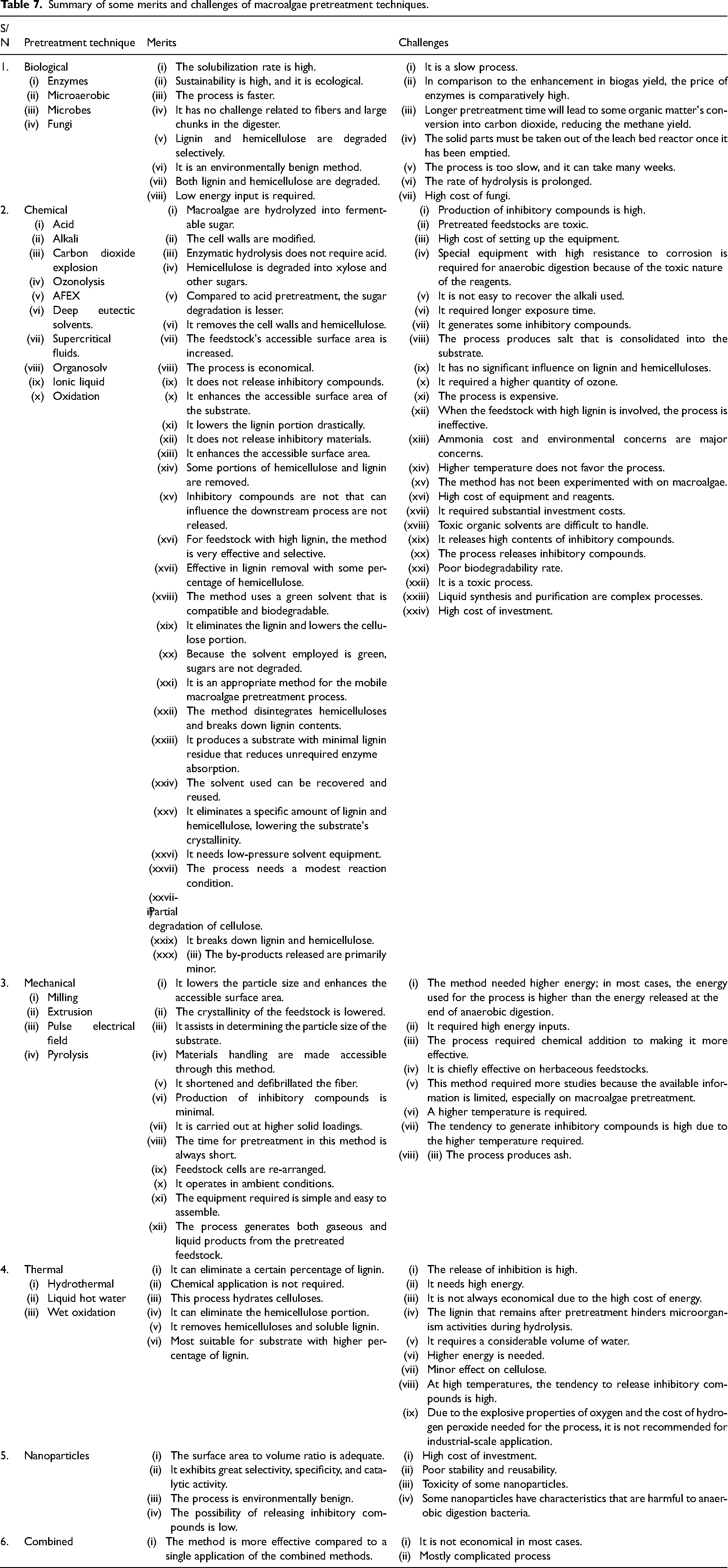
Discussion
Using macroalgae as biogas feedstock during desalination could significantly lower greenhouse gas release. Using macroalgae's anaerobic digestion as a renewable energy source could be a wise choice for nations with insufficient freshwater resources. Additionally, the predicted decrease in fossil fuel usage through the anaerobic of macroalgae will result in a significant reduction in the environmental impact of fossil fuels. However, there are still certain difficulties with the anaerobic digestion of macroalgae, which result in poor biogas output and quality. Despite the advantages macroalgae have over other biofuel feedstocks, there are significant obstacles to be solved before reaching industrial-scale production. 168 Because of the large concentration of high molecular weight organic compounds and the relative stiffness of the cell walls, which impedes the hydrolysis process, macroalgae anaerobic digestion experiences a significant bottleneck. 169 This cell wall can be break down with pretreatment techniques and make the feedstock accessible to the microorganisms, reduce the retention time, and enhance biogas production. According to the works of literature accessed, it was observed that there are different biological, chemical, mechanical/physical, thermal, nanoparticle additives, and combined pretreatment techniques that have been experimented with lately to solve the problems of biodegradation of macroalgae during anaerobic digestion. It was observed each of these methods has its merits and demerits, and appropriate matching of pretreatment methods with macroalgae feedstocks that will fulfil the aim of pretreatment. The process will improve macroalgae's biogas and methane yield when the appropriate methods are selected based on the structural arrangement. An important factor to be considered in macroalgae pretreatment is the energy required for the process; in some cases, the methods that required low energy produced small enhancements regarding the breaking down of feedstock and biogas released compared to the techniques that needed higher input. Although, this situation is peculiar to only some cases. Improved degradation of macroalgae and enhancement in recalcitrant produces higher biogas. It is observed that some of these methods can improve the percentage degradation but have insignificant or no influence on the biogas released. Massive investment is required to set up some of these pretreatment methods, and the improvement in biogas released may not be commensurate with the investment cost. There have been several reports on macroalgae pretreatment before anaerobic digestion recently. However, there is still a wide area to be covered, especially on how they can be economically feasible at the industrial level. The release of inhibitory and toxic compounds is another considerable limitation observed in most of the literature reviewed. Inhibitory and toxic compounds released during pretreatment lower the biogas-producing microorganisms’ activity, reduce the biogas released, and make the process uneconomical. This is a big concern in macroalgae pretreatment since some of the merits of pretreatment methods were eroded during digestion because of the harmful influence of these compounds on methanogenic bacteria. A pretreatment method with particular macroalgae was noticed not to have the same effect on other macroalgae. This is because various macroalgae feedstock were observed to respond differently to the same pretreatment technique. This could not be economically feasible or improve the net energy for macroalgae feedstocks with high debasement rates. Although from the information accessible for some macroalgae species, efficient techniques can be selected, some do not meet the efficiency and economic needs of the industries.
Conclusion and recommendations
Physicochemical characteristics of macroalgae have shown them as an excellent potential feedstock for biogas production. But their microstructural arrangements limited their conversion to biogas due to the unavailability of organic matter for microorganisms’ use. Enhancing biogas from macroalgae will contribute significantly to sustainable development by reducing greenhouse gas emissions, economic management of seaweeds, and reducing the reliance on energy from nonrenewable resources. Utilizing macroalgae biomass instead of the traditional substrate (agricultural residues, energy and starchy crops, etc.) might be a phenomenal cost-effective and available sugar source for the transportation sector, and other energy uses. The microstructural arrangement of macroalgae exhibits technological hindrances because of their resistance to bioavailability, and the pretreatment of this recalcitrant substrate is important for an efficient production process. Pretreatment of macroalgae biomass before anaerobic digestion has been observed to enhance the biogas and methane yield of this economical feedstock. Macroalgae pretreatment and alteration of the structural arrangement are the principal factors influencing the hydrolysis stage. The considerations utilized in selecting the pretreatment technique will significantly influence different species of macroalgae characteristics and dictates the availability of the feedstock for hydrolysis stage and the subsequent sugar released for biogas release. Therefore, pretreatment methods selection is a vital decision in biogas production from macroalgae, and it is crucial to establish the fundamentals of different processes that can assist in deciding the most efficient technique regarding the microstructural arrangement of the feedstock and hydrolysis microorganisms’. Studies on the pretreatment of macroalgae are limited compared to other organic feedstocks, such as sewage sludge and other lignocellulose materials (terrestrial residues). Most of the studies on macroalgae pretreatment focused on biomethane potential. In contrast, evaluation of the effectiveness is based on feedstock solubilization and enhancement in methane yield. In this manner, the influence of pretreatment techniques on cell wall arrangement has not yet been examined. As previously mentioned, the significant challenges of macroalgae pretreatment are energy cost and the release of inhibitory materials that lower the efficiency of biogas production's downstream bioprocesses. To increase the techno-economic possibility of utilizing macroalgae biomass as biogas feedstock, the idea of incorporating biorefineries where more than one bioproduct is produced on the same platform could be promising. Having biodiesel, bioethanol, biohydrogen, or bio-oil in the same refinery with biogas will reduce the pretreatment cost significantly and add other valuable products to the process. The waste generated from these bioprocesses can serve as feedstocks for biogas production and will not require pretreatment again. This will also promote macroalgae biomass pretreatment at a large scale significantly. Majority of the techniques available in the literature were examined at the laboratory scale, and this might not produce the same efficiency when considered at the industrial scale. Therefore, future studies need to focus on understanding pretreatment mechanisms and investigation on a pilot scale to validate the application of pretreatment technology in the industry and examine its scalability for the commercial conversion of macroalgae into biogas and methane. It is recommended that pretreatment input parameters could be specified by applying a multiobjective optimization method such that optimum biogas yield can be generated with a positive energy balance. Various methods can be applied to solve such multiple-response problems. Desirability techniques have been experimented with in various engineering fields, and it is recommended because of their simplicity, software availability, and flexibility for individual response.
Footnotes
Data availability
Data are reported in tables in the manuscript.
Declaration of conflicting interests
The authors declared no potential conflicts of interest with respect to the research, authorship, and/or publication of this article.
Funding
The authors received no financial support for the research, authorship, and/or publication of this article.
