




Abstract
In this study, the willingness to pay (WTP) of the Korean people for a flood control policy to prepare for climate change and a policy to reinforce the protection of populations vulnerable to climate change was estimated using the contingent valuation method (CVM). In addition, the appropriateness of the budgets allotted by the Korean government for these two policies in 2021 was examined by comparing them with the benefits to the people at the national level. The average annual WTP per household was estimated to be approximately KRW 27,457 and 25,854 for these two policies. The WTP was found to increase with adverse effects caused by extreme weather conditions; as people developed an interest in climate change, their income level increased and hence they showed preferences for policies by the ruling party. In addition, the benefits of the two policies at the national level were estimated to be worth KRW 573.6 and 540.1 billion, respectively. When the benefits were compared with the amount allotted in the budgets for them, the ratio of the budget to the benefit was found to be 77.55% for flood control in preparation for climate change and 4.46% for the reinforced protection of populations vulnerable to climate change. This confirms that the acceptability of the policy by the populations vulnerable to climate change is high, but the budget is not allocated as per the need.
Introduction
Greenhouse gas (GHG) emissions accumulating in the atmosphere are the main cause of global warming. 1 Climate change mitigation policies formulated to reduce GHG emissions may help decrease the damage to future generations, which may be caused due to global warming in the long term but are unable to solve the problems due to global warming faced by the present generation. Meanwhile, in order to adapt to climate change, the other axis of response to climate change is an approach to discuss how well the international community can adapt to or utilize the various global phenomena caused by global warming, such as heat waves, torrential rainfall, heavy snow, and cold waves.
In 2001, the Intergovernmental Panel on Climate Change (IPCC) evaluated the problems and the extent of vulnerability being faced by the present generation and likely to be faced by future generations due to global warming and began to make recommendations regarding the importance of measures that can be adopted for adaptation through the IPCC Third Assessment Report. 2 In 2002, under the United Nations Framework Convention on Climate Change (UNFCCC), the Delhi Ministerial Declaration which emphasizes the importance of offering assistance and technological resources and helping the developing countries to adapt to climate change, was decided upon in the 8th Conference of the Parties (COP). In 2015, the Paris Agreement was adopted in the 21st COP. This agreement sets the global goal for improving adaptive capacity, increasing resilience, and reducing vulnerability to climate change. In addition, periodic submission of an adaptation communication has been newly declared. 3 In 2022, the IPCC Sixth Assessment Report by Working Group II was approved. The report says human-induced climate change is affecting the lives of billions of people around the world, but those with the lowest coping ability are experiencing the hardest consequences. In addition, while uneven progress on adaptation creates gaps between action taken and what is needed to deal with climate change, these gaps are the largest among low-income populations. 4 Those with the lowest coping ability could belong to people vulnerable to climate change. Although there is still no agreed definition of who those are, UNFCCC introduced that gender, age, income, ethnicity, social caste, etc., could be applied as one of the approaches. 5
Along with populations with the lowest coping ability, flooding by heavy rainfall is also crucial to climate change adaptation. While the former should be protected from extreme events by climate change, the latter should be reduced. The current global warming trend is widely believed to lead to a continuous increase in extreme rainfall.6,7 Moreover, floodings are becoming more frequent and are considered serious natural disasters that cause significant damage to the economy, society, and human safety and property.8,9
In Korea, the government has been establishing and implementing the National Climate Change Adaptation Plan (NCCAP) every five years based on the Framework Act on Low Carbon, Green Growth 10 to improve the national adaptive capacity since 2011. The first NCCAP introduced installing facilities to reduce stormwater run-off, burying large-scale sewage pipes to store initial rainwater, etc., for flood control, and designating cooling centers from heat waves for populations vulnerable to climate change. 10 The second NCCAP proposed strengthening the disaster management system, including a flood warning system for flood control and delivering more active options such as visiting assistant services for populations vulnerable to climate change. 11
In 2010, storms were the largest contributor to the global direct disaster losses given as a share of GDP, accounting for 0.09%, followed by floods accounting for 0.05% of a total of 0.22%, 12 which shows that flood control is one of the most crucial options concerning climate change adaptation. In addition, since people vulnerable to climate change may belong to the weakest groups in our society in terms of physical and economic aspects, strengthening their adaptive capacity would pave the way for increase in adaptive capacity of our society as a whole.
Hence, the purpose of this study is to investigate the degree of public awareness with respect to adaptation to climate change and social acceptance of the policies by the people, by examining their willingness to make monetary contribution – willingness to pay (WTP) – for the flood control policy as a measure to prepare for climate change and the policy that aims to reinforce the protection of populations vulnerable to climate change, and Korean policies pertaining to climate change adaptation, by using the contingent valuation method (CVM) and to verify valid implementation of the policies.
This paper is organized as follows. The next section discusses the trends in previous studies that have investigated climate change adaptation in relation to CVM, followed by the third section which includes detailed explanation of the CVM and the double-bounded dichotomous choice (DBDC) spike model used in this study. In the fourth section the average annual WTP of the respondents and its determinants are analyzed based on the estimations of the model. In addition, the average annual WTP was replaced by social acceptability, and the validity of the flood control policy in preparation for climate change and the policy to reinforce the protection of populations vulnerable to climate change was evaluated by comparing the social acceptability and the allocated budgets. Finally, in the fifth section, the research results are summarized, and the limitations of this study and the future research direction are discussed.
Literature review
Some previous studies that applied CVM to climate change adaptation policies estimated the WTP with the help of experts engaged in the formulation of climate change mitigation and adaptation policies at the national level, while other studies determined the level of acceptability of the adaptation measures by the people. Most studies on acceptability targeted policies at the regional level, such as agricultural programs, water management measures, typhoon risk reduction measures, and urban heat island mitigation measures, rather than policies at the national level.
Studies have been conducted to raise awareness of the agricultural programs in Pakistan and Malaysia in the agricultural sector. Ahmed et al., 13 Banna et al., 14 and Al-Amin et al. 15 revealed that the level of education of the farmers, their income, and awareness pertaining to the environment and climate change are positively correlated to climate change-related agricultural programs. In particular, Ahmed et al. 13 suggested that the cooperation of the government, non-governmental organizations, and media to raise farmers’ awareness of the environment and climate change is needed. However, these studies applied CVM to regional programs rather than policies, and Al-Amin et al. 15 used a payment vehicle as a fee for a program introduced in the future.
As far as water management is concerned, Maghsood et al. 16 revealed that the socioeconomic dimension, income of the residents, has the greatest impact on the acceptability of flood control policies and that WTP decreases for residents who live farther away from rivers that are subjected to flood control policies. However, there is a limitation in their study as structural strategies such as dam and reservoir construction and unstructured strategies such as improving public awareness may have caused a bias in the respondents’ WTP. Entorf and Jensen 17 showed that prior experience with flooding, better knowledge of climate risks and the true ability to pay were important for WTP for flood risk reduction. However, their study also has limitations as the study sample was collected through Payback, a German bonus program, and was checked whether they experienced measures against flooding or not. Tsai & Onishi 18 compared the WTP from the respondents and the actual market price for the same systems and showed that income, the experience of flooding, and environmentally conscious behavior were affecting the respondents’ WTP, and suggested directions for the government policies. However, the demographic distribution of the population in Yokohama, the study area, was not presented in their study.
Akter 19 studied the relationship between social cohesion and WTP with respect to cyclone risk reduction measures. They found a significant positive correlation between them and implied that the perception of natural disaster risk has a positive correlation with the respondent's WTP. However, applying CVM to programs rather than policies is considered a limitation.
Concerning the urban heat island mitigation sector, Zhang et al. 20 revealed that subjective norms, attitudes, etc., were also significantly related to WTP by introducing the theory of planned behavior as well as socioeconomic attributes. The limitation of this study is that when the payment vehicle was used as tax, the respondent's ability to bear it should have been checked in advance, but it was not mentioned. Borzino et al. 21 revealed that residents who live in areas with severe urban heat island phenomena are willing to pay more than those not in such areas because they exhibit their acceptance of urban heat island mitigation measures. They also insisted that the level of awareness of urban heat island intensity and favorable attitude toward urban heat island intensity mitigation strategies, in addition to income and the education level, positively correlated to WTP. However, there is no mention of exactly what the mitigation measures are and whether there is no heterogeneity between them, which is a limitation of this study.
With respect to the national level policies, Markantonis and Bithas 22 derived WTP for adaptation and mitigation policies with the help of experts by applying CVM, and insisted that it is necessary to adopt the two policies in the future while maintaining a balance between them. A characteristic feature of this study is that the CVM was applied to the policies themselves. However, the sample size was small at 30 persons, and their representativeness was not reviewed.
In summary, there were many studies which explored WTP for adaptation measures related to heat waves, cold waves, and floods, and several studies sought a balance between mitigation and adaptation policies at the national level, while other studies calculated WTP mainly in the agricultural sector in terms of industry standards. However, there are a lack of studies that evaluated the WTP for a national level policy on climate change using the CVM approach. (Table 1)
Previous studies that estimated the social acceptability of climate change adaptation programs or measures.
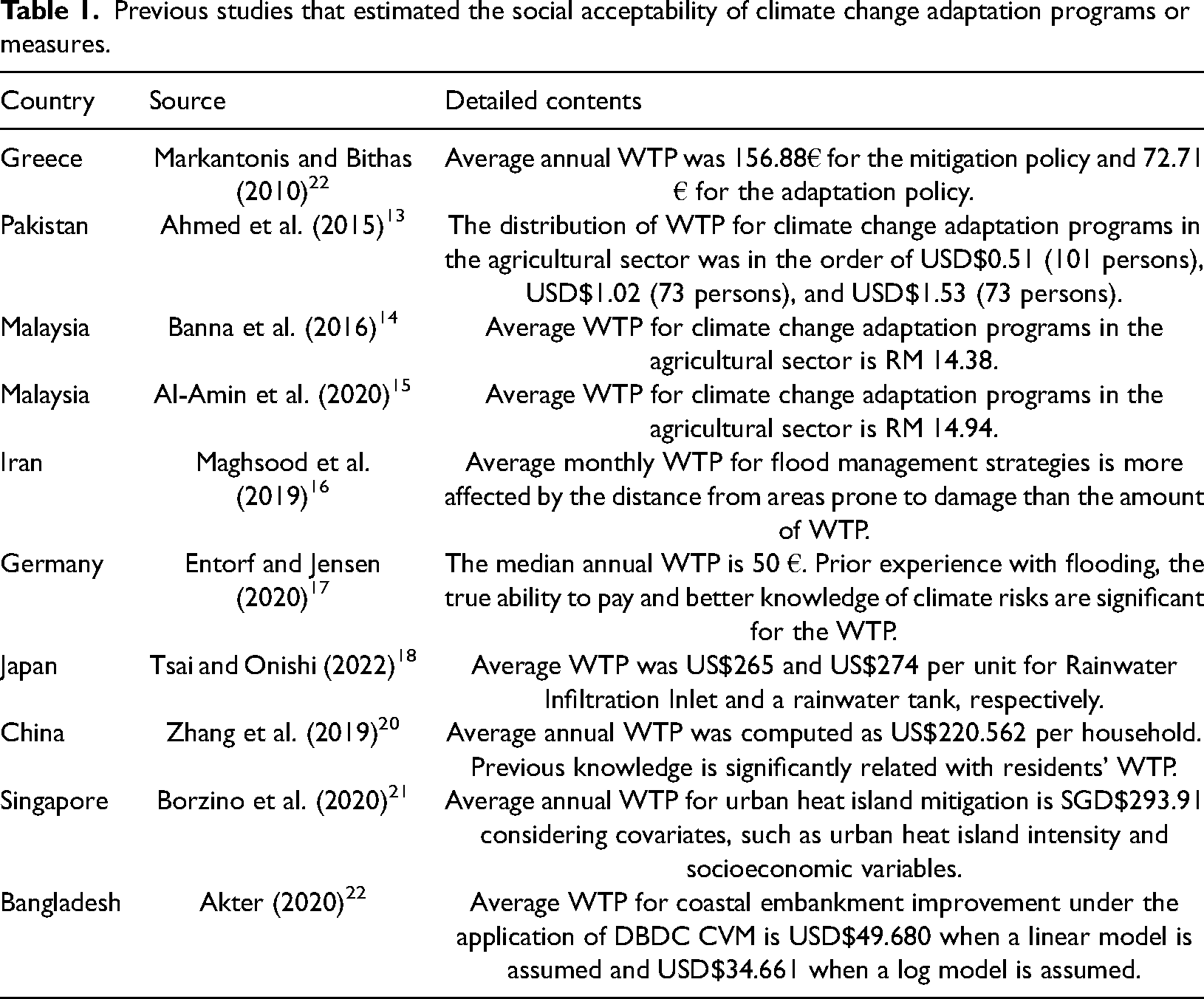
Previous studies on the WTP for a climate change policy had several limitations. First, few cases applied WTP to policies or programs related to the vulnerable groups in climate change. Second, some studies were limited to the agricultural industry. And third, even though payment vehicles were set as taxes, their samples were selected without considering their ability to pay. Considering these limitations, this study differs in the following points. First, the WTP of the sample was estimated by applying the CVM not only to the flood control policy but also to the policy related to the vulnerable groups in climate change. Second, CVM was applied at the policy level, not the program level. Third, samples were collected regardless of their occupation to seek scalability in applying the study results. Finally, the reliability of the WTP results was improved by limiting the sample to the heads of households since annual tax was used as the payment vehicle.
Methodology
Contingent Valuation Method
It is relatively easy to evaluate the economic values of goods or services that are traded in the market using their transaction prices. In the case of non-goods without a market price, such as climate change adaptation policies targeted in this study, techniques such as CVM (i.e., a type of the stated preference method) that determines the economic values of goods or services based on the preference expressed by the people are utilized. 23
The stated preference method is further divided into CVM and choice modeling. While CVM is a method of estimating the economic value of a research object by asking respondents directly whether they are willing to pay for it, choice modeling is a method of decomposing a research object into various attributes, combining them to create various alternatives, and inferring the WTP through the respondents’ selection results. 24 The purpose of this study is to determine the appropriateness of two policies by converting them into amounts and comparing them with the budgets for each of the two policies that have already been established. Due to this reason, we decided to use the CVM strategy. According to Jang et al., 25 CVM mainly proceeds in the order, questionnaire design, questionnaire verification and correction, survey, analysis, and aggregation. In this study, a questionnaire was first designed. Then a pilot test was conducted to select the initial bid amount for the main survey. After the main survey, the responses were compared with the population statistics, and the average WTP and confidence interval were estimated by considering the degree of non-responses, and the WTP of the population was estimated from the sample WTP estimate.
When designing the questionnaire, the number of bids required and how to induce the WTP of the respondents are determined. The questionnaire included open-ended questions, a bidding game, a payment card, and a dichotomous choice (DC). It is known that the open question method has a high non-response rate or many outliers. While the bidding game also has concerns about starting point bias, the payment card method has concerns about strategic bias.
25
On the other hand, DC has the advantage of lowering the non-response rate because a researcher sets several prices first and presents them to respondents, so respondents only need to choose whether to accept the bid instead of thinking about the amount they are willing to pay. DC is again divided into single-bounded (SBDC), one and one-half bounded (OOHDC), and double-bounded (DBDC) according to the number of WTP questions. While the WTP question is asked once in SBDC, it is asked twice in DBDC. OOHDC is characterized by termination without additional questions when respondents express their intention to refuse to pay. DBDC is more efficient than SBDC and OOHBDC because it can derive more information about respondent-specific WTPs.26,27 In particular, since the additional information obtained from subsequent questions in DBDC significantly improves the accuracy of the estimated WTP, the DBDC was used in this study as follows. When the respondents (
Spike Model
The spike represents the proportion of the respondents with zero WTP in the sample. And this model is theoretically based on the utility difference model.26,28,29 Here, the WTP of the respondents can be represented as a random variable with a cumulative distribution function expressed as 




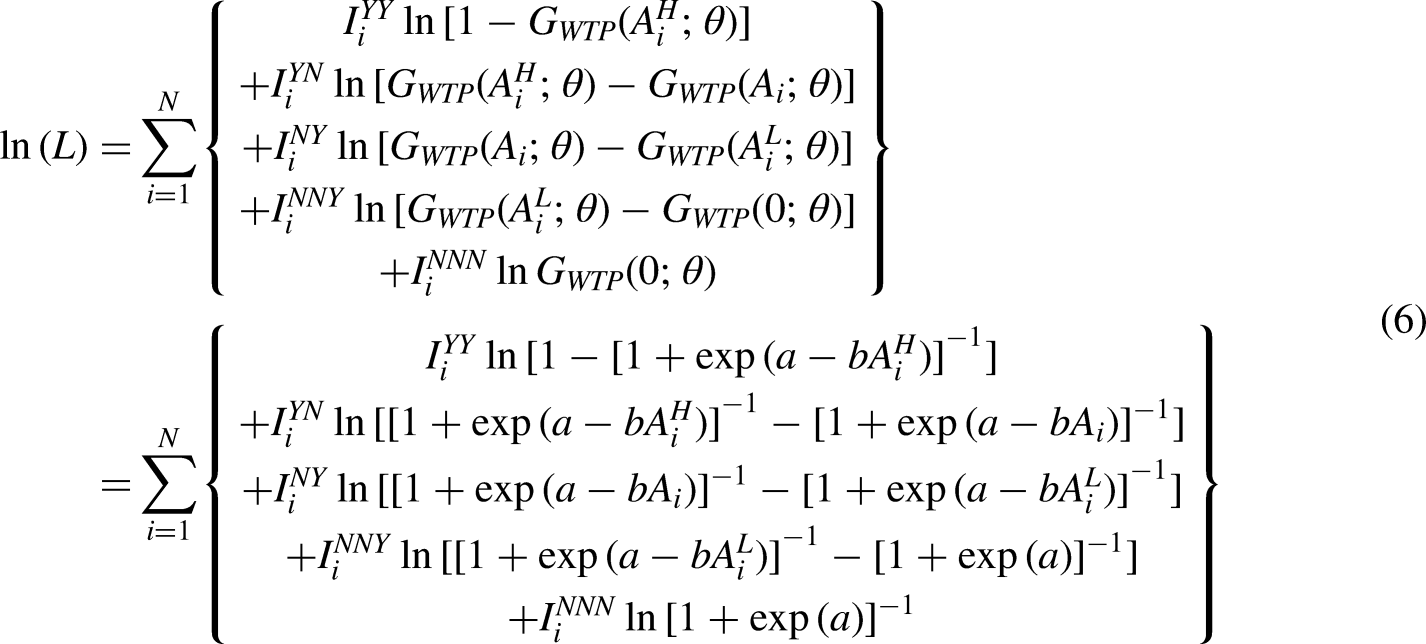

The spike is expressed as
In this study, an additional model that replaced a with
Survey Design
The questionnaire was composed of the following: (1) questions related to socioeconomic characteristics, (2) questions related to awareness about climate change, and (3) questions pertaining to maximum WTP after the significance and benefits of the flood control policy in preparation for climate change and the policy to reinforce the protection of populations vulnerable to climate change had been described. (Table 2)
Contents of climate change adaptation policies to be surveyed.
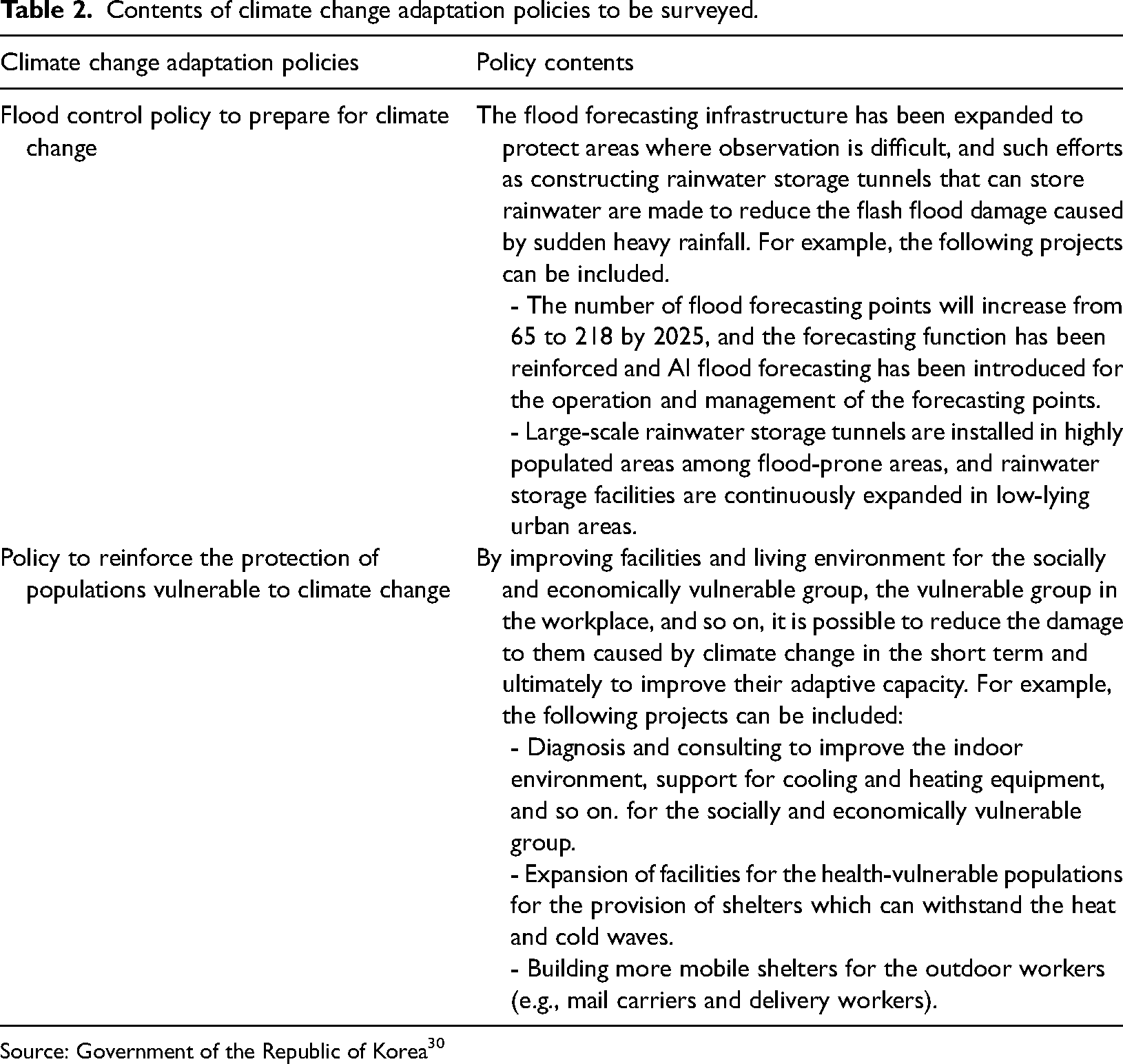
Source: Government of the Republic of Korea 30
Among them, the questions pertaining to the socioeconomic characteristics and awareness about climate change were prepared to ascertain the factors that affect the maximum WTP of people with respect to the above two policies. The gender, age, educational qualification, average monthly income, and preferred political party were selected as socioeconomic characteristics. As variables related to the perception of climate change, experience with damage from extreme weather events, interest in climate change, awareness of the difference between climate change mitigation and adaptation, and awareness of the fact that NCCAPs were established were selected to ascertain the impact of these variables on WTP.
In the part regarding asking about the maximum WTP for the two policies mentioned above, pictures and detailed descriptions on each policy were provided prior to the survey to help the respondents have a better understanding of the policies.
The payment vehicle was set as a tax by carefully reviewing related studies,25,31–34 but it was not specifically stated whether it was as an income tax or a property tax because it may lead to respondents’ intention to refuse pay depending on their income or property.
Thus, the target of analysis was limited to the heads of the household, and their income was assumed to be constant. A total of 455 persons were surveyed in a pilot test from October to November 2020 to determine the initial bid amount for the main survey, and 10,000 won, 20,000 won, 30,000 won, 40,000 won, and 50,000 won were found to be appropriate on a yearly basis. Separately from the pilot test, 1042 people from all over the country were divided into five groups, and those initial bids were randomly presented to them in the main survey in early 2021. Since the payment vehicle was set as annual tax, only those who responded that they were heads of households with the ability to pay among the 1042 participants were analyzed.
Results
Survey Results
The survey was conducted in January 2021 by Gallup, a professional survey institute, to investigate the extent of preparedness of the flood control policy in response to climate change and the policy to reinforce the protection of populations vulnerable to climate change, respectively. The 1042 survey respondents were randomly chosen according to the proportionate stratified sampling method based on their socio-demographic factors such as gender and age to represent the actual population of South Korea. The response rate was 72.5%. Here, since the payment vehicle was set as annual tax, the sample was selected again as heads of households with the ability to pay taxes, and finally, 564 people were analyzed. While the initial 1042 people were representative of the population in terms of gender ratio and age distribution, there was a sampling error because the final sample was limited to the heads of the household. (Table 3)
Demographic characteristics of the respondents.
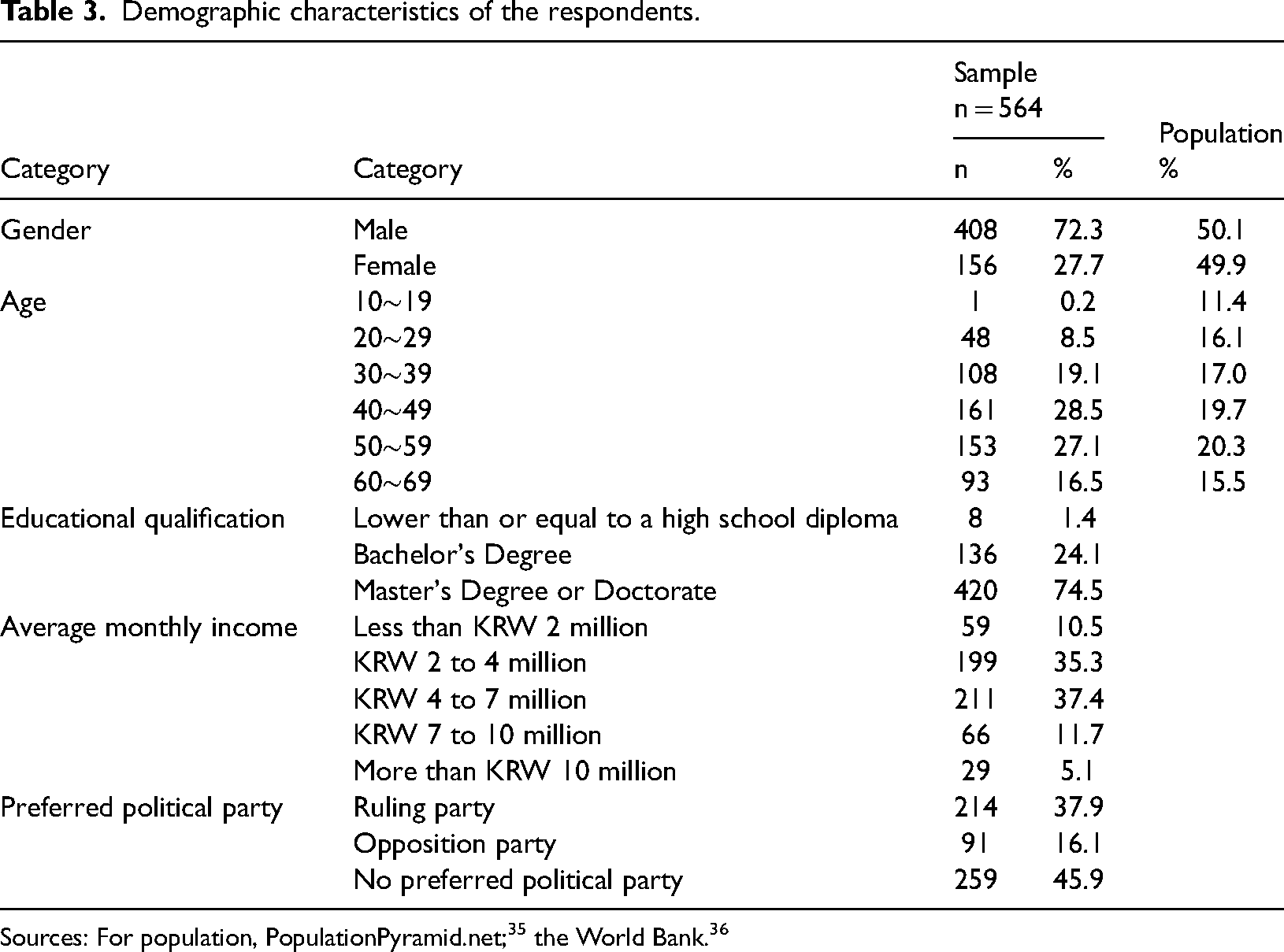
The details regarding the responses of the participants with respect to damage from extreme weather conditions/phenomena, interest in climate change, and awareness of climate change adaptation have been presented in Table 4.
Suffering from extreme weather phenomena, interest in climate change, and awareness about climate change adaptation.
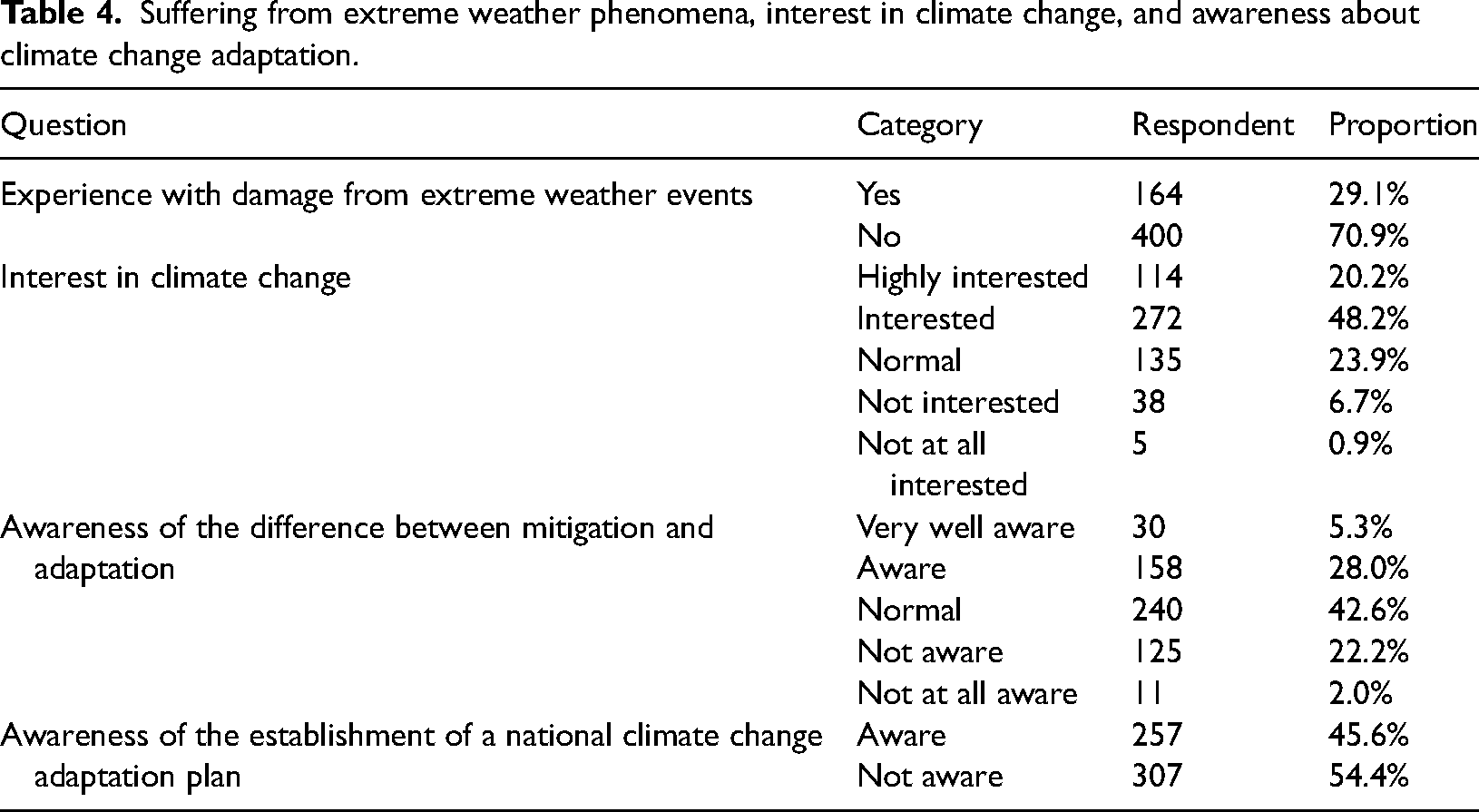
Among the respondents, 29.1% reported experiencing damage from extreme weather events, and 68.4% responded that they were interested in climate change.
To the question of whether they were aware of the difference between climate change mitigation and adaptation, 33.3% of the respondents answered that they were well aware or aware of it. Meanwhile, to the question of whether they were aware of the introduction and implementation of the NCCAP, 54.4% answered that they were not aware of it. Combining these two results, it is thought that the public's awareness of climate change adaptation is not very high.
To sum up, it was found that people were very interested in climate change, but they were not well aware of the difference between climate change mitigation and adaptation as well as the implementation of the NCCAP. This indicates that the effect of the education and publicity on climate change adaptation, which the government has continuously promoted as a policy at the national level in relation to climate change adaptation since 2011, has not been very successful in raising public awareness. Hence, it is necessary to implement more effective strategies.
Respondents’ Willingness To Pay
Initial bids
As mentioned before, the respondents were divided into five groups, and one of the five initial bids was presented to each group to determine their WTP for the flood control policy in preparation for climate change and the policy to reinforce the protection of populations vulnerable to climate change.
Table 5 shows the distribution of responses obtained on the initial bid for “sustainable flood control in preparation for climate change (hereafter, policy 1)” first. As shown in the table, as the initial bid increased, the number of respondents for the Yes-Yes response category declined, but that of the No-No-(Yes or No) category tended to increase.
Initial bids and the response ratio for policy 1.
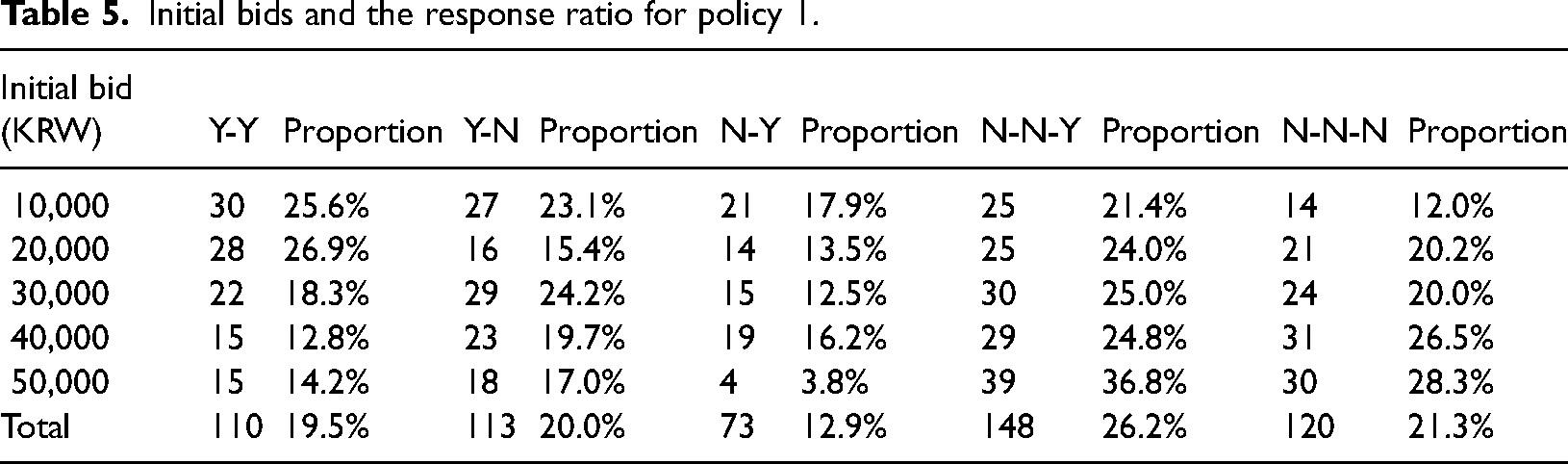
Table 6 shows the distribution of response of the respondents on the initial bid for “reinforced protection of populations vulnerable to climate change (policy 2)”. As the initial bid increased, the number of the Yes-Yes respondents showed a tendency to decrease but that of the No-No-(Yes or No) respondents tended to increase.
Initial bids and the response ratio for policy 2.
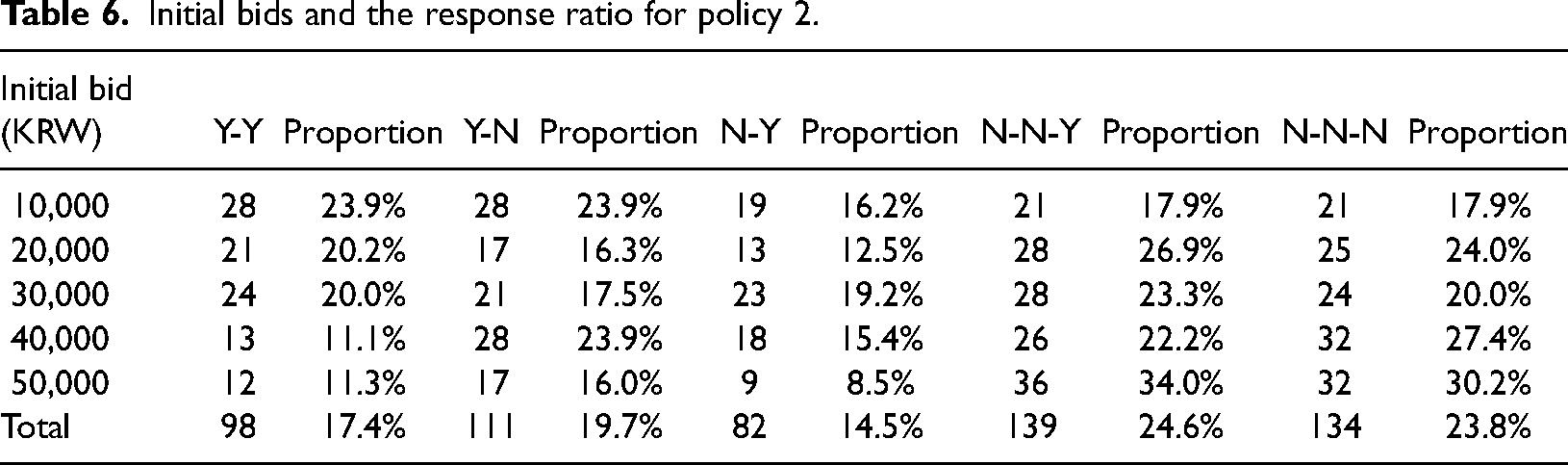
In particular, the proportion of the respondents who refused to pay (No-No-No) for the two policies was 21.3% and 23.8%, respectively, representing approximately one-fourth of the respondents.
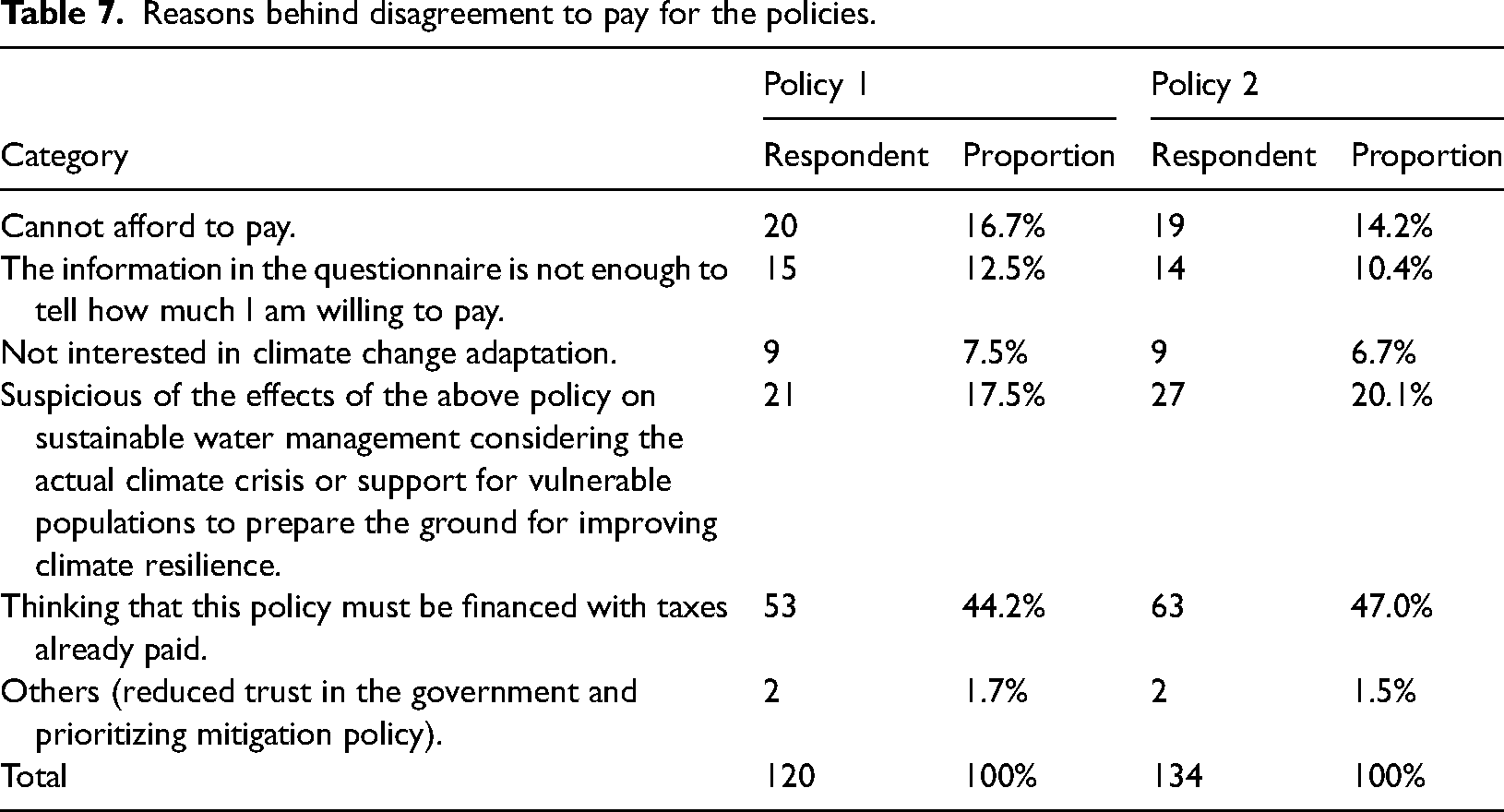
According to related studies,25,31if a respondent chooses zero WTP for uncertainty, distrust, unfairness, or opposition to a specific policy, it corresponds to protest zero. And if he or she chooses zero WTP for inability to pay or zero additional utility, it is classified into real zero. In Table 7. the first answer and the third answer belong to real zero responses. The number of respondents who have chosen the real zero responses was 29 and 28. And the rest, 91 and 106, were considered protest zero. However, it was judged that this reflects uncertainty about the future climate rather than distrust of the policies themselves. Therefore, the spike model was applied to treat these protest responses statistically rather than excluding them29,37
Reasons behind disagreement to pay for the policies.
Further, it is deemed important to provide people with sufficient scientific grounds for the impact of future climate change through education and publicity aimed at imparting knowledge about the need to adapt to climate change in the future.
Estimation results of the spike model
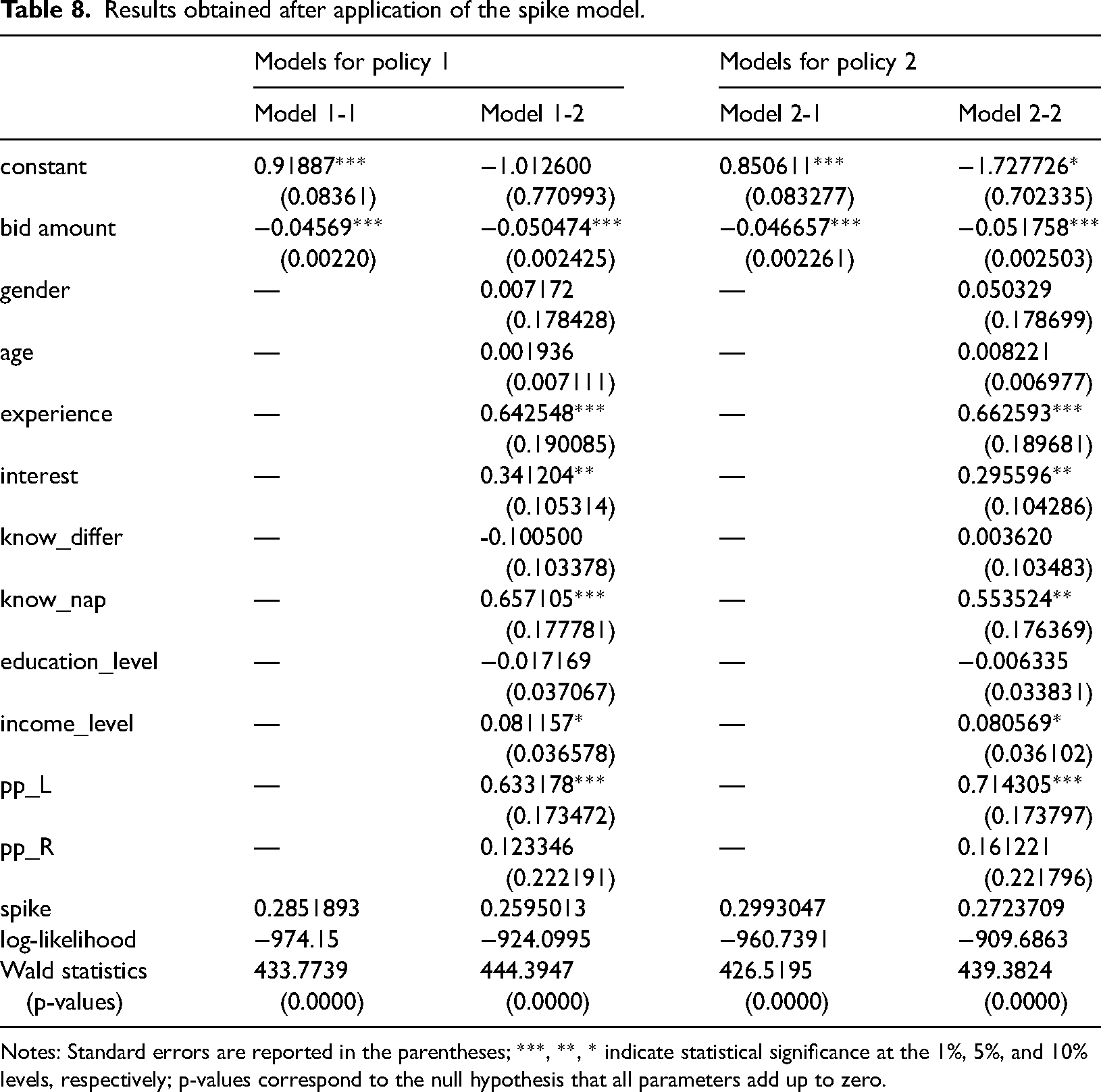
In this study, the DBDC spike model was used in cases where covariates were considered and not considered to reduce the distortion of the total WTP due to the respondents who refused to pay. Models 1-1 and 2-1 are basic models that do not consider covariates to estimate the WTP of the average respondent for policies 1 and 2, respectively, whereas models 1-2 and 2-2 consider covariates, such as the socioeconomic characteristics of the respondents and their awareness of climate change, to identify factors that determine the WTP level of the respondents for policies 1 and 2, respectively.
Table 8 shows the estimation results of models 1 and 2, respectively. First, in the case of model *-1(1-1 and 2-1) that do not consider covariates, all parameter estimates showed statistically significant results at the 1% level. In other words, the null hypothesis that all parameter estimates are zero was rejected at the 1% level (Wald statistic). Thus, this model was statistically significant. In addition, the value of the bid amount was negative at a 1% significance level. This means that the probability that the respondents will respond with a “yes” would decrease when the bid amount increases. This is consistent with the results in Tables 5 and 6 that the number of Yes-Yes respondents decreases as the initial bid amount increases. In addition, the spike, which refers to the proportion of respondents with zero WTP in the sample, for model 1-1 and model 1-2 was estimated to be 0.2851 and 0.2993 at 1% significance, respectively. These are similar to 24 to 26%, which are the proportion of the response to refuse payment (no-no-no) in Tables 5 and 6. This indicates that the spike model applied in this study reflected the sample characteristics well, and hence its suitability is confirmed.
Results obtained after application of the spike model.
Notes: Standard errors are reported in the parentheses; ***, **, * indicate statistical significance at the 1%, 5%, and 10% levels, respectively; p-values correspond to the null hypothesis that all parameters add up to zero.
In the case of the estimation results of model *-2(1-2 and 2-2) that considered covariates, all the parameter estimates also showed statistically significant results at the 1% level. Thus, this model was found to be statistically significant. The bid amount was also obtained as a negative value at the 1% level, indicating that the probability that the respondents would respond with a “yes” was low when a high bid amount was presented. In addition, the spike was found to be significant, with the values being 0.2595 and 0.2723 at the 1% level, respectively. These are similar to 24 to 26%, which are the proportion of the response to refuse payment (no-no-no) in Tables 5 and 6, indicating that model 2 is also suitable as it well reflects the sample characteristics.
As for the correlations between covariates, it was found that the respondents were willing to pay higher as they had been adversely affected due to extreme weather conditions/phenomena, they were interested in climate change, were also aware of the introduction and implementation of the NCCAP, and as their income level increased, they preferred the ruling party.
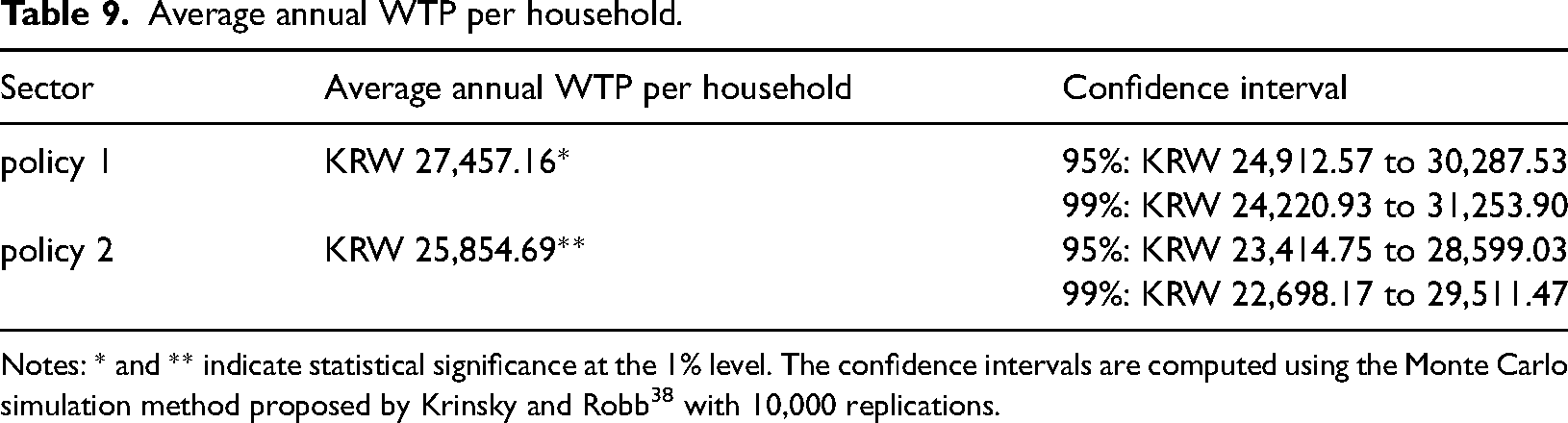
Table 9 shows the results of the computation of the average annual WTP per household for the two policies based on the model *-1(1-1 and 2-1) that does not consider covariates. It was found that the average annual WTP estimates were significant at the 1% level and that people were willing to pay approximately KRW 27,457 and 25,854 per household for policy 1 and policy 2. WTP for policy 2 was estimated to be slightly lower than that for policy 1.
Average annual WTP per household.
Notes: * and ** indicate statistical significance at the 1% level. The confidence intervals are computed using the Monte Carlo simulation method proposed by Krinsky and Robb 38 with 10,000 replications.
Social Benefit Analysis
CVM is a method of estimating the economic value of the target goods or services by allowing respondents to virtually respond to a questionnaire to express their maximum WTP. The questions included in the questionnaire are based on real-life situations. Here, WTP is the economic value determined by the respondent beyond the market price and the benefits perceived by the respondents. Therefore, it can be seen as the benefit of the target climate change adaptation policy for people in this study.
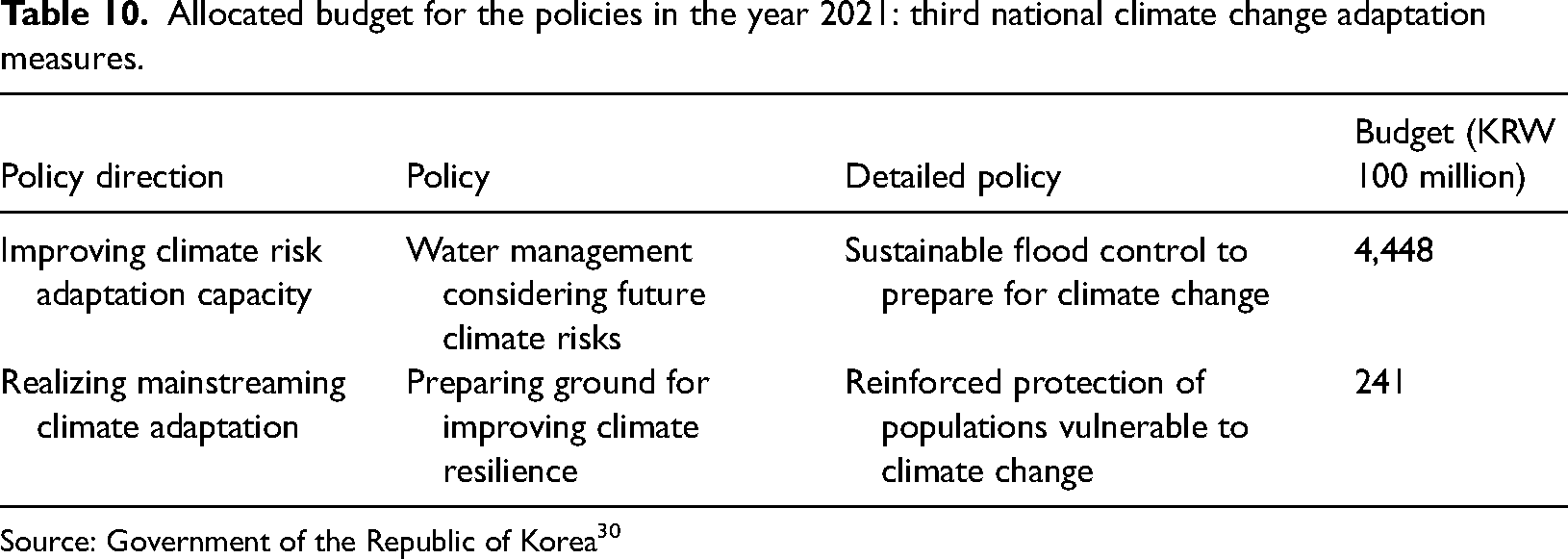
Meanwhile, the 2021 budgets for the flood control policy in preparation for climate change and the policy to reinforce the protection of populations vulnerable to climate change have been specified in the third NCCAP, a policy at the higher level. In the third NCCAP, the following three policy directions were set for accomplishing the vision of “realizing a climate-safe country with people”: improving climate risk adaptive capacity; reinforcing monitoring, prediction, and evaluation; and realizing mainstreaming climate adaptation. A total of 36 sub-policies pertain to these three areas. The flood control policy in preparation for climate change aims to improve climate risk adaptive capacity, and the policy to reinforce the protection of populations vulnerable to climate change aims to realize mainstream climate adaptation (Table 10).
Allocated budget for the policies in the year 2021: third national climate change adaptation measures.
Source: Government of the Republic of Korea 30
To convert the average annual WTP per household for each of the two policies estimated in this study into the average annual WTP for the entire public, 20,891,348 households nationwide as of 2019 among the results of the “2019 Population and Housing Census 39 ” were applied as follows, where policy 1 is “Sustainable flood control to prepare for climate change” and policy 2 is “Reinforced protection of populations vulnerable to climate change.”
When the estimated benefits and 2021 budgets were compared according to the aforementioned procedure, it was found that the estimated benefits of the two policies were similar, but the budget for policy 2 is lower than that for policy 1, resulting in a larger difference between the budget and benefit or the smaller ratio of the budget to the benefit. In other words, the budget for policy 2 was set lower as compared to the people's social acceptability measured through CVM.
Discussion
Since flood is the world's most damaging natural disaster, and the population vulnerable to climate change is the weakest group in our society, enhancing social acceptability for these two policies should be treated as the most important policy. Therefore, it is necessary to study how to increase the social acceptability of this policy and how the budget for this policy is appropriately set. In Table 8, according to Model 1-2 and 2-2 considering covariates, experience of damage from extreme weather and WTP for climate change adaptation measures showed a positive relationship, at 0.642548 and 0.662593, respectively, which is supported by a previous study from Singapore18,21 which showed that the WTP of the residents with the highest urban heat island intensity was 3.09 times higher than that of the residents with the lowest intensity. Secondly, the interest in climate change and WTP for climate change adaptation measures also showed a positive relationship at 0.341204 and 0.295596, respectively, which is supported by previous studies from Malaysia 15 and Singapore. 21 Finally, the relationship between income and WTP for climate change adaptation measures was also positive, at 0.081157 and 0.080569, respectively, in line with previous studies conducted in Pakistan, 13 Malaysia,14,15 Iran, 16 Singapore, 21 Bangladesh, 19 Germany, 16 and Japan. 18 Furthermore, as a long-term strategy, based on not only this result but also a positive relationship found between annual income and social media usage rate, 40 we proposed to use social media as a means of policy promotion, including the dissipation of knowledge on the scientific basis of climate change adaptation policy and overseas trends. While the rate of awareness regarding the NCCAP was less than 50% (Table 4), the relationship between the awareness of the establishment and implementation of the NCCAP and WTP was positive, at 0.657105 and 0.553524, respectively (Table 8), which implies that it is necessary to allow people to participate in the policy formulation process on a large scale rather than going for top-down education and publicity.
The reason the WTP for policy 2 was estimated to be slightly lower than the WTP for policy 1 (Table 9) is that the public has realized that the damage caused by water, such as torrential rainfall and floods, can affect all people regardless of the region unlike the policy which only supports the populations vulnerable to climate change. In a study by Markantonis and Bithas 22 which reported similar results, the average WTP of the respondents for the policy of constructing infrastructure to protect people from natural disasters, such as floods and wildfires, was €12.24, whereas the average WTP for human adaptation policies, such as protection of climate change refugees, was found to be €2.65. However, the difference in average WTP between the infrastructure construction policy and the human support policy was smaller in Korea as compared to the results reported by Markantonis and Bithas. 23 This can be attributed to the difference between the prominent values in the two cultures: individualism in Western culture and collectivism in Korean culture as stated by Hofstede. 41 In other words, people in Western countries appear to be reluctant to support others with taxes which they pay due to strong individualistic culture and hence hesitate to support the populations vulnerable to climate change, whereas Korean people appear to be less reluctant due to their relatively strong collectivist culture.
Policy 2, in particular, has a smaller budget than the estimated WTP (Table 11). The contents related to the third NCCAP show that the budget for policy 1 is high because it is an infrastructure construction project. On the other hand, in the case of policy 2, which aims to enhance the adaptive capacity of the vulnerable group to climate change, the group was first subdivided into the vulnerable group in the residential environment, the vulnerable group in health, and the vulnerable group in the workplace. While the government seems to support facilities for the vulnerable in the residential environment and the vulnerable in health, it is focusing on improving existing guidelines and strengthening safety awareness education for the vulnerable working outdoors. That is why the allotted budget for policy 2 is relatively small compared to policy 1 to control floods in preparation for climate change. Therefore, it is deemed important to define the concept and scope of the populations vulnerable to climate change with a fresh perspective and to introduce policies by clearly identifying the policy demands of the growing populations that are vulnerable to climate change.
Comparison between the estimated total WTP and actual budgets.

Conclusion
Climate change mitigation, represented by greenhouse gas reduction, has recently been divided into various fields, such as carbon neutrality, RE100, and so on, while climate change adaptation has been regulated by only public sector organizations such as international organizations and countries since its first appearance in the IPCC 3rd Assessment Report in 2001. However, adaptation is no less important than mitigation as, while mitigation is a policy to prevent global warming in the long run, adaptation is a policy on how to respond to the heat waves, cold waves, and torrential rains that are currently occurring due to climate change. Therefore, it will be important to establish its future directions to understand how much social acceptability is present for the adaptation and how supportive the current policies are compared to the identified acceptability. To this end, this study aimed to evaluate the social acceptability toward climate change adaptation policies in South Korea by analyzing the WTP of 564 heads of households, that included adult males and females aged between 19 and 69 years from all over the country, for the flood control policy in preparation for climate change and the policy to reinforce the protection of populations vulnerable to climate change.
The double-bounded dichotomous choice contingent valuation method (DBDC CVM) was used as a method to analyze the WTP, and a spike model assuming that the respondents’ WTP has a logistic distribution in the positive area was used as an analysis model because the proportion of the protest responses to the two policies was high.
The average annual WTP per household was estimated to be approximately KRW 27,457 for the flood control policy in preparation for climate change and 25,854 for the policy to reinforce the protection of populations vulnerable to climate change, respectively, and this WTP showed a tendency to increase as the respondents experienced adverse effects due to extreme weather conditions/phenomena, because they were interested in climate change as their income level had increased, and hence they exhibited a preference for the ruling party. Meanwhile, it was also found that there existed a positive relationship between the annual income level and the rate of social media usage. Therefore, as a measure to increase public acceptance of adaptation policies, it is suggested that social media be more actively used, for example, to provide scientific evidence of climate change and its impacts and the overseas trends on climate change adaptation policies, and the public's participation in adaptation policies should be considered more broadly than ever before.
Meanwhile, the aggregated benefits of the two policies were estimated to be KRW 573.6 and 540.1 billion, respectively, by multiplying the average annual WTP per household for each policy by the number of households nationwide in 2019 based on the results of the 2019 Population and Housing Census. When these estimates were compared with the actual budgets, the policy to reinforce the protection of populations vulnerable to climate change exhibited a larger difference than the flood control policy in preparation for climate change. On the other hand, the difference in social acceptability between the two policies was relatively small compared to the allotted budgets. Therefore, in the case of the second policy to support populations vulnerable to climate change, it is deemed important to redefine the populations vulnerable to climate change in the future and to formulate policies after identifying their demands clearly.
The research framework used in this study comprises the following steps. First, the WTPs of the sample for the two policies were estimated, and the characteristics of the sample were found to have a positive relationship with the WTP. Secondly, the WTPs of the population were estimated by multiplying the WTPs of the sample by the number of households in the country. Thirdly, the estimated WTPs and the real budgets for the two policies were compared. Since the gap between the estimated WTP and the real budget was much larger than the researcher expected, the reason for that was analyzed. This procedure could be referred to when a policy maker determines the appropriateness of its budget when formulating a policy. Furthermore, this framework could potentially apply to policymaking concerning climate change.
The limitation of this study is that two policies that can be easily perceived and understood by the public were selected rather than all policies included in the Third Climate Change Adaptation Plan to estimate the WTP of the public for the measures using CVM. Therefore, further research considering more/maximum policies is required in the future to ascertain the social acceptability of the NCCAP more accurately.
Footnotes
Acknowledgements
This work was supported by the KIST Institutional Program (Project No.2V09130-21-P036).
Declaration of conflicting interests
The author(s) declared no potential conflicts of interest with respect to the research, authorship, and/or publication of this article.
Funding
The author(s) disclosed receipt of the following financial support for the research, authorship, and/or publication of this article: This work was supported by the KIST Institutional Program, (grant number 2V09130-21-P036).
