




Abstract
In order to reveal the effects of diesel and diesel methanol dual fuel (DMDF) on engine performance at different altitudes, especially on combustion stability. In this study, a comparison of experimental research on characteristics of combustion, economy, and emissions for a turbocharged DMDF at various simulated altitudes (10m, 700m, 1670m, and 2400m) and three working conditions (1200rpm-72 Nm, 1800rpm-158 Nm, and 2200rpm-153 Nm) were conducted and analyzed combustion characteristics, economy and emissions. At 1800rpm and 2200rpm, with the increment of altitude, the peak value of the cylinder pressure, the pressure rise rate, and the brake thermal efficiency (BTE) for DMDF mode were higher than diesel mode, while combustion center (CA50) and combustion duration of diesel mode higher than DMDF mode. At 1200rpm and 1800 rpm, the maximum heat release rate (HRR) of DMDF mode was higher than diesel mode. When the altitude rose from 10m to 2400m, the coefficient of variation of peak pressure (COVPP) of DMDF mode increased while the coefficient of variation of indicated mean effective pressure (COVIMEP) of DMDF mode decreased, which means the combustion of dual-fuel is relatively stable. The exhaust temperature of DMDF mode was lower than that of diesel mode at various altitudes. Compared with diesel mode, NOX and Soot emissions in DMDF model significantly decreased at different altitudes and working conditions.
Introduction
The global land area with an altitude of more than 1000m is about 23.7%, and in China, the plateau accounts for 58% of territory. 1 Due to the economic development of the plateau, whether be used in construction machinery or transportation, the demand of diesel engines is increasing rapidly. However, with the increment of altitude, the atmospheric pressure and the oxygen concentration in air gradually reduce, leading to the reduction of intake air density for the engine. The fuel cannot be completely burned due to oxygen deficiency, which seriously deteriorates the power performance, fuel consumption, and emissions of diesel. 2 Meanwhile, the implementation of new emission regulations also makes the emission requirements of diesel engines at high altitudes more stringent.3,4 Therefore, it is urgent to solve the problems of environmental pollution and improve the performance of diesel engines at high altitudes.
With the development of technology, several novel technologies have been used to improve the performance of diesel engines.5,6 In order to improve the performance of diesel engines at high altitudes requires an increase in the oxygen content of the combustion process, for example by using supercharging or adding oxygenated fuels. Researchers showed that the use of oxygenated fuels could make up for the lack of intake oxygen to a certain extent, and effectively inhibit the formation of emissions.1,7 Biodiesel is a renewable and oxygenated fuel that is widely studied by researchers. 8–10 Hoang et al. 11 and Li and Wang 12 found that Biodiesel blended with diesel can significantly reduce PM emissions from the engine, and as the blend mixing ratio between biodiesel and diesel increases the diameter of PM decrease. However, the presence of the C = C bond in biodiesel generates more NOx emissions. 13 Alcohols are also oxygenated fuels that promote the complete combustion of fuel and reduce NOX and soot production. 14 Tutak et al. 15 and Zhang and Balasubramanian 16 found that diesel-ethanol blends could provide additional oxygen for combustion to improve the whole combustion process. Gürbüz et al. 17 performed experiments with a dual-fuel diesel engine fueled with ethanol and diesel. They concluded that with ethanol addition of 40% at 1400 rpm not only increases brake power but also reduces NOx emission and air-pollution damage-cost Yan et al. 18 investigated the spray and combustion characteristics of butanol-diesel and hexanol-diesel blends under high-altitude conditions. They found that the addition of alcohol-based fuels under high-altitude conditions could effectively reduce the soot formation and enhance soot oxidation. As can be seen from the above, oxygenated fuels can improve combustion and emission characteristics.
Among these oxygenated fuels, methanol is considered as a promising alternative fuel. 19 The latent heat vaporization of methanol is 3–5 times of diesel, which means methanol can greatly cool the intake air and increase the charge density. Combined with its oxygen contains for about 50%, the addition of methanol can improve the volumetric efficiency of engine and thermal efficiency. 20 As a clean fuel, methanol has the potential to decrease NOX and soot emissions at the same time21,22 There are two ways to implement a dual fuel diesel engine: premixed fuel before injection and premixing fuel in intake and ignited by injection diesel.23–25 However, It is difficult to mix methanol and diesel homogenously and must use surfactants and co-solvents. Therefore, premixing methanol in intake has become an effective application mode to realize the cooperative combustion for methanol and diesel in cylinder, which can use methanol in a higher proportion. This kind of mode has been highly valued in recent years. 26 Li and Zhang 27 conducted an experiment on a DMDF engine and investigated the cyclic variations of reactivity-controlled compression ignition combustion at multiple simulated elevations. They found that the DMDF model was effective in improving the combustion process and reducing COVIMEP at high altitudes. Researchers are also interested in the effects of DMDF on engine emissions. Li et al. 28 investigated the effects of diesel injection parameters on the rapid combustion and emissions of the DMDF engine. The results show compared with original diesel combustion mode, NOx and smoke emissions in DMDF mode are all reduced. Singh et al. 29 also confirmed that it is satisfactory for the performance when the diesel-methanol dual fuel technology was applied on diesel engines.
At present, a lot of researches have been carried out on DMDF engine. It has been proved that methanol plays an important role in improving the power performance, fuel economy and thermal efficiency of the engine and alleviating the trade-off relationship between NOX and soot emissions. However, studies in recent years mainly focused on the combustion and emission characteristics of DMDF engines at sea-level. Due to the low ambient pressure and low oxygen density at high altitudes, the in-cylinder combustion process of diesel engines is obviously different from that at sea-level. These differences will further affect the exhaust emissions. As a fuel with high oxygen content, high latent heat of vaporization and low carbon content, the fuel characteristics of methanol could alleviate various problems to a certain extent caused by environmental factors at high altitudes. There are relatively little studies on the effects of DMDF on engine performance at different altitudes, especially on combustion stability at high altitudes. This study investigates the combustion, performance and emission characteristics of the DMDF engine at altitudes of 10m, 700m, 1670m and 2400m by experiment, which can provide a theoretical reference for the optimization of the in-cylinder working process and performance improvement of DMDF engines when working at high altitudes.
Experimental apparatus and fuel characteristics
Experimental apparatus
In this study, a four-cylinder, four-stroke, turbocharged, inter-cooled, direct-injection diesel engine was used to carry out all engine tests. The engine specifications are listed in Table 1. Four special methanol injectors (ORIGINAL EFI Co., Ltd) were installed in the engine intake manifold to realize DMDF mode. The injection pressure was 0.4MPa. The supply of diesel and methanol is controlled by two ECU. The detailed injection quantity of methanol at different working conditions was determined by test calibration.
Test engine specifications.
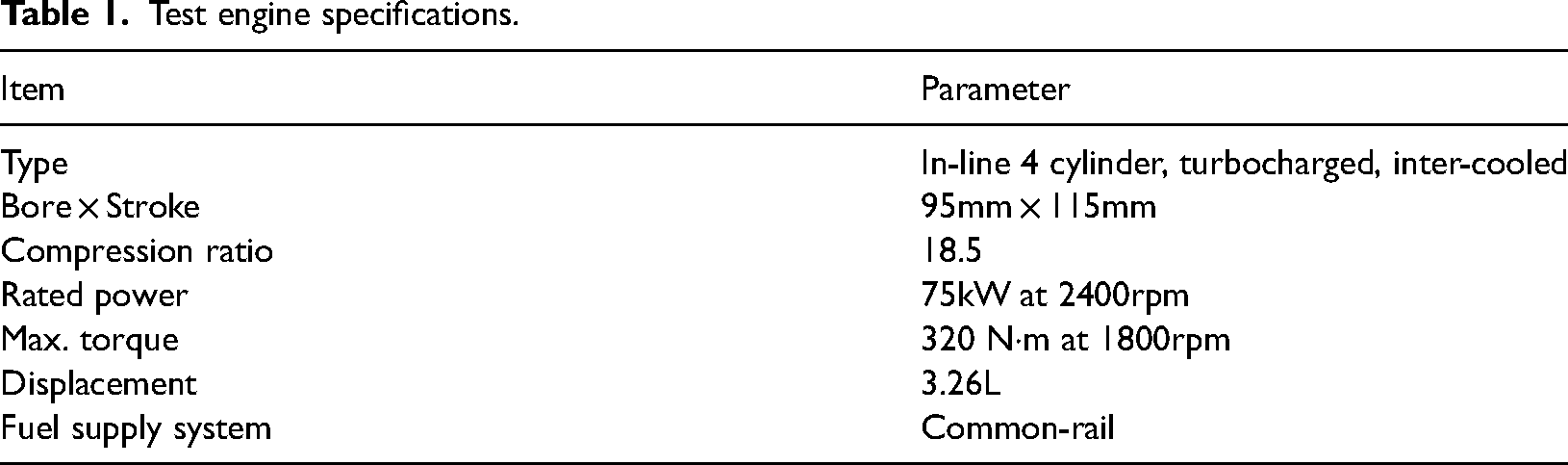
Test engine specifications.
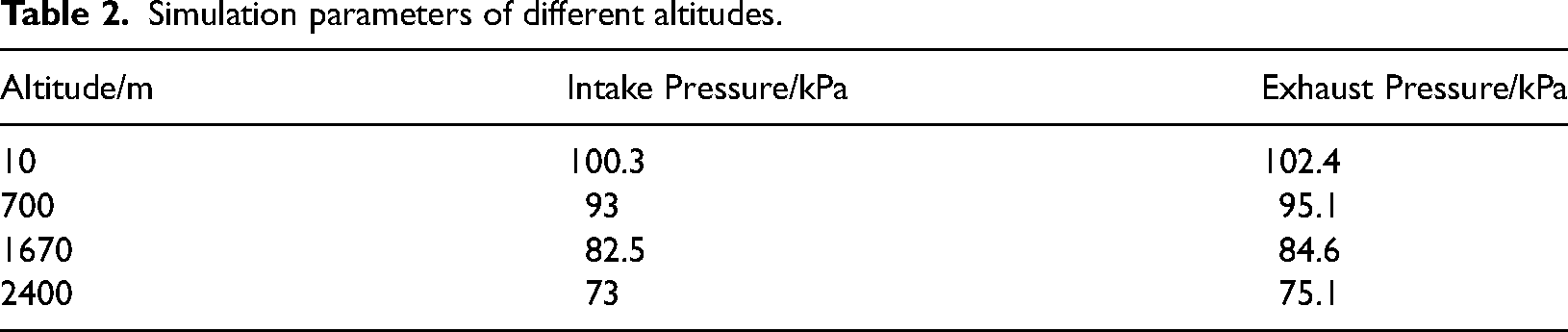
In this experiment, a high-altitude simulation test device was designed. 30 The main function of this device was to simulate the intake pressure by intake throttling and simulate the exhaust pressure through exhaust vacuuming of the diesel engine. The structure of the test device is shown in Figure 1 By controlling the opening of the intake (exhaust) throttle valve, the pressure in the intake (exhaust) pressure stabilizing device could be adjusted to the target pressures. The negative pressure values in the pressure stabilizing devices were measured through the pressure sensors. The target pressure values at different altitudes are shown in Table 2.
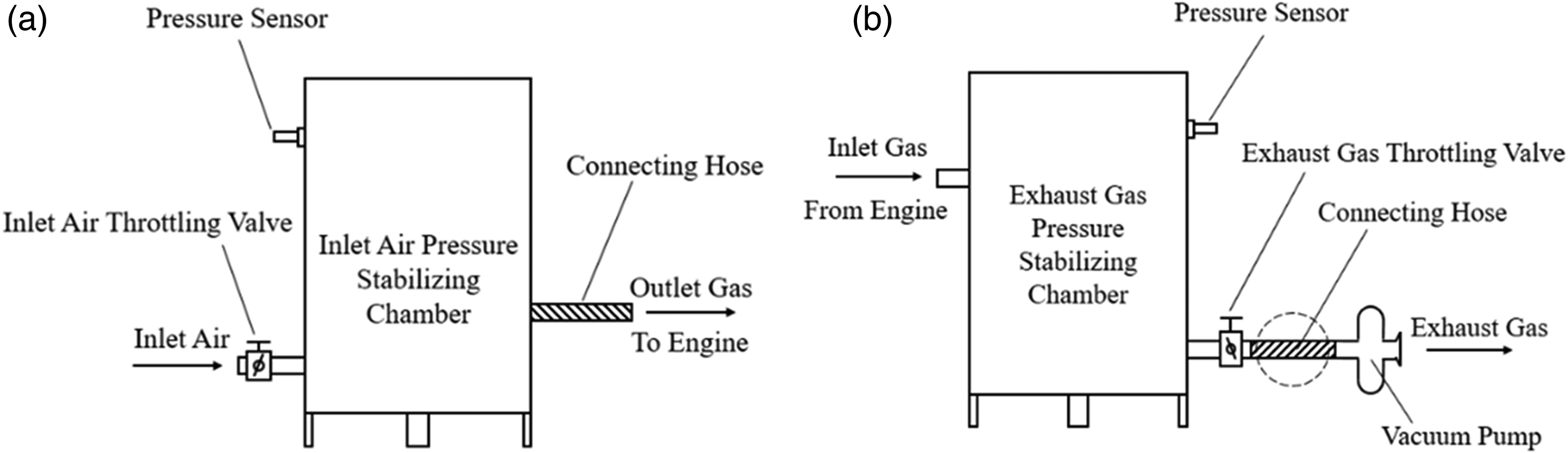
The structure of the intake and exhaust pressure simulating system. (a) Inlet air simulator, (b) Exhaust gas simulator.
Simulation parameters of different altitudes.
The dynamometer of the engine test bench was an AC Electrical Dynamometer (CAC75) manufactured by Xiangyi (Hunan) Power Testing Instrument Co., Ltd The diesel and methanol consumption were measured respectively by two FC2210Z fuel consumption meters manufactured by Xiangyi (Hunan) Power Testing Instrument Co., Ltd The in-cylinder combustion pressure was measured by a KISTLER 6056A cylinder pressure sensor coupled with a KISTLER 5011 charge amplifier of linearity of F.S. < ± 0.05%, and a 365C AVL angle encoder with resolution of 360 pulses/rev. An AVL 622 combustion analyzer was used to record and analyze the combustion parameters. The NOX was measured by using a HORIBA MEXA-7200D motor exhaust gas analyzer. The particulate matter emission was measured by an AVL 415S Smoke meter. A schematic of the test bench is showed in Figure 2.
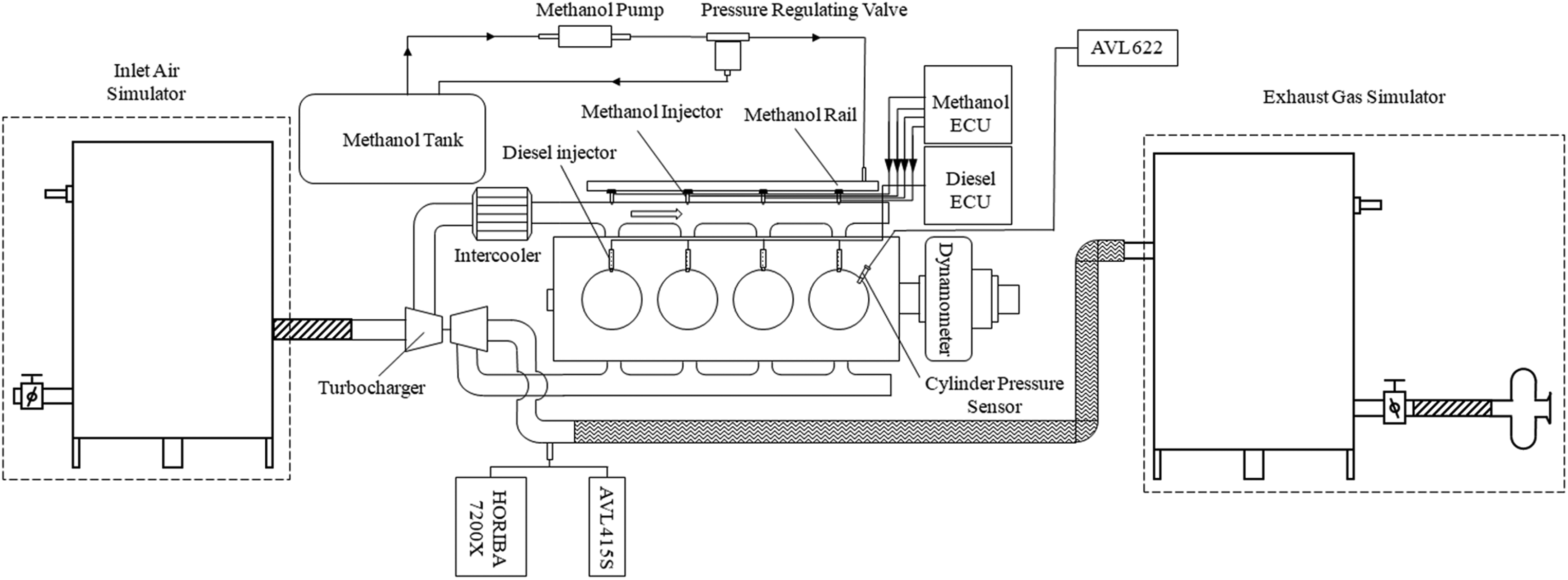
The schematic of the test bench.
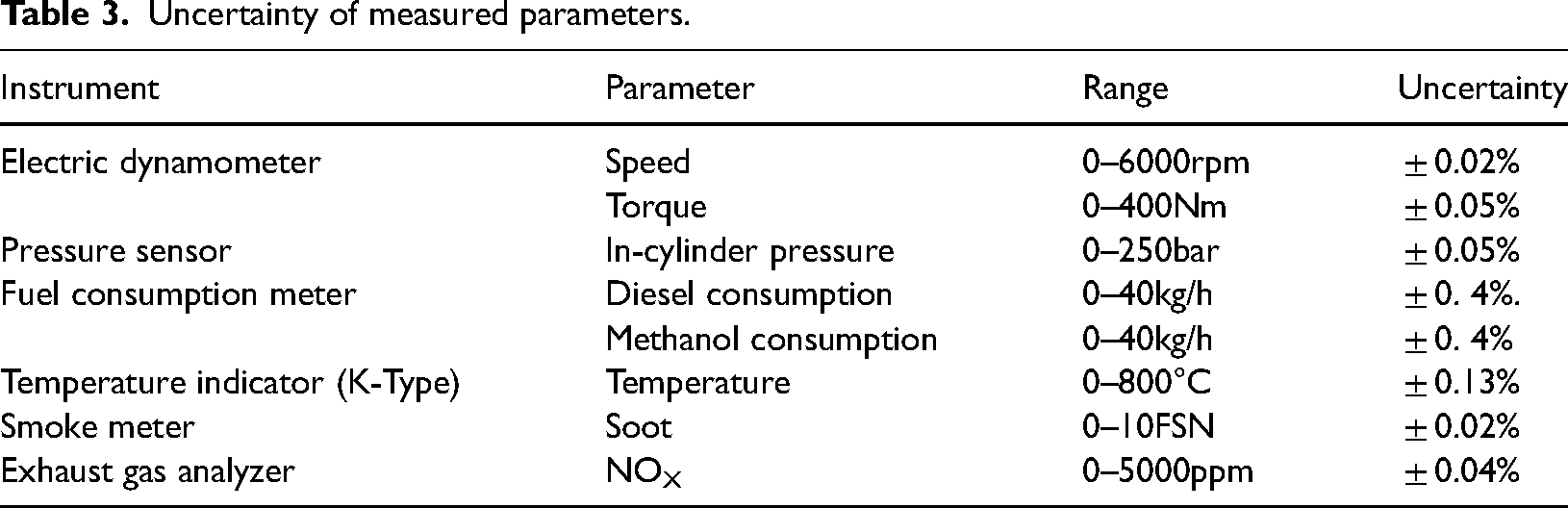
The uncertainty analysis can help us to understand the possible error percentages. The uncertainty of measured parameters are listed in Table 3. Uncertainty of the dependent and independent parameters can be calculated through the following Eq. (1) and (2)31.
Uncertainty of measured parameters.
Where 
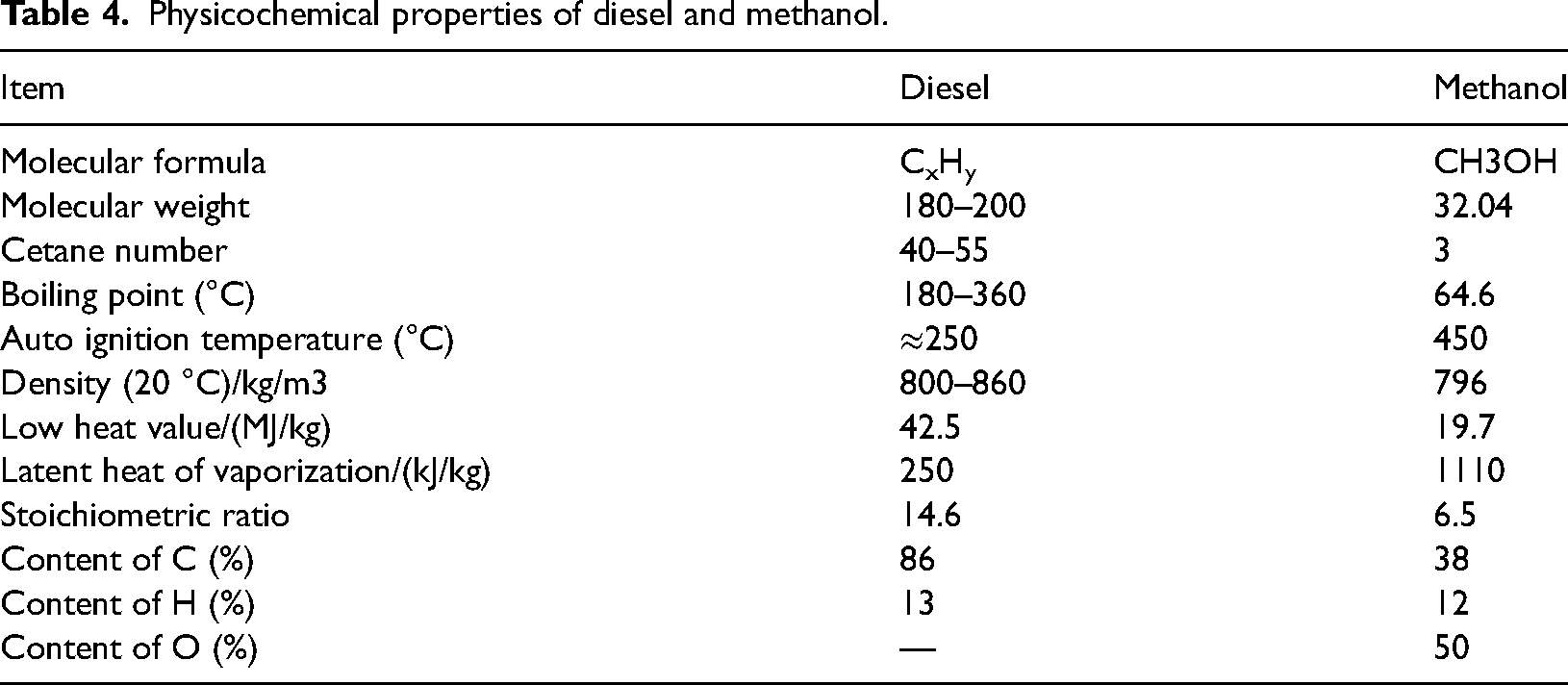
The diesel used in the test was commercial 0# diesel fuel (“#” stands for diesel marking, which represents diesel freezing point). The sulfur content of the diesel is less than 10ppm. The methanol used was industrial grade and the purity is 99.99%. Table 4 shows the general properties of the diesel and methanol.
Physicochemical properties of diesel and methanol.
Physicochemical properties of diesel and methanol.
In order to explore the combustion and emission characteristics of the DMDF engine at different altitudes, altitudes of 10m, 700m, 1670m, and 2400m were selected, respectively (as showed in Table 2). The laboratory is located at an altitude of about 10m. In China 6 Emission Regulation, 700m and 2400m are the normal altitude condition and the further extended altitude condition stipulated, respectively. 1670m is the altitude specified in EPA Tier 4 regulations. Three working conditions of 1200rpm-72 N·m (low speed and light load), 1800rpm-158 N·m (maximum torque speed and 50% of the maximum torque), and 2200rpm-230 N·m (high speed and heavy load) were selected, respectively. In this study, a parameter was used to evaluate the utilization of methanol which is the methanol substitution percent (MSP). The parameters are defined in Eq. (3).
Relevant study showed that when MSP was too high, DMDF engine would misfire at low speed-light load, and knock at high speed-heavy load. 32 Therefore, the MSP was controlled around 30% in this research to ensure the stable operation of the engine. In following figures, the diesel mode was abbreviated as D100, and the DMDF mode was DMDF30 for short.
All experiments were carried out in the laboratory, so the instruments used in this study was calibrated before the test to ensure the accuracy of the measured data. In the process of the experiment, the diesel mode data of each working condition was measured first, and then the measurement of the DMDF mode data was carried out. Before each data acquisition, the engine was allowed to run at least 3 min to consume the remaining fuel from the previous experiment. The data such as fuel consumption and emission were collected at least 3 times under each working condition, and the average values were calculated as the final data. After that, the test bench adjusted to simulate different altitudes and repeated experiments in the same way. In the measurement of cylinder pressure, in order to eliminate the influence of cylinder variation, 200 continuous cycles were collected and the average values were calculated as the final cylinder pressure data. When the intake pressure changed, the injection quantity of diesel and methanol for each working condition were controlled within ± 2%. For the convenience of description, the DMDF mode at high altitude was still characterized by DMDF30.
In order to calculate the brake specific fuel consumption of DMDF mode (

Non-repeatability of the work cycles is considered as a popular criterion for the evaluation of the engine correct operation. The COVPP which expressed in percentages, was adopted as a measure of non-repeatability.33,34 The IMEP is evaluated based on the recorded changes in the cylinder pressure and represents one of the indices that characterize operation of combustion engines in terms of the opportunities. The COVIMEP are defined in Eq. (6) and Eq. (7), respectively:
35


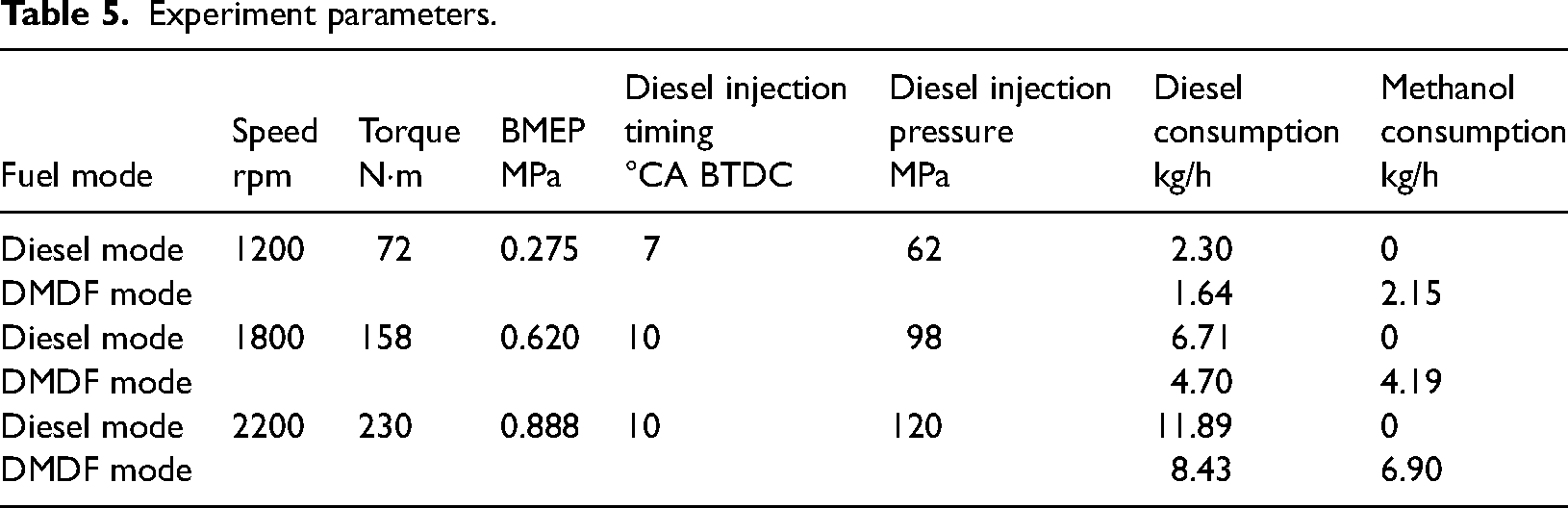
During the experiment, the boundary conditions, such as cooling water temperature, methanol temperature, methanol injection timing, and methanol injection pressure, were kept the same in each working condition. Ambient temperature was 15–20°C and the relative humidity varied from 62% to 68% when the experiment was conducted. The variation of intake pressure and exhaust pressure was less than 1 mbar when the engine was switched from diesel mode to DMDF mode. Specific experiment parameters including speed, BMEP, and fuel consumption were list in Table 5.
Experiment parameters.
Combustion characteristics
The cylinder pressure, heat release rate, operation cycles and pressure rise rate of the diesel and DMDF mode were compared and discussed at this section.
First of all, Figure 3 provides the trend of cylinder pressure for the diesel and DMDF mode at different speeds and altitudes. With the increasing of speed and the decreasing of height, the cylinder pressure increases obviously. Pmax of DMDF mode dropped from 6.05MPa at 10m to 4.55MPa at 2400m (25% reduction) and Pmax of diesel mode dropped from 6.23MPa at 10m to 5.17MPa at 2400m (17% reduction) for 1200rpm; at 1800rpm Pmax of DMDF mode dropped from 8.54MPa at 10m to 6.99MPa at 2400m (18.1% reduction) and Pmax of diesel mode dropped from 8.25MPa at 10m to 6.40MPa at 2400m (22.4% reduction); at 2200rpm Pmax of DMDF mode dropped from 11.47MPa at 10m to 8.94MPa at 2400m (22% reduction) and Pmax of diesel mode dropped from 10.39MPa at 10m to 7.65MPa at 2400m (22% reduction). For 1200rpm, the latent heat of methanol vaporization is high, which reduced the cylinder temperature, led to the combustion deterioration and caused the cylinder pressure decreased. 36 For 1800rpm and 2200rpm, the high latent heat of vaporization for methanol was beneficial to improve the inflation coefficient, and enhanced the trend of homogeneous for the methanol-diesel mixture. Meanwhile, the cetane number of methanol was lower than that of diesel, which had a great influence on in-cylinder pressure at high altitude. As an oxygenated fuel, the use of methanol made up for the deficiency of oxygen concentration in intake air at high altitude and improved the combustion process, which significantly contributed to release heat from the mixture and increase the in-cylinder pressure. 37
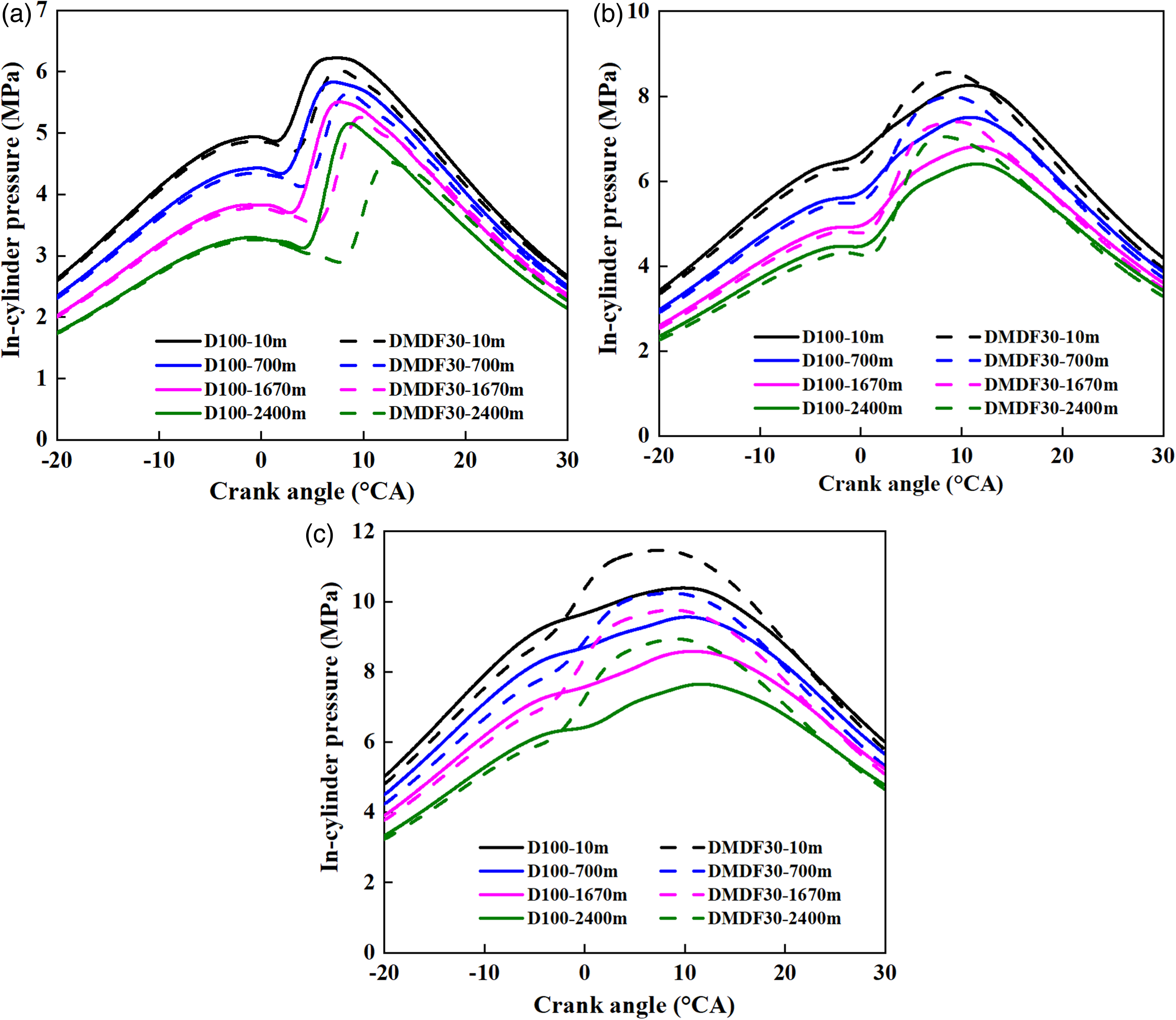
Cylinder pressure of the diesel mode and DMDF mode at different altitudes. (a) 1200rpm, (b) 1800rpm, (c) 2200rpm.
The heat release rate is an important parameter of combustion process and can be calculated by Eq. (8).
38

As showed in Figure 4, at 1200rpm, as the altitude increased, the maximum HRR of diesel mode kept increasing. Compared with diesel mode, the maximum HRR of the DMDF mode increased initially, then followed by an decrease. At 1800rpm, the HRR curves of diesel mode changed from single peak to double peak and the peak value of premixed combustion increased. Compared with diesel mode, the heat rate curves of DMDF mode held single peak and the peak values kept increasing. Both of 1200rpm and 1800rpm, the corresponding crank angle of diesel mode and DMDF mode were delayed, and with altitude increased the maximum HRR of DMDF mode were higher than diesel mode. This is due to the prolonged combustion lagging period caused by methanol, which leads to an increase in the premixed combustion ratio, followed by an increase in HRR and a delay in the crankshaft angle corresponding to the peak heat release rate. 36 At 2200rpm, it could be observed that the combustion included premixed and diffused combustion phase of the DMDF mode, then the heat release of DMDF mode was earlier than that of diesel mode and there was obvious heat release before top dead center (TDC). This could be a result of high cylinder temperature at a high speed and load condition, and spontaneous combustion of the methanol mixture. When altitude lower than 1670m the maximum HRR of DMDF mode were higher than diesel mode, above 1670m the tendency on the contrary. Furthermore, it could be seen that the engine combustion duration and post combustion period of DMDF mode shortened obviously.
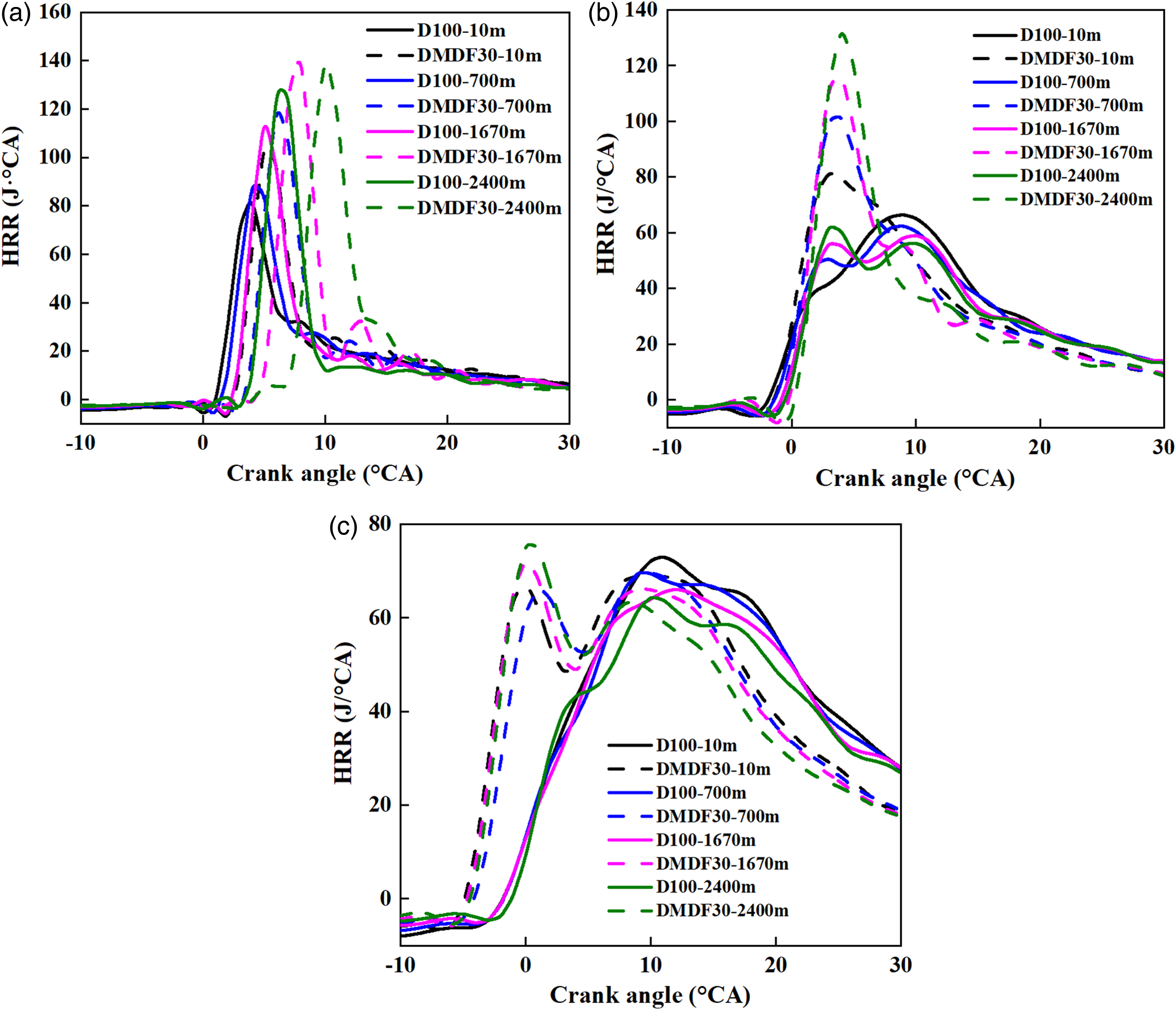
Heat release rate of the diesel mode and DMDF mode at different altitudes. (a) 1200rpm, (b) 1800rpm, (c) 2200rpm.
In order to study the working characteristics of DMDF engine at different altitudes, the actual working cycle was simplified as a mixed heating cycle. The pressure rise ratio 

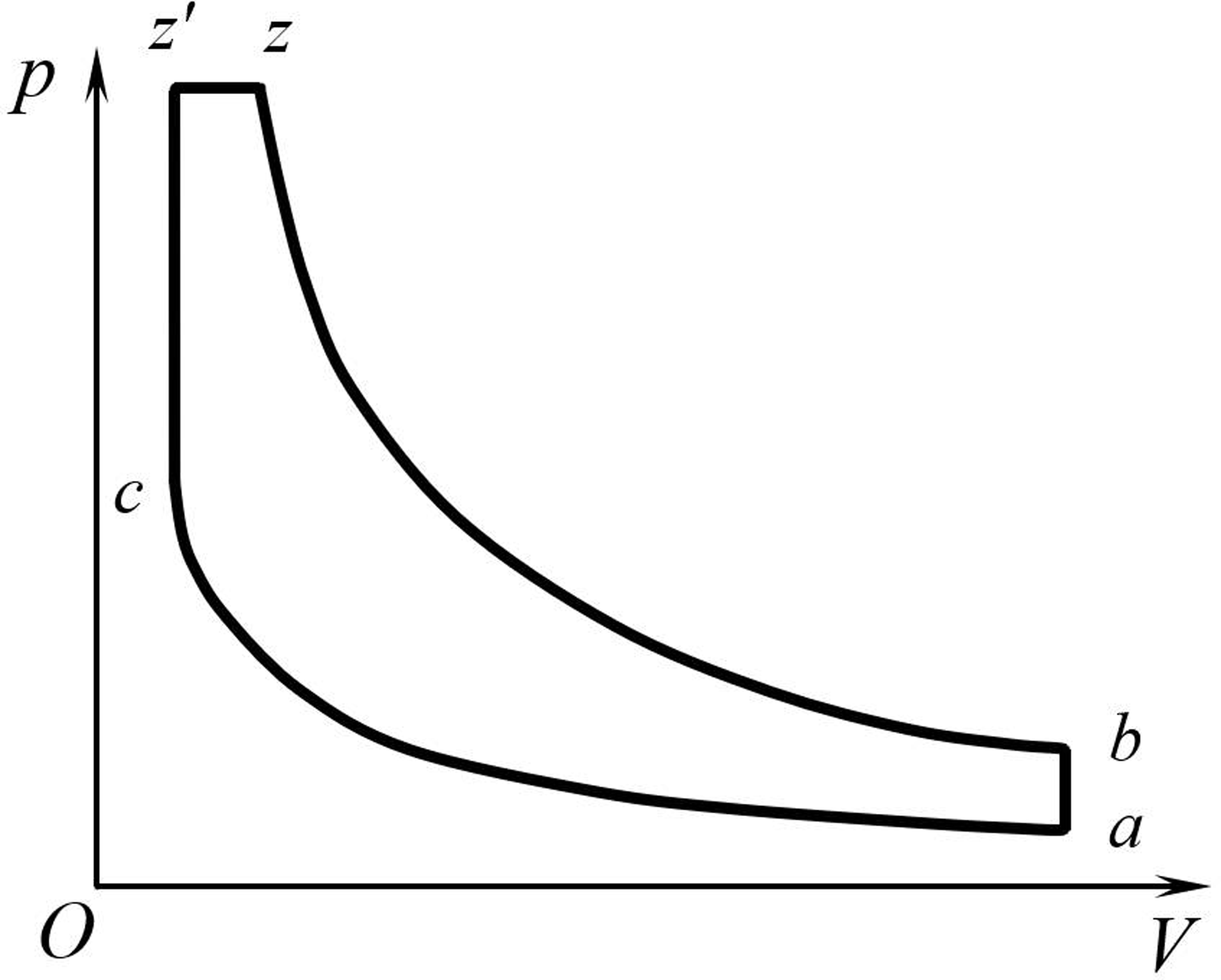
Mixed heating cycle of four stroke internal combustion engine.
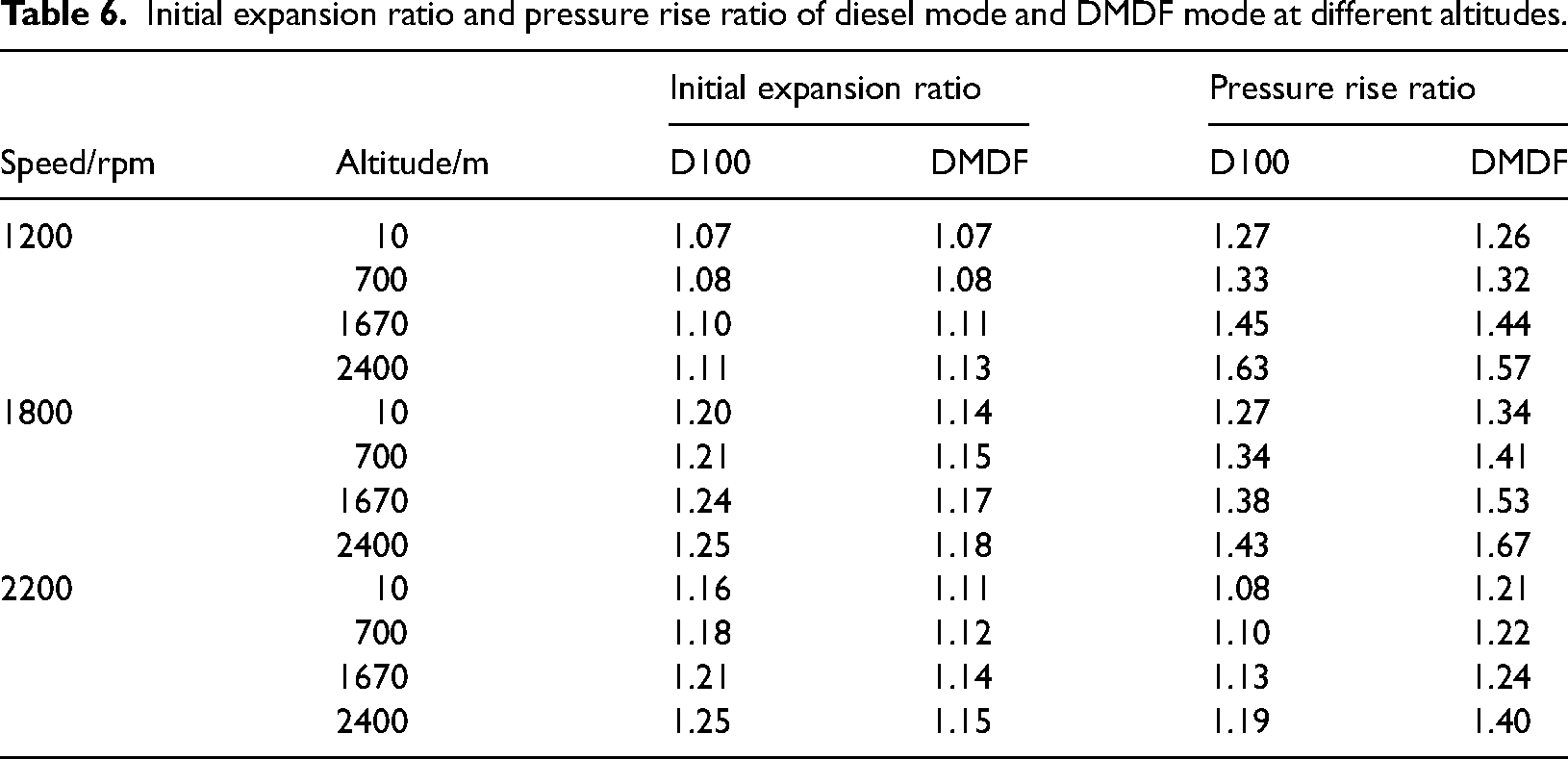
Initial expansion ratio and pressure rise ratio of diesel mode and DMDF mode at different altitudes.
Where
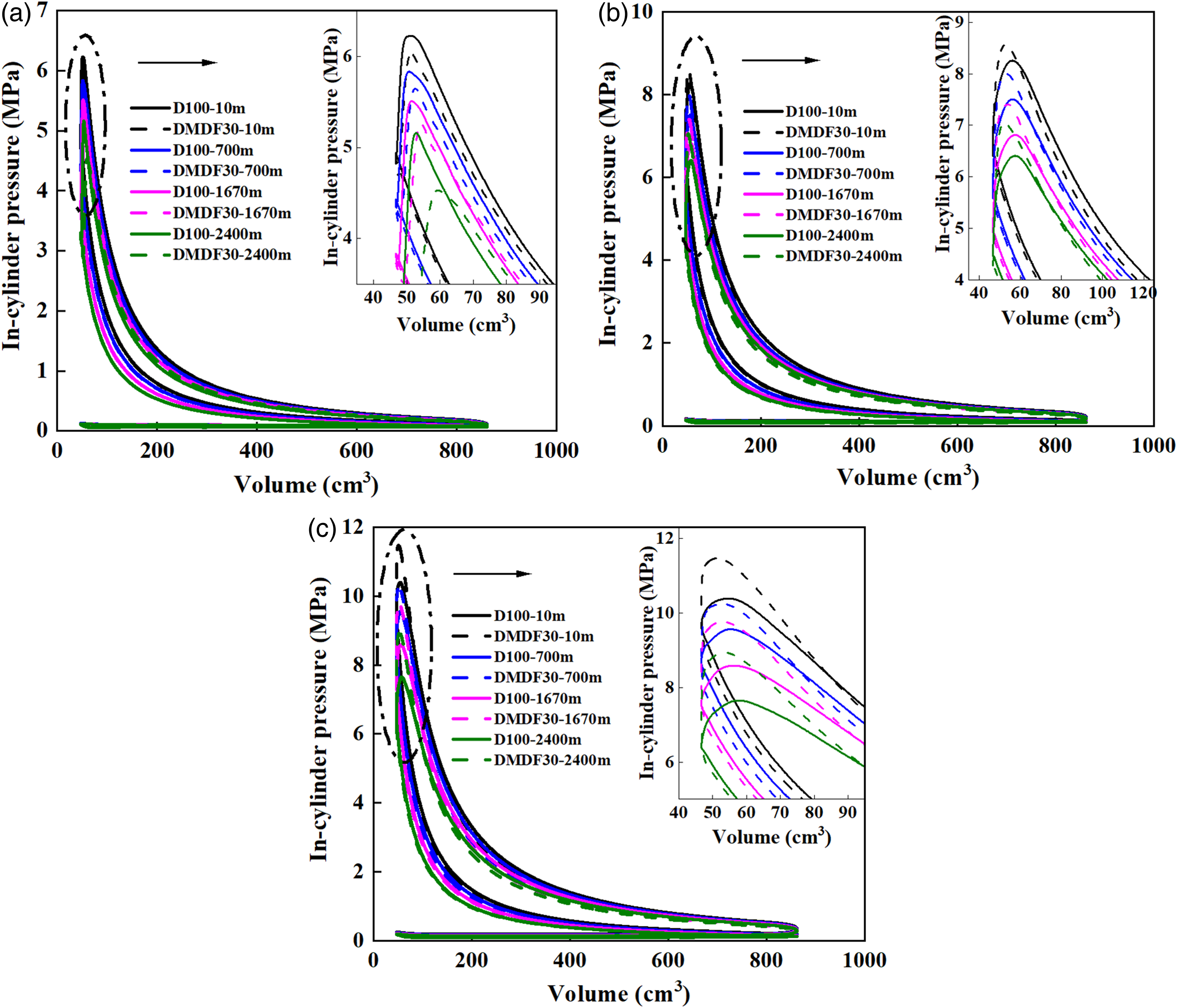
Diagram of p-V of the diesel mode and DMDF mode at different altitudes. (a) 1200rpm, (b) 1800rpm, (c) 2200rpm.
As showed in Table 6 and Figure 6, at 1200rpm, the compression curves of DMDF mode were lower than that of diesel mode. At 10m and 700m altitude, the initial expansion ratio of diesel mode and DMDF mode was almost equal, then the pressure rise ratio of diesel was 0.01 higher than that of DMDF mode. At 2400m altitude, the initial expansion ratio of diesel mode was 0.02 lower than that of DMDF mode, then the pressure rise ratio of diesel was 0.06 higher than that of DMDF mode. At 1200rpm, the temperature and the fuel delivery per cycle per cylinder were low, then the combustible mixture concentration was low. After methanol and diesel mixed, the evaporation latent heat value became higher, but the ignition of diesel was inhibited and the combustion deteriorated. At 1800rpm and 2200rpm, the compression curves of DMDF mode were higher than that of diesel mode. With the altitude increased, at 1800rpm the initial expansion ratio of diesel mode held 0.06
As showed in Figure 7, at 1200rpm, the pressure rise rate curves of diesel mode changed from double to single peak and the maximum pressure rise rate of diesel mode kept increasing with the altitude increased; the pressure rise rate curves of DMDF mode maintained single peak and the maximum pressure rise rate of DMDF mode initial increased and then decreased. Because of the methanol, combustion beginning of combustible mixture delayed and the combustion deteriorated. In addition, this situation further aggravated by altitude increased and there is a lag of the crankshaft angle of the maximum pressure rate between high altitude and low altitude. At 1800rpm, with the altitude increased, the pressure rise rate curves of diesel mode changed from double to single peak faster. Meanwhile, the maximum pressure rise rate of DMDF mode kept increasing and increased faster. This is because DMDF has the lower cetane number, higher evaporation latent heat value and better atomization of the blends were beneficial to prolong the ignition delay period and increase the pressure rise rate. 1 However, with the pressure rise rate increased fast, engine had knocking risk at working process. At 2200rpm, the maximum pressure rise rate of diesel mode and DMDF mode increased with the altitude increased, but the corresponding crankshaft angle is significantly advanced. In high temperature and pressure condition, the methanol oxidation rate accelerated and the end of mixture appeared spontaneous combustion before top dead center (TDC).
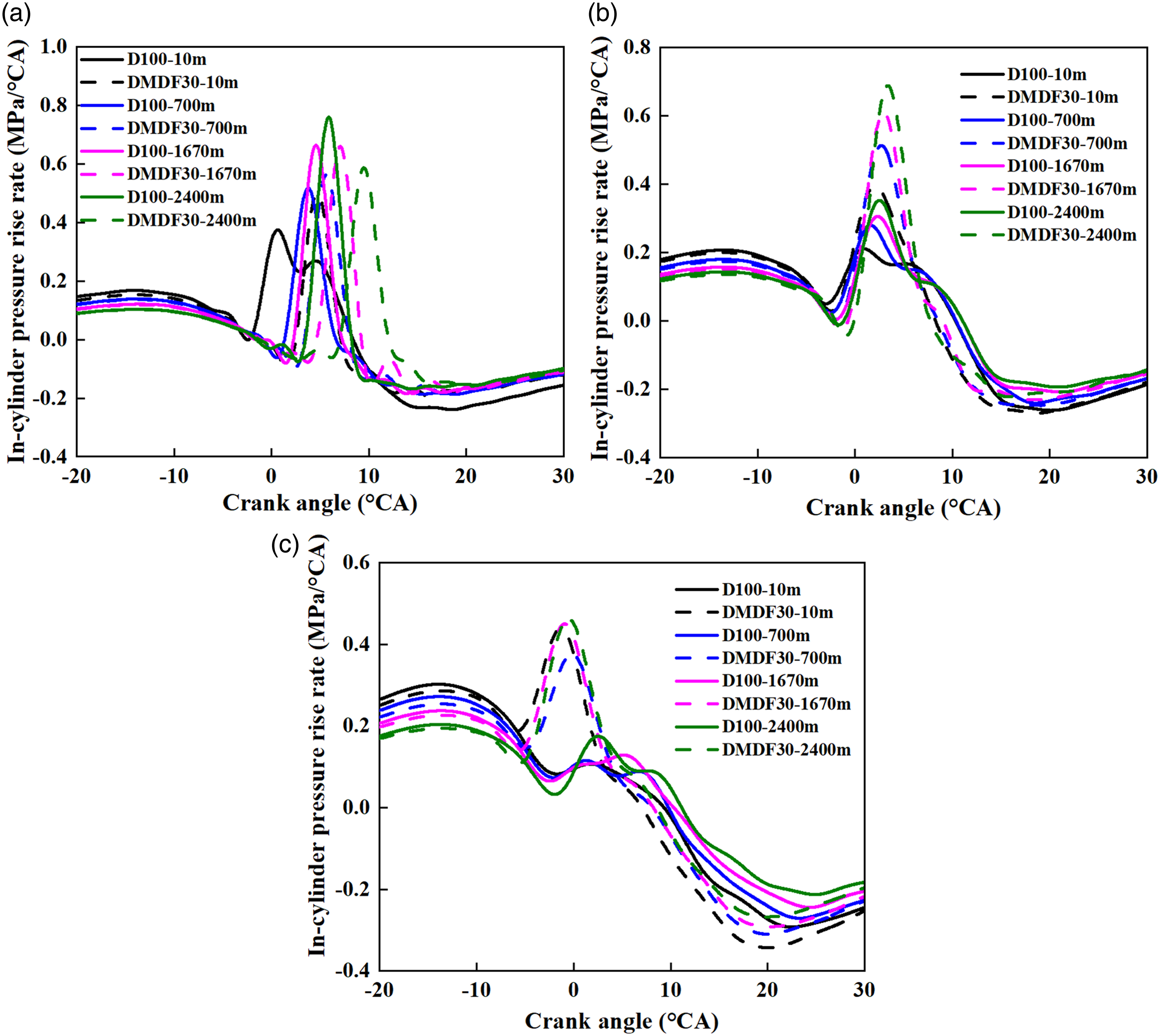
Pressure rise rate of the diesel mode and DMDF mode at different altitudes. (a) 1200rpm, (b) 1800rpm, (c) 2200rpm.
Figure 8 displayed the influence of altitude on combustion center (CA50) and combustion duration. The tendency of 1800rpm and 2200rpm was similar, so 1800rpm was taken as an example for brevity. When the altitude increased form 10m to 2400m, the CA50 in diesel mode moved backward by 0.7 °CA, while the CA50 in DMDF mode moved forward by 1.1°CA. At 2400m, the CA50 in DMDF mode was 5.7°CA ahead of that in diesel mode. In addition, the combustion duration of DMDF and diesel mode increased by 2.7°CA and 5°CA respectively. The decrement of intake air at high altitude led to the extension of ignition delay, further resulted the postponement of CA50 and the prolongation of combustion duration. In DMDF mode, the vaporization of methanol increased the intake density. During the combustion, the chemical oxygen release of methanol made a balance with the decrement of oxygen concentration at high altitude. The application of methanol not only increased the proportion of premixed combustion, but also accelerated the overall combustion rate of fuel, led to the heat released more concentrated. Therefore, the CA50 of DMDF mode remained constant and the combustion duration was shorter than that of diesel mode under the combined effect of environment factors and methanol fuel characteristics. For 1200rpm, when the altitude increased from 10m to 2400m, CA50 in DMDF mode ahead 1.9°CA, CA50 in diesel mode ahead 2°CA. Meanwhile, the combustion duration of DMDF mode and diesel mode decreased 8.8°CA and 9.1°CA, which realized a reduction of 34.6% and 30.1%. When the altitude increased, the reduction of intake air led to local mixture in the cylinder too rich, part of the fuel did not participate in the combustion. In addition, the exothermic reaction in the cylinder was inhibited by methanol owing to its high latent heat of vaporization, further resulted in a decrease of combustion duration at high altitude.
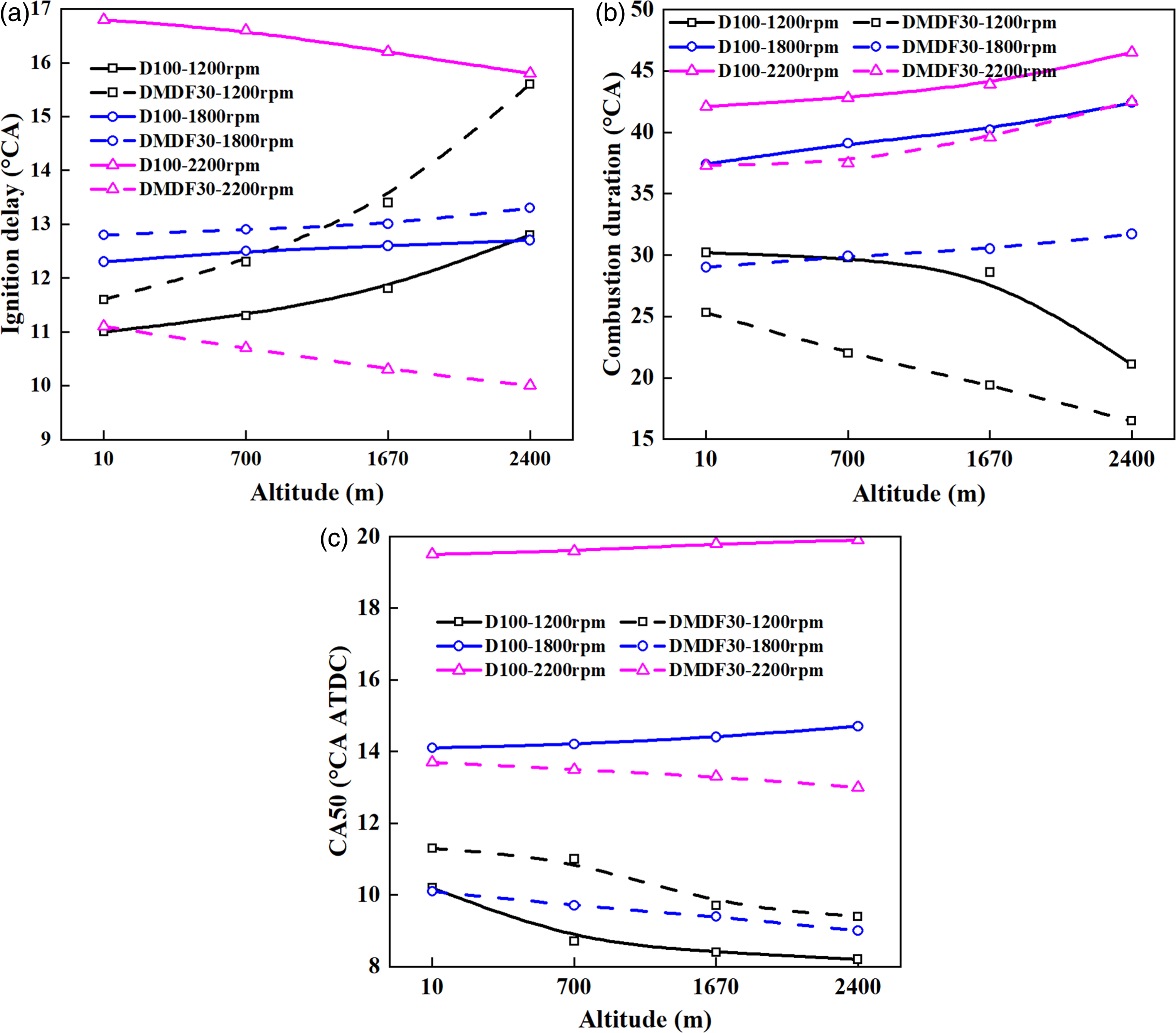
Ignition delay, combustion duration, and CA50 of the diesel mode and DMDF mode at different altitudes. (a) Ignition delay, (b) Combustion duration, (c) CA50.
Figure 9 explored the brake thermal efficiency of the diesel mode and DMDF mode at different speeds and altitudes. The tendency of 1800rpm and 2200rpm was similar, so 1800rpm was taken as an example for brevity. When the altitude increased form 10m to 2400m, the brake thermal efficiency of diesel mode reduced 3.06, while the brake thermal efficiency of DMDF mode reduced 3.09; at the same time the brake thermal efficiency of DMDF mode were higher than diesel mode. The reason for the brake thermal efficiency reduction was that as the altitude increased, the intake air of the engine decreased, the oxygen concentration in the cylinder decreased, and the quality of the mixture deteriorated, resulted in deterioration of combustion, incomplete combustion, and reduced the working capacity of the fuel. The reason for the brake thermal efficiency of DMDF mode higher than diesel mode was that methanol contains oxygen and the methanol vaporized reduced the intake temperature and produced more air-fuel mixture. 39 Once the diesel ignited, multiple points in the cylinder ignited at the same time. The premixed combustion ratio was increased, so that the fuel was fully combusted and the combustion process was improved. At 1200rpm, the brake thermal efficiency of diesel mode was continuously reduced from 33.25 at 10m to 29.28 at 2400m. The tendency of DMDF mode was decreased first and then increased from 10m to 2400m. From 10m to 700m, the brake thermal efficiency of diesel mode reduced 0.7; and then increased 11.9 from 700m to 2400m. The thermal efficiency of the DMDF engine was first reduced and then increased because the use of methanol not only replaced part of the diesel, but also reduced the over-rich area of the mixture in the cylinder. At the same time, the limits of Inflammability of methanol was less than that of diesel, which increased the mixture that can be combusted, and the combustion process was improved. The reason why the brake thermal efficiency of diesel engines was generally higher than that of DMDF engines at 1200 rpm was that the latent heat of methanol vaporization was high, and the temperature in the cylinder was further reduced at the end of compression, which prolonged combustion lagging period and caused combustion too late.
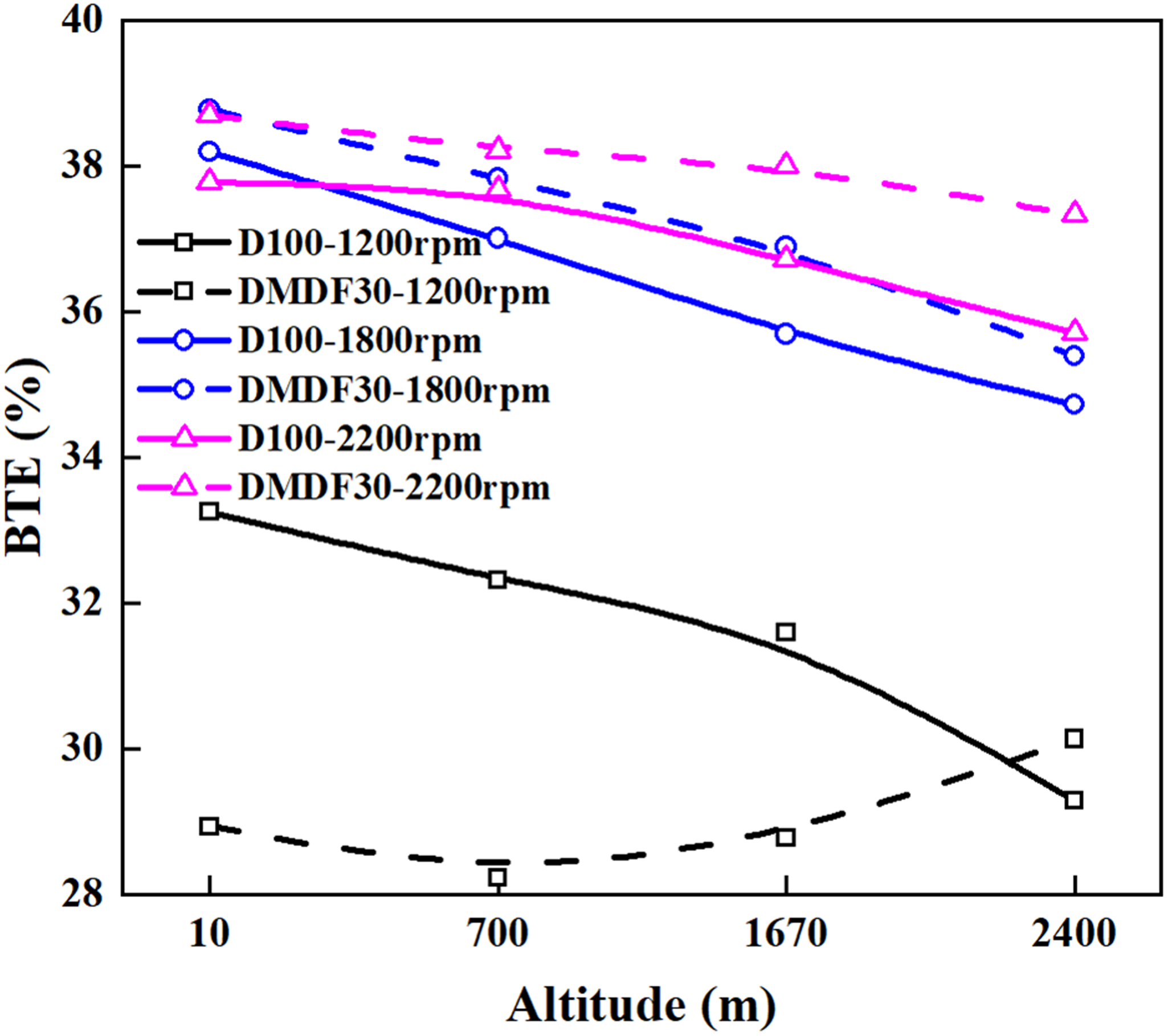
Brake thermal efficiency of diesel mode and DMDF mode at different altitudes.
Figure 10 showed the influence of altitude on the COVPP and the COVIMEP for the diesel mode and DMDF mode. The COVPP and COVIMEP were used to evaluate cyclic change in DMDF mode, which reflected the stability of internal combustion engine and related to the non-repeatability of subsequent engine work cycles. 40 It could be observed that when the altitude increased, the COVPP and COVIMEP of both diesel mode and DMDF mode increased. Take 1800rpm as an example, the COVPP of DMDF mode increased from 1.41% to 2.49% (76.6% increment), and the COVIMEP of DMDF mode increased from 1.28% to 1.47% (12.9% increment). Meanwhile, the COVPP of DMDF mode was 0.45%∼1.30% higher than that of diesel mode and the COVIMEP of DMDF mode was 0.40%∼0.63% higher than that of diesel mode at various altitudes. The use of methanol led to the postponement of ignition and the increment of premixed combustion ratio, which would cause the rough operation of the engine. The cetane number of methanol was smaller and its ignition performance is poor. In addition, the variations of diesel spontaneous ignition points and the variations in methanol-air mixture composition within the cylinder of different cycles, especially near the diesel spontaneous point also led the increment of the coefficient of variation. 41 According to literature, the maximal value of the COVIMEP for the correct operation of the engine is 2–5%, 42 and the acceptable limits for the COVPP is 2–5%. 35 In this research, when the altitude rose from 10m to 2400m, the values of COVPP and COVIMEP could be controlled between 0.6% and 2.6%. This means the combustion of dual-fuel is relatively stable, and there is no large cycle-by-cycle variations.
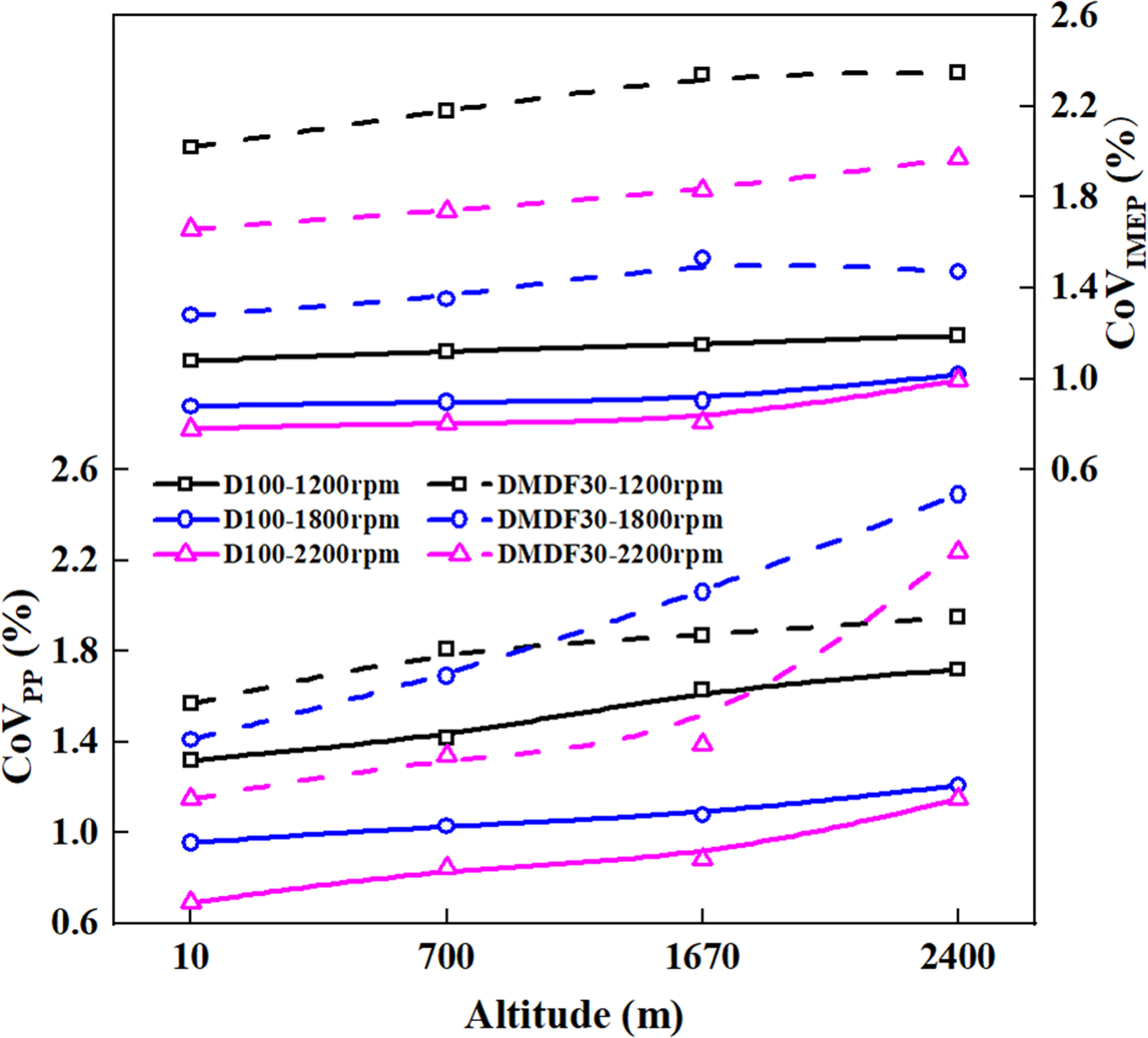
COVPP and COVIMEP of diesel mode and DMDF mode at different altitudes.
It can be seen from Figure 11 that the exhaust temperature rose substantially with the increment of altitude, and the exhaust temperature of DMDF mode was lower than that of diesel mode at various altitudes. For 1800rpm, the exhaust temperature of DMDF increased by 35.8% when altitude raised from 10m to 2400m. Compared with diesel mode, the exhaust temperature of DMDF mode decreased by 4.90%, 4.42%, 3.95%, and 3.46% at various altitudes. The intake air decreased at high altitude, resulting in the extension of ignition delay. In DMDF mode, the high latent heat vaporization of methanol reduced the temperature for the whole combustion process. 43 In addition, the combustion duration of DMDF mode was short and the proportion of post combustion was reduced, led to the exhaust temperature of DMDF mode lower than that of diesel mode.
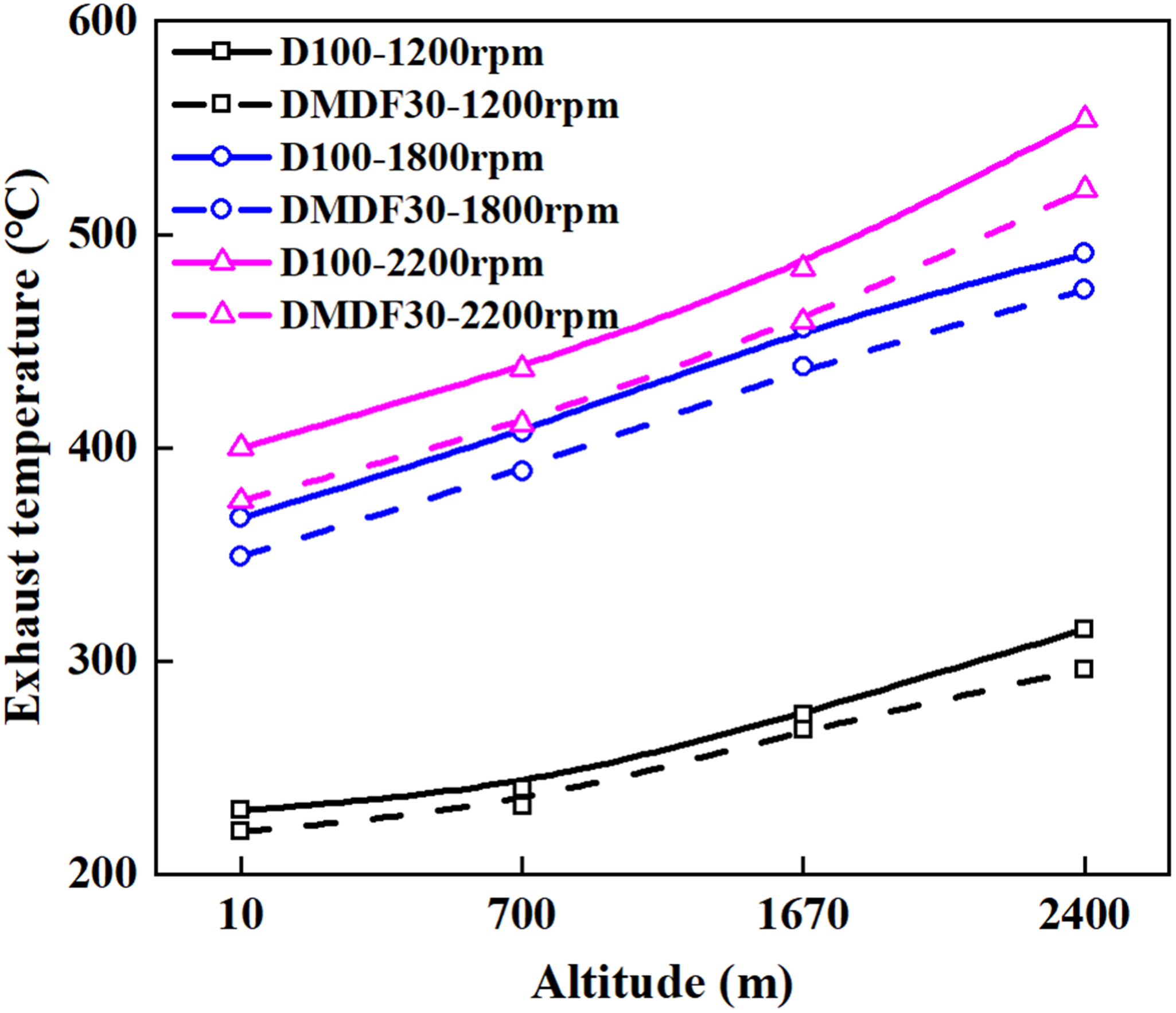
Exhaust temperature of diesel mode and DMDF mode at different altitudes.
Figure 12 showed the influence of altitude on NOX and soot emissions. With the increment of altitude, NOX and soot emissions in DMDF mode were lower than those in diesel mode at various working conditions. Take 1800rpm as an example, when the altitude was increased from 10m to 2400m, NOX in DMDF mode was 22.80%, 15.89%, 11.51%, and 7.07% lower than that in diesel mode respectively, and soot in DMDF mode was 22.82%, 22.63%, 10.83%, and 12.85% lower than that in diesel mode respectively. Local in-cylinder temperature, concentration of oxygen and high temperature duration are the main factors of NOX formation. 44 In DMDF mode, the vaporization of methanol reduced the combustion temperature. The multi-zone combustion of mixture caused the temperature distribution more uniform, which avoided the appearance of local high temperature zone. In addition, during the combustion period, methanol would generate chemical oxygen, which led to the increment of NOX emissions. However, the combustion rate of methanol was faster than that of diesel, resulting in the reduction of the combustion duration. The decrement of high temperature duration inhibited the formation of NOX. Among the three main factors, the first and third factors have a greater effect on suppressed NOX than the second factor on the increase of NOX. Therefore, under the combined effect of these three main factors, the NOX emission of DMDF mode decreased compared with the diesel mode. For soot, high temperature and a heterogeneous mixture of fuel and air are the main factors of its generation. 31 Compared with diesel, methanol has lower cetane number and higher combustion rate. In DMDF mode, methanol replaced part of diesel and shorten the combustion duration, which was conducive to the inhibition of soot formation. In addition, the use of methanol increased the oxygen mass fraction of the fuel and improved the combustion process in cylinder, which has a significant effect on reduction of smoke emission.45,46 Therefore, we can conclude that the application of DMDF model could be an effective way to alleviate the further deterioration of the trade-off relationship between NOX and soot in the plateau.
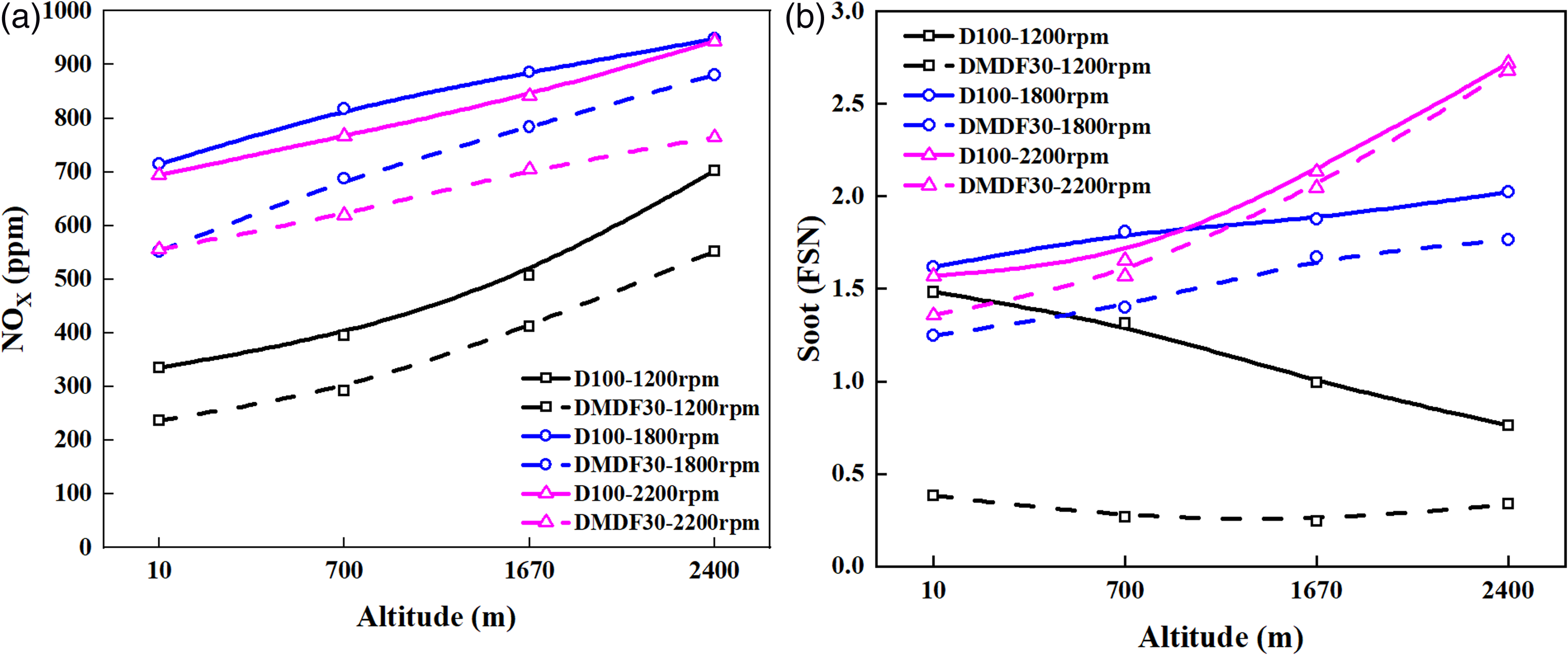
Soot and NOX emissions of diesel mode and DMDF mode at different altitudes. (a) NOx, (b) Soot
Methanol offers an opportunity to improve the power performance, thermal efficiency, and emissions of the engine at high altitudes. The experimental examinations of this study were carried out on a DMDF engine, in which methanol was co-combusted with diesel. The methanol substitution percent was 30%. The influences of altitude (10m, 700m, 1670m, and 2400m) on combustion process, fuel economy and emission characteristics for the DMDF engine were examined at three working conditions (1200rpm-72 N·m, 1800rpm-158 N·m, and 2200rpm-153 N·m) in this research. Based on various parameters measured, the main conclusions are as follows:
With the increment of altitude, the Pmax of DMDF mode at 1800rpm and 2200rpm were higher than those of diesel mode. However, the Pmax of DMDF mode at 1200rpm was lower than that of diesel mode. For 1800rpm and 2200rpm, the Pmax of DMDF mode was 3.52% and 10.39% higher than that of diesel mode respectively at 10m, and the ratio further increased to 9.22% and 15.31% respectively at 2400m. For 1200rpm, the Pmax of DMDF mode was 2.9% lower than that of diesel at 10m, and 12% lower than that of diesel at 2400m. The HRR in DMDF mode were higher than that of diesel mode at different altitude for 1200rpm and 1800rpm. Take 1800rpm as an example, when the altitude increased from 10m to 2400m, the peak value of heat release rate in DMDF mode increased by 63.4%, the corresponding crank angle was delayed by 1.1 °CA. For 2200rpm, when altitude lower than 1670m the peak value of diesel mode higher than DMDF mode. At 10m the maximum difference between maximum HRR of diesel mode higher than DMDF mode was 4.7, then at 2400m the maximum difference between maximum HRR of DMDF mode higher than diesel mode was 11.6, and the part of premixed combustion was increased. The trend of the maximum pressure rise rate was opposite to the trend of the maximum HRR, the maximum pressure rise rate of DMDF mode were higher than diesel mode for 1800rpm and 2200rpm. Take 1800rpm as an example, when the altitude increased from 10m to 2400m, the peak value of pressure rise rate in DMDF mode increased by 86.8%, the corresponding crank angle was delayed by 2 °CA. For 1200rpm, when altitude lower than 1670m the peak value of DMDF mode higher than diesel mode. At 10m the maximum difference between maximum pressure rise rate of DMDF mode higher than diesel mode was 0.17, then at 2400m the maximum difference between the maximum pressure rise rate of diesel mode higher than DMDF mode was 0.24. The tendency of combustion center (CA50) and combustion duration for 1800rpm and 2200rpm is similar, take 1800rpm as an example, when the altitude increased from 10m to 2400m, CA50 in diesel mode moved backward by 0.7°CA, while the CA50 in DMDF moved forward by 1.1°CA. In addition, the combustion duration of DMDF and diesel mode increased by 2.7°CA and 5°CA respectively. For 1200rpm, when the altitude increased from 10m to 2400m, CA50 in DMDF mode ahead 1.9°CA, CA50 in diesel mode ahead 2°CA. Meanwhile, the combustion duration of DMDF mode and diesel mode decreased 8.8°CA and 9.1°CA, which realized a reduction of 34.6% and 30.1%. The tendency of 1800rpm and 2200rpm for the brake thermal efficiency was similar, so 1800rpm was taken as an example for brevity. When the altitude increased form 10m to 2400m, the brake thermal efficiency of diesel mode reduced 3.06, while the brake thermal efficiency of DMDF mode reduced 3.09. At 1200rpm, the brake thermal efficiency of diesel mode was continuously reduced from 33.25 at 10m to 29.28 at 2400m.The tendency of DMDF mode was decreased first and then increased from 10m to 2400m. From 10m to 700m, the brake thermal efficiency of diesel mode reduced 0.7; and then increased 11.9 from 700m to 2400m. From the results it can be concluded that at high altitude (2400m) the BTE of the DMDF engine is higher than the diesel engine, which proves its advantage in terms of fuel economy. When the altitude rose from 10m to 2400m, the COVPP of DMDF mode increased while the COVIMEP of DMDF mode decreased. The values of COVPP and COVIMEP could be controlled between 0.6% and 2.6%, which means the combustion of dual-fuel is relatively stable. Compared with diesel mode, NOX and Soot emission in DMDF model significantly decreased at different altitudes and working conditions. The application of DMDF model could be an effective way to alleviate the further deterioration of the trade-off relationship between NOX and soot in the plateau.
In conclusion, this paper highlighted that DMDF mode is effective in improving the performance of diesel engines on the plateau and proves that methanol has great potential to improve the performance of diesel engines in high altitudes. And provides theoretical guidance for related researches. According to this aspect, further research should be carried out to combine the DMDF engine with other technologies that can improve the performance of diesel engines on the plateau, such as two-stage supercharging.
Footnotes
Abbreviations
Declaration of conflicting interests
The author(s) declared no potential conflicts of interest with respect to the research, authorship, and/or publication of this article.
Funding
The author(s) received no financial support for the research, authorship, and/or publication of this article.
