




Abstract
Community solar has the capability to broaden solar accessibility and convalesce financial feasibility in comparison to conventional and commercial solar options and holds the potential to be part of the energy mix. Community solar avails ingress and affordability to solar power for those who may not be able to exploit it either due to financial or location constraints. Parallelly, it solves the issues related to electrification, fossil fuel crisis and greenhouse gas emission, contributes to sustainable development goals (SDG 7 and SDG 11), and realization of net-zero goals, however, the presence of barriers makes the adoption or scaling of community solar difficult. This research work intends to identify twelve crucial barriers for the adoption of community solar on the basis of the literature review and the perception of experts in the energy system. In this paper, we adopted hybrid Interpretive Structural Modeling (ISM) - Decision Ma king Trail and Evaluation Laboratory (DEMATEL) approach for comprehension of the causal and hierarchical relationships among barriers for community solar adoption. The result suggested that lack of consumer awareness, lack of regulations and policies addressing community solar and lack of business model are the most influential barriers as depicted in ISM-DEMATEL based methodology. With the presented novel method, policy-makers, utilities and communities can liaise, coordinate and practice the system-wide advantages of community energy projects. It can also aid the public sector in comprehending the barriers and requirements of people.
Keywords
Introduction
Energy transition is hastening a new energy economy, enforcing policy actions, technology innovation, and more collaborative actions among stakeholders. It seeks change in energy mix and reliance on renewable sources of energy or alternative low-carbon emitting energy sources, aimed at the achievement of net zero goals and the demands of key energy-related United Nations Sustainable Development Goals (UNSDGs), while improving air quality. Furthermore, clean energy transition is aligned with the global target of restricting the global temperature rise to 1.5
Electricity plays a pivotal role in energy transition and the fiscal development of the nation. Electricity's share in the world's final energy consumption has increased progressively over years and is now 20%, 1 further the global electricity demand increased by 6% in the year 2021. 1 As per Net Zero Emissions (NZE), the share of electricity in the world's final energy consumption will be 50% by 2050. 1 Acknowledging the fact that electricity provides better services in comparison to other energy sources, transformation in the power sector is imperative. Clean technologies in the power sector have become the first choice of the majority of policy makers and government, initially due to policy implications but now due to cheaper costs.
Although renewable sources of energy are utilized as an alternative to fossil fuel, the coal-fired electricity generation increased by 9% in 2021 and was at an all-time high since 2011. 1 Concurrently, CO2 emission from electricity generation also reached approximately 7% for the year 2021 in comparison to the year 2020. Coal was the major contributor to CO2 emission, responsible for over 800 Mt of CO2 emission. Parallelly, the wholesale electricity prices also augmented for the year 2021 and were more than four times higher for the fourth quarter than the average for the year 2015–2020. Simultaneously, countries like Texas, Japan, India, China, Pakistan and Lebanon faced an electricity crisis in the year 2021. Positively, renewable electricity generation also increased in 2021 by approximately 6%. By 2024, it is expected the contribution of renewable electricity will be more than 32% of the world's electricity supply.
Clean electrification and the involvement of multiple stakeholders are the central pillars for power sector transformation. Power sector transformation promotes the decentralization of electricity generation, and this paradigm shift from a highly centralized sector to a decentralized sector invites new stakeholders into the energy value chain, including consumers/prosumers, engaged in both production and consumption of electricity. The changed role of consumers has led to the formation of small electricity units at the community level, which plays an important role in power sector democratization.
The terms “community energy” or “energy community” have been gaining attention from both the academic and research world for several years, especially after the introduction of Renewable Energy Directives and Clean Energy Package by the European Union in 2018 and 2016 respectively. For this research work, we have considered solar as renewable sources of energy, i.e., our research focus is on “community solar”. Community solar “permits multiple consumers/prosumers to share a single solar installation to gain the benefits of economies of scale to decrease the per-share cost of individuals participating in the project.” Community solar contributes to sustained economic development, energy security, clean energy communities, and job opportunities, and also is resilient against imminent pecuniary and environmental negative impacts. Factor like reduced greenhouse gas emissions has also contributed to the growth of community solar. Community solar is suitable for prosumers who may not possess quality space for solar installation or are willing to contribute only small investments in solar projects. Given the contribution of community solar to both SDG7 (Affordable and clean energy) and SDG11 (sustainable cities and communities) and the net-zero goals, the question arises what are the barriers that community solar is not extensively espoused by consumers?
Previous research works in the field of community solar focused on barriers, enablers, financial aspects, net metering, policies, and business models, however, to scale community solar, it is necessary to identify and categorize these barriers as per their importance and relevance. The objectives of research paper are as follows:
Identification of most influential barriers in implementation of community solar, Establishment of mutual relationship among barriers, and Prioritization of barriers as per their importance.
Twelve dominant barriers were recognized with the help of the literature review. Also, expert perspectives were considered in finalizing the dominant barriers. Researchers used the interpretive structural modelling (ISM) method to identify mutual relationships and interlinkages among twelve identified barriers. Barriers are also categorized into four categories namely, independent barriers, autonomous barriers, dependent and linkage barriers with the help of Matriced’Impacts croises-multiplication applique’ and classment (MICMAC) analysis. Further, Decision Making Trial and Evaluation Laboratory (DEMATEL) is performed to analyse and rank the barriers. The proposed hybrid ISM-DEMATEL tool can prove to be a robust tool for the identification of hierarchical and causal relationships among barriers and in the decision-making process, subsequently the successful adoption of community solar. The novel contribution of the research work is the identification of prominent twelve barriers from literature survey and expert opinions; filtration of barriers using multicriterion decision-making (MCDM) hybrid approaches of ISM-DEMATEL; and suggestions to policymakers, utilities, government, private and non-private organizations based on the results obtained, and encouraging the role of government, private players and utilities in scaling of community solar.
Literature review
Background of community solar
Community solar permits households, businesses, and non-profits to customize renewable energy projects as per their need2–4 additionally, it presents consumers the autonomy to shift towards renewable energy electrification without utility intervention. Community solar shifts electricity generation from onsite generation to third-party generation, 2 and permits groups of homeowners to collaborate and invest in a common photovoltaics (PV) system. 5 Community solar aids in customer-powered interaction and distributed energy strategies, grid modernization and efficiency improvements. 2 Community solar has the ability to upsurge solar access and ameliorate financial feasibility in comparison to host-owned/conventional, commercial solar and third-party ownership model. 6 Community solar allows citizens to achieve economies of scale4,7,8 and complementary lower costs makes it feasible for citizens who are incapable and unwilling to install solar panels on their property. 6 Community solar requires the host (site to install solar PV), the developer (someone who invests in), the subscribers (someone to dispense ongoing costs and benefits of the arrangement) and mechanisms like virtual net metering to provide benefits to subscribers. 6 Community solar prefers arrays located in/near the community, serves by providing electricity to subscribers,7,8 which creates an opportunity for more citizens with poor rooftop quality for installing solar PV to participate in the solar PV market,6,9,10 and share the environmental and financial benefits. 11 Moreover, from an environmental perspective, Sinha et al. 12 mentioned that solar products can be recycled cost-effectively, thus lessening solid waste buildup.
The adoption of PV is affected by multiple stakeholders and collaboration amongst them. Solar PV market's stakeholders can be categorized into three sectors, namely, “public sector” which deals with policy-making institutions and associated departments aided by the government, “private sector” which includes financial institutions, management establishments, supplier organizations, and consulting firms, and “people sector” deals with end-consumers. 13 In the PV market, the major stakeholders are energy-related government divisions, financial associations, solar PV dealers, consulting establishments, utilities and end consumers. 13 In the case of community solar, end-consumers are represented by the community.
Cities are working towards community solar, due to reasons like cheaper solar power, recognition of solar energy as a feasible option for energy mix, integral to government, utility or private developer-led renewable projects, and also the acknowledgement of it as a source of societal and economic benefits by policy makers. 14 For utilities also, community solar proves advantageous, as it aids in fulfilling the increasing electricity demand from renewable sources, and permits utilities to utility-scale solar PV installations. 15 Funkhouser et al. 4 mentioned that utilities are interested to foster community solar not solely to satisfy customer demand but to compensate for the losses that occurred due to the shift of customers towards residential solar PV. The main focus of the public sector is the achievement of energy goals, incentive plans or schemes, and social acceptance of PV, whereas, the private sector is mainly concerned with financial benefits and risks; and the people sector focuses on financial aspects like loan, payback period, along with economic and ecological advantages. 13
Bronin and Wiseman 16 identified three major considerations for significant advancement of community scale-renewables, namely, the keenness of the community to establish a business enterprise for management of the project, acceptance of community to facilitate physical infrastructure for installation, and redefinition of utility-consumer relationship. Several studies have shown an acceptance rate of above 60% for community energy, thus proving the higher market potential for community solar.11,17 Stauch and Vuichard 11 in their survey on consumers’ willingness to participate in community solar, found that consumer-preferred community solar over conventional PV and building-integrated PV. In context of community solar growth and local energy goals achievement, Jones et al. 18 emphasized the significance of collaboration among stakeholders like policy makers, utilities and third-party suppliers along with technological and market forces. Mah 14 identified the importance of socio-economic and political context along with the inclusion of local or community to pave the path for energy transition or shift towards community solar.
Researchers invested time in developing models for community solar. DeVar 19 mentioned various models of community solar, namely, community-driven & individually-owned, single customer solar, onsite, offsite, community-owned and externally-owned model and proposed an equitable community solar model focusing on marginalized communities making community solar more inclusive. Lee et al. 20 proposed virtual community-owned solar and storage model which allows customers to independently control their share of the system and optimize their home's electricity bill.
Most of the recent research in the field of community solar focused on the economic aspect leading to the paradigm shift from environmental pro dimensions to financial benefits dimensions. Community solar mainly deals with two forms of remuneration, namely, the electricity model, where reimbursement of shares is in the form of solar power, and the investment model, where, reimbursement is done in the form of financial benefits (interest payment or monetary compensation). 9 In a comparative study of financial models, namely, “lease-to-own”, “panel purchase with the developer” and “true ownership” model prevalent in the United States, lease-to-own model was recognized as a financially feasible option as it provides positive substantial net present value to all the stakeholders of community solar. 6 In the context of financial feasibility, studies have acknowledged that feed-in-tariff (FIT) policies are more feasible than alternative schemes in the view of long-term financial feasibility from the consumer perspective. 21 In a similar line, Chisika and Yeom 22 also pointed out that FIT policies are prerequisites for solar power propagation. Egan 23 focused on the economical perspective by throwing light on cost-effective policies highlighting approaches like net metering, meter aggregation, energy-saving, and renewable energy certificates (RECs). Oh and Son 24 applied Lagrangian relaxation and dual ascent method and proposed optimal solution for profit maximization and profit-sharing fairness for community solar participants and service providers. Awad and Gul 25 utilized the Monte Carlo Simulation technique to analyse the feasibility of community solar.
In the context of commercial solar PV design and simulation tools, PVsyst, 26 Homer, 27 SAM, 28 and the Community Solar Tool 29 are the widely used deterministic application. However, Shakouri et al. 10 pointed out flaws of these applications like their focus on standalone solar PV systems, limitations related to geographical location, and accuracy, 30 and developed a quantitative decision-support model to design community solar, to maximize the electricity output of PV systems. In similar lines, Hachem-Vermette, Cubi and Bergerson 31 used EnergyPlus 32 and TRNSYS 33 simulation platforms to investigate primary energy demand, energy generation including GHG emissions. Shakouri 10 developed a probabilistic model by applying Mean-Variance Portfolio Theory considering physical, environmental and social factors that can be used to increase the performance of PV or electricity generation or to reduce volatility in community solar. Freitas, Reinhart, and Brito 34 used real-time data to investigate the impact of the collective effect of cumulative demand, electricity storage, PV generation and on-site consumption of PV. Rudge 35 assessed the viability of solar canopies in parking lots in Connecticut using geospatial approaches and concluded that these solar canopies can produce 37% of electricity consumption or demand in Connecticut. In similar lines, Schunder et al. 36 utilized remote sensing and land use data to identify community solar and conventional PV potential in Erie County, New York.
Barriers for the adoption of community solar
In the context of community energy project adoption, myriad barriers are identified like energy poverty and insecurities, 37 multiple governance level, 38 policy inconsistencies, 39 and unfair net-metering benefits39,40 were identified. Here, we have focused on twelve crucial barriers mentioned in the below subsections and Table 1.
Description of community solar growth barriers.
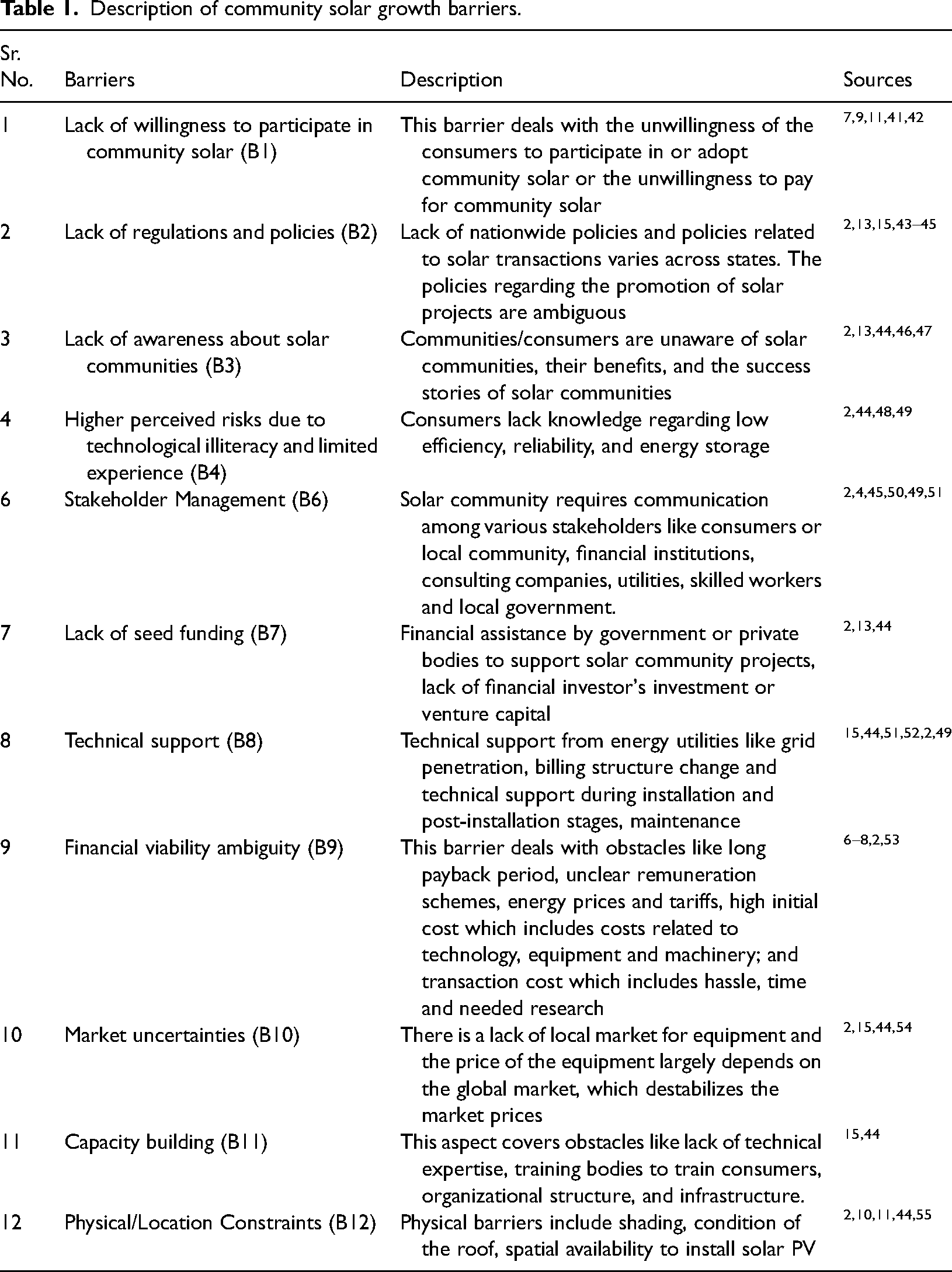
Consumer's lack of willingness to participate in community solar (B1)
The community solar is yet at the nascent stage, hence it is crucial to consider the viewpoint of all the key stakeholders to make it sustainable. Moreover, due to its inception stage, customer segmentation, targeting and positioning are still not completely developed.41,56 To create the solar market, it is essential to identify the willingness of the consumer to participate in community solar. Consumers’ willingness to participate in community solar depends on multiple factors like the form of community solar remuneration, intrinsic motivation (pro-environmental or financial gain motivation), 9 personal factors (education, age, income, occupation, lifestyle, knowledge, need) and contextual factors (socio-political, community, market situation). 41 Saele & Cherry 53 pointed out that uncertainty and unforeseen costs in the process hinder the citizen's willingness to invest in community solar.
Lack of regulations and policies (B2)
Community solar is still at a nascent stage, so policies and regulations are uncertain, which influences citizens’ participation in community solar. 13 Private companies are also unsure about future policies and its influence on solar projects, 13 which further impacts the willingness of private companies to invest in community solar. Further, community solar is transfiguring the energy sector from the bottom-up, thus disrupting the status quo, and government's regulations and policies are in line with the status quo, thus creating barrier for the proliferation of community solar. 43 Without regulations pertaining to incentives and payment structure, participation from customers in community solar projects is challenging. 15 For example, Mah 51 in their survey found out, Fairview community solar took eight months to get permission from the management office to relax the permitted rooftop solar panel area. Restrictions on generation capacity, dearth of consistent standards and enabling regulations, and regulations related to cost neutrality and parity were identified as regulatory barriers related to community solar. 2
Lack of awareness among consumers about community solar (B3)
Presence of knowledge gap about the advantages and process to practice or adapt community solar projects highlights the lack of awareness of education amongst industry and community. 2 Zaitsev et al. 57 highlighted that many citizens have little knowledge about the benefits of solar PV (PV), thus lack of awareness regarding community solar and its benefits also hinders the process of consumer acquisition. Furthermore, the lack of reliable information regarding financial costs, benefits, electricity output, incentive schemes, energy output, solar irradiation and potential environmental and societal benefits with respect to solar projects also act as hindrance for PV adoption.13,53 In the context of PV prosumerism, Wuebben and Peters 58 in their research identified PV promoters barely focused on communicating environmental and societal benefits to consumers, which plays a pivotal role in public opinion shift.
High perceived risk due to technological illiteracy and limited experience (B4)
Successful projects create a conducive environment for opportunities, experience, and knowledge to learn and develop skills. However, Xue et al. 13 pointed out limited pilot PV projects lead to industry reliance on few experts, which may prove expensive and difficult to access, consequently leads to uncertainty and makes community solar projects expensive, which is in similar line to the work of Merlet and Ruud. 48 Further, limited projects also create uncertainty surrounding, the amount of electricity generated by solar PV, payback period and similar unforeseen events, 13 which also leads to risk-averse behaviour of consumers. Also, with the transition towards community solar, utilities are required to integrate new functionality to accommodate the new billing structure related to community solar, and the lack of previous successful community solar projects increases the costs as well as risks.
Lack of business model (B5)
The introduction and dispersion of renewable energy have resulted in development of new business models along with new actors. 59 Business model deals with project design, incentive structure and customer engagement. 2 In the United States, the traditional business model existing supports high-income earners with strong credit scores, 2 which does not support the propagation of community solar to every level of society. McCoy 43 pointed out the different ownership structures of utilities, different market conditions and different regulatory requirement issues related to community solar, which highlights the lack or need of business models to scale community solar.
Lack of stakeholder management (B6)
Communication is the key for the success of any project success. Communication among different stakeholders like government, financial institutions, supplier firms, consulting companies, construction companies, utilities, knowledge workers and end-consumers is essential for the growth of solar projects. 50 Communication amongst stakeholders promote knowledge transfer, shared norms, better-informed decision, understanding and acceptance which act as key factors in the diffusion of solar PV. 50 Stakeholders involved in energy management are unaware of the best practices related to community solar and the process to effectively implement community energy projects. 2 Identification of reliable contractors was identified as a barrier in a survey on community solar communities in Hong Kong. 51
Lack of seed funding (B7)
Beck et al. 44 highlighted the need for funding programmes as a part of the ecosystem to scale community solar. Furthermore, authors highlighted the difficulty in securing financing without long-term offtake agreements. In the similar lines, Xue et al. 13 investigated community solar barriers for Norway, and categorized barriers into three categories, namely, people, private and public, wherein, people barriers include high initial cost, limited financial aid; and private barriers include limited access to capital among other myriads of barriers.
Lack of technical support (B8)
Digitalization in the form of peer-to-peer trading or collaborative consumption, and the promotion of distributed energy resources play a vital role in the shift from the traditional producer to consumer model. Although digitalization act as a facilitator in the implementation of community solar, it also increases the complexity, 52 adding uncertainty to the operation of the energy system. 60 Fairview and Hong Lok Yuen residentials pointed out technical issues like the lengthy installation process, complicated maintenance, the lifespan of solar PV, scaffolding issue and how and who would handle maintenance after the warranty period. 51 Clarity regarding technical aspects like installation, updated IT system to accommodate virtual net metering, proves challenging to utilities also, while transitioning to community solar billing structure.
Financial viability ambiguity (B9)
Community Solar's objective is to gain economies of scale by bulk purchase, however, small scale projects with limited generation capacity as per regulations, become financially unfeasible. 2 In similar lines, Chan et al. 8 highlighted although hardware costs of PV have declined in the last decade, the diffusion of community solar is still challenging in terms of financial aspects. In the workshop data analysis, Gai et al. 2 identified the plummeting prices of solar PV as an opportunity to tackle the community solar's financial barriers, however, high costs of community solar, return of investment, minimal cost recovery and profitability were identified as financial barriers for adoption of community solar.2,15 Additionally, the high cost of installing solar PV and uncertainty regarding unforeseen costs decreases the readiness of citizens to participate in solar projects.13,53
Market uncertainties (B10)
Augustine and McGavisk 15 pointed out RECs and solar RECs (SRECs) prices vary with the states in the United States and are subject to market uncertainties and volatilities, which led to unstable project economics in New Jersey and Massachusetts; and identified market uncertainties as a barrier for community solar growth. High volatility in electricity prices and subsidies related to Renewable Portfolio Standard further weakens the investment related to solar PV. 54 Further, the dependence on the international market for PV increases the market volatility and uncertainty and impacts the price portfolio of community solar.
Capacity building (B11)
Community solar project has pre-development, development and post-development and operations phases, which requires multiple stakeholders and experts, and cross-sector collaboration. Augustine and McGavisk 15 mentioned the lack of expertise as a hindrance to the growth of community solar. Beck et al. 44 highlighted inadequate staff capacity and expertise in siting and interconnection impacts consumer's risk-averse behaviour positively and augmented cost Inevitable reliance on multiple stakeholders in different phases of community solar projects requires expertise from personnel related to it, however, lack of expertise will only lead to failure of community solar projects and financial losses.
Physical/location constraints (B12)
Community solar usually deals with the installation of large and multiple solar panels and requires large space for installation. 50% of consumers are incapable to install solar PV systems on their rooftop owing to issues like poor quality or position of the rooftop, rented property and rooftop system. 61 In similar lines, Shakouri 10 highlighted physical barriers, namely, rooftop availability, maintenance, and inverter efficiency leading to uncertainties in PV investment. Location constraints can be in the form of the steps and permission to finalize a land for community solar projects and interconnection feasibility or cost-related to interconnection. 2 Authors further highlighted the dilemma that exists between expensive properties located in vicinity to consumers with cheaper interconnection costs and cheaper properties in rural parts with expensive interconnection costs. Furthermore, Gai et al. 2 highlighted the laborious and time-consuming process of acquiring or leasing land for installing community solar.
Solution methodology
In this paper, the objectives are accomplished by utilizing a hybrid ISM-DEMATEL methodology. ISM and DEMATEL techniques have the power to simplify complex relationships, examine the cause-effect relationships amid multi-criteria in a system and are powerful tools for decision making. Trivedi, Jakhar and Sinha 62 utilized a hybrid ISM-DEMATEL method to analyse barriers related to the implementation of inland waterway transport, while Shakeri and Khalilzadeh 63 utilized it to investigate the factors influencing project communications, and Mousavizade and Shakibazad 64 identified and ranked significant success factors of knowledge management implementation in the context of Iranian urban water and sewage companies utilizing ISM-DEMATEL. Mishra 65 applied it to analyse and rank factors related to omnichannel retailing implementation in Indian apparel firms. Kumar and Dixit 66 applied it to analyse the hierarchical and contextual relationship amid barriers influencing the execution of e-waste management in India. In another study, influencing factors related to coal mine safety was analysed by Wang 67 Due to the wide pertinence of these two strategies together, to get the constructive outcome, a hybrid ISM-DEMATEL technique has been employed to analyse community solar adoption barriers.
Interpretive structural modeling
ISM methodology is an interactional learning process that aids in forming order and relationships among different variables entangled in the complex relationship. Here, different variables representing complex relationships are organized into a comprehensive systematic model. Figure 1 shows the steps involved in ISM technique. ISM is a powerful tool that can be applied to resolve complex issues in various fields. ISM has been widely used in decision making problems68–74 as well as assists in the differentiation and ranking of the identified variables, in this case, barriers. In this research work, twelve barriers are ranked as per the priority to promote community solar.
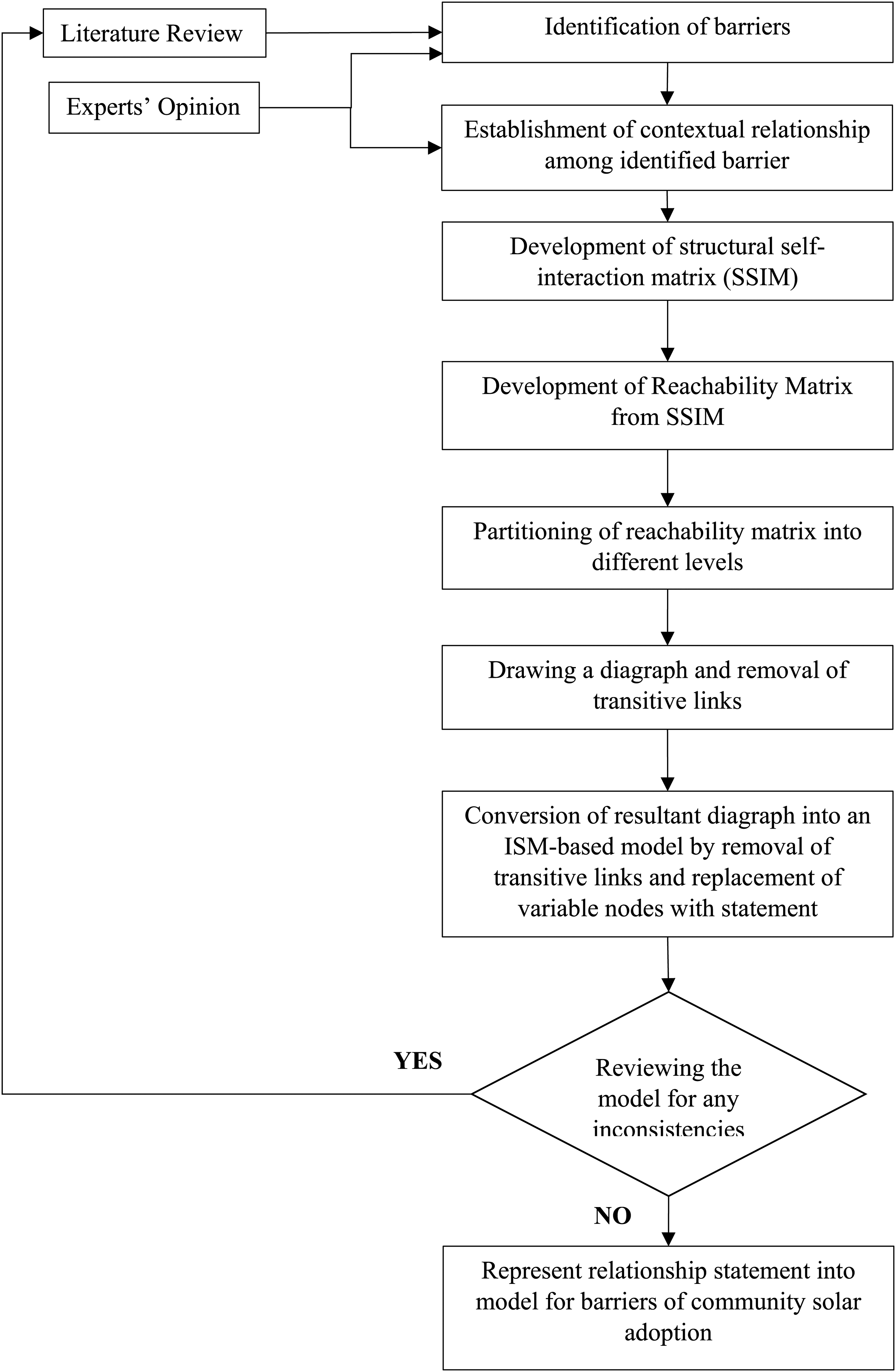
Steps in ISM methodology.
Structural self-interactional model (SSIM)
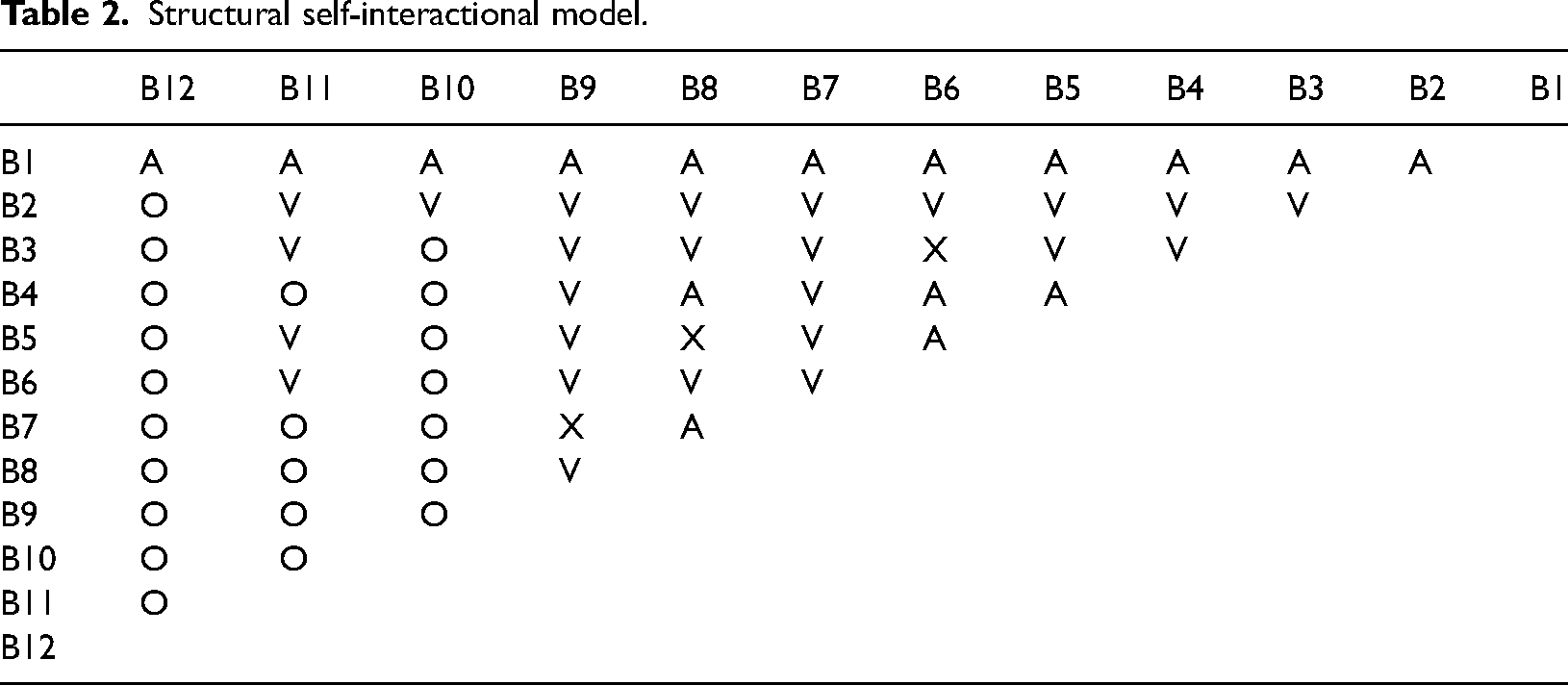
As discussed in section 3, after consultation with industry and academic experts, a structural self-interaction model was made. The contextual relationship between each variable was defined, by defining the relationship direction between two variables (i and j). The relationship between identified variables is explained in Table 1 is created by using four symbols/codes:
V = barrier i influences barrier j;
A = barrier j influences by barrier i;
X = barrier i and j influences each other; and
O = barriers i and j doesn't influence each other, or there are no relations between i and j.
Table 2 contains the contextual relationship established between variables that resulted in SSIM for the twelve variables. The following section explains the relationship with the help of symbols, V, A, X and O.
Structural self-interactional model.
Initial reachability matrix
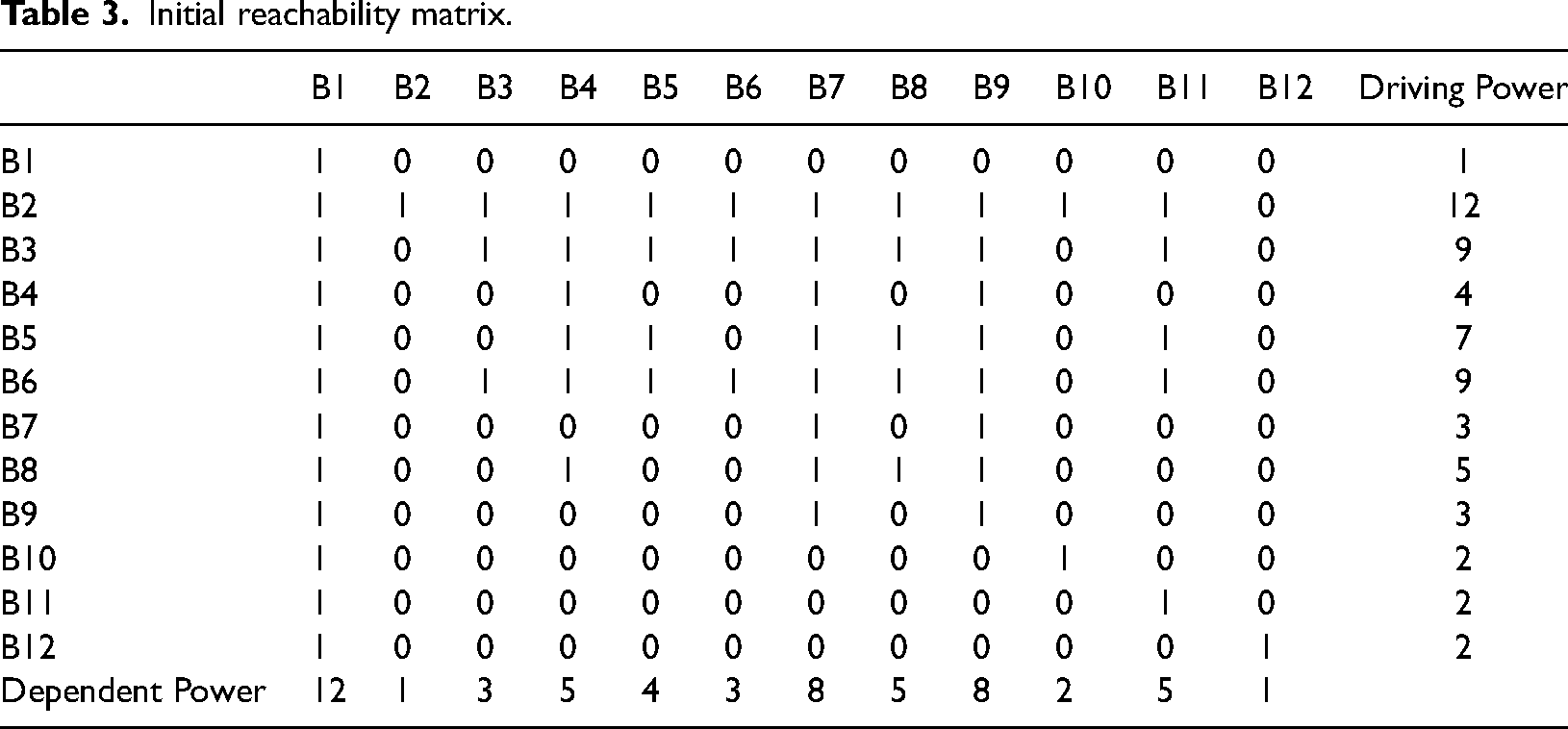
The SSIM is converted into the binary matrix, called the initial reachability matrix (refer Table 2), wherein symbols, V, A, X and O are replaced by 1 and 0. The substitution for mentioned symbols are as follows:
If the entry (i, j) in SSIM is V, then (i, j) entry in the initial reachability matrix is written as 1 and the entry (j, i) is written as 0.
If the entry (i, j) in SSIM is A, then (i, j) entry in the initial reachability matrix is written as 0 and the entry (j, i) is written as 1.
If the entry (i, j) in SSIM is X, then (i, j) entry in the initial reachability matrix is written as 1 and the entry (j, i) is written as 1.
If the entry (i, j) in SSIM is A, then (i, j) entry in the initial reachability matrix is written as 0 and the entry (j, i) is also written as 0.
Since no transitivity was found in this case, the initial reachability matrix also acts as the final reachability matrix and the initial reachability matrix (Table 3) will be utilized for additional calculations.
Initial reachability matrix.
Level partitions
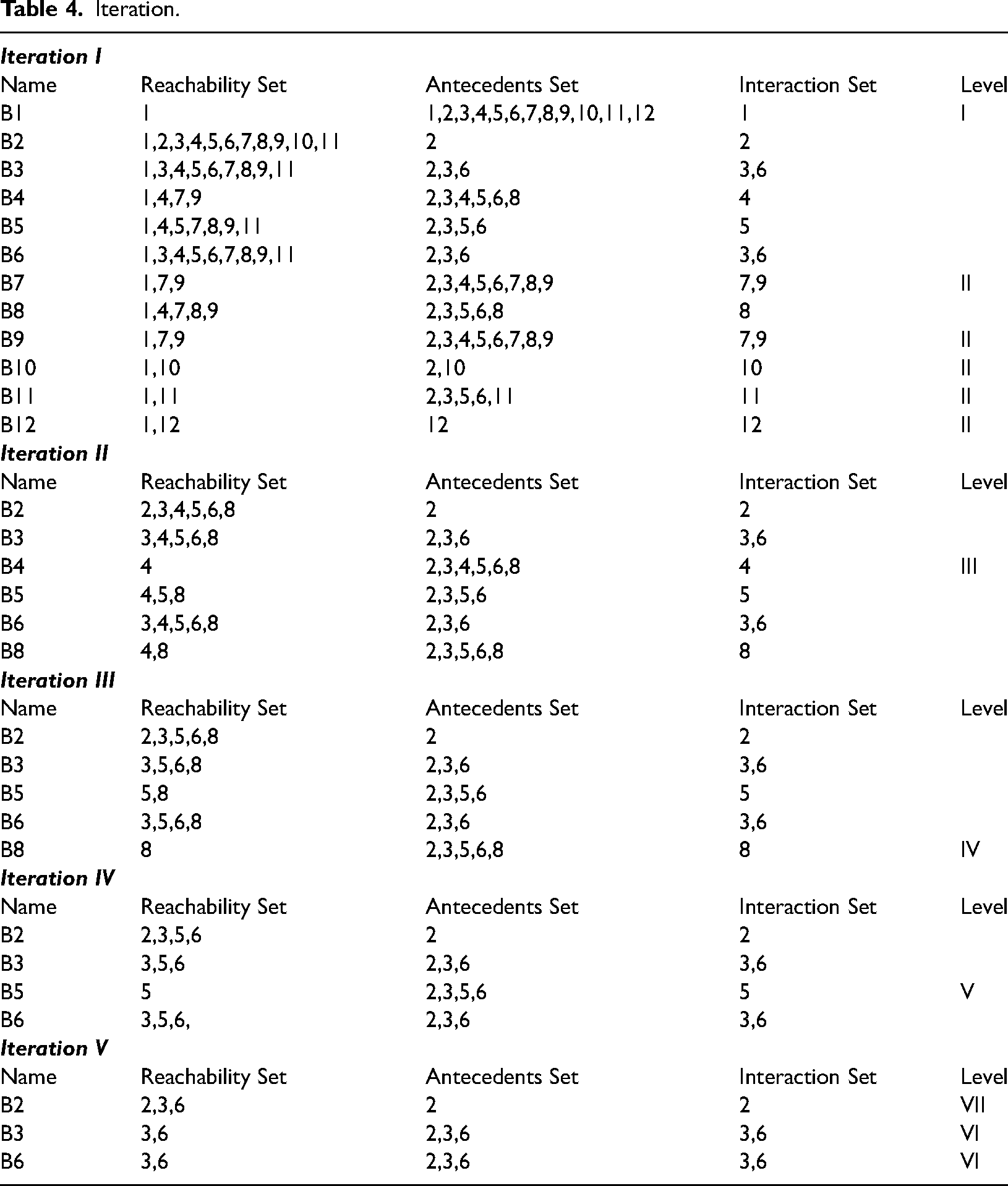
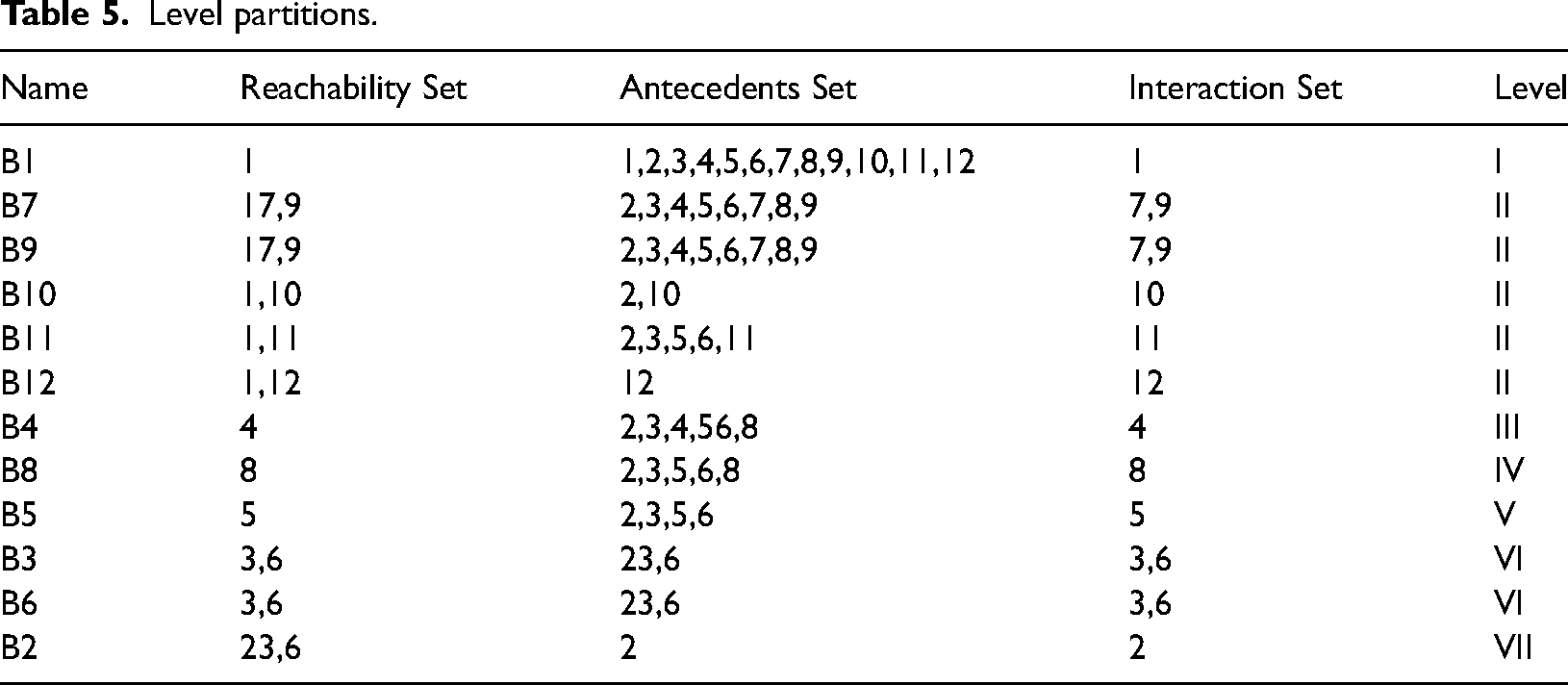
Reachability and antecedent set for each barrier are identified with the help of final reachability matrix. The reachability sets contain the element itself and other elements within its reach, and the antecedent set includes the element itself and other elements that may reach it. Following this, the common elements belonging to reachability and antecedent set are identified. Those elements, for which the reachability set and antecedent set are alike, are considered as top-level elements. Physically, these top-level elements don't move higher than their level. To obtain other levels, the top-level is removed from other elements and the same process is iterated multiple times until all levels are identified (refer Table 4). This whole process yields topological order and precedency. Lastly, the reachability matrix is represented in canonical form according to their level. Level partitioning is presented in Table 5. Level identification process of identified barriers is finished in five iterations. These identified levels, aid in forming diagraph and final model.
Iteration.
Level partitions.
Formation of ISM based model
The reachability matrix leads to the formation of structural model and is presented in Figure 2. The relationship between barriers i and j is depicted by an arrow pointing from i to j. The consequential graph is called digraph, which ultimately yields ISM model.
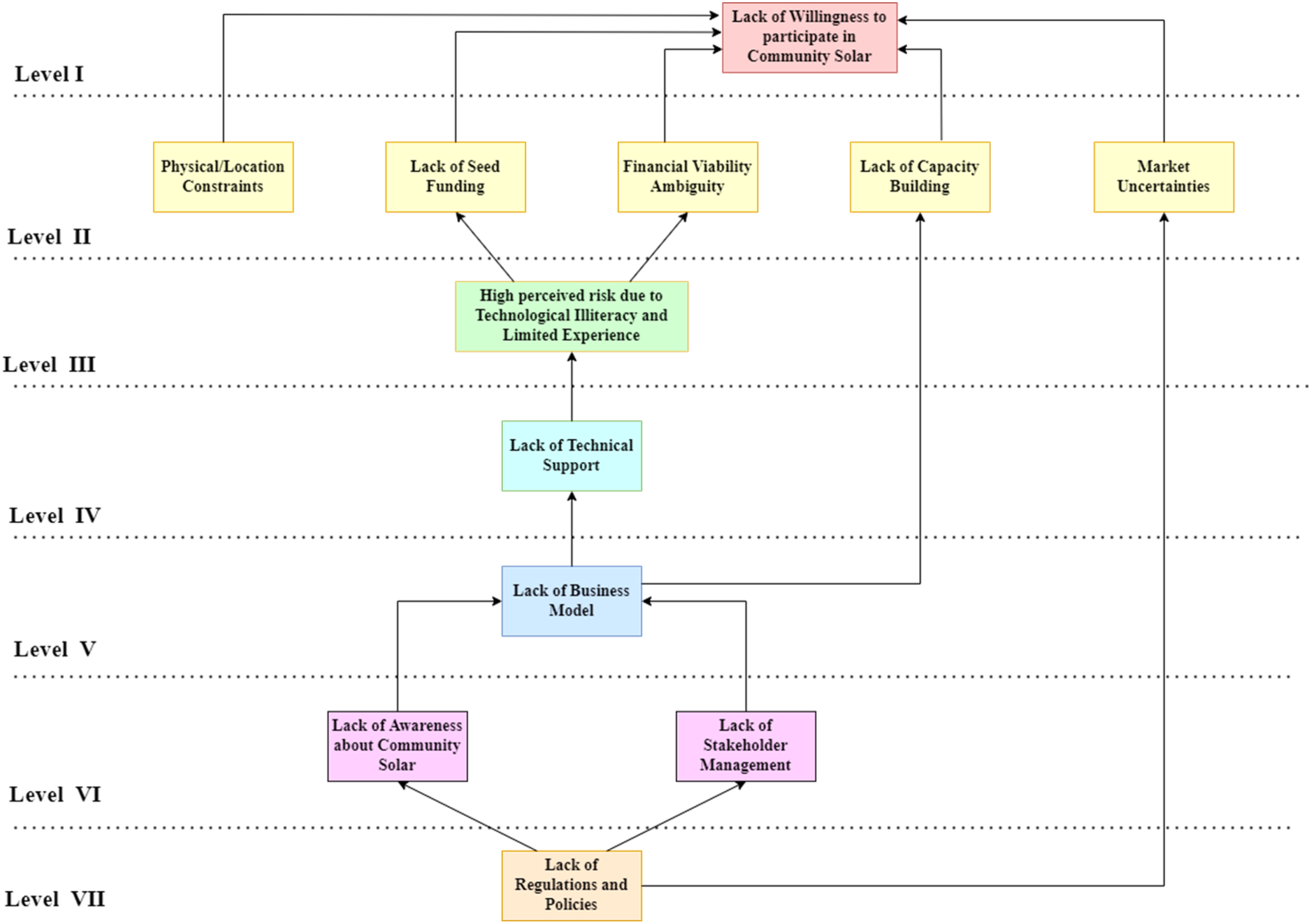
ISM model.
MICMAC analysis
Matriced’Impacts croises-multiplication applique’ and classment (cross-impact matrix multiplication applied to classification) is also noted as MICMAC and is calculated on the basis of multiplication properties of the matrix. In MICMAC analysis, barriers are categorized based on their dependence and driving power; and are categorized into four categories, namely, autonomous, dependent, linkage and independent barriers. Autonomous barriers have both weak driving power and dependence power. They are comparatively disconnected from the system and have few links, which may be strong. Dependent enablers have weak driving power and strong dependence power and are sensitive to any changes in independent variables. Linkage barriers have both strong driving and dependence power, and any changes in them will impact the whole flow of the system. Lastly, independent barriers have strong driving power and weak dependence power; any alterations in these variables will influence variables dependent on them (refer Figure 3).
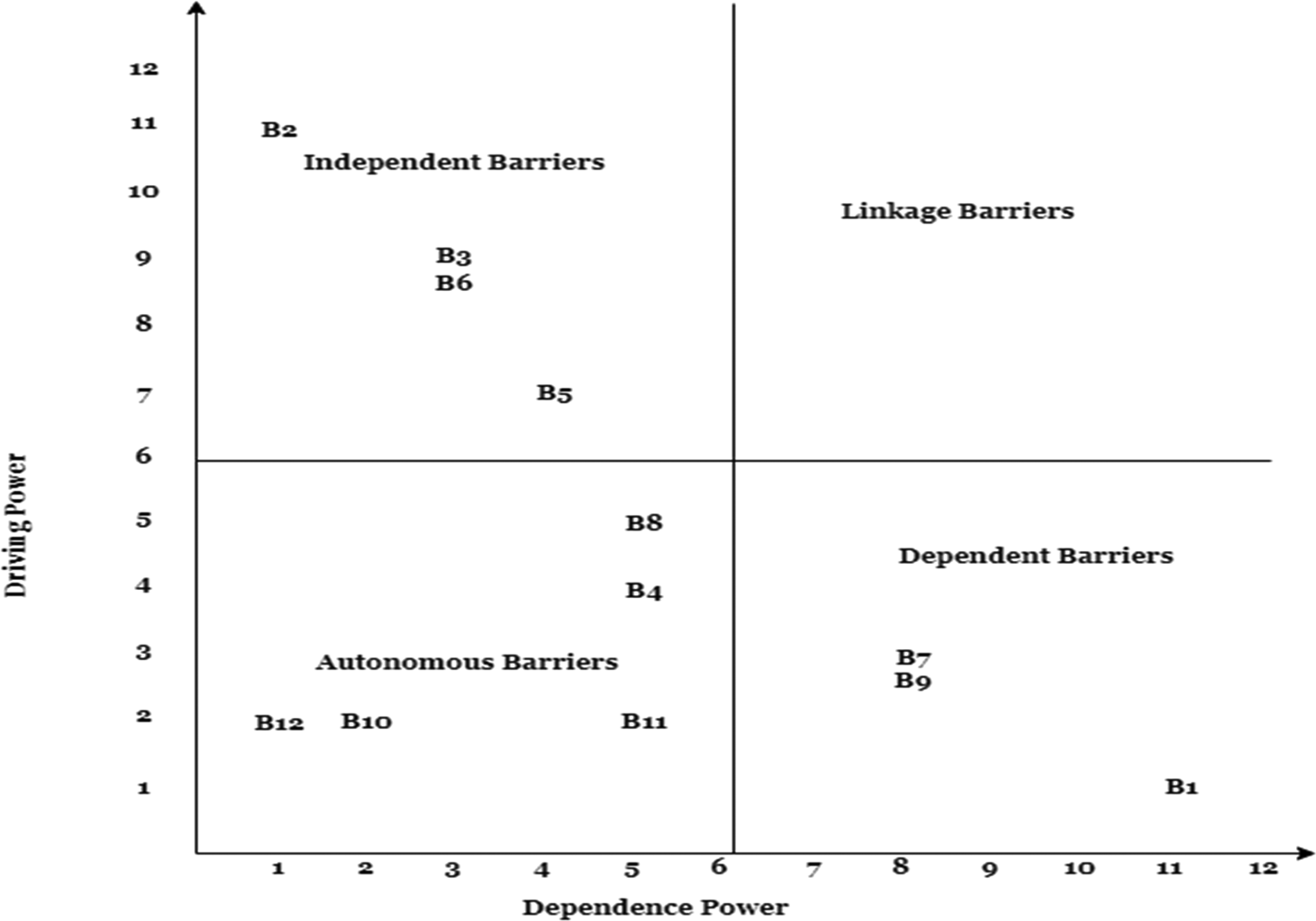
MICMAC analysis.
DEMATEL
Geneva research centre for the Battelle Memorial Institute devised DEMATEL method. It is based on the theory of graph and explains causal relationships visually. DEMATEL technique is utilized to investigate the interlinkages and causal relationships among various dimensions in a complex management system, and it brings meaning to a complex system. DEMATEL categorizes dimensions in cause and effect category or facilitator or dependent category to identify the hierarchical structure. The DEMATEL Method is summarized as follows:
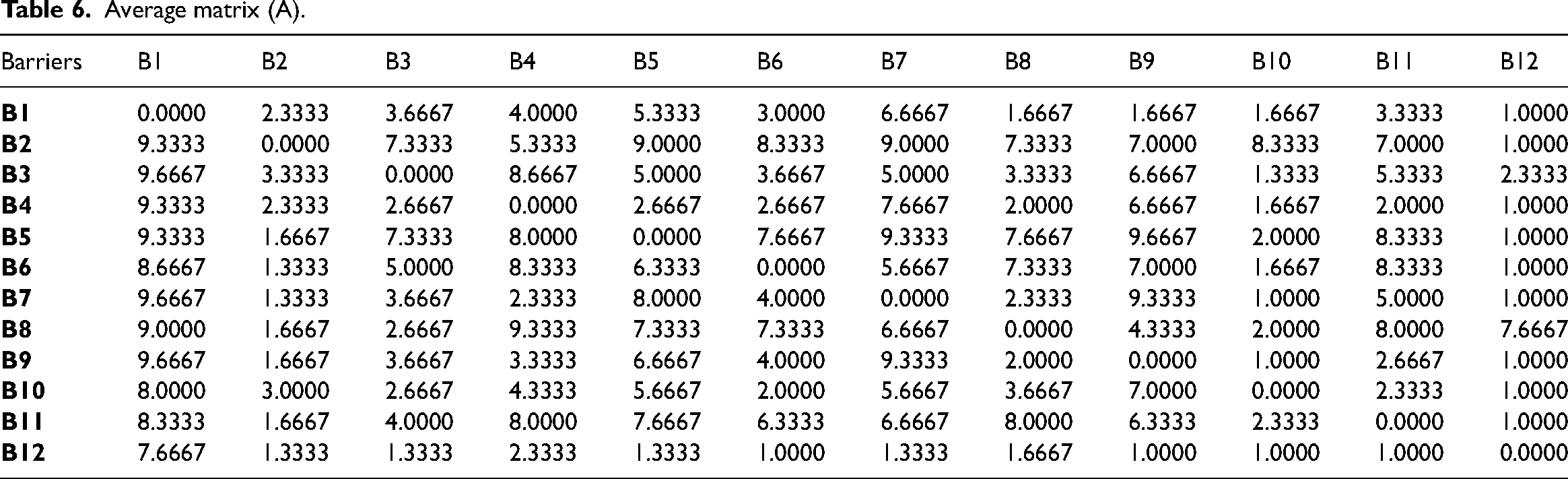
Identified twelve barriers are ranked by the experts based on a scale of 1 to 10 representing increasing influence depending on the influence of one barrier on other barriers. Based on the experts’ responses, a pair-wise comparison matrix is prepared. Average matrix A is constructed from the combination of experts’ responses on pair-wise comparison as shown in Table 6. Afterwards, normalized matrix D is constructed by employing the following equation:
Average matrix (A).
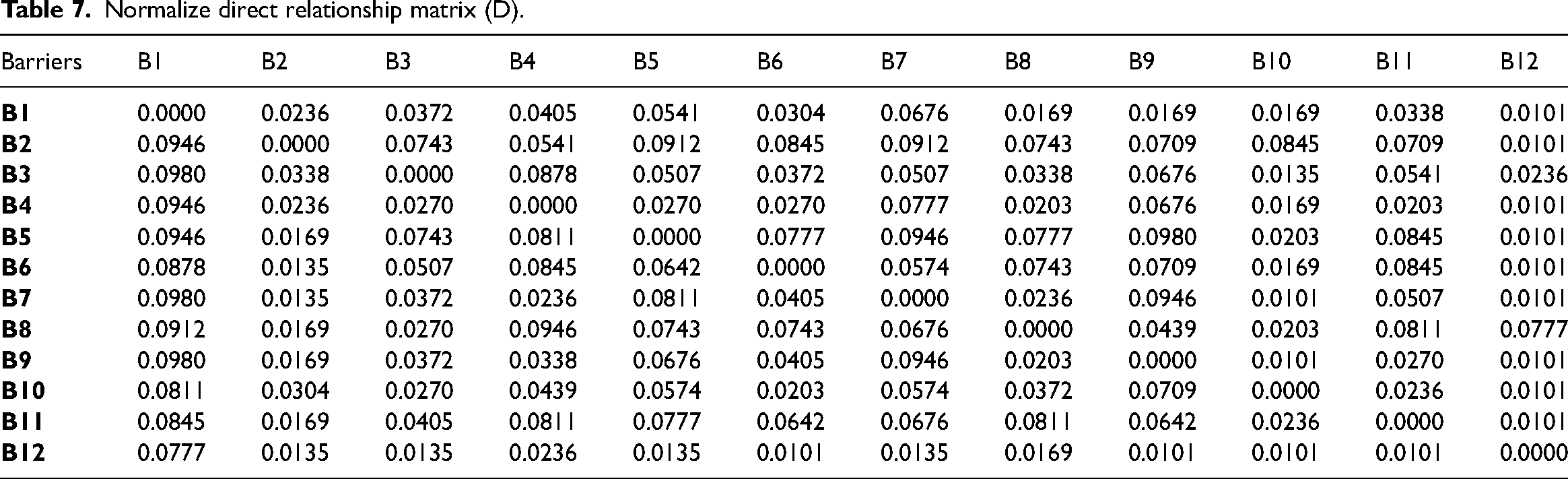
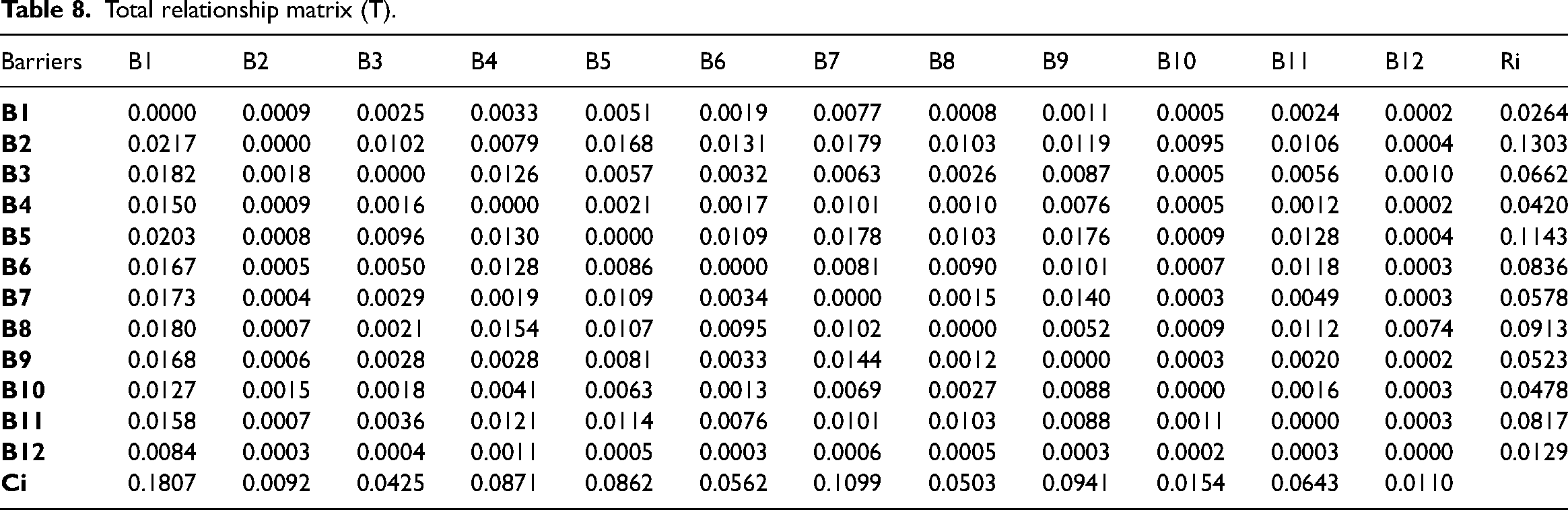
The value of each barrier lies between 0 and 1 as shown in Table 7. In the subsequent step, the total relation matrix (T) is constructed for every barrier by using the formula T = D (I-D)−1, wherein I is the identity matrix (refer Table 8). Based on the total relation matrix, 
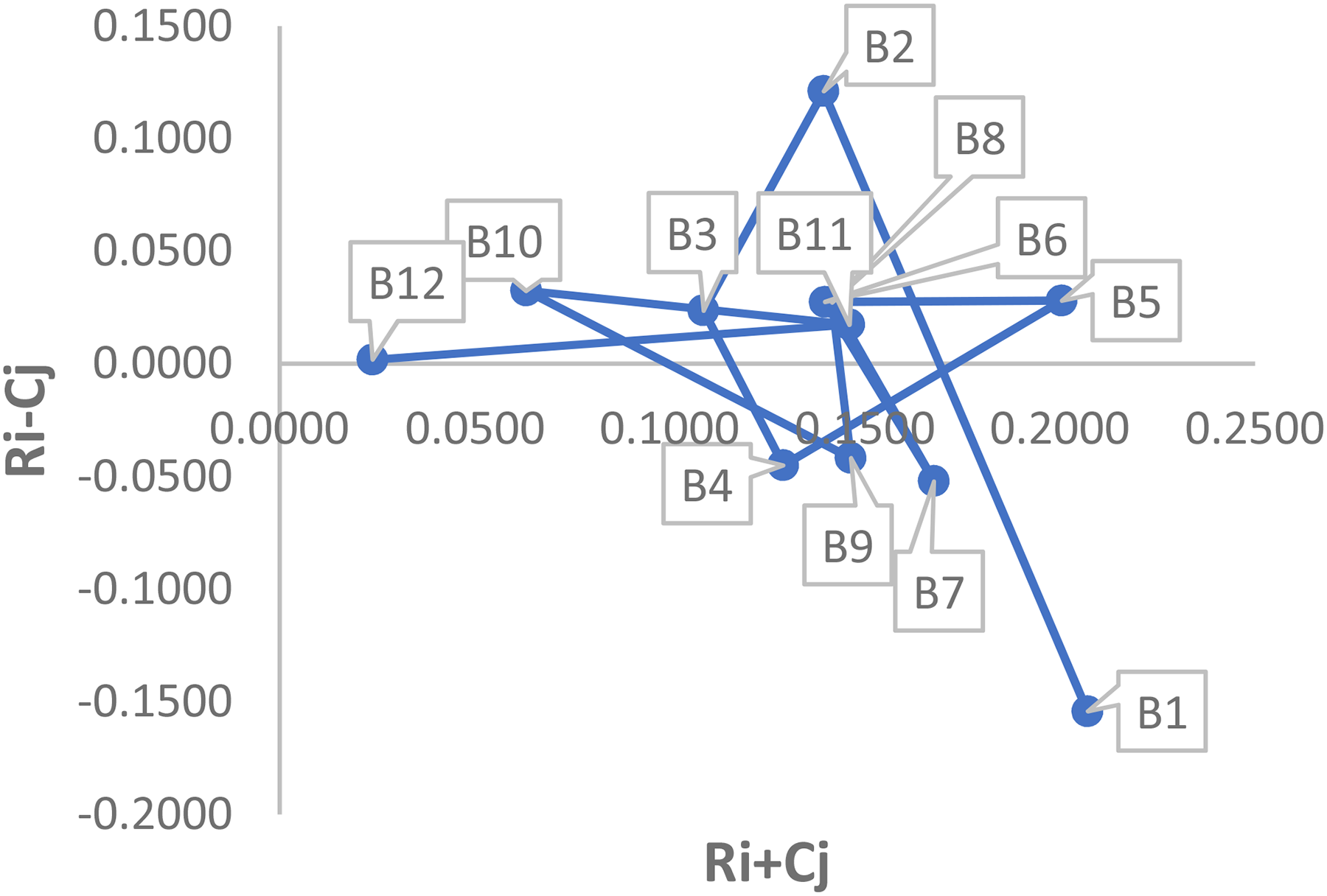
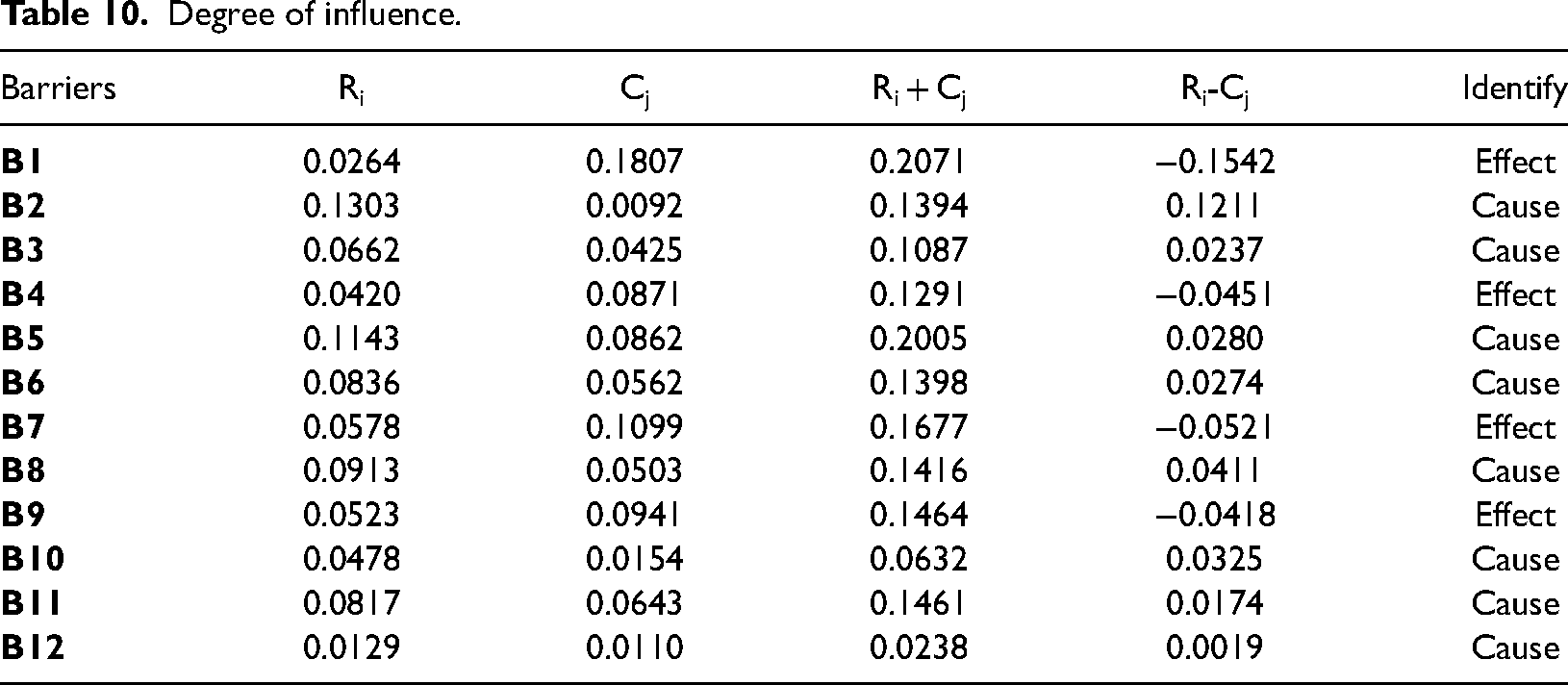
Degree of influence.
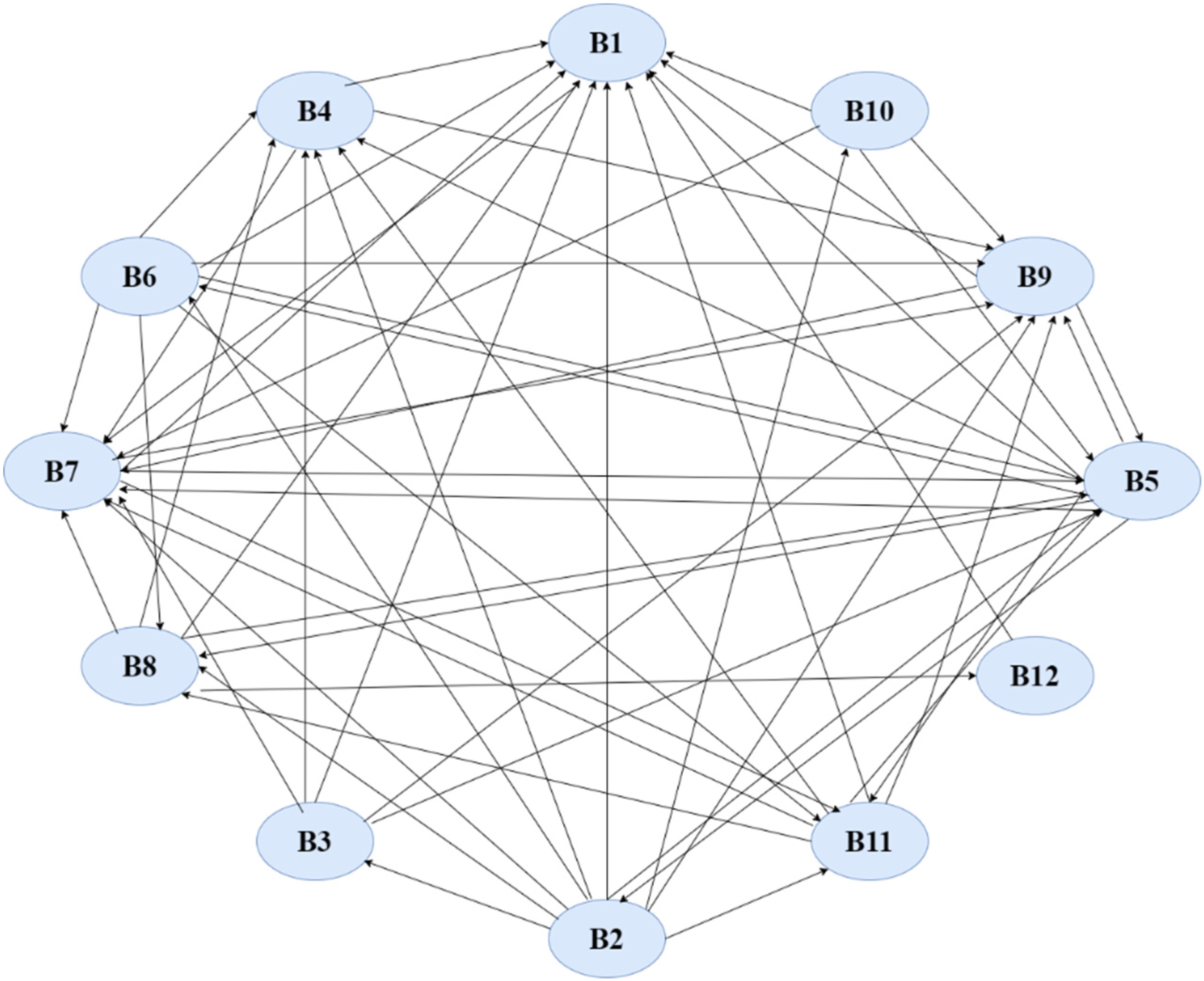
Cause and effect diagram.
Normalize direct relationship matrix (D).
Total relationship matrix (T).
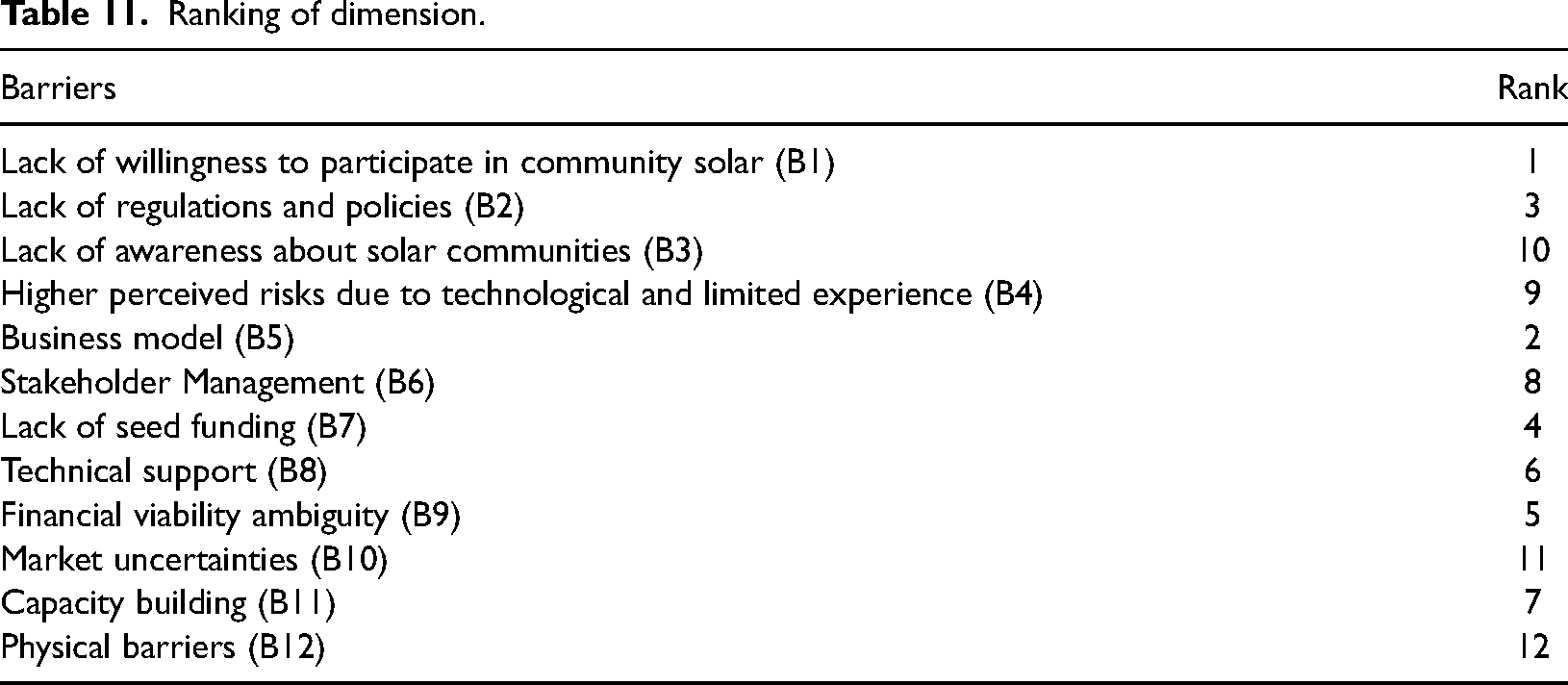
Identified weights are normalized to identify final criteria weights which aids in decision making process and provides ranking of barriers (refer Tables 10 and 11) using equation: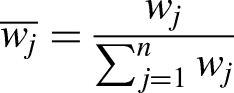
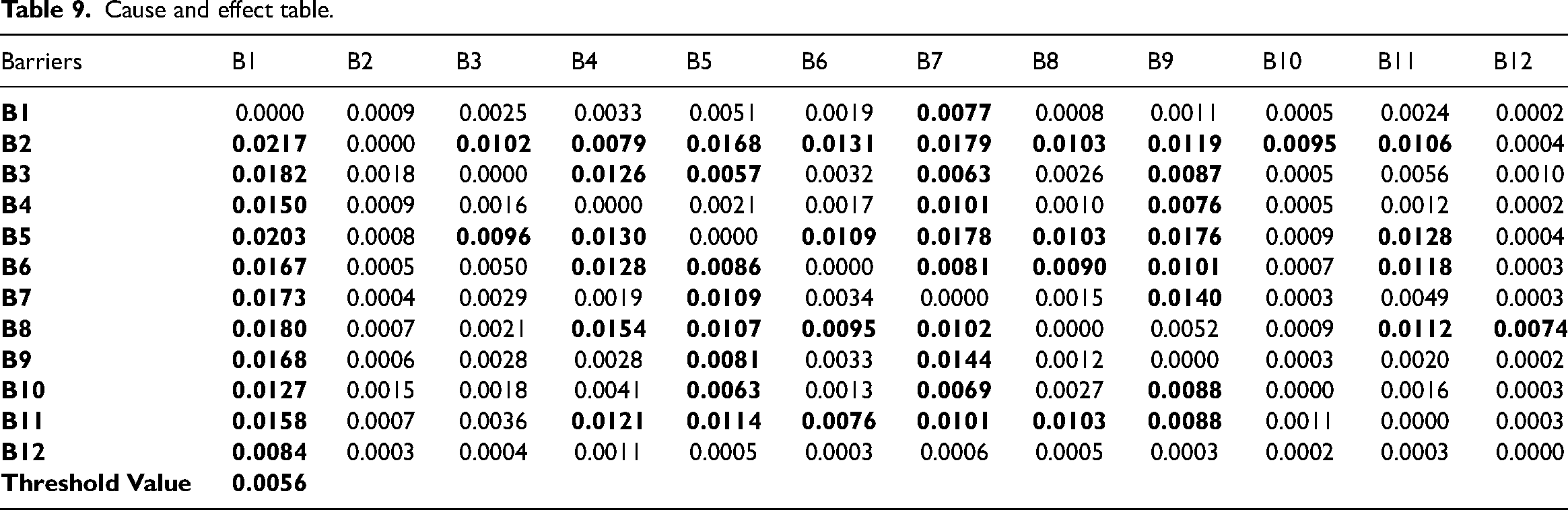
Cause and effect table.
Degree of influence.
Findings and discussion
In this article, the authors have attempted to investigate the barriers related to the adaptation of community solar. Few research articles have attempted to identify the factors related to the adoption of community solar, but no study has attempted to conclude the connection or interrelationship among the barriers for community solar. In this research, twelve barriers have been given importance after consulting industry experts and are considered for analysis. The analysis of the interrelationship among barriers is conducted by applying hybrid ISM-DEMATEL technique.
Ranking of dimension.
ISM
The derived ISM model portrayed a seven-tier hierarchical structure, which was categorised into three categories, namely, enablers, intermediaries and outcomes (Figure 2) to expound relationships amongst the barriers influencing adoption of community solar.
Enablers (Level V, VI and VII): Lack of regulations and policies, lack of awareness among consumers about community solar, lack of stakeholder management, and lack of business model belonged to this category. Lack of regulations and policies (B2) with high driving power and low dependence power is identified as one of the most influential barriers. This barrier influences lack of awareness among consumers (B3) and lack of stakeholder management (B6) related to the adoption of community solar. Lack of awareness among consumers and lack of stakeholder management also have high driving power and low dependence power; hence it is also regarded as influential barriers. Intermediaries (Level III and IV): Lack of technical support and higher perceived risk due to technological illiteracy and limited experience belonged to this category. Community solar required technical as well as technological changes in the grid or rather it is the requirement of grid modernization. Outcomes (Level I and II): Lack of willingness, financial viability ambiguity, lack of capacity building, location/physical barriers and market uncertainties are part of outcomes. It is vital to emphasize barriers at the level I and II have high dependence power and low driving power, i.e., they are highly dependent on other barriers.
Graziano et al. 75 pointed out that the adoption of PV is partly dependent on regulations. Kamdem & Shittu 76 mentioned that regulatory inconsistencies lead to dire consequences in the form of financial investment decisions. Furthermore, new economic and financial models are contingent on policies and regulations, which impacts newcomers’ partaking in community solar.2,77 Policy coherence with national renewable energy target, horizontal policy to synergize with other departments and policies to create collaborations among multi-level stakeholders are critical conditions while framing policies for sustainable community solar. 51 Also, Mah 51 emphasized that government needs to reframe policy intervention and redefine the role of incumbent utilities to enable communities to opt for viable community solar. Different countries are adopting different types of initiatives to promote solar PV, like, China uses public-private partnership model, 78 the USA employs third-party ownership model, 79 while Spain wields community partnerships like crowdfunding and community solar. 80 Over and above regulations and policy concerns, Xue et al. 13 pointed out that citizens sidestep community solar projects due to financial ambiguity and risks, less or no control over decision-making, and low level of faith towards other stakeholders. Investment from private stakeholders decreases financial burden and increases the potential of gaining operational experience in the installation and management of solar PV, contracts development and related concerns like investing and problem-solving, and consulting. 79 However, public, private and people stakeholders can also co-invest in financing the community solar projects, thus easing the burden on any single stakeholder. 13 Multiconsult, a consulting firm with experts in the field of renewable energy sector provides advisory services related to renewable energy projects, 13 and communication of such stakeholder decreases the uncertainty regarding the technical and financial issues related to community solar. Hence, stakeholder management can potentially solve the financial barrier. Further stakeholder management, gives equal importance to people's viewpoint with the bottom-up approach for sustainability of society. 81 Consequently, ISM analysis leads to conclusion that identified barriers significantly influences the adoption of community solar.
MICMAC analysis
MICMAC analysis provides fruitful insights regarding the barrier's comparative importance and relationship on the basis of driving and dependence power. MIMAC analysis categorizes barriers into four clusters, namely, independent cluster, dependent cluster, linkage cluster and autonomous cluster (refer figure 3).
Lack of regulations and policies (B2), lack of awareness among consumers about community solar (B3), lack of stakeholder management (B6) and lack of business model (B5) belongs to the independent cluster. For the adoption of community solar, extensive improvements are demanded in the independent cluster of barriers. This is in line with previous studies, Xue et al., 13 Gai et al., 2 McCoy et al. 43 that suggested that the adoption of community solar needs substantial amendments in regulations and policies. Bringing amendments in regulations and policies also brings changes in stakeholder management 51 and business models. 43 Dependent cluster includes lack of seed funding (B7), financial viability ambiguity (B9), and lack of willingness to participate in community solar (B1). This is highly related to the previous research work of Kamden and Shittu. 76 Lack of technical support (B8), higher perceived risk due to technological illiteracy (B4), lack of capacity building (B11), market uncertainties (B10) and physical/location barriers (B12) comes under the category of autonomous barriers. Although location or physical constraints are a part of autonomous barriers, location should not be underestimated as a barrier. Even developers, suppliers and support groups pointed out the community solar project defers due to acquisition and zoning process. 82
DEMATEL technique
DEMATEL analysis provides the important order of each barrier and categorizes them into the cause (facilitator) and effect (dependent) groups (refer Table 9).
Facilitator: From DEMATEL analysis, eight barriers were categorized under facilitator or cause group, suggesting the more impact they have on other variables in comparison to the impact they receive from others. The higher Ri-Cj score is observed for lack of regulations and policies (B2), lack of awareness about community solar (B3), lack of business models (B5), lack of stakeholder management (B6), technical support (B8), market uncertainties (B10), lack of capacity building (B11). The emphasis and improvement in these barriers impact the barriers in the dependent group. Thus, government and policy-makers should put more efforts to tackle barriers that belong to the facilitator group at utmost importance basis to increase the adoption of community solar.
Dependent: Based on the Ri-Cj score, four barriers fall in the dependent category. The lesser score of −0.0418 indicates that lack of seed funding has the most dependency on cause group barriers. The remaining effect group barriers in decreasing order are high perceived risk due to technological illiteracy (B4), financial viability ambiguity (B9), and lack of willingness to participate in community solar (B1). The effect group barriers can be attended by improvement in barriers belonging to the cause or facilitator group. The outcomes of this research work align with the experts’ opinion regarding dependent factors; also, the relationships are identified with cause group barriers. For example, the financial viability ambiguity barrier can be resolved with the help of an appropriate business model.
Ranking of the factors: The value of Ri + Cj is considered as “prominence”, and the value of Ri-Cj is considered “relation effect”. The higher prominence value shows the higher importance of factors with respect to other variables. The ranking based on prominence value shows prioritizing, whereas ranking based on relation effect shows the influential order.
Lack of willingness to participate in community solar (B1) has the highest prominence value of 0.2071 followed by B5>B7>B9>B11>B8> B6>B2>B4> B3> B10>B12. The most significant factor for the adoption of community solar is the lack of willingness to participate in community solar, and it needs the highest attention for scaling community solar. Based on the relation value, factors can be arranged in decreasing order as B2>B10>B5>B6>B8> B11>B12>B9>B4>B7>B1. The most influential barrier under the relation value category is lack of regulations and policies, which has the highest impact on the adoption of community solar.
Cause and effect diagram: The diagram (refer figure 5) obtained based on the threshold value, presented in Table 9, depicts lack of willingness to participate in community solar (B1) as the highly dependent variable, followed by lack of business model (B5), lack of seed funding (B7) and financial viability ambiguity (B9). However, lack of business model, lack of seed funding and financial viability ambiguity are also interdependent on each other. Thus, any changes in the business model will also influence financial viability and seed funding aspects.
Degree of influence: Graph of degree of influence (refer figure 4) is created with the help of prominence value, plotted on X-axis and relation value, plotted on Y-axis. It is evident from the graph that lack of regulations and policies (B2), lack of technical support (B8) and market uncertainties (B10) are the most important barriers to be resolved on a priority basis for the adoption of community solar.
Combination of ISM and DEMATEL
Lack of awareness about community solar (B3) and lack of regulations and policies (B2) were identified as the most significant barriers in both ISM and DEMATEL analysis. These barriers can be regarded as prime instrumental barriers affecting other barriers. Also, as per ISM, barriers, namely, lack of willingness to participate (B1), lack of seed funding (B7) and financial viability ambiguity (B9) comes under the category of dependent barriers and also, and they are categorized as effect barrier in DEMATEL analysis, which means they are not the barriers to be considered as a priority and are influenced by independent or facilitator barriers. Figure 4 and Table 9 categorized lack of willingness to participate in community solar (B1), lack of business model (B5), lack of seed funding (B7) and financial viability ambiguity (B9) as highly dependent barriers, which is in similar line with ISM analysis. Therefore, for the successful adoption of community solar, cause-group barriers should be considered at the paramount level.
Conclusion and implications
This study identified twelve barriers for the adoption of community solar and develops a theoretical framework to comprehend the interrelations and hierarchy of identified barriers utilizing the hybrid ISM-DEMATEL technique. The ISM resulted in the 7-tiered hierarchical model, and MICMAC categorized barriers into four clusters, namely, autonomous, dependent, independent and linkage clusters. DEMATEL categorized eight barriers into facilitator or cause group and four barriers into dependent or effect group, reflecting their influencing and dependency power.
Theoretical implications
This study is a preliminary attempt to establish interrelationships amongst barriers impacting the adoption of community solar. The study has identified the significant barriers for the adoption of community solar and evaluated their causal relationships. The interrelationships obtained in the study provide support in the formation of strategies to scale community solar. In the area of community solar, most studies are either focused on financial viability or PV design, studies with a management perspective are scarce, and this research work aids in theory building by integrating the scattered, entangled and poorly represented representation of barriers into the well-articulated, well-defined visible model utilizing hybrid ISM-DEMATEL technique. The proposed model is rationally sound in evaluating the barriers impacting the adoption of community solar and also answers the relationships among the barriers. It offers future research academia to present a model using statistical tools. Unlike previous studies, this study proposes a substitute method to theory building developing from associations or relationships of the barriers that could be reflected while promoting community solar.
Environmental implications
Community solar provides community with clean, low-cost electricity; simultaneously lessens the dependence on fossil fuels, which implies less pollution and fewer greenhouse gas emissions, thus mitigates air pollution, reduces carbon footprint and aids to slow down climate change. Cleaner air will also have positive impact on health of mankind. Conventional electricity generation through hydropower, coal and nuclear plant consumes lot of water, whereas solar electricity generation doesn't use water, which suggests community solar will aid in resolving water scarcity issue.
Policy implications
Hybrid ISM-DEMATEL highlighted the lack of regulations and policies as the most influential barriers, which implies that the role of policy-makers is crucial in the adoption of community solar. Policy-makers advocate community solar as it provides renters, low-income households, and those with poor quality rooftops to participate in clean energy and provides an access to solar energy, however, poorly framed policies are creating hindrances in the adoption of community solar. The analysis guides policy-makers to frame policies that not only create awareness among consumers about community solar and its benefits but also support the growth of various stakeholders, like utilities, consumers and private players. Regulations and policies must be framed that mandate developers and utilities to support financially viable community solar. Furthermore, policymakers need to concentrate on framing financial models that make community solar financially attractive. Well-framed policies will also aid in a successful business model, that will solve the issue of seed funding and technology management. This study proposes policy-makers with various concerns that policy-makers and government could take into consideration while framing policies and regulations.
Limitations and future research
The contextual relationship obtained by hybrid ISM-DEMATEL technique can be analysed and statistically validated. Further, geographical specific barriers can be added to make it more robust or increase its country-specific adaptability. The identified barriers are of high level, which can be sub-categorized for detailed analysis. Only the consumers’ or end users’ perspective is considered in this study, researchers can consider other stakeholders’ perspectives.
Footnotes
Declaration of conflicting interests
The authors declared no potential conflicts of interest with respect to the research, authorship, and/or publication of this article.
Funding
The authors received no financial support for the research, authorship, and/or publication of this article
