




Abstract
The utilization of fossil fuels like diesel has contributed immensely to ecological challenges such as the emission of greenhouse gasses. Hence, the motivation for sourcing another energy that is renewable as well as easily accessible from relatively cheap materials. Biodiesel is a perfect replacement for petro-diesel because it is biodegradable, economically viable, and has lower toxicity. However, there are challenges associated (poor engine efficiency) with its utilization in engines. It also raises NOx emissions which necessitates frequent engine component replacement owing to clogging, and it is ineffective in cold weather. To boost efficiency, nanoparticles can be combined with biodiesel blends. Moreover, the utilization of nanoparticle additives improves the performance of engines, rate of heat transfer, fuel mixture balance, thermo-physical characteristics, as well as the reduction in exhaust emissions. Copper oxide which is a transition metal oxide aids in the heat transfer from the engine down to the exhaust thus lowering the emissions of NOx. As a result, CuO nanoparticles are thought to have a lot of potential as a diesel engine additive and therefore, this review study was conducted to deduce the various techniques for generating CuO nano-fuels, the preparation methods, as well as their physicochemical features. Furthermore, the combustion behaviour, performance, and emission characteristics of diesel engines powered by CuO nanoparticle-containing biodiesel and blends were carefully investigated.
Introduction
The energy derived from renewable energy sources is sustainable, eco-friendly, and biodegradable. Renewable energy has the advantage of being able to be utilized without releasing harmful emissions. Non-renewable energy refers to conventional fossil fuels like gas, coal, as well as oil that is expected to diminish over time.1,2 We are in the twenty-first century, and we are already running out of gasoline. Global warming is the largest and also most destructive man-made event the world has ever seen, and even the repercussions are considerably more hazardous than that of the phenomenon itself. The phrase “global warming” itself expresses its definition that is an increase in the earth‘s global temperature which has now turned into a cascade of events. It all began in the pre-industrialized world. Industrialization began in the early eighteenth century and it was until the late 1970s that we learned about the impacts as well as sources of global warming. Global warming is now widely acknowledged, and we are powerless to stop it. Reminiscing back in time, we can see the unavoidable consequences of industrial pollution, which wreak havoc on human life. The deadly London and Los Angeles smog are two of the most serious repercussions of global warming which has claimed many lives. Water vapour, ozone, nitrous oxide methane, as well as carbon dioxide is the most frequent greenhouse gases. Power plants and vehicles are the primary contributors of greenhouse gases, both of which are now essential to our survival. Figure 1 depicts worldwide emissions by economic sector. 3 As the level of carbon dioxide in the atmosphere rises, so does the hazard of global warming, according to a study, things could get far worse if the average global temperature continues to increase. 4 Conversely, humans have nearly depleted the earth‘s current coal, petroleum, as well as other natural resources, without which we would be unable to subsist. This scenario is prompting us to look for new sources of energy. If we take a gander around us, we can see that we are completely reliant on petroleum and its derivatives. In order to obtain energy, we rely heavily on the earth‘s natural resources. Engines could be powered by renewable or alternative fuels in the future. Even, most developing nations forecast their budget based on global fuel prices, and to reduce these tensions, nations have intensified research on possible ways of powering engines with renewable or alternate fuels.
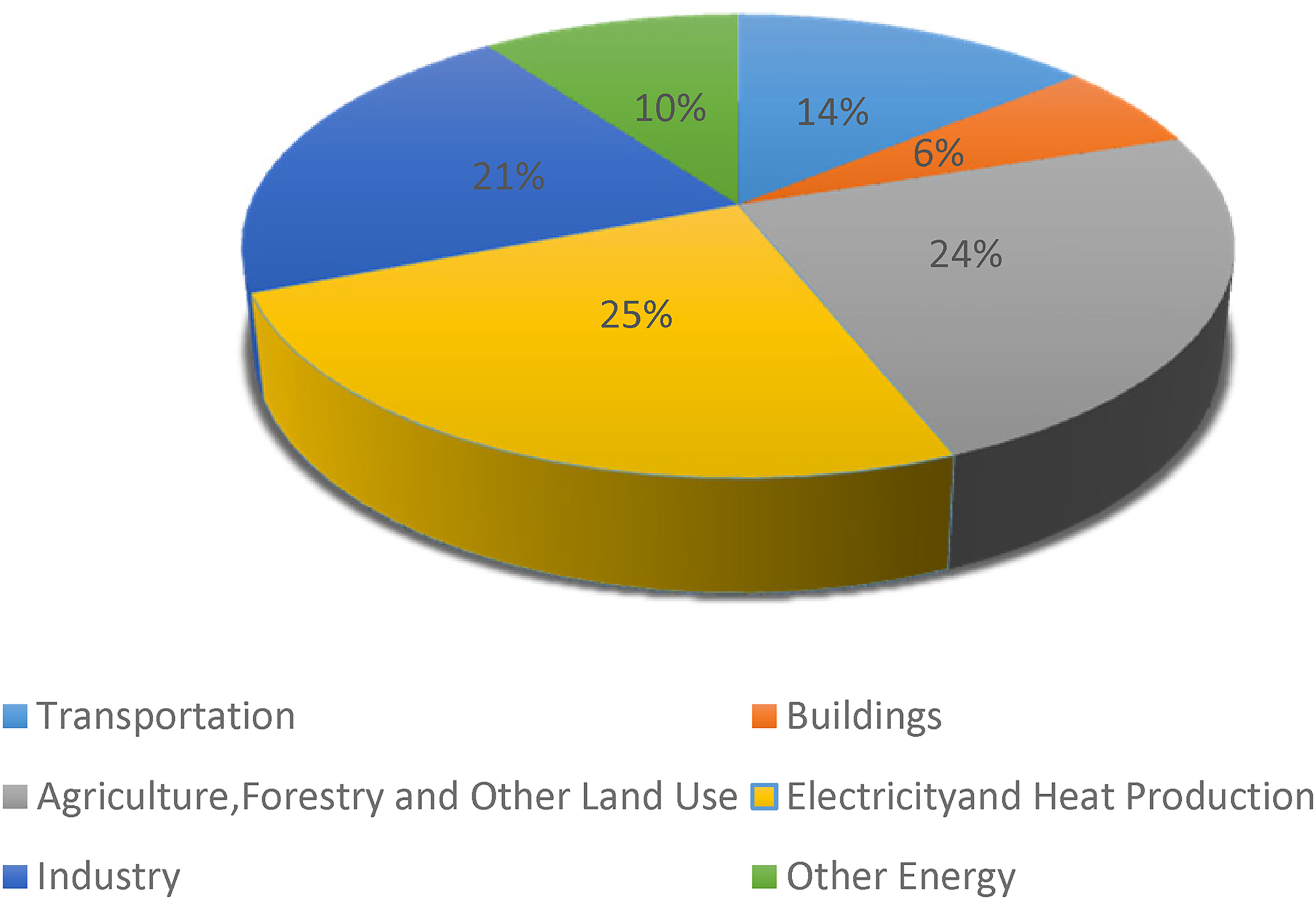
Emissions by the economic sector around the world.
As a result of its improved performance, better fuel consumption, and reduced maintenance needs, the diesel engine has rapidly profited from these benefits and thus retained its position as a leading engine choice. 5 Diesel engines are now used in a variety of contemporary transportation vehicles, such as passenger vehicles and public transportations, electric generators, industrial heavy-duty machines, and farm machinery.6,7 Even though diesel engines have a lot of good attributes, the emissions from their combustion are a significant source of air pollution and present a major cancer-causing danger to humans. 8
The climate, as well as human life, have really been harmed by the production of harmful air pollutants such as carbon dioxide, soot, and nitrogen oxides. 9 Engine makers are driven by the necessity for continuous upswing and assent with tight emissions rules. And are, therefore, obligated to come up with novel technological approaches to meet these standards without causing large changes to existing engine models. 10 Considering the fact that worldwide energy needs are expected to expand over the next couple of years, energy experts, as well as the research sectors as a whole, strive to seek substitute renewable energy sources that could possibly replace traditional fossil fuels.11–13 Clean energy alternatives must also show their availability as well as viability in order to remain relevant as transportation energy choices. Biodiesel has gotten a lot of interest from scholars as a feasible replacement to petro-diesel. 14 Moreover, any researcher who uses alternative fuel attempts to achieve the maximum performance qualities while emitting the smallest quantity of pollution. Biodiesel has shown to be a viable alternative fuel for combustion ignition (CI) engines.15–23 They can be made from both plant as well as animal-based sources, like animal fats and vegetable oils, and is a clean fuel. Biodiesel may be made from waste cooking oils. 24 Given the large accessibility of these raw materials, biodiesel applications in diesel engines have suffered from a number of drawbacks, including reduced fuel economy (i.e. a 10 percent reduction in energy) as well as lower fuel cloud and pour points, greater fuel density, greater cold-starting issues, poor atomization, potential corrosion to engine metal parts, elevated NOx emissions, as well as piston-ring sticking.25–27 Mixing biodiesel with diesel is a viable solution to this problem because it eliminates the need for major engine alterations like replacing the fuel line assembly. 28
Also, a massive quantity of research has been done to forecast the ideal probable blend of biodiesel-diesel for CI engines, with experts emphasizing that biodiesel blending amounts might range from 20% to 60% of the quantity. 29 Authors have regularly claimed that a diesel-biodiesel blend produces improved heat efficiency while using more specific fuel. Research on emissions from engines running on biodiesel blends has found lower levels of hydrocarbon (HC) and carbon monoxide (CO) as well as high levels of nitrogen oxides (NOx) and carbon dioxide (CO2).30,31 Researchers have suggested a number of approaches to address these concerns, including the utilization of additives and employing hybrid fuels, both of which could improve engine performance while lowering exhaust emissions.32,33 Nanoparticles have recently been shown to possess the ability to be employed as a novel fuel additive to increase engine efficiency as well as reduce toxic emissions.24–27
Diesel engine exhaust tends to be committed to more strict requirements, despite the worldwide framework of strict emission rules. Nanoparticle-based engine fuel adjustments have yielded significant benefits in respect of improved fuel characteristics that are clearly connected to engine emissions (for example, sulfur content, volatility, and density). Additionally, additives of nanoparticles can function as secondary energy carriers in primary fuels, resulting in improved combustion characteristics. 34 As a result, experts have been working hard to develop successful ways for using such improved fuels in existing diesel engines. Copper oxide has been employed in a variety of applications due to its desired features, including semiconductors near-infrared filters, sensors, magnetic storage media, catalysis as well as supercapacitors,35–37 and more. In addition to the current body of knowledge, this work provides an assessment of the prospective catalytic abilities and impacts of CuO nanoparticles on the performances of engines, combustion efficiencies, and exhaust properties. The utilization of nano-scale particles as fuel additives in increasing combustion and exhaust purification has been comprehensively addressed in this review, which takes into account both physical and chemical perspectives.
Biodiesel fuel usage in diesel engines
The utilization of eco-friendly fuels in diesel engines has been in nascence since 1900 in Paris during the world exhibition when Rudolf Diesel explored the potentials of peanut oil as a biofuel to power his first-ever created internal combustion engine. 38 This paved way for the continuous utilization of vegetable oil as fuel in the 1930s and 1940s during emergencies 38 but there were difficulties encountered most especially with the viscosity of the fuel. It was later discovered that the transesterification process is effective in minimizing the viscosity by a means of converting the vegetable oil into fatty acid methyl esters or biodiesel. Currently, biodiesel is widely recognized as a substitute fuel for CI engines owing to its promising benefits. Over the years, research studies have revealed that biodiesel can be mixed in different proportions with diesel fuel and other additives to improve their fuel properties as well as the performance of diesel engines. Biodiesel and its blends are feasible options for CI engines, which are at the cutting edge of alternative technologies. As a result, there is a growing interest in these eco-friendly fuels in the world at large. Vegetable oils can be utilized as a fuel in diesel engines.
They are often referred to as pure plant oil (PPO) or straight vegetable oil (SVO) when employed as fuel with or without modification of the engine. Modern engines possess injection systems engineered to deliver and effectively atomize diesel fuel. However, it is important to heat SVO before its utilization in diesel engines. 39 In most modern engines, the heating system is a heater positioned within the vegetable oil tank that transmits heat transferred to the vegetable oil cooling engine or glow plugs that employ battery power to heat the oil. 40 The key setback for their direct use as fuel is the existence of low volatility as well as high viscosity that can result in problems like imprecision of the fuel injectors, bad atomization of fuel, and high reactivity of its unsaturated hydrocarbon chains. 41 It is necessary to convert the vegetable oils to esters (biodiesel) to improve their fuel properties prior to their usage to power diesel engines. Biodiesel has been produced from quite a number of materials such as edible oils, non-edible oil, and animal fat and microalgae.
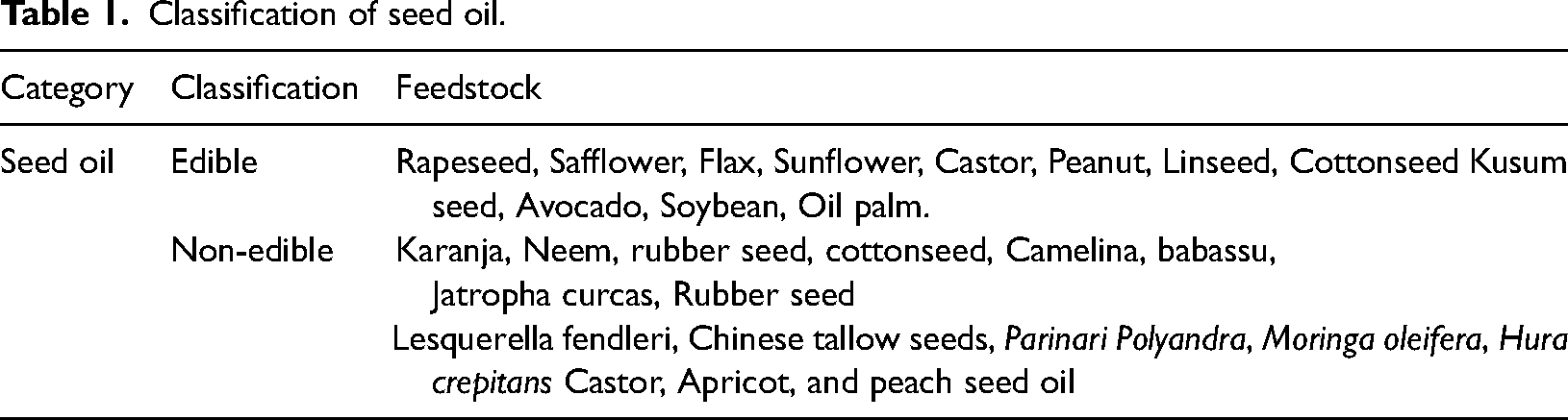
However, seeds are the commonly used feedstock because they are easily accessible and inexpensive. The seeds are categorized into edible and non-edible oils. The utilization of edible seed oil for biodiesel processing will result in food crises. Hence, it is advisable to utilize non-edible seed oil for processing biodiesel. Table 1 reveals the different materials from which good quality biodiesel has been produced. The oil present in these seeds can be extracted using different extraction techniques (microwave-assisted, solvent, mechanical and supercritical fluid extraction, etc.). The extracted oil can then be converted to biodiesel using various methods such as thermal cracking (pyrolysis), dilution, micro-emulsions, and transesterification. However, one of the recognized and widely accepted methods utilized to minimize the viscosity of oils by converting the triglycerides present in them to esters is referred to as transesterification. 42 The transesterification of vegetable oil occurs in the presence of alcohol and a catalyst to give three molecules of ester and one molecule of glycerin. The biodiesel production process with the transesterification method is illustrated in Figure 2. 1
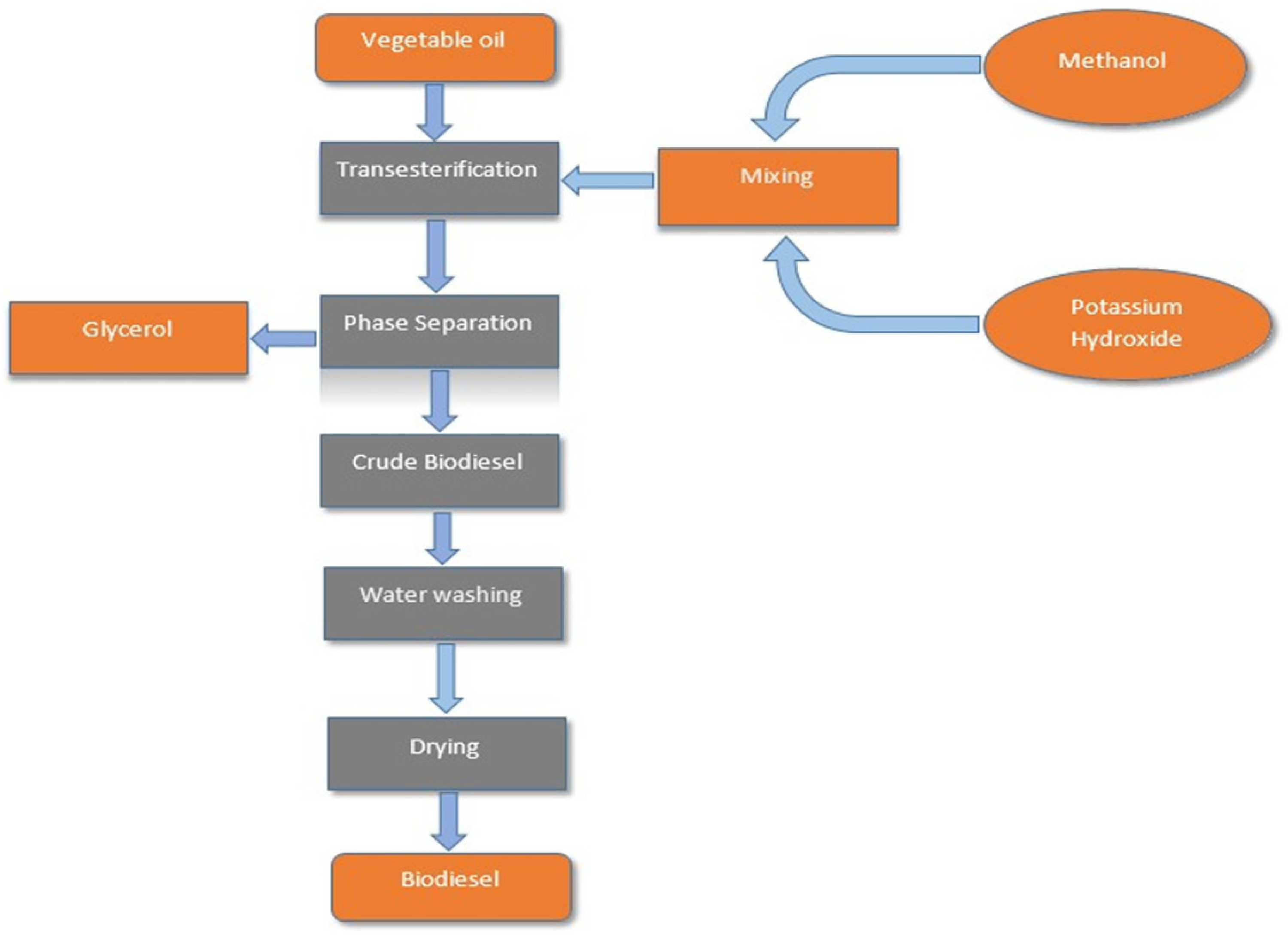
Biodiesel production process.
Classification of seed oil.
In, addition, biodiesel as an inexpensive fuel is preferred to diesel fuel because it is environmentally safe. It is also a useful fuel to remove the damages caused by waste oils to the environment. Although biodiesel is an alternative fuel that can be utilized directly in an engine without any modification, there are a few challenges with the direct usage in engines.
However, mixing a diesel fuel or an additive with low viscosity, better fluidity and density can help resolve the viscosity-related problems and also improve the engine performance. 43
Limitations on the utilization of biodiesel fuel
Biodiesel has gained widespread popularity as a diesel fuel alternative owing to its numerous properties which can improve a diesel engine‘s operability. However, there are quite a number of problems encountered with its direct utilization in engines. Some biodiesel possesses high viscosity which is considerably higher than diesel, specifically by a factor of two. 44 High viscosity can be associated with challenges like narrower injection spray angle, greater in-cylinder penetration of the fuel spray, wear on fuel pump elements, narrow poorer vaporization, large droplets formation, and poor fuel atomization.44,45 Another fuel property that can affect the use of biodiesel in CI engines is density since fuel injection systems quantify fuels by volume. The variations in density caused by different injected fuel masses have an effect on engine power output. 46 As a result, density is critical in determining the diesel engine efficiency. Also, biodiesel possesses a lesser energy content than diesel with a mass-based net calorific value of around twelve percent lower 47 and this results in lower engine speed as well as efficiency. Several studies have shown that when biodiesel is burned in engines, NOx emissions are higher than when diesel is burnt. For biodiesel to gain widespread acceptance, NOx emissions must be reduced to levels comparable to those generated by diesel engines. However, all these problems associated with the direct use of biodiesel in internal combustion engines can be subdued by making blends with biodiesel using diesel fuel in different ratios and incorporating fuel additives.
Fuel additives and their importance
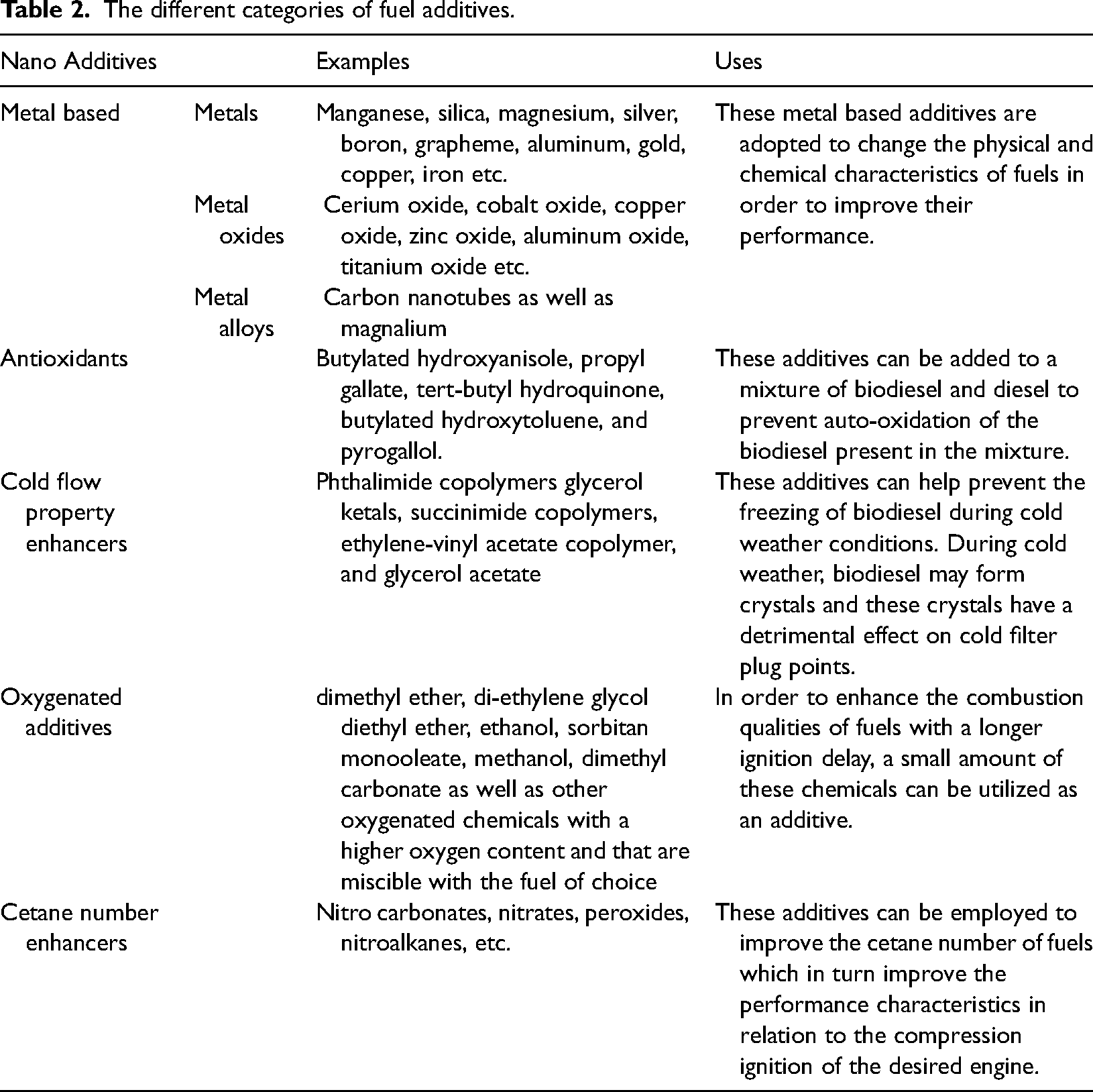
Additives are biological or metal-based chemicals that are readily soluble in gasoline and have the primary goal of improving, maintaining, and providing positive features to the fuel without compromising its efficiency or combustion characteristics. Smaller amounts of fuel additives, ranging from 100 parts per million to thousands of parts per million, are usually utilized. Refining goods, distribution system products, as well as automotive efficiency improvement products are the three primary categories of fuel additives.48–51 Cetane improvers, anti-knocking agents, antioxidants, cold flow improvers, anti-freezing agents, and so on are all separated into several groups. The different fuel additives and their uses is shown in Table 2
The different categories of fuel additives.
Hoseini et al. 56 studied the impacts of graphene oxide as a unique fuel additive on the performance as well as emission qualities of a diesel engine powered with Ailanthus altissima biodiesel. The authors reported an increase in exhaust gas temperature, torque, power as well as a reduction in brake-specific fuel consumption and CO emissions, but a small increase in carbon mono oxide and nitrogen oxides. Shaafi and Velraj 57 explored the role of alumina nanoparticles, ethanol, and isopropyl alcohol blend as additives with soybean biodiesel/diesel blend on combustion, engine performance, as well as emissions and found that the cylinder pressure during combustion as well as heat release rate was indeed significantly high in fuel blend compared to diesel, and the exhaust gas temperature is lower. The presence of oxygen in biodiesel and improved nanoparticle mixing capacities lowered CO, however, there was a minor rise in NOx at maximum load.
Ali et al. 58 added diethyl ether to the B30 biodiesel/diesel blend. The authors found that fuel density, cold flow characteristics kinematic viscosity as well as acid value, improved greatly, while heating value, pour point, as well as cloud point declined. Alam et al. 59 also ran a test incorporating the addition of aluminum oxide nanoparticles to Ziziphus jujube methyl ester and found a huge decrease in BSFC, exhaust emissions at all operating loads, as well as a substantial increase in the BTE. These researchers discovered that altering the physical and chemical qualities of fuel, rather than performing engine adjustments, gives better outcomes in terms of improving engine performance as well as reducing exhaust pollutants. Nonetheless, this research study is focused on the impact of a metal-based nano-additive specifically copper oxide, and its impact on the performance, emission as well as combustion properties of a diesel engine
Nanoparticles and their usage in the processing of biofuel
Nanotechnology is a new scientific field that consists of changes in matter at the atomic or molecular level. 60 It is a branch of science that deals with the manipulation of atoms and molecules as well. A nanoparticle (NPs) is an ultrafine particle that has a diameter range of 1 to 100 nm and a length dimension of 1 to 1000 nm. 61 Nanoparticles' sizes are actually dependent on the technique of reduction and its surrounding environment. Nanoparticles have applications in various biomedical and pharmaceutical fields such as biomarkers, diagnostics, bio-imaging, cosmetics, anticancer, antibacterial, cardiology, immunology, drug delivery genetic engineering, for the treatment of cancer, and other contagious diseases, production of energy, water treatments, and bioremediation. 62 The usage of nanoparticles in biofuel manufacturing processes is flourishing owing to having an excellent impact on several chemical reactions. In biofuel production, nanomaterials like nano-fibers, nanotubes, nano-metals, as well as metallic mixtures have been employed as additive chemicals. These are mostly utilized to improve the physical and chemical characteristics as well as the efficiency of fuels.63,64 Nanoparticles have also been reported as additives in the biodiesel industry since they can improve the qualities of biodiesel and blends. Thus, increasing combustion efficiency, performance properties, as well as the reduction of hazardous emissions.65–67 From future projections, nanoparticles that are being used as an additive in diesel and biodiesels may be demonstrated to be very efficient.68,69 The distinctive physicochemical properties (e.g. electrical, magnetic, and optical properties) of nanoparticles have led to their widespread use as fuel catalysts to minimize specific fuel consumption, ignition delay, smoke, toxic emissions, and to increase the engine‘s braking thermal efficiency. 68 The introduction of some metal and metal oxide nano-powders to the base fuel could improve the qualities of the fuel.70–73 Several researchers have acknowledged the fuel enrichment approach based on the inclusion of nano-additives to be widely recognized. The nano-additives are used in attaining certain properties of the fuel, as well as to enhance the performance qualities and to obtain an excellent emission control of the CI engine with no modification whatsoever. An excellent nano additive must be able to reduce emissions from the exhaust, improve the concentration of oxygen in the engine and particulates filter, increase the stability of the fluid across a wide range of conditions, and cause a decrease in the ignition delay time, and flashpoint.
Nanotechnology, nanoscience, and material technology advancements have resulted in the growth of nano-scale particulate matters with physicochemical characteristics that differ due to micron-scale elements of similar source materials like the wider surface area of contact, increased stability, quick oxidation, reduced melting point, immense heat of combustion, minimal heat of fusion rate, and huge heat and mass transfer rates. 69
The utilization of nanoparticles for the production of biodiesel
Renewable energy exploration has become a global priority owing to fears about the consequences of the utilization of fossil fuels on the climate. The use of an eco-fuel like biodiesel which is sustainable is very essential. Biodiesel, a viable source of energy is accepted globally owing to its promising advantages in the global market. It can be generated from animal fats and vegetable oil is utilized to mitigate pollution levels as well as minimize reliance on fossil fuels in some countries. However, due to its limitations, researchers have explored the utilization of nanomaterials to improve biodiesel quality and yield. Nanoparticles improve biodiesel synthesis displaying tremendous catalytic potentials for the transesterification of feedstock to biodiesel.74,75 The utilization of nanoparticles during the transesterification phase has been proven to boost catalytic efficiency. 76 The impact of calcium oxide and magnesium oxide nano-catalysts on the synthesis of biodiesel using waste cooking oil was investigated by Tahvildari et al. 77 A study was conducted by Baskar et al. 78 to ascertain the best reaction conditions to obtain optimum biodiesel yield by employing zinc oxide nano-catalyst By adopting a central composite design embedded in response surface methodology tools, the authors were able to vary the reaction parameters (Alcohol: oil ratio, reaction temperature, time of reaction, and catalyst dosage). About 95.2 percent biodiesel yield was achieved with the best conditions of a temperature of 55 °C, a methanol-to-oil ratio of 8 mol, catalyst dosage of 11.07 percent for a duration of 60 min. A research carried out by Hebbar et al. 79 to determine the optimum reaction conditions for the processing of Bombax ceiba oil biodiesel using calcium oxide nano-catalyst The authors employed a central composite design of response surface methodology and obtained a biodiesel yield of 96.2 percent. They also reported that the best reaction conditions as predicted by the optimization tool employed were speed of 600 rpm, catalyst amount of 1.5 wt%, alcohol: oil ratio of 10.37:1, the temperature of 65%, at 60 min reaction duration. Also, the study revealed that the nano-catalyst of choice can be recycled and reused for about five reaction cycles to obtain high yields. Nevertheless, the utilization of carbon-based nanoparticles has also been shown to improve biodiesel synthesis by a number of studies. Various processes, such as transesterification of vegetable oils have employed carbon-based nanoparticles as catalysts.80–82
The impact of nanoparticles on diesel engine parameters
The addition of nanoparticles to biodiesel, diesel, and biodiesel blends is to boost the surface-to- volume ratio as well as the number of their active site. This can increase the reactivity of the nanoparticle and enable them to function effectively as a catalyst An effective nanoparticle can enhance the combination of fuel and air for effective combustion. Moreover, numerous research studies have revealed that the combination of nanomaterials with base fuel is an awesome approach to improve engine efficiency, combustion characteristics and minimize exhaust emissions. A study was conducted by Balasubramanian et al.
83
to detect the impact of Al2O3 nanoparticle addition to blends of lemongrass oil biodiesel. The authors employed 10, 20 as well as 30 ppm of Al2O3 nanoparticles with the aid of an ultrasonicator. The obtained result showed that 20 ppm of Al2O3 nanoparticle was the best with a higher BTE of 11.5 percent in comparison to pure biodiesel. Emissions of smoke, HC, NOx, CO reduced by 39, 40, 31 and 6% respectively. Attia et al.
84
utilized Alumina nanoparticles in a blend of Jojoba biodiesel and diesel fuel. The concentration of the nanoparticle was varied at ratios ranging from 10–50 ppm to examine diesel engines operating at varying conditions of load as well as speed. When compared to a fuel blended with 20% biodiesel, the BTE increased by approximately 7%, overall BSFC decreased by about 6%, 70 percent of NOx, 75 percent of CO, approximately 5% of smoke blackness, and around 55 percent of unburnt hydrocarbon (UHC) were noted. The ideal nanoparticle proportion for optimal engine efficiency is determined to be about 30 ppm according to the authors. Balaji et al.
85
evaluated the engine parameters of a diesel engine fuelled with a biodiesel blend containing Al2O3 under varying load conditions. The authors reported that the addition of Al2O3 nanoparticles improved the combustion, performance as well as emission characteristics respectively. Kumar et al.
86
looked into the effect of TiO2 nanoparticles on the efficiency, emission, as well as combustion characteristics of waste orange peel oil biodiesel at dosage levels ranging from 50 to 100 ppm. According to the authors, adding nanoparticles at doses of 50 and 100 ppm increased BTE by roughly 1.4 percent and 3.0 percent respectively at optimum brake power. Also, when compared to other test samples, diesel fuel demonstrated the highest efficiency. They also noticed a substantial decline in HC (16.0 percent) smoke (24.2 percent), CO (18.4%), and NOx (9.7%) for the sample at a 100 ppm dose level. Moreover, the enhancement in combustion emissions, cylinder peak pressure, and heat release rate of orange oil biodiesel blend compared to that of diesel can be attributed to the presence of TiO2 nanoparticles. Another study was carried out by Nanthagopal et al.
70
where an ultrasonicator was employed to mix 50 and 100 ppm of two distinct kinds of nanoparticles TiO2 and ZnO into biodiesel. The BTE was shown to be greater than when the biodiesel was without nanoparticles. In comparison to pure biodiesel, the BTE of biodiesel fuel modified with 100 ppm TiO2 nanoparticles rose by 17 percent. Pandey et al.
87
also examined the impact of CeO2 nanoparticles on the combustion performance and emissions of Karanja oil biodiesel. According to the findings, Karanja oil biodiesel with 5% nano-additive displayed improved engine efficiency and a substantial decrease in particulate emissions particularly reduced NOx (14–25%). Furthermore, as opposed to regular diesel, the introduction of nano-additive to the base fuel resulted in a reduced rate of heat release and ignition delay period. Karthikeyan et al.
88
also reported that the incorporation of zinc oxide nanoparticles into grape seed oil biodiesel blend led to the improvement of the engine parameters (permission, combustion, and emission characteristics). In addition, a recent study by
The performance, combustion, and emission metrics for fuels with nanoparticles under various test conditions.
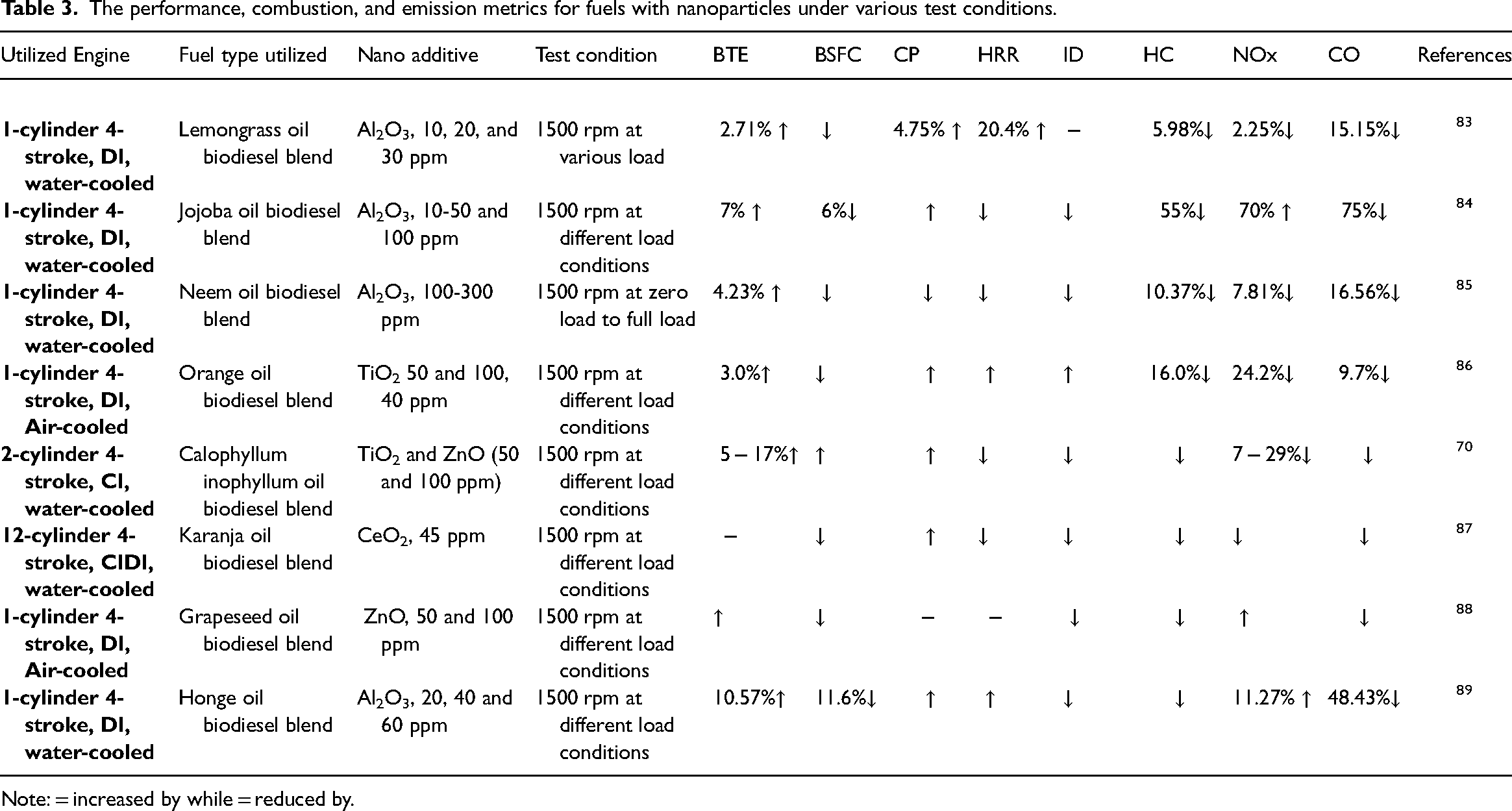
Note: = increased by while = reduced by.
Copper oxide nano-additives
Many scientists are well-versed in fuel modification and revision strategies for achieving certain fuel specifications. 90 Various types of nanoparticles with preferred shapes and sizes have been created with the use of different methods, which include, biological, physical, and chemical processes. 60 Some of the unique reported nanoparticle types include core-shell NPs, photo-chromatic NPs, polymer-coated magnetite NPs, metal oxide, and inorganic.91,92 Every one of these nanoparticles has a distinct shape, size, texture, morphology, and applications. Due to their various applications, copper oxide (CuO) nanoparticles amongst all other nanoparticles, receive a lot of attention. 93 Cupric oxide (CuO) and cuprous oxide (Cu2O) are the two distinct forms of copper oxides with respect to the valence state of copper. The remarkable properties (electrical, magnetic, and optical) possessed by copper oxide has fostered its utilization in various application. Some of its applications include magnetic storage devices, catalytic, inorganic-organic nano-size composites, biomedical, semiconductors, near-infrared filters textile industries, and so much more. 94 CuO can help boost the flashpoint temperature as well as the cetane index of biodiesel by acting as a combustion catalyst for hydrocarbon fuels. 37 As shown in Figure 3, various physicochemical techniques have been generally employed to generate copper oxide nanoparticles. 94 However, these procedures have a few disadvantages, including the release of a variety of very harmful compounds into the environment, high energy usage, as well as substantial price. 95 As a result, an environmentally friendly, cleaner, and cost-effective method for producing nanoparticles that have good purity, size, phase selectivity, and uniformity in the shape of particles, crystallinity, and texture is required.95,96 Green chemistry alongside other biological processes have brought about the development of a cost-effective and eco-friendly nanoparticle production method. 97 For the manufacturing of CuO nanoparticles, diverse plant extracts, fungi, algae, bacteria, and additional biological entities which include, oleic acid alginate, gelatin, ovalbumin, and starch have been employed. 98 The synthesis of CuO nanoparticles via organic methods is eco-friendly, viable, clean, and cost-effective.97,98
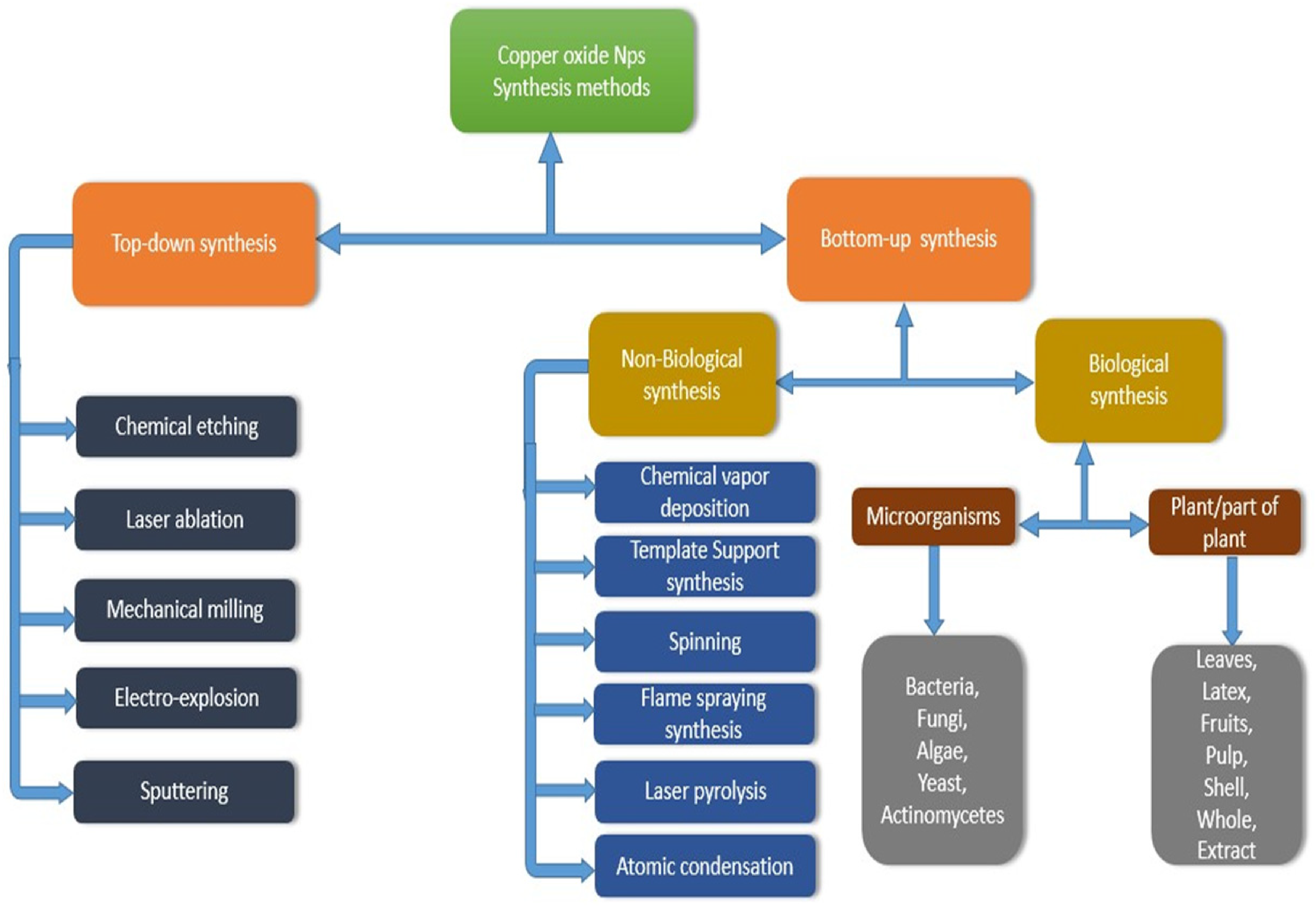
Different methods of synthesizing CuO nanoparticles.
Preparation of CuO-fuels
Nano fuel generation using CuO nanoparticles can be achieved by combining the nano-powder and the base fuel during or after production. 99 To create a homogeneous dispersal, magnetic stirring (excessive shear mixing and homogenization,), ultra-sonication, and pH modification were used alone or in combination to achieve a uniform dissipation of nanoparticles in the base fuel. 100 Figure 4 depicts the sequential procedure for incorporating nanoparticles within the base fluid. Ultra-sonication is utilized to blend nano-additives into the fuels. The ultrasonic wave energy provided using an ultrasonicator promotes improved mixing of nanoparticles in the liquid fuel, fostered by an improved thermal stirring of the nanoparticles 101 with ultra-sonication techniques like probe-type sonication as well as ultrasonic bath. Additionally, in circumstances where the amount of the nanomaterials is minimal, magnetic stirring is preferred. In this technique, a rotational magnetic field is generated either by stationary electromagnets or by a pair of revolving electromagnets affixed just under the mixing equipment. This drives the speedy mixing movement of the stirring rod in the vessel containing the liquid. This process is widely used to pre-homogenize nano-fuels. Last but not least, the pH adjustment approach. This entails altering the pH value of the nano-fuel in order to improve the mixing environment and improve dispersion. In practice, combining multiple of the aforementioned dispersion techniques (e.g. magnetic stirring, pH modification, and ultra-sonication) to achieve improved mixing effectiveness as well as stabilization is common. 102
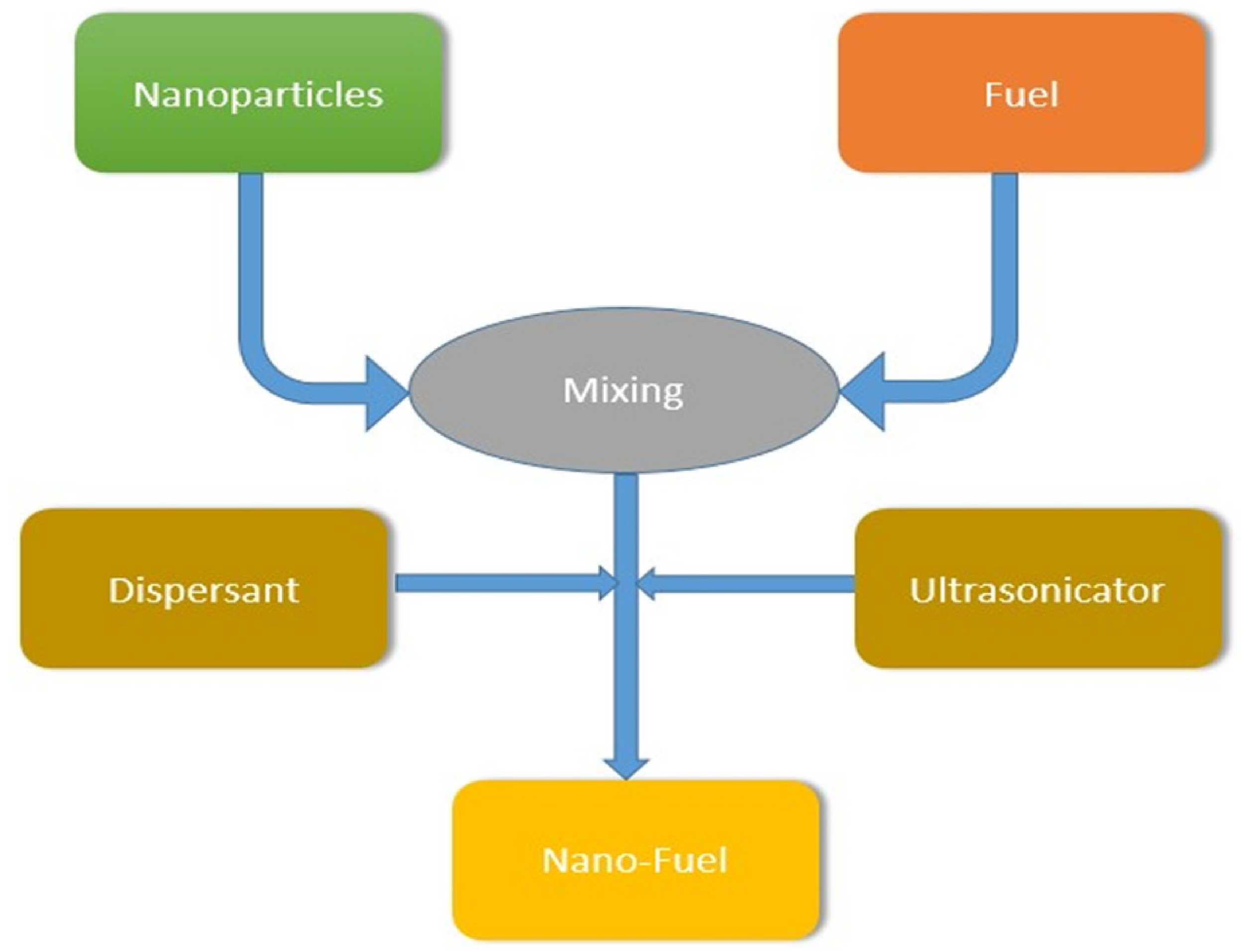
Preparation of nano-based fuel.
Surface chemical modification has long been thought to be a viable method for achieving better stable and homogeneous nanoparticle dispersion in the base fuel. Surfactants and dispersants are used to stabilize the solution in order to eliminate these difficulties. 103 The surfactant‘s purpose is to reduce the surface tension among the liquids or between the liquids and solids. The surfactant creates a negative-charge layer on the outer surface of particles, which reduces nanoparticle deposition. In terms of physical process, ultrasonic wave energy promotes better mixing of nanoparticles, resulting in more homogenous and durable suspensions. 104 The utilization of nanoparticles as a fuel additive for fuels is the most feasible strategy for improving combustion efficiency significantly. 105
Impact of CuO nano-additive on fuel properties and engine parameters
The physical and chemical characteristics of fuel blends are changed when nanoparticles are added to the base fluid. Nano additives have distinctive catalytic capabilities that improve the qualities as well as engine parameters of the blended fuels. 106 Utilizing nano-additives as a catalyst to blended fuels improves its qualities and gives it the ability to substitute diesel and other fuels with low quality on a long-term basis. By combining the benefits of eco-friendly fuel and nano-additives, the problems associated with toxic emissions from diesel and biodiesel can be avoided. As a result, the focus of this section is on the impact of CuO nano-additive on fuel qualities such as performance, combustion, as well as emission characteristics.
Cuo nano-additives and the physico-chemical properties of fuel blends
The inclusion of nano-additives improved stability as well as other physicochemical properties dramatically, according to earlier research.
107
Given the remarkable effects of CuO nano-additives on a variety of biodiesel characteristics, certain studies have found that they have a detrimental effect on the fuel‘s cold-flow as well as thermal characteristics. The functional properties of fuel blends in CI engines are governed by variables like nanoparticle type, the type of feedstock employed, as well as the level of mixing.
65
The influence of CuO nanoparticles on the characteristics of fuel was studied by Gumus et al.
108
A comparison of 50 ppm of CuO nanoparticles with fuel samples was utilized in the study. The authors discovered a rise in the fuel parameters like density cetane index, as well as flashpoint while flow qualities like the viscosity stayed unchanged. Chandrasekaran et al.
65
also revealed that copper oxide nanoparticles had an effect on neat mahua biodiesel. The authors conducted a study on a single-cylinder diesel engine using various mahua biodiesel and diesel fuel blends. They discovered that a sample of fuel containing biodiesel of 20% volume produced an excellent fuel proportion in contrast to the other blends. Subsequently, to increase the fuel‘s efficiency, copper oxide nanoparticles of 50 ppm were introduced into the mixture. With the introduction of the 50 ppm of CuO nanoparticles, the density and viscosity of a (diesel-biodiesel) blend decreased. The flashpoint as well as fire point of the fuel sample with CuO nano-additive both decreased, but the calorific value increased from 42.5 (for Mahua methyl ester B20) to 43.1 MJ/kg (for Mahua methyl ester + 50 ppm CuO). Several other research studies have reported the effect of CuO-Nano additive on the physical and chemical properties of biodiesel and blends as shown in Table 4
The impact of copper oxide nanoparticles on the physicochemical properties of diesel and biodiesel-blends fuel.
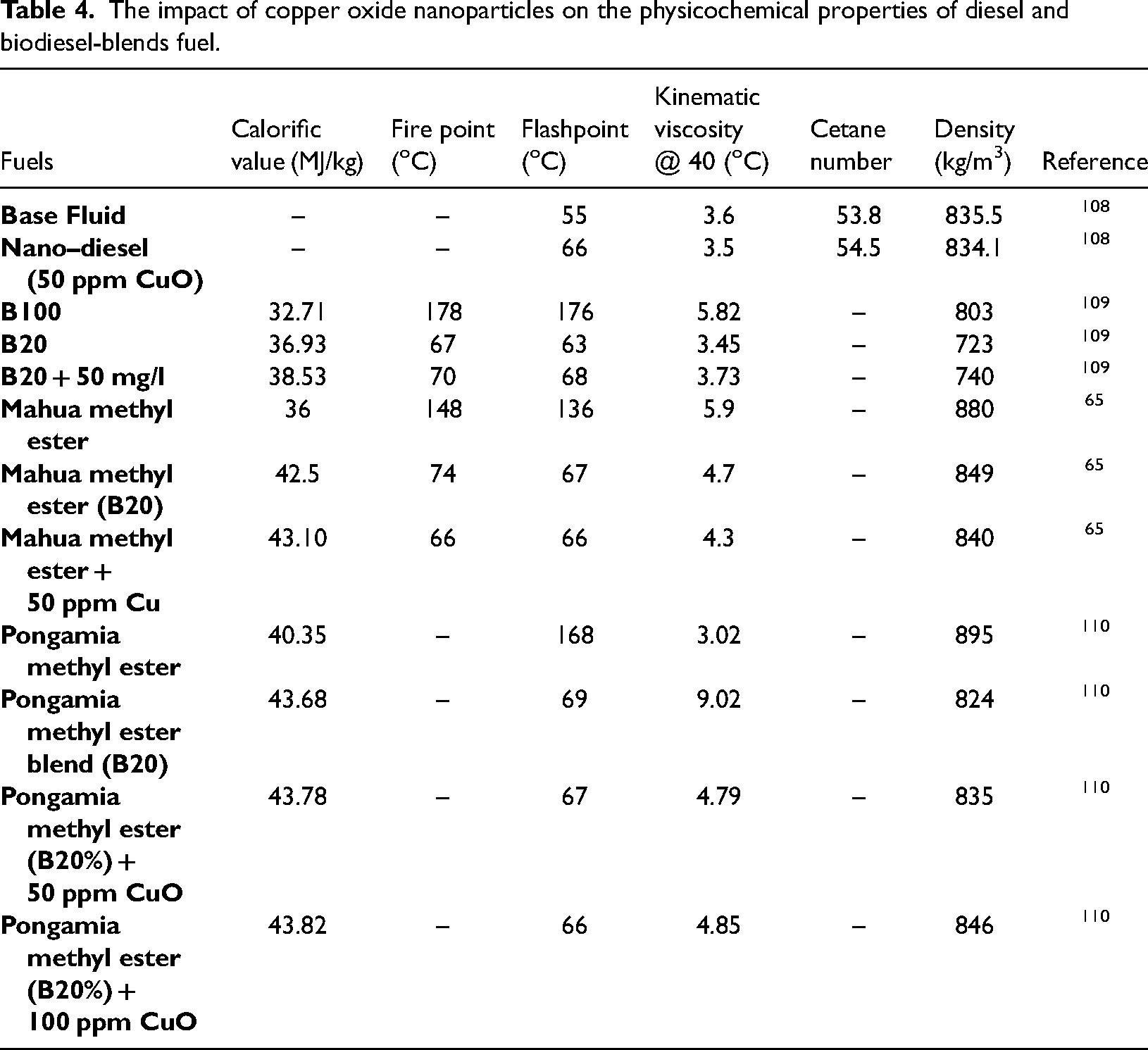
Impact of CuO nano-additives on engine parameters
The diesel engine is one of the most common systems for efficiently converting thermal energy to mechanical work with minimal heat production, which is why diesel engines are used in commercial applications. As previously said, biodiesels are a superior alternative to regular diesel in diesel engines due to the reduction of fossil resources. However, the disadvantage of using biodiesel is that it has a lower heating value as well as poor cold flow qualities, therefore efficiency can be enhanced. To overcome this issue, nanoparticle additives are a superior solution for improving biodiesel characteristics. This section reports on CuO-additives used in diesel engines and their effect on the performance, emission, and combustion characteristics of blends of biodiesel.
Engine performance
The properties of fuels can be examined under varying conditions utilizing engine performance measures like BSFC as well as BTE. 111 It is indeed important to remember that the influence of CuO-fuels on the performance of the engine is produced by the relationship between their fuel properties (oxygen content of the fuel, lower calorific value, and higher viscosity) as well as the fuel injection system, which can have a huge impact on combustion as well as spray creation. 58
Brake thermal efficiency (BTE)
BTE is the ratio of an engine‘s power output to the quantity of heat that is supplied by the utilized fuel. It can be employed to ascertain the fuel conversion efficiency. The fuel‘s calorific value affects its BTE since a higher calorific value will boost it. More so, biodiesel has a lower calorific value compared to diesel, which results in lower BTE for most biodiesels. The quantity of oxygen contained in biodiesel also has an impact on its BTE. Biodiesel with a higher oxygen level has better thermal efficiency than biodiesel with lower oxygen content.
The reduction in the biodiesel content in the fuel blend, on the other hand, would result in a poorer BTE in the biodiesel-diesel blend. Several studies have found that biodiesel-diesel blends have a lower BTE because of the reduced quantity of biodiesel present, resulting in lower net energy content. 112 The inclusion of CuO nano-additive, on the other hand, has been found to enhance the BTE of biodiesel and biodiesel-diesel blends. Jayanthi and Rao 113 examined the efficiency and emission properties of a direct injection diesel engine employing copper oxide nanoparticles (dosing levels of 40 ppm, 80 ppm, as well as 120 ppm). In comparison to neat biodiesel, the author observed a four to five percent rise in BTE. They observed that the increased atomization reduces the BSEC (brake specific fuel consumption), resulting in improved fuel combustion. This could be as a result of the presence of abundant oxygen within biodiesel, as well as the excellent mixing capacity of metal oxide nanoparticles which aids the reduction of air pollution. The amount of hazardous CO gases were reduced by twenty-six percent. In comparison to neat diesel and biodiesel, emissions of HC and NOx were as well lowered to a great level.
For the parameters of engine performance, Chandrasekaran et al. 65 employed Mahua oil biodiesel incorporating nanoparticles of CuO in a 50 ppm concentration. CuO blended fuel increases BTE by 2.2 percent while lowering specific fuel usage marginally. CuO nano-additives also reduced smoke emissions, HC, and CO, by up to 12.6 percent, 5.34 percent, and 32 percent, respectively. However, NOx emissions increased by 3.21 percent, indicating a detrimental impact. Karthikeyan et al. 114 studied the fluctuation of BTE for diesel fuel and biodiesel (cottonseed oil biodiesel) combined with CuO nano-additives at different engine load situations. To improve the properties, nano additives were added to the B20 blend in proportions of 30 ppm, 50 ppm, and 70 ppm, respectively. It was discovered that a B20 (20% biodiesel + 80% diesel) blend with 50 ppm nano additions had excellent performance and is comparable to diesel. Following the addition of CuO nano additives, the BTE increased from 6 to 7 percent compared to other blends without CuO nanoparticles. Tamilvanan et al. 115 also investigated the impacts of CuO nanoparticles in biodiesel blends on a single-cylinder direct-injection diesel engine. According to the authors, the BTE rose with increasing engine load for all of the fuel tested in the engine.
The authors reported that biodiesel and its blends have a reduced thermal efficiency than pure diesel in the brake system. Moreover, biodiesel has a lower heat of combustion, its BTE decreased. The incorporation of biofuels to commercial diesel fuel reduces the combustion heat linearly with the amount of biodiesel introduced in the diesel, 116 this is due to the long organic chain present in vegetable oil. However, when they compared the biodiesel and blend samples with additives to biodiesel and blend samples without additives, the BTE of biodiesel and its blends with additives were higher, although somewhat lower than diesel. The existence of an additive that promotes better oxidation as well as an elevated heat release rate is responsible for the increased BTE.
Rastogi et al. 117 analysed the effect of CuO nanoparticles on the performance, emissions, and combustion properties of a diesel engine that runs on a jojoba biodiesel blend (JB20). They noticed that the BTE of JB20 fuel was lower than the BTE of diesel fuel, which they attribute to higher viscosity, lower flash point, lower calorific value, higher density of JB20 fuel. 118 As a result of the reduced temperature in the combustion chamber, the fuel burns at a lower temperature. Another cause is that higher viscosity prevents proper fuel atomization within the combustion chamber, resulting in a reduction in BTE. As a JB20 biodiesel blend is mixed with nanoparticles of CuO, the BTE is enhanced when compared to the JB20 fuel due to improved fuel and air mixing. It occurs because of the improved combustion caused by the CuO nanoparticles' high surface-volume ratio, which results in higher fuel oxidation. 119 It is good to note that nanoparticles work similarly as oxygen buffers in that they increase the mixing rate of air and fuel, resulting in better fuel combustion. CuO addition reduces ignition delay and fuel evaporation time of test fuels. The authors also reported that an increase in the quantity of the CuO nanoparticles, brought about an increase in the BTE which was a result of rapid heat liberation during the process of combustion. Furthermore, Silva et al. 109 also observed an increase in the BTE when CuO nanoparticles were added to the biodiesel. At a maximum load of B20 + 10 mg/l CuO produces maximum BTE in contrast to the B20 blend of all the blends, it was reported by the authors that the BSFC of B20 + 50 mg/l CuO was the least (see next section) in comparison to other blends.
Brake specific fuel consumption (BSFC)
BSFC is used to assess an engine‘s capability to burn fuel and generate power. This can be used to assess the efficiency of the engine in the transformation of fuel to useable energy. 120 The calorie value is one of the most important factors used to evaluate the effects of biodiesel alongside its blends on BSFC, while the oxygen content can also be used to evaluate its properties characteristics. 121 A lower BSFC indicates a higher calorific value, and when a fuel‘s calorific value is reduced, the amount of fuel used to achieve the specified power output rises. The oxygen level is also a factor in determining the BSFC score because more oxygen helps the engine burn more efficiently. However, varying the engine load is critical for thoroughly examining the performance characteristics of the chosen fuel. Recent studies have shown that the addition of CuO nano-additive can improve the BSFC of fuels.122–124 According to Karthikeyan et al. 114 when nanoparticles blended cottonseed biodiesel fuels were compared to the pure cottonseed biodiesel fuel, the BSFC was reduced because of the strong surface reactivity and the B20CuO50 gave the least BSFC. It is good to know that, the smaller the nanoparticle, the greater the surface area of the reaction, and hence the higher the efficiency. Rastogi et al. 117 also found that the BSFC of the JB20 fuel was higher than that of the diesel fuel because of the lower heating value. CuO addition, according to the authors, boosted the surface area/volume ratio and shortened the ignition delay, resulting in a better combustion process and lower BSFC. It was also seen that the higher fuel quality (i.e. increased oxygen molecules) possessed by JB20 with CuO nano-additives was responsible for the lower BSFC. 125 In comparison to the B20 blend without CuO additive, Perumal and Ilangkumaran 110 also found out that the BSFC for CuO blends was lower. The BSFC is reduced as the percentage of nanoparticles in the fuel blends increases. The lower BSFC was attributable to enhanced physical qualities of the fuel and a brief ignition delay that results in complete combustion.126,127 As a result of the catalytic chemical oxidation of the fuel, the CuO with biodiesel resulted in a 1.0 percent reduction in BSFC. As a result of the nanoparticles acting as oxygen boosters, full combustion happens. In comparison to pure biodiesel, this reduces fuel usage. 127 Table 4 illustrates the performance characteristics of biodiesel with the presence of CuO nanoparticles.
Combustion characteristics
This is a critical feature of a fuel that dictates its performance and emissions. Different characteristics, such as heat release rate, in-cylinder pressure, as well as ignition delay, can be employed to evaluate biodiesel and its blends, as well as the combustion process' efficiency. Therefore, the in-cylinder, ignition delay, and heat release rate are all discussed in this section.
Cylinder pressure (Cp)
To determine the performance characteristics of an internal combustion engine, measuring the cylinder pressure during the combustion stage is crucial. It may be used to closely observe the combustion process and also effectively establish the combustion qualities of the fuel. Also, various parameters (ignition delay, latent heat of vaporization, reaction heat, specific heat, and so on) control the internal combustion processes in the engine. The rate of combustion of biodiesel and its blends, in conjunction with an unregulated heat dissipation phase, determines the cylinder peak pressure. 105 Good fuel also has a higher cylinder gas temperature along with a lower latent heat of vaporization, a lower specific heat with a greater reaction heat, and a shorter ignition delay 52 Kalaimurugan et al. 61 reported an increase in the cylinder pressure when CuO nano-additives were incorporated into the biodiesel blend and this increase can be ascribed to the nano-additives high contact surface. The peak pressure of the cylinder is deduced by the rate of combustion of biodiesel and its blends at the initial stage, in combination with an uncontrolled heat dissipation stage. The authors realized that the biodiesel blend (B20) without copper oxide nanoparticles had the least in-cylinder pressure as compared to all the test fuel samples as a result of its viscosity as well as density which can contribute to incomplete combustion. Likewise, Tamilvanan et al. 115 also reported a moderate increase in the cylinder pressure relative to tamanu oil blends when CuO nano-additives were added. This implies that adding copper oxide nano-additive to biodiesel positively affects the oxidation reaction, resulting in higher peak pressure.
Heat release rate (HRR)
HRR is a crucial combustion metric that shows the strength of fire in terms of heat energy emitted. The HRR is influenced by the latent heat of fuels, viscosity, density, burning velocity of fuels, calorific value, and combustion temperature. 128 Introducing CuO nanoparticles to B20 blends resulted in faster ignition as well as higher net heat release when compared to B20 fuel at premixed combustion, according to Kalaimurugan et al.129,130 During the premixed combustion phase, the addition of oxygenated CuO nanoparticles to the B20 blend resulted in combustion and net heat loss. 131 The inclusion of nanoparticles to biodiesel and their blends, according to Tamilvanan et al. 115 and Rastogi et al., 117 resulted in a significant increase in the HRR when compared to biodiesels and its blends without additives. The enhanced HRR of biodiesel and additives is due to a higher oxidation process in the combustion chamber, thus it can be deduced that the existence of nano additives improved both the oxidation and combustion reactions. This can also be related to the spread that occurs in the surface-to-volume ratio when CuO nanoparticles were added. 114
Ignition delay (Id)
The ID of CI engines is influenced by factors such as the cetane number (CN), the type of biodiesel, quality of the biodiesel, the air to fuel ratio, the speed of the engine, fuel atomization quality, the temperature of the intake air, oxygen content, viscosity engine speed, and the engine load
132
CN, on the other hand, has the greatest influence on a fuel‘s ignition delay. Fuels that have a higher CN have shorter ignition delay and improved combustion. Since biodiesel and blends possess a higher CN compared to diesel, they also have a shorter ignition delay. The ignition delay characteristics of fuel are also influenced by its viscosity and oxygen content and it increases as the viscosity of the biodiesel increases. Also, atomization and evaporation are influenced by viscosity while the higher the oxygen level, the better the combustion process. Additionally, as the gas temperature inside the engine cylinder rises, the engine load rises while the ignition delay decreases.
133
Rastogi et al. discovered that the Jojoba biodiesel blend (B20) fuel had the longest igniting delay owing to its increased viscosity, resulting in less fuel atomization at a 220 bar starting injection pressure. The authors stated that the introduction of CuO nanoparticles to the Jojoba biodiesel blend led to a somewhat shorter igniting delay. CuO nanoparticles' surface area contributes to good fuel atomization as well as a high evaporation process, resulting in better fuel combustion in the test fuels.
134
HRR of nano additive fuel was achievable, according to Perumal and Ilangkumaran,
110
attributable to a shorter ignition delay produced by better combustion capabilities of nano additives present in fuel blends.
135
The combustion properties of a diesel engine running on biodiesel containing CuO nanoparticles are shown in Table 4
Emission characteristics
The characteristics of Cuo biodiesel and blend are investigated under various scenarios focusing on some toxic emissions like Nitrogen oxides, CO as well as hydrocarbon emissions. The degree of emissions, on the other hand, varies by the engine and is determined by operating conditions, fuel quality, and engine nature. 136
Hydrocarbons (Hc)
Biodiesel emits hydrocarbons when it is either fully unburned or only partially burned. It‘s induced by a lack of air-fuel mixing, which is affected by a variety of elements such as fuel injection parameters, biodiesel characteristics, vaporization heat, fuel operating conditions, as well as oxygen concentration. When the load on the engine is increased to full load from zero, HC emissions usually decline. According to research, an increase in the proportion of biodiesel in the biodiesel-to-diesel blend reduces ignition delay, improves blend response timing, and reduces unburned HC emissions.58,123,125,137 This outcome is due to the high oxygen concentration of biodiesel fuel. Biodiesel has more oxygen than diesel but less carbon as well as hydrogen, leading to a better complete combustion process and fewer HC emissions. However, combining the CuO nano additive with biodiesel blends can reduce HC emissions even more. According to Karthikeyan et al., 114 HC emissions of biodiesel blends with copper oxide additive were lower at all loads than in the diesel fuel. This is due to more oxygen in the air, which increases combustion and lessens the fuel-rich zone. Misfiring in a fuel-rich zone, flame quenching, and lubricating oil desorption are the main causes of HC emissions. 138 Perumal et al. 110 also reported a noticeable decrease in HC emissions when CuO nanoparticles were introduced into the Pongamia methyl ester biodiesel blend. The authors reported that hydrocarbon emissions for B20CuO100 were about 7.9 percent reduced than pure diesel fuel. They concluded that the surface-to-volume ratio of CuO additive fuel has risen, facilitating full combustion. Moreover, the inclusion of nano copper additions to biodiesel, on the other hand, can lead to much lower HC emissions. This is because the nanoparticles operate as an oxidizing catalyst, allowing for complete combustion.
Oxides of nitrogen
Nitrogen oxides are categorized into two types in CI engine emissions: nitrogen dioxide as well as nitrogen oxide. NO2 accounts for around one to two percent of the overall emissions of NOx in CI engines, with NO constituting as the other significant element. However, three factors that enable the creation of NOx emissions, include the temperature within the cylinder, the period the gases spend at that temperature, as well as the oxygen content. It is vital to alter the engine load in order to examine the emission properties of the fuel. The NOx emissions from biodiesel and its blends are greatly influenced by engine speed, CN, engine load, and oxygen concentration 133 When biodiesel is warmed up, it becomes an oxygenated fuel with 12% more oxygen in its molecular structure, resulting in substantially higher chamber temperatures and enhanced combustion. 139 NO emissions are raised as a result of utilizing a biodiesel blend rather than diesel fuel. Biodiesel fuel has more unsaturated fatty acids which have a higher adiabatic flame temperature, resulting in higher NO emissions. 140 Moreover, the oxygen content of the fuel increases in tandem with the amount of biodiesel in the blends, NOx emissions from the biodiesel-blends increase. Nevertheless, a study by Silva et al., 109 found that adding copper oxide nanoparticles to biodiesel reduces NOx emissions. In comparison to other blends, B20 + 50 mg/l CuO releases the lowest NOx at full load. The phenomena of NOx emission are, in general, greatly influenced by temperature. The authors concluded that the inclusion of copper oxide nanoparticles in the biodiesel blend reduced NOx emissions at all loads than in pure diesel. This decrease in NOx emissions could have resulted from lower gas temperatures in the combustion chamber.
Nonetheless, by adding CuO nano-additive to Calophyllum inophyllum biodiesel blends, Tamilvana et al. 115 were also able to achieve reduced NOx emissions compared to pure diesel fuel. Several research investigations have also found that adding CuO to biodiesel and blends reduces NOx emissions.109,110,115,117 This is due to the differences in fuel characteristics, ignition rate, combustion pressure, and temperature, as well as other factors. Also, the decrease in NOx is mostly attributed to a decreased premixed phase (lower HRR), which results in a lower cylinder temperature. 141
Carbon monoxide
Carbon monoxide (CO) is released when fossil fuels are burned inefficiently. CO emissions are reduced because the air-to-fuel ratio lowers with an increase in the load of the engine from zero to full when diesel is replaced with blends, CO emissions are thought to be reduced. 142 Few studies143,144 have revealed that the lower CO emissions in CI engines are attributable to high oxygen levels and cetane numbers. Despite this, engine type, biodiesel content in blends, engine speed, and engine load all play an impact in CO emission.145,146143 the injection timing, air-fuel ratio, injection pressure, engine speed, as well as the type of fuel are all factors that affect CO emission. 145 CO emissions drop as engine load rises, while CO emissions rise as engine speed is increased, based on the findings of a few researchers.143,146 When biodiesel blends with CuO nano-additives are used in a diesel engine, the increased oxygen content in the biodiesel allows for more carbon molecules to be burned, resulting in better combustion and fewer CO emissions. 65 High viscosities and modest increases in the specific gravity could have a deleterious influence on the overall combustion process, resulting in greater CO emissions. 147 The air-to-fuel ratio relative to stoichiometry, limited oxygen, as well as the time of the combustion process, all have a crucial impact on the emissions of CO. Generally, the compression ignition engines, operate on a small mixture, resulting in fewer CO emissions. This could be related to the enriched ignition characteristics of nanoparticles which result in high catalytic activity because of their greater surface-to-volume ratio that improves the fuel-air mixing rate.148,149 In addition, research has demonstrated that using CuO as an additive in biodiesel blends is an effective way to minimize CO emissions.65,114,117,118 Shown in Table 5 are the emission parameters of biodiesel-fuelled diesel engines with CuO nanoparticles.
Performance, combustion and emission characteristics of diesel engines fuelled with CuO nano-additive biodiesel.
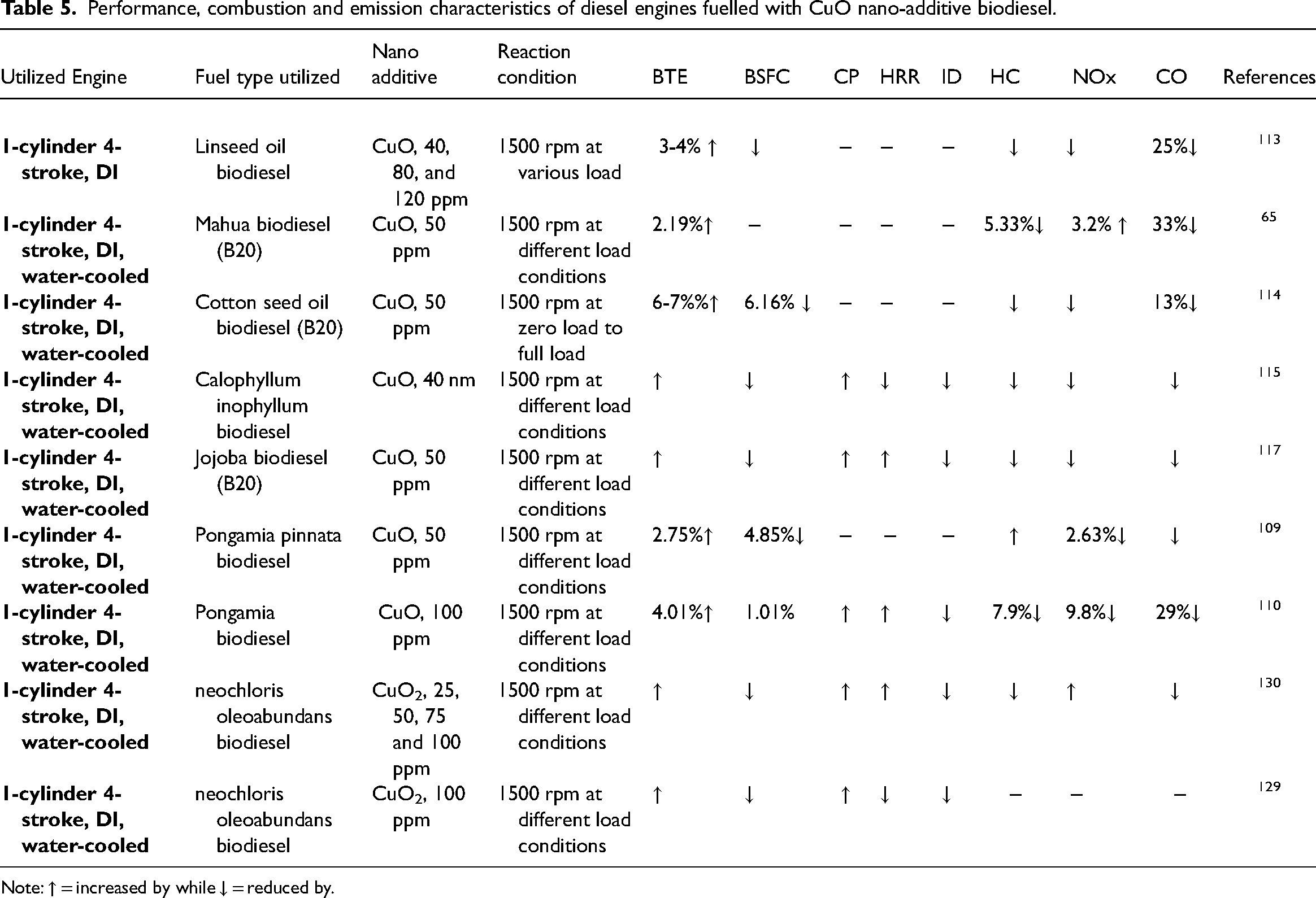
Note: ↑ = increased by while ↓ = reduced by.
Particulate matter (Pm)
Biodiesel-blends possess lower emissions of particulate matter (PM) due to an increasing amount of biodiesel in the blends. Biodiesel contains greater oxygen levels, less nitrogen, less aromatics, and lower carbon content compared to diesel fuel. However, few researchers have discovered that biodiesel and blends have higher PM concentrations than diesel, especially at higher loads.150,151 This may be due to poor atomization of the seed oil used in biodiesel processing, resulting in bulky fuel molecules and higher viscosity, resulting in higher PM levels. For biodiesel–diesel blends, engine load, and engine speed have a large impact on PM emission. Few researchers have reported that the addition of copper oxide nanoparticles can help reduce smoke which is part of the visible emissions of PM. Rastogi et al. 117 revealed that the CuO nanoparticles in Jojoba biodiesel blend (B20) fuel led to the minimization of the smoke opacity by 5.3, 6.15, and 8.15 percentage for jojoba biodiesel blends containing 25,50 and 75 ppm copper oxide nanoparticles respectively. The decline in the smoke opacity can be attributed to the enhanced combustion of fuels with CuO nanoparticles. The authors’ findings are very similar to result obtained by Kalaimurugan et al., 130 Silva et al. 109 and Chandrasekaran et al. 65
Challenges and future perspective
The reviewed articles showed that the addition of nanoparticles improved the engine characteristic while also minimizing the hazardous pollutants (HC, CO, and NOx emissions) that contribute to global air pollution. The Majority of the research conducted done resulted in a significant reduction in exhaust emissions. However, some researchers reported conflicting results as regards the engine parameters like performance, emission, and combustion. For instance, the utilization of nanoparticle raised NOx emission, according to a few researchers. The disparity can be attributed to the differences in the physicochemical properties of the biodiesel utilized, varying nanoparticles sizes as well as the quantity of the nanoparticles employed. Nonetheless, there exist certain unresolved issues that need to be investigated thoroughly, as listed below:
CuO nanoparticles may be used as a nano-additive in biodiesel-fuelled diesel engines. Nevertheless, the physicochemical qualities of CuO nanoparticles along with the techniques used to generate them may be key parameters that ought to be investigated further. Nanoparticle sedimentation may occur which may exacerbate the problem when both agglomeration and sedimentation. This can lead to changes in the thermo-physical as well as physicochemical properties of nanoparticle-added biodiesel.90,132 Long-term stability is discovered to be highly dependent on the size of the nanoparticles and their fabrication procedures. A smaller nanoparticle results in a higher surface/volume ratio which in turn reduces sedimentation effects and improves fuel stability. However, there is a propensity for nanoparticles to clump together and form larger particles, thereby limiting the use of nanoparticles with a significant surface area. Another issue is the insufficient information on the safety as well as the impact of various types of nanoparticles on human health. Since nanoparticles are so small, they may readily be ingested as well as accumulated in the lungs. More significantly, nanoparticle-added biodiesel production processes, as well as delivery systems for engine usage must be properly devised to meet economical as well as technological criteria. Numerous Nanoparticles have been found to have distinct properties. To optimize engine characteristics, more research into the interactions between nanoparticles and base fuel is needed. By allowing two or more nanoparticles to work together, new applications and improved performance may be conceivable. The response mechanisms as well as the associated effects, on the other hand, are not fully known. To avoid harm to persons and the environment, a comprehensive study on the safety of nanoparticles is required. It is very crucial to confirm their toxicity, with a focus on nanoparticle solubility as well as nanoparticles mixture interaction. In order to have a full analysis, the impact of nanoparticles on tribological behaviour as well as lubrication mechanisms in engine applications should indeed be researched. Furthermore, the physical properties of diesel engine fuels and oils are complex; the reactions involving fuels, oils, as well as nanoparticles during engine combustion appear to be poorly defined. Blending various fuels with more than one nanoparticle should really be investigated in the future for these reasons.
Conclusion
The reviewed studies showed that CuO nanoparticles added to biodiesel blends improved the emission characteristics, engine performance, as well as combustion characteristics resulting in higher HRR and in-cylinder pressure values. Consequently, in comparison to biodiesel devoid of CuO nanoparticles, the BTE and BSFC metrics exhibited substantial improvement. The catalytic oxidation, micro-explosions, high oxygen concentration, and good atomization of CuO added biodiesel contributed to these positive results reported in the reviewed works. The addition of CuO nanoparticles to biodiesel also improved emission properties. CO, HC, and NOx are all greenhouse gases that were reduced significantly. CuO nanoparticles have also been used as oxidation agents to improve fuel oxidation, leading to a substantial decrease in the emissions of CO and HC. It can be stated that CuO nanoparticles' promising qualities have proved their benefits when employed in biodiesel-fuelled diesel engines. However, more research into the possible negative effects of CuO nanoparticles on human health and natural habitats should be studied.
Footnotes
Declaration of conflicting interests
The author(s) declared no potential conflicts of interest with respect to the research, authorship, and/or publication of this article.
Funding
The author(s) received no financial support for the research, authorship, and/or publication of this article.
