




Abstract
Global research has shown that alongside masculinity, “Whiteness” is also an unmarked norm within the sporting domain, with the sports media involved in constructing and reflecting these representations. This study presents a corpus-based CDA approach to explore representations of ethnicity and racism in the Australian sports media, including how these representations relate to gender by comparing coverage of women’s and men’s sport. Given the socio-cultural context in Australia and Australian sport, particular focus is given to the representations of Aboriginal and/or Torres Strait Islander peoples and identities. The analysis reveals a higher use of ethnic identity labels in media coverage of men’s sport alongside a distinct backgrounding of issues related to entrenched racism in sport more broadly. This therefore suggests that residues of divisive ideologies remain within the socio-cultural context(s) of sport and the media in Australia and provides an important baseline for future research.
Introduction
Sport has historically been constructed as a stereotypically masculine domain, particularly in team sports emphasising physical strength, with female athletes facing numerous participation barriers. Alongside gender, Whiteness also operates as an unmarked norm in elite sport. Such constructions have been reflected in the media, through both an absence of coverage and negative or stereotyped portrayals of athletes who do not fit these hegemonic norms. Despite experiences in the world being shaped by overlapping and intersecting social categories, most existing linguistic research into media representations of athletes tends to focus on one social aspect, that is, gender or ethnicity (except see Jaworska, 2016; Jaworska and Hunt, 2017). This research, therefore, explores how the Australian print media represent elite athletes in relation to ethnicity and gender, comparing women’s and men’s sport, and forms part of a larger project which investigates dominant patriarchal discourses related to representations of gender, sexuality and ethnicity as situated within the socio-cultural context of the Australian sports media (Kemble, 2025).
Specifically, I focus on Australian Rules Football (AFL) and Rugby League (NRL), 1 two of the most popular Australian sports in terms of audience (Gullan, 2015; National Rugby League, 2024; Sporting Intelligence, 2017). Both AFL and NRL have been historically male dominated, with the elite women’s competitions launching in 2017 (AFLW) and 2018 (NRLW). Today, players come from a variety of ethnic backgrounds, with both men’s sporting codes holding special Indigenous Rounds to celebrate First Nations contributions and educate the community about Aboriginal and/or Torres Strait Islander cultures (see AFL.com.au; NRL.com.au). In 1995, the AFL introduced their ground-breaking anti-vilification policy which was awarded a peace prize by the United Nations Association (Gardiner, 2003a: 40). While both codes now have policies against racism (Schwab et al., 2019), racist acts against First Nations athletes continue (Chammas et al., 2024; Gardiner, 2003a; Grant, 2023a, 2023b; Hallinan and Judd, 2009). It is therefore of interest to explore how the media navigates coverage of ethnicity and racism, with a particular focus on the representations of Aboriginal and/or Torres Strait Islander players.
This research employs corpus-based critical discourse analysis, integrating analysis of appraisal (Martin and White, 2005), to explore questions of social inequity and bias, as they are represented in and through patterns of language use in the print news (see Baker, 2012; Baker et al., 2008; McEnery and Gabrielatos, 2006). While the term discourse has varying definitions, I consider it a form of social practice through which ideologies are expressed (Fairclough, 1995a, 1995b; Mautner, 2009). The notion of representation can be conceptualised as the construction of people(s), concepts, or things, through language, drawing on social ideologies and norms (Taylor and Heritage, 2024: 5). Specifically, I draw on Bray’s (2024) framework of media representation, focussing on (i) visibility through coverage, (ii) naming through terms of reference, and (iii) portrayal through discourses. The following research questions guide the analysis:
How do representations of ethnicity relate to representations of gender in media coverage of AFL and NRL?
What are the notable similarities or differences between media coverage of women’s AFL/NRL and men’s AFL/NRL, with respect to the representation of ethnicity?
How is the issue of racism in sport addressed by the media?
At the outset, it is necessary to address my position as a researcher and the terminology used in this paper. I identify as a White, sport-playing, cis-female person in a heterosexual relationship and as a non-Indigenous American-Australian. While I am committed to inclusive language and equity in sport, this positioning in some cases limits the perspectives and insights that I can bring. I come to the analysis, respectfully, as an “outsider-researcher” who is not part of all the represented social group(s) that I am studying.
I respectfully use the term ethnicity(ies) to broadly refer to cultural and ethnic identity; that is, a population which has a common ancestry, language, cultural values and/or practices. I avoid the term race as this is a social construct which carries negative connotations of subordination linked to colonialism (Gardiner, 2003a). I acknowledge that each athlete’s experiences with racism will differ; my aim here is to explore how the media represent these issues as a baseline for future analysis. I use the terms Aboriginal and/or Torres Strait Islander peoples as well as (Australian) First Nations (Peoples/Persons) with respect (following AIATSIS, 2020; Australian Government Style Manual, 2023; Reconciliation Australia, 2021). I avoid using the term Indigenous where possible, except as relevant in the data, literature, or in official naming.
After this introduction, the following section highlights selected literature which has explored media representations of ethnicity and/or issues of racism in sport, as necessary contextual background. I then provide an overview of the data and approach used in this research. Key findings are presented followed by a discussion and concluding thoughts.
Ethnicity and racism in sport and the media
This section provides an overview of literature related to representations of ethnicity in the sports media, focussing on visibility and portrayals, including studies which explore issues of racism within sport and/or as reported in the media. Where possible, I highlight literature that is situated within Australia and/or explores how representations of ethnicity intersect with gender in terms of socially constructed stereotypes.
Beginning with representation through visibility, a wide-scale study of Australian media found that more news items were published about male First Nations athletes (42 articles) than their female counterparts (four articles; Lumby et al., 2014: 42). Positively, more recent Australian research from the Office for Women in Sport has found a minimal difference between ethnicity/cultural identity in women’s and men’s sports coverage, suggesting a potential shift, although the topic of racism was more prominent in coverage of men’s sport (Office for Women in Sport and Recreation, 2024: 12). These studies, however, did not analyse how the athletes were portrayed in the media, nor did they address how racism was covered in/by the media.
Moving to representation via portrayals, global research has found that media coverage of non-White athletes often relies on racialised stereotypes of the athletically superior or naturally talented (Black) athlete (Billings and Eastman, 2002; Hallinan and Judd, 2009; Vincent, 2004). Racialised stereotypes have also been identified within sporting institutions, such as interviews with American female rugby players (Adjepong, 2017) and in Australian coaches’ selections of Aboriginal players for men’s rugby league (Hallinan, 1991). In women’s sports media coverage, gender stereotypes of weakness/inability often take a backseat to racialised stereotypes of strength/ability. In Vincent’s (2004) study of tennis and the Williams sisters, such depictions framed these (Black female) athletes as the Other, while reinforcing the “notion that White women are the hegemonic standard” (Vincent, 2004: 446). In another a corpus-assisted study of Olympic media, when comparing coverage of Somali-born and Belgium-born male British athletes the authors found evidence that British identity is associated with Whiteness (Bruce, 2016; Jaworska and Hunt, 2017). Representations of gender also strongly intersected with national identity, leading the authors to conclude that female athletes are used to “reinforce the concept of the nation-state” in the context of global sporting events (Jaworska and Hunt, 2017: 359).
In Australia, several studies have analysed media coverage of First Nations athlete Cathy Freeman during the 2000 Olympics (Bruce and Hallinan, 2001; Gardiner, 2003a, 2003b; Jones, 2004; Payne, 2004; Wensing and Bruce, 2003), exploring constructions of nationality, Aboriginal identity, and gender. In general, the scholars agree that Freeman was (positively) represented as a symbol for national reconciliation, with sexism and racism taking a backseat. Wensing and Bruce (2003: 391) acknowledge that the portrayal of Freeman as an emotionally and physically strong athlete is contrary to gender stereotypes of female weakness. However, they do not address how this may be indicative of racialised stereotypes, as found by Vincent (2004). Comparatively, Bruce and Hallinan (2001: 264–265) suggest that there are elements of gender stereotyping through repetitive descriptions of Freeman’s physical appearance, alongside racist representations (see also Stell, 1991: 237). Thus, while the studies situated in Australia present mixed results, there remains enduring evidence of stereotyped portrayals of non-White athletes alongside gendered portrayals of athletes.
In sum, the research has shown that racialised beliefs are entrenched in both the institutions of sport and the media, with racist stereotypes often co-existing with gender stereotypes. The existing research tends to focus on specific athletes and/or sports, rather than making comparisons between women’s and men’s sport to explore how aspects of gender and ethnicity may interact, as is the focus in this paper. Further, much of the existing work does not take a corpus-based approach to discourse analysis (except see Jaworska and Hunt, 2017), as this research does.
Methodology and data
This study combines corpus linguistics, critical discourse analysis (CDA), and the framework of appraisal which derives from systemic functional linguistics (SFL; Martin and White, 2005). The primary corpus techniques used are frequency data and concordances. Frequency data is generated for a pre-defined set of terms 2 which are analysed using concordances and full texts. Concordances show a specified word (or phrase) in the surrounding co-text and can be sorted in various ways to reveal different linguistic patterns of use, offering insights into how certain groups of people are represented (Baker, 2023: 109; Gillings and Mautner, 2024: 15). The tools used were WordSmith (Scott, 2022) and AntConc (Anthony, 2020).
These corpus techniques were combined with qualitative analysis of appraisal from the perspective of CDA. Appraisal provides a framework to study evaluative meaning in language (Hunston, 2011: 2–3) and considers how writers/speakers (i.e. the source; in this case, the newspapers) use language to share feelings and make assessments about someone or something (i.e. the target; in this case, about athletes) to “align or disalign themselves” with a real or imagined audience (in this case, the readers; Martin and White, 2005: 1). Appraisal comprises three interacting domains – attitude, graduation, and engagement. The primary focus here is on attitude, which includes affect (emotional responses), judgement (evaluation of people and behaviour), and appreciation (evaluation of semiotic entities and things), and can be either positive (+) or negative (−) (Martin and White, 2005). Appraisal offers a lens through which to analyse meanings expressed in discourse, while CDA provides the framework to understand these meanings in relation to “problematic inequalities of power” (Baker, 2012: 255, emphasis in original; see also van Dijk, 1993), such as stereotyped or racist portrayals of elite athletes.
Data comes from a specialised corpus of Australian media coverage of women’s and men’s AFL and NRL (i.e. the OzFooty corpus) compiled from the five most widely read print newspapers for the period December 2017 to December 2019 (source: Morgan, 2019) using a targeted search in the Factiva database. The collection period was restricted to off-season coverage as this has shown greater potential for identifying existing biases and stereotypes than in-season match reports (Caple, 2016; English et al., 2019; Jaworska and Hunt, 2017; Sherwood et al., 2019). The time period aligns with the launch of these new women’s competitions (AFLW in 2017; NRLW in 2018) and finishes at the end of 2019 due to the global COVID-19 pandemic (WHO Director-General, 2020). The selected papers are representative of the Australian media landscape in terms of both ownership and political lean. The metro newspapers owned by Nine/Fairfax are considered left-leaning broadsheets (The Age based in Melbourne and the Sydney Morning Herald based in Sydney), whereas those owned by News Corp are considered right-leaning tabloids (the Herald Sun based in Melbourne and the Daily Telegraph based in Sydney; Mockler, 2020). The national paper (The Australian), owned by News Corp, is considered a right-leaning broadsheet (Mockler, 2020). The full variety of different text types (news genres) found within the selected newspapers (e.g. hard news, editorials, columns, features, letters, and sports) are included to ensure that the corpus is as representative as possible of the print news landscape in Australia.
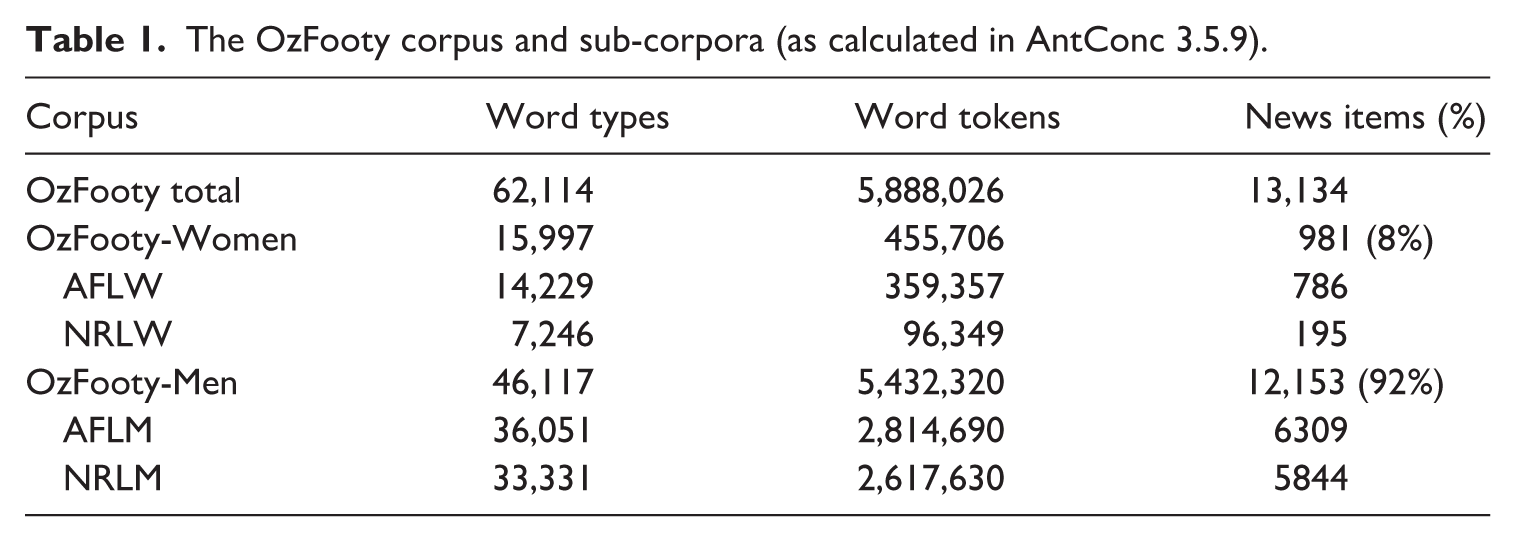
The corpus contains over 13,000 news items comprising over 5 million words. It was divided into two sub-corpora comprising news items about women’s AFL/NRL (OzFooty-Women) and men’s AFL/NRL (OzFooty-Men), to allow for comparisons. Notably, there is a vast discrepancy in the amount of women’s coverage compared to the men’s (8% cf. 92%), an imbalance which is reflective of the Australian media landscape for the past several decades (Brown, 1995; Lumby et al., 2014; North, 2012; Office for Women in Sport and Recreation, 2024; Toohey, 1997). Details of the OzFooty corpus and sub-corpora are provided in Table 1.
The OzFooty corpus and sub-corpora (as calculated in AntConc 3.5.9).
Results
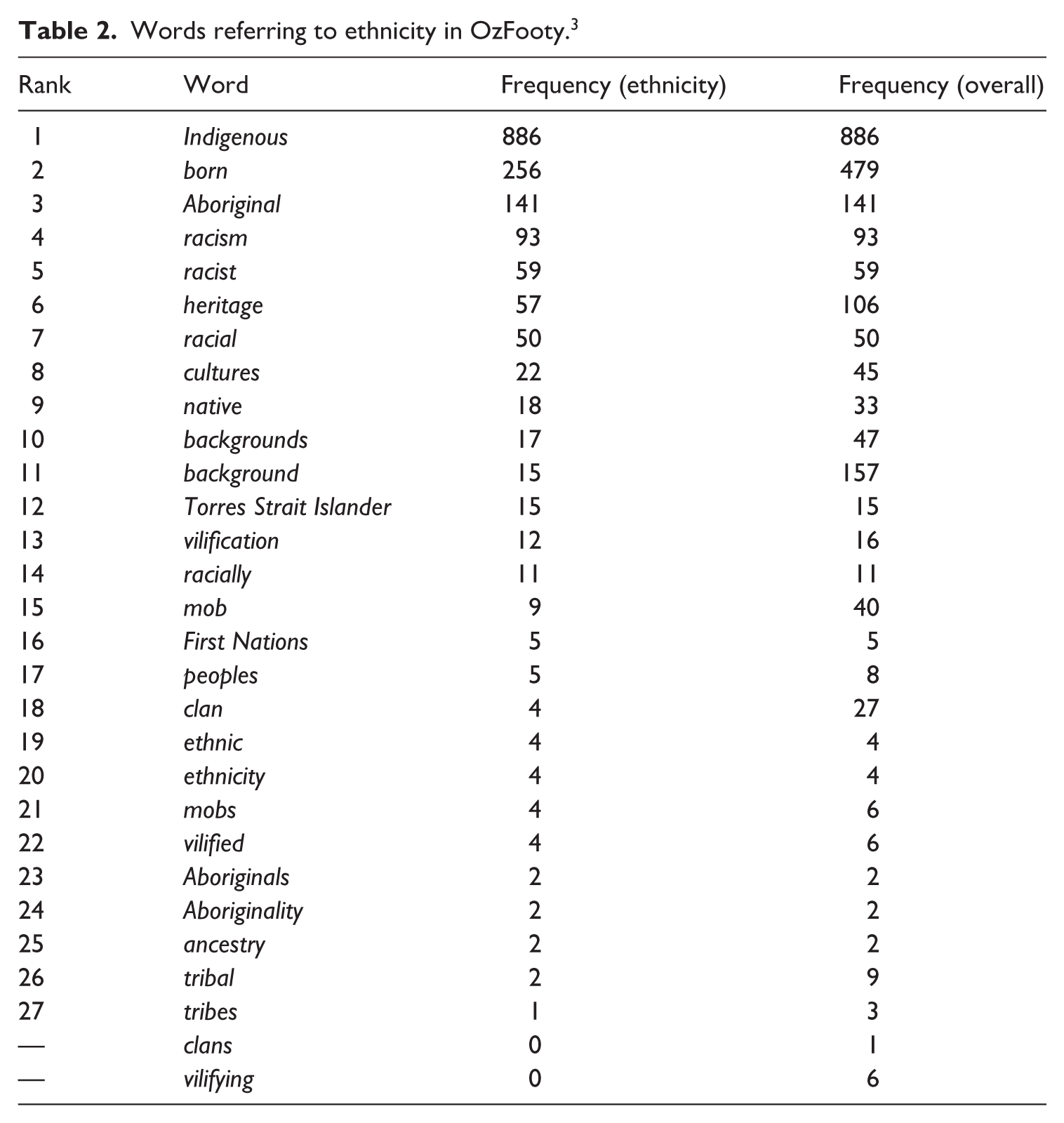
To begin, a targeted search was undertaken in the OzFooty corpus using the ethnicity search terms list (Appendix A). Focus is given to Aboriginal and/or Torres Strait Islander peoples and identities due to the social context in Australia – and Australian sport. All results were reviewed in the concordances, showing that most are specific to ethnicity (75%, n = 1700; Table 2). The most frequent words overall are Indigenous (n = 886), born (n = 256), and Aboriginal (n = 141). All words were then categorised to explore how the athletes are represented in terms of visibility, naming and portrayal, including the associated attitudes (emotions, judgements, valuations) presented. These categories will be discussed in the following sections.
Words referring to ethnicity in OzFooty. 3
General representations of ethnicity
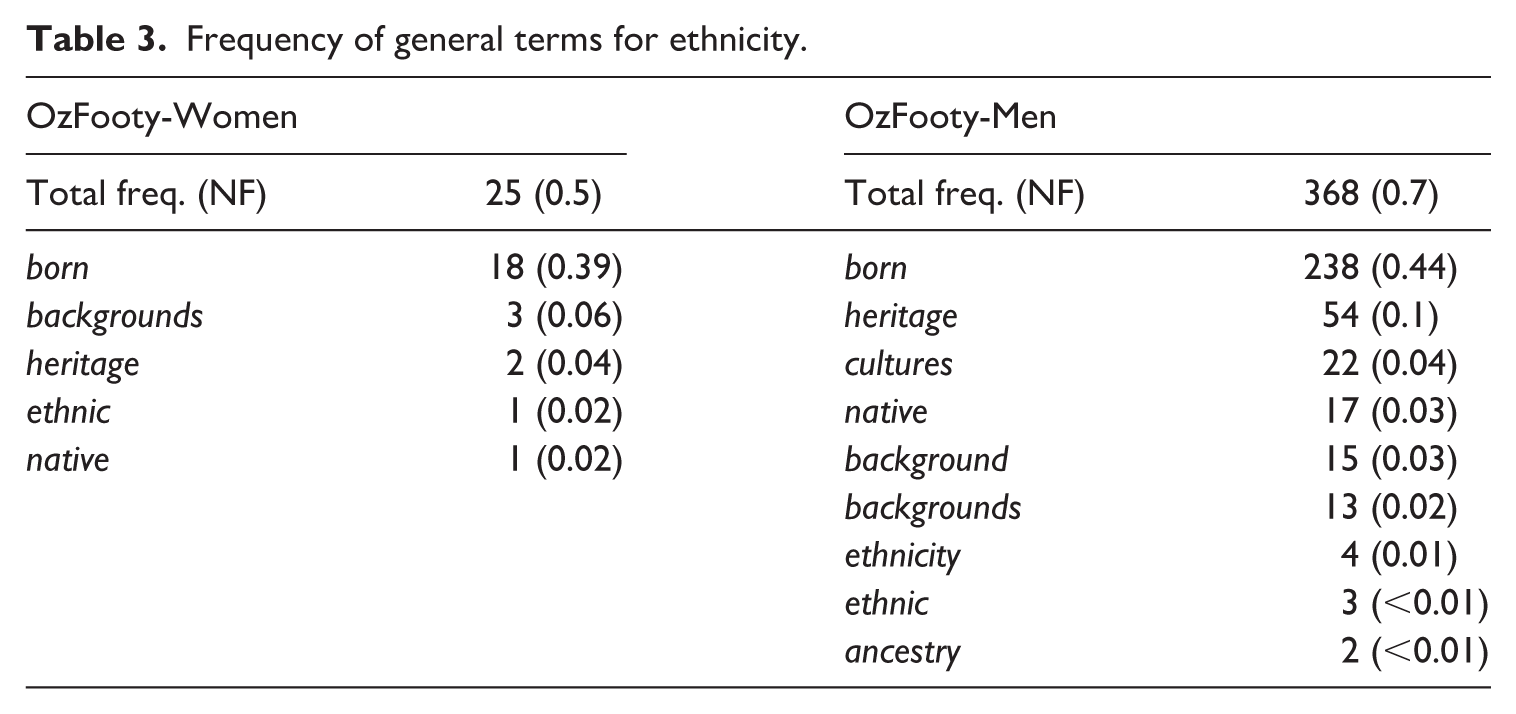
When comparing general terms for ethnicity between the sub-corpora, there is wider variety of word types with slightly higher frequency found in OzFooty-M (Table 3). In general, the words in OzFooty-W have frequencies too low to extrapolate any patterns. This in itself is a key finding, suggesting that visibility of female players’ ethnic identity(ies) is not a media priority. Notably, the outdated (and racist) colonial use of native(s) to refer to First Nations person(s) is not present in the corpus. 4
Frequency of general terms for ethnicity.
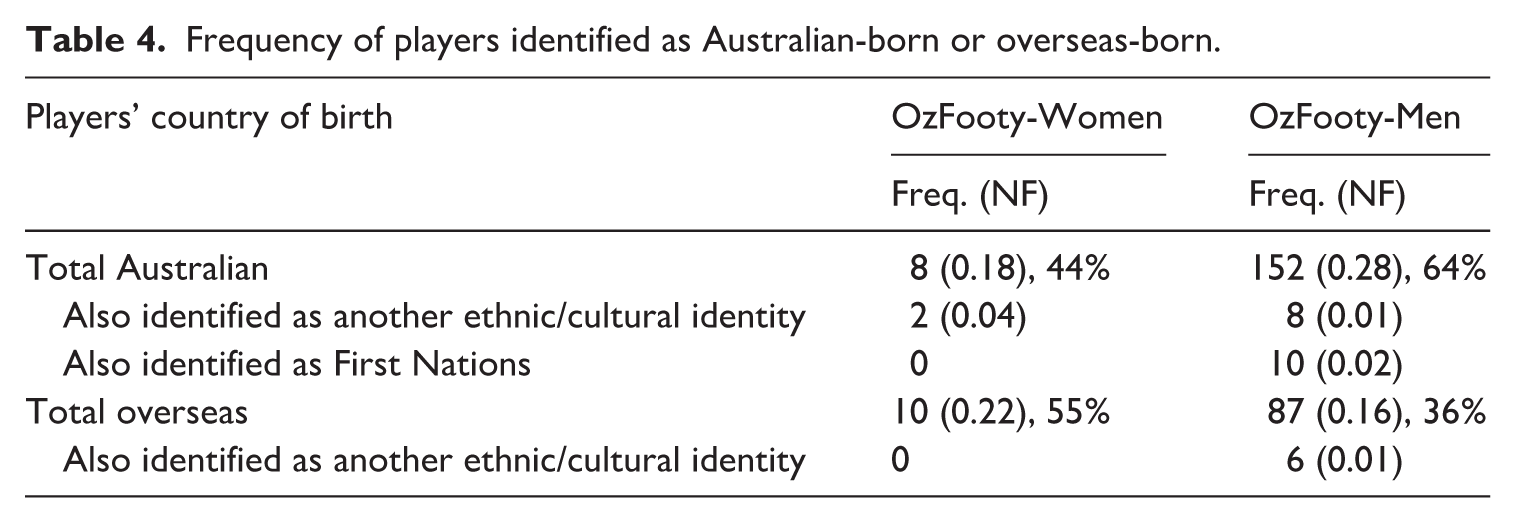
The most frequent word in both corpora is born (NF 0.4), thus providing a useful point for comparison. The analysis of concordances for born (Table 4), show that OzFooty-M favours identification of Australian-born players (64%), compared to overseas-born players (36%). Comparatively, in OzFooty-W there is slightly more identification of overseas-born players (55%) than Australian-born players (44%). Despite this difference, syntactic constructions are similar across both corpora, for example: born in [location], born and bred in [location], the [location]-born [person]. The identifiers include towns and states in Australia (e.g. Sydney, Queensland, WA), overseas locations (e.g. Auckland, England, Samoa), and ethnicities or nationalities (e.g. Māori, Tongan, Irish, Kenyan). In some cases, an ethnic, cultural, and/or national identity was presented alongside the birthplace (e.g. born in Sydney but raised in Ireland; an England-born defender of African descent). There are several instances in OzFooty-M where people are (also) identified as Aboriginal and/or Torres Strait Islander in the surrounding co-text, usually through the more general term Indigenous (e.g. The Blacktown-born flyer is a proud Indigenous man). Thus, multi-cultural identities of male athletes are given some visibility through specific ethnic or national naming identifiers.
Frequency of players identified as Australian-born or overseas-born.
This section has provided an initial overview of visibility in terms of coverage and naming through terms of reference, showing that the ethnicity of male athletes is more likely to be highlighted that that of female athletes. The following section will now further explore the representations of Aboriginal and/or Torres Strait Islander identities as presented in the corpus.
Representations of Aboriginal and/or Torres Strait Islander peoples
Moving to terms related to Aboriginal and/or Torres Strait Islander peoples, there is a greater range of word types and higher relative frequency in OzFooty-M (NF 19.38), as compared to OzFooty-W (NF 0.97; LL 23.95, LR 0.98; Table 5).
Ethnicity terms for Aboriginal and/or Torres Strait Islander identities. 5
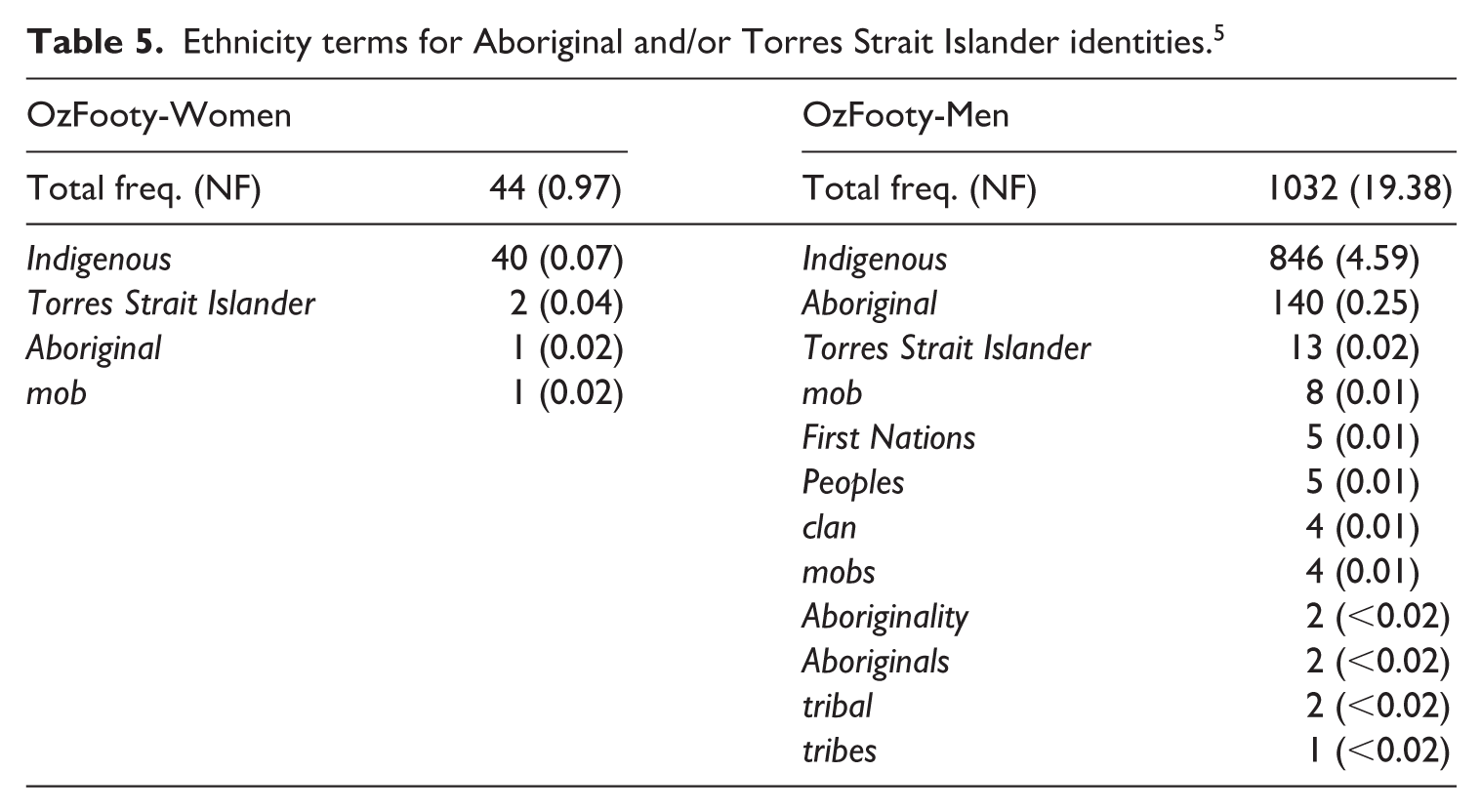
The word Indigenous is the most frequent in both corpora and thus provides a useful point of comparison between the gendered codes. Clusters and concordances were analysed focussing on the words following Indigenous, (i.e. R1, and R2, R3 where relevant) 6 to better understand who or what the label is modifying. 7 Table 6 provides an overview of key themes emerging from the corpus.
Co-occurrences of Indigenous in R1+ position.
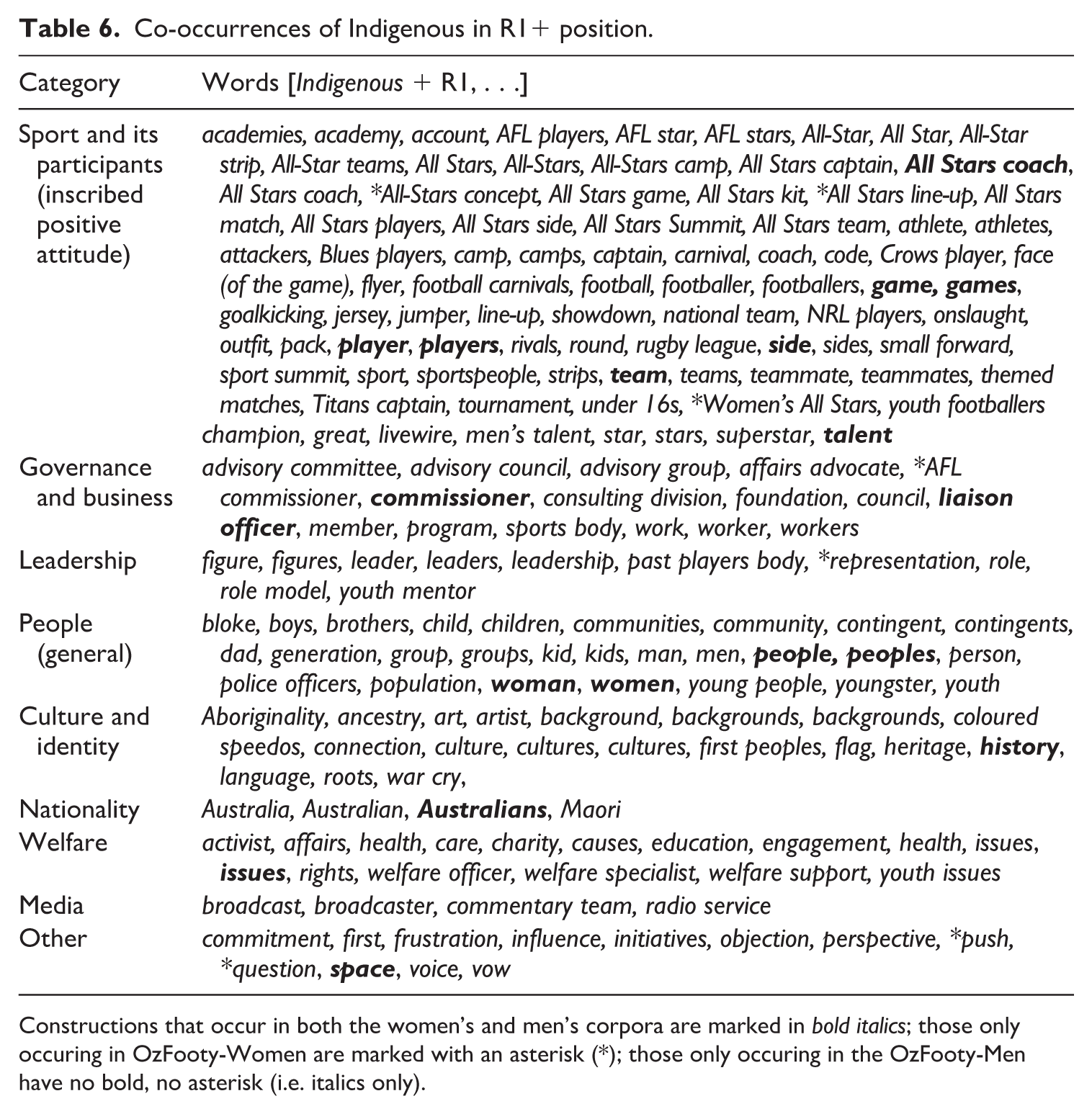
Constructions that occur in both the women’s and men’s corpora are marked in bold italics; those only occuring in OzFooty-Women are marked with an asterisk (*); those only occuring in the OzFooty-Men have no bold, no asterisk (i.e. italics only).
While this list of co-occurrences in Table 6 is not exhaustive, it attempts to capture prominent patterns related to AFL/NRL which can provide insight into discourses in the corpus. As expected, words related to sport and its participants are dominant following Indigenous (i.e. R1+ position). This includes mentions of the All Stars, as well as words for general sport/events (e.g. game, round, sport summit, tournament), athletes and other participants (e.g. athletes, captain, coach, teammates) and on-field positions (e.g. attacker, flyer). The most frequent is Indigenous player(s) with a total 109 instances distributed largely in the men’s corpus (93%, n = 102, NF 0.18). The presence of positive inscribed attitude referring to players (e.g. champion, stars, talent) indicates positive judgement of their ability, metonymically implicating positive appreciation of their performance (see Bednarek, 2010 for discussion of metonymically implicated attitude).
Also prevalent are references to governance and business (e.g. advisory, liaison officer, program), people (e.g. children, groups, people), culture and identity (e.g. ancestry, culture, history), and welfare (e.g. education, issues, welfare). The results demonstrate a preference for using an identity label, as in Indigenous culture. While this may be an acknowledgement of Aboriginal and/or Torres Strait Islander identities, it could also be viewed as a linguistic othering from the baseline of White/Western culture. That is, acceptance into the “mainstream” sporting depends upon athletes “being considered like other non-Indigenous Australians, even as their Aboriginality is emphasised” (Cottle and Keys, 2010: 1).
The results thus far suggest that news producers prefer the more general Indigenous over Aboriginal or Torres Strait Islander (40 cf. 3 for OzFooty-W, and 846 cf. 153 for OzFooty-M) which are also general labels but at least distinguish between Aboriginal and Torres Strait Islander peoples. To further explore the use of specific identity labels, I compared a list of terms referring to particular peoples and/or language groups against the OzFooty corpus. The list is based on an existing one (Bednarek, 2023: 194), along with other terms identified during these analyses. While not exhaustive, this list is comprehensive; it comprises 988 tokens, covers a variety of people(s) and language groups across Australia, and includes spelling variations.
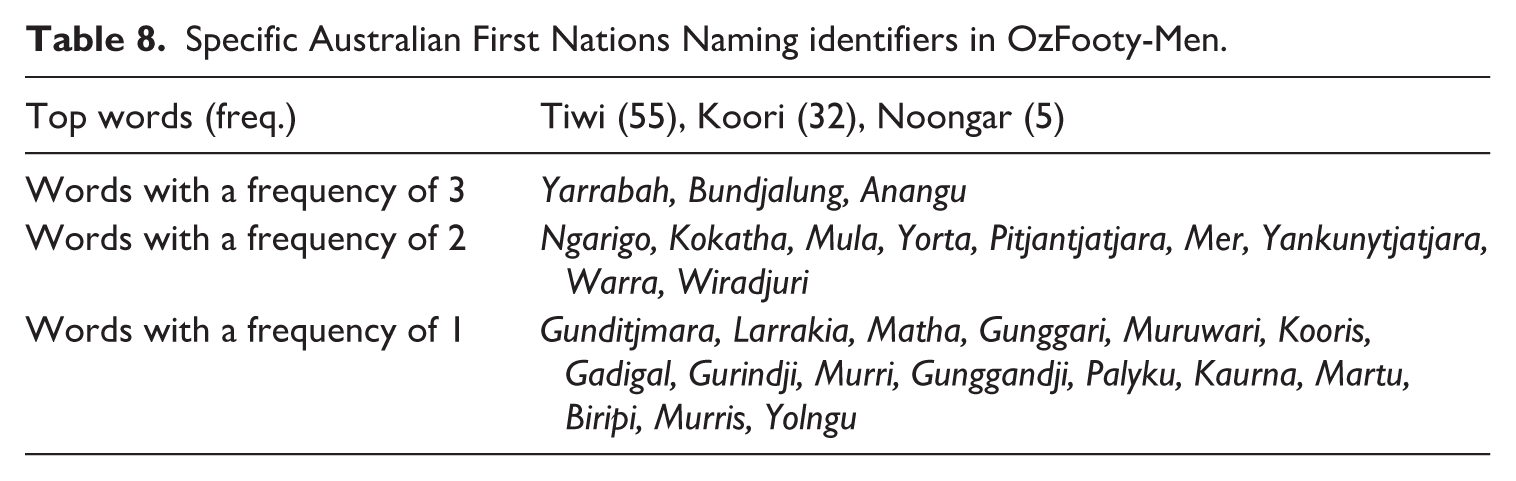
I used the wordlist comparison tool in AntConc (Anthony, 2020), manually reviewing the results for any false positives. A total of 31 relevant word types are present in OzFooty with an overall frequency of 136. This equates to only 3% of the terms from the original list. In OzFooty-W, the two relevant terms are Mer (n = 2) and Koori (n = 1) (Table 7). In OzFooty-M the most frequent terms are Tiwi (n = 55), Koori (n = 32), and Noongar (n = 5), while the remaining words have a frequency of 3 or less (Table 8). These results confirm that specificity is a rarity in the corpus.
Specific Australian First Nations naming identifiers in OzFooty-Women.

Specific Australian First Nations Naming identifiers in OzFooty-Men.
The analyses thus far have provided insights into representations of ethnicity in the corpus through preferred naming practices and the visibility (or lack of) of ethnically diverse players across men’s and women’s AFL/NRL – focusing on Aboriginal and/or Torres Strait Islander athletes. The following section explores representations of racism and vilification through the analysis of selected terms.
Representations of racism and vilification
This section provides insights into explicit references to racism and vilification, as opposed to other linguistic resources. Overall, there are 229 instances of racism/vilification labels in OzFooty, mostly occurring in the men’s corpus (96%, n = 220, NF 0.39; Table 9 and Figure 1). The word racism is the most frequent in the corpus overall (n = 93).
Frequency of racism and vilification terms in the OzFooty corpora.

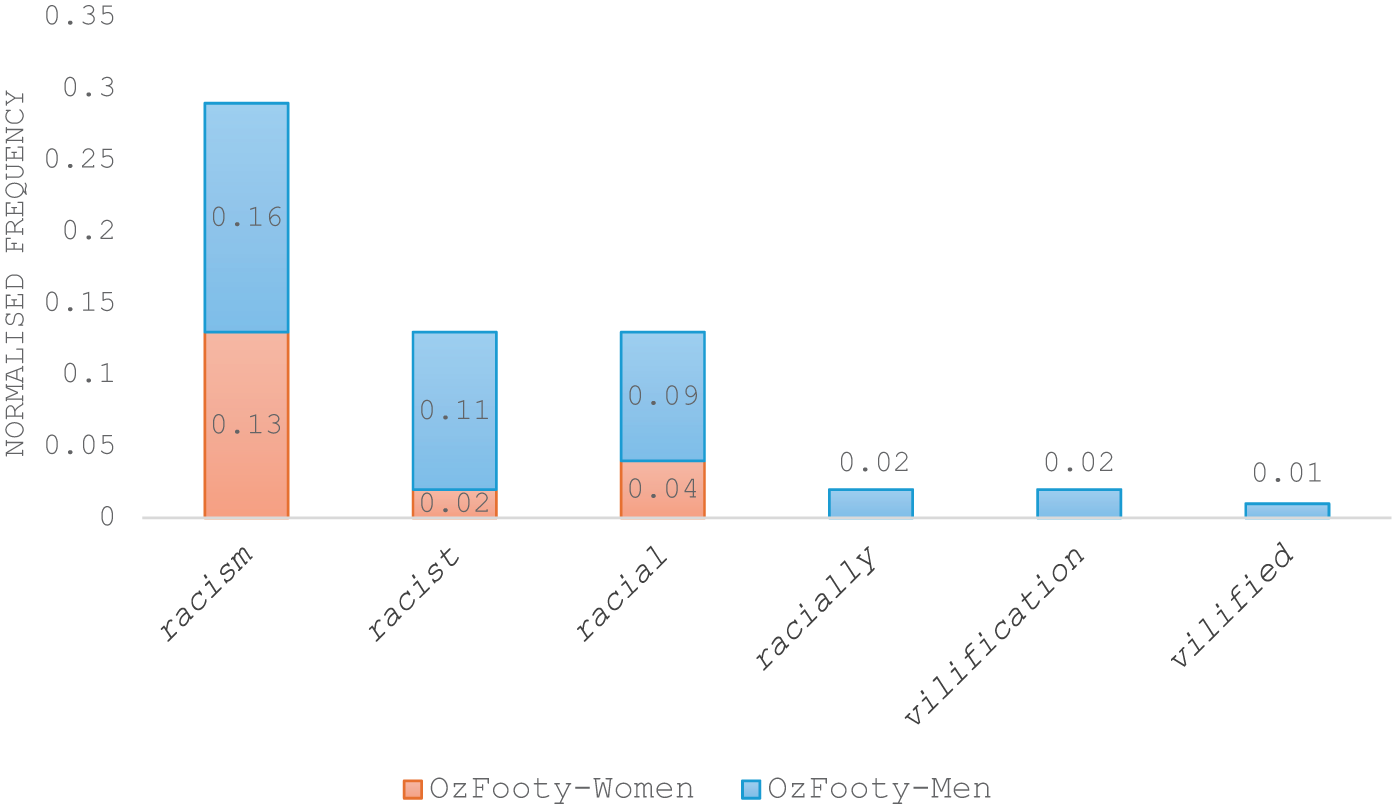
Distribution of racism and vilification terms in the OzFooty corpora.
In OzFooty-W, three words are present: racism (n = 5), racist (n = 1), and racial (n = 2) – although none refer to AFLW/NRLW. There are two instances related to the semi-professional VFLW 8 (Figure 2 lines 5, 8), with the rest referring to incidents of racism in AFLM/NRLM (Figure 2 lines 1–4, 6, 7, 9). In OzFooty-M, there are 220 tokens distributed across 95 news items, with discussion centred around three players (Table 10). These players have been racially abused and/or vilified during their careers and have called out the racist actions and people involved, thus garnering widespread media attention at the time. It seems then that visibility of racism is linked to these high-profile players.
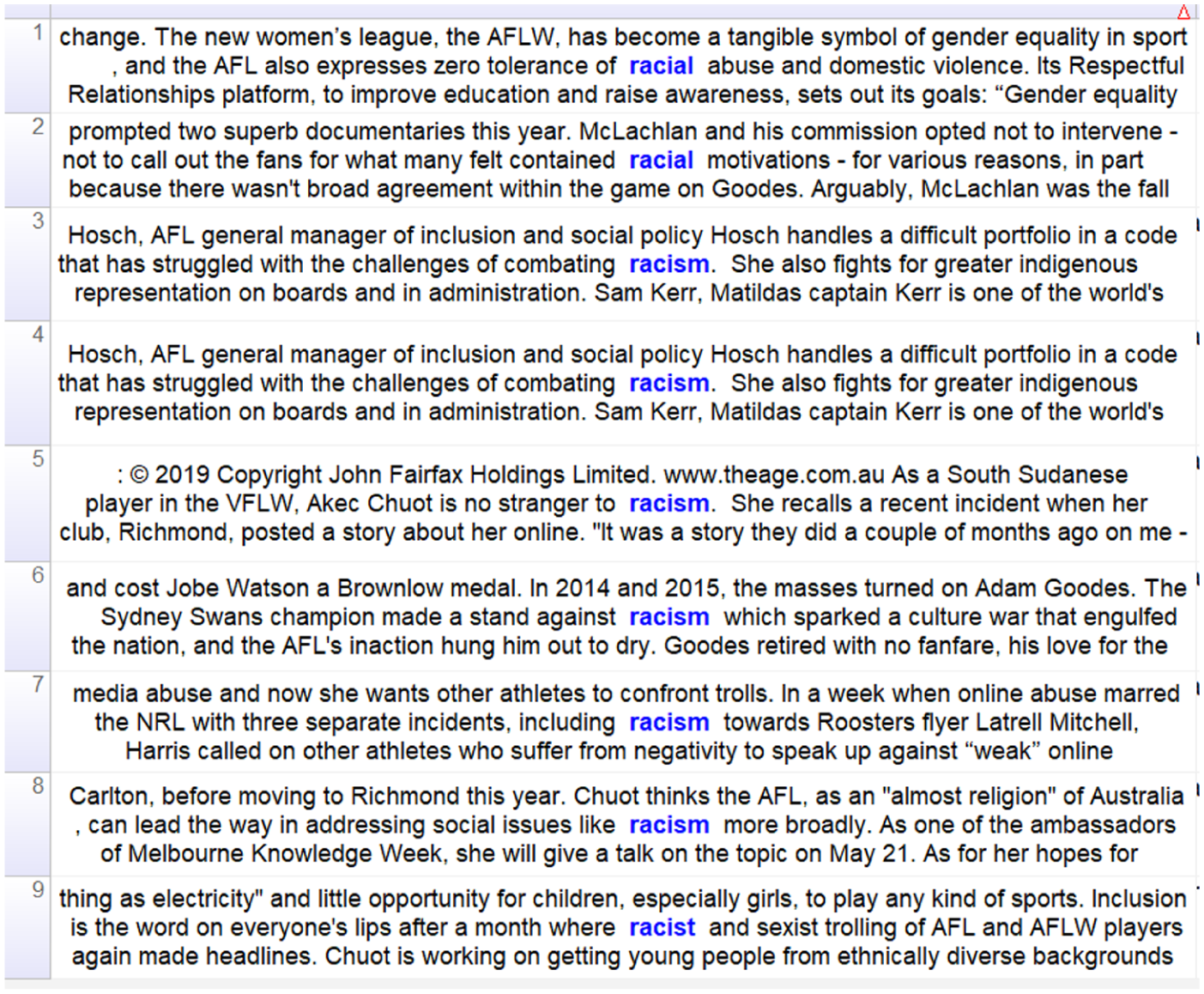
Extended concordance lines for racism terms from OzFooty-Women.
Players frequently mentioned in relation to racism.
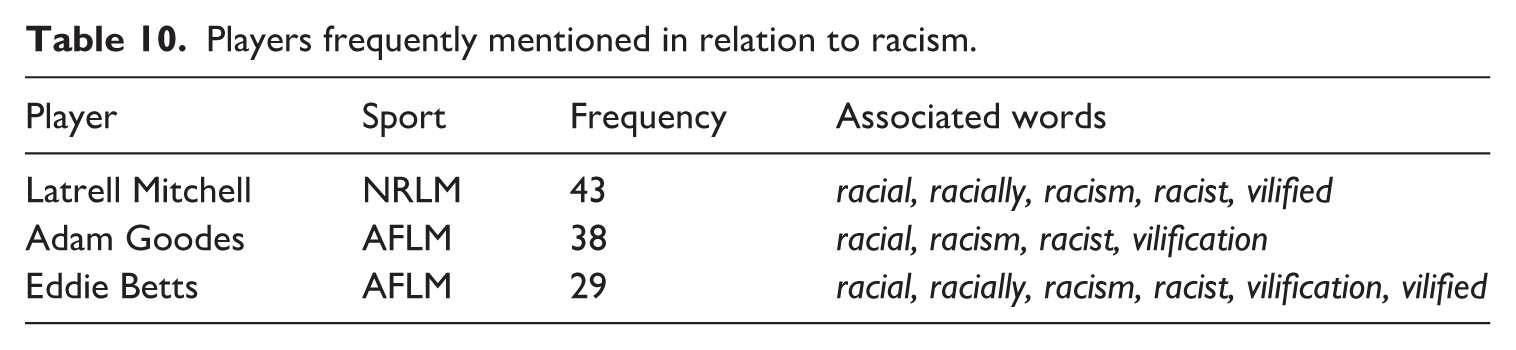
To gain further insight into media coverage of racism in AFLM/NRLM, the two most frequent words, racism and racist, were analysed in their co-text to identify how racism is portrayed and who or what is classified as racist.
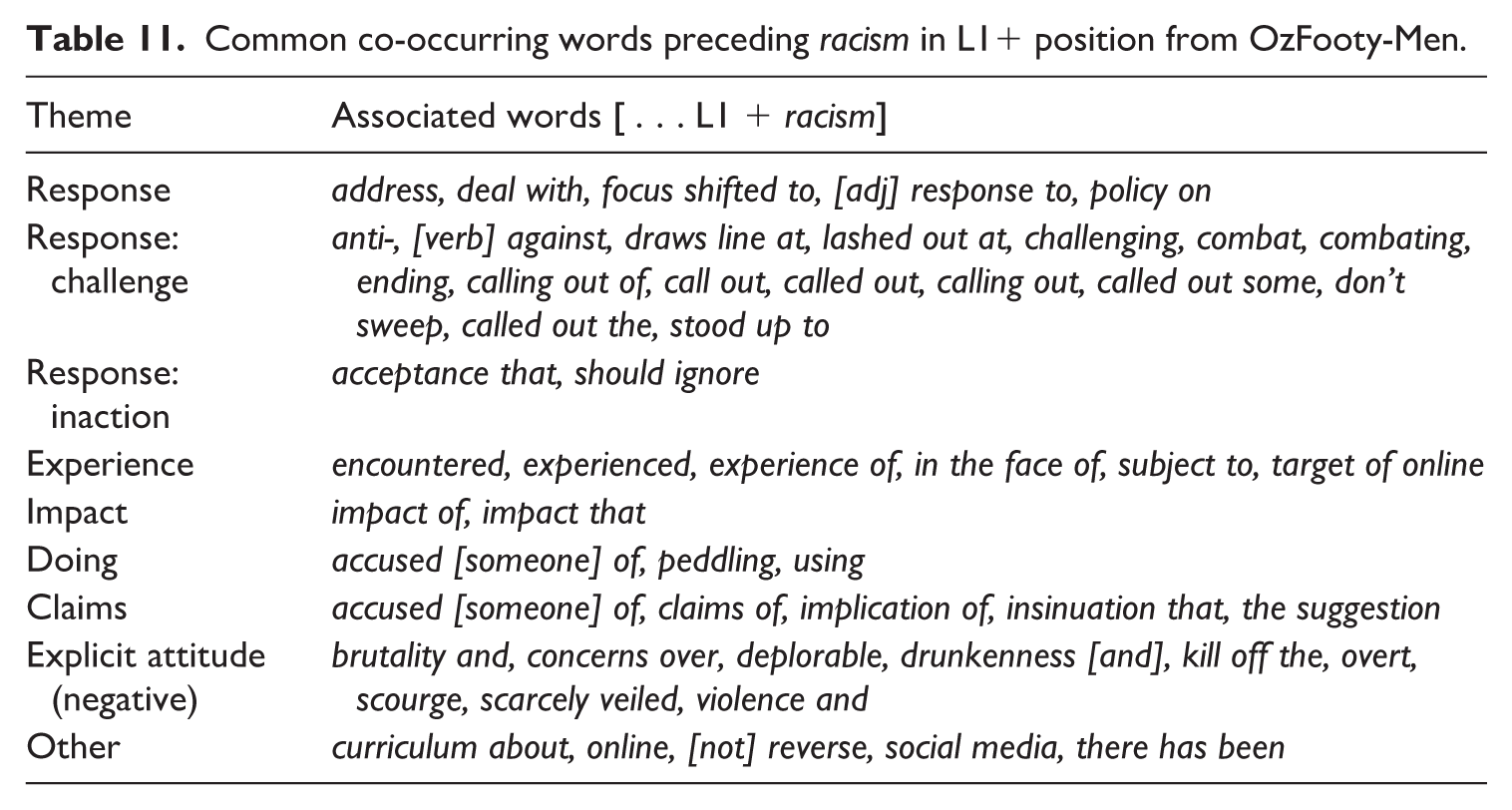
First, words preceding racism (L1+) were analysed to examine how the term is evaluated and positioned, with several themes emerging: responses to racism (including challenging racism and inaction), experiences of racism, impact of racism, doing racism, claims of/about racism, and explicit negative attitudes towards racism (Table 11). At first glance, terms related to experiences, responses, and (negative) attitudes seems like a progressive (anti-racist) step in contemporary media coverage. However, there are only two inscribed instances of doing racism (peddling, using) and seven instances of CALL out [of/the] racism (combined, >1%), suggesting that racism is generally discussed as a concept, rather than identified through specific acts. Additionally, claims of racism positions such instances as questionable, while simultaneously distancing the writer(s) from the expressed opinion [engagement: attribution]. Thus, doubt and distance markers are seemingly used to downplay instances of racism (van Dijk, 1992: 93).
Common co-occurring words preceding racism in L1+ position from OzFooty-Men.
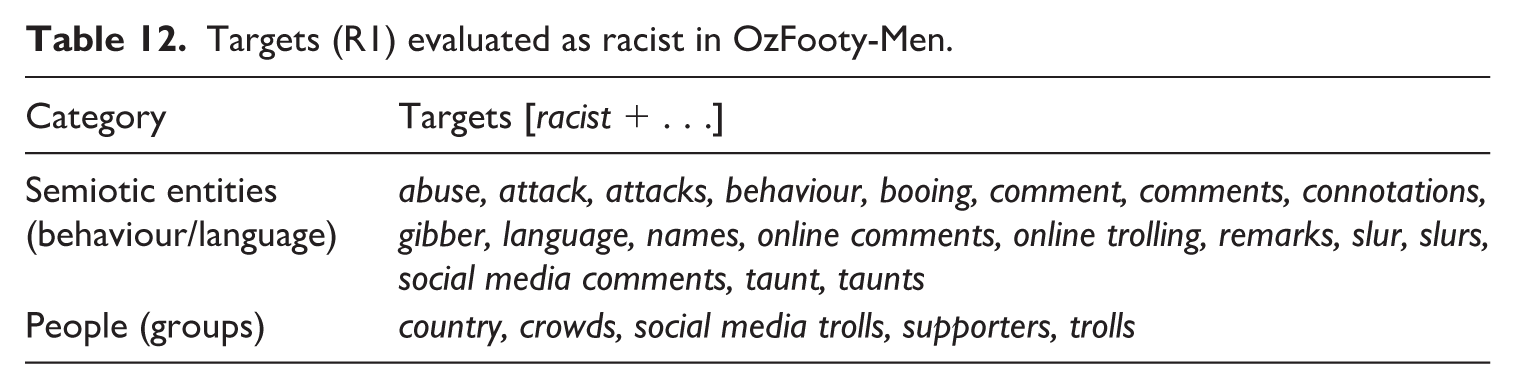
Next, targets for the word racist were identified in the R1 position as a classifier (racist
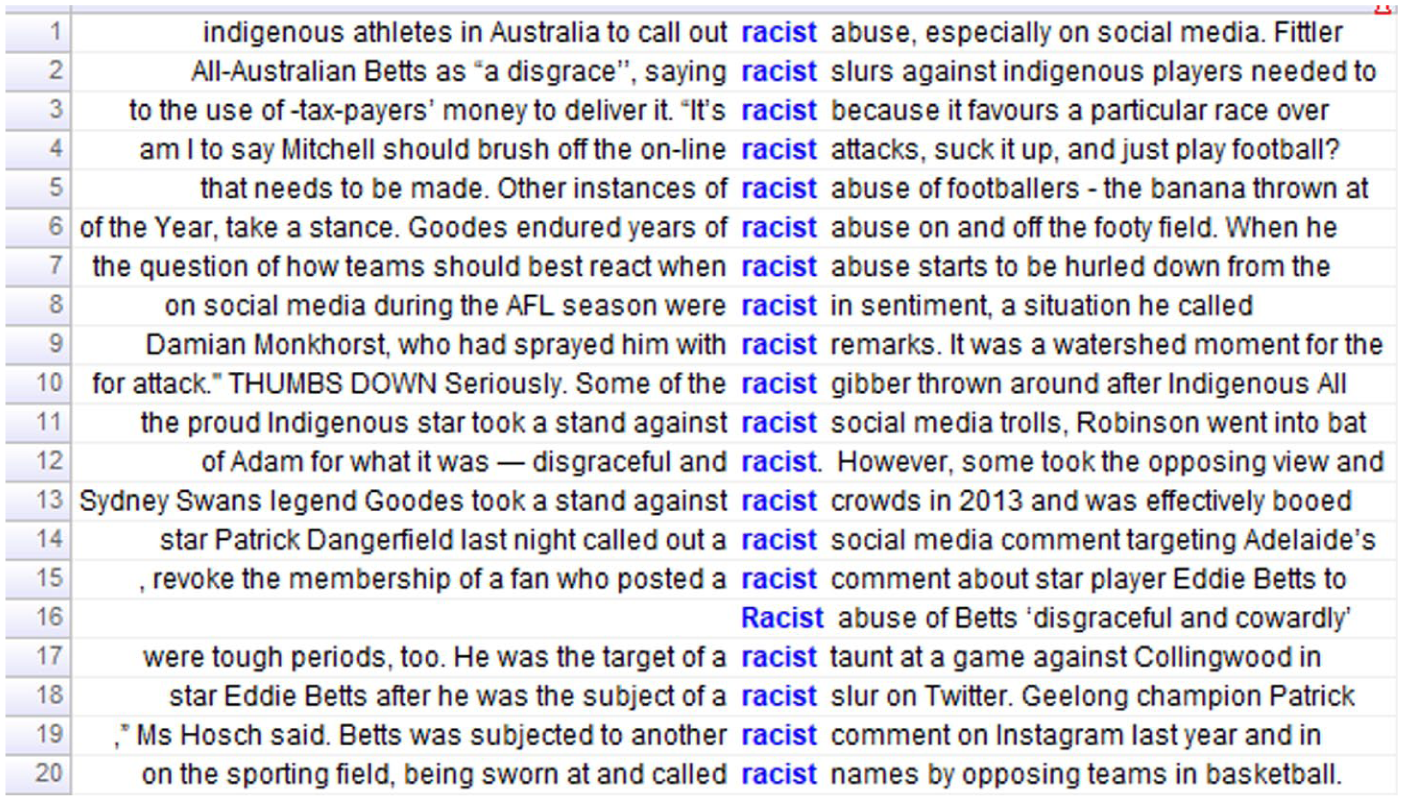
Sample concordance lines for racist from OzFooty-Men.
Overwhelmingly, racist is used as an adjective to modify semiotic entities (language and actions) and groups of people (Table 12). Most commonly, it is behaviours (e.g. attack, behaviour, online trolling, taunts) that are negatively evaluated as racist [− appreciation]. The appraisal of people [judgement] tends to occur collectively (e.g. crowds, supporters, trolls), and even then, with low combined frequency (n = 6). There are two instances, both occurring in relational clauses, where the target is an individual person (i.e. judgement), as in:
(1) The 29-year-old from Dublin, Ireland, is sexist,
(2) BRAD Fittler is the last person you would describe as a
Targets (R1) evaluated as racist in OzFooty-Men.
In example 1, the athlete is described as racist [− judgement], as well as sexist and homophobic [− judgement], however, they are also positively appraised as a successful and entertaining sports star [+ judgement] thereby suggesting a downplaying of the negative judgement. In example 2, the target (NRL coach Brad Fittler) is being implicitly positively appraised [+ judgement] for not being racist. For context, this news item covers NRL player Latrell Mitchell refusing to sing the Australian national anthem given it does not represent Aboriginal Australians (with whom he identifies). The wider co-text reveals that Coach Fittler is both physically and evaluatively removed as an actor from the discussion of racism, while positively appraised. Thus, both instances exemplify a discourse of separating sport and politics, which “carries an underlying assumption that sport can exist and operate independently of the broader societal context within which it is embedded” (Sherwood et al., 2020: 557–558). Such a viewpoint, however, is in direct contrast to discourses of inclusivity that recognise the connection between society and sport (Sherwood et al., 2020). While these are only two examples from the corpus, they are written by regular newspaper contributors and may reproduce similar views across editions and topics.
In sum, this section has provided some initial insights into explicit references to racism and vilification in media coverage of AFL/NRL. The discussion of documented racism towards women’s Aboriginal and/or Torres Strait Islander athletes is nearly non-existent. It is unclear why this is the case, although perhaps racism in the women’s AFL/NRL is less covert or, at the very least, less public. Alongside this, there is a preference to label behaviours as racist, rather than people, although this may be related to issues of defamation. Regardless, the issue of racism is not represented as a serious ongoing issue across both women’s and men’s AFL/NRL, despite enduring evidence otherwise.
Discussion
The results have revealed both similarities and differences in how the Australian print media represent elite women’s and men’s AFL/NRL athletes with respect to ethnicity, in relation to visibility, naming and portrayal.
Beginning first with visibility through coverage, more focus is given to ethnicity in men’s AFL/NRL than in the women’s AFL/NRL. More specifically, terms identifying Australian First Nations identities were nearly non-existent in OzFooty-W, indicating that the media are more likely to highlight male players who identify as Aboriginal and/or Torres Strait Islander. Such finding is consistent with Lumby et al.’s (2014: 42) previous study of Australian media coverage, though it unclear whether this difference is indicative of the playing landscapes or a potential erasure of ethnic/cultural diversity (Cottle and Keys, 2010).
Additionally, there is low visibility of racism in sport as presented in the corpus. While the men’s corpus does contain some mentions of racism and racist actions this is often alongside “doubt or distance markers” (van Dijk, 1992: 93), meaning that any deep engagement with this is quite limited, especially given the long-standing history of racism in Australia and sport – including in AFL/NRL. The absence of coverage in OzFooty-W suggest suggests that racism does not exist in women’s sport (see Nelson, 2013; van Dijk, 1992), despite evidence to the contrary. An AFL Players Association (AFLPA, 2023) survey found that 30% of culturally diverse AFLW players reported being racially abused or vilified. The majority (77%) were unsatisfied with how their complaints were handled by the clubs and the AFL governing body (Cross, 2023; Hytner, 2023). Given similarities between AFLW and NRLW, it would be practical to assume that similar issues exist in NRLW.
Moving to naming through terms of reference, the analysis revealed a lack of specificity when referring to Aboriginal and/or Torres Strait Islander players, with the media preferencing Indigenous and (to a lesser extent) Aboriginal, rather than specific peoples and/or language groups. This could have a variety of reasons, including lack of information, preference of the person being identified, or the influence of naming practices such as the Indigenous Round and Indigenous All Stars. Regardless, this finding provides a useful baseline for the analysis of language change.
Finally, in terms of portrayals through discourses, the evaluation of Indigenous rounds, All-stars teams, and ethnic identities is generally positive, despite low visibility. However, media discussion of racism in sport is, at best, surface level with respect to men’s AFL/NRL and non-existent with respect to women’s AFL/NRL. Such portrayals minimise both the presence and impact of racism on athletes, especially in a space which has overtly positioned itself as “welcoming and inclusive of Indigenous people” (Hallinan and Judd, 2009: 1229) through the introduction of various initiatives, special rounds, and award-winning policies. On the whole, this indicates a discourse of racism in sport as being “normalised” (Cottle and Keys, 2010: 7).
Certainly, this topic would benefit from further research, including the investigation of other linguistic resources pointing to racism (e.g. slurs, deficit language, or racialised performance), 9 media practices and guidelines, as well as public responses to such representations – especially from readers or players identifying as Aboriginal and/or Torres Strait Islander. Analysis of in-season news coverage (of both men’s and women’s AFL/NRL) may also yield different results.
Conclusion
In conclusion, this research has explored representations of ethnicity as they relate to gender in Australian media coverage of AFL and NRL, making comparisons between the women’s and men’s competitions. I also explored how the issue of racism in sport is addressed in/by the media. Specifically, I took a corpus-based CDA approach combined with analysis of evaluative language using appraisal to explore how these athletes are represented in terms of visibility, naming practices, and portrayals within the socio-cultural context of Australian sport and media. The results show that there are distinct differences in how female and male athletes are represented at the intersection of ethnicity and gender, suggesting that discourses of privilege and subordination remain embedded in elite sporting contexts. Future research would certainly benefit from exploring more deeply some of the points raised in this study, along with other social aspects of intersectionality including gender-identity, sexuality, (dis)ability, socio-economic status, and religion, to name a few. There is no doubt that issues of sexism, bigotry, homophobia, and racism in sport and the media are complex; however, the media can play an important role by highlighting areas of inequity, calling into question a history of structural racism and sexism, and by celebrating diversity and inclusion. While this research has only scratched the surface of how diverse identities intersect with gender in the Australian sports media, it has made important contributions to better understanding the representation of athletes in the media, especially in off-season coverage, including entrenched issues of racism. It has also contributed to the use of corpus-based CDA and appraisal to undertake exploration of athlete identities as represented in and by the sports media.
Footnotes
Appendix A: Ethnicity search terms list
The search was conducted in WordSmith, following the required formatting where separate words are designated by the slash (/).
Aboriginal / Aboriginality / Aboriginals / Aborigine / Aborigines / born / ancestry / background / backgrounds / clan / clans / cultures / ethnic / ethnicity / First Nations / heritage / Indigenous / mob / mobs / native / natives / peoples / Torres Strait Islander / Torres Strait Islanders / tribal / tribes /
Acknowledgements
This research is part of a larger project which was supported by the Australia Government Research Training Program (RTP) Scholarship. My sincere gratitude and thanks to Nicole Mockler, Monika Bednarek, and Carly Bray for their insightful feedback on earlier drafts of this paper.
Ethical considerations
This article does not contain any studies with human or animal participants.
Consent to participate
There are no human participants in this article, and informed consent is not required.
Funding
The author disclosed receipt of the following financial support for the research, authorship, and/or publication of this article: This research reported in this paper was supported by the award of the Australian Government Research Training Program (RTP) Scholarship.
Declaration of conflicting interests
The author declared no potential conflicts of interest with respect to the research, authorship, and/or publication of this article.
Data availability statement
The data that was collected for this study are available from Factiva but copyright restrictions apply and so the compiled corpus is not publicly available. The corpus design and construction is detailed in Kemble (2025) available at 