




Abstract
The emergence of advanced absorption chillers designed for the effective utilisation of low-grade thermal energy indicates a notable advancement in the discipline of cooling technology. These chillers, which range from small air-cooled systems to larger solar-gas-fired units, are specifically designed to address the escalating requisites for environmentally sustainable cooling alternatives. This paper presents a comprehensive review of solar absorption chillers and their integration with thermal energy storage systems, with a focus on the application of phase change materials (PCMs). It analyses the performance and configurations of single, double, and triple-effect chillers, along with the role of various solar thermal collectors in delivering the required input temperatures for cooling applications. Sensible, thermochemical, and latent heat storage methods are explored, emphasising cascade PCM systems for improved thermal efficiency and load flexibility. While the review highlights the significant potential of solar-powered absorption chillers in advancing sustainable cooling, particularly in hot climates such as those found in Africa, it also identifies key research gaps. These include the limited analysis of medium-temperature cooling demand (2–12°C), the need for integrated thermal storage systems using PCMs for multi-level cooling demands, and the lack of region-specific feasibility studies in diverse African conditions. Overall, the paper offers valuable insights into optimising solar absorption cooling technologies through effective storage integration and system design, supporting their broader adoption in energy efficient, low carbon applications.
Keywords
Introduction
The environment and energy consumption are two major challenges that human beings are now facing. Modern life with its ever-increasing demand for energy, due both to an ever-increasing demand for more comfortable working and living conditions and recent technological development. For example, it is estimated that the global electrical power supply required to meet space cooling demands alone will increase fourfold from about 850 GW in 2016 to over 3300 GW in 2050 accounting for almost one-third of the world’s growth in demand for electricity [OECD/IEA. One consequence has been the growth of renewable energy because plenty of energy is available free from the sun if it can be harnessed. Accessibility to solar energy depends on the location on the planet, and Africa as a continent is well placed to gather solar energy, as a promising resource to satisfy the demand for, e.g., space cooling (and heating), refrigeration, and freezing. 1
However, the intermittent and time-dependent nature of solar radiation presents a fundamental limitation for continuous cooling operation. To bridge this mismatch between solar availability and cooling demand, energy storage technologies become indispensable. Among these, Thermal Energy Storage systems play a crucial role by storing excess thermal energy during peak solar hours for use when sunlight is unavailable.
Fortunately, in much of the world maximum demand for cooling (e.g., in homes and offices in India and the Philippines) coincides with maximum accessibility to solar energy, but this is not always the case (e.g., in northern Europe) and the advancement of thermal solar cooling systems is closely linked to effective energy storage systems. Thermal Energy Storage (TES) is seen as a major technique that retains/stores energy when higher levels of solar energy are being generated for use, e.g., at night. 2 Storing solar energy for later use via a TES has advanced substantially in the last few decades because it provides an applicable solution that solves the mismatch between demand and energy supply. 3
Generally, the classification of TES can be divided into latent heat, sensible heat, and thermochemical. Sensible heat storage has been the classic way of storing thermal energy by raising the temperature of a storage medium. 4 However, latent heat storage is the modern way where energy is stored by changing the phase of the storage medium. With thermochemical thermal storage, the thermal energy is stored by absorbing and releasing heat via reversible endothermic chemical processes. 5
TES is an attractive technology, and most of the energy storage in solar chilled applications is focused on sensible heat storage tanks. 6 The major weakness of this type of storage is temperature instability during the discharge process 7 and its high cost. Latent thermal storage has been used both when solar power generation takes place at high temperatures 8 and for domestic hot water at medium temperatures. However, latent heat storage in the form of phase change materials (PCMs) for cooling applications is used as wall storage only. For instance, PCMs for human comfort in rooms and buildings, food protection, and industrial cooling systems. 9
Solar absorption chiller cooling system
Absorption chillers are an old technology used to cool buildings and other industrial applications.
10
Chillers can use heat energy obtained from solar collectors to produce cooling or refrigeration and are efficient and effective.
11
Researchers define an absorption chiller as an instrument that works on basic thermodynamic principles to transform thermal energy gained from solar collectors for refrigeration or air cooling. The layout of a typical solar thermal cooling system is shown in Figure 1. This kind of chiller utilizes a thermal compressor instead of a mechanical one.
12
Diagram of typical thermal solar cooling system.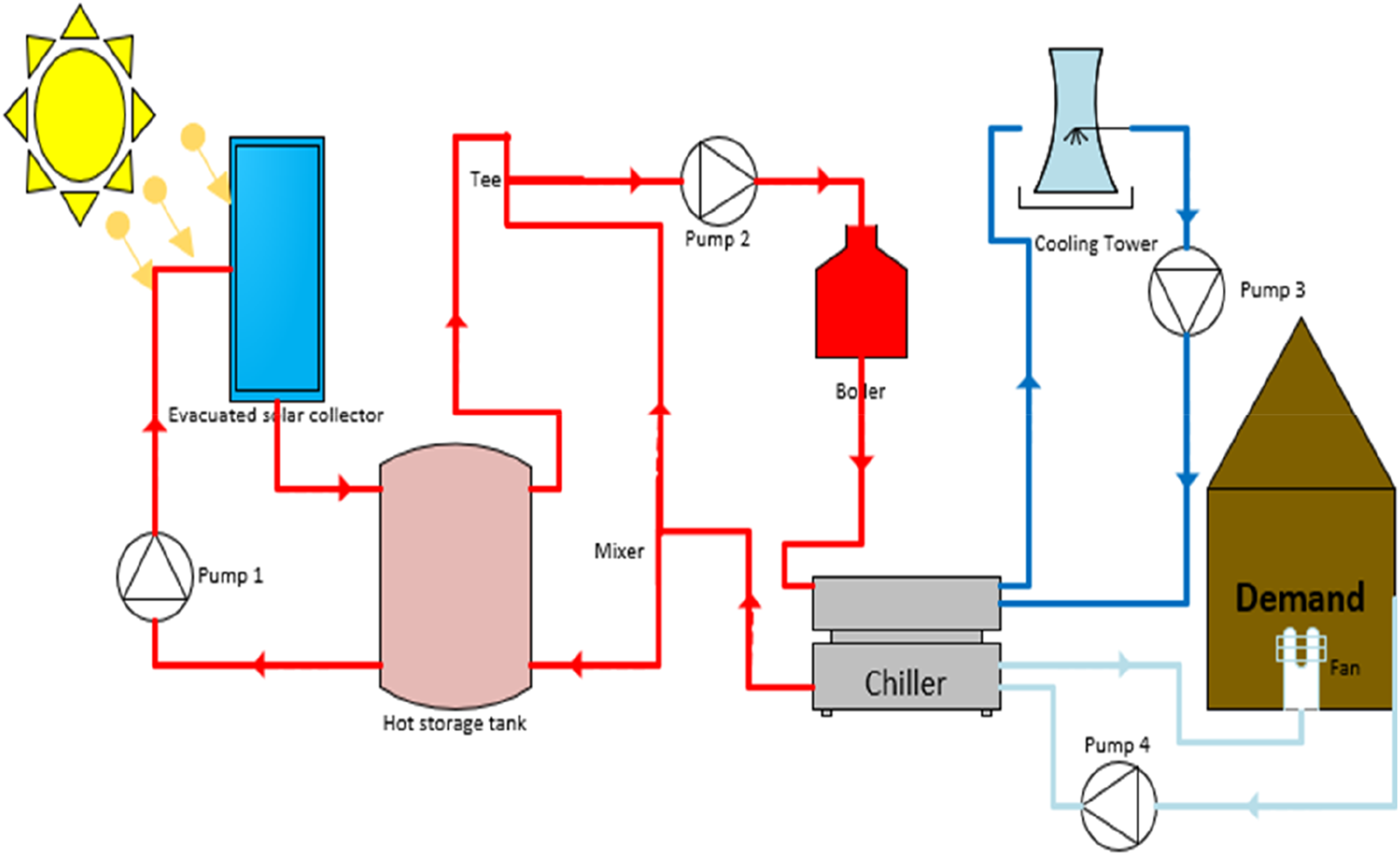
Al-Yasiri et al.,
11
summarized the working principle of a solar absorption chiller in the following steps: • Inlet water at a high temperature and pressure flow into a generator, where the fluid separates into water and vapour. Under high pressure the vapour moves to a condenser, and the fluid moves to the absorber. • The fluid (typically lithium bromide), still at a high pressure and temperature moves through an expansion valve that will decrease its temperature and pressure. This is now the coolant. • The coolant reaches the evaporator at low pressure and temperature to cool the surroundings, then is returned to the absorber to repeat the cycle. Several configurations of absorption chillers are commonly employed, including single-effect, double-effect, and triple-effect systems, which differ in thermal input requirements and performance.
Single effect absorption chiller
A single effect solar absorption chiller system typically consists of a generator, a condenser, an evaporator, an absorber, a pump, a solution heat exchanger, and an expansion valve,
13
the schematic of the single-effect absorption chiller Figure 2. Compared to other applications, the single effect system is the simplest configuration because it needs fewer elements.
10
The nominal cooling capacity varies between 5 kW and 10 MW, and it requires a minimum driven inlet temperature of between 85°C and 112°C. The highest attained coefficient of performance is between 0.7 and 0.8.
14
However, this type of chiller has a low COP and so requires a relatively large thermal energy input, with low shut-down due to the low driven temperature that gains at medium solar fraction (SF) and medium solar efficiency.
15
The schematic diagram of single-effect absorption chiller.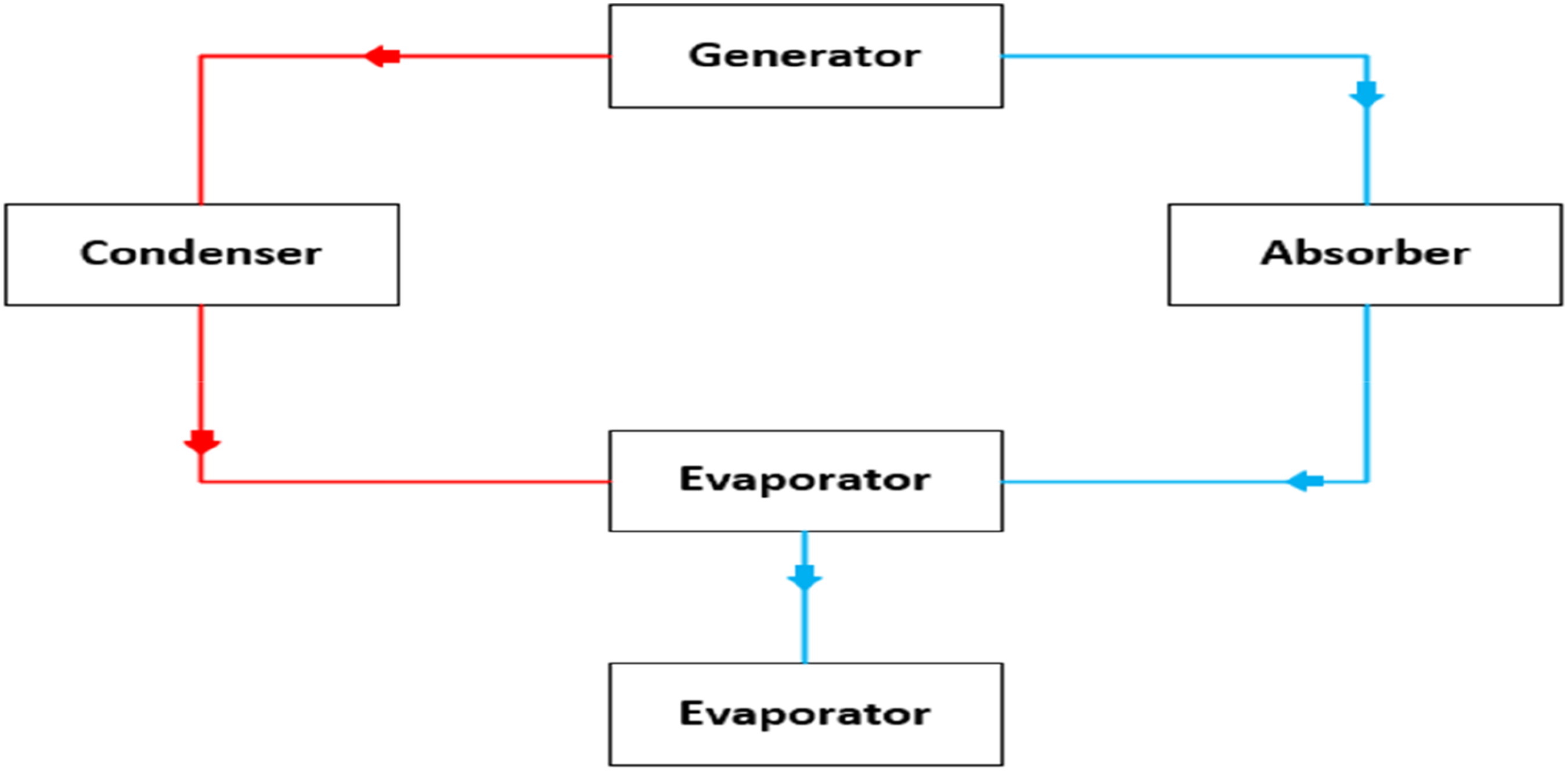
Describe simulation study that examine thermal solar cooling systems for different solar cooling applications in various climate conditions.
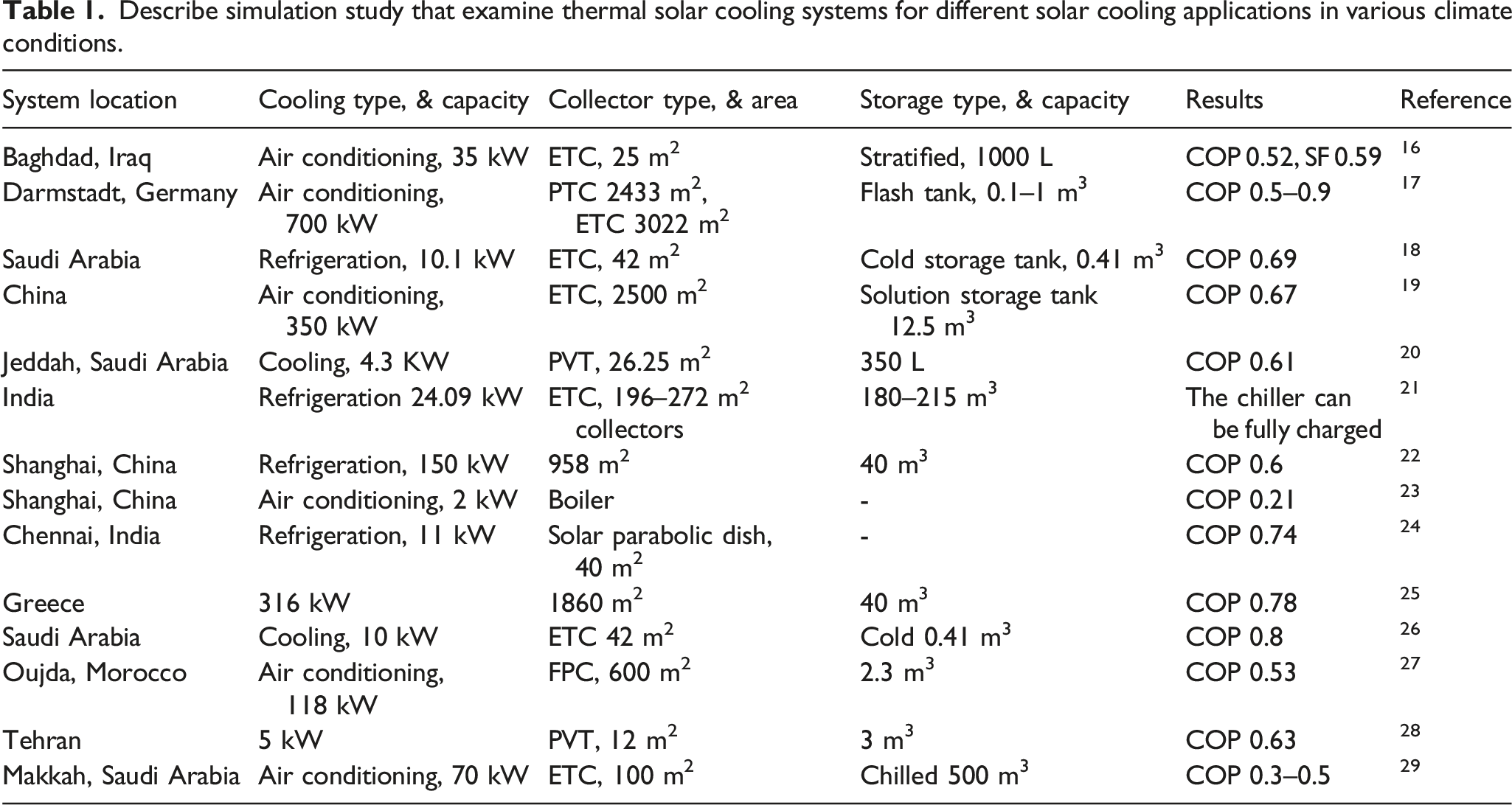
While most studies in Table 1 above report COP values between 0.5 and 0.8 for single-effect systems, variations across locations reflect the sensitivity of performance to collector type, climate, and storage configuration. Systems employing evacuated tube collectors generally achieve higher COP and solar fraction compared to those using flat plate collectors, primarily due to better optical concentration and reduced heat losses. However, the economic viability remains constrained by the relatively low COP and high initial cost of thermal components. These findings underline the importance of optimising collector design and integrating latent heat storage to enhance overall efficiency.
Double effect absorption chiller
The schematic of the double effect absorption chiller system is as shown in Figure 3, typically consists of two generators, an absorber, a condenser, two expansion valves, two solution heat exchangers, an evaporator, pumps, and two solution-reducing valves. The nominal cooling capacity is between 20 kW and 10 MW and it required a driven inlet temperature of between about 150°C and 180°C.
14
The highest attained coefficient of performance is around 1.2 to 1.4.
14
A double effect system has high shut-down due to high driven temperature that gains at lower SF. This type of chiller requires a small amount of additional thermal energy because of its higher COP, at lower solar efficiency.
15
The highest exergetic efficient range obtained with a double-effect chiller was between 14.3% and 25.1%.
30
It has been shown that excellent economic and energy performance could be achieved by combining a double-effect chiller with evacuated solar collectors (ETCs).
31
The schematic diagram of double-effect absorption chiller.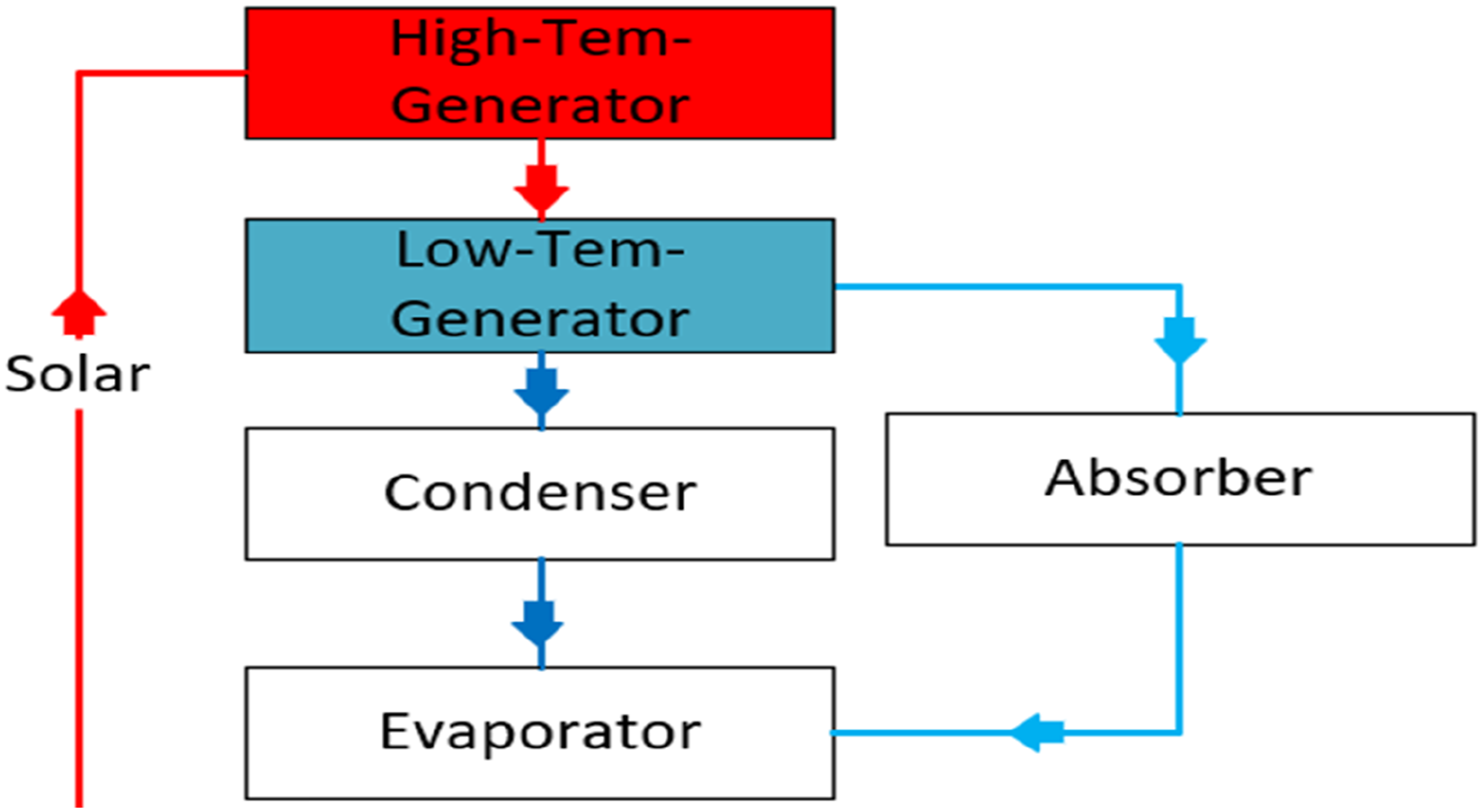
Hu et al., 2022 demonstrated that double effect absorption chillers are distinguished by their significantly superior coefficient of performance (COP), which typically fluctuates between 1.1 and 1.4, 32 in contrast to the COP range of 0.6 to 0.8 that is commonly observed in single effect systems. The double effect cycle exhibits considerable advantages when medium-to-high-temperature heat (150–210°C) is accessible, such as the thermal energy produced by solar collectors 33 (including parabolic troughs and evacuated tubes).
Double effect absorption systems conventionally utilize a LiBr-H2O working pair, where in water functions as the refrigerant and LiBr serves as the absorbent. The architecture comprises High- and Low-temperature generators, enabling dual heat utilisation and improved thermal efficiency. This arrangement facilitates the dual utilization of heat, thereby enhancing thermal efficiency. Solar energy predominantly drives the HTG, whereas the LTG is energized by the recuperated heat from the initial generator.34,35
The integration of solar thermal collectors is paramount for the effective operation of double effect absorption systems. Parabolic trough collectors (PTCs) and evacuated tube collectors (ETCs) are predominantly employed owing to their capability to attain requisite operating temperatures. 36 Numerous studies have scrutinized the efficiency of various collector types and heat transfer fluids in optimizing the performance of chillers.
Ibrahim et al. (2020) underscored that double effect systems are optimally aligned with concentrating solar collectors due to their elevated temperature prerequisites. 34 Ajbar, Lamrani and Ali, (2023) conducted a simulation of a solar-powered double effect system within arid climates, demonstrating that the solar fraction could surpass 70% when collectors are optimally sized. 37
Empirical studies indicate that double effect chillers attain a higher COP relative to single effect systems, rendering them more efficient albeit also more intricate and costly.32,38 Li et al., (2023) discovered that double effect systems could diminish primary energy consumption when juxtaposed with electrically driven chillers. 38 Guruchethan et al. (2023) offered a comparative examination of absorption cooling technologies and illuminated the trade-offs between single and double effect systems concerning COP, cost, and complexity. 39
Notwithstanding elevated capital expenditures, double effect absorption chillers confer long-term advantages, especially in hot regions endowed with substantial solar radiation and elevated electricity costs. 34
Kuppan et al., (2023) elucidated that solar-assisted absorption systems exhibit ecological sustainability, evidencing substantial diminutions in greenhouse gas emissions. 40 Sharma, and Ali, (2020) evaluated payback durations in southern Europe and ascertained economic feasibility under circumstances, especially when governmental incentives or subsidies are in effect. 33
Despite their promise, numerous challenges persist: High initial investment and maintenance expenditures. Dependency on consistent solar input. Intricate system design and control methodologies.
Double-effect chillers offer a substantial increase in COP (1.1–1.4) relative to single-effect units (0.6–0.8), but this improvement comes at the expense of higher operating temperatures (≥150°C) and system complexity. While studies by Hu et al. 32 and Ibrahim et al. 34 confirm their suitability for regions with high solar irradiation, the requirement for high-grade materials and complex controls limits their widespread adoption. Hence, while thermally superior, double-effect systems exhibit reduced scalability and higher capital cost.
Triple-effect absorption chiller
The components of the triple-effect system are similar to the double-effect system, but with the addition of a condenser, a heat exchanger, and a generator. The schematic of the Triple effect absorption chiller system is as shown in Figure 4. Thus, the refrigeration is generated in three stages.
13
These types of chillers need a higher generator temperature, and their main function is to work as an air conditioning system. The nominal cooling capacity of this type of chiller varies from 350 kW to 10 MW,
14
(minimum temperature 150°C). Shirazi et al.,
31
report that the driven temperature required a range of 210 to 240°C. however, they had a higher COP than other systems,
13
and their COP could reach 1.6 to 1.8.14,31 Shirazi et al. also stated a smaller area of solar collector, and a low payback period could be achieved by combining a triple-effect chiller with parabolic trough collectors (PTC). The schematic diagram of triple-effect absorption chiller.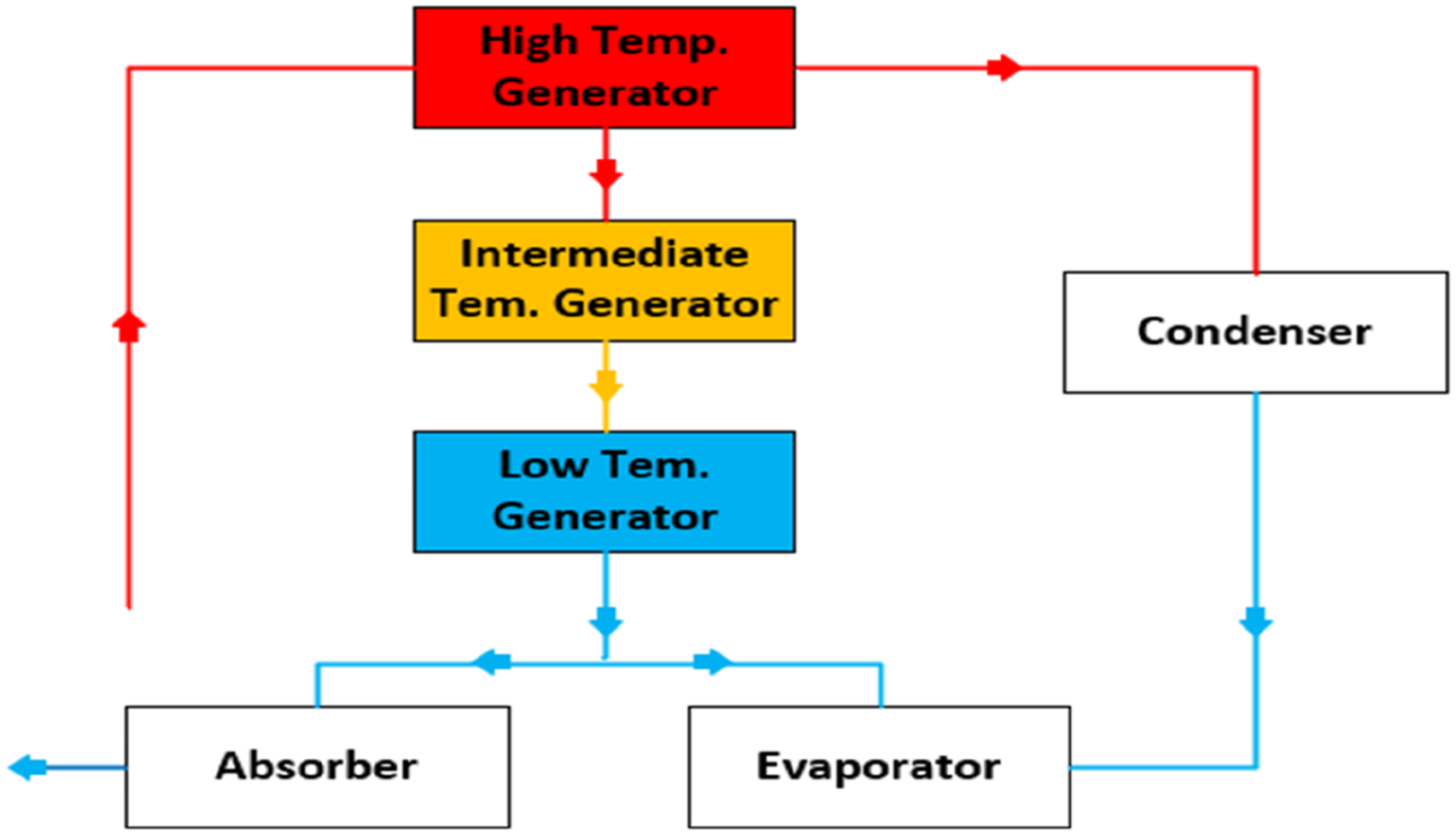
As the global demand for energy-efficient and environmentally sustainable cooling technologies escalates, triple effect absorption chillers have garnered significant attention due to their exceptional thermal performance.10,41,42 These systems broaden the foundational principles of single and double effect chillers by integrating a tertiary generator, which facilitates a heightened Coefficient of Performance generally ranging from 1.6 to 2.0. When driven by solar thermal energy, triple effect chillers present a viable pathway towards low-carbon cooling solutions, especially in regions characterized by high solar insolation. 41
The triple effect absorption chiller is predicated upon the LiBr-H2O, NH3/LiNO3 and NH3/LiNO3 + H2O working pairs and incorporates three distinct levels of generation: the High-temperature generator, the Intermediate-temperature generator, and the Low-temperature generator. 41 This hierarchical heating methodology facilitates a more optimal utilization of thermal energy. The architecture of the system is designed to enhance energy recovery while concurrently minimizing exergy losses43,44; however, it necessitates input temperatures that exceed 200–240°C, thereby requiring the implementation of high-efficiency solar collectors such as parabolic troughs or linear Fresnel reflectors. 33
Given the significant thermal input prerequisites, the integration of solar energy into triple effect absorption chiller systems necessitates the implementation of advanced collector technologies coupled with meticulous thermal management strategies (Sharma, and Ali, 2019b). Sharma, and Ali (2019) conducted a comprehensive review of solar-driven cooling technologies and observed that triple effect chillers mandate sophisticated heat collection and storage systems to guarantee operational reliability. 33 Moreover, Redpath et al., (2022) investigated the application of parabolic trough collectors in the context of triple effect chillers, underscoring the essential role of thermal storage in sustaining performance during fluctuating solar conditions.37,45 Thermal energy storage solutions, particularly those utilizing phase change materials (PCMs) or pressurized hot water tanks, are frequently incorporated to serve as a buffer for the system and facilitate prolonged operation beyond peak solar hours.6,46
Triple effect absorption chillers demonstrate the highest coefficient of performance (COP) among absorption systems attributable to their enhanced capability to reutilize the input thermal energy. Azhar and Siddiqui, (2017) introduced an initial theoretical framework indicating a COP of as much as 1.9 for triple effect systems utilizing lithium bromide-water (LiBr-H2O) as the working fluid. 42 Furthermore (Guo et al., 2022), underscored that although triple effect systems exhibit a degree of complexity, they achieve superior performance when operated in conjunction with stable, high-temperature thermal sources. 47 However, it is imperative to note that an elevated COP is invariably associated with augmented system complexity, increased financial expenditure, and the necessity for high-grade materials capable of withstanding elevated thermal conditions.
Although the initial capital expenditure associated with triple effect chillers surpasses that of single or double effect systems, their enhanced energy efficiency and potential for integration with solar technologies can mitigate long-term operational costs. 48
Nevertheless, understanding the practical barriers to their implementation is essential for evaluating their real-world feasibility. The following section outlines the principal technical and economic limitations associated with solar absorption chillers, providing context for subsequent discussions on collector technologies and storage integration.
Gupta et al., (2022) performed a comprehensive techno-economic analysis and determined that triple effect systems attain viability in extensive applications (e.g., district cooling, industrial processes), particularly when augmented by governmental incentives or carbon credit schemes. 49 Furthermore (Dai et al., 2024), ascertained that under optimal solar conditions, triple effect chillers are capable of diminishing electricity consumption by more than 80%, rendering them appealing in off-grid or hybrid configurations. 50
Despite their remarkable efficiency, triple effect solar absorption chillers encounter numerous challenges; elevated operating temperatures confine their applicability to regions with substantial solar irradiation and necessitate expensive solar concentrators. Sophisticated control systems are imperative to regulate the three stages of heat exchange and uphold system stability.
Limitations and advantages of solar absorption chiller
According to studies by Palomba et al., (2019)45,51–55 to examine the limitations of solar cooling systems, the following drawbacks were identified: Compared to conventional air conditioning systems solar cooling systems have higher initial and installation costs. In terms of technical aspects, solar cooling systems have a lower coefficient of performance than conventional air conditioning systems. The technology is still limited in terms of suppliers, with just a few installed, Their components are complex and require specialists to be maintained. The sun is not always available and therefore, a solar cooling system requires a pack-up energy system and storage equipment.
The benefits identified by utilizing solar cooling systems, are summarized below: • Solar cooling systems have the lowest of CO2 emissions of any technology using electricity to power traditional air conditioning.
54
• Solar absorption chiller systems consume only a small amount of electrical energy; therefore, the use of such systems reduces electricity consumption.
51
• Solar cooling systems produce less noise and work at lower temperatures.
56
Figure 1 is a diagram of a typical solar thermal cooling system.
Solar thermal collectors
The amount of thermal energy obtained from solar energy is a small compared to the incident solar energy. The thermal energy is harvested using several kinds of thermal solar collectors, and the kind of collector plays a major role in the heating/cooling applications. 57 According to Murugan et al., (2022) 58 the greatest challenge facing investigators is to produce more energy from solar radiation. This because the thermal solar collector is a determining element in terms of transforming the sun’s energy into useful thermal energy. Particularly when the local temperature can vary widely. 59 The collector plate plays the leading role in all types of solar collectors that transform solar irradiation into the usable heat energy 58 and, as a result, the relevant parameters must be maximised, determining the design and manufacture of thermal solar collectors. Different researchers have carried out analyses of solar collectors using twisted tapes without or with adjustments in their geometry, PCMs, booster reflectors and type of nanoparticles (where used), 58 Reddy, et al. 60 have concluded that thermal solar collectors still need more investigation to increase their efficiencies and decrease their working area. However, Solar thermal collectors differ from one to another in terms of their parameters (efficiency and temperature range) 61 The types of solar collectors are presented below: -
Evacuated solar collectors
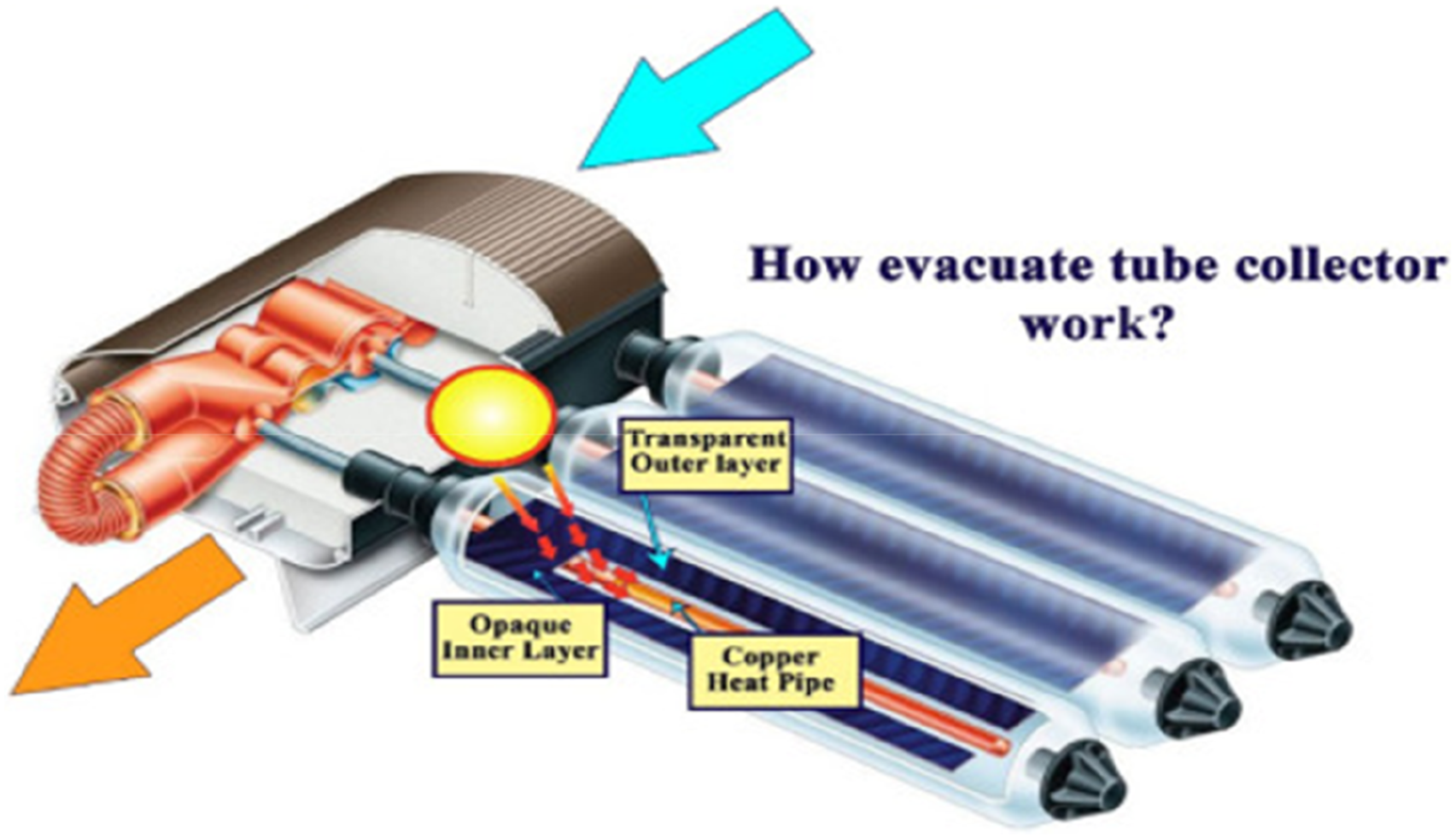
An evacuated tube collector (ETS) is fabricated from glass from which the air has been evacuated to reduce thermal losses from the absorber to the surrounding environment.
62
According to Hussain et al., 2022
63
the effectiveness of the heated surface and size of the collector influence the performance of an evacuated solar collector. According to L. Zhou et al., 2015
64
this type of collector could produce sensible values of efficiency without tracking, and
65
illustrated the efficiency of ETC range from 47.0 to 60.8%. Moreover, the average cost of an ETC collector was around 650 € per m2 in 202157,66 with a maximum achievable temperature of 200°C on a hot sunny day. ETC was used by
63
to test absorption chiller performance, it was found ETC could provide 80°C of inlet temperature at a minimum incident irradiation of 441 W/m2. The efficiency range of Evacuated Tube Collectors (ETCs), reported between 0.35 and 0.49, indicates a significant performance level for solar thermal systems.
67
It has been shown that ETC could provide most of the energy required to run an absorption chiller.
68
Figure 5 schematic diagram illustrating the working principle of an evacuated tube solar collector. Schematic diagram of a evacuated tube solar collector Todmal et al., 2023.
69
Flat plate solar collectors
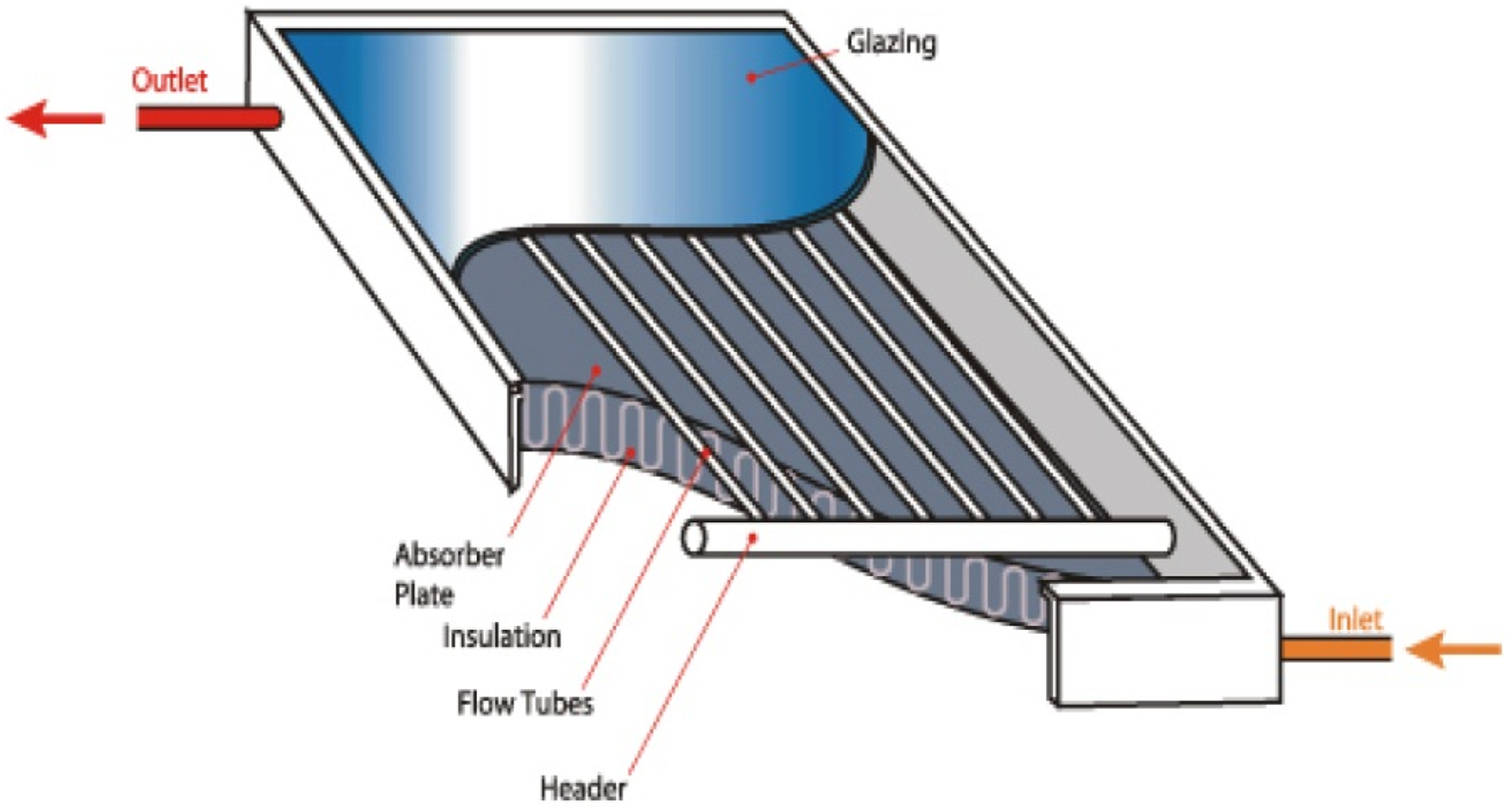
FPC is a flat plate heat exchanger that transforms irradiated solar energy into useful energy that could be used for cooling and heating purposes.
70
The average cost of an FPC collector was around 350 € per m2 as of 2014, the only cost found in the literature regarding this type of collector
57
with nearly 90°C the maximum temperature that can be achieved at high ambient temperature. FPCs are positioned as a cost-effective solution, the exact average cost remains uncertain based on the available data.
71
FPC was used by
72
to test the efficiency of solar energy harvesting in Greece, the results presented an average solar efficiency of 40% to 50%. In Spain a FPC was utilised to produce cost effective heat to run an absorption chiller, when it was found the highest FPC temperature range was between 107 and 116 OC, utilizing this kind decreases costs in contrast to the FPC values found for other thermal solar collectors on the market.
73
Figure 6 diagram illustrating the working principle of a flat plate solar collector. Schematic diagram of a flat plate solar collector Shelke et al., 2015
74
.
Parabolic trough collector
As Reddy et al. 2022
60
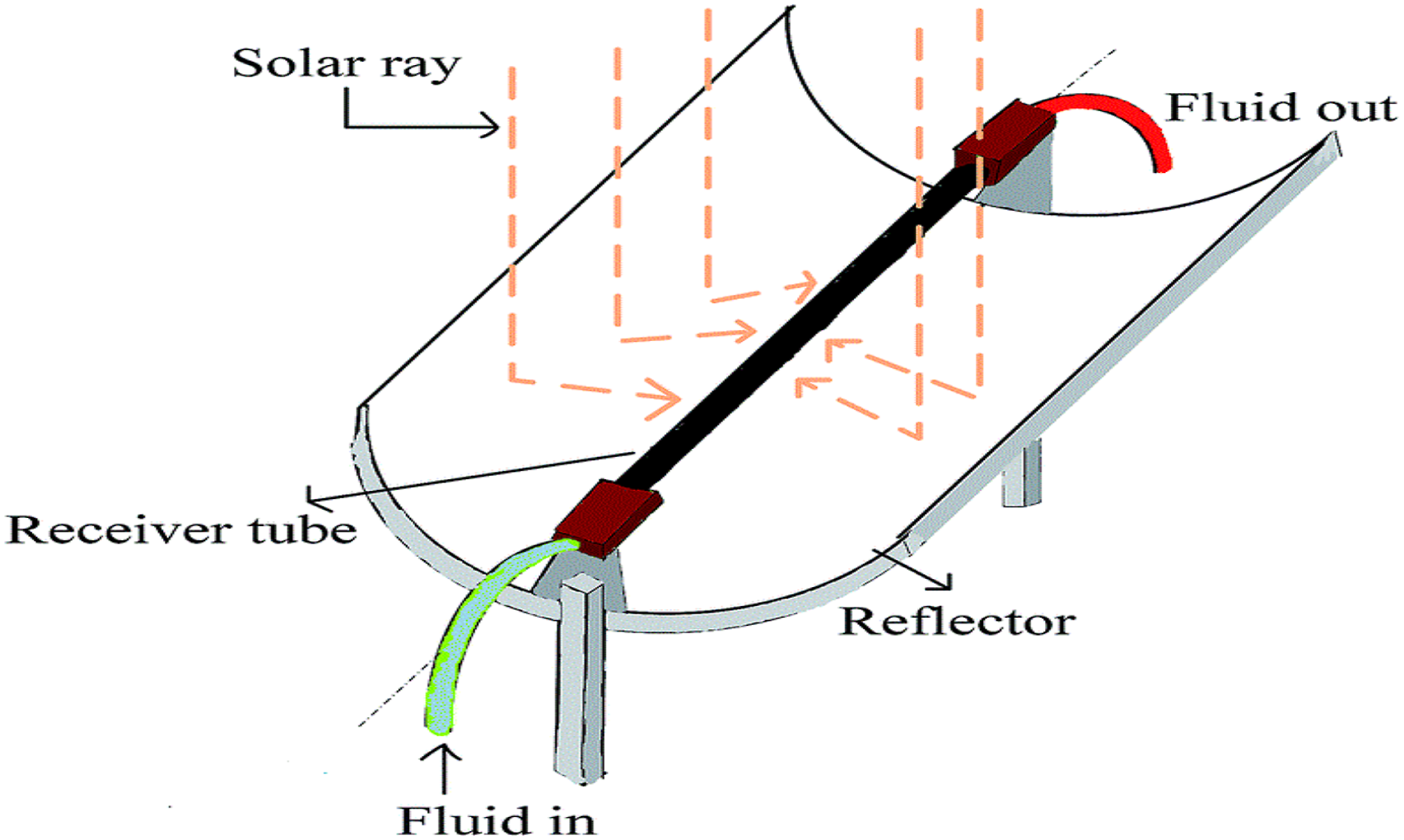
demonstrated, a higher temperature can be obtained using parabolic trough collectors and this type of solar collector has been implemented for various instant power generation, cooling, refrigeration, and desalination systems. As demonstrated by Du, Hu, and Kolhe 2013
75
the temperature range of PTCs can be up to 400°C at high ambient temperatures. However, the average cost of a PTC collector was around 450 € per m2 as of 2021.57,76–78 PTC was used by Li et al. 2016
79
to experimentally test the coefficient of performance of an absorption chiller, the result illustrated a maximum efficiency of 0.45, and it was recommended to increase the area of the PTC and decrease the inlet water temperature to improve the cooling performance Figure 7. Schematic diagram illustrating the working principle of a parabolic trough solar collector. Schematic diagram of a parabolic trough collector Todmal et al., 2023.
69
Comparatively, evacuated-tube collectors (ETCs) exhibit optical efficiencies ranging from 0.65 to 0.75 and thermal efficiencies between 47 and 61%, with achievable outlet temperatures up to 200°C under high solar insolation.64–66 Flat-plate collectors (FPCs) generally operate at lower temperatures (60–110°C) with efficiencies of 40–55%, making them cost-effective for medium-temperature cooling but less suitable for high-temperature absorption chillers.73,74 Parabolic trough collectors (PTCs), by contrast, deliver the highest operating temperatures (200–400°C) with optical efficiencies of 0.7–0.8 but also the largest heat loss coefficients (∼0.8–1.0 W/m2·K) due to their concentration ratio and reflective geometry.76–79 As a result, ETCs are typically preferred for medium-scale solar absorption systems, whereas PTCs are reserved for industrial or district-scale high-temperature applications. This comparison highlights the trade-off between capital cost, optical performance, and thermal output when selecting collectors for specific chiller configurations.
Working fluids
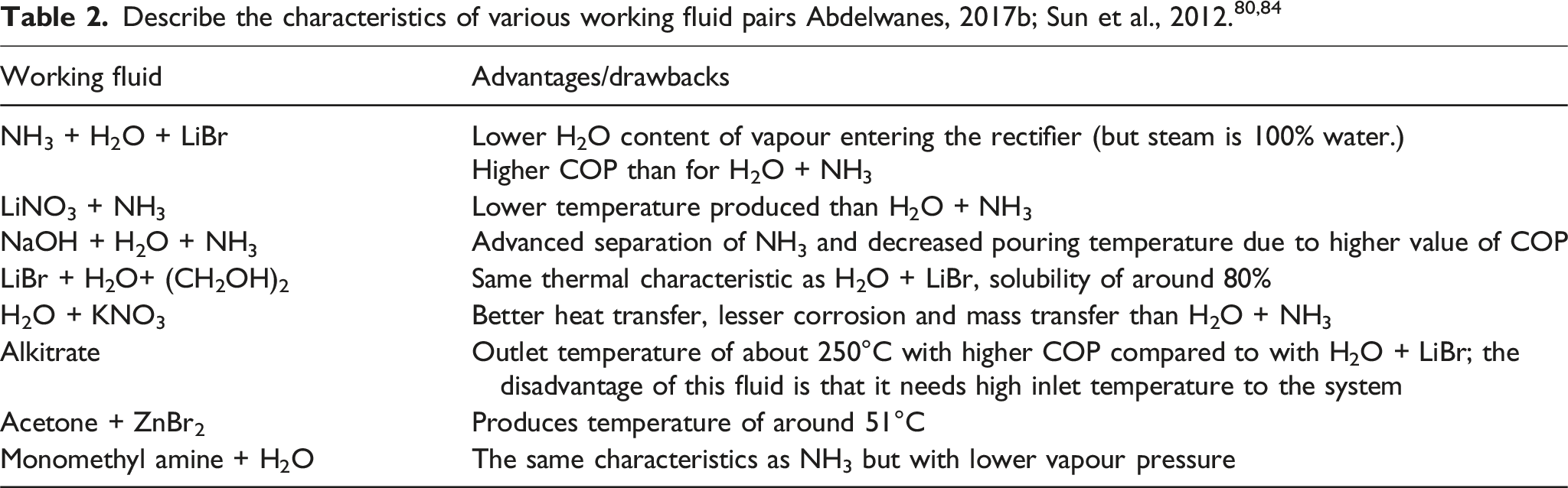
The choice of collector type thus directly influences the achievable driving temperature for absorption chillers and, consequently, their overall efficiency.
However, because solar radiation is inherently intermittent, an effective storage mechanism is required to ensure continuous and stable cooling performance. Thermal Energy Storage (TES) technologies therefore play a pivotal role in balancing energy supply and demand, as discussed in the following section.
Thermal energy storages options
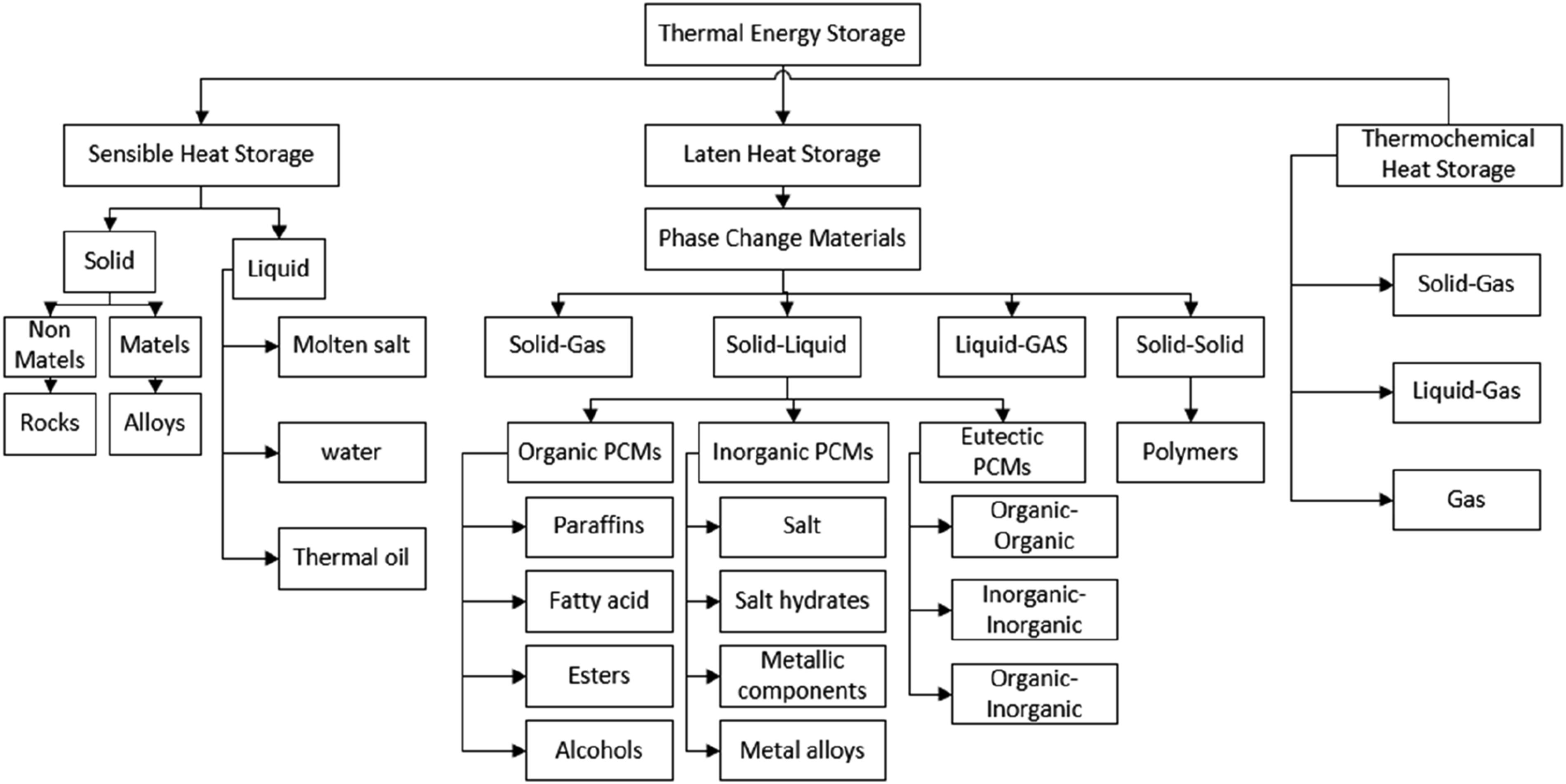
Classification of thermal energy storage (TES) systems is an essential aspect of energy management. TES is generally divided into three principal categories: sensible heat storage, latent heat storage, and thermochemical heat storage. Sensible heat storage used solid or liquid mediums, including but not limited to rocks, metals, water, molten salts, and thermal oils. Latent heat storage contains phase change materials (PCMs), which can be further categorized into solid-gas, solid-liquid, liquid-gas, and solid-solid phase transitions. PCMs are additionally classified into organic PCMs (e.g., paraffins, fatty acids, esters, alcohols), inorganic PCMs (e.g., salts, salt hydrates, and metallic compounds), and eutectic PCMs, which comprise organic-organic, inorganic-inorganic, and organic-inorganic mixtures. Thermochemical heat storage is predicated upon reversible thermochemical processes, which include solid-gas and liquid-gas transformations as illustrated in Figure 8 below: Classification of thermal energy storage Z. Li et al., 2021.
85
Sensible storage systems
In sensible heat storage, the material used stores heat/cold energy
86
which can be calculated using the equation:
In TES, the materials used experience a temperature increase with the absorption of heat energy, but no phase change occurs during the process.87,88 The quantity of stored heat is proportionate to the change of temperature, and thermal capacity of the storage material. Some examples of sensible heat storage materials are thermal oils, molten salts, earth materials, concrete blocks, water, and liquid metals.87–89
Benefits and drawbacks of sensible heat storage
The main benefits of sensible heat storage materials are at elevated temperatures because the materials are stable thermally.90,91 TES materials are usually cheaper, except for thermal oils and liquid metals. 92 However, a major disadvantage of these materials is instability during the discharge process compared to latent heat storage, 93 as the outlet temperature of the fluid decreases gradually.92,94 Additionally, TES materials are 50–100 smaller in terms of heat capacity compared to latent heat storage, 71 which results in lower thermal energy storage density. Nevertheless, with their large operating temperature range and high density, sensible heat storage materials can store a great amount of thermal energy.5,91
Thermochemical storage systems
Thermochemical storage applies reversible thermochemical reactions or processes including heat absorption and heat delivery for thermal energy storage. 95 Their operational temperature varies between 200°C and 400°C in the middle range. 96 The thermal energy stored in a thermos-chemical exchange involving a reversible reaction between two substances, A and B, is determined as AB + Q ↔ A + B.97,98
Benefits and drawbacks of thermochemical thermal storage
A major advantage of thermochemical thermal storage in terms of both per unit volume and per unit mass is that the energy density can be extremely high when compared to sensible heat and latent heat storage. 77 In addition, the thermal energy can be stored for long periods due to the low rate of thermal loss. 99 However, some technical challenges facing thermochemical thermal storage are reported in the literature. During the charging process decomposition can happen, storage material such as Mg (OH)2 may undergo sintering and grain growth, resulting in lower porosity, while the discharging process impedes rehydration. 100 A further drawback of thermochemical thermal storage is the sluggish rate of the dehydration response. 101 Several methods to improve the charging rate such as doping with lithium/graphite nanoplatelet composites, and doping with nitrate salts, 102 have been tried and enhancements detected. 81 However, thermochemical thermal energy storage is still at the laboratory stage and commercial applications needed further technology refinement. 103
Latent storage systems
According to Shirazi et al., 2016 104 phase change materials are the most effective methods to store thermal energy. This kind of material stores the obtained heat energy as latent heat at a fixed temperature corresponding to that of the phase change. 104 Commonly, there are three phase changes solid to liquid, sold to gas (S. Wang & Shen, 2023). 105
In solid-to-solid phase change, the specific heat is lower, but has the benefit of no leakage and hence no encapsulation is necessary. Liquid–gas phase change as the greatest specific latent heat but a corresponding massive transformation in the volume of the storage materials is an issue and therefore it is not widely employed.
106
The thermal energy in latent heat is determined as
Where: m is the mass in kg, and L is the corresponding latent heat in kJ/kg.
Benefits and drawbacks of PCMs for thermal storage
As stated by 104 the density of the stored latent heat (at the change phase temperature) is extremely high, plus the outlet fluid temperature is stable during discharge, but the poor thermal conductivity of PCMs is a significant disadvantage. Generally, phase change materials are nontoxic but organic PCMs are flammable, and some organic PCMs cannot be transported or stored in plastic containers, as plastics are highly lipophilic. Similarly, inorganic PSMs that are corrosive cannot be kept in metal containers. 107
Phase change materials
Materials for latent heat storage (PCMs) when used in the design of TES systems are selected to achieve the desired chemical and thermophysical properties. 104 As stated above PCMs can be divided into three types: liquid into gas, solid into solid, and solid into liquid. Solid into liquid, whether organic, inorganic, or eutectic is the phase change most suited for TES 104 whether at high, medium, or low temperatures as demonstrated below:
Dzhonova-Atanasova et al., 2022 7 experimentally investigated the thermal behaviour of a packed bed of both latent and sensible heat thermal energy storage and determined that the combined storage system performed more effectively than the conventional sensible heat storage system.91,108,109
Yang & Zhang, 2012 110 conducted a comparison that showed that a stratified packed bed with PCMs had advantages over the conventional packed bed in terms of exergy and energy.
PCMs for hot water
Experimental, simulation and mathematical studies have been conducted into the use of multi-phase change materials (M-PCMs) to store thermal energy for the provision of domestic hot water, both daily and seasonal. 82
It was found that phase change materials could improve the efficiency of solar water heater by 20%, that was when (Berrocal et al., 2024 111 examine the integration of PCMs into solar water heater systems.
Additionally, experimental and simulations were also carried out to investigate the feasibility of integrating PCMs into domestic heating systems, the result illustrated the utilise of PCMs reduced reliance on auxiliary boilers, and efficiency was improved too. 112
Moreover, the integration of PCMs to provide hot water for domestic was explored by Muraleedharan Nair et al., 2024 113 and it was found that the thermal performance improved and faster charging and discharging cycle in the heater.
D. Li et al., 2019 114 studied the Integrations of two-stage PCM storage for cascaded waste heat recovery, the combination of low and high-temperature phase change materials enhanced the typical storage effectiveness from 33.1% to 50.8% for exergy and 33.6% to 62.3% for energy.
PCM for power generation
Some studies have investigated the benefit of M-PCM thermal storage for power plant generation. 115 D. Li et al., 2019 114 numerically modelled the effect on performance of multistage finned latent heat storage system (LHS). The result confirmed the higher storage density of the multi-stage finned LHS system.
PCM for cooling
In cooling applications thermal energy storage can play a significant role in upgrading the overall efficiency of a system, as well as in enhancing and managing energy quality. Latent heat thermal energy storage (LHTES) has been employed to offer load-shifted thermal energy at smaller temperature shifts with greater storage density.116,117 According to Oró et al., (2012) and (Veerakumar & Sreekumar, 2016118,119 applications that have used PCMs for cooling purposes found in the literature are: • As wall envelopes for human comfort in rooms and buildings. • As thermal protection of food during transportation. • In medical applications such as transportation of blood and cold therapy devices. • In industrial cooling systems such as regasification terminals. • The use of electricity at off-peak rates to store energy to produce lower temperatures during rush hours.
Despite their promising properties, several challenges hinder large-scale PCM deployment in solar cooling applications. The phenomenon of supercooling, common in salt hydrates and certain inorganic PCMs, delays solidification and limits repeatable heat release during discharge cycles. Phase segregation may also occur after multiple melting–freezing cycles, leading to reduced storage capacity and inconsistent thermal response. Moreover, encapsulation necessary to prevent leakage and corrosion significantly increases system cost, often accounting for 30%–40% of the total PCM unit price. Additionally, low thermal conductivity (typically <0.4 W/m·K for paraffins) restricts heat transfer, requiring finned or composite designs that further raise material complexity. Addressing these issues through enhanced thermal conductivity additives, stable encapsulation techniques, and cost-effective composite materials remains an active area of research.
Cascade thermal energy storage system
For a solar energy system to be efficient it must be linked to an efficient storage system. Thus, the effectiveness of the storage media will influence system efficiency. Phase change materials are preferred due to their thermal properties. Also, according to Zayed et al., 2019 120 the benefits of utilising cascade phase change materials for thermal energy storage makes such a system attractive. 120 Also recommends the benefits of phase change materials: non-corrosive with lower thermal expansion. 8 claims these types of storage could provide greater energy storage efficiency than sensible heat storage. However, this type of storage has less energy density compared with sensible thermal heat storage due to their lower thermal conductivity, with the disadvantage of the added complexity when designing the system. 8
Investigations have been conducted to increase the thermal energy storage efficiency of cascade phase change materials using multi-phase change materials storage tanks, (known as CLHTES -cascade latent heat thermal energy storage system). 8 (L. Zhang et al., 2022 121 has suggested that the layout of the phase change materials should be in the order of their melting temperature, from low to high.
Some industries have already established such applications, including concentrating solar power (CSP) at high temperatures (above 350°C), domestic solar water heating at medium temperatures, and some innovative heat exchangers for heating purposes that offering advancement in efficiency and function. 8 It was observed by 8 that cascaded thermal energy storage offers considerable advantages to CSP installations which require large-scale thermal storage systems.
In summary, TES systems provide diverse options for storing thermal energy, each with distinct mechanisms, benefits, and drawbacks. Sensible heat storage relies on temperature changes in materials such as thermal oils and concrete, offering cost-effectiveness and stability but lower energy density and discharge instability. Latent heat storage, utilizing phase change materials (PCMs), excels in energy density and stable discharge temperatures but faces challenges with thermal conductivity and material handling. Thermochemical storage systems promise high energy density and long-term storage with minimal heat loss but remain constrained by technical issues and are mostly in the experimental stage. PCMs are particularly versatile, being applied in various domains such as hot water systems, power generation, and cooling, demonstrating superior performance. Overall, each TES option has unique advantages and limitations, making them suitable for different applications and continued research and development to optimize their performance and commercial viability.
Cost analysis of solar thermal cooling system
According to many research papers, the economic analysis for thermal cooling systems still needs investigation with a greater focus on minimising the cost of solar collectors and storage systems. 122
An economic analysis of solar absorption cooling in Australia to meet air conditioning demand was conducted in 2023. 38 The outcomes indicate that the installation of a solar absorption chiller system was reasonable in an Australian climate. An analysis of the financial advantage of thermal energy storage to meet air conditioning cooling demand under different climate conditions was conducted more recently, 2023. 123 The outcome indicated that thermal energy storage systems could be valuable in lowering electrical energy consumption costs by between five and 15 % annually and lowering peak consumption by 13%–33% annually. 124
Describe the pricing of various types of thermal solar collectors Abdelwanes, 2017. 84

Describe cost of solar absorption chiller cooling system Department of Energy 2017 125 .
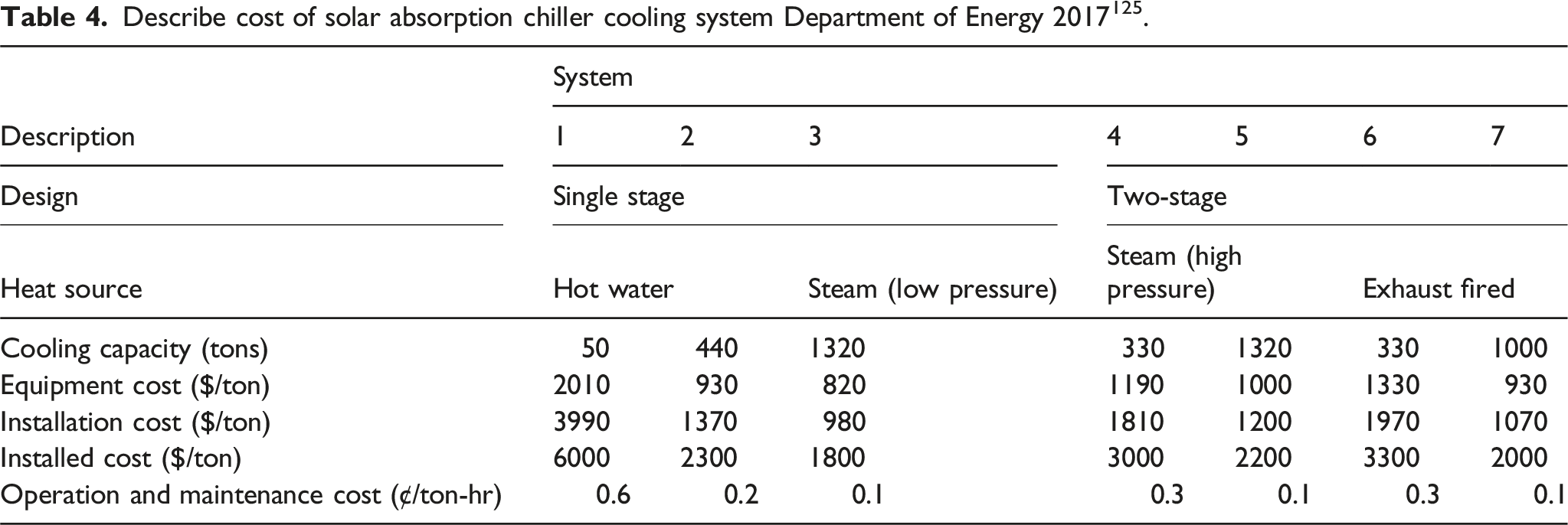
The extent to which phase change materials are used is strongly influenced by their cost, though the selection of a PCM will need to also consider126,127: • Material: Typically, organic PCMs are less costly than inorganic, ones because the raw materials for the latter are more expensive and the production process is more complex. • Quality and purity: The more rigorous quality control and manufacturing process required to produce higher purity PCMs with more consistent and reliable phase change temperatures make them more expensive. • Scale of production: The scale of production is a critical factor in determining PCM cost. Custom-made, or smaller-scale production will invariably mean higher unit costs.
Research gaps and recommendations
Many researchers have examined the performance of photovoltaic panels (PV) to provide electricity to run vapor compression air conditioning units, and solar collectors for thermally driven solar cooling systems 128 particularly to meet space cooling demand for temperatures above 21°C. A small number of papers have reported on assessing PV performance when providing energy to run solar cooling systems to meet demand under 0°C, especially in fish processing.128,129 Solar systems for cooling are still under development, and investigators are making great efforts to enhance their technical and economic performance. 130
Despite the considerable progress in solar absorption cooling, key limitations remain insufficiently addressed in the literature. The majority of reviewed studies focus on space cooling above 21°C, while the medium-temperature refrigeration range (2–12°C) essential for food storage and cold-chain logistics remains underexplored. Similarly, although many researchers acknowledge the benefits of latent heat storage using PCMs, few provide a quantitative analysis of integration strategies or evaluate their performance under dynamic weather conditions. The lack of region-specific techno-economic assessments, particularly for African climates, further restricts the practical transferability of these systems. Therefore, future research must systematically link thermal system design, PCM integration, and climate adaptability through experimental and simulation-based investigations.
The following are the research gaps that have been observed in the articles reviewed, and which need to be studied: • Analysis of the technical performance of solar systems for cooling to meet medium temperature (range 2–12°C) refrigeration demand with the different weather profiles found in Africa. • Analysis of the technical performance when integrating latent heat storage tanks (PCM) into a solar system used for cooling (hot PCM storage to run chillers and cold PCM storage to store the cold energy produced by chillers for later use. • Investigate the integration of PCMs to meet the different qualities of cooling load required for non-domestic buildings. For example, how can three different levels of cooling: freezer, fridge, and space cooling, be provided by an incorporated PCM storage system combined with a solar system? • Investigate systematically the feasibility of a solar system to meet refrigeration demand in Africa’s climate.
There is a need for further research to. • Conduct detailed performance studies of solar absorption chiller systems in various climatic conditions, especially in regions with extreme weather patterns. This will help in developing tailored solutions that optimize the system’s performance based on specific environmental conditions. • Examine the technical and economic performance of integrating solar absorption chiller systems with innovative thermal energy storage solutions, particularly PCMs. This integration could enhance system efficiency and performance stability. • Establish a large-scale design project and real-world demonstration to validate the theoretical models and simulation studies. Such a project would provide valuable insights into practical challenges and solutions, accelerating the adoption of solar absorption chiller systems in commercial and residential applications.
Conclusions
Solar absorption chiller systems provide a higher promising solution for sustainable cooling by utilising solar energy to significantly reduction both electric consumption and CO2 emissions. Various types of absorption chillers such as (single effect, double effect, and triple effect) systems each have their specific strengths and limitations. They combine both environmentally friendly cooling applications and are more energy efficient.
This review concludes that solar absorption chillers, when coupled with optimised solar collectors and appropriately designed thermal energy storage, can provide an effective pathway toward sustainable cooling. However, several research priorities must be addressed to realise their full potential: • Medium-temperature cooling (2–12°C): Experimental and simulation-based studies are required to evaluate solar-driven absorption systems operating in this temperature range, which is critical for refrigeration and cold-chain applications. • Integrated PCM storage: Future designs should incorporate cascade or multi-stage PCMs to provide load-shifting capability and enhance stability under fluctuating solar conditions. • Regional feasibility in hot climates: Detailed techno-economic and exergy analyses are needed for African and other high-insolation regions to optimise system sizing and cost performance. • Material and cost optimisation: Development of low-cost, corrosion resistant PCMs and thermochemical materials with higher conductivity will improve both technical and economic feasibility. • System-level validation: Large-scale pilot installations should be implemented to assess long-term performance, control strategies, and maintenance requirements under real-world conditions.
By aligning these research directions with policy and investment frameworks, solar absorption cooling systems can transition from conceptual to commercial maturity, delivering measurable reductions in electricity demand and greenhouse-gas emissions.
Footnotes
Declaration of conflicting interests
The authors declared no potential conflicts of interest with respect to the research, authorship, and/or publication of this article.
Funding
The authors received no financial support for the research, authorship, and/or publication of this article.
