




Abstract
In a hot and dry country such as Saudi Arabia, air-conditioning systems consume seventy per cent of the electrical energy. In order to reduce this demand, conventional air-conditioning technology should be replaced by more efficient renewable energy systems. These should be compared to the current standard systems which use air source heat pumps (ASHPs). These have a poor performance when the air temperature is high. In Saudi Arabia, this can be as much as 50 °C. The purpose of this work, therefore, is to simulate and evaluate the performance of ground source heat pumps (GSHPs) compared with systems employing (ASHPs). For the first time, both systems were comprehensively modelled and simulated using the Transient System Simulation (TRNSYS). In addition, the Ground Loop Design (GLD) software was used to design the length of the ground loop heat exchanger. In order to assess this configuration, an evaluation of a model of a single story office building, based on the climatic conditions and geological characteristics that occur in the city of Riyadh in Saudi Arabia was investigated. The period of evaluation was twenty years in order to determine the Coefficient of Performance (COP), Energy Efficiency Ratio (EER) and power consumption. The simulation results show that the GSHP system has a high performance when compared to ASHP. The average annual COP and EER were 4.1 and 15.5 for the GSHP compared to 3.8 and 11 for the ASHP respectively, and the GSHP is a feasible alternative to ASHP with an 11 years payback period with an 18% total cost saving over the simulation period and 36% lower annual energy consumption. The TRNSYS model shows that despite the positive results of the modeling, the high rate of the underground thermal imbalance (88%) could lead to a system failure in the long term
Introduction
Nowadays the use of renewal energy has become a fundamental choice in most developed and developing countries, in order to reduce the energy demand and CO2 equivalent emissions. In hot/dry and hot/humid climate countries such as in the Middle East and North Africa (MENA), most of the energy consumption is used for heating and cooling purposes. In Saudi Arabia for example, a building’s HVAC system will consume seventy per cent of the electrical energy provided for each building, a situation that has therefore demanded that alternative ways must be found to eliminate this waste of energy, thereby minimizing the electricity demand and CO2 emissions.
Over time, air source heat pumps (ASHP) have become the most popular and commonly used systems for cooling and heating. These use outside air for both climate seasons, one for the heat source and the other for the heat sink. 1 External temperature variations can cause a drop in performance in either season if, for example, the summers are too hot or the winters too cold.
On the other hand, GSHPs are considered the most efficient HVAC technology2,3 because the underground temperature remains almost constant all year-round. This means that the effect of the ambient temperature is limited and the difference in temperature between what is considered desirable (inside the building) and the surrounding medium (underground soil) is small compared to the outside temperature. This is due to the fact that the underground temperature relates favourably to the annual average air temperature, particularly at ten metres in depth where it remains almost constant.
However, despite GSHPs being well established in cold regions worldwide, their use remains limited in hot and dry regions, such as in the MENA countries. Unfortunately, very few studies are available concerning the use of geothermal heat pumps in hot climate regions.
A study of the energy performance of horizontal ground source heat pumps in cooling mode, used in northern Tunisia, has been carried out by Nabiha et al. 4 As part of this work, two factors were defined in order to investigate the system performance based on both heat rejection and extraction from the ground. This experimental study showed that, when used in Tunisia in this way, the coefficient of performance (COP) for the GSHP was high and it was therefore shown to be one of the best solutions for reducing electrical energy in the building sector.
An experimental study into the thermal performance of an Earth-Air Heat Exchanger (EAHE) system was used in Egypt by Serageldin et al.
5
and experimental data was employed to validate the simulations using the ANSYS Fluent and MATLAB codes. In that study, investigations were carried out into five parameters for the pipes that were used and these were diameter, length, spacing, materials used and fluid flow velocity. The following results emerged:
Increases in pipe diameter caused a decrease in outlet air temperature. Increases in fluid velocity caused a gradual decrease in outlet air temperature.
For ground source heat pumps to be used with confidence in hot/dry climates, certain critical design factors have to be achieved. If the underground heat exchanger (in this case an earth—air exchanger (EAHE)), can reduce the temperature of the incoming air to that of the surrounding soil at the selected depth, then the temperature difference between the ambient outside air in the hottest months and the air being returned will be suitable to allow a GSHP to be used.
An example of an earth—air exchanger was investigated by Belatrache et al. 6 using climatic conditions of the Algerian Sahara and a horizontal earth—air heat exchanger. The experiment used a 45metre length of buried PVC pipe at a depth of 5 metres. The test showed that the air- flow rate of the exchanger reduced the incoming air temperature from 46 °C to 25 °C (soil temperature). This indicated that it would be possible to use a GSHP in these conditions.
A representative experimental investigation was carried out to assess energy savings on a comparative basis between GSHP’s and ASHP’s, has been performed in Arizona, US. The data emerged as a result of an initial feasibility study 7 into the use of a GSHP system for a small office building in the capital, Phoenix. The objective was to present a detailed evaluation of the energy performance and technical feasibility of both a vertical and horizontal closed loop system. The results showed that a 40% saving in energy could be achieved by using the GSHP, compared to the ASHP. However, an important variable emerged as a result as to whether the soil was saturated or dry. If the soil was saturated, the life of the heat exchanger would be shortened by about one quarter. In terms of payback times, the horizontal loop achieved 2.3–4.7 years, but the vertical system could take as long as 25 years.
In contrast, in a harsh cold climate where there is a high demand for heating, such as Canada and the Scandinavia countries, GSHP has proven its ability to produce highly efficient results. For example, Healy and Ugursal 8 compare the economic feasibility between GSHP and three conventional heating systems, including (electric resistance heat, oil-fired furnace and ASHP) for a residential house in Nova Scotia, Canada where the required heating load was 22,800 kWh compared to 2,300 kWh for cooling. The study illustrated that the GSHP system is the most economic system for the fifteen-year life period.
In moderate Mediterranean climate zones, such as Cyprus, Paul el al. 9 investigated the feasibility of using GSHPs compared to ASHP based on experimental data and a CFD model. The study showed that the long payback period of the GSHP and the nowadays high efficiency of ASHP systems reduced the chances for the economic success of GSHP.
The first GSHP system was installed in Palestine in the city of Ramallah - Mediterranean climate zones - with a 23 kW cooling/heating capacity and 10 boreholes with 70 m depth. 10 This pilot project achieved a COP of 4.2 in heating and 14.5 EER in cooling. However, it is important to note that the main design conditions for this project were the outside temperature in the summertime, which was 31 °C, and the soil temperature was 18.3 °C. This project proved the feasibility of the GSHP system, which reduces the operating costs by 67% compared to conventional boilers for heating and air-source split units for cooling, and the payback period was 4.2 years.
Likewise, in Jordan, the American University of Madaba has installed a large GSHP system with an approximate capacity of 1.7 MW and 1.4 MW for cooling and heating, respectively, and it serves an educational building. 11 422 boreholes of depth 100 m were connected to 26 heat pumps units to meet the building demand for the cooling and heating where the operation hours are from 7 am to 5 pm for approximately 330 days per year. The results show that the University saved 2,00,000 kWh electricity and 100,000 litres of diesel fuel per year. The system COP were 6 and 4.5 for the heating and cooling, respectively.
To use GSHP in many countries needs more data about weather and geological zones. For example, in China, Zhihua et al. 12 investigated the feasibility of using GSHP in an office building in five different climate zones based on the COP value. The e-QUESTand TRNSYS were employed in this study, and the results show that in the very cold and cold cities the GSHP is applicable. in contrast, in the hot and warm cities, such as Guangzhou, the GSHP system is not feasible due to the thermal imbalance between the cooling and heating seasons.
The published comparative data on the use of GSHPs in Saudi Arabia, which could be regarded as comprehensive, is virtually non-existent. In the previous paper by the authors 13 the visibility of using GSHPs in a hot and dry climate was investigated. A techno-economic analysis approach was applied to compare the economics of GSHP to ASHP. The ASHRAE method was applied to design the GHX length and the payback period, cost energy saving, and the thermal imbalance wear analyzed. The result of this paper shows that despite the length of the payback period (approx. 16 years), the GSHP system is worthy of further investigation.
The acceptability of a new system depends on its efficiency and cost-effectiveness
System simulation using TRNSYS
The software package known as Transient Systems Simulation (TRNSYS) was originally developed at the University of Wisconsin and has been commercially available since 1975, following which it has now become a point of reference on a global scale for researchers, designers and engineers. 14
The software has been, and still is, primarily used in the fields of renewable energy engineering and building simulations and its main advantage is that it has a modular structure that gives the programme enormous flexibility. This flexibility enables the modeling of a variety of energy systems to different levels of complexity where users are able to describe the system components and the manner in which they are connected. TRNSYS consists of several programmes (TRNSYS Simulation Studio, TRNSYS3d, TRNFLOW, TRNLizard and TRNBuild for multi-zone buildings). The software meets the requirements of the European Standard for solar thermal systems ENV-12977-2 and the building model included in the software, known as ‘Type 56’, complies with the requirements of ANSI/ASHRAE 140-2001, the American Standard Method of Test for the Evaluation of Building Energy Computer Programmes and, the Building Energy Simulation Test (BESTEST). In addition, it meets the requirements of the European Directive on the Energy Performance of Buildings.14,15
Building envelope model
In this study, an exemplar building has been selected for the comparison. The design of the building envelope represents a typical house or small commercial building in a city. As shown in Figure 1, a single storey office building has been considered for the purposes of this simulations. With the simplifications that have been introduced, the model is not intended to be architecturally realistic, but this does not affect the general results.
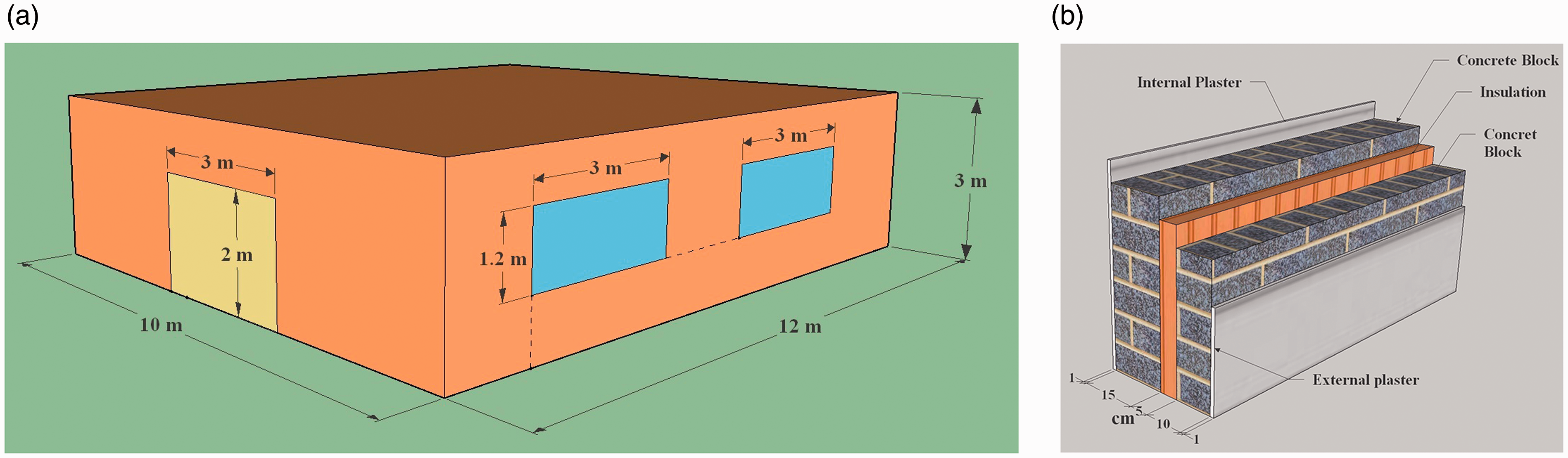
(a) Schematic of the single-story office building investigated. (b) Walls construction details.
Despite the building envelope being outside the scope of this research, the scientific approach used here is a general one, which other users could apply to real designs. In this case, the selection of envelope elements would lead to accurate energy predictions and would also be a useful guide to select the most appropriate size for an HVAC system. Therefore, in most cases, the building’s envelope and orientation would have a significant impact on the simulation results.
The total building surface area is about 120 m2, the height is 3 m with a gross volume of 360 m3. There are windows on three sides of the building and the fourth side has a main door. There are no sun shading devices and the sun affects all sides of the building. This means that the cooling loads will be much higher than normal.
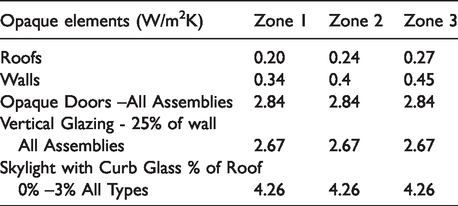
TRNSYS (TRNSYS3d and TRNBuild) were used to simulate the thermal performance of this building. The main thermal compulsory characteristics of the building envelope, such as being thermally insulated, meant that the U-values for walls, roof and windows were chosen, based on the Saudi Building Code 2018 16 the minimum requirements shown in this code, based on the building location zones (See Figure 2) are set out in Table 1. This model will be used in comparison to both systems. Despite the lower the U-value being the best, the wall, roof, windows and door U-value were defined as 0.24, 0.20, 2.80 and 2.60 W/m2 K, respectively.
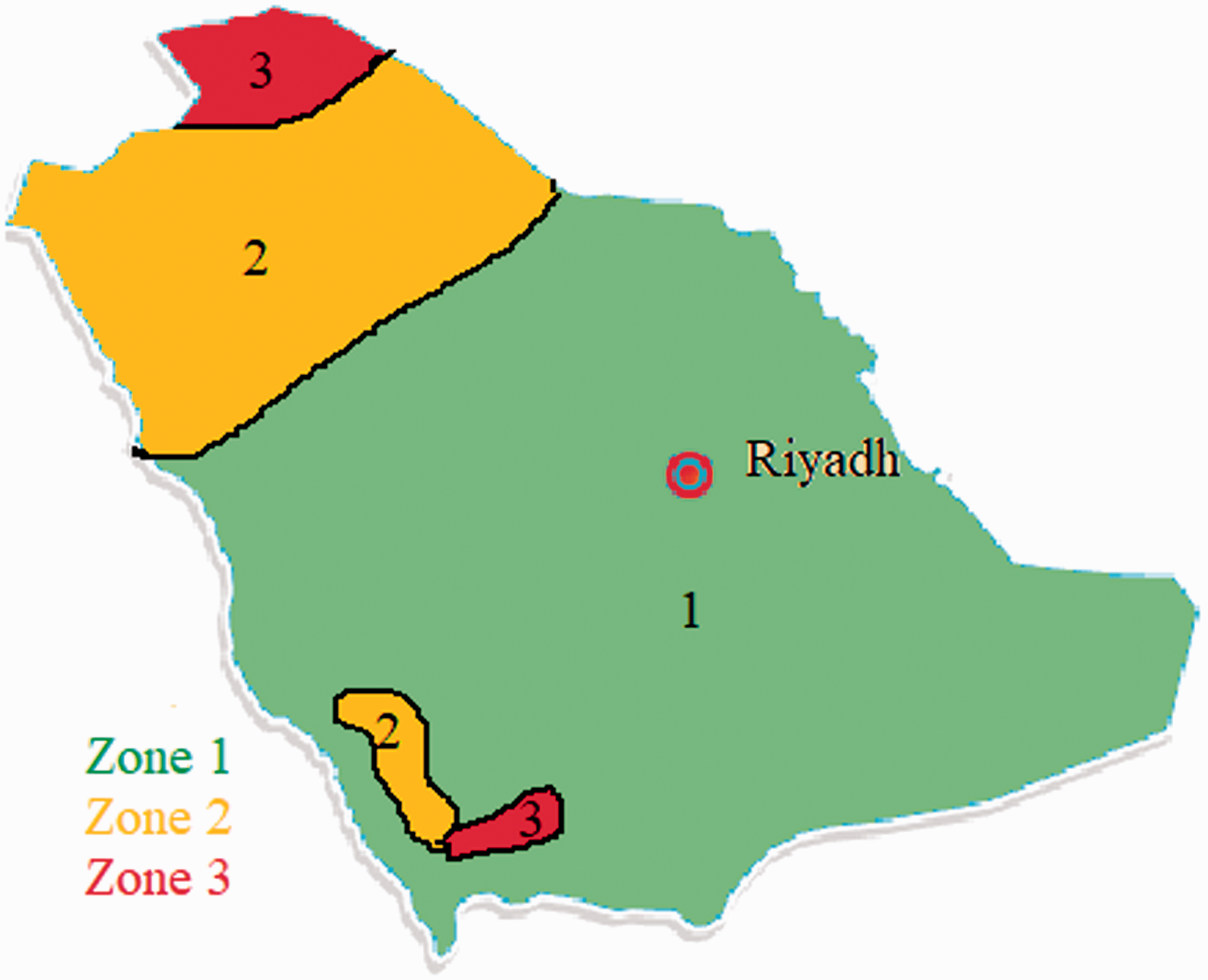
Saudi Arabia Climate Zones based on Saudi Building Code. 16
The U-Values for low-rise/residential buildings. 16
Building load estimation
Saudi Arabia is a large country with different climate zones and different geological characteristics from one region to another. More information about the natural environment of Saudi Arabia can be found in. 17 The capital city of Riyadh has been selected to be the location for this study. The city has a very hot and dry climate in summer with generally mild weather in winter, with little rainfall and low relative humidity.
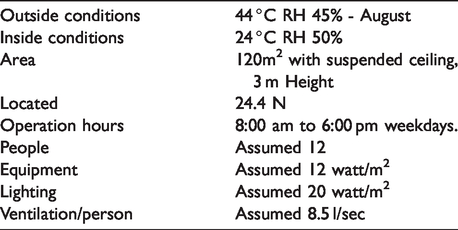
In order to investigate the energy use, TRNSYS software has been employed to estimate the cooling and heating loads. The size of a heating or cooling system for a building is determined on the basis of the desired indoor conditions that must be maintained, based on the outdoor conditions that exist at that location. Table 2 shows the design conditions for the building, based on the climate in Riyadh and the ASHRAE standard. For example, the building of the ventilation rate use was based on the ANSI/ASHRAE Standard 62.1-2010 (Ventilation for Acceptable Indoor Air Quality).
Design conditions for the building investigated: Summer period.
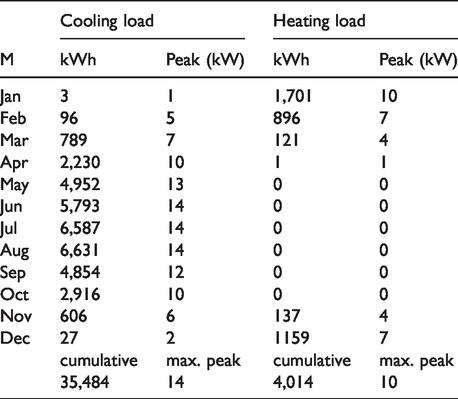
Based on the design conditions shown in Table 2, the cooling and heating loads were computed by employing TRNSYS for all months, as shown in Table 3 and Figure 3. Based on the local climatic and design conditions, the maximum cooling and heating loads were 14 kW and 10 kW, respectively. It will be seen that the annual equivalent full load hours (AEFLH) were to be 2,552 and 374, respectively.
Estimated cooling and heating loads for building investigated.
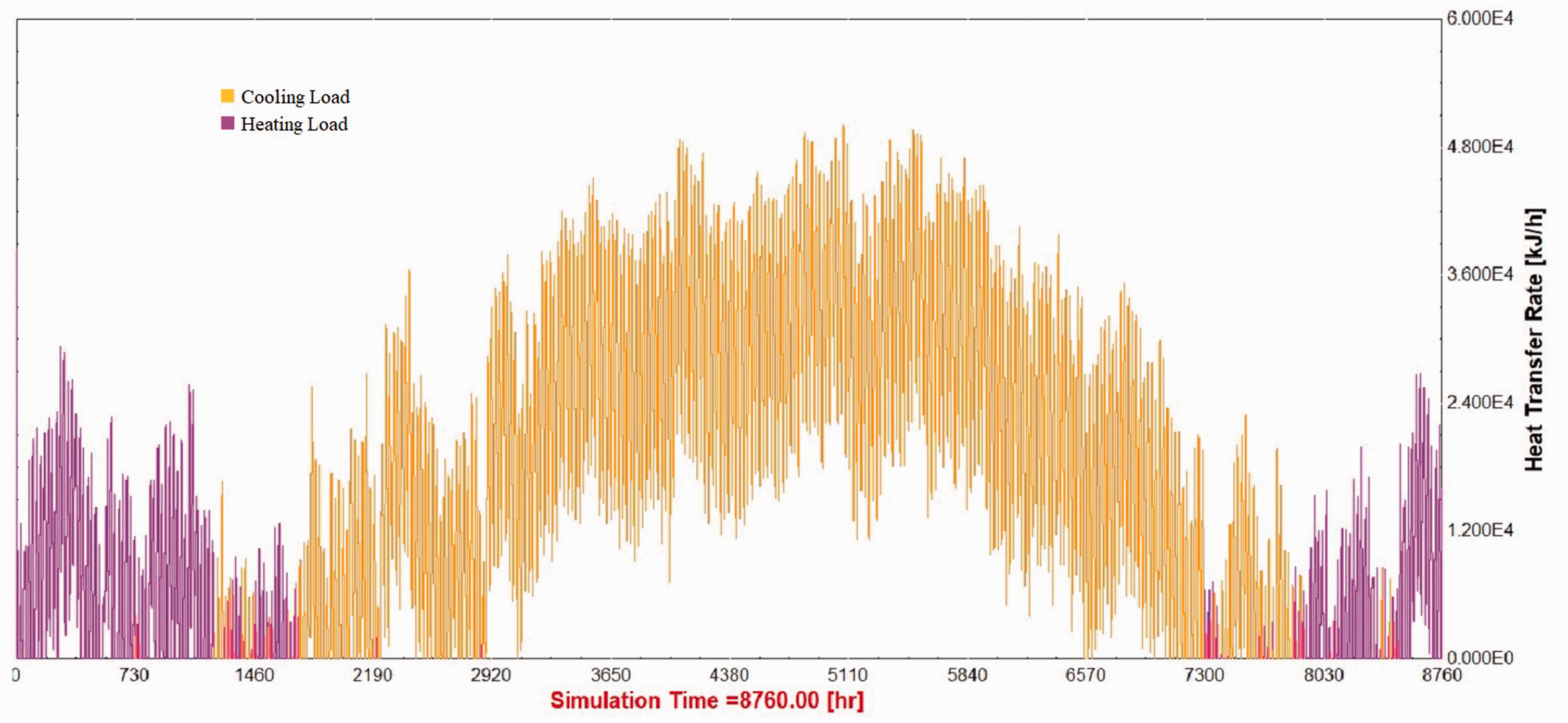
Cooling and heating loads for the building created by TRNSYS.
Heat pump simulation
The main advantage of a heat pump is the ability to transfer more energy than it consumes. In simple terms, the COP and EER describe the performance of the heat pump. The actual COP is the how many times more heat the system provides than it requires work (electricity, generally) to drive. It is a measure of the heating performance of the heat pump system, which is defined as follows:

Where Win is the electricity consumption, Qout is the output of the heating or cooling The EER generally refers to the cooling device to measure the cooling performance, which is defined as follows:

Where, QC is the output cooling energy (Btu/h) and Pw is the electrical power (W). It is easy to show that the relation between COP and EER can be expressed as follows:

So for the rest of this document, we will only report on COP.
In fact, there are several unconventional ways to increase the efficiency of the heat pump, for example, 18 is one case where the wastewater from the bathroom increases the efficiency of the heat pump in cold climates, where the efficiency increases by 55%. Likewise 19 investigated experimentally and numerically the effect of the implementation of a thermoelectric cooler on the heat pump COP of air-to-water and air-to-air thermoelectric coolers. The results show that a 30–50% higher COP could be achieved from an air-to-water rather than an air-to-air system.
In addition, it is known that the refrigerant type affects the COP of the system. However, the effect of the refrigerant type is beyond the scope of this paper. Therefore, the same coolant R-410a was used for both ASHP and GSHP to avoid any effect on the comparison in the system efficiency. Furthermore, R 410a was used because it is now the most common type used in Saudi Arabia and in the world due to its characteristics, such as environmentally friendly qualities and high cooling capacity.
Air source heat pump
The ASHP system is the traditional system used for refrigeration and air conditioning in residential buildings and small business buildings in Saudi Arabia.
For simulation purposes with this modeling package, an air-to-air heat pump, type 119 was selected and this was the rooftop unit YORK ZE/EN series. 20 The data in the manufacturer’s catalogue was used to model the ASHP. The capacity of the pump selected was 10.5 kW and 17.5 kW for the heating and cooling, respectively. While this is higher than the value given in Table 3 it is a safety factor to account for extreme events.
The simulation runs for a full-year period based on the TMY2 (typical meteorological years) data. During the test period, the ambient temperature varied from 0 °C to 45 °C. Figure 4 shows the outside temperature and inside set temperature (21 °C in the winter and 24 °C in the summer) when the ASHP was operating and the model time step was 0.02/hour (1 minute, 12 seconds). In addition, Figure 4 shows the operation period for the ASHP in both cooling and heating (heating on and cooling on). It is clear that the cooling remained dominant most of the year with 8 months when there is a large difference between the indoor and outdoor temperature, this is up to 21 °C in the summertime which requires substantial work from the compressor, which adversely affects the performance of the system.
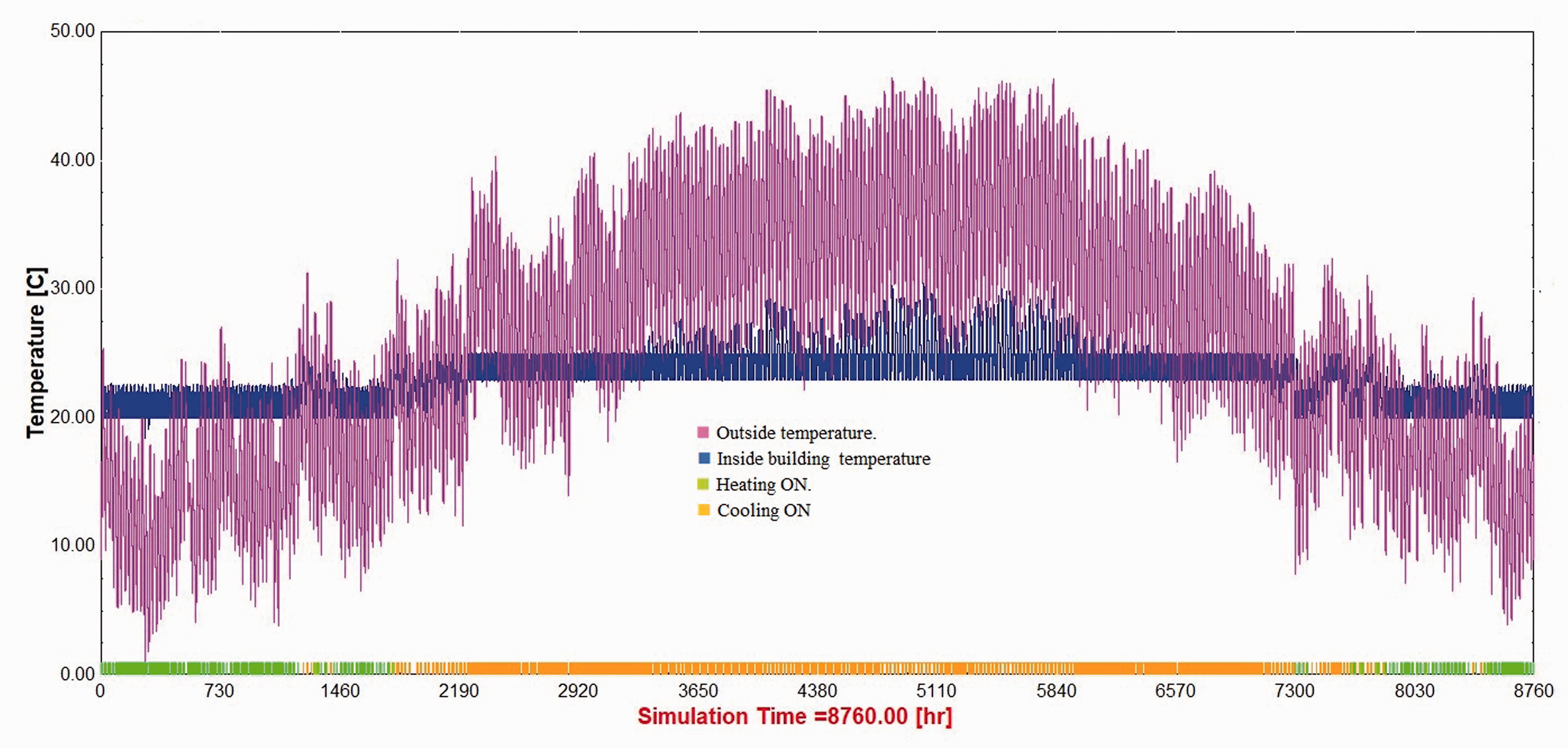
Outside and inside building temperature during the simulation period.
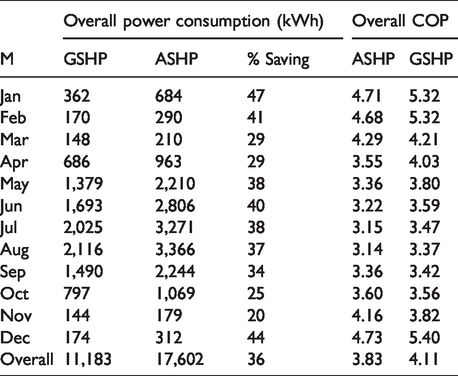
In these regions, the hottest months provide a challenge for ASHP systems as the ambient temperature can reach 50 °C. Thus, we must place a greater emphasis on the hottest months when calculating the COP and EER. Figure 5 shows the COP for the ASHP during the simulation period and Table 4 shows the average monthly COP and power consumption during the simulation period that starts at midnight on 1st January until midnight on the 31st December (8,760 calendar hours).
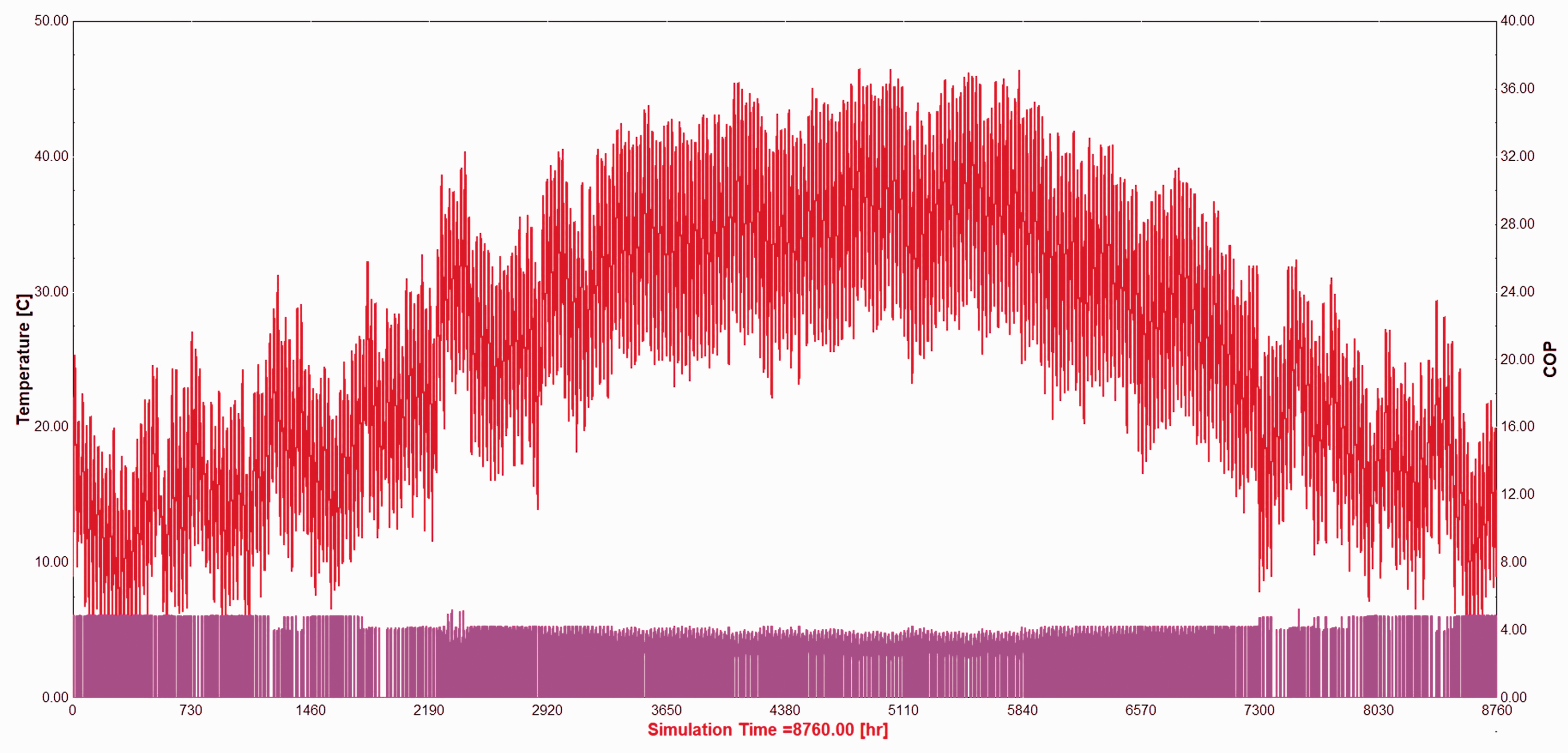
COP for the ASHP unit.
The annual COP and power consumption of the ASHP and GSHP unit.
In this paper, the ASHP unit has been selected and this is similar to the GSHP unit in terms of characteristics and specifications (such as the source of power, refrigeration type, compressor type, unit efficiency and the cooling/heating capacity) in order to make a fair comparison between the two systems.
Ground source heat pump modeling
The GSHP can be seen to be more efficient than the ASHPs and, incidentally, it is also classified as a renewable energy system because GSHP uses the heat from the underground as a source of energy. Generally, GSHPs consists of three main parts: a heat pump, a distribution system and a ground heat exchanger (GHX). Thus, understanding the geology and hydrogeology of the underground soil (ground layer) is an essential element in the design process for a GHX Additional information on the geothermal conditions in Saudi Arabia can be found in. 21
For the purposes of this study, two elements must be carefully calculated to obtain the optimum length of the GHX, namely the thermal conductivity and the underground temperature.
Thermal conductivity
For the purposes of this study, variable geological characteristics were obtained from the report prepared for the Ministry of Petroleum and Mineral Resources in Saudi Arabia and the US Geological Survey
22
so as to be able to investigate the heat-flow measurements. The soil in Riyadh consists of clay, silt, sand and gravel in different proportions. However, the thermal geological characteristics of the soil21,22 can be summarized as follows:
Average thermal conductivity is 2.6 W/(m K). Thermal diffusivity is 6.252 × 10⁻⁶ m2/s. Thermal resistance is 0.315 m K/W.
Underground temperature
ASHRAE and many simulation programs, such as TRNSYS, use equation (4), as developed by Kasuda
23
to calculate the underground temperature at different depths.
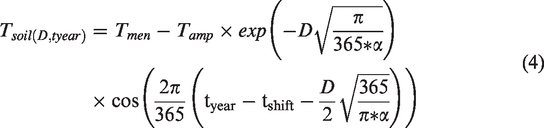
Tsoil(D,tyear) = soil temperature at a depth D and time of year,
Tmean = mean surface temperature (average air temperature). The temperature of the ground at an infinite depth will be at this temperature
Tamp = amplitude of surface temperature ((maximum air temperature - minimum air temperature)/2)
α = thermal diffusivity of the ground (soil)tyear = current time (day)
tshift = day of the year of the minimum surface temperature
Figure 6 shows the underground temperature for Riyadh city at different depths based on the daily weather data collected for Riyadh city, 2018.
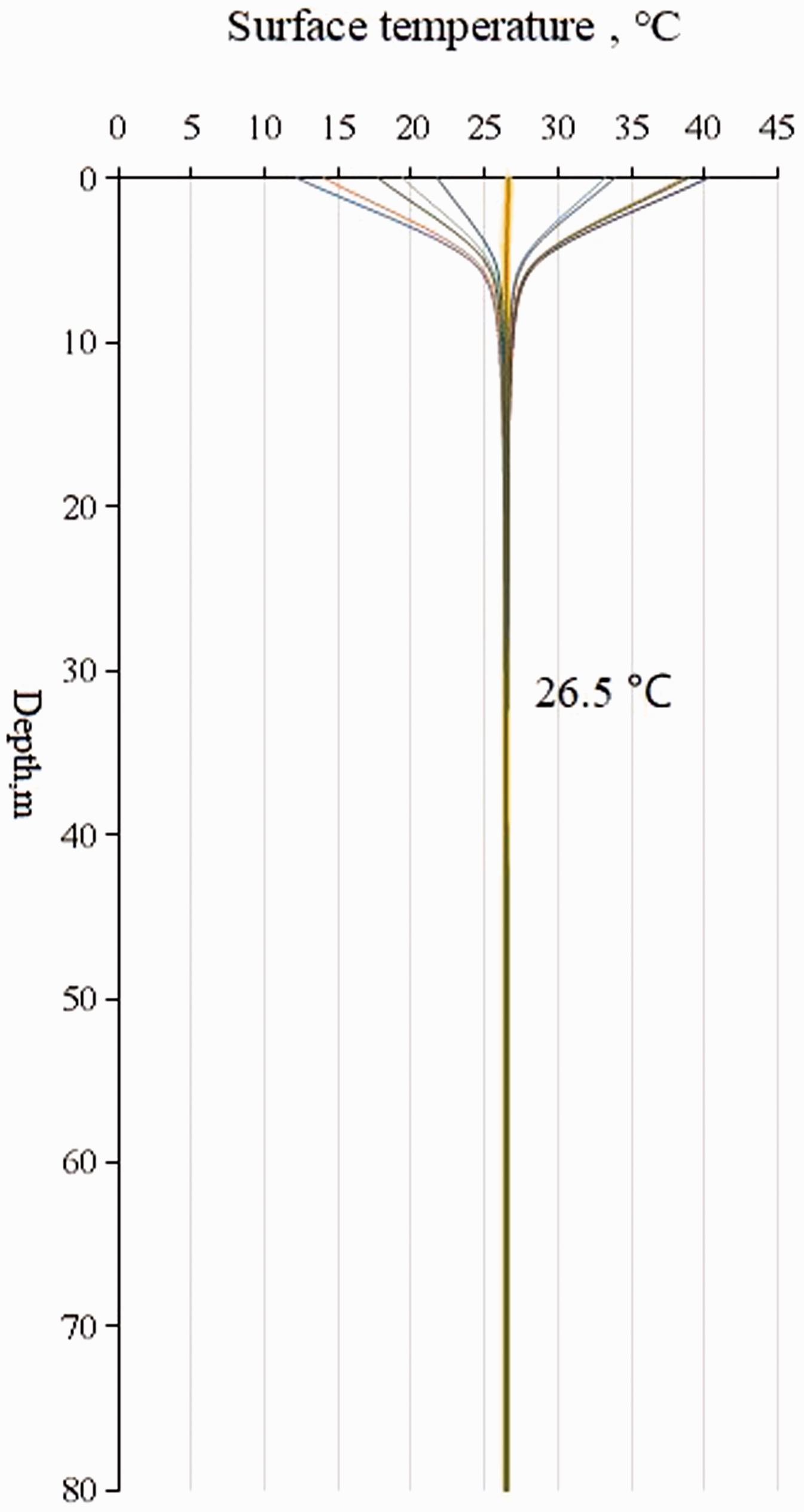
Underground temperature for Riyadh city at different depths.
Based on equation (4) the underground temperature for Riyadh city at a depth of over 10 m is assumed to be 26.5 °C. However, in this work, the value of 29 °C was used in the TRNSYS simulation, based on the experimental studies 22 that have been performed at five different locations in Saudi Arabia. This investigation is therefore a pessimistic scenario.
Sizing of the GHX
Correctly determining the length of the heat exchanger significantly determines the economic feasibility of using GSHP. The initial cost of the geothermal pump related to the cost of implementing the geothermal heat exchanger and geological studies for the region.
Based on the thermal conductivity and underground temperature as calculated above (2.6 W/m K and 29 °C, respectively) two methods have been applied to estimate the size of the GHX as follows:
ASHREA method. Ground loop design software, GLD.
24
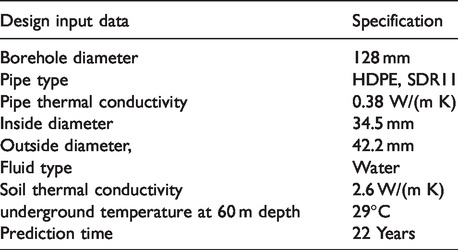
Both methods are based on the monthly and peak loads. A single borehole with a diameter of 128 mm and 6 m spacing between pipes was employed and the borehole characteristics and considerations are shown in Table 5.
Design input data of GHSP.
ASHREA method: The use of the ASHRAE equation to calculate the length of GHX is widely used to give preliminary results of the total well length.
25
The length (LC) to satisfy the cooling loads can be expressed as follows:

More information about the above parameters can be obtained from the ASHRAE (2017) online Handbook – HVAC application, Chapter 34.
Based on the data calculated above the required length of the GHX in order to satisfy the cooling loads was estimate as follows:
Lc = 400 m is the total length for the heat exchanger loop at 29 °C.
Ground loop design software, GLD: The GLD software is a monthly, and hourly analysis program tool 26 which has been employed in this study in order to estimate the GHX length. The length obtained from this simulation was found to be 400 m. Furthermore, the inlet and the outlet water temperatures were 39.4 °C and 45.6 °C, respectively. Figure 7 shows the average entering water temperature to the GSHP unit for a 22 year period.
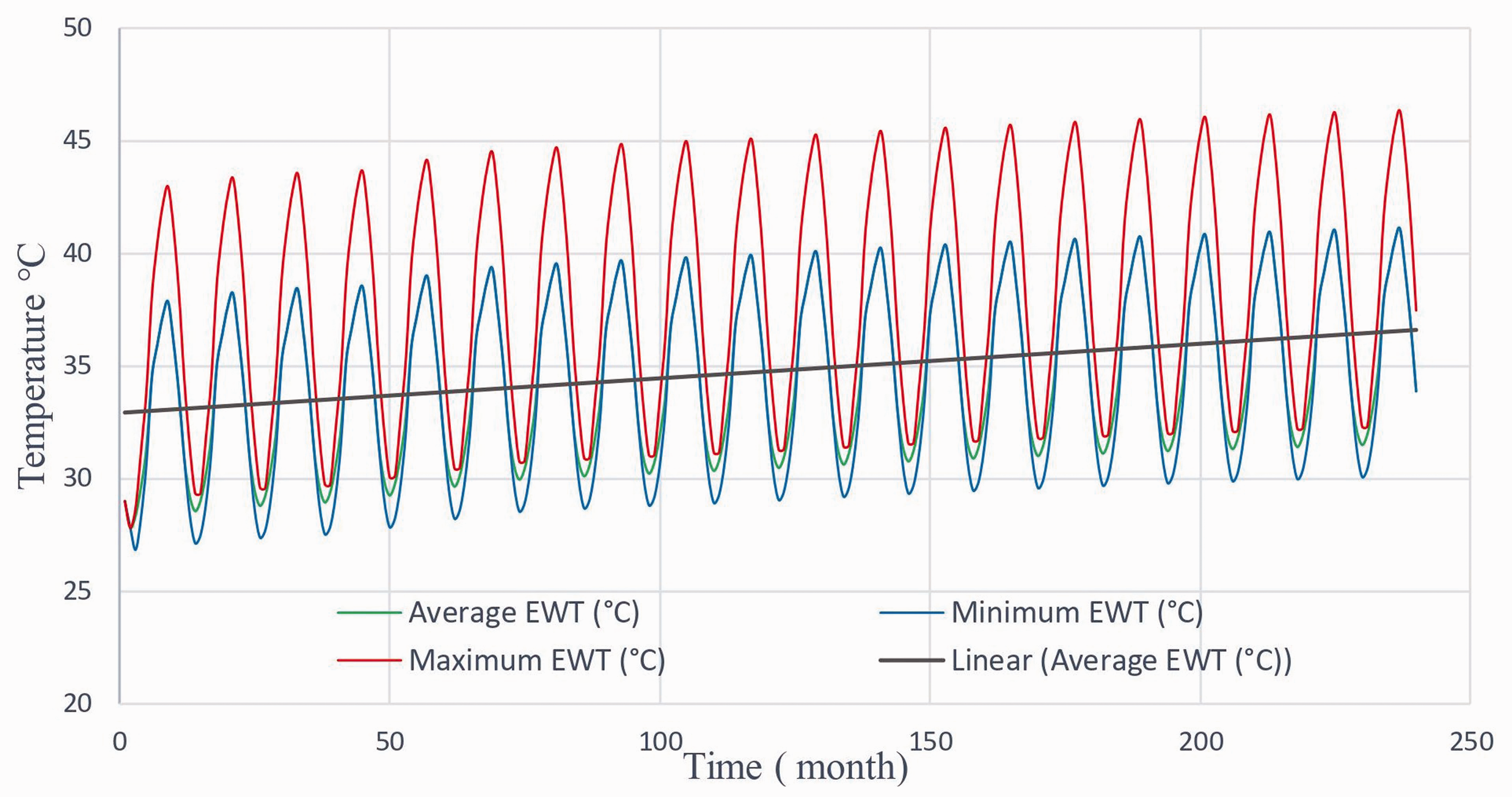
Average entering water temperature to the GSHP unit for a 22 year period by the GLD.
Despite the wide use of the ASHREA method, several studies27–29 have indicated that using the ASHRAE method to calculate the length of the ground heat exchanger leads to 10%∼30% oversizing of the GHEs. Thus, in this simulation, the result obtained from the GLD, which was 400 m total length is used in the TRNSYS analyses.
Ground source heat pump simulation
To provide the literature with information on the use of a GSHP in a hot/dry climate, TRNSYS has been used to simulate the whole system. Similar to ASHP, a water to air heat pump, type 919 was selected. The data in the manufacturer’s catalogue was used to model the ground source heat pump. The capacity of the pump selected was again 3 and 5 ton for heating and cooling, respectively. This is higher than the value presented in Table 3 in order to include a safety factor. The office building was modelled in TRNSYS v. 18 using the multizone building component (Type 56a).
The simulation was run for a twenty year period based on the TMY2 (typical meteorological years) data. In the TRNSYS model, the characteristics and considerations of the borehole are the same as those used in sizing the GHX in Table 5. The simulation results’ emphasis is on the amount of energy conservation and liquid flow temperature that leads to the identification of the properties of the surrounding ground.
Figure 8 shows the COP for the GSHP during the simulation period, and Table 4 shows the COP and monthly power consumption during the simulation period, as well as the savings rate for both systems.
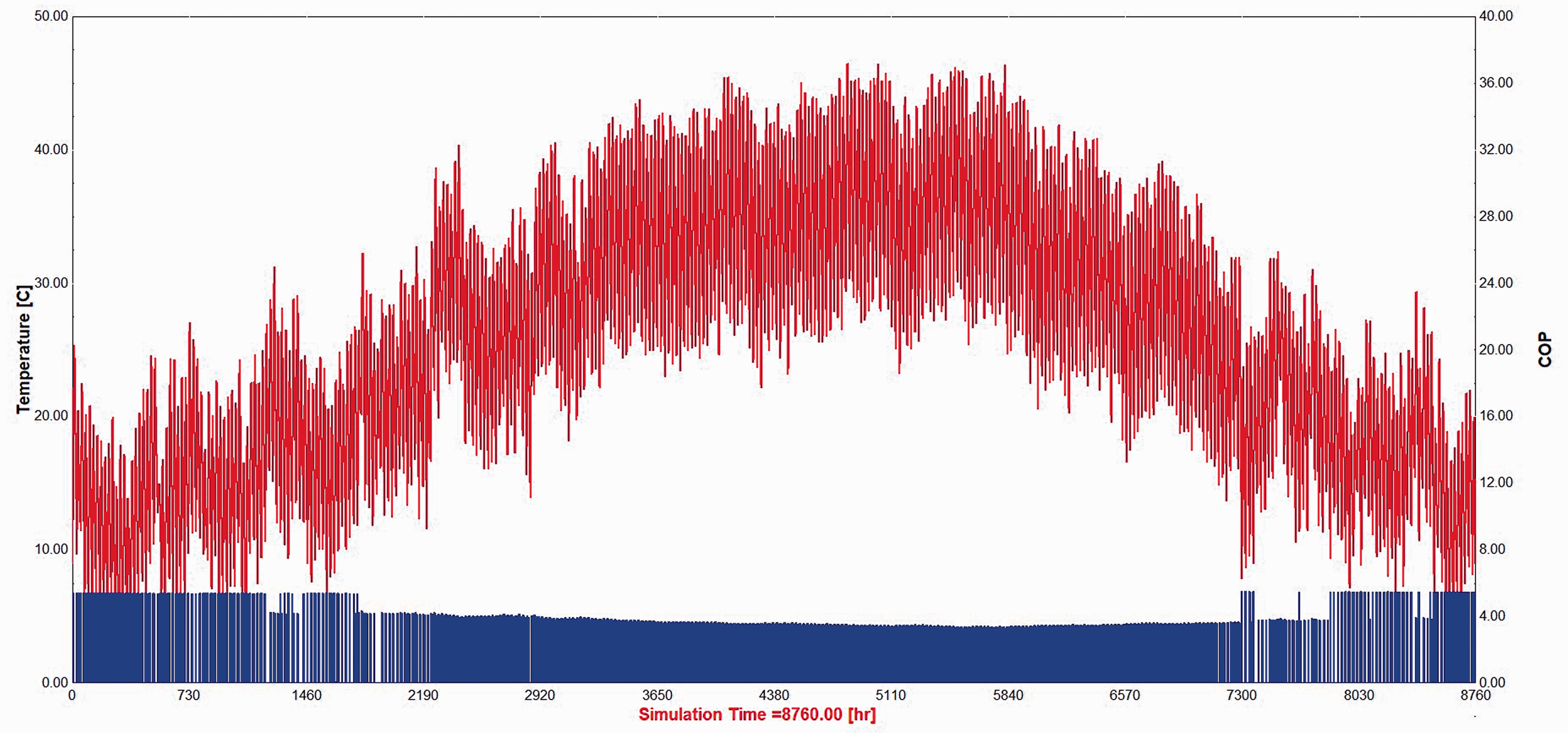
COP for the GSHP unit.
Results and discussion
Savings on the power consumption
Energy consumption is an essential factor that determines the efficiency of the system. The monthly energy consumption of the GSHP and ASHP systems are compared in detail in Table 4 and Figure 9. It is shown that in the hottest months (June - September) the power consumption using the GSHP is approximately 37% less than that from ASHP. In addition, in the winter season, the monthly consumption value of electricity remains less than the summer in the two systems, with the GSHP system reducing the electricity use by approximately 44%. Figure 10 shows the comparison of the COP for the GSHP and the ASHP.
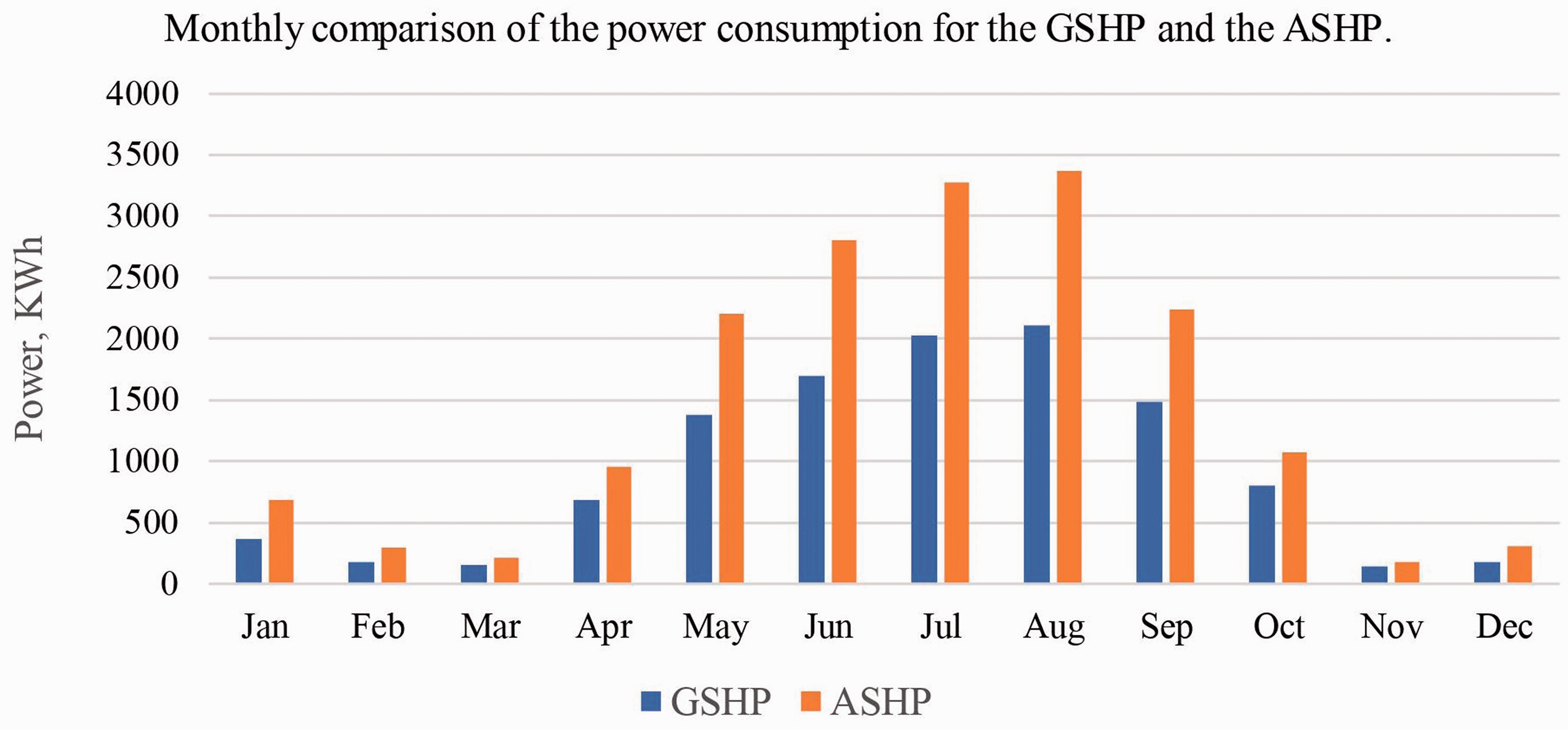
Comparison of the power consumption for the GSHP and the ASHP.
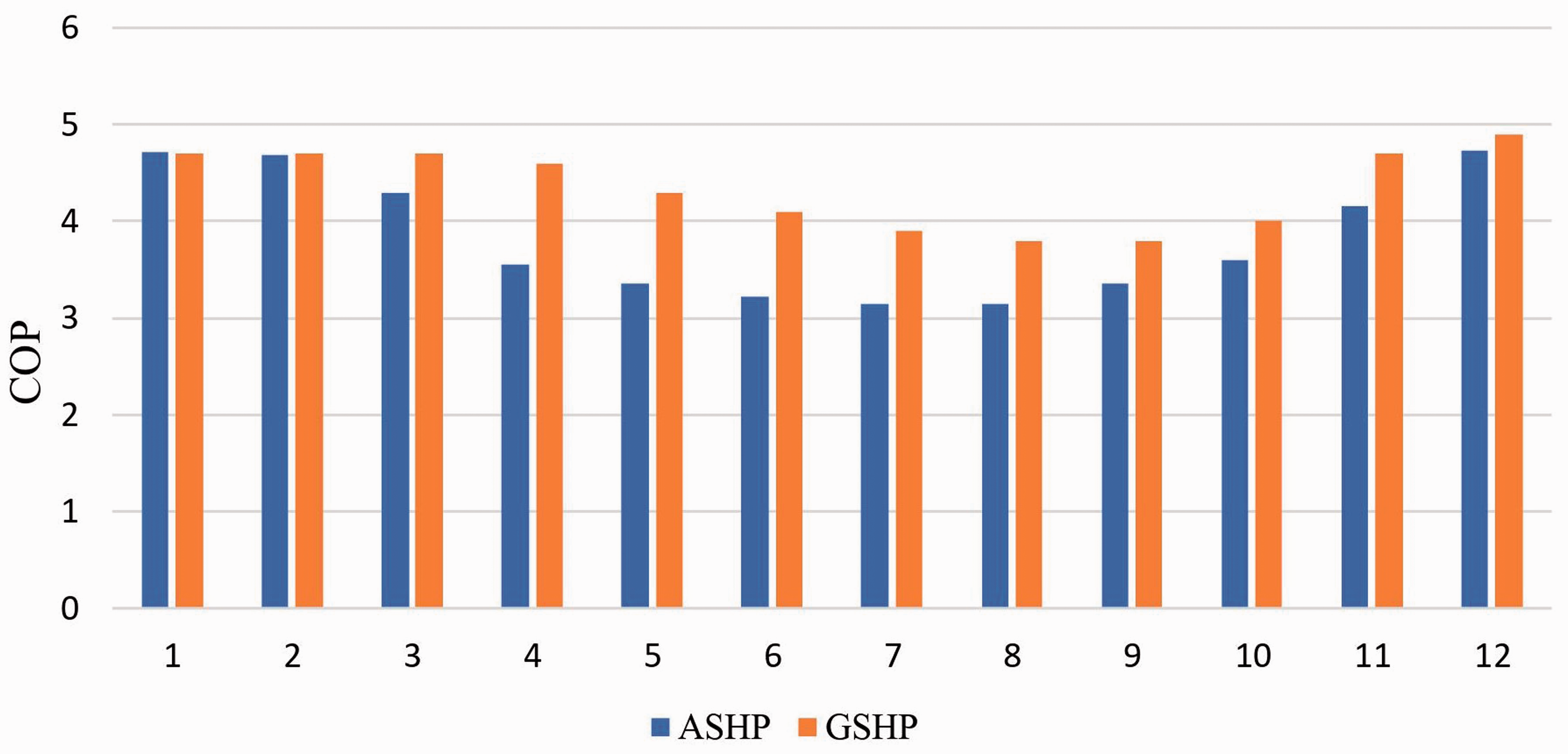
Comparison of the COP for the GSHP and the ASHP.
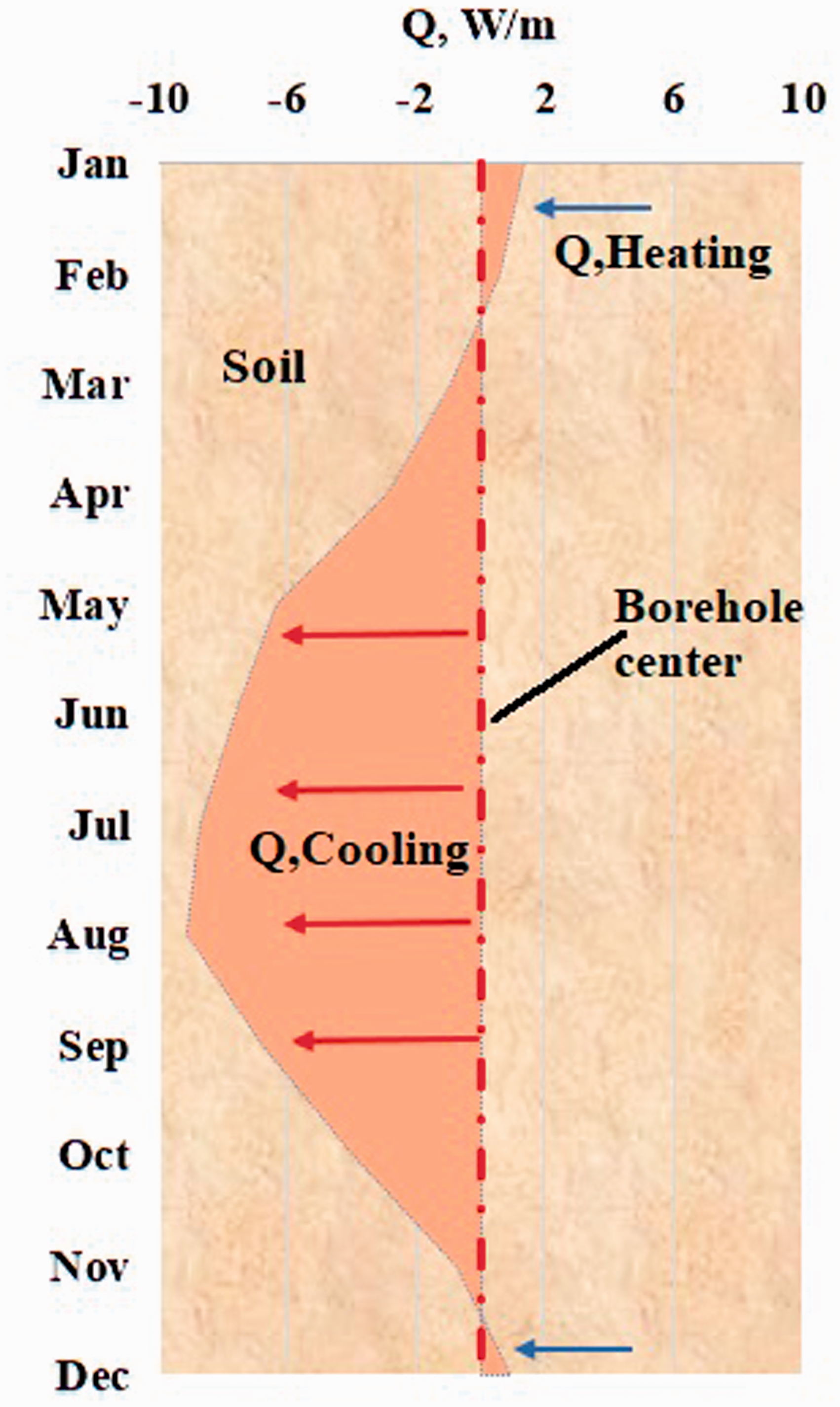
Total heat rejected and extracted from/tothe soil.
From Table 4, it is observed that the total energy required is 11,183 kWh per year and 17,602 kWh per year for the GSHP and ASHP respectively, and the annual electricity cost is determined as follows:

Saudi electricity cost: SR 0.32 per kWh
For GSHP electricity cost = 11,183 kWh
= SR 3,579 per year
For ASHP electricity cost= 17,602 kW h
= SR 5,632 per year
Annual cost saving = 5,632–3,579 = SR 2,053
A total reduction of approximately 36% in the annual of electricity can be obtained by using a GSHP system. This saving does not include the cost of the power to produce the hot water that can again be produced by the GSHP. On the other hand, the energy consumption by the circulating pump is not included in the total electricity consumption.
Therefore, using the GSHP not only reduces the total power consumption but also reduces the overall CO2 emissions. For the purposes of calculating the annual rate of the CO2 emissions, CO2 emission can be expressed as follows:

Based on the Carbon Footprint Ltd. 30 the EF for Saudi Arabia is estimate as 0.7176 Kg CO2/kW.h. As a result, from Table 4 the GSHPs saving is 6,419 kWh/year and this leads to a saving of 4,606 kg CO2/year.
Initial cost analysis
When comparing the two air condition systems, two cost factors play a crucial role in determining the feasibility of using the new system, namely the initial cost and the life-span cost. Table 6 shows the total cost over a 22-year period and the parameters that effect the initial value for both systems.
The cost analysis for the ASHP and GSHP for 22 years.
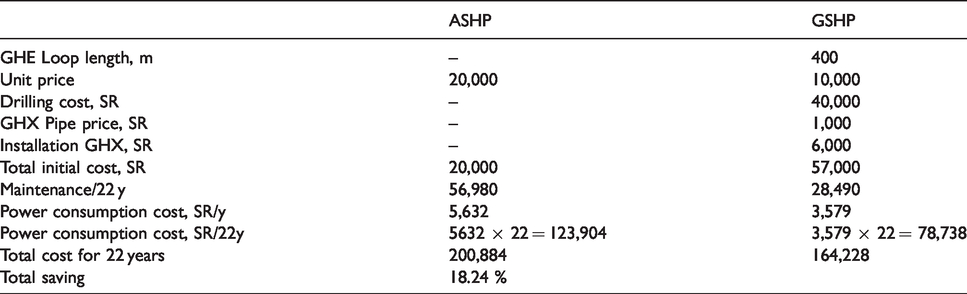
It is important to note that the unit life-span of the GSHP is assumed to be double that of the ASHP. The typical life-span of the ASHP is 10–15 years but in harsh climates, such as Saudi Arabia, the ASHP is exposed to very high ambient temperatures, corrosion in the coastal region and dust. Due to this, the lifetime of the ASHP is assumed to be 11 years. On the other hand, the GSHP system is located indoors and is not exposed to external factors and a typical life-span is 20-25 years; thus 22 years is assumed as the lifetime of the GSHP.
Furthermore, hot water production is a positive point for GSHPs. In new and well insulated residential buildings, power consumption by hot water maybe 3.5 times higher than the heating demand. 31 This energy demand saving by employing GSHP needs many more investigations in a hot climate and in particular as to what extent it affects the efficiency of the system.
Simple payback periods
Generally, in renewable energy systems, the high initial cost of installation of the system is usually reclaimed by energy savings. Therefore, there are several ways to evaluate the feasibilities in the investments of the new system, such as the payback period (PBP), life-cycle cost analysis (LCCA), net present value (NPV) and return on investment (ROI). Despite the fact that PBP does not consider a cost-effectiveness tool because it does not include the long-term factors. The simple payback period (7) can be expressed as follows:

PBP = payback time, years.
K = capital investment.
E = annual energy cost.
M = annual maintenance cost.
1 = system under consideration (ASHP).
2 = alternative system (GSHP).
The annual maintenance cost, M, is given by:



PBP = 11 years.
Underground thermal imbalance
The thermal imbalance is considered one of the most challenging elements that can be calculated due to a large number of factors related to the operating conditions such as climatic conditions and the length of each season in the year, the time and duration of the system operation, soil characteristics and type of system. In hot dry climate regions, as is clear from figure 11, GSHP operates in the cooling mode most of the time and this causes heat accumulation in the soil (more heat is rejected into the soil more than is extracted) this may lead to a system failure in the long run.
32
In cold regions, Tian el al.,
33
discussed the most critical factors that lead to thermal imbalance and ways to reduce its impact, such as increasing the area of the well, increasing the depth of the well and improving the soil properties. For that, the thermal imbalance should be taken into account in the initial stages in the design to avoid system failure or low efficiency. The imbalance ratio (IR) is defined as follows:

To determine the accumulated heat for the GSHP, the average COP for the GSHP is determined from Figure 8 to be 4.1 based on the TRNSYS simulation and from equation (3) the EER = 13 . From Table 3 the ground load is determined as follows:
Cooling load, QC = 14 kW/h × 3,412.142 = 47,768 Btu/h
Heating load, Qh = 10 kW/h × 3,412.142 = 34,120 Btu/h
In the cooling mode, the condenser rejects heat to the ground heat exchanger, and the evaporator extracts heat from the load. The heat rejected at the condenser is given by
Qcond = Qc ((EER + 3.412)/EER)
= 47,768 Btu/h × ((13 + 3.412)/13)
= 60,305 Btu/h
The heat extracted at the evaporator is given by
Qevap = Qh
Thus, the thermal imbalance ratio is given by

In contrast, the monthly-accumulated heat obtained from TRNSYS is presented in Table 7.
Monthly accumulated heat to the soil.
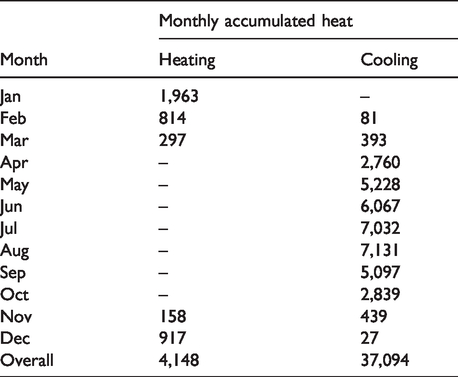
From Table 7, it is observed that the total accumulated heat rejected to the soil is 37,094 kWh compared to 4,148 kWh extracted from the soil in the heating seasons, and based on equation (10) the imbalance ratio (IR) is defined as follows:

The negative IR indicates that the heat transfer to the soil is more than the heat extraction, which normally occurs in cooling dominated situations, and such a high IR rate must be taken into account to maintain the efficiency of the system. In addition, a lower IR means a smaller difference between the heating and cooling loads.
Discussion of the results of this Saudi Arabia application
In this work, TRNSYS software has been used to provide a fully comprehensive simulation for the ASHP and GSHP in terms of the operating efficiency. Despite the simulation results showing that the GSHP is applicable for hot and dry climate regions, the lack of accurate data on the main governing parameters may affect, negatively or positively, the efficiency and therefore performance of a real system. The study has a number of limitations, for example, the lack of information on the groundwater and soil layers, which have different thermal conductivity. In particular, it has been assumed that there is only one soil layer and no groundwater effects. These could significantly increase or decrease the GHX size and thus lead to a major effect on the initial system cost. In addition, domestic hot water produced by the GSHP is not considered in this analysis.
On considering the long term running of the system, the results of the study have shown that the rate of the simulation of the underground thermal imbalance is approximately 88% compared to 66% theoretically. This could be due to the effect of the parameters considered, such as the thermal conductivity, underground temperature, soil humidity, liquid flow and pipe diameter. In addition, the function and type of the building will have an effect on the thermal imbalance and the GSHP performance. For example, when a school building is closed in the summer, this will lead to a reduction in the heat entering to the soil. Likewise, health clubs with swimming pools can use the GSHPs to heat the water and maintain a thermal balance.
In addition, the geological characteristics present in one region will be different in another region, for example aquifers. When the velocity of groundwater exists, the rate of heat transfer increases and thus, the length of the GHX decreases, which has an impact on the initial and operational cost. 34
Moreover, when comparing the results obtained from this study with several studies that have been performed in MENA countries, all of them showed similar trends which illustrate the possibility of benefiting from the GSHP systems. For instance, the results performed by Karamallah et al. 35 in the city of Baghdad in Iraq, concluded that the COP of the GSHP was 2.6, which is acceptable, but lower than the result found in this study. This difference could be due to the depth of the borehole, namely only 7.5 m which is very short for vertical GSHP systems. Likewise, in Jordan, 36 which is a northern border state to Saudi Arabia, 5 * 60 kW GSHP is installed and connected to 32 double boreholes with 71 m depth in order to cover the heating, cooling and hot water demand for buildings with a total area of 6000 square meters. In this project, the thermal conductivity and ground temperature were found to be 1.98 W/m-K and 19.4 °C, respectively, compared to 2.6 W/m-K and 29 °C in this study. The average COP for heating and cooling was 5, which is higher than the 4.1 predicted in this study. This is due to the lower soil and ambient temperature in Jordan. However, the underground thermal imbalance was not investigated.
Finally, there is a lack of accurate information on the price of GSHP in the Saudi market, which makes it difficult to make a comparison between the unit cost. Therefore, the use of a simple value for the payback period requires much more care.
Even though there are, as described above, a large number of estimates and approximations in the analysis, the use of the industry standard software, TRNSYS gives credibility to this work. It also supports, using far better modelling techniques, the initial work by the authors on this subject. 10 This all reinforces that basic point of this work, that the implementation of GSHP is a far more viable approach, both in terms of primary energy and cost that the ASHP system currently, universally employed in the Middle East. It is particularly important to note, that much of the wealth of Saudi Arabia is based on drilling holes for energy extraction. It would be advantageous for this expertise to be used to save energy for drilling vertical loops for GSHP systems.
Conclusion and future work
Conclusion
In this paper, for the first time, the more accurate and industrial standard TRNSYS has been used in an annual simulation of the GSHP system compared to the ASHP system in a hot and dry climate. The COP, EER and Initial cost were investigated. The ASHRAE method and the GLD software were used to determine the length of the GHX from the results detailed above the following can be drawn:
The soil thermal conductivity is high with an average 2.6 W/(m.K). in contrast; the underground temperature is high, and this leads to a reduction in the GSHP efficiency The total cost savings over a 22 year period were found to be 18%. The thermal imbalance ratio was 88.5%. The payback period exceeds 11 years when compared to the ASHP system. Despite the higher underground temperature, the inlet and outlet fluid temperatures remaining in the design range for most manufacturing companies. Despite these positive results of the GSHP efficiency, the high rate of the underground thermal imbalance (88%) could lead to a system failure in the long term.
Adding to the studies conducted in different climatic regions; this work fulfils the knowledge gap of performance and examines, using accurate modeling techniques the feasibility of GSHP in a hot dry climate when the very high soil temperature acts as a negative effect and the high thermal conductivity of the ground as a positive effect.
Future work
More research is required to fully identify the thermal imbalance and the best way to reduce the high level of cumulative heat in the ground. In addition, a comprehensive method is required to better estimate the feasibilities of the investments such as the life-cycle cost analysis.
It is also suggested that the impact of the government's adoption of a new policy for using renewable energy technology, namely by subsidizing and encouraging residents to use alternative energy conservation methods, such as solar, wind and geothermal energy, is considered. This will make the approach proposed by the authors even more valuable to denizens of the Kingdom.
Footnotes
Acknowledgments
The authors would like to acknowledge the scholarship from the Ministry of Education in Saudi Arabia to undertake this research work.
Declaration of Conflicting Interests
The author(s) declared no potential conflicts of interest with respect to the research, authorship, and/or publication of this article.
Funding
The author(s) received no financial support for the research, authorship, and/or publication of this article.
