



Abstract
In order to improve the efficiency of high-speed train aerodynamic noise analysis and provide a feasible method for aerodynamic noise prediction, the aerodynamic noise and its influencing factors are analyzed from the perspective of the total energy (sound power) radiated to the far field per unit time by the aerodynamic fundamental noise sources (monopole, dipole and quadrupole sources). A full-scale and a 1:8 scale-down computational fluid dynamics model of a high-speed train are established. The far-field sound pressure level at several receivers and velocities is calculated by using the transient large eddy simulation and the FW-H equation. The numerical simulation results are used to predict the aerodynamic noise under specified working conditions. The research work can achieve the prediction of aerodynamic noise at other velocities using noise data at known velocities on the same noise source case, as well as the prediction of aerodynamic noise of full-scale model using data of scale-down model, and is applicable to either bogies as local noise sources or the complete vehicle as a noise source. The maximum error between the prediction and simulation result is 0.33 dBA under various working conditions, which meets the engineering calculation requirements.
Introduction
During high-speed train operation, the aerodynamic noise generated by the train’s external aerodynamic action grows with the 4th-8th power of the vehicle speed, and its growth rate is much higher than that of the traction noise and the wheel-rail noise. 1 When the speed exceeds 300 km·h−1, aerodynamic noise will become the main noise source of high-speed trains. 2 Excessive aerodynamic noise will reduce passenger comfort, affect the life and work quality of people along the line, especially in hospitals, schools, residential areas and other noise-sensitive areas, and even damage the hearing and nervous system of people inside and outside the car.3–6 In China, aerodynamic noise pollution is considered to be one of the largest environmental pollution factors produced by high-speed railways to the society. According to the “14th Five-Year Plan of Action for Noise Pollution Prevention and Control”, the equipment selection of urban rail vehicles and the construction of rail lines and roadbed structures should comply with the requirements for the prevention and control of noise pollution in urban rail transport. In the international community, vibration noise has been listed as one of the seven major environmental hazards. Therefore, the research on prediction and control of aerodynamic noise of high-speed trains will directly affect the further speed up of high-speed trains, the sustainable development of high-speed rail transport, and the happiness index of people’s life.
In recent years, many scholars have conducted research on aerodynamic characteristics, generation mechanism of aerodynamic noise sources and noise distribution characteristics of high-speed trains.7,8 Sunil et al. 9 investigated the aerodynamic characteristics of locomotives using Computational Fluid Dynamics (CFD) numerical simulation method to study the locomotive head configuration, and used Multi-Objective Optimization Method (MOOM) to optimize the locomotive configuration with locomotive drag and aerodynamic lift as optimization parameters. The results showed that the adopted optimization technique effectively improves the optimization performance and the aerodynamic characteristics of the locomotive head. Mo et al. 10 modeled hydrodynamic models for three-to six-vehicle trains and analyzed their aerodynamic noise, showing that the train length basically does not affect the far-field noise distribution pattern. Zhang et al. 11 modeled a five-vehicle maglev train, and found that the distribution of dipole and quadrupole sources was basically the same at different speeds, which were distributed in the radio terminal area of the vehicle body and the wake area. Wang et al.12–14 used wind tunnel tests and numerical simulations for the bogie area to investigate the effect of dipole sources generated by the main noise source components in the flow field. In addition, he also derived the far-field sound pressure level relationship between two objects with similar aerodynamic acoustics by means of wind tunnel tests. Li et al. 15 studied near-field quadrupole noise sources and far-field aerodynamic noise with the aid of a scale-down model of the head car of a high-speed train, and found that turbulence around the head car has multi-scale vortex characteristics separated from the geometry and that volumetric dipole sources are the main source of near-field quadrupole noise. Li et al.7,16 compared and analyzed the aerodynamics, flow field characteristics, surface pressure and far-field noise of pantograph models of different scales. The results showed that the far-field aerodynamic noise of pantographs was less affected by the scale of the model, but as the scale decreased, the energy concentration range of the radiated noise changed from low to medium-high frequency. In addition, with the help of numerical simulation and wind tunnel test, Li also analyzed the superposition relationship between the noise radiated from the local aerodynamic noise source to the far field and the overall noise source of the far field of the high-speed train. The results showed that the step-by-step numerical prediction method of aerodynamic noise of high-speed train is practically meaningful. At present, most of the scientific research work is to explore the aerodynamic characteristics, the aerodynamic noise sources characteristics and noise radiation characteristics of high-speed trains. It is more conducive to the analysis and prediction of aerodynamic noise by analyzing and exploring the influence of noise source on far-field aerodynamic noise from the theoretical perspective.
A new method for predicting the aerodynamic noise of high-speed trains is proposed. Numerical simulations are carried out for scale-down and full-scale models, and the aerodynamic noise of different working conditions is predicted and analyzed based on similar criteria. The research work provides new ideas for aerodynamic noise prediction and reduction, and provides a feasible method to solve the problems of large number of meshes, long calculation time and low efficiency in numerical simulation.
Numerical simulation method for aerodynamic noise
Computational Aerodynamic Acoustics (CAA) uses numerical computational methods to study the non-constant flow mechanism of noise generated by the interaction between fluid and solid boundaries in order to provide a systematic theoretical basis for noise prediction and improvement.
17
For high-speed trains with complex shapes and many components, ANSYS Fluent software is used to solve the generation and propagation processes of aerodynamic noise separately using a hybrid solution method. (a) Firstly, the steady-state calculation is carried out using the Standard (b) For the transient part (sound field calculation), the Lighthill stress tensor (
The pulsation and mixing of turbulence is mainly caused by large-scale eddies, which dominate the fluid's motion situation, receive energy from the main flow, and transfer the energy to the small-scale eddies. The small-scale vortices dissipate the received energy. The basic idea of LES is to calculate the pulsation of large-scale eddies by transient N-S equations, however, it does not calculate the small-scale eddies directly, but simulates the airflow influence of small-scale eddies by establishing sublattice model. In other words, the effects caused by turbulent pulsations are described in terms of vortex viscosity on the basis of vortex viscosity. The basic control equation for LES is shown as


The above equation can be calculated to obtain the Lighthill stress tensor (

In the above equation, the left side of the equation is the acoustic equation. The right side of the equation consists entirely of the flow field parameters, which can be obtained by experiment or fluid calculation to decouple the noise problem.
Ffowcs Williams and Hawkings extended the Lighthill acoustic analogy theory to the problem of fluid flow sounding in the presence of arbitrary solid boundaries, resulting in the FW-H equation, which is defined as
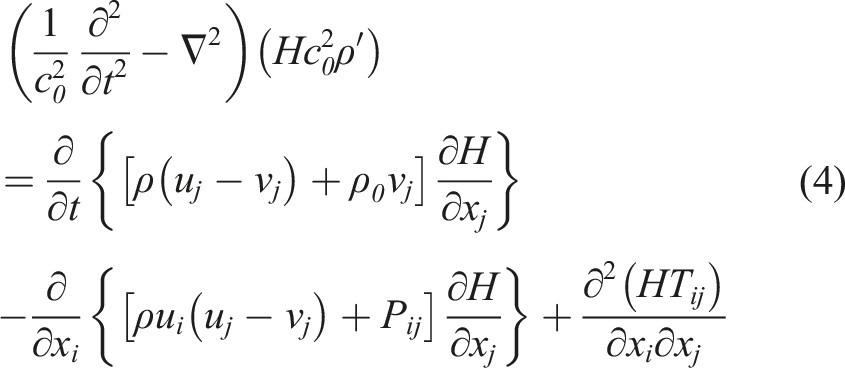
The first term on the right-hand side of the equation is the monopole source due to surface acceleration; the second term is the dipole source due to surface pulsation pressure; and the third term is the Lighthill source term (quadrupole source).
High-speed train aerodynamic noise prediction methods
This section investigates the relationship between the far-field radiation characteristics of both local and global noise sources of high-speed trains and the size of the noise source, the location of the receiver and the fluid velocity. Similar criteria for the prediction of aerodynamic noise from high-speed trains are analyzed.
Far-field aerodynamic noise under point noise sources
Aerodynamic noise sources can be divided into monopole, dipole and quadrupole sources. The radiated sound power is directly proportional to the 4th, 6th and 8th power of the airflow velocity respectively.
18
The sound power of the three sources is defined as
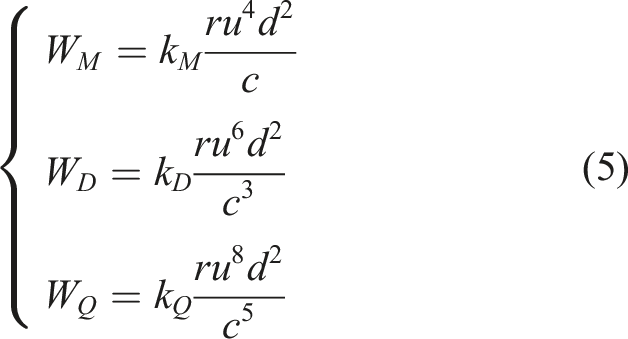
In fluid acoustics calculations, the geometry is often very complex. The size of the characteristic (
For the noise prediction work in this section, the volumes and distribution of the three basic noise sources in bogie area are different. When reducing all the noise sources in this region to a single point consisting of a monopole source, a dipole source and a quadrupole source, setting the characteristic size of the three basic sources to the height of the bogie cannot accurately represent the noise source volumes of this region and need to be expressed as
The sound intensity produced by a point noise source in a free sound field is


The sound intensity is in accordance with the principle of superposition. So the sound intensity generated by the point noise source can be considered as the sum of the sound intensity generated by the monopole source, dipole source and quadrupole source at the same point. According to equation (6) and (7), the sound intensity can be defined as
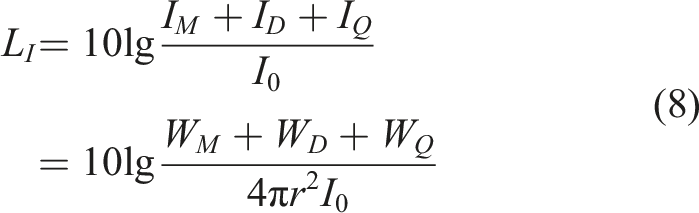
Sound intensity and sound pressure are different, but when air density and sound velocity are not considered, the sound intensity level and SPL are equal, expressed as

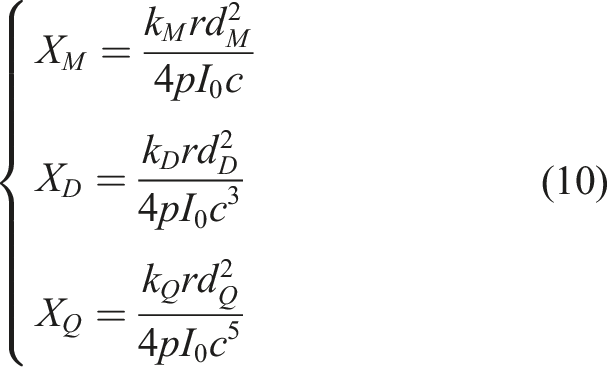
The above equation shows that SPL generated by a point noise source is dependent on the undetermined coefficients, the velocity of movement (
Far-field aerodynamic noise under line noise sources
When the complete vehicle of the high-speed train is regarded as a noise source, it can be considered as a line noise source consisting of several point sources along the centerline of the vehicle. This source radiates noise in the form of an approximate columnar surface wave. The characteristic size of the vehicle body is determined by vehicle height (
The main noise source areas of the whole vehicle include the head vehicle, bogies, a pantograph and others, which have more noise sources than other areas. The volumes of the three basic noise sources are also different from one another. When the vehicle is considered as a line noise source consisting of several points, each consisting of a monopole source, a dipole source and a quadrupole source, the characteristic size of the three sources cannot be unified as the height of the vehicle, but are related to the location of the point in order to accurately express the volumes of noise sources in different areas of the vehicle.
The longitudinal distance between a point on the line noise source and the front of the vehicle ( Feature size and distance of point noise source.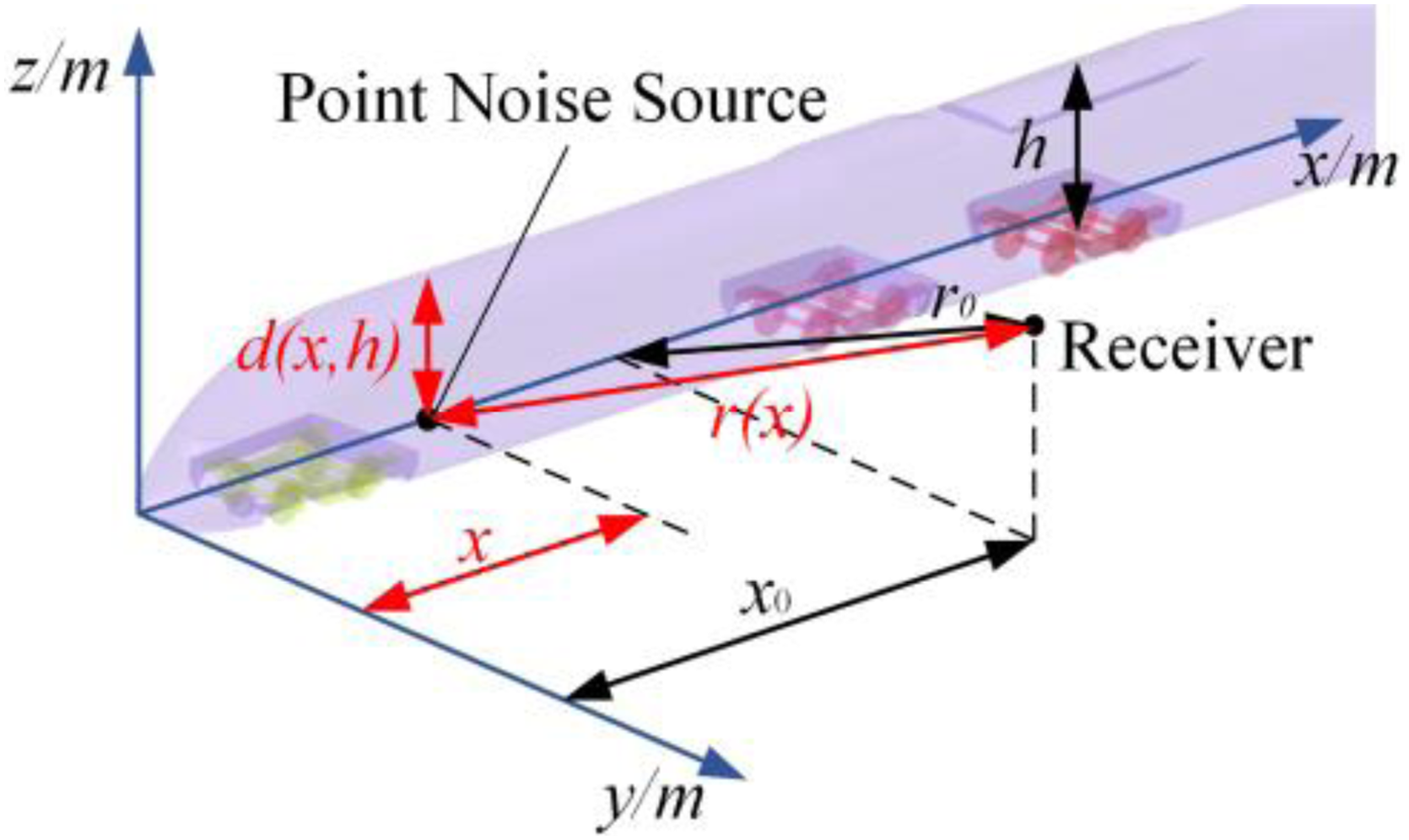
In the figure above,

According to the sound intensity superposition principle, the sound intensity level at the receiver is superimposed by the sound intensity generated at several points along the centerline of the vehicle. Each point consists of three basic sound sources, as shown in the following equation.

Substituting equations (5) and (11) into the above equation, the far-field SPL of the line source can be expressed as

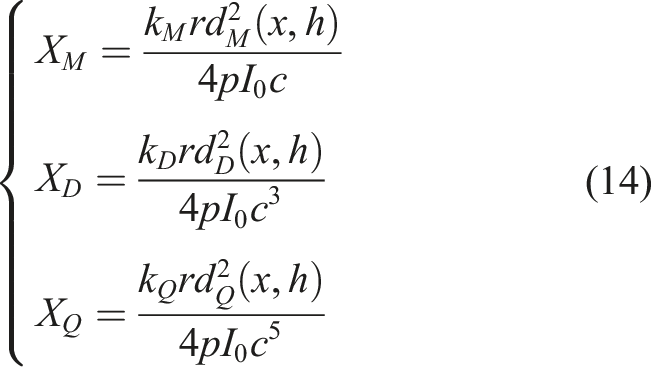

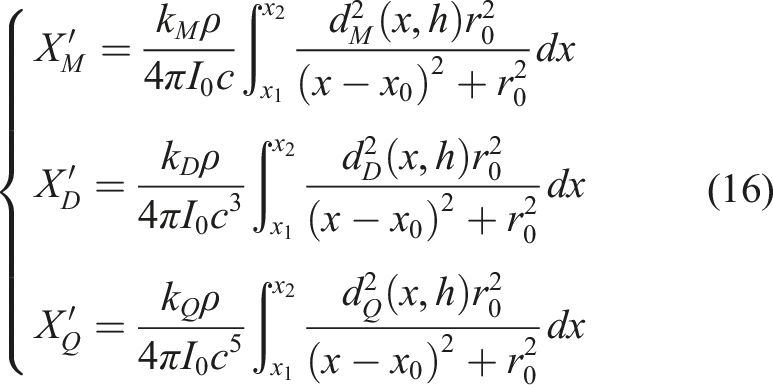
The analysis of the above equation shows that the undetermined coefficients is related to the vehicle size (
Similarity criteria of aerodynamic noise in high-speed trains
According to the literature, aerodynamic acoustic prediction studies need to comply with the geometric similarity criterion,
The research work consists of predicting the far-field SPL at a receiver of the same model, and predicting SPL at the corresponding scale receivers of the full-scale model using scale-down model data. For the former, all similar parameters of the same model are unchanged and the similarity criteria are satisfied, while for the latter, a similarity analysis is required. The scale-down model corresponds proportionally to the full-scale model in terms of vehicle body dimensions and receivers coordinates, so geometric similarity conditions can be satisfied; Numerous studies on aerodynamic noise similarity relations have shown that the (1)
The formula for calculating (2)

The formula for calculating

Comparison and analysis of numerical simulation and prediction results
High-speed train aerodynamic noise calculation model
Geometric model establishment
A full-scale and a 1:8 scale-down geometric model of CRH3 3-vehicle multiple unit are established, as shown in Figure 2. The model includes the head vehicle, intermediate vehicle, rear vehicle and six simplified bogies, retaining the deflector and pantograph deflector. The full-scale model is 72 m long and the scale-down model is 9 m long. Simplified geometric model of high-speed train. (a) The complete vehicle, (b) the bogie section.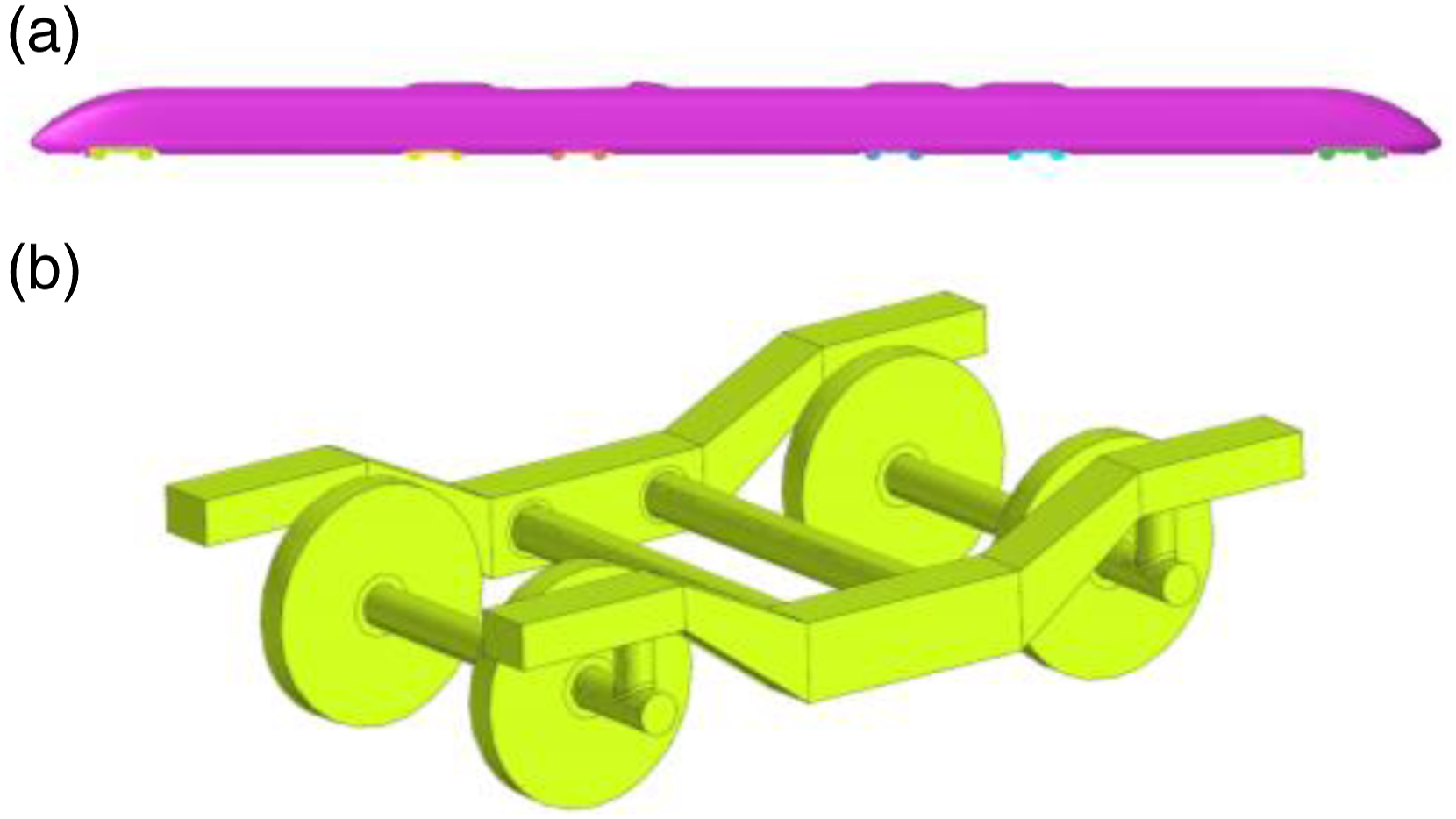
Calculation domain and boundary condition settings
The aerodynamic calculation domain of the scale-down model of high-speed train is shown in Figure 3. The calculation domain is 44 m long. The inlet of the flow field is 10 m from the front of the vehicle (greater than one time the length of the vehicle) and the outlet is 25 m from the rear of the vehicle (greater than 2 times the length of the vehicle). The width of the flow field is 8 m (more than 10 times the width of the vehicle) and the height is 5 m (more than 10 times the height of the vehicle). The length, width and height of the full-scale model calculation domain are 402 m (150 m from the front of the vehicle at the inlet and 180 m from the rear of the vehicle at the outlet), 80 m and 50 m respectively. Scale-down model calculation domain and boundary setting.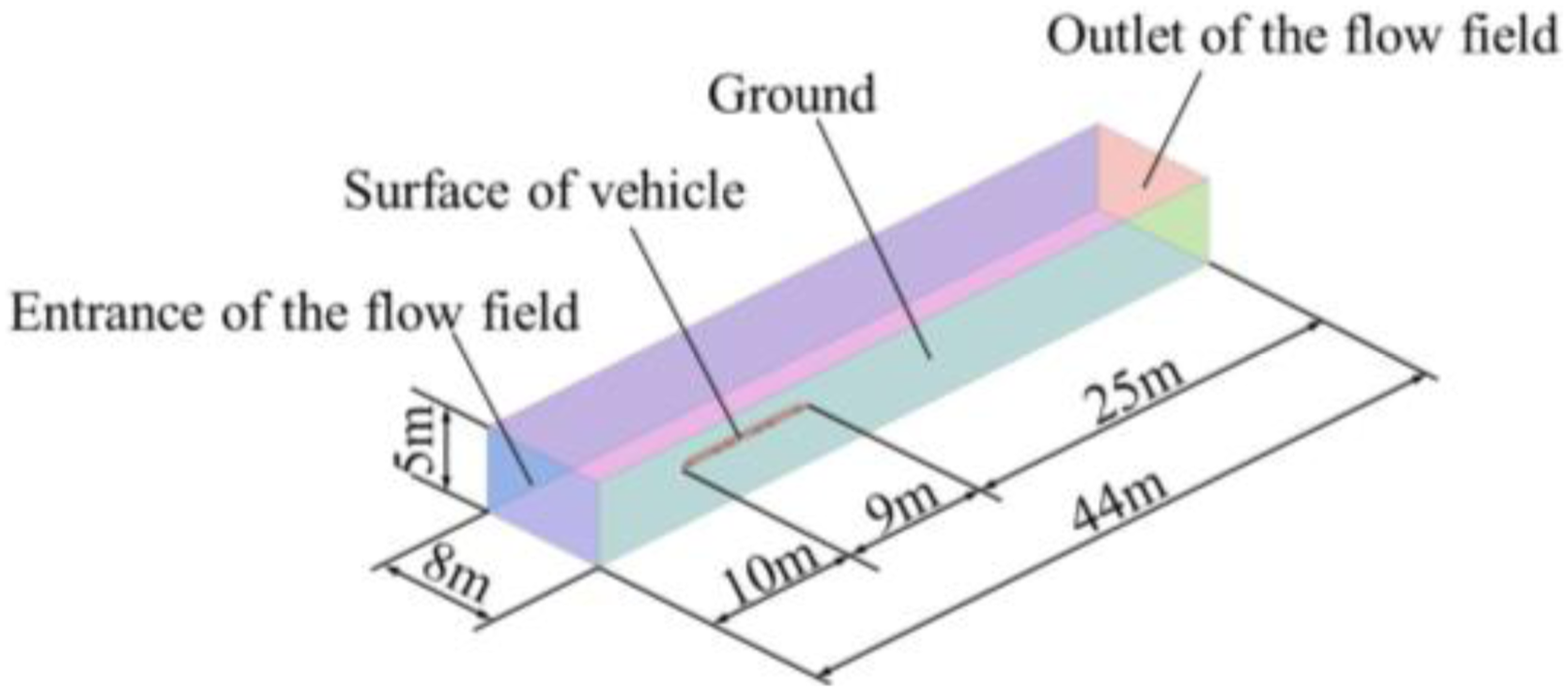
Boundary condition settings.
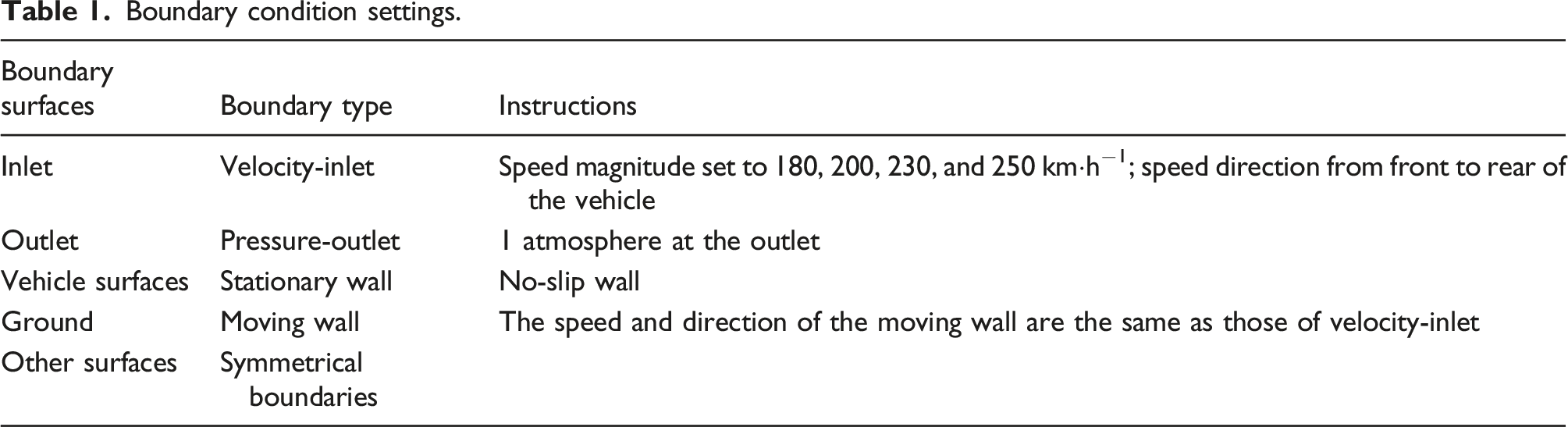
Steady state calculations are set to the Standard
Mesh division and independence test
Unstructured meshes are used for the flow field. Tetrahedral meshes are used for the near field, pentahedral meshes are used for the transition area between the near and far field, and hexahedral meshes are used for the far field. Due to the complex structure of the head vehicle, pantograph and bogies, which are prone to generate large noise, the meshes of these parts are encrypted.
Meshes independence test for scale-down model.
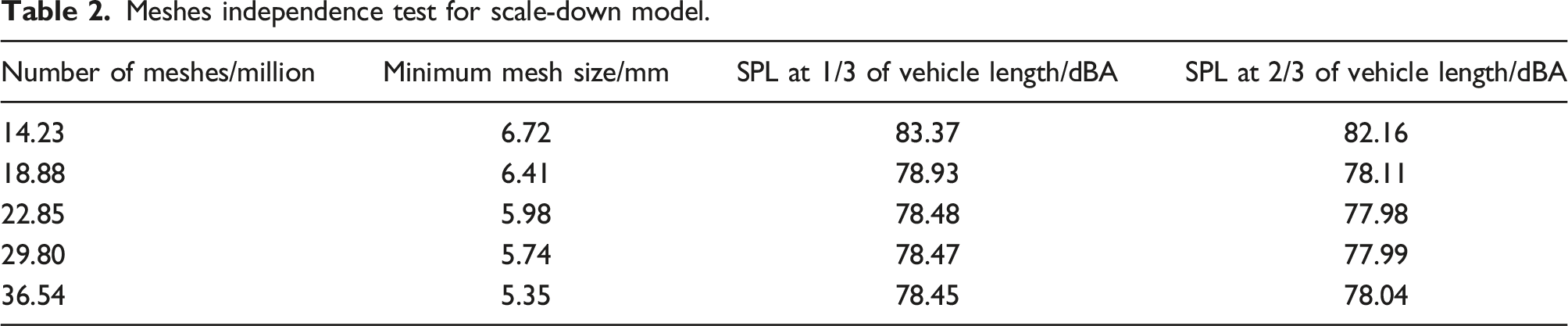
The above table indicates that SPL is basically stable at about 78dBA as the number of meshes increases, starting from 22.85 million meshes. Considering the calculation accuracy and simulation time, the 29.80 million meshes were used for numerical simulation. Set seven layers of boundary layer meshes, and normal growth rate is 1.1. In the high Meshes for the scale-down model. (a) Local flow field, (b) boundary layer, (c) the front of the vehicle, (d) bogies.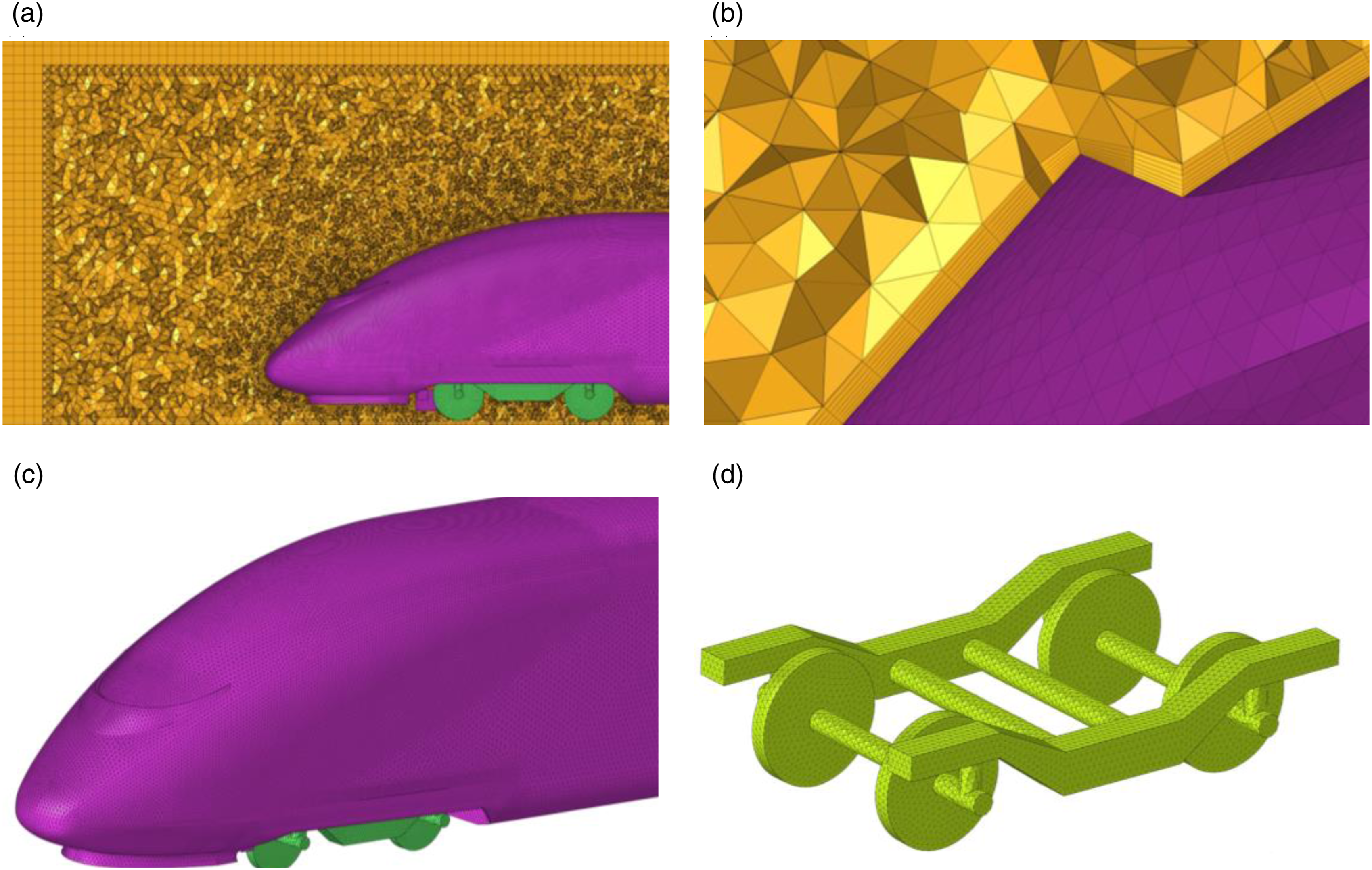
Meshes independence test for full-scale model.
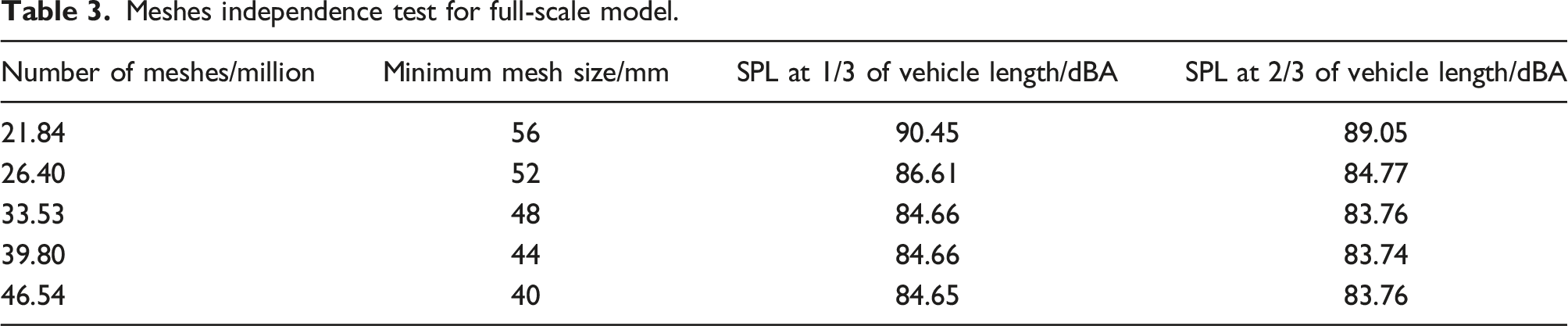
When the number of meshes is higher than 33.53 million, the change of SPL is basically stable. Considering the calculation accuracy and simulation time, 33.53 million meshes are used for numerical simulation. The minimum mesh scale of the full-scale model is 48 mm, with a total of 33.53 million meshes. Seven boundary layers are set up, the growth rate is 1.1, y+ is taken as 30, and the thickness of the first mesh layer is 0.36 mm.
Prediction of aerodynamic noise among different velocities
For the 1:8 scale-down complete vehicle model (including the vehicle body and bogies), aerodynamic noise at different velocities is predicted based on the line source SPL calculation formula. The predicted values will be compared with the simulated values to verify the accuracy of equation (15) in predicting the SPL at the specified velocity of the same model when the complete vehicle is used as the noise source.
Receivers settings and simulation results analysis
At a distance of 7.5 m on the same side of the vehicle centerline, with a longitudinal spacing of 3 m and a distance of 0.8 m from the ground, four receivers are set up, as shown in Figure 5. Far-field receivers location. (a) Front view, (b) left view.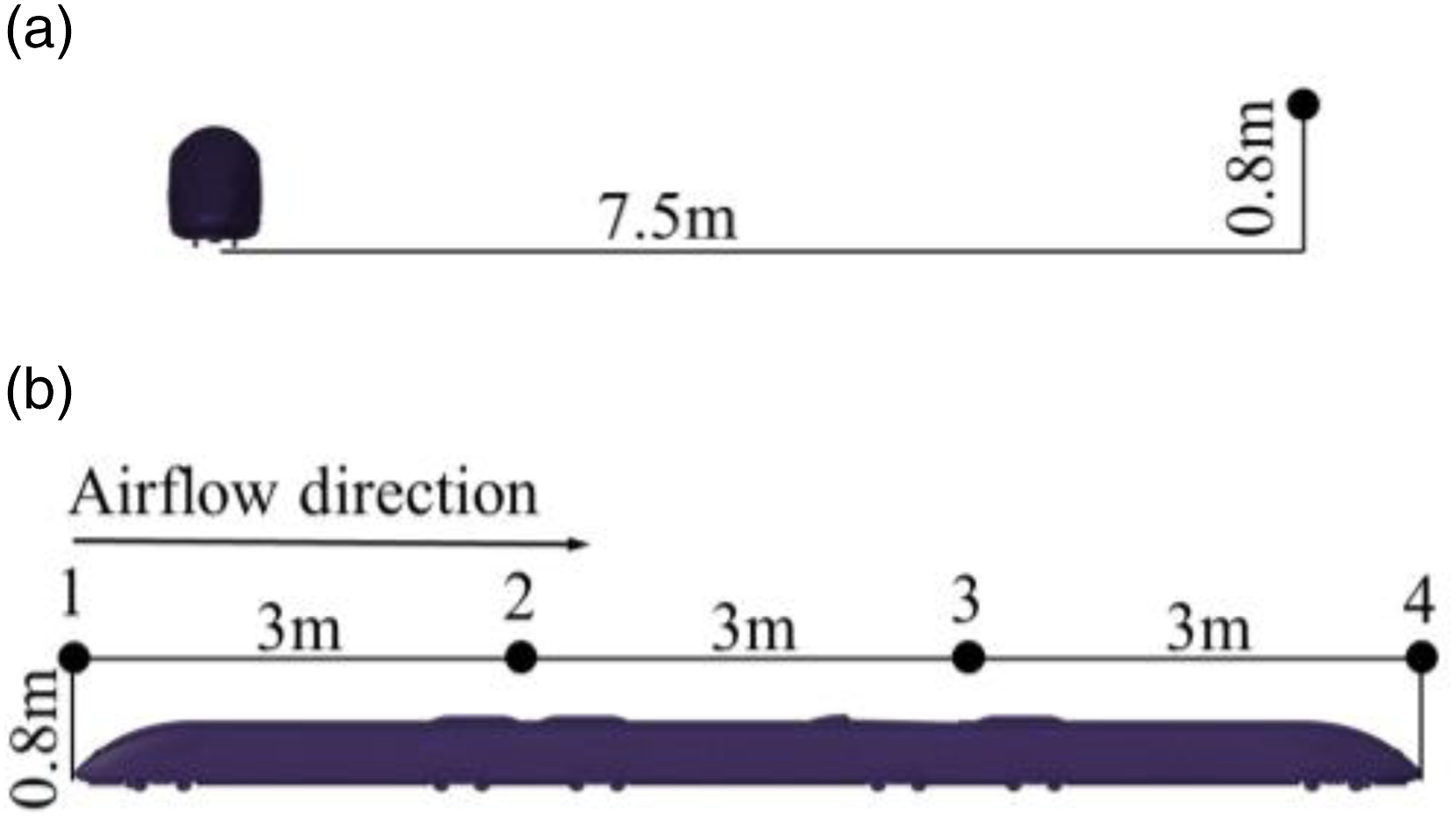
The steady state calculation obtains the surface pressure distribution of scale-down model as shown in Figure 6 (taking 250 km·h−1 working condition as an example). According to Figure 6(a), the pressure at the front and rear of the vehicle is smaller relative to the middle of the vehicle. According to Figure 6(b)–(d), the surface pressure at the nose of the front end, the windward side of the bogie, and the windward side of the roof air conditioner are larger, with a maximum of 3.02 e3 Pa, and the surface pressure along the direction of the airflow will decrease rapidly, and then rebound slightly. Surface pressure distribution of scale-down model. (a) complete vehicle, (b) front end of a vehicle, (c) first bogie of the head vehicle, (d) roof air conditioner.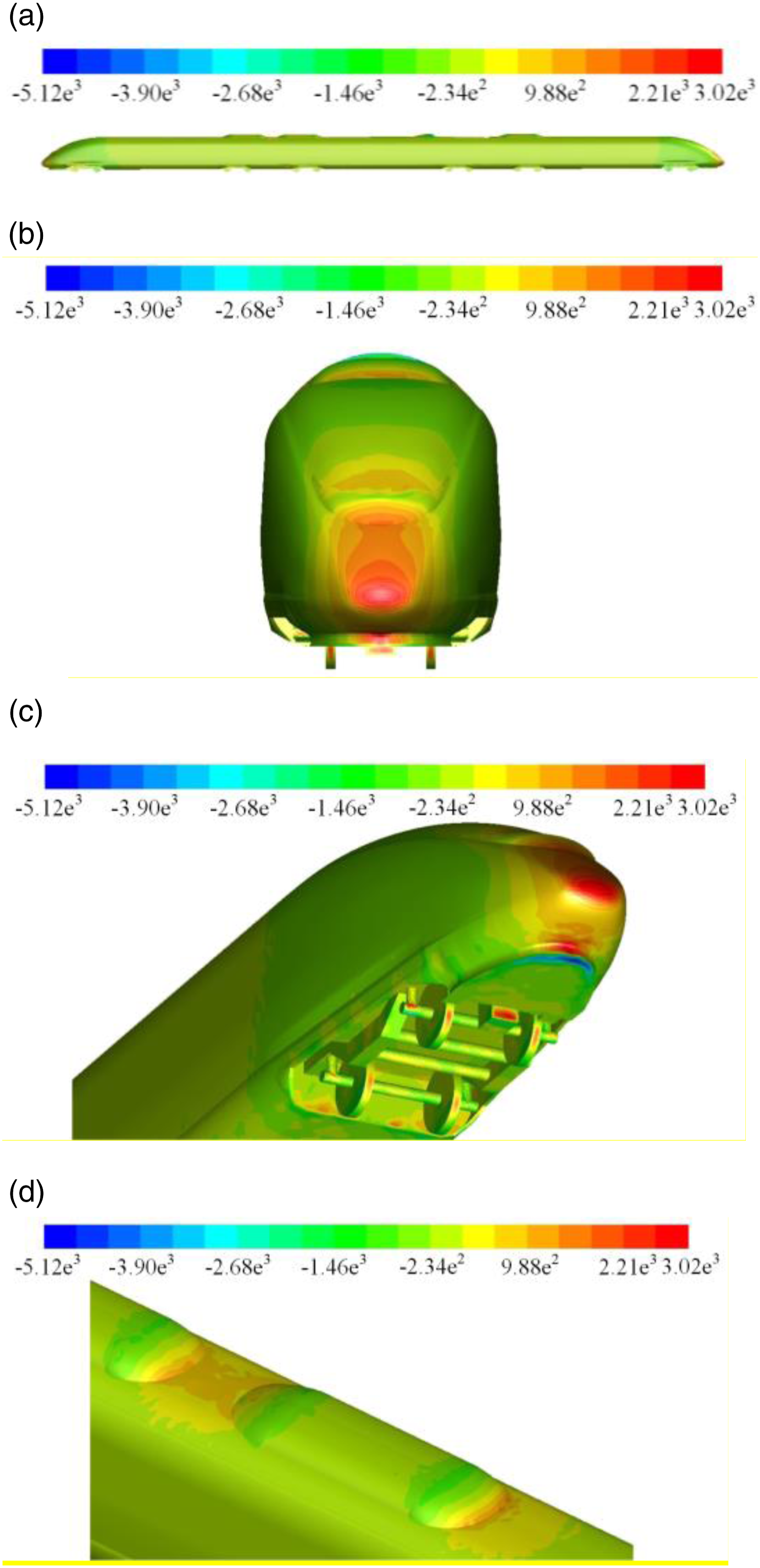
Far-field SPL at different velocities/dBA (complete vehicle).
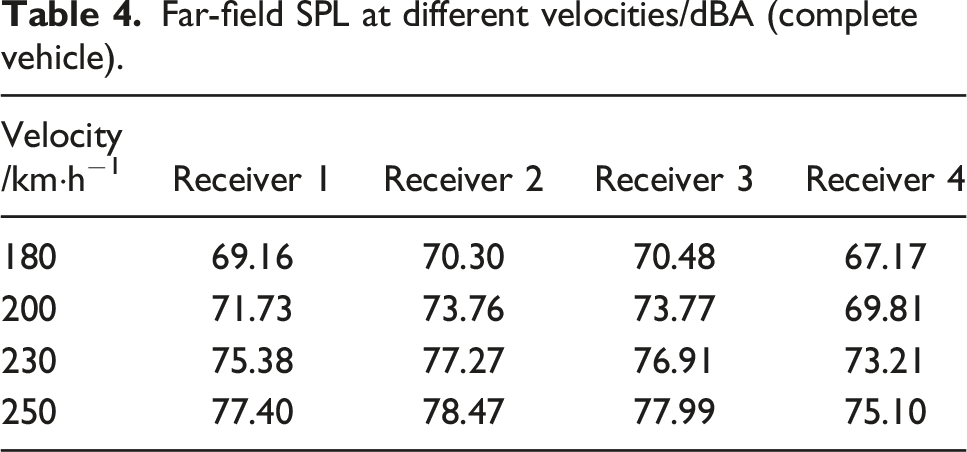
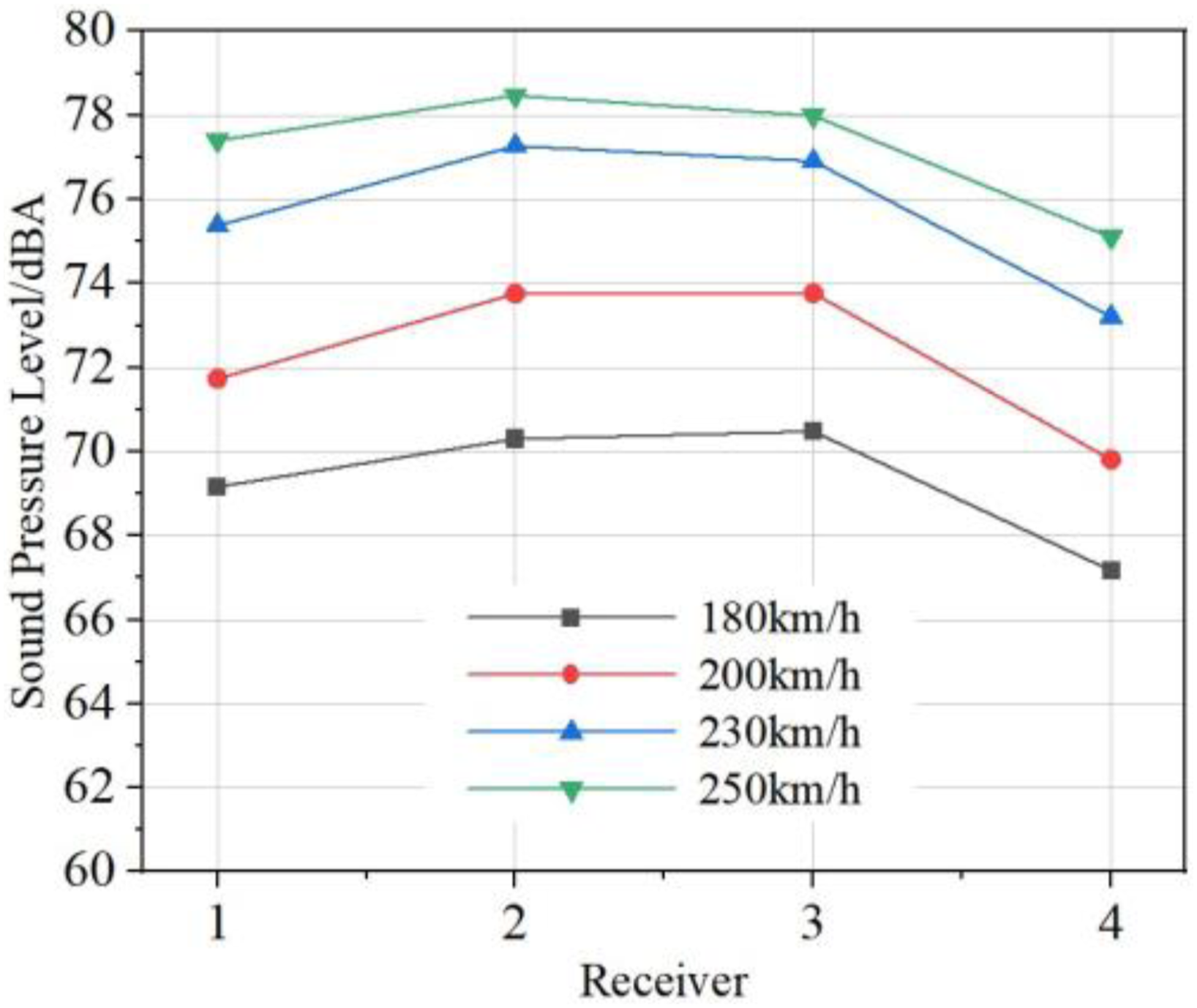
SPL trend of each receiver at different velocities.
The above table and the figure shows that, SPL values at receiver 1 and 4, which are flush with the front and rear of the vehicle, are significantly smaller than those at receiver 2 and 3 at the same velocity, while SPL values at receiver 2 and 3 do not differ significantly. The speed does not affect the variation rule of the total SPL along the centerline of vehicle. The 1/3-octave SPL spectra of each receiver at different speeds is shown in Figure 8. 1/3-octave A-weighted spectra. (a) receiver 1, (b) receiver 2, (c) receiver 3, (d) receiver 4.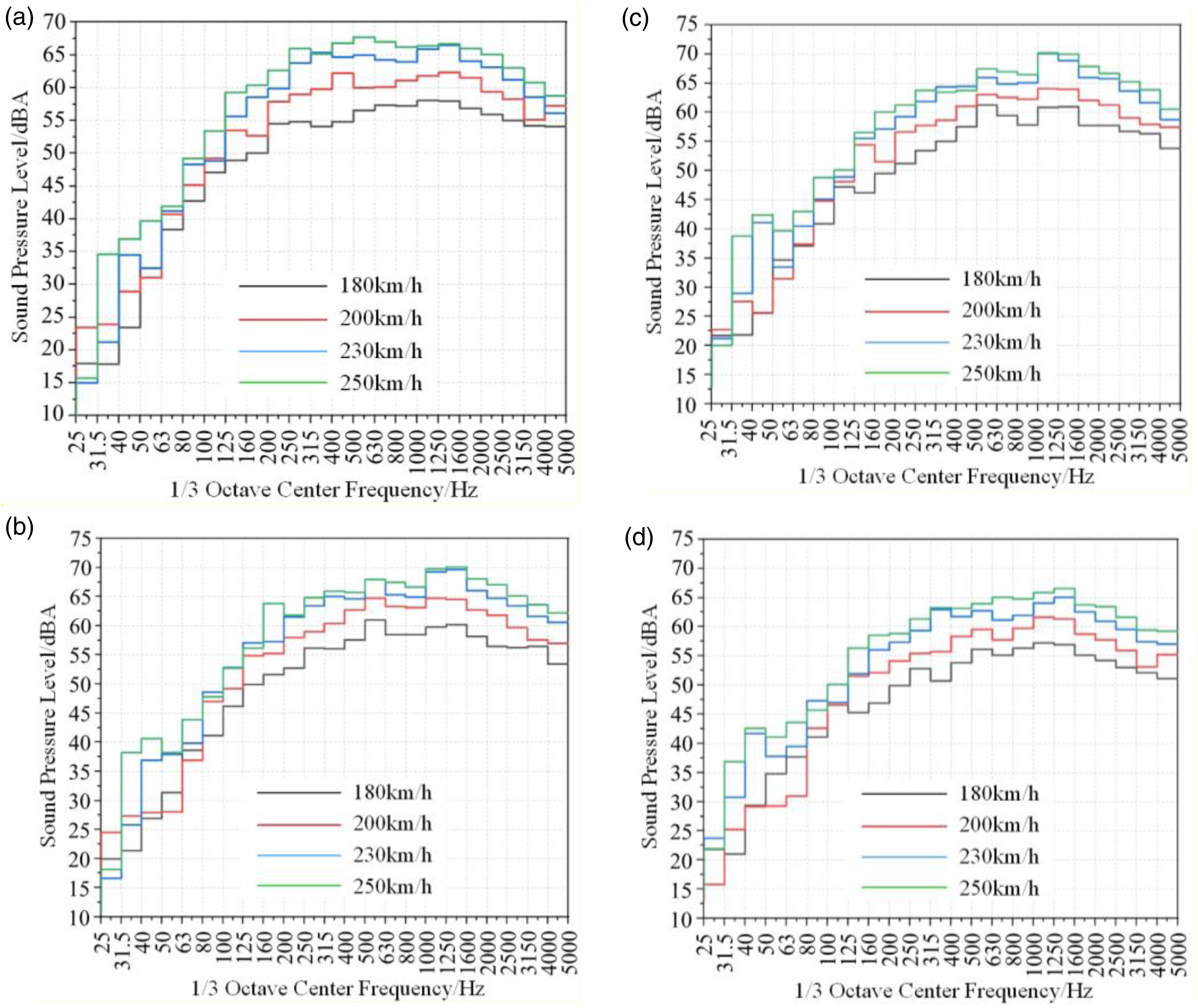
The above figure shows that aerodynamic noise exists over a wide frequency domain, and SPL in the range of 200–5000 Hz contributes the most to the total SPL. When the frequency reaches 1250 Hz, SPL peaks and starts to decrease. In the range of 200–5000 Hz, there is not much difference between the increase and decrease of SPL, while the increase of SPL below 200 Hz is significant. In addition, the speed and the location of the receiver do not affect the trend of SPL with frequency.
High-speed aerodynamic noise prediction using low-speed state simulation values
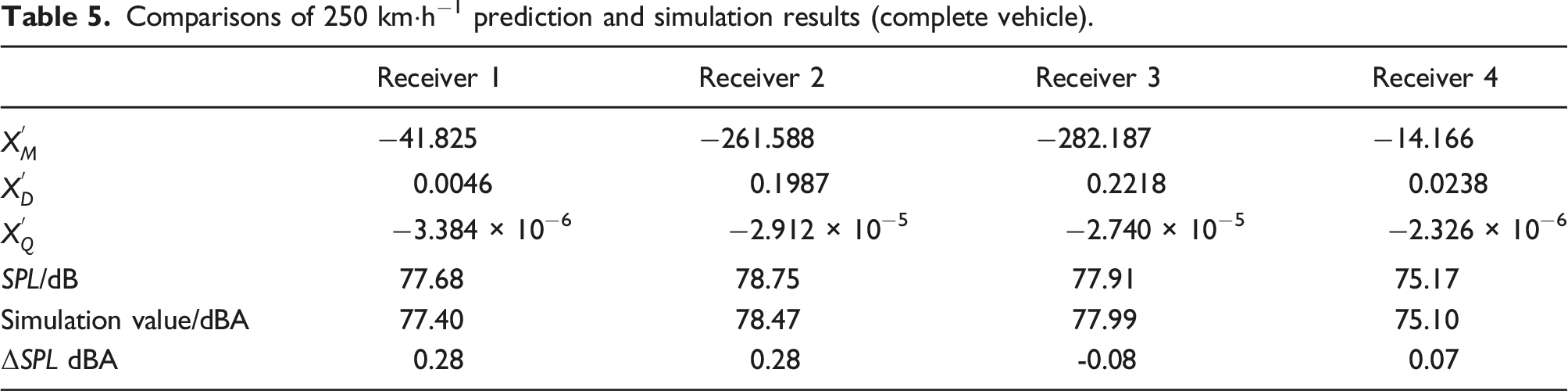
Based on equation (15), the noise data at 180, 200 and 230 km·h−1 at the same receiver is used to calculate the undetermined coefficients, and the undetermined coefficients are used to predict SPL of that receiver at 250 km·h−1. In this part of the research work, it has been ensured that the similar parameters of the scale-down model for the four velocity conditions satisfy the similarity criterion (geometrical similarity, 



Comparisons of 250 km·h−1 prediction and simulation results (complete vehicle).
Low-speed aerodynamic noise prediction using high-speed state simulation values
Comparisons of 180 km·h−1 prediction and simulation results (complete vehicle).
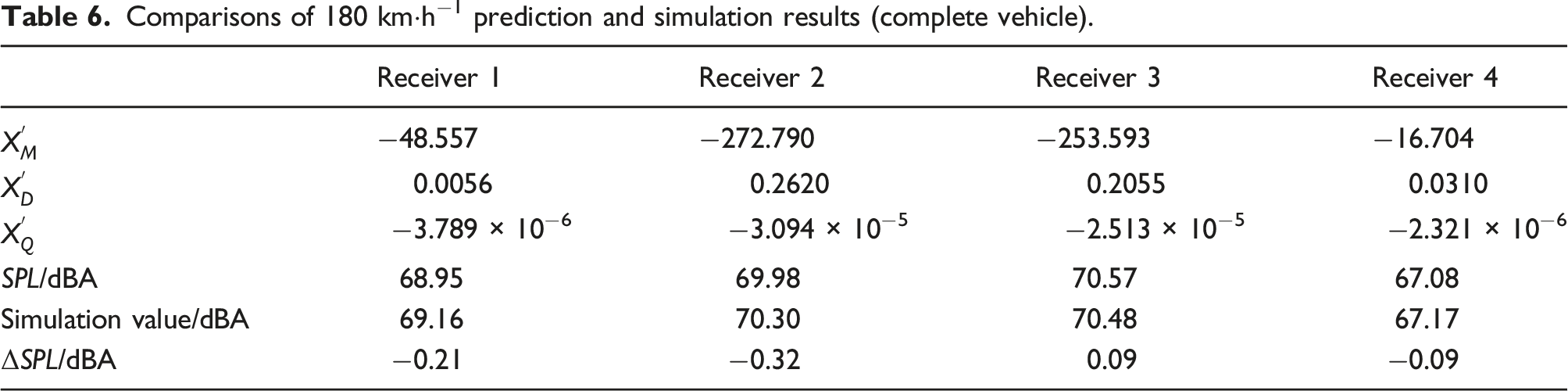
The maximum error between the predicted aerodynamic noise values for the low-speed condition and the numerical simulation results is 0.32 dBA. The results show that the aerodynamic noise calculation method in this study is accurate in predicting aerodynamic noise at different speeds for the same model.
According to Tables 5 and 6, the values of the undetermined coefficients have the following characteristics. The undetermined coefficients of dipole sources at different receivers are all positive, while those of monopole and quadrupole sources at different receivers are all negative. According to equation (16), the product function of the three undetermined coefficients is positive and the integration result is positive. Since
Analysis of the pattern of change of the undetermined coefficients: (1) The three undetermined coefficients differ significantly between different receivers. This is because according to the analysis above, there are variations in the characteristic sizes of sound sources at various points along the centerline of the vehicle, and different receivers have different distances from the sound sources to various points on the line, which in turn affects the integration results in equation (15). (2) The undetermined coefficients of dipole sound source vary relatively smoothly in the middle of the vehicle (receiver 2 and 3), while the values in the middle of the vehicle are greater than those at both ends of the vehicle (receiver 1 and four). The trend of the undetermined coefficients of dipole sound source is similar to the trend of SPL. The tendency of the undetermined coefficients of monopole and quadrupole sources varies in the opposite direction to SPL, meaning that the values in the middle of the vehicle are smaller than those at the ends of the vehicle. (3) The similarity of the same undetermined coefficients at the same receiver indicates that velocity does not have a significant effect on the undetermined coefficients.
High-speed aerodynamic noise prediction of local noise sources
Using the same method, far-field aerodynamic noise predictions are performed for the local noise sources (bogies). The accuracy of the prediction is verified when the first bogie of head vehicle or all bogies are used as the noise source.
The first bogie of head vehicle as a noise source
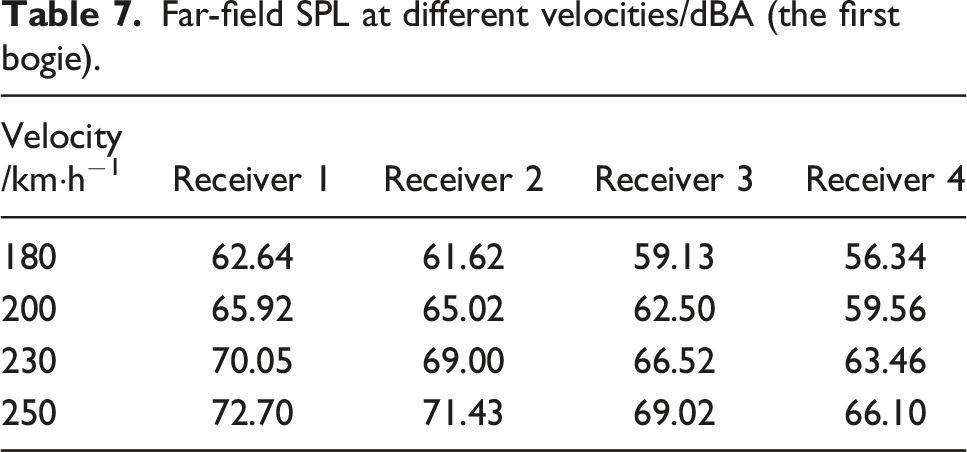
Far-field SPL at different velocities/dBA (the first bogie).
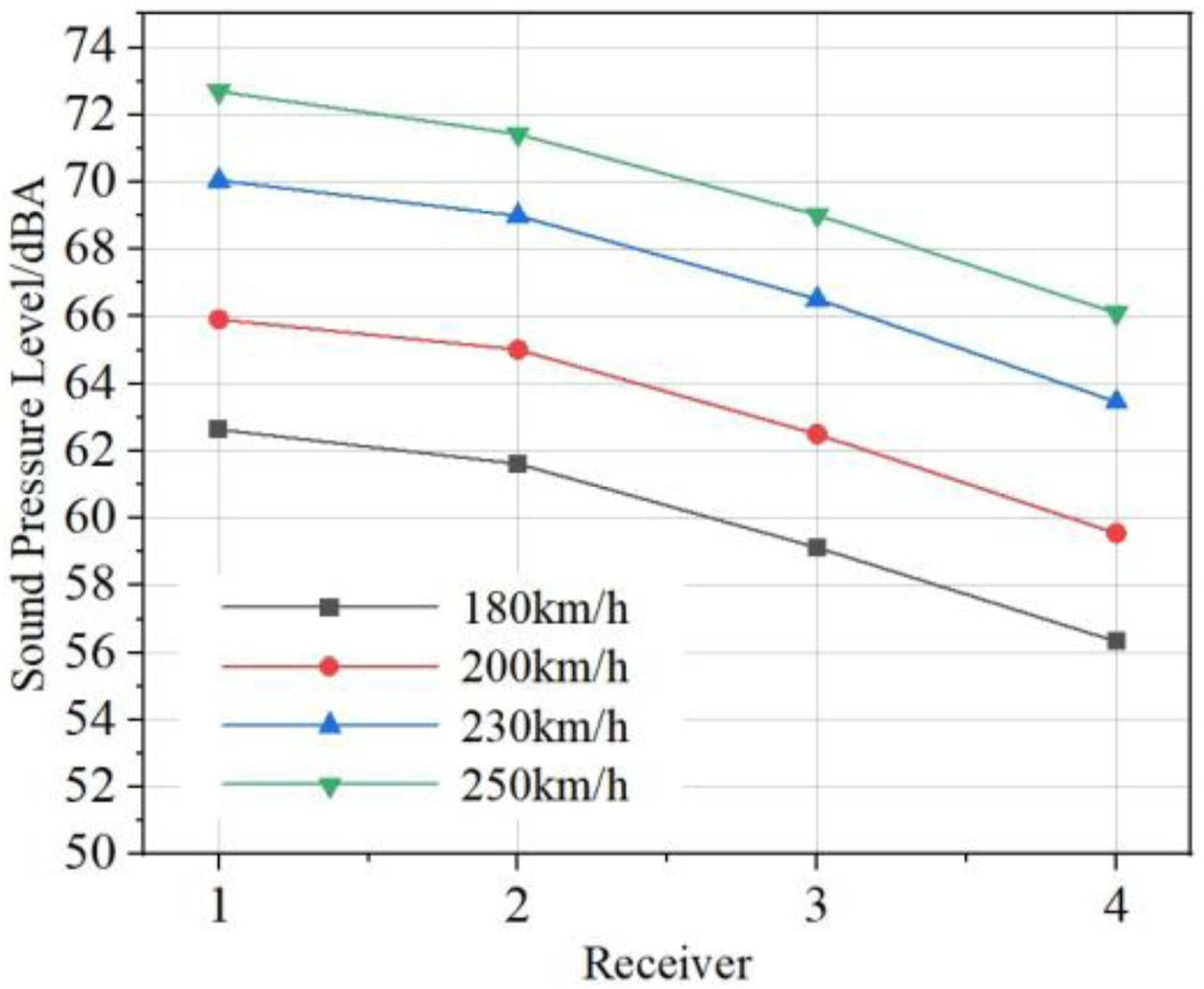
Trend of SPL (the first bogie).
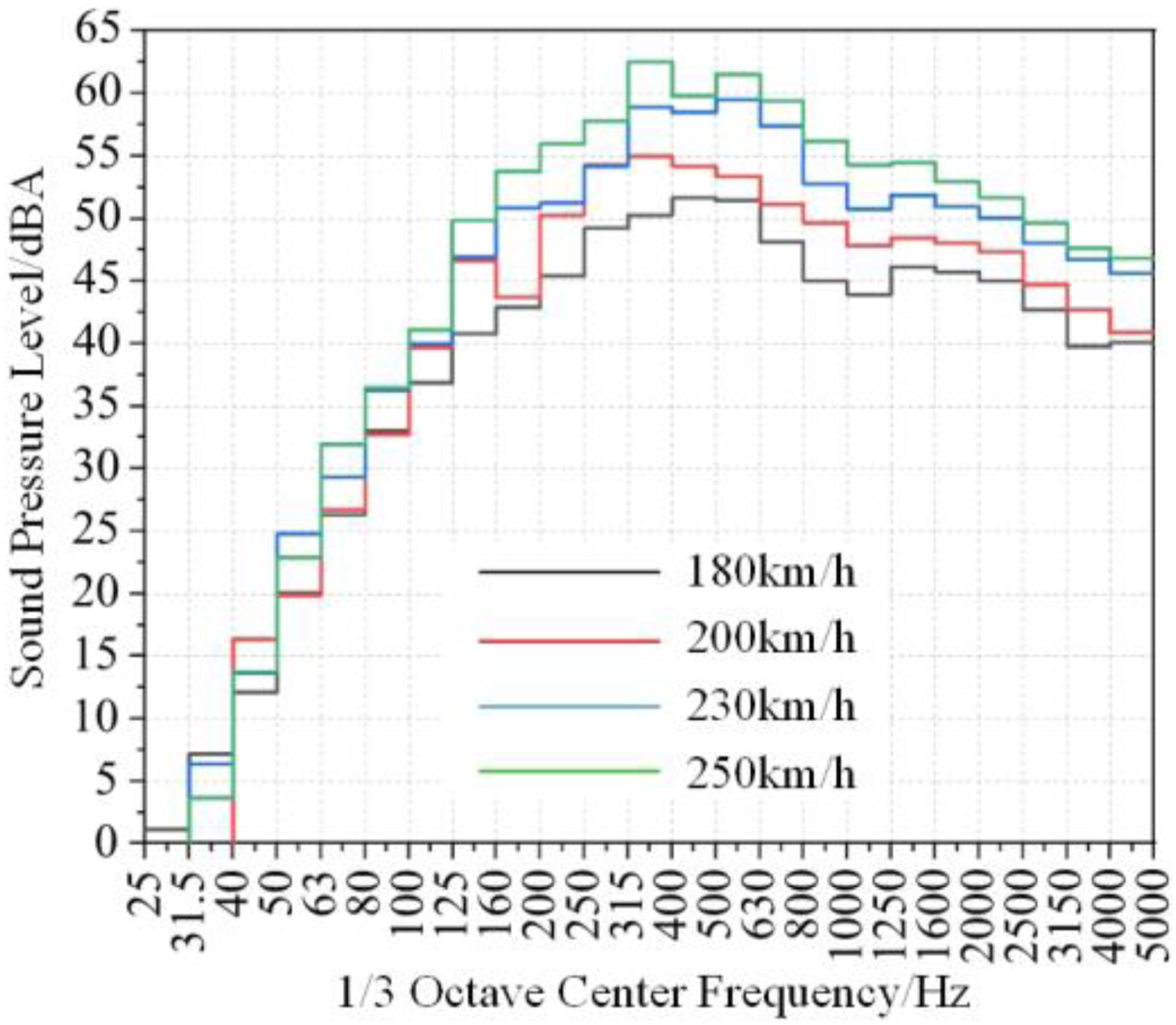
1/3-octave A-weighted spectra at receiver 3 (the first bogie).
Comparisons of 250 km·h−1 prediction and simulation results (the first bogie).
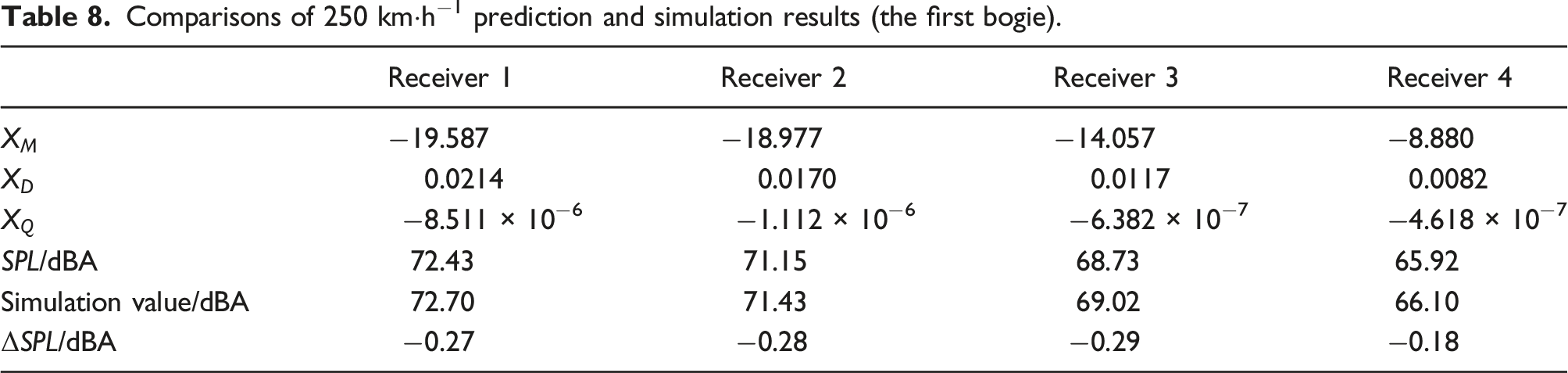
The above table shows that when the first bogie of head vehicle is used as a local noise source, the maximum error between the predicted and simulated values at each receiver is 0.28 dBA, which is a relatively accurate prediction.
As the distance between the receiver and the sound source increases, the undetermined coefficients of dipole sources gradually decrease, with the same pattern of variation as SPL, while the undetermined coefficients of monopole and quadrupole sources gradually increase. The distance-dependent characteristic of the undetermined coefficients is because the main part of the noise generated by the bogie is in frontal contact with the airflow, which is the area in the negative direction of the x-axis with respect to the center of the bogie (refer to Figure 1). When the receiver moves along the direction of the airflow (forward of the x-axis), the area where the bogie is in frontal contact with the airflow becomes difficult to effect for more distant receivers. Even if the entire bogie area is considered as a single point, the characteristic size of the three sources at this point will vary with distance, which in turn affect the variation of the undetermined coefficients. However, as the key areas of noise emitted by the bogie have a similar effect at the same receiver, it is more accurate to use the same receiver for prediction.
All bogies as noise source
The six bogies of the three vehicles are used as a noise source, and the receivers and speed settings remain unchanged. As the impact of the noise generation area on each bogie is different for each receiver, this means that each bogie has different characteristic sizes for the three sources. If all bogies are considered as six point noise sources and each point source contains three undetermined coefficients in equation (9), equation (9) will contain a total of 18 undetermined coefficients based on the principle of sound intensity superposition, which is difficult to solve and requires 18 sets of data at different velocities. To simplify the calculation, all bogies are considered as a line source. The location of the line source is the line connecting the bogie centers.
Far-field SPL at different velocities/dBA (all bogies).

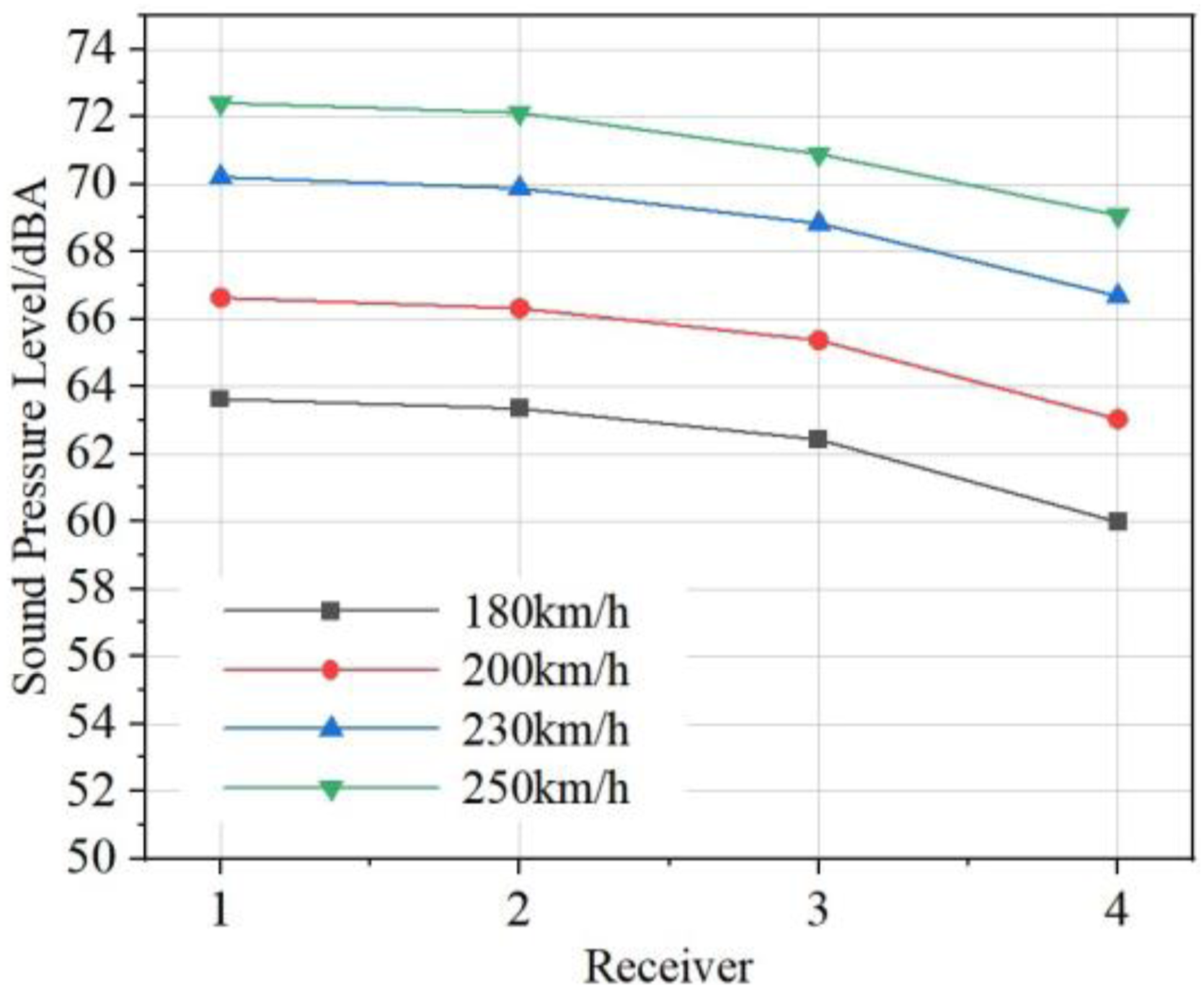
Trend of SPL (all bogies).
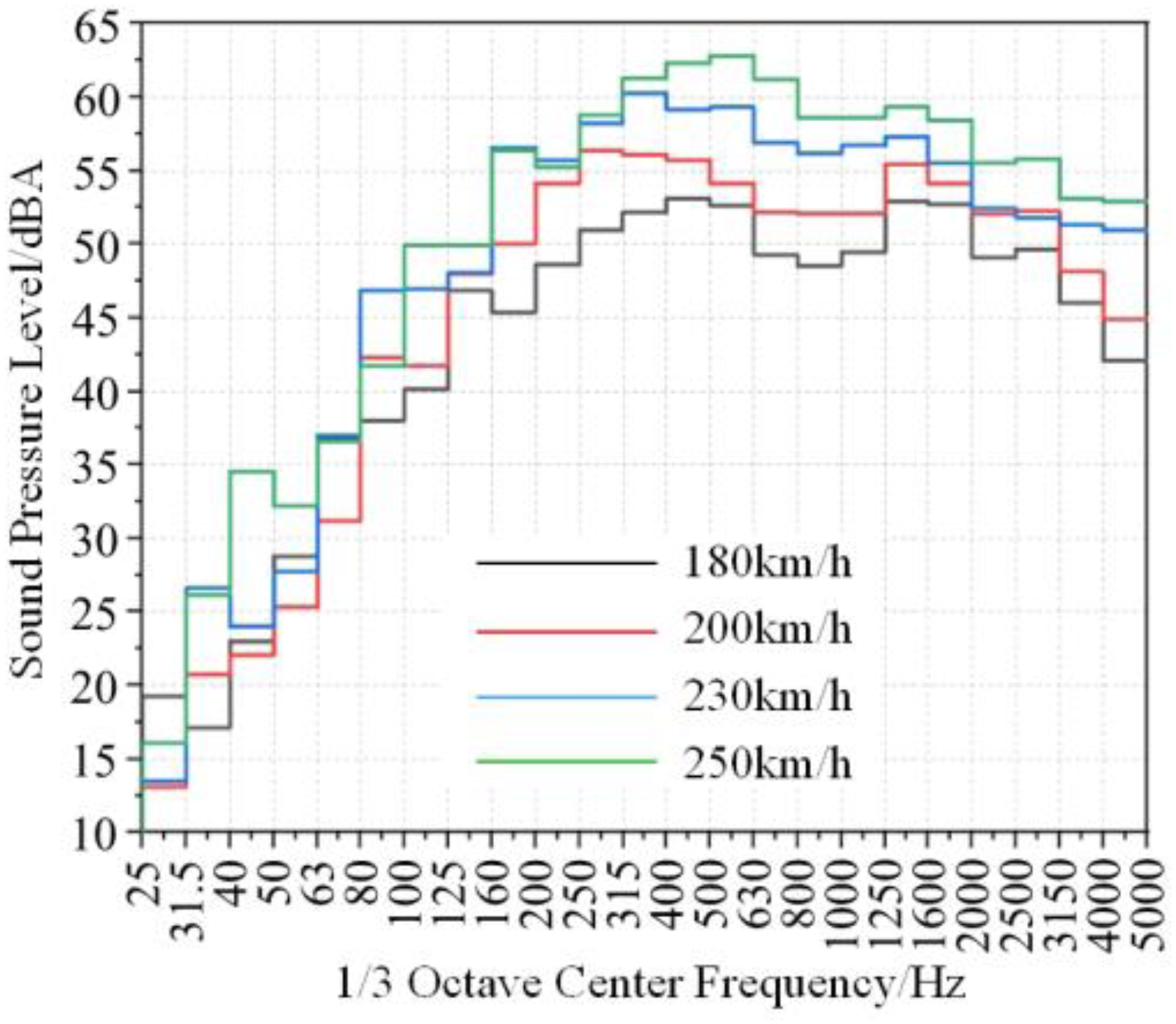
1/3-octave A-weighted spectra at receiver 3 (all bogies).
Comparisons of 250 km·h−1 prediction and simulation results (all bogies).
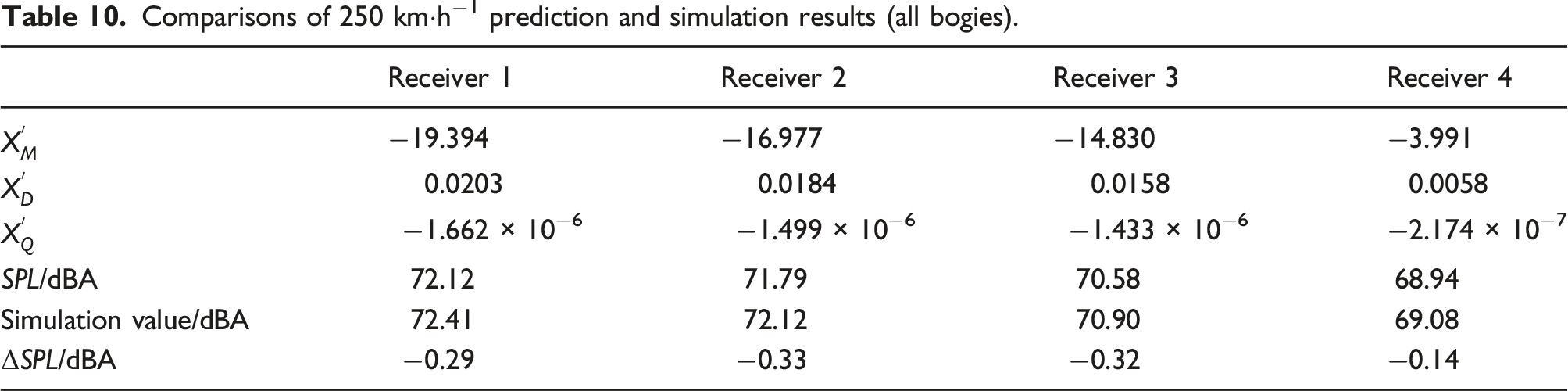
The table above shows that the maximum error between the predicted and simulated values is 0.33 dBA for the six bogies as a noise source. The variation pattern of the undetermined coefficients of dipole source with the location of receivers is similar to that of the aerodynamic noise generated by the six bogies, meaning that SPL and the undetermined coefficients of dipole sources are higher at the receiver near the first bogie and gradually decrease from front to back. The variation pattern of the undetermined coefficients of monopole and quadrupole sources is the opposite of that of dipole sources. The undetermined coefficients of dipole sources are positive, while those of monopole and quadrupole sources are negative. The above work further validates the high accuracy of the local noise source prediction.
Prediction of aerodynamic noise of full-scale model by scale-down model
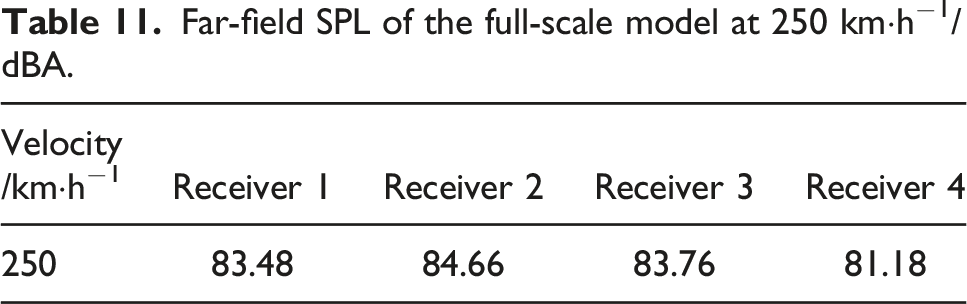
It is more practical to reduce the workload and improve the efficiency of the calculation by using the scale-down model simulation data to predict the aerodynamic noise of the full-scale vehicle body based on equation (15).
Far-field SPL of the full-scale model at 250 km·h−1/dBA.
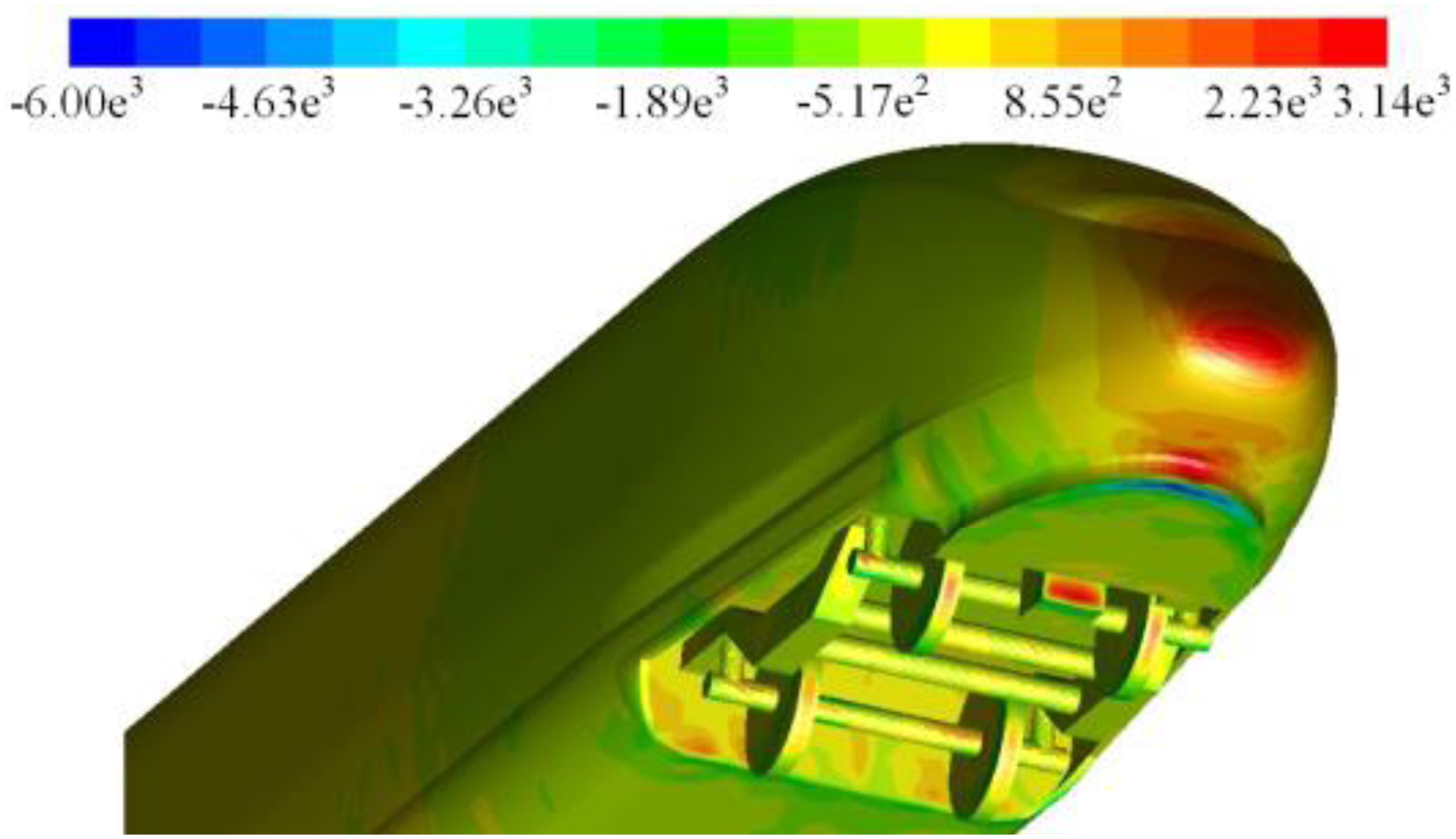
Full-scale model surface pressure distribution.
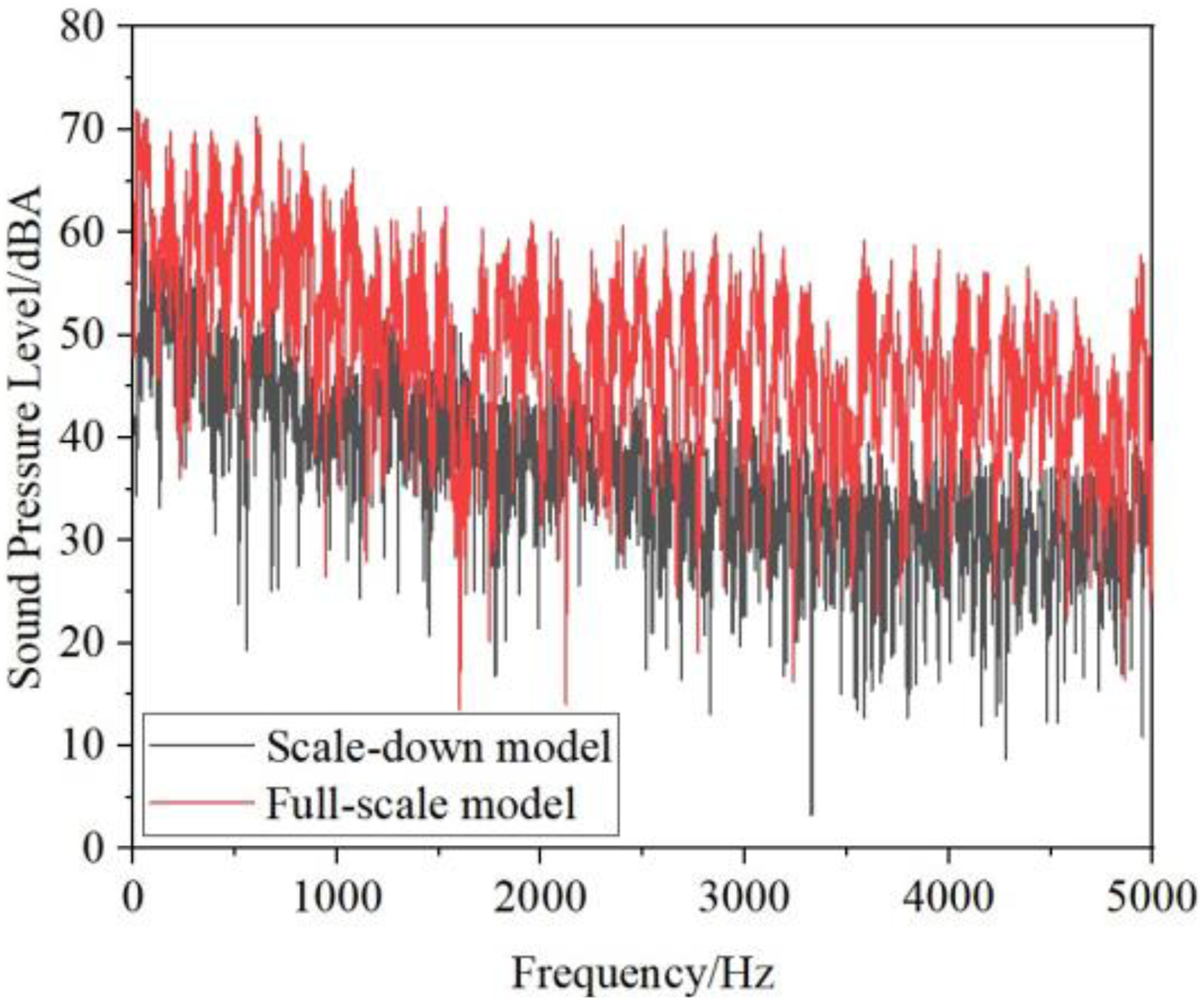
Spectrogram of SPL at receiver 3 (scale-down model and full-scale model).
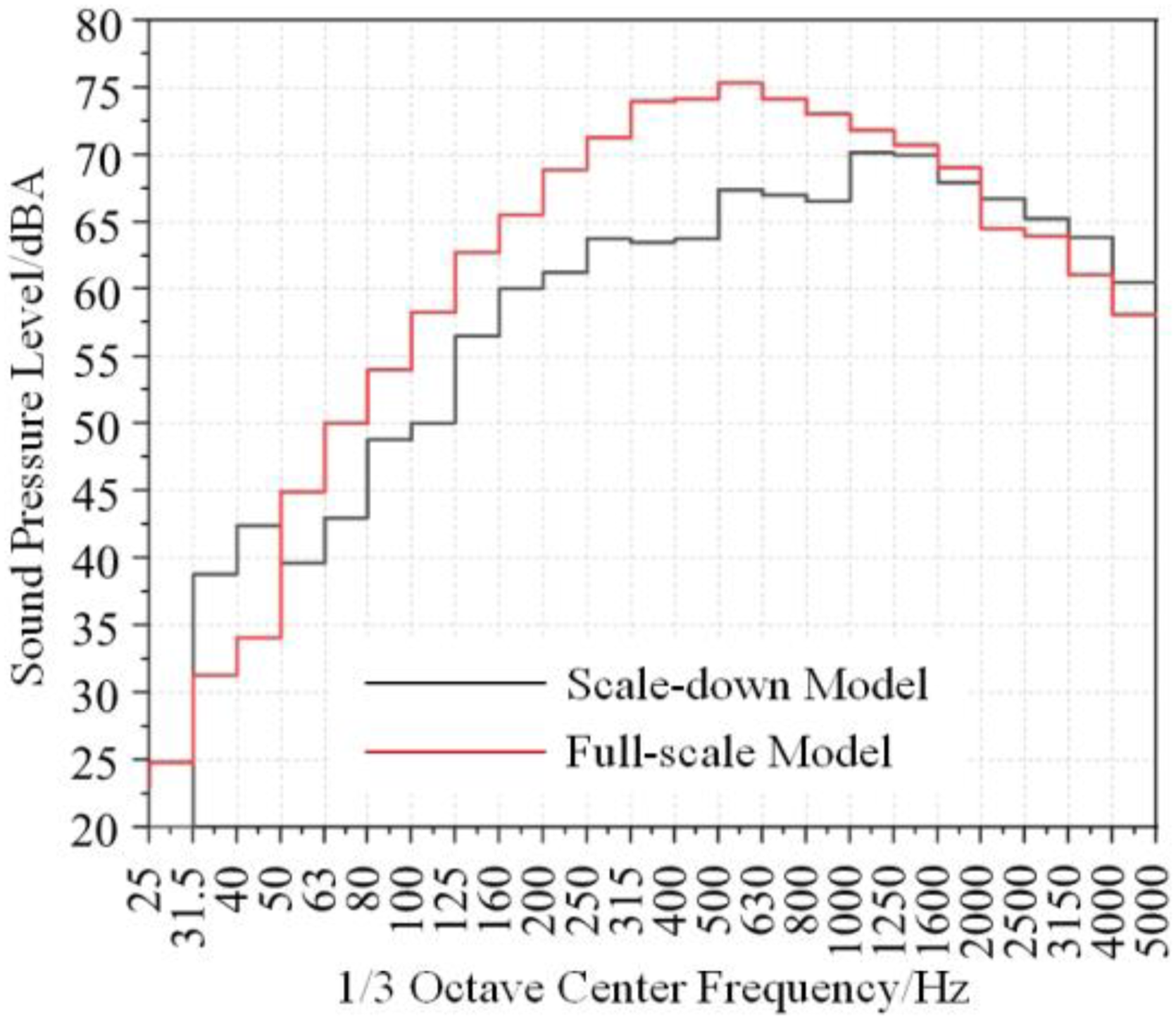
1/3-octave A-weighted spectra at receiver 3 (scale-down model and full-scale model).
According to the analysis above, the three undetermined coefficients are generally constant at the same receiver and the same noise source. However, the size of the full-scale vehicle body and the location of the receivers vary considerably compared to the scale-down model, resulting in changes to the undetermined coefficients, so the undetermined coefficients need to be analyzed. In equation (15), the 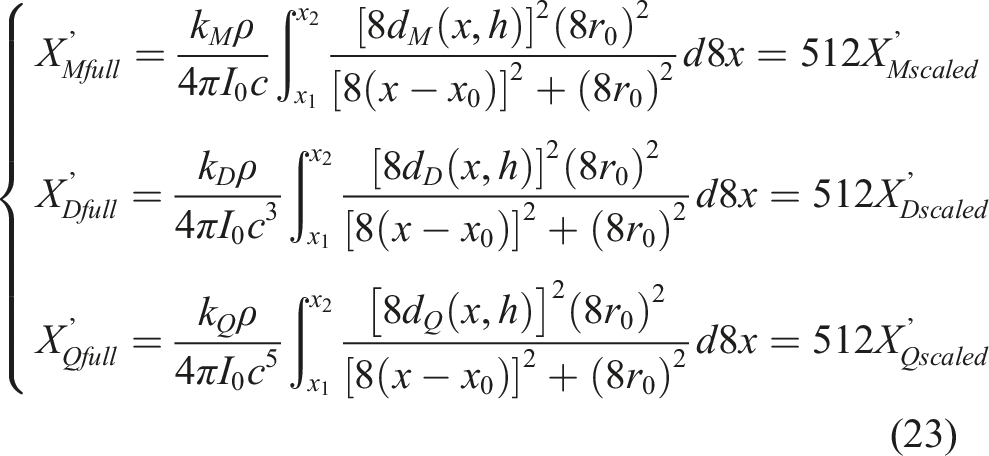
SPL comparisons of full-scale model at 250 km·h−1.
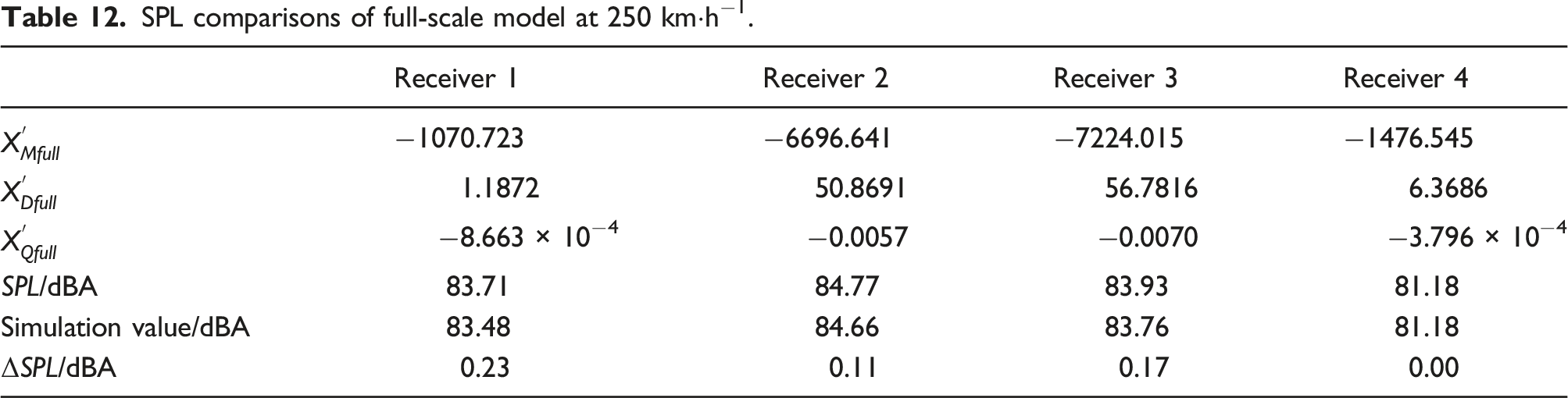
The above table shows that the maximum error between the predicted and simulated values is 0.23 dBA, which means that the predicted results are relatively accurate.
Discussion
For the numerical calculation results of SPL of the scale-down model at 250 km·h−1, with the increase of the number of meshes, SPL is basically stable from 22.85 million meshes onwards, which is about 78 dBA (shown in Table 2). Compared with the simulation results of related study (SPL at the receiver at 2/3 of the vehicle length in a 1:8 scale-down 3-vehicle formation high-speed train model is approximately 78.5 dBA), the difference between the data in this study and the literature is approximately 0.5 dB at the same location. 13 Considering the difference between the two models, the difference is within the allowable range, so the calculation results of the scale-down model in this study are accurate.
According to the related study, when the whole vehicle is the noise source, the far-field aerodynamic noise starts from the first bogie and varies steadily to the last bogie, while the noise at the front and rear of the vehicle decreases significantly. 16 The change rule of SPL at different speeds in the figure is the same as the conclusion of the literature. For the 1/3-octave A-weighted spectrum, SPL change of the scale-down model in the literature 23 is consistent with the results of this paper, which means that it rises first and then slowly decreases, and the main frequencies are all 200−5000 Hz. According to literature, 24 the maximum surface pressure of the full-scale high-speed train with 3-vehicle formation is 3.10 e3 Pa, which is similar to the maximum pressure of the full-scale model (3.14 e3) in this paper. All these prove the accuracy of the numerical simulation results in this paper.
In this paper, it is found that when one or more bogies are used as the noise source, the main sound generating part is always the first bogie at one end of the head vehicle. When the frequency increases to 1250 Hz, SPL, which is gradually decreasing, shows a small rebound and then continues to decrease. In addition, as the frequency increases, SPL of the scale-down model increases and decreases more slowly than that of the full-scale model.
For noise prediction work, several similarity criteria need to be satisfied. Geometric similarity and
Conclusion
In this study, the relationship between the three pneumatic basic noise sources and the far-field SPL of high-speed trains is investigated, the formula for predicting the aerodynamic noise of high-speed trains is derived, and the applicability of the aerodynamic noise calculation formula is analyzed and discussed from several aspects, providing a new and feasible approach for the prediction and analysis of aerodynamic noise of high-speed trains. The conclusions are as follows. (1) The magnitude of SPL values is related to the location of the receiver, the size of the vehicle (characteristic size, length of vehicle) and the velocity of movement. (2) When frequency is not considered, the prediction of aerodynamic noise of high-speed trains should adhere to the geometric similarity criterion, the (3) Under the conditions of the same noise source, SPL of three known velocities at a receiver can be used to predict SPL of other velocities at the same receiver by applying the aerodynamic noise prediction formula. The noise source in the prediction work can be a complete vehicle or a local sound source such as a bogie or bogies. For the prediction of SPL among models of different sizes, the proportional variation of the parameters in the undetermined coefficients can be analyzed to accurately predict SPL at the corresponding proportional receivers. (4) The far-field aerodynamic noise of the complete vehicle varies less in the middle of the vehicle and is greater than that at the front and rear of the vehicle. When the first bogie of the head vehicle or all bogies are used as a source, SPL is higher at the receiver near the first bogie and decreases with distance. The spectrograms, and 1/3-octave A-weighted spectral properties of the scale-down model are similar to those of the full-scale model. (5) For the prediction of the aerodynamic noise of high-speed trains with different noise sources, the undetermined coefficients of dipole sources are all positive, and its variation trend is the same as SPL. For monopole and quadrupole sources, the undetermined coefficients are negative, and the variation trend is opposite to the trend of SPL.
Footnotes
Declaration of conflicting interests
The author(s) declared no potential conflicts of interest with respect to the research, authorship, and/or publication of this article.
Funding
The author(s) disclosed receipt of the following financial support for the research, authorship, and/or publication of this article: This work was supported by the National Natural Science Foundation of China (12102076).
