




Abstract
Being romantically partnered is widely seen as a societal norm, and it has been shown to be positively associated with important life outcomes, such as physical and mental health. However, the percentage of singles is steadily increasing, with more people staying single for life. We used the Survey of Health, Ageing and Retirement in Europe (SHARE; N = 77,064, mainly ≥ 50 years, 27 countries) to investigate Big Five personality traits and life satisfaction in lifelong singles compared with ever-partnered individuals. Specification-curve analyses suggested that lifelong singles were less extraverted, less conscientious, less open to experiences (dependent on singlehood definition), and less satisfied with their lives. Effects were stronger for never-partnered than for never-cohabitating or never-married individuals and were partly moderated by gender, age, country-level singlehood, and gender ratio. Our study provides insights into the characteristics of lifelong singles and has implications for understanding mental health and structures of social support in older individuals.
Keywords
Introduction
Whether or not people are engaged in romantic relationships has implications for their social lives, including the structure of their social networks, and it also affects important life outcomes such as well-being and health (Sarkisian & Gerstel, 2016; Soons et al., 2009; Willitts et al., 2004). Being in a committed romantic relationship is often seen as the societal norm for adults, but single-person households are steadily increasing, with more people staying single for life (DePaulo & Morris, 2005; U.S. Census Bureau, 2021). Around 5% of Europe’s inhabitants are people who have not been partnered by the age of 40, with considerable variation between different countries (Bellani et al., 2017). This growing population is important to study as there may be unique psychological and material consequences of relationship status as people age. Both aging singles and aging partnered individuals appear to become more comfortable with their relationship status (Bühler et al., 2021; Park et al., 2022), but beyond retirement age, health issues (Chen & Feeley, 2014) lead social network ties to increase in relevance (Antonucci et al., 2014).
Personality traits, especially extraversion, neuroticism, conscientiousness, and life satisfaction are important predictors of health and mortality (e.g., Anglim et al., 2020; Shanahan et al., 2014; Steel et al., 2008). Partnered people arguably have medical and economic-policy advantages over singles (Carr et al., 2024; DelFattore, 2019; Wu et al., 2012). Thus, investigating the personalities of lifelong singles can lead to understanding of the potential risk factors for negative health outcomes, help to identify health-promoting programs targeting their personality traits, and help to determine how the social networks of lifelong singles may differ from those of ever-partnered people.
Who Enters a Relationship and Who Stays Single?
Researchers are beginning to recognize that singles are not a monolithic group (Girme et al., 2023). Common definitions of lifelong singlehood include (a) never married (e.g., Purol et al., 2021; U.S. Census Bureau, 2021), (b) never cohabitating (e.g., Bellani et al., 2017), and (c) never in a serious (long-term) relationship (henceforth never partnered; e.g., Pepping et al., 2018). Effects for people belonging to different groups may well differ (e.g., Soons et al., 2009).
When comparing singles’ personalities or well-being to those of partnered people, previous research has focused on people who are currently single or partnered (which neglects enduring impacts of previous relationship dynamics; e.g., separation), and how relationship status transitions may change personality. These studies have suggested that people higher in extraversion and conscientiousness but lower in neuroticism may be more likely to be in, maintain, or enter new relationships (Bühler et al., 2023; Chopik et al., 2023; Hoan & MacDonald, 2024; Neyer & Lehnart, 2007; cf. Driebe et al., 2023; Greitemeyer, 2009). These findings might be explained by reciprocal transactions between people’s characteristics and their environment (i.e., relationship status)—selection and socialization effects that are not mutually exclusive (Neyer et al., 2014). Findings might be transferable to singlehood in that people lower in extraversion and conscientiousness, but higher in neuroticism, are less likely to enter a relationship, whereas staying single could widen differences over time. Evidence regarding openness to experience is mixed, with most studies reporting null results but some suggesting that singles self-report higher, but others lower, openness. Results for agreeableness are mostly null (Bühler et al., 2023; Driebe et al., 2023; Greitemeyer, 2009; Hoan & MacDonald, 2024).
Life satisfaction is positively correlated with extraversion but negatively with neuroticism (Anglim et al., 2020), and it differs between singles and partnered individuals. Previous research has mainly suggested that singles of all ages report lower life satisfaction but that this is less marked in old age (as reviewed in Girme et al., 2023). People higher in life satisfaction seem more likely to enter a relationship, and entering a relationship increases life satisfaction (Bühler et al., 2023; Krämer et al., 2024). Cohabitation and marriage have additional enhancing effects on well-being (Uunk & Hoffmann, 2022). However, these effects appear transient (Lucas & Clark, 2006; Lucas et al., 2003) and differ by country and gender (Perelli-Harris et al., 2019; Uunk & Hoffmann, 2023). Other studies have suggested that the well-being of never-married and never-cohabitating people decreases over time (Dush & Amato, 2005; Soons et al., 2009), but married individuals have consistently reported only slightly higher well-being than consistent singles, with no differences compared with those with shifting relationship status (Purol et al., 2021).
The Current Study
The current study investigated the Big Five personality traits and life satisfaction in lifelong singles in middle and older adulthood, as compared to ever-partnered individuals (i.e., people who are currently partnered or have been previously partnered). We investigated whether results depend on various definitions of lifelong singles. We used data from the Survey of Health, Ageing and Retirement in Europe (SHARE), which included a large sample spanning 27 countries, allowing examination of country-level moderators of differences between singles and partnered individuals in personality and well-being that depend on the broader cultural context. Specifically, religious context has been reported to influence happiness in married and unmarried individuals (i.e., with unmarried individuals less happy in religious countries, where marriage is more normative; Lee & Ono, 2012). Further, gender ratio might influence the possibility of entering a heterosexual relationship, whereas singlehood ratio could represent normative pressure to enter relationships. We also investigated effects of individual-level moderators, such as age, gender, and income, and how Big Five personality traits might moderate effects between relationship status and life satisfaction.
Using specification-curve analyses, we investigated the robustness of our results and the impact of different model specifications. We investigated links to openness and agreeableness in an exploratory manner and preregistered four hypotheses: Compared to ever-partnered individuals, lifelong singles self-report lower levels of extraversion (Hypothesis 1), higher levels of neuroticism (Hypothesis 2), lower levels of conscientiousness (Hypothesis 3), and lower levels of life satisfaction (Hypothesis 4).
Research Transparency Statement
General Disclosures
Study Disclosures
Method
Participants
We used data from SHARE, a large, representative panel study currently involving more than 140,000 respondents from 28 countries (27 European countries and Israel). The work of the SHARE panel was reviewed and approved by an institutional review board (for more information, see https://share-eric.eu/fileadmin/user_upload/Ethics_Documentation/SHARE_ethics_approvals.pdf).
Eligible target participants were inhabitants of the SHARE countries above 50 years of age. Further, target participants’ current partners living in the same household were also interviewed, regardless of their age. We used cases participating in the SHARE surveys of Wave 7 (Börsch-Supan, 2022e), because these were the only cases for which all required items were assessed. However, some participants (n = 785) only responded to the Big Five Items in Wave 8 (Börsch-Supan, 2022f). Additionally, we used data on the respondents’ relationship history from SHARELIFE Waves 3 and 7 (Börsch-Supan, 2022a, 2022b, 2022c, 2022d, 2022e) to determine lifelong singlehood status, as well as SHARE Waves 4 to 7 to track and update singlehood status, if applicable. Consequently, our final sample size included 77,064 individuals—57.1% women, 42.9% men; 23% still in employment, 61% retired, 16% other; 87.9% parents; Mage = 68.5 years, SD = 10.0, minimum = 22, maximum = 105, with 822 participants (1%) being younger than 50 years old (62 participants were < 40 years of age, and 2 participants were < 30 years of age). Participants were from 27 countries (Ireland did not participate in these waves; see Table S1 in the Supplemental Material available online for country-level descriptives). Excluding participants under 50 years of age did not change any results, and we decided to use all available data. The sample size deviates from our preregistration because we made an honest mistake by not considering participants who had already entered the SHARE panel in Wave 3 (see Table S2) but responded to the items of interest to this study in Wave 7. Further, some of the participants answered the Big Five questionnaire in Wave 8. Out of these participants, 4,941 (51.3% women, Mage = 65.4 years, 36.3% parents) indicated that they had never been married, n = 2,935 (50.3% women, Mage = 67.4 years, 25.2% parents) had never cohabitated with a partner, and n = 2,364 (49.2% women, Mage = 67.7 years, 26.4% parents) had never been in a serious long-term relationship (see Fig. 1a).
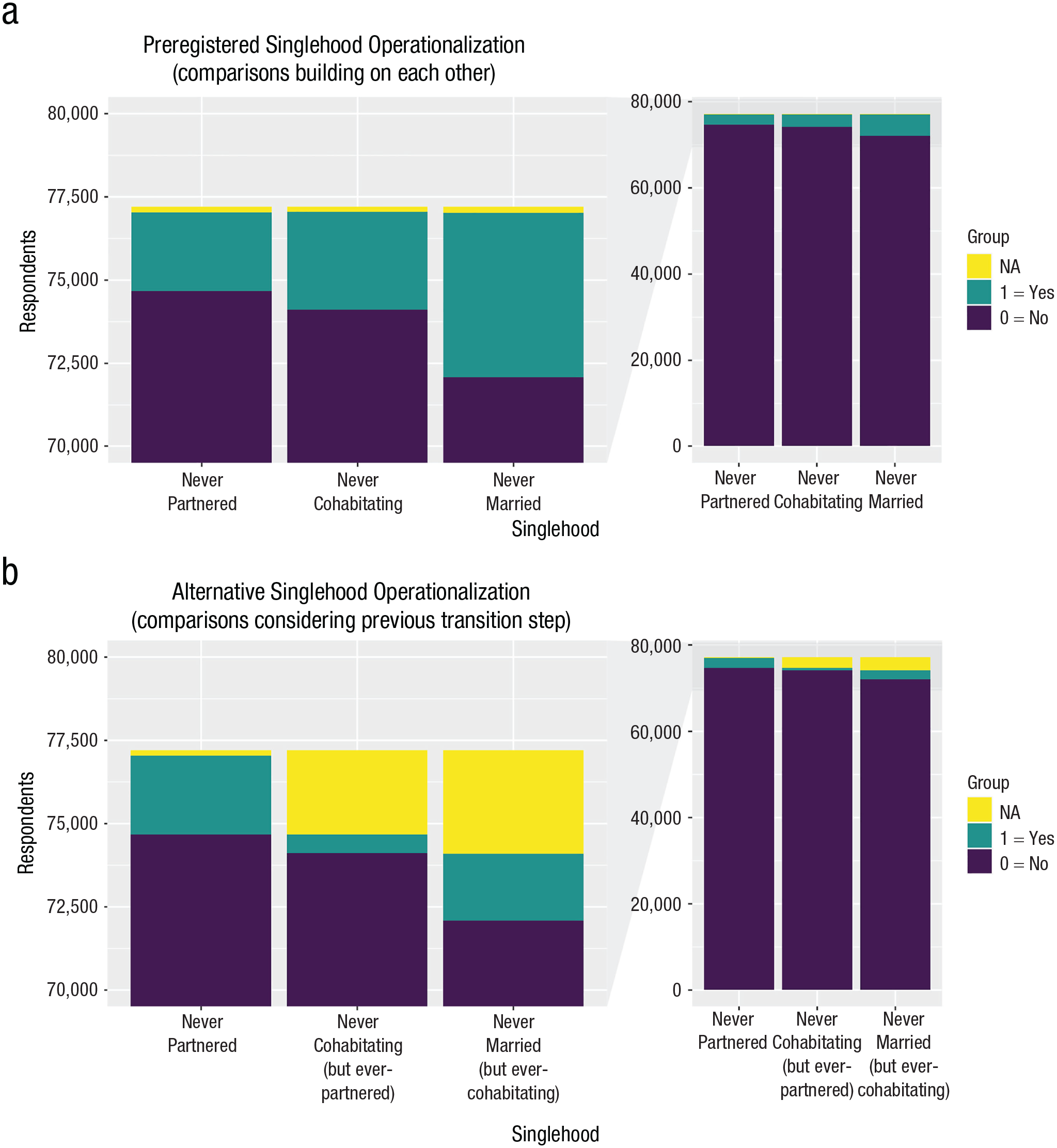
Visualization of singlehood operationalization and bar charts of sample size of the respective group comparisons. Lifelong singles are displayed in green, ever-partnered individuals in purple. Respondents marked with NA (in yellow) were not used for analyses. Each operationalization is based on three group comparisons. In (a) we show the operationalization we preregistered on https://osf.io/xbua4; in (b), we show the alternative, stepwise operationalization that considers the previous relationship transition (for main results, see Figs. S1 and S2 in the Supplemental Material). Full results for this robustness check are presented in the html document on https://osf.io/p6qwz/, Section 6.8). NA = not applicable.
Procedure
Data were collected via computer-assisted personal interviews (face-to-face interviews in which the interviewer used a laptop to document answers). The interviews were conducted by trained interviewers to ensure cross-national comparability. All interviews followed a standardized order, starting with a cover-screen questionnaire assessing basic demographic variables (Bergmann et al., 2019).
Measures
Singlehood
Singlehood status was assessed in the SHARELIFE questionnaire in Waves 3 and 7, using three items with binary response scales (yes/no). Additionally, if respondents completed the SHARELIFE Wave 3, we used information from SHARE Waves 4 to 7 to track and update the respondents’ relationship history (e.g., lifelong singlehood status was verified by checking whether they had reported marriage in the meantime). On the basis of participants’ responses to these items, singlehood status was dummy coded (1 = lifelong single, 0 = not lifelong single) using three different operationalizations: (a) never married (“Have you ever been married?” with all participants responding “no” being included as lifelong singles); (b) never in a cohabitating relationship (“Have you ever lived together with someone as a couple?” with all participants responding “no” to this item
Big Five personality traits
Participants’ Big Five personality traits were assessed with the 10-item Big Five Inventory (BFI-10; Rammstedt & John, 2007). It included two items per dimension (Openness, Conscientiousness, Extraversion, Agreeableness, Neuroticism) that were answered on a 5-point scale (1 = disagree strongly, 5 = agree strongly). A third item for assessing agreeableness was added to the survey following recommendations by Rammstedt and John (2007). Further, given that this brief measure, as expected, did not lead to high internal-consistency coefficients, but was seen as acceptable except for agreeableness, the SHARE team performed a validity check (see Rammstedt et al., 2023 for more supportive evidence of construct validity). To be more precise, a principal-component analysis using varimax rotation confirmed the Big Five factor structure when controlling for acquiescent responding, but only for the original BFI-10 items, not when the third agreeableness item was added (Levinsky et al., 2019). Thus, we decided to deviate from our preregistration and to withdraw the third agreeableness item (as it did not lead to a higher reliability score either; Levinsky et al., 2019; see Table S2). We formed a mean score using two items per trait, and we used the percent-of-maximum-possible score (POMP) method for scoring all outcomes (to be interpreted on a scale from 0 to 100) for better comparability across scales (see Table 1).
Descriptive Statistics
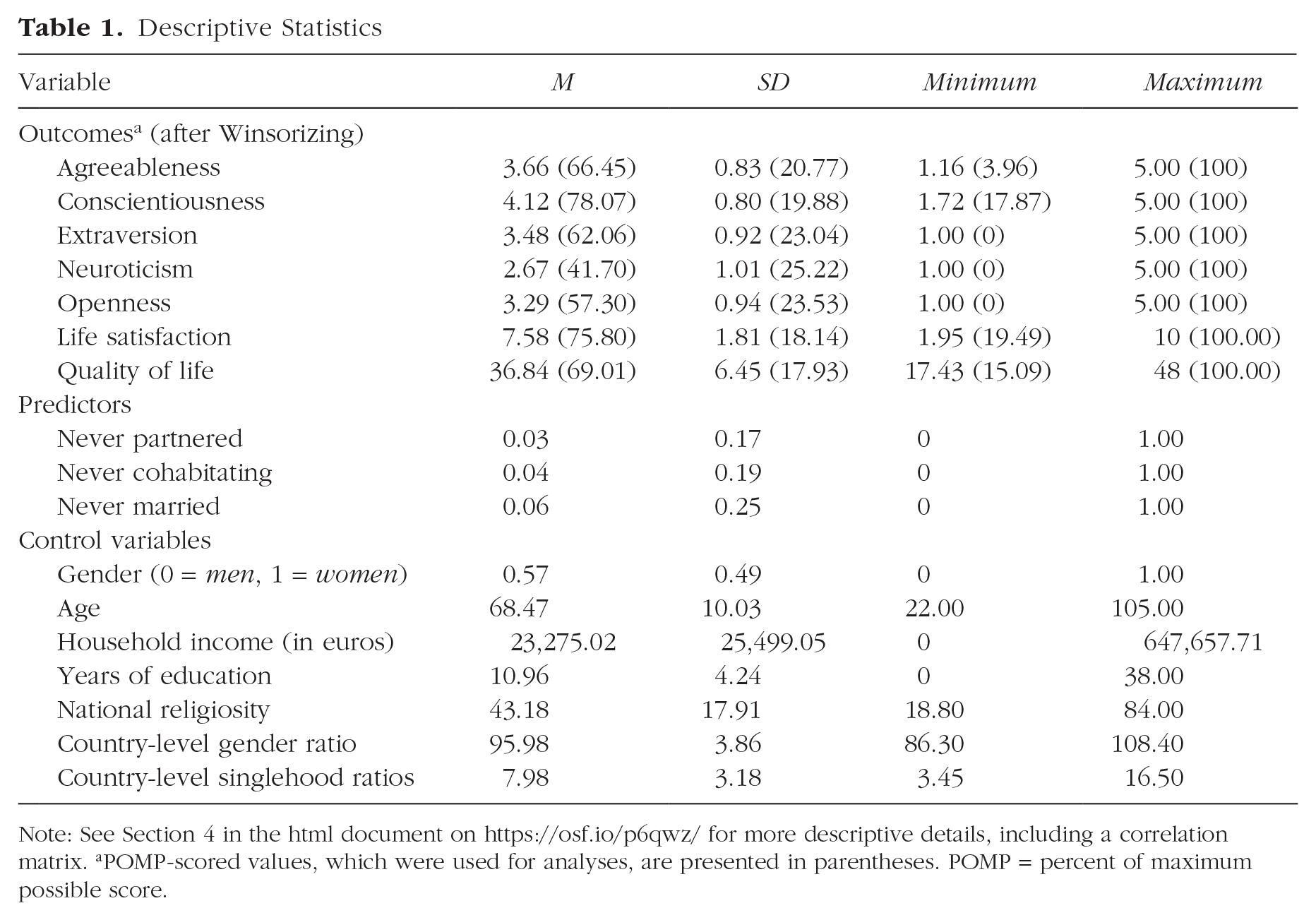
Note: See Section 4 in the html document on https://osf.io/p6qwz/ for more descriptive details, including a correlation matrix. aPOMP-scored values, which were used for analyses, are presented in parentheses. POMP = percent of maximum possible score.
Life satisfaction
Life satisfaction was assessed with one item (“On a scale from 0 to 10 where 0 means completely dissatisfied and 10 means completely satisfied, how satisfied are you with your life?”). Studies on the quality of such single-item measures indicate satisfactory retest reliability (Lucas & Donnellan, 2012) and high convergent validity (Cheung & Lucas, 2014) with longer scales such as the Satisfaction with Life Scale (E. D. Diener et al., 1985). In addition, a broader questionnaire, the CASP-12 scale measuring quality of life (von dem Knesebeck et al., 2005) was assessed (in the current data, the two measures correlated at r = .59). The CASP-12 scale has 12 items, including several items likely linked to life satisfaction (e.g., “How often, on balance, do you look back on your life with a sense of happiness?”). All items were answered on a 4-point scale (often, sometimes, rarely, never). CASP-12 items were summed to gather quality of life as an alternative measure of life satisfaction with good reliability (
Moderator and control variables
In our analyses, we used a number of additional variables as control variables and some of them also as moderator variables. We computed participants’ age on the basis of their year of birth and the interview year. Participants’ gender (0 = men, 1 = women) was assessed in a binary way. Further, as a measure of socioeconomic status, we included the equalized disposable household income with imputed missing values, adjusted for the number of people in the household. Educational attainment was assessed with one item (“How many years have you been in full-time education?”).
Moreover, we used three country-level variables from external databases. First, country-level religiosity was extracted from Joshanloo and Gebauer (2020, p. 31; see Table 1). These national religiosity scores are based on data from the Gallup World Poll, which uses nationally representative samples. Second, we extracted by-country gender ratios (number of males per 100 females, with higher values indicating a higher proportion of men) from the website World Population Review (https://worldpopulationreview.com/country-rankings/countries-by-sex-ratio). These data are based on the United Nations (UN) population database (https://population.un.org/wpp/Download/Standard/Population/). Third, singlehood ratios per country were extracted from the UN database on never-married individuals (World Marriage Data; https://population.un.org/MarriageData/Index.html#/maritalStatusData). Here, we took the 2016 estimate and averaged the data among age groups 50 years of age and older and among men and women to get a percentage score of how many people living in each respective country had never been married. If there was no available estimate from 2016, we used data points collected closest to that year (ranging from 2011 to 2017).
Age and years of education were grand mean centered, and income as well as the three country-level variables were z-standardized.
Statistical analyses
Confirmatory analyses
On the basis of the three different operationalizations of singlehood status, three different dummy predictor variables were formed as described above: never partnered, never cohabitating, and never married (0 = no, 1 = yes; see also Fig. 1a). We performed preregistered specification-curve analyses (Simonsohn et al., 2020) because they allowed us to comprehensively test differences between the groups of lifelong singles and (previously) partnered individuals in the Big Five personality traits and the two life-satisfaction measures while also controlling for different sets of covariates to adjust for potential confounding. More precisely, we ran one model for each unique combination of the outcome variable (any of the Big Five or the two life-satisfaction measures), with singlehood status as the predictor of interest (any of three operationalizations), and with different sets of covariates (no covariates, each of the seven covariates by itself, and all seven covariates jointly). This resulted in 135 models for the Big Five and 54 models for life satisfaction. Because of the nested nature of the data with respondents nested in countries, the models within the specification-curve analyses consisted of multilevel regression models featuring random intercepts and random slopes of singlehood status.
Exploratory analyses
In addition, we ran multilevel models testing several moderators of the effects of lifelong singlehood on the Big Five and life satisfaction. On the respondent level, we tested age and income as moderators. On the country level, we examined the cross-level interactions of the countries’ religiosity, gender ratio, and singlehood ratio with singlehood status. As in the specification-curve analyses, moderation models included random slopes of singlehood. These analyses were preregistered but exploratory in the sense that we did not formulate hypotheses. Going beyond the preregistration, we further compared results of different singlehood-status definitions (e.g., repeating analyses with never-married individuals while excluding never-cohabitating and never-partnered people; see Fig. 1b). We also examined having children as a moderator of group differences, as suggested in the review process. For life satisfaction, we ran follow-up analyses comparing the four subscales of the CASP-12 measure (Control, Autonomy, Self-realization, and Pleasure). Finally, we explored whether the Big Five traits moderated associations of lifelong singlehood with life satisfaction. We did this to investigate the well-known relationship between personality and life satisfaction (Anglim et al., 2020) in the context of singlehood, and we selected personality as the moderator because of greater stability in adulthood compared to life satisfaction.
Transparency and openness
This study was preregistered at the Open Science Framework before data analysis took place (https://osf.io/xbua4). A table reporting all deviations from and additions to the preregistration can be found in the Supplemental Material (Table S2). Data cleaning, analysis scripts, and html documents with output are openly available (https://osf.io/n74fb/). Other materials (i.e., questionnaires) can be found at the SHARE website, where data access can also be requested (https://share-eric.eu/data). In an effort to set a conservative significance threshold, we decided to adjust our significance level (α) to .005, to account for multiple testing and to increase replicability (Benjamin et al., 2018), and we performed all statistical tests two-tailed. Post hoc power simulations indicated that confirmatory analyses had (1 −
Results
Relationship status and the Big Five personality traits
Lifelong singles were significantly lower in extraversion than ever-partnered respondents, independent of their singlehood status or the covariates we controlled for (supporting Hypothesis 1; see Fig. 2). This difference was slightly more pronounced for those who had never had a partner or never lived together with a partner (see Table 2). We also found consistent support in the specification-curve analysis that lifelong singles were significantly less conscientious compared with ever-partnered respondents (supporting Hypothesis 3). The difference for conscientiousness was smaller than that for extraversion but consistent across the three singlehood definitions (see Table 2) and also across the included covariates. In contrast, no significant differences emerged between lifelong singles and ever-partnered respondents in neuroticism (Hypothesis 2), with only minimal differences depending on the three singlehood definitions or the included covariates.
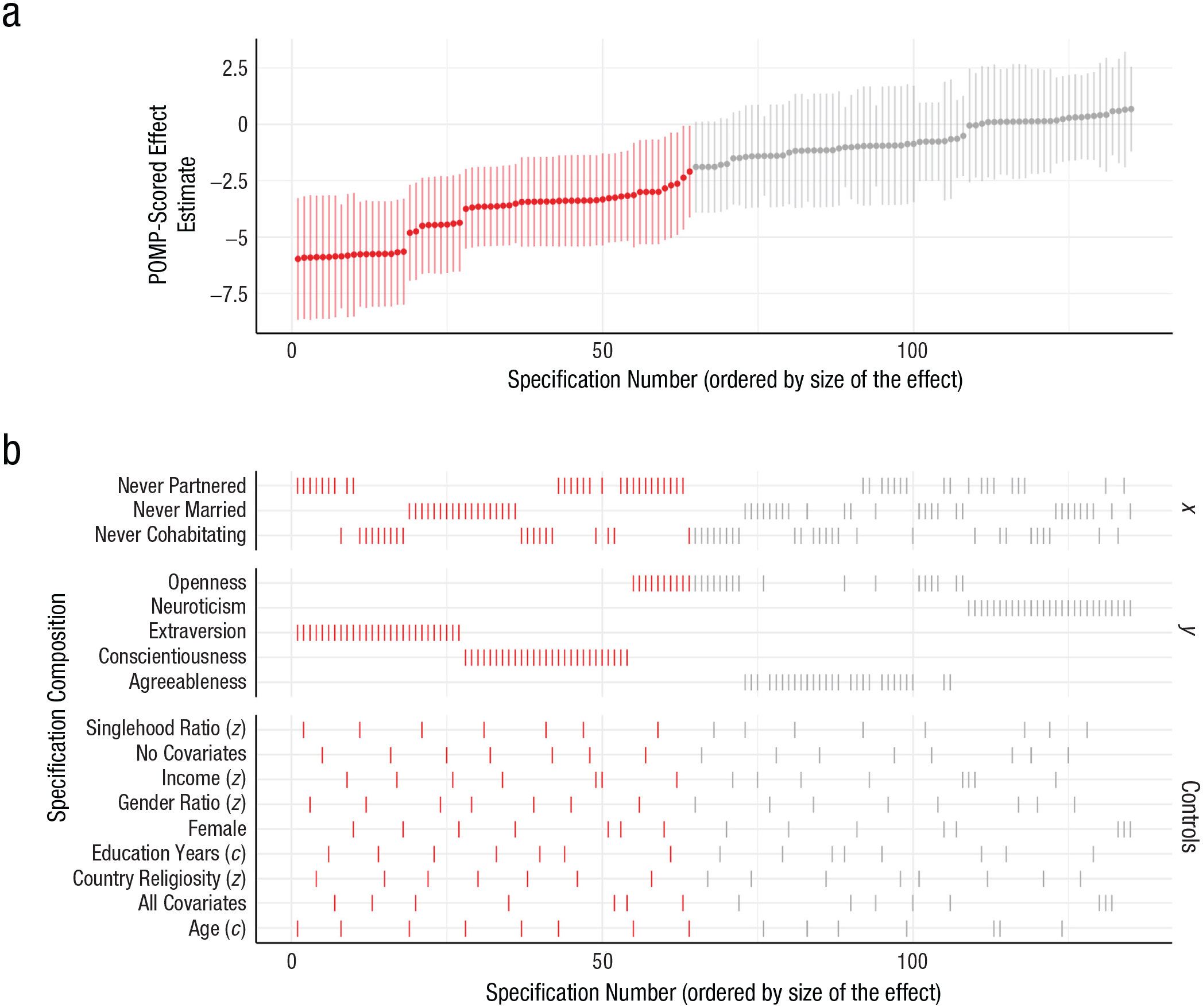
Specification-curve analysis for differences in the Big Five between lifelong singles and partnered individuals. In (a) we display an aggregated overview of the POMP-scored point estimates and 99.5% confidence intervals of the association between lifelong singlehood (x) and each trait (y) depending on the choice of covariates (controls). Specifications are ordered by the size of their effect. Confidence intervals that do not overlap with 0 (i.e., significant effects) are displayed in red. In (b) we show the specification composition indicating which options each individual estimate is based on. Effects for each trait are displayed on a separate line. Again, significant effects are displayed in red. Effects overlap between the three categories of variables (singlehood group, Big Five trait, covariates). On the y-axis in (b), “c” indicates a centered variable and “z” a standardized variable. Female = gender (coded 0 = men, 1 = women); POMP = percent of maximum possible score.
Median Effect Sizes (and 99.5% Confidence Intervals in Brackets) From the Specification-Curve Analyses

Note: Effects are POMP-scored and to be interpreted on a scale from 0 to 100. Effects whose 99.5% confidence intervals do not overlap with zero are shown in bold. See html document on https://osf.io/p6qwz/ for detailed results (Sections 5, 6.1, and 6.2). POMP = percent of maximum possible score.
In exploratory analyses (see Fig. 2), we found that never-partnered individuals were consistently lower in openness (see Table 2). In never-cohabitating singles, this difference was less pronounced and only became significant when we controlled for age, b = −2.10, 99.5% CI = [−4.14, −0.06], p = .004. Never-married singles did not differ from ever-partnered individuals in their openness. Consistent across all specifications, agreeableness did not differ significantly between singles and ever-partnered individuals (see Table 2). However, when testing the distinct effects of the different singlehood groups (e.g., excluding never-cohabitating and never-partnered individuals from the never-married group), never-married individuals who were ever-partnered or cohabitating were lower in agreeableness compared with ever-married individuals. Further, only never-partnered individuals (but not never-cohabitating or never-married individuals) were lower in openness. Results for neuroticism, conscientiousness, and extraversion were robust across all singlehood definitions (see Fig. S1 and html document Section 6.8 on https://osf.io/p6qwz/ for details).
In another set of exploratory analyses, we examined the role of moderators at the individual level (age, gender, income, educational attainment, having children) and country level (religiosity, gender ratio, and singlehood ratio). These analyses were preregistered (except for gender, education, and having children), but without specific hypotheses. For the Big Five traits, we found that differences in conscientiousness between never-cohabitating singles and ever-partnered individuals were smaller for individuals with a higher income, b = 1.34, 99.5% CI = [0.06, 2.62], p = .003 (see Fig. 3a for simple slopes).
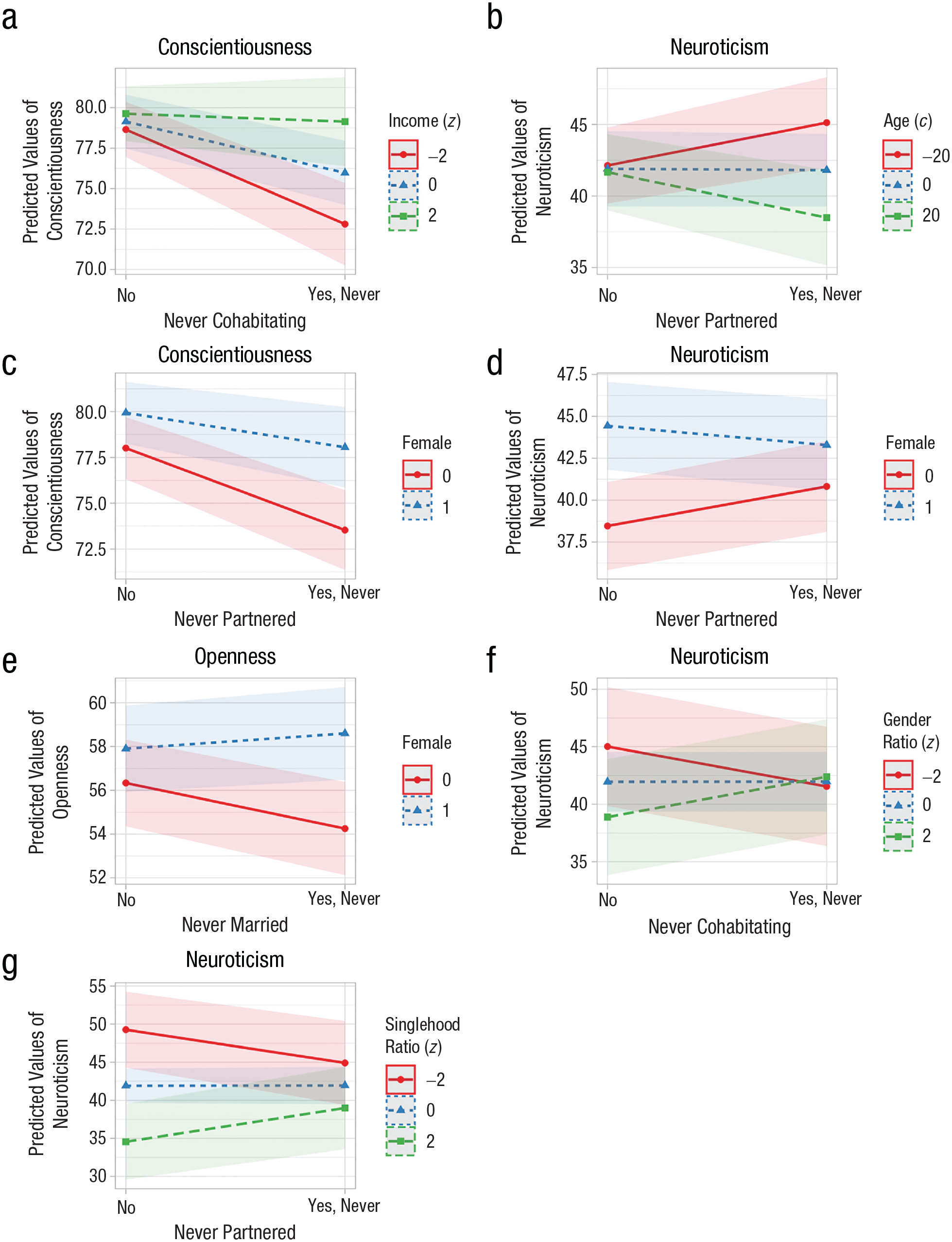
Simple-slopes plots for moderation analyses of Big Five personality traits. For continuous moderators, we selected ±2 standard deviations as the points at which to display the simple slopes. Female is coded (0 = men, 1 = women); “c” indicates a centered variable and “z” a standardized variable.
Further, differences in neuroticism between never-partnered and ever-partnered individuals were smaller for older individuals, b = −0.154, 99.5% CI = [−0.30, −0.01], p = .004 (see Fig. 3b). Gender also significantly moderated the degree to which singles and partnered individuals differed: This difference was generally smaller in women for conscientiousness (never partnered: b = 2.59, 99.5% CI = [0.21, 4.98], p = .002), openness (never married: b = 2.78, 99.5% CI = [0.84, 4.73], p < .001), and neuroticism (regardless of singlehood definition—e.g., never partnered: b = −3.50, 99.5% CI = [−6.44, −0.56], p < .001; see Figs. 3c, 3d, and 3e). This indicated that in these cases trait differences were more pronounced in men. In addition, differences between single and ever-partnered respondents in extraversion (e.g., never married: b = 3.68, 99.5% CI = [1.54, 5.82], p < .001) and conscientiousness (never married: b = 1.93, 99.5% CI = [0.06, 3.80], p = .004) were more pronounced in childless respondents compared with respondents with children (see Fig. S4).
On the country level, differences in neuroticism between never-cohabitating singles and ever-partnered individuals were larger in countries with a higher proportion of men, b = 1.74, 99.5% CI = [0.09, 3.40], p = .004 (see Fig. 3f). A similar effect for neuroticism was found for never-partnered singles in countries with a higher proportion of singles, b = 2.20, 99.5% CI = [0.01, 4.39], p = .0048 (see Fig. 3g). This effect also replicated for never-partnered and never-cohabitating singles using a more detailed, gender- and age-graded measure of singlehood ratio (i.e., not a single country-level singlehood ratio value, but specific values for each participant based on country of residence, gender, and age, as suggested by a reviewer; see the html document on https://osf.io/p6qwz/, Section 6.10). For the remaining traits and definitions of singlehood, we did not find significant evidence for moderation effects (with
Relationship status and life satisfaction
Supporting Hypothesis 4, we found that lifelong singles consistently reported lower life satisfaction (see Fig. 4). This effect was stronger with the single-item measure compared with the quality-of-life measure (see Table 2). For quality of life, it was also stronger when defining singlehood as never partnered rather than as never having married (see Table 2), for which the effect was sometimes nonsignificant when only investigating never-married individuals (while excluding never-cohabitating and never-partnered singles; see Fig. S2 and the html document on https://osf.io/p6qwz/, Section 6.8). The size of differences between lifelong singles and ever-partnered individuals depended on the choice of covariates to a larger degree for life satisfaction than for the Big Five. Controlling for income generally resulted in smaller differences (single-item life satisfaction: median b = −3.94, 99.5% CI = [−5.78, −2.16]) than not controlling for it (median b = −4.30, 99.5% CI = [−6.06, −2.61]), whereas controlling for age resulted in larger differences (quality of life: median b = −3.06, 99.5% CI = [−5.05, −1.01]) than not controlling for it (median b = −2.71, 99.5% CI = [−4.71, −0.67]). Results were robust to using an alternative missingness strategy for quality of life that maximized sample size (see Fig. S3). Exploring the four CASP-12 subscales, we found consistently lower pleasure and self-realization levels in lifelong singles, whereas differences in control depended on the exact specification (see the html document on https://osf.io/p6qwz/, Section 6.9). Differences were nonsignificant throughout for autonomy, which had low internal consistency on its own (
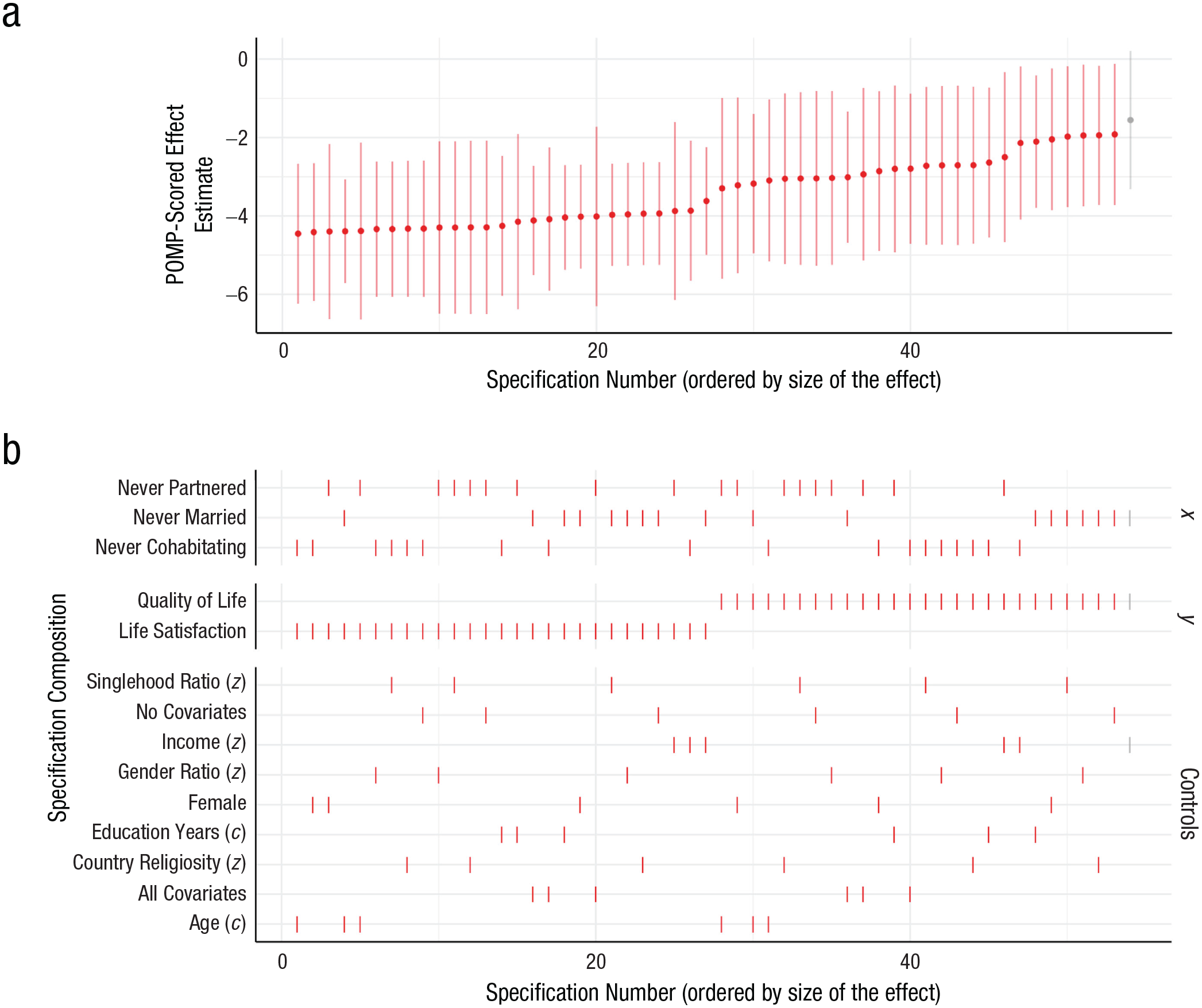
Specification-curve analysis for differences in life satisfaction between lifelong singles and partnered individuals. In (a) is shown an aggregated overview of the POMP-scored point estimates and 99.5% confidence intervals of the association between lifelong singlehood (x) and either single-item life satisfaction or quality of life (y), depending on the choice of covariates (controls). Specifications are ordered by the size of their effect. Confidence intervals that do not overlap with 0 (i.e., significant effects) are displayed in red. In (b) we show the specification composition indicating which options each individual estimate is based on. Effects for each trait are displayed on a separate line. Again, significant effects are displayed in red. Effects overlap between the three categories of variables (singlehood group, Big Five trait, covariates). Female is coded (0 = men, 1 = women); “c” indicates a centered variable and “z” a standardized variable. POMP = percent of maximum possible score.
Exploratory analyses revealed that differences in life satisfaction between lifelong singles and ever-partnered individuals were smaller the older people were, independent of the definition of singlehood (e.g., never-partnered singles, b = 0.16, 99.5% CI = [0.06, 0.27], p < .001; see Fig. 5a). For women, differences between singles and partnered individuals were less pronounced in life satisfaction (regardless of singlehood definition; e.g., never-partnered singles: b = 3.90, 99.5% CI = [1.78, 6.01], p < .001) and quality of life (never-married: b = 2.22, 99.5% CI = [0.77, 3.67], p < .001; see Figs. 5b and 5c). In addition, for never-partnered or never-cohabitating singles, we found that the discrepancy in life satisfaction was significantly larger in countries with a higher proportion of men (e.g., never-partnered singles, b = −1.60, 99.5% CI = [−3.17, −0.02], p = .004; see Fig. 5d). There was suggestive evidence (at p < .05) that this was also the case in countries with a higher proportion of singles. Using the more detailed gender- and age-graded measure of singlehood ratio, we found significantly lower life satisfaction in never- partnered and never-cohabitating singles with a higher proportion of single men and significantly lower quality of life with a higher proportion of single women (see the html document on https://osf.io/p6qwz/, Section 6.10).
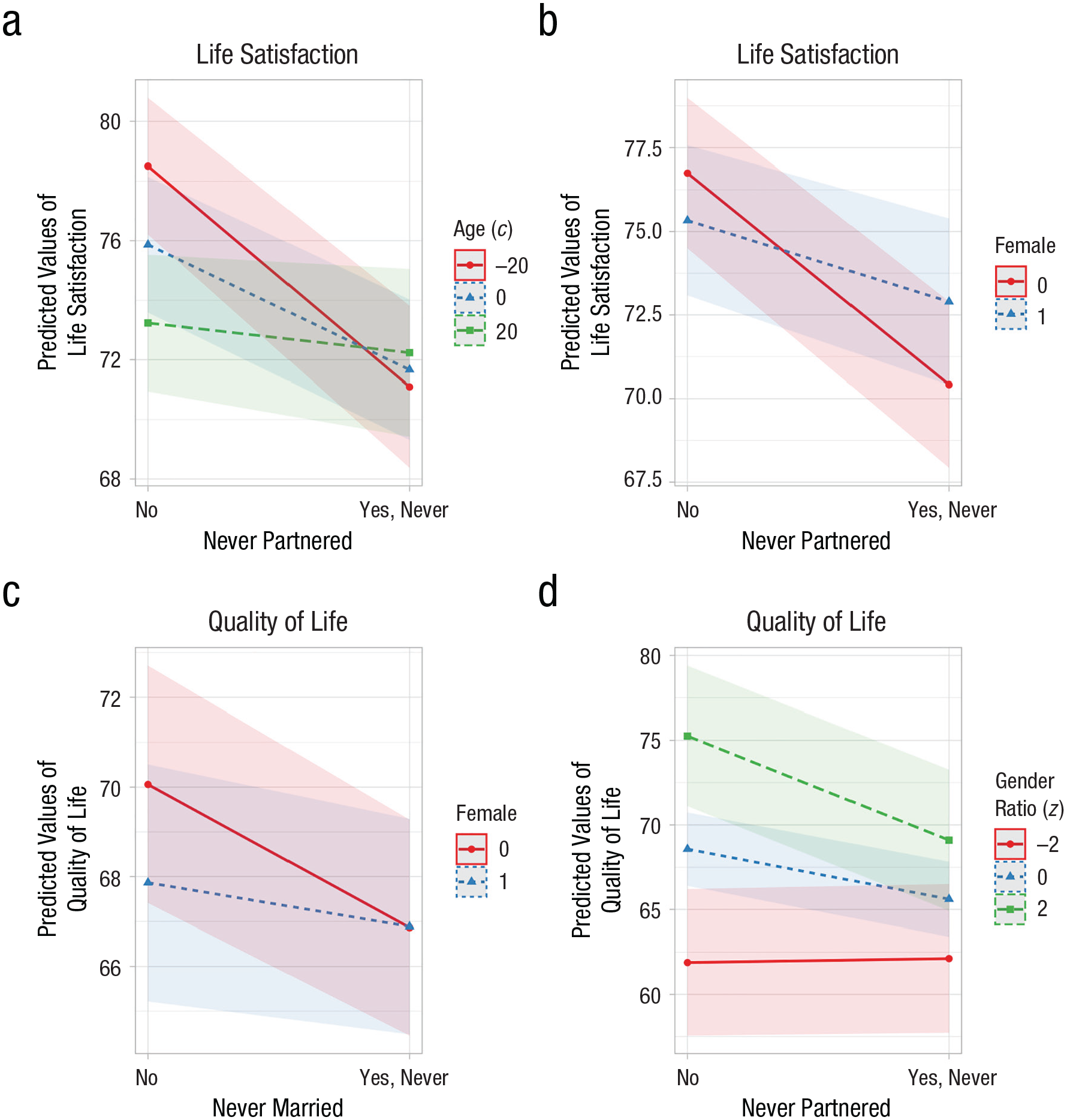
Simple-slopes plots for moderation analyses of life satisfaction. Female is coded (0 = men, 1 = women); “c” indicates a centered variable and “z” a standardized variable. For continuous moderators, we selected ±2 standard deviations as the points at which to display the simple slopes.
Next, we explored whether the Big Five personality traits moderated discrepancies in life satisfaction associated with singlehood (see Fig. S5). For life satisfaction (single-item measure), there was evidence for the protective effects of extraversion (only for never-cohabitating individuals: b = 1.03, 99.5% CI = [0.13, 1.92], p = .001), agreeableness (independent of the singlehood definition—e.g., never partnered, b = 1.43, 99.5% CI = [0.36, 2.50], p < .001), and conscientiousness (only for never-partnered individuals, b = 1.05, 99.5% CI = [0.04, 2.07], p = .004; see Fig. S6 for simple slopes). In contrast, higher neuroticism was associated with larger life-satisfaction discrepancies of singles (for never-cohabitating and never-married singles, b = −1.25, 99.5% CI = [−2.18, −0.31], p < .001). For quality of life, these moderation effects by personality were similar for extraversion, conscientiousness, and neuroticism. Moderation effects for agreeableness and quality of life, however, were only significant at p < .05 (see the html document on https://osf.io/p6qwz/, Section 6.5).
Finally, we computed marginal
Discussion
We investigated personality-trait differences between lifelong singles and ever-partnered individuals in middle and older adulthood. Specification-curve analyses indicated that lifelong singles are lower in extraversion, conscientiousness, and life satisfaction. Effects were strongest when defining lifelong singles as never-partnered individuals, and they were weakest (but still evident) in never-married individuals. Results for openness depended on lifelong singlehood definitions. Exploratory analyses suggested that never-married individuals (with other lifelong singles excluded) were less agreeable than ever-married individuals, but results for agreeableness were mostly null. Country-level singlehood and gender ratios, as well as individuals’ age and gender, were considerable factors moderating the size of group differences in neuroticism and life satisfaction. Higher income was associated with smaller differences in conscientiousness between groups.
Our findings are in line with previous studies investigating current or younger lifelong singles (e.g., Luhmann et al., 2012; Neyer & Lehnart, 2007). Group differences could be explained by selection effects; people higher in extraversion, conscientiousness, and life satisfaction are more likely to enter a relationship (Bühler et al., 2024; Chopik et al., 2023; Wagner et al., 2015) —differences that may endure across the life span. There might also be socialization effects; group differences could be driven by personality change through relationship transitions. However, these socialization effects have been found to be rather rare, short-term, and dependent on individual relationship quality (Bühler et al., 2023, 2024; Lucas & Clark, 2006; Lucas et al., 2003). We found within-group differences between singles, because never-partnered individuals were lower in openness compared with ever-partnered individuals, but there were no differences for never-cohabitating or never-married individuals. These results show that the definition of singlehood matters, and differences in that definition could explain mixed findings in previous studies. People higher in openness are more likely to enter a relationship (Bühler et al., 2024), and they might be more open to less normative relationship forms, such as living apart together.
We did not find simple group differences between lifelong singles and ever-partnered individuals in neuroticism, as reported by studies focusing on current or younger lifelong singles (Hoan & MacDonald, 2024; Neyer & Lehnart, 2007). Sample characteristics might explain these discrepancies. Lifelong singles were more neurotic compared with ever-partnered individuals when they were younger, male, and in countries with higher proportions of singles or men. These effects might be explained by the normativity of being in a relationship that likely differs across the investigated variables (Bühler et al., 2024; Neyer et al., 2014), which future research should investigate. Our finding of no group differences in agreeableness is consistent with previous findings that agreeableness does not play a role in relationship formation and is not affected by relationship life events (Bühler et al., 2024). Nevertheless, the finding from distinct group analyses that never-married individuals (with never-cohabitating and never-partnered people excluded), are less agreeable is in contrast to previous research reporting that lower agreeableness predicts marriage (Asselmann & Specht, 2020).
Implications and directions for future research
Our findings indicate mean-level differences in life satisfaction and some Big Five traits between lifelong singles and ever-partnered individuals. Our study contributes to a foundation for future research on well-being and personality sequelae of lifelong singlehood. Future research should adopt a within-group perspective to understand individual differences among lifelong singles and their unique experiences (Girme et al., 2023; Park et al., 2023). Longitudinal studies would enable investigation of the codevelopment of personality and well-being in lifelong singles, because personality explains substantial variance in well-being (Steel et al., 2008). Further, investigations of our results for younger cohorts are needed. More recent cohorts likely differ from older cohorts in norms and acceptance of singlehood, given that the importance of marriage for well-being is declining, that more people choose to stay single, and that younger cohorts report lower importance of partnership for happiness (Bellani et al., 2017; Scheling & Richter, 2021). This potential change in cultural norms may affect the relationship between lifelong singlehood and individual differences, especially in life satisfaction.
Our findings suggest that lifelong singlehood definitions, as well as societal factors across countries, contribute to group differences. Differences between singles and ever-partnered individuals were largest in never-partnered individuals. Further, the effect of singles self-reporting lower life satisfaction was less robust for never-married and never-cohabitating singles (with never-partnered singles excluded). Thus, lower life satisfaction in (lifelong) singles might not be predominantly driven by separated people (as argued by DePaulo & Morris, 2005; Johnson & Wu, 2002). Experiencing the dynamics of past partnership could affect personality and life satisfaction (Lehnart et al., 2010; Wagner et al., 2015). Still, not having experienced cohabitation or marriage (but having experienced a committed relationship) seems to also make a difference for life satisfaction in many singles. Future research should investigate the lasting effects of previous relationships or singlehood length.
Country-level religiosity did not show moderating effects, and the other country-level variables were only important for some traits (e.g., neuroticism), suggesting that lifelong singlehood might be a similar experience across most European countries. Nevertheless, effects could be different for countries with even stronger norms of cohabitation and marriage. Finally, as people age, they are more likely to face health issues, and social support becomes increasingly important. In never-partnered individuals, this support cannot stem from partners, but singles might be more connected to friends (Sarkisian & Gerstel, 2016). It is crucial to investigate whether this is evident for older, lifelong singles, or whether this growing group of individuals needs specific interventions. Future research should also examine how parenthood shapes singlehood.
Limitations
Limitations include the cross-sectional design, which constrains investigations of dynamics; it also makes it harder to disentangle selection from socialization effects, as well as age from cohort effects (Bühler & Nikitin, 2020). Further, we relied on specific assessments available in the panel study, including a short measure of the Big Five that did not include finer-grained personality facets (Hoan & MacDonald, 2024). Such short-form measures of broad trait domains cannot assess the constructs’ breadth, resulting in underrepresentation of some trait components (Credé et al., 2012). A combination of self- and other reports might have provided more accurate estimates of people’s traits. Further, well-being domains more structurally tied to relationship status (e.g., sexual satisfaction) appear more strongly related to singlehood versus partnership (Hoan & MacDonald, 2024). Please also note that the generalizability of our findings is potentially limited to people over 50 years of age from European countries. Finally, exact causal pathways and mechanisms—such as reasons for lower life satisfaction in lifelong singles and resulting possibilities for interventions—remain unclear.
Conclusion
In a large-scale panel study spanning 27 countries, we found robust evidence that lifelong singles in middle to older adulthood are less extraverted, conscientious, and satisfied with their lives compared with ever-partnered individuals. Never-partnered individuals, but not never-cohabitating or never-married individuals, self-reported lower openness. Country-level and individual-level variables moderated differences in neuroticism. Our study is one step to understanding characteristics and needs of the growing group of lifelong singles, and it opens up new research questions. Future studies should capture a within-group perspective while developing knowledge about lifelong singles’ social-support networks.
Supplemental Material
sj-pdf-1-pss-10.1177_09567976241286865 – Supplemental material for Differences Between Lifelong Singles and Ever-Partnered Individuals in Big Five Personality Traits and Life Satisfaction
Supplemental material, sj-pdf-1-pss-10.1177_09567976241286865 for Differences Between Lifelong Singles and Ever-Partnered Individuals in Big Five Personality Traits and Life Satisfaction by Julia Stern, Michael D. Krämer, Alexander Schumacher, Geoff MacDonald and David Richter in Psychological Science
Footnotes
Transparency
Action Editor: Brent Donnellan
Editor: Simine Vazire
Author Contributions
Julia Stern and Michael D. Krämer contributed equally and share first authorship.

References
Supplementary Material
Please find the following supplemental material available below.
For Open Access articles published under a Creative Commons License, all supplemental material carries the same license as the article it is associated with.
For non-Open Access articles published, all supplemental material carries a non-exclusive license, and permission requests for re-use of supplemental material or any part of supplemental material shall be sent directly to the copyright owner as specified in the copyright notice associated with the article.
