




Abstract
Listening-related fatigue is a potentially serious negative consequence of an aging auditory and cognitive system. However, the impact of age on listening-related fatigue and the factors underpinning any such effect remain unexplored. Using data from a large sample of adults (N = 281), we conducted a conditional process analysis to examine potential mediators and moderators of age-related changes in listening-related fatigue. Mediation analyses revealed opposing effects of age on listening-related fatigue: Older adults with greater perceived hearing impairment tended to report increased listening-related fatigue. However, aging was otherwise associated with decreased listening-related fatigue via reductions in both mood disturbance and sensory-processing sensitivity. Results suggested that the effect of auditory attention ability on listening-related fatigue was moderated by sensory-processing sensitivity; for individuals with high sensory-processing sensitivity, better auditory attention ability was associated with increased fatigue. These findings shed light on the perceptual, cognitive, and psychological factors underlying age-related changes in listening-related fatigue.
Keywords
Successful and effortless listening relies on both the fidelity of the incoming signal (e.g., speech) and the sensory and cognitive profile of the listener. The near-ubiquitous presence of noise in everyday environments means that speech understanding often comes at the cost of tiring mental effort (Pichora-Fuller et al., 2016). Listening-related fatigue is a common complaint from individuals with hearing loss and may lead to withdrawal from social activities (Davis et al., 2021). Generally, fatigue has been characterized as a subjective experience associated with feelings of tiredness, weariness, and a lack of energy or motivation to complete a task (Hornsby et al., 2016). However, the link between aging and fatigue specifically associated with compromised listening skills remains unclear. In a lab-based pupillometry study, McGarrigle, Knight, et al. (2021) found no difference in listening-related fatigue between young and older adults. However, generalizations were limited by the relatively small sample size (N = 63) and restricted age ranges of the participants (18–24 years and 62–82 years). In the current study, we aimed to explore the perceptual, cognitive, and psychological factors that underlie changes in listening-related fatigue across the adult life span.
Normal healthy aging is associated with reduced hearing sensitivity (Stach et al., 2009) as well as with changes in cognitive functioning, including shifts in memory capacity and reduced inhibition (Craik & Bialystok, 2006; Kane et al., 1994). Complex listening skills that rely on intact sensory processing and top-down attentional control are therefore particularly susceptible to age-related decline and may mediate (i.e., explain) age-related increases in listening-related fatigue. For example, auditory attention ability—the ability to follow one speaker while simultaneously ignoring another—is particularly disrupted in older adults (Rogers et al., 2018). Age-related reductions in auditory attention ability may compromise the ease with which older adults communicate in everyday environments, thus giving rise to a heightened sense of listening-related fatigue. On the other hand, listening-related fatigue may correspond more closely with a subjective awareness of one’s own hearing or cognitive challenges (Hornsby & Kipp, 2016). In other words, aging might increase susceptibility to listening-related fatigue via increases in one’s own perceived functional-hearing impairment. Listening in everyday environments (e.g., noisy cafés or restaurants) relies heavily on intact memory processes (Rönnberg et al., 2008). A perceived reduction in memory capacity may also underlie potential age-related increases in listening-related fatigue. Indeed, self-perceived abilities have been shown to influence listening skills in older adults (Carr et al., 2019; Chasteen et al., 2015).
The extent to which individuals experience listening-related fatigue may also depend on factors independent of their sensory and cognitive profiles. Hockey’s (2013) motivational-control theory posits that fatigue has an adaptive role, ensuring that finite cognitive resources are allocated only to tasks deemed sufficiently important. Hockey therefore treats fatigue as an emotional response that ultimately serves to trigger evaluation of cost/reward trade-offs in ongoing cognitive pursuits. Thus, motivation to engage in effortful cognitive activity can influence the extent to which one experiences subjective fatigue from such exertion. One way to measure motivation to engage in effortful cognitive activity is to assess need for cognition (Cacioppo et al., 1984). Need for cognition is a personality trait that reflects an individual’s tendency to enjoy, and thus be motivated to participate in, activities involving effortful cognitive processing (e.g., abstract thinking; Cacioppo et al., 1996). No study to date has examined whether need for cognition moderates age-related changes in listening-related fatigue.
There is also growing recognition that a comprehensive understanding of effortful listening and fatigue must include a role for emotional responses to environmental stressors, such as noise (Francis & Love, 2020; Strand et al., 2018). The Profile of Mood States (POMS) questionnaire provides a global marker of mood disturbance, emotional or psychological distress, and subjective well-being (“total mood disturbance”; Heuchert & McNair, 2012), which may be a key factor underlying age-related changes in listening-related fatigue. Relatedly, physiological stress responses associated with hearing difficulties may heighten the experience of listening-related fatigue (Xu & Francis, 2019). The Highly Sensitive Person Scale is one way to measure an individual’s sensitivity to environmental stimuli (e.g., noise) at the trait level (Aron & Aron, 1997). Strand et al. (2018) found that individuals scoring high on sensory-processing sensitivity showed increased effort, measured both subjectively and behaviorally, during performance of a challenging listening task. Individual differences in each of these psychological traits may therefore help to explain some of the variability associated with age-related changes in listening-related fatigue.
Statement of Relevance
Listening-related fatigue (i.e., fatigue associated with sustained and effortful listening) may have serious negative psychosocial consequences for the aging population, including withdrawal from social engagement and reduced well-being. However, little is currently known about the factors that govern such connections. Knowledge of how listening-related fatigue changes with age is paramount given the (a) high prevalence of older adults in today’s society, (b) ubiquity of noise and generally suboptimal communication environments, and (c) well-documented cognitive and sensory declines associated with aging. Overall, this study highlights the perceptual, cognitive, and psychological mechanisms that underpin age-related changes in listening-related fatigue. Specifically, the effects of aging on listening-related fatigue appear to be twofold: Susceptibility is heightened via increased perceived hearing impairment but also mitigated via reductions in mood disturbance and sensory-processing sensitivity. Understanding the factors that underlie listening-related fatigue will ultimately help to reduce the burden that older adults experience during everyday communication.
For this study, we recruited a large sample of healthy adults (N = 281) across the life span (18–85 years). Participants completed a battery of online tests and questionnaires measuring predictors of listening-related fatigue. Listening-related fatigue was measured using the Vanderbilt Fatigue Scale for adults (VFS-A; Hornsby et al., 2021). First, on the basis of expected age-related declines in sensory and cognitive functions, we predicted that listening-related fatigue would increase with age. Second, on the basis of the literature reviewed, we hypothesized that this effect would be mediated by (a) poorer auditory attention ability, (b) higher perceived hearing impairment, and/or (c) lower perceived memory ability. Finally, we predicted that the direct effect of age and/or its indirect effects (i.e., via our proposed mediator variables) on listening-related fatigue would be moderated by (a) mood disturbance, (b) need for cognition, and/or (c) sensory-processing sensitivity. Specifically, we hypothesized that individuals with higher mood disturbance (Francis & Love, 2020), higher sensory-processing sensitivity (Strand et al., 2018), and lower need for cognition (Pichora-Fuller et al., 2016) would report increased daily-life listening-related fatigue.
Method
The methodological, procedural, and analytic plans for this study were preregistered on OSF (https://osf.io/7wuhb/). 1 Analysis scripts, raw data, and summary data are available at https://osf.io/hc8n4/.
Participants
Participants were 281 adults between the ages of 18 and 85 years. To ensure an evenly balanced distribution of age ranges across adulthood, we aimed to recruit at least 40 participants from each of the following age categories: 18 to 29 years, 30 to 39 years, 40 to 49 years, 50 to 59 years, 60 to 69 years, and more than 70 years. There is currently little consensus in the literature on how to calculate sample-size requirements for complex models involving multiple predictors, including moderated mediation models (Perugini et al., 2018). However, to ensure that our study would have sufficient power to detect a possible mediation effect, we used the mc_power_med app (Schoemann et al., 2017) to calculate sample-size requirements for a basic mediation analysis. Assuming the smallest effect size of interest (r = .3) between each of the pathways (a, b, and c′), we estimated that a total sample size of 240 participants would provide power of .95 to detect a significant mediation effect with an α of .05. We aimed to achieve power of .95 (rather than the field standard of .8) to allow for potential increases in residual errors arising from online data collection and to increase our power to detect other potential effects (e.g., moderation) in the analyses. On the basis of recommendations for screening online data for low-quality responses (Buchanan & Scofield, 2018), we recruited 15% more participants than our target sample size.
The majority of participants (268 of 281) were recruited via Prolific, an online recruitment platform (https://prolific.co), and financially compensated for their time. We applied the following eligibility criteria on Prolific: (a) age (adjusted for each of the six age categories listed above), (b) English as a first language, (c) normal or corrected-to-normal visual acuity, (d) no known language-related disorders, (e) no diagnoses of mild cognitive impairment or dementia, and (f) a minimum Prolific approval rating of at least 95%. Approval rating is calculated as the percentage of studies for which a participant has not been rejected by the researcher (e.g., because of unrealistically fast completion times or attention-check failures) and therefore indicates their level of compliance in previous studies. The remaining 13 participants were recruited via an existing database of older adult participants and were compensated with Amazon.com vouchers. All 13 participants reported fully adhering to the same eligibility criteria as those recruited via Prolific. This study was granted ethical approval by the departmental research ethics committee (ID 733).
General procedure
We used Gorilla Experiment Builder (www.gorilla.sc) to design and host both our prescreening questionnaire and all tasks and questionnaires in the main experiment (Anwyl-Irvine et al., 2020). We initially recruited between 146 and 188 participants from each of the six age categories (1,043 participants in total) to take part in a brief online questionnaire study. The goal of this prescreening questionnaire was to exclude participants who suffer from a chronic health condition (or take medication) that can cause fatigue and also to rule out participants with a clinically significant hearing loss. Participants were instructed to take part in the prescreening questionnaire only if they (a) had access to a set of headphones or earbuds, (b) could complete the study on a laptop or desktop computer, and (c) did not suffer from a known unilateral hearing loss. Participants were also informed that they might be invited to take part in a follow-up study on listening experiences. For the prescreening questionnaire, participants provided a simple yes/no response to the following questions: (a) “Do you currently suffer from a chronic health condition that can cause fatigue (e.g., chronic fatigue syndrome, cancer, diabetes)?” (b) “Do you regularly take any medication that can cause fatigue (e.g., antihistamines)?” and (c) “Do you regularly use a hearing device (e.g., hearing aid or cochlear implant)?” Only participants who responded “no” to all three questions were sent a follow-up invitation to take part in the main experiment within 24 hr of completing the questionnaire. In total, 287 out of 1,043 participants (27.5%) failed one or more of the three screening criteria and were therefore not invited to take part in the main experiment.
The invited participants then completed a series of audio checks before starting the main experiment. For the first of the audio checks, participants were given the opportunity to play one of the audio stimuli used in the dichotic-listening task of the main experiment and adjust the volume to an audible and comfortable level. They then performed a validated headphone check that involved identifying the quietest of three sounds. Importantly, this task could be performed accurately only with the use of stereo headphones (see Woods et al., 2017, for more details). In order to continue with the experiment, participants were required to accurately identify the quietest sound on at least five of the six trials presented. To allow for potential misunderstanding of the instructions, we allowed participants who scored less than 5 on the first attempt a second opportunity to pass the test. Finally, participants completed a brief autoplay check to ensure that their browsers would permit the playback of auditory stimuli during the dichotic-listening task. Audio checks lasted approximately 5 min in total.
After successful completion of the audio checks, participants performed a series of tasks and questionnaires (details provided below). In total, the main experiment lasted approximately 50 min. Figure 1 illustrates the full sequence of tasks and questionnaires.
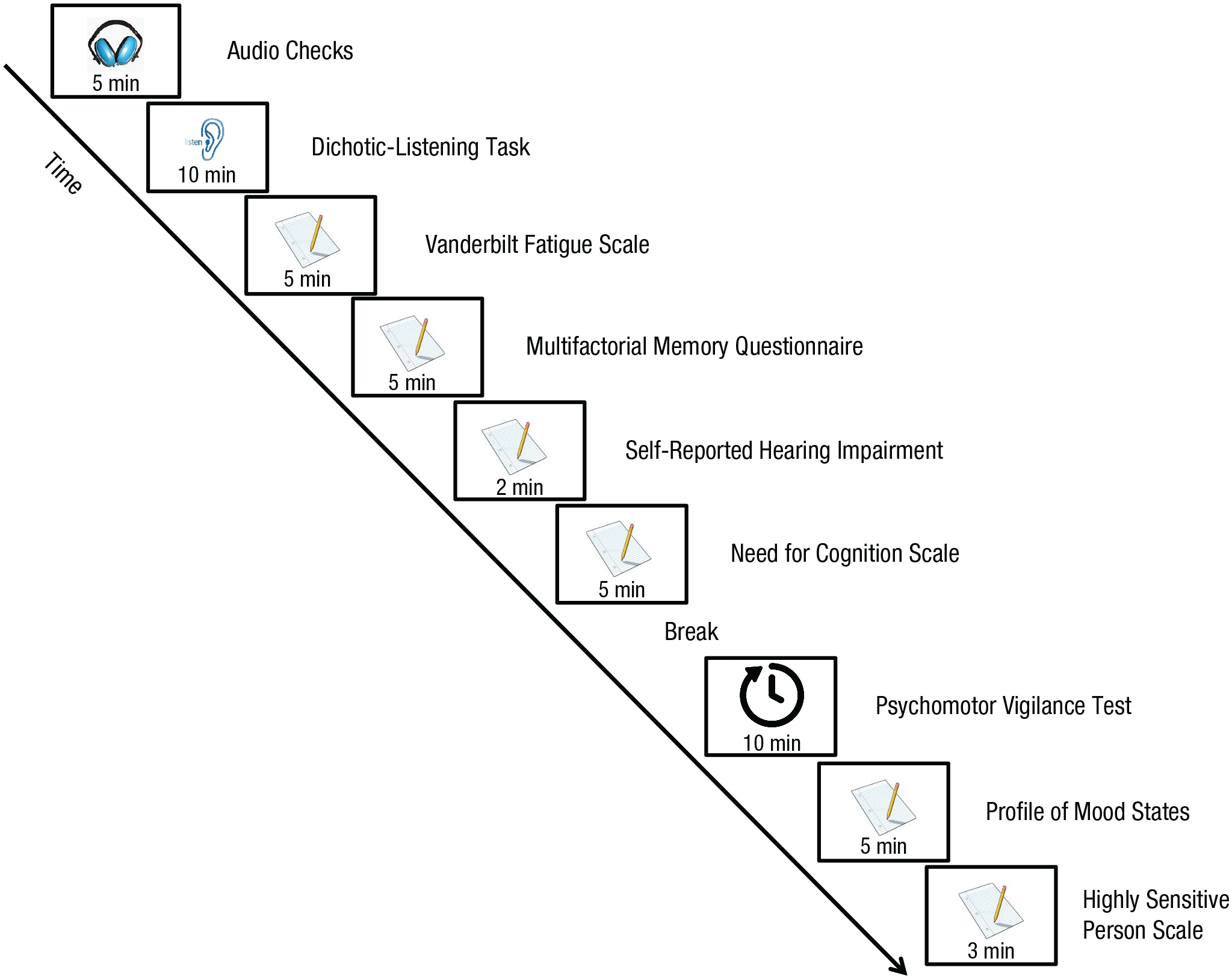
Schematic outline of the experimental procedure with time estimates for each component. Data for the psychomotor vigilance test were collected for a separate study and are therefore not reported in the current article.
Stimuli and individual task procedures
Dichotic-listening task
The dichotic-listening task (Koch et al., 2011) was used as a measure of auditory attention ability. We used the version of the dichotic-listening task adapted for use on the Gorilla platform. For this task, participants were presented with two digits simultaneously, one in the right ear and one in the left ear, of which one was a male voice and the other a female voice. At the beginning of each trial, a visual text cue displayed the word “Male” or “Female” centrally on the screen, and this indicated which voice participants should attend to for that particular trial. The visual cue remained on screen for 2 s. Immediately after the visual cue disappeared, the two speech tokens were presented over the headphones. After presentation of the speech tokens, participants were asked to indicate whether the number spoken by the attended voice was above or below 5. Responses below 5 were given by pressing “f” with the left index finger, and responses above 5 were given by pressing “j” with the right index finger. Participants were given visual prompts with these two response options on the left and right side of the screen. Presentation of the visual prompts was synchronized with the onset of the audio stimuli. Participants were asked to respond as quickly and accurately as possible and were given four practice trials to familiarize themselves with the task.
All dichotic-speech tokens were edited in Audacity (Version 2.4.2; Audacity Team, 2020) to include matching silent onsets lasting 200 ms. Audio files were also converted from .wav to .ogg, because the .wav file type is not generally supported for online use. Participants performed 40 experimental trials in total, 20 using the “female” prompt and 20 using the “male” prompt. Audio stimuli were Digits 1 through 9, excluding 5, recorded by a male and female talker. Of the 20 “female” and 20 “male” trials, half (i.e., 10 of 20) were congruent trials, in which both digits were either above or below 5 (however, note that the same digits were never presented together). The other half (i.e., 10 of 20) were incongruent, in which one digit was above and the other below 5. The number of trials on which the speech token was above 5 and below 5 was balanced (i.e., 20 each). The lateral position of the female and male voice was also counterbalanced (i.e., the female voice was presented to the left ear and to the right ear on equal numbers of trials). The order of stimuli presentation was fully randomized for each participant.
Vanderbilt Fatigue Scale for Adults (VFS-A)
The VFS-A was administered to measure daily life experiences of listening-related fatigue. The VFS-A is designed to measure fatigue that is experienced specifically in the context of listening (Bess et al., 2020; Hornsby et al., 2021). The VFS-A has been shown to have high marginal reliability (r = .98), adequate test-retest reliability (r = .60–.69), and good construct validity across the adult age range (Hornsby et al., 2021). The VFS-A consists of 40 items, and responses are provided using 5-point Likert-type scales with verbal anchors ranging from never/almost never (1) to always/almost always (5) or strongly disagree (1) to strongly agree (5). Examples of test items include “I feel worn out from everyday listening” and “It takes a lot of energy to listen and understand.” One item (“I need to remove or turn off my hearing device to take a break from listening”) was relevant only for individuals who wear a hearing device and so was not included in the current study, 2 leaving a total of 39 questionnaire items. The listening-related fatigue score was a summed score of all 39 items on the scale. Possible scores therefore ranged from 39 to 195; higher scores indicated more listening-related fatigue.
Multifactorial Memory Questionnaire (MMQ)
The MMQ is a self-report measure tapping multiple aspects of memory and has been validated for use across the adult life span (Troyer et al., 2019). The MMQ contains three subscales that assess memory satisfaction, memory ability, and memory strategies. For the current study, we administered the memory-ability component (MMQ-Ability) only. The MMQ-Ability scale measures self-perception of everyday memory ability. Analyses of English-speaking middle-aged and older adults show that the MMQ-Ability scale has good internal consistency (Cronbach’s α = .93) and high reliability (r = .86; Troyer & Rich, 2002). For this scale, respondents were asked to rate how often they experienced each of 20 common memory mistakes over the past 2 weeks. Examples included “Forget to pay the bill on time” and “Not recall the name of someone you just met.” Responses were provided on 5-point Likert-type scales with verbal anchors ranging from all the time (1) to never (5). Scores ranged from 20 to 100; higher scores indicated better perceived memory ability.
Perceived hearing impairment
To measure perceived hearing impairment, we used the adapted World Health Organization (WHO) hearing-impairment grading system (Humes, 2019). This grading system was developed by a combination of experts and adopted by the WHO to assess functional-hearing-related outcomes at the population level (Stevens et al., 2013). The WHO-proposed hearing-impairment grade system was shown to have strong consistency across five data sets that included individuals with various hearing-loss classifications (Humes, 2019). Participants were asked to answer a single question by indicating which of the following statements best described their hearing ability: (a) “I have no or very slight hearing problems,” (b) “I have no problems hearing speech in quiet but may have some difficulty following conversation in noise,” (c) “I have some difficulty hearing a normal voice in quiet and have difficulty following conversation in noise,” (d) “I need speech to be loud to hear in quiet and have great difficulty in noise,” (e) “I can only hear speech in quiet when it is loud and directly in my ear and I have very great difficulty in noise,” and (f) “I am unable to hear and understand even a shouted voice whether in quiet or noise.” Higher scores indicated greater perceived hearing impairment.
Need for Cognition Scale
We administered the 18-item Need for Cognition Scale to measure motivation to engage in effortful cognitive activities (Cacioppo et al., 1984, 1996). This scale comprises 18 items, each of which provides a statement about one’s tendency to engage in effortful thinking (e.g., “I would prefer complex to simple problems”). The 18-item scale has high internal consistency (Cronbach’s α = .90), is highly correlated with the original 34-item scale (r = .95), and is characterized by one dominant factor capturing 37% of the variance (Cacioppo et al., 1984). A more recent examination of need-for-cognition scores suggests that interpretation of the construct is consistent across the adult life span (Soubelet & Salthouse, 2017). Responses indicate the extent to which individuals feel the statements are characteristic of them and are provided on a 5-point Likert-type scale. Verbal anchors ranged from extremely uncharacteristic of me (1) to extremely characteristic of me (5). Half (i.e., 9 of 18) of the items are negatively worded. These items were therefore reverse scored before summed scores were calculated for each participant. Overall scores ranged from 18 to 90; higher scores indicated greater motivation for effortful thinking.
Profile of Mood States (POMS)
We measured psychological distress and mood disturbance using the second edition of POMS (POMS 2; Heuchert & McNair, 2012). The POMS scale is a 65-item questionnaire designed to measure multiple factors relating to mood state, including anger-hostility, confusion-bewilderment, depression-dejection, fatigue-inertia, tension-anxiety, and vigor-activity. Total mood disturbance is represented by a composite score encompassing all of the above factors. The total mood-disturbance score has been shown to have good psychometric properties, including high internal consistency (Cronbach’s α = .96) and powerful convergent validity for both positive and negative affect; rs range from .57 to .84 for POMS subscales making up the total mood-disturbance score (Heuchert & McNair, 2012). To indicate the strength of their feelings “during the past week, including today,” participants responded to the POMS items (e.g., “fatigued”) using a Likert-type scale ranging from 1 (not at all) to 5 (extremely). The vigor-activity subscale includes items with positive-affect descriptors (e.g., alert). These scores were therefore subtracted from the combined score on the other five subscales to provide a total mood-disturbance score, as advised in the POMS scoring manual. Six of the total 65 items relate to an additional friendliness subscale and were not included in the total mood-disturbance score. Total mood-disturbance raw scores were therefore calculated on the basis of 59 items only; possible values ranged from −36 to 200, and more positive scores indicated increased mood disturbance and negative affect.
Highly Sensitive Person Scale
Sensory-processing sensitivity was measured using the Highly Sensitive Person Scale (Aron & Aron, 1997). This 27-item scale has been shown to have high internal consistency (Cronbach’s α = .85–.87) and good construct validity; all items on the scale load onto a unidimensional construct (a scree test indicating a single-factor solution; Aron & Aron, 1997). Participants were asked about how they feel about and respond to sensory stimulation (e.g., “Are you easily overwhelmed by strong sensory stimuli?”). Responses were made on a 7-point Likert-type scale with verbal anchors ranging from not at all (1), moderately (4), and extremely (7). Total scores were calculated as the mean score on all items. Higher scores indicated increased sensory-processing sensitivity.
Analysis
Data cleaning and exclusion
First, to mitigate against low-quality questionnaire data, we applied a set of screening procedures designed to identify potentially problematic (e.g., low-effort) responses from questionnaire data collected online (Buchanan & Scofield, 2018). We excluded participants who failed two or more of the criteria described in Buchanan and Scofield (2018) for detecting low-quality questionnaire responses. These include anomalies in relation to (a) time taken to complete the overall study (i.e., implausibly short completion times), (b) number of scale options chosen (i.e., use of more response options, which can indicate a bot or low-effort responding), and (c) performance on the manipulation check (i.e., an incorrect response, which can indicate inattention). Data were cleaned as follows. First, for each age category and questionnaire, we identified the 2.5% of participants with the fastest completion times. Participants failed the check of time taken to complete the overall study if their scores were in the lowest percentile (2.5%) in at least three of five main questionnaires. A total of nine participants failed this check. Second, participants were flagged if they used all of the available response options on a given scale (e.g., if all five response anchors were selected in a Likert scale ranging from 1 to 5) on at least three of the five questionnaires. A total of 77 participants were flagged on the basis of this check. Third, we included the following item at the end of the Highly Sensitive Person Scale as an attention check; “Please mark number 7 (‘Extremely’) for this question.” Participants were flagged if they did not respond “7.” A total of four participants failed this check. Table 1 shows the number of participants in each age group who failed each of the three screening checks. Overall, only one participant (from Group 2) failed two or more of the three screening checks (response options and attention check) and was subsequently removed from the data set, leaving a total of 280 participants.
Number of Participants in Each Group Who Failed Each of the Three Questionnaire Screening Checks
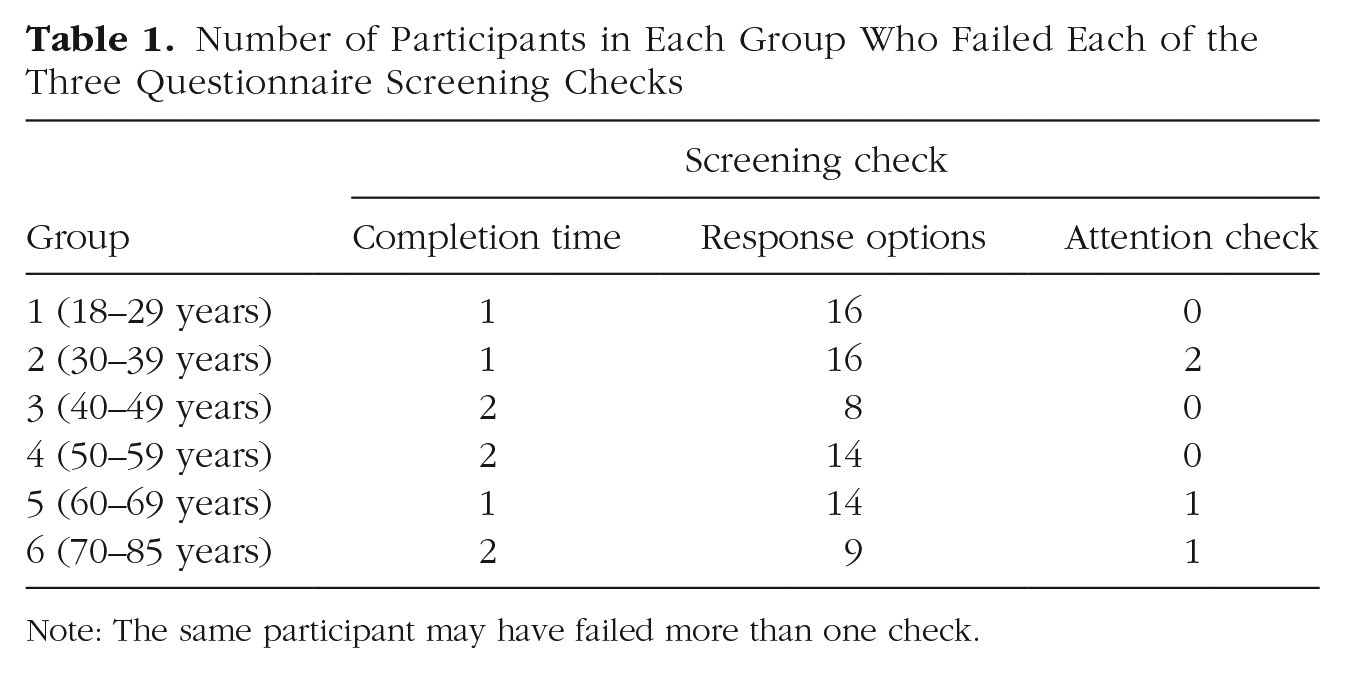
Note: The same participant may have failed more than one check.
Auditory attention ability score
Response times (RTs) on individual trials in the dichotic-listening task that exceeded 3 standard deviations below or above the mean RT for each participant were removed from the data set. This resulted in the removal of 164 trials (1.5% of the entire data set). Performance decrements on the dichotic-listening task may manifest as an incorrect or a slowed response on a given trial. Auditory attention ability scores reflect a balanced combination of response accuracy and RT to adequately account for both types of performance disruption. Scores were calculated using the balanced integration score (BIS) approach (Liesefeld & Janczyk, 2019). Specifically, each participant’s BIS was calculated as follows:

where
Conditional process analysis
Conditional process analysis (also known as moderated mediation analysis) is a regression-based path-analysis approach that tests the conditional nature of the mechanisms by which one variable transmits its effect on another variable (Hayes, 2017). First, to allow a consistent interpretation of the path coefficients in the model, we computed z scores for all variables (except auditory attention ability, which was already a normalized score; see previous section for details). Mediation and conditional process analyses were conducted using the PROCESS macro (Hayes, 2017) in SPSS Version 25. For the mediation analysis, we entered age as the predictor variable. Auditory attention ability, perceived hearing impairment, and perceived memory ability were entered as the mediator variables. Listening-related fatigue was entered as the dependent variable. For the conditional process analysis, we entered mood disturbance, need for cognition, and sensory-processing sensitivity as moderator variables in three separate models. Figure 2 shows the conceptual model entered into the full conditional process analysis. For all analyses, confidence intervals (CIs) were derived from 5,000 bootstrapped samples using a random seed of 270,488. Following the recommendations of Hayes (2017), we deemed direct and indirect effects statistically significant if the bootstrapped CI associated with the effect was either entirely above or below zero. The index of moderated mediation (Hayes, 2015) was used as a statistical test of moderated mediation.
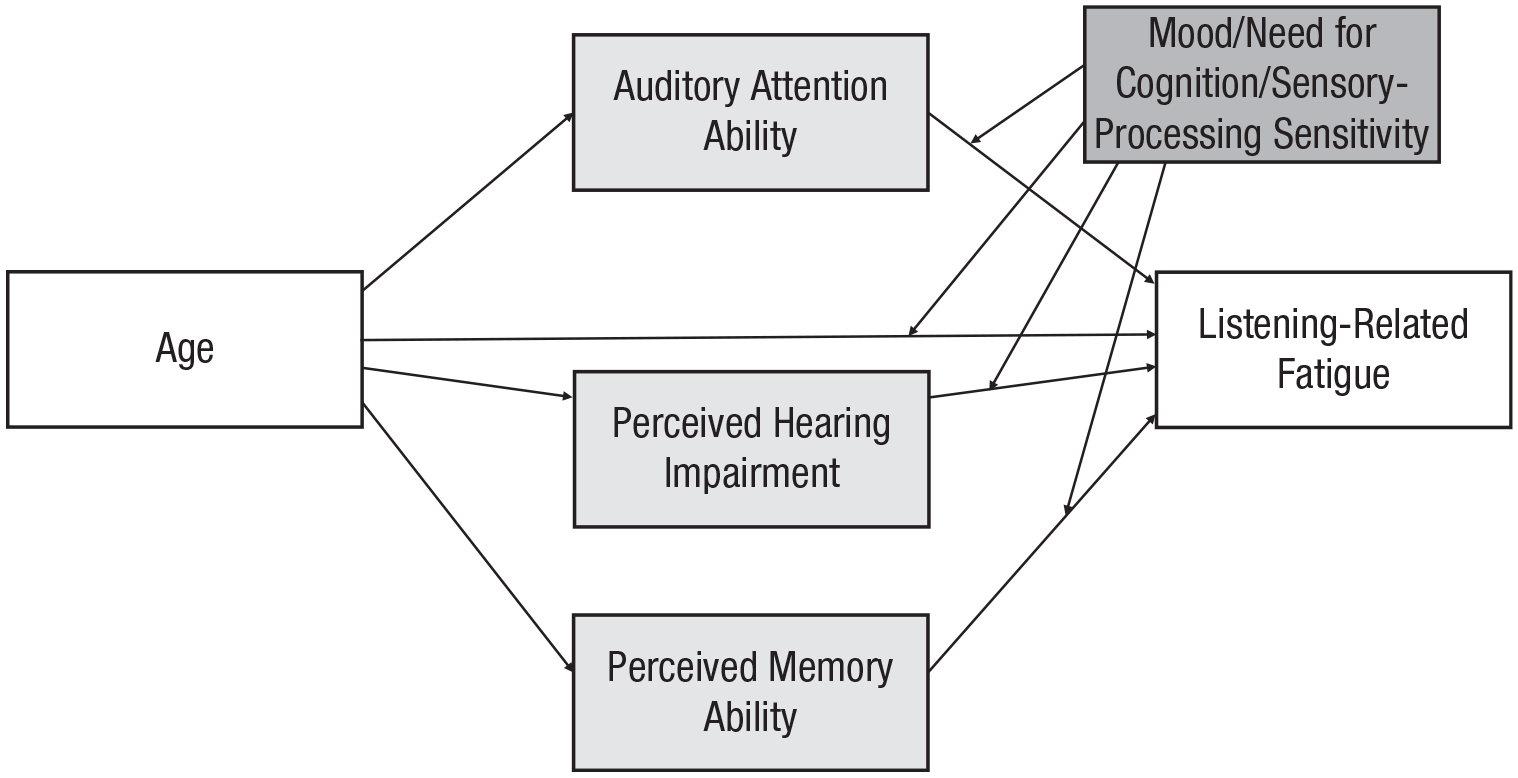
Conceptual schematic representing the variables entered into the conditional process analysis (Hayes, 2017). Age was the predictor, and listening-related fatigue was the dependent variable. Auditory attention ability, perceived hearing impairment, and perceived memory ability were the mediators (light gray boxes), and mood disturbance, need for cognition, and sensory-processing sensitivity were the moderators (dark gray box). Each moderator was tested in a separate model.
Results
Descriptive statistics for all variables in the analyses are presented in Table 2.
Raw Descriptive Statistics for Variables Entered Into the Analysis
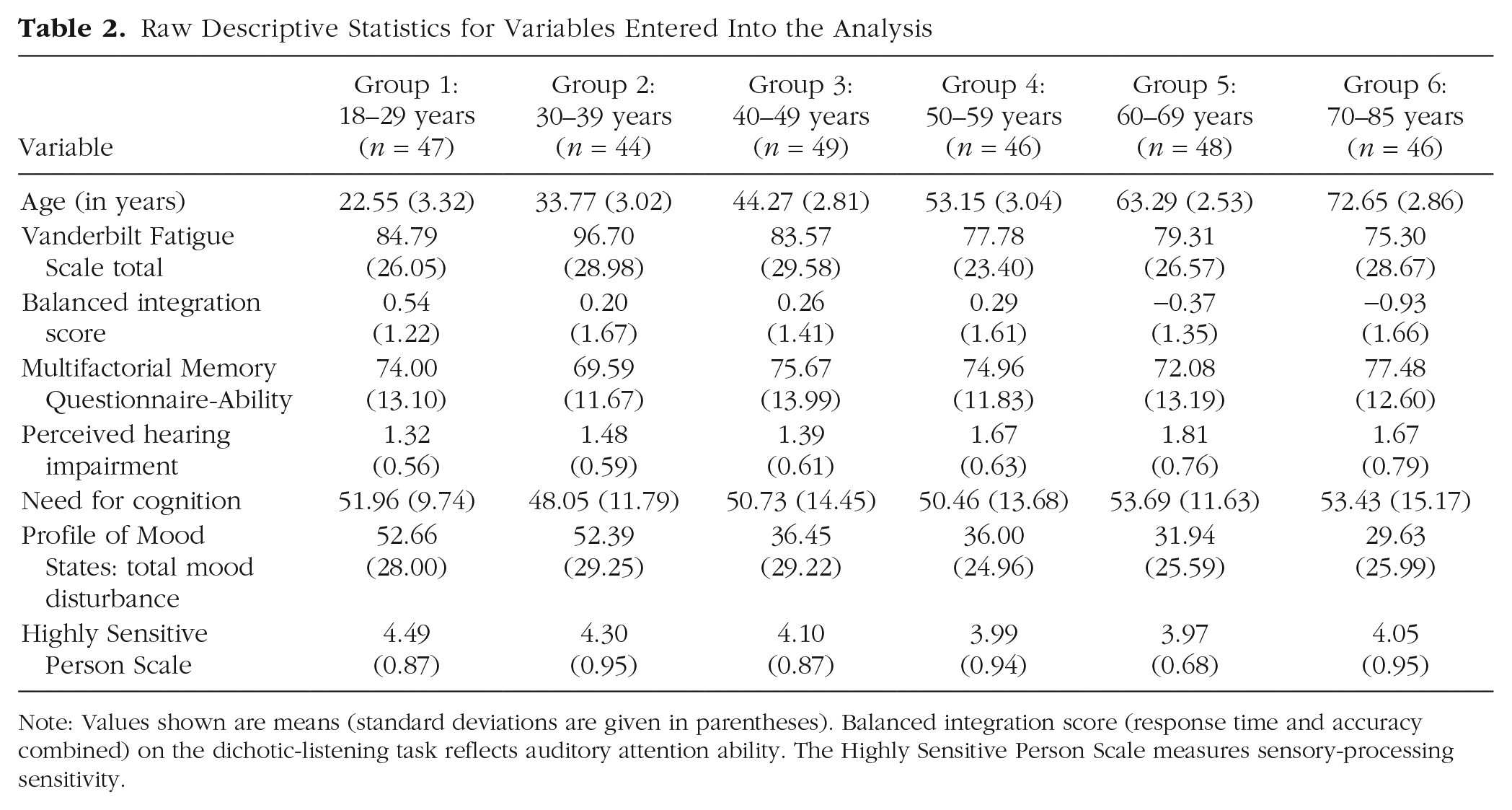
Note: Values shown are means (standard deviations are given in parentheses). Balanced integration score (response time and accuracy combined) on the dichotic-listening task reflects auditory attention ability. The Highly Sensitive Person Scale measures sensory-processing sensitivity.
Mediation analysis
First, a mediation model was tested to examine whether there were any indirect effects of age on listening-related fatigue through auditory attention ability, perceived hearing impairment, or perceived memory ability. Figure 3 shows all path coefficients in the model. We found an indirect effect of age on listening-related fatigue through perceived hearing impairment. Specifically, older participants were more likely to report increased perceived hearing impairment (a2: b = 0.236, p < .001), and individuals who reported increased perceived hearing impairment were more likely to report increased listening-related fatigue (b2: b = 0.308, p < .001). The 95% CI for the indirect effect (a2b2: b = 0.073) was entirely above zero: [0.032, 0.121]. Age was a significant negative predictor of auditory attention ability (a1: b = −0.462, p < .001): Older adults showed poorer auditory attention ability. However, auditory attention ability did not predict listening-related fatigue (b1: b = 0.023, p = .50). We found no evidence that auditory attention ability mediated the effect of age on listening-related fatigue. The 95% CI for the indirect effect of age on listening-related fatigue via auditory attention (a1b1: b = −0.011) straddled zero, [−0.042, 0.021]. Perceived memory ability was a significant negative predictor of listening-related fatigue: Individuals with poorer perceived memory ability also reported increased listening-related fatigue (b3: b = −0.402, p < .001). However, age did not predict perceived memory ability (a3: b = 0.087, p = .15). We also found no evidence that perceived memory ability mediated the effect of age on listening-related fatigue. The 95% CI for the indirect effect of age on listening-related fatigue via perceived memory ability (a3b3: b = −0.035) straddled zero, [−0.084, 0.013]. Finally, there was a significant negative direct effect of age on listening-related fatigue (c′: b = −0.194, 95% CI = [−0.294, −0.089]). In other words, independent of the effects of all three proposed mediators, older participants were more likely to report less listening-related fatigue.
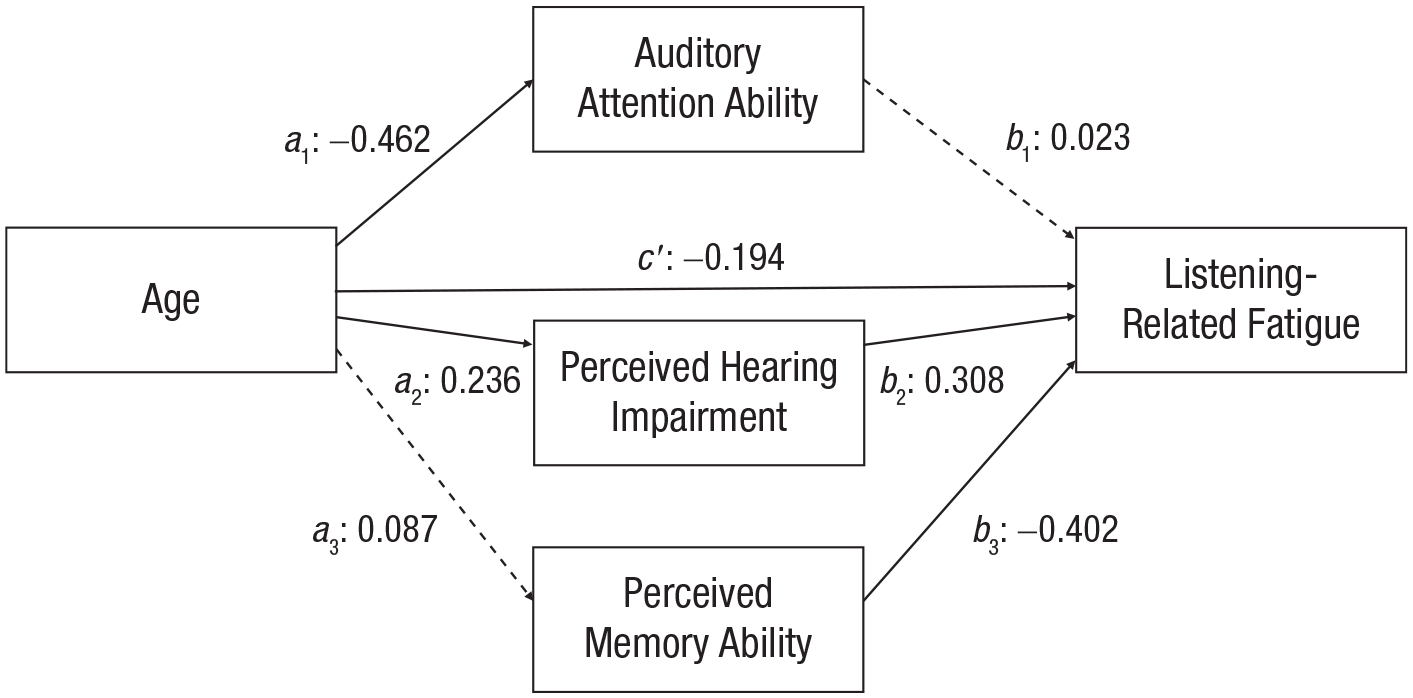
Diagram of the first mediation model, which examined the effect of age on listening-related fatigue via auditory attention ability, perceived hearing impairment, and perceived memory ability. Solid arrows indicate significant paths (p < .05), and dashed arrows indicate nonsignificant paths. Age is a continuous variable; higher values reflect increasing age from 18 to 85 years. Values shown are unstandardized regression coefficients.
Conditional process analysis
Next, three independent conditional process models were tested to examine the hypotheses that indirect effects of age on listening-related fatigue through auditory attention ability, perceived hearing impairment, or perceived memory ability are moderated by mood disturbance, need for cognition, and/or sensory-processing sensitivity. First, we found no evidence that mood disturbance moderated the direct effect of age on listening-related fatigue (b = 0.038, 95% CI = [−0.062, 0.138]) or the indirect effects of age on listening-related fatigue via auditory attention ability (b = −0.027, 95% CI = [−0.073, 0.013]), perceived hearing impairment (b = −0.010, 95% CI = [−0.038, 0.014]), or perceived memory ability (b = −0.006, 95% CI = [−0.021, 0.007]). Second, we found no evidence that need for cognition moderated the direct effect of age on listening-related fatigue (b = −0.008, 95% CI = [−0.122, 0.106]) or the indirect effects of age on listening-related fatigue via auditory attention ability (b = −0.013, 95% CI = [−0.047, 0.027]), perceived hearing impairment (b = 0.003, 95% CI = [−0.027, 0.035]), or perceived memory ability (b = 0.003, 95% CI = [−0.010, 0.017]).
In our third model, we found no evidence that sensory-processing sensitivity moderated the direct effect of age on listening-related fatigue (b = 0.006, 95% CI = [−0.090, 0.101]) or the indirect effects of age on listening-related fatigue through perceived hearing impairment (b = −0.007, 95% CI = [−0.035, 0.020]) or perceived memory ability (b = −0.007, 95% CI = [−0.024, 0.004]). However, we did find evidence that sensory-processing sensitivity moderated the indirect effect of age on listening-related fatigue through auditory attention ability (b = −0.042, 95% CI = [−0.076, −0.010]). In other words, the indirect effect of age on listening-related fatigue via auditory attention ability differed as a function of sensory-processing sensitivity. See Figure 4a for an illustration of the specific conditional effect under investigation. In generic terms, this conditional indirect effect quantifies the amount by which two cases with the same sensory-processing sensitivity value but differing by one unit of age are estimated to differ in listening-related fatigue indirectly via auditory attention ability.
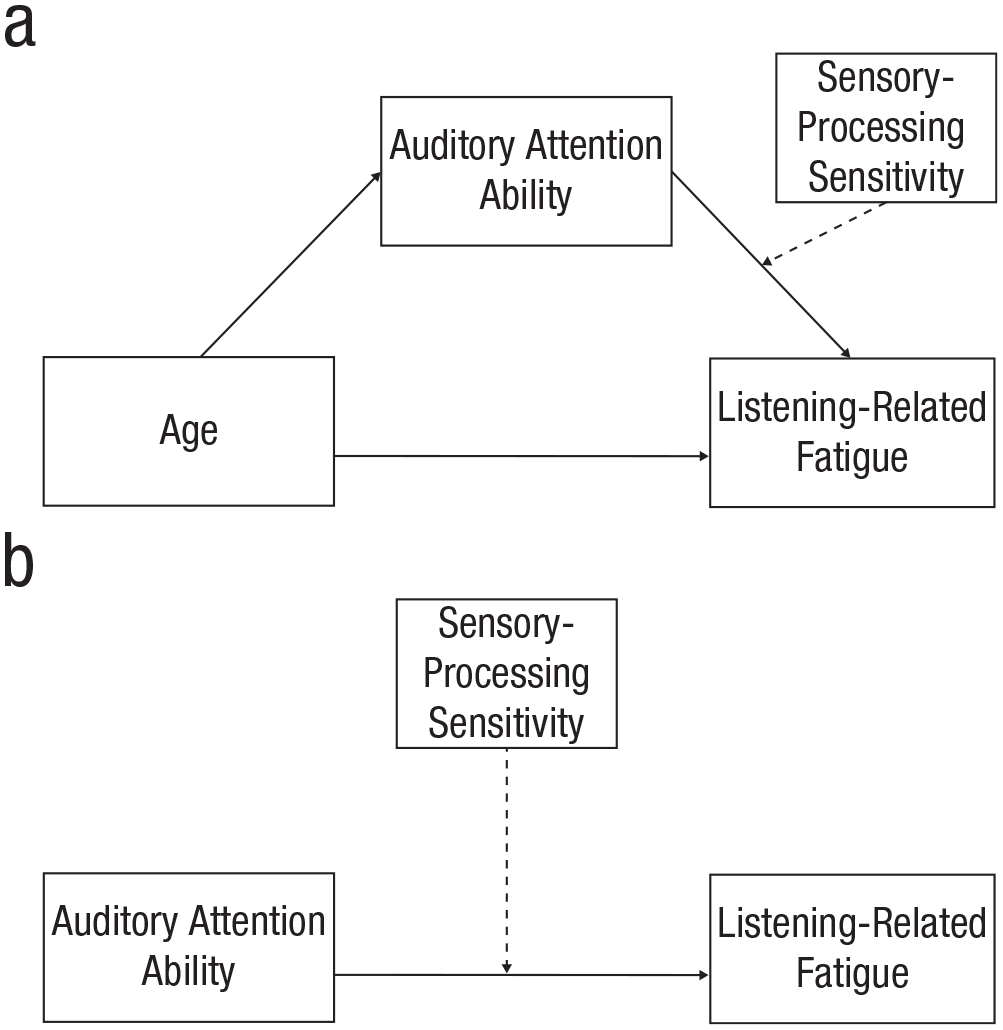
Conceptual diagrams illustrating (a) the conditional indirect effect of age on listening-related fatigue via auditory attention ability and (b) the conditional effect of auditory attention ability on listening-related fatigue, both with sensory-processing sensitivity included as a moderator. Dashed lines highlight moderated paths; all other paths are shown with solid lines.
To probe this conditional indirect effect, PROCESS generated estimates of the conditional effect of age on listening-related fatigue for various values of sensory-processing sensitivity. The sensory-processing sensitivity values were −1.008 (16th percentile; low), −0.047 (50th percentile; moderate), and 1.112 (84th percentile; high). We found a significant negative indirect effect of age on listening-related fatigue through auditory attention ability for individuals high (b = −0.057, 95% CI = [−0.106, −0.009]) in sensory-processing sensitivity but not for individuals moderate (b = −0.008, 95% CI = [−0.039, 0.023]) or low (b = 0.033, 95% CI = [−0.008, 0.081]) in sensory-processing sensitivity. Therefore, although auditory attention ability was poorer in older adults overall (a1: b = −0.462), this actually resulted in less listening-related fatigue among those high in sensory-processing sensitivity (see Fig. 5, left). To better understand this conditional effect, we examined how the effect of auditory attention ability on listening-related fatigue was moderated by sensory-processing sensitivity, independently of age (see Fig. 4b for a conceptual diagram). Irrespective of age, better auditory attention ability resulted in significantly more listening-related fatigue for individuals high in sensory-processing sensitivity only (b = 0.092, 95% CI = [0.031, 0.153]). This direct conditional effect is illustrated in Figure 5 (right).
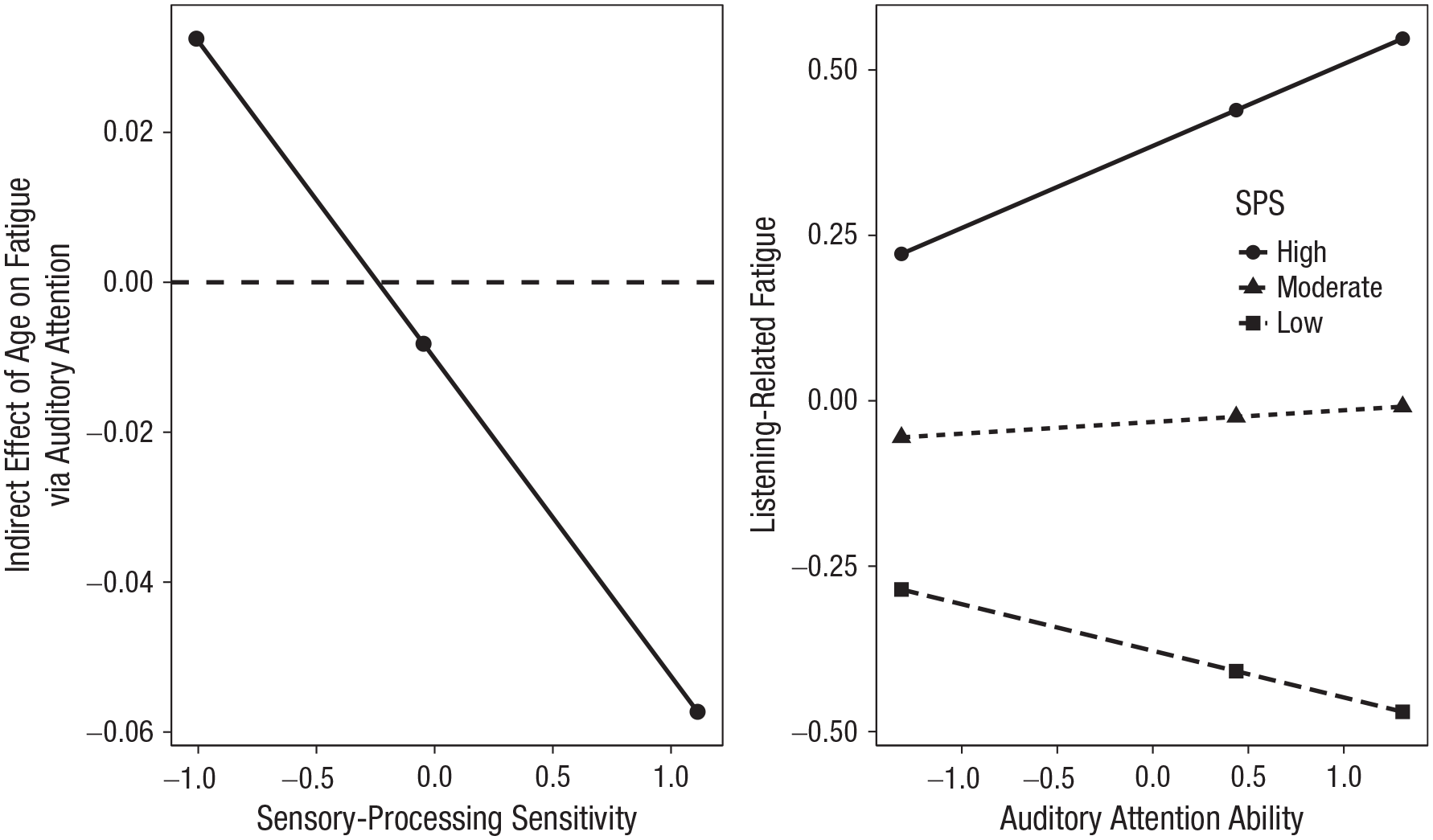
The moderating effect of sensory-processing sensitivity (SPS). The left panel shows the indirect effect of age on listening-related fatigue through auditory attention ability as a function of SPS using scores that fall in the 16th, 50th, and 84th percentiles of the distribution (see Fig. 4a). More negative y-axis values reflect lower listening-related fatigue ratings with increasing age via poorer auditory attention ability. The right panel shows the effect of auditory attention ability on listening-related fatigue as a function of SPS using the 16th, 50th, and 84th percentiles of the distribution (low, moderate, and high, respectively). Higher scores reflect increased listening-related fatigue and better auditory attention ability. See Figure 4b for a conceptual schematic of this effect.
Exploratory mediation analysis
Given the unexpected direct negative effect of age on listening-related fatigue in the mediation analysis, an additional mediation model was tested to explore whether that effect might be explained by age-related differences in mood disturbance, need for cognition, or sensory-processing sensitivity. Figure 6 shows all path coefficients in this model. We found indirect effects of age on listening-related fatigue through both mood disturbance and sensory-processing sensitivity. Specifically, older participants were more likely to report decreased mood disturbance (a1: b = −0.305, p < .001) and reduced sensory-processing sensitivity (a3: b = −0.179, p = .003). Reduced mood disturbance and sensory-processing sensitivity resulted in lower listening-related fatigue ratings (b1: b = 0.323 and b3: b = 0.344, respectively; ps < .001). The 95% CIs for the indirect effect of age on listening-related fatigue through mood disturbance (a1b1: b = −0.098) and sensory-processing sensitivity (a3b3: b = −0.062) were both entirely below zero ([−0.156, −0.052] and [−0.112, −0.020], respectively). Need for cognition was a significant negative predictor of listening-related fatigue (b2: b = −0.108, p = .03). However, age did not predict need for cognition (a2: b = 0.097, p = .11). We found no evidence of an indirect effect of age on listening-related fatigue through need for cognition (a2b2: b = −0.011); the 95% CI included zero ([−0.032, 0.003]). Finally, when controlling for the effects of all three mediators in the model, we no longer found a direct effect of age on listening-related fatigue (c′: b = 0.004, 95% CI = [−0.094, 0.102]), suggesting that mood disturbance and sensory-processing sensitivity captured much of the variance associated with the effect of age on listening-related fatigue.
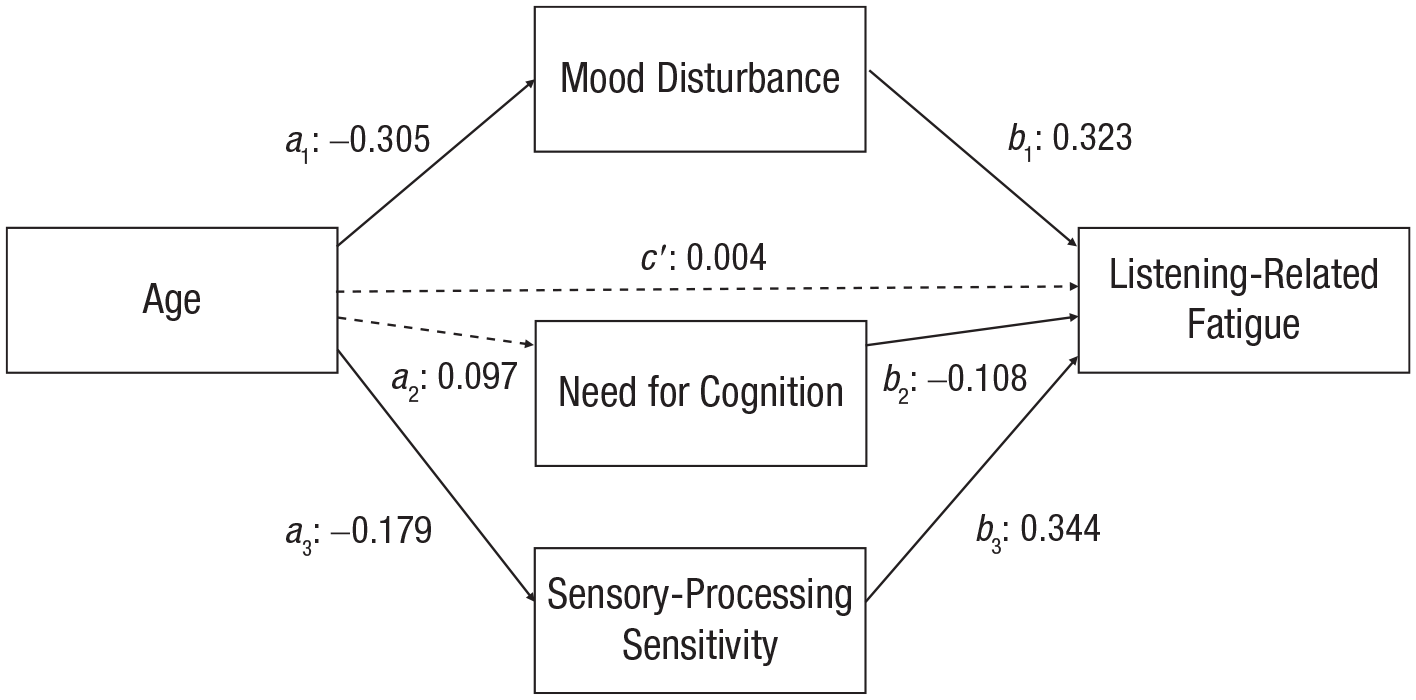
Diagram of the second mediation model, which examined the effect of age on listening-related fatigue via mood disturbance, need for cognition, and sensory-processing sensitivity. Solid arrows indicate significant paths (p < .05), and dashed arrows indicate nonsignificant paths. Values shown are unstandardized regression coefficients.
Discussion
This study examined the effect of age on listening-related fatigue and explored mediating and moderating variables underlying this effect. First, as predicted, we found that perceived hearing impairment mediated the effect of age on listening-related fatigue; older adults reported higher perceived hearing impairment, and this in turn was associated with increased listening-related fatigue. Contrary to our predictions, results showed no indirect effect of age on listening-related fatigue via auditory attention ability or perceived memory ability. Moreover, when controlling for the effects of perceived hearing impairment, auditory attention ability, and perceived memory ability, we found that older adults reported less listening-related fatigue. A follow-up exploratory mediation analysis revealed that this negative direct effect might be attributable to age-related reductions in mood disturbance and sensory-processing sensitivity. When we controlled for these factors, there was no longer a direct effect of age on listening-related fatigue. Finally, we found a conditional indirect effect of age on fatigue via auditory attention ability. Specifically, older adults generally had poorer auditory attention ability, which resulted in less listening-related fatigue, but only for those with high sensory-processing sensitivity.
Previous research suggests that perceived hearing impairment may be a mechanism by which older adults report increased listening-related fatigue (Hornsby & Kipp, 2016). Consistent with this idea, results showed that older adults reported higher perceived hearing impairment, and those with higher perceived hearing impairment also tended to report increased listening-related fatigue. We also hypothesized that poorer auditory attention ability may represent another pathway to increased listening-related fatigue in older adults. Older listeners showed poorer auditory attention ability, which is consistent with the literature (Rogers et al., 2018). However, auditory attention ability did not predict listening-related fatigue. 3 Finally, we also predicted that reductions in perceived memory ability might account for some changes in listening-related fatigue over the life span. Although perceived memory ability negatively predicted listening-related fatigue, we found no effect of age on perceived memory ability.
The main results from the mediation analysis suggest that perceived hearing impairment represents one mechanism by which healthy older adults report more listening-related fatigue. However, results from a follow-up mediation model exploring the unexpected direct negative effect of age on listening-related fatigue revealed that mood disturbance and sensory-processing sensitivity both decrease with age and positively predict listening-related fatigue. In other words, reduced mood disturbance and sensory-processing sensitivity appear to be mechanisms by which older adults ultimately report less listening-related fatigue. This finding highlights the pivotal role of negative affective responses, particularly to unwanted sensory stimuli, in the subjective experience of listening-related fatigue (Francis & Love, 2020; Strand et al., 2018). This is consistent with recent findings that negative emotional responses may influence our tolerance of background noise in general (Mackersie et al., 2021). It also sheds light on the ongoing tug-of-war in the relationship between age and listening-related fatigue. Although aging is associated with higher perceived hearing impairment, which may increase susceptibility to listening-related fatigue, it is also associated with more positive mood characteristics that appear to counteract this effect. Age-related improvements in emotion regulation, in particular, have been reported elsewhere in the literature (Charles & Carstensen, 2010). However, given the exploratory nature of the follow-up mediation analysis, confirmatory research is warranted. Need for cognition predicted listening-related fatigue: Higher motivation to engage in effortful thinking predicted less listening-related fatigue. This is consistent with the notion that individuals who derive more pleasure from effortful cognitive activities are less likely to experience listening-related fatigue (Matthen, 2016). However, unlike mood disturbance and sensory-processing sensitivity, need-for-cognition scores did not show a concomitant change with age.
Finally, it was predicted that mood disturbance, need for cognition, and sensory-processing sensitivity would moderate the effect of age on listening-related fatigue. Only the prediction about sensory-processing sensitivity was supported; however, the direction of the effect was not as hypothesized. Specifically, we predicted an indirect positive effect of age on listening-related fatigue through poorer auditory attention (i.e., older adults would report more listening-related fatigue via poorer auditory attention abilities), an effect that would be strongest in individuals with high sensory-processing sensitivity. We found evidence for this indirect effect, but it was more negative for individuals high in sensory-processing sensitivity (see Fig. 5, left). In other words, higher sensory-processing sensitivity was associated with lower listening-related fatigue for older adults with compromised auditory attention ability. In contrast, irrespective of age, better auditory attention ability was associated with increased listening-related fatigue for individuals with high sensory-processing sensitivity (see Fig. 5, right). This conditional effect highlights an important distinction between functional outcomes and subjective experiences. For individuals who are highly sensitive to sensory stimuli, preserved auditory attention ability may exacerbate listening-related fatigue. One explanation for this finding is that individuals who are highly sensitive and who also have intact top-down attentional control may sustain their attention at the expense of increased stress and effort during challenging listening situations. For these individuals, the reward of persevering and expending cognitive effort may not justify that effort, resulting in a heightened experience of listening-related fatigue (consistent with Hockey’s, 2013, motivational-control theory of fatigue).
This study highlights potential avenues for future research. For example, more research is required to help disentangle the relationship between effortful listening, mood, and listening-related fatigue. Changes in mood may represent a mechanism by which reward-induced effortful listening may mitigate perceived fatigue (Hockey, 2013). There are, of course, some limitations with the current study. Our findings are mostly based on self-report data. The predicted age-related increase in effortful listening and fatigue may be detected using objective (e.g., behavioral or physiological) methods (Francis & Love, 2020; McGarrigle, Rakusen, & Mattys, 2021).
Conclusions
This study suggests that the relationship between age and listening-related fatigue is underpinned by a complex set of perceptual, cognitive, and psychological phenomena. Normal, healthy aging is associated with changes that simultaneously increase (heightened perceived hearing impairment) and protect against (reduced mood disturbance and sensory-processing sensitivity) listening-related fatigue in daily life. For individuals with high sensitivity to sensory stimuli, better auditory attention ability may even increase susceptibility to listening-related fatigue. A better understanding of the impact of aging on various functional and subjective outcomes will help health-care professionals tailor intervention strategies (e.g., hearing aids or counseling) to reduce the burden of communication difficulties in the transition into older adulthood.
Footnotes
Acknowledgements
We thank Ferenc Ighali for assistance with designing the experiments.
Transparency
Action Editor: Karen Rodrigue
Editor: Patricia J. Bauer
Author Contributions
R. McGarrigle developed the study concept and design with guidance from S. Knight, B. W. Y. Hornsby, and S. Mattys. R. McGarrigle created the online experiment, collected the data, conducted the analysis, and led the interpretation of the results with feedback from all three coauthors. R. McGarrigle drafted the manuscript, and all three coauthors provided revisions. All the authors approved the final version of the manuscript for submission.