




Abstract
The private rental market is a key provider of housing to forced migrants. This paper examines qualitative data from case study research in rapidly urbanizing towns in the Biqa’ Valley, Lebanon, focusing on Syrian forced migrants’ efforts to access housing through the local private rental sector. Building on literature about landlord–tenant relations and anthropological work on kin, I argue that rental agreements ought to be understood as both financial and social arrangements, which involve family members, landlords and middlemen (shaweesh) in complex rental ecologies. I find that young Syrians are caught up in evolving financial and social obligations, which make inhabitation possible, but which perpetuate gendered and xenophobic forms of dispossession. I argue that humanitarian and development actors advocating for the right of forced migrants to settle in urban areas ought to avoid perpetuating reliance on an inequitable private rental sector.
I. Introduction
Dramatic increases in forced migration have catalysed critical shifts in urbanization in the global South. In 2022, the UN reported a 21 per cent increase in the number of forced migrants since 2021, representing the largest annual increase the UN has recorded.(1) UNHCR has recently advocated for urban settlement rather than encampment, representing a development from its 2009 policy to expand “protection space” afforded to forced migrants living in urban areas.(2) Despite UNHCR’s policy change regarding the protection of urban forced migrants, urban forms of shelter continue to be seen as posing a challenge,(3) which disproportionally affects countries in the global South.(4) A growing body of interdisciplinary literature, bridging political geography, urban studies and forced migration studies, has demonstrated that the expansion of “protection space” within national geographies is uneven,(5) and that private individuals have emerged as significant actors in host countries’ responses to forced migration.(6)
Private landlords are principal among those actors who have responded to forced migration by creating rental housing,(7) which has been characterized by precarious contracts, sub-standard living conditions and vulnerability to eviction.(8) “Rent” commonly refers to the payment made by the tenant to the landlord. In this paper, I propose approaching rent as entailing what Bryan and McArdle call a complex, messy and multi-dimensional(9) relationship between landlord and tenant. I build on literature about the landlord–tenant relationship by expanding on the notion of the forced migrant tenant household, drawing particularly on theories of kin- and kin-like relations of rights and responsibilities.(10) I consider the role of intra-household, or kin-like, relationships in charging and paying rent in an effort to understand practices which make inhabitation through rent possible.
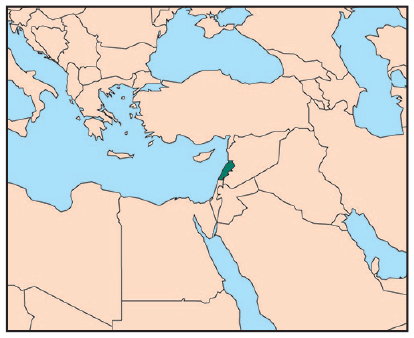
This paper considers the case of the Biqa’ Valley, Lebanon. Around 1.5 million Syrians have been displaced to Lebanon since the Syrian Civil War broke out in 2011, along with at least 220,000 refugees of other nationalities, including Palestinians and Iraqis.(11) The Government of Lebanon has banned the UN from establishing formal refugee camps and the private rental market has become the dominant supplier of housing. The government has devolved responsibility for governing housing relations to individual municipalities,(12) which are incentivized to privilege and empower property owners over tenants.(13) In the Biqa’ Valley, small farm-owners are renting plots of land to tens, if not hundreds, of households,(14) and people with liquid capital are building new property for the rental market.(15) Despite this increase in the amount of housing for rent, supply is not meeting demand and rental prices remain high relative to incomes. I develop my analysis of rental agreements from a case study of three towns in the Biqa’ Valley. Drawing on 26 semi-structured interviews with young Syrian residents and their families and neighbours, I examine the ways in which Syrians describe rental agreements.
Rental agreements between Syrian tenants and landlords are created and sustained through complex social relations, which could be characterized as a rental ecology. I find that young family members become obligated to Lebanese landlords through gift and exchange relations. Young residents are caught up in evolving financial and social obligations, which can be affected by inequitable kin-like relations with shaweesh (camp authorities and middlemen who are themselves part of the refugee community) and landlords. I suggest that these obligations between family members, shaweesh and landlords make inhabitation possible, but barely so, and in ways that can perpetuate and worsen gendered as well as xenophobic forms of dispossession. I conclude that rental ecologies in which forced migrant families are compelled to participate are characterized by an ambiguous power dynamic, in which the potential to settle debts with landlords is sustained but extremely difficult to realize.
This paper makes two primary contributions to the scholarship on forced migrants’ inhabitation of urban spaces, and to the literature on rent. First, I demonstrate that the no-camp policy intersects with well-established urban governance practices to create opportunities for private landlords to emerge as central figures in forced migrants’ inhabitation practices. I also extend the scholarship on rent and power by demonstrating the importance of kin and kin-like relations in the maintenance of rental agreements, and the consequences for the (re)production of social injustices. Change at the national and municipal scales of governance would be needed to recalibrate power between landlords and tenant households, by regulating rental agreements, as well as protecting tenures which are not private property.
II. Literature Review
a. Forced migration and inhabitation
Drawing predominantly on data from primary cities, with some notable exceptions,(16) urban scholars have demonstrated that forced migration intersects with broader socioeconomic struggles within urban settings.(17) By situating forced migration within urban processes, forced migrants’ settlement is framed as a spatial-temporal process of inhabitation, which is conditioned by national and urban legal, social and material environments. As Kreichati notes,(18) the process of inhabitation is “indicative of the different types of relations and valences people can forge with their environments and each other”.(19) In particular urban contexts, forced migrants have the capacity to forge relations with(in) their material, social and legal environments in order to improve their situations.(20) However, the potential for individuals to inhabit places is also conditioned by available infrastructures, governance logics and host communities’ attitudes towards forced migrants.(21) Historical and well-established housing and labour practices, in addition to refugee-specific policies, condition the possibilities of inhabitation for forced migrants, who become enmeshed in such processes in ways that can subtract and extract from their lives.(22)
Precarious protection is afforded to certain communities by humanitarian and host states’ geographically differentiated and changing practices.(23) Within the “grey spaces”(24) produced by deliberate gaps in law and the uneven implementation of “soft laws”,(25) private individuals can emerge as actors who can regulate, control and segregate people on the basis of their refugee and non-citizenship status.(26) Urban settlement, therefore, can become a form of containment,(27) which is realized through the deconcentration of the governance of forced migrants among diverse municipal, humanitarian and private actors. This paper examines an important privately controlled mechanism that facilitates forced migrants’ inhabitation: private rent.
Rent is a common mechanism which allows for inhabitation across different kinds of forced migrant spaces. The majority of the world’s refugee population live in urban settings,(28) and are highly likely to access housing through private rental arrangements. The relations and valences which make inhabitation possible for the majority of forced migrants coalesce around the relations that make rental agreements possible. In Lebanon, where there is no formal housing for forced migrants from Syria, informal construction and renting from private property owners offer forced migrants opportunities to inhabit urban spaces.(29) Rental agreements with private landlords might offer relief in the short-term, whilst causing long-term vulnerability as forced migrants become enmeshed in inequitable rental markets, which offer few protections to tenants.(30) Despite challenges of affordability, forced migrant households continue to pay rent by sharing homes with other families and increasing household income by sending younger family members out to work.(31) The exploitation of forced migrant waged labour by the propertied class as a component of the rental agreement is a concern for humanitarian organizations, as is the fact that tenants spend large proportions of cash transfers from the UNHCR, earnings and credit on rent, and are not sufficiently protected from extortionate rent, poor living conditions or evictions. In this paper, I aim to contribute to understandings of how the rental agreements between host landlords and forced migrants are created and maintained, through an exploration of the relations and practices which comprise these agreements.
b. Rent
Rent is a relationship between people, in which a party secures access to an asset which is owned by another party.(32) Harvey’s note that rent might be a “simple payment to the owners of private property, but it can arise out of a multiplicity of conditions”,(33) acknowledges the potential complexity of the “payment” for rent. Rent payments do not only arise out of multiple conditions but can also take different forms, which are not only financial. The differential in the capacities of the owner and the tenant to determine the payment form and amount shapes tenants’ inhabitation practices, particularly in places where alternative means of accessing housing are unavailable.
In contexts of permissive pro-owner laws and policies, landlords have the power to extract rent from the tenant without needing to improve living conditions(34) and to reduce resistance among tenants seeking to oppose their landlords.(35) In contexts where law is pro-tenant but under-implemented, landlords still have the power to control tenants’ personal lives and to reduce their feelings of security.(36) Power asymmetries between landlord and tenant threaten the ability of tenants to live in decent homes, to negotiate the terms of rent and the use of their income, and to have agency over their personal lives. Power dynamics between landlords and tenants are a particularly acute issue with regard to agreements with individual owner-landlords, which are prevalent in the global South.(37) What Byrne and McArdle call the complex, messy and multi-dimensional everyday relationship between landlord and tenant(38) shapes tenants’ capacities to inhabit their living spaces, including their home and the wider neighbourhood the home gives access to. The complexity of the landlord–tenant relationship is at least partly due to the de facto inclusion in rental agreements of multiple and differently labouring subjects, who are compelled to support the tenant family household through paid and unpaid work.(39)
c. The tenant household
Whilst formal rental contracts typically name two distinct parties – the asset owner and the tenant – rental agreements can, as noted, involve many subjects, who are either enfolded within these two parties, or who are neither asset owner nor tenant but a broker between them. The research which informed this paper largely focused on the “tenant”, but a major finding is that it is more accurate to think of the “tenant” as a “household”, thickening the concept in order to reflect on the likely reality of their tenancy as contingent on, and supportive of, intimate relationships between several individuals. In Lebanon, a household of forced migrants has on average five members,(40) and households are typically referred to as “families”. As Saud Joseph’s work in Lebanon has demonstrated, the “family” is a heterogeneous, expansive, mutable and political entity.(41) “Households” could therefore mean the immediate family of parents and children, but also extended family members, including cousins, aunts and uncles, as well as second wives and their children. Familial relations between Syrians and Lebanese are common, complicating the “forced migrant household” category.
Joseph suggests that we understand families as “ideologies, relationships, and practices”, which are “the outcomes of multilayered processes that are highly political”.(42) Different family members are involved “in extensive and intensive relationships entailing rights and responsibilities to and for each other”.(43) Certain acts can bring other people – those who were not previously kin – into intensive relations. Thus, work and political relations can take on similar attributes to kin-relations.(44) Whilst any person of any age and gender can be implicated in these intimate connections, connectivity in Lebanon is organized according to the logics of patriarchy, whereby men and seniors are privileged in the mobilization of kin structures and moralities.(45) Rights and responsibilities are structured by gender and age, and different household members are likely to take on different responsibilities in contributing to the maintenance of the household.
As they move through adolescence, young people become implicated in the maintenance of the household’s finances, their status within the community, and in upholding kin moralities.(46) With regard to accessing housing, young people occupy a critical position as earners for household incomes, carers for younger siblings and parents, and as heads of households themselves. (Young) men and women are implicated differently by kin moralities, responsible for upholding gendered norms around sacrifice for, and obligation to, the family.(47)
A lens on obligations and responsibilities between kin and in kin-like relations can therefore contribute to our understandings of how tenant families pay rent, who is implicated in paying the rent, and the different forms of payment that can emerge. In the remainder of this paper, I consider how the governance of housing and rent in Lebanon creates the conditions for intensive and extensive kin- and kin-like relations to emerge through rental agreements, and how these relations facilitate inhabitation through paying rent. I focus on the narratives of young Syrians, whose position in household structures and role in kin moralities is revealing of the expansiveness of rental arrangements beyond the tenant–landlord binary and the implications of rent for different people.
III. Context
The Government of Lebanon’s response to Syrians’ arrival has been characterized as a set of “nos”: no refugees and no camps.(48) Prior to the Syrian Civil War, Syrians regularly crossed the Lebanon–Syria border for work and leisure, and to spend time with family in Lebanon. Since the outbreak of war and their arrival as forced migrants, Syrians have effectively been criminalized by virtue of being prevented from registering as refugees: a decision which has contributed to the “manufacture” of their vulnerability to dispossession.(49) Although formal refugee camps do not exist in Lebanon (bar one semi-formal camp, see Section V), approximately 20 per cent of registered Syrians live in tents, in what are called “informal tented settlements”,(50) which I will refer to in this paper as camps, following the local colloquial nomenclature. Most tents are erected on privately rented plots of land, or on land which is given in exchange for labour. The remaining 80 per cent of registered Syrians rent rooms, apartments and buildings, including purpose-built housing and repurposed buildings such as factories and garages.(51) In the Biqa’ Valley, which hosts the largest number of registered Syrian refugees,(52) Lebanese residents are increasingly investing in property to rent as the demand for shelter has increased with mass forced migration to the area.(53) This investment has supported property-owning families in the face of economic collapse and gradual decline of local industries, including small farming businesses in the Biqa’. Property development has been heavily incentivized by the government, which has supported the real estate sector with stimulus packages,(54) as well as planning policies that have allowed changes to land use and the proportion of plots which can be built on.(55) Municipalities, which manage building permits, are also incentivized to enable this development since it represents one of the few fund-raising opportunities for local government(56) and makes municipal government more popular among voting local populations.(57) Formerly “rural” towns of the Biqa’ Valley do not simply reflect the globally increasing private rental sector,(58) but rather present an extreme case of a rapidly emerging rental market as a result of forced migration, facilitated by a local government dependent on property-related taxes and the political support of propertied residents.
In Lebanon, the relationship between tenant and landlord is the primary means by which agreements around access to rental housing are negotiated. The government has distanced itself from overseeing these arrangements, delegating responsibility to underfunded municipalities, which have limited capacity to enforce rental housing standards. Whilst tenancies are supposed to be registered with the municipality, the vast majority are oral agreements between the landlord and the tenant.(59) It is illegal to increase the rent until a contract runs out after three years (unless this is agreed with the tenant), but in the context of Lebanon’s economic crisis (2019–), landlords have been demanding more rent, or simply that rent be paid in dollars or in Lebanese lira, at the market exchange rate.(60) The value of the lira relative to the dollar is subject to debate and change. For forced migrants renting plots in fields, the landlord determines the conditions of the site, its population size and evictions.(61) Although the municipality provides some services to these settlements, including waste and sanitation services, it does so via the landowner, who recuperates costs from the residents. The municipality does not officially intervene in matters of eviction from privately owned land, since the contract to use this property is between the owner and the residents.(62) Landlords can (and have) cut off access to infrastructure in disagreements about rent and have evicted residents without repercussions from state authorities.(63) Syrian forced migrants living in the Biqa’ become enmeshed in these pro-private housing and planning policies and practices, by virtue of the government’s no-camp policy.(64)
This complex picture is further complicated by the fact that what is exchanged might not be, or might not only be, money for land or housing. A common form of rental exchange in the Biqa’ Valley is the exchange of labour on a farm for a plot of land in a field. This exchange is typically managed through a shaweesh: a migrant labour organizer whose role has expanded since the Syrian Civil War from organizing Syrian seasonal farm labourers to include managerial responsibilities towards all residents of the camp.(65) The figure of the shaweesh is not unique to the Biqa’, but is significant in the Biqa’ and contexts like it, with a history of labour migration within rural areas. The nature and power of the shaweesh differs between camps. Some have expanded their role from labour organizer to general camp administrator, building on existing networks and knowledge to maintain their position, whilst others have been more recently elected to their role by camp residents. Shaweesh generally have the responsibility of securing work for residents and managing the distribution of aid, as well as ensuring the residents’ continued access to land. Managing access to resources and work can confer power to shaweesh over residents, who rely on the shaweesh as middlemen between landlords, employers and aid providers. However, in smaller camps, the role of shaweesh can be purely administrative, taken on by a senior male family member, and does not seem to confer much power. The position of the shaweesh is contingent on their capacity to maintain relations with the landlord and with employers (who might be the same person), and to maintain relations with residents, who are at risk of being forced out.
IV. Research Study
In this paper, I ask: what relations and practices make inhabitation possible for forced migrant households, in a context where the rental market is the dominant means of accessing housing? By inhabitation, I imply a constant process of “forging relations and valences”, as per Kreichati,(66) through which people seek to create a decent life in a given place. Here, I focus on young people’s narratives of how they access and sustain access to housing, particularly their reflections on the interpersonal relationships around paying rent (see Section II c). In the conclusion, I consider whether and how rental practices implicate family structures and kin moralities, as forced migrant families search for relations and valences which can support their inhabitation.
The findings which I share in this paper are from qualitative research in the Sunni-majority towns of Bar Elias, Marj and Majdal Anjar in the Biqa’ Valley in Lebanon. These towns represent an extreme example of the emerging rental sector, where apartments, plots of land and storage units are rented out as housing to a population which has likely doubled in size since 2011.(67) As te Lintelo and Liptrot note,(68) the most rapidly urbanizing places in the world, to which hundreds of thousands of forced migrants are moving, are less obviously “urban” than primary cities, but are nonetheless overlooked in much of the urban forced migration literature.(69) This case study contributes to a rebalancing of that literature.
In 2019 and 2020, I worked with research assistants to conduct semi-structured interviews with young Lebanese and Syrian residents (N = 34), and their family members. This paper focuses on interview data with 26 young Syrian residents between 15 and 24 years old and four adults, two of whom were parents and two of whom were neighbours of these young people. The interviews, including questions about the experience of moving to, and living in, the towns, were conducted with 20 young men and six young women. The 2020 COVID-19 outbreak interrupted data collection and meant that I was unable to balance the genders in the dataset. The young Syrians we met were living either in tents on plots of land which their families rented from a landowner (n = 15) or in apartment buildings rented through a private landlord (n = 10). One lived in a factory. They had all moved to the Biqa’ from their homes in Syria since 2012. All worked, or had family members who worked, in low-income piecemeal jobs. Their narratives suggest that they had been either middle-income or low-income families in Syria. One identified as an atheist, another as Shi’a and the remainder as Sunni. Whilst this paper does not explore the religious-sectarian dimension of landlord–tenant relations in detail, it is important to note that this likely plays a part in the ongoing relations between landlords (including religious charitable institutions) and tenants. However, this paper focuses on young people’s perceptions of these relations, which did not focus on common religious beliefs or practices.
Between 2019 and 2020, I changed my approach to interviewing these young residents. In 2019, I worked in a team with NGO CatalyticAction and University College London researchers, including Arabic-speaking researchers, who conducted interviews in pairs in a private room at a local NGO to which the young residents had a connection. In 2020, along with the two Arabic-speaking researchers (a young Lebanese woman called Maha and a young Syrian man called Sammy), I revisited the young Syrians interviewed in 2019 and met others who had not been interviewed before. Unlike in 2019, we invited the young residents to choose where we met, and whether they wanted to have anyone else present. The vast majority chose to meet in their family home, though four chose to meet us in their teachers’ homes. Family members – including parents, aunts and uncles, children and siblings, as well as local authority figures and neighbours – would move in and out of the conversation. The interviews were therefore fluid. Sometimes newcomers interjected or changed the topic; sometimes a moment of privacy allowed for a more intimate discussion. I was present to respond to any questions interviewees had about the research, to support the researchers and to observe the conversations and our environments. Maha and Sammy translated the audio recordings.
Maha, Sammy and I analysed the interview data thematically, using a mixed inductive-deductive approach, with provisional concept codes from the literature as well as inductive codes we developed from the interviews. This collaborative analysis helped me to understand how Maha and Sammy had interpreted the interviews and translated some of the Arabic phrases and terms. Separately, I then conducted axial coding and pattern-matching, to categorize themes and sub-themes and to identify potential interconnections. This paper focuses on the connections between two themes: relation to others, and infrastructure (including housing and land).
V. Findings
Forced migrant families in the Biqa’ secure housing in different ways. Almost all of these involve paying rent in the form of cash or labour. Some arrangements do not explicitly involve exchanging money for a plot of land or an apartment but do involve other forms of financial exchange (such as payment for services like waste removal, water and electricity) on which the right to stay in the home is conditional. All but two of the young Syrians were living in a rented place: either a plot of land for a tent or an apartment. One of these two young Syrian men was living with his family on a small plot of land which had been donated by a member of their extended family; the other was living in a semi-formal camp. Both of these families were paying for services. The majority of the Syrians were paying rent in cash. Of those living in tents, young men would work in the fields, in work teams managed by the shaweesh in charge of the camp, or were doing piece work in construction sites. One Syrian family living in an apartment was staying in exchange for work for their landlord. Of those living in apartments and paying cash, young Syrian men contributed to the rent by working in construction. In conversation with these young people, we explored the intricacies of these apparently simple exchange arrangements.
a. The gift
Omar’s family had an unusual living situation compared to others in the Biqa’, in that they were living in one of two (now the only) semi-formal refugee camps in the country. This camp was set up by a Gulf-funded NGO, and was given implicit permission by the municipality to exist.(70) To secure a home in the camp, residents had to abide by certain rules of exchange. As Omar’s mother explained:
If you’re causing any problems, missing electricity payments, they could give you a break for 4–5 months, but it’s something you’re consuming, they’re providing you with electricity and you have to pay, it’s your duty. Some people miss payments for a year or two, at some point they’re forced to send them away, that’s it, but as long as you don’t have any problems you can stay. (Um Omar).
Though they don’t pay ground rent or rent for the tent itself, this payment for services essentially amounts to the same thing, since the right to remain depends on this regular payment. Omar’s mother suggests that despite the willingness of the organization to “give you a break” should a resident fall behind on payments, they have a “duty” to pay eventually. The organization, acting as a landlord, is “forced” to evict after years of the resident failing to do their duty: despite being a charitable organization, this landlord upholds the terms of exchange eventually. Despite the unusual nature of their living situation compared to that of other Syrian families, Omar’s mother’s narrative introduces recurring themes which we heard time and again in others’ narratives of securing a home in the Biqa’: she spoke of provision, leniency and charitable behaviour on the part of the landlord, of duty on the side of the tenant, moments of negotiation and the ever-present potential of eviction.
In the context of the housing shortage in Biqa’, Omar and his mother explained that they were in a better situation than many other families, including those living in apartments. According to the people we spoke with, landlords could rent out a room, without access to a bathroom, for 100,000 Lebanese lira per month (worth approximately US$42 in February 2020, and US$66 in July 2019 prior to the collapse of the lira) . A one-bedroom apartment might cost 300,000–400,000 (approximately US$126–170 in February 2020). This was far beyond the budgets of many Syrian households. Moreover, a landlord might refuse to rent to a family, even if they had the money. When Syrians found a tent or an apartment that a landlord was willing to rent to them, they expressed gratitude. Mohammed, an 18-year-old from Damascus, shared his experience of near-homelessness after being evicted from a temporary home in a mosque: “Where would we stay? We needed to settle somewhere. But thank God, some generous people saw our terrible situation, and they asked ‘What’s wrong?’ And we told them.”
The offer of a place to rent confirms that someone has “seen” the family’s situation and has given them something to alleviate their plight. The rental agreement is interpreted as a gift or act of charity: something which is generously offered to certain people. The act of recognizing Syrians’ housing needs is interpreted in a context of scarce affordable housing. Syrians are aware that landlords can choose whether to rent their property, to whom and at what price. The offer of rent at an affordable price was often described in terms of generosity, since the agreed-upon fee is not commensurate with the potential value of the home. Lebanese residents who rented out buildings or plots of land to Syrians also described the offer of a rental agreement as a show of favour. One NGO worker, who had built an apartment block and rented the rooms to Syrians, suggested that he had done so because Syrians needed somewhere to live, and that finding an apartment in Bar Elias was very difficult for Syrians. He also acknowledged that the investment was a good one, given the high demand for rent in Bar Elias.
b. The exchange
Once the “gift” of the rental agreement has been given, however, meeting payments became a primary concern for Syrians. This payment was managed in different ways, depending on the kind of arrangement the family had with their landlord. Mohammed, whose family’s dire situation had been noticed by their landlord, was living with his parents and siblings in a one-room apartment in Majdal Anjar. Mohammed worked in construction and contributed to paying the rent for the family home. As he put it, the rent “breaks our backs”: it necessitates hard labour, long hours and the family’s collective effort to maintain a roof over their heads.
In conversations with Syrians who lived in apartments, it was common that, having lamented the cost of the rent and the terrible conditions they were living in, someone would remark that they would still rather struggle to stay in the apartment than move to a tent. Mohammed defined himself as Damascene, and therefore as different from the Syrians from more rural parts of Syria. One young Syrian woman explained that whilst some Syrians were used to living in tents, they were “not like” those people, being from more “culturally advanced” cities. The payment of rent has greater significance than simply the avoidance of homelessness: it entails the maintenance of a social status by different family members, in order to avoid degradation.
For those who lived in tents, finding the cash to rent an apartment was an impossible dream. Mona described her experience of searching for an apartment:
We found a place for rent for a fee of 100,000 lira, but the owner didn’t agree [to rent it to us]. It [was] more of a store than a house, one room and no bathroom. [. . .] We are forced to live in a tent. [. . .] Syrians are forced to send their children to the streets; perhaps they’re able to secure something to eat. [. . .] An apartment consisting of a room and a bathroom for a fee of 300,000–400,000 [lira], it’s not fair. [. . .] We are barely eating and drinking, we depend mostly on UN assistance. (Mona, 19)
At the time of our conversation, households registered with the UN were entitled to 262,500 lira per month (approximately $110 in February 2020).(71) With this money, people living in camps might be expected to cover ground rent for their tent, electricity bills and other services and food. It is interesting that Mona had been able to entertain the idea of renting a room with no bathroom, even though eventually the landlord did not agree to rent the room. Deprived of this opportunity to rent a “store”, and with other apartments in the area too expensive, she is compelled to remain in the tent, where she can barely afford the lower payments. Whether they lived in a tent or an apartment, most Syrians reported that they would have to find money to pay rent of some kind.
c. Extra-familial relationships
For those living in camps, the nature and amount of rent was affected by the family’s relationship with the camp’s shaweesh. The shaweesh acts as a middleman between tenants and landlords and is central to rental arrangements in camps. In the smaller camps I visited, the role of shaweesh was often taken by an adult male, who was related to many of the camp residents. In the larger camps – those with over a hundred tents – the shaweesh tended to be an intimidating figure, whilst also being a member of the forced migrant community. In some cases, this meant that they were already part of kin relations within the camp. Majid, whose father was a shaweesh in one of the larger camps in Bar Elias, contributed to the rent through work that was “handed to [him]” by his father. In another camp I visited, the family of the shaweesh enjoyed privileged access to work.
Most were not so fortunate as to be related to a shaweesh. In these instances, obligations towards the shaweesh had to be met in order to maintain access to the land, without favourable access to work. Sayra described how a shaweesh had demanded that she and her sister work in the fields, to contribute to the cost of the plot of land on which their tent was pitched. Although it is not unusual for children and young people to work in the fields, these young women were of a marriageable age and the father considered it shameful for them to work. To avoid this situation, he was compelled to pack up the entire family and move to another camp.
Whether or not they were related to the family, the shaweesh typically enjoyed dominion over the private space of a household’s tent. All but one of our interviews with Syrians in camps were interrupted by the shaweesh entering the tent and making conversation with the family or with Sammy or Maha. The shaweesh was both an authority figure, and intimately connected with families living in the camps, including those to whom they were not related. They often had the right to make demands on tenants’ labour and on their earnings, and young people were seen by the shaweesh as people who could potentially meet the rental demands. For the majority, the shaweesh was part of the extra-familial relationships on which families were dependent for access to housing. However, the role of the shaweesh was not merely to facilitate financial transactions; they were also figures with whom families might negotiate over the terms of rent without directly interacting with the landlord. Despite the shaweesh’s kin relations with some camp residents and intimate connection to forced migrants, the kin-like relation, as Saud Joseph describes it,(72) was more likely to be associated with landlords who had an unmediated relationship with tenants.
d. Kin-like relations
In cases of rented apartments, the relationship with the landlord appeared to be unmediated: a direct transaction of cash for housing. However, the landlord–tenant relationship, unmediated by a shaweesh, had the potential to become intimate, and not merely transactional. This intimate relationship includes various tenant household members. We have already seen how young people become enfolded in rental agreements by contributing their labour, which has been framed as a responsibility to the family and as duress placed on them by an external person (the shaweesh). Young people can become implicated in rental agreements in more complex ways, however, than just being responsible for contributing cash.
I met Farah in her parents’ tent in Marj, but she lived in a one-bedroom apartment behind her husband’s employer’s home nearby. Farah described how her landlord had come to her aid after she had been verbally assaulted by a group of young Lebanese men outside her front door. She had called him from her home, fearful of being attacked by the men and of losing her baby (she was pregnant at the time). The landlord rejected the call and called her back (so that she would not have to pay for the call). He came straight to the home and chased off the young men. Farah did not call her husband, fearful that “things would not end in a good way”. If he fought with the Lebanese men, he would be far more vulnerable to arrest than they were and might face deportation. The Lebanese landlord saved them both from a potential unfolding series of harms.
To avoid the situation happening again, Farah’s husband and the Lebanese landlord agreed that Farah should not leave the home to shop or run errands. Though she was permitted to visit her family, she was escorted there and back. She described her situation thus: “I can’t stay in the house and I can’t leave it.” Farah was trapped in her home, where she felt unsafe and could not leave, because she would also feel unsafe outside. Her husband’s financial situation had worsened recently, and they could not afford to move. Farah therefore had to abide by their rules. Her living situation thus shifted from being a good, affordable arrangement – by any relative measure in the Biqa’ – to a form of social entrapment. Her body – where she went and who was permitted to see her – became caught up in a complex rental arrangement, where social relations had to be maintained to avoid homelessness and abuse.
Landlords often became bound up in this way in familial relationships, aligning themselves with members of the family. This could be a source of security for forced migrant families, who found they had no one else to turn to in hostile environments where discriminatory behaviour from the Lebanese community and from policing authorities was common. Amar, a young Syrian man from Damascus, was put into prison (“for a reason that didn’t have anything to do with me”) and the family’s landlord helped him to get out. During our conversation, he held up this incident as evidence that some Lebanese people were good. This incited debate. His teacher, who had arranged our meeting, warned him to “be careful”, since the Lebanese person in question was benefiting from him and his freedom (to work); the relationship with the tenant was one which the landlord had a vested interest in preserving. His teacher then reconsidered his position: if he were a landlord, he said, he would aggressively stand up for his tenant (“if you scam him, God help you”). Amar also tempered his teacher’s response, suggesting “I don’t think it’s [like that] to this extent.” Amar’s friends chimed in, sharing stories of late payments and their understanding landlords, whose leniency afforded them a month of free rent.
Acts of generosity are bound up in a complex ecology of rights and responsibilities, in which landlords’ motivations to protect their tenants, control their movements and give up a month of rent are difficult to interpret. Are these acts of charity or strategies to extend and transform the rules of exchange, obliging tenant families to commit to certain labour or social conditions? Landlords might act like kin, implicated in intimate connectivities that lend security to forced migrants at risk of attack, arrest and deportation, but they are not bound to do so. However, even in the very act of agreeing to a rental arrangement, landlords are making inhabitation possible for forced migrant families, even if they can barely afford the rent.
Vi. Conclusion
In a context with no formal refugee camps, the private rental sector offers forced migrant families a means of securing housing in Lebanon. Without the offer of a place to rent, either in a field or in an apartment, forced migrant families would likely be homeless. Rental agreements are created within a context of low housing supply and relatively high prices, as well as low-waged work for Syrians. Aware of a landlord’s ability to choose who to rent to, young Syrians with low incomes expressed gratitude for being offered a home. At the same time, this act of generosity reinforces the power differential between landlord and tenant, citizen and forced migrant. As te Lintelo and colleagues have identified in small towns in Turkey, rental agreements are “unequal, yet sometimes collaborative connections between [. . .] citizens and foreigners, between lower and higher socio-economic classes; and between property owners and the dispossessed”.(73)
Despite this blatant power imbalance, with the rental agreement in place, there is the lingering possibility of equity between the parties: the tenant agrees, and is able to afford, the terms set with the landlord. This is an exchange agreement, in which the parties can reach a kind of equilibrium by meeting the agreed payment for the home. In contexts where the rent is determined according to principles of demand and competition, in conditions of scarcity, where the rent can be changed at any time, and there is little to no recourse to a mediating authority, this ambiguous power dynamic can resemble what David Graeber calls a “ruthless and violent form of equality”.(74)
Rent implicates family in two ways. First, in order to pay rent and therefore to maintain the possibility of equity between the tenant and the landlord, family members – including young people – become involved in a rental ecology, as contributors to the rent through waged labour, whether for the landlord or others. In the case of forced migrants living in camps, this rental ecology extends beyond the family to include extra-familial, but nonetheless intimate, relations with shaweesh. Second, rent is mediated through ‘kin-like moralities’, which include landlords and tenant households in the maintenance of good relations, shaped by expectations of correct behaviour according to age and gender, and a shared responsibility to protect the family’s social status. Rent poses a major challenge to those who seek to maintain a higher social class by avoiding living in camps. Forced migrant families describe working in ‘back-breaking’ jobs to pay the rent. Whilst those living in buildings are typically from urban areas with families in professions, some have had to move to camps after their resources ran out. However, living in a camp does not exempt forced migrants from being compelled to work in “back-breaking” jobs. In both cases, forced migrants are liable to be caught up in shifting demands from their landlords and shaweesh which can further restrict the terms under which they inhabit the places they live in. Possibilities for inhabiting towns in the Biqa’ were diminished by the obligations placed on forced migrant tenants via the rental agreement.
Although the kin-like relations which empower landlords to control forced migrants’ lives might also serve to support forced migrants in particularly challenging times, they did not make landlords and tenants equals. Kin and people in kin-like relations are not equally responsible for anticipating one another’s needs.(75) The social differences between owner and renter, citizen and forced migrant, expanded the choices available to the Lebanese landlords, making it possible for them to be motivated by both generosity and selfishness if they choose to support their tenant. The tenant, meanwhile, only has the choice of agreeing to the landlord’s or shaweesh’s requirements, or leaving.
Forced migrants therefore become enmeshed in an extractive process as tenants(76) and forced migration as an event is enmeshed in, and exacerbates, extractive processes involving rent and labour. Forced migrants’ value is extracted through the same processes as those faced by others in shared conditions of precarity via the housing market and rental practices. The absence of Lebanese narratives from this paper is a limitation: the inclusion of the perspectives of local community members could enable a more expansive understanding of how mass forced migration impacts others’ access to housing, and the shared challenges generated by pro-private property practices and policies. A deeper exploration of religious belief and charity is another promising angle, which might give further depth to this debate about responsibility and obligation. One reason this did not emerge as a prominent theme in this research was that forced migrants did not say that a common religious belief was significant in their dealings with landlords. Paying rent, in whatever form, was more important to their day-to-day relations. A fuller exploration of class and rent would also be relevant to this discussion, expanding the discussion beyond labour to include access to assets and credit to pay rent.
By attending to rent as a mechanism which conditions forced migrants’ inhabitation, this paper has demonstrated the significance of national governments’ private property-led housing policies and municipalities’ elective inaction around policing housing quality, rental contracts and evictions. These dimensions need to be recognized as underpinning extractive situations, both urban and rural, particularly in urban settings. Advocates for both forced migrant and low-income households might focus their resources on challenging exploitative rentier economies and introducing new and effective tenant protections. Cash transfers for rental payments are short-term solutions which ultimately feed into extractive economies. Recognizing the inequities of rent is one of the first steps towards a productive reimagining of housing access.
Footnotes
Acknowledgements
I am grateful to the anonymous reviewers and editors of Environment & Urbanization for their helpful suggestions and edits, as well as Professor Jennifer Robinson for her close reading of earlier drafts. The research which informs this paper would not have been possible without Sammy Ganama, Maha Al Khomassy, the CatalyicAction team and colleagues at University College London. I am sincerely thankful to the young people and their families who invited us into their homes and shared their stories with us.
Funding
The author(s) disclosed receipt of the following financial support for the research, authorship, and/or publication of this article: This research was funded by an ESRC Studentship and ESRC Postdoctoral Fellowship, Marc Schoucair, and UCL Global Engagement.
