




Abstract
The urban lab is an experimental governance approach for the co-creation of innovative solutions to urban challenges, such as climate change. However, urban lab scholarship has overlooked lab formation as a distinct process and is almost exclusively based on European cases. Therefore, little is known about the role of context conditions for lab formation in general and beyond Europe in particular. To address these gaps, this paper inductively analyses urban lab formation in five cities in Argentina, Brazil and Mexico, develops a framework for the comparative analysis of lab formation challenges, and asks: What do the challenges encountered and the solutions developed during lab formation in these cities tell us about the context dependence of the urban lab approach and what are the implications for its potential beyond Europe? Comparing insights from Europe to the findings from Latin America, the paper answers these questions and identifies future research questions.
Keywords
I. Introduction
It is widely acknowledged that cities have a key role to play in mitigating climate change.(1) Because of the scale and urgency of the challenges, however, traditional government processes are regarded as insufficient for delivering the required change. Sustainability transformations, understood as non-linear systemic changes in how societies and economies work,(2) are necessary and the speed of these transformations must accelerate to limit global temperature rise. In recent years, the “urban lab” (UL) has emerged as a prominent experimental governance approach for developing innovative solutions for urban challenges such as climate change.(3) While different types of ULs exist, they all provide a space for individuals from government, civil society, research, the private sector and other sectors to experimentally co-create, test and improve innovative solutions while learning together. The central idea is to fast-track the development of innovative and potentially transformative solutions that can then be scaled up.
Publications on the topic have steadily increased in recent years. However, current scholarship on ULs has two major shortcomings. Most studies examine the experiments carried out by the labs but ignore the UL formation process. Also, these studies focus almost exclusively on Europe. Consequently, we know little about how ULs emerge and whether context conditions in Europe have been important. We also do not know how context dependent the UL approach is and how ULs work in parts of the world where context conditions may differ. Cross-regional comparative research on ULs also remains challenging as long as the role of context conditions is not explored.
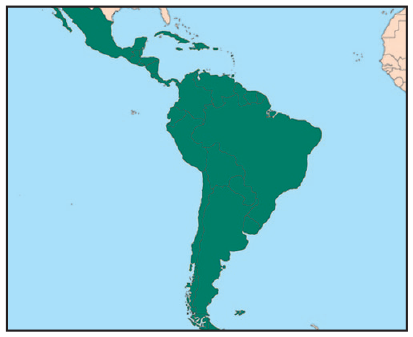
This paper therefore shifts the research focus to the UL formation process in Latin America, the most urbanized among the world’s less developed regions.(4) It inductively examines and compares the formation processes of ULs set up in 2021 in five cities in Argentina (Buenos Aires), Brazil (Teresina, Recife) and in Mexico (León, Naucalpan) as part of the Transformative Urban Coalitions (TUC) project(5) and asks: What do the challenges encountered and the solutions developed during urban lab formation in these five Latin American cities tell us about the context dependence of the urban lab approach and what does that mean for its potentials and limitations beyond Europe?
The following section provides a focused literature review on ULs. Section III introduces the methods and data upon which this paper is based. The fourth section presents the challenges faced and local solutions developed by the five labs during the formation process. The results of a comparative analysis of these challenges and their links to contextual conditions are presented next, along with a framework for this analysis developed from the data. After a short comparison with insights from Europe, we conclude by discussing our findings and suggesting questions for future research.
II. Urban Labs In The Literature
Urban labs are a particular form of experimental urban governance in which individuals from various sectors meet to co-create, test and improve innovative solutions while learning together along the way.(6) By far the most widely studied type of UL is the Urban Living Lab (ULL), which this review therefore focuses on.(7) The ULL model is derived from the Living Lab, a user-oriented method for testing and improving technological innovations under real life conditions.(8) The term “Urban Living Lab” emerged from and was popularized by the Joint Programming Initiative Urban Europe (JPI Urban Europe) in the mid-2010s.(9) Given these origins, it is not surprising that most ULLs focus on “techno-economic innovations”(10) in fields such as energy,(11) circular economy,(12) transport(13) or building retrofitting.(14) ULLs with a focus on social rather than technological innovations are rare.(15)
This literature review focuses specifically on the phases of ULLs that have been investigated in these studies and on their geographical scope. We distinguished four overlapping but distinct ULL phases – lab design, formation, experimentation and impact creation – and we looked at which of these are typically covered.(16) The overwhelming majority of ULL studies focuses on experimentation and the experiments. The number of studies on impact such as the contribution of ULL niche innovations to systemic transformations has increased in recent years.(17) Very few studies analyse ULL design and even fewer study their formation process. One reason for that is the short-term, cross-sectional research approach used by most ULL studies, which often results in short “snapshot” case descriptions.(18) The very few studies that pay attention to the lab formation process are longitudinal. Even among them, only two provide empirical details and analysis of the lab formation process: one about cycling innovation labs and the other about an urban resilience lab, both in the Netherlands.(19) Both studies mention formation challenges such as distrust and conflict, which we will return to in more detail in the comparative analysis below.
While the number of ULL studies has increased in recent years, the locations of these labs and the researchers studying them have not changed – almost all are based in Europe.(20) The European funding structure for ULL practice and research described above is a main reason for this. While some labs now also exist in other parts of the world, scholars have paid little attention to them, especially from a comparative perspective. The few UL studies that discuss cases from Europe and Latin America, however, argue that the contexts are fundamentally different, which makes comparisons difficult if not impossible.(21) Overall, little is known about ULs outside of Europe to date.
These findings from the literature review – the lack of lab formation studies and of UL studies beyond Europe – are linked in indicating a lack of attention to the role of context conditions, which results in three research gaps. First, while some studies suggest that potentially context-related lab formation challenges such as distrust and conflict exist, we know little about their importance because they are mostly neglected in ULL studies.(22) Second, this implies that we also do not know if the UL approach works in parts of the world where relevant context conditions may differ from Europe or if it must be adapted. Finally, our lack of knowledge about the role of context conditions for lab formation renders cross-regional comparative research on ULs almost impossible. This article addresses these gaps by studying lab formation processes and challenges in five Latin American cities, and by adopting a comparative approach for insights into the context dependence of the UL approach.
III. Research, Methods And Data
The research for this paper was conducted as part of the TUC project, which supported local partners to establish ULs in five cities in Argentina, Brazil and Mexico to facilitate the emergence of transformative urban coalitions.(23) Through these coalitions, the project aims to contribute to shifting urban sustainability trajectories towards zero carbon emissions by 2050 in a socially just way.(24) The ULs at the centre of the project are coordinated by local consortium members IIED-América Latina, World Resources Institute (WRI) Brasil and WRI México. The project has a research component to support the ULs with action-oriented knowledge (“transformative research”) and to contribute conceptual and theoretical knowledge to international academic and policy debates (“transformation research”).(25)
The five Latin American cities were selected by a proposal drafting team in 2019, based on a combination of the following criteria: climate change-induced urban challenges; consortium members’ local expertise; and the respective municipalities’ commitment to the project. While case selection was not driven by research criteria, the five cities vary significantly across many dimensions.(26) Because of this variation and because the literature on ULs provided little guidance on the most relevant context factors, rather than testing a set of predefined context conditions, we decided to adopt an inductive and hypotheses-generating approach. We therefore inductively inferred relevant context conditions based on the challenges encountered by the ULs in Latin America during lab formation. Future research may then test and build on our findings.
Four sources of data have been used for this article, depicted below in decreasing order of importance. The analysis draws primarily on the critical observations and reflections of local UL coordinators and the researchers who have studied these processes from the beginning. The first author coordinated the collection and analysis of these data,(27) which were complemented and triangulated with data from three other sources: an annual survey of UL members, interviews with a wide range of stakeholders and ethnographic studies of the ULs.(28) Data were analysed with a focus on the challenges and solutions for UL formation and contextualization, first on a case-by-case basis and then across cases to identify common topics and patterns of challenges and solutions, while constantly considering how these topics and patterns could be linked to relevant context conditions.
IV. Urban Lab Formation In Five Latin American Cities
The TUC project supported local partners to establish ULs in five Latin American cities. Knowing that urban governance in Latin America is often characterized by citizen–government distrust and conflict, the consortium adapted the UL model to accommodate these challenges. While aiming at climate interventions, the labs are conceptualized as micro-governance spaces through which certain process goals should be achieved, including empowering weaker lab members, building interpersonal trust and networks, facilitating collaboration and developing local narratives that link climate issues to local priorities.(29) By demonstrating that this process can produce tangible results, the project aims to inspire stakeholders to replicate and scale this complementary governance approach. So, while ULs are typically used as a means to test innovations through experiments, in the TUC project the lab process is itself an innovation and a means for broader change in its own right. This model could therefore be called an “urban governance lab”.
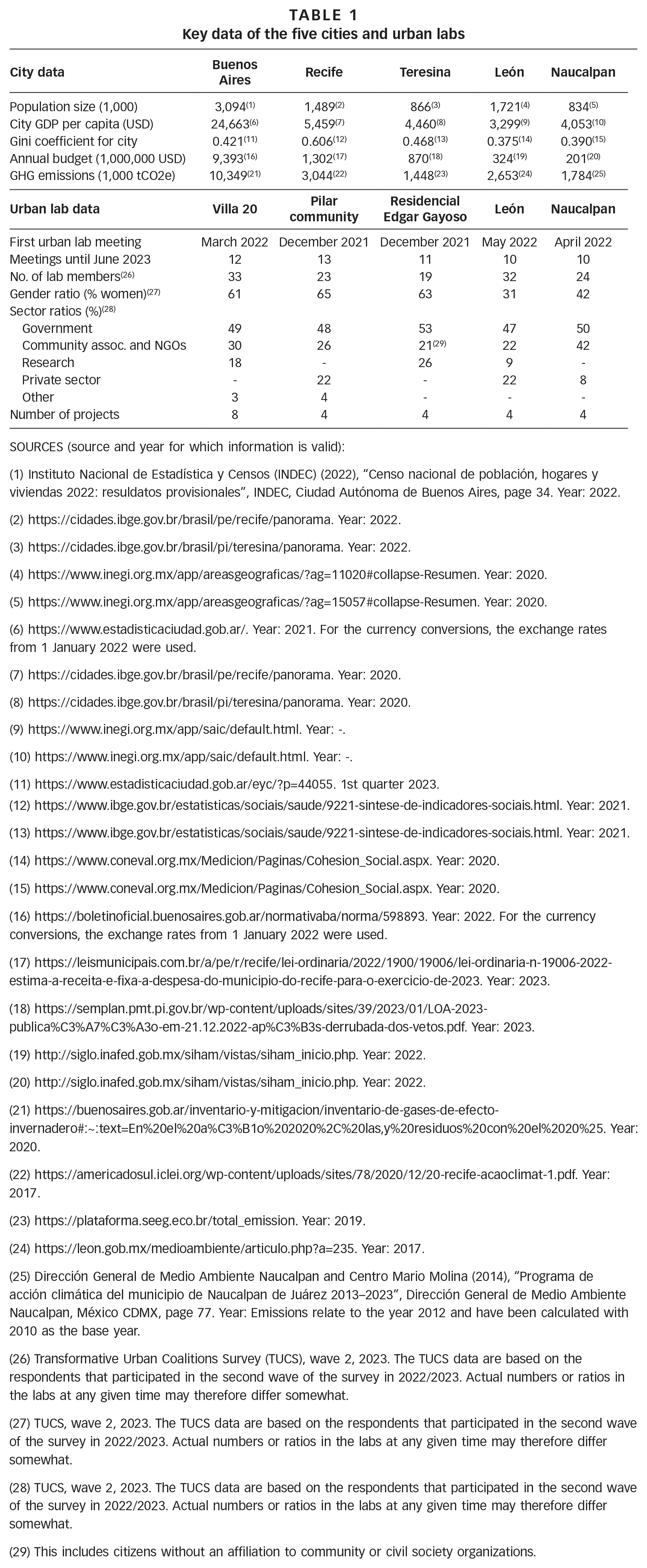
We distinguish three phases of the UL formation process. In the endorsement, member identification and engagement phase, the focus is on the endorsement of the UL by relevant stakeholders, especially local governments, and on identifying and motivating potential UL members to join.(30) Phase two, the groundwork and trust-building phase, covers the first two or three meetings, critical for establishing basic rapport among group members and overcoming distrust. The lab consolidation and experimentation phase covers the subsequent months in which the lab meets, co-develops and implements experiments,(31) and ideally increasingly assumes ownership of the UL process. By mid-2023, the five ULs had reached this phase to varying degrees. After brief introductions of the contexts, the subsequent city sections describe these phases in the five labs (for an overview of key city and UL data, see Table 1).(32)
Key data of the five cities and urban labs
SOURCES (source and year for which information is valid):
(1) Instituto Nacional de Estadística y Censos (INDEC) (2022), “Censo nacional de población, hogares y viviendas 2022: resuldatos provisionales”, INDEC, Ciudad Autónoma de Buenos Aires, page 34. Year: 2022.
(2) https://cidades.ibge.gov.br/brasil/pe/recife/panorama. Year: 2022.
(3) https://cidades.ibge.gov.br/brasil/pi/teresina/panorama. Year: 2022.
(6) https://www.estadisticaciudad.gob.ar/. Year: 2021. For the currency conversions, the exchange rates from 1 January 2022 were used.
(7) https://cidades.ibge.gov.br/brasil/pe/recife/panorama. Year: 2020.
(8) https://cidades.ibge.gov.br/brasil/pi/teresina/panorama. Year: 2020.
(9) https://www.inegi.org.mx/app/saic/default.html. Year: -.
(10) https://www.inegi.org.mx/app/saic/default.html. Year: -.
(11) https://www.estadisticaciudad.gob.ar/eyc/?p=44055. 1st quarter 2023.
(12) https://www.ibge.gov.br/estatisticas/sociais/saude/9221-sintese-de-indicadores-sociais.html. Year: 2021.
(13) https://www.ibge.gov.br/estatisticas/sociais/saude/9221-sintese-de-indicadores-sociais.html. Year: 2021.
(14) https://www.coneval.org.mx/Medicion/Paginas/Cohesion_Social.aspx. Year: 2020.
(15) https://www.coneval.org.mx/Medicion/Paginas/Cohesion_Social.aspx. Year: 2020.
(16) https://boletinoficial.buenosaires.gob.ar/normativaba/norma/598893. Year: 2022. For the currency conversions, the exchange rates from 1 January 2022 were used.
(18) https://semplan.pmt.pi.gov.br/wp-content/uploads/sites/39/2023/01/LOA-2023-publica%C3%A7%C3%A3o-em-21.12.2022-ap%C3%B3s-derrubada-dos-vetos.pdf. Year: 2023.
(19) http://siglo.inafed.gob.mx/siham/vistas/siham_inicio.php. Year: 2022.
(20) http://siglo.inafed.gob.mx/siham/vistas/siham_inicio.php. Year: 2022.
(22) https://americadosul.iclei.org/wp-content/uploads/sites/78/2020/12/20-recife-acaoclimat-1.pdf. Year: 2017.
(23) https://plataforma.seeg.eco.br/total_emission. Year: 2019.
(24) https://leon.gob.mx/medioambiente/articulo.php?a=235. Year: 2017.
(25) Dirección General de Medio Ambiente Naucalpan and Centro Mario Molina (2014), “Programa de acción climática del municipio de Naucalpan de Juárez 2013–2023”, Dirección General de Medio Ambiente Naucalpan, México CDMX, page 77. Year: Emissions relate to the year 2012 and have been calculated with 2010 as the base year.
(26) Transformative Urban Coalitions Survey (TUCS), wave 2, 2023. The TUCS data are based on the respondents that participated in the second wave of the survey in 2022/2023. Actual numbers or ratios in the labs at any given time may therefore differ somewhat.
(27) TUCS, wave 2, 2023. The TUCS data are based on the respondents that participated in the second wave of the survey in 2022/2023. Actual numbers or ratios in the labs at any given time may therefore differ somewhat.
(28) TUCS, wave 2, 2023. The TUCS data are based on the respondents that participated in the second wave of the survey in 2022/2023. Actual numbers or ratios in the labs at any given time may therefore differ somewhat.
(29) This includes citizens without an affiliation to community or civil society organizations.
a. Buenos Aires (Villa 20), Argentina
In Buenos Aires, capital of Argentina and the country’s richest city, more than 7 per cent of the 3 million inhabitants live in informal settlements or villas. Villa 20 (V20), where the UL is located, is the fourth most populous villa with approximately 30,000 inhabitants. Different from the other project cities where the labs are stand-alone initiatives, in V20 the lab is integrated into a larger process of government-initiated participatory urban development or upgrading (Proyectos Integrales de Reurbanización, PIRU), which began in 2016.(33) Therefore, participatory structures and procedures already existed in V20, and over the years had created trust-based and effective working relations between the local government and community organizations.(34) Having been involved in the upgrading process, and aware of these unique conditions, IIED-América Latina saw V20’s potential for the TUC project.(35) Before the project was even approved, they had started conversations and an informal endorsement process with the local government and community organizations.(36) In V20, therefore, UL formation not only took place under better context conditions than in the other four cities, but also began much earlier.
Endorsement, member identification and engagement
Following up on the informal endorsement process, a collaboration agreement with the city agency in charge of the PIRU process, the Instituto de Vivienda de la Ciudad (IVC), was signed in September 2021. Because of IIED-América Latina’s history with V20, identifying UL members, and engaging new ones with a climate focus, was straightforward.(37) The biggest challenge was to convince people that climate change was a relevant topic to integrate into the urban upgrading agenda where, until then, climate and environmental issues had not been priorities. In 2021, IIED-América Latina presented the TUC project with its UL approach to the V20 Mesa Ambiental, the local participatory roundtable for environmental issues. They generally presented the project in a way that supported and complemented the ongoing upgrading process, ensuring that the respective actors all found something there of value. In particular, they linked abstract climate issues such as mitigation and adaptation with the everyday problems of V20 inhabitants and prioritized potential interventions that offered solutions to multiple problems at the same time. In other words, IIED-América Latina developed a locally customized approach for integrating a climate action-focused UL into existing participatory urban governance structures and processes. After the Mesa Ambiental agreed that IIED-América Latina could implement the TUC project in V20, the UL meetings started in March 2022.
Groundwork and trust-building
Because of the established participatory structures and working relations between local government and community organizations in V20, little groundwork or trust-building was required. IIED-América Latina and IVC, which coordinated the lab meetings together with other stakeholders, could immediately focus on linking climate change with the concrete problems that families faced in V20 such as relocations, cuts in sanitation services and electricity, and a lack of employment and income. In the early weeks, IIED-América Latina used what they call a ‘double strategy’ to support this process and generate a common understanding of key concepts, approaches, climate-relevant data and the climate gap in the upgrading process in V20. Apart from the presentations and discussions in the lab, they held multiple separate, individual and small-group bilateral meetings with various actors to discuss specific elements of the project and resolve potentially contentious issues.(38) They also continued to support activities that were particularly meaningful to UL members, even if these fell outside the project’s scope. Gradually, through a back-and-forth dialogue in the lab and the frequent side-meetings, community leaders and city officials began to link climate change and urban development and to see the need for a more integrated perspective.(39)
Lab consolidation and experimentation
During the discussions, training session and experiment design, lab members exchanged perspectives and learned together and from each other. The implementation of the experiments strengthened the group’s confidence because neighbours began to notice the benefits.(40) Lab excursions facilitated learning and helped to further consolidate the group.(41) Apart from the problem of linking climate change and local priorities, there were other challenges during lab formation. Different logics and hierarchies of knowledge frequently clashed with each other in lab discussions. Architects, for example, often had different logics and priorities than community leaders. When necessary, IIED-América Latina held separate meetings to manage these conflicts, sometimes with IVC support. A third challenge was that bureaucratic norms and restrictions sometimes delayed the implementation of experiments or made it necessary to change project sites or designs. Fourth, the increasing number of activities and meeting formats had the potential to overburden local actors. In response, the UL was integrated into the V20 Mesa Ambiental in May 2023.
b. Recife (Pilar community) and Teresina (Residencial Edgar Gayoso), Brazil
Recife is a coastal city and the capital of the state of Pernambuco, with a population of nearly 1.5 million. Already in 2007, the IPCC classified Recife as one of the world’s cities most vulnerable to climate change, and projections show that the likelihood of extreme weather events in the region is increasing.(42) In the early 2000s, the information technology hub Porto Digital was established through a public–private partnership in the historic city centre on the island Bairro do Recife. While this revitalized large parts of the island, the Pilar community, located in the harbour area, continues to live in precarious conditions and lacks access to public services, work and income. Because numerous attempts to upgrade this part of the island in recent years have failed, Pilar residents are highly suspicious of new initiatives.(43 The UL in Recife focuses on supporting the Pilar community’s socioeconomic integration into the city while keeping emissions low.
The second city, Teresina, is the capital of Piauí state in northeastern Brazil and has approximately 870,000 inhabitants and an estimated poverty rate of 47 per cent.(44) The temperature exceeds 32 degrees Celsius for up to 340 days per year and the first months of the year typically bring intense storms and often floods. While the city’s emissions are low, its exposure to climate change impacts is extremely high.(45) The UL focuses on the low-income community of Residencial Edgar Gayoso, comprising approximately 450 single-family homes located at the periphery of Teresina.(46) The community’s access to public facilities and services, green and recreational spaces, public transport as well as jobs and income is inadequate. Most households are headed by women, many of whom are single mothers, and around 30 per cent of residents have disabilities or chronic diseases.(47)
Endorsement, member identification and engagement
The project began with the engagement of the municipalities in Recife and Teresina, which endorsed the project without needing formal agreements.(48) An initial actor mapping for the ULs was facilitated by the municipalities while other potential members were identified by WRI Brasil through partner networks and through recommendations at the first UL meeting. A key challenge was the inclusion of residents, which was addressed by inviting neighbourhood associations and grassroots organizations from both communities to separate, bilateral in-person meetings on the project, followed by invitations to the UL. To reinforce the invitation, confirmations of attendance were requested before the first meeting. Another early challenge was that many of the actors were used to a traditional project implementation logic with predefined goals, activities and outputs, and were initially sceptical about the idea of “co-creating” experimental projects in the UL.
Groundwork and trust-building
The Recife UL met for the first time in December 2021 and members decided to call themselves Aliança pelo Centro do Recife. They initially focused on the whole city centre but soon realized that the area was too big, and that Porto Digital already had many investments and projects. Focusing on vulnerability, feasibility and replicability, the group analysed smaller areas within the city centre and decided to work with the Pilar community. The composition of the UL then changed accordingly and in early 2023, working groups were formed to implement local experiments on four different topics defined by the lab members.(49)
The first meeting of the Teresina UL, or Aliança pelo Residencial Edgar Gayoso, also took place in December 2021 and members decided that the first lab activity would be a collective community effort or mutirão. After a participatory assessment in early 2022, lab members worked with residents and the municipality to co-design and collectively build what they called a “square of dreams”. They transformed a public space close to the central avenue by building an outdoor gym, a playground, a pergola at the bus stop, by planting plants and painting murals, and by providing children’s toys, benches, tables and waste bins, so that this could become a space for the whole community. Since January 2023 the group has split into working groups to work separately on the experimental projects.(50)
Three early challenges for both labs were the diversity of lab members, the diversity of their interests and low attendance. In both locations, UL members ranged from waste collectors to university professors and senior government officials. Creating an environment where everyone felt comfortable expressing themselves became the first objective. Icebreakers and small-group discussions helped people to get to know each other and, over time, put them at ease. It remains a challenge to reassure the more marginalized and low-income individuals in the lab and encourage them to actively participate.
The lab members also had diverse ideas of which types of experiments to implement, especially in Recife where goals for the city centre were highly contested, and the distrust of Pilar community residents towards outsider interventions was strong. The lab moderation by WRI Brasil and their local consultants dealt with these debates early on by redirecting the focus from potential solutions to members’ motivations for joining the lab, and by referring to the shared vision they would develop at a later stage. During this phase, WRI Brasil’s local consultants were constantly liaising with UL members to address their concerns and secure their continued engagement.
In the beginning, the WRI Brasil team was sometimes frustrated by the low turnout in the labs. Choosing meeting locations where people lived and setting convenient meeting times improved attendance. Mentored by an organization with extensive experience with capacity-building in vulnerable settings, WRI Brasil also learned about the importance of moving forward with those who were present and committed, hoping that others would see the progress and join the lab, which is what happened. The understanding of the lab subsequently changed from a fixed group to a space in which participation fluctuates and changes over time.
Lab consolidation and experimentation
While there were no major dropouts or increases in UL membership, throughout the process some members left while others joined or became more involved as new activities began, especially residents. Once the experimental projects were defined, the labs were divided into working groups based on the projects.(51) Working groups meet every one or two weeks, while full UL meetings are only held every two months for working groups to present and discuss achievements and challenges. The biggest challenge of UL formation in the two cities was mobilizing actors, particularly government actors and residents. Engaging the former became a lot easier when WRI Brasil won the support of “government sponsors” for each UL – the deputy-mayor in Recife and the Agenda 2030 coordinator in Teresina.(52) These sponsors facilitated the UL work, especially the participation of other government departments. Engaging residents was challenging in the two locations for different reasons. The history of failed urban upgrading initiatives in the historic city centre made Pilar community members suspicious of external interventions and difficult to engage. In peripheral Teresina, by contrast, residents had never received much attention. Engagement was initially challenging but became easier as the project continued. In both labs, community workdays for the collective construction of public spaces contributed to members’ engagement.
c. León and Naucalpan, Mexico
With more than 1.7 million inhabitants, the city of León is the largest urban agglomeration in Guanajuato state and one of its economic engines. This has come at the expense of air and water quality, which, with other environmental damages, contribute to and are worsened by climate change. The municipality of Naucalpan de Juárez has 834,000 inhabitants and is located just northwest of Mexico City in the state of Mexico. Because it also belongs to the metropolitan area of Mexico City, which has a population of more than 22 million people, it shares the city’s environmental challenges, including air and water pollution, as well as its future sustainability challenges. Since the early 2000s, Naucalpan’s economy has shifted from manufacturing to service. This has included the informalization of a part of the economy, particularly small businesses. Both ULs aim at co-developing contextualized urban development models that mitigate emissions and increase climate adaptation.
Endorsement, member identification and engagement
During the project proposal development visit, the respective state and municipal governments authorized the project. When the project started, the local governments endorsed it informally and later signed official agreements.(53) The initial identification and engagement of lab members was carried out in meetings of WRI México with their official project counterparts in ministries and municipalities and through actor mappings of local organizations.(54) In Naucalpan, a challenge in this first phase was the small number of local organizations with an environmental or climate focus. In response, neighbourhood associations were invited which hold considerable decision-making power in the municipality.
A more serious challenge was the political hostility between social and political factions in both cities and the strong politicization of public debates. In Naucalpan, for example, it became clear that some organizations had been co-opted by political interest groups, while in León, civil society organizations previously in conflict with the municipality or involved in failed participation schemes were reluctant to join the UL. While some declined, others who also feared the political capture of a participatory space like a UL were convinced to come. However, to achieve this, several bilateral meetings with these organizations were necessary in which WRI México stressed that the UL was a novel approach for dialogue and collaborative experimentation despite unequal power relations. They affirmed that they would do their best to moderate power relations and create an open participatory space, while remaining neutral themselves.
Groundwork and trust-building
Based on bilateral conversations with individual lab members, WRI México saw the need to provide exclusive spaces for exchange prior to the first UL meeting. They organized two sectoral meetings in each of the cities, one for municipal and state officials, and one for community and civil society representatives. In these meetings, WRI México emphasized the importance of bringing together different perspectives in ULs and the iterative, collaborative and compromise- and consensus-oriented nature of the approach.(55) In these separate meetings, participants were also asked to identify what they regarded as the main urban and climate-related problems in the respective cities and to prioritize them. The results from the two sectors were not very different, which provided a good starting point for discussions in the first lab meetings and for identifying agreements.
Based on extensive pre-lab formation discussions with potential members, WRI México knew what to expect in the first UL meetings, which it coordinated together with an external facilitator and designed to address and counteract some of these anticipated dynamics. In León, for example, which held its first UL meeting in May 2022, the lab coordinators expected that participants would mainly try to impose their sectoral interests, that government and civil society would perceive each other as adversaries, and that members would find it difficult to imagine a sustainability-focused urban model. The main objective of the first meetings was thus to generate a climate of cordiality and avoid debates on current issues that could stir up controversies. WRI México employed four strategies to achieve this. First, they used icebreakers to distance members from their institutional roles, so that they could get to know each other more personally. This may sound trivial but turned out to be an effective tool for changing how people perceived and interacted with each other, enabling more constructive collaboration. Second, to break up hierarchies and facilitate the expression of personal opinions, members who belonged to the same sector were separated in small groups. Third, a session was held to agree on basic rules for open and respectful dialogue. Finally, discussions about visions for a future city were moderated to focus initially on broader goals, such as socially just, green and child-friendly outcomes, rather than more tangible and potentially conflictive aspects. In the second lab meeting, these initial discussions were followed with an agreement on long-term transformation goals rather than short-term agendas. In Naucalpan, far more lab members came from state and local government than from civil society in the first meetings, starting in April 2022. Because local and state governments belonged to different political parties, the lab coordinators expected them to try to impose their respective agendas, which might have led to conflicts. As in León, the first lab was therefore designed to build an atmosphere of cordiality by using the same strategies with an even stronger focus on depoliticizing the discussion.
Most members were guardedly positive after the first UL meetings. At the same time, non-governmental members openly raised concerns about how the results of this project were going to be different from others and how to regain trust in the government. There were also conflicts with some senior government representatives who demanded a greater role in the lab process. The lab coordinators dealt with these challenges by setting up an elaborate lab member liaison, communication and monitoring scheme. After each meeting, WRI México contacted all members to resolve doubts and concerns in separate conversations with each of them and to motivate them to attend the following meeting. While the intensity of these liaison activities subsided somewhat, even by mid-2023 a large part of WRI México’s UL work consisted of regularly and individually communicating with many lab members via multiple channels, mostly direct messaging apps, social media and phone. These constant liaison activities to retain existing members and recruit new ones were essential for the lab’s survival, particularly in the first few months.
Lab consolidation and experimentation
One challenge of UL formation and consolidation in both cities was limited or discontinuous private sector participation. After several failed attempts to convince representatives to join, WRI México set up a parallel structure of regular meetings with business representatives in both cities to inform them about project progress and identify common interests.
The consolidation process of the UL in León was disrupted twice. The first time, several members left the lab after the first few meetings because they were more interested in quick results than in dialogue. The second disruption soon thereafter was a reaction of some civil society representatives to local government actions outside the project that they perceived as demonstrating a lack of commitment to climate issues.(56) In response, other members also expressed discomfort in collaborating with public officials in the lab and their views of each other have subsequently become more polarized. Despite these challenges, the UL process continued, and working groups were formed to implement four experimental projects that the León UL had co-designed.(57) The increased personal investment of time and work for the experiments strengthened the commitment of the most active lab participants. At the same time, some civil society organizations argued that their role was to hold the government accountable. Therefore, they were initially hesitant to collaborate with representatives of these very governments in the UL by implementing experimental projects. It took, and still takes, these organizations time and the involvement of WRI México as a facilitating agent, to accept and perform this co-productive lab role.
UL consolidation in Naucalpan has been relatively smooth because of the continuous participation of public officials and civil society members. Officials quickly discovered that the lab process was useful for inter-departmental coordination.(58) Working together in small groups in the lab helped break down departmental silos and fostered inter-departmental exchange. The local government’s designation of a liaison person from the mayor’s office also helped to streamline the process and especially the collaboration with the municipality. Civil society members attended continuously, although, in some cases, short-term interests challenged the co-creation process in the lab. Getting used to this required time but the civil society members who stayed became progressively more involved in the process. In Naucalpan as in León, when the hands-on working group involvement in experimental project implementation started, the active participation of many lab members increased, while those who were primarily interested in exploiting the lab politically were discouraged.(59) Experimental project implementation validated the engagement of lab members and generated greater trust and stronger links between them.
Overall, the biggest challenge of UL formation in León and to a lesser degree in Naucalpan remains the protection of the process and the experiments from political capture. By carefully managing potential conflicts, both ULs have been established as neutral spaces where actors with different urban visions and power interact and co-produce experimental projects.
V. Comparative Analysis Of Urban Lab Formation
Having presented the formation process of the ULs in the five cities, we now adopt a comparative perspective in two steps. First, we look at the challenges the five labs faced and infer their relationship to relevant context conditions. Second, we compare these findings to insights from the very few studies of European ULs that cover lab formation. This preliminary cross-regional comparison provides important information for answering our research questions and identifying future research questions.
a. Urban lab formation in the five Latin American cities
The comparative analysis of the UL formation processes in the five cities revealed six major challenges that all labs faced to different degrees. These challenges constitute our comparative lab formation challenge framework. The combination of the respective severity of the challenges in each case distinguishes the individual lab formation challenge profiles (see Table 2).(60) The first of the six major challenges is the endorsement challenge, which refers to getting formal or informal endorsement for setting up a UL in the first place. This endorsement can be sought from local governments but also from community organizations or other powerful stakeholders. Because the project cities were selected based on their willingness to collaborate, this challenge was largely resolved before the project started, although seeking and maintaining endorsement is a continuous task for ULs. A second challenge is the relevance challenge. Given the urgency of people’s needs in urban low-income neighbourhoods, it is not surprising that climate change often remains an abstract concern.(61) Drawing the links between climate change and people’s everyday priorities was a challenge for all the labs. Apart from discussing these links in lab meetings and capacity development sessions, other strategies to deal with this challenge were carrying out applied research projects that show how trees reduce heat, prioritizing interventions that solve multiple problems at the same time, and the ‘double strategy’ – holding separate bilateral meetings with selected lab members to facilitate a better understanding of the local relevance of climate change.
Similarities and differences of the challenges faced during urban lab formation (lab formation challenge profiles) with solutions
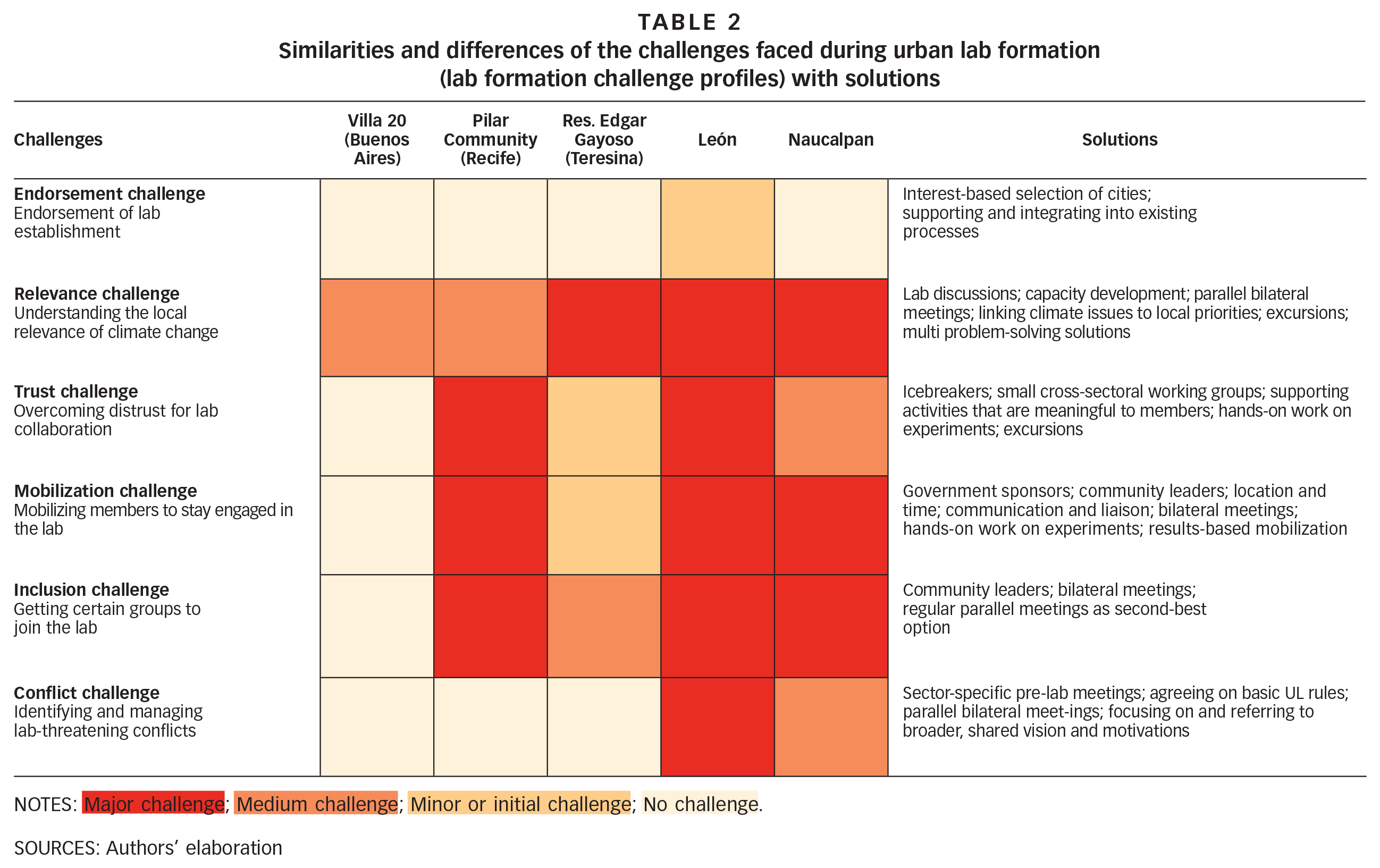
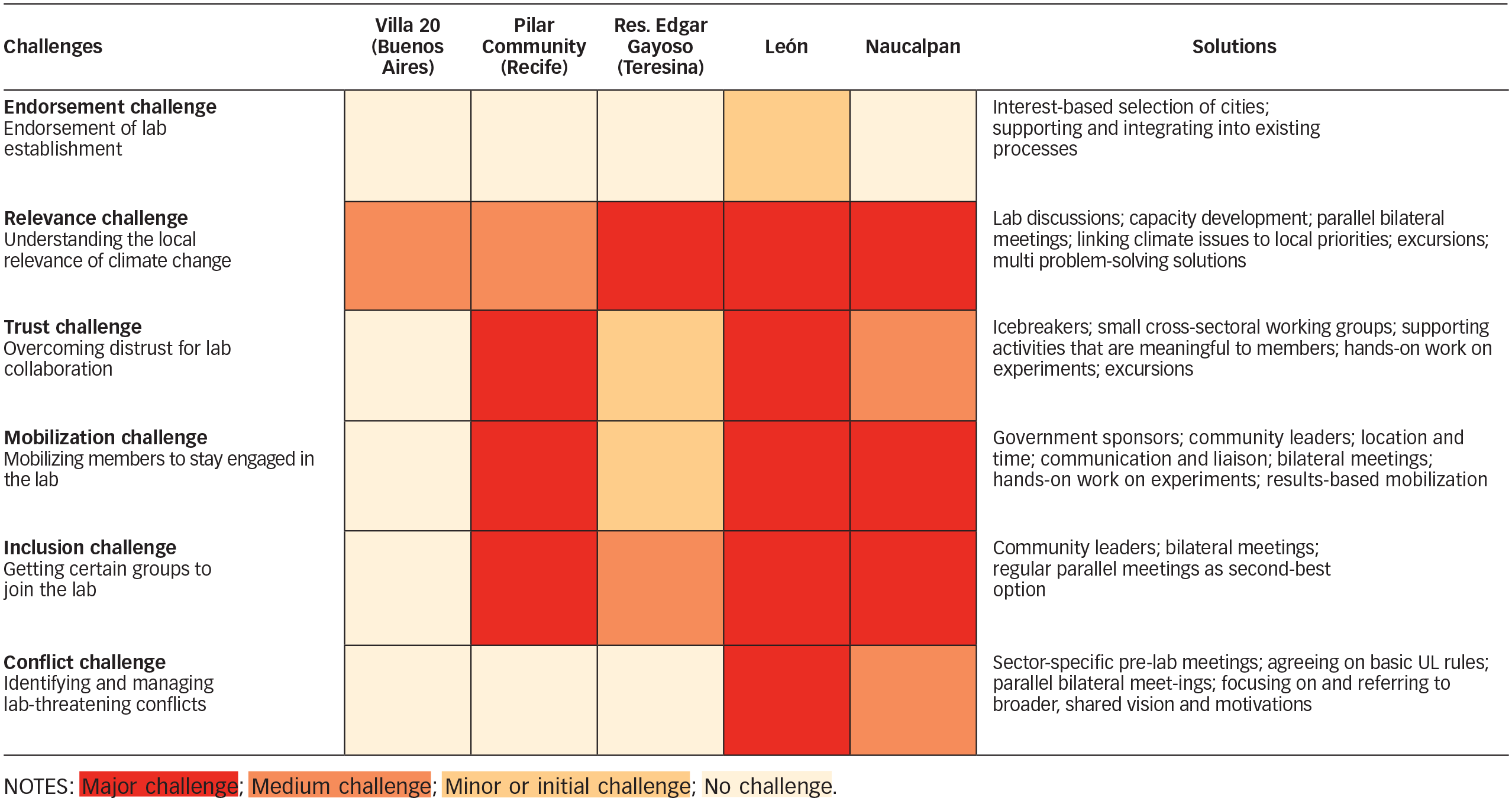
The trust challenge is the challenge of overcoming distrust between groups of actors to the extent that they can work together in a UL. The labs faced this challenge to varying degrees. The V20 lab could build on trust-based networks and relations while the labs in Recife and León had, and still have, to work hard to overcome distrust. Some of the most effective methods included the use of icebreakers, separating into small cross-sectoral groups, hands-on work on experimental projects, excursions and other approaches that enabled lab members to get to know each other personally. While these methods often worked, building trust remains an ongoing task. The fourth challenge is the mobilization challenge and refers to the need to keep UL members informed and engaged and convince them to return to the following meetings. All labs faced this challenge in the first few months, but participation stabilized to varying degrees over time. While the V20 team could draw on established structures and procedures, teams in Brazil and Mexico had to put a lot of effort into mobilizing lab members to stay engaged and return. Apart from liaison and communication efforts and holding separate bilateral meetings with members, other methods included carefully working through government sponsors or community leaders, co-designing projects, moving from dialogue to hands-on activities such as community work or experiments, or simply being patient and waiting until the first tangible results motivated members and others to engage more.
The inclusion challenge refers to the difficulty of getting certain groups of actors to join the ULs at all. Often this included marginalized groups and private sector representatives. All labs, except for V20, faced this challenge, although to different degrees. Separate meetings were often set up with representatives of these groups to convince them to join the labs. When that did not work, second-best arrangements such as regular parallel meetings were established. Finally, there is the conflict challenge. ULs are about bringing together actors with different interests, priorities and opinions. Constructively working on these conflicts together is therefore an integral component of the lab process. But some conflicts have the potential to destabilize or destroy labs. Lab coordinators tried to anticipate these conflicts and took preventive action by searching for alternative ways to address them. This challenge was greatest in the Mexican labs but could mostly be managed through bilateral meetings or by asking members to think in terms of broader visions and motivations.
How are these challenges linked to the contexts in which these ULs operate? While national contexts can be important, the local urban contexts turned out to be more directly relevant. By assessing the severity of the six challenges for each of the labs, different lab formation challenge profiles can be distinguished by reading Table 2 vertically.(62) These profiles summarize the results of our comparative qualitative analysis of the UL formation processes. The darker the colours, the more severe are the challenges. V20 has the “lightest” profile, which means that the severity of the lab’s formation challenges was lowest.(63) The Edgar Gayoso neighbourhood lab follows – the remote location and the absence of previous urban development projects made the UL process an appealing choice for some of the actors after initial trust and mobilization challenges had been overcome. The Pilar community lab, on the other hand, faced more severe trust, mobilization and inclusion challenges. Being centrally located in a rich but very unequal city (see Table 1) as a low-income neighbourhood with a history of failed urban upgrading initiatives are apparently difficult context conditions for UL formation.(64) The labs in Mexico – while not identical – were established in contexts of government–citizen distrust, political hostility and in the absence of participatory governance procedures other than top-down consultation. These contextual features are reflected in the “dark” lab formation challenge profiles which indicate the high severity of the challenges that the lab coordinators faced. However, drawing on their local expertise, they developed context-specific strategies to create the elementary conditions for a UL to function, such as a basic level of trust and openness to collaboration. In comparison to V20, where these features already existed when the project began, these lab coordinators “had to build the arena first” in the words of Kohler et al.(65)
Having a best-case scenario like the V20 lab in a sample of case studies is very useful from a comparative perspective. However, for analytical as well as for policy purposes it is essential to keep two things in mind. First, V20 is a positive outlier even among Buenos Aires’ villas where PIRU projects have been implemented(66) – and IIED-América Latina selected it for the TUC project for precisely that reason. More importantly, the descriptions of the context conditions in V20 in 2016 when PIRU started are reminiscent of the current context conditions in the Pilar community or in León. Just a few years ago, among neighbours in V20, there was, according to Almansi et al., “a strong scepticism and distrust related to the precarious condition of the neighbourhood and the lack of response from the state in the past”(67) and the coordination between V20’s social and political organizations “was almost non-existent, owing to deep political disputes”.(68) The history of V20 therefore inspires both hope and a warning. It shows that challenging context conditions are dynamic and can be changed by committed local coalitions – which may perhaps themselves emerge from ULs. Likewise, however, the massive effort, commitment, investment and time required from both local government and community organizations for this transformation of V20 before the UL started should guide and moderate expectations.
b. Urban lab formation in Europe and beyond
How do these diverse lab formation processes and challenges differ from those in Europe? Because studies of ULs in Europe largely ignore the lab formation process, we only draw on the two sources already introduced above,(69) both covering ULLs in the Netherlands. The first study focuses on cycling innovation ULLs in four cities and identifies the creation of a vision for, and the learning from, experimentation as strong challenges across the labs.(70) The lab networks themselves, however, are described as “solid and harmonious”.(71) The second study covers a ULL with the much broader goal of increasing community resilience in Carnisse, a highly diverse but deprived neighbourhood in Rotterdam, where there was, according to Van Steenbergen and Frantzeskaki, an “erosion of institutional and social networks and a developing atmosphere of mistrust”.(72) Overall, the formation challenges of this lab are similar to the trust, mobilization, inclusion and conflict challenges faced by the labs in Latin America.(73) What do these studies of two very different labs in Europe, and the different types of challenges they observe, tell us about the relevance of context conditions for ULs?(74) They show that even within the same country, context conditions are not uniform but vary depending on the place and the people concerned as well as on the UL’s goal.(75) While national or other higher-level context conditions may matter, it is the local urban or even neighbourhood-specific conditions that determine the likely patterns and severity of UL formation challenges. Taken together, the Latin American labs and the studies from the Netherlands show that distinguishing between different context conditions for ULs in Europe or the global North and in Latin America or the global South is not useful. Local context conditions and the purposes and members of labs can be very different or similar within as well as between these regions.
VI. Conclusions And Discussion
This paper has investigated ULs in five Latin American cities to address the lack of scholarly attention to UL formation, to ULs outside of Europe, and to the role of context conditions for UL formation. Based on our inductive analysis of the formation challenges that all sample ULs faced (endorsement, relevance, trust, mobilization, inclusion and conflict challenges), we developed a framework for the comparative study of lab formation challenges to distinguish various formation challenge profiles based on the composition and severity of the challenges. The profiles of the five ULs in Latin America differed enormously. While some labs could draw on interpersonal trust, established networks and participatory structures and procedures, others tried to help create these basic conditions. These different profiles show how important it is to study lab formation as a distinct process.
How different are these formation challenges in Latin America from those in Europe and what is the role of context conditions? Because of the limited attention paid to the formation phase in European studies, our answers are preliminary. While there are claims that national context conditions in Europe are more favourable for UL formation than in Latin America,(76) our cross-regional comparison points to a more nuanced assessment. First, a lot depends on the goal of a UL and the people involved in it. Labs with narrow, more technical goals focused on the middle class are less context dependent than labs with broader social goals that include diverse or marginalized groups. Second, the relevant context conditions that can mediate or even override national conditions in a positive or negative direction are local, down to the neighbourhood level. And finally, these local context conditions are dynamic and can be changed, although positive change in a challenging context requires a committed coalition, resources and time. These qualifications should be considered in future research on ULs rather than referring to generalizations about categorical differences between Europe and other parts of the world, and assuming that they matter for ULs.
Because of this, findings regarding the potentials and limitations of ULs apply equally to Europe as to other parts of the world. The challenges and solutions developed during the lab formation process in the five Latin American cities show that the UL approach is flexible, with the potential to address a wide variety of policy issues and more process-related social and governance issues. The latter potential is particularly relevant where inequality, distrust and conflicts are strong, whether in Europe or elsewhere. It is essential to contextualize and adapt the UL approach to the local setting. However, successfully doing so requires a deep familiarity with the local context, a long-term perspective and organizational flexibility, creativity and commitment, as the contextual solutions developed in the Latin American labs show. The limitations of the UL approach equally depend more on the fit with the local context than on the approach itself. Generally, the UL approach is flexible enough to be adapted to a wide range of contexts for a wide range of purposes, which is both an opportunity and a challenge for those who use it. Because this study has focused on the UL formation phase, these conclusions are also limited to lab formation. Based on these data, we cannot speak to the potential of ULs to achieve certain outcomes or trigger systemic change.(77) Another limitation of this study is that it has inductively inferred contextual conditions from the formation challenges that the five ULs faced, without further substantiating these links. More systematic and comparative work is necessary to test and further explore these connections. A stronger focus on ULs addressing social and governance issues is another important direction for future UL scholarship. Because of the European and techno-economic bias of the literature, this aspect has not been explored so far. Overall, more longitudinal research and more cross-regional comparative UL studies are required. With our framework for the comparative study of UL formation challenges and our qualifications of how context conditions and UL formation processes are linked, both in Europe and beyond, we have tried to contribute to what will hopefully become a truly global and comparative research, exchange and learning agenda on ULs in the future.
Footnotes
Acknowledgements
As a team of researchers and practitioners collaborating in the “Transformative Urban Coalitions” (TUC) project since 2021, we thank our colleagues in the project, those who have contributed to its implementation thus far and, most of all, the urban lab members in the five cities who are at the heart of all of this. We also thank the two anonymous reviewers and the journal’s editorial team for valuable feedback that helped to improve the paper.
Declaration of Conflicting Interests
All authors are involved in and at least partly funded through the TUC project. The urban labs in the five Latin American cities which have been investigated in this study, have been established as part of this project, in large part coordinated by some of the authors. To deal with these competing roles while still taking advantage of the benefits of research co-produced by researchers and practitioners, the authors proceeded as follows. First, because of the project’s innovative urban lab approach, it has a larger than usual research and learning component to document and investigate its progress and shortcomings. The first author is a researcher in this project component, coordinated the research and writing process for this study, and made sure that scientific standards were met. Second, all authors were interested in learning from the research and therefore critically reflected on their roles in the project while also analysing the project as a whole from a critical, analytical perspective. Third, in their research for this paper, the authors deliberately focused on the challenges encountered during urban lab formation and therefore took a (self-)critical stance. Finally, while the authors cum project team members have a professional and personal motivation to make the project succeed, there was no longer a financial incentive for presenting it in a positive light at the time of writing because, by then, the continuation request for the second and final project phase from 2024 until 2026 had already been submitted.
Funding
The author(s) disclosed receipt of the following financial support for the research, authorship, and/or publication of this article: This work was supported by the German Federal Ministry for Economic Affairs and Climate Action through its International Climate Initiative (IKI) as part of the project “Transformative Urban Coalitions (TUC): Catalysing Urban Partnerships to Drive Systemic Transformation Towards Sustainability” (project number 21_I_377).
ORCID iDs
4.
With 82.2 per cent of the population residing in urban areas in 2020, Latin America and the Caribbean is the second most urbanized region globally, just behind North America (82.6 per cent) and well ahead of Europe (74.9) (UN-Habitat, 2022, pages 329–333).
7.
See Bulkeley et al. (2016); Voytenko et al. (2016); Marvin et al. (2018a); Von Wirth et al. (2020). Other types of ULs include “urban transition labs” (Nevens et al., 2013), urban “real-world labs” (Kern and Haupt, 2021), or “city labs” which focus on participatory urban planning (Scholl and Kemp, 2016).
9.
11.
E.g. Levenda (2018); Della Valle et al. (2021);  .
.
13.
E.g. Alexandrakis (2021); .
14.
E.g. Dabaieh et al. (2019); .
16.
This framework was inspired by Bulkeley et al. (2016), who distinguish between ULL design (their purposes and orientation), ULL practices (their modes of operation and organization) and ULL processes (their wider implications and consequences). See also .
18.
Voytenko et al. (2016); Von Wirth et al. (2019); Kronsell and Mukhtar-Landgren (2018). also note that the “analysis of ULLs remains often very broad-brush, based on descriptive categories and focused on emerging trends” and call for “new empirical analysis of emerging practices of ULLs through . . . detailed intensive studies of the formation, stabilisation and operation of ULLs” (page 319).
19.
The formation process is most explicitly covered in Van Steenbergen and Frantzeskaki (2018) and Frantzeskaki et al. (2018). Because they cover the same lab, we count this as one study. Van Waes et al. (2021) are less explicit but also talk in some detail about the lab formation process. Other studies that cover aspects of the formation process to a more limited extent include Kohler et al. (2021) and some other chapters in .
20.
In their literature review of ULLs, Amorim et al. (2022) found that 95 per cent of the studies in their sample covered ULLs in the global North (86 per cent in Europe) and concluded that “ULLs can be characterized as a European phenomenon” with the cities of Amsterdam and Rotterdam together having more ULLs than any country (Amorim et al., 2022, page 9).
21.
In a rare study that looks at ULs in Germany and Brazil, the authors claim that because of their differences, “the two cases in Hamburg and São Paulo are certainly not comparable, therefore a conventional multiple case study is not appropriate” (Kohler et al., 2021, page 3). The authors of another study argue that “the contexts and challenges of cities in developing countries . . . are quite different from those in the European context” (Amorim et al., 2022, page 11). The edited book by Marvin et al. (2018a) also contains case studies of ULs in Africa and Asia but their comparative results are limited. The comparative politics literature also suggests that there are broad differences between Europe and Latin America such as the degrees of institutional strength or weakness which are themselves based on differences in socioeconomic (in)equality, state capacity and the extent of economic and political volatility (Brinks et al., 2020). These factors are similar to those that the first two studies mentioned above refer to for justifying why comparing ULs in Europe and Latin America is difficult.
22.
Likewise, whatever (positive) context conditions may have contributed to successful lab formation and experimentation in Europe also remains implicit.
23.
The project is being implemented by a consortium of organizations, led by the United Nations University, Institute for Environment and Human Security (UNU-EHS) and the World Resources Institute (WRI). Other coalition members are the International Institute for Environment and Development (IIED), the German Institute of Development and Sustainability (IDOS), and two documentary film makers.
24.
Phase I of the project (2021–3) focused on the establishment of ULs in each of the five cities while phase II (2024–6) is concerned with consolidating them, scaling the UL governance model and the outcomes, and sharing the lessons learned through research, policy exchange and documentary films.
25.
In other words, transformation research is a “descriptive-analytical approach . . . describing and analysing existing challenges and possible solutions through creating primarily (though not exclusively) conceptual knowledge. A transformative approach focuses in first instance on explicating and developing actionable knowledge through a participative and action-oriented research process” (Wittmayer et al., 2018).
26.
These include, among others, levels of hierarchy and autonomy between national and subnational administrative units, degrees of trust between governmental and non-governmental actors, and previous experiences with participatory urban governance.
27.
The co-production process for this paper was as follows. The first author shared a draft of the first three sections of the paper and a framework with guiding questions for the city sections with the co-authors, most of whom are coordinating the labs. These questions focused on their experiences of the UL lab formation process, on the challenges faced, and on the solutions developed. Based on the critical reflection of their experiences, they returned draft texts for the city section which the first author complemented and triangulated with other data, revised, and returned to the co-authors with additional questions. Upon receiving the revised versions and answers, he produced a third draft which was again shared with the co-authors for feedback and approval. Apart from producing the article, this co-production and exchange process enabled a deeper and shared understanding of UL formation in the five cities for all those involved from a comparative perspective.
28.
The project conducts an annual survey of all UL members in the five cities, collecting demographic information and asking questions about mindsets, trust, social networks and how the project has influenced them. Researchers also conduct semi-structured interviews with project stakeholders about a variety of issues. Finally, in each of the cities a local ethnographer observes the UL and working group meetings and writes reports analysing how interaction, collaboration and conflict patterns change over time. While of secondary importance for this article, future publications will be based on their analysis.
29.
Local project implementation in the cities has been supported by the project through training and capacity development activities, the sharing and discussion of research findings, and virtual exchange meetings of lab members from the project cities in a “Community of Transformation”.
30.
ULs can operate with or without a local government’s formal or informal endorsement.
31.
They are referred to as “experiments” or “experimental projects” below. In the project they are called “catalyst projects” or “demonstration projects” to emphasize that they are supposed to inspire replication and scaling.
32.
TUC publishes TUC Profiles, a series of short reports on each of the five project cities. The first set analysed the challenges and opportunities of the five cities for urban sustainability transformations (TUC City Profiles). A second set on UL formation, challenges and achievements in each of the cities with contributions from UL members is forthcoming (TUC Urban Lab Profiles). TUC Profiles are available on the project website.
33.
34.
These established working relations also explain why the response to COVID-19 was more successful in V20 than in other villas in Buenos Aires (Cohen et al., 2022).
36.
The term “community organizations” is used here to refer to the broad range of local social and political organizations in V20, which often have explicit political agendas and links to political parties.
37.
For systematically identifying potential UL members, the local TUC teams used an actor mapping tool developed by the project, among other methods.
38.
We use “bilateral” in this case to refer to the UL coordinators – here, IIED-América Latina – and a small group of representatives from one organization or one sector having a separate meeting; UL meetings involved multiple organizations and sectors and are therefore considered as “multilateral”.
40.
In May 2022, UL members agreed on a set of goals, defined the sites of the experiments and the local groups and neighbours to involve, and formed working groups to lead the implementation. The first experiments included minor interventions in four alleys and a bigger intervention in a central street, all of them nature-based (Hardoy et al., 2022).
41.
In May 2023, several lab members visited the sustainable urban food production programme on vacant public land in Rosario, which reduces emissions and strengthens climate resilience. While the lessons learned provided useful input for the TUC project in V20, the logistical challenges that the group had to overcome to get to and back from Rosario together strengthened their interpersonal bonds.
42.
43.
Because it is so centrally located, the Pilar community has been the target of numerous studies, projects and initiatives from government and non-government actors which failed to deliver an actual transformation. Residents say that they are exhausted from building expectations and being disappointed.
46.
Residencial Edgar Gayoso was built under the national social housing programme Minha Casa Minha Vida in 2015. The neighbourhood followed the sprawling pattern of housing development fostered by the programme, which prioritized cheaper peripheral land over areas with existing infrastructure.
48.
The main partners are Recentro in Recife, a local government programme for revitalizing the city centre, and Agenda 2030 in Teresina, a local government initiative for the localization of the Sustainable Development Goals and sustainability projects in the municipality’s planning department. Both are still active UL members.
49.
In the Pilar community in Recife, the experimental projects focus on waste management, housing upgrading, public spaces improvement and community centre building.
50.
The focus of the experimental projects in the Edgar Gayoso neighbourhood in Teresina is on income generation, community centre building, the localization of public policy and the improvement of public spaces.
51.
The different options for the experimental projects were developed based on a combination of methods, including technical analyses and participatory methods, also involving children.
52.
WRI Brasil proactively met with potential sponsors and presented the project to them. While Recife’s deputy-mayor is exclusively a government sponsor who meets with WRI Brasil but does not attend lab meetings, Agenda 2030 in Teresina also is an active UL member.
53.
A Memorandum of Understanding was signed with Naucalpan in June 2022 and a letter of intent with León in December 2022.
54.
In León, these counterparts were teams from the State Ministry of Environment and Land Management and the then new technical team of the municipality of León in the Directorate of Environment. In Naucalpan, it was the municipal government’s liaison person in the mayor’s office.
55.
Initially, some government officials were scared to have to compromise on what they might regard as non-viable projects from a political, economic or technical perspective. They were therefore sensitized to the possibility that non-government UL members might challenge them and expect them to make compromises in the UL process.
56.
In one case, the local government had refused to support the construction of bicycle lanes and in another, trees had been felled in an urban area that had previously been left untouched.
57.
The León UL experiments focus on pedestrian safety, the promotion of cycling and cycling safety, public space and green infrastructure, and community gardens.
58.
The lab process also facilitated communication and coordination between the local and the state government.
59.
The Naucalpan UL experiments deal with public spaces and pedestrian safety, public transportation, riverbank recovery and greening, and solid waste management.
60.
We focus on the most important challenges of UL formation in the five cities here. There are other challenges that we do not have the space to discuss, including for example the challenge of developing a common language for very diverse groups, the challenge of effectively integrating research into the UL process, or the challenge and impact of unequal representation in terms of gender or sectors in the labs (see ).
61.
While cities such as Buenos Aires and Recife are considered climate action pioneers in their countries, efforts often remain fragmented – especially regarding residents of low-income neighbourhoods.
62.
Reading the table horizontally provides information about how the severity of the formation challenges varied across the labs by type of challenge.
63.
This analysis and are not about “ranking” labs according to performance but about discovering patterns of how lab formation challenge profiles and context conditions are linked to each other from a comparative perspective. Apart from contributing to analytical insights, this may also be a useful tool for initiating a comparative discussion about ULs by lab coordinators, members and other stakeholders to learn about and from each other.
64.
69.
See Van Steenbergen and Frantzeskaki (2018) as well as Frantzeskaki et al. (2018) on the same case and .
71.
72.
Van Steenbergen and Frantzeskaki (2018), page 242. Due to a history of unsuccessful short-term policy interventions there was not only widespread distrust of outsiders and the government but a lot of “scepticism by local policy makers and inhabitants” regarding the openness of the lab process (Van Steenbergen and Frantzeskaki, 2018, page 240), just as in some of the Latin American cities.
73.
Therefore, our lab formation challenge framework could also be used for this case. The paper does not discuss the solutions that the project developed to deal with these challenges, apart from mentioning that the implementation of visible activities facilitated the growth of trust just as it did in some of the Latin American cities.
74.
It bears emphasizing that the Carnisse ULL is an atypical ULL with a broad social goal in a marginalized neighbourhood rather than a techno-economic innovation focus with an implicit middle-class bias like most European ULLs. This may be one of the reasons why this study pays much more attention to the lab formation processes than other ULL studies. On social ULLs more generally, see .
75.
While geographers address the importance of place (Hansen and Coenen, 2015; Van Steenbergen and Frantzeskaki, 2018), more attention should be paid to formal and informal social and institutional aspects. Regarding people, UL research should become more conscious about power, politics and social stratification and could learn from studies of related phenomena such as participatory budgeting, for example (Grillos, 2017; Holdo, 2020).