




Abstract
This paper explores urban land governance in Hargeisa as a critical site of Somaliland’s post-conflict statecraft. Two key issues make this study imperative. First, the current research on Somaliland focuses on the central authority(1) with scant attention to the organization and functioning of the urban state and its effect for the urban poor, thus obscuring the importance of the conurbation as a site for statecraft. Second, Somaliland’s post-conflict statecraft is marked by inconsistencies, previously unexplored. While the creation of the subnational state is characterized as bottom-up, with its origins in community-led peacebuilding, its governance practices are characterized by exclusionary top-down procedures imported from colonial and postcolonial periods. Based on interviews with key informants, archival research and document analysis, I historicize these layers of the state-building processes. I argue that the top-down approach of post-conflict land governance, a critical site of statecraft, marginalizes the disadvantaged by creating bureaucracies that favour the affluent.
I. Introduction
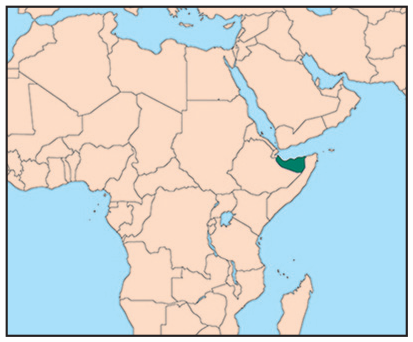
Somaliland is a de facto state that emerged from the ashes of the civil war in Somalia. It has been striving for international recognition since 1991, when it declared a unilateral secession from the rest of the country. Despite its lack of recognition, Somaliland has managed to establish a functioning political order.(2) But it also faces many daunting challenges including poverty, instability,(3) inequality and exclusion. Various clans populate the territory.(4) The Isaaq clan is the largest of them,(5) populating major cities such as the capital, Hargeisa, where economic opportunities are relatively better. This numerical and spatial advantage has been translated into a political dominance that saw the transfer of power between four presidents(6) from the same clan, except for Dahir Rayale Kahin, who belongs to Gedabuursi. Almost invariably, these heads of state have used their power to favour their own sub-clans and allies, leading to widespread corruption, nepotism and land grabbing. It is in this exclusionary state-making that urban land management and its impact on the city’s underprivileged residents can also be understood.
A significant proportion of the literature on Somaliland casts the post-conflict statecraft in the country as bottom-up. Some justify this by citing the community-led peacebuilding that followed the war, and the subsequent role of traditional institutions in the formation of a hybrid political order.(7) Other scholars cite the clan-based democratization processes that define, however unevenly, the new polity’s visible success in reconstituting political and administrative authority – in sharp contrast to south-central Somalia, where instability and chaos continue to prevail ever since the ousting of Mohamed Siad Barre’s military regime.(8) Although these studies are essential for illuminating the process of crafting a new state from scratch, they gloss over the inconsistency between the bottom-up origin of Somaliland’s political order and the top-down nature of its governance practices. They also mask the exclusionary nature of state-building in Somaliland. Through the prism of statecraft, this paper elucidates this contradiction as well as its exclusionary nature by examining the historical and contemporary dynamics of urban land management in Hargeisa.
Statecraft can be understood as the administration of state affairs(9) at multiple levels with varying complexities and demands.(10) In his analysis of the centre–periphery relations in the United Kingdom, Bulpitt argues that statecraft is “as concerned with the ‘how’ of politics as with the ‘what’”.(11) Put differently, statecraft captures the processes by which political elites respond to developmental challenges and the bureaucratic procedures by which administrative officials implement their decisions.(12) At the heart of this understanding is the importance of examining change and continuity in the linkages among the spectrum of actors involved in developing and applying the practices of government and governance, be they individuals or social and political organizations.(13) Framed this way, statecraft is a narrative of change and continuity(14) that highlights the complexity of current political decision-making and administrative dispensation as both a break with and a continuation of historical legacies.(15)
I use the concept of statecraft to understand Somaliland’s state-building processes, cast as the outcome of pragmatic politics.(16) I am particularly interested in highlighting its hitherto unexplored binary oppositions whereby it exhibits both bottom-up and top-down characteristics. In so doing, I use the concept of statecraft to accentuate the importance of historical context and examine the temporal development of governance(17) to make sense of regulatory practices(18) and their unintended consequences.
Before discussing land governance as a critical site of urban statecraft, it is vital to briefly explore the dynamics of the debate on post-conflict state-building in Somaliland. A major strand of this debate casts the integration of traditional institutions with modern state making processes as the most crucial explanation for the country’s successful statecraft.(19) However, more recent research has differed; it observes aspects of the contradiction between the peacebuilding and state-building processes by noting that this nexus has been characterized more by hostilities, contestation and ambiguity than by coexistence, cooperation and clarity.(20) Although observing this contradiction, this research never went as far as to highlight the important ways in which one is bottom-up and the other (or at least a crucial part of it) top-down.
Another equally important thread of the debate concerns the democratization processes initiated in 2001 with the constitutional plebiscite. This strand proposes that Somaliland’s stability and progress can be partially explained by its adoption of democratic principles. For instance, Ali suggests that this democratization process was a key stabilization strategy and a pragmatic approach to statecraft from its earliest stages.(21) Hersi concurs and credits much to the pragmatic ways that the process became anchored in the local tradition.(22) However, scepticism exists. For instance, Richards raises an essential concern regarding the changing expectations of the clans in the democratization process, pointing out that their influence within the government has been ineffective in achieving the intended goals of democratization.(23) Regardless of the arguments’ contours, these studies amplify the bottom-up nature of democratization, as opposed to stressing its highly political and elite-centric crafting,(24) primarily aimed at solidifying external rather than internal state legitimacy. Taken together, both the peacebuilding and democratization strands of the debate gloss over how the crafting of the legal and administrative regimes governing development have affected or shaped lived experience in Somali cities.(25)
To enrich the literature on this front, this paper explores the changes and continuities of statutory legal frameworks in Somaliland and their impact on the ability of poor people to negotiate access to urban land in Hargeisa. The post-war literature on land governance currently focuses on how the country’s plural legal system advances or undermines the state’s ability to deliver post-conflict justice(26) and on how land governance is used as a strategic site for legitimating authority in the post-war context.(27) These studies reveal some primary fissures. There is a general lack of attention to the evolution of the land governance regime and its spatial consequences amid rapid urbanization and rising poverty levels.(28) Inadequate attention has also been paid to the dispensation of authority at the urban level. More importantly, the impact of the top-down dispensation of power is not sufficiently historicized to enable us to understand state behaviour and the reaction to it.
Therefore, examining the legal regime governing urban land and its impact on the poor in Hargeisa is essential for several reasons. Cities in Somaliland are reeling from the effects of social and economic problems that, if not sufficiently examined and addressed, could disrupt the state-building project. Hargeisa’s spatial milieu is also characterized by segregation, a shortage of public land and inaccessible credit for land and property financing, which push the poor to the brink of desperation. Most importantly, the legal and administrative frameworks governing land date back to the colonial period and their evolution and impact on the city’s lived experienced are under-researched. Taken together, these realities make the investigation of urban land governance and its impact crucial for understanding urban Somalia. This paper demonstrates that urban land governance, as a critical site of statecraft, is characterized by a continuity of top-down processes that inhibit the ability of poor residents to acquire urban land. It does so by situating urban land governance within the context of a long history, spanning colonial, postcolonial and post-war periods, to account for how the state’s evolving administrative practices and behaviours impact poor people’s ability to negotiate space in the city.
Data for this paper were obtained through key informant interviews, personal interviews (21 in total, including some that are not cited in the paper) and a review of archival materials and government and NGO reports. The key informant interviewees included public officials, lawyers, traditional and religious leaders and NGO workers, selected based on their knowledge of land issues in Hargeisa. The personal interviews were conducted with people who have experienced land-related problems, such as disputes or issues with accessing land or credit to obtain land. To ensure adequate representation, I also considered gender, clan and geographical location in selecting these interviewees. The archival material was accessed at the British National Archives and the British National Library, and the reports were found online and in print from relevant offices. The remainder of this paper will be organized into three main sections. The first reviews land-use management in the post-war context, including the experience of Somali cities. The second section explores the evolution of Somaliland’s land governance framework. The third section examines Hargeisa’s administrative and institutional arrangements for land governance and how they shape poor people’s ability to negotiate space in the city.
II. Statecraft and land governance in the urban context
a. Crafting the urban state
Urban scholars are increasingly finding the concept of statecraft a helpful entry point in providing a nuanced and context-specific understanding of the strategic manoeuvring of the elite to capture, control or dispense authority at the conurbation level.(29) This is partly owing to the concept’s scalar and relational nature, which is helpful in examining how the elite create and maintain the state’s vertical hierarchy of national, subnational and conurbation levels to achieve specific political or developmental objectives.(30) Initial use of the concept in urban contexts focused on comprehending the financial and structural dimensions of economic development policies and strategies of cities in the North.(31) This approach was critiqued, however, for failing to consider the complexities of the spectrum of institutions that shape or are shaped by the urban state’s policies and governance practices in Southern contexts.(32) Key sites for applying the analysis of statecraft in the African urban context are the governance of infrastructure, of emergency responses and of the urban peripheries.
Cirolia and Harber, for instance, provide crucial insight into the material and political processes that condition the governance of urban infrastructures not only as critical connectors of people and places but also as an arena of the state’s image construction, deconstruction and reconstruction.(33) Kroll and Adelle explore emergency statecraft to understand “how distributional politics shape resilience unevenly and what this means for the systemic transformation of power” configurations in urban spaces.(34) They examine the networks and regulatory instruments created to safeguard food systems, improve preparedness for future disturbances and provide opportunities for a transition to more sustainable urban liveability. An equally important niche for statecraft in the African urban context is the nexus between land management and marginal communities. For instance, McGregor and Chatiza show how various clientelist statecraft tactics can be analysed through the lens provided by regularization policies.(35) It is this area of work that this paper seeks to advance from a post-conflict perspective.
This perspective is crucial for three reasons. First, post-conflict cities experience significant spatial and political changes.(36) Examination of these changes can provide unique insight into the conflicts and contradictions created by competing demands that the post-conflict state has little or no capacity or will to address. Second, the governance and management of urban land is an arena in which multiple institutions participate.(37) Examining their involvement, with all the associated subjectivities and tensions, provides unique insight into debates on statecraft from the perspective of what can be regarded as organized chaos. In these situations, the state’s construction and behaviour can differ from the circumstance in which the concept has previously been applied. Third, the current debates on land governance in Somaliland(38) do not sufficiently address its impact on the urban poor. This examination can thus reveal the image of state-building in Somaliland that emerges among disadvantaged urban citizens as a result of the post-conflict statecraft. The objective here is to deepen the conversation from the standpoint of the impact of statecraft. In what follows, I will outline how land administration has evolved historically to result in legal frameworks that negatively impact the already marginalized poor in the city.(39)
b. Land as a site of statecraft in Somaliland
Urban land is a crucial site of statecraft in Somaliland because it has always been key to political control. For instance, Somaliland’s first statutory land law, the registration of documents ordinance, was introduced in 1912 to record and manage individual land ownership and immovable assets.(40) A little more than a decade later, as the Protectorate emerged from a lengthy struggle with Mohamed Abdille Hassan’s insurrection, in 1924 the colonial government also enacted a law for the townships. In its first form, the legislation was minimal and focused primarily on political control. In 1927, the government amended the act to provide colonial administrators with broad authority to reorder township settlement patterns. Several changes were subsequently made to expand the government’s power to seize land. The most notable of these revisions occurred in 1939 when a number of townships were established throughout the protectorate.(41) The new land laws introduced new dimensions, separating property into private, public and royal land. In so doing, they enforced an unfamiliar top-down approach to land management with little or no public input. This had the effect of reducing voluntary compliance with the regulations governing the management of natural resources, especially land.
This top-down land management regime and its associated expropriation continued to be a key site for political control in the postcolonial period. For instance, the civilian administration’s effort to codify customary laws, part of a broader but failed endeavour to integrate the nation’s multiple laws, was meant to enhance political and administrative control.(42) The military junta that took over in 1969 also made concerted efforts to reform land and improve agricultural productivity through 22 additional laws(43) and other administrative directives, including a 1975 decree that placed land ownership in the hands of the state.(44) This was cast as a modernization process, at the heart of which was not the harmonization of existing laws, but rather a significant shift from the capitalist economy inherited from the colonial rulers.(45) Although this could be seen in terms of economic development, it was also a means towards political control, as nationalization lay at the heart of these reforms. Moreover, because the Somali population remained predominantly rural, these reforms impacted rural more than urban areas in the country.(46)
In the post-conflict context, land plays a key role in the legitimization of authority.(47) Amid institutional and administrative weakness, this legitimization is proving to be a challenge, partly because of conflicts resulting from competition for private land and claims or counterclaims to public land. These conflicts have not only increased but have been compounded by the rapid growth in cities and subsequent rise in land values.(48) For this reason, authorities in Somaliland have introduced a reform agenda to address the land question. Some scholarship on state-building casts these endeavours as part of Somaliland’s strategy for international recognition.(49) However, it is also noted that progress has resulted from the state’s tolerance for traditional and moderate sharia mediation centres.(50) These have been allowed to operate alongside the statutory institutions,(51) which are at best regarded as inaccessible, unaffordable and unfamiliar.(52) These efforts reflect the vital role land governance plays in the configuration and reconfiguration of post-conflict power. However, the way this affects poor people’s ability to negotiate space in Hargeisa is under-researched.
Therefore, I seek to account for how the historically top-down approach to urban land management in Somaliland, which remains central to the state authority’s governance policies despite being out of step with the population’s views, excludes the poor by putting in place bureaucracies that favour the well-to-do. This exploration is important for advancing our understanding of Somali cities, which are marred by crises ranging from the inadequacy of essential urban infrastructures to critical internal displacements.(53) While the causes of these crises are well-documented,(54) inadequate attention has been paid to the historical evolution of the legal and administrative regimes governing development and how this affects or shapes urban liveability. To enrich the literature on this front, this paper explores the changes and continuities in the land regulatory framework in Somaliland and its impact on the ability of poor people to negotiate access to urban land in Hargeisa.
III. Hargeisa’s socioeconomic and institutional setup
a. Spatial and socioeconomic characteristics
When Somaliland seceded from the rest of Somalia in 1991, Hargeisa became its capital, and as a primate city it grew quickly to become the second-largest city in Somalia. Its population is contested, but credible sources project the figure to be as many as 1.2 million.(55) According to a World Bank report, Hargeisa has one of the highest urbanization growth rates in the region, at 5 to 6.7 per cent per annum,(56) fed in part by the significant internal displacement caused by climate change. Most of these internally displaced people (IDPs) migrate to Hargeisa because of the perceived employment opportunities. Hargeisa has experienced a construction boom, financed in part by remittances from the diaspora community which seeks to partake in the property industry.
Despite this growth, urban poverty in Somaliland is severe. One in four households cannot meet their immediate needs.(57) According to the United Nations Office for the Coordination of Humanitarian Affairs (OCHA), more than 50 per cent of the city’s population needs humanitarian assistance.(58) Oxfam reports that the unemployment rate is more than 65 per cent among the youth (defined as age 15–40).(59) While these numbers are alarming on their own account, the situation was aggravated by the eruption of the COVID-19 pandemic, which reduced employment opportunities by 50 per cent.(60) The depth of the problem is masked by the city’s social and spatial organization, whereby a significant proportion of the poor and the affluent alike share space with clan members.(61) On the one hand, this allows poor people to access the social support inherent in clan networks; on the other, it undercuts their visibility and masks their plight.
The city’s more visible category of low-income people is its IDPs. According to ACTED,(62) 16 IDP(63) camps are currently supported by aid agencies. Half of these camps face high or medium risk of eviction because of the uncertain status of the land they occupy. Of the 16 camps, only one location is on government ground. Moreover, 10 of the 16 settlements are in peri-urban areas (see Figure 1). Given that transport in the city is both poor and unaffordable, the location of the camps negatively affects the residents’ ability to access the opportunities in the city.(64) Such marginality of the poor in the city reflects the nature of Somaliland’s exclusionary urban statecraft.
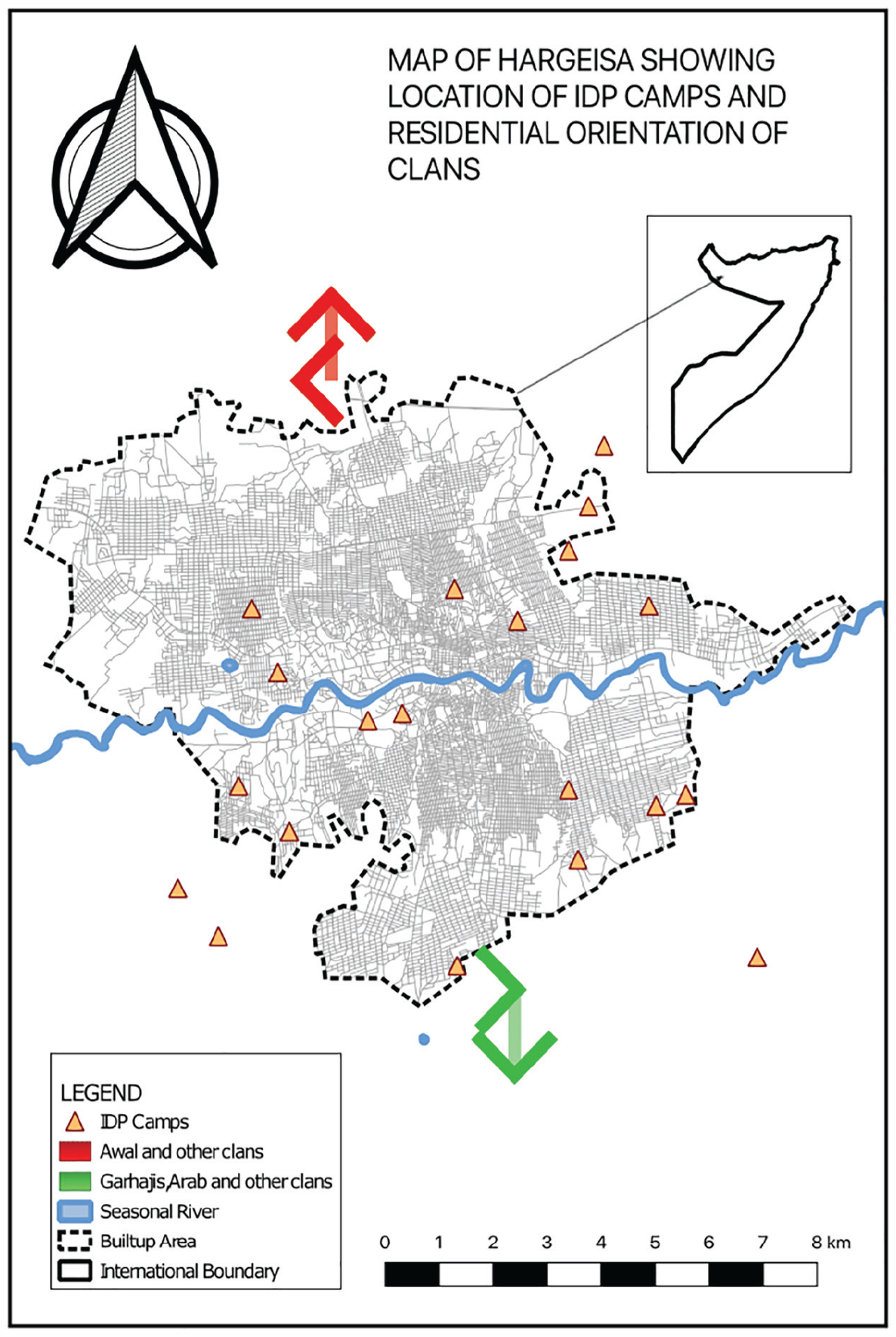
Map of Hargeisa
b. Land administration
Land administration, with its vertical differentiation of rules and regulations, is a key site of urban statecraft.(65) The 2002 urban land law, amended in 2008, is by far the most significant attempt to define the institutional boundaries between the local and central governments. This law delegated the micromanagement of land to local governments, while keeping regulatory and policymaking power with the central government.(66) Local government offices are required by Article 2 to register properties in the city based on current ownership documents and in collaboration with the Ministry of Public Works.(67) The departments of land, physical assets and land records are also local government offices that are particularly designated to offer these services.(68) At the central level, the ministries of agriculture, rural development and environment, interior, health, communication, mineral resources and water, public works, and the parliamentary subcommittee on natural resources and environment are all involved in urban land management.(69) The Ministry of Public Works also hosts the Land and Urban Management Institute (LUMI), which was established to collaborate closely with the National Urban Planning Board and to translate central government policies into technical rules and regulations.(70) Its land administration division was to be responsible for providing technical expertise on land policy and regulation, while the physical design division was to be concerned with the preparation of master plans and mapping.(71) This institute, however, exists in name only, since it lacks the technical and financial resources to fulfil its responsibilities.(72) Its incapacity is exacerbated by the state’s reluctance to embark on genuine reforms that would equip its core institutions to respond more effectively to urban challenges.
While urban land legislation attempts to define the vertical connections between the central and local institutions involved in urban land administration, it fails to address the horizontal interaction and interface between local authorities.(73) Frequent meddling and intervention from the centre mean the municipal offices do not operate effectively, and the failure to distinguish between the state’s political and administrative tasks only exacerbates the fragility of the regulatory structure.
From 1991 until 1999, each district in Hargeisa had its own land committee, which dealt with land-related problems such as registration. Weak procedures sometimes led to the issuing of several titles for the same piece of property. According to Bruyas, the registration processes used by these ad hoc committees were inherited from the previous regime, and the legal and regulatory framework within which they worked was either “inefficient or detached from the realities on the ground”.(74) In 2004, the municipality of Hargeisa, in conjunction with UN-Habitat, initiated the registration of properties using geographic information systems (GIS), digital satellite photos and GPS devices to collect data.(75) Developing a trustworthy cadastral system was intended to bolster the local state’s capacity to govern urban land. However, a major flaw with the design was that it did not record the proportions of the plots. Meanwhile, the technical competence required to manage such a cadastral system was also scarce in the city, since those with the education to run such a system are largely attracted by higher-paying positions in the NGO sector.(76) This reduced the system to simply a method for collecting revenue. In the absence of an open, responsible and strictly enforced land registration system, irregular title issuing persisted.
Recently, the municipality commissioned the Geosol company to improve cadastral management and assist with property registration. The official gazette of Somaliland indicates that Geosol was incorporated on 17 June 2017.(77) However, the company’s ownership, motivation and legitimacy are questioned. Waddani, the official opposition party in Somaliland, labels Geosol’s activity unlawful. According to a statement on Waddani’s website by the party’s secretary of social affairs, Geosol collects fees that the state should have collected. This includes US$ 40 for land inspection and a fee of up to US$ 360 for land ownership registration.(78) Somaliland Chronicle, a news website, also challenges Geosol’s ability to offer the service it promises, citing the lack of publicly accessible information on the company’s website, which makes it impossible for the public to evaluate the company’s competence in fulfilling its assigned tasks.(79)
Criticisms of the company aside, the commercialization of the registration system alienates poor citizens. Registration fees, for instance, remain beyond the financial means of most impoverished families.(80) Meanwhile, the absence of a functional regulatory framework accessible to everyone, along with the inability to register land ownership affordably, generates enormous disparities. This difficulty stems in part from the historically rooted top-down urban statecraft and its exclusionary policymaking and administrative practices as well as the inability, incapacity or unwillingness of the post-conflict state to shift away from this type of state-making at the conurbation level. In what follows, I further explore how land administration as a site of statecraft excludes the city’s poor.
IV. Exclusionary statecraft: general and regulatory
a. General exclusion
First, I examine exclusion in general terms, considering the spatial, economic, social and political circumstances along with the mundane urban management malpractice that may prohibit the city’s underprivileged residents from gaining access to land.(81) This includes the abuse of discretionary governmental powers through which property rights are awarded in ways that undermine formal legal processes and, by implication, public trust.(82) In the global South, it is not uncommon to see government agencies and allied economic elites acting with near impunity regarding the rules and regulations on land access, while poor residents’ rights are often curtailed in the name of regularization.(83)
According to McGregor and Chatiza, regularization policies offer a lens through which various clientelist statecraft tactics and strategies can be analysed.(84) In Somaliland, these are most visible in the two faces the state seeks to maintain: on the one hand, it seeks to define itself as distinct from the previous dictatorial culture by highlighting its hybrid state-building and democratization; on the other, it rewards one section of its population at the expense of the others. Access to land in Hargeisa is thus marked by the extreme inequality that results from this exclusionary regularization, which includes but is not limited to formalization, territorialization and standardization. At times this creates a condition in which people lose their regard for the rule of law and instead subvert it with noncompliance or resistance, often justified based on inequality. Hargeisa’s historically poor planning can thus be understood as the outcome of this statecraft.
The most obvious consequence of these anomalies is the absence of public land in the city. In other words, no empty state-owned land is available either to house the impoverished or to enhance urban liveability more generally. Since the end of the civil war, the situation has worsened further. The remaining public land has either been auctioned off by successive administrations or privately seized. Today, there are few or no public gardens, playgrounds or open spaces in Hargeisa – as we recall, a city with a population now in the region of 1.2 million – and the land around the city is also privately held. Before the war, this was not the case. Much of the city’s outskirts used to consist of publicly owned land. However, post-war claims and counterclaims have led to most of this land being claimed as private. A sizeable chunk of this land was subsequently acquired from its original claimants by private investors or wealthy individuals. Currently, wealthy city inhabitants or members of the diaspora hold such land. This restricts the state’s capacity to supply the urban poor with land.
In addition to the lack of available land, access for the poor to what is available is further hindered by clan segregation in the city. Several instances have been documented in Hargeisa of IDPs being prohibited from joining a camp because of their clan affiliation.(85) This spatialized exclusion further hinders the capacity of impoverished people to navigate urban environments. First, it divides and antagonizes the IDP population, weakening their ability to engage with authorities and donor communities to improve camp living circumstances (Figure 2). It also undermines and demoralizes their collective claim to their rights in the city, diminishing any feeling of security, and restricting their involvement in democratic processes like elections, through which they could convey goals and demand their rights in a way that transcends current clan allegiance.
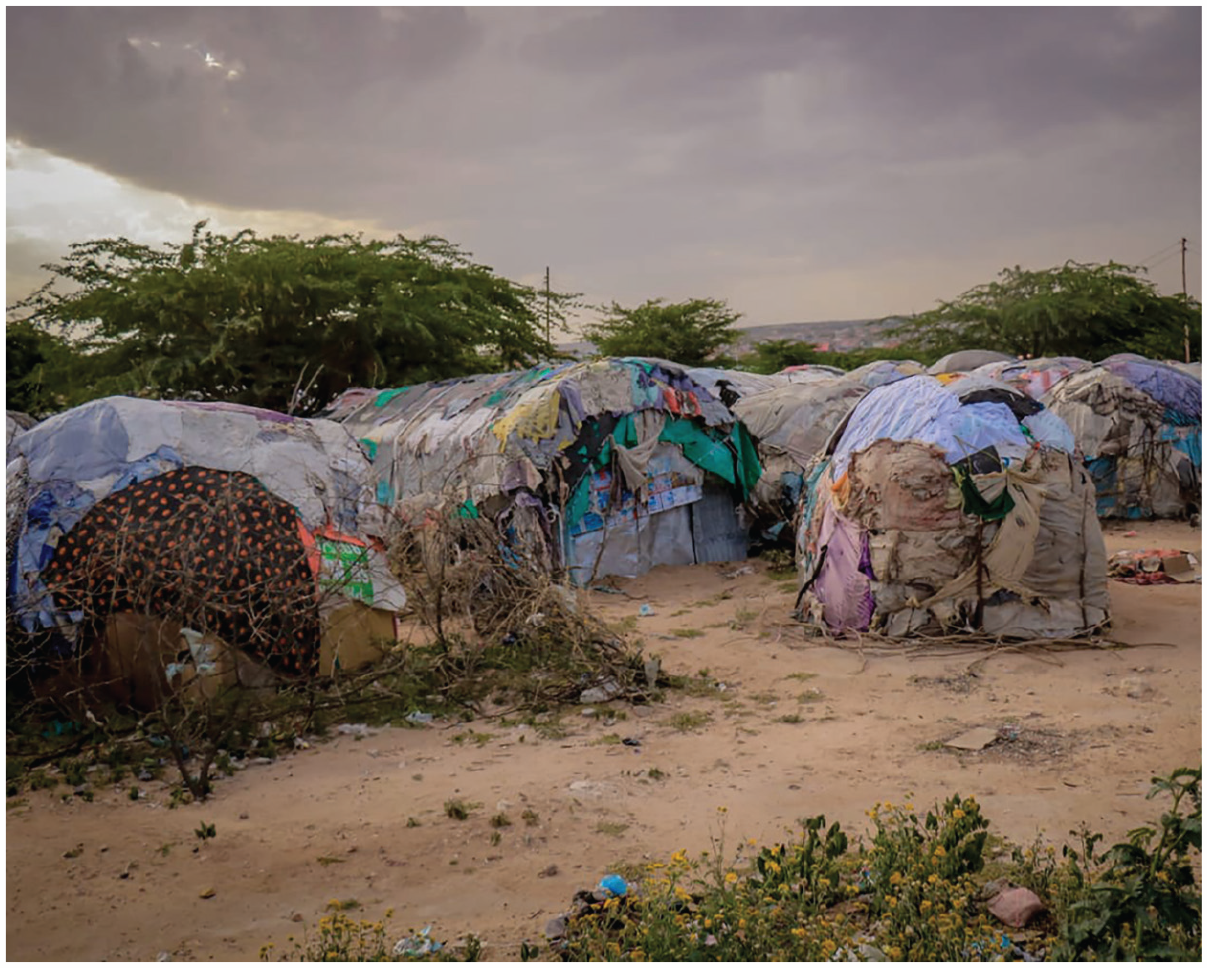
IDP camp in east of Hargeisa
Aside from the climatic and conflict variables influencing the rise in the number and size of camps, the size of the IDP population in the city is also inflated by the fact that individuals who may not qualify as IDPs join camps in order to obtain help from NGOs, making an appearance when NGOs are known to be in the area. Many camp residents accept this opportunistic foraging for a variety of reasons. Out of clan loyalty, residents may be reluctant to disclose relatives who are involved in these opportunistic practices. There is also a more general reluctance among the residents to provide information that would deny people access to help, regardless of their status. Finally, there is a widespread belief among residents that the larger a community becomes, the more attention and help it will receive. In the end, though, inadequate inspection of who qualifies as an IDP and who does not hinders the capacity of the impoverished to gain collective rights.(86)
The absence of political will and debate among the political elite to address the need for the poor to access land in the city exacerbates the other obstacles to tackling the situation. Even during election campaigns, politicians have shown little or no serious interest in raising the issue of land for the poor. The post-war authorities’ approach to urban land management focused more on settling the dispute than on easing land access. Furthermore, the poor have not exerted the level of political pressure that might compel the state to address concerns regarding access to urban land.(87) This is not to say that they are to blame for their failure to obtain land, but rather that there has never been a substantial mobilized protest towards the injustice. Historically, land was not a controversial topic around which political or social mobilization happened in Somaliland, as distinct from the South, where access to land played a crucial part in the uprising against Barre.(88)
It is also true that the city’s governing class and economic elites own a significant portion of the land that might be claimed by the poor and would thus be hesitant to entertain the issue in the absence of sufficient pressure.(89) In a nutshell, the incapacity or reluctance of the political elite to address these issues results in the exclusionary way the urban state is crafted. The depth of this exclusionary statecraft can only be appreciated when we consider the problematic nature of its regulatory practices, particularly its consequences for the poor, whether intended, unintended or overlooked.
b. Legal and regulatory exclusion
Here, I consider the other dominant forms of exclusion in Hargeisa: legal and regulatory. These are exclusions that result directly from the way(s) in which the policy and legal frameworks governing land are conceived and operationalized. According to Hall, Hirsch and Li, regulations establish the boundaries between parcels of land, determine the types of land use that are and are not permitted within those borders, and specify the types of ownership and tenancy claims that can be made in relation to different fields of law and property.(90) These rights may result from historical and contextually specific social and political processes.(91) Common property is not only a legal or economic category, but also a political and ethical one, which can enable marginalized groups to claim their right to not be excluded from the places they inhabit.(92) In the case of Somaliland, the regulatory regime has historically marginalized the poor, even in the present time when, in the face of political and economic pressures, the authorities should welcome the support of the masses.
The first post-war land law, the Agricultural Land Act, was enacted in 1999. This legislation was developed at a time when the government was facing huge rehabilitation challenges stemming from a large number of returnees from neighbouring countries. It is important to note that the government did not have a land allocation programme in place at that time. However, it developed this legislation to regulate the process in the future. Arguably, these regulations pose major obstacles for the poor. For instance, the legislation stipulates that if a person is granted property in a prime site facing a major road and is unable to build on it, the municipality may reclaim the land and provide the occupier with land in another area. Poor people often lack sufficient funds to begin construction; affluent people have the means to better comply with such legal requirements for new land allocations, and thus do not experience the same. Article 19 of this law also protects the wealthy by stipulating that anybody who is granted a piece of land by the state and invests in that land and constructs a permanent building there shall be recognized as the permanent owner of that land. Similarly, the transfer and sale of land are contingent on the ability of the person acquiring that land to establish permanent residency, as stipulated in Article 25, which states that anyone given land for permanent residence may sell, transfer, gift or dispose of it in any manner they deem appropriate under the law.(93) However, those who are unable to meet these requirements for financial reasons are poised to lose their land. A resident in Hargeisa said:
“I know some people who had stayed on a piece of land for an extended period who were evicted by the government only when significant infrastructural development came by. The government reasoned that they did not have papers for the land, but everybody in the area knew the land was theirs. Their only crime was that they did not have the money to register and fulfil government bureaucracies.”(94)
Article 6 of this statute – which also applies to urban settings, as the city expands into agricultural and pastoral land in the peri-urban region – restricts land allotment to a single eight-hectare parcel that cannot be sold for three years.(95) Waiting three years to sell their property is a luxury that many impoverished families cannot afford. The most significant progress in legal reform was made in 2002 when the government enacted the urban land law, commonly known as Law No. 17. Although the passage of this law was significant, especially in a post-war context where the state’s capacity for policy- and law-making (and, by extension, enforcement) is weak, it is also important to highlight how it disadvantages the already disadvantaged poor in the city. For instance, the legislation authorizes the construction of temporary structures, but their very impermanence can also serve as the rationale for removing these structures.(96) When an impermanent structure is situated in a prime location, the security of tenure is contingent on development and investment. In other words, it requires further development and investment on the part of the owner to avoid eviction.
Unlike the poor, the city’s affluent residents are also protected by other development regulations. For instance, Article 12 of the Somaliland Investment Policy stipulates that land provided for development must be developed within one year. Well-off people seldom comply with this criterion and are not susceptible to eviction, but the impoverished often face the possibility of their land being expropriated. In contrast, on property granted for temporary dwelling, the required buildings must be completed within three months of the grant.(97) In many instances, impoverished individuals may lack the financial means to meet these criteria. The legislation specifies that property provided for such development purposes as industry or other enterprises cannot be utilized for residential purposes. However, affluent individuals in the city flout this regulation by using land assigned for businesses to build luxurious residences.(98) In other words, they ignore the law with impunity, unlike the poor, who often meet the full force of the state.
Thus, the examination of the inconsistencies characteristic of these exclusionary policies and practices reveals the nature of interaction between the state and its people, and the need for recrafting the urban state to make it more responsive and pro-poor. Put differently, the urban state, as the set of institutions, policies and actors that shape the development and governance of cities, has a crucial role in addressing the challenges the poor and marginalized groups face in the city.(99) However, the urban state is often captured by powerful interests that undermine its responsiveness and pro-poor orientation.(100) Therefore, there is a need for recrafting the urban state to make it more coherent, inclusive and democratic. This requires a transformative agenda that involves reforming the legal and institutional frameworks and fostering participatory and collaborative processes that enable the voice and agency of the urban poor.
As seen, the country’s land regulation structure promotes uneven land access and often excludes the disadvantaged. In a society where the majority lives in poverty, these legal frameworks exacerbate the disparity between the wealthy and the poor. Arguably, in Hargeisa, access to land is characterized by inequality. On the one hand, power is clan-based and the relative proximity to power shapes one’s ability to access land and related services. On the other hand, one’s economic status (which can influence power dynamics) is a crucial factor shaping access to land. Both also play a key role in the way the legal regime is produced.
Since the legal procedures by which land is governed and accessed in Somaliland present insurmountable barriers to the impoverished, the poor often mobilize their clans to fight the expanding state. A resident in Hargeisa said:
“Government is a government, and they always have the power to arrest me or do something. But I feel more comfortable where my clan is stronger because at least I will have people who can support me and even stop soldiers from arresting me illegally or confiscating my belongings. He who doesn’t have tol [kinsmen] is doomed here.”(101)
In Hargeisa, access to land is one of the most significant obstacles to entrepreneurship, according to the World Bank.(102) Inadequate and ineffective regulatory and enforcement mechanisms contribute to this difficulty.(103) In many situations, corruption also contributes to the state’s incapacity to address land-related problems effectively. Multiple allotments and issuance of title documents for the same parcels of property are the most egregious example of these illegal actions. This results in a lack of confidence in the land management system, which prompts many individuals to develop the property and worry about the implications later.(104) According to research jointly conducted by the World Bank and the International Finance Corporation in 2012, the high cost of securing a building permit encourages many small businesses and individuals to develop without a licence and then attempt to legalize their ownership later.(105)
As post-conflict access to property becomes more difficult for persons from impoverished backgrounds, putting a roof over their heads requires the avoidance of authorities.(106) In regions where individuals have access to more substantial clan backing, the state is more vulnerable to subversion. One of the city’s residents argued that:
“How the state governs and provides services shapes people’s attitudes and how they relate to fellow citizens. If one were not to fear for his life and property, we would have had a different spatial pattern in the city than we currently have. I am sure the Somali social network we call clan has risen from a particular need where people needed protection both in social and economic terms. But then, a lot has changed and will continue to change. What seems stagnant is how the government relates to people. I, therefore, instead do what is best for my family, which is to stay where neighbours know me well in case I need something.”(107)
As is obvious in this instance, an unfavourable public view of the state encourages segregation in the city. Cirolia and Harber highlight the critical role the governance of resources and infrastructure plays in statecraft.(108) In Hargeisa, the governance and management of access to, and conflict over, urban land is what forms the negative image of state-building among the poor, largely the result of the country’s top-down approach to land management. There have been a few attempts to alter this top-down mentality. But these have often failed, except where donor agencies have helped formulate plans that include some engagement.(109) However, this conduct lacks legitimacy where INGOs have significant financial, development and planning clout over the state. And when policies are conceived and produced by outside interests, it also puts their applicability and acceptability in the local context into question.
In short, urban land, as a primary site of urban statecraft, continues to be administered in a top-down manner, frequently importing outdated policies and regulations that are not matched with the demands of post-conflict urban settings, thereby marginalizing the poor. In the end, the way the legal and regulatory frameworks are established and implemented turns impoverished city dwellers into what Peluso and Lund refer to as “squatters”.(110)
V. Conclusion
This paper discusses urban land administration in Hargeisa as a significant site of post-conflict statecraft in Somaliland. It highlights the incongruities that characterize post-conflict statecraft by showing that, on the one hand, the establishment of the subnational state has been regarded as bottom-up, beginning as it did in clan-based peacebuilding. On the other hand, its governance practices are typified by top-down procedures. This top-down mentality has persisted since independence, supported by the state’s reliance on colonial-era statutes. Neither the land reforms attempted during the early postcolonial civilian government, nor the military government’s land management system adopted during the military administration appreciably departed from the previous top-down arrangements. The regulatory system’s flaws have eroded public confidence in the legal and administrative structure of the state. Similarly, institutions continue to be centralized in the post-conflict setting: a strategy that led to creating land management tools separated from the realities on the ground.
The problem was aggravated by the state’s failure to mobilize the required resources for enhancing access to services and by a lack of political will to effect change. This further damaged the state and harmed its reputation for handling public affairs. The severe weakening of public faith in the system has encouraged individuals to rely on alternative ways of settling land disputes and to limit themselves to those areas within the city where they have support networks, such as kinsmen/women.
This loss of public trust affects everyone throughout the city’s social and economic spheres, but the poor and disadvantaged are hardest hit since current land governance practices impede access to land, which is one of three critical hurdles that must be negotiated to achieve economic growth in Somaliland.(111) In summary, the inability of the state to manage either access to land or conflict over land in ways that benefit the poor and the disadvantaged has both caused and perpetuated abject poverty in the city.
This paper’s central point has been that a continuation of top-down procedures in Hargeisa’s land-use planning impedes the capacity of citizens to negotiate access to urban land. I further contend that the state’s attention to land is selective. When appropriate, it uses land as a source to advance its political and administrative control. When it does not use it for political and administrative control, it places it on the periphery of its policy making processes. This has a detrimental impact on the poor, whose pre-existing situations comprise a catalogue of complaints that might undermine political stability and progress in peace and state-building.
The paper contributes to the debates on land governance in two ways. First, it emphasizes the consequence of the legal and administrative frameworks for the poor people in the city. This enriches current debates, focusing on the key drivers and dynamics of conflicts over land.(112) Second, it connects the land issues in Somaliland to the broader debates on pro-poor land policies(113) – or the lack of them. Future research in this regard needs to focus on the dynamics of how poor people in the city take advantage of or subvert the existing regulatory frameworks. Understanding poor people’s strategies and tactics for negotiating space in the city will enable us to propose and support policies that could improve their living conditions in a way that does not undermine the broader development goals of the state and society.
Footnotes
1.
While central is considered national in Somaliland, from Somalia’s federal government’s perspective, Somaliland is considered subnational since it contends that Somaliland is within its internationally recognized territorial boundaries despite the declaration of secession in 1991.
2.
This is based on a constitution, a parliament, a judiciary and regular elections. However, this reputation is eroding because the elections are delayed and civil conflict, at the time of writing this paper, has erupted in Las Anod, a city in the east whose population are markedly pro-union.
3.
Initially stemming from incumbents overstaying in power through extensions legalized by the upper chamber of Somaliland’s parliament which many regard as an impediment to democratic rule.
4.
These include the Issa, Gedabuursi, Gabooye, Isaaq Dhulbahante, Warsangeli, Fiqi Shini and others.
5.
All estimates indicate that the Isaaq are the majority in Somaliland.
6.
Abdirahman Ahmed Ali “Tur”, Mohamed Haji Ibrahim Egal, Ahmed Mohamed Mohamoud “Siilaanyo” and Muse Bihi Abdi.
8.
12.
13.
18.
See Peck and Theodore (2015);  .
.
19.
See Bradbury (2008); .
25.
APD (2010); .
26.
See APD (2010); .
29.
See Cirolia and Harber (2022); .
33.
Cirolia and Harber (2022); see .
36.
38.
See APD (2010); .
39.
Hammond and Ibrahim (2019); see .
48.
See APD (2010); .
50.
51.
See APD (2010); .
52.
EAJ (2020); .
54.
See Stuvøy et al. (2021); .
58.
See OCHA (2021a, ).
59.
63.
Internally displaced people (IDP) refers to individuals who have been displaced from their homes due to various factors, including but not limited to violence, drought and poverty. The idea of IDPs creates various questions, one of which is their legal status. Because Somaliland seceded from the rest of Somalia, many people classified as IDPs by international organizations and the Somali federal government are considered refugees in Somaliland.
64.
Which are concentrated in the city centre.
66.
The legislation makes the administration and distribution of urban land (including land in the city’s immediate environs) the responsibility of the executive committee of the councils.
70.
73.
80.
Interviewee 14, development practitioner, 7 July 2022.
83.
85.
In a few of these instances, violent conflict has arisen between rival groups among the IDPs.
86.
Interviewee 14, development practitioner, 7 July 2022.
87.
Interviewee 7, lawyer, 16 August 2014.
88.
Interviewee 5, politician, 12 August 2014.
89.
Interviewee 9, academic, 28 May 2022.
91.
94.
Interviewee 10, Hargeisa resident, 11 April 2022.
101.
Interviewee 11, Hargeisa resident, 3 April 2022.
106.
Interviewee 9, IDP resident, 4 April 2022.
107.
Interviewee 12, Hargeisa resident, 21 March 2022.
109.
One such document is the recent constitution of the District Development Framework (DDF), aimed at identifying the social and economic as well as physical development deficiencies in the city and priorities for intervention. The DDF identified several priority areas for immediate attention such as the need for improvement in physical infrastructure, water supplies and dilapidated pipelines and access to healthcare. .