




Abstract
This paper addresses the issue of what happens in the aftermath of conflict when humanitarian response is absent, to see how “self-help” recovery can inform development assistance paradigms and practice. We explore livelihoods strategies and community-led recovery processes in the context of conflict in Somaliland, a region that experienced an acutely disruptive conflict and an absence of humanitarian aid, to evaluate the economic recovery that emerged. The conflict is tracked through perceptions and recollections of those who lived through the disaster: the bombing of Hargeisa in 1988 that flattened the city, the declaration of a semi-autonomous nation in 1991, and its subsequent development over the last 25 years. This critical case study aims to inform the humanitarian assistance agenda in relation to livelihoods as a self-help process in post-conflict recovery.
I. Introduction
“In the 1988 bombing, Hargeisa was 80 per cent demolished. The diaspora helped start the rebuilding and within eight months things were getting in shape – it was so fast. In Ethiopia there were refugees, and they established businesses in the camps. There was not a single beggar – although they left the cities empty-handed, people shared.” (Former politician)
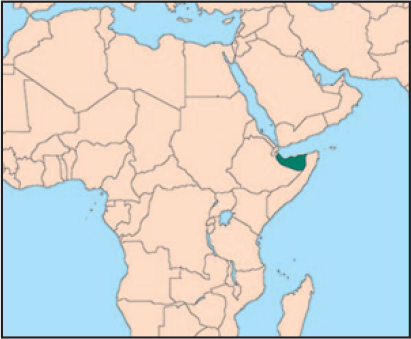
The Somali civil war of the 1980s was brutal and protracted. During the conflict, the Somali National Movement (SNM) waged a guerrilla war in the northwest of Somalia (now the Republic of Somaliland) against the oppressive military regime of General Siad Barre. The civil war led to widespread death and destruction throughout Somaliland. Following the collapse of the Barre regime in January 1991, local elders and SNM forces declared withdrawal from the defunct union of 1960 with Somalia, and reasserted the independence of Somaliland on 18 May 1991.
Much has been written about Somaliland’s traditional peace process, through which the breakaway nation emerged from civil war in the late 1980s. After the collapse of Barre’s regime, the rebel SNM controlled most of northern Somalia and concentrated on ceasefire agreements with clans on opposing sides. Peace was negotiated over two years, through three peace conferences and many smaller gatherings, each led by clan elders and lasting for weeks or months. Humanitarian agencies were severely restricted in their operations during the height of civil war, but by 1990 a UN mission and several international NGOs had returned to address mass starvation and famine in the south. They remained largely absent in the north.
Equally remarkable, but much less well documented, is the economic recovery in Somaliland, particularly the role of indigenous enterprise in rebuilding the modern state. Somaliland has never been internationally recognized and so was never eligible for foreign assistance. It is thus argued that state formation and accountability was deeply entwined with the building of a viable tax base.(1) In parallel, bolstered by light regulation and lack of corruption, a flourishing private sector contributed to economic stabilization. Both diaspora investment(2) and indigenous enterprise contributed to the recovery, but this paper concentrates on the latter to explore how informal and small-scale enterprises(3) contributed to the economic resilience of the secessionist state in the absence of humanitarian aid. Just as Turner’s work on self-help housing in Peru in the 1960s and 1970s(4) created awareness of self-help approaches in the housing development sector, this paper seeks to learn from self-help informal enterprises in the aftermath of conflict to inform humanitarian support for urban livelihoods in this context.
The paper draws on a qualitative study of the recollections of those involved in the conflict, particularly the bombing of 1988, which is etched sharply in the minds of those who lived through it, although this was just one event in a much longer civil war. The study in Hargeisa was part of comparative research on urban livelihoods in four post-conflict cities. It included interviews with 186 informal economy workers, including 47 who had experienced the conflict in 1988; discussions in a three-day conflict-mapping workshop held with 25 vulnerable workers; in-depth key informant interviews with 20 elders, government staff, local NGOs and international agencies; and three focus groups with women, a youth NGO, and informal economy workers.
The paper has seven sections. After this introduction, Section II briefly discusses the role of livelihoods in humanitarian aid discourse, and Section III offers a detailed exploration of core themes emerging from the literature on livelihoods in conflict-affected settings. Section IV introduces the case study, and Section V analyses the community-led recovery process from a livelihoods lens. Section VI reviews the emerging economy of modern Somaliland since the conflict, and Section VII is the conclusion.
II. Humanitarian Aid and Livelihoods
The distinction between humanitarian and development domains is becoming increasingly blurred, but studies repeatedly conclude that livelihoods interventions are too often delayed in the context of conflict, and are seen as a responsibility for development actors rather than humanitarian assistance programmes. Key development actors stress the significance of livelihoods programming. The UN Development Programme (UNDP) guide on Livelihoods and Economic Recovery in Crisis Situations,(5) for example, adopts a three-track approach: livelihoods stabilization (Track A), local economic recovery for medium- to long-term employment (Track B), and long-term employment creation (Track C). Similarly, a joint International Labour Organization (ILO)–World Bank(6) study of demand-driven approaches to livelihood support in post-war contexts sets out eight operational principles, which include early short-term actions involving small-scale livelihood activities alongside longer-term planning for national economic recovery. Despite the clear recognition amongst development actors of the importance of early livelihood interventions, the humanitarian sector has less effectively grappled with this agenda.
There is broad consensus that, at least until the last decade, humanitarian interventions played a limited role in providing livelihoods support.(7) In a telling quotation from a study in the Democratic Republic of Congo (DRC), an aid worker stated, “we don’t have the time or the need for all that. For our sector, all that is relevant is to know whether people have water or not.”(8) However, attitudes have shifted in the past decade, and livelihoods are now a more common part of the discourse amongst aid agencies.(9) For example, in 2006 the International Federation of Red Cross and Red Crescent Societies (IFRC) appointed livelihood aid officers among its senior staff for the first time.(10) Livelihoods feature prominently in 2008 Guidelines for assessment in emergencies, produced jointly by the International Committee of the Red Cross (ICRC) and IFRC,(11) and also in their joint Guidelines for Cash Transfer Programming.(12) More broadly, at the World Humanitarian Summit in 2016, more than 3,500 individual commitments were made by the humanitarian sector, but only 42 of these related to livelihoods and a single reference was made to the informal economy.(13)
Thus, the livelihood programmes of humanitarian aid agencies are still in their infancy.(14) The sector appears to face four primary challenges in relation to this developing agenda. First, existing livelihood programmes predominantly focus on rural contexts, giving limited attention to urban programming.(15) Second, some humanitarian organizations lack expertise and knowledge about urban livelihood interventions,(16) in part due to the limited research on livelihoods in conflict-affected cities. Some argue that this lack of know-how also extends to most development institutions.(17) Third, some scholars have found that livelihood interventions that are ignorant of local social, political and economic contexts may have a detrimental impact on the local economy, or reproduce the conflicting social relations that underpinned the initial conflict,(18) or perhaps in urban areas support war economies such as the arms or drug trade, thus contravening the “do no harm” principle of humanitarian aid. For example, in a study of livelihoods in Afghanistan, Bhatia and Goodhand(19) described how NGO support for carpet producers helped meet initial socioeconomic needs but risked reinforcing an exploitative relationship with dealers in Pakistan. Fourth, the challenge is to support the livelihood opportunities created by conflict – to “build back better”– as conflict may create a window of opportunity to improve on pre-conflict livelihood conditions, although there is little evidence to date of interventions achieving such a goal.(20)
III. Livelihood Transformations in Conflict-Affected Settings
One of the core challenges is that little research has been undertaken into urban livelihoods in post-conflict settings, particularly in the transition from aid to recovery. The lack of research in this area is surprising given that in conflict-affected situations there is often a rapid growth in the urban informal economy, as economic turmoil leads to high inflation, loss of formal work and civil unrest, and the intensified vulnerability of informal workers. Even when the informal economy is acknowledged in post-conflict recovery, it is seen only as part of an early transition,(21) or as second-best to formal sector work.(22) Overall, these perspectives fail to engage with the increasing body of work undertaken by urban scholars, which claims a legitimate and continuing role for the urban informal economy in development.(23) This section thus draws together work that has been done on urban livelihoods in conflict, identifying the key themes that form the broad framework for our discussion of empirical material.
In conflict-affected settings, urban households often engage with informal markets in order to sustain their livelihoods.(24) Pantuliano et al.’s study in Sudanese cities, Aysa-Lastra’s in Bogotá, and Iyenda’s in Kinshasa(25) all cite access to petty trade and daily labour as the first survival tactic of urban workers in post-conflict situations. In Iraq, Looney(26) found that the informal economy was the only realm to survive the post-2003 period of instability. Survival economies are not always risk-free – in Somalia many women turned to rubbish collection and/or prostitution.(27)
Displaced populations face particular challenges in recovering livelihoods, although migration to avoid conflict can also be a key livelihood strategy. For example, Seddon and Hussein(28) have shown that rural–urban migration was common during and after the civil war in Nepal. However, migration is not risk-free, and forced displacement exposes people to new forms of violence and to economic, political and social discrimination. Crucially, it also dismantles people’s established capital, networks and opportunities to make use of livelihoods expertise.(29) After the Colombian conflict, for instance, Ibáñez and Moya(30) noted that employment rates dropped from 98 per cent to less than 2 per cent three months after people had migrated to urban areas.
Social solidarity is vital and is often used by the displaced to secure access to housing and employment.(31) Food and basic services are often shared during crises. However, solidarity based on ethnicity or heritage can also create segregation and contribute to further conflict. Jacobsen(32) has documented how, in Mexican cities, refugees were obstructed by the host community, which refused them access to resources and freedom of settlement. Conversely, migrant economies can destabilize existing informal economies. In Cairo, migrants from Upper Egypt displaced established street traders and violently claimed space after the Arab Spring.(33) In Karachi, the strengthening of migrant networks, based on family, ethnicity or religion, has heightened sectarian violence and urban conflict.(34) Thus, while the informal economy can be crucial to establishing migrant livelihoods, the impact on longer-term development outcomes can be mixed.
War economies, linked to the sale of fuel or arms, or provision of security services, are linked, according to Taylor, to the “informal markets that co-exist with the armed violence of war”, remembering that “while economies of violence are sources of power for regime elites”, they are also sources of jobs for households.(35) These economies exploit insecurity, lack of regulation and punitive rent-seeking,(36) and include predatory behaviour ranging from armed robbery and vigilantism to business fraud.(37) Yet within war economies, it is important to distinguish between people who participate for profit and power, and those coerced to work.(38) For example, in Nepal many young people joined the Maoists rather than flee, in order to protect their families.(39) Conflict economies may lead to a “dark side” of development, creating businesses that may undermine peaceful recovery, such as arms sales. More detailed understandings are needed of socially acceptable activities that emerge after conflict and that can strengthen as economic and political stability returns. These include the informal provision of basic urban services, such as water or transport.
The informal economy also has a key role to play in employment generation for the young, particularly young men and ex-combatants, who, if not employed, may participate in continuing violence and petty crime. Hoffman(40) has researched how social networks of unemployed ex-combatants and other youths, in Monrovia and other Liberian cities, came together to seek different informal job opportunities. This reintegration of ex-combatants into socially acceptable, albeit informal, livelihoods is crucial to avoiding the emergence of criminal groups that could destabilize the peace process.(41)
Women’s roles in conflict and recovery are complex. Women are often victims of violence, for example gender-based sexual violence, but they can also contribute to violence as combatants or by inciting relatives to fight.(42) Women disproportionately experience the more challenging effects of displacement and disrupted public services, and the adverse impacts of conflict on child-raising. However, conflict can also be transformative for women’s economic empowerment, particularly where they have been excluded from urban labour markets before. During crises, women’s work often becomes essential, and, according to Beall and Schütte, a “critical asset and important means of managing urban livelihoods”.(43) During conflict, women often become heads of households and the main breadwinners, learning new income-earning skills.(44) Yet, despite women’s central role during conflict, their needs and rights are generally overlooked in conflict resolution processes.(45)
The importance of economic growth in diffusing conflict is highlighted in several studies,(46) although it is under-researched.(47) Economic growth, it is claimed, can significantly reduce the risk of civil war.(48) However, studies suggest that different informal activities have different potentials for growth. Vaillant et al.(49) note the role of Madagascar’s informal firms in creating jobs after long periods of political upheaval, and Kremer et al.(50) find that microenterprises that require low-level start-up capital (most common in conflict-affected areas) can give high returns. In contrast, Adam(51) and Iyenda(52) both query whether petty trade can reduce poverty in post-conflict settings.
Some studies recognize that the informal economy can play a key role in longer-term recovery. For example, displaced communities build social resilience by transferring knowledge, technology, remittances and other livelihood resources to the host communities, which can trigger innovative response mechanisms in the context of conflict.(53) The informal economy can also provide key public services in the absence of the state, for example replacing water supplies or providing transport. Ballentine and Nitzschke argue that the “main challenge for peacebuilding efforts is to address the dysfunctional elements of the shadow economy…while retaining its socially beneficial aspects to civilian dependants”.(54)
In summary, then, several key themes emerge from the discussion of livelihoods in conflict literature. Examples are: the importance of the informal economy as a source of livelihoods and in replacing services during highly disruptive conflict; the emergence of social networks and solidarity amongst affected communities; the growth and adverse effects of war economies; and impacts on the economic roles of women. These key themes provide our framework for examining livelihoods strategies in the informal economy in conflict-affected Somaliland.
IV. Somaliland – Emerging from the Ashes
a. Conflict and the state in Somaliland
Modern Somaliland is an emergent state born out of war. The former British protectorate became briefly independent on 26 June 1960, but maintained this independence for only five days before merging with Italian Somalia on 1 July 1960 to form the Somali Democratic Republic. From the start the alliance was uneasy. Northerners were largely excluded from the southern-dominated parliament. A coup in 1969 brought Siad Barre to power, who used indiscriminate killing and torture as instruments of control.(55) The 1974–75 drought and famine was followed in 1977–78 by the disastrous war with Ethiopia, in which the Somali Democratic Republic’s invasion of the Ethiopian–Somali region was defeated. This resulted in over a million refugees, mainly of Somali ethnicity, entering Somalia. About half of these refugees came to the north.(56)
The civil war of the 1980s was brutal and protracted. In 1981, the Somali National Movement (SNM), one of several rebel movements, was formed in London by elders and intellectuals, mainly from the Isaaq clan, the dominant clan in northwest Somalia. The SNM later waged a guerrilla war from Ethiopia in the northwest of the country. Throughout the 1980s, the civil war led to widespread death and destruction. It destroyed transport routes and closed the Berbera port to animal trade, decimating the pastoral economy that depended on animal exports to the Gulf.(57)
Under orders from Barre to “kill all but the crows”, in May and June 1988 four aircraft, two flown by Somali pilots, launched a savage bombing raid on Hargeisa, flattening the city.(58) Around 50,000 people were killed, and fewer than 10 per cent of the buildings survived.(59) The civil war intensified and up to 200,000 people may be buried in the 226 known mass graves.(60) More than half a million Isaaq fled to Ethiopia, and around half a million became internally displaced. Facing insurrection throughout the country, and widespread famine, the Barre forces were eventually confined to Mogadishu and in January 1991 Barre fled.
b. Post-conflict political development
From this destruction the extraordinary clan-led peace process emerged, through which the breakaway state of Somaliland was formed. Government forces fled or were captured, and as one interviewee in our research said, “We gave the soldiers money, and they ran away. We let all the captives go – we didn’t kill anybody.” The SNM then made peace agreements between clans, and the first peace conference led by elders was held in Berbera in February 1991. On 18 May 1991, at a second conference in Burao, the elders withdrew from the union and declared restoration of the Republic of Somaliland.(61) Fighting continued, with violent clashes in Burao and Berbera as different factions vied for power, although peace negotiations continued throughout the country.
Elders in Somaliland are selected for their knowledge, piety and fairness, and women played a key role in negotiations, as dual kinship (with the clan of birth and of marriage) enabled them to mediate between factions.(62) Colonization had left Somaliland underdeveloped, but had also left traditional governance structures intact.(63) In this oral society, there was scope for considerable participation,(64) and the inter-clan meetings, financed by businesspeople and community leaders, lasted for weeks or months. UN support for the peace negotiation was rejected by the elders, as “peacebuilding was a process owned by people, not a UN project” (Senior government official). The elders thought that donors would hijack the agenda, “so the peace was created under the trees. If someone did not agree, his wife made him, because the peace is ours” (Senior government official).
The third peace conference, held in Borama in 1993, was attended by around 500 elders and leaders. It lasted for four months, and established a National Charter that defined the structures of Somaliland’s modern government.(65) The peace committees asked every chief to “talk to his young guerrillas and tell them to bring their guns. Then they put them in the military and police force and conscripted them” (Market trader). The hybrid system of governance continues to combine traditional and democratic institutions, with the House of Elders or Guurthi as the upper house, and the House of Representatives elected, but with seats in both houses proportionately allocated to the clans. Further outbreaks of fighting in 1995–96 were resolved through negotiation and led to the Hargeisa Conference of 1997.(66) Commentators have argued that SNM’s military supremacy in northern Somalia left few viable power structures,(67) and that the “imagined community” of peace proved the moral basis for emergent government and citizen participation.(68)
c. Humanitarian assistance in Somaliland
In this sub-section we discuss how the absence of humanitarian assistance and financial aid in Somaliland seems to have helped in establishing peace. Although several international agencies and NGOs had operated in Somalia during the 1980s – including UNICEF, UNDP, the UN Office for the Coordination of Humanitarian Affairs (OCHA) and the UN Office for Project Services (UNOPS) – all UN agencies and most NGOs withdrew during the fighting. Only a few – including the ICRC, Save the Children and Médecins Sans Frontières – remained in the country. In 1991–92, drought struck again, leading to famine, which killed around 400,000 people. Belated media coverage spurred international action.(69)
In April 1992, the UN Operation in Somalia (UNOSOM) was established under UN Resolution 751(70) to monitor a ceasefire and escort humanitarian aid into Mogadishu, but the mission’s mandate did not include Somaliland. Largely supported by the United States, the operation was ill-fated. In 1992, the US established Operation Restore Hope to help the UN mission with famine relief, but in 1993 an attack by a Somali warlord on US forces brought down two US helicopters, resulting in the deaths of 18 US soldiers. Unfavourable public opinion forced withdrawal of US forces in 1994, and the UN mission closed in 1995.(71) In Somaliland, the only effective external intervention was the restoration of the Hargeisa water supply by Oxfam and UNICEF, now being extended through a joint UN task force.
This absence of humanitarian assistance in Somaliland enabled the successful clan-led peace process to emerge. As described above, the inter-clan meetings lasted weeks and sometimes months, with the process owned by Somalilanders with no external influence from aid and development agencies. Our interviewees believed strongly that UN involvement would have resulted in unrealistic deadlines and the failure to achieve lasting peace.
Lack of foreign finance also appears to have helped Somaliland in establishing peace.(72) Without international recognition, Somaliland has been unable to receive official development assistance – but as a result, is unable to get into debt. A 2009 report suggested that Somaliland received about US$ 180 million a year in export earnings, US$ 200 million in remittances, and US$ 79 million in aid delivered only to NGOs or other civil society organizations; in Somaliland’s predominantly pastoral economy, dependence on local taxation and revenue bargains between citizen and the state ensured the development of inclusive and accountable government.(73) The diaspora community also exerted considerable pressure to maintain peace and protect business opportunities.(74) Without the support of the private sector, including revenues from the sale of the narcotic leaf, qat, formation of the Somaliland state would have been difficult. Chewing qat is an impoprtant social practice, despite the significant negative impacts of addiction (see Section VIb).(75)
V. The Informal Economy in Conflict-Affected Somaliland
In this first empirical section we explore how the devastating conflict in Somaliland disrupted livelihoods, but also how the seeds of recovery emerged. The collapse of the controlled economy of the former Somalia created a void rapidly filled by private sector enterprise. Drawing on themes identified in the literature, we document how the informal economy, through a process of community solidarity and trust, delivered replacement services, transformed gender norms, and accommodated war economies. These changes sowed the seeds for lasting economic transformation in the post-conflict phase.
There is no doubt that the conflict in Somaliland, particularly the bombing of Hargeisa in 1988, utterly disrupted the Somaliland economy. Nearly all interviewees who had been working in the informal economy during the conflict reported that their businesses had been destroyed, and offered three main explanations. First, people fled the city, which resulted in the abandonment of businesses and the loss of a customer base. Second, the lack of security led to looting of goods and the invasion of business spaces. And third, infrastructure (particularly road infrastructure) was severely damaged, which made goods hard to acquire.
“I lost all my customers at the beginning of the war, because all the people left…It caused me to go bankrupt and I lost all my business.” (Vegetable seller) “Everything was destroyed…During the conflict revolutionary soldiers looted everything; goods from businesses, pipes, electric cables…Transport was a problem as all the roads were mined, there were no taxis.” (Market trader)
Through a mixture of community sharing and private informal economy enterprises, replacement services emerged during or immediately after the conflict, mainly in the food, water, electricity and transport sectors. For example, a group of young people gathered together to repair damaged roads, clean streets and collect garbage in the absence of functioning local government services. Notably, some of the young people who were former fighters for the SNM were encouraged to lay down arms and “support their community in a different way” (NGO focus group). They went on to form Havoyoco, one of Somaliland’s oldest NGOs, which is now running a waste collection company under contract to the municipal government. In many ways these findings echo those of Hoffman(76) in Liberia, where social networks of unemployed ex-combatants and other youths proved to be key to finding job opportunities and providing an alternative to fighting. In Somaliland, informal employment also replaced absent services.
Whilst the informal economy clearly provided essential goods and services, it also played a disruptive and counterproductive role. Scholars have discussed the emergence of “war economies”, which include the sale of arms and opportunistic looting.(77) Such informal economies emerged in Hargeisa, with looting a widespread activity, albeit often attributed to “outsiders” by our interviewees. Some of our interviews described how the lack of employment during the war spurred people to fight during the conflict.
“Before the conflict I was a truck driver and I was travelling to Djibouti bringing home goods. During the conflict I couldn’t do this and I became a warrior against the Somali government.” (Truck driver)
Community solidarity and trust were also evident during the conflict. Perhaps the most notable example was the franco valuta money transfer system, in which large sums of money were moved informally across international borders. To avoid suspicion about importing cash, money would be given to an individual, for example in Djibouti, who would purchase goods and import these into Somaliland, paying the transfer recipient through the proceeds – all on the basis of trust. When asked how this trust had developed, one market worker explained:
“Trust develops in so many ways – a father’s relative, a mother’s relative, someone from the same district, a cousin, by marriage, their past, their neighbourhood, from the same city, a shared history. It’s something that you earn. They don’t cheat each other.” (Market trader)
Sharing was important in meeting the needs for basic services, as one interviewee explained:
“Yes, there were some replacement services like using generators and small camps used gasoline; donkeys and camels were shared for transport.” (Informal economy worker)
It is well established that conflict can transform gender roles,(78) a trend that was prominent in Hargeisa’s conflict-affected economy. Interviewees explained that before the conflict, women rarely worked and men were considered to be the “breadwinners”, but this changed during the war. Women began to play a significant economic role during the early 1980s, when many men migrated, often to the Arab states, or left to join the fight with the SNM. Women generally adopted low-skilled roles in petty trade, “selling food, selling qat, operating small kiosks and selling clothing” (Women’s focus group), which perhaps explains the persistent vulnerabilities discussed below. Other research has found that women’s economic empowerment is strengthened where women have learnt new income-earning skills,(79) which perhaps positions them better in the post-conflict labour market. Later, particularly during the bombings of 1988, the many women who fled Hargeisa to refugee camps in Ethiopia started small businesses, such as trading with nomads.
“I walked to Ethiopia during the crisis and lived in a refugee camp. There we had to collect water and wood. Somaliland men were the fighters. In the camps we had to start some sort of business. Some could travel and brought dried meat and ghee from Djibouti, then they brought hard currency into Somaliland…Women were the breadwinners.” (Senior government official) “Before the war there was not that much involvement [of women in the informal economy]. It started in the refugee camps when women started to manage the rations. They used the refugee portions to make money – they improved the taste and sold to the nomads. The nomads also became dependent on refugee handouts.” (NGO leader)
Women also played key leadership roles during the conflict and recovery. Key informants described how women worked effectively to bring fighting youth of the SNM back into work, helping them find jobs in the informal economy:
“We first worked with former militants [fighters]. We told them to cut their hair, clean their nails and we would help them look for a job. They found jobs as security guards and they also engaged in literacy classes.” (NGO leader)
Furthermore, the disruption to social norms and collapse of the controlled economy of former Somalia created a void rapidly filled by private sector enterprise. The new structures that emerged through conflict formed the basis for lasting change from which the dominant private sector of modern Somaliland emerged, including a heavy reliance on the diaspora community.
“In 1991 when we revoked the union with Somalia, the private sector became very strong. Until this day it has not collapsed, and there is no intention of government to reverse that.” (Senior government official) “When they moved back to the cities, they had very few resources. The majority became involved in the informal sector. For the rest, the diaspora contributed.” (NGO leader)
In analysing the role of the informal economy to inform aid support and economic recovery, four core factors emerged as important. First, local informal enterprises emerged, providing livelihoods and meeting the need for food and basic services. Second was the importance of a trust-based economy facilitating imports and exports, and which was essential in a context where no banking system existed. Third was the changing and more prominent social and economic role of women. Fourth was the importance of private sector enterprise (both formal and informal) supported by the diaspora community, in funding the recovery.
VI. The Lasting Impacts of Self-Help Enterprise
Whilst Somaliland is yet to be recognized as an independent state, its self-help recovery has underpinned the evolution of a functioning but fragile government, and the private sector (which remains largely informal) has provided the drive, funding and moral contract to underpin the emerging state. This second empirical section explores the lasting impacts of Somaliland’s self-help economic recovery.
a. Political and economic change
Politically, Somaliland’s achievements, in building a hard-won peace that has been maintained for two decades, and democratic governance grounded in respect for human rights, are both “improbable and deeply impressive”.(80) In contrast to the bloodshed and famine in Somalia, the democratic transition in Somaliland has been remarkable. A constitutional referendum was held in 2001, followed by credible national presidential elections in 2003, a parliamentary vote in 2005 that put the opposition in power, and further presidential elections in 2010, again a change of party,(81) although the next round of elections was delayed. The police corps, judicial institutions and courts are under-resourced but well established, and there is a vibrant print media, although human rights challenges remain.(82)
Yet despite the political progress, the development challenges remain acute. Although there is no census, the population is thought to be around 4.0–4.5 million, with 50–60 per cent living in urban areas, 25–35 per cent nomadic, and 2–3 per cent internally displaced persons (IDPs).(83) The latest figure for GDP per capita, estimated in 2012, was US$ 347, the fourth lowest in the world. Poverty in urban areas is estimated at 29 per cent, and only half of children aged 6–13 go to school.(84) Nevertheless, the government remains independent of external capital and up to 2013 had operated a surplus in all years but 2008 and 2011, when the deficit was covered by private sector borrowing.(85)
Economically, the private sector and diaspora are key in providing both the political support for peace and funds for state-building.(86) The informal economy continues to be a key source of livelihoods, and its potential for growth is unofficially understood – as government officials noted:
“From a government point of view, the private sector is more dynamic than government-led initiatives. People you see selling bananas [street vendors] are part of that private sector. Speaking about potentiality we have to include these small ones – until now the government has been looking at the big guys, but even now the big guys are not contributing [tax].” (Senior government official) “The government is not helping but it’s not hindering. It gives the informal sector space to develop and grow. It’s perfect capitalism – minimum government interference; minimum government taxes [corporation tax is only 10 per cent; VAT is 5 per cent but is not collected effectively].” (Senior government official)
A laissez faire approach from government and lack of restrictive regulation has helped growth. There is also potential for accumulation – as one interviewee said, “One of the biggest fuel sellers started selling a tin of fuel. Now he is a millionaire” – but this is rare. Almost half of the current informal economy workers interviewed worked alone, and people lack business skills.
“Small SME enterprises do not have the skills in marketing…They will open a shop, and get benefits for a short period of time, but they don’t have the capacity to break the frontiers. We need a paradigm shift to strengthen the whole private sector.” (Senior government official) “As long as they can provide food and send their children to school it’s enough for them, but they need to grow. The big question for Somaliland is how long will we remain like this? Where are the opportunities to grow?” (NGO worker)
Thus, the civil war and peace negotiations created a political and economic context in which informal economy workers could survive, but it remains unclear whether political pluralism and a more supportive policy context will continue, enabling an increase in both productivity and tax revenue from informal economy operations. Thus, workers themselves remain in an uncertain and in-between state of benign tolerance.
b. Lasting solidarity impacts
In many ways the community solidarity in Somaliland evident during the conflict has persisted. Although community solidarity may also have existed before the civil war, our research identified its particular importance and its nature both during conflict and today. Trust that existed during conflict now permeates economic transactions, and remains critical to continued stability. It is notable that informal currency exchanges operate in the street, with piles of cash tied up in net bags.
“All the informal owners show their interest to keep peace, so there is trust. If we see anyone attempting to threaten, we will tell them to stop and that we will punish them – it’s called aminaat. We hand them over to the courts. To us a receipt is unusual, what is important is danwidag, meaning ‘sharing the same interest’. There are 300 businesses in the market. People are taking hundreds of dollars a day. However, not a single item goes missing.” (Market trader)
Another aspect of trust is the relative safety at work in Hargeisa. Hargeisa stands out in comparison to many other low-income countries, as there is limited harassment of street vendors and informal workers. In most other sub-Saharan cities these workers are highly vulnerable to police harassment, evictions, confiscations and fines. Out of the 168 current informal economy workers interviewed, only 7 per cent had experienced any sort of harassment or had been fined by the city government. Furthermore, when asked about laloush (small-scale bribes), only 5 per cent had ever paid bribes to local officials or others. Remarkably, 92 per cent of respondents, most of whom were working on the street, felt that women were safe or very safe in their business environment.
However, community solidarity has been undermined by conflict economies. One particularly problematic sector is the narcotic leaf, qat. The lack of regulation of qat during the conflict enabled large-scale import, as the best quality comes from Kenya and Ethiopia.(87) The qat industry is a major employer, particularly of women. However, qat has been condemned for lowering human productivity, draining household income and increasing domestic abuse.(88) Key informants reported the effect of qat on family relationships and household income.
“A man wakes up at 11:00 am, eats lunch, gets high and begins fighting with his family, leading to domestic violence. Women are overburdened, we look after the babies, we are a wife and mother, a breadwinner, and [also] serve our communities.” (NGO worker)
There is no restriction on qat imports and it is relatively lightly taxed, resulting in millions of dollars leaving Somaliland.
“There is a huge flight of hard currency to Ethiopia – US$ 420 million a year and only US $21 million is received in tax revenue. Qat affects labour productivity and mental health. However, there are about 20,000 people employed in qat, mostly women, and we cannot simply stop it. The pattern of consumption needs to be changed; for example, qat could be sold for a shorter period. We need to change the tax, raise awareness of its effects and create alternative employment for sellers.” (Senior government official)
Another sector that increased after the conflict was the charcoal industry. This has not affected solidarity, but is problematic for the environment. Women commonly trade in firewood and charcoal, but the charcoal industry also overexploits the scrub and woodland around Hargeisa, and there are major concerns about deforestation in the sparse semi-arid environment.
c. Lasting gender impacts
Women’s economic roles have been transformed since the conflict. Researchers elsewhere have found that women’s entry into the workforce tends to be sustained in the post-conflict period, and can lead to their economic empowerment.(89) This has certainly been evident in Hargeisa.
“There are more women in the informal economy than men. Somaliland women can make their own decisions. They can travel, own property, even though we are a conservative Muslim nation. Women are becoming big business owners now; the main hotel in Burao is owned by a woman. Some women are involved in clothes imports from China, medicine, furniture.” (NGO worker)
However, women working in the informal economy continue to be more vulnerable than their male counterparts. The interviews with 168 current informal economy workers suggest that women tend to be older and have fewer years of schooling – 55 per cent of women interviewed were aged 36 years or over, compared to only 22 per cent of men, while 41 per cent of women had no primary education, compared to 25 per cent of men. Women also tend to earn less, with 35 per cent of women interviewed earning less than 10 Somali shillings a day, compared to 13 per cent of men. Illiteracy is thus a continuing problem in business development.
“Women don’t have capital or skills. When starting a business they don’t do a needs assessment. When they travel abroad to buy they don’t include the cost of travel/hotels, etc.” (NGO worker) “We don’t have the skills to set up an association, the government should assist us.” (Informal economy worker)
Although women’s economic empowerment has increased since the civil war, the reversal in traditional gender roles has caused social tension.
“Since the civil war women have changed their traditional role, because women normally feed the family…In many towns, women are the breadwinners and manage the resources…Psychologically this undermines men, the socioeconomic norm is reversing.” (NGO worker) “[If the husband is not working] the kids need food. Women have to go out, it’s not a matter of choice. But the husband is used to being given food and qat and becoming happy to be unemployed, he may even take another wife.” (Female informal economy worker, clothing)
Furthermore, while women played a political and leadership role after conflict, they face barriers in participation in political decision-making. The clan structure dominated by male elders does not allow for equal representation for women, and a new ruling on female quotas in parliament has not yet been implemented.
VII. Conclusions
Through a case study in Somaliland, this paper sought to explore what happens when, in the context of devastating civil war, humanitarian response is absent. Examining “self-help” economic recovery can inform humanitarian support for urban livelihoods in the aftermath of conflict. Where they exist, the livelihood programmes of humanitarian aid agencies are still in their infancy, with many focused only on rural livelihoods. There is a lack of research and expertise about urban livelihoods in conflict situations. Just as Turner’s work on self-help housing in Peru in the 1960s and 1970s informed aid to self-help approaches in the housing development sector, so this research on self-help informal enterprise will ideally inform humanitarian support for urban livelihoods in the aftermath of conflict.
Many positive developments emerged through self-help informal enterprises in Somaliland. First, diaspora communities played a critical role in providing both the political support for peace and funds for state-building. Second, small-scale informal economies provided and continue to provide a key source of livelihoods, and replaced disrupted services such as food, water, electricity and transport provision. Third, we documented evidence of the role of community solidarity and trust, which has persisted. Finally, as seen in conflicts elsewhere, gender norms were disrupted, with women stepping in to fill key economic roles and playing an important part in peace negotiations.
There are clear lessons here for the humanitarian aid community in ensuring that such positive developments are enabled through livelihood interventions. As the Régnier, UNDP, and ILO–World Bank studies have pointed out, there is an increasing focus on livelihoods in recovery, but the urban informal economy’s response during crises is not widely understood. Essentially, aid actors must provide an environment that encourages self-help solutions, avoiding potentially paternalistic responses that could hinder community action and do harm to community potential. There are also opportunities to “build back better” – supporting the beneficial impacts of self-help approaches. For example, the informal economy has potential for growth, so aid and development actors might guide government and civil society on the creation of an enabling environment for informal enterprises, which would include steps such as licensing, securing workspaces, access to key infrastructure such as water and electricity, access to training and micro-finance. The approach could include targeted actions to address the vulnerabilities of women and other disadvantaged groups in the informal economy.
Conflict economies emerged in Somaliland, just as they did in countries where aid actors were present, and these economies undermined some of the social and economic successes of the self-help responses in Somaliland. One particularly problematic sector that has persisted and grown is the market in the narcotic leaf, qat. The challenge for the humanitarian sector is how to intervene in such conflict economies without doing harm to the positive impacts of self-help informal enterprises.
Finally, the Somaliland case study highlights a further important lesson. Despite the lack of a functioning government in the newly declared secessionist state, community leadership was dispersed and highly effective in negotiating peace, but worked over a much longer timeframe than international agencies normally consider. Leaders rejected aid in the peace negotiations, as they wanted peace through consensus rather than an externally imposed negotiation. Community solidarity over a long period has also been important in economic recovery. For self-help approaches to work effectively, aid and development agencies must align their funding and programming with these local contexts.
We argue that – as in the case of Peruvian self-help housing in the 1960s and 1970s informing new directions in housing policy – the learning from self-help informal enterprises in Somaliland should inform the practices of humanitarian aid, in order to improve the livelihoods and recovery process of many of the poorest urban residents in conflict-affected locations.
Footnotes
Funding
This paper is an output of the research project ES/M008789, entitled Economic Recovery in Post-Conflict Cities: the Role of the Urban Informal Economy, and funded under the ESRC/DFID Joint Fund for Poverty Alleviation Research.
1.
2.
Migration is a key feature of Somali society, with many Somali-born people living outside the country, some of whom fled due to the civil war. This diverse diaspora community is found in neighbouring countries, the Gulf states, and Western countries, and most contribute to the economic development of Somaliland through remittances.
3.
Although there is no universally accepted definition of the informal economy, this paper uses the framework adopted by  . This takes the informal economy to include: the informal sector, defined as small unincorporated, unregistered enterprises; and informal employment, which takes place without social protection, and includes own-account workers, contributing family workers, and employees holding informal jobs.
16.
Régnier et al. (2008); Tafti and Tomlinson (2015); ; UNDP (2010).
21.
CPAN (2013); UN (2009); .
23.
29.
77.
Taylor (2014); also .