




Abstract
Funds-based mechanisms for urban adaptation finance are still underexplored. Addressing this gap, as well as the need for greater learning about ‘how’ urban adaptation finance operates, this paper proposes a conceptual framework for such analysis that considers complexity, uncertainty, transformation and vulnerability. We analyse 39 urban projects financed by Climate Adaptation Funds (CAFs) using a qualitative approach. The findings indicate the ongoing dominance of national governments at all stages of the funding cycle, and of a focus on “hard” adaptation measures, but also a diverse set of stakeholder relationships involved in CAF finance which offers potential for greater multi-stakeholder and multisectoral management of complexity. Few projects, however, address the management of uncertainty. While upscaling from projects is a common preoccupation, catalysing effects across sectors are limited, and transformative mechanisms for addressing vulnerability are limited to consultation with vulnerable groups. Innovations are highlighted which merit further exploration through case study analysis.
Keywords
I. Introduction
Adaptation finance plays a key role in addressing the consequences of climate change for vulnerable countries with limited capacities and resources, and is an important mechanism for the global climate agenda.(1) In 2021, the COP26 in Glasgow under the UN Framework Convention on Climate Change (UNFCCC) recommended using adaptation finance to catalyse locally-led actions towards a more inclusive, equitable and effective climate change response in the most vulnerable countries.(2) At COP26, therefore, Parties welcomed new pledges to the Adaptation Fund (totalling over US$ 350 billion) and to the Least Developed Countries Fund (over US$ 600 billion).(3) In parallel, global actors involved in funding adaptation in low-income countries have increased investments. The World Bank, for example, plans to spend US$ 50 billion in additional adaptation funds between 2020 and 2025.(4)
Notwithstanding these encouraging numbers, most global climate finance still goes towards mitigation. Between 2012 and 2014, adaptation received just five per cent of global climate funds.(5) Mitigation receives higher attention because investors prefer solutions where impacts can be clearly quantified (e.g. greenhouse gas emission reduction), and strong fixed asset components that can generate financial returns, such as rapid bus systems.(6) Adaptation projects (such as storm-drainage systems) may generate economic benefits, but predominantly for the broader society, not for individual investors, or through offset losses, which can be difficult to quantify.(7) While adaptation has emerged from the climate mitigation architecture, distinct challenges of complexity, uncertainty and multilevel and networked governance exist for its successful implementation.(8) In analytic terms, there is no clear picture yet ofhow and where adaptation finance is operationalized. The size, features and mechanisms of adaptation finance are inconsistently described and lack aggregable and comparable metrics.(9) Fragmented governance and limited transparency also challenge the ability to draw a clear portrait.(10)
Within this landscape, Climate Adaptation Funds (CAFs) are key financial mechanisms through which diverse actors cooperate to mobilize essential resources for catalysing and co-financing investments in adaptation, including in urban areas.(11) Organizations (private, public, non-governmental and multilevel bodies) aiming at working with the CAFs and accessing their funds have to undertake an accreditation process, to demonstrate certain standards with regard to financial management, safeguarding funds, projects/programmes design, and environmental and social warranties.(12) Once accredited, organizations can access CAF funds without going through intermediaries.(13) CAF operations have been investigated largely through a fund-by-fund approach to explore topics such as the access to funds by different stakeholders,(14) the funds’ rationale and design,(15) the public sector’s role and priorities,(16) the translation of adaptation finance into practice,(17) as well as the synergies, conflicts and trade-offs associated with adaptation investments.(18) These analyses have portrayed a variegated CAF landscape, showing overlaps, differences, constraints and opportunities that constantly evolve based on international agreements and the changing nature of climate stakeholders.(19)
Notwithstanding this attention, there has been limited analysis of how CAFs are addressing the urban aspects of adaptation. The complexity of urban areas as systems of intersecting economic, social, environmental, governance and technical elements, coupled with the distinctive requirements of funding adaptation, means that urban climate is a policy challenge that requires collective responses from multiple stakeholders.(20) CAFs may not represent the largest flows of climate finance into urban areas, but they are important ‘signallers’ and catalysts for further investment by other actors. Analyses of CAFs for urban adaptation to date focus predominantly on the characteristics and direction of funding according to regions, sectors, themes, objectives, costs or timeframes.(21) These analyses find that a large part of CAF finance goes to urban areas in Latin America and the Caribbean, and to the infrastructure sector, in particular water and wastewater management. There has been scant attention, however, to how CAF projects address and consider the long-term, complex interactions and dynamics of urban systems and subsystems and climate change. Questions also remain on how successfully CAF projects realise the transformative potential of urban adaptation.
Although the broader scope of CAF decision-making on urban adaptation is beyond the scope of this paper, we contribute here by initiating a discussion of the potential for CAF projects to address the nature of urban adaptation challenges, with particular reference to the global South, given the heightened vulnerability of urban areas in this context. To do this, we introduce a conceptual framework to unpack the dimensions of urban complexity (including multi-stakeholder governance), uncertainty, vulnerability and the potential for transformation. As an initial exercise, we apply this framework to a subset of CAF projects, using these data to reflect on ways forward for urban adaptation finance and for much-needed critical, scholarly engagement with this endeavour, given the rising (if still insufficient) political momentum towards greater funding.
II. An Emergent Framework For Understanding Urban Adaptation Finance
Urban areas are complex, non-deterministic, dynamic systems. They are diverse in their structure and stakeholders; varied in social, technical, governance and environmental components; and characterized by regular interactions and relationships across activity areas (e.g. districts) or subsystems (e.g. transportation, drainage or energy systems).(22) In light of these characteristics, Brugmann articulates the need for a framework for the analysis of urban adaptation finance based on the consideration that these interactions and relationships determine the functioning of urban areas, and in turn influence human activities.(23) For example, to manage (and finance) adaptation in the context of urban complexity, and to deploy capacities and resources across governance dimensions and levels, and address transboundary climate challenges, a perspective is necessary that is able to consider multi-stakeholder interactions.(24)
In all these approaches, complex multi-stakeholder interactions deal with uncertainty in predictions, descriptions and analysis of climate change and its consequences. Rowe conceptualizes such uncertainty in relation to time, space and measurement. Time uncertainty is related to uncertain future climatic conditions; space uncertainty to stakeholders’ limited knowledge of the extension, scale and location of climate-related change; measurement uncertainty to the reliance of scenarios and modelling on specific parameters, techniques and tools.(25)
In urban areas, uncertainty is heightened and shaped by social divisions based on such dimensions as gender, race, age, (dis)ability or class, which determine who is vulnerable and who has greater ability to adapt to climate change. Urban adaptation might further exacerbate these social divisions and increase the vulnerability of different individuals and groups. Inequality shapes urban adaptation and its impacts on vulnerability.(26)
A further aspect of complexity is the potential for transformation. Transformation involves a change in paradigms, perceptions and underlying norms and values, a reconfiguration of social networks, patterns and powers, as well as the introduction of new institutional arrangements and frameworks.(27) Transformational adaptation, therefore, includes strategies that deviate from business-as-usual climate change responses to reduce the root causes of vulnerabilities and transform them into more just, sustainable or resilient states.(28)
Transformational adaptation also has catalytic and upscaling effects. Catalytic effects are those outside the immediate areas of interventions, influencing wider processes towards individual, collective and institutional change.(29) These include, for instance, identifying key stakeholders to promote change and facilitate knowledge-sharing; promoting and investing in new or alternative adaptation options; deploying development opportunities; creating cross-scale and multi-stakeholder partnerships, and multilevel governance arrangements; institutionalizing new practices and frameworks; and providing political and funding support to long-term actions.(30) Upscaling effects, by contrast, can ensure that interventions benefit large numbers of people outside those targeted, either directly or by influencing policies and institutions.(31) Figure 1 summarizes the conceptual framework described above, highlighting the interactions across the four aspects and their specificities.
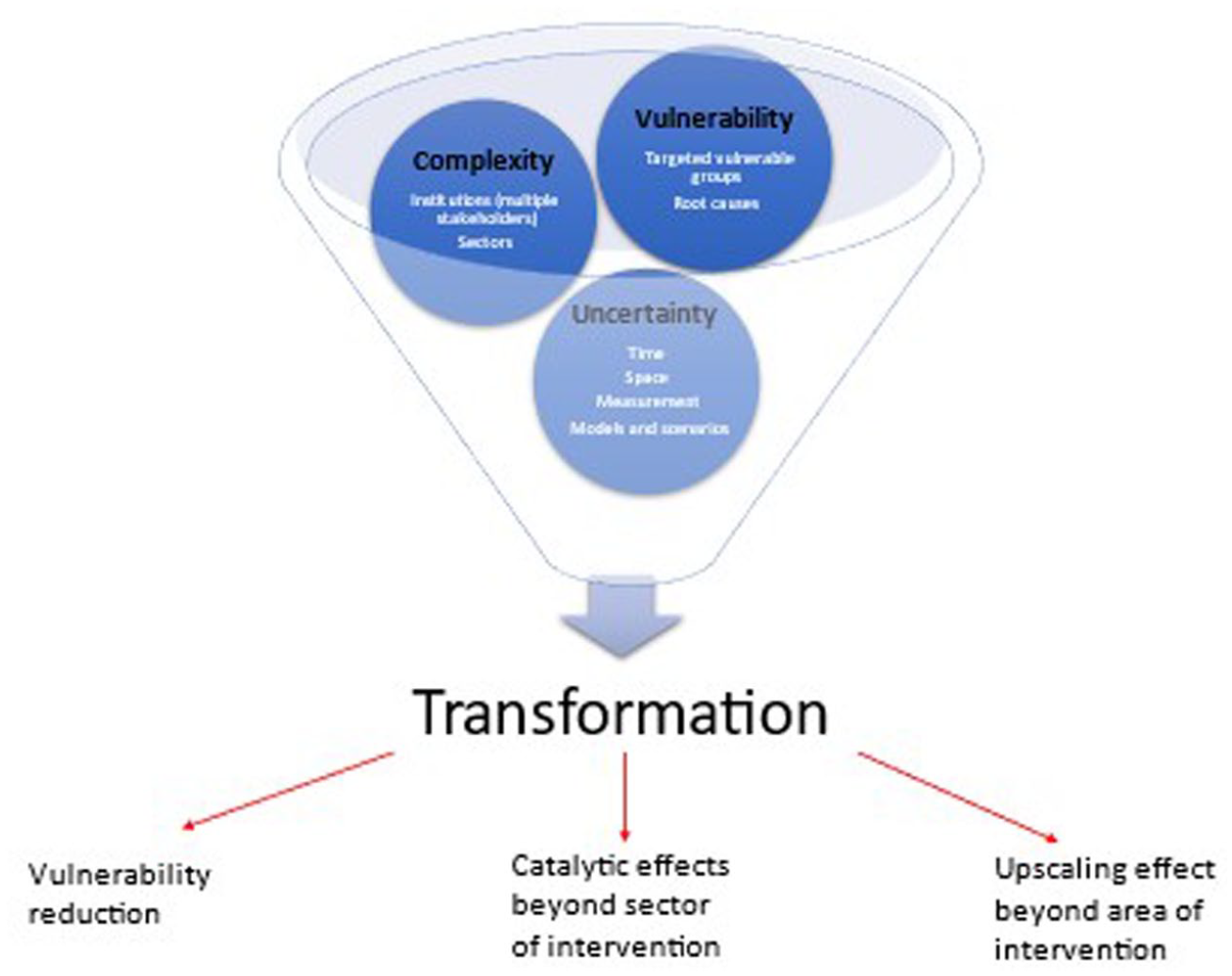
The conceptual framework to investigate urban adaptation finance
Certainly, the stated aim of CAFs is to upscale their effects in other urban areas, nationally and internationally,(32) and generate catalytic effects on stakeholders and sectors other than the project foci.(33) Likewise, CAFs are already reported to aim to tackle vulnerability by addressing climate change impacts on vulnerable groups.(34) Some particular CAFs aim at innovations for urban adaptation and resilience. The Pilot Program for Climate Resilience (PPCR)(35) – a programme of the Strategic Climate Fund administered by the World Bank – integrates a focus on climate risk and resilience into development projects and purports to provide incentives for upscaling actions and catalysing transformational change. The Global Platform for Sustainable Cities (GPSC),(36) which is part of the Sustainable Cities Integrated Approach Pilot project, gathers 30 urban governments interested in sustainability issues. Unlike CAFs that use sectoral or ‘project-by-project’ approaches, GPSC’s more comprehensive approach to urban development and sustainability includes both mitigation and adaptation.
Notwithstanding these aims, CAFs are mainly designed by national governments and development agencies that channel top-down investments into urban areas to support their climate agendas,(37) with only a minority of resources directed towards the local level, or to local-level responses.(38) Therefore, through CAFs, powerful groups may allocate resources without a full understanding of complex, local urban issues,(39) running the risk of reproducing, rather than challenging, some of the social, political and economic processes that create and sustain urban inequalities.(40) Local institutions and communities, in particular in low-income and vulnerable countries, may remain on the margins of deliberations.(41) Questions remain about whether increased innovation for urban investments through particular CAFs (e.g. the GPSC) can counter this bias against local-level responsiveness, and whether CAFs are in fact able to respond flexibly to other key features of urban systems. With this concern only partially addressed by the literature to date, there is a need to bring these elements together into a common framework to examine the overall adaptive and transformational potential of CAF projects for urban areas. Such a framework also has the potential to deepen scholarship and support a set of design principles and learning criteria for urban adaptation projects. Without a full view of the interacting climatic and social implications of adaptation investments, such projects run the risk of maladaptation, potentially increasing rather than decreasing both risks and vulnerabilities.(42)
III. Methodology
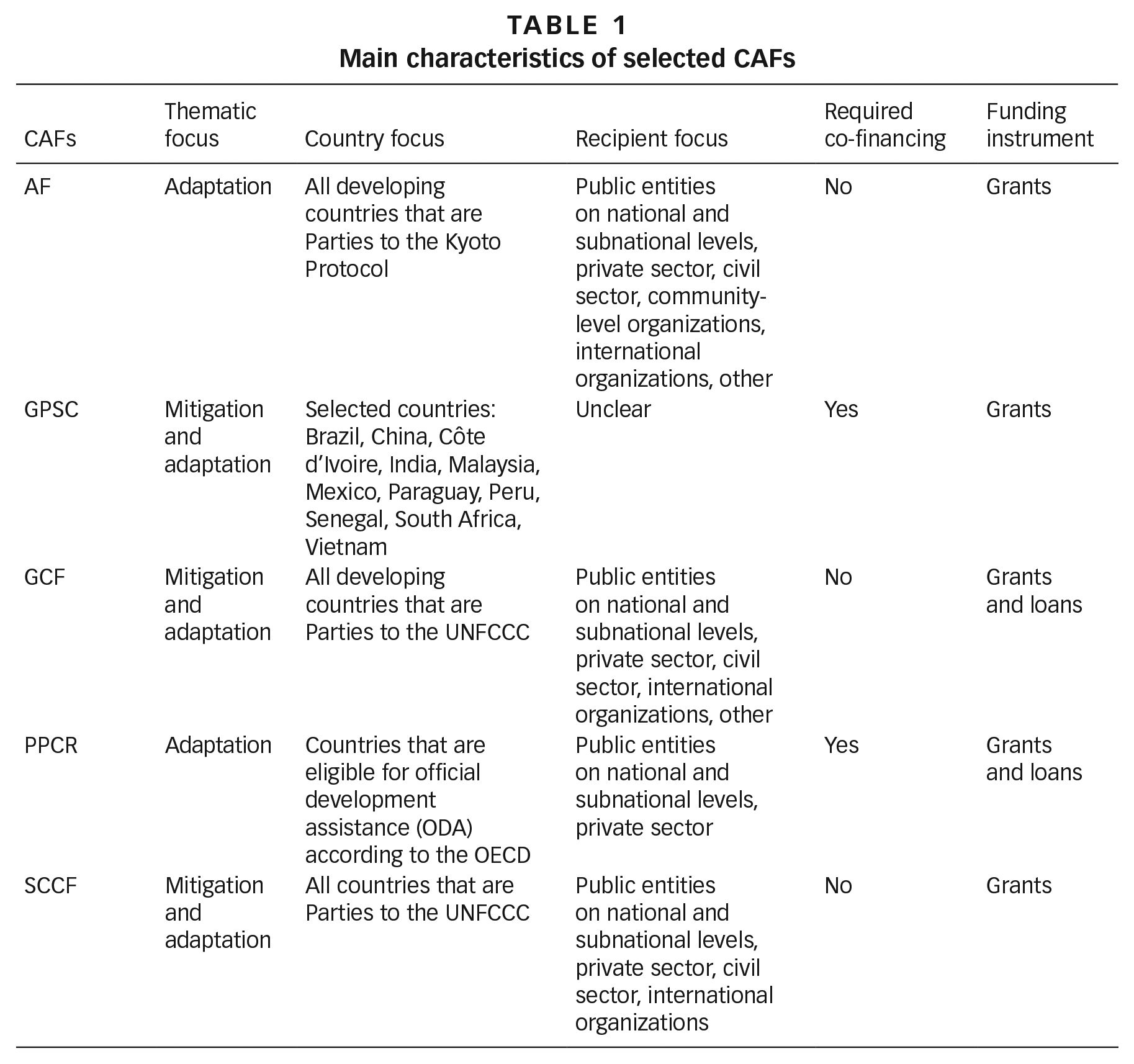
This paper draws on a desk-based review and analysis of 39 urban adaptation projects in the global South financed by five CAFs: Adaptation Fund (AF),(43) Green Climate Fund (GCF),(44) Special Climate Change Fund (SCCF),(45) and the previously mentioned PPCR and GPSC. AF, GCF and SCCF have similar characteristics. They operate under the UNFCCC and finance concrete adaptation projects and programmes in low-income countries. PPCR and the GPSC are different in origin and approach. PPCR has a particular approach to incorporate climate risk and resilience in both urban and rural areas, while GPSC promotes integrated solutions and cutting-edge support for sustainable urban growth. They adopt a complementary perspective on urban adaptation, worthy of exploration in our sample. We excluded from our sample the Least Developed Countries Fund (LDCF):(46) although highly relevant to adaptation, it does not have a specific urban focus. Table 1 summarizes the main characteristics of the CAFs that were included.
Main characteristics of selected CAFs
To obtain the list of suitable projects funded by the five CAFs, we reviewed their publicly accessible online databases and collected relevant project documents in March 2019, identifying those clearly focusing on urban adaptation. Two criteria were established: first, a selected project should target a country or countries located in the global South; second, it should include measures touching upon specific urban and/or peri-urban areas, even if they also touch upon rural areas. In the latter case, only the measures anticipated to have an effect in urban and/or peri-urban areas were analysed.
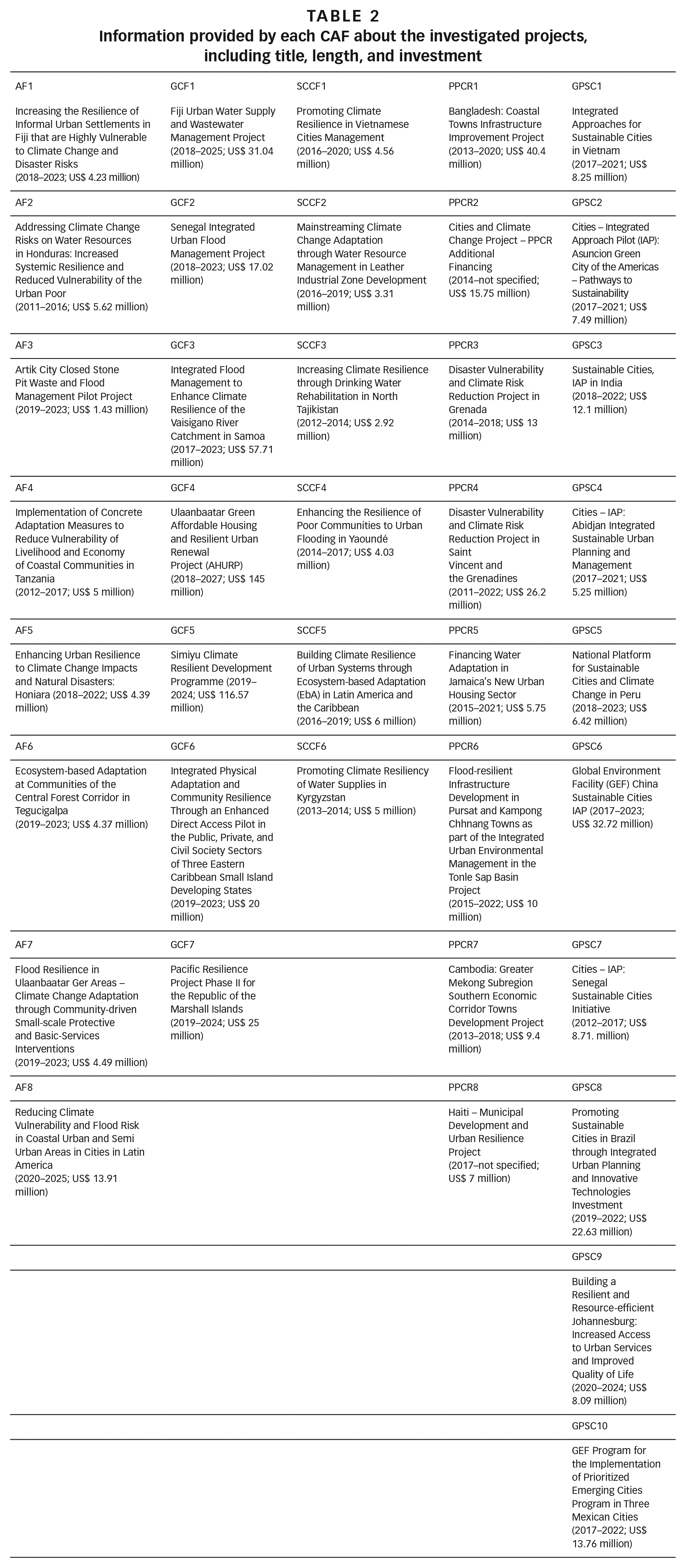
Thirty-nine projects met the criteria and were selected for our analysis (Table 2). Some were funded in the early 2010s, but most were funded between 2015 and 2018 and usually lasted between four and six years. Most projects received between US$ 3 and 10 million in funding, although some received more, in particular among PPCR, GCF and GPSC projects. The projects mainly focused on urban areas of different sizes in Latin America, the Caribbean and Asia (e.g. Honiara, 85,000 inhabitants; Durban, 3.5 million inhabitants) and topographies (e.g. Saint Vincent and the Grenadines are coastal; Ulaanbaatar is landlocked). Thirty-two projects received a non-repayable grant, while just seven projects were financed through mixed funding (grant and loan). AF, GPSC and SCCF provided grants exclusively, while GCF and PPCR provided mixed funding.
Information provided by each CAF about the investigated projects, including title, length, and investment
Given the COVID-19 pandemic, funding for completion of our analysis was suspended in 2020 and for most of 2021, and analysis was mostly conducted in the second half of 2021. All projects were analysed using their publicly available Project Identification Forms (PIFs), which are submitted by project applicants to each CAF for review and approval. PIFs provide all the necessary information for the CAF to assess, review and eventually approve the proposed project, which includes the project background, objectives, outputs and targets, financing and justification. This meant they included the kind of information necessary to explore and unpack our investigated topics: the involved stakeholders and their role, the scientific baseline, the targeted issues and groups, the expected impacts. When more information or details were necessary, other documents were consulted, including execution and action plans, annexes, updates and partner endorsements.
To investigate the PIFs and other project documents, a coding frame was built around key concepts that aligned with our conceptual framework, including: complexity, uncertainty, vulnerability, scaling up/upscaling, replication, catalyst/catalytic, actors/stakeholders. The coding frame was then refined by breaking down the elements that were relevant for examining how, in practice, projects for urban areas funded by the CAFs were operationalizing these terms – for example, the involvement of different sectoral actors as relevant to managing complexity.
This method certainly presents limitations. First, because it relies on a limited number of projects in the global South, it can only be considered an illustrative exercise. Second, PIFs, while internally consistent, might differ across the five CAFs in terms of outline, depth of description and meaning assigned to specific terms (e.g. catalytic, upscaling). Third, the analysis focuses on documents produced for review and approval at the project submission stage, including plans for execution, and so does not provide insights on actual implementation or stakeholder perspectives on implementation. Notwithstanding these limitations, we were able to analyse the main components of our framework from a comparative perspective. Whether these projects actually achieved their goals and met the expectations of CAFs and other stakeholders is an open question for future analysis.
IV. Findings
The following sections display our findings based on the key dimensions of our framework: complexity, uncertainty, vulnerability and transformation.
a. Complexity
Analysis of the stakeholders involved in CAF projects provides a better understanding of how CAFs address complexity in urban adaptation. We looked at this issue across two dimensions, which might be considered as proxy indicators for urban complexity: institutional complexity, that is, the involvement across multiple stakeholder types and scales; and intersectoral complexity, that is, the sectoral orientation of projects, considered across actors, project focus and the type of investment.
Institutional complexity
We considered the stakeholders involved in six different aspects of the CAF funding and project cycle:
1) Who applied for funding?
2) What were the accredited organizations applying for funding?
3) Who provided funding?
4) Who received funding?
5) Who planned the project?
6) Who executed the project?
We calculated the frequency of each stakeholder’s involvement for each question (see Table S1, Supplementary Material). Differences that emerged in the roles of different stakeholders in the CAF projects were an indication also of possible power differentials within and between stakeholders.
Who applied for funding?
The stakeholders who applied for CAF funding were predominantly at the national level: national government ministries (e.g. finance, environment, urbanization or planning) or national banks (e.g. Development Bank of South Africa, Mexico National Bank) (33 projects). This confirmed previous analyses of climate funding for urban adaptation, which indicate high levels of centralization of urban climate finance.(47) Very few stakeholders applied from other categories. Two projects applied from development banks (e.g. European Bank for Reconstruction and Development for SCCF6) and two from UN agencies (e.g. UNDP for GPSC2). There was just one city council applicant (Honiara City Council for AF5) and one private trader association (Sialkot Tannery Association Guarantee Ltd for SCCF2).
Although multi-scalar relationships are certainly important to enable the cross-scalar drivers and climate impacts to be addressed, we do not imply that institutional complexity is a necessary feature of all CAF projects. We also could not ‘see’ through this research process how local actors might have been involved in the informal preparation of funding applications. However, capacitating more local actors to apply directly for funding would seem to be critical to addressing urban and context-specific complexities.
What were the accredited organizations?
As expected given the funding structures of CAFs, accredited organizations were mainly such stakeholders as development banks (e.g. Asian Development Bank for PPCR1 and GCF1; Agence Française de Développement for GCF2, and International Bank for Reconstruction and Development for PPCR2) (21 projects), supra-national organizations (UN agencies, both focusing on development (e.g. UNDP for GPSC2 and AF2; UN Industrial Development Organization [UNIDO] for GPSC3) or organizations specifically focusing on urban issues (e.g. UN-Habitat for AF5) (15 projects), and the World Bank (two projects) (for GPSC6 and GPSC7). There was also a bilateral donor (KfW for GCF5). While the accreditation process constrains the ability of other actors to directly access finance, it could also provide scope to build cross-stakeholder relationships and learning, which would largely depend on the nature of the partnerships involved.
Who provided funding?
Each investigated project had one of the selected CAFs as funding provider. However, other stakeholders co-financed the projects, including development banks and multiple levels of government. Development banks and agencies were the most frequent co-funders, with 22 co-financed projects (e.g. GCF2, PPCR2, PPCR6). National governments co-financed 18 projects (e.g. Government of Bangladesh, PPCR1; Fiji Government, GCF1), regional governments 11 projects and local governments 10 projects. The private sector contributed funding to four projects (e.g. Sialkot Tannery Association Guarantee Ltd in SCCF2 and a series of enterprises working on public–private partnerships in GPSC3), while civil society contributed to one project (Federation of Neighbour Associations of Paraguay in GPSC2).
Funders, then, present a more diverse stakeholder picture than applicants, even if the contributions of local governments, the private sector and civil society are still relatively low. In part this is likely due to resource constraints, although we did not break down information about relative funding totals. This could indicate more diverse sets of relationships operating around CAF funding, which could be potentially beneficial for adaptation, although we cannot comment on the full nature of these power relationships.
Who received funding?
As the principal CAF applicants, governments were also the main recipients of funding. National governments received funding in 25 projects. However, in contrast to previous categories, funding was also allocated more consistently to local governments (18 projects) and regional governments (seven projects). Stakeholders from civil society received funding for four projects (GPSC2, GCF4, GCF6, AF7). Again, although funding is predominantly centralized, this illustrates some diversity and the potential to catalyse cross-scalar relationships through CAF funding.
Who planned the project?
To an even greater degree than in terms of the receipt of funding, the stakeholders involved in CAF project planning were diverse. National governments appeared in 24 projects, followed by local governments (15 projects) and regional governments (nine projects). Civil society was involved in 19 projects, the private sector in six projects, development banks in five projects and supra-national organizations in six. Again, we cannot comment on the nature of their involvement or the potential for co-option between powerful and less powerful actors. However, we underscore the potential for diverse actors to be involved and to relate to one another.
Who executed the project?
A variety of stakeholders were reported to be involved in project execution. As in other aspects, the role of national governments appeared prominent (33 projects), followed by local governments (22) and regional governments (12). Interestingly, supra-national organizations (such as UN-Habitat for AF1 and GPSC3, UNDP for AF2, UNFCCC for PPCR4) appear in 19 projects. Stakeholders from civil society appear in 13 projects, the private sector in seven and development banks in five.
With regard to the capacity of CAF finance to mobilize cross-scale and multi-stakeholder institutional relationships and partnerships, the overall analysis points to the existence of quite multifaceted institutional relationships.
Development banks mainly appear as accrediting organizations or funding providers, and more attention might be paid in future studies to their role in co-finance. UN agencies appear almost exclusively as accredited organizations but are also present in planning and execution. National governments emerge as the principal interlocutors across these webs of institutional relationships and are the predominant actors at every step of the project from application to execution, to some extent confirming the centralization of finance relative to urban jurisdictions. However, they rarely function alone, but operate in conjunction with other stakeholders, in particular local governments and, less frequently, regional governments. Operational functions, however, are more prominent at the local level (that is, local governments and civil society), although exceptions in this regard merit further exploration. Regional and local governments mainly receive funding and plan or execute the projects. Civil society stakeholders are not involved at the application stage and rarely receive funding. They are more prominent in planning and execution. The ways that projects bring together complex multi-stakeholder networks respond partly to the structure of CAF financing. We also suggest that they have the potential both to reinforce power imbalances and to operationalize multi-scale and multi-stakeholder solutions to complex problems.
b. Intersectoral complexity
Institutional affiliation by sector
At both national and regional ministry levels, intersectoral involvement is relatively prominent. Indeed, at national level eight projects involved five or more ministries in conjunction, although seven involved just one ministry. National ministries are more heavily involved than are regional ministries in intersectoral projects.
More pronounced at national level, certain patterns emerge in terms of the partnerships among ministries. The sectors Finance and/or Economy appear 13 times in conjunction with Environment and nature protection, which in turn cooperates 10 times with Construction, infrastructure and utilities. These four sectors appear all together seven times. This multisectoral coordination brings management challenges, and a salient issue is how these are handled. Our methods, however, limit our assessment of the depth and nature of these relationships.
Sectoral labelling of the projects
To complement this analysis, we examined the overall sectoral labelling of the projects. A focus on Water and other infrastructure and services was included in almost all the projects (38), mainly because these projects target urban areas that are coastal or at risk of flood. As for institutional affiliation, the orientation of the projects can cross sectors, and over half of the projects address more than one sectoral concern. Water and other infrastructure and services, for instance, appeared in conjunction with Energy five times, and with Transport (three times), among others. The sectoral range was, however, fairly limited. In terms of type of investment in these sectors, Construction was a very common focus (25 projects), appearing in 12 cases in conjunction with Procurement and rehabilitation.
As is evident in the focus on construction, infrastructure and utilities and planning, projects are therefore mainly oriented towards ‘hard’ adaptation measures, exclusively or in combination with other broadly defined hard measures. Meanwhile, there is limited focus on ‘soft’ adaptation skills (e.g. public administration or education) or the social sectors. Finally, the investigated projects devoted investments more to new structural measures than to adapting existing regulations, infrastructure and institutions.
c. Climatic, temporal and spatial uncertainty
Most projects consider the long-term changes that can occur in key climate variables such as high temperatures, sea level, ocean acidification and extreme rainfall (e.g. GCF1; AF1; SCCF2; GCF2). Just 13 projects, however, explicitly acknowledge that the intensity of changes and the frequency of climate-related extreme events are still uncertain, and even fewer (11 projects) consider explicit strategies for managing this. Sixteen projects mention temporal and spatial uncertainty. They mainly rely on projections and scenarios formulated at global and national scale, given the lack of applicable regional- and local-scale scenarios. Some projects use global projections from international organizations. For example, SCCF2 uses projections based on the Special Report on Extreme Events by the IPCC.(48) Meanwhile, GCF3 relies on scenarios by the Australian Commonwealth Scientific and Industrial Research Organization (CSIRO). Other projects (e.g. AF1, AF2, AF6 and GCF2) rely on projections from national reports.
Twenty-eight of the 39 projects do not incorporate any specific strategy for dealing with uncertainties. Nine projects, however, mention no-regret/low-regret options for addressing uncertainties.(49) These are cost-effective actions under current climate conditions that allow organizations to implement short-term adaptation actions instead of adopting a “wait and see approach”.(50) Most of the projects that mention no-regret options do not explain what these options mean and how they can be operationalized (PPCR3, PPCR4). Just two projects (GPSC1 and SCCF1) claim that no-regret options are meant to increase resilience and “have other benefits”, but specify neither these options nor their benefits. The provided options appear to be standard adaptation measures that have been framed as no-regret options, but do not appear to have been linked in design to particular parameters or types of uncertainty.
d. Transforming adaptation
Catalytic effects
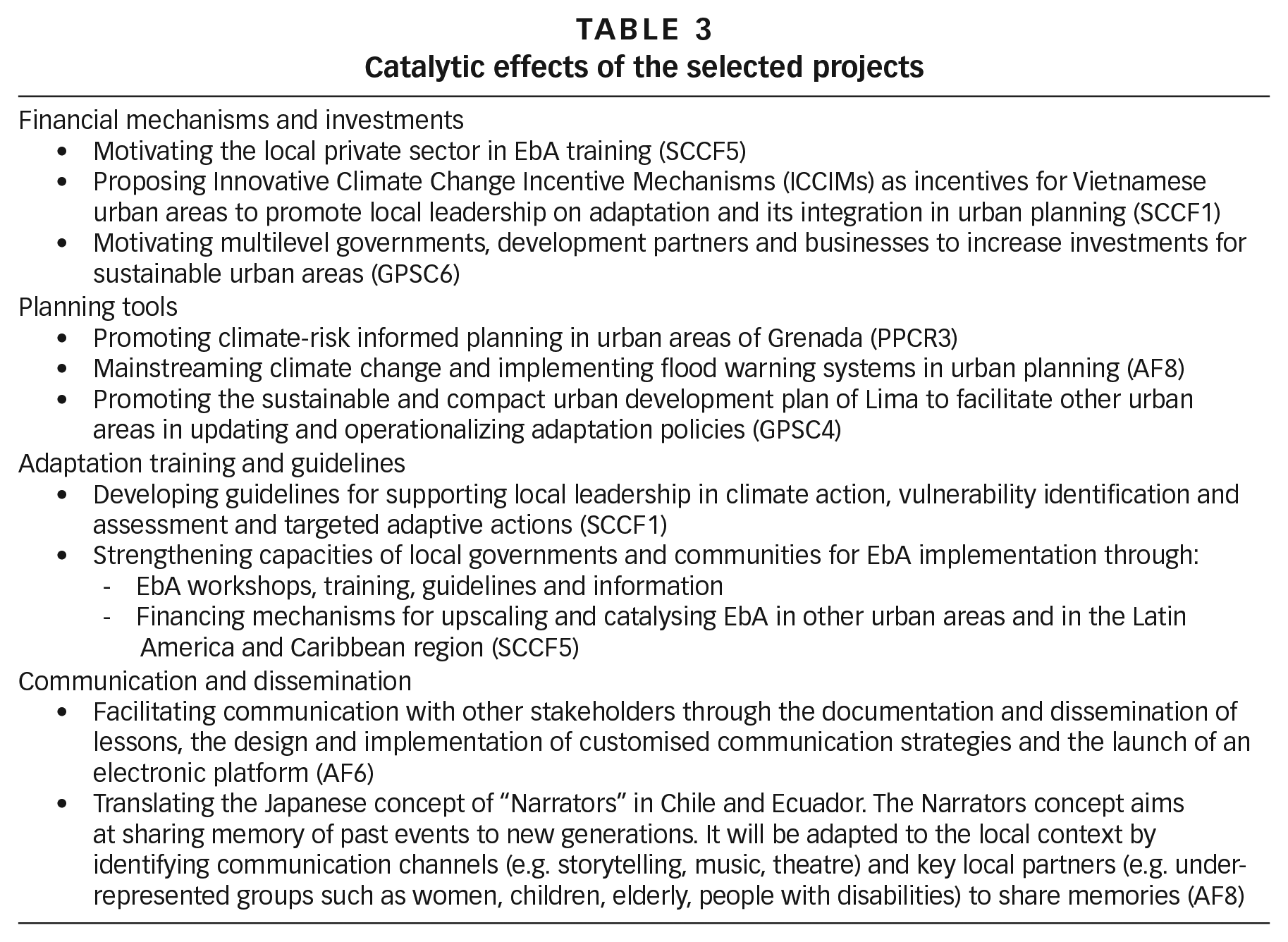
Catalytic effects are those able to extend the impact of the projects in sectors outside the immediate areas of intervention. Just 11 projects mention catalytic effects. In this regard, Table 3 shows the four mechanisms mentioned by the projects, including: financial mechanisms and investments; planning tools; adaptation training and guidelines; and communication and dissemination. The projects promoting catalytic effects therefore mostly rely on soft mechanisms for investments, wider stakeholder involvement and the integration of project outcomes into development planning. Interesting innovations include using narration to share memories (AF8) and using funds to promote leadership for urban adaptation (SCCF1).
Catalytic effects of the selected projects
Upscaling effects
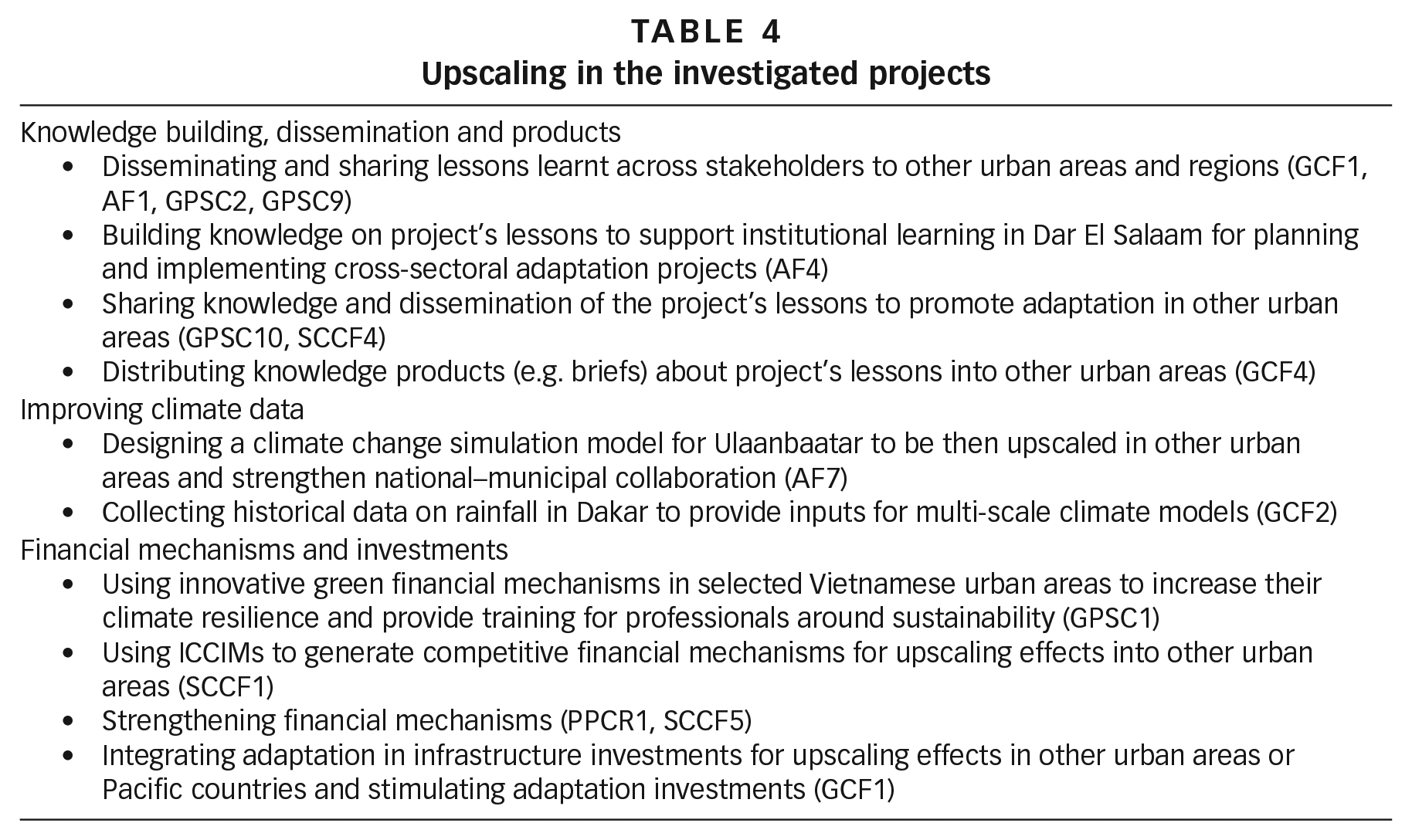
All the investigated projects mention upscaling effects into other urban areas, in some cases at nationwide and continental level, for example across urban areas in the Caribbean (e.g. SCCF5), South-East Asia (e.g. GPSC1) or across Oceanian islands (e.g. GCF1). While in 25 projects upscaling is just mentioned with no explanation (e.g. AF4 and AF8), the other 14 projects provide details. Table 4 summarizes the mechanisms described in these 14 projects, including a heavy focus on knowledge production and sharing, as well as a variety of financial mechanisms.
Upscaling in the investigated projects
Addressing vulnerabilities
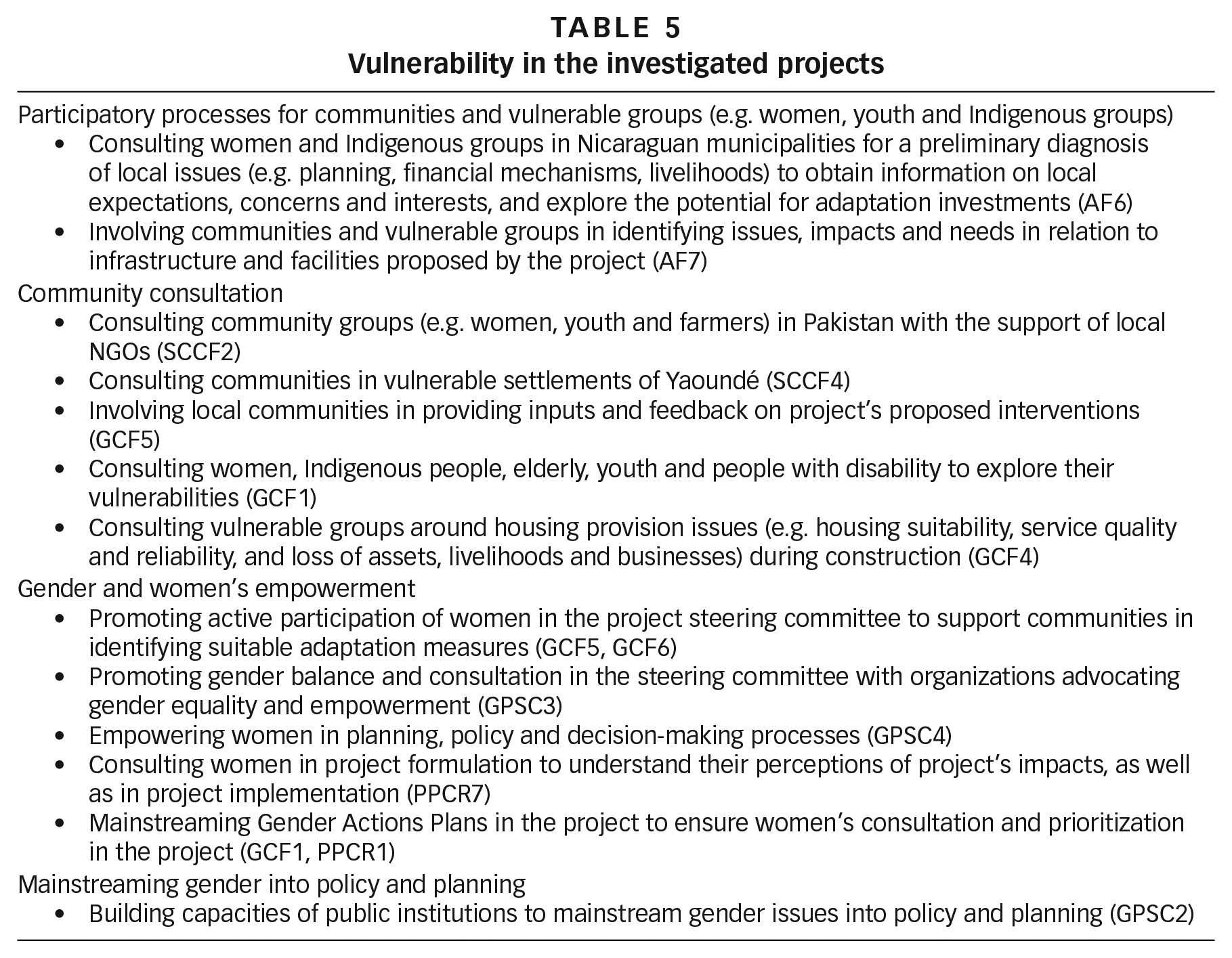
Most of the investigated projects (33) consider vulnerability reduction. Eleven projects include vulnerability assessments, while others (18 projects) include the consultation of vulnerable groups in execution and/or planning. Targeted groups are mainly women and Indigenous groups at risk of being marginalized in community decision-making. Table 5 summarizes how the projects expect to address vulnerability. Community consultation is frequently mentioned, although we cannot deduce how widespread or deep this consultation would be. In at least two projects it involves gaining feedback on project proposals and identifying the issues to be addressed, not simply ratifying predefined investments. Where vulnerability is considered, there is also a strong emphasis on women’s inclusion, including in project design processes (GCF5, GCF6, GPSC3, GPSC4) – although there is less focus on gender as a construct and on women’s wider empowerment within and through adaptation initiatives.
Vulnerability in the investigated projects
V. Discussion
Although this is an exploratory desk study, limited to the information available in PIF documents at a particular moment in time, several points for discussion can be raised from our findings.
First, in terms of institutional complexity, a dual perspective emerges from our stakeholder analysis. Stakeholders from different institutions (supra-national organizations, national banks, development banks), different government levels (national, regional, local) and non-governmental organizations (e.g. civil society and the private sector) ostensibly take part in different steps of the investigated projects. By breaking down the different roles of these organizations in this way, the analysis adds nuance to existing critiques of CAF structures, showing how different forms of multi-stakeholder networks are mobilized by CAF financing, with the potential to address complex, cross-scalar issues. This qualitative work reveals cases – such as that of Honiara City Council (AF5) and a private trader association such as Sialkot Tannery Association Guarantee Ltd (SCCF2) applying for CAF funds – that buck predominant trends and deserve further analysis.
There appears to be little relationship between particular innovations and particular CAFs, despite attempts by some CAFs (such as the GPSC) to remodel their structures to address systemic urban issues. It remains the case that in all the projects, without exception, national governments are more dominant than local governments and other actors across almost all project stages and at critical stages of initiation and conception. Although the involvement of national government is critical to addressing the multiple scales at which risks arise for urban areas, the findings echo previous evidence of the lack of local-level responsiveness.(51) Findings suggest that, despite innovation by CAFs to bring about greater direct access, there is risk of concentrating concepts and strategies around high-level priorities, and hence of missing important perspectives from local organizations and marginalizing local voices.
Second, in terms of intersectoral complexity, the investigated projects include different ministries that operate in different sectors and, particularly at national level, in conjunction with each other, e.g. the ministries for sectors such as Environment and nature protection, Construction, Infrastructure and utilities, Finance and Economy. This suggests the potential for innovation by institutions to address the complexity of adaptation. However, the analysis of projects’ orientation shows limited sectoral range, even though at least half of the projects fund two or more sectors in conjunction. This appears to reflect, as other studies have also revealed,(52) an ongoing bias towards structural and hard adaptation measures (e.g. infrastructure and resource management) rather than soft measures (e.g. public administration and education) and the involvement of the social sectors. Investigated projects also aim, as noted, more at developing new structures and infrastructures for adaptation purposes than integrating adaptation into the regulatory aspects of public administration or into existing structures and infrastructures.
In terms of addressing uncertainty, it is remarkable how few projects report any commitment to addressing climate change uncertainty in the design of specific adaptive options, including no-regret options. While this may reflect the weakness of PIF documents, we regard this as also indicative of the practical functioning of projects. Where particular actions are labelled as “no-regret” options, there is limited explanation of how to create the conditions for sustainable, socially effective and just implementation, and how long-term issues can be addressed.(53) For example, in GCF2, new water infrastructure is proposed as a no-regret option in a vulnerable area of Dakar, together with the planned displacement and resettlement of 700 people. However, it is not clear whether those people have been involved in the decision-making, and whether more viable housing and adaptation options have been discussed, and livelihood impacts considered. While no-regret options aim at promoting adaptation, they also need to be evaluated against other local issues to avoid maladaptation.
Finally, in terms of transformative impacts, there are efforts among some of the investigated projects (but not the majority) to disseminate project-related lessons and knowledge to promote upscaling and catalysing. The qualitative analysis reveals a few interesting innovations for doing this. For example, in SCCF1, financial incentives are considered crucial for building climate resilience in target urban areas of Vietnam and for upscaling and catalysing project effects to strengthen climate resilience capacity in other urban areas. However, the project does not clarify whether (and if so, how) there is awareness of the challenges faced by the other urban areas that are supposed beneficiaries. Indeed, these beneficiaries might lack the policies and environment that support an understanding of climate change challenges or have limited implementation capacity for a successful knowledge transfer.(54) This lack of clarity is consistent across almost all the investigated projects. In terms of vulnerability reduction, most of the projects state a high degree of commitment to vulnerable groups and their engagement, which may, if effective, counter some of the power imbalance in the project funding structures. The investigated projects engage vulnerable groups (mainly women, youth, ethnic groups) to different degrees (from inclusion to participation) in all project steps, based on their needs. GPSC and GCF projects include consideration of women’s representation in project structures and, in one case, in public institutions. However, vulnerability is often vaguely or narrowly defined, with limited information on the drivers to be addressed and the characteristics of the different forms of deliberation to be expected.(55) In addition, the investigated projects focus specifically on climate-related vulnerabilities but provide limited evidence on how to address their root and long-term causes.(56)
In sum, despite recent innovation (including considering mitigation and adaptation options together), the changing landscape of adaptation funding, and a now extensive history of research into adaptation finance in general to inform policy learning, the findings stress the need for CAFs to address urban adaptation in a more systemic way. This might include adopting adaptation finance mechanisms that can to a greater extent be driven by, and support the mobilization of, local resource and capacities,(57) even while retaining multi-stakeholder and multi-scalar involvement to address the complexities of urban risk and of inequalities and injustice at the urban scale.(58) The context of urban complexity and uncertainty may also demand a more resilience-driven approach to urban adaptation finance, that more strongly considers multi-stakeholder and intersectoral interactions, climatic, temporal and spatial uncertainties and the trade-offs and win-wins from approaches such as no-regret options. These recommendations might support the operationalization of CAFs as potential tools to design, develop and implement transformative solutions that enlarge the decision-making arena and address the needs of those more affected by climate challenges.
Given the CAFs’ role as catalysers of increased and longer-term funding, both public and private, more attention is needed to the ‘how’ of urban adaptation finance. In addition to the substantive findings, this paper has offered a renewed methodological framework for more detailed investigation into the ways that the adaptive aspects of projects can be further analysed, especially given the potential for maladaptation.(59) Moving forward, it will be important to engage case study-based analysis, using political economy framings to understand questions of power/knowledge, but also to synthesize across projects for a more comprehensive view. The lack of transparency and the fragmentation of the adaptation finance architecture and institutions complicates synthesis but makes it all the more important. Documents such as PIFs can still be used as heuristic devices for understanding. In turn, developing frameworks such as ours – and in particular through understanding how the dimensions of complexity and transformation might be operationalized in different ways – could also help support greater learning and shared knowledge between CAFs. By unpacking the different dimensions of the 39 projects, we revealed niches of innovation that deserve wider discussion and possible take-up.
VI. Conclusion
This paper has developed and employed a conceptual framework built around the complexity, uncertainty, vulnerability and transformation imperatives of urban adaptation to investigate the adaptive potential of CAF-financed projects. More specific studies that investigate the role of CAFs in financing urban adaptation in particular contexts, and adopt a stronger comparative perspective across CAFs within urban areas, are still needed. The framework could be further translated to apply it to the larger range of adaptation finance mechanisms being deployed in urban areas in conjunction with CAF funding, including bilateral and multilateral initiatives, private partnerships and community-driven initiatives. As the mechanisms for delivering the Glasgow Climate Pact are developed, and as climate adaptation funders grapple with the increasing urgency of releasing adaptation finance at the urban scale, we highlight the need for increased learning over time about how different funding modalities are actually able to address the complexities of urban adaptation, encompassing the physical, infrastructural and social specificities of urban realities.
Supplemental Material
sj-pdf-1-eau-10.1177_09562478221143591 – Supplemental material for Towards adaptive and transformative finance for urban areas? A framework to analyse the responsiveness of adaptation finance to urban challenges in the global South
Supplemental material, sj-pdf-1-eau-10.1177_09562478221143591 for Towards adaptive and transformative finance for urban areas? A framework to analyse the responsiveness of adaptation finance to urban challenges in the global South by Giuseppe Forino, Arabella Fraser and Neven Tandarić in Environment & Urbanization
Footnotes
Funding
Funding for work on this paper was supported by the University of Nottingham’s Nottingham Research Fellowship Scheme and by the AHRC Midlands3Cities Doctoral Training Partnership Project Placement scheme, in which Neven Tandarić participated in 2019.
Supplemental Material
Supplemental material for this article is available online.
7.
See reference 6.
9.
See reference 5.
10.
14.
Bazbauers (2022a,  ).
).
21.
23.
See reference 22.
26.
Eriksen et al. (2021); also .
28.
Fedele et al. (2019); also Kasdan et al. (2021); .
31.
Kasdan et al. (2021); also .
32.
Burton et al. (2007); Kato et al. (2014); also .
33.
34.
38.
Colenbrander et al. (2018); also .
41.
Smith et al. (2014); also .
48.
See reference 27.
49.
Structural options include rainwater retention basins and gravity collectors to facilitate rainwater flow (GCF2), while non-structural options include information, education and communication services to ensure the social acceptance of drainage and sanitation infrastructure and their integration in the urban fabric (GCF2). No-regret ecosystem-based adaptation (EbA) for the sustainable management and restoration of urban ecosystems includes: incentives for sustainable land use and ecosystem conservation and restoration around Tegucigalpa, to transform urban ecosystems into adaptive “bio-shields” (AF6); and rehabilitation of mangroves in Tanzania to function as buffers against coastal hazards, to provide nutrients for animals, and to sink and sequestrate carbon (AF4).
55.
Remling and Persson (2015); also .
57.
59.
See reference 42.
References
Supplementary Material
Please find the following supplemental material available below.
For Open Access articles published under a Creative Commons License, all supplemental material carries the same license as the article it is associated with.
For non-Open Access articles published, all supplemental material carries a non-exclusive license, and permission requests for re-use of supplemental material or any part of supplemental material shall be sent directly to the copyright owner as specified in the copyright notice associated with the article.
