



Abstract
Urban agriculture (UA) encompasses different practices and dissimilar agendas, not all environmentally and socially savoury, ranging from food security to leisure and recreation. Although there is a wealth of literature on UA, little research has investigated its presence and role in a Chinese global city against the backdrop of unbridled urbanisation. This article focuses on Nanshan District in Shenzhen, a vast, rapidly urbanising region in China. We analyse the social and spatial characteristics of UA and its regulation. Employing a mixed-method approach that combines spatial analysis and in-depth semi-structured interviews, the results demonstrate the coexistence and interaction of diverse types of UA. What emerges is a socio-biologically rich heterogeneity of precarious practices, overlooked by the local authorities, but contributing to stewardship, social development and community engagement, while preserving a precious agricultural heritage. This article presents policy insights and advocates for government involvement in recognising the social significance of UA.
I. Introduction
The study presented in this article responds to the urgent need to transform cities from spaces of consumption to more inclusive places of production.(1) Based on the assumption that urban agriculture (UA) can play a fundamental role in this regard, as a socially and environmentally viable mode of food production in cities,(2) this study investigates UA in the world’s most vast and rapidly growing urban region.
Smit et al. estimated in 1996 that UA was practised by over 800 million people worldwide, and that in Asia, it was practised by half of the urban population.(3) In 2007 it was considered to provide 15–20 per cent of the world’s food products.(4) More recently (2013), it was reckoned that 25–30 per cent of urban dwellers participate in the agro-food sector worldwide.(5) However, as UA is mostly informal, there remains a lack of accurate data. A large portion of the literature on UA also lacks a scientific approach and is advocacy-oriented.(6)
UA encompasses a variety of practices and agendas ranging from subsistence-driven activities to gentrification-oriented hobby gardening. According to Mougeot,(7) the term UA was coined to describe economic activities related to food and non-food plant cultivation and animal husbandry in urban or peri-urban areas.(8) The definition was later extended to food distribution and eventually evolved into a multifaceted concept combining attention to traditional agricultural activities, economic dynamism, personal health, community wellbeing, environmental protection, food security and food justice.(9)
UA has a range of social, environmental and economic impacts, not always positive; the effects depend on the agricultural practices adopted, and the awareness of farmers, consumers, policymakers and other relevant parties.(10) Orsini et al. categorised UA’s contribution to: (a) food and nutrition security; (b) health; (c) development of local economies; (d) social inclusion and gender relations; and (e) ecological aspects and environmental impacts.(11) On the positive side, UA can help alleviate urban poverty by providing sufficient and nutritious food, as well as low-skilled job opportunities.(12) When properly oriented, it can also positively impact social justice, social engagement, knowledge transfer and gender equality(13) – van Veenhuizen, for instance, stressed the need for gender-considerate policies to avoid increasing the burden of work for women, who are estimated to be two-thirds of urban farmers.(14) UA could also benefit the urban microclimate and resource conservation by reducing transport and food processing-related emissions, fully utilising local resources such as water, recycled organic matter, and the byproducts of urbanisation – what Berger defined as “drosscape”.(15) The main disadvantages of UA pertain to health and the environment. They may result, for instance, from the use of polluted resources (contaminated soil or water) or the misuse of pesticides,(16) and the possibility of disease transmission by infected livestock or by attracting disease vectors.(17) What emerges is a complex matrix of factors in the relationship between UA and the contingent urban environment.
The article is organised as follows. The following section reviews UA in China and its regulation. The third section introduces the study area, with a focus on the policy background and data collection and analysis methods. Sections IV and V present the findings and discuss them in light of relevant theories and empirical evidence. The final section draws preliminary conclusions on the new UA patterns emerging from this study and their implications for policymakers.
II. Background
Over recent decades, neoliberal forces have produced a coexistence of wealth and want worldwide.(18) The global intensification of movements of people, goods and information has put an increasing number of cities on the world map. Within rapidly expanding economies, these flows have resulted in rapid urbanisation and increasing urban inequalities, phenomena that are particularly evident in newly industrialised countries and Asia.(19) In this context, mega-urban agglomerations have materialised, encompassing both pockets of underdevelopment and internationally recognised global hubs, characterised by rapid economic growth based on export-driven manufacturing and high rural–urban migration, which can result in social upheaval and diversification.(20) While in China, the rise of both GDP and income inequalities can be interpreted as direct effects of the economic liberalisations of 1978,(21) neoliberalism has caused analogous effects worldwide.(22) Thus, studying UA characteristics in a Chinese global city could effectively shine a light on circumstances that, although still lurking beneath the surface and manifesting themselves in different context-dependent forms, are becoming visible on a planetary scale.(23) The premises of this research are based on Sassen’s proposition that: . . . a focus on the city in studying globalization will tend to bring to the fore the growing inequalities between highly provisioned and profoundly disadvantaged sectors and spaces of the city, and hence such a focus introduces yet another formulation of questions of power and inequality.(24)
In China, rural migrants’ adaptation to different urban settings and their sense of belonging have attracted increasing research attention.(25) Nevertheless, such studies are restricted to urban privileges and assets, while UA is often neglected because of its small contribution to the urban economy. This research, using Shenzhen as a case study, questions the nature, role and perception of UA in a Chinese global city, where UA can be witnessed in a growing number of city farms whose tenants are primarily rural migrants. These farms have increased in number from two agricultural recreation sites in 2004 to five major sites and dozens of smaller community-based sites scattered throughout Shenzhen.(26)
Following economic reform, over the past four decades China has experienced rapid industrialisation, intensive urbanisation and massive land-use change.(27) Many agricultural areas have been swallowed by rapid urban expansion, resulting in a significant reduction of arable land, which has been progressively converted to industrial and residential uses.(28) From 1979 to 1996, China lost 151,793 square kilometres of agricultural land, only partially offset by an increase of 112,550 square kilometres of lower-quality reclaimed arable land.(29) The opposing trajectories of farmland loss and rising food demand from the expanding urban population, with their corollaries (e.g. land grabbing), have drawn increasing attention and debate.(30) Embedded in the process of urbanisation is also an escalating conflict between the demand for conservation of social-ecological systems and the speculative rationalities of real estate investment.(31)
As highlighted by Yang et al., while the loss of urban arable land has been investigated substantially, there is a paucity of research on active responses within the agricultural sector.(32) China has witnessed four stages of UA development since 1949: (1) farmland expansion (1949–1978); (2) a focus on production (1978–1986); (3) ecological awareness (1986–1995); and (4) multifunctional agriculture (1995 onward).(33) During the rapid urban expansion following the 1978 opening-up policy, a large flow of migrants settled in peri-urban areas and turned to UA for survival.(34) In some of China’s largest cities, including Beijing, Shanghai and Chengdu, UA is practised by precarious migrants facing difficulties accessing financing, placing their products, and integrating within the local communities.(35) Concurrently, UA increasingly supplies urban inhabitants with recreational opportunities close to busy central areas.(36) Furthermore, local government investments in capital-intensive practices are shaping specialised production systems enabled by economies of scale.(37) UA practices are entrepreneurial in nature, encompassing such activities as agro-tourism, food processing, high-tech agro-enterprises, farmer collectives and small-scale ecological farming.(38)
a. Farmland protection in China
In response to the extraordinary loss of agricultural land, two laws – enacted in 1994 and 1999, respectively – aimed to prevent farmland reduction.(39) The Basic Farmland (BF) Protection Regulation lists four categories of cultivated land: (1) officially approved grain, cotton and oil plantations; (2) cultivated land with good water and soil conservation facilities; and medium- and low-yielding fields suitable for renovation; (3) vegetable crops; and (4) plots for experimental and educational purposes such as agricultural scientific research and teaching. (The regulation does not apply to orchards or fisheries.) The law applies different grades of preservation: for high-quality land with high productivity, conversion is explicitly prohibited; for good-quality land with moderate productivity, conversion is admissible under specified circumstances. Given the inevitable need for urban infrastructure development, the law also introduced the policy concept of “dynamic balance” to prevent the net loss of the highest-quality BF.(40) This approach was later extended to all BF by the New Land Administration Law of 1999, which aimed to extend protections while enabling higher degrees of market development, participatory planning and coordination. It required approval from the State Council for any conversion of BF or other farmland exceeding 35 hectares and 70 hectares, respectively,(41) and encouraged the redevelopment of brownfields or low-production areas.
The application of these principled policies remains unsatisfactory, particularly concerning “dynamic balance” – implementation of which, expected initially at provincial levels, was effectively carried out only at lower administrative divisions.(42) From 2001 to 2013, China’s urban area has grown annually by 13.36 per cent on average, resulting in a loss of 33,080 square kilometres of agricultural land.(43) This process was particularly severe in the Pearl River Delta, where over the same period, farmland decreased by 6.05 per cent (2,702 square kilometres). Subsequently, to preserve the remaining 1.2 million square kilometres of arable land, in 2008 the central government proposed(44) the concept of “permanent basic farmland”. The use of “permanent” was clearly meant to emphasise the importance placed on protecting arable land from conversion. In 2014, the Ministry of Land and Resources and the Ministry of Agriculture jointly issued two documents(45) according to which permanent BF must be demarcated, starting in metropolitan areas with an urban population above five million. Fourteen pilot cities were designated for the demarcation of permanent BF within their territories.(46)
III. Research Study
a. Study area
Shenzhen, a global hub that emerged as the Chinese capitalist city par excellence in just four decades, is China’s fastest-growing first-tier city and most successful special economic zone (SEZ). Strategically located in the Greater Bay Area at the Hong Kong border, it has a significant floating migrant population without urban hukou (or local household registration), many of them domestic migrant workers from rural China.(47) With the 1978 reform and opening-up policy and the relaxation of migration and travel regulations, this floating population saw a staggering increase from 1,500 in 1979 to 8.18 million in 2017.(48)
In China, the collectivisation of land following the 1949 revolution resulted in state ownership of urban land and the communes’ ownership of rural and suburban land. With urbanisation, local governments needed to acquire farmland and resettle farmers.(49) Located within the Pearl River Delta (Map 1), Shenzhen was largely agricultural until the late 1970s, with paddy fields in the plains and orchards in the uplands. The Shenzhen SEZ, formally established in 1980, comprised four districts: Futian, Luohu, Nanshan and Yantian. The open-door policy progressively ruled out the old land allocation system; in 1987, Shenzhen recorded the first transfer of land-use rights, and since 1988 the formalisation of transferability, leasing, renting and mortgaging of land-use rights.(50) The urban land reform paved the way for capital investment in the SEZ. In 1984, the Shenzhen government drafted a master plan(51) projecting the city’s development into a megalopolis,(52) and in 1992, it passed a measure(53) to urbanise and convert all farmland into urban uses. The policy, which resulted in a one-time expropriation of agricultural land, transformed over 200 natural and administrative villages into 100 neighbourhood committees, 66 collective-stock cooperative companies and 12 enterprise companies.(54) In 2002, urban hukou was bestowed on 46,000 rural registered permanent residents in the original SEZ (a small number in the context of Shenzhen(55)). In 2003, the SEZ was extended to a final two districts in Shenzhen, transferring 2,600 square kilometres of cultivated land to the governmental development reserve, and completing the nationalisation of Shenzhen’s land.(56) The city’s expansion engulfed the former rural villages,(57) which gradually become “urban villages”, also known as “villages-in-the-city” (chengzhongcun).(58)
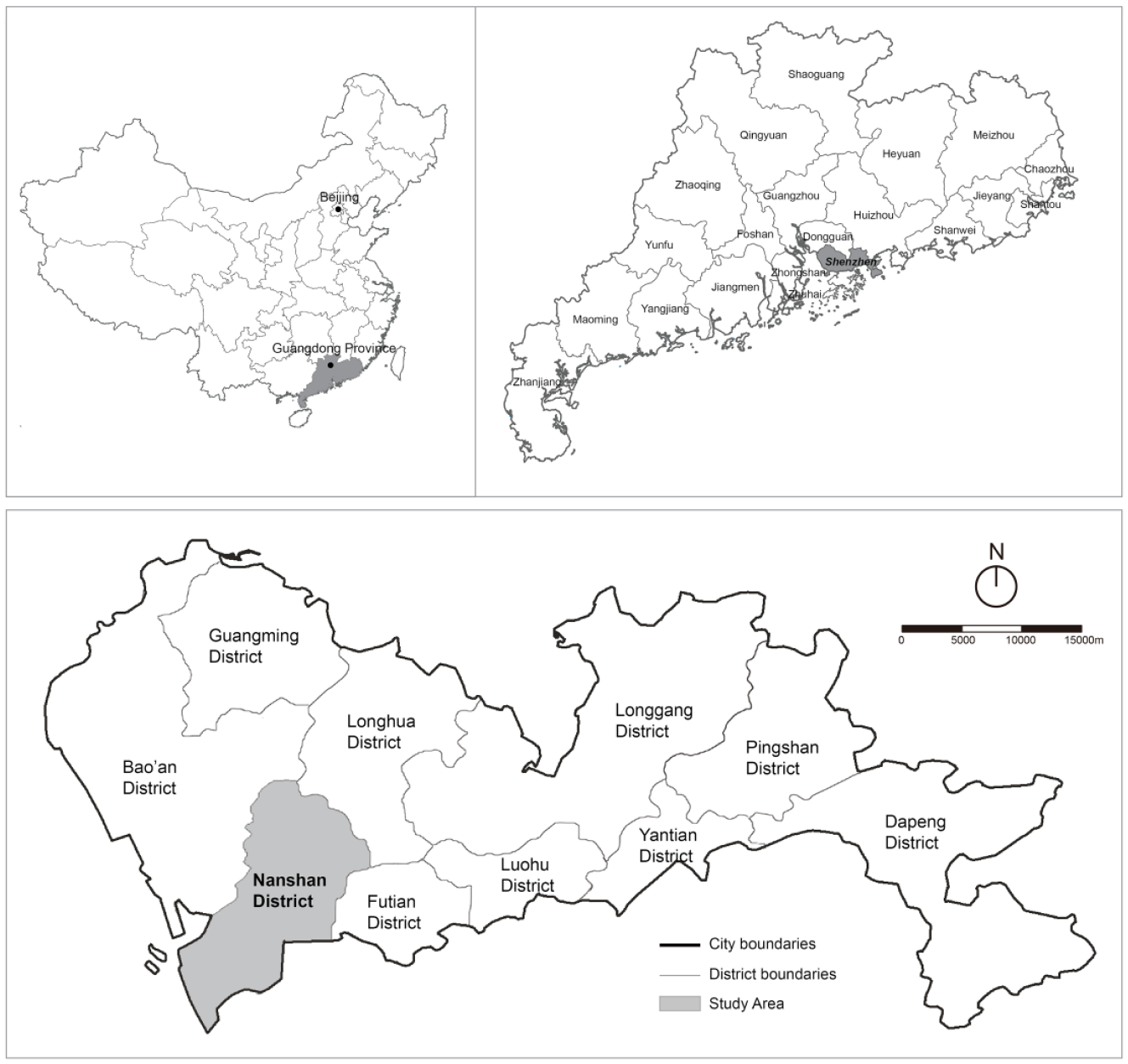
Location of Shenzhen in China and the study area of Nanshan District
Following the abrogation of the rural hukou in 2004, Shenzhen has virtually abandoned agriculture in favour of the industrial and service sectors.(59) Although farmed land has continuously diminished since 1979,(60) Shenzhen still encompasses some orchards and patches of farmland for small-scale vegetable production,(61) the subject of this article.
Nanshan District was selected for study based on a preliminary investigation that highlighted the presence of UA and the district’s mature service economy transition. Occupying a land area of 187.47 square kilometres (about three times that of Manhattan), Nanshan District (Map 1) is one of the nation’s richest. It is home to several universities and the Shenzhen High-Tech Industrial Park, which houses some of China’s most important high-tech companies. The resident population is 1.49 million, and per-capita GDP was estimated to be CNY 343,936 (approx. US$ 53,117) in 2018.(62) In 2018, its total agricultural output value was CNY 175 million (approx. US$ 27 million), a 38.8 per cent decrease from 2017. This included about 7,300 tonnes of fruits, mostly lychees, a decrease of 21.2 per cent from the previous year.(63) Lychee orchards were often preserved as part of parks or campuses. As in other parts of Shenzhen, agricultural activities in Nanshan District are still conducted in otherwise urbanised areas.
The prosperous secondary and tertiary economy in Nanshan District has attracted a large floating population, about 530,000 permanently non-registered individuals, or 37.2 per cent of the total population.(64) Like domestic migrants in other Chinese cities, many of Shenzhen’s migrants, thousands of miles from their families and hometowns, are poorly integrated into urban society and lack a sense of common belonging, to use Durkheim’s term.(65) This lack of integration, with its accompanying psychological stress and depression, has received growing administrative attention in China.(66)
b. Methods
This interdisciplinary study draws on material collected between 2017 and 2019, integrating policy study, geographic analysis of both primary and secondary data, and in-depth semi-structured interviews. It was planned in three phases:
1) A systematic review of Chinese farmland protection policies and their application in Shenzhen. Information was collected from relevant departments. The review illustrates the UA regulatory framework as articulated at various administrative levels.
2) Investigation of agricultural land features in Nanshan District, integrating remote sensing and field observations. Of 72 urban farmlands initially localised by remote sensing and sampled using ArcGIS, 58 (80.6 per cent) were accurately confirmed by field visits; less accessible farmlands (e.g. within private orchard boundaries, isolated mountainous areas and military zones) were excluded from the sample. A farmland taxonomy was developed by assessing their location, scale and transformation timeline.
3) Qualitative primary data collection through in-depth semi-structured interviews. We regarded all those who engaged in agricultural activities in the urban or peri-urban area as UA practitioners. Through random sampling, representatives from 40 groups were chosen to be interviewed. In total there were 47 interviewees, 46 of them domestic migrants, with only one born in Shenzhen. Questions focused on three major themes: (1) personal background and motivations for farming; (2) history and dynamics of the cultivated land, crops, farming techniques and resources; and (3) social engagement, stewardship, and a sense of belonging to the city in the context of practising UA. With the prior consent of participants, interviews were recorded and transcribed. An additional interview with a local subdistrict officer provided information on BF features and policy implementation. Transcribed interviews were translated from Chinese to English by the authors.
IV. Findings
a. Policy framework for agriculture in Shenzhen
Shenzhen’s urbanisation progressively reduced arable land (from 505.4 square kilometres in 1979 to 48.2 square kilometres in 2015) and the number of farmers.(67) From 1995 to 2009, 51.6 per cent of arable land was lost.(68)
Within 1.2 million square kilometres of farmland preserved by the 2008 national protection policies, the provincial government had requested that the Shenzhen government establish 20 square kilometres as a BF protection zone.(69) In 2009, arable land reclamation work was initiated, and the BF protection area was delineated to strengthen arable land protection. By June 2013, the transformation of BF in Shenzhen was completed, reaching 21.33 square kilometres and meeting the national requirements.
In keeping with central government instructions, the Shenzhen municipal government mandated the lease of BF for a maximum of eight years and imposed penalties for the destruction of land and unauthorised changes in land use or subleasing, with fines ranging from CNY 30,000 to 100,000 (approx. US$ 4,400–15,445) per mou (Chinese acre, corresponding to 666.7 square metres). The farmland protection areas were concentrated in Guangming, Bao’an and Longgang Districts (Map 1). The administrative scope of BF in Shenzhen is different from that set by the state. The state’s BF protection measure requires that areas not be changed or occupied after demarcation. Shenzhen’s BF measure is a preliminary demarcation for a flexible follow-up operation and management by the local agricultural department. As a possible effect of these measures, the officially reported total arable land in Shenzhen increased from 48.2 square kilometres in 2015 to 126.2 square kilometres in 2018.(70) In 2019, the Shenzhen municipal government invested CNY 30 million (approx. US$ 4.4 million) in the construction and maintenance of BF (approx. US$ 4.4 million). The project included water and soil conservation, soil improvement, construction of power facilities, irrigation and drainage engineering, road rehabilitation and slope treatment over the limited area of Bao’an District, Guangming District and Dapeng New District.(71)
In October 2020, the General Office of the Central Committee of the Communist Party of China and the General Office of the State Council issued a measure(72) giving the Shenzhen municipal government the authority to approve the conversion of agricultural land, other than permanent BF, to construction land (originally, only the State Council could grant the approval). Subsequently, this conversion process has been further accelerated, and agricultural land other than BF may be greatly reduced in the future.
b. UA sites in Nanshan District
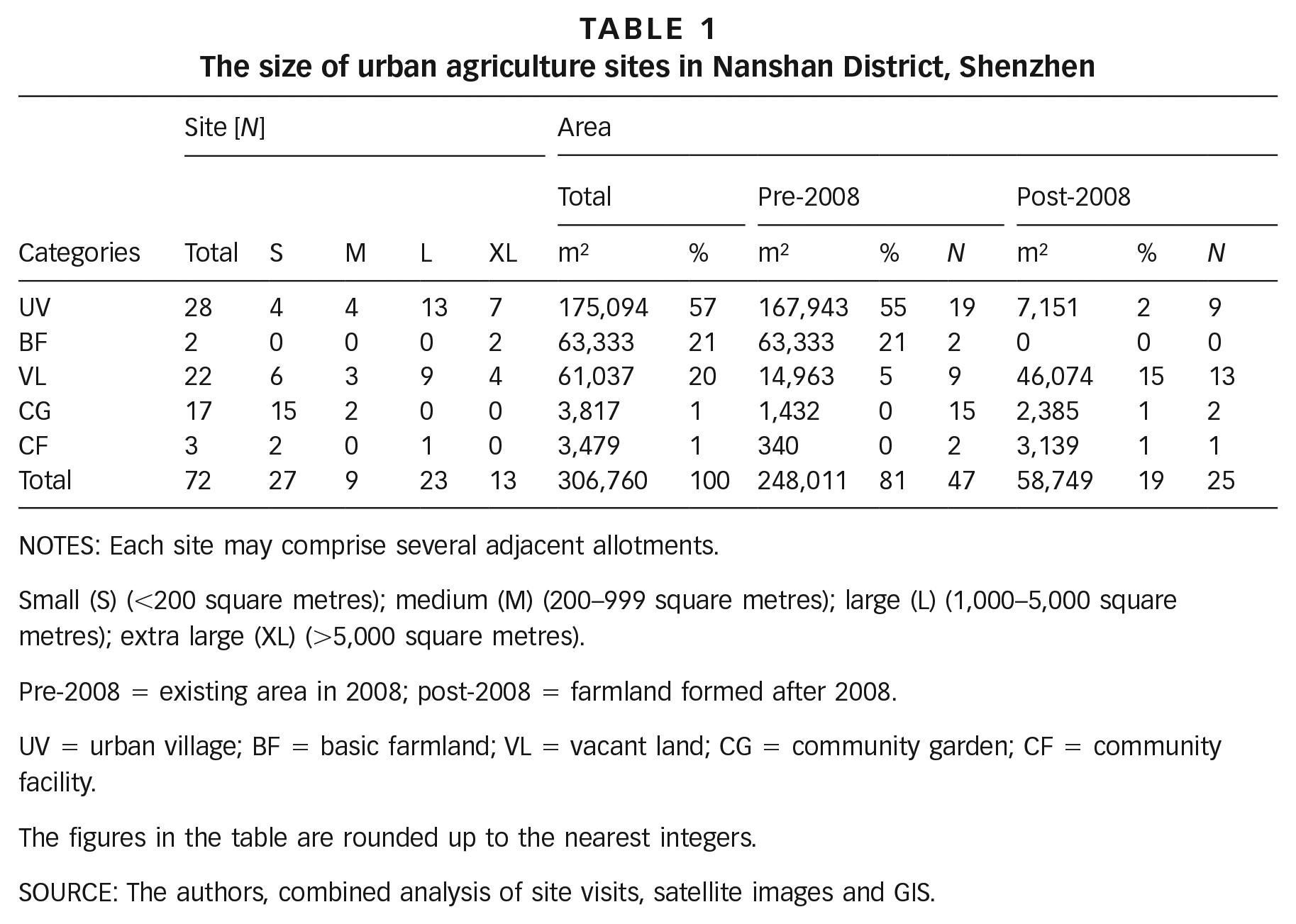
Through secondary data analysis, we identified 419,500 square metres of farmed land in Nanshan District, accounting for 0.22 per cent of the total district area. An interview with a Xili subdistrict officer revealed that several areas near the vast water reservoir in the district’s northern part had already been changed by the government to national reserve land by the end of 2016.(73) According to the regulation in question, drinking water resources were to be divided into first-grade and second-grade protection areas. Animal husbandry activities; planting and management of vegetables, fruits and flowers; and other activities were prohibited in the first-grade water source protection zones. Therefore, for this study, these areas were excluded from further analysis. The remaining farmland amounted to 306,760 square metres. Identified areas were then categorised based on their cumulative size as follows: urban village (UV), basic farmland (BF), vacant land (VL), community garden (CG) and community facility (CF) (Figure 1). The proposed categorisation accounts for the local specificities of UA in Shenzhen, comprising practices located in villages-in-the-city, in protected areas, and within relatively large governmental precincts. While UA in VL and CG are commonly found worldwide, UV, BF and CF practices are context-specific.
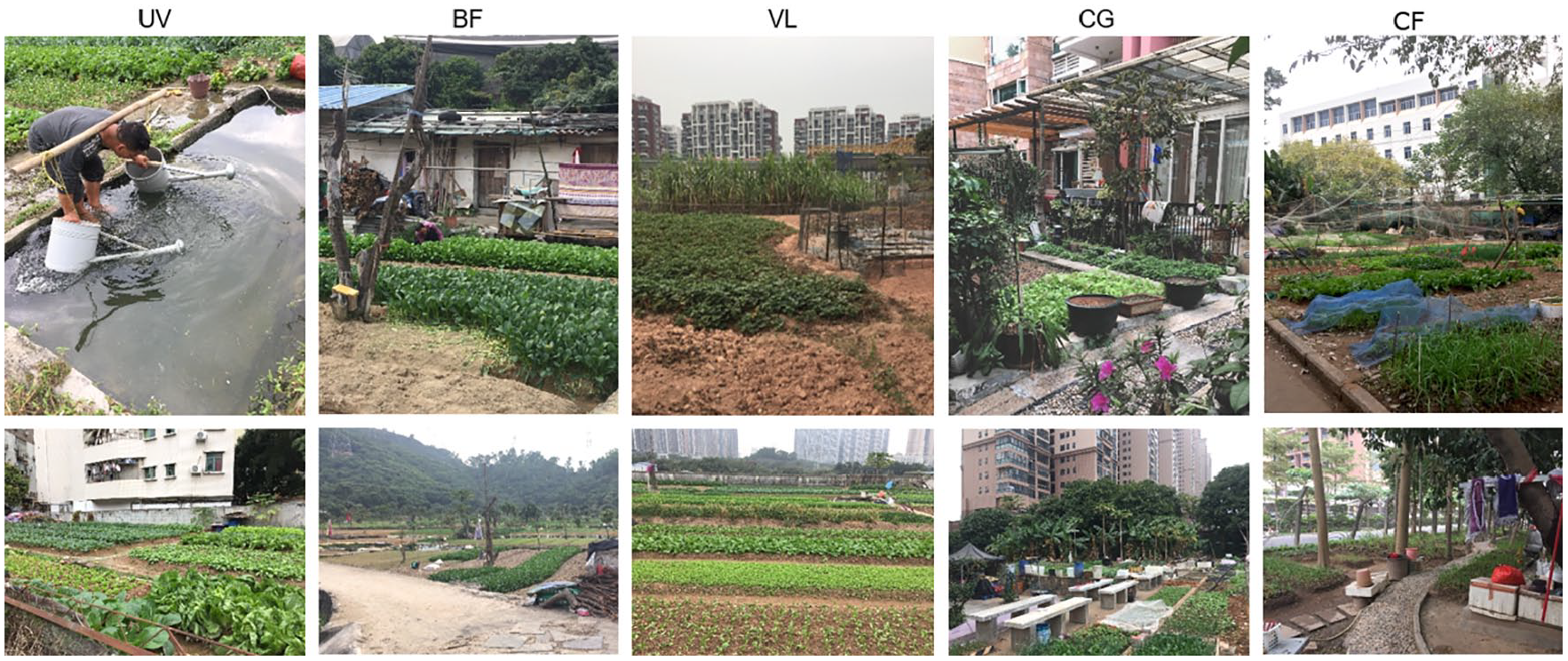
The five types of farmland. From left to right: urban village, basic farmland, vacant land, community garden and community facility
A cluster of farmlands in UVs in the Country Park(74) was discovered to the north of Xili Reservoir. A total of 95 mou (63,333 square metres) of BF protection area were identified, corresponding to the areas established by the Nanshan district government west of Xili Nanguang Expressway Toll Gate. Farmlands located in VL or undeveloped land are generally distributed along or near the Pinghu–Nantou high-speed railway, within the buffer zone separating the railway from the built-up area. Small farming allotments in CGs and CFs were identified in central and southern Nanshan District, the most densely populated areas (Map 2).
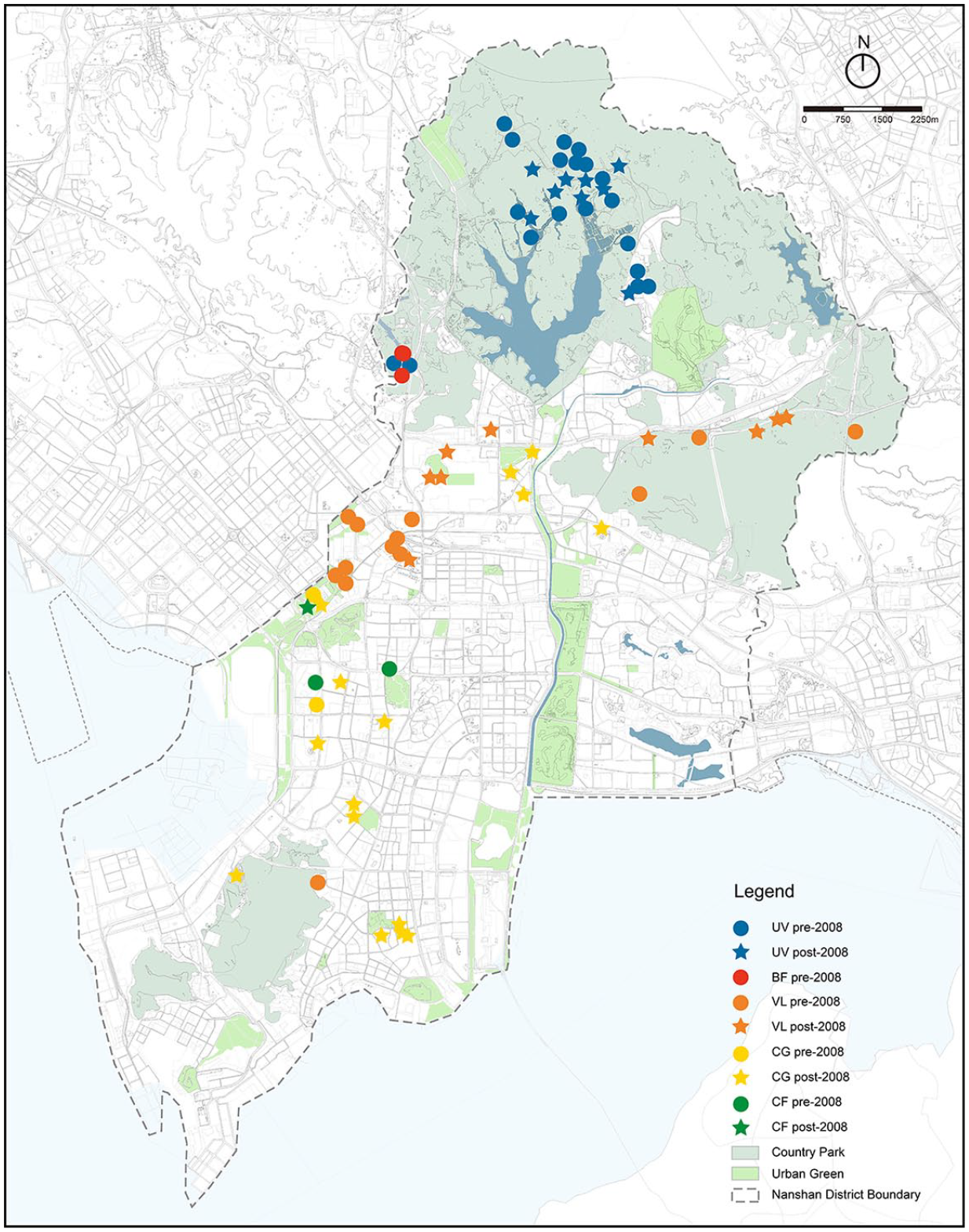
Spatial distribution of UA sites in Nanshan District, Shenzhen
UA in UVs is the largest category, constituting more than half of the total, with an average UA area of 6,253 square metres. The UVs hosting UA in this study are not conventional villages. Only one of the four – Xiang Nan Village – has the typical narrow alleys and densely built-up areas, with an average allotment size of approx. 55 square metres. The remaining three UVs are a sort of cultural relic, preserved from Shenzhen’s fast urbanisation by their location inside the formal Country Park area,(75) within the second-grade protection areas of drinking water sources around the water reservoir. Here, real estate development was impractical and large areas remained available for UA. The farmland area is diverse and scattered throughout the villages’ administrative boundaries.
The two BF sites located within the Xili subdistrict of Nanshan, together accounting for 63,333 square metres in total area, and among the 13 largest sites, were both already present in 2008.
VL farmland is primarily in areas awaiting development, alongside large transport infrastructure, and can be publicly or privately owned. There can be rapid changes in the use of this type of area; satellite images reveal how new infrastructure can fragment existing farmland and how farmland rehabilitation may occur following the interruption of construction work (Figure 2). The UA in VL accounts for 61,037 square metres.
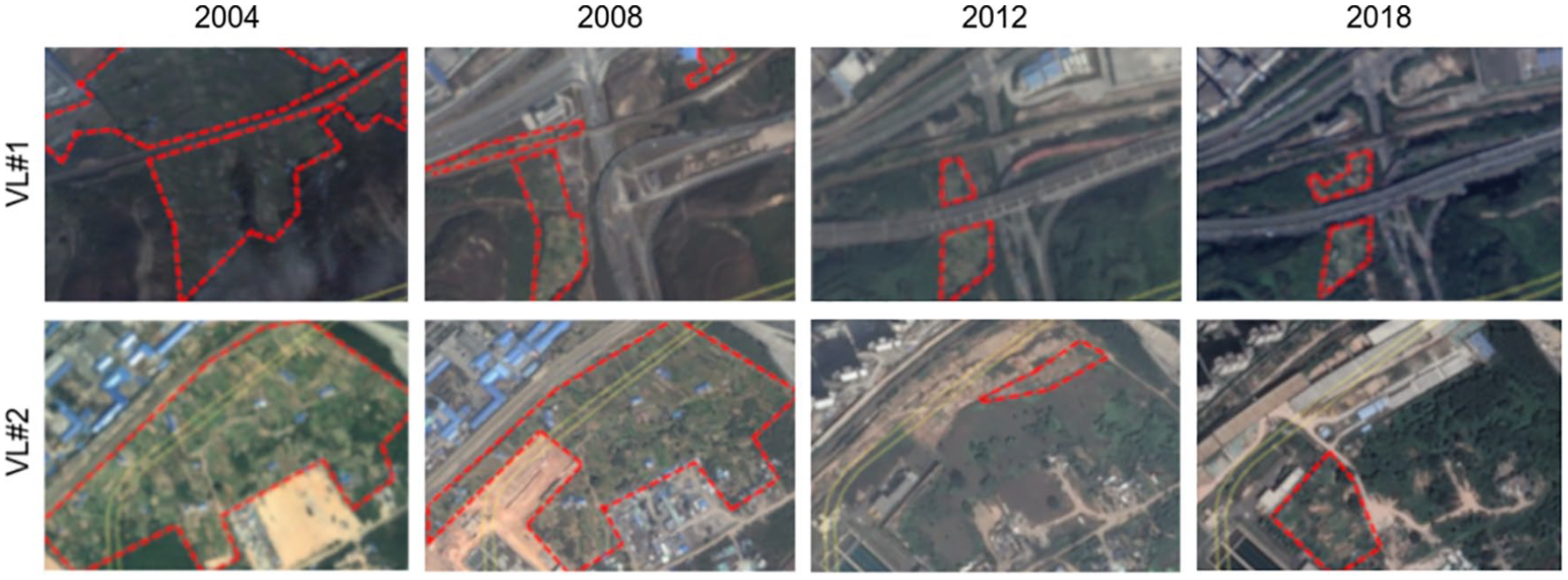
VL transformations from 2004 to 2018 in two selected cases
CGs, common in Nanshan, are typically small allotments in residential areas. Of a total of 94 district communities, 15 feature UA. Direct on-site observations revealed that in old housing stock (older than 20 years), UA is practised in public green areas initially intended as amenity spaces, while in new housing stock UA spaces are formally provided as private backyard allotments. UA in CGs accounts for only 3,817 square metres.
CFs are common in Shenzhen, found around public schools, military areas, government offices and other administrative buildings. Access is restricted, so, with the exception of one case, it was impossible to collect on-site observations and interviews. Nevertheless, the three UA sites detected from secondary sources account for a total surface area of 3,479 square metres, two of which already existed before 2008.
Although the number and size of the selected cases is small compared to the total in Shenzhen, they are representative of farmed spaces within the city boundary, as this topographically rich district comprises a variety of land uses. Of the 72 identified UA sites in Nanshan District, 27 were smaller than 200 square metres, nine were between 200 and 1,000 square metres, 22 ranged from 1,000 to 5,000 square metres, and the remaining 14 exceeded 5,000 square metres (Table 1). Sites exceeding 1,000 square metres can be found primarily in UVs; sites smaller than 1,000 square metres can be found primarily in CGs.
The size of urban agriculture sites in Nanshan District, Shenzhen
NOTES: Each site may comprise several adjacent allotments.
Small (S) (<200 square metres); medium (M) (200–999 square metres); large (L) (1,000–5,000 square metres); extra large (XL) (>5,000 square metres).
Pre-2008 = existing area in 2008; post-2008 = farmland formed after 2008.
UV = urban village; BF = basic farmland; VL = vacant land; CG = community garden; CF = community facility.
The figures in the table are rounded up to the nearest integers.
SOURCE: The authors, combined analysis of site visits, satellite images and GIS.
Over half (57 per cent) of the total area of detected UA sites was located within UVs, 21 per cent belonged to BF protection areas and 20 per cent was in VL, while allotments in CGs and CFs accounted for only 1 per cent each (Table 1). Noticeably, farmland existing as of 2008 accounted for 81 per cent of the total area. UA in CFs recorded a significant increase in area in the last decade (over 90 per cent), followed by UA in VL and CGs (over 75 and 63 per cent, respectively).
c. UA practices in Nanshan District
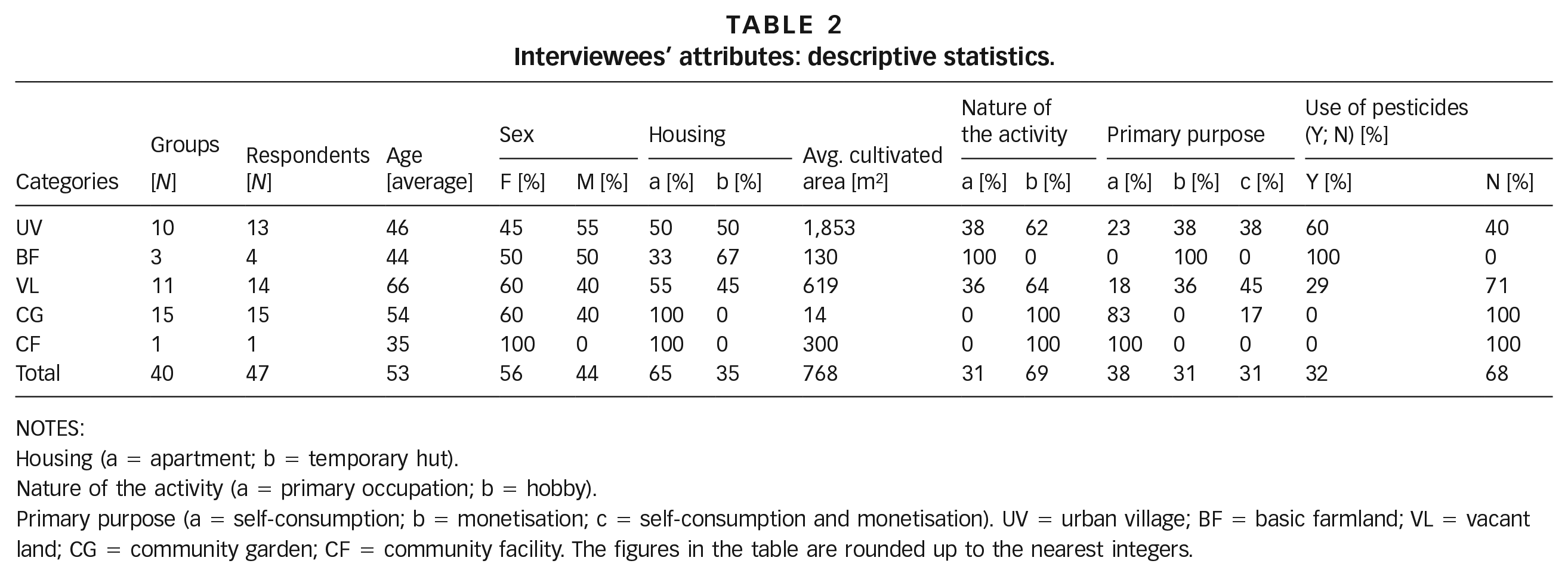
UA in Shenzhen is practised mostly by the elderly (average age: 53 years, Table 2). The majority (56 per cent) are women. The average cultivated area is 768 square metres, ranging from 1,853 square metres in UV sites to 14 square metres in CG. The findings reveal various combinations of the three categories of UA proposed by Cabannes: subsistence, market-oriented and leisure/recreational.(76) No pure forms of subsistence or leisure/recreational farming were found. In BF, production is entirely market-oriented. However, in allotments in CGs and CFs, it is leisure/recreational- and subsistence-oriented. In these sites, on average, 38 per cent of respondents practised hobby farming for self-consumption, two-thirds of them living in apartments and half of them being retired; 31 percent, hobby farming for a combination of self-consumption and monetisation; and 31 percent, full-time farming for monetisation. About 83 per cent of full-time farmers live in precarious self-built huts near the field (Figure 3), all sell their produce to local markets, and 58 per cent acknowledged using pesticides. Noticeably, the average age of full-time farmers is 49; two-thirds of them are men, while the average age of hobby farmers is 55. In total, 68 per cent of respondents stated that they used no pesticides; no one practising UA for self-consumption uses pesticides. Water sources are: tap water, rainwater, well water and sewage water. All full-time farmers use either rain (collected in ponds) or well water, while tap water is used by 59 per cent of hobby farmers, followed by rainwater (29 per cent), well water (6 per cent) and sewage water (6 per cent). Thirty-one per cent of respondents stated that they sell or distribute harvested vegetables in informal stands on the sides of roads, or to friends or relatives. Crops are varied and include: bananas, beans, broccoli, cabbage, celery, Chinese cabbage, coriander, cucumbers, endive, enoki mushrooms, garlic, hibiscus tea, kale, leaf mustard, leeks, lettuce, lycopus, mint, mugwort, mustard, onions, pak choi, papayas, pea sprouts, scallions, shallots, soybeans, spinach, strawberries, sugarcane, sweet potatoes, tomatoes and wheat.
Interviewees’ attributes: descriptive statistics.
NOTES:
Housing (a = apartment; b = temporary hut).
Nature of the activity (a = primary occupation; b = hobby).
Primary purpose (a = self-consumption; b = monetisation; c = self-consumption and monetisation). UV = urban village; BF = basic farmland; VL = vacant land; CG = community garden; CF = community facility. The figures in the table are rounded up to the nearest integers.
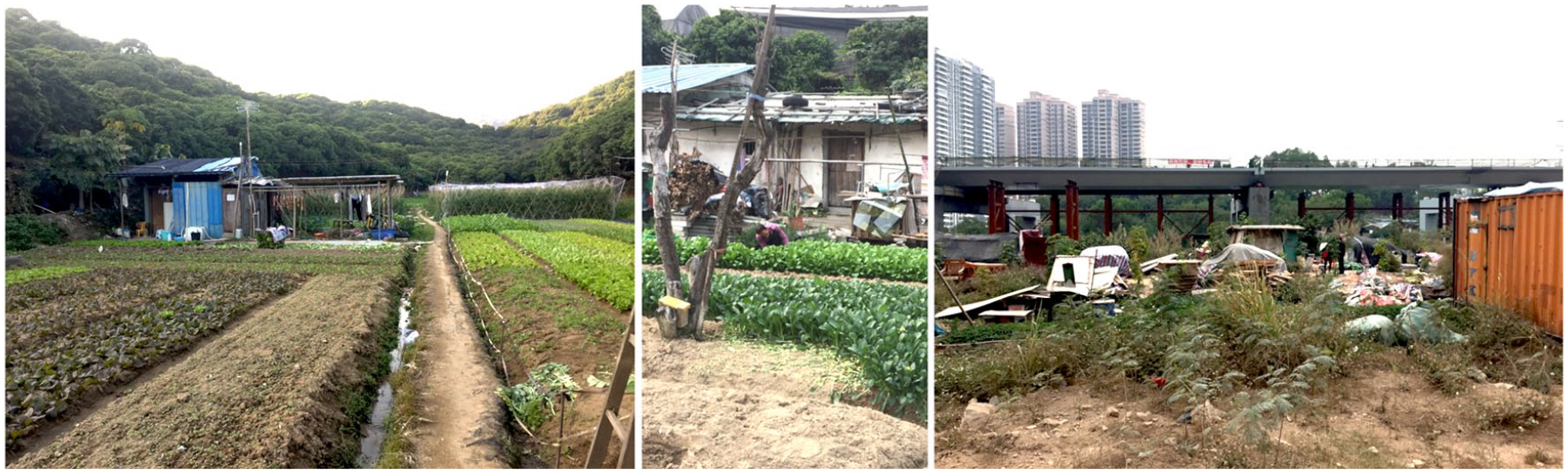
Temporary huts in UV (left), BF (centre) and VL (right)
The interviews reveal the dual nature of UA: full-time farming is practised in UVs, BF and VL; hobby farming (primarily by women) in CGs and CFs. While BF, CFs and CGs have only one type of practice, in UV and VL full-time and hobby farmers coexist. Quantitative analysis revealed similar practitioner characteristics for UVs and VL. Full-time farmers typically rent their cultivated land (1,542 square metres on average), for CNY 3,000 to 4,000 per mou (US$ 0.66 to 0.88 per square metre) per year. Interviewees reported an average income of about CNY 3,000 per month (US$ 463.5), selling vegetables such as spinach and cabbage at CNY 5 (US$ 0.7) per kilogram, and cultivating 7 mou of land. Full-time farmers spend on average US$ 1,017 to US$ 1,355 per year on fertilisers and pesticides, making US$ 1,744 of annual profit. The family investment of CNY 10,000 (US$ 1,545) to construct a temporary bungalow on the edge of the cultivated field, according to full-time farmers in UV, represents a significant capital investment for households of four to six people, whose only income derives from UA. For all interviewees, self-consumption farming enables substantial savings; in an extreme condition, yield determines household food availability: “If you have money, you eat better. If you do not, you eat less.” Full-time farmers have practised UA for a long time: 82 per cent for more than 10 years, and in one case for more than 20 years. The motivation is drastically different for hobby farmers, who see it as an opportunity for socialising and exercise: I have been in Shenzhen for decades and have been buying food for 20 or 30 years. Before, I took a walk for exercise every day. Now, I do not need to walk when I grow these vegetables. The exercise is enough.
A sense of insecurity emerged, particularly for informal practitioners. Urban infrastructure construction threatened imminent displacement: Originally [the viaduct] was expected to pass here, but works were not completed, they were stopped for 3 or 4 years, and then [the viaduct] was redesigned there . . . This land will probably not last for long.
The same interviewees described the local government’s eviction of relatives from their land, “and the land was left abandoned where it was, and nothing was done”. Local government intervention is also seen as the main threat in other cases: The government also recently expropriated a number of vegetable plots and demolished the houses of several other vegetable farmers, and where there were some twenty vegetable farmers, there are now seven . . . Sooner or later, the state is going to confiscate this place, and there’s nothing we can do about it, so it’s time to go back to our hometown.
In a few circumstances, more relaxed management or the reassurance of a lessor created more confidence in stability over the medium term: The landlady called me and said there was room for planting. I said I cannot manage it. It’s very tiring. I have to carry chicken manure. It’s so hard. What’s more, the government will take it away. She said not to worry: the land belongs to the highway bureau, no one will take it back, and you can plant until you do not want to. I think so.
Many respondents operating in VL report a sense of stewardship: “Just work hard and clean up these places”, “We cut down the greenery ourselves”, “In the past, this area was wild, and the grass was so thick that we decided to use it for growing vegetables. Before, the grass was so tall that we had to clean it up before planting vegetables.” Similarly, in old housing stock CGs: This plot belongs to this community. It used to be a garden, but nobody cared about it then. There are weeds in it. As you can see, it is better to plant vegetables here than to order vegetables. It is much cleaner with vegetables.
UA also enables socialising and education. In UVs, VL and CGs, many elderly people enjoy the opportunity for social interaction: I came here to watch the aunts plant the seeds, so I followed them and got better at it. The kids have gone to school, so I have nothing else to do . . . people around are slowly getting to know each other and sharing experiences with their neighbours more.
In UVs and VL especially, where full-time and hobby farmers coexist, people exchange knowledge. A hobby farmer said: I learned how to grow vegetables from professional farmers. As they passed by here going to the vegetable market every morning to sell their vegetables, I got some advice. For example, they told me what kinds of vegetables are more suitable for this season. Sometimes they handed me some seeds.
Socialising fosters a sense of belonging; but belonging also pertains to the surroundings. Some stated their appreciation for the local environment: “It’s not miserable here. The air is nice, and the environment is nice.” An old couple reported living in a self-built temporary shelter on the edge of the cultivated field for almost 30 years, one partner stating: “Wherever the vegetable spot is, my house is.” The sense of belonging is sometimes associated with the dwelling: “I’ve built a shed with my own hands and planted a vegetable patch, so I have a sense of belonging to the land here.” Also: “Whether or not there is a sense of belonging depends on whether or not you have a house.” In some cases, their long-term residence in the city is significant for their sense of belonging: “I don’t really go home except for New Year’s Eve, so I belong here.” In other cases, ties with their place of origin in the countryside are stronger: “. . . I will live wherever my house is. The home country is the ultimate retreat.” In one unusual case – the only interviewee born in Shenzhen – both the city and UA are unappealing: I have no sense of belonging and do not want to continue growing vegetables here anymore. I want to change place. I grew up in Shenzhen, but prefer to return home [place of family origin]. In the old hometown, I bought a house.
Finally, the city is both the place for reclaiming a Lefebvrian right to space – “Anyone who ploughs the fields will possess the land” – and for finding protection from restrictive regulation: It was my dad who planted vegetables here at first. I came here to live and help out in the vegetable field. My wife entered the factory here, and I helped sell vegetables. At that time, when children were born, the one-child policy was stringent. You had to hide, or people would arrest you. When I went back home and talked to my classmates, they wondered why I came here to grow vegetables. I told them I had no choice; I have four children. I cannot go to work if I have many children. If you go to work and you do not have the skills, people will give you two or three thousand yuan . . . By growing, we can earn three thousand yuan per month, with a little hard work, we can obtain hundreds more than we would in the factory.
Ultimately, UA is a way to achieve freedom: “I have been growing vegetables here for the past 28 years. I don’t want to work. I want to be free.”
V. Discussion
The Chinese global city is a city of migrants, most of them sharing an agricultural background and often practising UA for nostalgic reasons. The shared sentimental bond makes UA resilient; nevertheless, these precious resources are overlooked by the local administration. The industriousness of Shenzhen’s urban farmers is crucially important for the city. It contributes to the safeguarding of local agricultural heritage, and in extreme cases, the preservation of complex human-made ecosystems.(77) Unfortunately, at the time of writing, this valuable agricultural heritage is abruptly undergoing irreversible conversion of farmland, due to hazardous urbanisation patterns. As of today, among the five categories, BF is the only officially recognised farmland; the other examples of UA have no legal status and remain unregulated. Moreover, on-site direct observations and interviews revealed that effective administrative measures promulgated in 2014 for BF protection remain unobserved. There is an evident subdivision and subcontracting of allotments, which are rented to farmers living in precarious, deprived conditions in self-built temporary shelters. According to the official governmental report, the municipal government allocated nearly CNY 1 billion (US$ 154.4 million) to support agricultural development, including BF implementation and reconstruction.(78) Nevertheless, respondents reported that the only tangible effect was the installation in 2017 of signboards and boundary markers.
A critical aspect of UA in Shenzhen which emerges from this study is the rigidity of the policy framework, which results in absent or overlapping protection measures and the lack of a landscape ecology perspective. Non-polluting UA within the drinking water protection areas could be retained and protected. In this particular case, the water reservoir and sustainable UA could coexist symbiotically. Moreover, an understanding of UA as part of the urban blue and green infrastructure providing ecosystem services could prove useful for more effective planning of urban green corridors and landscapes.(79) Given this potential, the vocabulary of spaces that emerge from this study might find application in urban planning and landscaping endeavours aiming at a higher degree of interpenetration between agricultural and urban areas.(80)
UA in Shenzhen emerges in the form of dual practice. Occupational farming is performed by socially marginalised individuals with low levels of skill and education, who see UA as their only chance for food security and economic development – “I’m old, and my Mandarin is not good, so I have to keep guarding the vegetable patch.” These precarious farmers must cope with both their undocumented condition as migrants lacking the right of residence and the local government’s lack of regard for their practice. Then there is the growing group of hobby farmers, typically elderly and not wealthy, who are motivated by socialising, small savings on food, a healthy lifestyle and the contribution to their families: It’s really good to eat the vegetables you grow yourself. I use rice water to irrigate them. The vegetables are so tender! There are nine people in the family, two sons, one grandson, and two granddaughters. They all eat from this patch.
In Shenzhen, UA reclaims a right to space,(81) Lefebvre et al. rather than to the city. Food-growing initiatives are not related to political activism here. Nevertheless, anarchism appears in unconventional ways, as in the appropriation of space, mutualism and munificence – “It makes me feel good to gift food to others.” But, as distinct from many European cases,(82) in Shenzhen, UA is not a consciously driven, culturally leavened social practice and expression of identity. Nevertheless, despite being socially and spatially marginalised, UA in Shenzhen is also a place for building cultural hybridisation and capacity (technical, social and environmental). Among the 46 out of 47 respondents who are domestic migrants, many come from Guangdong Province, but some are from Guangxi, Heilongjiang, Jiangxi, Sichuan and Zhejiang. This cultural variety enriches the city’s socio-biodiversity and multicultural identity while enabling self-determination and community solidification.
As in the global North, a conspicuous group of actors associates food growing with health benefits. Nevertheless, the use of potentially contaminated water sources, such as rain, well and wastewater, may be problematic. The informal sale of subsistence farming produce may even threaten consumers: one respondent reported that informal selling is seen as an opportunity to avoid official controls in local marketplaces – “There are inspections at the market, but no inspection here.” Conversely, achieving food safety through the use of tap water in agriculture is an unsustainable practice in Shenzhen, where about 70–80 per cent of it is imported through a complex, gigantic and costly system of aqueducts, pumping stations and water reservoirs.
These findings add to the existing body of knowledge from the cases of Beijing, Shanghai and Chengdu,(83) providing first-hand evidence of local government’s disregard of grassroots practices. As in Beijing,(84) migrant farmers are reshaping interstitial areas within the city fabric, earning a meagre income – about US$ 700 per year in Beijing in 2009 and US$ 1,744 per year in Shenzhen in 2019. However, unlike agricultural customs followed in Shanghai and Beijing, the practices documented in this study are low-tech and production-oriented.
This study has several limitations. The inaccessibility of some areas fragmented the data collection; some categories may be inadequately represented by our sample. The sample of respondents may also not be fully representative of the district’s farmers. The larger number of retired people may have been influenced by the greater amount of time that they spend on-site compared to younger individuals who may practise UA only outside regular working hours. Some respondents were reluctant to reveal potentially illegal or hazardous aspects of their practices. Finally, in the translations of interview transcripts from Chinese to English, the connotations of some peculiar expressions may have been only partially rendered.
a. Policy recommendations
Regarding farmland, this article makes five proposals:
1) expanding the farmland protection zone to suitable areas in or around villages not yet encompassed by the city and undeveloped land to preserve valuable heritage and agricultural production within the city fabric;
2) resolving the overlapping of farmland, first-grade drinking water protection areas, and ecological protection zones, to avoid grey administrative zones that can hinder the establishment of legally protected farming practices;
3) providing a larger, diffused number of CGs to respond to the interest in practising UA, especially from elderly people and women, demonstrated by this study;
4) integrating UA policies with the so-called “Sponge City” initiative – a framework for sustainable urban drainage systems launched in 2014; and
5) investigating new patterns of interpenetration between UA and built-up areas to assess UA-related social and environmental benefits.
Concerning farming practices, this article advocates the following:
1) prioritising disregarded farmers in the government agenda and recognising the value of their practices;
2) creating a system of subsidies and other administrative measures to ensure the protection of urban farmers and their right of residence; given our findings, this is particularly urgent for full-time farmers;
3) establishing educational endeavours to eliminate such hazardous practices as the careless use of pesticides and polluted water, and to promote the sustainable use of natural resources (e.g. biological rainwater or wastewater treatment processes) and organic farming;
4) active control and regulation of hazardous practices to reduce the risk of contaminated products entering the food chain;
5) funding support for initiatives aimed at providing urban farmers with associations (e.g. farming cooperatives) to facilitate their various operations, ranging from seed sharing to produce distribution (practices revealed by this study); and
6) labelling of Shenzhen UA products as “produced in Shenzhen” and linking their production to organic practices through a system of certification for quality assurance.
VI. Conclusions
This study used the case of Nanshan District in Shenzhen to shed light on the condition of UA in a Chinese global city where the majority of arable land has been lost in recent decades: 41.95 hectares identified by this study were part of a vast agricultural area that was irretrievably lost during the unbridled urbanisation of the last four decades that turned a small town into a global city, jeopardising food production and environmental conservation.
As for the new agricultural geography of Shanghai,(85) this study provides evidence on the cultural reform that is producing cross-generational fertilisation and community engagement at a precarious time, far removed from the futuristic rhetoric of government policies. The Chinese global city is an immature urban entity striving to project a futuristic image over its recent underdeveloped past. Flattered by the commercial logics of a “business consultancy” urbanism,(86) it considers its agricultural history, which bears the stigma of poverty, to have no value.
Nevertheless, agricultural practices persist within its urban fabric – overlooked and, to a certain extent, tolerated by the government. These practices are manifold, ranging from the desperate pursuit of food security to the enjoyment of a leisurely pastime. UA reflects the current and growing economic, social and spatial inequalities. Nevertheless, both occupational and hobby farmers provide essential environmental and community services. Although Shenzhen’s farmers are excluded from direct participation in decision-making processes, UA can be interpreted as an appropriation of urban space and a quotidian contribution to the collective urban oeuvre, whereby residents wittingly and unwittingly claim the Lefebvrian right to space.(87)
In Shenzhen, various types of UA coexist in and around villages and in the land left over from urbanisation, turning this space into a “meeting point for building collective life”.(88) In these places, farmers exchange knowledge and socialise, but are threatened by looming real estate and infrastructure developments. Urban renewal also threatens hobby farmers, who cultivate green areas in the space around the old housing stock. While the local government promotes leisure farming and high-end agricultural activities, this UA underworld remains overlooked. The Chinese global city has completed the transmutation of economic into spatial planning;(89) and the de Certeausian discord between government strategies and UA practices reveals, as in the case of the global neoliberal city,(90) the incapacity of governments to plan responsively. State and municipal administrations seem more concerned with future goals than with the present necessities of citizens’ ordinary lives. This article aims to reveal to policymakers the utility of a current practice, suggesting potential measures for a more environmentally sustainable and socially inclusive urban development process.
Footnotes
Acknowledgements
The authors would like to express their deep gratitude to all the interviewees for their time and information, the anonymous reviewers for their critical feedback, and the E&U editorial team for their precious input. The authors highly value the careful review and the high-quality editing process; they acknowledge Mengyu Sun and Di Shao for their assistance in data collection and drafting of maps.
Funding
The work described in this article was partially supported by a grant from the Research Grants Council of the Hong Kong Special Administrative Region, China (Project No. CityU 21614719), by a China Postdoctoral Science Foundation Grant (Grant No. 2015M581452), and by a grant from the City University of Hong Kong (Project No. 7005042).
1.
Amin (2013);  .
.
6.
12.
13.
18.
Amin (2013); .
31.
35.
38.
44.
Within the Third Plenary Session of the 17th CPC Central Committee.
45.
The Notice on Further Supporting the Healthy Development of Facilities Agriculture and the Notice on Further Perfecting the Demarcation of Permanent Basic Farmland.
46.
The 14 cities were Beijing, Shenyang, Shanghai, Nanjing, Suzhou, Hangzhou, Xiamen, Zhengzhou, Wuhan, Guangzhou, Chengdu, Guiyang, Xi’an and Shenzhen.
47.
The hukou is part of China’s population registration system and comprises the residential location and eligibility for public services. Each citizen can only register in one location (hukou suozaidi) under a “rural” or “urban” registration type (hukou leibie). From 1958 to 1985, rural to urban migration was strictly controlled. The market-oriented reforms since the late 1970s greatly weakened government control over geographic mobility, and in 1985, rural migrants were permitted to register as temporary residents in urban areas. The tremendous increase in the number of migrants living in cities promoted rapid urban development, and the floating population became a driving factor in China’s urbanisation. However, as temporary residents without urban hukou, the floating migrants are not entitled to full citizenship benefits. For instance, floating migrants have partial access to pension and medical care, and they are not entitled to rent public housing or buy commercial housing.
49.
Zhu (1994); .
50.
Zhu (1994); .
51.
The Master Plan for Shenzhen Special Economic Zone (1986–2000).
53.
The Interim Provisions on Rural Urbanisation in the Shenzhen SEZ.
55.
As of 2019, according to official figures, only 37 per cent of Shenzhen’s 13.44 million inhabitants actually had urban hukou. The long-term rural residents who enjoy the privilege of urban hukou (a relatively small number indeed) also enjoy a number of benefits as compensation measures for their rights to former agricultural land. Having acquired real estate properties (often as compensation measures), they are now some of the richest people in Shenzhen.
66.
72.
Shenzhen’s Implementation Plan for the Pilot Comprehensive Reform of Building a Pilot Demonstration Zone of Socialism with Chinese Characteristics (2020–2025).
73.
As imposed by the Shenzhen Drinking Water Resources Protection Regulations of the Shenzhen Special Economic Zone.
74.
Conceived in the 1990s based on Hong Kong’s model, Shenzhen Country Park was established in the early 2000s. It demarcates a vast ecologically relevant area to be preserved from urbanisation.
75.
The original villages still stand and people live there. Nevertheless, new construction is not allowed as the area is within the Country Park.
77.
80.
83.
86.
Amin (2013); .