



Abstract
This article seeks to explain why some popular neighbourhoods in Buenos Aires have responded more effectively than others to COVID-19. It compares actions that took place between March and October 2020 in the neighbourhoods of Villa 20, Villa 15 and Villa 1-11-14. We analyse public policies carried out by government agencies, especially the Instituto de Vivienda de la Ciudad (IVC) and the Ministerio de Desarrollo Humano y Hábitat (MDHyH), and the active collaboration of local organisations. While significant scholarship has focused on COVID-19 effects and coping strategies in Latin American neighbourhoods, there is limited analysis of how pre-existing relationships between local actors and government agencies have shaped neighbourhood responses. This comparative analysis shows that in fact the consolidation and depth of historical working relations between local government and local organisations determined the response capacity of each informal neighbourhood.
Keywords
I. Introduction
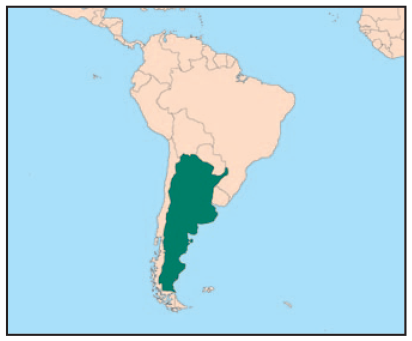
This is the story of an early episode in the war against a pandemic whose end is not yet in sight. The struggle is global, but its impact is painfully local. This study looks at the experiences of three popular neighbourhoods(1) in the southwest of the City of Buenos Aires, Argentina – Villa 20, Villa 15 and Villa 1-11-14 – whose trajectories were similar in their first decades but whose most recent experiences, especially during the pandemic, have been different. Understanding these experiences requires a comparative analysis of actions and policies implemented between March and October 2020, as well as a historical analysis of the conditions that determined the villas’ response capacity in relation to the virus.
Two main factors motivated the selection of these three villas for attention. First, they represent a large proportion of the COVID-19 cases in the city’s informal settlements. As of 31 October 2020, 9,008 positive cases were registered among the three neighbourhoods, 52.6 per cent of the total cases in the city’s informal settlements.(2) Second, and more important, is the significant difference in the velocity of the contagion’s spread in the three villas, with cases in Villa 1-11-14 starting earlier and spreading faster (see Figure 1). Our hypothesis is that the capacity of each neighbourhood to respond to COVID-19 depended more on pre-existing conditions than on specific actions related to COVID-19.
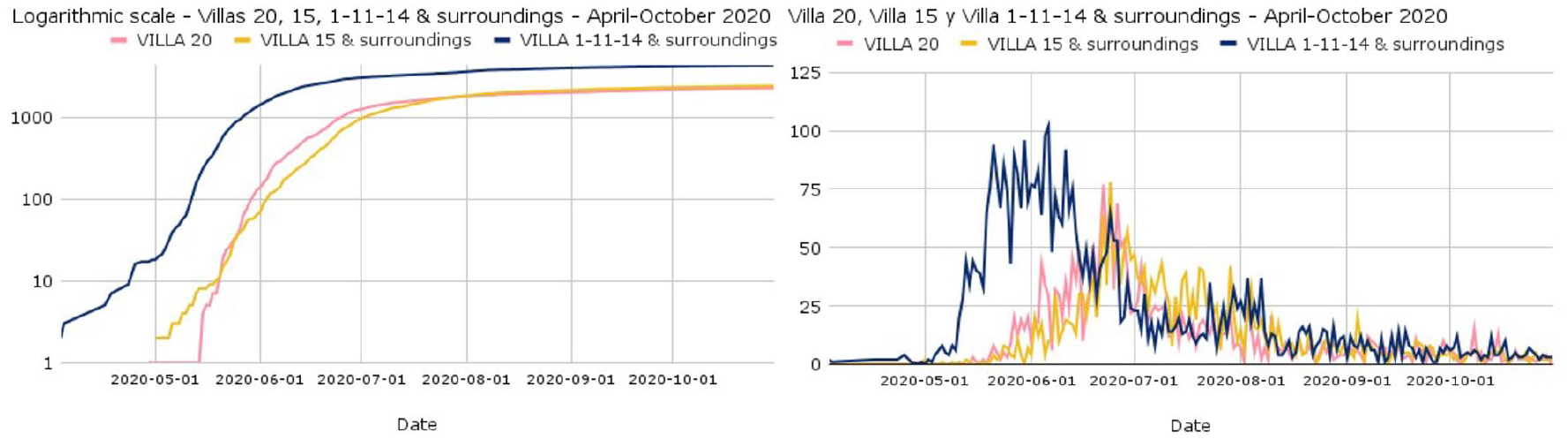
Evolution of COVID-19 cases
The comparative analysis of the three villas demonstrates that the level of consolidation and depth of the previous relations between the state and the local organisations determined the capacity of each informal neighbourhood to respond to COVID-19. Two of the villas were able to mobilise more quickly in response to unexpected hazards and risks, resulting in a slower growth in the number of cases, which allowed the actors involved to gather information and organise interventions. This may explain why, despite having similar intervention strategies, the social policy worked better in some villas than in others. Previous conditions at the neighbourhood level, together with the capacity of groups and their members in each villa to get organised and assist families, shaped each experience. This relates to their “collective efficacy”,(3) defined as an outcome of diverse factors and as a potential causal force itself that refers to the internal capacity of groups to recognise problems and to mobilise to find solutions and effective responses. According to Sampson,(4) these factors interact in a process of cumulative causation to produce “neighborhood effects”.
The relevance of neighbourhood effects has been widely addressed. Several studies by public health experts in other countries have examined the many relationships between neighbourhood dynamics and public health outcomes,(5) considering how the characteristics of neighbourhoods affect the conclusions about the incidence and impact of disease.(6) Diez Roux(7) has argued that neighbourhood differences need to be related to “upstream determinants” and the social determinants of health (SDH). SDH are the social, political, economic, environmental and cultural conditions that cause health disparities within a society.(8) These conditions become especially significant during a health crisis such as COVID-19, when material conditions, the healthcare system, behavioural and biological factors (such as pre-existing diseases) and socioeconomic factors (including community relationships) have significant effects on the level of exposure to the virus, as well as people’s capacity to recover from it.(9)
In this emergency context, neighbourhood responses are also determined by the actors involved in the local dynamics. It is therefore necessary to focus on the role of community, and of social and political organisations in popular neighbourhoods, as they are capable of shaping and carrying out relevant policies on the ground given the expertise they have developed over time. There is extensive work exploring the role of local organisations in facing the effects of free-market policies in the global South, and specifically in Latin America and Argentina.(10) The relevance of these organisations is remarkable as they have traditionally provided assistance to families on such basic needs as food and childcare, as well as other community requirements that cannot be fulfilled entirely by the state.(11) The role they play in the administration and distribution of resources and their local relevance make them key assets and resources for families, as well as mediators between the state and the neighbourhood.(12) The literature has also shown the significance of the role of social and political organisations in the processes of neighbourhood upgrading in Buenos Aires more generally, but also specifically in studies of Villa 20(13) and Villa 1-11-14,(14) due to their capacity for mobilisation and their invaluable contribution of local knowledge.
This study is unusual: the global scholarship, from both the South and the North,(15) has focused mainly on exploring concrete state and community responses to COVID-19 and how the pandemic has affected state–society relations in different countries at a city level.(16) Response capacity is approached in most of these works as an outcome of the emergency context and not necessarily as a consequence of longer-lasting relationships already present in those neighbourhoods. Specifically in the case of the City of Buenos Aires, different works have addressed the uniqueness of specific popular neighbourhoods’ responses, such as those of Villa 20(17) and Villa 31,(18) showing the interactions among the state, social movements and inhabitants during the pandemic. However, there are no studies analysing comparatively the experiences of different neighbourhoods within the same city. Our comparative study shows that these pre-existing relationships were fundamental to understanding the potentialities and the limitations of the emergency response at the local level.
This article is divided into four parts. First, we describe our mixed methodology. Second, we briefly explain the transformation of the southern part of the City of Buenos Aires and the three popular neighbourhoods, reconstructing their history up to the pandemic. Third, we describe the experience of the pandemic in each neighbourhood, with a special focus on the relationship between local government and community organisations. Finally, we conclude and point to future challenges for the post-pandemic world. We hope this study can contribute to the planning of inclusive public policies aimed at structural inequalities, seeking in the long term to be better prepared for unexpected events and new threats.
II. Methodology
This work combines qualitative, quantitative and spatial data collection and analysis methods. Triangulation(19) allowed us to strengthen the findings from each technique.
1) Quantitative data collection: This involved the systematisation of data on COVID-19 cases and deaths(20) (daily reporting of cases and deaths in Villas 15, 20 and 1-11-14 provided by the IVC,(21) and official numbers at the city level reported by the Ministry of Health of the City Government(22)) and the use of census sources and IVC diagnostic reports. In some cases, the limited availability of updated data constrained the comparison between the neighbourhoods. Census data were available for Villa 20 and Villa 1-11-14 for 2016 and 2018 respectively, but only for 2010 for Villa 15. These sources, together with documents and reports provided by the IVC, made it possible to characterise the neighbourhoods prior to COVID-19 according to their housing, sanitary and urban conditions, as well as to contextualise the actions carried out in each neighbourhood between March and October 2020.
2) Qualitative data:
a) Semi-structured interviews were carried out with 32 respondents from an intentional sample,(23) including officials from the IVC and other government bodies, and representatives of local participation and decision-making spaces in each neighbourhood such as social movements, political organisations, cooperatives and soup kitchens, and in the case of Villa 1-11-14, elected delegates.
b) We reviewed documentary, policy and bibliographic material, such as journal articles, social media, and official documents related to the actions carried out in the three neighbourhoods. In addition, a literature review was carried out on the social determinants of health, the historical development of the three neighbourhoods, and the role of the state and parastatal bureaucracies.
3) Spatial dimension: The physical features of each area were analysed to identify the formal and informal sectors in each villa and to assess available services such as healthcare, education, transportation and COVID-19 emergency health posts.(24)
III. Buenos Aires and the Three Villas Before the Pandemic
The City of Buenos Aires (CABA) is the capital of Argentina and part of the urban agglomeration called the Buenos Aires Metropolitan Area (AMBA). According to the last national census in 2010, 2,890,151 people lived in the city, approximately nine per cent of them in precarious housing conditions with poor-quality public services, generally located in segregated areas. Between 2001 and 2010, the number of the city’s informal neighbourhoods grew by 17 per cent and their population by 52 per cent; 80 per cent of these neighbourhoods are concentrated in communes 4, 7 and 8, in the southern part of the city.(25) These areas share some conditions, including pollution, informal housing and a lack of infrastructure, the result of shared structural factors.
The southwest area of the city is located in a low-lying territory, one of the most extensive floodplain areas in the Cuenca Matanza-Riachuelo, where many industries and factories and much large-scale urban equipment were established during the twentieth century. This area was considered an urban backyard,(26) and became the site for slaughterhouses and garbage dumps. Between the mid-1940s and the late 1950s, the main popular neighbourhoods of the southwest sector emerged and expanded, including the three informal settlements discussed in this article: Villa 1-11-14, Villa 15 and Villa 20 (see Figure 2). The state has tried to respond to the housing problem of the three villas by building public housing projects near these informal neighbourhoods. These projects, however, only managed to accommodate a small portion of the residents, while the villas continued to grow around them. As a result, this public housing ended up becoming part of the fabric of each villa. Currently, the IVC’s approach defines each popular neighbourhood through a comprehensive perspective that considers both informal areas and the housing projects they surround. During the pandemic, this strategy was continued in the implementation of policies, as they tackled the neighbourhoods undergoing upgrading as well as in those in the same area that were not. Following this logic, this study considers informal settlements to be characterised by tenure insecurity, informal access to services and low-quality housing, but also includes the surrounding public housing projects.
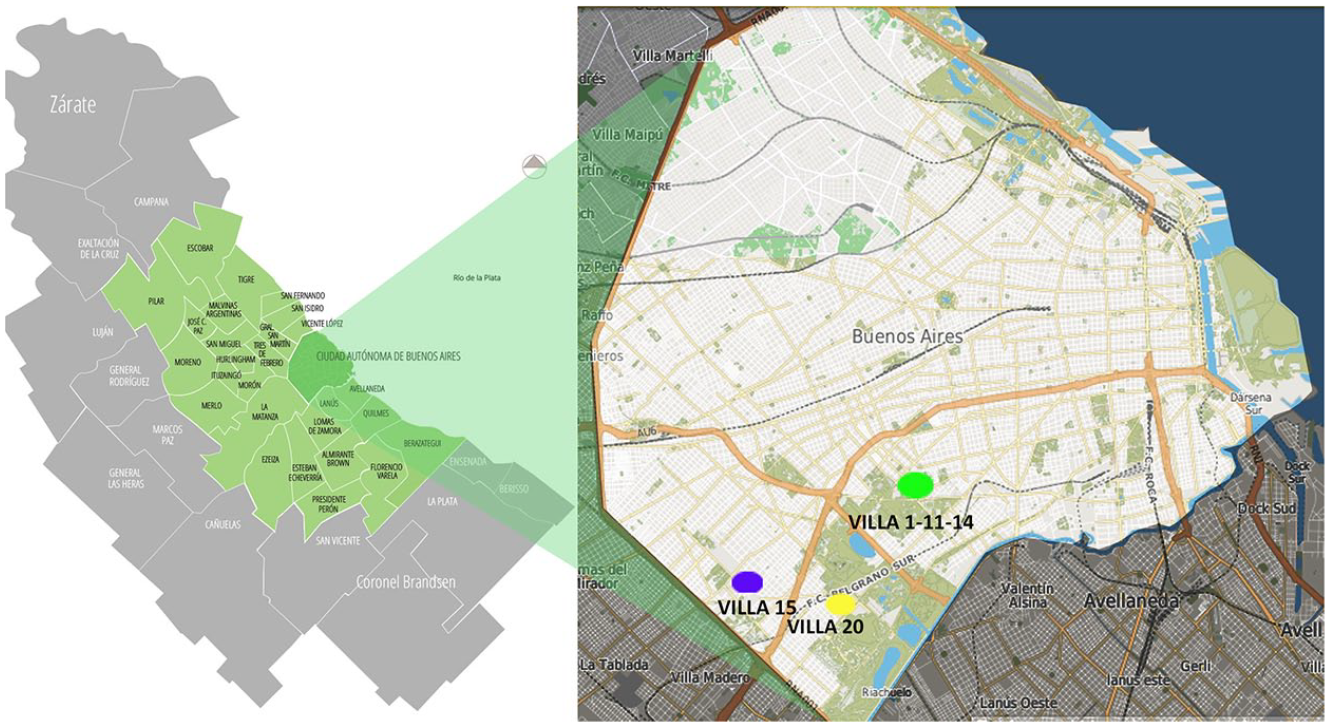
AMBA region; locations of Villas 15, 20 and 1-11-14; and Buenos Aires City limits
Since the 2015 election in Buenos Aires City, the IVC has been the government agency in charge of most of these neighbourhoods, through the implementation of a new strategy. This government body has had to rebuild weakened relationships in these three neighbourhoods. Up to 2008 the IVC, previously called the Municipal Housing Commission (CMV), was one of the most important agencies involved in interventions in the city’s informal settlements. However, after the 2007 election of local authorities, many of the IVC’s main responsibilities were transferred to other government agencies, including the Social Management and Intervention Unit (UGIS) and the Secretariat for Habitat and Inclusion (SECHI). This fragmentation into multiple institutions with overlapping and poorly articulated responsibilities complicated the relationship between the local government and the stakeholders of each villa. With these changes, they lost the main interlocutor that could offer an integrated response to their housing problems.
In Villa 1-11-14 and in Villa 20, the IVC has been working on Integrated Development Projects (Proyectos Integrales de Reurbanización – PIRUs), in conjunction with the inhabitants, stakeholders and local organisations of the informal neighbourhoods. The relevant local actors vary from one neighbourhood to another, depending on the historical development of the villa itself. It is important to note that these are all political actors, and that in some cases they are ideologically in opposition to the political party governing the city. For this reason, interaction between the IVC and the social and political organisations are commonly conflictive, and require a consensus for the successful development of urban interventions.
Specific IVC interdisciplinary project teams called coordinaciones were appointed to work in each neighbourhood. They were composed of city staff with technical expertise, including engineers, architects and employees working on the ground on a daily basis. Their tasks were to collaborate with the inhabitants in the design of public policies to be implemented in each neighbourhood. It is important to emphasise that not all of the Buenos Aires informal neighbourhoods have been able to generate the necessary consensus to develop a PIRU, and that the degree of progress on existing projects is also uneven. The first step of a PIRU consists of a census, followed by a socio-spatial survey (RELSE) of the entire neighbourhood, documenting the characteristics of the residents, the material conditions of the houses, and the georeferenced locations of the households. This information is necessary to start the participatory design phase of each block of the villa. Of the three villas, only Villa 20 has completed this process, so it has the most updated and complete information. Available data for Villa 1-11-14, collected during a 2018 census, include less in-depth information than the full RELSE.
a. Villa 1-11-14
Includes: Villa 1-11-14 and the public housing projects Barrio Rivadavia I and II, Barrio Illia I and II, Bonorino I, II, III and Polideportivo
Villa 1-11-14 has grown progressively over the years through the interweaving of the informal settlement with public housing projects. The Rivadavia I and II, Illia and Bonorino projects were built simultaneously with the growth and unification of dispersed informal settlements of self-built houses (see Figure 3). By 2018, 40,059 people lived in the informal area in approximately 4,907 dwellings, with a density of approximately eight people per dwelling, and 20,353 in these housing projects.(27) Forty-seven per cent of the dwellings have more than one floor and almost half of these dwellings have three floors or more (14 per cent of the population is critically overcrowded).
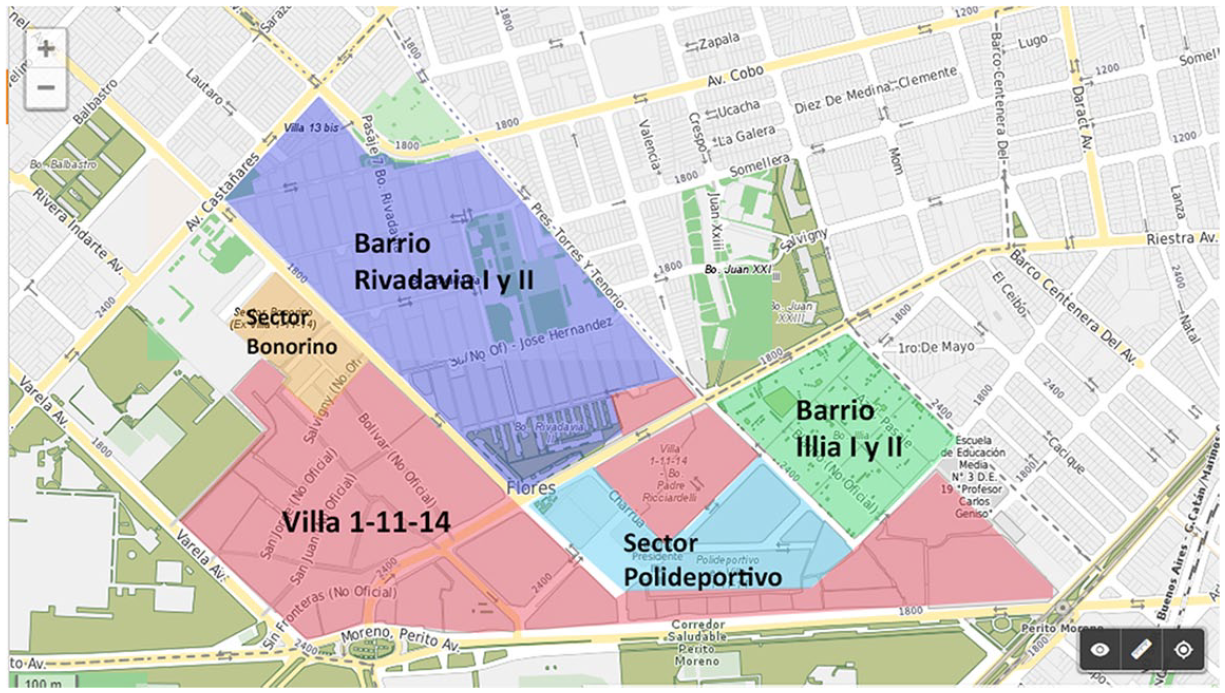
Sectors of Villa 1-11-14
In this villa, a tension between different key stakeholders dates back to the 1990s. One of the housing projects, Barrio Rivadavia II, was finished in 1997 and some families from the informal area were relocated to the complex. This process was contested by many local residents, as the criteria for allocation were perceived as arbitrary and unfair. To prevent this from happening again, and to guarantee a transparent process, the allocation of families in a second project – Barrio Illia II – involved several assemblies and the mobilisation of residents and social organisations. This led to the enactment by city government in 2000 of Law No. 403, which created the Participatory Planning and Management Programme of 1-11-14. It established the neighbourhood’s own organisational body, known as the “Body of Delegates”, and the creation of a Participatory Planning Roundtable (Mesa de Planeamiento Participativo – MPP), which would support all the urbanisation initiatives in the villa. The law defined the roundtable as a space that gave a primary role to the new Body of Delegates, which consisted largely of appointed public officials and representatives of professional organisations. It excluded many of the social and political organisations in the neighbourhood because they were considered too political. Some of the criteria for housing allocation in the Barrio Illia II were then agreed between the Body of Delegates and the local government, unlike what had happened with the Barrio Rivadavia II. Since then, while the Body of Delegates has been the neighbourhood’s main legal representative body, the social and political organisations, as described below, have also been involved in the work and politics of the villa and are also part of political discussions at the city and national levels. Over time the Body of Delegates has also developed legitimacy as a space where neighbourhood interests were protected.
Historically, the IVC intervention in the neighbourhood had focused on the public housing projects that adjoin the informal area. The PIRU Bajo Flores, a comprehensive approach that focuses on Villa 1-11-14 and the nearby projects, began development in 2017. Originally, the IVC prioritised the relationship with the Body of Delegates, considered to be the main representatives for 1-11-14. Their first approach to the neighbourhood was a meeting with the Body of Delegates and many representatives of the villa, including the priest of the Santa María Madre del Pueblo parish, one of the neighbourhood’s most important churches due to its longstanding community engagement. However, the social and political organisations of 1-11-14 were not allowed to attend. But as the IVC’s intervention in the neighbourhood evolved, they understood the importance of the organisations in the neighbourhood and an attempt was made to include them in the participatory space where the IVC and the Body of Delegates discussed the steps of the upgrading process. This was rejected by the delegates, who claimed that theirs was the only legal body of the villa, so the IVC had to create a separate space specifically for interaction with the social organisations, who were demanding a place in the participatory spaces. Thus, it was never possible to convene all stakeholders in a single space to coordinate strategic actions. Even though the IVC managed to consolidate a significant number of relationships, the development of consensus on a comprehensive project has never been realised. In fact, many of the political organisations started to work instead with the UGIS, another government agency that also belongs to the MDHyH and is involved in the provision of services to popular neighbourhoods.
b. Villa 20
Includes: Villa 20 and public housing project “Barrio Papa Francisco”
Villa 20 is bounded by important urban infrastructure including high-speed road networks (see Figure 4). In the past, it was bounded by a garbage dump that produced significant environmental pollution. The inhabitants of Villa 20 managed to negotiate the eradication of the junkyard, which was followed by the process of development of the villa and the construction of the public housing project Barrio Papa Francisco. In 2016, 27,990 people lived in Villa 20 in 4,559 dwellings, an average of just over six residents per household. The construction quality of 45 per cent of these dwellings was fair or bad.
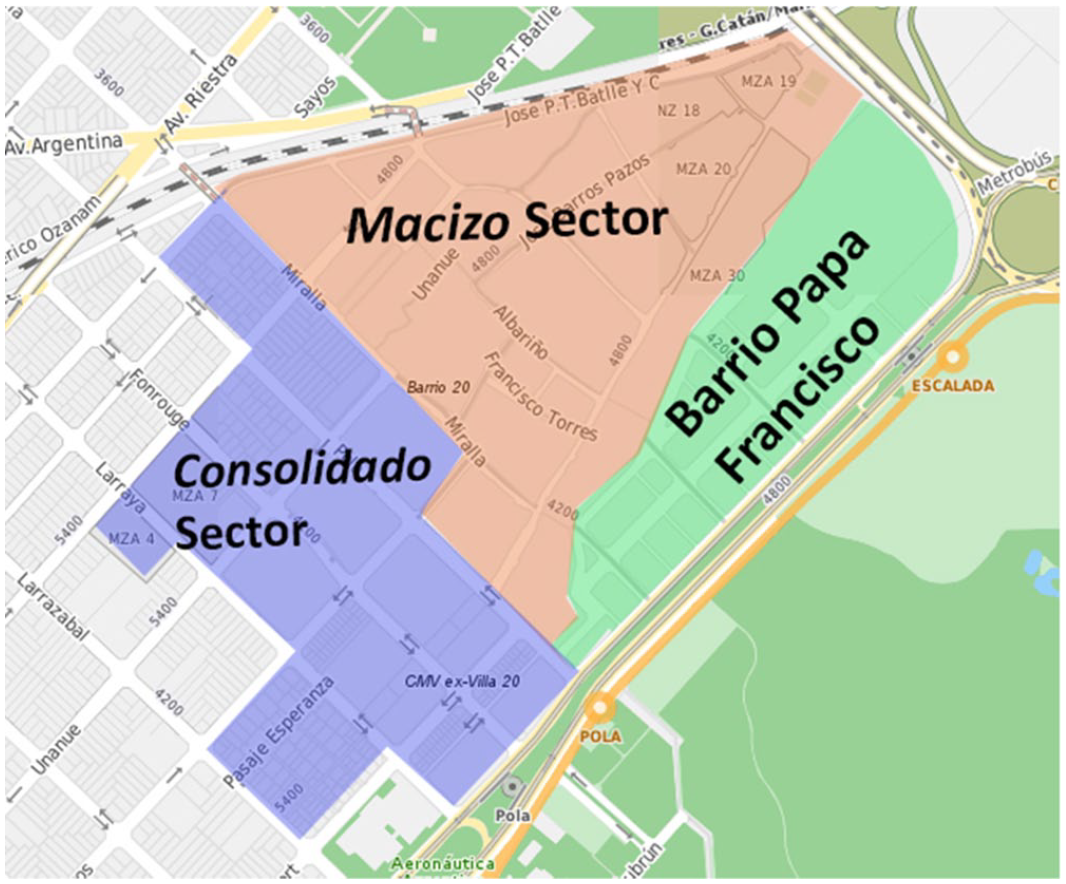
Sectors of Villa 20
At the beginning of 2016, when the IVC began to work on the neighbourhood, the coordination between the area’s different social and political organisations was almost nonexistent, owing to deep political disputes. One of the challenges consisted of bringing together the main stakeholders in a space for debate so that the project could be a product of a government–neighbourhood collaboration. With this strategy in mind, in May 2016 the IVC created multiple spaces of participation in the context of the PIRU Villa 20. Most important were the Participatory Roundtable (Mesa de Gestión Participativa – MGP), with a largely informational function, and the Technical Participatory Roundtable (Mesa Técnica de Gestión Participativa – MTGP), which became the space for deliberation, conflict and consensus. Here, the social and political organisations together with other stakeholders participated to define general actions in the neighbourhood. Other spaces also existed, including the block workshops, created to design every block with the participation of the neighbours. At the end of 2018, the regulations for this space identified three groups of local organisations as members: the Mesa Activa por la Urbanización de la Villa 20 (MAU), the Unidad Vecinal (UV) and the Equipo de Unidad Territorial (EUT). MAU and UV are politically opposed to the city government, while EUT is closer to the city’s political orientation. However, all three groups have had practical roles in the upgrading of Villa 20. Of the three neighbourhoods, Villa 20 has had the most substantial involvement on the part of local government since 2016, both financially and with regard to the construction of networks of community organisations, which eventually started to work together.
c. Villa 15
Includes: the Villa 15, San Pablo, Hubac and Scapino settlements, and the following public housing projects: NHT del Trabajo “Las Tiras”, Barrio Los Perales and Conjunto Piedrabuena
Although Villa 15’s growth and self-built expansion was accompanied by the construction of some public housing projects by the state (Núcleo Habitacional Transitorio – Las Tiras), it was not shaped in an interwoven way with the formal city. This resulted from the existence of clearly identifiable physical and visual borders, mainly the presence of sheds, large-scale facilities and superblocks, as well as large public housing projects such as Los Perales and Piedrabuena (see Figure 5). According to the national census of 2010, 36,396 people lived in the neighbourhood, including the surrounding public housing projects, and of these 16,937 lived in the informal area in 4,800 dwellings, housing 4.3 people each on average.
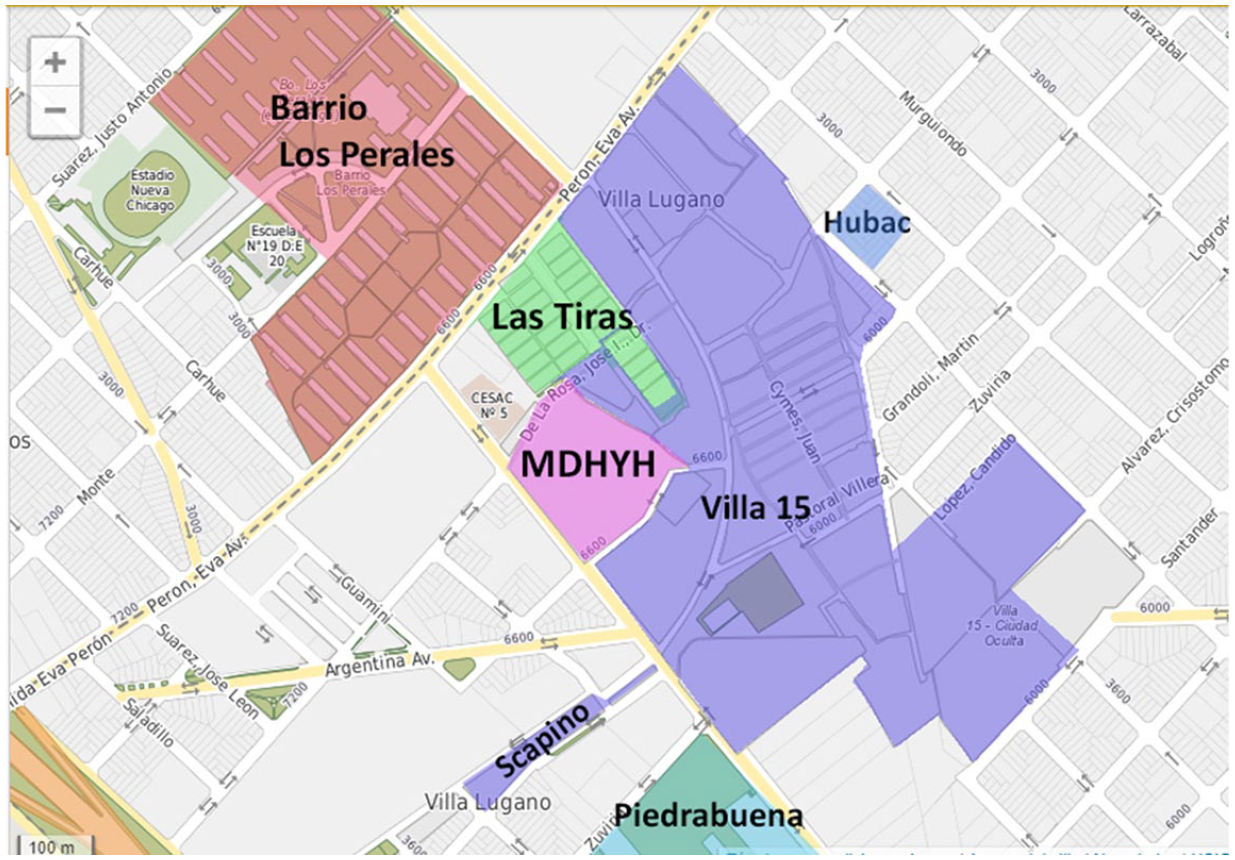
Sectors of Villa 15.
In the case of Villa 15 the first steps for a possible PIRU have not yet been taken. Two programmes with participation of the national and local government were planned, and participation spaces were created for drafting a law for the redevelopment of the villa. However, no agreements could be reached between the national and the local government, so the bill was never approved. In 2018, and after numerous legal conflicts, the emblematic building Elefante Blanco(28) was replaced by the new MDHyH headquarters and a new public park was built. Although the residents acknowledge that this represented a change in terms of security and their perceptions of this sector of the neighbourhood, they also point out its limitations in terms of its integration into the neighbourhood. The functions carried out in the MDHyH building are mainly administrative – it does not have an engagement and outreach office – and once the pandemic started, the use of the park was limited. In addition, although the construction of the new headquarters involved different government agencies, there has been no call for a participatory space to discuss the redevelopment of Villa 15. Different participatory roundtables were developed in three different parts of the neighbourhood and proposals for small-scale interventions were presented – that is, for specific and focused projects without an overall integrated approach to the villa. As a result, the role of the soup kitchens that maintain a presence in specific parts of the neighbourhood was strengthened, making them very relevant actors during the pandemic, as will be described below.
IV. The Three Villas During Covid-19: A Comparative Analysis of the Pandemic Experience
At the beginning of the COVID-19 pandemic, the MDHyH in conjunction with the IVC worked on different lines of action to respond to both the social and hygiene aspects of the emergency, also included in the Protocol for Informal Neighbourhoods of Buenos Aires City.(29) This organisation communicated with local stakeholders working on the ground, and all interventions were organised within the following logic:
Implementing these actions required policies and detailed plans adapted to the reality of each neighbourhood, considering the stakeholders, the specific needs, and the relationships previously built with the state. The spaces for discussion and decision-making varied across the villas. Nevertheless, we can say that in all cases, public policies during COVID-19 resulted from a specific form of statehood created at the interface between public bodies and local mediators.(31)
It is important to note that the local actors within each neighbourhood also carried out specific and independent IVC actions. For example, in Villa 15 posts were installed for cleaning cars entering and leaving the neighbourhood. For the purposes of this present work, we are interested in those interventions that involved an interaction between the state and local organisations, whether top-down, bottom-up (in response to a demand from the organisations), or as a product of consensus between the actors. In this sense, the organisations, delegates and political representatives from each neighbourhood filled the function of amplifying the messages of the national and local government agencies, aiming to prevent contagion and disseminate important information. They had an important role with regard to urban hygiene activities, maintenance work, eviction prevention and communication, but especially in food security and health, the two most significant areas given the importance of COVID-19 testing and the need for food assistance in low-income neighbourhoods. This speaks to the adaptability of social movements within popular neighbourhoods. As Neaera Abers, Rossi and von Bulow mention,(32) the political ideology of these movements was diametrically opposed to that of the centre-right government of the City of Buenos Aires. Even so, they managed to deploy two types of strategies. While at the city level they might confront the government, at the neighbourhood level they worked collaboratively to support government initiatives to avoid the spread of infection. In the words of one of the leaders, “we rolled up the flags for a while for the good of the neighbourhood”.
Below, we compare the food security and health-related actions carried out by the local government and the organisations, as well as the decision-making spaces and processes in each neighbourhood.
a. Villa 1-11-14
When the pandemic started, given the existing dynamics in Villa 1-11-14, it was not possible to create a decision-making space that included all relevant stakeholders. Consequently, two different spaces were proposed by the IVC during the early months: one for the organisations and another for the Body of Delegates. In May, a Neighbourhood Roundtable (Mesa Territorial) including all local actors was mandated by a judicial intervention in response to a demand made by the priest of the Santa María Madre del Pueblo parish. This roundtable would provide local coordination and assist the Crisis Committee in containing the emergency. This ruling made it possible to create an interactive space for both the organisations and city government.
Main interactions
Food security: The Body of Delegates and social organisations fulfilled different roles. At first, the Body of Delegates drew up the list of food bag recipients. When the demand was overwhelming, the IVC allowed local leaders outside the Body to register new recipients not on those first lists. Some delegates also asked to be involved in delivering bags through a single neighbourhood delivery point. The IVC coordinators rejected this demand to prevent their exposure to the virus, but as time went by, it was agreed that the organisations would distribute the bags in the neighbourhood sectors where they had a presence and legitimacy. The soup kitchens allocated the bags distributed by the local government, covering part of the expense of completing this task and the salaries of their workers. Despite these efforts, the evidence shows that the soup kitchens did not function as an articulated network, given internal differences between some soup kitchen representatives and because each kitchen had influence in a different area of the villa.
Health: The Santa María Madre del Pueblo parish actively participated in the design and implementation of the DetectAr programme. The IVC had initially planned for the organisations’ role to be limited to sharing information on infected families and close contacts. In response to complaints from the Public Defender and the parish, members of the organisations, local representatives and community leaders were organised into large groups that would visit residents suspected of being infected with COVID-19 and convince them to go to the testing centre. But visits from large groups of people drew attention to suspected cases at a time when the stigmatisation of those who “brought COVID to the neighbourhood” was very high. Delegates also visited close contacts to review their health status, communicate the recommended measures, and accompany them to the DetectAr site. Information from these visits was added to the database used by the IVC and the CeSacs. The delegates also managed the four health posts where temperatures were measured, neighbours were given hand sanitiser, and vehicles were disinfected.
COVID-19 cases spread quickly in Villa 1-11-14, leading to a reorganisation in the IVC’s coordination. The difficulties with consensus and the resulting disorganisation eroded the legitimacy of the project team leaders, who were replaced by officials from the UGIS, the agency with a closer relationship to the social organisations than to the Body of Delegates. This suggests that the weak relationship between the government and local actors influenced the government attitude and interfered with the response capacity.
As of 31 October, there had been 4,347 cases in the informal area and surroundings, representing 7.19 per cent of the estimated population,(33) with the great majority in the informal sector (3,245). Between March and October, 99 people died from the virus in Villa 1-11-14.
b. Villa 20
At the beginning of the pandemic, the relation between the local government and the neighbourhood was consolidated within the MTGP (the Technical Participatory Roundtable). In March the local organisations formed a Crisis Committee that contributed to the MTGP’s functioning in the emergency. The reformulation of this space in the context of lockdown was fundamental to continuing the participatory decision-making process. The focus and frequency of the meetings were established according to emerging topics proposed by the organisations or the local IVC coordinators, and by the evolution of COVID-19 cases.
Main interactions
Food security: Local organisations within the MTGP agreed on the criteria for prioritising and organising food bag distribution. They were actively involved in delivering food bags and updating recipient lists. The interviewees agreed that information collected by the city government through the RELSE was important for coordination, but felt the social and political organisations’ input was key to an accurate recipient list. Some soup kitchens that were not formally registered with the city government requested to be incorporated into the Community Group Support Programme, the city’s official programme for soup kitchens.
Health: The social and political organisations participated in the DetectAr programme from the beginning, in both its design and monitoring. The organisations also identified suspected cases and close contacts, and worked at the health and prevention posts. In July, 15 organisation members were hired, four of whom were later dismissed when infections and deaths declined.
The relationships built over previous years within the MTGP facilitated consensus among the actors during the pandemic as well as the division of labour. Although conflicts arose, their previous experiences helped them work jointly to define and implement actions.
As of 31 October, Villa 20 had seen 2,266 cases of COVID-19, representing 8.09 per cent of the estimated total population. As in Villa 1-11-14, the majority resided in the informal area of the neighbourhood (2,018). Between March and October, 25 people died.
c. Villa 15
At the beginning of the pandemic the main neighbourhood stakeholders were summoned to a roundtable organised by the MDHyH and IVC to determine how to face the crisis.(34) The roundtable’s main function was to provide information on behalf of the MDHyH and to coordinate on appropriate actions, especially with the local organisations and the soup kitchens. According to most interviewees, these roundtables met every week at first, then every two weeks, and finally once a month.
Main interactions
Food security: The organisations helped with the organisation and distribution of food bags and cleaning kits at 12 delivery points. They also collected the necessary data to determine the recipients of food assistance based on employment status, receipt of cash transfers, the health conditions of household members and other variables. Collecting the necessary data to plan actions delayed the start of the assistance, unlike in neighbourhoods where census or RELSE information was available.
Health: Through the DetectAr programme, the organisations supported the Ministry of Health in the active search for close contacts, given their knowledge of the neighbourhood, and in the distribution of assistance bags for all who were quarantined. They also staffed the local health posts and shared information on those families that needed to be taken to the programme post or the hospital.
As mentioned, most actions undertaken in Villa 15 required consensus between the city government and local organisations. The discussion took place within the space of the roundtable created at the beginning of the pandemic. Many of the participating actors were also part of the MTGP in Villa 20, as the two villas are located within the same commune. This facilitated discussion and agreement on policies and actions. This was significant, as Villa 15 did not have an upgrading process in place as the basis for an existing fluid relationship between the actors and the collection of data that could be applied in an emergency situation.
As of 31 October, there had been 2,395 COVID-19 cases in Villa 15 and the nearby settlements and public housing projects – 6.58 per cent of the total estimated population. More than half the cases were registered in the informal area (1,500), followed by the Instituto Nacional de Tecnología Agropecuaria (INTA) neighbourhood (372), and then the rest of the projects. In all, 29 people died between March and October.
d. Summary of the three villas’ experience
The role of the local organisations was key to ensuring assistance during COVID-19. An appropriate response to the crisis meant avoiding top-down approaches and including the social and political groups of each neighbourhood. The way the crisis roundtables were implemented in each neighbourhood was a product of the relationships previously built, the level of trust and the role that local government had had over time. In Villas 20 and 15, the organisations distinguished between the political “neighbourhood scale” and the “macro scale”. Although there were neighbourhoods where members of organisations and government agencies disagreed in political-ideological terms, these differences were transcended in the emergency and effective joint actions were taken. The organisations, delegates and political representatives of each neighbourhood amplified the messages of national and local public agencies to prevent contagion, apprise residents on the tools and disseminate other important information.
Despite the joint work between local organisations and the city government, however, some conflicts arose over the course of the pandemic, for instance around the decrease in the number of food bags in all three neighbourhoods, and the demand of the social and political organisations in Villa 1-11-14 for a truly deliberative space and for salaried recognition of the work carried out by their members.
Particularly in Villa 1-11-14, conflicts and misunderstandings arose largely as a result of the more limited availability of inclusive participatory spaces and the absence of constructive relations between the local government through the IVC and the different local stakeholders. Beyond the dynamics of the neighbourhood, government officials stressed in their interviews that the politicisation of space and discussions “at the superstructural level” constituted a difficulty, and even an obstacle, for the effective implementation of actions. The experience of Villa 20 was different, as the decision-making process took place within the pre-existing MTGP since mid-March 2020, a model that was replicated in many respects in Villa 15.
V. Conclusions
The comparative analysis of these villas and their specific “neighbourhood effects”(35) shows that, while socioeconomic and material conditions have contributed to each villa’s vulnerability to COVID-19, the level of consolidation and depth of the previous historical working relations between the local government and the local organisations determined the particular response capacity related to COVID-19 of each of the informal neighbourhoods. This was manifested in the speed with which mitigation actions were developed and implemented during the pandemic. Especially in Villa 20, it resulted in the slower growth in the number of cases, allowing time for gathering information and organising interventions. The fluid interaction here between the local government and the social and political organisations contributed to the greater scope and ultimately greater impact of the policies implemented.
Differences in the response capacity of the informal neighbourhoods depended on:
1. Consolidated previous working relations
The actions developed by the MDHyH depended heavily on working together with the local organisations, which contributed both to their workforce and to their local knowledge. In this sense, the existence of previous relations, achieved through participation spaces, allowed for a quicker and more effective organisation of joint action as a result of community cohesion.(36)
Villa 20’s experience is a notable case. This villa already had a participatory space, the MTGP, in which the key stakeholders were present, so it was not necessary to create a COVID-19 Crisis Roundtable. In the other two informal neighbourhoods, a space had to be specially created to coordinate the actions. As mentioned, since Villa 20 and Villa 15 are located close together and have relevant actors in common, the Villa 20 deliberative strategy could more easily be replicated in Villa 15. There are different levels of consolidation in the relations between local government and the organisations. In districts with a previous investment of resources in joint and comprehensive work, there was a history of positive results achieved, which increased confidence in a coordinated strategy. This encouraged the local organisations to put aside political and ideological differences to respond effectively to the needs of people living in the area, and facilitated the consensus needed both to carry out upgrading projects and to organise actions to face the pandemic.
2. Time gained to organise the mitigation actions
Of the three neighbourhoods, Villa 1-11-14 had the highest growth in the number of cases within the shortest time. The peak there was reached in mid-May, compared to the end of June in the other two informal neighbourhoods, and the trajectory of the contagion in those other neighbourhoods demonstrated a more controlled growth. This allowed time to organise mitigation actions with the organisations, unlike in Villa 1-11-14 – where, for example, the DetectAr programme had to be set up quickly because of the exponential growth of positive cases. This was crucial in the case of Villa 15. Since it had no updated neighbourhood survey or inclusive participatory spaces, that time was used to gather information that would allow it to organise assistance.
On that front, it is necessary to highlight the importance of updated local data. The analysis shows that the quality of these data has mainly depended on the level of progress in interventions by government agencies in their interaction with local organisations in recent years. Indeed, in those informal neighbourhoods where local government sought to start an upgrading project (PIRU), data collection was carried out, allowing a more grounded approach to the neighbourhood and its residents.
During the pandemic, progress on upgrading projects has contributed to a more complex dialogue, and Villa 20 had greater advantages here than the other two neighbourhoods. This is important if we consider that when organisations seeking to cooperate with government agencies are discouraged by a lack of support, they can choose, not surprisingly, to respond in an adversarial way.(37)
3. Broadening of the scope of assistance
The participation of local organisations was essential to broaden the scope of responses to the emergency. They were not just the implementing arm of top-down policies, but actively participated in both design and execution stages. Effective public policies during COVID-19 were the result of a specific form of statehood, created at the interface between public bodies and local mediators, who could function as receivers, managers and spokespersons for neighbourhood demands, becoming in effect a para-state bureaucracy of civil society.(38) We also affirm that workers from the team on the ground acted as “street-level bureaucrats”,(39) whose practices were oriented to the production of relationships, aiming to shorten the distance between the state and the community.(40)
Future challenges
Beyond the main conclusions, we have also identified a series of challenges to be considered moving forward:
1. Strengthen relations with organisations
Although the experience of the pandemic demonstrated the potentialities of joint work, this process was not free of conflicts. The conflicts had multiple causes, among them the asymmetry of responsibilities between local organisations and government agencies, unpaid work, and changes without consultation in social policy. It should be noted that, in cases where there was a consolidated participatory space, these conflicts were brought there to debate and arrive at a solution.
Considering the risk of future waves of the virus, how local government sustains its legitimacy and works with the local organisations becomes a challenge, since its capacity has been shown to be limited, and those local stakeholders are essential to face the emergency.
2. Maintain the interactive participatory spaces created during the pandemic
It became clear that stakeholder participation was necessary to carry out COVID-19 interventions. The MDHyH–IVC alone was insufficient to implement assistance policies effectively. In order to coordinate with these actors, it was necessary to create different participatory spaces in neighbourhoods where they did not exist, or where previous efforts had been unable to consolidate them due to historical internal differences between the most relevant stakeholders. The continuity of these participatory spaces will be essential to coordinate joint action for the remainder of the pandemic. Also, considering the peripheral location of these villas, it will be necessary to engage in dialogue with government jurisdictions dependent on the Buenos Aires Province and the nation. This demands comprehensive solutions, which exceed jurisdictional limits.(41)
3. Develop policies that aim to resolve structural inequalities
As analysed above, the interventions focused on informal neighbourhoods were aimed at reducing the exposure and vulnerability of the inhabitants to the disease. But prevention could also affect the social and economic situation of residents and contribute to greater vulnerability. In order to reduce health inequalities, the main strategy of public policies should be aimed at addressing inequities in the social positions of individuals. During the pandemic, Buenos Aires City’s health inequalities were reflected in a seroprevalence study, carried out between September and October 2020, whose results showed that the seroprevalence percentage from informal neighbourhoods was 42 per cent while in the rest of the city it was 7.4 per cent.
The measures implemented were important to provide assistance and support to the inhabitants of the villas during the crisis, but they are insufficient in terms of the capacity of residents to cope with the social and economic effects after the pandemic and the capacity of these neighbourhoods to face future crises. This requires substantive changes in the quality of housing; access to the labour market; access to services and the health system; improved educational quality; and deepened, accelerated and scaled urbanisation policies in these neighbourhoods.
Footnotes
Acknowledgements
The team is grateful to Jan Riise, from Chalmers University in Gothenburg, for his substantive and institutional support during this project. This work also benefitted from technical support from Juan Maquieyra, Martin Motta, Florencia Almansi, Ayelen Borgatti and other representatives of the IVC (Instituto de Vivienda de la Ciudad de Buenos Aires).
Funding
This four-month study was generously supported by Chalmers University in Gothenburg, Sweden, and the Swedish International Development Agency (SIDA) to the Observatory on Latin America (OLA), within the Julien J. Studley Graduate Programs in International Affairs from The New School, New York.