



Abstract
This paper examines the role of participation, co-production and community management in a random sample of 50 rural and urban water systems under the Water and Sanitation Extension Programme (WASEP) in Gilgit-Baltistan, Pakistan. It looks at the role of an NGO (the Aga Khan Agency for Habitat) in co-production, and how this model of community-based water management (CBWM) contributes to the discussion in the literature. Specifically, the paper considers whether the largely rural WASEP model can be successfully scaled up and scaled out to urban centres, drawing on evidence from a survey of over 2,500 rural and urban households. The findings illustrate the importance of participation in the successful delivery of water systems. However, higher levels of rural participation are related to specifically rural features, including the smaller size and more limited diversity of communities. The paper concludes that new methods may be required for the transfer of CBWM to urban centres with much larger, more diverse and growing populations.
Keywords
I. Introduction
Although participation has gained the status of “development orthodoxy”,(1) debates remain over the value, forms and transfer of participatory approaches. One concern is the potential to increase the coverage, sustainability, quality and institutional engagement of initiatives (scaling up) and to implement them in new sites beyond their original contexts (scaling out). This paper examines the successful delivery of community-managed water systems under the Water and Sanitation Extension Programme (WASEP) in over a third of (mostly rural) human settlements in Gilgit-Baltistan, Pakistan, with a focus on the scaling up and transfer of WASEP to urban centres in the region. We look at the role of citizen participation and partnership with an NGO (the Aga Khan Agency for Habitat) in this community-based water management (CBWM) model, and the impact on the delivery of drinking water in terms of household satisfaction and functionality,(2) drawing from a survey of over 2,500 households in 50 sites. We then assess some of the conditions for, and challenges of, scaling up this model to larger, more diverse urban settlements.(3)
This case study adds to the literature on community-managed piped water systems,(4) moving beyond the dominant focus in the literature on handpumps and borewells.(5) By focusing on scaling rural community-managed infrastructure to larger urban settings, we seek to complement research on participatory settlement upgrading and livelihoods programmes. Comparing rural and urban data, we find that: (1) higher levels of participation are related to more successful outcomes; (2) participation levels are lower in urban communities, which are larger, more diverse and more transient; (3) the NGO’s role as mediator and technical lead is central for successful project delivery; and (4) communities often rely on external (financial) support for major repairs and operations and maintenance (O&M), as well as for implementation.
This evidence contributes to various debates on participatory approaches to development. First, it supports the argument that community participation leads to better delivery of public goods and services, better-maintained community assets, and a more informed and involved citizenry, in both urban and rural sites.(6) Second, it demonstrates that social heterogeneity makes it more difficult to sustain participatory approaches in larger urban communities.(7) Third, it points to the central role of NGOs in moving co-production beyond the state/non-state binary.(8) Finally, it indicates that sustainability requires ongoing support by NGOs or the state.
The following section discusses participation and co-production in community-based water management. Section III describes the history of WASEP, its approach to water supply and community participation in Gilgit-Baltistan, Pakistan, and the reasons for scaling up this programme. Section IV presents the methodology and findings, and discusses the implications for the viability of scaling up WASEP. The final section concludes.
II. Participation, Co-Production and Community Management
Community management has, in international development policy, “become the accepted management model for rural water supply (RWS) in low and middle-income countries”.(9) It is an important aspect of development assistance,(10) which, alongside the ideas of co-production and participation, has become development orthodoxy.(11) This section locates the discussion of community management of water within broader debates on participation and community-based development as context for our case study. We begin with some historical background on participation to indicate how similar arguments have resurfaced across different epochs in connection with co-production and community management.
The idea of participation in development goes back to the 1966 US Foreign Assistance Act, which sought to ensure what Cornwall calls “maximum participation in the task of economic development on the part of the people of the developing countries, through the encouragement of democratic private and local governmental institutions”.(12) These approaches were promoted by the UN in the 1970s,(13) and participatory and community management models became increasingly influential in response to the failure of centralized government service delivery(14) and supply-driven approaches.(15) Top-down approaches were seen as disempowering and ineffective,(16) while participatory development allowed the poor to be informed participants.(17)
Participation was rearticulated with the emergence of neoliberalism and structural adjustment in the 1980s, where “‘beneficiaries’ were to be active participants in implementation, and in meeting the costs of development”.(18) Structural adjustment introduced economic reforms to reduce the state’s role and bring service delivery closer to communities, bypassing centralized bureaucratic states and the problems of political manipulation and corruption associated with top-down programmes.(19) By the 1990s, participation and decentralization were part of the wider “good governance” agenda that, according to a World Bank report, encouraged “participation by NGOs and communities . . . [to] greatly improve service delivery”.(20)
Co-production was originally described by Ostrom in 1996 as “a process through which inputs from individuals who are not ‘in’ the same organization are transformed into goods and services”, broadly referring to situations where the government uses input from citizens to efficiently and equitably provide public services.(21) It has since been subject to a wide variety of interpretations,(22) and applied to different forms of state–society engagement.(23) Watson notes that in the public administration literature, it is “framed within a concern for efficient and cost-effective state service delivery”,(24) and Moretto et al. indicate that it often refers to “the repertoire of available institutional arrangements, which can be mobilized by public sector organizations” with the “active involvement of citizens in the production of public goods and services”.(25) It was reformulated, according to Joshi and Moore, as the “provision of public services (broadly defined, to include regulation) through regular, long-term relationships between state agencies and organised groups of citizens, where both make substantial resource contributions”.(26)
The distinction between state-initiated and social movement-initiated co-production(27) sought to re-politicize participation, drawing from rights-based approaches and social mobilization.(28) State-initiated co-production, as identified in the early public administration literature, seeks to improve service delivery through decentralization and, as Ostrom elaborates, by generating “social capital in the form of urban residents learning how to work with each other and with public agencies . . . to obtain other kinds of urban goods and services”.(29) In contrast, Bebbington et al. explain that social movement-initiated co-production aims to counter the power of the state(30) and, as Mitlin puts it, to “enable individual members and their associations to secure effective relations with state institutions that address both immediate basic needs and enable them to negotiate for greater benefit”.(31) As with participation more generally, this is based on the understanding that local populations are in a better position to respond to their basic needs than the market, state or international development world,(32) through complementary synergies between citizens and the state.(33) Nonetheless, the underlying premise here is the unequal distribution of power between the state and citizens,(34) in particular the poor who have been excluded from the development process, with governments either unable or unwilling to provide land and services.(35) Co-production thus represents, in Watson’s words, “one way in which poor urban communities have been able to secure significant improvements”,(36) and can facilitate greater democratic influence by marginalized groups, as described by Appadurai.(37)
More recently, Moretto et al. note that with the sizeable role played by citizens in addressing the gap left by poor or missing infrastructure in much of the world, co-production is often viewed as an actually existing “alternative to the modern infrastructural ideal” of universal state provision.(38) Recognition of the often unequal, unaccountable power relations in co-production(39) has seen the concept move beyond the state/non-state binary to capture a wide range of practices.(40) Significantly, these new forms of public service delivery and governance indicate the globalized spread of changing forms of contemporary governmentality beyond the nation state,(41) to include the powerful contemporary role of NGOs as brokers and mediators of relations between states and populations.(42)
NGOs play an instrumental role in co-production as part of a broader set of stakeholders that includes households, workers, service providers, and urban local bodies working to deliver decentralized public services through institutionalized (often long-term) relationships between state agencies and users. In 1993, the UN Development Programme (UNDP) characterized NGOs as a form of community organization, relatively independent from the state and better placed to operationalize “people’s participation”.(43) NGOs were thus prioritized for the delivery of cost-effective services and welfare for those excluded by states and markets(44) through the channelling of bilateral and multilateral aid,(45) leading to their exponential growth in the late 1980s and 1990s. This coincided with the emergence of the idea of co-production as a form of participation in urban services, with NGOs acting mainly as facilitators and sources of funds.(46)
Community-based and community-driven development are forms of co-production that (typically) take place in partnership with state agencies or with public funding. The former refers to the inclusion of beneficiaries in project design; the latter to cases where communities have direct control over key project decisions.(47) Community-driven development, according to Dongier et al., “is an effective mechanism for poverty reduction, complementing market- and state-run activities” with potential to “occur simultaneously in a very large number of communities”, making poverty reduction efforts both more efficient and more responsive to demand by giving poor people “greater voice both in their community and with government entities”.(48) The renewed interest in community-based development followed the re-emergence of participatory approaches that were critical of “top-down” development.(49) A central idea is what Mansuri and Rao describe as “the active involvement of members of a defined community in at least some aspects of project design and implementation”, with participation expected to lead to better-designed projects.(50)
Community management of water supplies, one form of community-based development and co-production, extends the concept of participation to include O&M and cost sharing. It has become a widely adopted policy for rural areas,(51) gaining prominence during the first UN “Water Decade” (1981–1990)(52) and the subsequent push towards local-level public participation and decision making. This coincided with structural adjustment and the introduction of economic reforms to reduce the role of the state and bring service delivery closer to local populations, aiming to increase efficiency and effectiveness and to reduce corruption.(53)
Community-based water management (CBWM) captures many features of participation and co-production. Given widespread challenges for sustainable water supply in the global South, CBWM is seen as improving governance, leading to more successful O&M. Communities demand a service, decide on the technology, contribute to construction, and manage the water source or service through an elected water user committee.(54) Participation in this way is expected to increase the level of “social capital” or “social cohesion”(55) and to create a sense of ownership that ensures that the community is willing to pay for O&M.(56) At the same time, monetary contributions are also believed to foster community ownership.(57) As in some participatory approaches, the “community” involved has at times been uncritically assumed to be culturally and politically homogeneous and harmonious.(58)
CBWM faces two key challenges related to the limitations of participation and co-production. The first is the issue of sustainability – a third of rural water supply systems are not functional in India(59) and sub-Saharan Africa,(60) and Lockwood in 2004 found most communities needed external assistance to manage their water systems.(61) More recent research underscores the need for ongoing institutional support.(62) This has raised questions, according to Moriarty et al., about “the limits of what can be realistically achieved in an approach based on informality and voluntarism”(63) and by extension, about the sustainability and scalability of the community management model based on participation and “ownership”. In response, the move to “community management plus” (CM+) has involved what Hutchings et al. describe as “a more bipartite approach in which continued support is provided by external agencies to communities” rather than the simple “handover” of “infrastructure to communities who take ownership and complete operation and maintenance (O&M) duties”.(64) In their meta-analysis of published studies, these authors found the CM+ approach evident in longer-lasting CBWM projects.(65)
This critique highlights the continued role of the state and other supporting agencies in co-production,(66) and illustrates some limitations in shifting the responsibility from the state to communities. Problems with sustainability in turn raise questions over whether CBWM can be scaled up, not just in terms of participant numbers but of sustainability over time, functional expansion, greater political and structural engagement, and organizational development.(67) Scaling up coverage, as Schouten et al. indicate, “is pointless unless sustainability is improved at the same time”.(68) This requires continuously strengthening new community capacities – including in retraining, legal accountability and financial management, facilitating disagreements and resolving conflicts – as well as the involvement of “different actors with different capacities for the different phases of system development”.(69) We now turn to the case study of CBWM in Gilgit-Baltistan to examine some of the differences between rural and urban community management and the challenges of scaling up to urban areas.
III. The Aga Khan Agency for Habitat (AKAH) and Water and Sanitation Extension Programme (WASEP)
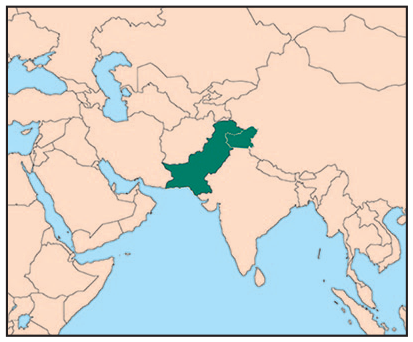
This paper examines a random sample of 50 rural and urban community-managed water systems delivered as part of the Water and Sanitation Extension Programme (WASEP) implemented by the Aga Khan Agency for Habitat (AKAH), an NGO that is part of the Aga Khan Development Network (AKDN). Working mainly with poor communities in Asia and Africa, AKDN agencies cover microfinance, tourism and enterprise promotion, human resources development, natural resource management, housing and living improvements, and health and hygiene projects. AKAH was created in 2016 to improve habitats and included taking over WASEP from the Aga Khan Planning and Building Services (AKPBS). WASEP was established in 1997 to provide integrated water supply infrastructure services to rural communities in the mountainous region of Gilgit-Baltistan and Chitral in Northern Pakistan (Map 1). In Gilgit-Baltistan alone over the past 25 years, it has delivered 395 rural projects in 271 of an estimated 750 villages and 41 (peri-)urban projects in Gilgit City, Aliabad and Gahkuch, providing clean piped water to around 44,871 households.(70)
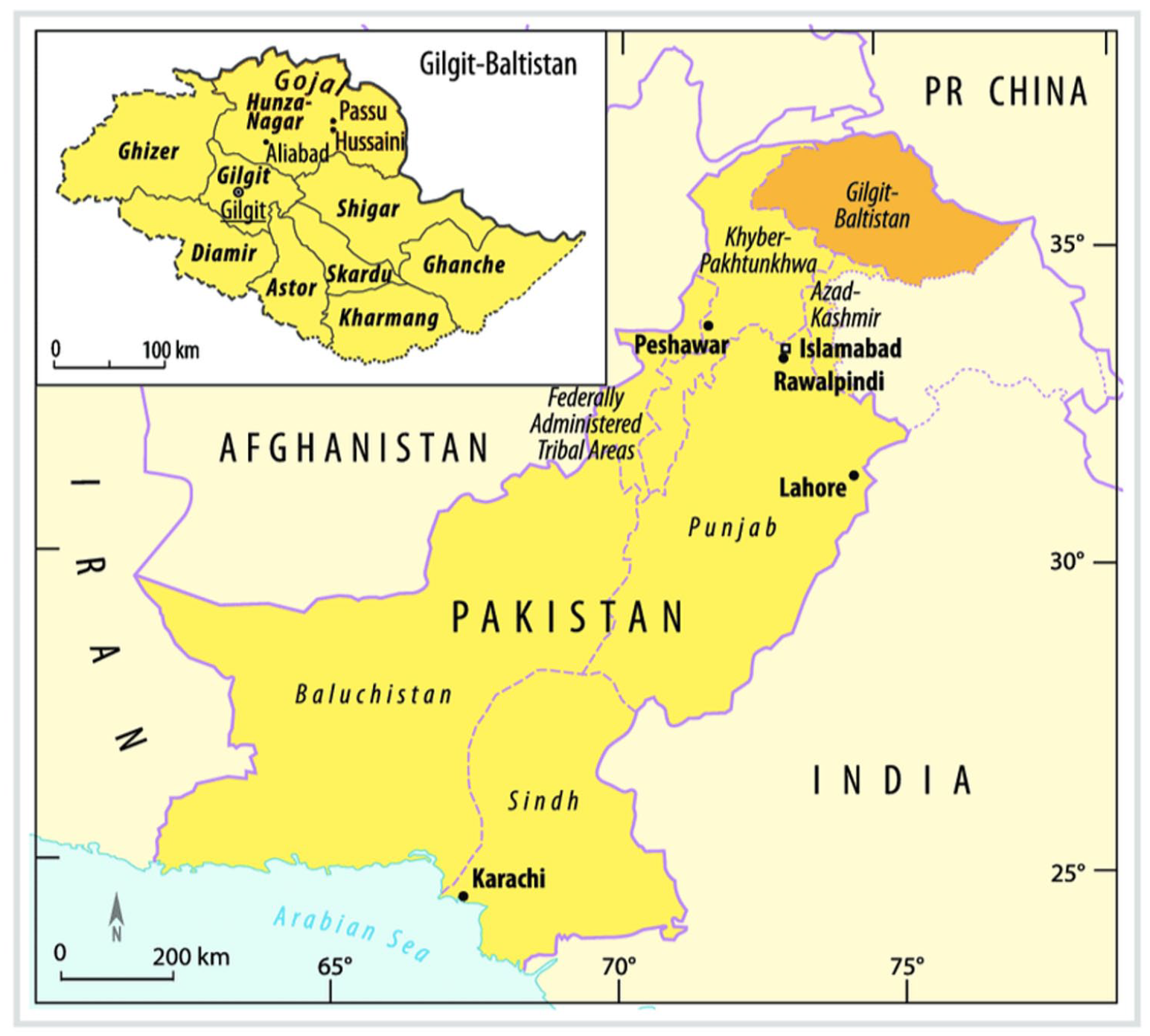
Pakistan and Gilgit-Baltistan
WASEP was created following an Aga Khan Health Services and Aga Khan Rural Support Programme (AKRSP) research project (1993–1996), which found that waterborne diseases accounted for 50 per cent of infant deaths in the region. There were high levels of E. coli water contamination in many areas, and only 86 out of 502 villages with water supplies had “satisfactory” schemes. The study reported that engineering alone would not ensure clean drinking water and reduce water-related diseases, and that social and educational components were key.(71) WASEP’s integrated approach focuses on community participation, health and hygiene, engineering solutions and water quality. Social mobilization is central, facilitating community-based financing through connection fees that go into an O&M fund, and a monthly tariff that pays for staff salaries. The Community Health Improvement Programme (CHIP) and School Health Improvement Programme (SHIP) provide awareness-raising sessions for women and children, and train teachers. Sound engineering and technological innovations aim to secure water storage and distribution, and to safeguard water quality through proper design, the use of durable materials, and water quality testing.
WASEP’s approach can be traced to the introduction of participatory approaches in Gilgit-Baltistan in the 1960s under President Ayub Khan’s development programme and, in the 1980s, the formation of the AKRSP initiative. This has been replicated in rural support programmes across all provinces of Pakistan, through a network of formalized community structures, known in Gilgit-Baltistan as village organizations (VOs). Communal work is not new in Gilgit-Baltistan. It is still known as rajaaki – a concept originally reserved for forced communal labour ordered by the local rulers or numberdars (village heads).(72) With this background of compulsion, communal work evoked ambivalence.(73) Community participation has however been redefined by AKRSP’s engagement, and collective work is now largely seen as a freely given gift to the community.(74) The potential of co-production in Gilgit-Baltistan is thus related to the organic evolution of traditional practices.(75)
The WASEP approach builds on a revised model of community-based projects under the Local Bodies and Rural Development Department (LB&RDD),(76) which closely resembled the original public administration definition of co-production as efficient, cost-effective state service delivery. These LB&RDD projects were implemented from the early 1980s. A project committee was formed for the provision of labour and local materials, supervision of construction and management of community funds, if any. After completion, a water committee was assigned to manage the scheme. In practice, these committees usually comprised only selected village notables, had varying presence and effectiveness, did not provide long-term management, and dissolved after implementation.(77) Roughly half of these rural schemes were found in the 1990s to be non-functional or only partially functional(78) because of misuse of funds and lack of proper O&M.(79) AKRSP research from this period suggests that its community-co-produced irrigation infrastructure was much more cost-efficient than public infrastructure,(80) possibly due to labour costs being covered by households – a point which we return to in the context of urban projects below. WASEP continues to set higher technical standards than the public sector. Pipes, for example, are buried 4 feet deep to prevent freezing and to reduce illegal connections and contamination. In the public schemes, pipes are usually laid on or just below the ground. WASEP is thus a different form of co-production from approaches that allow poorer communities to reduce costs by circumventing high engineering standards.(81)
Beyond economics, WASEP is unusual in implementing entire water systems (not just handpumps or tap stands) and integrating health and hygiene education, social mobilization and engineering solutions. Its participatory methods mirror many CBWM and co-production features, with citizens contributing to bridging the gap left by inadequate public water systems. The key role of AKAH in securing financing, project implementation, and handover to the community suggests a hybrid form of co-production.(82) The WASEP model, described in more detail below, promotes community management and ownership by involving entire communities (with the endorsement of up to 100 per cent of households at critical points of the interaction), contributions of both cash and labour, and the establishment and training of a community management team. Although AKAH advertises through local media, the programme is demand-led in that communities have to request a project and agree to terms and conditions. Demand is greater than available funds, and there is a waiting list, partly due to the “demonstration effect” of successful WASEP projects and the attraction of an all-season supply of clean water.(83)
From 2010, WASEP was extended to two urban settlements in the city of Gilgit, one in Aliabad in the Hunza district and three on the fringes of Gahkuch in the district of Ghizer. Five expressly “urban” projects followed after that in Gilgit City, the largest settlement in Gilgit-Baltistan, with around 120,000 inhabitants. The city has a piecemeal, fragmented water supply, especially in its newer settlements, where many residents are migrants from the surrounding valleys. These settlements have no water rights to the two main freshwater streams supplying Gilgit.(84) The largest new settlement, which has the most residents affected by water scarcity, is Jutial, a former village that has grown exponentially since the 1970s. Although progressively connected to the Greater Water Supply Scheme, residents of Jutial’s new neighbourhoods started to organize additional mechanized water supply systems to address water shortages by supplying river water with the help of AKRSP and later (in the 2010s) WASEP. Community labour, understood as central to local project ownership, was harder to mobilize in these urban projects, and labour was outsourced and paid for by the community.(85)
The scale and apparent success of WASEP led to the regional Government of Gilgit-Baltistan (GoGB) commissioning AKAH in 2016 and 2017 to extend the model in Gilgit City. A former regional Minister of Works described community participation and ownership of WASEP projects as a main reason for the state initiating this urban co-production, given the state’s fiscal constraints. The first Gilgit City scheme covers large parts of Jutial. The second covers Danyore, Sultanabad and Muhammadabad, former villages on the Gilgit outskirts, where rapid urbanization began around 2010. They are significantly larger than previous projects, serve a more mixed population than rural WASEP projects, and constitute state-initiated co-production with an NGO in response to citizen demands (Photo 1). Compared to an average of 78 households in village projects, and 250–350 households in the five “pilot” urban projects, these two schemes reach around 4,500 and 10,000 households respectively. This WASEP scaling up follows an earlier co-production between AKPBS and local government of 73 rural water supply schemes between 2012 and 2016, funded by the Japan Counterpart Value Fund.
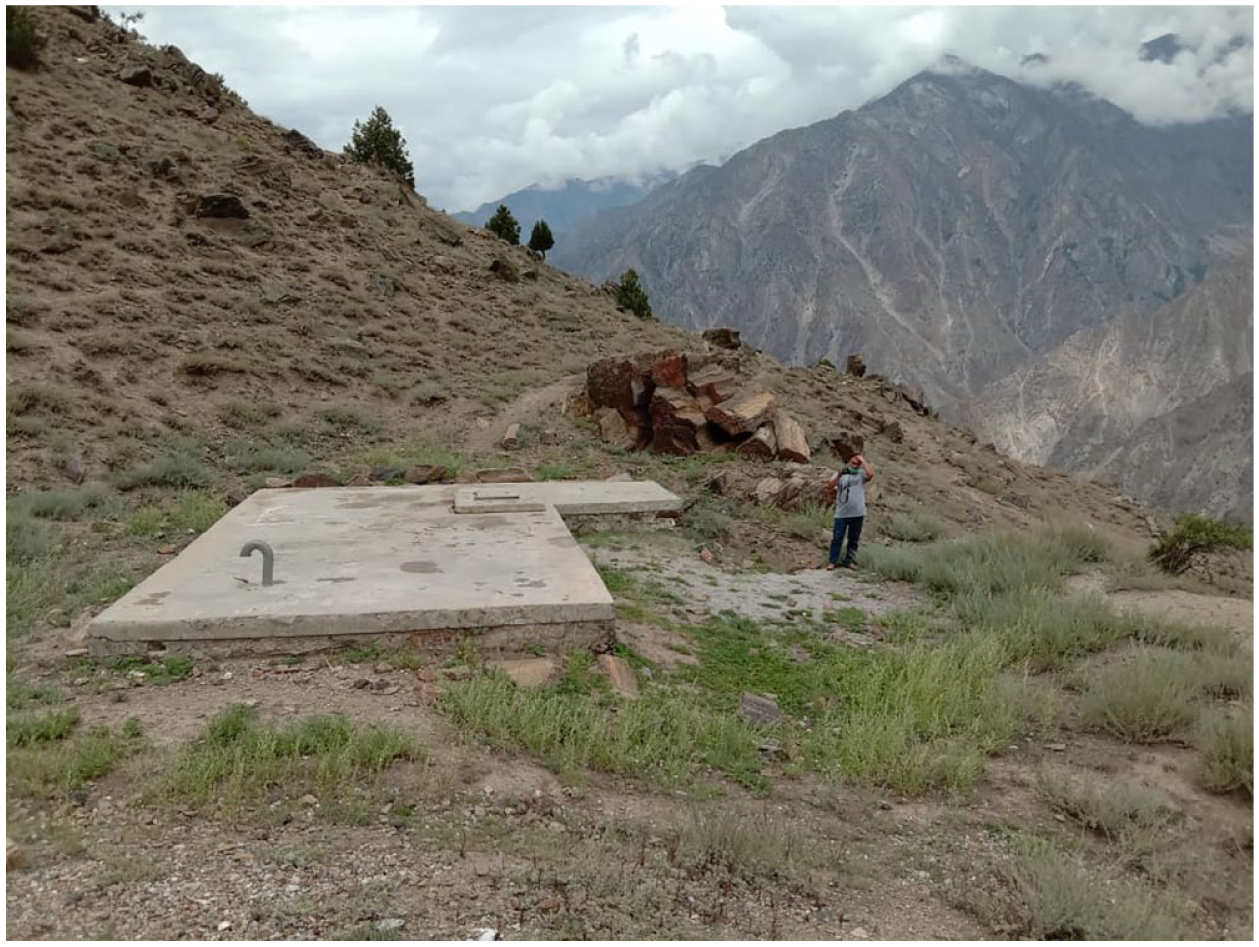
WASEP water tank, rural
This co-production model also led to LG&RDD (formerly LB&RDD) adopting the WASEP model and placing its technical staff on WASEP projects for capacity building. Rather than replacing the state, the NGO supports the state through implementation and capacity building, potentially changing the way the public institutions work. These projects can be understood as state-initiated co-production, improving service delivery by bringing government closer to citizens.(86) The state’s initiation of co-produced schemes, and the establishment of a longer-term arrangement with AKAH to internalize WASEP’s approach, can be seen as a step towards recognizing the existing challenges in public service delivery and towards developing new forms of public service delivery.
In deciding where to develop projects, AKAH considers “demonstrable needs” along with communities’ financial capacity, their experience in working with other development organizations, and the water source yield against water demand. The project also needs to be technically and economically feasible. Communities shortlisted by WASEP demonstrate support by submitting signatures of around 75 per cent of household representatives, and AKAH signs an agreement with the project area VO.(87) An O&M fund is established with contributions from every participating household, and a portion is collected in advance as a prerequisite for the project’s approval. WASEP commonly sets the household contribution at PKR 3,000 (US$ 19) for gravity-fed schemes and PKR 8,000 (US$ 50) for mechanized urban schemes; it proposes a monthly tariff, usually PKR 50–100 (US$ 0.30–0.60) for gravity-fed and PKR 200–300 (US$ 1.30–$1.90) for mechanized schemes, although communities decide on the actual amount.(88) Since mechanized projects are more complex and costly, a higher percentage is collected for O&M.
This approach applies to both rural and urban projects, although there are some differences in contributions. Labour in urban sites is typically outsourced to wage labourers, paid by participant households (PKR 8,000–16,000 per household or US$ 50–100). This increases the cash costs for urban households in both gravity-fed and mechanized schemes. This may lead to disagreements – as illustrated in an ongoing court case by a group of Danyore residents who want to contribute their own labour instead of paying for wage labour. Urban projects have also been more costly because of the greater distance to source for gravity-based systems and the higher capital and operational costs of mechanized systems.
In most urban Gilgit projects, the gravity-fed systems usually employed by WASEP could not be realized because accessible springs are not available and because communities in other parts of the city claim the (at times exclusive) rights to available stream water. WASEP has thus resorted to mechanized systems that further increased costs. Concerns about electricity costs for pumps in Jutial were raised by several Water and Sanitation Committees (WSCs) with AKAH and at a stakeholder meeting for this research project. Mechanical systems are also affected by the intermittent and often insufficient electricity supply. The added complexity and costs of (mechanized) urban projects make regular tariff collection even more crucial. Gravity-based systems may only occasionally need to collect contributions for repairs and maintenance.
IV. Household Survey Design, Methodology and Findings
The scaling up and scaling out of WASEP from small rural villages to large urban centres has been premised on community participation. Our research project aimed to evaluate some key features of the model, namely social mobilization and engineering design. In this section, in addition to describing design and methodology, we discuss our findings on the relationship between levels of participation and user satisfaction, factors that contribute to participation levels, and how these relate to the literature in Section II.
a. Design and methodology
Secondary data collection involved the archival study of internal AKPBS/AKAH documents and WASEP reports produced since 1997, including data on all WASEP projects in Gilgit-Baltistan. Primary data collection centred on a stratified household survey of over 2,500 households across 10 districts in Gilgit-Baltistan, and an engineering audit of water infrastructure from a smaller sub-sample of rural and urban projects. The household survey was structured as follows: AKAH provided data on the 436 projects in Gilgit-Baltistan – 395 rural projects in 271 villages and 41 (peri-)urban projects in Gilgit City, Aliabad and Gahkuch. From this larger group, WASEP projects and households participating in them were chosen as primary units for sampling and analysis. Projects, not settlements, were chosen as the unit of analysis because many settlements contain multiple projects, and the study aims to understand socioeconomic factors behind the differences in WSC performance. Households were chosen as a secondary unit for sampling and analysis to understand the demographic differences across WASEP communities and effects on participant households. Sample design for the survey also considered engineering variables, and AKAH provided these data for the 25 rural-sample projects and for all 41 urban projects.
To understand the differences between rural and urban WASEP projects, the sample was first stratified into two groups, rural and urban. To stay within budget but also to obtain sufficient respondent numbers for a random sample of households at the project level, we included 25 projects per group. The rural sample was stratified by district, and Gilgit-Baltistan’s 10 districts were amalgamated into six “district groups” based on historical district areas, as well as ethnic, linguistic, religious and geographic conditions. The rural sample was divided proportionally according to the distribution of rural projects across these six district groups, and rural projects were randomly sampled in these proportions. Nine of these rural projects were replaced due to a lack of mobile signal or partial village submergence in a lake formed after a landslide. The urban sample was stratified by district group proportionally to project distribution; projects in urban areas only exist in Gilgit City, Aliabad in Hunza-Nagar and Gahkuch in Ghizer. The Gilgit City sample was then stratified to include a quota of single-district-origin neighbourhoods as well as the range of religious denominations. From these 25 rural and 25 urban projects, a sample of 12 rural and 14 urban projects was generated for engineering audits. Survey data were collected by a team of enumerators from households across the settlement. Data were entered into spreadsheets by enumerators and then processed in RStudio.(89)
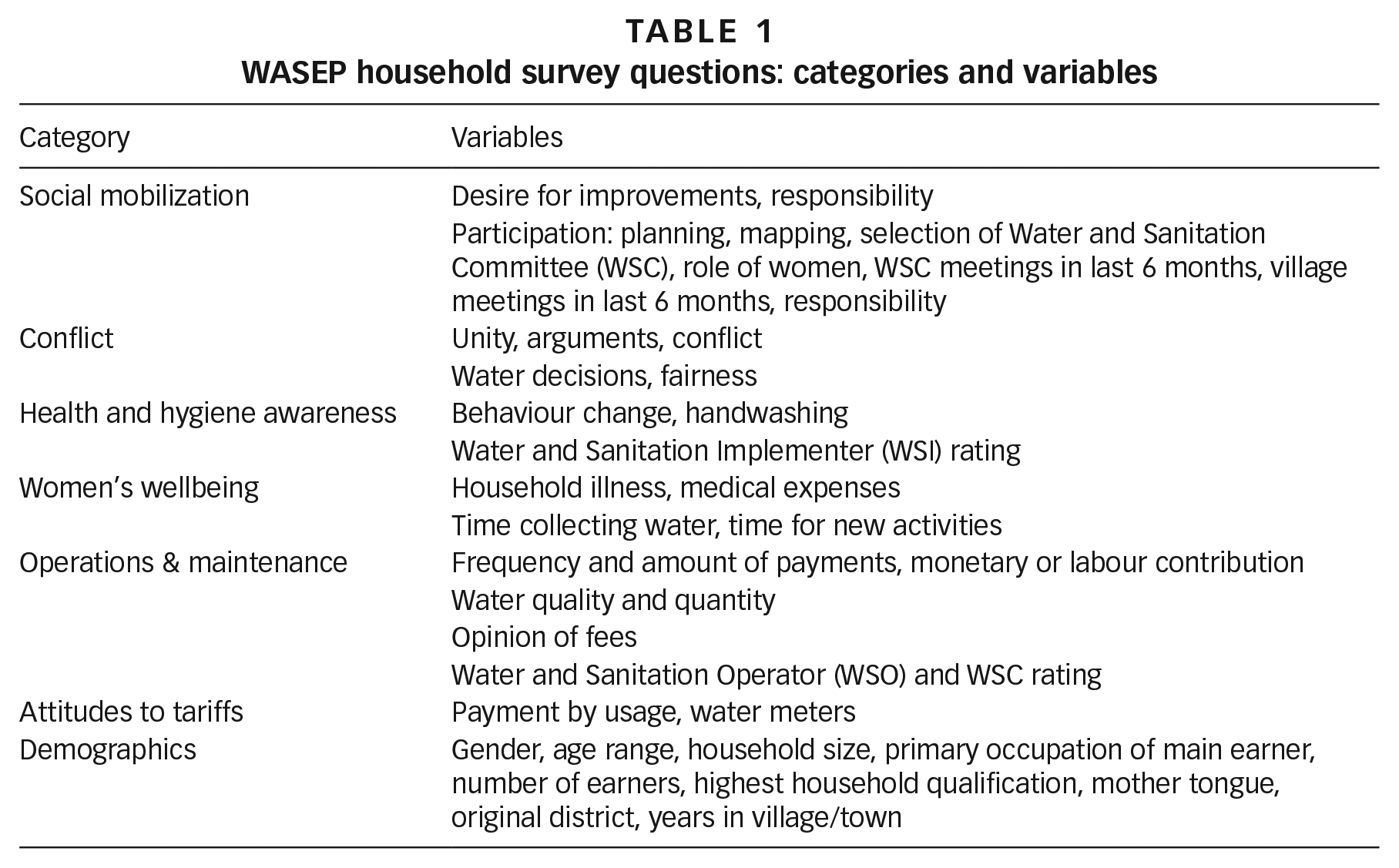
The household survey covered seven broad categories (Table 1), each designed to capture key variables to determine how these have impacted WASEP performance, and the implications for scaling up and transferring to urban settings. The “social mobilization” category captured demand for services by the community and “responsibility” as a proxy of (communal) “ownership”. Different indicators of “participation” (through involvement in meetings, discussions and decisions) provided evidence of the degree of social mobilization. The “conflict” category captured the project’s effect on the level of communal harmony (“unity”), post-implementation decisions and conflicts, and the perceived fairness of water allocation. “Health and hygiene awareness” questions captured the impact on health and hygiene practices. Questions on “women’s wellbeing” further examined the impact of WASEP through waterborne disease (“household illness”) and related “medical expenses”, as well as the time saved collecting water and how this time was spent. The “O&M” category captured recurring and non-recurring (financial and labour) contributions, water service delivery, and the performance of the Water and Sanitation Operator (WSO) and WSC. “Attitudes to tariffs” captured support for “payment by usage” and the potential introduction of water meters. Finally, the “demographics” category captured a range of variables to determine if diversity was correlated with performance.(90)
WASEP household survey questions: categories and variables
Survey data were aggregated by project, and percentages for responses were calculated for categorical variables of interest – for example, the proportion of respondents reporting a “high” or “very high” involvement in discussions at the start of the WASEP process. This process was repeated as required for other variables. Missing values were imputed from variable means for 49 of the 2,501 data points in the subset used for this analysis. A general indicator for participation (“participation score”) was calculated as the mean of the combined percentages of household responses reporting: high subjective involvement in WASEP setup meetings; a high number of WASEP setup meetings attended (more than seven); involvement in a WASEP participatory rapid appraisal (PRA); and involvement in WSC selection. Similarly, an indicator for project quality (“project score”/“project success score”) was created using the water supply indicator, consisting of the percentage of respondent households reporting “high” or “very high” levels of satisfaction that the WASEP project “was worth their hard work and payments”, “high” or “very high” levels of fairness in WASEP water allocation, and “high” or “very high” ratings for WSC performance (Photo 2).
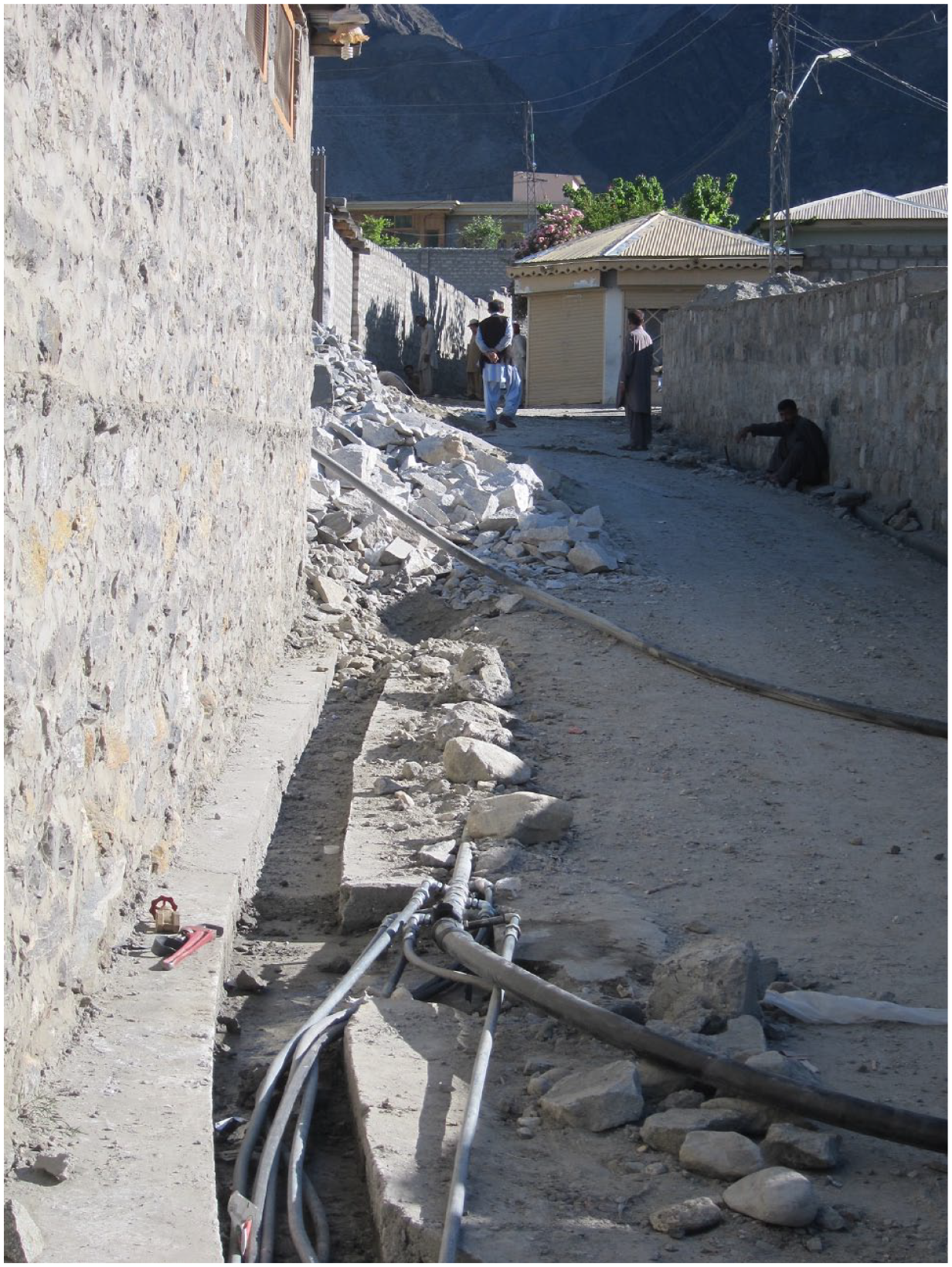
Laying of WASEP pipes in Ameenabad, Gilgit
To date, the survey has included 2,777 households. As noted above, most urban WASEP projects are in Jutial and Danyore on the outskirts of Gilgit City. Responses from the Danyore project were removed for this paper since the project implementation was still in process at several sites and service delivery had not started at all sites. This leaves 2,054 responses – 1,005 rural (49 per cent) and 1,049 urban (51 per cent). The urban sample contains responses from projects in Gilgit City (n=713) as well as the statutory and census towns of Aliabad and Gahkuch (n=336). The rural sample is entirely from village projects.
b. Findings
Social and financial differences between urban and rural projects
Rural projects are smaller (a mean of 77 households compared to 259 for urban), with bigger villages covered by different (multiple) projects. Rural projects are also more likely to serve a homogenous sect (defined as >90 per cent of the population)(91) given the specific sectarian structures in each valley, which also largely shapes migration. Some villages are primarily Shia, others Ismaili and some Sunni; some are mixed with minority populations of other sects. The urban centre of Gilgit is perhaps the only place with Shia, Sunni, Ismaili and mixed settlements. Yet here too, many new settlements in Gilgit City are formed around migrants’ place of origin and related aspects such as language and sect, with the names of a number of new neighbourhoods in Gilgit and Danyore derived from the place of origin of the majority of their settlers.
Urban and rural projects displayed little contrast in the range of livelihoods or levels of education, although there were differences. Education levels were higher amongst urban households; for example, a greater percentage of urban respondents had a master’s degree holder in the household (urban, 33.65 per cent; rural, 22.69 per cent).(92) Amongst rural respondents, higher proportions worked in agricultural or military occupations, while more urban respondents were employed in white-collar jobs like government offices and own businesses. Households whose main income earners do some form of manual labour – either in construction or agriculture – are much more common in rural areas (24.9 per cent) than in urban areas (8.48 per cent). This may explain why WASEP labour contributions are outsourced in urban sites.
Rural participants are also generally longer-term residents; 90 per cent said that their household had lived in the settlement for more than 50 years. In urban projects on average only 39 per cent of respondents had lived in the settlement for that long. Respondents with less than five years’ residence made up 14.77 per cent of respondents in urban projects, but only 0.7 per cent in rural projects. As a result, the populations of urban areas tend to be more diverse. This is reflected in the number of languages spoken: an average of five in urban projects, one in rural projects.
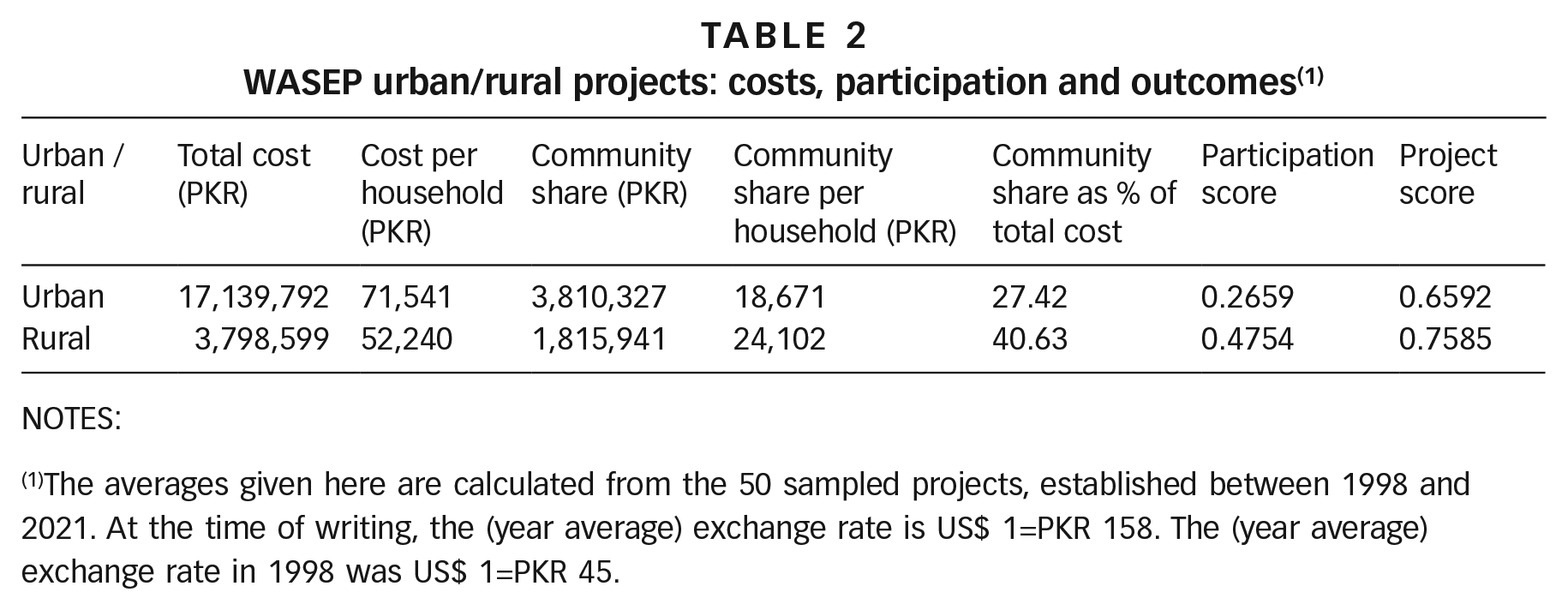
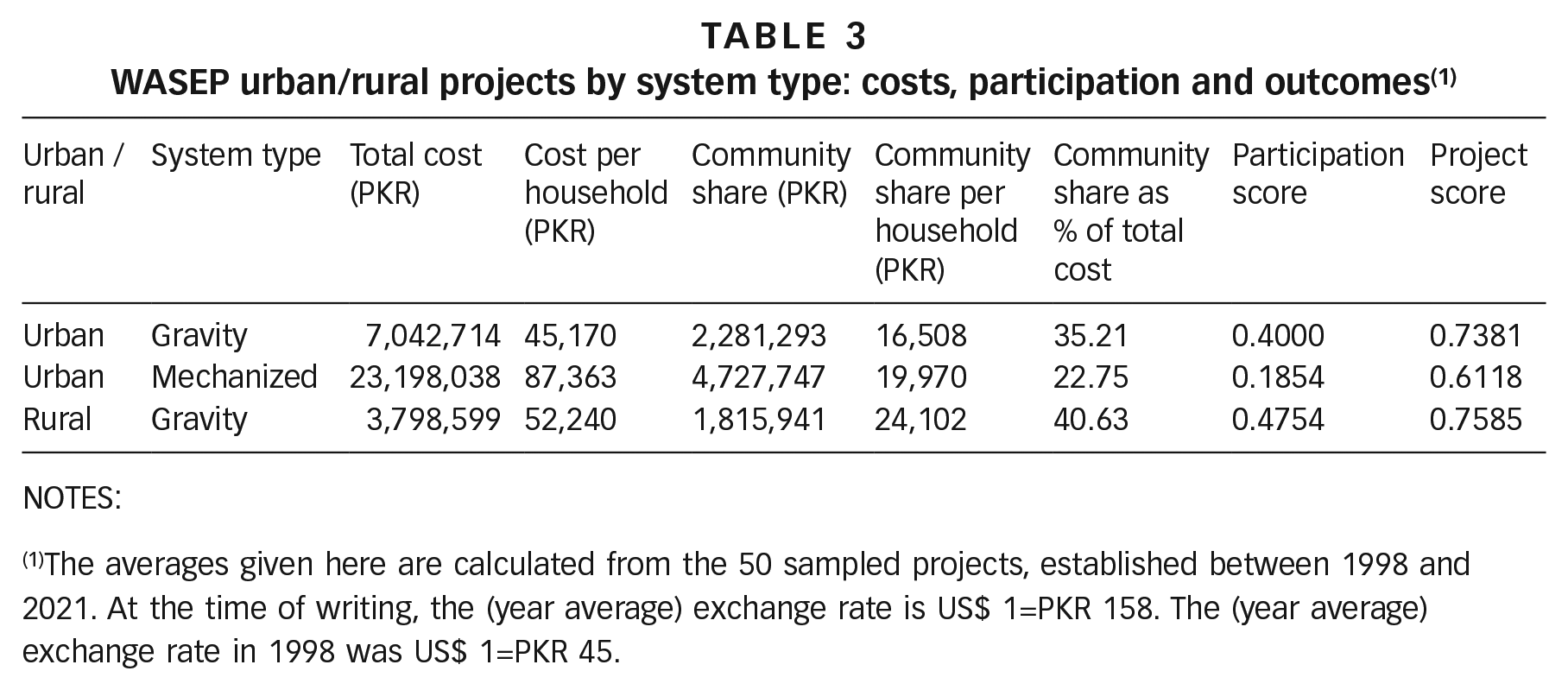
Urban projects are more expensive in general, in both total cost and cost per household (Table 2), even though the community’s share of the cost per household (the value of local materials and labour contributions or payment for labour) is similar across urban and rural projects, due to the larger number of households in urban projects. The type of water system, as noted, plays a large role in these differences (Table 3).
WASEP urban/rural projects: costs, participation and outcomes(1)
NOTES:
The averages given here are calculated from the 50 sampled projects, established between 1998 and 2021. At the time of writing, the (year average) exchange rate is US$ 1=PKR 158. The (year average) exchange rate in 1998 was US$ 1=PKR 45.
WASEP urban/rural projects by system type: costs, participation and outcomes(1)
NOTES:
The averages given here are calculated from the 50 sampled projects, established between 1998 and 2021. At the time of writing, the (year average) exchange rate is US$ 1=PKR 158. The (year average) exchange rate in 1998 was US$ 1=PKR 45.
The main initial financial difference is the higher costs for the O&M fund in mechanized systems (PKR 8,000 or US$ 50 instead of PKR 3,000 or US$ 19 for gravity-fed systems – not recorded in Table 3). Further, urban households often find it difficult to pay for wage labour (between PKR 8,000 and 16,000 or US$ 50–100) on top of the O&M fund contribution. Lastly, urban mechanized systems depend on electricity, which is expensive and unreliable, and which means higher monthly tariff contributions for operation.
Participation and project outcomes are higher in rural projects
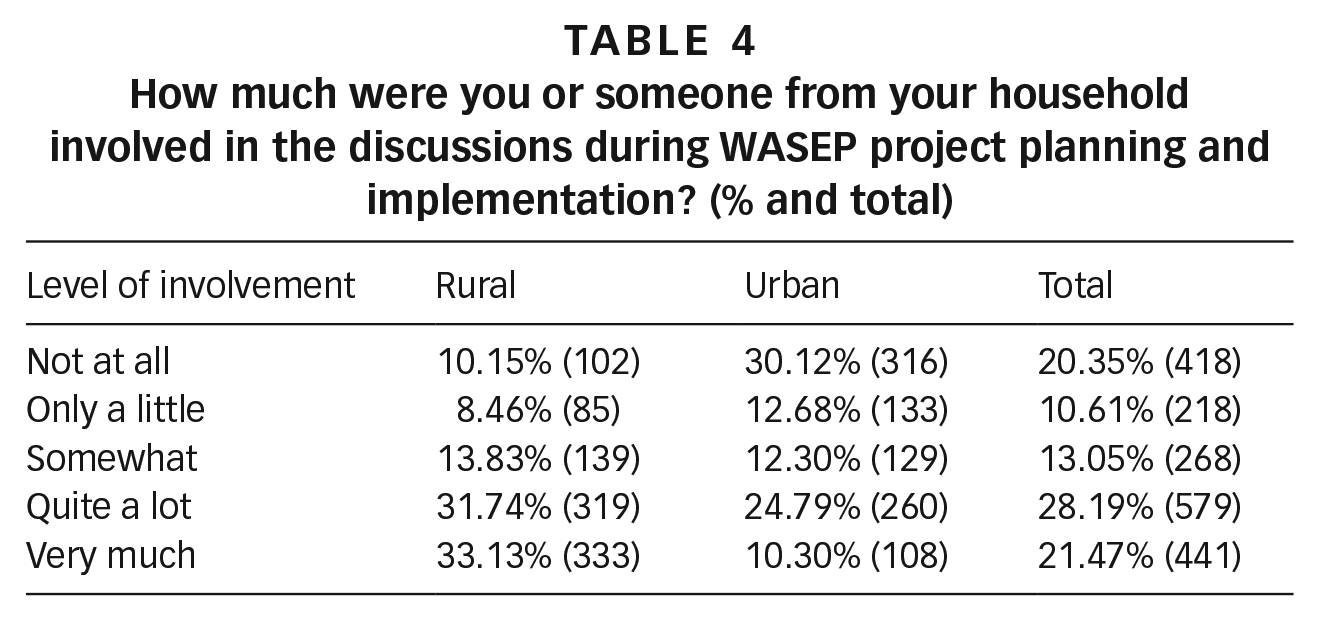
Analysis of the survey data shows higher levels of participation in WASEP projects in rural areas (Tables 4 and 5), which are positively correlated with project quality scores and project success scores (Figure 1). Respondents in rural projects reported higher participation in pre-WASEP project meetings, with 64.87 per cent reporting they were involved “very much” or “quite a lot”, compared to 35.09 per cent in urban projects (Table 4). These differences are statistically significant.(93)
How much were you or someone from your household involved in the discussions during WASEP project planning and implementation? (% and total)
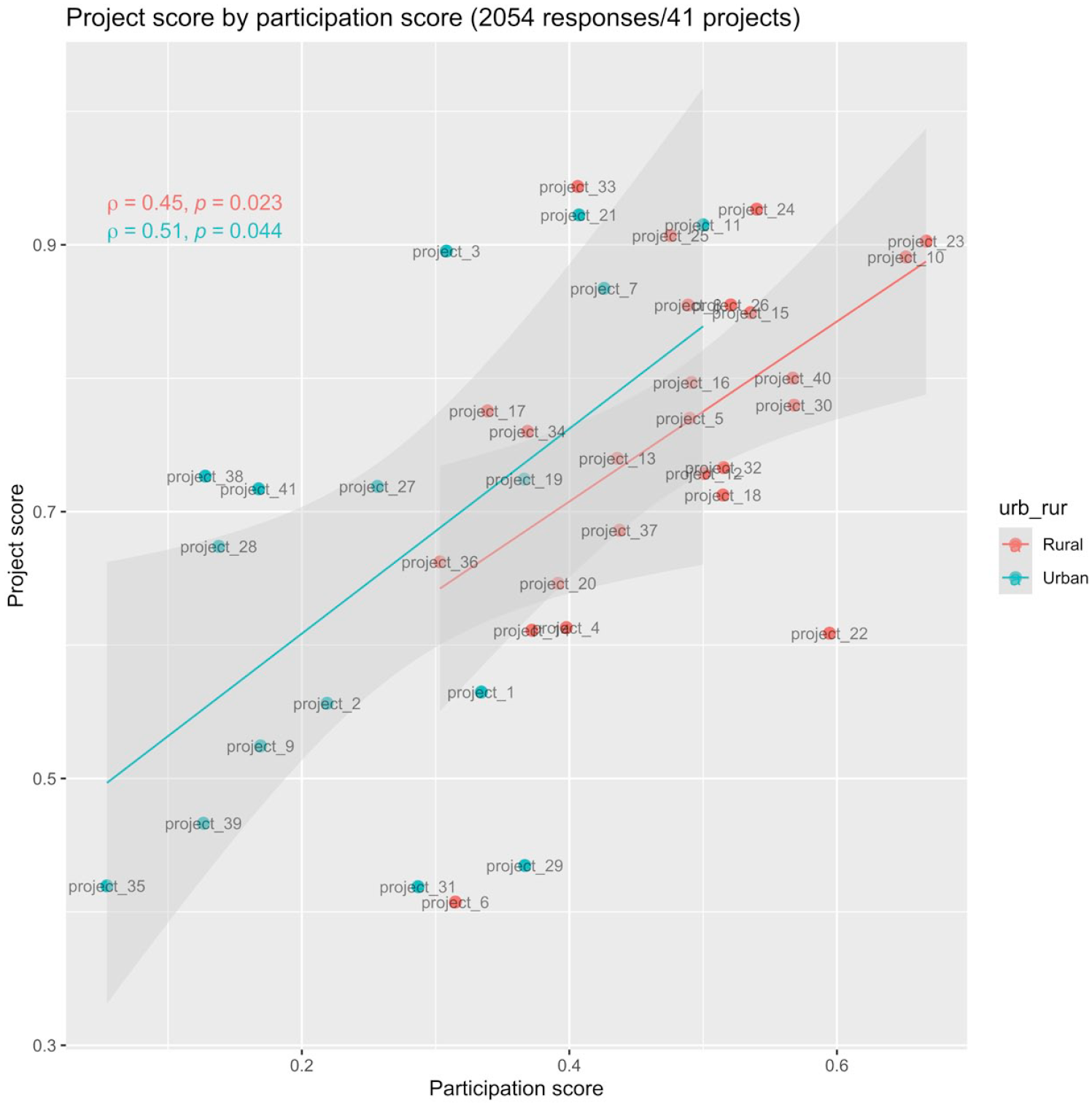
Participation and project outcomes
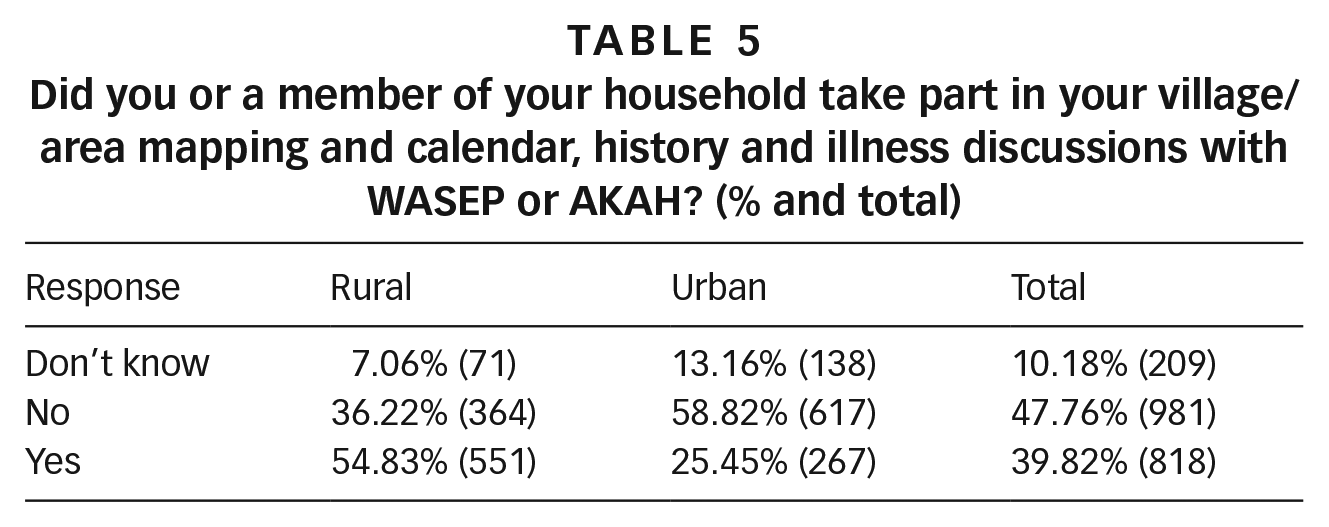
More rural respondents also attended eight or more project setup meetings (30.95 per cent compared to 12.49 per cent for urban respondents), with 10.25 per cent (rural) and 35.46 per cent (urban) attending no meetings. The median number of meetings attended was five for rural projects and two for urban projects, a statistically significant difference.(94) More rural residents (54.83 per cent) took part in area mapping and calendar, history and illness discussions in PRAs, compared to urban residents (25.45 per cent) (Table 5) – also statistically significant.(95) Amongst rural respondents, 59 per cent played a role in committee selection and 33.83 per cent did not, compared to 29.65 per cent and 55.67 per cent respectively among urban respondents.(96) Again, these differences are statistically significant.(97)
Did you or a member of your household take part in your village/area mapping and calendar, history and illness discussions with WASEP or AKAH? (% and total)
Project outcomes are correlated with participation levels, which are lower in more socially mixed urban projects
Survey responses show a correlation between higher levels of participation and better project outcomes. Project quality scores are positively correlated with participation scores overall for our sample projects (ρ=0.59, p=7.6e-05) and for urban and rural projects treated separately (urban ρ =0.51, p=0.044; rural ρ=0.45, p=0.023) (Figure 1). We fitted a linear model (estimated using ordinary least squares [OLS]) to predict the success score from the participation score. The model explains a statistically significant and substantial proportion of variance,(98) and the effect of the participation score is statistically significant and positive.(99) Residents in projects with higher participation levels have more positive attitudes to community management, feel more responsibility towards their projects(100) and are more positive about project fees.(101) This suggests that participation contributes to successful project outcomes.
A number of social factors are associated with differences in participation. Overall, participation levels are lower in larger, more mixed communities with a greater proportion of recently arrived residents. In urban projects, the number of languages spoken is strongly and significantly negatively correlated with the level of participation (ρ=-0.81, p=0.00016), although in rural projects there is no significant relationship (ρ=-0.18, p=0.39). If projects are divided into groups by the number of households,(102) the negative correlation between the number of languages and participation is only statistically significant for large projects.(103) Similarly, where there is no clear majority sect, or the sect is unknown, project scores are 20 per cent lower. Project success scores are also negatively correlated with total households in our sample projects overall (ρ=-0.55, p=0.00019) – although, when divided by urban and rural samples, this correlation is only statistically significant for rural projects (ρ=-0.34, p=0.099) and not urban (ρ=-0.34, p=0.2). This relationship remains significant for projects in census or statutory towns, i.e. Aliabad and Gahkuch, which are closer in urban form and social composition to village projects. Altogether, this implies that scaling up and out to heterogeneous and significantly larger urban projects will require the development of new methods of social engagement and participation to ensure high-quality project outcomes.
Projects are largely sustainable, but require ongoing support
Evidence from this study illustrates the important role of AKPBS/AKAH in the successful design and delivery of WASEP projects. Rural projects were considered successful if they remained functional after 3–23 years of operation (an average of 12 years), as were the more recent urban projects, after 3–10 years (an average of six years). This excludes ongoing projects in Danyore. Based on the engineering audit and interviews with WSCs, only one (rural) project and WSC from the sample of 50 was no longer functional (again excluding Danyore).
The length of pipe laid is 94 per cent higher (17,339 metres on average) in urban projects than in rural projects (8939 metres), and pipe length is strongly correlated with the number of valves required (R=0.469, p<= 0.01). However, systems with fewer valves had more leaks (R=-0.344, p<=0.05) – suggesting that, despite the greater complexity and costs of urban projects, under-engineered rural projects may present greater challenges for O&M.
The successful delivery and continued functioning of WASEP projects, built with engineering approaches described in Section III, have been important in securing clean water and minimizing damage in a mountainous region prone to natural hazards. AKAH’s technical and engineering expertise demonstrates the benefits of co-production where the community participates in non-technical decisions (e.g. selecting project type, usage rules, etc.), while leaving technical decisions (e.g. project design, scale, etc.) to the NGO.(104) This is most clearly illustrated in the village of Kirmin in Hunza, where the community pressured AKAH engineers to shorten the water supply route in order to reduce the community’s excavation labour. The redesigned route compromised system design, resulting in leaks and burst pipes (due to the increased water pressure) and frozen stored water in winter (due to the tank location), eventually leading to the disconnection of the water supply in 2019. Water was restored after the community approached AKAH and agreed to the original engineering design.
Despite successful service delivery, and continuous operations of 49 out of the 50 WASEP projects and WSCs, long-term sustainability will require ongoing financial, technical and institutional support, as also indicated in the literature. Nine of the 12 rural project WSCs and nine of the 12 urban WSCs in the engineering audit sample have had to contact AKAH or local government for financial support for maintenance, repairs or expansions. This is especially the case when major repairs are needed, usually following floods, landslides and avalanches, which have disrupted water supplies in all 12 rural projects (3,317 total days of water disruption) as compared to two urban projects (1,501 days) in the engineering sample. Most service disruptions in rural projects were accounted for by Chandupa (2,920 days), where the WSC did not seek help, and Kirmin (300 days), where community pressure to shorten the pipe route exposed the relocated water source and pipes to avalanches. Urban service disruptions were almost entirely in Aliabad Centre (1,500 days), where a glacier advance affected the gravity-fed system. This suggests that post-implementation support may be required equally for maintenance, minor repairs and expansions in rural and urban projects. However, urban projects, especially mechanized ones, appear less likely to face severe disruption from natural hazards.
V. Conclusions
This evidence contributes to a number of debates on participatory approaches to development. First, it supports the argument that community participation leads to better service delivery and maintenance, with more involved residents,(105) in both urban and rural sites. Second, it demonstrates that participation depends on social composition, with heterogeneity making it more difficult to sustain in larger urban communities.(106) Third, it points to the central role of NGOs in moving the concept of co-production beyond the state/non-state binary.(107) Finally, it indicates that sustainability requires ongoing external support, even where projects have been in continuous operation.
Household survey data show that for both rural and urban projects, more positively evaluated outcomes are correlated with higher participation levels, which are also associated with a more positive evaluation of the sense of responsibility towards the project and payment of fees. We found that the number of project households is significantly related to project outcomes in village and statutory town projects, but not urban projects. This implies that factors other than project size influence urban outcomes. To explain the lower levels of urban participation, we note a number of demographic features that are not present (or have no relationship to participation levels) in rural projects, including more recently arrived residents, mixed-sect neighbourhoods and greater linguistic diversity. Economically, urban projects are characterized by higher capital and operational costs associated with mechanized systems and greater pipe lengths, and added labour costs.
Taken together, these findings suggest challenges specific to urban projects, and that community composition matters. WASEP’s successful rural CBWM approach was developed in smaller projects with context-specific features. These data indicate that the scaling out of this model to urban sites with larger, more diverse and growing populations will require further programme development for these new settings.
The WASEP case also illustrates some features of NGO-led co-production and challenges in CBWM, as they pertain to urban areas. The role of AKPBS/AKAH as co-producer goes beyond the role of broker or mediator between the state and population, or facilitator and source of funds. As part of the large AKDN network, AKAH can build on the formalized community structures established by AKRSP, linked to a large segment of local communities in Gilgit-Baltistan. AKAH thus displays features of both an NGO and a community organization, including the ability to mobilize community support from its core constituency while expanding through a demonstration effect, with other communities approaching AKAH to join the WASEP scheme. The success of (mainly rural) WASEP projects was a major reason behind GoGB approaching AKAH to scale this programme up and out.
Overall, WASEP has resulted in the successful delivery of drinking water systems across Gilgit-Baltistan. These predominantly rural projects have delivered clean drinking water to hundreds of communities in this region, with all but one of the randomly sampled 50 projects in this study continuing to be operational, many after over 20 years. Evidence for this successful service delivery is provided by household survey data that indicate high household satisfaction with different aspects of WASEP. However, as noted, the need for financial support in 75 per cent of projects in the engineering audit also suggests that higher-quality long-term sustainability will require a move to a model with greater ongoing financial and institutional support as well as capacity building from external agencies. This model may also require both government and non-governmental institutions to scale up their capacities to support projects over time.
Footnotes
Acknowledgements
This research was only possible due to work of a larger research team. We gratefully acknowledge the contributions made by: Stephen Lyon (AKU-ISMC); Attaullah Shah, Manzoor Ali and Karamat Ali (Karakoram International University); and Saleem Khan, Yasmin Ansa, Saleem Uddin and Mushtaque Ahmed (AKAH). We would also like to thank Nawab Khan, Javaid Ahmed, Ibrar Shah, Muhammad Ayoub and Jibran Shafa (AKAH); three anonymous referees for their feedback; and the E&U editorial team for its input.
Funding
This research has been funded by the British Academy’s Urban Infrastructures of Well-Being 2019 Programme, supported under the UK Government’s Global Challenges Research Fund.
