



Abstract
Despite considerable literature exploring Brazil’s participatory management, less academic attention focuses on Brazil’s public policy councils (conselhos gestores de políticas públicas), which are permanent political-institutional structures on a range of policy issues mediating between society and the state. This article analyses urban policy councils in Porto Alegre, Rio Grande do Sul State, and Niterói, Rio de Janeiro State, considering whether this participatory planning tool advances democratic inclusion. We approach participatory planning through the lens of policy communities. Through these cases, we demonstrate that these two councils do not, in fact, enable all those affected and interested to influence and define policies. Yet even if the views of the most disenfranchised do not ultimately prevail, these urban policy councils contribute to publicizing urban policy issues and democratizing the range of stakeholders that gain access to the policy community. We conclude by highlighting suggestions for improving public policy councils as mechanisms for participatory planning.
I. Introduction
Considerable literature since the 1990s has documented innovative trends in participatory management in Brazil, focusing on the pioneering experience of participatory budgeting.(1) Indeed, no country parallels Brazil in terms of the number and range of institutionalized participatory channels.(2) What has received less academic attention internationally is the experience of Brazil’s public policy councils, despite their widespread dissemination. These councils, known as conselhos gestores de políticas públicas, are institutionalized spaces mediating among civil society organizations, city dwellers and the state.(3) In 2009, the Brazilian census, in its survey of 5,565 municipalities, counted 43,156 municipal public policy councils.(4) According to Albert, public policy councils are under-studied, “perhaps because they are viewed as technocratic and susceptible to government domination”.(5) The 1988 Constitution adopted participatory guidelines and precepts to make existing and new councils more inclusive. These permanent political-institutional structures are linked to specific federal ministries or state and municipal departments on various policy issues, including housing, the environment and urban planning. Public policy councils were established to rationalize public policy and include groups affected by such policies.(6) Precursors to these institutions include community councils created to work with public administrations in the late 1970s, and popular councils in the late 1970s and early 1980s.(7)
Public policy councils at the municipal level depend on municipal law; thus, their form and function vary considerably. They are based on a parity principle, meaning that civil society and government are equally represented, and ideally operate under the principle of co-management, equally sharing council administration.(8) Some public policy councils in specific areas, including health and education, are deliberative, meaning their decisions are binding on legislative city councils (known as câmaras); others are merely consultative.(9) In some cases, public policy councils are linked to federal funding transfers for state and local governments, as in the case of housing councils.(10) As councils involve the joint assembly of government, civil society and market actors, they are sometimes called “hybrid institutions”.(11) For some observers, their promise lies in their capacity to institutionalize dialogue between government and society in public policy making.(12)
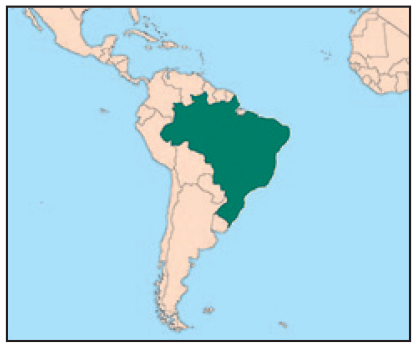
Despite their proliferation, Brazil’s urban policy councils are relatively under-explored in the international literature, especially compared to participatory budgeting.(13) Even in Brazil, most published studies focus on health and social service councils. What literature there is raises doubt about the councils’ effectiveness as participatory instruments of public policy oversight. Concerns include difficulties for councillors in accessing information, challenges in building capacity of lay councillors, lack of technical advisory capacity, representation issues, the councils’ deliberative process, and weak accountability by mayors or secretaries to the councillors.(14) To examine these dilemmas, we present case studies of two public policy councils on urban policy – one in Porto Alegre, Rio Grande do Sul State, and the other in Niterói, Rio de Janeiro State.
Urban policy councils aim to establish an inclusive urban agenda through stakeholder engagement, deliberation and consensus building. Given the critiques above, and to add to the scanty literature, we ask the following questions: How effective have urban policy councils been in providing for the inclusive deliberation of community members? What can be done to improve the participation of disenfranchised communities in shared decision making and policy making in such channels? We follow Pontual(15) in valorizing these councils’ successes, while pointing to challenges in advancing social control of government policy making. Through the concept of policy communities,(16) we demonstrate that, rather than reliably enabling those affected and interested to influence and define policies, urban policy councils can contribute to publicizing policy issues and democratizing the range of stakeholders gaining access to the policy community.
In Brazil, some public policy councils emerged in the early 20th century in non-democratic contexts as forms of economic elite and expert participation, while during the military government (1964–1985), these councils included limited lower-income and workers’ associations in agreement with the dictatorship.(17) The 1988 Constitution launched the principle of “shared management” of public policies, making participation mandatory in specific policy areas.(18) During re-democratization, social movements and civil society organizations demanded expanded spaces for democratic participation in public policy. Thus, public policy councils gained broader dissemination and territorial scope, alongside expanded civil society organizations. Following the 1988 Constitution, the number of public policy councils expanded, despite a growing gap in this regard among some municipalities with different socioeconomic characteristics.(19)
Brazil’s national law on urban planning, the 2001 Statute of the City (Estatuto da Cidade), provides for urban policy councils as one of several tools to ensure democratic city management (Article 43). Urban policy councils are expected to interact with other councils on different issues and a range of participatory venues, including public hearings, conferences and participatory budgets. At the municipal level, urban policy councils are linked to Brazil’s National Council of Cities (Conselho Nacional das Cidades), providing guidelines for implementing national urban development policies.(20) Following the Statute’s approval, the number of urban policy councils rapidly increased across Brazil (there were 496 new councils between 2000 and 2006, and 624 between 2007 and 2012).(21) Compared to other types of public policy councils in Brazil, urban policy councils up to 2009 expanded at a lower rate, and unevenly.(22) Following the 1988 Constitution, the goal of urban policy implementation changed from technocratic planning with elite participation to participatory planning with democratic policy making. Urban policy councils expand the variety of governance actors, democratizing the executive branch.(23) They meet regularly, and include non-state actors in permanent participatory forums, in contrast to several other formats that only call on the public for specific planning events.
After describing our research methods, we compare the experiences of the urban policy councils in Porto Alegre and Niterói, and offer suggestions for improving them as participatory planning mechanisms. The findings from these cases elucidate the impact that mandatory participation had on existing urban policy councils. This analysis further develops a theory of change about how urban policy councils incorporate federal law, and the potential and constraints around generating more inclusive policy communities.
II. Methods
This study is a qualitative comparison of urban policy councils in the cities of Porto Alegre and Niterói. These cities established councils before the enactment of the 2001 Federal Statute of the City – Porto Alegre in the 1930s, and Niterói following the 1988 Constitution. This extended experience under different political administrations makes these cities especially useful cases, allowing a holistic view of the changes introduced by the Statute.(24) We consider similarities and differences in the two cases, exploring the influence that mandatory participation had on these councils regarding the voices of the disenfranchised, and testing propositions about the role of institutional design, political parties in power, and the influence of real estate interests in undermining the federal mandate for democratic planning. Deploying an ethnographic analysis with a policy focus, we elucidate how political institutions and policies unfold in different contexts.(25) Long-term fieldwork in both cities began a decade after the approval of the 2001 Statute, when initial enthusiasm about public policy councils had evolved into criticism, permitting an analysis of these councils’ strengths and weaknesses. Though document analysis and interviews, we trace the history of these councils before our fieldwork.
We conducted fieldwork in Porto Alegre and Niterói between March 2010 and March 2011, and October 2010 and June 2011, respectively, through participant observation of council meetings and in-depth qualitative interviews with key actors. In Porto Alegre, 12 councillors were interviewed, representing the government, civil society organizations and community representatives. In Niterói, 58 interviews were conducted with representatives of local government, politics, business, civil society and social movements, and academic and professional groups. A second phase included 2015 fieldwork in Porto Alegre, followed by analysis of municipal documents, council minutes and local media reports in 2021 in both cases. Both of us attended all regular council meetings during the initial fieldwork, weekly in Porto Alegre and monthly in Niterói, as well as public hearings on controversial issues. All meetings were recorded and safely stored, and detailed meeting notes taken to guide data analysis. Although meetings are public and meeting minutes are publicly available, we both introduced the research at the council meetings, obtaining authorization to record them.
III. Potential and Challenges of Participatory Planning
Beyond the effervescence of participatory planning over the past 40 years, an international critique of the limits of participatory planning focuses on whether it can be considered transformative.(26) Debates on the potential and challenges of participatory planning to contribute to local government legitimacy, effective governance and equitable outcomes for vulnerable communities, suggest the polarized nature of this literature. Despite divergent opinions,(27) participatory planning is generally agreed to be grounded in concepts related to collaborative, deliberative and radical planning,(28) as well as communicative rationality.(29) “Effective participatory methods involve collaboration, dialogue and interaction” as part of inclusive, future-oriented processes, challenging status quo thinking and assumptions.(30) For Fung,(31) “public participation can be a potent means to achieve key democratic values such as legitimacy, justice, and effectiveness in governance”. Fung and Wright’s influential model of empowered participatory governance, infusing an empirical focus into these debates, highlights how participatory institutional designs develop governance structures geared to concrete concerns, establish new channels for those directly affected, and generate deliberative solutions.(32)
Along with the growing importance of participatory planning, Legacy(33) identifies a perceived “crisis” of participation in the literature, which emphasizes its inadequacy in addressing power inequalities and integrating equity into planning processes.(34) Some observers see these processes as attractive in securing democratic legitimacy while still reinforcing status quo decisions.(35) For Monno and Khakee, different accounts of participatory planning question its efficacy, focusing on “participation as means or ends in a democracy and on the issues of structure, agency and power in decision-making”.(36) This scepticism even applies to progressive governments, with cases showing leftist mayors failing to establish inclusive planning processes and institutions.(37) An early reference is Arnstein’s well-known ladder of participation, establishing the varying levels at which participation functions, from manipulation of citizens to control by citizens (Figure 1).(38) This epitomized a key debate – the extent to which public involvement is tokenistic, lacking the delegated authority to be meaningful. Arnstein’s(39) work highlights the question of whether power is actually redistributed from “powerholders” to “have-nots”. Despite critiques of Arnstein’s ladder as the presentation of an “overt” power struggle between communities and local governments,(40) for Gaber(41) the ladder illustrates a “partnership”, in which “both parties occupy a fairly even playing field, with local bodies transferring decision-making power to the community to strengthen the partnership between local government and its citizens”. But the idea still suffers from inattention to notions of power by overemphasizing the capacity of certain institutional designs to guarantee just outcomes.
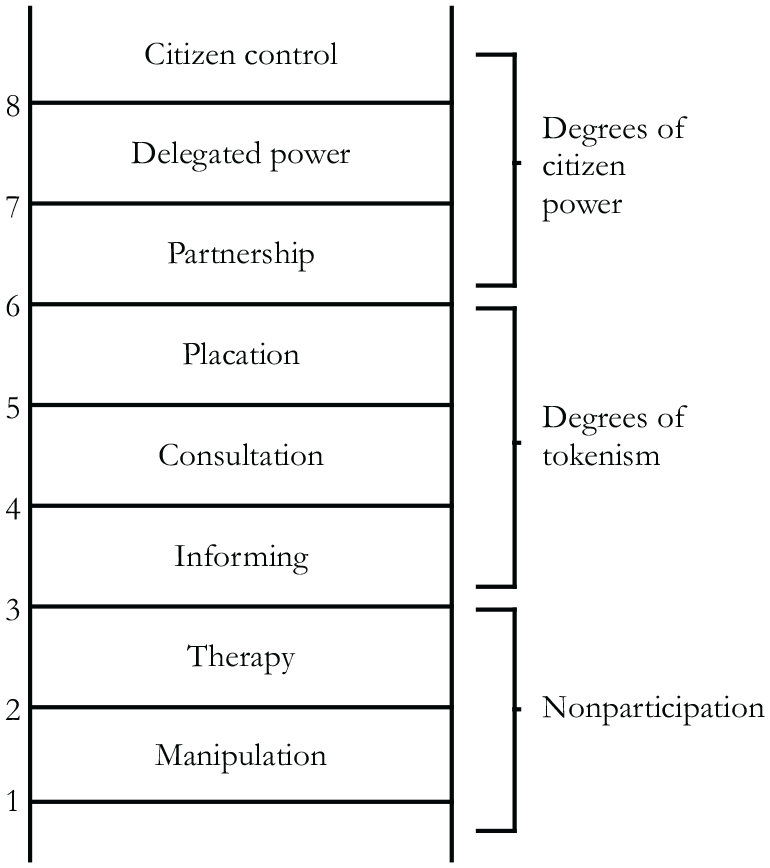
Arnstein’s ladder of participation
In recognition of these limitations, our approach suggests that urban policy councils, a distinct type of participatory planning, can be better analysed through the concept of policy communities. A policy community refers to extra-formal interactions among various policy actors, including interest groups, corporations, politicians and others with common interests in a particular policy. Through these interactions, organized interests and governmental actors play key roles in shaping the direction and outcomes of public policies.(42) As Richardson and Jordan(43) explain, “We see policies being made (and administered) between a myriad of interconnecting, interpenetrating organisations. It is the relationships involved in committees, the policy community of departments and groups, the practices of co-optation and the consensual style, that perhaps better account for policy outcomes than do examinations of party stances, of manifestoes or parliamentary influence.” [emphasis in original]
In the aspirational view of this approach, policies are defined by those most affected and interested, and by experts, irrespective of whether they wish to maintain the status quo or work towards radical change. For Kingdon,(44) “[p]olicy communities are composed of specialists in a given policy area…scattered both through and outside of government” who engage in working out alternatives to the problems of a particular policy field. However, a policy community can also entail an elitist group of policy actors pushing their narrow interests into government policy approval and implementation, without considering public welfare or issues of social justice.(45) Regardless of specific outcomes, policy communities hold the potential to include non-state actors most affected by policy outcomes, including vulnerable and disenfranchised communities. In the next sections, we apply this concept to two cities with urban policy councils, focusing on the challenges and opportunities of this approach for participatory planning.
IV. The Porto Alegre Case
Porto Alegre is internationally known for participatory budgeting, a mechanism for including city dwellers’ input in public resource allocation by shifting some budgetary powers from the legislative city council to regional(46) forums, assemblies and the Council of Participatory Budgeting.(47) However, Porto Alegre has a much older council of urban policy than the Council of Participatory Budgeting, called the Conselho Municipal de Desenvolvimento Urbano e Ambiental (CMDUA) since 1999, but previously known as the “master plan council”. CMDUA involves non-state actors in developing and implementing the master plan. CMDUA’s origins and master planning in Porto Alegre, anchored in an early 20th-century aspiration to sanitize, modernize and beautify the city, predate the authoritarian military government.(48) The master plan council was established in 1939 as an advisory committee whose decisions had no binding power.(49) Council members included 16 men representing industries, commerce, print media, the city’s transportation department, and the military. Between 1955 and 1979, the council had 11 members, and remained an elitist council, which developed and implemented Porto Alegre’s master plan.
In 1979, CMDUA – then known as the municipal council of the master plan of urban development (Conselho Municipal do Plano Diretor de Desenvolvimento Urbano, CMPDDU) – innovated by including four community members, representing the city’s four planning regions. Neighbourhood associations and mother’s clubs attending the regional planning meetings in these regions selected their representatives. Because organizations had to comply with the military regime then in power, CMPDDU was top-down and technocratic, with participation mostly restricted to elite representatives and corporate entities. In this period, urban planning in Porto Alegre was characterized by the proliferation of various municipal councils, including on transportation and health, with minimal or no community participation, but including representatives from public agencies and private-sector associations, and subordinate to the municipal departments that funded them.(50)
Nationally, the 1980s were characterized by debates about the role of urban planning in promoting democracy, questioning whether rational and technocratic plans could promote equity and social justice. In 1989, the National Forum of Urban Reform (Fórum Nacional de Reforma Urbana, FNRU) established the need for participatory and democratic planning, and recognized the social function of private property and the collective right to the city. These principles echoed the commitments of the newly elected Popular Front in Porto Alegre, led by the Workers’ Party (Partido dos Trabalhadores, PT) and other centre-left and leftist political parties. The Popular Front aimed to democratize urban planning, prioritizing informal settlements and the right to housing and the city.(51) In this context, it initiated grassroots planning processes including participatory budgeting, and reformed the urban policy council and the master plan revision process to include disenfranchised communities.
Under the Popular Front government of the 1990s, urban planning functions went beyond the purview of the urban policy council, including the recommendations of the 1993 City Congress and involving participatory budgeting. During this Congress, the process of revising the 1979 master plan prioritized city-wide democratic councils and conferences in all sectors, from urban planning to sports, and the city-wide debate reached a broader audience than a discussion of a single council alone would have. The City Congress had more than 2,000 attendees, drawing attention to what had been, until then, an obscure master plan in the minds of working-class Porto Alegrenses.(52) Over six years, working groups collected proposals, received feedback and modified ideas. A revised master plan was approved in 1999, and the urban policy council acquired its current name of CMDUA.
In the 2000s, CMDUA became more active, proposing and formulating urban policies, plans and projects. It was assigned the task of examining large development project proposals, from both the government and the private sector, such as the construction of sports arenas. Furthermore, CMDUA reviewed applications of the instrument known as outorga onerosa do direito de construir (OODC) (literally, the “onerous grant of the right to build”), which regulates charges for additional building rights, generating resources for constructing popular housing and infrastructural improvements.(53) Changes included establishing eight planning regions, representing in each case the combination of existing participatory budgeting regions. Each of the eight planning regions elected its councillors for two-year terms.
The evaluation of the 1999 master plan began in 2003 under PT Mayor João Verle, only becoming law in 2010 after five years of a centrist coalition government, which provided few resources for community participation.(54) During the centrist governments of Mayors José Fogaça (2005–2010) and José Fortunatti (2010–2017), the real estate and construction industries gained considerable influence. For instance, business trade associations gained seats in CMDUA, and proposed revisions to the master plan allowed for higher building densities. Associations of developers, real estate brokers and corporate lawyers framed the proposal as an issue of jobs, mobilizing the construction workers’ union. Both environmentalists and upper-middle-class associations, fearing the loss of neighbourhood character and historical buildings, opposed the proposed higher densities. In preparation for a public hearing in May 2007, employers delivered flyers at workplaces, instructing construction workers to vote for higher densities to preserve their jobs. The builders’ associations paid for buses and meals to facilitate meeting attendance. Construction workers showed up en masse, impeding groups opposing the developers’ proposal from accessing the venue. Upper-middle-class neighbourhood associations and environmental groups then filed a complaint with the Office of the Federal Prosecutor, which ordered an additional public hearing. The 2001 Statute facilitated the enforcement of minimal participation standards through the courts. While in the 1990s, residents of low-income neighbourhoods emerged as important policy actors, debating master plan revisions, in the mid- to late 2000s, residents from upper-middle-class neighbourhoods became the key actors. This example highlights the importance of the political context to inclusive participation, and demonstrates how the courts became a venue of last resort to enforce democratic standards in Porto Alegre, especially after the 2001 Statute. This was also the case in other Brazilian cities.(55) Several procedural irregularities were identified, but even after the rescheduled public hearing, the developers’ proposal won. Ultimately, the 1999 master plan revisions became law in 2010.
The prominence of real estate interests in that version of the master plan resulted in disappointment for professional organizations, NGOs, and middle- to upper-income neighbourhood associations committed to environmental and historical preservation. In 2015, these sectors launched the A Cidade que Queremos (The City that We Want) Collective. The local chapter of the Movimento de Luta nos Bairros, Vilas e Favelas (MLB), a social movement of those living in informal and precarious housing, joined the collective. This collective expanded the urban policy community beyond CMDUA’s reach, using conventional and social media to advocate against urban redevelopment projects that negatively affect the environment and neighbourhood aesthetics, while promoting master plan revisions advancing the right to adequate housing. In 2019, preparatory debates for the 10-year revision started with participatory workshops at the regional level. Originally scheduled for completion in 2021, the master plan revision was postponed to 2023 due to the COVID-19 pandemic.
a. CMDUA and the dilemmas of sustaining democratic planning
Technically, CMDUA has a government minority. One-third of its representatives are from municipal departments, and two-thirds from civil society. Half of the civil society segment consists of community representatives, including members representing Porto Alegre’s eight planning regions, each of which elects one councillor and two supplementary representatives. The other half comes from entities such as professional organizations of architects, engineers, and industries including the civil construction and real estate industry; urban policy and planning NGOs; and universities. These civil society organizations change moderately according to the political party in power, tending to vote with the government sector, and leaving community representatives in the minority.
CMDUA holds weekly meetings. All councillors have the right to a voice and vote. Planning regions meet locally at the planning forums, composed of delegates representing neighbourhood associations, local environmental groups, social movements and NGOs. While these planning forums receive some technical and material support from the municipal department, government members do not attend these meetings. As a councillor notes, there is little government presence in the planning regions: “Yesterday was the first yearly meeting of planning region 5, the Gloria region. We debated the World Cup with the three participatory budgeting regions that belong to region 5. The World Cup infrastructure projects impact us. But, unfortunately, our guests did not show up.” (Interview, 4/20/2010)
Community councillors feel that the government officials they invite as “guests” should attend local planning meetings and explain the impact of large urban development and infrastructure projects in their regions. In preparation for Porto Alegre’s 2014 World Cup, CMDUA had to approve football stadium renovations, the construction of a new arena, and widened roads, which entailed informal settlement evictions. These projects were granted priority in 2010, given the federal financing of the international event. However, it was difficult for the affected planning regions to receive concrete information about the scope of this displacement. During this period, councillors representing informal and precarious neighbourhoods relied on other councils, academia and NGOs to develop strategies of resistance. Simultaneously, developers distributed printed handouts with project details during their presentations at CMDUA meetings, which travelled through councillors’ diverse policy networks, supporting further community organizing.
CMDUA has been effective in expanding the policy community to include low-income, working-class residents. New community representatives to CMDUA benefit from capacity building on urban planning in Porto Alegre, learning about such planning concepts as zoning, land-use designations and permitted activities, and where CMDUA fits in the process. Capacity building is important, because CMDUA approves permits and zoning variances for small and mega redevelopment projects.(56) Councillors from the government, non-profit and planning regions take turns acting as the rapporteur of cases, and are responsible for finalizing recommendations. Thus, community representatives – laypeople without university degrees – rely on this tailored capacity building, which democratizes access to technical planning language. Applications for both upscale subdivisions and land regularization of informal and precarious settlement projects arrive at CMDUA after travelling through several municipal and state departments. Once councillors vote, the recommendation goes to the city council and mayor for approval into law. Notably, class conflict occurs only when profit is involved. For instance, private-sector associations, such as the Union of Civil Construction Industries (Sindicato das Empresas de Construção Civil), do not oppose land regularization plans at the city’s periphery given the low land values there. Moreover, informal settlements close to achieving land regularization are usually several decades old and have consolidated over decades, while the process may take 10 years to be completed. Land regularization entails the rezoning of land as special areas of social interest (areas especiais de interesse social, AEIS). This rezoning adjusts subdivision standards, for instance with lower lot and street dimensions, so that re-blocking and basic services become more affordable. The experience councillors gain in regularizing such settlements gives them the knowledge to respond to city council objections to AEIS designation.
Porto Alegre’s master plan establishes AEIS zones either to regularize existing informal settlements and irregular and precarious subdivisions, or to establish land for future social housing development. One of CMDUA’s advisory functions is to identify areas in the eight planning regions to rezone as AEIS, and to propose social housing developments with federal funding. The closer to the centre the proposed AEIS is located, the more controversial approval becomes. Alongside the advisory functions of CMDUA, Porto Alegre’s housing movements mobilize to identify, propose and advocate for establishing AEIS zones.
Notably, CMDUA’s support for regional-level community planning unintentionally promotes community organizing and coalition building with other municipal councils, especially the housing council and participatory budgeting council. Councillors often visit each other’s meetings to make announcements relevant for securing low-income housing and basic infrastructure. Moreover, the approval of the municipal housing plan impacts master planning and vice versa, mobilizing community leaders city-wide. The city’s housing council develops and manages the municipal housing plan, linked to federal funding for social housing construction.(57) Until 2020, resources came from the federal housing programme Minha Casa Minha Vida (MCMV), which was launched in 2009 and updated periodically. However, all proposals for land in valuable locations became controversial and were subject to protest and closed-door schemes from the government sector and real estate organizations to identify technicalities that would make it possible to deny the proposed AEIS.
V. The Niterói Case
In the context of national discussions during the 1990s on participatory planning, Niterói was among the few municipalities to comply with the constitutional directive to craft a participatory master plan before the 2001 Statute required this. Indeed, civil society participation in planning in Niterói is rooted in the city’s development in the 1990s. Following the loss of Niterói’s status as the capital of Guanabara State in 1975 and the resultant weakening of the city’s political institutions, the appointed mayor, Ronaldo Fabrício, aimed to organize a city planning system and master plan. As Salandía(58) notes, the elaboration of Niterói’s master plan highlighted the need for a technical body within the prefeitura, emphasized the importance of participatory planning, and “pointed as the way to go, the institutionalization of participation through municipal councils”. In the late 1980s and early 1990s, urban management initiatives were identified to enable the city’s local development.(59) Niterói’s secretariat of urbanism (secretaria de urbanismo) was founded in 1989 with the election of Jorge Roberto Silveira (Democratic Labour Party, PDT) as mayor, who appointed former professor of architecture João Sampaio as urbanism secretary. These changes helped to bring “new” planning ideas to Niterói, drive the city’s new master plan, and consolidate its planning vision through innovations in planning and urban management.(60)
Niterói’s 1992 master plan installed an urban development council known as the Municipal Council of Urbanism and the Environment (Conselho Municipal de Urbanismo e Meio Ambiente, CMUMA), a consultative council. Responsible for planning, executing and monitoring policies, CMUMA’s establishment in 1993 was a commitment of the municipal government.(61) Composed of 13 members – half from civil society and half from local government, plus the secretary of urbanism – CMUMA was tasked with discussing and voting on issues before bills went to city council for approval. For Salandía,(62) “In the face of a political context where. . .popular demonstrations were centered on emerging issues linked to the very viability of life in large cities, the governmental option . . .[was] to widely disseminate the themes, until then treated exclusively by urban planners and environmentalists, in order to empower social movements for this specific debate, indicating the close connection between the Master Plan and the reforms in the pattern of urban development…”
Indeed, CMUMA pointed to key advances in defining a new urban development policy for Niterói, and its existence was considered indispensable to the credibility of civil society participation in planning.(63) In 1998, however, when Silveira was elected mayor, “he just took the importance out of [CMUMA] and created a commission that was just the city’s executive committee and whom he wanted, there was no movement, no organized civil society. . .and then the council ended” (Interview, 1/6/2011). This led to the approval of several laws without civil society input, highlighting challenges related to the absence of an arena for civil society participation. CMUMA’s termination coincided with discussions of a controversial tool known as operações interligadas in Praias da Baía, Niterói’s wealthiest region.(64) Its approval here altered the maximum building height for the region, under pressure from the real estate market, which found the region’s previous legislation (the regional urban plan, plano urbanistico regional or PUR), restrictive.(65) Indeed, such a “victory” on the part of the real estate sector was only possible given the lack of civil society voice.(66)
The 2001 approval of the Statute provoked a revision of Niterói’s urban legislation, including alterations to the 2004 master plan. In 2002, Niterói’s first municipal conference ratified a new urban policy council, known as the municipal council of urban policy (conselho municipal de política urbana, COMPUR). COMPUR convenes representatives of government and civil society to analyse and make proposals for Niterói’s urban development, including its master plans. COMPUR’s 18 councillors are elected during the biennial municipal conference; half are managers and developers of urban space, including government bodies and businesses. The other half are representatives of social movements, unions, professional or academic entities and NGOs, representing a different vision. COMPUR’s monthly meetings are public; yet rarely, even for a controversial subject, do non-councillors take part. But because COMPUR is open, some interviewees referred to it as a “democratic space”, where debates are often conflictual. While its composition suggests it is a proportional entity, in practice, the government manipulates COMPUR’s structure, making it favourable to the government. As one NGO member notes: “In theory we have a majority, but the problem is that the municipal executive and city council, they have the majority” (Interview, 12/3/10). Indeed, the issue of a sufficient quorum at COMPUR meetings is a problem, suggesting that the government may purposely try to ensure that civil society members do not show up to COMPUR meetings. As Alves(67) recounts, the issue is related to a false consensus, “which means that only the councillors whose interests converge to this supposed consensus have an interest in being present in the meetings”. Furthermore, Alves(68) shows that the COMPUR representatives from the NGO and social movement sectors had the lowest presence of all sectors during regular meetings.
One episode illustrates the difficulties of the COMPUR case. In April 2010, heavy rain fell in Niterói, causing devastation in Morro do Bumba, a favela in the east of the city built on a deactivated garbage dump. The heavy rainfall and buildup of gases caused the land below the favela to subside. Between November 2009 and August 2010, COMPUR was not functioning: “everything stopped when the rains occurred, the city stopped” (Interview, 12/17/10). During this tragedy, as an academic explained, “COMPUR was set aside. In a time the city most needs the council to function…The executive power saw this as a threat and simply did not call for any meeting” (Interview, 11/08/10). COMPUR’s councillors met independently, taking the issue to the Ministério Público, which notified the prefeitura that it had to convene COMPUR. When COMPUR reconvened in August 2010, attention to the tragedy quickly shifted to other issues.
While COMPUR is defined as “deliberative in its attributes” – meaning draft bills pass through it before going to city council for a vote – it does not have the final word. By functionally linking COMPUR to the secretariat of urbanism, the law establishing COMPUR also limited its scope. Hagino(69) explains that COMPUR is chaired by the secretary of urbanism, “who is hierarchically subordinate to the mayor. . .In this way, COMPUR has been colonized by the system’s bureaucracy.” Members of civil society thus object that COMPUR “has no veto power. It may signal that it doesn’t agree, but it can’t veto” (Interview, 12/21/10). For Hagino,(70) while COMPUR is legally deliberative in its attributions, this is “…interpreted by the members of the municipal government as though COMPUR were merely advisory in character, as…these attributions are not very well defined. This position is adopted by the president of the council, which further removes the autonomy of COMPUR.”
City staff and the private sector suggest that a truly deliberative council would create difficulties. “Having a deliberative council in an area like this means paralyzing the administration because you’re only going to meet after ages…How are you going to deal with the day-to-day?” (Interview, 1/6/11). Thus, while decisions agreed upon in COMPUR are carried out through debate among councillors, its de facto consultative status results in little legitimacy.
Despite COMPUR’s legally established role, in many instances, “the municipal executive often ignores them and alone decides how to act”, as Hagino notes.(71) Frequently, COMPUR proposals are not carried out in the city council. As Alves(72) explains, “Many issues that seem to be right, or have reached consensus, are masked and, finally, the role of state actors and their interests overlap, without the slightest justification.” An example is the case of Niterói’s urban partnership operation (operação urbana consorciada, OUC), a public–private partnership (PPP) proposed in 2013 to revitalize Niterói’s centre, which the municipality treated as a window of opportunity to bring investments to the city. On 21 May 2013, the OUC was presented without discussion at a COMPUR meeting, to the surprise of the councillors. On 4 June, city council approved Law PL 143/2013, allowing for the OUC’s institution. The prefeitura tried to show that there had been strong COMPUR participation “for the preliminary studies to the draft law, as well as the definition of the guidelines, objectives and instruments for the implementation of OUC”.(73) As Terra et al.(74) explain, despite meetings held by the prefeitura, “in most of them, democratic management was not given the opportunity”. Indeed, local officials did not predict the capacity of civil society to mobilize and gain the attention of the state’s Ministério Público, which submitted the proposal in a series of public hearings.(75) In a climate influenced by the 13 June protests across Brazil around transportation and, above all, the poor conditions of Brazilian cities,(76) this suggests a key role of civil society actors within the policy community, even if governmental actors do not foresee this role. This episode also suggests that councils like COMPUR function in relation to other participatory venues, such as public hearings.(77) As in Porto Alegre, the legal system is also a prominent sphere for the enforcement of the democratic process.(78)
COMPUR is perceived by civil society members to legitimize government actions, functioning as merely a consultative body rather than as a venue to evaluate urban policy.(79) Civil society members note that: “They [the government] know they need the council to receive funds, so they do it in a way that they don’t get harmed” (Interview, 4/27/11). This role in legitimizing government policies was highlighted by a former secretary of urbanism, who noted that she understood COMPUR “as just a chore. . .something that we have to give to the council because it has a certain representativity, and for it being a broadcaster of what is happening” (Interview, 3/23/11). By contrast, a member of the Federation of Associations of Residents of Niterói notes that civil society has no active voice in COMPUR because ultimately, the municipal government will “find a way to approve what they want and we never get to include anything of ours…Afterwards, the government has its defence to say ‘no, we held the meeting and people were there to hear’, but people were there and we had no decision power” (Interview, 1/25/11).
Niterói’s master plan was modified in 2004 to make it compatible with the 2001 Statute of the City. But as this modification did not pass through the Statute’s required participatory review process, it is considered an adjustment rather than an approval of a new master plan.(80) When plans began in 2014 for a new master plan, with technical assistance from FGV, a private São Paulo-based university, the limit for its approval had already long since expired. As FGV had no history in Niterói, its involvement was questioned in COMPUR, and brought to the Ministério Público.(81) In the end, FGV completed several reports in preparation for the master plan.(82) While the official discourse highlighted participation in elaborating the new master plan, as Bienenstein et al. note,(83) “The Executive did not put the bill up for public discussion before being referred to city council for a vote, and so the population did not get to know the effective proposals.” The master plan’s approval was characterized by a general hollowing out, with little involvement of the population in officially sanctioned spaces.(84) Thus, the municipal government limited the policy community’s influence in several ways, including organizing lengthy or excessively technical public hearings, bringing together bureaucrats to protect its interests, cutting discussion time short, turning participants into spectators, failing to announce meetings, and co-opting leaders by offering them public positions in exchange for facilitating approval of initiatives, essentially fragmenting civil society.(85)
Alongside COMPUR, a new entity known as the urban policy forum (Fórum de Política Urbana de Niterói, FOPUR) emerged in 2012, a reaction of Niterói’s participatory institutions to these challenges. FOPUR was the initiative of several COMPUR councillors who met informally (and continue to meet) to tackle conflictual urban issues. According to Alves,(86) the goal of FOPUR is to: “interfere by creating barriers, calling society and the powers established for reflection, through public hearings, specialized debates and with the support of community associations and experts on the issues addressed. In the last case, through denunciations with the Ministério Público, matters in newspapers, etc.”
While a new master plan was ultimately approved in 2019, it was initially suspended in 2017 due to an injunction that was based on procedural irregularities and a lack of effective debate.(87) This can be considered a triumph of institutional checks and balances to ensure that a more democratic and participatory plan was put in place.
Figure 2 shows a timeline of the Porto Alegre and Niterói cases since 1988, including the time periods of each urban policy council alongside both cities’ mayors and governing parties.
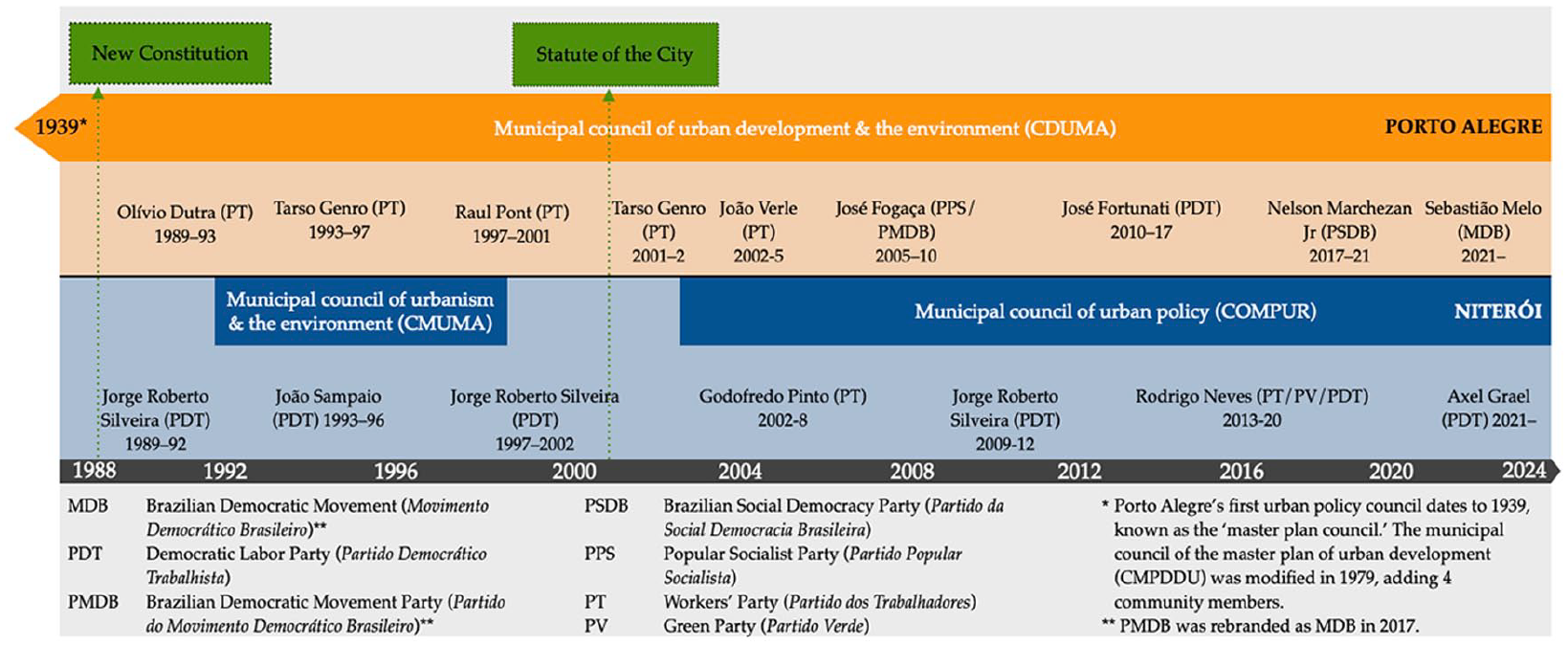
Urban policy councils in Porto Alegre and Niterói since 1988
VI. Conclusions
This article examines the experiences of two urban policy councils in Porto Alegre and Niterói, and based on these two cities, suggests that these councils constitute a distinct type of participatory planning institution, which can be better assessed through the concept of policy communities.(88) Policy communities are characterized by a network of government actors, private-sector interests, and experts deliberating on policy. They have the potential to democratize policy making, if the networks include non-experts and disenfranchised groups impacted by specific policies.(89) We demonstrate that these two urban policy councils contribute to publicizing technical planning issues and their political impact by democratizing the variety of stakeholders gaining access to the policy community, even if the views of the most disenfranchised (or even civil society representatives, in the case of Niterói) often do not prevail. These cases explain a theory of change about the role of urban policy councils before and after the 2001 Statute of the City, when participation in revising master plans became mandatory for cities with over 20,000 residents. This comparison furthers our understanding about the impact of mandatory participation in master planning on existing councils. By including actors without technical experience, the post-2001 approach adopted in Porto Alegre and Niterói democratizes interactions among diverse actors in more inclusive policy communities, contributing to democratic planning functions in a way that the more critical literature may overlook.(90)
Our analysis is rooted in debates on the potential of participatory planning to contribute to legitimacy in local government, with just and equitable outcomes for vulnerable communities, and with effective governance.(91) Yet the polarized nature of this literature can be counterproductive without concrete proposals for inclusion. Urban policy councils contribute to government transparency and knowledge sharing. As Arnstein(92) famously put it, “the idea of citizen participation is a little like eating spinach: no one is against it in principle because it is good for you”. By reframing the value of urban policy councils through the perspective of policy communities, it is possible to appreciate how practitioners can facilitate tangible improvements that support the implementation of inclusive policies. For instance, a mandate for democratically electing rather than politically appointing civil society organizations could change power relations inside urban policy councils. The greater the legitimacy and publicity of urban policy councils’ recommendations, the higher the political cost for city councilmembers to disregard them.
In this article, we ask the question: How effective have urban policy councils been in delivering inclusive deliberation of community members? As our two cases attest, without such councils, results could be much worse. The experience of operações interligadas in Niterói, when CMUMA was deactivated, is a telling example. Supported by strong networks of civil society in Porto Alegre, some community councillors protested the predominance of government and private-sector interests in council deliberations, rhetorically arguing that councils could “disappear without being missed” for the purpose of social justice in the city. Nevertheless, there have also been numerous instances where information shared via CMDUA and COMPUR supported community organizing and substantiated legal action against procedural wrongdoings in planning processes. As the cases demonstrate, urban policy councils fulfil a popular education role by providing councillors with capacity building on technical issues, and equalizing access to policy matters and processes within urban development. In both cases, urban policy councils may allow sufficient time for housing movements and NGOs to organize against PPPs or against denials of AEIS in centrally located areas, so that by the time these proposals arrive at the city council, such actors are able to respond. Unfortunately, this is less often the case in Niterói, where the views of some COMPUR councillors, primarily from civil society, are repeatedly excluded. Even when their views are made known, they are frequently overridden in subsequent government actions.
Councils in both cases function as sites of communication and influence, sometimes working through informal channels, demonstrating how enabling a range of actors to influence the policy process can contribute to a more democratized policy community. Although urban policy councils are advisory, since city councils are not bound by their decisions, they often dialogue with other policy actors and networks, including municipal housing councils, housing departments, shack dwellers’ unions and housing movements.
The urban policy councils in Porto Alegre and Niterói embody a mixture of the rungs on Arnstein’s ladder (Figure 1). For instance, the approval of most urban redevelopment proposals involving profitable real estate interests often resembles “manipulation”, while land regularization of informal settlements in the city’s periphery gets closer to “partnership”. Urban policy councils, however, were never designed to achieve citizen control. Under Brazil’s power politics and institutional constraints, the rung most frequently characterizing the representation of disenfranchised communities in urban policy councils is “informing” and “consultation”.
In these two cases, four areas for improvement emerge. First, policy councils need more “teeth”, either by tying funds to their functioning, or more clearly defining their deliberative functions. In some cases, decisions made within councils are not taken forward to the city council, due either to the power of real estate actors in urban development, or to processes of co-optation and clientelism.(93) Second, as the composition of both councils favours governmental sectors, more community members are needed to counteract the power relations inherent in Brazilian public life. Moreover, political parties should have less freedom to select and change the civil society entities represented in the council. Alternatively, these entities could be elected by popular vote at the regional level. Third, coordination between local planning regions and city decision makers should be enhanced to allow for integrated planning systems, especially given that some planning regions represent low-income neighbourhoods. Finally, more established linkages with the broader participatory system and other public policy councils in the city could contribute to understanding strategies of the disenfranchised, prioritizing participatory venues with higher impacts. Further research can investigate the relevance of these recommendations to other urban policy councils.
The theory of change drawn from these two cases explains that the public participation requirement in master planning expanded the reach of the urban policy communities in Porto Alegre and Niterói, along with low-income residents’ inclusion. Nevertheless, several factors associated with institutional design, partisan politics and real estate interests offset this achievement. Overall, public policy councils – and urban policy councils specifically – provide a compelling governance model that may be replicated beyond Brazil. Based on assessment of these two councils, the flaws are profound, yet their presence democratizes highly technical debates over urban policy issues, bringing to light and questioning the inequalities that urban planning often produces.
Footnotes
Acknowledgements
We are grateful to research participants in Porto Alegre and Niterói for their valuable insights. We want to thank the editors of Environment and Urbanization for managing this submission and the anonymous reviewers for their comments.
Funding
The U.S. National Science Foundation (award 0922573, 2009e2011) and the Foundation for Urban and Regional Studentship, 2007–2009 supported the Porto Alegre research. The Niterói research has been funded by the Social Sciences and Humanities Research Council of Canada (752-2010-2087) and the International Development Research Centre (104655-99906075-098).
