




Abstract
The city of Manizales in Colombia has been widely recognized as a good practice case in disaster risk management (DRM). Previous research has sought to amplify learning from Manizales through examining the characteristics of its innovative practices. These are championed by an inter-institutional alliance that includes academia, the local government, the regional environmental authority and service providers. This paper argues that this learning needs to be accompanied by a nuanced understanding of the historical trajectories that have allowed Manizales to create and consolidate its current enabling environment for DRM. The argument derives from an analysis of fieldwork data, including semi-structured interviews, participant observation and secondary data, through a critical juncture approach. Focusing on the critical juncture of seasonal heavy rains in 2003, the paper illustrates how institutional changes configured cultural–cognitive, regulatory and normative conditions for the emergence of one of Manizales’ most recognized good practices, the Guardians of the Slope programme.
Keywords
I. Introduction
Urban dwellers are increasingly at risk of large-scale, infrequent disasters such as earthquakes and tsunamis, as well as small-scale but more frequent events like fires, landslides and localized flooding. This is due to the high density of exposed people who live in hazard-prone areas, as well as the failure of many cities to provide adequate living conditions, particularly to the urban poor to reduce their vulnerabilities.(1) Nevertheless, many urban areas also offer favourable conditions for managing disasters, mitigating existing risk and avoiding the creation of new risk, based on their institutional capacities as well as human, financial and technical resources.(2)
In international frameworks of disaster risk management, local governments and civil society organizations are widely recognized as central actors for addressing current and future urban risk, often taking up the role of champions in making cities more resilient. Their approaches are frequently examined under the rubric of so-called good practice cases. These refer to individual practices or clusters of practices that illustrate how agreements such as the Hyogo and Sendai Frameworks for Action can be implemented. They often entail an implicit or explicit mandate of associated learning. For example, Amaratunga and colleagues(3) identified sound and tested practices from the first version of the UNDRR (UN Office of Disaster Risk Reduction) Ten Essentials, which have been successful in their particular contexts; Johnson and Blackburn(4) analysed key milestones that mayors have reported as significant in establishing the pathways to making their cities resilient. Similarly, a Handbook for Local Government Leaders contains a series of good practices for each of the Ten Essentials from cities that developed innovative mechanisms for implementation.(5)
The notion of “good” or “best” practices has been critically examined in this regard, with discussions of who or what these practices are good for, at which scale and scope, and under which conditions. One example from urban planning and policy is provided by Vettoretto,(6) whose analysis indicates that good practices are key parts of the European policy repertoire. These are deployed, amongst other things, to trigger collective sense-making processes, to compare and assess policy outcomes across different contexts, and to serve as beacons and advocacy tools. Bulkeley(7) argues for shifting the focus from evaluating good practices against a set of impact criteria, towards the discursive process of developing, implementing and communicating good practices. Her analysis shows how contestations over conceptual frames and discourses about “best practices” in urban sustainability shape policy-oriented learning and transfer.
Another strand of research about good practices has focused on the concept of the “enabling environment”. It has gained traction in governance literature exploring the structural conditions of these practices while also recognizing the agency of those navigating and appropriating these conditions. An enabling environment can, for example, refer to legal frameworks, the availability of trained staff, or representations of a wide range of knowledge in decision-making, which shape how policy and practice are designed and implemented.(8) Twigg(9) provides an extensive list of characteristics for an enabling environment across 29 components of disaster-resilient communities. The component called “organisational capacities and coordination”, for example, suggests that adequate budgets are allocated and institutionalized on all policy levels, and that structures, roles and mandates of public and private actors are clearly defined, amongst other factors. Similarly, a study by Johnson(10) explores enabling regulatory frameworks for disaster risk reduction in the built environment, with cases from Turkey, Namibia, Argentina and Iran. She argues for clear, simple building codes that consider local materials, knowledge and skills.
These discussions and recommendations are key for learning about the content and functioning of good practices. However, they tend to fall short in two related aspects. One is the lack of a historical dimension, which would allow an in-depth understanding of the emergence and consolidation of the enabling environment for these practices to occur. The other gap lies in the absence of a relational perspective, which considers the interdependence of different components of the enabling environment. For example, a good practice to reinforce public buildings for seismic resistance is intricately linked to building codes, technical expertise, construction budgets, and a culture in which earthquakes are perceived as potentially harmful and mitigable events. However, it is not only the absence or presence of these factors, but also their interrelations, that are important: how a risk culture is reinforced by the visibility of seismically resistant structures in public buildings such as hospitals or government buildings, or how recognition of the technical expertise of engineers by government officials can also facilitate access to public finance.
A failure to recognize the historical and relational dimensions that underlie good practices may obstruct learning from them. A sole focus on the functioning of these practices implicitly contributes to discourses that highlight their unique character in exceptional, champion or good practice cities without enabling a critical perspective on the contextual dynamics that underpin them. This paper starts from the assumption that a reframing is needed, allowing those who want to learn from these DRM good practices to critically engage with them, and perhaps even adapt and apply them across contexts.
The entry point in this research is the exploration of “critical junctures” as an analytical framework for contextualizing the becoming of an enabling environment. The critical junctures approach was developed in the field of historical institutionalism(11) and has recently been applied by Twigg,(12) for example, to analyse the ongoing COVID-19 pandemic from a disaster risk management perspective. In this paper, critical juncture analysis is used to reveal the underlying relations that allowed cities to develop and consolidate good practices in DRM.
II. Critical Junctures
A common denominator of the critical juncture approach is what Capoccia(13) describes as its “focus on what can be called ‘distal historical causation’: events and developments in the distant past, generally concentrated in a relatively short period, that have a crucial impact on outcomes later in time”. Critical juncture frameworks have been applied in the fields of historical institutionalism and comparative political studies to explore path-dependent processes that lead to change or inertia. Critical junctures are essentially intense and accelerated moments of decision-making, which trigger a process that constrains future choices.
The “ideational approach” within critical juncture literature emphasizes that these choices are not objectively given, but culturally constructed, thereby highlighting the complexity of path dependency rather than promoting simplistic cause-and-effect logics.(14) At the same time, it is clear that the options for change are not infinite, but rather defined and limited by existing, so-called antecedent conditions. Moreover, the legacies of these choices might depart from the intentions of the decision-makers.(15) They might affirm antecedent conditions and stipulate inertia. However, they might also lead to gradual or abrupt, adaptive or transformative changes.(16)
The critical juncture approach has been implemented mostly at the macro, nation-state level to analyse differences in the legacies of similar events across different contexts. For example, Collier and Collier(17) examine the variety of impacts of labour movements across Latin America. Moreover, critical juncture approaches are used to investigate a series of events and their implications for one context. Hence, the critical juncture approach encompasses similar objectives to those set out in the field of disaster studies by Forensic Investigations of Disasters (FORIN),(18) which seeks to unravel the underlying causes of hazard events and their impacts. Research on earthquakes by Funk and Figueroa in Chile,(19) as well as Gawronski and Olson in Guatemala,(20) articulates how disasters can act as triggers for critical junctures, thereby focusing on path dependencies and contingencies emerging in post-disaster contexts. In contrast to the FORIN approach, an important element of critical juncture analysis is how it foregrounds institutional change and continuity, thereby encouraging a more holistic view of path-dependent processes, which can include, but are not limited to, disaster events. One major caveat of research on critical junctures so far, however, relates to its methodological and conceptual difficulties in contexts of “weak” or non-formal institutions; hence, its application to informal urban development and risk governance in the global South has been limited.
For the purpose of revealing historical institutional trajectories that enable the emergence and consolidation of good practices in DRM, this paper examines a series of critical junctures in one context, the city of Manizales in Colombia, which is known in the field for its strong institutions. Critical juncture analysis in this paper is structured in terms of the following components,(21) whose relations are illustrated in Figure 1:
The antecedent baseline conditions against which change can be evaluated;
The cleavage or crisis that generates accumulating tensions, which eventually trigger the critical juncture;
The critical juncture as a moment of intense decision-making; and
Its legacies in terms of creating an enabling environment for DRM.
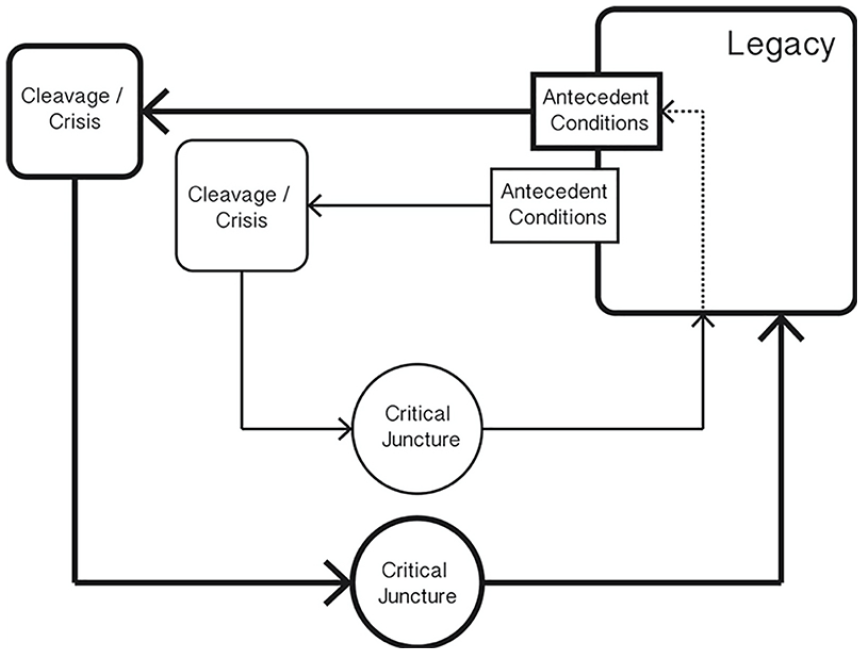
Analytical framework for a series of critical junctures
III. Disaster Risk Management in Manizales
The paper illustrates the critical junctures approach through a widely recognized good practice case in the field of disaster risk management: the medium-sized city of Manizales in Colombia. Manizales is characterized as a highly hazardous city with a long institutional history of managing risk as an integral part of sustainable urban development. Its history has been critically elaborated in previous issues of this journal by Hardoy and Velásquez Barrero,(22) as well as in comparison to other Colombian and Latin American cities.(23) This paper seeks to complement these articles and draws on PhD research that included fieldwork between September and December 2015, and a follow-up visit in June 2019. Data gathering involved 30 focused and oral history interviews with 3 public service providers, 10 academics, 11 government officials, and 6 CSO and NGO representatives, including 3 coordinators of the Guardians of the Slope programme, which will be examined in detail below. Furthermore, presentations and lectures given during a course for Latin American and Caribbean professionals in DRM, hosted by the Institute of Environmental Studies at the National University of Colombia in Manizales, as well as a vast range of secondary data, have been analysed to complement and triangulate findings.
The municipality of Manizales is part of the central-south region of the Department of Caldas (Map 1), and 93 per cent of its estimated 400,436 inhabitants live in the urban area (hereafter referred to as Manizales).(24) Manizales was founded in 1848 on a plateau in the Colombian Andes and became an economically important city because of its rich resources and strategic trade links, dependent on its cable car and train connections. Over the course of its history, the city expanded downwards from the plateau. Today, it is characterized by its steep and meandering slopes and the variety of micro-climates at its different altitudes, which range from about 2,200 metres to 800 metres. Precipitation levels change frequently; April/May and October/November are particularly wet, with approximately 250 millimetres of rainfall per month, as compared to 80 millimetres in the dry season.(25) Heavy rainfall becomes hazardous when it saturates the city’s volcanic soil, which poses a risk particularly for people occupying the slopes.
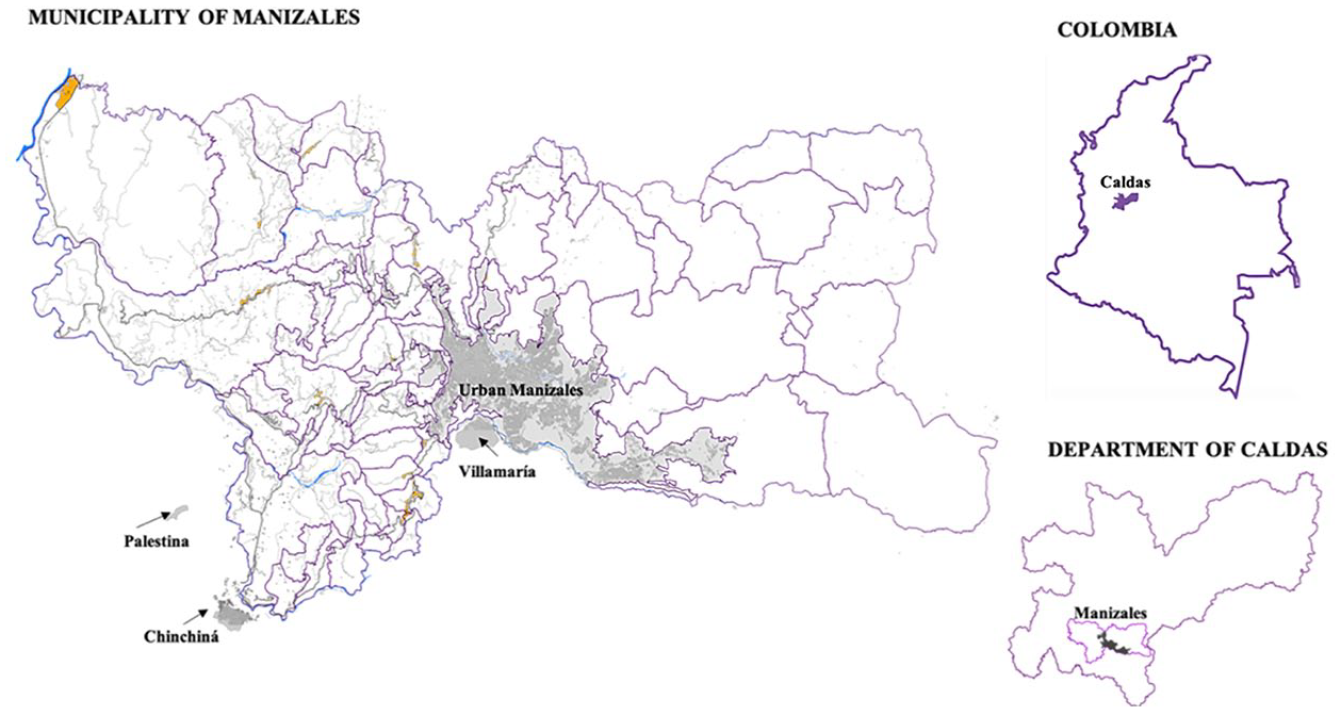
Administrative boundaries and location of Manizales
Manizales has been affected by several devastating earthquakes and fires, particularly in its early history. Today, landslides and mudslides are the most frequent hazard events, and are attributed to the increased, often unplanned, housing construction on the steep northern and southern slopes that started to intensify from the 1940s, and particularly during the 1970s.(26) More than 1,100 landslide events and 120 hydro-meteorological events(27) were recorded in Manizales between 1970 and 2011. In comparison, Medellín and Bogotá, also in Colombia, registered about 200 and 160 landslide disaster events, respectively, in the same period.(28)
Administratively, Manizales’ urban area is divided into 11 districts (comunas) and 180 neighbourhoods (barrios).(29) Its DRM approach is organized along four areas of risk management: risk identification (e.g., through hydro-meteorological stations and the vulcanological and seismological observatory), risk reduction (e.g., through reforestation, construction codes and land use planning), disaster management (including emergency planning and early warning systems), and risk transfer (through collective insurance and the protection of public infrastructure). Figure 2 outlines the main entities contributing to Manizales’ DRM according to the municipal disaster risk management plan(30) and observations made during fieldwork. This figure highlights the large quantity of involved institutions and the need for strong inter-institutional coordination and collaboration across multiple governance levels. At the municipal level, the Unit of Risk Management (UGR) formally occupies the central function of oversight and coordination of DRM activities. However, it is equally important to highlight informal routes and everyday practices that mark the capacities of this longstanding inter-institutional collaboration, as illustrated by this statement: “In the city of Manizales, we achieve very interesting work, because all the actors, we know each other: in the Government Office, the Mayor’s Office, as well as in institutions like the Red Cross, Fire Brigade, Civil Defence, the Corporation [CORPOCALDAS]. We were all already close friends and knew each other well, and we came to a point, where I believe that made the difference. I think that we are all connected, we talk the same language, both in the good and in the bad.” (Designated municipal government official, interview 18, 1 December 2015)
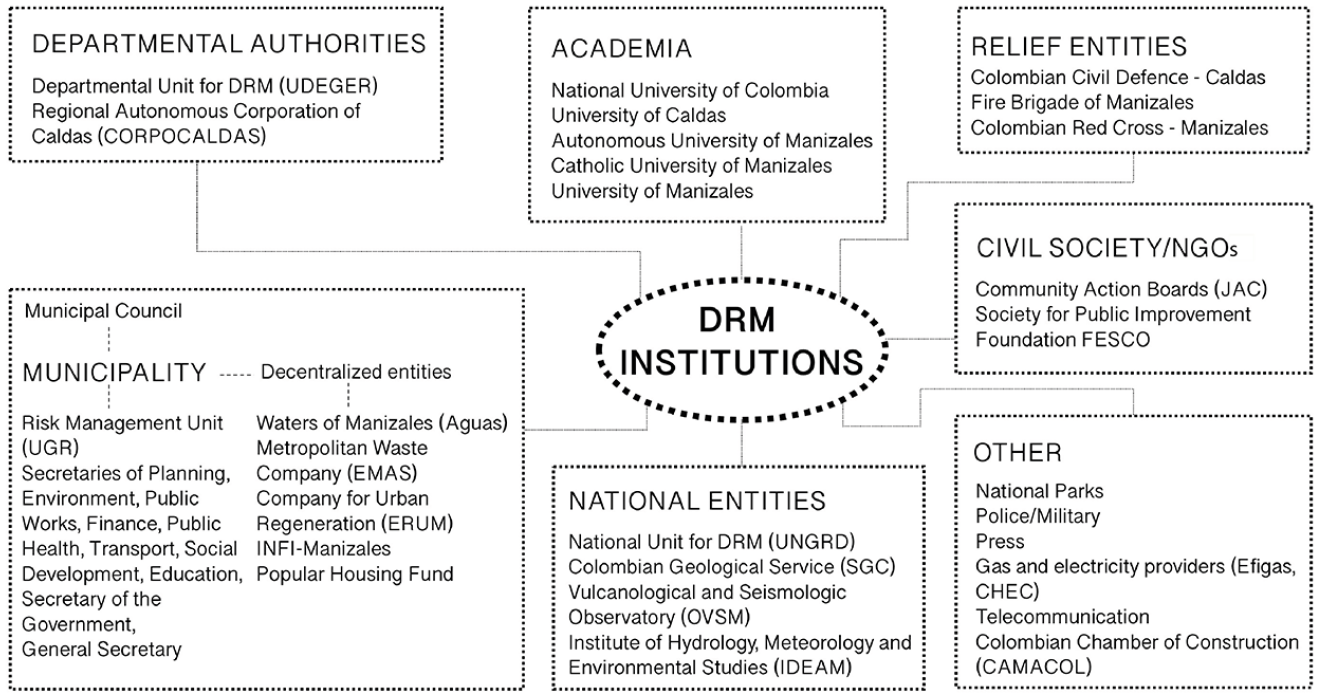
DRM institutions related to Manizales
a. Manizales as a good practice city
Numerous publications have described Manizales as a good practice city, either in its entirety or with reference to particular good practices, to exemplify its innovative character in disaster risk management. The city has taken on different roles, including serving as a pilot case study or as a demonstration project.(31) Through a literature search using combinations of “Manizales”, “riesgo/risk” and “vulnerabilidad/vulnerability”, 67 key documents were identified: reports (19), doctoral theses (9), and indexed academic articles and books (39). About 1/3 of the documents were published in Spanish and the rest in English. These documents use Manizales either as a single or comparative case study or refer to it as a good practice city in the text. Almost one-third of the publications stem from the discipline of civil engineering, followed by interdisciplinary studies, geography and environmental sciences (which each represent about one-sixth).
In these publications, strong inter-institutional collaboration has been identified as an enabling factor for Manizales’ innovative DRM practices.(32) In particular, the alliance among the municipal government, the Environmental Studies Institute at the National University of Colombia (IDEA-UNAL), and the environmental authority of the Department of Caldas (CORPOCALDAS) has developed and consolidated since the 1980s into a network for advancing DRM. The inter-institutional and inter-sectoral approach to DRM has become one of the pillars enabling Manizales to develop, for example, its land use plans in a way that was recognized by the national government as pioneering and innovative.(33)
b. The Guardians of the Slope programme
In reference to specific good practices within the city of Manizales, many publications explain and analyse the city’s risk assessment methodology, the collective seismic insurance scheme, and the environmental action plan that was particularly prominent in the late 1990s and early 2000s.(34) One of the most widely cited good practice examples of innovative risk reduction is the Guardianas de la Ladera (Guardians of the Slope).(35) At the time of the fieldwork for this study, this programme comprised 106 women, who are heads of their households and employed on part-time contracts to maintain the slope-stabilizing infrastructure of Manizales.
Established in 2003, the programme has been much lauded for integrating the technical challenge of disaster risk reduction with the social one of providing secure jobs for unemployed women and building their capacities in risk mitigation, communication, community engagement, leadership, and occupational health and safety, amongst other areas. The programme is managed by an NGO called Fundación FESCO, which works on annually renewed contracts from the municipality and the regional environmental authority CORPOCALDAS. In operational terms, CORPOCALDAS and the Municipal Secretariat of Public Works elaborate priority areas for slope maintenance by the Guardians. The women are usually assigned to work in those areas that are close to their homes, where they are familiar with the environment and know the inhabitants living adjacent to slope-stabilizing infrastructure. While this innovative DRM practice has been widely recognized, efforts to adapt and apply it to other thematic and geographic areas, as well as to deepen and expand the programme’s impact in terms of challenging underlying gender inequalities and tensions between expert and non-expert knowledge, seem limited.(36)
The Guardians of the Slope is an example well suited to illustrating the way good practices in Manizales are analysed and communicated, and to demonstrating the potential of critical juncture analysis to deepen learning from the programme. On the one hand, the case and its strengths and weaknesses – in terms of its design, content and operationalization, as well as its enabling environment – have been widely examined across Latin America and globally.(37) On the other hand, a deeper understanding is needed of the particular context and historical trajectories that enabled programmes like this to emerge and consolidate. This is key to critically evaluate, learn from, and potentially adapt similar ideas for other cities.
IV. Critical Junctures for an Enabling Environment
To understand the emergence of an enabling environment for good practices like the Guardians of the Slope, critical junctures were identified by interviewees through their function as crunched periods or moments of decision-making. Interviewees, who currently hold or in the past held decision-making positions in institutions with responsibilities for DRM, elaborated on the antecedent conditions, crises/cleavages, critical junctures and legacies that they had experienced and remembered. Hence, critical junctures were limited to those identified between 1985 and the fieldwork in 2015.
A series of critical junctures (Figure 3) were identified by one or more interviewees. Their relevance for Manizales’ enabling environment for DRM was validated and triangulated with interviewees from other institutions, as well as with secondary data such as policy documents and research reports. In a next step, critical junctures were categorized into three clusters following a thematic coding of the interviews: 1) hazard and disaster events; 2) the built environment and land use planning; and 3) strategies and frameworks.(38)
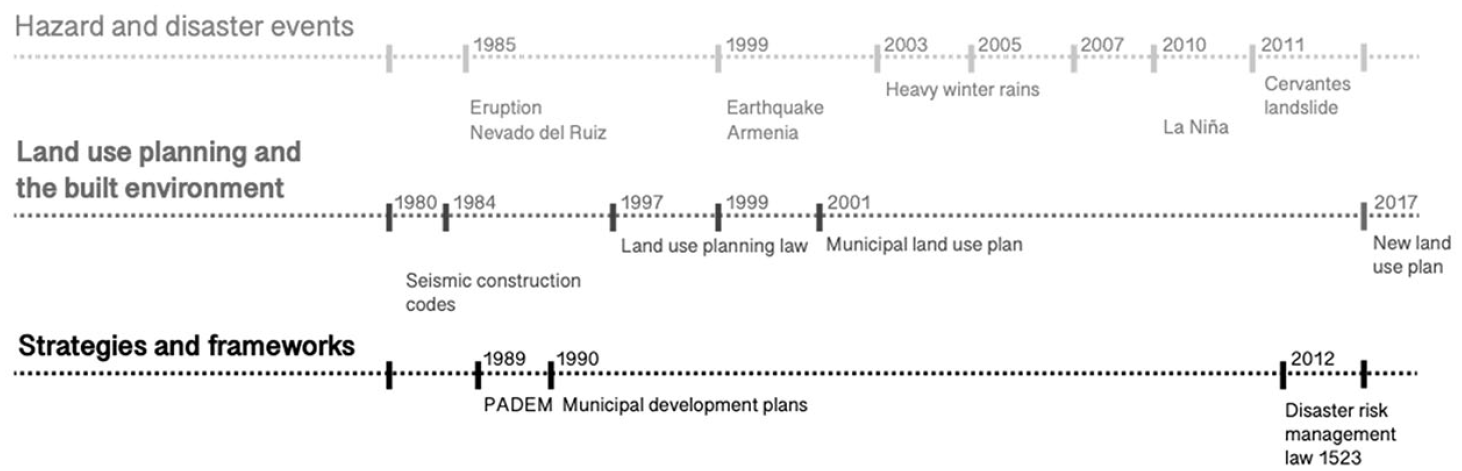
Critical junctures for DRM in Manizales
For the purpose of learning from the Guardians of the Slope as a good practice, the analysis will zoom in on the critical junctures associated with heavy rains in 2003. Figure 4 outlines the dynamics of this critical juncture, and the blue text shows the legacy that has been specifically attributed to the Guardians of the Slope programme.
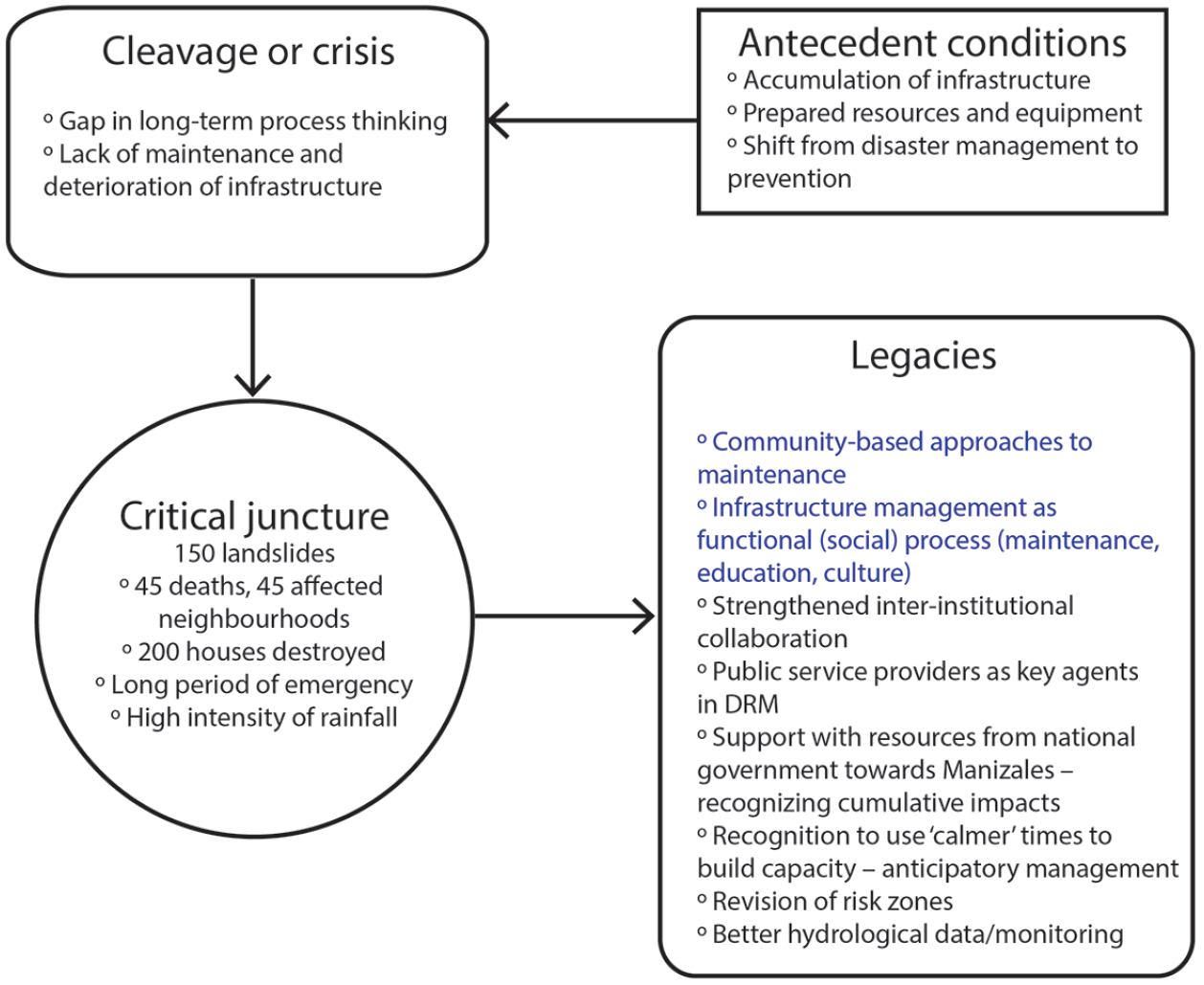
Critical juncture of seasonal rains in 2003
a. Antecedent conditions
Three main issues characterized the antecedent conditions of the heavy rains in 2003: 1) high density of physical infrastructure for landslide mitigation; 2) clearly allocated institutional roles and responsibilities for risk prevention and emergency management; and 3) a recently approved municipal land use plan.
The first antecedent condition is itself a legacy of fluctuating coffee prices, civil war and the green revolution, which led to increased rural-urban migration to Manizales in the 1960s and 1970s and to the occupation of unstable slopes.(39) The large influx of people and the stress imposed by their housing started to produce the city’s most recurrent and cumulatively damaging risk: landslides and mudslides. The establishment of the regional environmental authority CORPOCALDAS in 1971 was a response to the need for a dedicated technical authority, with a focus on the mitigation of this new risk through bioengineering and engineering solutions. By the early 2000s, disaster risk management in Manizales was physically marked by an accumulation of structural mitigation measures, reflecting the municipality’s focus on disaster prevention. Distributed across the southern and northern slopes, slope-stabilizing infrastructure such as drainage channels and box culverts were installed to avoid the accumulation of rainwater and erosion of volcanic soil.
Second, past experiences with multiple emergencies and an increasing institutionalization of disaster risk management meant that by 2003, several local and regional authorities had prepared contingency and emergency plans and allocated the required resources for implementing them. In particular, the volcanic eruption of Nevado del Ruiz in 1985 triggered the development of an institutional framework for disaster risk management (the Plan for the Management and Prevention of Disasters in Manizales 1989) and strengthened the collaboration of local scientific and municipal networks to bundle resources and leverage early warning and emergency management. The post-disaster recovery after the earthquake in Armero in 1999 triggered processes of decentralizing and institutionalizing collaborations with civil society organizations, such as assigning the management of (financial and material) resources and capacity building of the public. Both large-scale disaster events, and the multiplicity of plans and measures that followed them, also induced a broader conceptual shift in local institutions from disaster management and recovery towards a culture of prevention in the city, to reduce loss and damage from hazardous events in the future.
Third, Manizales was the first Colombian municipality with an approved municipal land use plan (2001–2013) in accordance with National Law 388 of 1997. This plan represents another critical juncture in the city’s history: The process of land use planning as well as the output of the land use plan were fundamental for Manizales’ risk mitigation efforts, as they provided momentum for generating detailed data on the built environment and urban development in general, and hazard and vulnerability dynamics in particular. The legal framework of this municipal land use plan further strengthened inter-sectoral collaboration of government offices, as well as commitments to risk mitigation that spanned more than one four-year government period.(40)
b. Cleavage/crisis
The land use plan, as well as experiences with the Plan for the Management and Prevention of Disasters in Manizales and the consecutive integration of risk management into municipal development plans, all contributed to DRM institutional thinking about prevention and considering long-term risk management practices that go beyond government periods. However, this longer-term thinking, although manifested in several planning documents, had not yet been fully operationalized. Local government and environmental agencies as well as public service providers had yet to address longer-term processes, such as the deterioration and related maintenance of slope-stabilizing infrastructure, or processes for the frequent revision of data and adaptation of existing planning documents.
c. Critical juncture
“If you ask me for a year in which the history of the topic of landslides departs from, it was in the year 2003. That was on the 18th, 19th March 2003. Precipitation fell like every 250 years according to the hydrological data we have.” (Interviewee from CORPOCALDAS 16, 19 November 2015)
In 2003, more than 150 landslides were triggered as a result of intense rains, leading to the deaths of 41 people, and injuring 100 people. The rains affected 45 neighbourhoods, destroyed 200 housing units, and affected 220 slopes. Moreover, 1,400 families had to be preventively evacuated.(41) The year 2003 was extraordinary not only in terms of the intensity of rainfall, but in the number of events and the length of the extended emergency period, which forced institutions to act under severe pressure for the entire rainy season. Further, landslides occurred in neighbourhoods that had previously not been considered at high risk according to the data of the municipal land use plan. In terms of institutional capacities, interviewees claimed that Manizales was remarkably well prepared with resources and equipment, such as food storage capacity, as well as human resources.
d. Legacies
This rainy season, which was followed by similarly heavy rains in 2005, 2007/2008 and 2011, had a multitude of legacies for Manizales’ DRM (Figure 4). Those elaborated in the following paragraphs have particular relevance for contextualizing the Guardians of the Slope programme.
From a normative perspective, the critical juncture led to a shift from understanding infrastructure as a one-time investment with visible outputs, towards framing it as a functional, societal process, which includes maintenance and education and ties into the local risk culture.
“Historically we were talking a lot about infrastructure or structural actions. And the culture here, created by [the regional environmental authority], was a bit to reduce the risks, to control the phenomenon through making terraces and channels to guide the water in steep zones. But from 2003 onwards, one starts to analyse things like this: Many landslides of this year occurred on [slopes with] already existing infrastructure. [This] surely [is] a problem of maintenance.” (Interviewee from CORPOCALDAS, interview 16, 19 November 2015)
Local government officials argued that the large quantity and wide distribution of existing infrastructure, in combination with the shift in thinking about its social function, revealed the need to complement an institutional approach of infrastructure construction with a more community-based approach to infrastructure maintenance (institutional presentation 4, 2 September 2015).
Another legacy of the rainy season in 2003 was strengthened inter-institutional coordination. Several interviewees pointed out that the long duration of the emergency led to well-coordinated and effective inter-institutional processes, which considered the strengths and weaknesses not only of the involved organizations, but also of the responsible people within them. Interviewees referred to frequent meetings of municipal and regional committees before, during and after the events. This helped them to develop an understanding of each other’s skills and resources, strengths and weaknesses, and supported the development of a shared language and interpretation of the disaster risk management framework.
The events also created a legacy for anticipatory management during “calmer” times. They created an awareness that seasons without emergencies are crucial for monitoring and evaluation, prevention and mitigation actions. The frequency of the disaster and hazard events in 2003 imposed a high demand on financial, time and personal resources, which stood in direct competition to those resources needed for prevention activities. One government representative pragmatically stated in an interview that risk – compared to emergency – is never a priority, hence disaster prevention will always have to compete with other sectors and projects. Constant work by public officials, emergency bodies, academics and service providers has been demanded to ensure that disaster risk management is not forgotten in daily governance processes. Gaining recognition for the success of risk management practices, like the Guardians of the Slope, through assessment of their impacts and broad communication to city actors as well as national and international organizations, is one important part of this work.
An evaluation of events during 2003 also led to a revision of risk zones, which were defined in the land use plan of 2001–2013. It found that some declared high-risk zones did not coincide with the landslide areas and vice versa. These evaluations also concluded that an understanding of anthropic factors and their contributions needs to go beyond considering people’s vulnerability. It also needs to account for people’s impact on the hazard.
“I think that we did not know that the anthropic factor included much: sewage, excess weight on the top of the slope, land use planning. Never, only in the year 2003, was there ever a tragedy or a downpour that created as many landslides that have valuable information, which allows us to learn what has happened.” (Interviewee from CORPOCALDAS, interview 16, 19 November 2015)
In sum, this critical juncture created normative, regulatory and cultural–cognitive legacies that changed the framing of infrastructure governance and strengthened inter-institutional collaboration with an extended network of organizations. The confluence of these factors, in combination with antecedent conditions such as a municipal focus on risk prevention and risk mitigation, provided the specific context for the emergence of the Guardians of the Slope.
V. Contextualizing Learning from Good Practices
The Guardians of the Slope programme is fundamentally built upon the identified legacies of the season of heavy rains in 2003. This concerns particularly the inter-institutional collaborations, which structure the financial support, administration and day-to-day operation of the programme. Moreover, the programme benefits from the knowledge and skills of institutional experts from fields such as health, education and communication, which support women to build capacities for, and beyond, disaster risk management. The practices of the female workers, as well as the communication and discourse about the Guardians, are further perceived by several interviewees as essential legacies of the programme, strengthening the local risk culture.
“There is a part that people hardly see, and this concerns sensitizing the community, [going from] door to door. They [the Guardians] prepare themselves to communicate: who are the Guardians of the Slope? Why is the work they do so important? And so they convert the community into a collaborator of the programme. . .in that they do not dump waste and sewage; that they do not occupy the slopes with housing, nor with horses.” (Interviewee from Fundación FESCO, interview 2, 26 November 2015)
Moreover, interviewees see a risk culture manifested in higher risk awareness of inhabitants who live adjacent to slopes and who call for the Guardians if they observe overgrown grass or blocked drainage channels. To reinforce this, the yellow-green uniforms of the Guardians, which are easily recognizable by Manizales’ inhabitants, increase the visibility of their activities. Hence, the Guardians of the Slope programme is simultaneously a legacy of, as well as a contribution to, the enabling cultural–cognitive, regulatory and normative environment of disaster risk management in Manizales. Through extensive communication, evaluation and validation, the programme has since 2003 consolidated into a locally, nationally and internationally recognized good practice case study.
Two key implications follow from this critical juncture analysis of the Guardians of the Slope programme to reframe learning from good practices.
First, the paper advocates for closer attention to the historical trajectory of such practices, situated within a particular enabling environment. The critical juncture approach enables an examination not only of the practices and their context per se, but of the process of their “becoming”. The analysis of one critical juncture in Manizales gives merely a glimpse of the complexity of interactions that create normative, cultural–cognitive and regulatory conditions for a multitude of institutional DRM practices in the city. Nevertheless, it illustrates how individual projects or programmes, like the Guardians of the Slope, are embedded in a particular spatio-temporal DRM context. In other words, good practices do not occur in a vacuum but are embedded in a complex institutional palimpsest, in which a myriad of actors have over time carved the structural conditions under which these practices continue to have the potential to emerge, adapt and consolidate.
However, the enabling environment for the city’s good practices is not simply the sum of current favourable conditions that have built up over time, resulting in a set of determined characteristics that can be articulated as a checklist. The second implication of the critical juncture analysis is therefore that enabling environments have to be understood as a dynamic and interdependent process, which is manifested in three types of relations. First are the above-mentioned temporal relations, which concern how the city’s favourable conditions were historically developed and consolidated. Second, relations among normative, regulatory and cultural conditions are important. In the case of the Guardians of the Slope, the enabling environment highlights not only the regulatory function of infrastructure, but its cultural–cognitive importance. The presence of landslide mitigation infrastructure across the city became a visual reminder of Manizales’ risk as well as the city’s capacity for managing it. This capacity is demonstrated by the technical sophistication of the engineering works, as well as the management and maintenance through the Guardians of the Slope programme, whose educational and communicative agenda is central to the functioning of infrastructure. And third, this relational and dynamic understanding – compared to a static one – also demands a critical interrogation of the agency of institutions and actors, and how they are appropriating and acting upon the enabling environment to advance disaster risk management.
These historic and relational dimensions are relevant for efforts to learn from good practices in DRM, which are currently underway through initiatives like the “Making Cities Resilient 2030 Campaign” as well as UNDRR’s “Words into Action” Guidelines.(42) The latter is especially explicit in its approach to using vignettes of good practices, including from the city of Manizales, to detail how local disaster risk reduction and resilience strategies are put into practice. In line with Nagorny-Koring,(43) this paper has made the case that learning from good practice needs to go deeper than explaining the characteristics and functioning of an innovative practice. In the context of urban climate governance, she argues for paying attention to stories of struggles and “the ‘messy’ backstage work and invisible politicking”(44) of championed good practices. Importantly, this paper does not suggest that programmes like the Guardians of the Slope cannot be adapted and applied to other cities if these enabling conditions are not in place, thereby denying the agency of DRM actors due to structural conditions. Rather, critical juncture analysis can be seen as an approach that complements an in-depth investigation of everyday institutional practices and the barriers and opportunities for implementing good practices. It seeks to foreground the dynamics of what is often described as a static background, allowing more nuanced comparison and contextualized learning.
Footnotes
Acknowledgements
I am grateful to Prof Cassidy Johnson for her guidance of this research and to all interviewees from Manizales who kindly dedicated their time and knowledge to this investigation.
Funding
The PhD research from which this paper draws was supported by the UK Economic and Social Science Research Council and the Natural Environment Research Council under Grant ES/J500185/1.
