



Abstract
The global discourse around architecture education emphasizes rethinking curricula for engaging more with social issues. The shift from creating star architects to socially responsive professionals necessitates examining different approaches to build skills, especially in the design studio, for encouraging a comprehensive system of inquiry for developing design solutions. In Jhenaidah, a secondary city in Bangladesh, fourth-year students participated in a design studio that tried to address critical urban issues and to generate design ideas using field research and community participation. This paper shares the experience of facilitating the design studio. The learning process and studio structure included exploration, examination, consultations, mapping, vision development and strategic planning for arriving at specific design proposals. The experience of working with a local government institution was an added learning of the studio. Pedagogical exploration from the studio reiterates the arguments for balancing rationalism and social responsiveness with creativity in architecture design studios.
Keywords
I. Introduction
The growing complexity of inequality and exclusion within contemporary global societies, whether based on age, gender, class or power, demands a change in the role of architects, who are often criticized for distancing themselves from those issues. Architecture as a discipline is inherently political, and architects therefore need to engage in a transformative and emancipatory manner with these social and economic structures.(1) A pedagogical shift is necessary, with the creative embrace of real-world conditions in methods, knowledge, and the quality of public responsibility.(2) This shift, moreover, should move towards making design an inclusive “process”, rather than focusing it on an aspirational “product”. Social engagement has the potential to redefine architecture from a market-driven profession to one that involves itself in social activism.(3) We agree with this global demand for a pedagogical shift and feel that the need for this shift is especially pressing in Bangladesh.
The construction sector has grown to be the third-largest GDP-earning sector in Bangladesh. The need for the services of architects has also grown in a sector traditionally dominated by engineers. Only one public university in Bangladesh offered a bachelor’s degree in architecture before the early 1990s. Since then, more than 20 public and private universities have started to offer the degree, taking advantage of this increased demand. All these institutions followed curricula similar to that in the original programme, which had itself been adapted from an engineering school in the US. Architectural pedagogy remained focused over these years on the creation of “star architects” who offered services to a minute proportion of the country’s 148 million citizens.(4) Meanwhile, there is growing criticism that the pedagogy of architecture in Bangladesh rarely prepares students for the contemporary challenges of either industry or society.
As part of an effort to address this criticism, we offered a new kind of design studio to the fourth-year architecture students at Brac University, Bangladesh. These studios were intended to examine certain critical urban issues, with field research and community participation as components of the learning process. One of these studios involved the opportunity to work with the local government institution (LGI) of a secondary city. This paper describes the pedagogical learnings from that studio. Our students had been, in the words of Schneider and Till, “brought up on the foundation of certain knowledge leading to certain solutions”.(5) Our objective was to explore how best to prepare these future professionals to act otherwise. The key exploration was of ways to balance rationalism with creativity in order to develop socially responsive design solutions in architectural design studios.
The paper has seven sections. After this introduction, Section II examines global trends and arguments for encouraging more socially responsive design solutions. Section III contextualizes the demand for such a pedagogical approach in Bangladesh, as a justification for facilitating our undergraduate architecture studio. After a brief description of the studio’s background in Section IV, the paper goes on to describe different stages of the learning process in Section V. Section VI critically examines the learnings that support our argument for balancing rationalism with creativity in design studios for socially responsive design in architecture education. Section VII concludes.
II. Global Trends in Architectural Pedagogy and Design Studios
The introduction of social awareness to the profession of architecture, and the need to respond to a broader group of clients, is nothing new. It was initiated in the early 1970s as an alternative route of the modern movement. Architects like John F C Turner, Laurie Baker and Hassan Fathy became role models, showing how it was possible to play an active political role in shaping development policies or merging vernacular techniques with modern construction to establish a local style. Later, drawing on Otto Königsberger’s work, Nabeel Hamdi and Reinhard Goethert demonstrated how “participation in design can foster local catalyst actions and set precedents for more democratic forms of urban governance”, as Frediani wrote in 2016.(6) The work of architects like Yasmeen Lari sits at the intersection of architecture and social justice. Globally, this change in architectural practice has continued to evolve over the decades. The recent Pritzker prizewinning architect Alejandro Aravena was praised for meeting the contemporary social and economic challenges to improve the urban environment.(7)
These pedagogical and professional shifts were fuelled by what Boano and Vergara Perucich refer to as “the global failure of neoliberal ideologies, policies, and culture in developing a better social life”.(8) Karim(9) argues that the professional engagement of architects with society can help to mitigate many pressing issues in today’s world – for example, poverty and social exclusion – and create a more egalitarian global society. The engagement, in Karim’s words, “offers to shift architecture’s professional obligation from fulfilling idiosyncratic demands of individual clients to working toward the common causes of the public good”.(10)
The design studio is a generally accepted model for architecture education; hence, attention is needed to how it is best conceptualized and facilitated in order to develop the requisite skills. The design studio has been acknowledged, according to Önal and Turgut, “as a cognitive and social system, including knowledge and formation of knowledge structures with social interactions, where creativity is the most important part”.(11) It has the flexibility to follow different approaches, based on the emphasis given to hypotheses, concepts, surveys, analysis, use of tools, and so on.(12) Ideally, design education should direct students toward multi-dimensional, dynamic thought processes and ways of knowing,(13) rather than a one-dimensional, uniform teaching–learning process.
There is a dominant but worrying global trend in design studio teaching that replaces the rational design process with intuition and artistic skills and a focus on creativity.(14) In the “traditional” studio model, students may be asked to provide an effective solution to a hypothetical design problem defined by the instructors based on typological programmes(15); or the analysis of a design may become a small component of the studio, but with limited synthesis. In this context, students tend to learn fundamental skills, but they fall short of addressing the growing complexity of practice.(16) Moreover, studio assessment tends to focus on the end product rather than the process. Consequently, students develop, according to Bashier: “a tendency to adopt the architecture-as-art approach, the focus on form-making as the primary design goal, the reliance on intuition and artistic skills, the disregard for the process and the lack of focus on rational problem solving, the focus on self-satisfaction, and the lack of social consideration”.(17)
The traditional design studio approach faces criticisms of insufficiently preparing students for the changing nature of complex global societies or the power and politics of architectural practice. Combrinck argues that “imagination and creativity are no longer adequate platforms locally and internationally for teaching and practicing architecture”.(18) Architectural pedagogy needs to move away from training architects as creators with the power to work intuitively and independently, to a view of creativity that embraces reality through method, knowledge and public responsibility.(19) In addition, there is a need to shift the pedagogical focus from intentionality or product to agency.(20) Such changes encourage the use of different analytical lenses rather than depending on predetermined programmes for developing architectural projects.
In all these discussions, three terms – creativity, rationalism and social responsiveness – are used frequently, and the relationship among them needs clarification. Creativity and the cognitive design process in the studio, as argued by Önal and Turgut,(21) is directly related to students’ cognitive and cultural schemas. They cite Engeström,(22) who notes that “the source of creativity is not found inside a person’s head but emerges from the interaction between a person’s thoughts and his/her socio-cultural context”.(23) On the other hand, “the ability to engage, study and respond to the human condition” and “the conceptual and physical manipulation of the built environment” have been the two main agendas of architectural design education.(24) These concepts have prompted us to consider reason as the source of creative ideas and the means by which we assess their utility. Nevertheless, the combination of rationalism and creativity does not necessarily result in social responsiveness, which stems from considering people’s aspirations and needs along with the interdependent and interlinked social and physical systems. Designers’ ignorance of social systems can become a reason for the failure of projects(25) – for example, of the notorious housing project Pruitt-Igoe, which had to be demolished after only two decades.
III. Social Responsiveness in Architectural Education and Practice in Bangladesh
Formal architecture education in Bangladesh started in 1962 at the country’s first public university, the Bangladesh University of Engineering and Technology (BUET). BUET borrowed its curriculum from Texas A&M University and continued to use it to educate architects for decades. Almost all the country’s architectural schools follow an international approach to pedagogy, in which architectural theory focuses primarily on the design and manipulation of built form following the advent of modernism.(26) One might argue, certainly, that rationalism and social responsiveness have always been integral to architectural education and practice in Bangladesh because of the socioeconomic and climatic contexts. There are examples of good practice and socially responsive architecture, including the flood-resistant house of the Grameen Bank, the Meti school in Rudrapur, and a community centre in Gaibandha – all of which received Aga Khan awards for excellence in architecture.
However, we believe that architectural practice in Bangladesh has yet to reach a wider community with an understanding of community-led or people-led processes, following what Thorpe and Gamman(27) termed socially responsive design. The examples just mentioned are limited in number and are often driven by the initiative of an individual or group of architects, or supported through donor-driven collaborations that may question the initial design priorities in the context of competing resource requirements, goals and needs. Most efforts, it can be argued, fall short of meeting the criteria of a co-design approach and fail to be equitable or inclusive in the design process, focused instead on the pursuit of the “right” solution.
From our more than 15 years’ experience of teaching and practice, we also identify an absence of clearly defined design methodology. There remains a tendency to focus on design appearance rather than the process that led to it.(28) There is a significant gap in conceptualizing people’s involvement in the design process in architectural pedagogy. The pedagogy still emphasizes an intuitive design process, highlighting aesthetics rather than encouraging research as a rational basis for design. There is also an inclination still to encourage “design for people” with predetermined aims and projects rather than “design with people”, based on the context and the needs of the users. Introducing the concept of “participation” to students thus remains limited or takes the form of mere tokenism.
On the other hand, rapid urbanization in Bangladesh, as in the rest of the global South, is creating more opportunities for architects to be involved in urban development projects both in big cities and in smaller urban centres. Local government agencies of the country’s 11 city corporations and 324 pourashavas (municipalities) are responsible for managing urban services. Mayors often look for ideas for development projects not only to stimulate economic growth and reduce poverty, but also to improve the liveability of these urban centres. Some institutions provide planning and engineering support to LGIs, a few of them in designing the built environment. Despite the perceived need to engage professionals, however, LGIs have limited resources. Most designed development in urban areas remains limited to the initiatives of proactive mayors, for whom it is a challenge to find professionals with the knowledge and skills to work with LGIs and different citizen groups. During these transformative times, we are not adequately building the capacity of young professionals to address citizens’ needs and work with LGIs.
These realities encouraged us to facilitate the design studio in the Department of Architecture at Brac University, taking advantage of the department’s mission and scope of the curriculum.
IV. Background of The Studio
Brac University started offering the Bachelor in Architecture degree in 2002. The department followed the BUET curriculum, but was also driven by BRAC’s(29) development ethos, with its focus on addressing poverty and sustainability. Thus, the department adopted a mission to prepare professionals and critical thinkers to develop responsive, resilient, inclusive built environments. Courses were introduced to give students the opportunity to explore traditional as well as participatory approaches to design.
The fourth-year design studio, part of our effort to introduce a more responsive orientation, aims to develop students’ ability to address strategic urban design projects through research, analysis and spatial planning. The aim is driven by the practical understanding that in practice-based professions, interventions involving changes to the built environment or infrastructure must respond to urban conditions, and the interventions need to take place within a context of policies and regulations.(30) Furthermore, learning about urban issues broadens a student’s knowledge about the built environment, from its physical form to the people whose needs are served by design solutions. For the first three years, students learn the basic principles of building design and communication skills. The fourth-year studio focuses on designing within the urban context, considering planning guidelines as well as economic, social, environmental and cultural concerns, and coordinating with different stakeholders.
Usually, the design studio introduces students to different contexts and challenges in major cities. In the Fall 2018 semester, students were assigned to work in Jhenaidah, a smaller city. The choice of the city was driven by the mayor’s interest in hosting and benefitting from academic activities. The city was adopting a participatory urban development process through advocacy and the engagement of local professionals and community groups. Moreover, the city was initiating planning for interventions to improve liveability. They were looking for ideas for improving urban services and infrastructure with small-scale development interventions. We saw the willingness of the LGI, the trust built by the local professionals, and engagement of citizen groups in participatory processes as opportunities for promoting design with and by people as an academic exercise in the real world.
V. Studio Structure and the Learning Process
The design studio and this related project in the city of Jhenaidah was organized to be conducted in phases. We did not have “a project” in our minds; rather, we wanted to develop projects based on findings from the city and its citizens. Therefore, the first phase aimed to introduce students to theoretical debates, secondary data, and discussions on the university premises. In the phase two field visit, they learnt from stakeholders and from examining ground realities. This was followed by phase three, which involved sharing findings with the local communities in Jhenaidah, and discussing their responses. Phases four and five were studio-based exercises on developing strategic planning and design proposals based on the learnings from the field visit.
The design studio aimed for some specific learning outcomes. We expected the students to develop their analytical ability to identify both the physical mechanisms (geographical, infrastructural, environmental) and the cultural, political and social forces that shape urban existence; and to develop ideas for interventions that would not only contribute to but also challenge the urban systems. We also expected to develop students’ skills to examine both subjective and shared experiences through consultation with different stakeholders. Learning to work as a team was important for recognizing design as a collaborative effort. The learning process included exploration, examination, consultation, mapping, vision development and strategic planning for arriving at specific design proposals, both by groups and individually. The following subsections describe the different phases.
a. Phase I: Critical reading, lectures and studio briefings
The studio began with critical readings on urban design and development. We encouraged students to examine a variety of contemporary urban design theories and approaches that took into account such themes and concerns as urbanism, architecture, urban design, urban planning and community liveability; environmental risks, vulnerability and adaptation; and poverty, gender and community-driven development processes in cities. We shared GIS maps and databases of the city, while students used all available electronic platforms, including Google Earth, Bing maps and aerial photographs, to compile a visual layering of the city. They also gathered information and data from secondary sources with the intent of understanding the physical mechanisms (geography and infrastructure), and beginning to “read the city” before actually going to the city.
The studio included formal and informal lectures and guest lectures covering and discussing planning priorities and urbanism in the global South, with examples of urban design development solutions, and a participatory approach to design. Discussions with the mayor, policymakers, and local development and design professionals of Jhenaidah oriented students to some of the political dimensions, including the vision, challenges and opportunities. We encouraged a critical discussion in the studio among the students and facilitators to open up their minds to confront the reality as it was.
Based on these activities, the studio decided to concentrate on two locations, one near the city centre and one on the periphery, covering an area of approximately one square kilometre in each location (Map 1). Students also identified possible key informants to support their understanding of the systemic interplay of physical, economic and political systems in the areas of investigation. These informants were contacted before the field visits through a professional group that works with local communities in Jhenaidah.
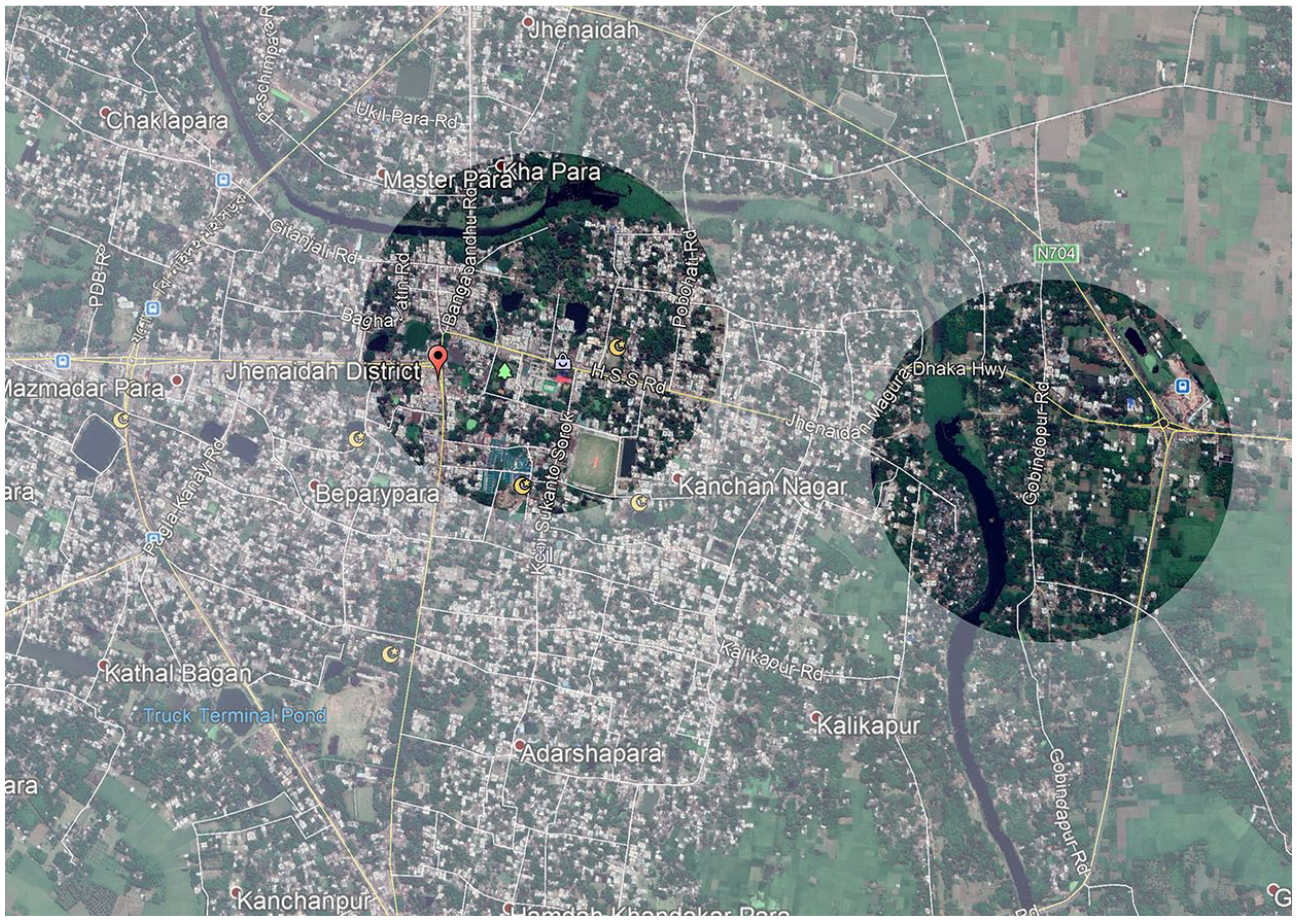
Jhenaidah and the two areas of investigation
b. Phase II: Field visits and consultations with stakeholders
An important component of the studio structure was, as Combrinck puts it, “an authentic contextual engagement that necessarily implies an intimacy of observation and interference in the daily lives of people”.(31) Considering the scope, time and resource constraints of the studio, a qualitative rather than quantitative approach was adopted to enhance understanding and to triangulate the physical (geographical, infrastructural and environmental) characteristics identified in phase I – and more importantly, to comprehend and question the sociocultural and political forces. Students went for transect walks with local guides in the two pre-designated locations, and engaged in casual conversation, not in the form of a survey or questionnaire, but rather as an opportunity to gain acquaintances. Those interactions made it possible for students to question the structure and essence of the lived experience and conditions. Buying tea from a local food vendor, for instance, while finding important nodes on a Google map as a newcomer, helped students to gather what Combrinck calls a “holistic integration of information at intellectual and emotional levels”(32) (Photo 1).
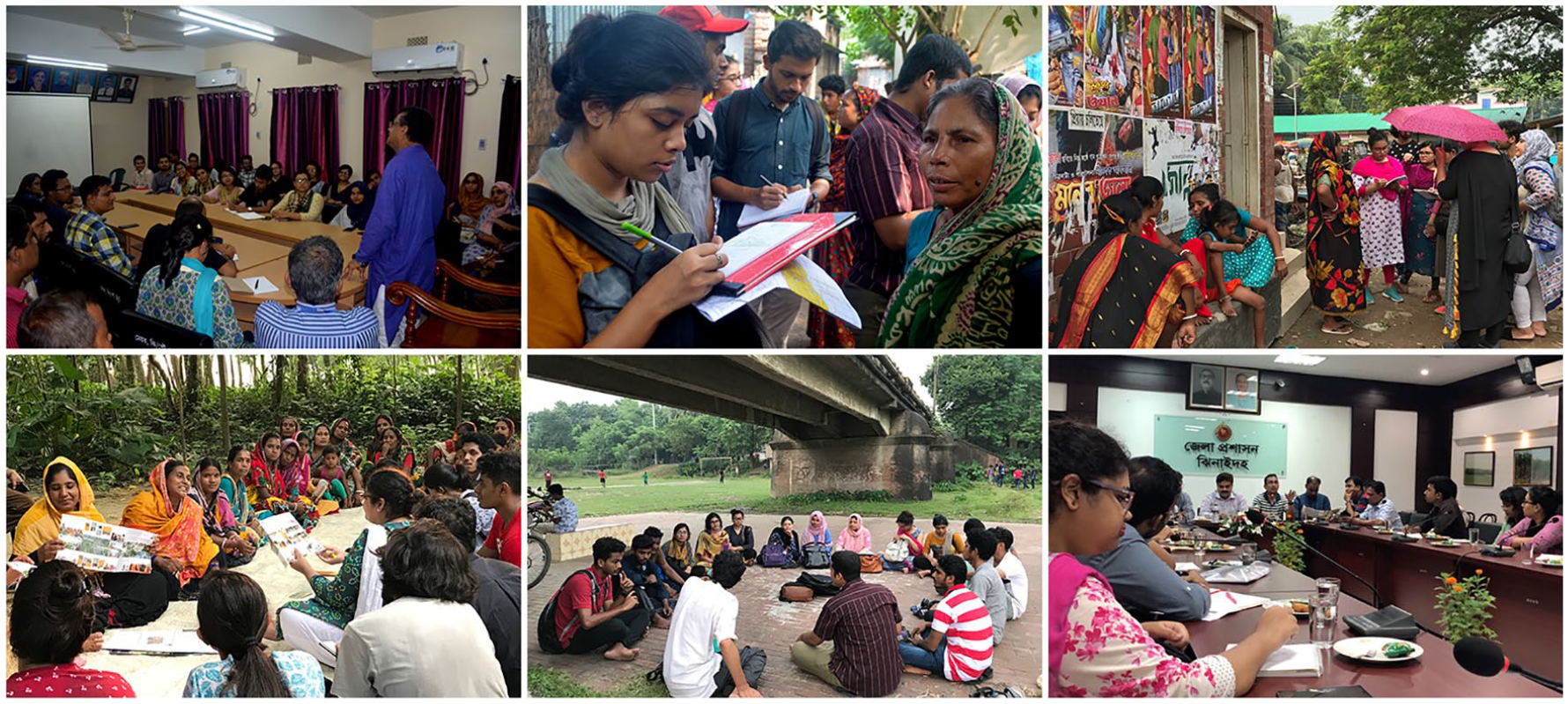
Images of meetings with different stakeholders
We guided students to document and understand the status quo based on observations and consultations. The findings from consultations were recorded and compiled as field notes, pictures and videos, which captured the conditions. Locating different types and densities of activities in maps helped to establish the linkages. All the groups met regularly in daily evening wrap-up sessions to discuss and triangulate the findings. The mayor and local professional groups were helpful in identifying the stakeholders, who included members of different social, cultural and professional groups, local government officials, educators and NGO workers.
The exposure to diverse issues and complexities from these stakeholders was confusing for the students within the short period available to us. Each stakeholder group highlighted and prioritized different issues, and there were differences of opinion between citizen groups and policymakers. Different income groups also perceived the city’s future from their own perspectives, within contexts that encouraged or discouraged new developments. Underlying and implicit sociocultural dynamics, such as suicide and early marriage rates, needed to be linked with explicit demands for economic and infrastructural development. Students faced challenges in defining the scope of the potential intervention and the priorities among the many issues that surfaced from consultations and interviews in the field.
To deal with the confusion and complexities, it helped to divide the students into smaller clusters to compile findings around five themes: economy, environment, health, society and culture. The priority given to a focus on these specific five themes was guided by the findings that different stakeholders’ groups and students identified as development needs, as well as our knowledge and experience of urban design principles. This prioritization was also selective, considering the limited scope of the studio, and some of the identified development needs were not included. Students worked in groups of three, focusing on one theme in either the city centre site or the city periphery. These groups analysed urban fabric, accessibility, connectivity, urban life and activities, urban services, etc. as part of the data analysis.
c. Phase III: Sharing initial findings with citizens and policymakers
Students were able to engage with the complexities of the problems faced by different stakeholders of the city from various vantage points, developing their own positions from an understanding of the phenomena. In the process, they also challenged their own “professional” positions. Later they presented their findings to the citizens in a public forum in the city, as well as to the policymakers back on the university premises (Photo 2).
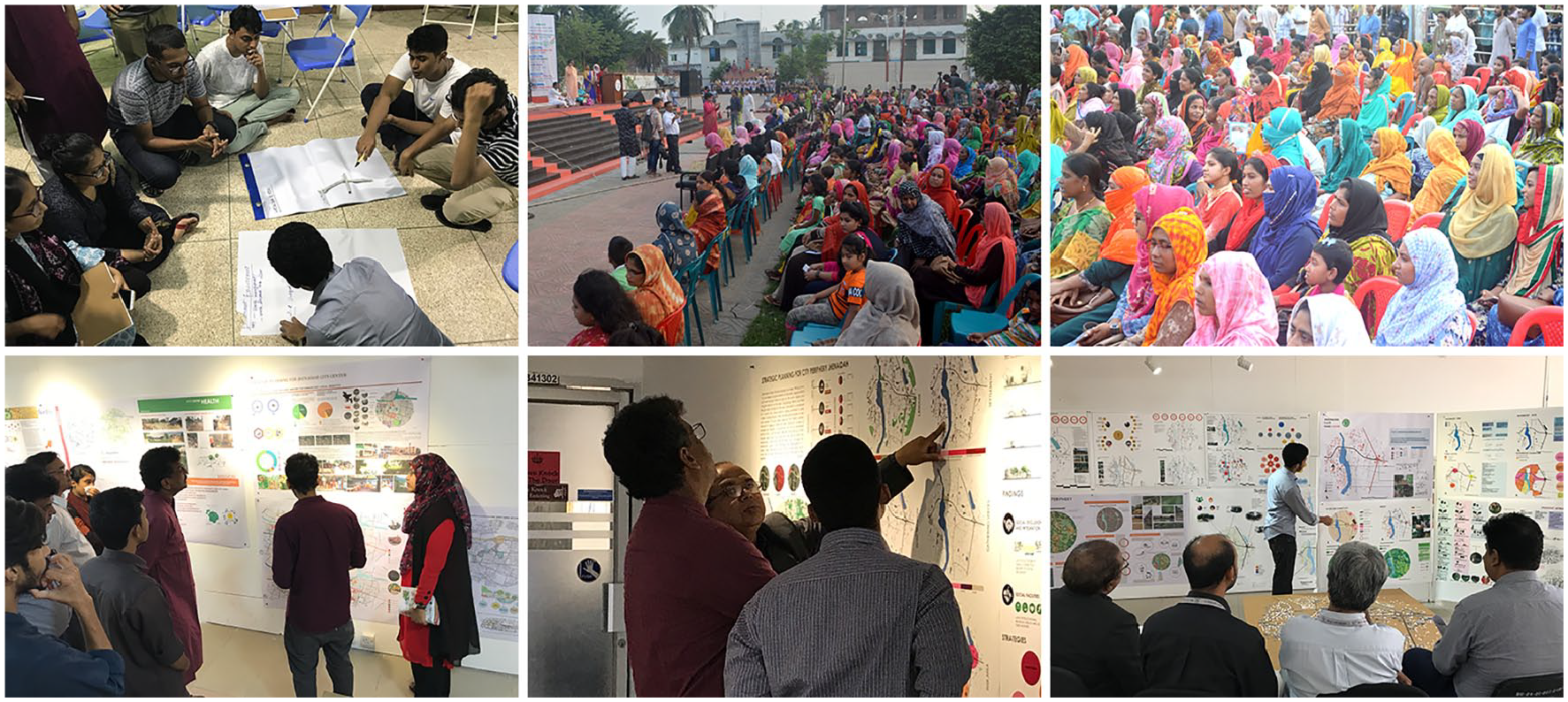
Images of presentations for citizens and policymakers
Dealing with real challenges and real clients was a major confidence builder for students, creating a sense of ownership of the design studio work. Developing a position based on a clear understanding of the phenomena in question, by incorporating different views and challenging their own, can, as Combrinck argues, “only be achieved through participatory methods, where design responds to grounded knowledge”.(33) Through field visits, consultations and sharing, a trusting partnership began to emerge between the students and citizens with ideas about the benefit they would harvest from the process, although both knew the process was for academic purposes only. Citizen groups remained curious throughout the design studio to know what students were proposing. They were familiar with participatory design process through the works of a local professional group. The LGI extended their cooperation; later they participated in evaluating student work, and identified and assessed ideas that could be developed in the future.
d. Phase IV: Strategic planning suggestions
One of the major outcomes of the studio was strategic planning for urban design interventions. Those plans included vision development, morphology study, and site analysis with mappings, proposals for interventions with the phasing of implementation, and graphic renditions to develop a visual collection against which proposals could be imagined. Ten groups developed strategic plans following the five themes (economy, environment, health, society and culture) for each of the two locations.
Developing a vision for each group was very important in helping them to set a direction, establish priorities and identify goals. We encouraged the development of the vision to emerge from their findings. One of the groups working with the environment theme suggested the vision of Jhenaidah as a clean and environmentally responsive city. They focused on environmental amenities and biodiversity elements, mapping among other features the locations of different types of waste generation (Map 2), and their disposal and management. Solid waste was a major concern for the city, and poor management due to a lack of infrastructure was causing river pollution, loss of biodiversity, and the filling of water bodies within neighbourhoods. The group came up with the solution of secondary transfer stations with sorting facilities for recycling. They also proposed raising public awareness through the design of garbage disposal bins for public spaces.
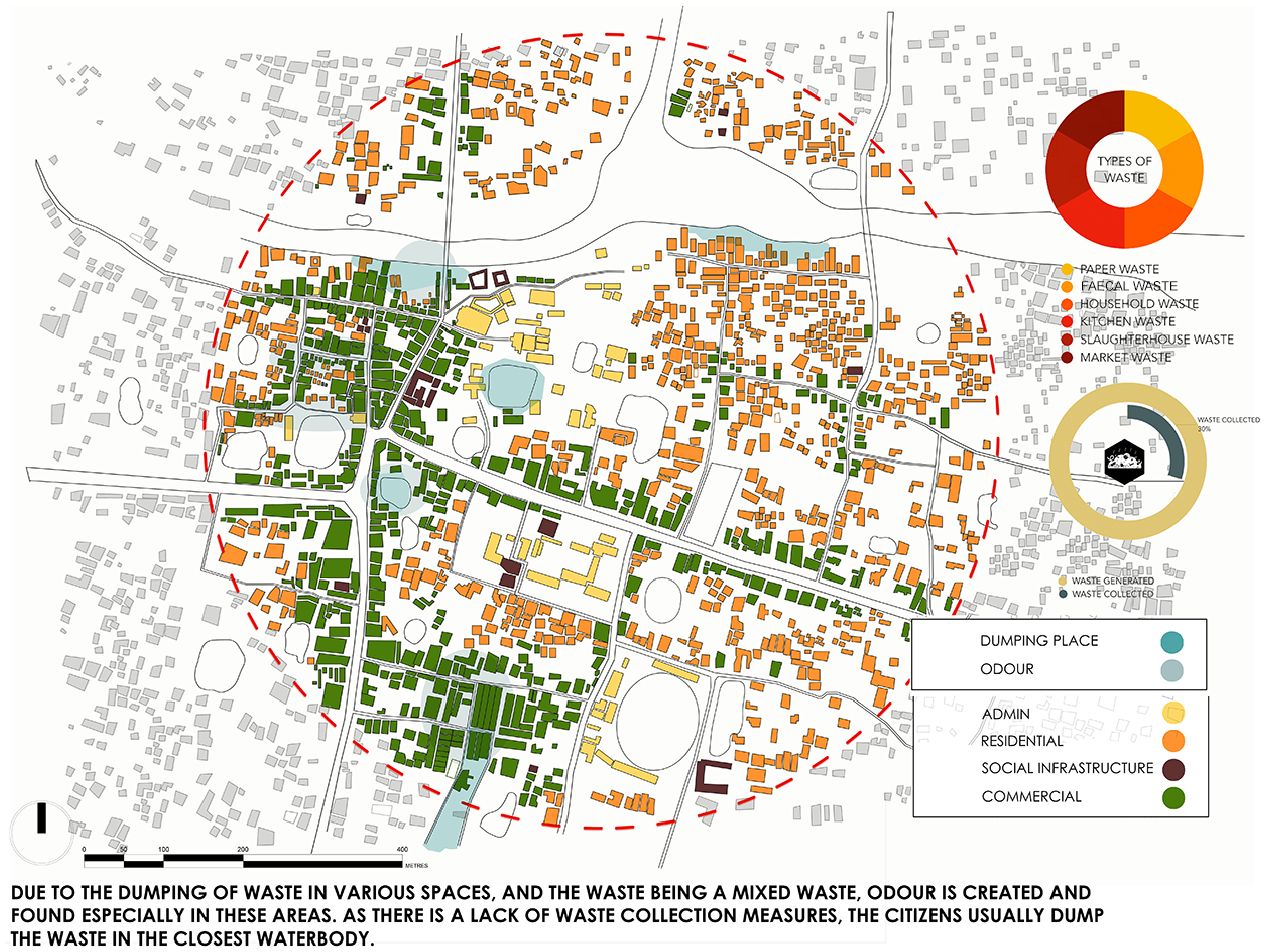
Mapping of waste generation and dumping locations
Another group, this one working on the social theme, mapped pedestrian movement and transport routes overlaid on residential developments, and identified possible appropriate locations for public amenities in the city periphery. The students hypothesized that a high suicide rate in the city was exacerbated by the absence of an interactive public realm, especially in the peripheral areas. Consultation with adolescent boys and girls within the study area and youths from the school and college led the students to propose a vision to make Jhenaidah a safer and more inclusive city. The group suggested neighbourhood street design solutions, visualizing the designed modifications using the existing view (Figure 1). Such images were helpful in communicating design ideas easily. They also suggested the design of bus stops integrated with local shops and small neighbourhood-level amenities with visual connections to ensure safety and promote social interaction.
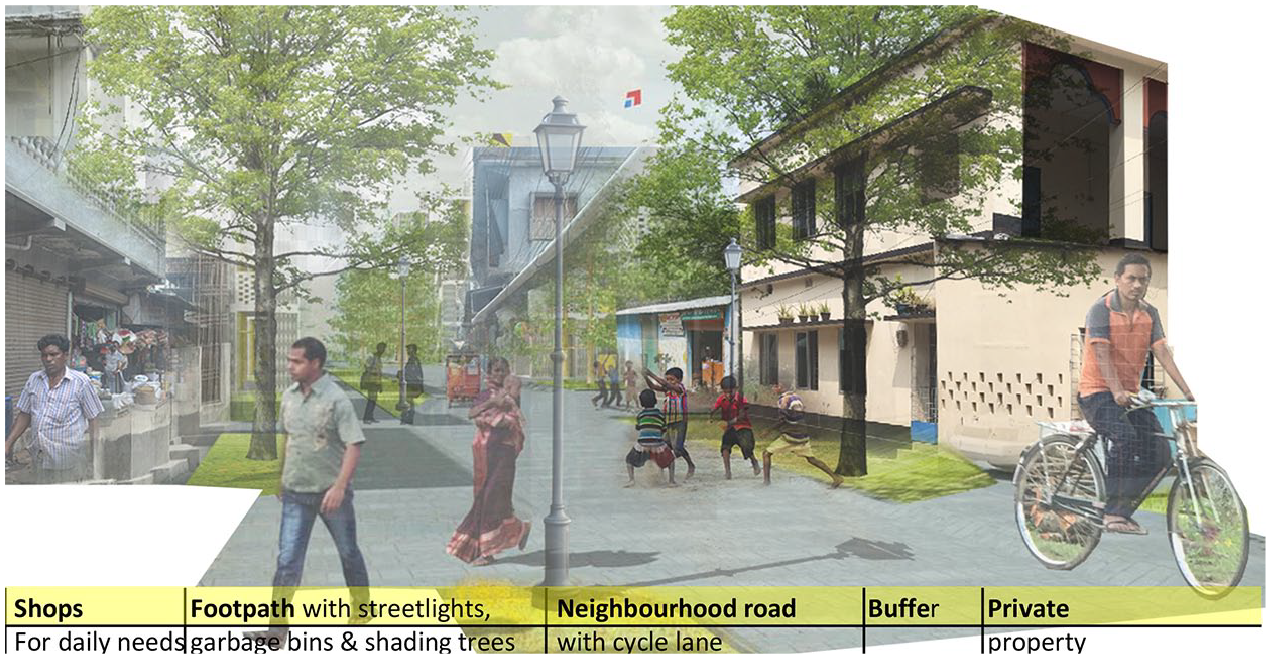
Design suggestion for neighbourhood streets
All the groups studied urban morphology – the layout and configuration of urban form and the processes giving rise to the form(34) – using GIS maps with land-use patterns and property lines. This analysis was helpful in identifying group opportunities. The city often hosted different cultural activities throughout the year in specific locations. A group working with the culture theme in the city centre area suggested adopting a vision of celebrating local identity. They identified colonial structures with the potential to be used for cultural activities. Local residents took pride in these structures, but raised concerns about the security of these unused spaces. The strategic planning proposal included not only the conservation of these structures for reuse, but the improvement of accessibility through a pedestrian path. It also incorporated some small but meaningful interventions along the path – for example, planting trees for shade, and creating small courtyards with public functions on their periphery, spaces for food kiosks, seating arrangements, and so on, to encourage more activities. The path would also create a pedestrian link with the city’s major activity zone in the centre along the riverbank (Figure 2).
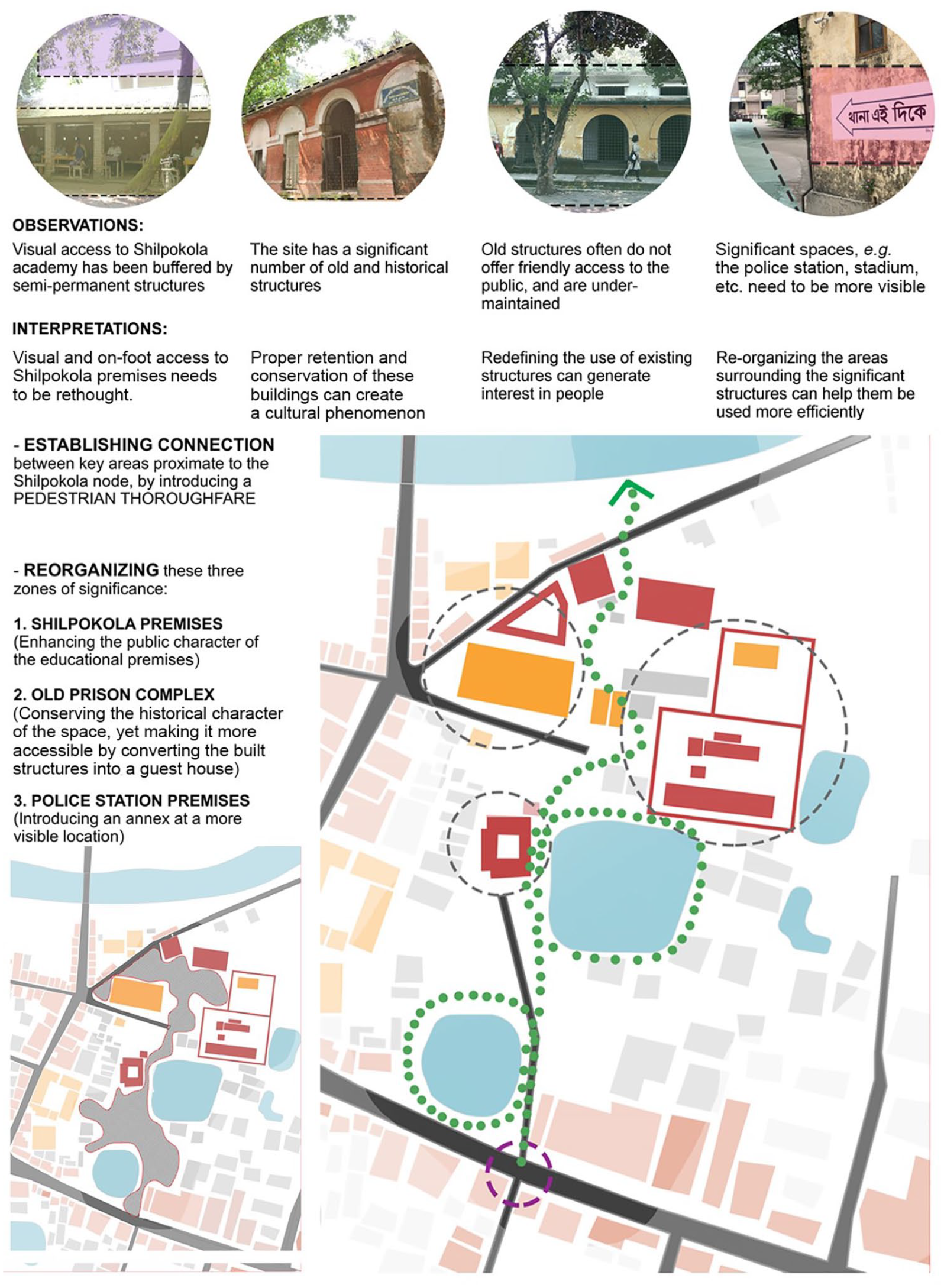
Strategic plan of integrating buildings with cultural significance
During this and the following phases, there was an exchange of learning, unlearning and relearning, especially around the perception of aesthetics for different groups – “designers” and “clients”. Questions were discussed in the studio: What is beautiful, and from whose point of view? These queries led the students to review two major directions in modern Western aesthetics: art-centred aesthetics and experience-oriented aesthetics. Both can unduly compromise the rich diversity of our aesthetic life, which might be termed everyday aesthetics.(35) The studio tried to find a balance between these two propositions.
e. Phase V: Individual project development
One of the most challenging parts of this design studio was translating vision and strategic decisions into built environment solutions. Developing a physical programme based on economic or sociocultural considerations was difficult for undergraduate students because of the model that was followed up through the third year. We felt the need to change their attitude, given that professionals can make constructive contributions when aligned with citizens, and if they use their inherent skill sets and knowledge systems before imposing assumed solutions to perceived problems.(36) Therefore, we as facilitators needed to be more active during this phase, taking on the roles of catalyst, coach, motivator and problem solver as necessary. It sometimes took a lot of questioning to identify the support that individual students needed.
Some interesting built environment solutions emerged that involved taking one of the areas of strategic planning and further developing the scheme through iteration. Students had to conduct analysis and synthesis concurrently, essentially combining the processes of analysis and design. For example, an analysis of the reasons for the high dropout rate of girls in the region, 54 per cent, established the need to strategize raising public awareness of girls’ education, discouraging early marriage and encouraging skills development of young women. The group working with the social theme in the periphery identified the locations of two schools and a skills development centre, taking into account their distance from the home neighbourhoods. The design propositions included introducing informational signposts along the way to schools and public gathering spaces in the neighbourhoods, preparing awareness-raising materials, and establishing a female skills development centre.
The programme of the skills development centre for young married women included spaces for their husbands to wait and socialize with other men. The spaces for men were to be placed at the street level, while the training facilities for women were on the lower level near the riverbank with adequate visual separation from the street. The programme was developed from the finding that women who left education and married early were interested in developing alternative skills but depended on permission from their husband and his family due to privacy and safety concerns. It was easier for them to go to such centres when they were chaperoned by their husband or any male member of the family. Creating opportunities to welcome male members and increasing awareness of the activities would give the centre better acceptance in the community, rather than labelling it as a “women-only” and “not very important” place (Figure 3).
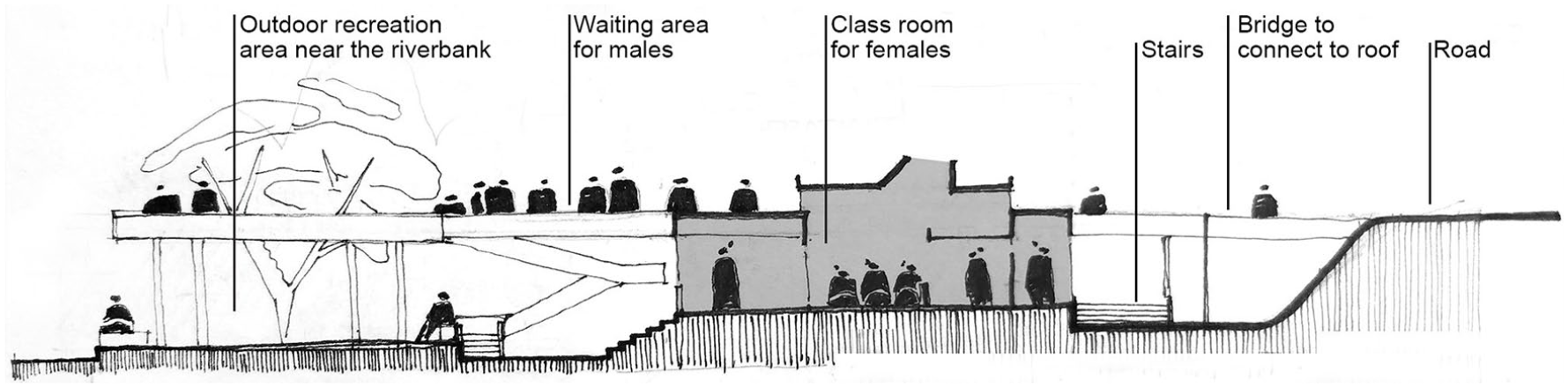
Conceptual illustration of a skills development centre
Design proposals for vendors were developed by the students working with the economy theme in both the centre and the periphery. As a group, they suggested integrating informal economic activities to contribute to the thriving local economy of the city as part of a strategic plan. They identified possible locations connected to transportation routes where amenities could be developed, in close proximity to concentrated public activity, and in neighbourhoods of residents with low skill and education levels. The students used their findings on urban life to propose solutions for the services and amenities required to support vendors. They studied the local space usage patterns and dimensions in their design. The solutions aimed to enhance the economic conditions of the local marginalized groups as well as address informality in the course of city planning (Figure 4).
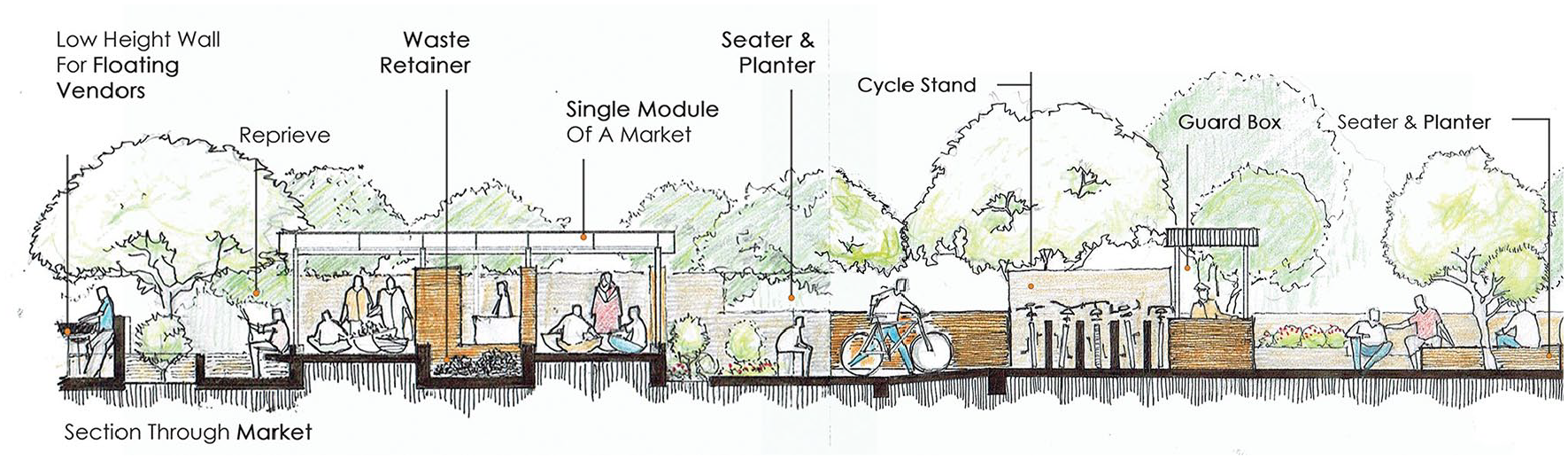
Prototype design of spaces for vendors
These examples suggest that the students were able to understand the complex interrelationship between such issues as the contested spatiality of girls’ education and informal economic activities and the underlying policies on skills and livelihoods, thereby acknowledging the dynamic production and reproduction of urban life in their design solutions. Students had to revisit theories of urban design and development approaches to come up with these design solutions. They had to let go of the ego involved in “being the designer”, moving away from a preconceived form-based aesthetic design solution to something useful and creative. The academic exercise required them to co-create vision, strategic plan and design solutions with the city dwellers, and different activities in those phases aimed to introduce students to the process of responsive design.
VI. Critical Reflection on The Design Studio Learning Process
In recent decades, the process of providing design education, and its consequences and impacts, has been treated as a research field in its own right.(37) Architectural pedagogy is questioning theory, content and contexts, as well as methods and tools, to ensure their applicability to contemporary environmental and societal challenges and taking advantage of emerging opportunities as they arise.(38) We facilitated the design studio in a small city based on specific theoretical approaches while taking advantage of the context and opportunities. The following points are our key learnings as pedagogues.
a. Adherence to theories of socially responsive design
We followed a participatory approach to design, emphasizing learning from the context and analysis with a multidisciplinary perspective, in order to co-create rather than creating something alone. We moved away from providing predetermined typological programmes and towards extemporaneously developed programmes following a rational problem-solving approach with social considerations. During the design development assessments, we kept asking the questions of who would benefit from or implement the planning and design proposals and why – rather than focusing on what. This motivated students to prioritize agency over product.
The theoretical alignment with the concept of spatial agency, stressing the social responsibility of agents involved in the production of a building,(39) motivated students to engage in a proactive and propositional way with citizen groups, professionals and policymakers. The design solutions that emerged aimed at benefitting different groups or community members rather than identifying individual clients. It was important to remind “the agents” to be alert to events further down the line over which they have some (but not total) influence. Students used their imagination for conceiving of what might happen in the future; those creative ideas were nurtured by their interaction with users and their learning from other designers.
b. Critical reading is essential in design studios to reduce dependency on intuitive expressions
We found critical reading to be essential for the design studios. Generally, students take many theory courses in architecture programmes, and it is argued that they will naturally draw on that knowledge in the design studios. However, we understood that it is difficult for undergraduate students to select critically and appropriately from the diverse theory courses they have been exposed to in order to draw on relevant knowledge for developing design ideas. Consequently, they depend heavily on their intuition. Guided readings can address this problem. Critical readings develop a student’s ability to generate a conceptual framework at the beginning of an assignment and can continue to help them in organizing their thinking throughout the project. Readings from varied fields can provide a basis from which to prioritize problems.
c. Alternative studio models require more explanation
White(40) argues that a design studio with a non-deterministic brief can be quite challenging for students who are used to the traditional model, and some students “are pushed outside of their comfort zone”. This was evident in our case as well. Initially, some students were confused, and some expressed concern about that confusion and frustrations during the first weeks of the semester. We had to explain the utility of the methods at different stages, and this became easier to comprehend during the field visit. We also had to explain our objectives to colleagues in the department multiple times. We agree with White(41) that students and colleagues would benefit from a detailed explanation of the aims of a pedagogical approach, which we did only in a limited manner. However, a student commented afterward about the studio, saying we were talking about architecture without talking about it. We believe that such a realization argues in favour of responsive design studio teaching methods.
d. Flexibility within the constraints of the design studio promotes innovative ideas
A design studio needs to be flexible and adaptive to the varied range of students, groups and contexts. Moreover, the design studio’s teacher has to firmly believe in the process and to act as a facilitator or moderator to instil flexibility within the learning process. At the beginning of the semester, we developed a tentative work plan to run the studio with the students. However, we needed to change our expectations over time. We came out with modified briefs to suit the context and progress of work, prepared new lectures based on theories, and shared case studies to generate ideas. The assessment of “creativity” and the merits of design proposals had to be defined based on the scope of work. An issue worth mentioning in this regard is that it requires from the architecture department’s management the flexibility to encourage experimental design studios. The management needs to trust the teachers and students to participate in a focused process of learning architecture with a wider intention. Innovative ideas in design studios emerge with the flexibility to think and act differently.
e. Rational thinking helps in dealing with complexities of contexts
We assigned students to work in a complex urban context, with related systems and subsystems that needed to be unpacked from different perspectives. The subject of analysis included multiple dimensions of social life and categories that can be better understood from an intersectional perspective, rather than depending on discipline-based analytical and identity categories.(42) Objective reality remains a prevailing notion in the traditional pedagogy, which emerges from the market-driven ideology. However, understanding a situation is not solely dependent on grasping objective reality; rather, it can require an openness to other perspectives, be they spiritual, metaphysical or emotional, that can give students a more comprehensive understanding. Promoting rational thinking and analysis is not only recommended for an urban design-focused studio; the approach can be appropriate for any other design studio that deals with complexities in a particular context.
f. Negotiating and collaborating between individual ideas and group efforts
Architects work in a team with other professionals to design the built environment. The development of this skill begins from design studios, where high levels of direct and indirect interaction between students create opportunities to learn collectively from peers and facilitators. The “informality, proximity, complexity and uninterrupted nature” of the collective learning, as described by Stampton, also make the design studio learning very special and valuable.(43) We assigned students to work both individually and in groups to have exposure to collaborative practice. They needed to compete to develop individual ideas, cooperate to link those ideas from analysis, and negotiate among group members to agree upon a collaborative design strategy and methods of implementation. Nevertheless, it was important to have evaluation criteria or rubrics that also made it possible to assess individuals’ achievements independent of the group. Without such evaluation, some students may pass a studio without learning the expected outcomes.
g. Replicability of the studio structure and scaling up
The mayor and other representatives of Jhenaidah appreciated the practical implications of some of the proposed ideas when they were present during evaluations in the studio. We initially planned to share the final proposals with the citizen groups as well at the end of the semester. Unfortunately, the national political situation during that time made this impossible. This was the major drawback of the studio, since we were unable to live up to the aspiration of engaging fully with the citizens/users. The limitations of academic resources and time did not allow us to share suggestions in any published form either.
In the department, several design studios were offered in consecutive semesters following the experiment discussed in this paper. The structure needed modifications based on the context of the assignments – for example, for neighbourhood design in an informal settlement, redeveloping an industrial area to a mixed-use neighbourhood, and transforming riverside neighbourhoods on the periphery of the city of Dhaka.
Our experiences from facilitating these studios indicate that the architecture department involved needs to understand the importance of this type of learning process in order to create a longer-term support system to replicate and scale up the model. The process is still perceived as an alternative model. We argue that it should be mainstreamed. For that to happen, and for the process to thrive and influence the architecture curriculum nationwide, the support system needs to be consistent. The “model” should not be a standalone process for fourth-year students. Rather, the goal of balancing rationalism, creativity and social responsiveness should be the underlying pedagogical philosophy for all the five-year design studios in order to generate outcomes appropriate for different levels. That way, this type of studio would not take students by surprise, or be perceived as “alternative” anymore.
This pedagogical shift needs to be advocated by such umbrella organizations as the Institute of Architects, Bangladesh (IAB), which mostly guides academic affiliations for professional accreditation. IAB could use design studios like these, which are practised in some other institutions in Bangladesh as well, as cases to influence curricula for a new generation of socially responsive architects, who can serve the wider population as “clients”. It could create a platform for the exchange of ideas and collaboration among different institutions. Partnering with local groups/organizations, such as the LGI we worked with, would help in gaining access to users for academic exercises.
VII. Conclusions
Architecture education in Bangladesh is in a position to examine its alignment with the fast-changing urbanization context of the country. The economic and sociocultural context demands that architects take the role of social agents. A traditional pedagogical model without consideration of the country’s unique physical and cultural context has resulted in the development of beautiful buildings that remain disconnected from the urban fabric. The pedagogical shift towards socially responsive architecture will demand an emphasis on the agency and the process to overcome the shortcomings.
We believe that an approach that stresses “design with people” instead of “design for people”, creating opportunities for actively engaging with users, can develop a student’s ability to address diverse design challenges. That implies design studios that can deal with the real problems of real users. The exercise can remain hypothetical, but these hypothetical projects need to be imagined together with the hypothetical users to create a sense of ownership, for both the designers and users. In the process, the users should not act as passive recipients but rather become active participants of the design process. Such an approach creates the potential to continue the process even after the design studio ends. Future design studios could take up where the previous one left off.
Moreover, architectural schools should create partnerships with different social groups. In the beginning, the process may seem to prioritize rationalism and social responsiveness over creativity; nevertheless, the trust between users and designers can pave the way for a complex aesthetics, emerging out of the context and satisfying culture, ecology, economy, and people’s needs and aspirations, rather than imposing a preconceived sense of aesthetics.
This is not a discussion about creativity as opposed to rationalism or social responsiveness. It is about searching for a balance of rationalism and creativity in the interest of social responsiveness. The balance can be understood critically through experiential learning by situating the design studio environment within the complexity of the context. When we experience a place, we start to feel and our empathy humanizes our works by taking priority over generalized theories and perceptions.
Footnotes
Acknowledgements
We would like to acknowledge the support of the Department of Architecture, Brac University, to let us offer the design studio. We also acknowledge the contribution of Mohammad Zillur Rahman, the teaching assistant of the studio, and our students Rehnuma Raida, Zaki Wamia Aunushua, Jannatun Nayeem, Farhan Ishraq, Moumita Haque, Kalpopriya Chowdhury, Raiyan Nasir, Quazi Anika Afrin, Zaria Akhter, Raihan Rafiq, Md. Ehsan Alam, Mehonaz Afroj Yuna, Tasnim Sultana Oishie, Amrin Tahsin, Nirjhar Barua, Samia Tasnim Esha, Shamail Tahrin, Joyanta Saha, Ishtiaque Hossain Chowdhury, Mohammad Shakiful Islam, Shahriar Ahmed Shad, Sabrina Haque Ritu, Tanvir Islam, Arina Tahneem, Anu Prova Mandal, Nymus Salam Reshad, S M Nuruddin Reyad, Junnurain Chowdhury and Juliet Sinthy Baroi.
The support of Jhenaidah Municipality; Citywide Community Network; Co.Creation.Architects, local design professionals; ALIVE, a local NGO; and the citizens of Jhenaidah were instrumental to offering the design studio.
We would also like to acknowledge the reviewers’ and editors’ valuable comments and guidance, which significantly improved the paper.
Funding
The authors received no financial support for the research, authorship, and/or publication of this article.