



Abstract
This article describes the creation of a cooperative bakery whose significance is fourfold: (1) it is the first located inside a Chilean campamento (informal settlement); (2) it was organized and managed by inhabitants, mostly Latin American immigrant women; (3) its implementation faced diverse conflicts that serve as lessons for similar experiences; and (4) it provides evidence from the field about strategies for advancing the right to the city agenda. The bakery was conceived by the community as a strategy to control the means of production. The study used a critical research approach, whereby researchers assumed an active role in the community processes around the formation of the cooperative. The article discusses the potential of cooperative socioeconomic organization as a path to developing community autonomy. It presents the Rayito de Sol bakery with its highs and lows, and reflects on the results of the project as a spatial, social and political approach to the relationship between academic communities and public institutions.
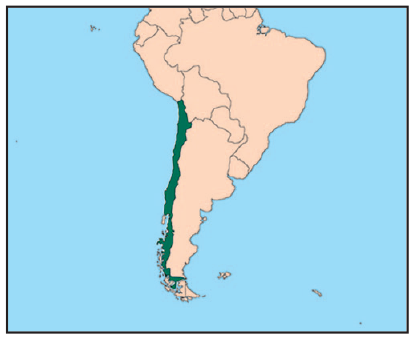
“We will make our own bread out of sea and soil, we will plant wheat on our earth and the planets, bread for every mouth, for every person, our daily bread.”
I. Introduction
The right to the city, an idea developed by Lefebvre in 1968, was proposed as an agenda for social change, a revolutionary academic reflection aimed at banishing capitalism from daily life relations and their manifestations in space. Lefebvre(1) advocated the theoretical and practical implementation of the right to the city through a social absorption of the market, shifting the control of the industry from the bourgeoisie to the local population. More recently, several authors have tried to advance the implementation of the right to the city through collaborative social practices between academia and civil society.(2) They have claimed that academics should not just describe the social reality they are embedded in but proactively create or, in Gibson-Graham’s words, “[perform] the worlds we inhabit”.(3) This may be achievable by recovering or proposing modes of production considered “non-credible” by orthodox capitalist-based ideologies.(4) From this perspective, it is crucial that academics work for and with local communities to develop autonomous socioeconomic modes of production in order to achieve their right to the city.
In the case presented, the interaction of grassroots, academic, social and state agents helped build what Gibson-Graham et al.(5) would consider a “diverse economy” through a cooperative firm organized within an informal settlement in a highly neoliberal context. This cooperative focused on developing a sustainable, self-sufficient production model for improving the living conditions of the cooperativists and the campamento – the Chilean denomination for an informal urban settlement(6) – as a whole. The article presents and analyses the planning and implementation of the first cooperative bakery in a macrocampamento(7) located in the city of Antofagasta, Chile. This developed as a grassroots-led initiative to contest the deep injustices the community faces daily, using bread as a symbol of solidarity, hope and multiculturalism in the struggle of Latin American immigrants against extreme poverty.
The case is presented from the field, as both authors belong to the Observatorio Regional de Desarrollo Humano (ORDHUM)(8) and actively participated in the formation of the cooperative bakery Rayito de Sol (“Little Sunray”), organized and managed by the community leaders of the macrocampamento Los Arenales (“The Sandy Place”). This macrocampamento is an informal urban space in legal terms, consisting of at least(9) 13 smaller campamentos inhabited mostly by Latin American immigrants. Los Arenales is an example of a highly complex socio-spatial organization, whose dwellers’ resilience to the hardships of a highly neoliberal and deprived context is astonishing. The case has several aspects that could contribute to our understanding of how to be useful in advancing the agenda of the right to the city by using the cooperative production of bread, an essential good that is crucial in Latin American culture. The article aims to make visible how this group of dwellers succeeded in forming an experimental cooperative; how food – as a cultural symbol and material product – may contribute to social unity and lead to a higher degree of autonomy; and how a highly experimental collective learning process developed.
The article also reflects on how academics can facilitate the right to the city and how that framework can serve as powerful guidance in framing grassroots-led processes of self-sufficiency at a local scale. It presents evidence regarding the suitability of the framework for grassroots groups, academics and other actors exploring new forms of socioeconomic organization, but also contains some warnings.
The article is organized as follows. It first summarizes the right to the city framework (Section II). This is followed by an account of the methodology used (Section III), which was based on intensive fieldwork. It then highlights the relevance of bread as a meaningful product in the context of cooperativism in Latin America (Section IV) and describes the unequal neoliberal Chilean context in the city of Antofagasta (Section V). Afterwards, it presents the experimental case of the Rayito de Sol bakery (Section VI) with its highs and lows (Section VI). It finishes (Section VII) with some reflections on the results of the project, connecting them to the role of scholars working towards better cities by working horizontally with communities and other institutions.(10)
II. Performing Productive Autonomy While Advancing the Right to the City
Cities are heterogeneous in their composition, and their production is a result of a complex mix of interactions and exchanges, stark power asymmetries and inequalities.(11) Consequently, the urban form is shaped by disputes over the control of spatial production.(12) According to Soja,(13) these disputes fill the city with social meanings while also giving a socio-spatial dimension to concepts like the right to the city. As Purcell claims,(14) the right to the city, as a concept, is based on the autonomous organization of communities to create their own meaningful space, to rethink and create democratic relations of production aimed at living well.(15) A society, by contrast, whose inhabitants are forced to live in informal conditions is a consequence of extremely capitalistic social structures, especially intense in neoliberal contexts.
There is abundant literature on the right to the city as an agenda for social transformation, especially for dealing with inequality under neoliberalism. Recently, these ideas were incorporated into the New Urban Agenda, which invites nation-states to develop public policies focused on ensuring every citizen’s right to enjoy the benefits of urban life.(16) Nonetheless, this worldwide commitment to developing “fair” cities has not been fully embraced.(17) Merrifield(18) explains that the revolutionary transformations of the modes of production involved in the right to the city agenda, aiming to empower grassroots communities to overcome capitalism, could be considered threatening by some powerful elites in charge of implementing these policies.
Lefebvre is clear in theorizing the right to the city as a dynamic process of collaborative work between academia and grassroots communities. He calls for the democratization of urban development by prioritizing the radical empowerment of communities over the technocratic views of experts.(19) To achieve this, it is essential to change the relationship between capitalism and urban production, exploring self-management as a practice based on mutual trust.(20) Similarly, Brenner and Elden(21) suggest self-management as a profound way to transform centralist urbanization logics and rupture current institutional frameworks. As well, the implementation of the right to the city may illuminate the contradictions and the conflicts in the processes of collective learning, which can also be influenced, recorded and disseminated by academics. This collective approach encourages social transformations that facilitate the multi-actor creation of mechanisms that promote direct democracy and control over productive spatial processes.(22)
Regarding the work of academics from ORDHUM on the macrocampamento, there was an explicit effort to socialize and adapt the core ideas of the right to the city to a local and informal scale. However, they avoided an implementation of those concepts in a reductionist way: merely as a state-driven agenda towards bettering cities. Instead, these academics used it as the conceptual base of a collective manifesto, where people in extreme need aspired to transform their urban space. For that, they presented the principles of the right to the city to the campamento’s inhabitants through their initial meetings and workshops, to conceptually frame the processes of self-empowerment already in motion within the campamento. This position was partially inspired by the case of Fitzgerald, who changed his role from observer to actor of change, as depicted by Bunge.(23) Similarly, ORDHUM’s academics put their capabilities at the service of the macrocampamento community instead of presenting themselves as experts holding all the answers. They understood that a real contribution to the macrocampamento would be asking its inhabitants what they needed from academics in order to improve their living conditions.
In Latin America, this approach to community engagement is part of the “epistemologies of the South”,(24) where academics act as rearguard intellectuals by sharing, informing and learning as a part of the community rather than leading social processes or solely describing social changes. This underlines the importance of valorizing the reflections emerging from the deep imaginations of grassroots communities, which may lack formal specialization but bloom in creativity, to secure their livelihoods while facing great adversities. This challenge involved ORDHUM’s academics making an effort to become “new academic subjects”.(25) In other words, they explored the development of a bridge between the principles of the right to the city and cooperativism as a model of bottom-up entrepreneurship, stemming from the voices of those displaced by neoliberalism. This was an attempt to get involved in the multi-actor construction of a democratic and highly autonomous alternative model for the production of a habitat to live and thrive in,(26) by participating in the development of the first cooperative bakery in the largest macrocampamento of the Antofagasta Region.
III. Methodology
Due to the highly experimental character of the cooperative bakery, the methods used for this study were dynamic, adapting to the urgencies and requirements of the project. Initially, a qualitative methodology was considered, based on participant observation. However, given that the community required deeper involvement from ORDHUM, the method changed to engaged research. As ORDHUM’s academics were part of the design, implementation and monitoring of the cooperative bakery under the framework of the right to the city, they framed this experience as a case study.(27) In particular, this research followed a flexible approach based on the critical human geography techniques developed by Bunge and Gibson-Graham et al.,(28) where the researchers act as both observers and catalysers, working directly with communities as trainers, designers, facilitators and analysts as called for by the community.
During the earlier stages, ORDHUM’s academics explicitly avoided leadership positions, stressing that community representatives should be leading the project. Instead, the academics and the NGO Agrupación de Trabajadores del Area Social FRACTAL (ATTAS-FRACTAL, or FRACTAL in short) contributed by building capacities through the delivery of conceptual tools aimed at facilitating the understanding of the cooperative mode of production and its relation to advancing the community’s right to the formal city. This was done through open workshops about the right to the city as theory, practice and ideology, facilitated by ORDHUM, and parallel workshops about cooperativism, conducted by FRACTAL. All this ended with the collaborative production of a manifesto by the macrocampamento’s residents, where the idea of creating a cooperative bakery was considered an autonomous productive activity for building their own vision of a city. To summarize, the phases were:
a) First contact: ORDHUM’s academics introduced themselves and summarized the right to the city concept and its application in improving living conditions, horizontally and collaboratively.
b) Planning of workshops: Community leaders interested in the right to the city asked ORDHUM to carry out workshops aimed at imagining an urban utopia.
c) Workshops: Several issues arose, like the right to the city as a human right, how to implement it, and how to think of the space of Los Arenales from this perspective.
d) Concrete utopia: ORDHUM’s academics organized a final activity where the community imagined their ideal future habitat based on Lefebvre’s “concrete utopia”.(29)
e) Agenda for change: The concrete utopia was set down in a manifesto and a strategy. The manifesto described the utopian urban space envisioned by the inhabitants of Los Arenales, while the strategy was the roadmap to achieve a possible future, projecting a cooperative bakery as a first step.
f) Implementation of strategies: A smaller group of community members who responded to an open call worked on implementing the cooperative to finance the future image that was collectively produced.
The voices of the participants were gathered in the five semi-structured interviews of the key informants, representing each relevant entity involved: macrocampamento, cooperative, NGO, academia and state. These interviews were recorded, transcribed and studied based on the technique known as thematic analysis.(30) The five interviewees were: a cooperative manager; a community leader and member of the cooperative; a member of ORDHUM; a former head of social services; and a representative of an NGO working in the macrocampamento.
IV. Significance of Bread and Cooperativism in Latin America
In Latin America, bread represents the daily struggle of low-income people to put food on their tables. The Chilean poet Gabriela Mistral associated bread with her nostalgia for the happier times of her life, via the smell of her mother. In her poem “Pan” (“Bread”), she metaphorically spoke to her dead friends, to share again the memories of the smell of fresh bread being sliced as an invitation to share the table with everyone.(31) The poet Pablo Neruda, in his “Oda al Pan” (“Ode to Bread”), wrote that bread embodies the action of man, a repeated miracle, the willingness of life. He claimed, “We will fight for you instead, side by side with the others, with everyone who knows hunger”.(32) In Latin American folk music, Mercedes Sosa sang about bread, about peace, about sharing and facing problems with solidarity in order to move forward together.(33) Bread is also a recurrent theme for Silvio Rodríguez, one of the most influential folk musicians in Latin America.
Bread is a symbol of the simple but necessary, of the inalienable struggle to feed the family, related inextricably to the role of women in the face of stark scarcity.(34) To move towards productive cooperative autonomy by producing bread is, then, a symbolic gesture, a declaration of the nature of the search started by a group of dwellers to share, like the bread on the table, a collective self-sufficiency.
Furthermore, as Birchall notes, cooperatives have had a long history in Latin America: Brazil has a cooperative medical system with high coverage; cooperatives provide 58 per cent of rural electricity in Argentina; and in Bolivia cooperatives are an alternative to the privatization of water services in urban spaces.(35) These examples demonstrate the alternative to market-based capitalism represented by cooperatives. These diverse units are based on the notion that no one should to be exploited, that there is no difference between “bosses” and “workers”,(36) and that the producers should decide “what, how and when they will produce in collaboration with other associations regarding the fulfilment of common social needs”.(37)
Cooperatives are also a form of what Singer(38) called solidarity economics, which is based on the notion of the homo cooperativus instead of the homo economicus. A homo cooperativus is the person willing to cooperate, who believes in democratic productive processes and equality and always puts collective interest and wellbeing above individual needs.(39) That person believes in the construction of a utopic society, similar to what the right to the city framework proposes.(40)
For Guerra,(41) cooperatives as solidarity economies are a complex socioeconomic phenomenon, where three dimensions are articulated: grassroots social movements, usually keen to experiment with novel ways of autonomous production; scientists interested in performing and studying diverse economies; and the specific economic sector, where these solidary experiences take place. When grassroots movements and academia collaborate to develop productive projects based on cooperative values, they will have a better chance to flourish. Nonetheless, Guerra also warns about treating cooperatives as the “holy grail” of alternative modes of production since their starting point is usually within the most deprived cultural, social and economic environments. This means that – occasionally – solidarity may appear more of a survival strategy than a real conviction.(42)
Therefore, the mix between academics promoting the right to the city and self-management and the grassroots cooperative model of a bakery in an informal settlement was a promising fit. This is even more the case when considering that this took place in Chile, the first neoliberal laboratory, where the fight to achieve the right to the city is also the struggle against the neoliberalization of urban space and its inhabitants.(43) Thus, the first cooperative bakery began as a collective productive activity using bread as a symbol to move towards the creation of dignified livelihoods and the emancipation of the informal neighbourhoods through the construction of post-neoliberal urbanisms.(44)
V. The Unequal Chile: The Macrocampamento Los Arenales in Antofagasta
Chile has a long history of mono-dependency on mineral exploitation, which is central to its economy.(45) Several international institutions, such as the OECD and the World Bank, have presented Chile as a successful case of macroeconomic development and political stability based on mining production. However, the same institutions that once celebrated the “Chilean Miracle” are now warning about the persistent and abysmal inequalities(46) caused by its rampant neoliberalism.(47)
Most of the extractive processes take place in the Antofagasta Region located in the northern part of Chile, whose capital city is also named Antofagasta. Despite constituting just 3.4 per cent of the total national population, the region is the second largest contributor to the national GDP, contains the largest deposits of copper and lithium worldwide,(48) and is the largest producer of both minerals.(49) Some international institutions have also held up the Antofagasta Region as an example of mining-based development.(50) Nonetheless, these opinions neglect some critical aspects, such as the region’s high cost of living,(51) and its poverty gap, the most significant in the country, measured in terms of both income and multidimensional poverty.(52) Furthermore, two burning issues have recently arisen: the increase in international immigration and the abrupt escalation in the number of families living in campamentos, especially in the city of Antofagasta.
In 2017, 11 per cent of the total regional population was made up of international immigrants,(53) mostly Colombians, Bolivians and Peruvians. The immigrant population increased eightfold between 2005 and 2017. Of the total immigrant population in the city of Antofagasta, 12 per cent live in conditions of extreme poverty, having been expelled from the formal city to the campamentos.(54) These settlements are characterized by their location in urban/peri-urban territories, topologically suitable for the construction of light housing and organized to subsist outside the edges of formal housing markets.(55)
In the case of Antofagasta, the complications around settling, previously mentioned, are especially evident in the disequilibrium in the rent prices, which are far above the average income level of the poorest inhabitants.(56) Thus, the impossibility of accessing the formal city makes living in campamentos the only option for poor families. Just between 2011 and 2017, the number of families living in campamentos in the Antofagasta Region increased by 538 per cent,(57) compared to the 116.3 per cent increase in the housing prices of the northern Chilean regions during the same period. In the city of Antofagasta, the percentage of income per household devoted to rent increased by around 52 per cent between 2009 and 2015, also explaining the drastic increase of campamentos in the city. More worryingly, about 60 per cent of the inhabitants of campamentos in Antofagasta are international immigrants,(58) many of them fleeing war, starvation or violence. All of this has caused a strong feeling of alienation, leading some immigrants abandon the defence of their human rights,(59) facilitating their labour exploitation.(60)
The largest campamento in Antofagasta is the macrocampamento Los Arenales (Map 1 and Photo 1). This is represented by around 13 active committees, politically organized under the association Los Arenales, Rompiendo Barreras (“The Sandy Place, Breaking Barriers”). Official information established in 2016 that there were 375 households in the macrocampamento Los Arenales,(61) but unofficial data gathered by Los Arenales depict a total closer to 1,000 households. Interestingly, around 81 per cent of the macrocampamento’s dwellers are international immigrants, of whom only 3.9 per cent declared they had irregular visa situations.(62)
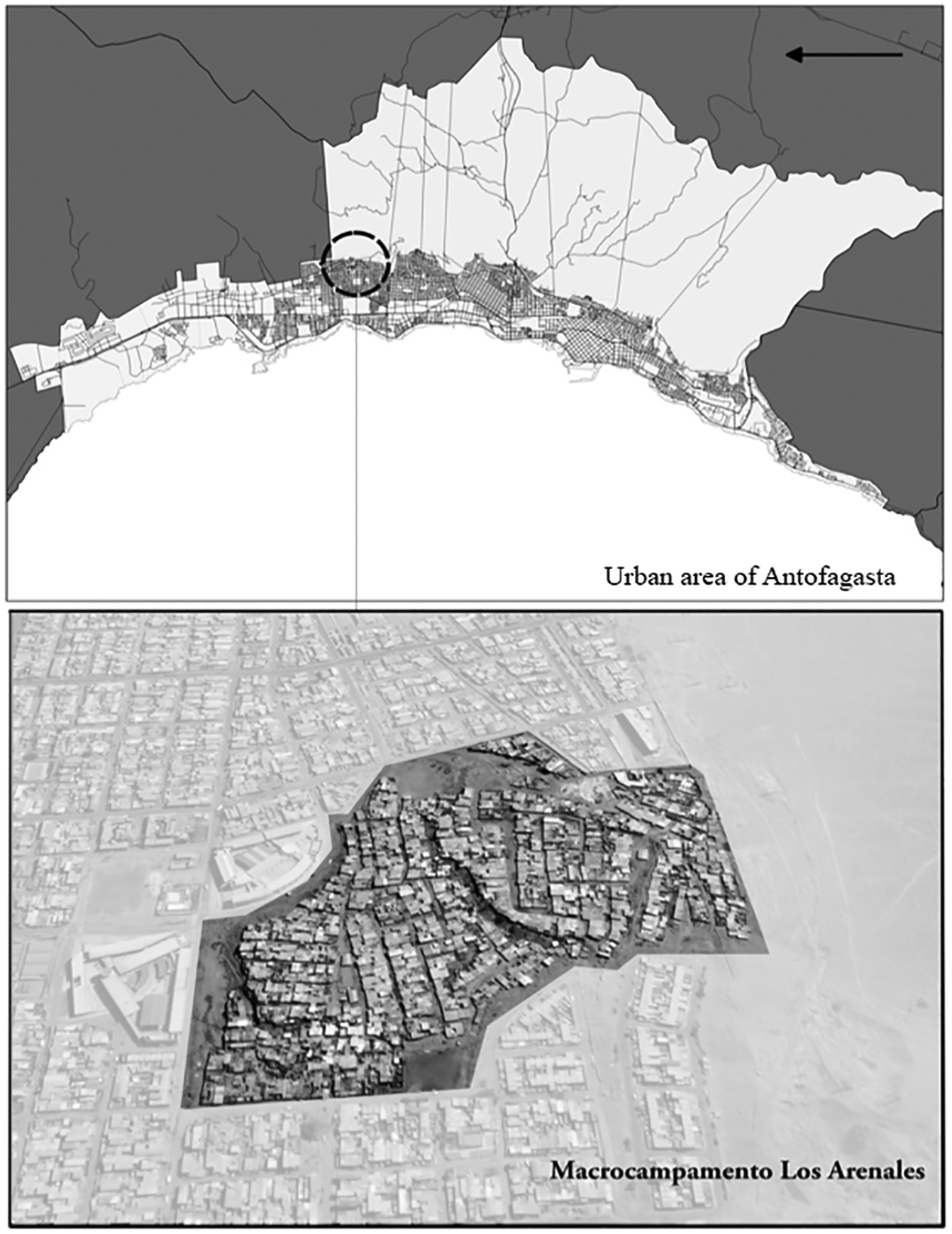
The location of the macrocampamento Los Arenales in the city of Antofagasta
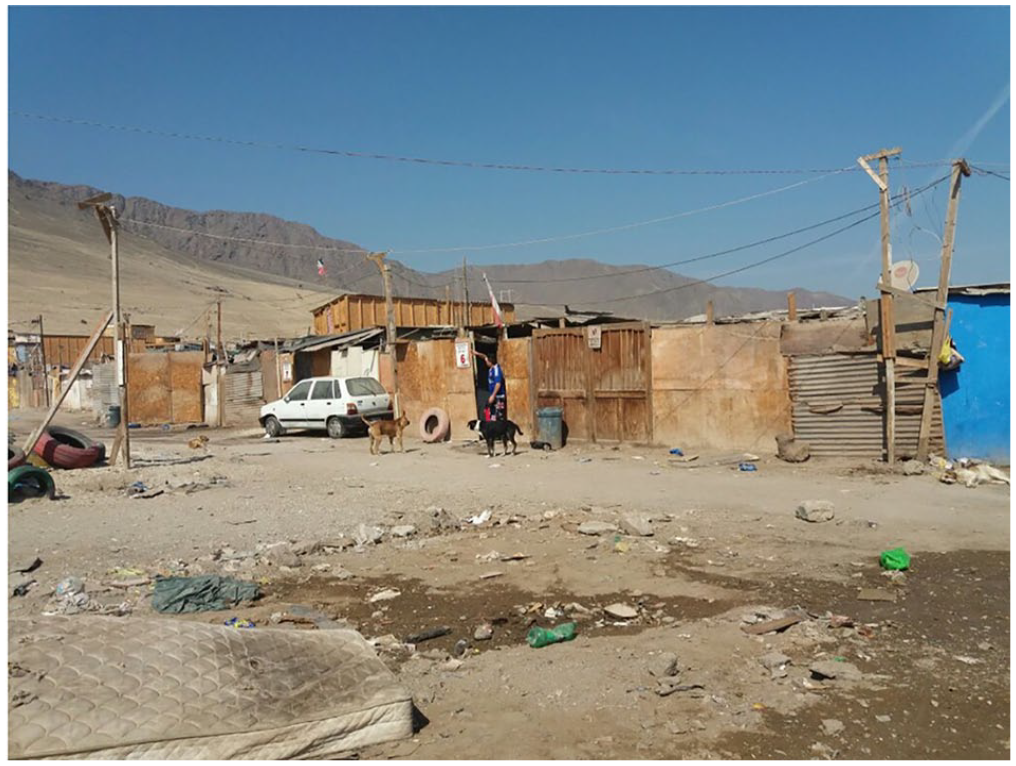
Open space within the macrocampamento Los Arenales
Like the rest of Chile generally, Los Arenales lacks support networks. Los Arenales’ inhabitants also share extreme financial hardship, social vulnerability regarding their human rights, and intense social stigmatization based on racism and xenophobia.(63) This has led them to explore ways to take control of the productive processes and build a safer environment inside the macrocampamento, to actively create the dignified life they deserve as human beings. The struggle for dignity is what led them to consider advancing their right to the city in Antofagasta by setting up the first cooperative bakery.
VI. Experimental Cooperativism to Advance the Right to the City: The Cooperative Bakery Rayito De Sol
In early 2017, the authors of this paper met with the community leaders of the macrocampamento Los Arenales through the NGO FRACTAL. This was to address the problem of academic activity being isolated from people’s everyday problems. The community leaders requested a series of workshops to better understand the macrocampamento’s vulnerabilities and to build a collaborative urban development strategy, claiming that academics only promote development when they have a social vision (macrocampamento representative).
The academics suggested some workshops about the right to the city in the macrocampamento, ranging from Lefebvre’s initial approaches to the recent New Urban Agenda, with emphasis on the housing issues in Chile. Crucial to the community’s interest in building those capabilities was the visit of UN housing speaker Leilani Farha to Los Arenales in April 2017. After her visit, community leaders became aware of housing as a human right they could demand despite their status as foreigners. Indeed, Farha played an inspiring role for the community and defended the human rights of people living in campamentos by publicly requesting that the Chilean state: “. . .take immediate steps to address discrimination against and stigmatization of those living in campamentos or informal settlements and on the peripheries of cities, including through more direct and consistent enforcement of anti-discrimination legislation in all housing domains.”(64)
This statement connected with the community’s urgent needs, highlighting the relevance of understanding urban development processes. Hence, the community perceived the concept of the right to the city as “an alternative way to organize [themselves as] more self-sufficient, less assisted”, which made them start talking about building fair spaces (macrocampamento representative). Five workshops were requested from ORDHUM.
In the final workshop, ORDHUM focused on the concrete utopias proposed by Lefebvre.(65) This method of collectively thinking about utopian urban futures is based on current possibilities and fosters the imagining of urban potential with a focus on the political actions required to activate these possibilities.(66) While dreaming about its future, the community built its urban manifesto. One of its core principles was to foster economic autonomy by controlling the means of production in order to advance their right to the formal city.
Meanwhile, FRACTAL had already started workshops to explore the creation of an alternative method of democratic economic production, based on providing sustainable employment and bettering the whole macrocampamento. As a FRACTAL representative told the Los Arenales community that the logic of individual entrepreneurship does not dignify subsistence; thus “we told them that they should bet on collective entrepreneurship, preferably cooperatives”.
Simultaneously, the community was visited by several campamentos leaders and cooperativists, all of which contributed to the decision to start a cooperative. “If they did it, why can’t we?” (macrocampamento representative).
As both Los Arenales and FRACTAL lacked funds to start the endeavour, they reached out to the Social Development Ministry’s Social Innovation Program (FOSIS). In 2017, FRACTAL and the regional subsidiary of FOSIS organized the visit of the national director of FOSIS, Pedro Goic, to Los Arenales. Goic, observing the urgency of providing financial support to this informal settlement, approved 10 million Chilean pesos (US$ 14,642) as initial capital for setting up a cooperative. As a former regional representative of FOSIS explained, “Los Arenales had a characteristic that made it super attractive to [the people] who had a different view of development, since it was one of the campamentos that. . .showed a high capacity for self-organization, strong networks [and] a multicultural character.”
A bakery focused on bread production was the selected endeavour. This was also a political statement about the future challenges in the struggle for the right to the city: In Los Arenales, no one should lack daily bread.(67) As a member of the cooperative said: “Everyone eats bread. Bread is the first plate on the table.” Bread also reflects the vast diversity of the macrocampamento, given the variety of nationalities and cultures within it. In Latin America, each country has its own way of producing bread, and the recipes are quite different. Furthermore, bread has cultural meaning as a symbol of sustainable livelihoods and dignity. Hence, community leaders agreed that the struggle for the right to the city would start by building productive economic autonomy based on cooperative bread production at the bakery Rayito de Sol (named after the area within the campamento where it is located).
This offered a path towards building a collective memory in supporting social change through a product that is not only essential, but also profitable. Its production is cheap and simple, with low sanitation requirements and assured demand. All these conditions meant that the sale of products and the initial installation would be rapid, and its success would depend mostly on the productive capacity of the cooperativists. Eventually, when the bakery offered other services, such as catering, those could be provided beyond the boundaries of the macrocampamento. This would draw the attention of the people in the city to the entrepreneurial efforts of the people of Los Arenales, a behaviour highly valued in Chilean society.(68)
The funds were spent purchasing ovens and ingredients with the technical support of FRACTAL, filming a documentary,(69) and paying the wages of the initial workforce needed to start producing. To disburse these funds, FOSIS required Los Arenales, Rompiendo Barreras to find an academic institution to provide support. Universidad Santo Tomás (UST) and Universidad Católica del Norte, represented by ORDHUM, accepted this role by signing a cooperation agreement. And in November 2017, the cooperative bakery was launched.
When asked about the bakery’s ultimate goal, a cooperativist and representative of the macrocampamento claimed that the bakery was created to supply jobs, promote self-sufficiency and benefit the macrocampamento. It was agreed that 2 per cent of the profits had to be reinvested in improving the urban and social spaces of the macrocampamento. Thus, the bakery was not only a source of jobs, but also a means to a higher end: the creation of a better habitat through diverse socioeconomic processes.
Rayito de Sol’s cooperativists received community assistance from FRACTAL and technical assistance from Universidad Santo Tomás (UST) and ORDHUM. The role of FRACTAL was to act as mediators, conduct workshops about cooperativism, assist in the process of acquiring capital and consumables, and generally support the community leaders in planning the implementation of the project. UST instructed the cooperativists in methods of bread production based on recipes from Bolivia, Peru, Colombia and Chile. The context was challenging. As a macrocampamento representative and cooperativist explained, there were only 45 teaching hours, “and [we] did not even know how to make a dough, [we] were clumsy”. ORDHUM contributed to developing the economic plan for the bakery. The authors of this article were the lead members of ORDHUM’s team, which consisted of five collaborators. Different workshops were conducted about budgeting, collective work, management and marketing, “[which] were super important, because [those workshops] gave us the basics. . .for running a business” (bakery representative).
The activities started with 12 cooperativists who volunteered to be part of this cooperative after an open call in a general meeting of the macrocampamento for presenting the initial steps of this project. Eleven of the volunteers were women, who assumed diverse roles in a horizontal workflow (Photo 2). Surprisingly, they named the only man as the manager since he was perceived as a mediator between the two strong female leaders, who had conflicting views on the process. In the words of two participants: “He had a [good] way of talking, of behaving. He was the most capable and understood the cooperativist process” (macrocampamento representative). “[He] was a serious person, always had been with us [the female cooperativists] and never disrespected us” (bakery representative).
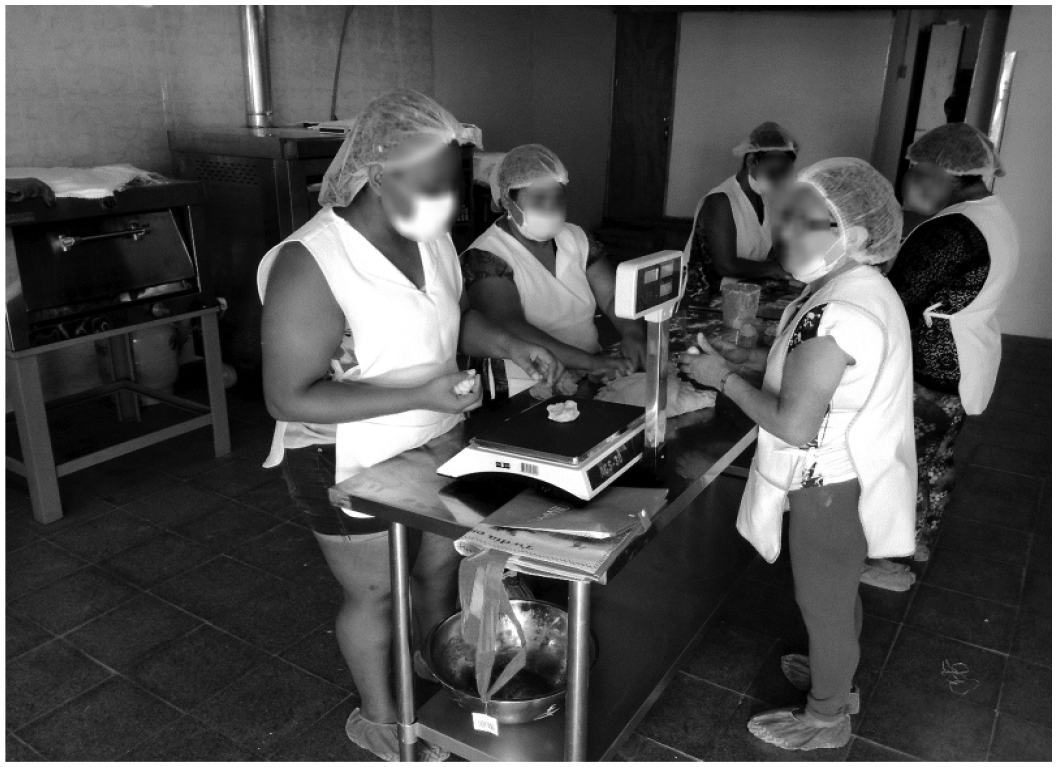
Production of bread by members of the cooperative bakery Rayito de Sol
The cooperative bakery Rayito de Sol began to produce hallullas (flat round rolls) and marraquetas (crusty rolls with four segments) to represent Chilean bread; pan cacho (croissants), pan trenza (braided bread), pan de queso (cheesy rolls), buñuelos (fried dough balls) and pan dulce (sweet bread) for Colombian bread; pan de maíz (cornbread) for Peruvian bread; and pan de arroz (rice bread) for Bolivian bread (Photo 3). Those were the predominant nationalities in Los Arenales. Hence, bread production emphasized diversity, solidarity and comradeship, and symbolized the collective engagement of the macrocampamento in the struggle for the right to the city, to set an example for other campamentos in Latin America.
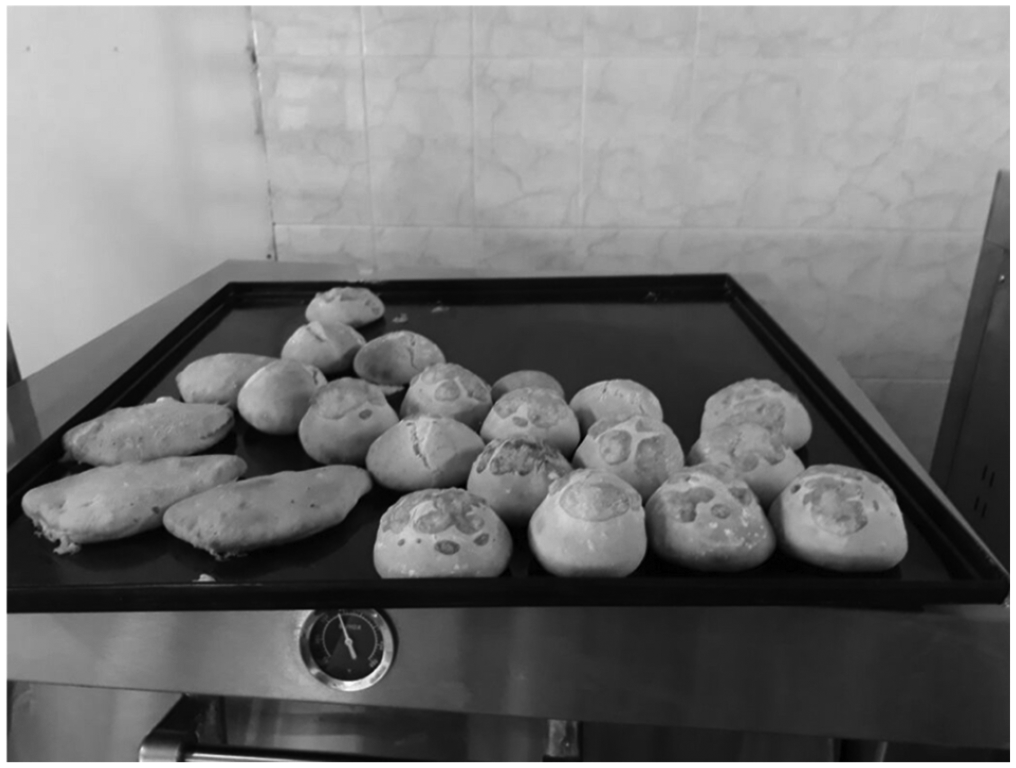
Different types of bread produced in the bakery Rayito de Sol
Sales were carried out within the macrocampamento at the bakery and by delivery. After a while, other shops from the macrocampamento also became outlets. After five months of functioning, the bakery started offering catering services to companies and universities, providing their range of breads, and charging lower rates compared to other firms. At this point, the bakery adopted the name Cooperativa de Trabajo Comunidad Internacional de Trabajadoras y Trabajadores Los Arenales (CINTRA – Los Arenales).
In the Chilean context, the cooperative bakery represents an innovation, given that only 0.13 per cent of the national workforce participates in cooperatives. In Antofagasta, only 0.9 per cent of the regional workforce is in cooperatives.(70) Hence, the project was highly experimental and was perceived as an autonomous model of social innovation.(71) As a unique case, Rayito de Sol caught the attention of the national and regional press.(72) This set the cooperative bakery Rayito de Sol as an example for other informal settlements to push a political agenda for the right to the city based on the creation of a locally embedded means of production. However, the process was not free from internal friction, which ultimately endangered its subsistence.
VII. Tensions and Difficulties Within an Experimental Cooperative Model of Production
The bakery served to make the macrocampamento Los Arenales visible to a broader audience and fostered innovation in a relationship among civil society (macrocampamento), the state (FOSIS), NGOs (FRACTAL) and academia (UST and ORDHUM). However, the very experimental nature of the process, fundamental to its genesis, became a double-edged sword. The actors involved greatly underestimated their time constraints, lack of experience in collaborative endeavours and the urgency of generating incomes for the cooperativists, all of which created tensions that threatened the bakery.
Time was the primary constraint on all fronts. In December 2017, Chile elected Sebastián Piñera as the new president, and changes in the administration of the state were expected by the openly neoliberal and right-wing government. This political change generated uncertainty among the members of the cooperative since Piñera’s discourse had been aggressive towards poor immigrants living in informal conditions and did not show a positive inclination towards supporting the creation of a state-funded grassroots business. Indeed, during 2018, the social budget of FOSIS was drastically decreased.(73) This forced the too-hasty creation of the bakery, which was designed, formed and launched between November 2017 and April 2018. April was the deadline for formalizing the bakery; otherwise FOSIS could “take the machines back. . .losing all the work done” (FRACTAL representative). This precipitated all sorts of problems related to the rushed design of a complex enterprise rooted in an informal multicultural settlement.
Time also significantly limited the direct participation of ORDHUM’s academics and FRACTAL’s members in supporting the process, and in further developing the conceptual tools needed for understanding the cooperativist logic and the running of a firm. The tight timeframe, together with the lack of experience in cooperative endeavours among the team members, made the implementation process quite challenging and stressful. In practice, ORDHUM’s scholars and FRACTAL’s members did their best to prepare a theoretical and empirical framework in order to assist in the formation of the cooperative, but they failed to provide continuous support to the new cooperativists. After the initial workshops ended, the cooperativists “had to take care of implementing strategies for building the cooperative” by themselves without experts’ assistance (bakery representative). Hence, the cooperativists felt abandoned, since ORDHUM and FRACTAL did not become involved further due to their lack of time (macrocampamento representative).
Reflecting on ORDHUM’s participation, a member explained: “I now think we, as ORDHUM, were too romantic in the way we thought things were going to happen. . .we were passionate about the idea and tried to give [the cooperativists] the tools we had, thinking this was going to be a lot easier. [However] it was not in such a short period.” ORDHUM’s team are aware that they could – and should – have done more than the initial workshops and technical assistance by participating more actively in mediating internal conflicts due to the rise of two active and opposing leaderships, one defending the cooperative ideas and the other supporting a more free-market way of conducting business.
Sadly, this was not possible due to the time limitations these academics faced. In Chile’s high-pressured and hyper-competitive academia, academic involvement in such hands-on innovations as the bakery is perceived as a waste of time, since these efforts are not directed towards producing peer-reviewed papers. Additionally (and unexpectedly), the participation of ORDHUM’s academics generated political frictions both inside and outside the university. Some colleagues were openly critical of this process, while members of other internal and external institutions – also working within the campamentos – constantly disparaged the participant academics. While struggling with all these issues, ORDHUM’s academics were not sufficiently focused on adequately monitoring and supporting the bakery’s development.
Undoubtedly, time for people living in campamentos is even more critical than for academics, NGOs or the state, due to the urgent need to generate income for their subsistence. Most cooperativists had other jobs and also had to take care of their families. Hence, there was little time for attending the introductory workshops on cooperativism and firm management, which meant that most of the cooperativists had learning gaps in dealing with real cooperative work. As a former cooperativist explains, “several workshops could not be finished. . .due to our scarcity of time. [Several of our members used to say] I cannot attend the workshop; I have to work and if I do not go how will I bring food to the table?” Thus, attending the workshops was perceived as “a sacrifice” (bakery representative). Once the bakery started producing, there was a clash between unreal wage expectations and reality, since most of the cooperativists thought that the bakery would immediately provide high wages. When asked to reflect about this period, a representative of Los Arenales claimed that the main weakness was that “[as a community] we have individualism embedded, we did not become cooperativists in our mind and soul [probably] due to the lack of counselling, formation and support” (macrocampamento representative).
In short, we failed as a group in transforming the participants into real cooperativists and in properly teaching them the operation and management of a cooperative firm, which directly impacted the internal governance of the bakery. Even though Magni and Gunther(74) and Gibson-Graham(75) defend experimental innovation in relation to self-managed businesses rooted in communities, our critical assessment in this case is that the academic contribution was insufficient in relation to the cooperative’s needs during the implementation process. Likewise, the underestimation of the time and effort needed to coordinate efforts with FRACTAL and the cooperativists should be taken into account as relevant learning for future endeavours. The Chilean state limited its participation to only providing the funding, without any further guidance or support during the process, which should also be corrected in future endeavours.
All these issues led to a split in the initial group of cooperativists. By late 2018, only six were still producing. Despite these problems, the cooperative bakery Rayito de Sol is still functioning with these members and undergoing a complete reconfiguration led by the macrocampamento’s representatives. After an extensive evaluation of the experience in their open meetings, they have reached agreement on several points. The machines will be relocated to another area, closer to the formal settlements, to widen the bakery’s market; there will be a renewal of the management and a new call for cooperativists. This bakery has the merit of being remarkably resilient and firmly based on the needs and expectations of a Chilean macrocampamento, characterized by its multicultural and complex composition. It has become an example of how informal dwellers – mostly women – can organize an economically resilient initiative based on cooperative work, contributing to the sustainable development of the macrocampamento.(76) This group of people advanced in solidarity towards the consolidation of the right to the city as a political programme, rooted in a community displaced from the benefits of urban life. In the words of a cooperativist and representative of the macrocampamento: “As long as there are [people] convinced that this cooperative is possible and that this is the road for bettering the lives of our children, we will continue. . .working with [them]. . .like ORDHUM, who taught us to organize ourselves in a different way. One more self-sufficient, less assisted, which aspires to reach our right to the city. I do not know how. . .but I do know that we will keep organizing ourselves. . .we will become cooperativists. . .we have decided that as a group . . .No one said that it would be easy, but at least now I really get it. . .I do not feel alone, because I know my neighbours are in this with me.” (macrocampamento representative and cooperativist)
VIII. Conclusions
This article presents the case of Rayito de Sol, the first cooperative bakery in an informal Chilean settlement located in the mining city of Antofagasta. The creation of the bakery is depicted here as an experience that required the direct involvement of academics with grassroots groups and other actors in the process of producing social change and advancing the right to the city agenda. The assessment of the cooperative bakery Rayito de Sol has three dimensions.
First, the article posits that the formation of capabilities based on the right to the city concept and the promotion of diverse economies was a relevant contribution to a community living in an extremely impoverished informal settlement but wanting to develop self-sufficiency to democratically produce their habitat. Moreover, the bakery was unique within the extremely neoliberal Chilean context. The state contributed funding, academia and the NGOs transferred knowledge and capabilities, and civil society implemented the project in practice. However, performing alternative modes of production by creating a solidarity economy among grassroots dweller movements, academics, the state and NGOs proved highly challenging due to the experimental nature of the initiative and the underestimation of the difficulties for the actors involved.(77)
Second, the article presents the implementation of the experimental initiative of establishing a cooperative, recognizing the highs and lows of the process, especially regarding the relationship between academics and grassroots communities. In this sense, we believe it is crucial to report these experiences not only as idealized successful examples but also as flawed processes that, if improved, could potentially change the orthodox socioeconomic structures.(78)
This research acknowledges time and experience as crucial, but highly underestimated, factors in the development of the cooperative bakery as a solidarity economy. Despite each actor’s best intentions, there was a lack of academic, governmental and NGO presence in the processes following the initial training, leading to a feeling of abandonment of the cooperativists. This demoralized some of them and increased internal frictions that ended up splitting the initial group of cooperativists – something that could have been mediated by some of the actors supporting the bakery if their support had been better coordinated.
It is clear that in future experiences, the involvement of scholars in implementing social projects will require better planning and institutional support, facilitating their presence in the communities. Universities should recognize the importance of supporting social change not only as an outreach strategy but also as part of their ethical commitment to society as a whole that also involves a learning process on the part of students and scholars. It is critical to foster a more active commitment from academia in the creation of sustainable socioeconomic practices, going beyond description and analysis and engaging in proposals and intervention. As academics have kept a distance from intervening in reality, they have also lost their influence in shaping better societies.(79) Thus, we concur with Gibson-Graham’s claim that “devoting academic attention to hidden and alternative economies [makes] them visible as potential objects of policy and politics. This is the most basic sense in which knowledge is performative [in creating better worlds to inhabit].”(80)
Third, in moments of conflict, the cooperative bakery lacked the capacity to think collectively. This was due at least in part to the inadequate instruction in cooperative values, but also the lack of sufficient discussion on the feasibility of some goals and enough time to activate a process of deep reflection while implementing the cooperative, in order to identify what was missing and to avoid crises when the gaps created problems. The moments of individualistic decision-making could be explained also by the cultural effects of neoliberalism in Chile: excessive concern for the self ends up undermining collective initiatives.(81) Hence, alienation seems to threaten collective initiatives in informal settlements because the everyday need for survival can often restrict the collective.(82) This constraint could be eased during the earlier stages of future cooperative processes by cultivating a deeper understanding of the collective values framing solidarity economies and how the neoliberal cultural mindset could undermine the success of the collective endeavour.
Finally, we underline the importance of using Lefebvre’s concrete utopia approach to advance from solidary reflections to their actual realization.(83) This strategy deserves more attention in the Chilean context in order to build bridges between academia and civil society. Furthermore, this exercise facilitates a rethinking of democracy at a more local scale within dispossessed communities. A democratic city, created by and for its people, where bread is shared in all homes and the profits from its production are collectively enjoyed, as in the dream of Los Arenales, is a powerful way of contesting the current, unequal capitalist systems. In Chile, campamentos are the most extreme representation of the segregation and inequality neoliberalism can produce. To challenge this, experimental solidarity-based initiatives, like the cooperative bakery Rayito de Sol, may show the path to bring the marginalized back into formal urban life. Bread rises “from flour, water and fire. . .simple but profound”, wrote Neruda,(84) just as the socio-spatially displaced inhabitants of Los Arenales attempted to organize a not-so-simple but profound way of achieving their rightful place in the city.
Footnotes
Funding
This research was funded by Grant 11180569 from the Comisión Nacional de Investigación Científica y Tecnológica (CONICYT) and Fondo Nacional de Desarrollo Científico y Tecnológico (FONDECYT), titled: “Los Arenales City as a complex project: towards a grounded theory of informal urbanism”.
2.
7.
A macrocampamento comprises several smaller campamentos.
8.
ORDHUM is the Regional Observatory of Human Development at Universidad Católica del Norte, Antofagasta. This institution was established in 2002, sponsored by the United Nations Development Programme (UNDP). Since then, ORDHUM has carried out multiple research projects and seminars focused on regional and local development in Antofagasta. Since 2017, it has opted for action research, working directly with vulnerable communities.
9.
Due to the highly dynamic nature of the campamentos, the total number of campamentos comprising the macrocampamento could change after this article is published.
11.
20.
28.
Bunge (1971);  .
.
40.
44.
45.
46.
49.
50.
CEPAL (2009); .
54.
CASEN (2015); .
55.
Dovey (2012); .
56.
59.
62.
Gobierno Regional de Antofagasta (2015).
67.
Bread has diverse political meanings concerning human dignity and the concern for the dispossessed. Vladimir Lenin promised that all in Russia would have peace and bread. In Chile, Salvador Allende said that copper was the Chilean wage while the land was the bread.