




Abstract
To make co-production work as a strategy for urban development, and to establish a basis for collaborative action, states and organized communities must find a way to manage their unequal power relationship. Effective partnerships, constructed through projects of co-production, require participants to move beyond institutionally defined roles of service provider and service consumer to forge new terms for collaboration and spaces for joint decision-making. The processes of making space for co-production can be centrally important to establishing the legitimacy of development activity that includes the urban poor as stakeholders. Drawing from research undertaken in Harare, Zimbabwe, this paper examines how a memorandum of understanding was used to frame dialogue between community and state actors and facilitate co-production of housing and infrastructure in a low-income settlement.
Keywords
I. Introduction
The rising profile of “inclusion” in global development policy provides an opportunity to closely examine the potential of co-production as a grounded form of collaborative action involving state and community actors. At the root of co-production is the idea that the provision of quality services requires inputs not just from the state, but from users who have an instrumental role in determining the final outcome of a service.(1) Co-production is possible where there are complementarities sufficient to incentivize change in the behaviours of producers and consumers of a service. The key advantage of co-production is the introduction of new resources (finance, capacity, knowledge or technologies) that add value to service delivery and generate long-term benefits. When viewed as a form of inclusive practice, co-production provides a framework for bringing people and state organizations together to realize shared developmental objectives.
This articulation of co-production can be readily applied to the current context of urban development in the global South, where the scale and complexity of poverty outstrips the financial and technical capacity of governments to meet demand for housing and infrastructure.(2) With nearly 60 per cent of urban populations in sub-Saharan Africa and more than 30 per cent of urban populations in South Asia living in “slum” settlements, without durable housing, adequate living space, or improved water or sanitation,(3) there is a dire need to re-engineer how urban development goals are realized. While co-production appears to offer a practical and inclusive response to limited public budgets, it is dependent on the ability of local partners to forge spaces for dialogue, negotiation and joint action.
A primary barrier to co-production is the unequal, and often firmly institutionalized, relationships between states and their citizens, where power is exercised through bureaucratic procedures that govern access to services, identity and use of land.(4) Successfully challenging established social and political relations, to allow the voices and viewpoints of low-income communities to be heard and valued, requires the creation of spaces where deliberative problem-solving can take place.
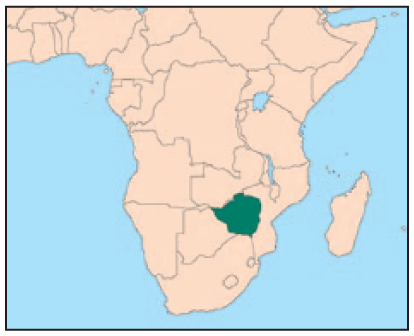
This paper explores how space for co-production was created to enable the upgrading of a settlement in Harare, Zimbabwe. The case study examines how institutionalized relationships were redefined through the production of a memorandum of understanding (MOU) involving the City of Harare Council, the Zimbabwe Homeless People’s Federation and the NGO Dialogue on Shelter for the Homeless in Zimbabwe Trust to deliver improvements to housing and service infrastructure. The MOU, which was a requirement of a grant agreement with the Bill & Melinda Gates Foundation, established a platform for negotiation and joint working to deliver improvements to the Dzivaresekwa Extension settlement in Harare.
The paper proposes that the MOU provided a means to define a collaborative space for delivery of the upgrading project. It also had a wider impact in allowing the community to legitimize its role and agency in improving low-income settlements, by establishing a space for experimentation. These actions affected the discursive representation of organized low-income communities and influenced the institutional behaviour of the City Council.
The paper proceeds in Section II with a discussion of co-production and urban development in the global South, followed by a brief review of MOU in Section III. It then turns to the case study methodology (Section IV) and context of Zimbabwe (Section V), leading to a discussion in Sections VI and VII of how space was created for co-production in Harare. Section VIII concludes.
II. Making Space for Co-Production
Central to the idea and the practice of co-production is a shift in the terms of interaction between citizens and the state around the access to and provision of services. Elinor Ostrom(5) focuses on co-production bridging the “divide” between state producers of services and citizen clients of provision. In elaborating her case studies, Ostrom identifies the importance of co-production actors building a credible commitment to each other to overcome institutionalized differences, using formal agreements and deepening the bonds of familiarity and trust. Diana Mitlin considers the activity of SDI-affiliated federations in Namibia and elsewhere to influence state decisions on land, housing and sanitation issues, highlighting how pragmatic engagement with service deliverers, rather than lobbying “from the outside”, has been effective in improving access to service investment. Mitlin notes how co-production redrew boundaries of service management to create openings for “citizen involvement in areas reserved for the state within conventional delivery models”.(6) More recent discussions of co-production, in a European context, also highlight points of interaction as important: “co-production transforms the relationship between service users and providers, ensuring greater user influence and ownership”.(7) Understanding the incentives for co-production and the means of reconciling or managing significant power imbalances between participants is clearly important.
Ostrom(8) proposes that co-production takes place where collaboration offers an “improvement over regular government production or citizen production alone”, highlighting the need for state and community partners to identify and articulate synergies only available through joint working. Alford(9) describes how parties to co-production “engage in an exchange of concessions or offers whereby each gains more than it loses”. To be able to identify potential synergies presumes knowledge and organizational capacity to coordinate diverse points of view and secure the commitment of prospective participants. For low-income communities, this requires building collective efficacy among the urban poor as a precondition for involvement in projects of inclusive development.(10) In addition to the potential benefits of co-production, in the form of improved access to services or additional resources, Mitlin(11) argues that grassroots groups are motivated by opportunities to redefine their relationships with the state in order to secure political influence. But building the foundation for partnership through co-production is complex, as the expectations of state and community actors are defined by existing power relations and potentially conflicting political objectives.
Co-productive working can be viewed as a form of deliberative participation,(12) which requires structures to balance power relationships between citizen groups and the state. The scope of a deliberative space may be limited to the specific terms of the co-productive action and exist as an exception to wider sets of rules that continue to marginalize the urban poor and limit their access to rights and services. Co-production can also be conceived as an “invented space”(13) within established institutional structures, providing an arena for experimentation and the alignment of people and resources in ways that may be inconsistent with “normal” public administration. This description reflects Rondinelli’s(14) view of projects in development as incremental processes designed to elicit the most effective means of resolving social problems, with institutional adaptations emerging as more is learned about the operation of new approaches to delivery. For both citizen groups and the state, there is an advantage to creating these “bubbles” of collaboration, where participants are able to obtain short-term benefits from improvements in service delivery, while initiating longer-term changes in relations.
Viewed more critically, co-production is consistent with Foucauldian governmentality,(15) where political issues of access to services, land and housing are contained and depoliticized in frameworks that transfer responsibilities away from the state to low-income communities. Roy criticizes the efforts of the Indian Alliance working with the state to relocate 60,000 trackside dwellers to make way for railway upgrading in Mumbai,(16) as being complicit in “the dominant narrative of the poor as encroachers”.(17) However, in political contexts where the state uses violence to control informality, communities may have little alternative to accepting some responsibility for public services that more properly belong to government. While Cooke(18) and others make a strong argument about the potentially delusional power of participation, the challenge for low-income communities remains how to balance the risks of engaging in political processes and maintain organizational independence. The collaborative character of co-production is a rejection of the simple dichotomy of citizen versus state; offering a challenge to established forms of governance by promoting inclusive processes of city-making.
How co-production is framed is vital to determining its initial success in generating new or more efficient services, as well as the longer-term effects on power relations. For collective groups of the urban poor to be included in co-production requires a shift in prevailing negative perceptions. Patel and Baptist succinctly state: “the inhabitants of informal settlements are rarely seen by governments and international agencies as providers of solutions”.(19) The weight of discourses of marginalization on the poor(20) reduces their sense of efficacy(21) and drives a need for groups “to fashion meaningful accounts of themselves and the issues at hand in order to motivate and legitimate their efforts”.(22) Arjun Appadurai’s(23) discussion of the Alliance of grassroots organizations and an NGO in India highlights how their claim to agency was exercised through precedent-setting: demonstrating the capacity of the community to articulate and deliver improvements within informal settlements. Through actions and the use of the “quasi-legal language” of precedent, the Alliance has been able to (re)position its activities, and its members, to stretch the limits of institutionalized relations and define “a sort of research and development space within which poor communities, activists and bureaucrats can explore new designs for partnership”.(24)
Creating a common basis for discussion and negotiation between citizen groups and the state is essential for co-production. McGranahan(25) observes that “successful co-production may require dialogic as well as practical collaboration”, as its transformative potential is realized as much through defining new spaces of joint problem-solving as through service improvements themselves. Joshi and Moore(26) discuss co-production as the “regularized” engagement of citizens and states, within institutional frameworks of delivery. Workman(27) argues that co-production relies upon participants “establishing and sustaining a pattern of reciprocal exchange”, where familiarity and mutual reliance underpin the commitment to joint activity. While the nature of compacts may vary significantly across cultures and contexts and, as Joshi and Moore assert, co-productive relationships may be “informal and redefined almost continuously”,(28) these studies indicate the necessity of building an agreed basis for citizen–state dialogue, particularly where there is a wide asymmetry of power. Having a means to make intentions legible and creating structures of accountability to substantiate reciprocal arrangements are vital to making partnerships work.
III. Memoranda of Understanding
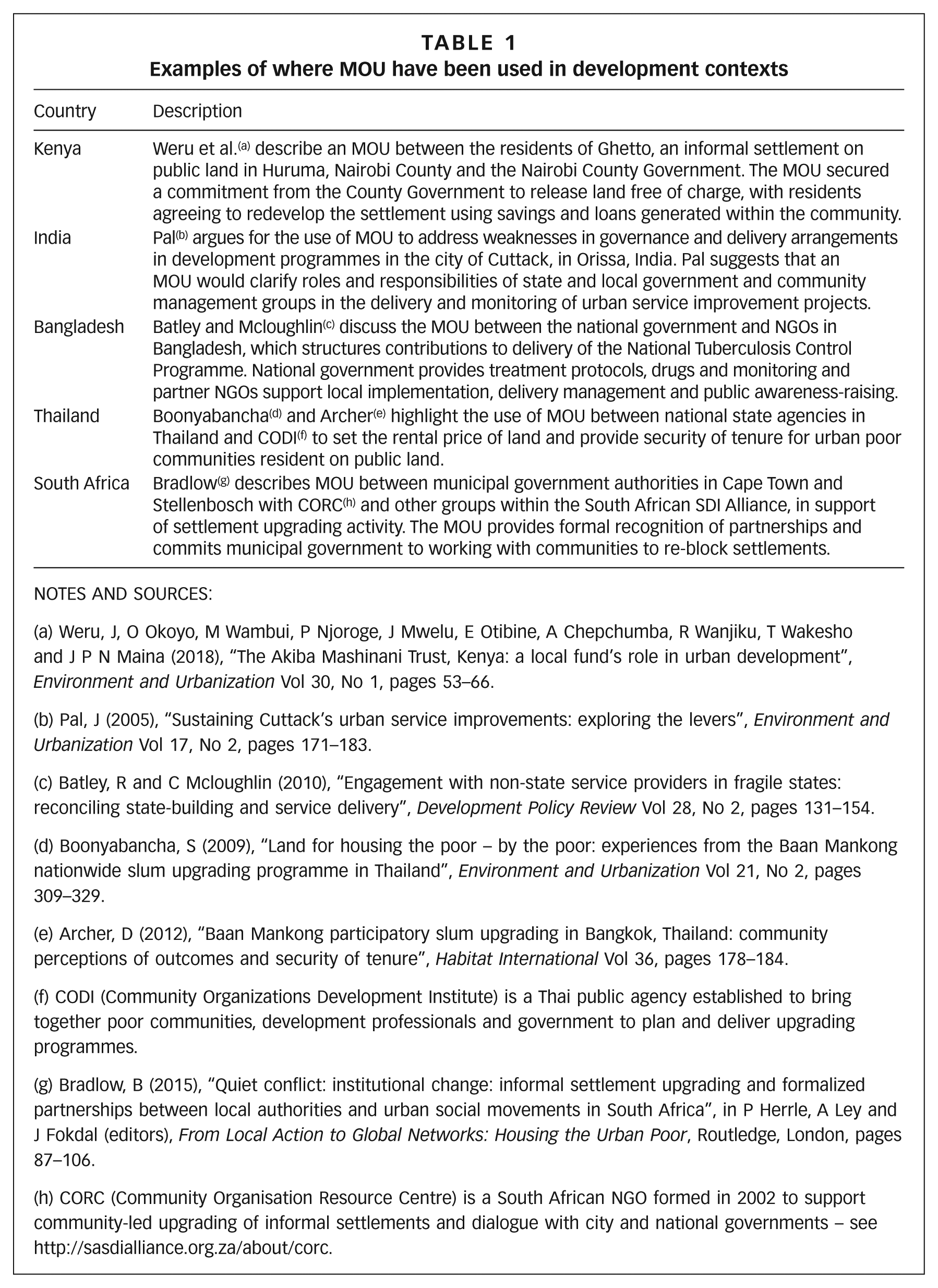
MOU are administrative devices employed in a variety of circumstances to record agreement between public agencies and between public agencies and other parties on a negotiated set of issues. MOU are not legally enforceable, but are rather intended to articulate agreed objectives, regulate the conduct of signatories and set the terms for mutual accountability.(29) While the precise form of MOU differs across cultural and administrative contexts, they typically use language intended to solidify commitment to partnership action and reinforce mechanisms of joint working. MOU have been used in various ways in the global South, whether to define commitments and organize inputs from government and community stakeholders or to deliver specific services or development activities (Table 1).
Examples of where MOU have been used in development contexts
NOTES AND SOURCES:
Weru, J, O Okoyo, M Wambui, P Njoroge, J Mwelu, E Otibine, A Chepchumba, R Wanjiku, T Wakesho and J P N Maina (2018), “The Akiba Mashinani Trust, Kenya: a local fund’s role in urban development”, Environment and Urbanization Vol 30, No 1, pages 53–66.
Pal, J (2005), “Sustaining Cuttack’s urban service improvements: exploring the levers”, Environment and Urbanization Vol 17, No 2, pages 171–183.
Batley, R and C Mcloughlin (2010), “Engagement with non-state service providers in fragile states: reconciling state-building and service delivery”, Development Policy Review Vol 28, No 2, pages 131–154.
Boonyabancha, S (2009), “Land for housing the poor – by the poor: experiences from the Baan Mankong nationwide slum upgrading programme in Thailand”, Environment and Urbanization Vol 21, No 2, pages 309–329.
Archer, D (2012), “Baan Mankong participatory slum upgrading in Bangkok, Thailand: community perceptions of outcomes and security of tenure”, Habitat International Vol 36, pages 178–184.
CODI (Community Organizations Development Institute) is a Thai public agency established to bring together poor communities, development professionals and government to plan and deliver upgrading programmes.
Bradlow, B (2015), “Quiet conflict: institutional change: informal settlement upgrading and formalized partnerships between local authorities and urban social movements in South Africa”, in P Herrle, A Ley and J Fokdal (editors), From Local Action to Global Networks: Housing the Urban Poor, Routledge, London, pages 87–106.
CORC (Community Organisation Resource Centre) is a South African NGO formed in 2002 to support community-led upgrading of informal settlements and dialogue with city and national governments – see http://sasdialliance.org.za/about/corc.
The wide-ranging use of MOU in diverse circumstances, alongside their lack of binding legal authority, can obscure the potential of these agreements to define spaces of collaboration. MOU can help reinforce the legitimacy of non-state groups as development actors and contributors to the co-production of services. While the efficacy and long-term significance of MOU vary across contexts, the processes of engagement, negotiation and formalizing of terms of agreement can provide a structure for consensus-building and may lead to institutional adaptation, where negotiated arrangements are adopted by state partners.(30) Bradlow argues,(31) in the South African context, that partnerships articulated in MOU created space to manage conflict over the governance of land and housing for the poor. The deliberative process of defining acceptable language for an MOU can strengthen bonds of trust between parties as issues are debated and compromises are made. In keeping with studies by Fung and Wright,(32) Rose(33) and Batley,(34) Mcloughlin and Batley(35) note that “enduring – less brittle – forms of collaboration between government and non-government service providers seem to arise where the relationship has evolved rather than been created, rests on mutual agreement, and preserves the financial autonomy of partners”.
As a device to structure the relationship between citizen groups and government and record inputs into co-production, MOU have advantages and disadvantages. They formally document the outcome of negotiations, approved by authorized signatories to the agreement, and have been found to “reduce duplication and increase certainty”.(36) They have the advantage of operating both vertically, creating a bridge between communities and government, and horizontally, reinforcing commitment among participants. The specific terms of MOU can also increase accountability, where they are made public. The disadvantages largely arise from the voluntary nature of MOU, which can be revoked at any time and are vulnerable to changes in political control of local or national government. The format can also give a false impression of security, which may come to undermine the confidence of signatories to engage in future collaborations. A final disadvantage is the use of MOU as a technique of governmentality, to depoliticize and co-opt community-based interests into areas where opposition to state authority can be contained and resources extracted to the benefit of elite interests.
IV. Methodology
This paper draws from research in Zimbabwe, undertaken during 2013 and 2014 with members and the leadership of the Zimbabwe Homeless People’s Federation (hereafter ZHPF); the NGO Dialogue on Shelter for the Homeless in Zimbabwe Trust (hereafter Dialogue on Shelter or Dialogue); officers and a politician from the City of Harare Council; and other national stakeholder organizations involved in land and housing. The research considered the impact of the co-production of housing and basic service infrastructure on institutions and institutional relationships between city government and the urban poor in Harare. Qualitative data were collected using process tracing, a research technique that captures evidence on events from different perspectives, in order to establish causal relationships between actions and outcomes occurring over a period of time.(37) By comparing various forms of documentation and testimony, a narrative was constructed to identify critical moments of change in the relations between organized communities and the local and national governments. The research considered how strengthening communication between the community and the City Council in Harare affected the application of local government regulations, such as planning and building standards, and changing positionalities in respect to upgrading of the Dzivaresekwa Extension settlement in Harare. This included the production of an MOU, linked to external funding, used to structure inputs into the upgrading project. Understanding the process from both community and local government perspectives provided insights into the benefits and difficulties of negotiating co-production in a politically contentious environment.
Research participants were selected for their personal knowledge of the changing relationships between low-income communities and government over the previous 16 years and their ability to comment on the impact of changing patterns of dialogue on land and housing issues in Harare. Primary data were collected through semi-structured interviews, focus group meetings and a workshop with key informants. In total 48 people contributed: four national leaders of ZHPF and 18 community members; three senior members of Dialogue; 11 managers and heads of service and a former senior politician of the City of Harare Council; and 11 participants from national stakeholder organizations. A number of the ZHPF, Dialogue and City of Harare participants were interviewed up to three times. Interviews and focus groups were recorded, transcribed and coded for analysis, and, along with documentary evidence, used to identify discursive and operational shifts in the application of planning and building regulations by the City Council and how communities used the project relationship to challenge rules governing land use and housing provision.
In this research, multiple perspectives on common experiences of a settlement upgrading project provided a lens to understand the operation of institutional power. The research explored the different perspectives and experiences of low-income community members and City Council officials, revealing both the benefits of collaboration and the underlying difficulties of delivering development in Zimbabwe. While there was a tendency for participants to report positively on the efficacy of their actions, there was also a deep sense of frustration caused by insecure incomes, the lack of political change in Zimbabwe, and ongoing tension between local and central government that restricted the resources available for public services and urban development.
V. Zimbabwean Context
Zimbabwe became an independent and majority-ruled country in April 1980. From the outset, there was a political intention to reverse the racialized public policies of the colonial state and more fairly distribute national economic assets.(38) These intentions, however, have been frustrated by political conflict and capture, as the governing party, ZANU-PF, sought to secure all aspects of state activity in order to preserve its political authority and control over national resources.(39) Internecine struggles contributed to recurring economic crises and, after a long period of decline from the mid-1990s, the country’s collapse into hyperinflation in 2008. During this time Zimbabwe experienced a rapid fall in output across key sectors, unemployment rates of over 80 per cent, and the loss of all meaningful value in its currency.(40) The national government response, throughout the 1990s and much of the 2000s, was increasingly insular and violent, as it sought to retain power through security measures to suppress opposition movements.(41) This severely narrowed the possibility of challenge by political parties and civil movements,(42) contributing to what Bracking describes as Zimbabwe’s “exclusionary mode of political rule”.(43)
Within this political context, low-income communities had little influence over the public sector. Provision of land, housing and basic service infrastructure was highly politicized and used as instruments of control.(44) Kamete(45) comments: “the only detectable flow between public authorities and the poor comes in the form of a unidirectional movement of instructions, laws and regulations, as well as the imposition of decisions”. Insight into government perceptions of the urban poor can be seen in Operation Murambatsvina (Restore Order) in 2005 – a militaristic clearance of illegal and informal urban settlements.(46) Some 700,000 people across Zimbabwe were directly affected by this “tsunami” of demolitions that displaced populations and undermined the functioning informal economies of towns and cities.(47) The underlying motivations were thought to be political, as ZANU-PF fought against the growing popularity of the opposition party, the Movement for Democratic Change, which had won control of local councils in urban areas between 2000 and 2005.(48)
Tensions between central and local government further undermined the capacity of municipal authorities, already weakened by falling revenues, to deliver public services. In Harare, after 2002, there were frequent interventions by the national Minister for Local Government in the operation and decisions of the City of Harare Council. The interference culminated in December 2004 with the dismissal of the elected mayor, Elias Mudzuri, who was replaced, under the authority of the minister, by a commission led by a ZANU-PF-appointed chair.(49) The commission lasted over two years, during which time conflict between the central and local governments, including acts of intimidation and violence against City of Harare councillors, frustrated the effective administration and development of Harare. Antagonism continued after the restoration of local control, with the City Council lacking funding and political support to address worsening conditions of poverty in Harare.
In common with other African nations, Zimbabwe experienced expanding urban populations after independence. However, the weak economy and adverse political conditions meant that growth “far outstripped the capacity of the authorities to provide decent and adequate shelter”,(50) with urban residents relying on self-provision of housing, backyard development, and settlement on marginal land “out of sight” of the state.(51) The pressing need for housing was recognized, with the national government estimated a housing backlog of over 542,530 units affecting 46.2 per cent of the urban population in 2009.(52) Yet political conditions made directly challenging the state on this issue dangerous for the urban poor.(53) The problem of meeting housing demand was compounded by planning and building control regulations, adopted in Zimbabwe, that set high and expensive standards for housing construction. With both the local and national governments rigidly interpreting land use rules, there was little flexibility to make housing more affordable.
The adverse political environment from the 1990s encouraged communities to look to their own resources and to collective action to improve living conditions in low-income and informal settlements. The following section provides a case study of co-production involving ZHPF and Dialogue working with the City of Harare Council. ZHPF and Dialogue have a strong track record of working together to represent the needs of low-income urban communities and upgrade settlements in Zimbabwe. In this case, ZHPF provided an organizational structure to bring residents of a low-income settlement together and anchor the upgrading project to their needs and capacity. Dialogue provided professional support in planning, finance and project administration. This alliance helped build both external legitimacy and technical capacity to deal with regulatory and programme requirements that might otherwise have prevented ZHPF from effectively engaging in urban development. While the relations between grassroots and professional NGOs come with risk, Mitlin(54) argues that they can offer a bridge to more inclusive development practice that values local knowledge creation.
VI. Structuring Co-Production in Harare
In 2010, the City of Harare Council, Dialogue and ZHPF were selected by the Bill and Melinda Gates Foundation to receive funding from the Global Project on Inclusive Municipal Governance, operating across five cities in Africa.(55) Funding was used to support the Harare Slum Upgrading Programme (HSUP), a five-year participatory project aiming “to profile, document and initiate incremental upgrading of slums in and around Harare”.(56) A key requirement of the Gates Foundation funding was the creation of a partnership agreement between the City Council and community-based organizations to “foster a productive relationship between city government and the urban poor”.(57) To meet this obligation, an MOU was signed on 19 March 2010, providing a framework for managing the project and city-wide activity, including upgrading of the Dzivaresekwa Extension settlement in Harare: a settlement of some 2,120 people,(58) 20 kilometres west of Harare’s city centre. The upgrading project comprised the co-production of 480 homes on a site without water and sewerage connections and accessed by a dirt road. Dzivaresekwa Extension was originally established by the government as a temporary location for people evicted from the Harare districts of Mbare and Epworth in 1991. The population increased with an influx of displaced settlers following Operation Murambatsvina in 2005.
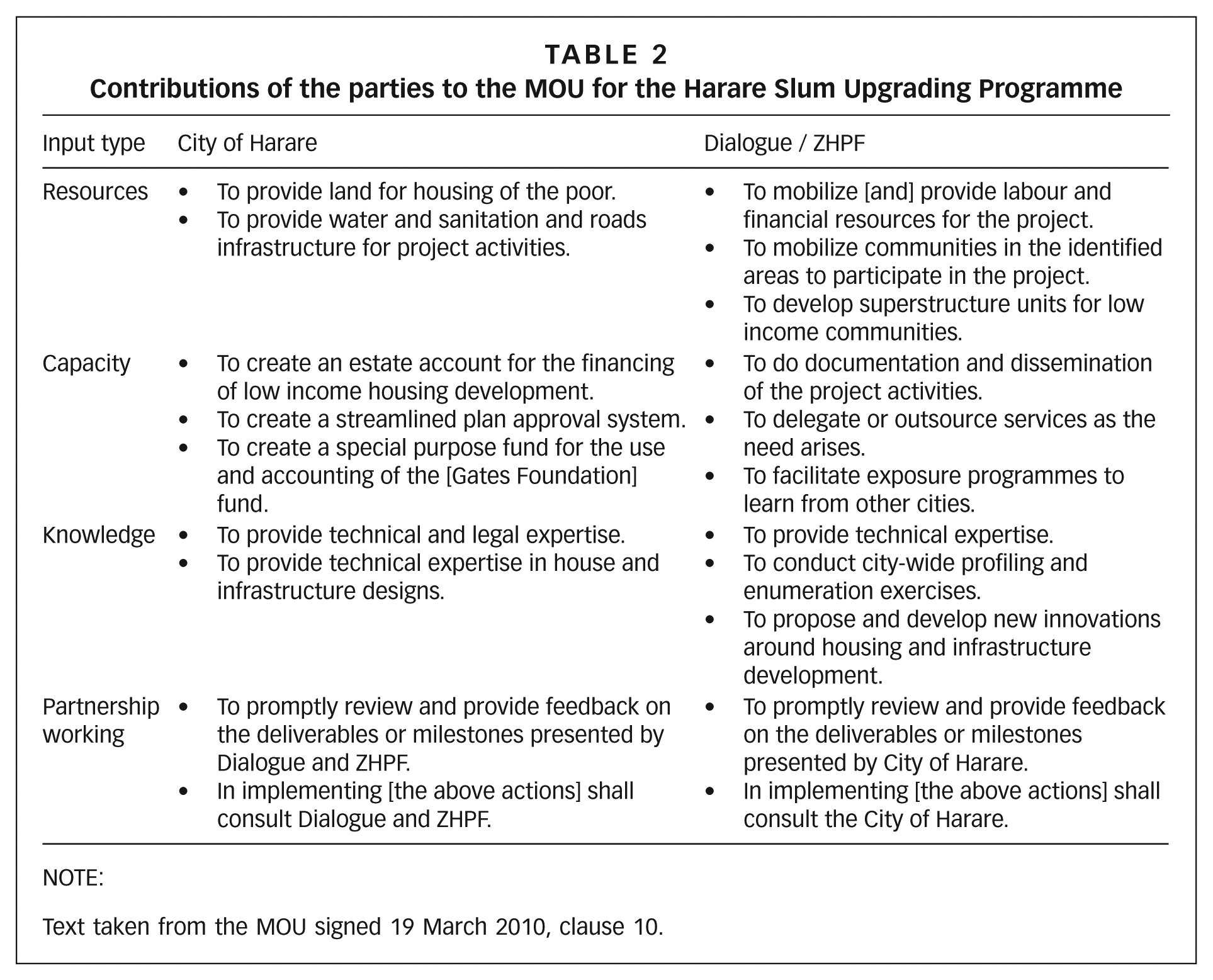
An important part of the MOU is a section entitled “shared principles”, which defined the relative positions and behaviours of partners to HSUP (Box 1). The articulation of principles is noteworthy both because these defined a cooperative space for the co-production project, and because they reflected the condition of “normal” relationships (outside of the project) between low-income citizens and the City Council in Harare. The emphasis on inclusion, mutual respect, and the avoidance of political bias in the MOU text highlight the concerns of communities and the City Council that the project could be manipulated to partisan ends or used punitively by government against the poor or to justify political interference in local decision-making. The inclusion of shared principles in the MOU underlines the importance of building trust to realize the full potential of stakeholder contributions to the project. However, the limitations are also clear as the MOU did not fundamentally alter institutional conditions outside of the project or more broadly reduce the vulnerability of the urban poor in Harare. While setting a basis for conduct within the project, the MOU reinforced the primacy of the state in matters of urban management and planning.
Shared principles identified in the MOU for the Harare Slum Upgrading Programme
NOTE:
Text taken from the MOU signed 19 March 2010, clause 7.
Despite the primary function of the MOU being to specify operational management arrangements and the responsibilities of partners to provide inputs to the project, the opportunity was used by ZHPF and Dialogue to articulate their entitlement to fair treatment and a “right to the city”. Drafting the MOU was an iterative process, with wording suggested by Dialogue and ZHPF and reviewed by the lead City Council housing and legal service officers to generate an agreement that could be signed by all parties. For ZHPF and Dialogue, constructing the MOU provided a means to bring urban land and housing issues in Harare to the fore and encourage action by the City Council to address poverty and unmet housing need. These broader objectives are made clear in the preamble to the MOU, which states that parties to the agreement recognize “the importance of adequate and secure housing in the improvement of the lives of the urban poor” and that there are people who “struggle with issues of poverty, homelessness, inadequate shelter, lack of safe water and sanitation, ill-health and overcrowding” in Harare. The MOU provided a basis to formally recognize these important issues and established a vehicle for collaborative approaches to addressing them.
The MOU defined a management structure for HSUP, and set terms for delivering the upgrading project and associated processes for decision-making among the partners. Arrangements included the formation of a Project Management Committee (PMC) to oversee the operation and delivery of the project. The PMC had eight members, four from the City of Harare Council and four from the community (two from Dialogue and two from ZHPF). Terms for the frequency of meetings, monitoring of performance and reporting arrangements were set out, with members of the PMC responsible for communicating information to their respective groups and coordinating the inputs needed for delivery. Management of the Dzivaresekwa Extension project was undertaken through regular site meetings attended by representatives of the housing and engineering departments of the City Council, Dialogue and ZHPF. The meetings were open and attracted many local residents interested to hear about progress and needing to voice concerns. The PMC reported to the Mayor of Harare, whose leadership role ensured the ongoing support of the City Council.
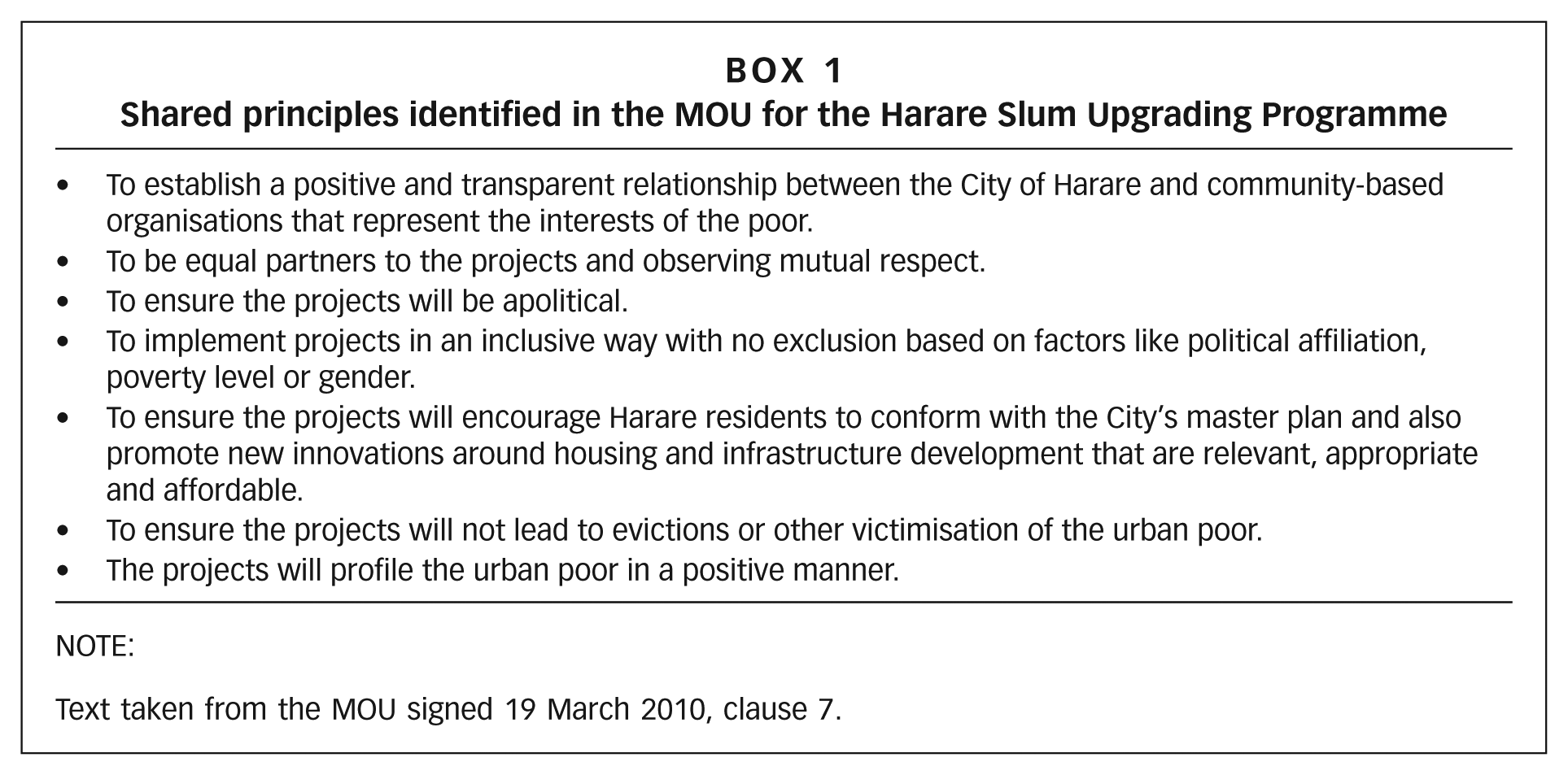
Alongside establishing the principles of co-productive working, the MOU also defined the contributions and responsibilities of the parties. As detailed in Table 2, inputs were specific and aligned to the capabilities of the City Council and the community partners respectively. This negotiated disaggregation of inputs and functions maximized the potential contributions available from the partners, while also respecting differences that included the statutory responsibilities of the City Council to determine land use policy, and the access to international networks available to Dialogue and ZHPF through their affiliation to SDI. The inputs in Table 2 have been categorized into four areas – resources, capacity, knowledge and partnership working – to allow for comparison. Table 2 highlights the components of a collective resource able to deliver housing upgrading that respects the distinctive contributions of partners. For example, the City gave permission to use land, and provided technical and legal advice and the management systems to account for grant funding. The community contributed labour and finance for housing construction, organizational capacity to mobilize the urban poor, and access to international networks. In defining these contributions, through the MOU, they became collectively available to the project partners and provided the resource base for delivery.
Contributions of the parties to the MOU for the Harare Slum Upgrading Programme
NOTE:
Text taken from the MOU signed 19 March 2010, clause 10.
Comments from the City of Harare Council indicate that the upgrading of Dzivaresekwa Extension would not have taken place without the Gates Foundation grant income,(59) which contributed to infrastructure investment (water, sewer and roads) to connect Dzivaresekwa Extension to existing city trunk networks and which met associated staffing and equipment costs. Grant income was combined with expenditure by the City Council and with the labour and savings of Dzivaresekwa Extension residents to fund housing construction. The grant was a vital contribution to the upgrading, but also persuaded the City Council to prioritize funding allocations to Dzivaresekwa Extension and created a reason for the City Council and the community to work together. The City Council reported that the MOU process changed the relationship with ZHPF and Dialogue: “the agreement [MOU] recognizes both parties as authorities and the need to work together. Previously, the City would not have recognized them [ZHPF and Dialogue] as an authority because whatever they would have been doing would have been considered illegal.”(60) For the community, Dialogue commented: “the resources from Gates played a very big part in accelerating the building of relationship between ourselves and the City”.(61)
VII. Discussion
As suggested in this case study, co-production relies on knowledge-building, negotiation, compromise and trust. Trust is a necessary condition, for both local government and organized communities, to commit to working in ways that may appear at odds with prior experiences of public service management. The Gates Foundation funding became available at a point where ZHPF and Dialogue had been cultivating a relationship with the City of Harare for some 13 years and had delivered small-scale sanitation and housing projects that demonstrated the potential of co-production to address urban development issues. Nonetheless, HSUP was a step change in collaboration, not least because of the requirement to test and formalize the terms of joint working through an MOU. The following subsections critically examine the use of the MOU as a means of making space for co-production.
a. Making space to redefine power relations
The experience of co-production in Harare has resulted in small gains that created space for engagement and negotiation to improve conditions in low-income settlements. These gains enabled Dialogue and ZHPF to strengthen their position in advocating for investment in low-income areas; utilizing the financial and human resources of community members. For low-income residents, active engagement with the City Council shifted perceptions: “I want to believe that from 2005 things have changed. The City Council maybe has now realized the mistakes that they made. I think that they are now supportive in that they are giving us land on which to live and to develop, having realized themselves that they cannot afford to do it.”(62) The changing tone of the relationship has been important for the City Council too. A senior official commented that while “the law has not been changed, we are now able to discuss the poor; they can freely now approach the officers and say that we are here, whereas in the past they would run away”(63) through fear of violence.
Within the terms of HSUP, the MOU creates a temporary framework to secure the involvement of community members in decision-making processes related to the project. A small example demonstrates the functioning of the MOU: PMC minutes from June 2012(64) highlight community concerns about dust being raised by heavy vehicles moving through the settlement and the need to prioritize completion of road construction. The city representatives agreed to take responsibility for resolving this problem through Council budgets. In this instance the PMC provided a structure for discussion, community concerns were legitimized, and there was a mechanism to gain access to City Council resources – all in a way that would not typically be possible for residents of low-income settlements. As highlighted by other examples of co-production,(65) creating a stable structure to negotiate the resolution of problems is vitally important to build trust and reciprocity.
The funding agreement with the Gates Foundation provided a strong incentive on all sides to make the partnership work. Accordingly, Dialogue and ZHPF took a pragmatic approach recognizing, as Mitlin suggests, that “citizens have to build their relations with more powerful structures that function very differently (being more formalized) and that protect and promote different values and interests”.(66) The MOU enabled differences to be managed in order to capture funding and technical support and to mobilize latent human and financial resources from within low-income communities. The use of ZHPF savings schemes and labour was a vital contribution to co-production and symbolically important in defining the community’s place as a development partner to the City Council. Highlighting the importance of the community’s independent financial resources as a prerequisite for co-production, a Dialogue interviewee noted: “once we demonstrate these resources, the City is more likely to be interested in us. Because if we just go to them and say we are poor and we have nothing [they would reply] ‘why should we be talking to poor people who are expecting us as a local authority to do everything for you?’”(67)
While the case study indicates a reduced sense of the overt threat of violence to low-income communities, which has helped to bridge the “divide” between settlement residents and City Council officials involved in the project, it can also be seen more critically as a form of governmentality. City Council officials(68) and a former senior politician(69) take the view that the tactics of Operation Murambatsvina exacerbated housing problems in Harare. The failure of enforcement as a strategy to manage urban informality has arguably encouraged the City Council to consider other forms of control, including the engagement of community groups, such as ZHPF, in the delegated management of some marginal public spaces, as an alternative form of urban governance. A senior City Council official commented: “local authorities are not able to marshal the resources to provide housing for all of these people. […] The people able to look after the environment better are those already in those areas; you just have to empower them.”(70) From this perspective, while communities benefit from a reduced risk of eviction and new terms of relation with the City Council, the underlying structures of authority and the subordinate position of the urban poor remain, at best, unchanged. More insidiously, this could be seen as a version of public governance where some responsibilities for meeting the cost of urban management are transferred to sections of the community least able to afford them.
The impact on power relations can also be observed in the discursive position of the urban poor in Harare. Within the terms of the project, the MOU provides an effective structure and a space for dialogue and negotiation of inputs to co-production, yet communities face a major challenge in translating this into changed political attitudes towards the urban poor. Similar to SDI affiliate practice in South Africa(71) and in India,(72) ZHPF and Dialogue aimed to create precedents for more inclusive approaches to settlement upgrading, seeing the need to counter negative representations of low-income populations as key to negotiations for ongoing service investment by the City Council. The core message of organized communities in Harare was: “we are the people that are not homeless and hopeless, but homeless and hopeful”.(73) The improved relationships in Harare show some progress through the project MOU, but also demonstrates the continuing difficulty of institutionalizing community-led activity as a form of development valued by the state.
b. Making space for experimentation
Using co-production as a framework to make space for innovation is particularly relevant in contexts like Zimbabwe where the public sector has become locked into patterns of behaviour due to political conflict or insufficient levels of revenue or human capacity. In these situations, projects offer a “safe” environment to examine operational weakness in ways that may not be practical when looking at whole service areas. HSUP was intended to generate specific improvements in the housing and environmental conditions of “slum” settlements in Harare, but it was also experimental in seeking to create opportunities for “city governments and the urban poor to work together to find solutions that will address their common problems”.(74)
Local partners saw the project as a space to explore new approaches to longstanding urban management issues. A City Council official commented: “it is a test case, if it becomes very successful it can be duplicated elsewhere”.(75) For the community, HSUP created an opportunity to transform the relationship with the City Council: “if it wasn’t for the Gates funds, I wouldn’t see ourselves being together where we are with them”.(76) While some motivations differed among parties to the MOU, there was a shared interest in understanding the efficacy of co-production to address the challenges of urban housing. Arguably, the difficult political and economic conditions in Zimbabwe provided an incentive to experiment, to both secure the funding and international profile associated with the Gates Foundation, but also to stimulate new thinking and approaches to difficult development issues. In the opinion of Dialogue, an external impetus was necessary to stimulate experimentation because of the lack of organizational confidence within the City Council to innovate and deliver required change.(77)
The project provided a self-contained “bubble” within which the City Council could experiment without significant risk or need for large-scale reform of existing regulations. The MOU provided the framework for activities testing new forms of collaboration, but did not undermine the authority of the City Council. For example, the Dzivaresekwa Extension project was approved as an exception to planning rules and building standards: construction of housing on site began before basic service infrastructure was in place, contravening planning regulations. The exception was seen by a senior planning officer as a way to learn and try out different responses to the housing need: “that’s the whole beauty of planning participation – you air your view, I air my view and we discuss and debate and we take what we think is the most appropriate”.(78) Risk was also managed in respect to scale, with the project taking place in a single settlement of some 480 units.(79) Operating at a small scale gave the City Council confidence that ZHPF and Dialogue could effectively deliver the financial and labour inputs needed to meet their project obligations.
Making space for experimentation through co-production, by creating exceptions to rather than changing rules, is problematic. The use of this kind of “exceptionality measure” to secure investment(80) or permission for development schemes that would otherwise be rejected(81) is legitimately criticised for bypassing planning regulations and agreed processes. However, it can be argued that exceptions in Zimbabwe were used in a progressive way to experiment with new managerial approaches and partnerships, while limiting risk. In this adverse context, the project structure and MOU allowed public officials to work in concert with mobilized communities to test and adapt institutionalized practices of urban development that would not have been possible without defining a space for co-production. While the scope for HSUP was limited, learning from the project has subsequently informed new partnership activity aimed at expanding opportunities for the co-production of settlement upgrading.
VIII. Conclusions
The co-production of urban development offers a range of possibilities for addressing the challenges facing states and communities to improve access to housing and basic service infrastructure. Establishing co-production projects releases latent resources and the commitment of partners to collaborative initiatives. It also provides a framework to change the terms of relationships between state and community actors. This model seems to fit the current enthusiasm for “inclusive development” and provides a means to augment the resources and capacity of city and national governments. But creating co-production is complex: it depends on making spaces for dialogue and deliberation to manage unequal power relationships, shifting the discursive position of low-income communities and creating bonds of trust between participants that may be more accustomed to adversarial relations. It is vitally important that such spaces are defined, as in the case study MOU, and have the full endorsement of participants. While benefits may initially be restricted to co-production projects, there is potential for wider impact on institutional relationships.
The Zimbabwe case study demonstrates how the process of agreeing an MOU created space for co-production in a difficult political environment. While the initiative relied heavily on creating exceptions to rules in order to navigate institutional conditions, the experience had a demonstrable impact on the attitudes of City Council officials towards low-income communities and on the confidence of ZHPF members and Dialogue to push for more inclusive approaches to urban development. The project had direct benefits for low-income communities, including approval for 480 homes and settlement upgrading. More significantly, it made space to affect the thinking of City Council officials: “this project in Dzivaresekwa Extension has made us wear the shoes of the people that are in informal settlements […] the solution is not really moving people, the solution lies with the people themselves; engaging with them”.(82) The formalization of relationships through an MOU marked a shift to more structured collaboration between communities and city government and contributed to a deeper understanding of the challenges of urban poverty.(83)
The partners in Harare have built on their experiences to develop the model of co-production and extend collaborative investment to other low-income settlements in the city. They have refined the terms of partnership work, as articulated in the MOU, to create a more specific legally enforceable agreement involving ZHPF, Dialogue and the City Council to direct public and donor funding, with community savings funds, towards the co-production of housing and infrastructure upgrading. Learning from HSUP has informed the redesign of the partnership from one where resources are aligned but separate, to one where inputs are pooled within a trust. The new model has benefitted from the experiences of collaboration and experimentation to realize some of the potential of partners working together.
Footnotes
Acknowledgements
I would like to thank the participants in Harare who generously gave their time to this research, and also the editors of this journal and three anonymous reviewers for their helpful comments and advice.
Funding
The research was funded by an Economic and Social Research Council CASE studentship [ES/J500094/1] with the International Institute for Environment and Development.
1.
Sharp (1980);  .
.
42.
47.
51.
55.
These were Harare, Lilongwe, Luanda, Monrovia and Cairo.
58.
Dialogue on Shelter enumeration fact sheet, July 2013.
59.
Interview with a senior engineering services officer, City of Harare Council, November 2013.
60.
Interview with a senior housing officer, City of Harare Council, February 2013.
61.
Interview with a senior manager, Dialogue, May 2013.
62.
Interview with a ZHPF member, Harare, July 2013.
63.
Interview with a senior housing officer, City of Harare Council, February 2013.
64.
Project minutes for 7 and 22 June 2012.
65.
See the earlier discussion of Joshi and Moore (2004) and at the end of Section II.
68.
Noted by several City Council officers from the housing, planning and architecture departments during interviews.
69.
Interview with a former City of Harare Council senior politician.
70.
Interview with a senior planning officer, City of Harare Council, May 2013.
73.
Interview with a ZHPF leader, May 2013.
74.
See reference 57.
75.
Interview with a senior planning officer, City of Harare Council, May 2013.
76.
Interview with a ZHPF leader, May 2013.
77.
Interview with a senior manager, Dialogue, February 2013.
78.
Interview with a senior planning officer, City of Harare Council, May 2013.
79.
Interview with a senior architect, City of Harare Council, May 2013.
82.
Interview with a senior planning officer, City of Harare Council, May 2013.
83.
Interview with a senior manager, Dialogue, May 2013.