




Abstract
In 2013, over 1,700 local governments in more than 40 countries were practising participatory budgeting (PB), which entails citizens meeting to agree on priorities for part of the local government budget for their neighbourhood or the city as a whole, and helping to oversee project implementation. This paper reviews PB in 20 cities in different continents, ranging from small urban centres to Chengdu, China, with over 17 million inhabitants, and examines 20,000 recently funded projects worth over US$ 2 billion. It finds that PB has contributed significantly to improving basic service provision and management, with projects that are usually cheaper and better maintained because of community control and oversight. While in most cases PB improves governance and the delivery of services, it does not often fundamentally change existing power relations between local governments and citizens. The paper also discusses challenges and solutions for PB’s effectiveness and scaling up.
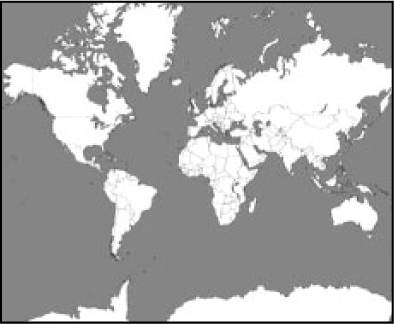
I. Introduction
Over the last 25 years, the implementation of some form of participatory budgeting (PB) has expanded from a couple of local governments in Brazil to at least 1,700 local governments in over 40 countries. Here, citizens meet to agree on priorities for part of the local government budget for their neighbourhoods and help oversee the projects that they prioritize. Drawing on analyses of PB in 20 urban areas and on interviews with key informants, this paper reviews the priorities set and the scale of the investments in these places. More than 20,000 projects are analysed here, representing investments totalling over US$ 2 billion.
This paper(1) uses the definition of PB coined in Porto Alegre, Brazil by Uribatam de Souza, one of PB’s initiators: “It is a mechanism (or a process) by which the population define the destination of part or the totality of public resources. The participatory budgeting is a process of direct democracy, universal and voluntary, through which the population can discuss and define the public budget and policies. PB combines direct democracy and representative democracy.”
Most of the existing literature and research on PB focuses on its political and social contributions to social justice and participatory democracy. This paper assesses its tangible everyday benefits for citizens and primarily the contribution to the delivery and the management of basic public services. For this purpose, teams in 20 cities from Africa, Latin and North America, Europe and Asia were invited to document this aspect of their experience (Annex 1).
This paper draws on analyses of these 20 experiences to consider how PB was organized, who was involved, and the impact on relationships between citizens and local governments. It reviews political and social changes as well as the tangible everyday benefits for citizens, considering how the PB process allows citizens to prioritize basic services, the funding available (locally and externally), the efficiency in its use and the changes to local government, for instance in transparency, accountability and modernization. It also discusses cases where PB mobilized additional resources – including those contributed by citizens and communities in implementation and maintenance. Challenges to PB’s effectiveness are discussed, and how these might be overcome to increase its scale and scope.
The analysis concentrates on seven categories of basic services:(2)
water supply, including water extraction and treatment; also public provision (standpipes, kiosks) for those without water piped into their homes;
sanitation, including connection to sewers, the emptying of pit latrines or septic tanks, and public toilets;
storm and surface water drainage;
solid waste collection, treatment and disposal;
public transport and mobility;
roads and paths; and
electricity and energy (when this is a local responsibility).
The analysis also includes infrastructure and services for local economic development, neighbourhood-level facilities, district health facilities, new settlements, education facilities and parks, as these were important for PB in some of the cities.
II. Research Methods
The 20 cities chosen for this study are not fully representative of the breadth and depth of experiences of more than 1,700 PB processes, but they represent a large variety of cities or urban districts in terms of population, country and region (Table 1), and many innovative and consolidated processes. Taken together they are illustrative of the most advanced PB processes worldwide.
Participating cities per region and number of inhabitants
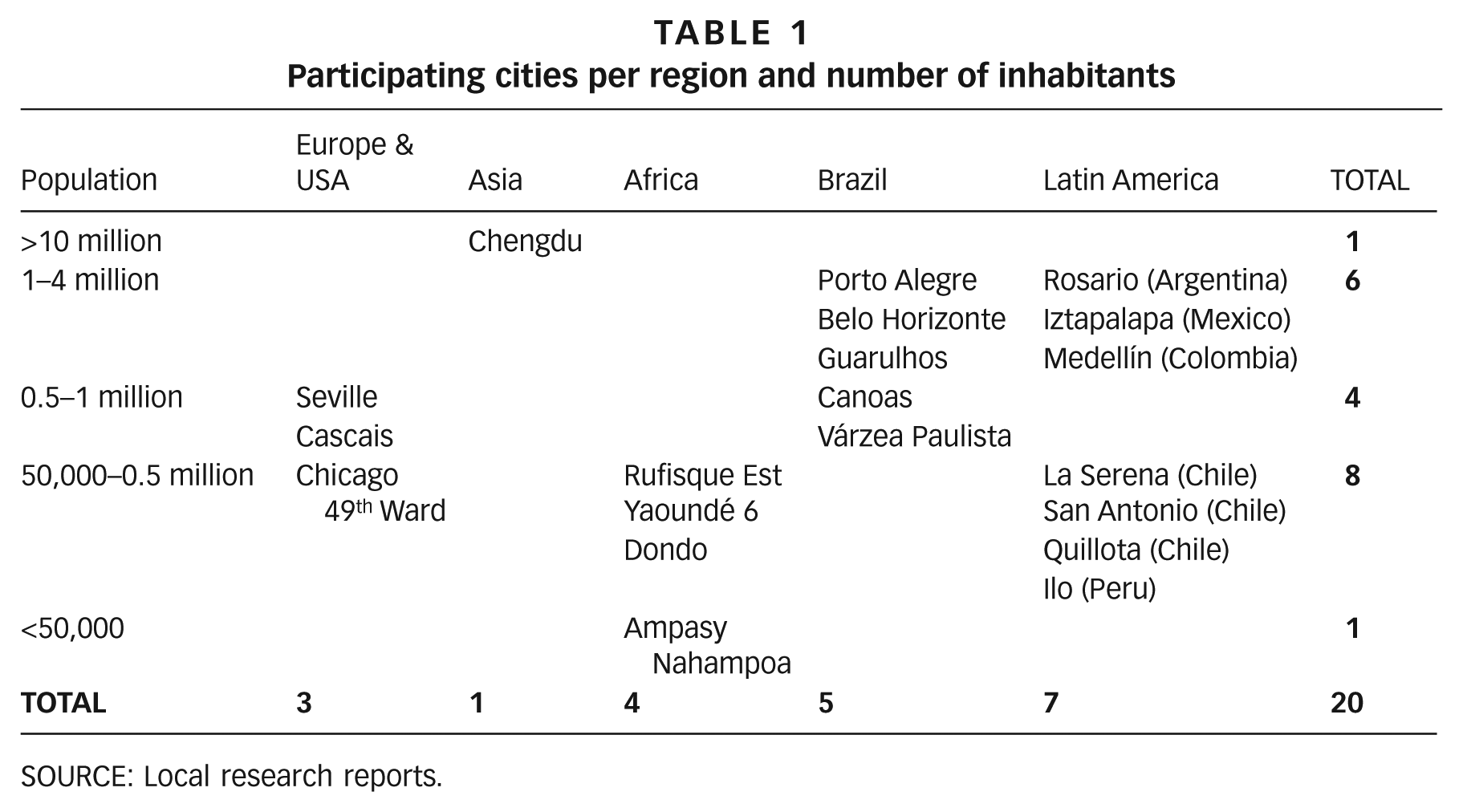
SOURCE: Local research reports.
To establish PB profiles, local researchers in each city used an extended questionnaire,(3) the same one used in research in the early 2000s on 30 cities, and since then in a large number of cities.(4) The profiles cover four dimensions: financial and fiscal; participation; governance and legal framework; and spatial / territorial, as well as an analysis of the contribution of PB to the provision and management of the basic services noted above. The data collection covered at least three years and thus included different PB cycles. The author of this paper also interviewed 12 leading PB specialists and practitioners from local governments, NGOs, grassroots groups, universities, research centres and local government associations.(5) For each city, relevant literature and documentary films were also reviewed.
III. The 20 Cities
The 20 cities, located across Latin America and Africa with one each from Asia and North America and two from Europe, ranged in size from fewer than 10,000 inhabitants (Ampasy Nahampoana) to over 17 million (Chengdu). Not all are “cities” in terms of size or administration. They include:
a rural municipality on the outskirts of a mining city: Ampasy Nahampoana, Madagascar;
a relatively small urban centre: Dondo, Mozambique (70,000 inhabitants);
cities at the periphery of capitals and metropolises: Cascais within the Lisbon metropolitan area in Portugal; Canoas in the Porto Alegre metropolitan area in Brazil; Guarulhos and Várzea Paulista in São Paulo Metropolis in Brazil; and Quillota and San Antonio, in the Valparaiso metropolitan region in Chile;
regional capitals of different sizes: Rosario in Argentina, Medellín in Colombia, Ilo in Peru, Seville in Spain and La Serena in Chile;
a large metropolis: Chengdu, China;(6) and
sub-municipal elected districts: Delegación Iztapalapa in Mexico City Federal District, and communes d’arrondissement of capitals: Yaoundé Commune 6 (Cameroon), Rufisque Est (Dakar, Senegal) and Chicago 49th Ward.
About half the PB funding went to projects addressing such basic services as water, sanitation, drainage, solid waste collection, public transport, roads and footpaths, and electricity where relevant. Almost all the rest went to infrastructure and services for local economic development, neighbourhood-level facilities, district health facilities, new settlements, education facilities and parks. In the case of Chengdu, which had over 40,000 PB-supported projects, only 10 per cent were analysed.(7)
The distribution of cities by region corresponds roughly to the geographical distribution of PB in the world: 3 in Europe and North America; 4 in Africa; 1 in Asia; and 12 in Latin America, of which 5 are in Brazil. Figure 1 gives the timeframe for PB in each city – when it started and how long it has lasted.
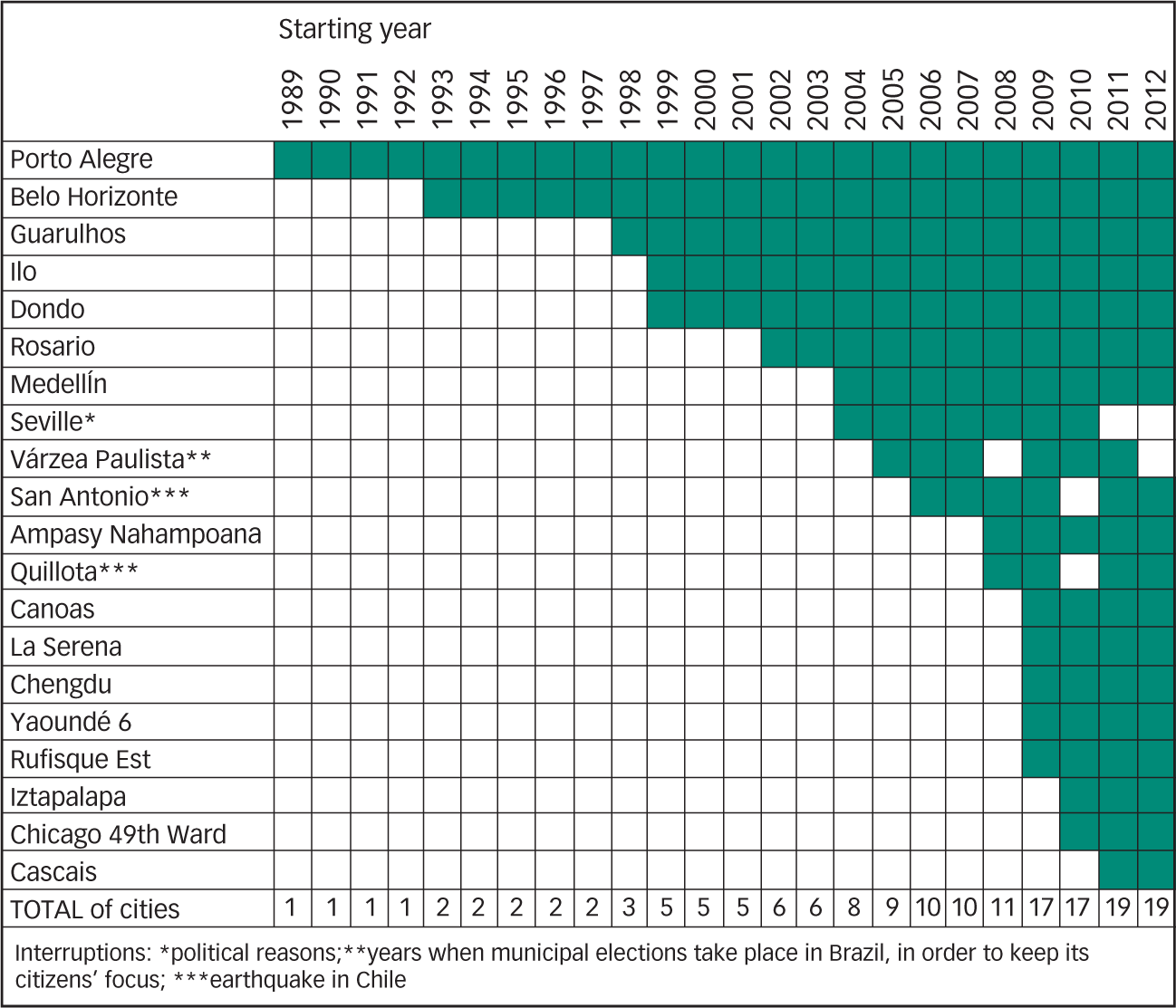
Timeframe of PB in 20 cities
The 20 experiences illustrate the various phases of expansion of PB from Brazil to the rest of the world. Porto Alegre was the first city to consolidate its process in 1989. The first expansion within Brazil was to Belo Horizonte in 1993 and Guarulhos in 1998. Dondo in Mozambique (1999), Ilo in Peru (1999) and Rosario in Argentina (2002) pioneered the expansion outside Brazil. Sometimes, as in the case of Ilo, cities designed their own rules, without much reference to Porto Alegre. Other cities such as Seville, Spain and Medellín, Colombia can also be considered part of the first phase of dissemination beyond Brazil in the late 1990s and early 2000s.
Subsequent scaling up took place in Brazil in cities such as Várzea Paulista (2005) and more recently Canoas (2009). The growing number of PB experiences in other regions including the pioneers in Chicago’s 49th Ward (2010) and Chengdu, China (2009). Some experiences were interrupted for political reasons (Seville, 2012) or, in Quillota and San Antonio, Chile, because of the impact of a tsunami and earthquake in 2010.
IV. Results and Achievements
PB is an important shared instrument among local governments but its priorities in the 20 cities were very specific to each locality. The 20,000 projects, funded through 74 PB annual or bi-annual cycles, show the importance of PB as a mechanism for municipal service delivery. For most of the cities, the projects analysed cover three years; in some, they cover more: six years for Belo Horizonte (2009–2014), eight for Seville (2004–2011), and nine for Porto Alegre (2004–2011). In this last case, we considered all projects implemented since 2004 as well as projects planned for the next two years. For a few cities we looked at fewer than three years.(8)
The first and probably most important finding is that PB
A second finding is that the seven main categories of basic services represent over a third of all projects and more than half of total spending. Thousands of basic services projects are implemented each year as a result of PB processes.
A third finding is that the proportion of basic services projects varies considerably between cities. Between 2009 and 2011, basic services projects represented 90 to 100 per cent of the total in four cities; 50 to 80 per cent in another four; 20 to 40 per cent in five; and 10 to 20 per cent in six. These projects tend to be more numerous in poor cities and more recent PB cities, where basic services remain a priority. Many participating cities, like Porto Alegre or Belo Horizonte, voted heavily for basic services projects in their early years and, when needs were met, shifted to other priorities. Most cities with a low percentage of basic services projects (for instance the three Chilean cities) focus on projects not within those seven categories.
By far the most frequently funded basic service projects through PB
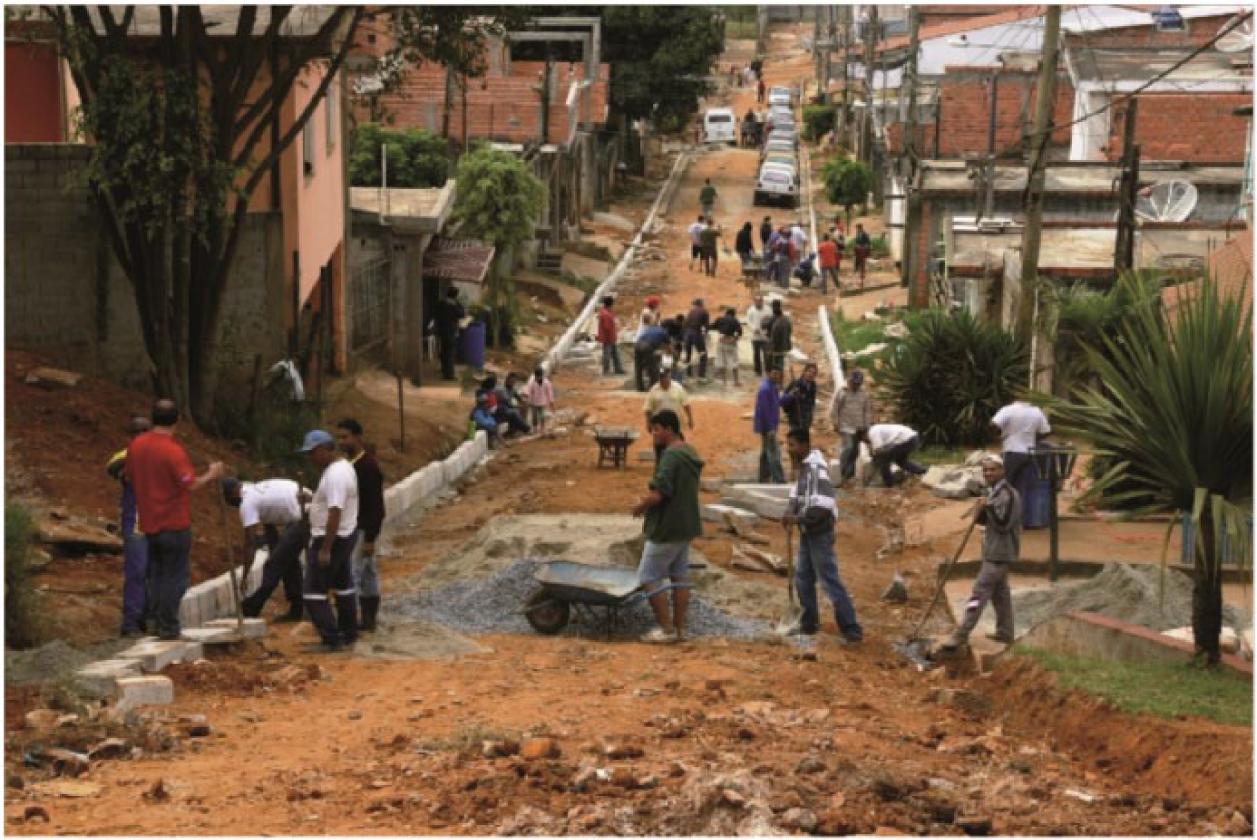
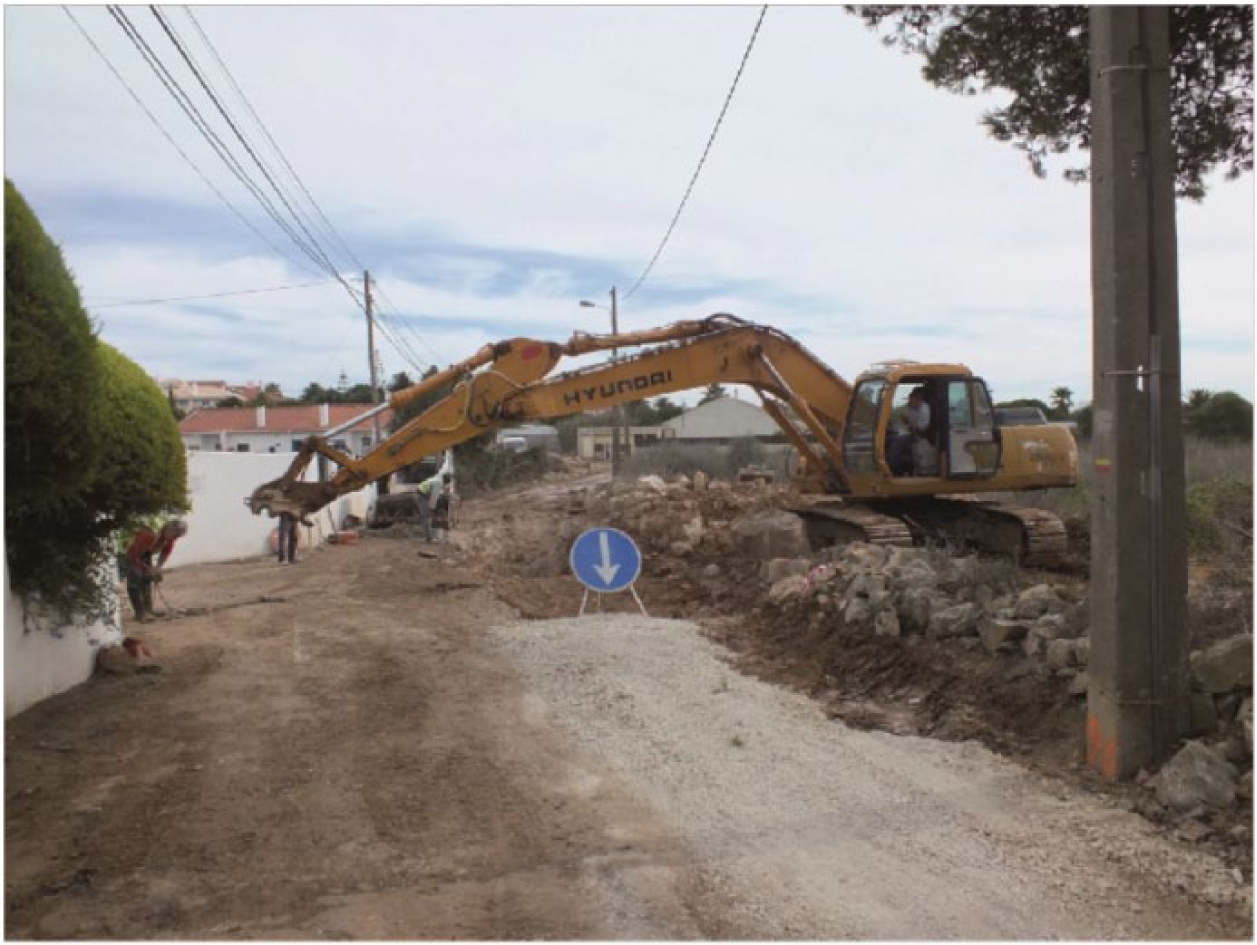
A good example of a PB-funded project with community participation at the implementation stage, allowing more paths to be paved than the conventional bidding manner
Drainage channel approved in 2011 and under construction in 2012
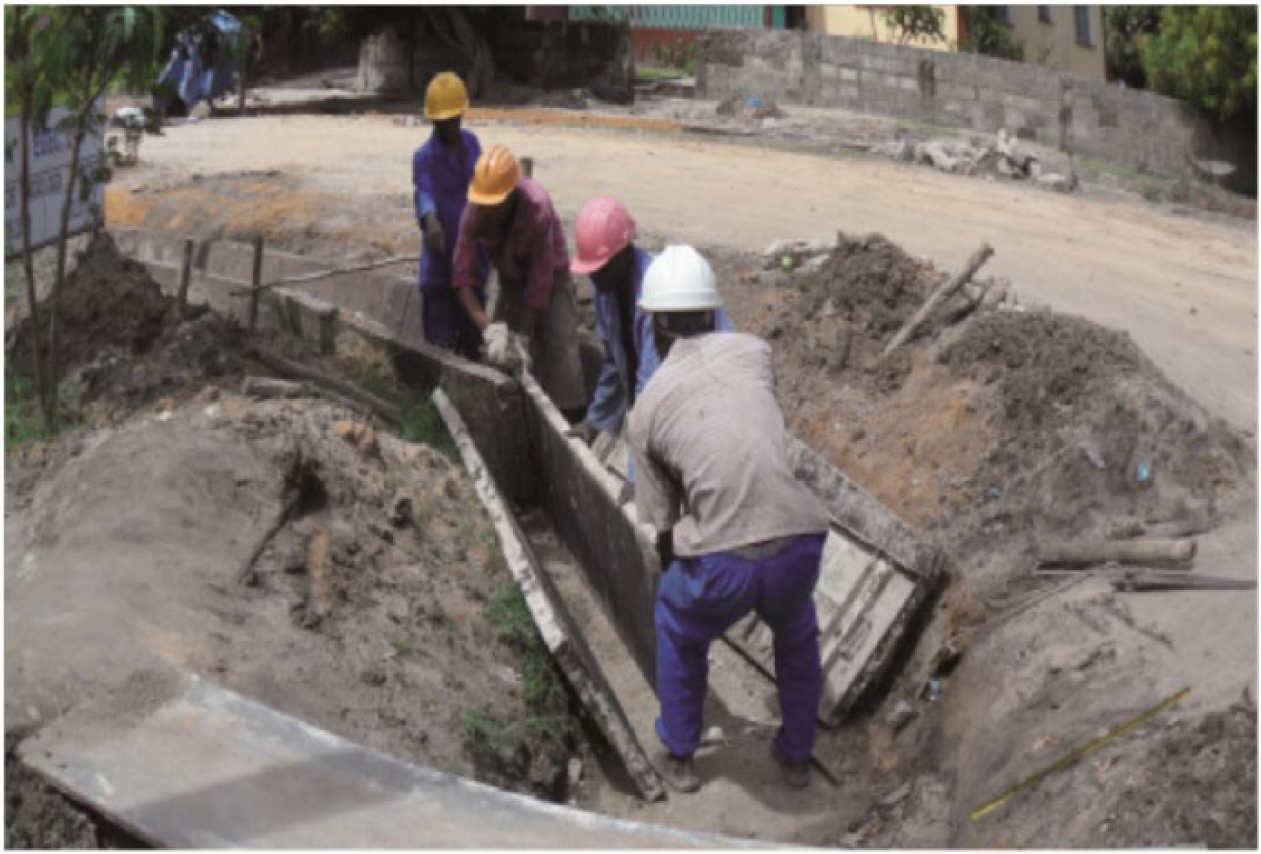
Various kilometres of drainage channel were voted for and built through PB processes in the central neighbourhood (this picture) and in peripheral ones
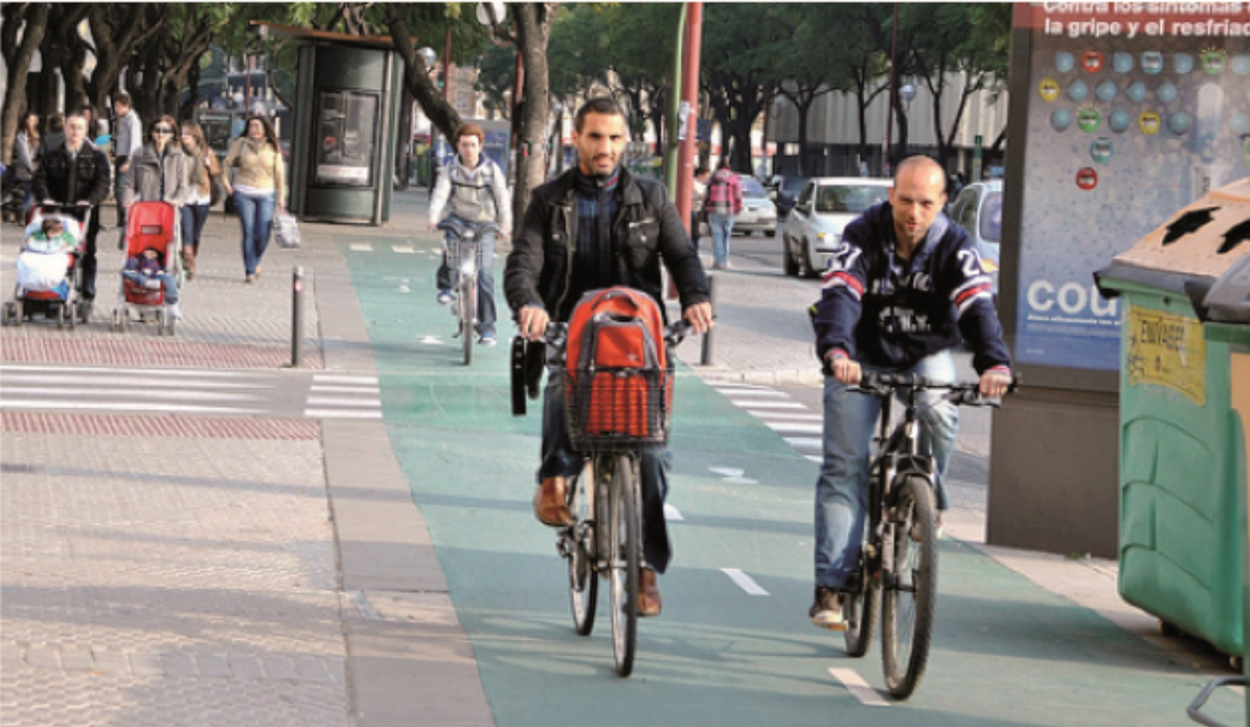
Carril bici (cycle way) in Seville
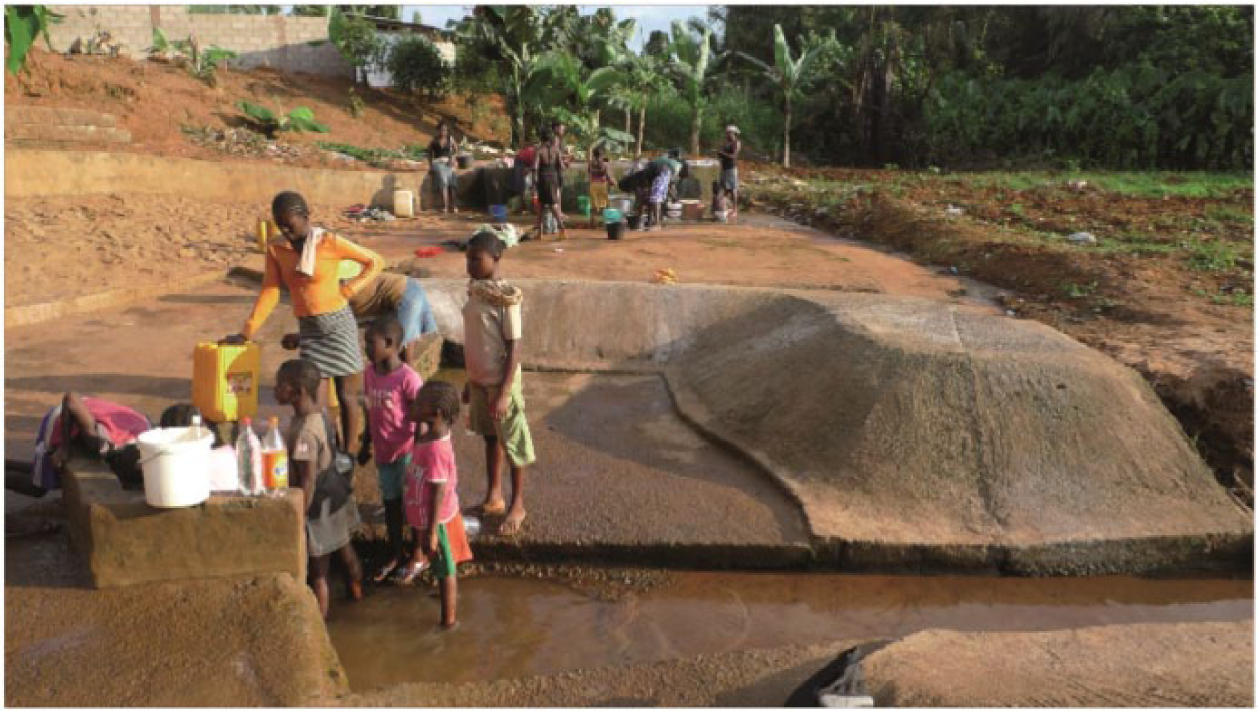
This PB-approved project brought the first water tap serving a community of 50,000 inhabitants
Some cities, such as Porto Alegre, have funded all seven categories; others have funded six (Guarulhos and Dondo). Some cities give priority to only one or two – for instance Rufisque Est (sanitation and public lighting), Várzea Paulista (roads and paths), Quillota (energy and roads and paths) or Ilo (sanitation and water supply).
Although PB is an instrument used all over the world, it still has the capacity to generate projects that fit specific local situations and needs, reflected in the great variety in what is actually done within each of the basic service categories. Initiatives may be very immediate, simple basic services projects or projects with considerable technical complexity. People’s satisfaction is not linked to the project’s value, but to the extent that it responds to their requests. PB-approved projects can be quite limited in scale and cost, for instance providing a communal tap (Photo 6) or small bridge over a ditch. The significance that projects hold for people emerged from interviews as well as the broader analysis. For cities with longer PB experience and substantial investment capacities, the initiatives can be much larger (Photo 7).
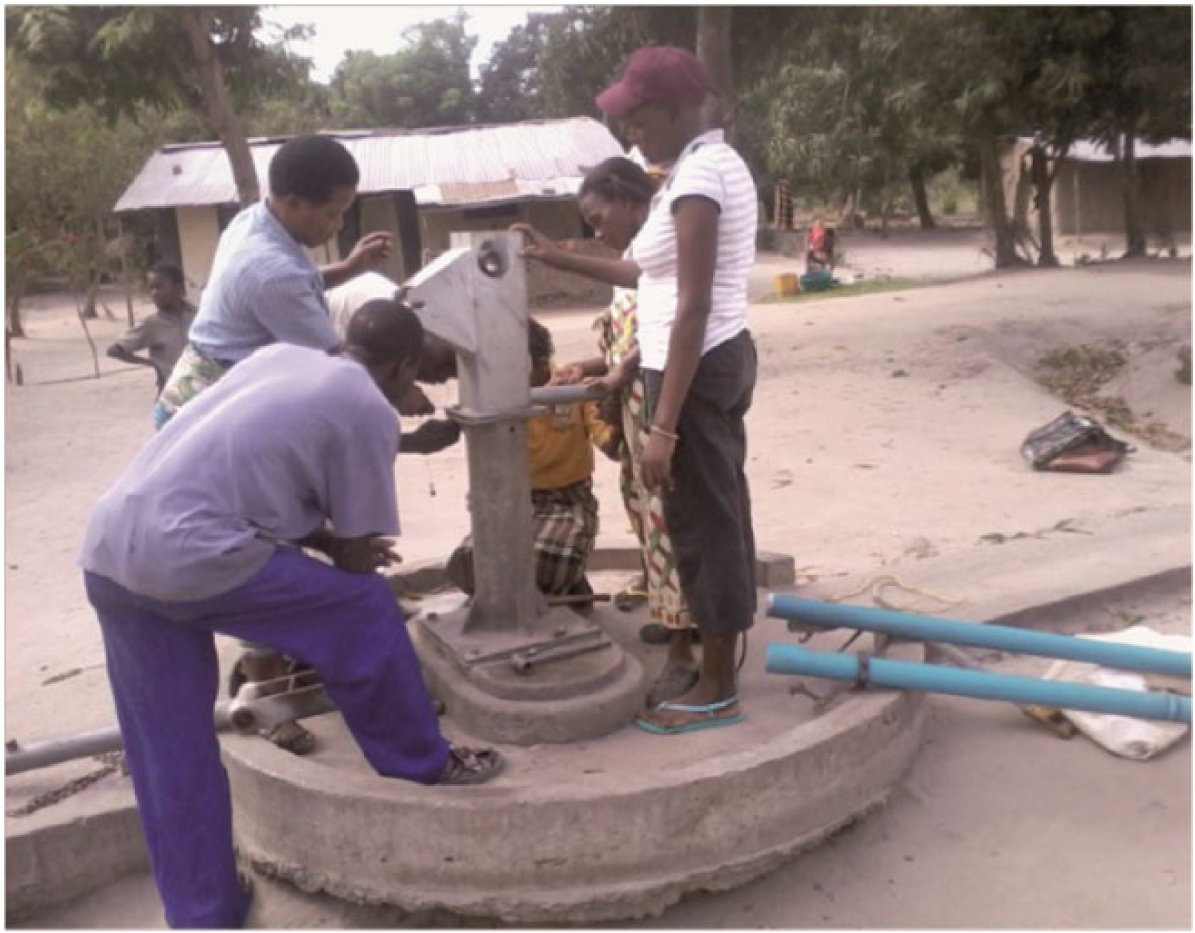
Various water supply facilities were installed as a result of PB process over the years
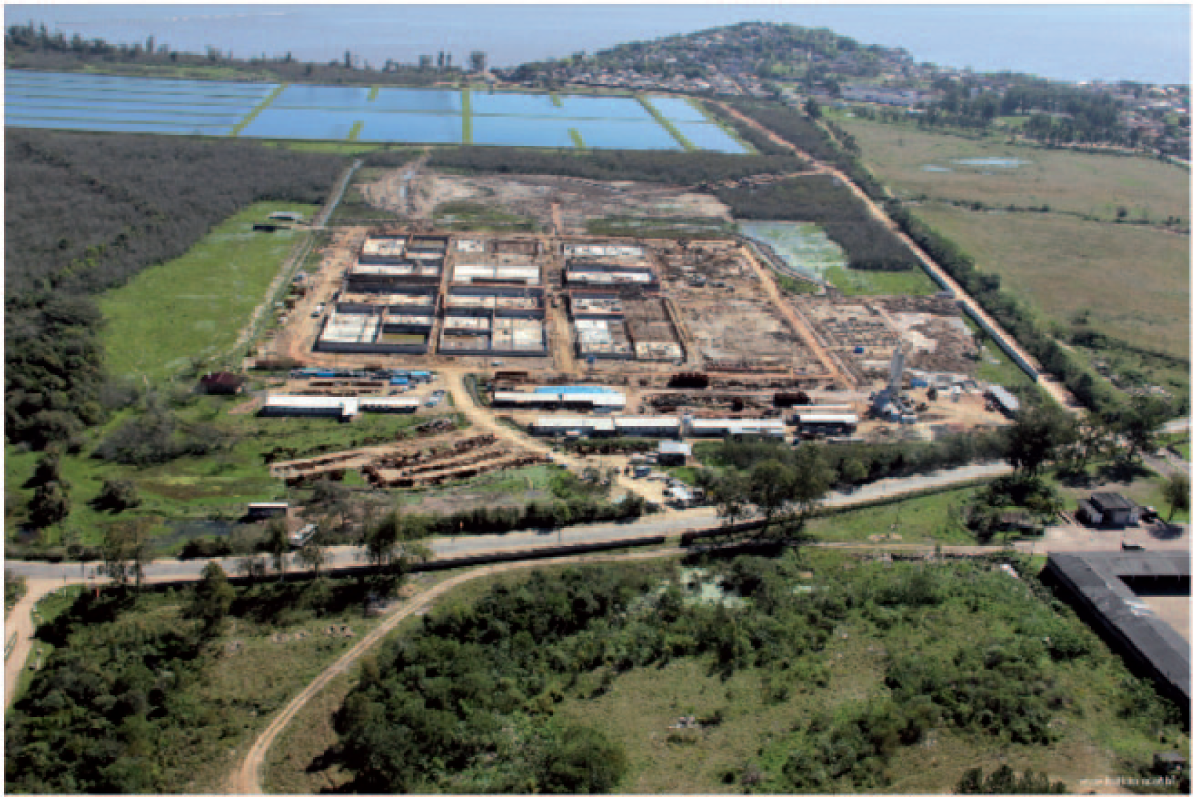
Water treatment plant voted for as part of the PB process
V. Municipal Finance and Resource Mobilization
a. Differences in municipal budgets
In some cities, PB opened a budget line for social services that did not previously exist. In at least three cities (it may have happened in more), PB helped to increase fiscal and tax revenues. PB also generates financial and non-financial resources beyond the strictly defined public budget – including community resources and voluntary work. In some municipalities, matching funds were negotiated from other tiers of government. Some cities with long experience of PB have negotiated support from international aid agencies while in two, private enterprises were funding some components. Before exploring these sources in more depth, the very large differences in the budgets and investment capacities of the 20 cities are considered (Figure 2).
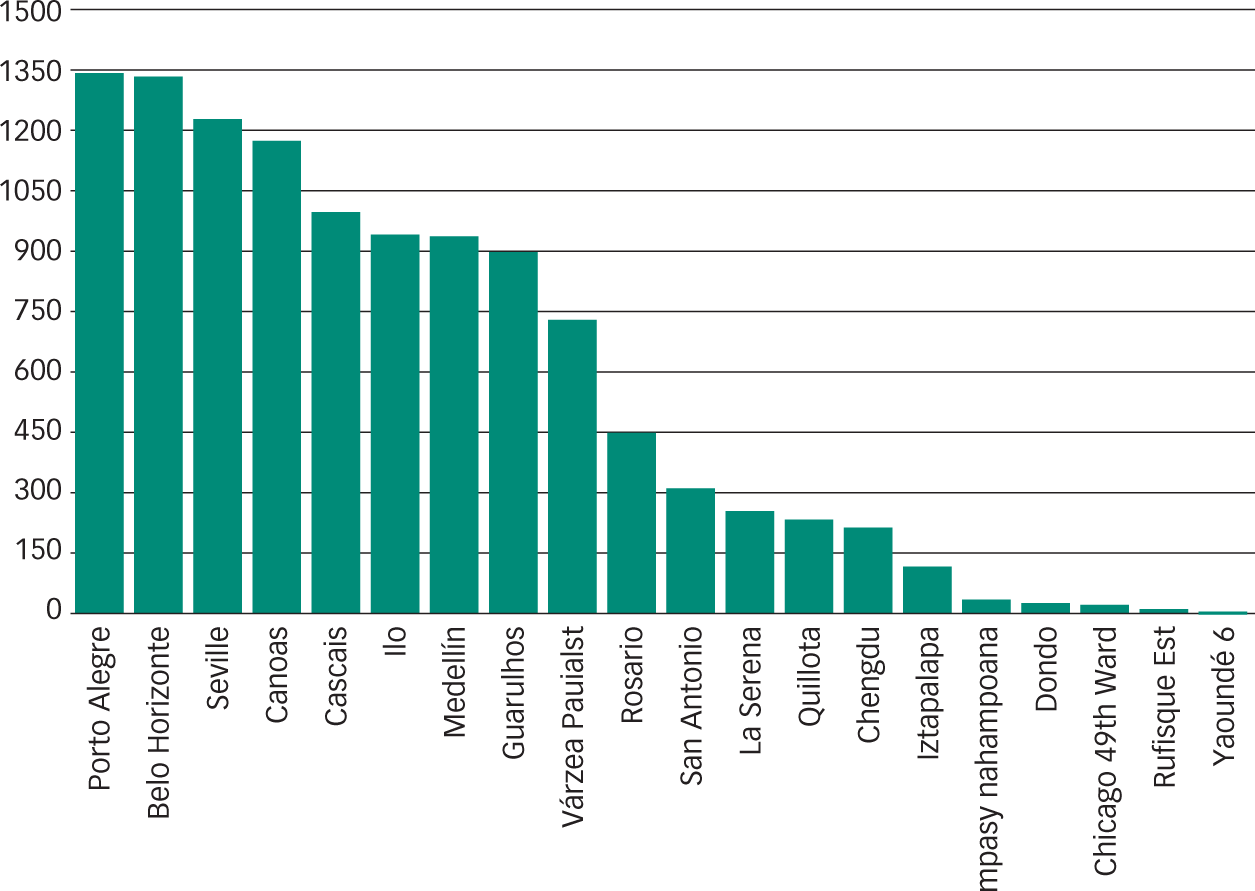
Municipal annual budget per inhabitant per year in US$ in 20 PB cities
Some caution is needed in comparing cities. Available budget data can refer to the planned or expected budget (usually the budget debated within PB), the actual budget (the resources a particular city can count upon, which may be less, or much less, than expected, primarily because transfers from central governments were less than planned) or the implemented or executed budget (money actually spent or at least committed). The implemented budget can be much less than the actual budget during the first years of PB especially, when people are still learning how to negotiate the new bidding rules that accompany the process. This can be especially tricky around the small projects that are often selected. The private sector is accustomed to much more “comfortable” contracts, and can be reluctant to respond to calls for these smaller projects, especially with implementation supervised by local residents. This is one of the many hurdles that explains why even with the resources in municipal coffers, the budget cannot be executed.
The present comparisons consider the last available
The most striking finding is the extreme diversity of municipal resources between cities. Amounts vary from less than US$ 5 per inhabitant in Yaoundé 6 or Rufisque Est to more than US$ 1,000 in Brazilian cities such as Porto Alegre, Belo Horizonte and Canoas or in Seville. This raises a more general question: What does a city with an investment capacity of less than one dollar per inhabitant per year (the case in most African municipalities) have in common with those with US$ 10,000 per inhabitant per year? For cities with such limited budgets, the way PB can optimize extremely scarce resources for basic service delivery is crucial here. Another question is how to direct these scarce resources to the neediest people and places.
Brazilian cities’ budgets are much higher than 10 years ago, when the first research was undertaken, primarily because of the growing strength of Brazilian currency relative to the dollar and the evolution of their exchange rates. Their budgets per inhabitant are equal to those in Europe or even higher.
Local authorities below the city level (such as in Chicago’s 49th Ward or Iztapalapa, a Mexican delegación of approximately 2 million inhabitants) receive a small portion of the overall city or federal district budgets. In Iztapalapa, some participatory programmes that impact basic services provision are carried out directly by the Federal District government. The situation is similar in Chicago and the budget considered here for 49th Ward is only the untied resources at the disposal of the alderman.
Ilo and Ampasy Nahampoana are mining cities that benefit from royalties (canon minero in Peru and royalties paid by the transnational mining company in Madagascar), so their municipal resources are much higher than those of most other Malagasy or Peruvian cities – though they are still far from wealthy by international standards.
b. Variations in capital budget for investment
There are three key indicators for PB spending – not just the overall budget per inhabitant, but the percent of that budget allocated to investment and the proportion of this investment budget determined by PB.
The wealthiest cities among the 20 are not necessarily those with the highest investment capacity. For instance, as shown by Table 2, Yaoundé 6 and Rufisque Est have a very low budget per inhabitant, but channel more than 15 per cent of their resources to investment. At the top of the scale, Ilo and Ampasy Nahampoana, as mining cities, have extra-budgetary transfers that exceed the total regular budget. The percentage of the budget that goes to investment is essential to any PB analysis, as is the origin of the resources debated in participatory budgeting. This percentage varies significantly from one year to another. A general observation is that capital budgets vary from literally 0 per cent – no investment capacity – to more than 50 per cent of the overall budget.
Proportion of the total budget devoted to the investment budget in 10 selected PB cities
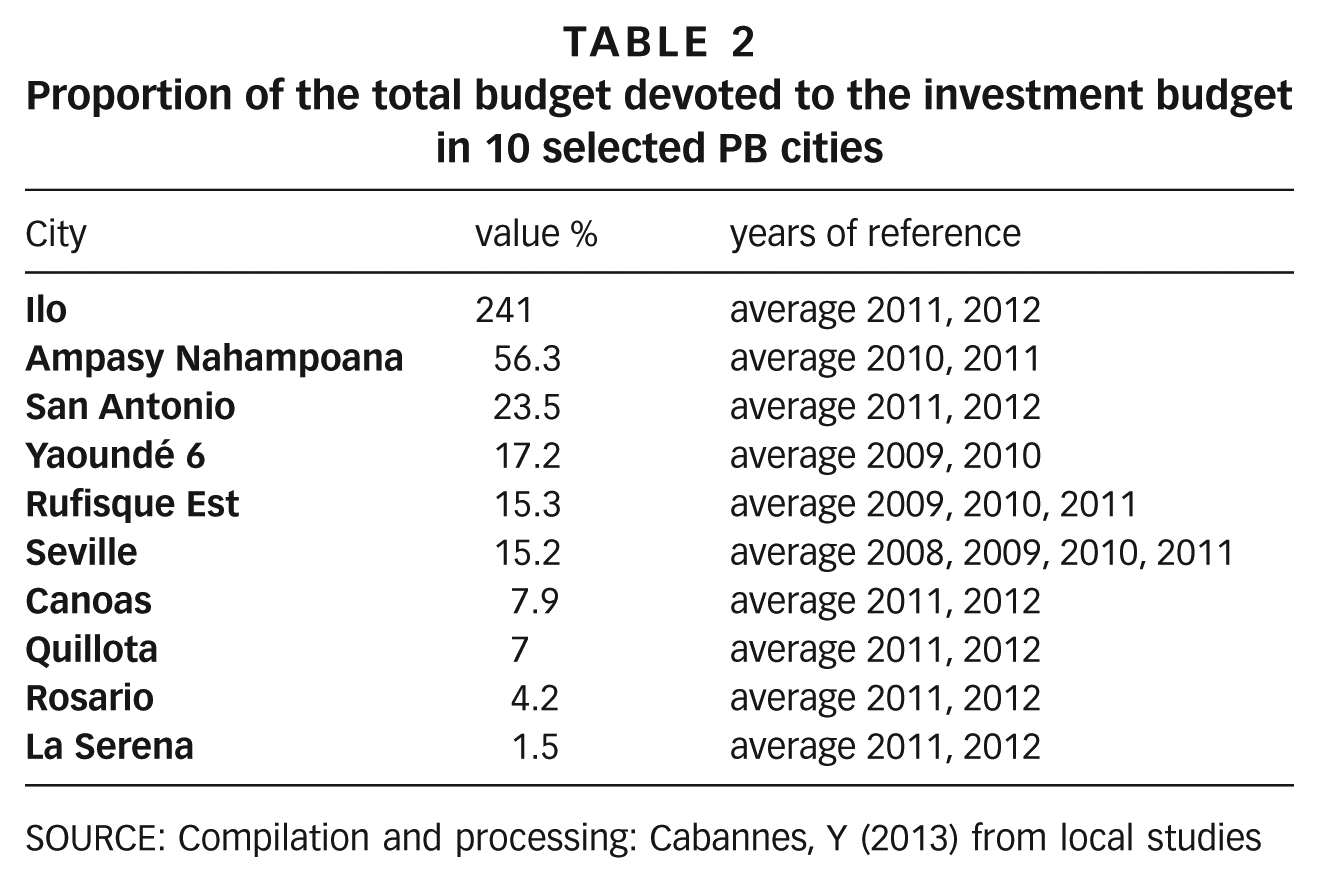
Source: Compilation and processing: Cabannes, Y (2013) from local studies
The proportion of the investment budget debated through PB also varies – from cities that earmark the entire investment budget to PB (Ilo) to those that earmark only a few percent. In Medellín, it “cannot be less than 5 percent of investment budget”; in Chilean cities, through the national law on PB, 3 per cent of investment proved to be the rule.
The value per inhabitant for a particular year is probably the best indicator for assessing the “budgetary” dimension of participatory budgeting, allowing for comparison even if the purchasing power of one dollar in an African city is not the same as in a Chinese or European city. However, it gives a fair idea of the volume of basic services that can be funded. It also makes it possible to understand why PB in some cities can decide on a multi-million dollar investment in water or waste treatment plants while others are limited to much smaller and cheaper works. Figure 3 and Figure 4 clearly indicate the large differences.
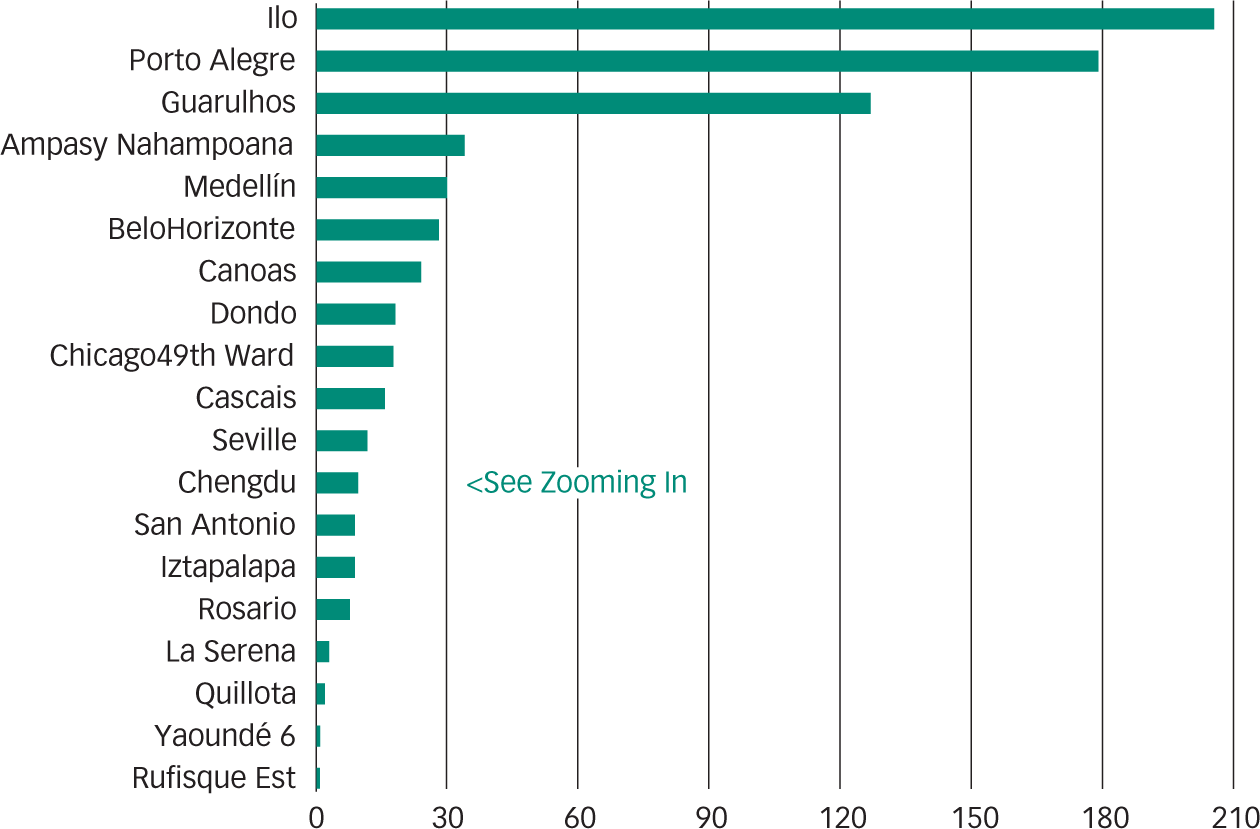
The value of the municipal budget decided through participatory budgeting (in US$ / inhabitant / year)
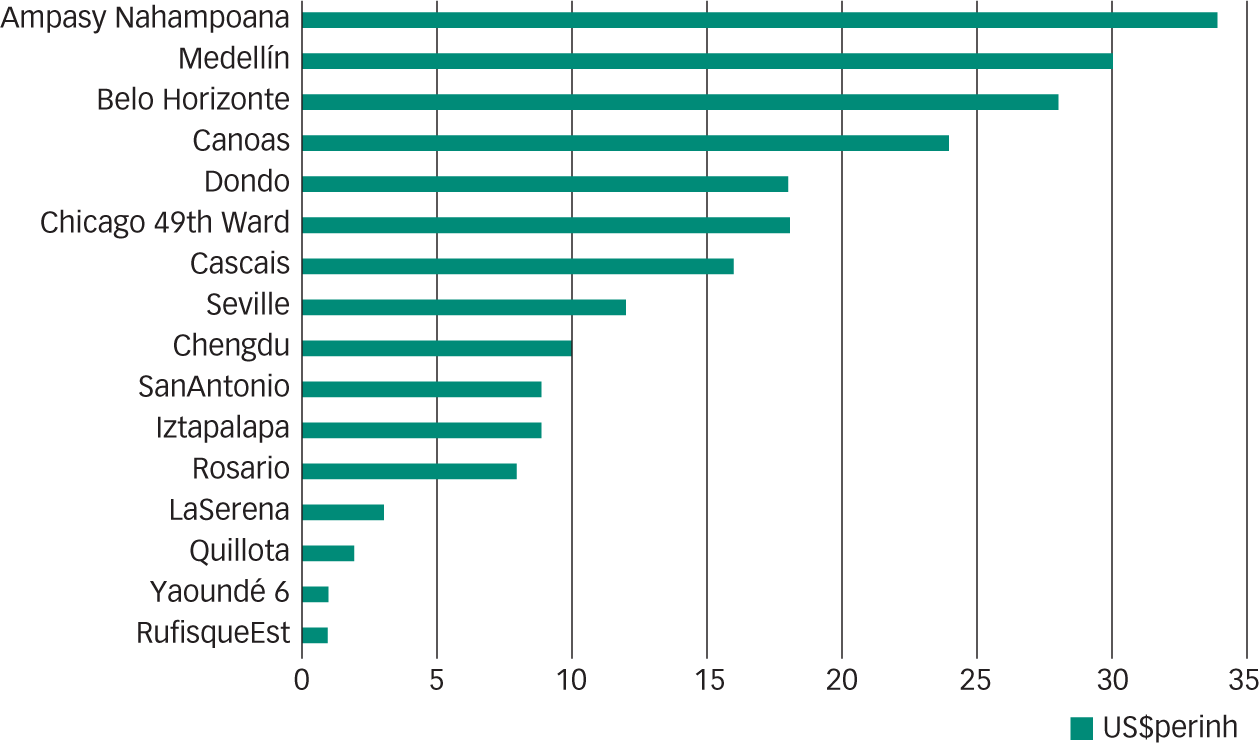
The value of the municipal budget decided through participatory budgeting (zooming in on cities below US$ 35)
In 3 of the 20 cities (Ilo, Porto Alegre and Guarulhos), people decide on very significant amounts, more than US$ 120 per inhabitant per year. To our knowledge, these are exceptional cases; they not only devote high resources for PB but have been around the longest – 25 years for Porto Alegre and around 15 years for both Ilo and Guarulhos – and have seen considerable improvement in basic service provision and a high quality of life.
Most cities fall into the US$ 2–35 per inhabitant range:
Ampasy Nahampoana has a limited municipal budget but an exceptionally high capital budget percentage relative to the total budget, a very high proportion of which goes to PB.
Medellín has a high municipal budget per inhabitant and a high capital budget relative to total budget, a low proportion of which goes to PB.
Belo Horizonte has very high budgetary resources, a limited capital budget relative to total budget and a low proportion of that going to PB. This explains its distance from Porto Alegre in terms of spending per inhabitant.
Canoas has very high budgetary resources with a relatively high proportion for investment and a low proportion of the investment budget for PB – similar to Medellín.
Four cities allocate less than US$ 5 per inhabitant per year, for quite different reasons: Yaoundé 6 and Rufisque Est have very limited overall budgets per inhabitant, but a significant proportion of their budgets goes to investments and a sizeable portion to PB.
Quillota and La Serena have limited budgetary resources, very limited capital budgets in relation to total budget and a very low proportion of the capital budget that goes to PB.
c. The significance of resources mobilized
One of the most commonly heard criticisms of PB is that the resources debated are insignificant – in most cases a couple of per cent of municipal capital budgets that are themselves usually just a tiny part of the overall city budget. So they are far from the level needed to significantly address the provision of basic services and to improve the quality of life. This paper shows that municipal public budgets are quite substantial in most of the cities. But there are also other issues to consider in relation to resource mobilization, as the study’s exploration of the question indicated.
A theme that comes up repeatedly is that PB resources, however limited, are meeting real needs that would not otherwise be taken into account. Kátia Lima from the Brazilian Network for PB and Guarulhos Municipality notes that “…sometimes one might think that PB is a drop of water in an ocean, as Guarulhos has 321 favelas, and it is true the amount is small in the context of the services deficit. [But] requests [from PB assemblies] meet needs. Their impact is very high at city level; see for instance the asphalting of roads and ways.” For Bachir Kanouté from the NGO Enda, “If these processes did not exist, particular needs would never be taken into account. PB requires local governments to invert their priorities in order to direct investments, considered marginal at policy level, towards projects that meet citizens’ need.” Nelson Dias, a practitioner in African cities, acknowledges that the amounts are small but “they are worthwhile for the changes they bring, and we cannot assess the financial volume only through mathematical lenses, as the impact is qualitative. Indeed, we work with peanuts, but they change directions and meet essential needs.”
Zhuang Ming, an academic and member of the NGO HuiZhi, acknowledges that PB investments in Chengdu, although very large in absolute terms, are marginal when compared with investments in urban areas. But here as in other cities, PB drew attention to the need to consider them as part of local investments.
These sums are also relevant as they bring budgetary changes at city level. By opening budgetary lines, they can trigger the additional channelling of public or private resources for basic services, much higher than what is actually allocated by PB. Jules Dumas Nguebou, an NGO practitioner from Cameroon, points out, “These processes cannot be considered marginal because before the introduction of PB processes nothing was planned for basic services. We looked at budgetary evolutions in cities since 2006. PB made it possible to open budgetary lines for social services and basic services that did not exist and that would not exist without PB.”
PB can also influence other resource allocations. Giovanni Allegretti, scholar and practitioner, engaged in PB in various regions of the world, points out that “If PB debates only existing public resources and wealth, it is small or close to nothing. But if PB is able to debate additional resources, such as foreign investments, aid, public / private partnerships, then it becomes something totally different. It is a challenge.”
d. Origin of finance and PB’s catalytic effects
Given the limited budgetary resources per inhabitant debated each year, one might wonder how these cities have been doing so much, delivering basic services in a significant way and improving people’s lives in a relatively short time. The answer is that PB, by its nature, mobilizes both financial and non-financial resources much beyond the strict “public” budget. Some examples below illustrate the breadth and depth of the mobilizing capacities. This is a major lesson of the research and deserves much more in-depth study.
Quillota includes a fixed community counterpart in kind or cash as part of the PB process; for it this is 3 per cent minimum of the total cost. In other cases, this proportion is not fixed but can be extremely high, especially in places where mutual aid and collective voluntary work are still present.
Matching funds from different tiers of government can also be significant – as high as 20 per cent in Chengdu, where the district and township match the resources transferred to villages. Central government funding can support projects requested by citizens that could not all be funded through local budgets. This is the case in Brazilian cities where massive resources were available for low-income housing programmes or neighbourhood improvements.
One of the major changes over the last 10 years is the capacity that PB cities have acquired to draw on international aid or financing for projects designed, discussed and prioritized by communities and citizens. African cities are at the forefront of this, as it is essential that they mobilize resources beyond their meagre local budgets. International funds have primarily gone to basic services projects. In Dondo, half the investment in PB drainage, roads and paths projects comes from aid. PB-selected projects in Commune 6 of Yaoundé, and in other communes of the capital and other cities in Cameroon, are funded through various multilateral and bilateral donors or through decentralized cooperation (city to city or region to city). Rufisque Est public lighting projects were funded through Enda and UN-Habitat. Interestingly, channelling of supra-national resources is happening not only in the global South; various projects in Seville received support from the European Union.
There are some examples of private sector contributions – for instance in Rufisque Est, where SOCOCIM Industries financed a health post. In Porto Alegre in recent years, enterprises and the “private sector” are funding some of the PB-selected projects although the scale is quite limited.
e. Does PB impact local fiscal revenues?
The impact of PB processes on the propensity and willingness of citizens and enterprises to pay their taxes (and hence on local fiscal revenues) has not been much explored. Reports from the 20 cities indicate that the question is new for many of the teams, that data are lacking, and that no specific studies have been carried out on this. For some, primarily in Latin America, the teams think that local revenues are not increased by PB processes.
However, in three cities, fiscal and tax revenues have increased and the city teams indicate that this is linked to PB. This echoes the findings of the research carried out 10 years ago, which indicated a positive association between PB and increases of local revenues. In Canoas, the research team considers that PB “promoted a higher citizens’ commitment for paying their taxes when works that had been expected for many years were voted and implemented through PB”. The municipality’s monthly tax revenues nearly doubled between 2008 and 2012. In Yaoundé, PB increased the confidence of local entrepreneurs in the local authorities and their contribution to the municipal budget. In Rufisque Est, the PB Steering Committee worked with the mayor to identify each taxpayer living within the commune boundaries.
f. Decrease in costs and lower maintenance costs
Both the local teams and the 12 specialists interviewed suggested that PB lowered the costs of public works, primarily through community control and oversight, making it possible to build more. For Kátia Lima from Guaralhos, the control of building costs depends on the strength of the oversight committee. For J D Nguebou, the oversight committees in Cameroon not only cut implementation costs but ensured better quality construction. “The cost difference between a dug well, funded through PB resources and one with other resources can be as high as 50 per cent… A key factor is the transparency in the bidding process. Another is the follow-up committees that are put into place for large projects and management committees for wells.”
Sergio Amaral, an activist since the early days of PB, notes that in Porto Alegre, “It is clear that citizens respect PB projects more; they are more respectful of health centres and other implemented requests.” Other interviewees pointed to examples of good maintenance of squares, parks and small public spaces funded through PB. Juan Salinas, from Chilean PB network, suggests that “The higher the appropriation by people, the better the maintenance. In Buin, Chile, for instance, a public space was built through PB seven years ago around a Virgin Mary grotto [religious site]. It is kept perfect. No graffiti. Nothing.” For Africa, J D Nguebou notes that “Communities manage and maintain the projects funded through PB because they feel like their own.” Bachir Kanouté notes that “Citizens are more ‘conscientious’ about maintenance when it is a PB project. It is more visible for public water taps and schools.”
However, some opinions, such as those of Jez Hall in the UK, are more nuanced. “What tends to happen is that what goes to grassroots is very efficiently managed. Micro finance is much more effective.” PB is a good way to improve management and maintenance but not necessarily the only way. For villages and rural communities around Chengdu, there may not be the skills for low-cost implementation and maintenance, as expressed by Zhuang Ming.
VI. PB’s Contribution to The Democratization of Local Governance
a. Citizen empowerment and the strengthening of community organizations
The fieldwork and interviews suggest that PB changes the relations between local governments and citizens, generating citizens’ empowerment and new forms of local governance. Both the budgetary decision-making process (cycle 1) and its implementation (cycle 2) trigger new forms of community and peoples’ organizations. By creating new spaces of dialogue between public bodies and social organizations and frequently also new joint decision-making bodies, PB strengthens societal governance as well. These new spaces, more or less institutionalized, contribute to inverting (as distinct from reversing) the balance of power in favour of citizens and on rare occasions even to the benefit of the most excluded social groups.
PB processes can foster the emergence of citizens’/community counter-power. The analysis points to some subtle changes since the 2000–2003 research(10) and helps update its conclusions. In most cases, bodies composed only of citizens are created specifically to manage, to regulate and often to take final budgetary decisions. But this is less true today than it was 10 years ago.
Participatory budgeting councils, specially created for the process, continue to be the central reference for citizens’ power. They are made up of councillors elected from delegates who have themselves been elected in the various place-based and thematic assemblies. The number of members, the gender balance, and quotas guaranteeing the presence of vulnerable, minority or excluded groups (such as migrants in certain cities or the homeless) vary a lot from city to city. When the councils are only “territorial” and do not discuss specific sectors at city level, they are composed of elected neighbourhood delegates. These councils, which do not include representatives of local government or of specific sectors like housing, health or education, have varying powers and responsibilities from city to city – from a simple consultative role to decision-making power. They are regularly renewed and the regulations governing their operation are modified and adjusted over the years.
The council in Medellín is notable for emphasizing and empowering rural districts (corregimentos in Colombian Spanish). This council also has stronger responsibilities in planning, and allows for a better bridging between budgetary exercises and planning practice.
In some cities, citizen commissions monitor the implementation of projects, ensuring that decisions taken during the first cycle of PB are properly respected by the local government. In Chengdu, the village council put in place for the implementation phase set up a “Fund Oversight Group” that controls the use of the budgetary resources once the project decisions are taken.
Some more recent initiatives, primarily in Europe and North America, such as those in Cascais in Portugal or in Chicago, have no formalized community bodies. The “leadership committees” set up in Ward 49 in Chicago remain informal structures that can be joined by volunteers involved in the PB process and who want to become more actively committed.
In the early 2000s, there were some examples of bodies that built on existing social organizations and their functions (such as the Consejos Vecinales in Montevideo) or on political functions (such as the Juntas Parroquiales in Cuenca), which also took on roles related to PB. Over the last 10 years, it has become more common for civil society organizations, public authorities and sometimes the private sector to become engaged in PB – rather than PB councils with only elected citizens. This can mean the construction of new bodies for multi-actor governance, aimed at establishing better relationships, dialogue and decision-making by all the actors concerned with urban issues.
In some cities, there are mixed councils with representatives from civil society and from the public authorities. The Local Coordination Council of the Province of Ilo is a good example of this. In others, there are ad hoc bodies that involve a great variety of actors, such as the Consultative Municipal Forum set up in Dondo, which brings together 75 in all – community leaders, religious authorities, representatives of popular organizations such as the women’s or youth organizations, influential local individuals and economic actors from both the urban part of the municipality and its 51 rural territories. The Participatory Budgeting Council of Commune 6 of Yaoundé, chaired by the mayor, has civil servants, civil society actors and private sector representatives (reflecting the desire that PB should create wealth and economic development).
Ilo has the most complex and interesting case of a new form of governance. Two new bodies were set up, with members representing approximately 400 citizens’ organizations and grassroots groups. The first is the Panel for the Management of PB, with six people elected by the citizens’ organizations. The second is the PB Oversight Committee, also with six elected members. Two other structures were also set up to decide on projects and on rules: the Provincial Coordination Council (CCLP), a mixed governance body for participatory planning, where final PB decisions are made; and the Permanent Committee for PB, with 13 members, including some from the CCLP, some from the management and oversight panels mentioned above, some elected mayors from both Ilo’s provincial and district levels, and seven community and civil society delegates. The critical point is that the first two bodies are purely community based and that they, in turn, send delegates on to a mixed governance structure. This and the other examples given above are powerful indications of how PB has generated new forms of democratic governance that give people more power to decide on and control public investments.
In Belo Horizonte, the Town Council on Housing was the decision-making body for the Housing PB (one of two PB processes in the city). It has 20 representatives from various bodies and groups, including trade unions, companies, legal authorities and executive bodies as well as five representatives of the popular movement linked to housing. As in previous examples, several autonomous and exclusively citizen structures were established, especially the Comforças with elected delegates from the Regional Fora and the Town Council on Housing, as well as the Ethical Commission, an offshoot of the Comforças, whose main role is to check reported irregularities that might occur in the course of the process.
PB processes that aim at radical impacts on democracy, with the vision that “another city is possible”, appear to be those that prioritize citizens’/community powers and autonomy, while establishing bodies where public authorities, companies, universities or unions can also discuss issues. These fora, even when open to citizens, can weaken the movement in the long term if they fail to include the parallel objective of strengthening citizens, supporting their ability to express themselves and make their voice heard. In PB, there is a high risk of citizen delegates being co-opted, becoming a mere “token democratic presence” for the existing powers.
Among the benefits of participatory budgeting councils and the multi-actor versions, one stands out – establishing or rebuilding trust and dialogue among citizens and between elected representatives (or civil servants) and a population with little or no faith in politicians. The bodies and institutions described above might appear unnecessarily complex for making decisions on limited resources. If these bodies do not also allow for increasingly greater control of public, private, local, national and international resources, they are indeed “top-heavy”. The issue at stake is therefore to make progress in controlling more resources.
b. Modernizing local governments
Different cities organize and transform their institutional structures in ways to conduct PB processes and to deliver projects selected by citizens. PB has been a modernizing factor and a necessary component in facilitating people’s participation and decisions on budget, and even more in delivering basic services projects quite different from the conventional approach, with a need to adapt and respond quickly to citizens’ and communities’ oversight, pressure and lobbying.
Before exploring the changes that occur in PB cities in public management, it is worth considering the number of civil servants and public employees relative to the number of inhabitants (Table 3). Yaoundé 6, Rufisque Est and the 49th Ward of Chicago seem the most understaffed, but they are districts within cities and higher levels of government cover various functions of theirs. Their capacity to conduct PB processes is limited and this probably explains why they have contracted external institutions to carry out various activities. Coordination of this political level with the municipality as a whole and with the contracted NGOs is a challenge.
Number of inhabitants and civil servants in selected cities with PB
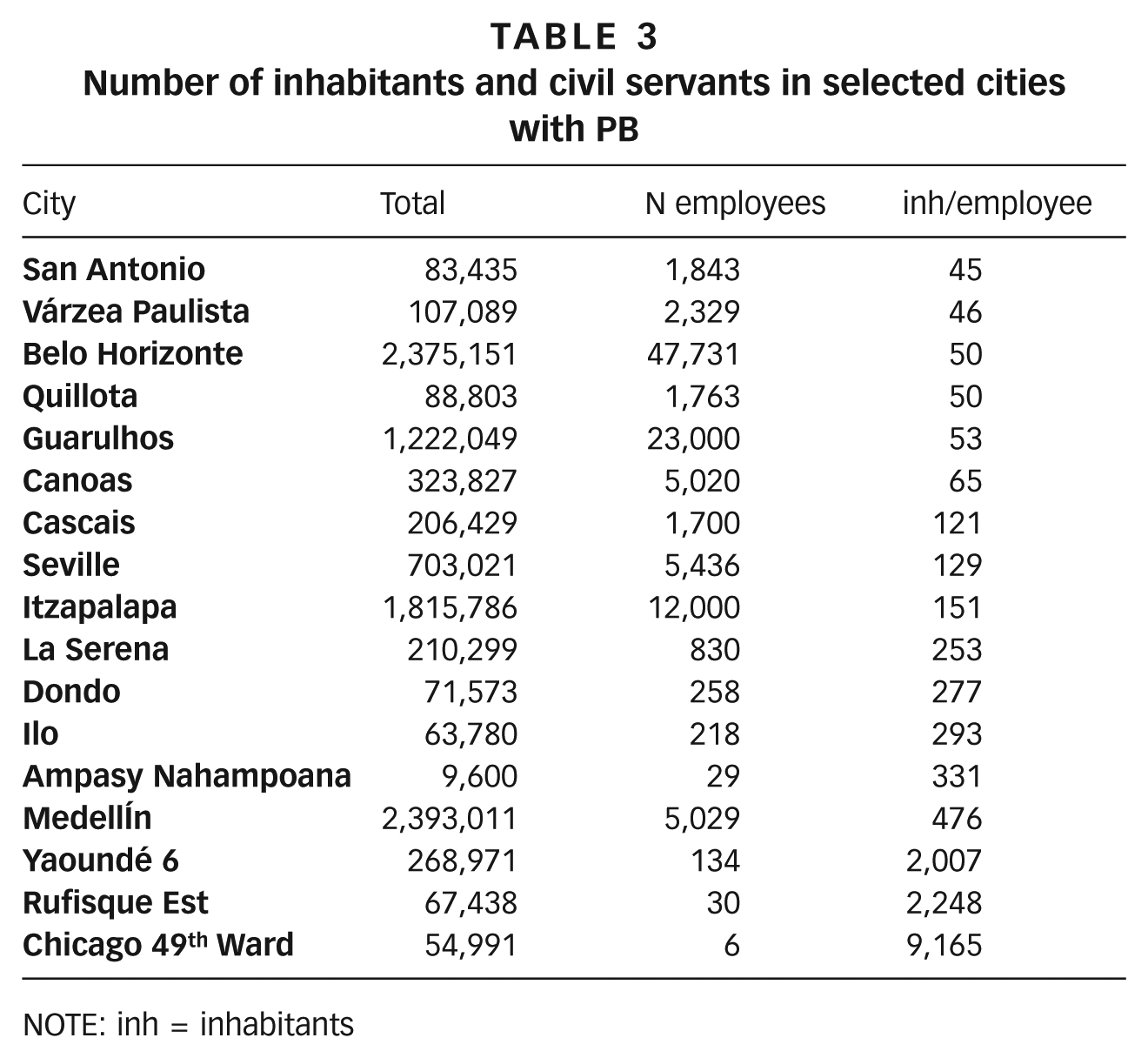
NOTE: inh = inhabitants
Medellín, with 5,029 employees for a city of close to 2.4 million inhabitants (476 inhabitants per employee), is quite a lean administration relative to its responsibilities. This might explain the unique and innovative model of coordination and mobilization of internal resources that was put into place to implement PB, described below.
At the other end of the spectrum, most Brazilian cities and both of the medium-size Chilean cities have high ratios of employees to inhabitants. In Brazil, this relates to the municipalization of primary education and health care. Cities with high ratios generally have a much lower percentage of the total budget allocated to the capital budget and so have fewer resources to channel to PB. But many such cities have properly staffed PB teams and services and their capacity to conduct an integrated approach and deliver services can be quite high, if they are effective at coordinating the various departments at municipal level.
The simplest and most widely used system for managing PB is having a single directorate or department that liaises with other departments. These can have different bases.
There can be a political or administrative anchor, as in Rosario, where a PB unit located within the General Secretariat of the municipality, which, along with other departments, is in charge of the process of decentralization. This fosters better links with decentralized units of the municipality. At the same time, the political power and drive of the General Secretariat make it possible to maintain a momentum for implementing approved projects through the relevant departments. A similar kind of anchoring close to the political power and the mayor was put into place in Commune 6 of Yaoundé, where a small team of three are in charge of PB and report directly to the mayor.
There can be a
In some cities, there are
Medellín, Quillota and Belo Horizonte are probably the most advanced examples of integration and effective delivery capacity. In Medellín, PB is conducted through both the Planning Department and the Secretary of Citizens’ Participation. The unique feature is the Technical Liaison Committee, with technical staff from each department. In addition, as in various other cities, technical backup to communities is provided through decentralized administrative units (equipos zonales) from each of the municipal departments. This setup was institutionalized in 2005 through a municipal decree.
In Quillota, in 2011, an inter-directorate Coordination Committee was created, with representatives from each municipal department. These each joined one or more of five operational teams: Coordination and logistical support; Neighbourhood assemblies; Project formulation; Follow-up and control; and Mobilization and outreach. Civil servants were invited by the coordination and logistical support team to get involved in the meetings within the municipal structure. Here, PB relied on the participation of both citizens and civil servants.
The PB managerial team in Belo Horizonte comes under the Planning and Managerial Sub-Secretariat and is linked to the nine decentralized district units where technical and administrative teams conduct the PB process. The PB Managerial Group draws representatives from all the bodies in charge of formulating, implementing and following up on PB, and meets monthly to discuss and take decisions.
One of the marked evolutions of PB since the early 2000s research has been the development of intra-government mechanisms and the mainstreaming of PB through the administrative structure with a fair level of institutionalization. This tends to increase the efficiency of the local government and explains in part the delivery capacity of cities, even with limited financial or human resources. Another clear evolution is the multiple ways through which sub-municipal administrative levels work together to get closer to citizens, mobilize them, and implement PB projects at neighbourhood level. This in part reflects the level of decentralization of services in city governments, and the deconcentration of resources. Research on the modernization of administrative structures through PB processes is needed more than ever. Crucial lessons could be learned on where and how to locate a PB unit within a city. Even if administrative setups vary over time, and Porto Alegre or Rosario is a good example of this, these changes bring some trade-offs that could be avoided with strategic thinking.
c. Changing power relations between local governments and citizens
The 12 PB specialists who were interviewed were asked: Do you think that PB has modified in a significant way the relations between local governments and citizens, whether organized or not organized? In what ways?
Sergio Amaral, a grassroots leader in Porto Alegre since the first days of PB, notes that PB entirely changed relationships – and even if the political party that introduced PB is not in power, the other political parties “cannot eliminate PB. Each one of them look for improving it … They know they cannot invest resources without consulting people.”
Giovanni Allegretti suggests that changes in relations “occur primarily between local governments and non-organised citizens, and much less with organised ones”. In Spain, some organizations have boycotted PB processes or did not commit to them.
These changes do not take place without resistance. For Chengdu, M Zhuang notes that PB “has been well received by people and villagers, but not necessarily by village chiefs and authorities”. J Hall, while noting positive changes brought by PB in the UK, also notes “that senior development officers are resistant to sharing power, and lots of work needs to be done”.
PB’s aims are primarily to improve governance and the delivery of services, not to alter existing power relations.(11) Yet some partial conclusions can be drawn on changes in power relations. In some places, primarily in China and some African cities, PB is opening up possibilities for people to express themselves, be heard and respected, independent of the decisions made on what are usually very small portions of budgetary resources. Changes are slow and can go backward or forward depending on the process on the ground; confidence and trust can be gained, but also lost if commitments are not fulfilled. In the long run, even when power relations are not significantly changed, citizens receive more respect from authorities, and civil servants gain greater recognition from citizens, who realize the extent of the commitment and work of those involved in PB.
d. Transparency and accountability
Findings suggest that accountability and transparency within PB contribute to democratic governance within communities, inside local government, and between civic organizations and local governments. Key changes include more attention to empowering organized and non-organized citizens and to engaging all relevant departments within local government.
There are three key moments during the PB process where transparency and accountability can be assessed:
at the beginning of the process, informing and mobilizing citizens, letting them know when assemblies are taking place;
after the final decisions, informing citizens about the value of the PB projects, when they will start and end, and exactly where they will be implemented; and
when projects are over and functioning, and this is particularly important for basic services projects, disclosing the value of the works, the various monetary and non-monetary contributions and the maintenance costs.
The breadth and depth of concrete actions taken by some cities to mobilize and inform their citizens is well exemplified by the range of communication tools used in Quillota. The task of the Dissemination and Outreach Commission here was to keep citizens informed; it made use of billboards at strategic places within the city, displays and signs at voting centres in local neighbourhoods (so that residents know where they can vote), promotional posters, informative community boards and flyers. Radio announcements were placed on the most popular local stations. Community leaders proposing projects can also promote them on the radio. Inserts and advertising were placed in the local newspaper; megaphone announcements were made throughout the town about voting times and centres; and information was also available on the municipal website (www.quillota.cl), supported by the Mayor’s Facebook and Twitter accounts. At community level, there are promotional parades, door-to-door home visits, meetings at community centres and posters on the projects proposed for different sectors. The municipal communications team also produced the Mi Ciudad segment of the 24-hour news programme of the Valparaiso Network on state television channel TVN.
There has been major expansion since the first wave of PB in the use of information and communication technologies and social media for all three phases of the process. The political and operational aspect of this deserves its own targeted research and another working paper.
VII. Challenges for Scaling Up
PB has contributed significantly to innovating and improving on basic service delivery in cities, with a higher awareness of spatial and social justice, the democratization of governance and the modernization of local governments. But what PB provides should be scaled up to meet needs in all low-income neighbourhoods, and this is tricky for some PB cities that are either new to the process or at a low level of financial engagement.
The 12 specialists interviewed highlighted the following:
Juan Salinas takes the debate further, observing that one of the main challenges to upscaling PB is establishing a dialogue and integration process not only with sectoral and physical planning, but with the institutional framework: “Generally, because of the lack of integration, there is a tendency to duplicate efforts.” Giovanni Allegretti emphasizes the need to relate PB to both physical and financial planning.
PB still captures citizens’ ideals for a better life
25 years after its creation, PB still encapsulates ideals for change, especially where it has been introduced recently – as in China and Africa. Ming Zhuang suggests that “the PB programme is the beginning of the future of local democracy in China, it might be the beginning of social development, after 30 years of rapid economic development.” For Bachir Kanouté, the next step should be “to support the mainstreaming (généralisation) of PB in the continent.” J D Dumas notes:
“PB is the hope of Africa, and this holds true if you consider the struggle for democratisation, the mobilisation for economic, social and cultural rights, and therefore finally the improvement of living conditions. I say that it is the hope, because we have at one and the same time a concept and a tool that leads us to collectively redefine our relationships within a political community and our respective roles within this community. It is a tool for social responsibility to give a new foundation to citizenship.”
Reflecting on PB’s limited capacity to deliver basic services at scale, Juan Salinas notes that “You need to see PB with people’s eyes. The critiques saying they are small, with no impact, reflects a conventional view. They do solve people’s pressing problems.” Sergio Amaral goes one step further, stating that PB not only improves people’s lives, it also changes them: “Our organisation [Solidariedade, meaning Solidarity] is a PB daughter. It is PB that changed our relationship to the world … The citizens that participate develop a new relationship with the government, with the State and with political parties… as a result the citizenry becomes the best asset for a given city. PB generates a mechanism that serves the city, while citizens work with the government.” Paula Cabral notes that in Portugal, PB projects helped generate a collective conscience, a sense of responsibility beyond the neighbourhood. The profound changes in people’s minds that PB generates and its capacity to capture citizens’ ideals for a better life are powerful messages of hope that can help support greatly upscaling and disseminating current experiences.
Footnotes
Annex 1
Acknowledgements
Professor Cecilia Delgado assisted me in the research.
1.
This paper is condensed from a longer, more detailed working paper: Cabannes, Yves (2014), “Contribution of Participatory Budgeting to provision and management of basic services: Municipal practices and evidence from the field”, IIED working paper, International Institute for Environment and Development, London, 66 pages. This can be downloaded at no charge from 
2.
3.
4.
Cabannes, Yves (2003), Participatory budgeting and municipal finance, Base document, Launch Seminar of Urbal Network No 9, Municipal Government of Porto Alegre, Porto Alegre.
5.
Bachir Kanouté, Egon Montecinos, Giovanni Allegreti, Jez Hall, Juan Salinas, Jules Dumas Nguebou, Kátia Lima, Nelson Dias, Paula Cabral, Nuno Piteira Lopes, Sergio Amaral and Zhuang Ming.
6.
See Cabannes, Yves and Zhuang Ming (2014), “Participatory budgeting at scale and bridging the rural-urban divide in Chengdu”, Environment and Urbanization Vol 26, No 1, pages 257–275 for an analysis of this city’s PB.
7.
For more details, see reference 6.
8.
Cascais, Portugal (2011, 2012), as the PB process is recent; Iztapalapa, as only one cycle has been implemented so far (2011); and Quillota and San Antonio, Chile, as PB did not happen in 2010 as a consequence of the earthquake.
9.
10.
See reference 4.
11.
See Cabannes, Y and B Lipietz (in press), The democratic contribution of Participatory Budgeting, London School of Economics and Political Science.