




Abstract
It is often assumed that violence diminishes after civil war, but in fact urban areas can turn into highly violent places with the end of open hostilities. The new forms of violence that can emerge are widespread but poorly understood and have been attributed to a range of factors including rapid urbanization, lack of economic development, continuing ethnic tensions and poverty. This paper examines urban violence in Juba, the “new” capital of Southern Sudan, through the lens of informal urban land access. The city experienced rapid population growth and an increase in land-associated violence after open hostilities with the north of Sudan ended in 2005. While the literature tends to emphasize the role of such actors as (ex-)combatants and unemployed and disenchanted urban youth in urban violence after war, the analysis presented here aims to demonstrate the complexity of the underlying causes of land violence and the opportunism of a range of civilian and military actors seeking to benefit from the fluid post-war context.
I. Introduction
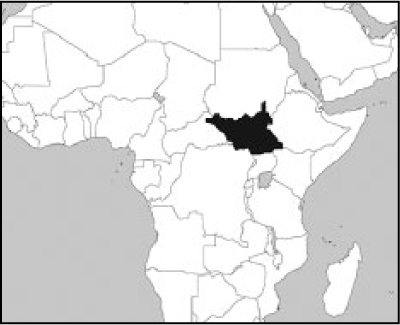
The dynamics of the economic, social or political factors driving urban violence are not always easy to discern, especially at the local level. This paper argues that, in a post-war context, advances in the literature on the political economy of civil conflict can provide insights into the dynamics of urban violence. Specifically, the paper proposes an exploration of the changing nature of urban violence in a post-war context through the lens of informal land access, drawing on research carried out in Juba, Southern Sudan.(1)
Considering the complex, rapidly changing and often confusing dynamics of urban violence as it advances in different parts of the global South, Esser(2) draws attention to a predicted growth in the number of regions emerging from full-blown civil war and the increasingly prominent role of cities as sites of violence in these regions. Research on post-war urban violence has focused heavily on organized gang and youth-related violent crime. Given the high levels of such violence in many cities of the global South, this tilt in research is understandable. However, one outcome of this is that it detracts attention from other forms of endemic urban violence and the range of actors that might be involved. The drivers and dynamics of what is termed “land violence” – defined as the use or threat of physical force as a mechanism to access land, whether by the state, individuals or groups, that results in fear of, or actual, forced dislocation – remain unexplored. This is despite the fact that a lack of inclusive access to urban land is identified increasingly as a major contributor to urban violence in Africa’s cities, and post-war cities in particular.(3) Particularly in sub-Saharan Africa, the focus on land-associated violence has been in rural areas, where it is readily associated with ethnic conflict. Although research undertaken in urban areas is increasingly examining ethnicity and violence, research examining the linkages between urban land access, violence and ethnicity, especially in post-war contexts, is scant.
Juba provides rich ground for exploring these linkages and the changing dynamics of urban violence in a post-war context. As a government-held garrison for most of Sudan’s 22-year long second southern civil war (1983–2005), it became a point of internal displacement, providing relative security as savage internecine conflict decimated the surrounding countryside and villages. With limited resources and a disregard for the suffering of the civilian population, only limited attempts were made by the Government of Sudan to provide shelter to internally displaced persons (IDPs) as they crammed into Juba’s existing informal settlements or formed makeshift camps on available land. It is perhaps paradoxical, therefore, that after the signing of the Comprehensive Peace Agreement (CPA) in 2005 between the Government of Sudan and the Sudan People’s Liberation Movement (SPLM), many of Juba’s inhabitants perceived the informal settlements in which they lived to be changing from relative safe havens into sites of violence. Juba’s designation as Southern Sudan’s capital, and its resultant transformation into an East African boom city, made it a place of opportunity in a region that had suffered from extreme underdevelopment. Nevertheless, as IDPs, (ex-)soldiers and returning IDPs and refugees crammed into the city’s burgeoning informal settlements or into new ones forming on its edge, people found themselves enmeshed in violence as they sought a place to live. In particular, reports abounded – from both long-term inhabitants and newcomers – of “land-grabbing” and violence by soldiers as they forced people from their homes. In a region where animosities between various groups continued largely along ethnic lines, these apparently intractable struggles over access to land were entrenching ethnic divisions.
It is widely assumed that such transformations in post-war societies represent a slide from political to criminal and social forms of violence, as weakened post-war states struggle to face the huge challenges associated with rebuilding their regions, meanwhile commanding a monopoly over the use of violence.(4) However, recent analyses suggest that such clear distinctions between different forms of violence should be treated with scepticism. Contemporary interpretations of the economic factors that drive and sustain civil war suggest that they are fought not just over (political) grievances but are also driven by “greed” or economic incentives, where “entrepreneurs of violence” compete to monopolize resource rents.(5) Similarly, analyses of violent crime in post-war urban contexts demonstrate the complex linkages between political, economic and social factors that it manifests. Rodgers,(6) for example, shows how gang violence in Central America is closely linked to persisting youth grievances and is arguably as political as earlier forms of civil war violence caused by grievances surrounding exclusion and inequalities in wealth. Such discussions have led some authors to challenge the common belief that civil war violence represents a distinct type of political violence.(7)
This article first outlines a framework of analysis that conceptualizes informal settlements as sites of survival, producing conditions of grievance and incentives for greed. After detailing the political and economic context and considering the role of Juba’s governing authorities in generating conflict over land, the article goes on to summarize research methods and sites. The analysis that follows is guided by the question of how greed and grievance factors underpinning land violence might interact and reinforce each other and how ethnicity may be a tool in this.(8) Differences in the nature of land violence across three informal settlements and the interplay of land violence, ethnicity, grievance and greed are considered.
II. Conceptual Background
Moser(9) identifies the need to conceive different forms of violence as interrelated. Applied to land violence in informal settlements, this suggests the need to consider that a range of social, political and economic factors might underpin its genesis. As a key resource in urban areas, secure access to land is the basis for survival in an urban area, but rights to urban land are also imbued with people’s aspirations for an urban life, access to services and better livelihoods. As Obala and Mattingly(10) note, the growing prevalence of informal settlements in which mainly the urban poor accept limited basic services and the risks inherent in a lack of formal rights to land and housing reflects the intense competition for land in cities in the global South. The grievances engendered by competition for access to land and other resources may be extreme and intense and lead to violence.(11)
Yet while informal settlements are generally associated with poverty, poor governance and marginalization, other research highlights how, as a major component of many cities in the global South, they may be largely tolerated but may also be associated with opportunities for gain.(12) Informal land tenure has been shown to be a mechanism through which powerful actors are able to exploit the precarious living arrangements of their inhabitants, sometimes violently through, for example, “land racketeering”.(13) Alternatively, land violence may arise when informal settlements are earmarked for formal development. In such instances, land can become a source of speculation and contention and informal settlement inhabitants, lacking legal rights, may be left exposed to forced eviction. Especially in war-torn regions, land in urban areas has been shown to be a particular source of rich economic gain, partly as a result of the presence of international actors.(14) In such contexts, where effective governance is especially difficult to achieve, urban land can feature significantly in rent-seeking and corruption, in some instances leading to violence as people are forced from their homes.(15)
The literature on the “greed versus grievance” debate on the causes of civil war pays especial attention to how competition over access to resources can lead to violence. Greed explanations emphasize the opportunity for economic enrichment through resource rents as the motivating factor for violence. Grievance explanations emphasize factors such as inequality, political oppression and conflicts over scarce resources that escalate into violence.(16) The greed−grievance literature has been applied to understanding the nuances of local-level violence in a number of war and post-war settings.(17) While “greed” and “grievance” factors have typically been understood in “either/or” terms, recent research suggests that the two are in fact intertwined in complex ways.(18) Increasingly, analysts and scholars indicate that a combination of the approaches is required to understand the complexity of conflict and violence. This research also highlights how crucial it is to understand the nature and role of the state, including its role in manipulating conflicts, its ability to manage political and social differences and mitigate competition.(19) Research in this vein has also considered the role of ethnicity in conflict and violence; it can be an important resource for mobilization, creating opportunities for powerful actors seeking economic enrichment, but also sustaining the grievances of those who do not benefit from their activities.(20)
III. Ethnicity and The Role of Juba’s Controlling Authorities in Land Violence
Southern Sudan has suffered from two civil wars spanning 50 years (1956–1972 and 1983–2005), largely fought along ethnic lines. The main “north–south” conflict was fundamentally about the marginalization and political and religious repression of southerners since before Sudan’s independence in 1956. However, this is only one of the many social and political cleavages in Southern Sudan. In fact, conflict between Dinka factions, the largest ethnic group in the region who dominate the SPLM, and Nuer factions of the Sudan People’s Liberation Army (SPLA) resulted in more civilian deaths than the SPLA’s war with the Government of Sudan in the north. In addition to other fighting, conflict also occurred between the Dinka and smaller Equatorian(21) ethnic groups, the people of the far south of the region where Juba is situated. Throughout the war, as Dinka IDPs moved from their homelands into the Equatoria region, Equatorians were subject to savage violence by the SPLA. By the end of the war, many Equatorians had come to view the SPLA as an occupying force rather than a liberation army.(22)
It is perhaps to be expected that after the signing of the CPA, Juba’s designation as capital for the Dinka-dominated, SPLM-led Government of Southern Sudan (GoSS), its status as home to the Central Equatoria State(23) (CES) government and its location in the Bari chiefdoms might lead to particular tensions among these three new controlling authorities. Because of fears of “Dinka domination” that pre-dated the second civil war, coupled with the continuing occupation of rural land in Equatoria by Dinka IDPs, many Bari traditional authorities and Equatorian officials within the CES local government perceived the establishment of the GoSS in the city as an act of colonization of Equatoria by the Dinka. As CES government officials sought to prevent land being provided to the GoSS for the establishment of its offices and for staff housing, the confusion and struggles that resulted exacerbated the already severe shortage of formally developed land. As tensions escalated, there were calls by both Equatorians and Dinka to develop a capital city in an alternative location. In February 2011, less than a month after the referendum on the region’s independence, the Council of Ministers passed a resolution to relocate the capital from Juba.(24)
By 2010, when the data presented here were collected, the land tenure situation for the majority of inhabitants of Juba was extremely insecure. There is a lack of data regarding Juba’s informal settlement(25) population, but estimates suggest that Juba was one of the fastest-growing cities in Africa, with its population trebling to 750,000 in the five years after the CPA was signed.(26) As a result of this population growth, in 2009 the city’s built-up area had expanded by more than four times to 52 square kilometres, largely through unplanned growth.(27) Despite tenure reform, including legislation that recognizes community rights to land and, at face value, protects against forced eviction, from 2007 the CES government had been carrying out large-scale forced evictions as a relatively straightforward tool for freeing up land for urban development. Between January and June 2009 alone, it was estimated that around 60,000 to 70,000 people were displaced.(28) At the same time, as the stock of legally available land became increasingly scarce, land values rose in and around Juba(29) and a range of actors stood to profit handsomely as previously unplanned land was converted into residential plots. Despite the tensions between Juba’s governing authorities, there were suggestions that struggles between authorities over land, premised on entrenched ethnic divisions, potentially masked the rent-seeking and speculative land-related activities of public officials and traditional authorities in alliances that cut across ethnic categories. Weakly specified new legislation enshrining the SPLM’s commitment to the recognition of customary land rights,(30) the lack of information and discussion regarding proposed plans for Juba’s expansion and the opacity of procedures around land allocation practices supported conditions in which corruption and the expropriation of land around the city from Bari communities were becoming major problems.(31)
This combination of ethnic tensions, a lack of formally available land, rapid increases in the economic value of urban plots and potential rent-seeking and corruption by powerful actors provides the backdrop to the trend towards increased land violence in Juba’s informal settlements, where different groups claimed land on different bases. These competing claims were deeply rooted in the politics of ethnicity in the city and the region more broadly, and in emerging perceptions of land rights in the post-war period. Bari claimed land in informal settlements on customary grounds, whereas many non-indigenous IDPs and migrants to Juba, both before and after the war, claimed the right to settle based on their Southern Sudanese citizenship. Soldiers justified their right to land based on their role in “the struggle”.
IV. Methods and Background to Land Access in The Research Sites
This article draws on field research carried out in Juba between January and December 2010,(32) five years after the signing of the CPA and a year before the southern vote on independence, which saw the region secede from Sudan. The research examined the changing mechanisms of land access in three informal settlements that emerged at different times in Juba’s 90-year history and the linkages with land violence. It relied mainly on semi-structured interviews, group discussions, observation and a small-scale structured survey.(33) Due to the sensitive nature of the context, informants and settlements remain anonymous. Settlements are referred to by pseudonyms, namely Greenacre, Riverside and Newplace.
Greenacre and Riverside are both located on public land within Juba. Newplace is located on what was, after the Southern Sudan Land Act 2009, formally recognized as communally owned land. Settlement of the locations roughly follows Juba’s growth trajectory following Sudan’s independence from Anglo-Egyptian Condominium rule in 1956. Greenacre formed in the centre of Juba in the 1960s and Riverside formed in the 1970s on what was, at the time, the edge of Juba’s built-up area. With Juba’s rapid population growth after the CPA, the city expanded onto formerly unsettled rural land, and new informal settlements such as Newplace, situated about 10 kilometres from the centre of Juba, formed on the periphery of the city.
At the time of the study, the three settlements reflected Juba’s ethnic and social diversity, comprising a mixture of ethnic groups from all over Southern Sudan as well as migrants from outside the region, mainly from Uganda. The origins of those living in Greenacre and Riverside were particularly diverse. On the other hand, Newplace hosted Southern Sudanese from the three(34) Equatorian states only. Reflecting the post-war context, a notable proportion of plot holders were employed in an armed service. With its location next to a military unit, Riverside had a particularly large proportion of soldiers living there. Reflecting the settlements’ histories and locations, a significant proportion of plot holders in the recently formed Newplace identified themselves as returning refugees or IDPs, compared to a much more limited number in the older Riverside and Greenacre. Notwithstanding, the three settlements all had a large number of inhabitants who were returning refugees and IDPs.(35)
Despite limited formal administrative oversight in Juba’s informal settlements, there had been clear practices in place regarding the management of land. As in other African contexts, there existed shared principles among residents regarding the process of settlement. These included an understanding that clearing the land made it yours to settle and a belief that land should be shared if it is abundant. While initial settlers had sought approval to settle from local government institutions or, in the case of Newplace, from Bari traditional authorities, as the settlements grew the first settlers formed core groups to manage affairs within the settlements, including those relating to the land.
The leadership of Greenacre had the strongest basis for cooperation, perhaps reflecting its age and the fact that members of the committee had functioned in leadership positions for many years and had been both representative and accountable to the settlement’s inhabitants. The leadership of Newplace was also clear, comprising a newly formed “popular committee” under the aegis of Bari traditional authorities. On the other hand, the leadership of Riverside was unclear and disjointed, and the basis for cooperation among different ethnic communities within the settlement was much weaker. In part this can be attributed to the fact that the settlement had experienced heavy bombardments during the war, which had resulted in a more fluid population. Furthermore, the availability of unused land had allowed an influx of people after the CPA, particularly soldiers and their families. The emergence of leaders of different ethnic communities within the settlement with links to different authorities outside the settlement, such as Bari landlords, CES local government actors, the SPLA and the GoSS, had led to a lack of coordination. In particular, civilian leaders complained of being unable to liaise with military authorities regarding matters that affected the settlement, including land disputes that remained unresolved. This, in turn, influenced the nature of cohesion within the settlement, with soldiers perceived as often acting with impunity.
Although it is often assumed that conflict undermines social cohesion, the findings of the research suggest that the influx of IDPs, mainly Equatorians, into Greenacre and Riverside during the war resulted in a range of positive new relationships for early comers to the settlements and IDPs. During the war, in particular, once they were in Juba, IDPs developed a degree of common identification with early comers through times of shared hardship, despite their differing origins. People respected the informal land allocation procedures that were to be followed, and the authority of the leadership of the two settlements was clear and not under threat. The collective trauma of civil war in Juba, and the need for mutual support under conditions of severe hardship and oppression by the Government of Sudan, made it critical to establish close bonds. Gradually, solidarity developed between IDPs and the pre-war settlers.
Many analysts and government officials had in fact assumed that there would be an increase in the number of land disputes following the return of refugees and IDPs after the peace agreement. However, evidence from the interviews and the small-scale survey suggests that few such disputes arose in the settlements. For example, in the survey, 11 per cent of plot holders reported having experienced a land dispute but only one of the cases related to a returnee and IDP. This partly reflects the conciliatory nature of customary law in Southern Sudan, which aims for solutions that satisfy both parties, and generally returnees could claim back their plots although they were expected to compensate IDPs for any housing they had built.
V. Addressing Needs and Augmenting Grievances: Exclusion, Ethnicity and Land Violence By Soldiers
Despite this initial solidarity, the arrival of further newcomers in increasing numbers introduced profound changes and perhaps inevitable tensions. Between 2005 and 2010, the settlements altered dramatically, both in population numbers and composition, and demand for land rose sharply. Among other things, this meant that less and less land was available for older inhabitants to allocate to their own families. Inhabitants also linked population growth to increasing crime and a reduced sense of community. For the settlements’ leaders, it meant an erosion of control over the settlements.
As pressure on informal settlement land increased, grievances started to be nurtured along ethnic lines. Fuelled by wider politics within the city, conflicts over the right to settle on increasingly scarce urban land were associated with the increasingly divergent interests of Dinka and Equatorians. These dividing lines were reinforced on a daily basis as informal settlement inhabitants sought to maintain their access to land. Land violence became a mechanism to access land by soldiers who were able to act with impunity within the settlements. This violence took the form of threats, physical violence, gun violence and sexual violence. Their activities further contributed to deepening grievances along ethnic lines among people with limited financial and other resources attempting to maintain their access to land on which to live.
The reaction of the settlements’ inhabitants and leaders to what was regarded as a massive invasion by outsiders was to present the tensions as conflict between Dinka and Equatorians, reinforced by the common perception of Dinka arrogance and their perceived preferential treatment by the GoSS and the SPLA. In both Greenacre and Riverside, Dinka were reported to have forced people off their plots, often threatening them with guns. As a result, settlement leaders in Greenacre stated that they were refusing to allow Dinka returnees to reclaim their pre-war plots. In Riverside, especially, many soldiers and/or Dinka reportedly intimidated people with guns to force them from the land. In some cases, people were shot as they fought to keep their plots. Where inhabitants had their land grabbed by soldiers, settlement leaders were reluctant to intervene, fearing reprisals. This situation led to feelings of powerlessness and resentment within the settlement. In Newplace, fear of Dinka and their propensity for violence was apparently so great that inhabitants were instructed by the Bari chiefs of the area not to allow Dinka to settle.
The call for the exclusion of Dinka on the basis of their land-grabbing activities was not without contradiction. In Riverside, community leaders approached the military to help them address the problem of niggaz, gangs of delinquent and violent youth, who were coming into the settlement and carrying out robberies. In Newplace, community leaders and Bari chiefs were, on the one hand, saying that Dinka should not be allowed into the settlement because of their propensity to use violence but, on the other hand, were employing Dinka through the SPLA to carry out forced evictions in the area (see below). Furthermore, while most Dinka men interviewed had strong links with the SPLA or were ex-soldiers, not all Dinka were soldiers. In Greenacre, most Dinka men interviewed were businessmen or employed in the GoSS. In Riverside, older inhabitants differentiated between Dinka who had links to the settlement prior to the war and those who had arrived more recently and were associated with the SPLA. Conversely, while many Equatorians considered all soldiers to be Dinka, this was not the case. Interviews following up on reports of land violence in Greenacre and Riverside found that in three of the 11 cases investigated, non-Dinka soldiers were the perpetrators. In fact, particular instances of land violence identified in the settlement surveys showed that four per cent of plot holders had suffered forced eviction by a member of an armed service, but seven per cent had experienced forced eviction at the hands of other individuals, including settlement leaders, landlords and male relatives in the case of some widowed women.(36)
Both Dinka and soldiers denied knowledge of the use of land violence. Nevertheless, in broad terms, Dinka interviewees argued that when confronted with attempts to exclude them from accessing land, some had no choice but to resort to violence. There was strong resentment towards Equatorians, whom some regarded as cowards for what was perceived as their more limited role in the war. The idea that Equatorians refused to give Dinka any land arose in all group discussions with Dinka men. Those trying to re-access land in Greenacre asserted that they had followed the correct informal land allocation procedures when settling in the area. They considered it decidedly unjust that they should be denied their plots, especially when the claims of other returnees were recognized. In addition, many Dinka had become combatants and fought in “the struggle”. If some had resorted to violence to get their land back, then they regarded that as fair. Both military and non-military Dinka in Riverside stressed the right of all Southern Sudanese to access land in the region’s capital.
From the perspective of SPLA soldiers, the post-CPA period was also proving an uncertain and unstructured time. Those who were interviewed, both Dinka and non-Dinka, frequently highlighted the fact that despite their role in “the struggle”, they were poorly and irregularly paid. There was growing resentment towards the GoSS. One soldier (a Dinka) made angry reference to its perceived corruption: “Look at me. I’m reduced to being a squatter. They put the names of people that [sic] don’t exist on the payroll and don’t even pay us that [sic] do exist. I can’t even afford to send my children to school.”
VI. A Commodification of Informal Settlement Land and Greed-Associated Land Violence
Greed also underpinned land violence, as powerful actors sought economic benefits in the settlements. In common with other urban areas in sub-Saharan Africa that are experiencing rapid urban population growth, a fast commodification of informal settlement land was accompanied by an increasing number of tenants, as opposed to plot “owners”, occupying plots. In all three study settlements, the predominant means of accessing land had been through squatting, mainly with the support of family and ethnic connections. However, by 2010 the prevalence of cash-based mechanisms of land access, either through informal rental or purchase, had increased. This was particularly the case on the edge of Juba, in newly settled areas such as Newplace, where some people reported paying as much as US$ 3,000 for a plot. Based on supply and demand, these informal sales resembled market transactions where, as land became less available relative to the number of people needing it, those with the ability to raise cash to buy the land did so.(37) Nevertheless, the data suggest that the sources of land had changed from actors with whom settlers had personal relationships to other actors, such as settlement leaders, high-ranking soldiers and people purporting to be traditional landholders.
A key question that arose was how were narrow groups of individuals within the settlements obtaining land to rent or sell? The picture that emerged was one where violence and coercion by powerful civilian and military actors were used to remove inhabitants from their plots. For example, of the 11 cases of reported land-grabbing that were investigated, in three cases land cleared of its inhabitants had been developed into plots that were either rented out or had been sold. Furthermore, in Riverside and Newplace, there were many reports of SPLA commanders and settlement leaders, respectively, having monopolized parts of the settlements. A returnee from Khartoum was renting a plot in one of these blocks: “Our landlord is a Nuer man. I think he is from the [military unit]. We never see him – he sends round his men to get the rent each week. He owns all the houses here.”
Several months before, one of the families living on this land had been forcibly displaced: “Soldiers came in the evening and told us we had to move. We were given no notice, just told to be gone by morning.”
VII. Speculation in Planned Land Developments and Associated Violence
As greed and grievance factors interacted, it appears that heightened grievances between groups helped to stabilize rent-seeking relations, whereby informal settlements offered a range of powerful actors economic incentives to use land violence. Despite the generally increasing ethnic tensions over land in the settlements, some Equatorian inhabitants were adamant that the tensions since the CPA were in fact attributable to their own leaders. Similarly, Bari chiefs living near Greenacre were inclined to attribute land violence around Juba to CES government officials and corrupt chiefs who were selling land to officials and military commanders without the agreement of their communities.
While land violence was perpetrated by powerful individuals on a relatively small scale, more worrying, especially in light of the recognition of communal land rights, was large-scale land violence across settlements, especially on land on the edge of Juba. This violence was perpetrated using bulldozers, under the protection of armed soldiers in some instances. The uncertainty resulting from the CES government’s policy of forced eviction and increased competition over land, as well as the desire for infrastructure, basic services and improved security, resulted in efforts by settlement inhabitants to have their areas formally demarcated. To achieve this, settlement leaders formed “demarcation committees” in informal settlements throughout the city, whose stated aim was to lobby the CES government for formal demarcation and, once this had been approved, to manage the allocation of formal, leasehold plots. Accounts regarding this differed and it was unclear as to who or what initiated the formation of these committees and whether it was demands from inhabitants, settlement leaders or actors within government institutions.
Paradoxically, these demarcation processes provided opportunities to exploit informal settlement inhabitants who, to a large degree, experienced heightened threats to their access to land as a result. Planned land developments initiated by the CES authorities did not take into account current settlement patterns. Nonetheless, in Riverside and Newplace, where activities relating to the formal demarcation of land were being implemented on the ground by CES officials, senior military and public officials in the GoSS and the CES government, as well as traditional authorities and settlement leaders, had colluded to reap financial benefits. Demarcation committee members not only gained financially by levying registration fees, non-payment of which resulted in eviction, but also displaced people from their plots or forced plot holders to downsize their plots. Plots of land from which people were displaced were either retained by committee members or sold on. These activities were claimed to facilitate the ongoing formal demarcation, although fear and perceived risk on the part of inhabitants was as common a motive for submitting to the committees’ demands as belief in the legitimacy of their claims.
The failure of informal settlement inhabitants to realize their aspirations for better living conditions further nourished grievances along ethnic lines and increased people’s motivation to exclude Dinka, at the request of Bari chiefs. Nevertheless, as one Bari chief acknowledged, it was relatively easy to force Equatorians to move on as land was formally developed, but this was not the case for Dinka, because of their close links to the SPLA. Moreover, in many cases it was SPLA soldiers, many of whom were Dinka, who were hired to enforce demarcation committees’ demands. Such alliances between settlement leaders and actors in the SPLA inflamed ethnic tensions, increasing the perception among Equatorians that Dinka had grabbed land. Not only that, but Dinka in particular were perceived to have benefited from these processes as highly visible new forms of elite government housing began to appear on the edge of Juba.
In Greenacre, levels of land violence were comparatively low. In the absence of formal planning activities, there were perhaps fewer incentives for the use of violence by powerful actors within the settlement. In addition, the strong basis for cooperation and clear settlement leadership meant that settlement inhabitants were in a stronger position, at least in the short term. Notwithstanding, towards the end of the fieldwork period, increased competition over access to land had undermined cohesion within the settlement along early comer/IDP lines. As tensions over land mounted between these groups, conflicts intensified over who should have a say in any formal demarcation process. The settlement had begun to polarize, with IDP representatives challenging the authority of Equatorian pre-war settlers and demanding representation on the demarcation committee. Demarcation committee members were refusing to do this, claiming their authority to control the process on the basis that they were the early comers.
VIII. Conclusions
Using land access in informal settlements as a lens, this article provides an alternative account of the dynamics of post-war urban violence as manifested in the form of land violence. In Juba’s informal settlements, the shelter strategies of poorer urban inhabitants and the rent-seeking activities of powerful actors were interconnected and self-reinforcing. Increasing competition over access to increasingly scarce urban land fed grievances based on ethnic identity, deteriorating social conditions and increasing inequality in Juba. These grievances were instrumentalized and reinforced by powerful civilian and military actors in alliances that in fact cut across ethnic categories, as they sought economic benefits from urban land. In this “greed−grievance nexus”,(38) different types of land violence emerged, from state-orchestrated forced evictions to informally organized, large-scale evictions within informal settlements, and other individual forms.
The situation in post-war Juba, as exemplified in the three case study settlements, offers insights into how the transformation of urban areas in fragile post-war regions from sites of survival into sites of opportunity and survival opens up new spaces for economic enrichment, crucial to which is the use of violence. A city such as Juba, with its symbolic status as capital of a newly independent region and with an ethnically diverse population, could contribute to the reconciliation between various groups that ideally should follow the end of civil war. Instead, the case of Juba shows how, ultimately, the weakness or unwillingness of government authorities to manage land in the city, and the manipulation of ethnic tensions by greedy public officials, traditional authorities and senior military actors served to deepen inequality and ethnic conflict. How these dynamics are playing out, both at the city and settlement levels, in the rapidly changing situation in Juba remains an area for further research.
Footnotes
Acknowledgements
The author would like to thank especially Admos Chimhowu and Caroline Moser who supervised the PhD research on which this article is based, and the many Southern Sudanese who assisted in the research. The author is grateful to Caroline Moser, Cathy McIlwaine, Sheridan Bartlett and two anonymous reviewers for their helpful comments.
1.
Now called the Republic of South Sudan after the region gained independence from Sudan on 9 July 2011.
2.
Esser, Daniel (2004), “The city as arena, hub and prey patterns of violence in Kabul and Karachi”, Environment and Urbanization Vol 16, No 2, pages 31−38.
3.
See, for example, Branch, Adam (2013), “Gulu in war … and peace? The town as camp in northern Uganda”, Urban Studies Vol 50, No 15, November, pages 3152–3167; also Omenya, Alfred and Grace Lubaale (2012), “Understanding the tipping point of urban conflict: the case of Nairobi, Kenya”, Urban Tipping Point Project, Working Paper No 6, University of Manchester, 68 pages.
4.
Rodgers, Dennis (2009), “Slum wars of the 21st century: gangs, mano dura and the new urban geography of conflict in Central America”, Development and Change Vol 40, No 5, September, pages 949–976.
5.
Collier, Paul and Anke Hoeffler (2002), “On the incidence of civil war in Africa”, Journal of Conflict Resolution Vol 46, No 1, February, pages 13–28.
6.
See reference 4.
7.
Kunkeler, Josjah and Krijn Peters (2011), “‘The boys are coming to town’: youth, armed conflict and urban violence in developing countries”, International Journal of Conflict and Violence Vol 5, No 2, pages 277–291; also Schuld, Maria (2013), “The prevalence of violence in post-conflict societies: a case study of KwaZulu-Natal, South Africa”, Journal of Peacebuilding and Development Vol 8, No 1, April, pages 60–73.
8.
Scholars such as Johnson and Leonardi challenge the division of people into distinct tribes or ethnic categories in Southern Sudan. When I refer to Dinka, Bari or Equatorian, for example, this is not in the colonial sense but rather to people who have identified themselves as such or were identified as belonging to these identity groups by interviewees. An instrumentalist perspective is adopted to understand how ethnicity is an important factor in land violence. However, this is done cautiously as it was not possible to verify the involvement of many actors inculpated in land violence.
9.
Moser, Caroline (2004), “Urban violence and insecurity: an introductory roadmap”, Environment and Urbanization Vol 16, No 2, pages 3–16.
10.
Obala, Luke and Michael Mattingly (2013), “Ethnicity, corruption and violence in urban land conflict in Kenya”, Urban Studies 0042098013513650, 23 December 2013, pages 1–17.
11.
See reference 10; also Moser, Caroline and Dennis Rodgers (2005), “Change, violence and insecurity in non-conflict situations”, Overseas Development Institute, Working Paper 245, London, March, 52 pages.
12.
Roy, Ananya (2005), “Urban informality: toward an epistemology of planning”, Journal of the American Planning Association Vol 71, No 2, Spring, pages 147–158; also Roy, Ananya (2009), “Why India cannot plan its cities: informality, insurgence and the idiom of urbanization”, Planning Theory Vol 8, No 1, February, pages 76–87; and Kreibich, Volker (2012), “The mode of informal urbanization: reconciling social and statutory regulation in urban land management”, in Colin McFarlane and Michael Waibal (editors), Urban Informalities. Reflections on the Formal and Informal, Ashgate, Kindle Edition, Chapter 8, pages 149–169.
13.
Fox, Sean (2014), “The political economy of slums: theory and evidence from sub-Saharan Africa”, World Development Vol 54, No 1, February, page 198.
14.
Bartlett, Anne, Jennifer Alix-Garcia and David Saah (2012), “City growth under conflict conditions: the view from Nyala, Darfur”, City and Community Vol 11, No 2, June, pages 151–170; also Gomez, Mayra (2009), “The impacts of UN peace operations on local housing markets”, in Scott Leckie (editor), Housing, Land and Property Rights in Post-Conflict United Nations and Other Peace Operations. A Comparative Survey and Proposal for Reform, Cambridge University Press, New York, pages 310–325; and Büscher, Karen and Koen Vlassenroot (2010), “Humanitarian presence and urban development: new opportunities and contrasts in Goma, DRC”, Disasters Vol 34, No S2, April, pages S256–S273.
15.
Foley, C (2007), “Land rights in Angola: poverty and plenty”, Overseas Development Institute, HPG Working Paper, London, November, 27 pages; also Jenkins, Paul (2000), “Urban management, urban poverty and urban governance: planning and land management in Maputo”, Environment and Urbanization Vol 12, No 1, pages 137–152; and Durand-Lasserve, Alain (2006), “Market-driven evictions and displacements: implications for the perpetuation of informal settlements in developing cities”, in Marie Huchzermeyer and Aly Karam (editors), Informal Settlements. A Perpetual Challenge?, UCT Press, Cape Town, pages 207–227.
16.
Korf, Benedikt (2005), “Rethinking the greed–grievance nexus: property rights and the political economy of war in Sri Lanka”, Journal of Peace Research Vol 42, No 2, March, pages 201–217.
17.
Korf, Benedikt and Hartmut Fünfgeld (2006), “War and the commons: assessing the changing politics of violence, access and entitlements in Sri Lanka”, Geoforum Vol 37, No 3, May, pages 391–403.
18.
See reference 16; also Keen, David (2012), “Greed and grievance in civil war”, International Affairs Vol 88, No 4, July, pages 757–777; and Zartman, I William (2011), “Greed and grievance: methodological and epistemological underpinnings of the debate”, Studies in Ethnicity and Nationalism Vol 11, No 2, October, pages 298–307.
19.
Addison, Tony and S Mansoob Murshed (2003), “UNU/WIDER special issue on conflict. Explaining violent conflict: going beyond greed versus grievance”, Journal of International Development Vol 15, No 4, May, pages 391–396.
20.
See reference 16.
21.
Equatoria was one of the three former provinces that made up the southern region of Sudan.
22.
Branch, A and Z Mampilly (2005), “Winning the war, but losing the peace? The dilemma of SPLM/A civil administration and the tasks ahead”, Journal of Modern African Studies Vol 43, No 1, March, pages 1–20.
23.
With the signing of the CPA, the SPLM was allowed to form a semi-autonomous state headed by a regional government, the GoSS. Southern Sudan was divided into 10 new states formed out of three former regional provinces that made up the southern region of Sudan.
24.

25.
In the Juba context, informal settlements generally refer to areas where residential plots have not been formally demarcated and allocated through the issue of leases.
26.
Pantuliano, S, Margie Buchanan-Smith, Paul Murphy and Irina Mosel (2008), The Long Road Home. Opportunities and Obstacles to the Reintegration of IDPs and Refugees Returning to Southern Sudan and the Three Areas, Report of Phase II: Conflict, Urbanization and Land”, Overseas Development Institute, HPG-commissioned Paper, London, 96 pages.
27.
Martin, Ellen and Irina Mosel (2011), “City limits: urbanization and vulnerability in Sudan. Juba case study”, Overseas Development Institute, HPG, London, 44 pages.
28.
Deng, David (2010), “Land administration in Juba: the complexity of land in a growing post-conflict capital city”, New York University, draft Research Paper, New York, January, 49 pages.
29.
See reference 27.
30.
The Southern Sudan Land Act (2009) and Local Government Act (2009).
31.
See reference 28.
32.
McMichael, Gabriella (2012), “An elusive peace dividend: land access and violence in non-formal settlements in Juba, Southern Sudan”, PhD dissertation, University of Manchester.
33.
The heavily politicized setting prevented the generation of sampling frames in order to carry out a random sample survey. Instead, around 100 randomly selected plot holders in each settlement were surveyed (Greenacre n=117; Riverside n=119; Newplace n=102; total n=338).
34.
The states of Eastern Equatoria, Western Equatoria and Central Equatoria.
35.
These factors are reflected in data from the surveys: 32 per cent of survey respondents identified themselves as working for an armed service (51 per cent in Riverside); in Newplace 34 per cent of plot holders identified themselves as either a returning refugee or IDP compared to 15 per cent in Riverside and nine per cent in Greenacre; 32 per cent of plots surveyed in Greenacre, 33 per cent in Riverside and 38 per cent in Newplace had members other than the plot holder who were returning refugees or IDPs.
36.
This, of course, only represents those who were able to stay, as obviously plot holders experiencing land violence were unlikely to have remained in the settlements given the lack of availability of free land.
37.
Peters, Pauline and Daimon Kambewa (2007), “Whose security ? Deepening social confict over ‘customary’ land in the shadow of land tenure reform in Malawi”, Journal of Modern African Studies Vol 45, No 3, March, pages 447–472.
38.
See reference 16, page 214.