




Abstract
This paper contributes to the continuing debate on factors that influence women’s decision-making within households. Specifically, it considers the influence of income generation and gender ideology on women’s decision-making in urban and rural households in Nicaragua. It adds to the debate by extending the household decisions that are considered to include not only monetary decisions but also “life option” decisions, including those around women’s sexuality. It highlights that understandings of work and contribution are more important than income in some cases, and that ideology matters in terms of how obligations to the household are understood and fulfilled. It suggests that in itself being “urban” seems to contribute to understandings of both income and ideology, for both urban women and men.
I. Introduction
Employment is often discussed as contributing to gender equality, and the importance of income for women has been highlighted in a number of development initiatives, particularly within Women in Development and, more recently, World Bank gender initiatives. The Millennium Development Goals include “non-agricultural employment” as a measure of women’s “empowerment”, which suggests off-farm income generation is considered somehow better on this front than farm work. This implies that urban areas, with their increased options for diverse employment opportunities, should have more potential to bring improvements to women’s position and situation. The idea is that improving women’s access to financial resources will empower them within their own homes, and this “private” economic empowerment will in turn allow women to challenge more public gender stereotypes. The ability to participate in decision-making is one measure of women’s relative power within the household. Blumberg’s Gender Stratification Theory suggests the greater women’s relative economic power, the greater their control over their own lives.(1) Drawing on a variety of secondary sources, she suggests that economic power is related not only to overall household authority and input into household decisions, but also to control over fertility and “life options” such as sexuality. While models of household functioning have placed economic resources, generally equated to income, central to improved decision-making, other factors are also accepted as being important. These include other assets such as property but also less tangible assets such as social relations and self-confidence. If aspects such as social norms and self-perception are important, then access to income alone may not lead to improved decision-making ability. A focus on income generation alone suggests economic inequality to be the cause of wider inequalities rather than a symptom of unequal power relations inside and outside the home, and this is a view increasingly being questioned even by some mainstream economists.(2) For many, gender ideology is of greater importance than income in explaining women’s position and situation. At the very least, if not challenged, it may be a limiting factor in terms of the extent to which a change in gender relations can be an expected outcome of changing gender roles.
The income versus ideology debate has its conceptual and theoretical roots in the writings of the 1980s–1990s, as does work on decision-making within households. This paper seeks to provide new data on an old but continuing debate through a consideration of how income generation and gender ideology influence women’s decision-making in households in two low-income communities in Nicaragua. It adds to the debate by providing a comparison of women in urban and rural communities and also through extending the household decisions considered to include not just monetary decisions but also “life option” decisions, including those around women’s sexuality.
II. Literature Review
The academic literature has highlighted that households are founded on hierarchies of power based on gender and generation,(3) and that there is an unequal distribution of resources within households with men generally benefiting more than women.(4) Over the years, models of how households operate have moved away from the unitary models of household functioning(5) to non-unitary models,(6) a popular conceptualization being the cooperative conflict model based on bargaining.(7)
In this conceptualization, as resources are finite and given there exist differing preferences among household members for how resources are used, there is underlying conflict between those cooperating within a household. Which preference is allocated resources depends on the relative bargaining power, or ability to negotiate, of different household members. While central to the models, the concept of bargaining power remains elusive,(8) and economic contribution to the household is still often used as a proxy for bargaining power. From this perspective, women are assumed to be in a weaker bargaining position than men. The basic idea of such models is that household members remain in the household and cooperate as long as this cooperation makes them better off than non-cooperation. Ability to bargain within the household is then in part determined by the options open to the person if they were to cease to cooperate and leave the household, their “fallback position” or “threat point”. Women’s lack of economic opportunities leaves them in a weaker bargaining position, while this and the social stigma attached to a woman living alone means their fallback position is also weaker than that of men. Thus position within the household is intrinsically linked to position outside the household.
Studies suggest women’s earnings do not bring an automatic or commensurate increase in their bargaining power, and gender ideologies may be more important than income in some cases.(9) A range of less tangible factors may help determine who has the stronger voice in the household. This includes factors outside the home, such as social norms and social capital, but also how economic assets brought to the home are valued within the home, or the contribution they are seen to make to the home. The income earned by women may be low, and may be insufficient to allow women independence from men or improve their self-worth,(10) and may still be governed by patriarchal household norms.(11) It is not necessarily the actual value of productive contributions that matter, but their orientation (market versus subsistence), form (cash versus kind) and location (generated outside versus inside the house), and the notion of “contribution” to the household cannot be simply equated to the amount of time expended in working inside and outside the home.(12) As Mies’ classic study highlighted, women do not always benefit as much as might be expected from their work if the work they do is considered to be an extension of their reproductive activities and/or as merely supplementing male earnings.(13) To Bruce, it is not women’s income per se that is important but the extent to which they can, through this, move out of confined roles and see themselves differently.(14) Women need to see themselves differently, since if women’s self-perception of their own worth is low, then the assets they bring to the home will not translate into bargaining power. Ideas of an asset’s worth are linked to the self-perception of the asset holder.(15) Self-perception may improve with employment or may not, depending on the nature of the employment, and gender norms may limit the improvements that are felt.
There have been attempts to incorporate local patriarchal social conditions into models of the household, but as the struggle for resources is simultaneously a struggle over socially constructed meanings and identities, it is difficult to untangle income and ideology.(16) On a more practical level, studies have sought to explore a range of factors that influence household bargaining power, suggesting that assets, wage income, social capital and personal factors such as self-confidence all have a role to play.(17) Another set of studies has looked at the relationship between housework and paid work, since the former is seen to limit the latter for women.(18) Studies from the West highlight that men seem to overestimate their own contribution to housework or, read another way, that women underestimate men’s contribution.(19) The important lesson here is that perceptions of contribution of self and others do not necessarily match, even or especially within couples. Some research also suggests that the more women earn, the less housework they do. An Australian study, however, notes the importance of ideology, demonstrating that when women earn more than men they actually start to do more housework to make up for their “gender deviance”.(20) The contradictions between traditional gender norms and women’s actual behaviour that their employment creates leads to role conflicts that many women reconcile by privileging their domestic roles.(21) Employment then does not necessarily replace the centrality of domesticity for women, but has simply been incorporated into an “…ever-expanding portfolio of maternal obligations.”(22) Yet “gender deviance” may not be avoided by women, but instead used by them. Friedemann-Sanchez highlights how women who work in Colombia’s cut flower industry used the threat of withholding their domestic labour from the household/their male partners to improve their negotiating position, a threat that could be carried out given they had paid work to fall back on if they had to leave the household or their male partner left them.(23) The suggestion from such studies is that paid work, improved self-esteem and the recognition by women of the value of their productive and reproductive work, may all be linked. At the very least paid work may mean women better understand the opportunity cost of their own choices.(24)
Thus both income and ideology are important for changing women’s position within the household, and it is often assumed that both will be positively influenced by urbanization. Cities are seen to offer women more opportunities for paid work, and they may have greater ability to take advantage of these. In terms of income, urban-based jobs are more likely to be outside the home and non-family work, i.e. women are paid a wage and this is paid to them. In terms of gender ideology, urban communities may be less close knit and may demonstrate a relaxation in social and gender norms, or at very least there may be less social stigma attached to women who transgress these norms. In this context, urban households might be assumed to be more egalitarian in terms of household decision-making. This paper will explore the extent to which this is supported by evidence from two low-income communities in Nicaragua.
III. Methodology
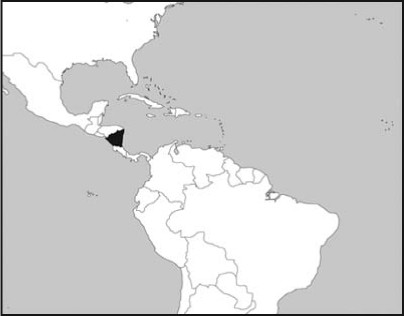
This paper is based on an in-depth study of two small Nicaraguan communities. Nicaragua is the largest country in Central America, bordered by Honduras and Costa Rica. It is perhaps best well known for the Sandanista revolution in 1979 and subsequent 11 years of revolutionary government under Daniel Ortega, who was re-elected to power in 2006 and elected president for a controversial third consecutive term in 2012. Despite its revolutionary past, it is considered to be one of the poorest countries in the Western hemisphere, with high levels of inequality. Its economy remains dependent on agriculture and fisheries, yet the urban population has been expanding at a faster rate than the rural population since the 1970s, with the vast majority of the urban growth concentrated in the capital city, Managua.
The fieldwork was undertaken in September 2008 and focused on two communities – one rural and one urban, each consisting of around 70–80 houses. Every house in each community was visited, and where a woman was present during the fieldwork period she was interviewed. While the sample is not representative of Nicaragua as a whole, the study represents a “census” of two communities typical of the country. The communities were both part of an earlier study in 2001,(25) and had been selected through consultation with local organizations working in the area as being “typical” of the low-income communities in the region.
The rural community is located in the department of León and lies about seven kilometres from a main road, but the economic mainstay of the community is agricultural day labour. It is a well-established community, which residents suggest has existed for 120 years when it was founded by five families whose descendants still live there today. Housing in the community is mixed, ranging from homes built of concrete blocks to ones constructed from materials to hand, including plastic sheeting. The housing stock and services had deteriorated since the visit in 2001, and the level of poverty in the community had increased, not least influenced by various “disasters”, including hurricanes and drought.
The urban study community is located in the capital, Managua. In comparison to the clustered arrangements in the rural community, the houses within the urban settlement are arranged in a linear way, but while all comprise a similar basic unit, they have been consolidated to a greater or lesser extent with a diverse range of materials. The community has piped water but electricity is obtained from an illegal source and there is no proper sewerage system. The settlement does have the advantage of being able to access urban services such as colleges, health centres and hospitals. However, those who live within the settlement also face “urban” problems such as youth gangs and drugs, both of which are seen to be national problems(26) and are increasingly perceived as affecting both rural and urban areas. Community members work for the most part in a limited number of sectors. For women, employment is in private houses as maids or child care workers, or they take in washing; for men, there is day work in construction or as guards for the private houses of the rich.
In each community, a questionnaire was undertaken with the “woman of the household”, that is the female head or female partner of the head of household, and follow-up interviews were with a sub-sample of these women – both female heads and women with a male partner. Where the women had a partner and had agreed to him being interviewed, a male researcher undertook the same questionnaire with the man. This methodology allows not only a comparison between men’s and women’s opinions in general, but also between a woman and her male partner. Questions were asked around employment and consumption, participation in local activities and local concerns, understandings of rights and responsibilities, social and gender norms, and decision-making across a range of issues.(27) The following discussion will focus on employment, norms and decision-making.
IV. Employment
As might be expected, more women were engaged in income-generating activities in the urban than in the rural community (59 per cent compared to 33 per cent of rural women). Also as might be expected, while the vast majority of women (91 per cent) agreed that it was “important that women work the same as men to earn an income”, more women agreed with this statement in the urban community than in the rural community (only five per cent disagreed with the statement in the urban community compared to 13 per cent in the rural community). However, in contrast, when the women of the two communities were asked whether the “majority of women in the community worked”, there was significantly greater agreement with the statement in the rural community (where 79 per cent agreed) than in the urban community (where 53 per cent agreed). This may seem counter-intuitive, however, much depends on how the notion of “work” is being understood. As one woman from the rural community noted: “…the man goes to the farm, eats and then goes to bed, they rest and we all the day until the evening we cannot rest.” When talking of their work in the home, rural women discuss not only cleaning, washing and cooking but also, unlike the urban women, collecting water and gathering firewood. Rural women also tend the land around the home, if it is cultivated, and may care for small livestock, particularly chickens. During harvest and other busy times, they may also “help” the men working in the fields. Thus rural women may see their activities in the home as arduous and time consuming, and this may make them more likely to perceive that women in the community are “working”. Reproductive work is also closely linked to understandings of being a woman, especially in rural areas. As one rural woman noted, when a woman first lives with a male partner and has a child, this means she “…irons and washes, washes nappies and looks after the children, and so now you can say, now she is a woman…”
Yet while work in the home is part of rural women’s identity, when asked specifically if they themselves “worked”, no woman not engaged in income-generating activities identified themselves as working, in the rural (or the urban) community. It appears then that, while rural women see (other) women as working, and given the low numbers of women in paid work in the rural community this seemingly constructs non-paid activities as “work”, they do not identify themselves as “working” unless it is paid work. They then value the reproductive work of other women, but not necessarily their own. More importantly, a significant minority (10 per cent) of those women engaged in income-generating activities did not declare themselves as “working”, and all were from the rural community. Rural women, then, may also not value their own productive activities as “work”. This may also reflect the fluidity of activities in rural locations with, for example, selling a chicken from time to time not being conceptualized any differently from keeping chickens to eat in the home. When “housework” becomes “work”, when reproductive activities become seen as “productive”, is a subjective judgement, and more so in rural than urban locations given the activities are more likely to be performed in the same physical space. Expressed another way, urban women are not only more likely to be engaged in income-generating activities but, perhaps more importantly for household decision-making, they have a better self-perception of their own activities as being productive and hence qualifying as “work”, and value them accordingly.
While women’s views of their own reproductive and productive work are important, the perception of others also has a role to play in household bargaining. Overall, men agreed that it was important for women to work the same as men to generate an income, although more men than women thought women’s work was not important (16 per cent compared to only nine per cent of women). However, once again what is interesting is not that men undervalue women’s income-generating activities but, rather, which men – and once again it is in rural areas that women’s income-generating activities are not seen to be important, with 38 per cent of men in the rural community compared to only three per cent of men in the urban community stating that income-generating work was not important for women. Perhaps more importantly, and more intimately, there are differences within couples. When the woman identified herself as “working” on the questionnaire, and was indeed engaged in income-generating activities, in one-third of the cases her male partner stated that she did not “work” and identified her as a housewife. That is, one-third of men do not recognize their female partner’s income-generating activities as “work” and as such undervalue the economic contribution she makes to the household.
V. Limitations to Women’s Income Generation
The fact that more women are engaged in income-generating activities in the urban compared to the rural community may be explained by the greater opportunities open to them. However, when asked what limited their ability to earn an income, women in the urban community were more likely to mention lack of opportunities than women in the rural community. This may suggest that in urban areas, even when women do not work to earn an income, they would like to do so. On the other hand, women may not be able to take up the opportunities open to them, and of those households where the woman is not an income earner, more than half the women named caring for the home as the reason for this. In the urban community, child care is seen to be a key limitation, perhaps because urban women do not have the kin networks nearby that can provide free child care. Other studies have shown that this lack of familial social capital is an important factor in limiting women’s bargaining position, not only because it limits women’s ability to earn an income but also because paying for child care reduces women’s ability to acquire other assets that can be used to improve their bargaining position.(28)
Housework in general is a factor that limits women’s ability to engage in paid employment. On the other hand, paid work can have consequences for housework, as one urban woman noted: “Before, the woman dedicated herself to the home; now no, women have had this advancement because now women work, but also women neglect the home now, and before you never saw that.” The idea that a woman neglects her home may be of great importance in societies with strong gendered norms that promote women’s principal role as a carer, not just of children but also of men. The study suggests that such gendered norms were stronger in the rural than the urban community. The shift in gender norms was evident not only through women’s activities but also men’s, with men in some cases being involved in housework. The comment by one urban man highlights how changing roles can be absorbed into gender norms: “The fact that I pick up a broom now does not make me a woman.” However, in the rural community, many women and men hold strong views that women’s key role is to serve men: “As soon as I married my husband I knew that I had to be good, to serve him in everything.” One woman goes further in terms of what this means, noting that for one important upholder of social norms, the Church, a good woman is “…not exactly a slave, but not much less.” Rural women were more likely than urban women to mention social norms as limiting their ability to engage in paid work, but more than one-fifth of all the women said they did not work for an income as their male partner did not approve of women “working”. This suggests that for these women and men, ideological concerns outweigh the need for income. However, interestingly, only nine per cent of men suggested male disapproval was a reason why women did not engage in paid work. This raises the question of how women not “working”/generating an income is perceived, as women may feel that they cannot make the choice to work, while men see women as “choosing” not to work.
Why women do, or do not, engage in paid work may also be related to how they view the costs and benefits. Women and men were asked why work – here understood as income-generating activities – was important for women, and also what opportunities this brought them. The reasons given for why women’s work is important can be placed in a number of broad categories. The first, not surprisingly, can be defined as economic reasons or out of necessity. Normative reasons also emerged as important – the idea that women “should” work – and often women mentioned their responsibility in the light of the irresponsibility of men. Ideas associated with independence – here generally expressed in relation to economic independence, but also including independence from men – were the third broad category. Given the low-income nature of the communities, paid work was seen as a necessity for women, and this was the largest response category among women and men. However, nearly equal numbers (around one-third) of men conceptualized women’s paid work as important for “helping men” as said that women’s paid work was a “necessity”. The difference is a subtle but important one, as the former suggests less value is attached to women’s activities than the latter does. This notion of women’s wages “helping” men is associated more with rural than urban areas and exists even when it is the woman who earns most; as one rural man explained: “….at times there are women that have a better income than the man, and then they help even more.” In contrast, women did not suggest that their paid work “helped men”. Instead, rural women constructed work as their “responsibility”, or stated that women “should” work. This may help explain the earlier finding that rural women were more likely than urban women to suggest that the majority of women in the community were working – since it is seen as something they “should” do. In response to a follow-up question that asked what opportunities paid work brings, rural women were more likely than urban women to suggest that work brought them no opportunities. The notion of responsibility, plus the low expectations of the benefits “work” brings may also help explain why rural women engaged in paid work do not always identify themselves as “workers”.
In contrast, in the urban community 45 per cent of women saw work as important for the “independence” it brings – this was expressed as economic independence but also related to an explicit recognition of independence from men. As one earning woman noted: “Now I am independent and while before, everyone – father, mother, grandparents – had an opinion… now no.” The opportunities from paid work mentioned by urban women included the opportunity for self-development. This suggests that women in the urban community do see income-generating activities differently from women in the rural community, and that such activities are more highly valued both in monetary and non-monetary terms. That self-development is thought of as being one of the opportunities that paid work brings also suggests that urban women, more than rural women, see a difference between reproductive and productive work, and may also suggest that through productive work they wish to see themselves “differently”.(29)
Given the independence paid work is said to bring, the data suggest that for urban women, income generation may lead to improved economic power and improved threat point positions. It may also suggest that women are more aware of these improvements. However, there is not necessarily a direct link between income generation and voice, as it is perceived contribution, not actual contribution, to the household that may be most important in explaining the ability to make decisions.
VI. Contribution
When asked who contributed most to the maintenance of the family – the man, the woman or both – nearly half the female respondents named the man alone. While more women with paid work than those without replied “both”, there was no significant difference in opinion. This suggests that non-earning women value their reproductive non-monetary contribution to the home as much as women who do earn an income value their monetary (and non-monetary) contribution. Men have a different view, however, and while 70 per cent of men said both they and their partner contributed to the household when the partner earned an income, only 16 per cent recognized a female partner’s contribution if she was not earning. Men, then, are more likely to undervalue women’s non-income contribution than women, who are more likely to see reproductive roles as “contributing” to the household. This has important implications for rural women who, compared to urban women, are less likely to be engaged in income-generating activities. Even when they earned an income, they were less likely to recognize themselves and be recognized by men as “workers”.
Income seems to be key for men’s, if not women’s, ideas around contribution, and relative income may also be an important factor in determining these ideas. The literature suggests that adult partners generally have incomplete information about each other’s earnings. While men tend to minimize their wives’ earnings, not least as part of a wider strategy to uphold the notion of the male breadwinner, women tend to be kept deliberately uninformed about male earnings.(30) This, in part, may be related to the widely documented phenomenon of men withholding part of their income for personal expenditure.(31) In the study, more than half the women said their husbands gave all the money they earned to the household, but a significant minority (18 per cent) thought the man used most of “his” money on himself. When their male partners were asked about how they used their money, five per cent said they withheld more than half their income for their own personal expenditure, but perhaps not surprisingly the majority (74 per cent) reported giving all their income to the household. In contrast, when asked more generally how “men in the community” spent their incomes, the majority of men said (other) men spent it on “vices” (54 per cent) or drinking (34 per cent), and only 12 per cent said the family or household. By comparison, 77 per cent of men stated that women in the community spent their own income on the home, food and the children.
The data suggest that women’s perception that men withheld income for their own personal use has some validity. Women’s perception of what their partners did with the money they earned was influenced by household income. In poorer households, the feeling among women was that men shared more and withheld less; with “prosperity” came greater use of male earnings for personal expenditure. This prosperity may be double-edged then, not least because among women who earned an income, 30 per cent thought their male partner used the money he earned on himself rather than on the family, compared to 11 per cent of non-earning women. If this is the case, women’s work will not necessarily add to household prosperity – when women earn an income, men may be more likely to withhold more of their income from the household, thus increasing their own prosperity rather than that of the family.
It might be suggested that in terms of ideas around “contribution”, actual earnings may not be as important as the amount dedicated to the home. This may show commitment to the home and be valued in its own right. This hypothesis is supported by the fact that where the man is perceived by women as giving all of his income to the household, women in turn are more likely to suggest that he alone makes the most important contribution to the household, whether they themselves are income earners or not. That is, when men are seen to fulfil their obligations to the household this is afforded a value, and this value may be much more than the economic value of the contribution. As men’s incomes increase and money is withheld, the value associated with men’s contribution may decline, even if the economic contribution remains the same.
While income may be important, that men fulfil their role as provider may be as important to women. Men, in general, are considered to be the “head of the household”, and in the study, in households where a male partner was present, the majority of women did name the man as head. One-quarter of women, perhaps a surprisingly high proportion, suggested however that headship was joint. Once again, rural/urban differences exist, with more women in rural areas naming the man alone as head of household and fewer saying that both were joint heads. While men explained their headship in terms of their monetary contribution to the household, women were more likely to explain headship in terms of social norms – simply stated, because he is a man. Thus, urban women’s lower perception of male partners as sole “head” of household may be the product of changing social norms as much as their income generation.
Although more than half the women with a male partner perceived the man to be the head of household, when asked who made the important decisions in the home, only one woman in five named the man alone as the key decision maker; the majority perceived important decisions as being made jointly. This is a view shared by men, with even more men saying major decisions were made jointly (75 per cent). While the man alone is more likely to be named as the key decision maker in households where the woman does not earn an income (24 per cent compared to 10 per cent in households where the woman does earn), there is no statistically significant relationship between a woman earning and being seen as taking key economic decisions. This supports the notion that income alone is not what determines voice in the home.
VII. Decision-making
While the majority of households indicated that decision-making was a “joint” process, care is needed in interpreting this. Research suggests that while households report decision-making to be shared, decisions are largely influenced by one partner.(32) One man’s explanation of joint decision-making illustrates this point: “I talk to her, I say to her, I don’t like this or that…” This way of making decisions “jointly” is also evident in women’s descriptions, as one rural woman noted: “I ask him what we are going to do and he tells me … we both have to be together because a woman without the help of a man cannot get on…” In contrast, some women do not see men as decision makers at all, as one woman made clear: “I am the one who decides; they (men) only give money.” The question is what do women decide on?
Breaking down the decisions made into key areas reveals that income generation is important for decision-making in some cases. Women and men were asked who made the decisions regarding a variety of issues – from buying food or children’s clothes, to questions of who should punish a child, whether a woman should visit friends or not, and questions around contraception and sex. In general, women who were not engaged in income-generating activities were more likely to report that the man alone made the decisions involving expenditure, even in “women’s” areas such as buying clothes for children. In contrast, women who earned an income were more likely to say that the woman alone made the decisions. The general pattern among men was that where the man said his partner was a housewife, he was more likely to say that the man alone should make decisions, even concerning “female” purchases such as food.
Overall decisions concerning children emerged as an area for joint decision-making. Very few respondents suggested that the decision maker should be the child, even when the “child” in question was 18 years old. While there were no significant differences regarding decision-making in terms of whether or not women were in paid work, there were significant differences between the communities, with both women and men less likely to respond “both” as the decision makers in the rural compared to the urban community.
In terms of having children and how many, again the favoured response from women was “both”; and again, urban women were more likely than rural women to say that both should decide. However, while fewer than five per cent of women thought this was a decision for men alone, more than 30 per cent thought women alone should decide if and when to have children. Related to this is the issue of contraception. The majority of women saw contraception in general as a decision for women alone (55 per cent) followed by “both” (40 per cent), with only a small proportion (five per cent) seeing it as a decision for men alone. Even in terms of condom use, while the proportion saying that the man alone should decide is higher (36 per cent), this is still not the majority response. Of course, women stating that they alone should make the decision around contraception may not reflect their “empowerment” as much as the reality that men do not take responsibility in this area.(33) The study suggests, however, that men favour “joint” decision-making; in contrast to women, who see contraception as a “female” area, men see a role for themselves in these decisions. Differences do exist among men, based on location, and 91 per cent of men in the urban community see contraception as a being a joint decision compared to 50 per cent of men in the rural community, with rural men being more likely to suggest that they alone should make the decision.
Women engaged in income-generating activities were more likely to suggest that women alone should decide on the number of children to have (42 per cent of earners compared to 28 per cent of non-earners). When asked who should make the decision about if and when to have sex, more women with paid work responded “the woman” (27 per cent compared to 13 per cent of non-earners for “if”, and 30 per cent compared to 17 per cent of non-earners for “when”). This suggests a link between income generation and decision-making around intimate issues, including sexual relations and fertility. Women engaged in income generation also displayed fewer traditional beliefs when asked about sexual norms with, for example, fewer women earners than non-earners thinking women should be virgins at marriage (52 per cent versus 69 per cent). Less traditional beliefs were also found among urban women compared to rural women. Yet when women were asked if a woman should have sex with her husband even if she did not want to, whether or not they earned an income was not significant. What was significant was whether a woman saw herself as making a contribution to the household, and whether she named herself as the sole or joint decision maker in the household. Location was also significant, and fewer urban women believed a woman should have sex even when she didn’t want to than was the case with rural women. This can perhaps best be understood as relating to perceptions of couple obligations. It is then an issue of ideology, not income, and this may explain why the perception of contribution is more important than work. It may suggest that women who value their contribution to the home see themselves as fulfilling their couple obligations through this, and thus feel that they can say no to other “obligations”.
VIII. Conclusions
The study highlights that “work” is a complex notion, and one that is understood differently by rural and urban women, and by men and women. The differences in how women’s daily activities are defined are important, as through this they are given value, and if activities are not recognized as “work” they are not valued as such. Paid work also implies much more than income, at least for urban women who see it as bringing independence from men and also the opportunity for self-development. Paid work in this case should then allow a woman to improve her bargaining and threat point positions, but perhaps more importantly means she starts to “see herself differently”.
However, it is not only women’s self-perception that is important but also the perception of others – in this case men. At times there is a mismatch of views and values, and while women recognize their own contribution to the household as including non-monetary activities, men often see women as contributing only when they do so in monetary terms. This difference may be most important for rural women since they are both less likely to make a monetary contribution and more likely to value their non-monetary contribution. There may be greater similarity in this area between the views of urban women and men; within urban communities the way men and women value reproductive and productive work and determine “contribution” may coincide much more.
Contribution, in turn, is important in decision-making. While the relationship between income and monetary decisions is quite straightforward, other decisions, for example those over children, having children and having sex, are not. In these cases, the values placed on what people do, and how they do it, may be more important than the actual value of the income they generate. So men who are seen to contribute all their money to the household may be afforded by women a value within the home that is not linked to income but to their having fulfilled their obligations to the household. Women who value their contribution to the home may be more likely to feel they have fulfilled their obligations and less likely to feel obliged to fulfil other, non-monetary, couple obligations. What these cases highlight is that ideology is as important as income in household bargaining. In itself, being “urban” seems to contribute to understandings of both income and ideology, for both urban women and men, suggesting the urban household may be qualitatively different than its rural counterpart.
Footnotes
Acknowledgements
This paper is based on research undertaken as part of the activities of the Mujeres en Movimiento initiative of Puntos de Encuentro, Nicaragua (http://www.puntos.org.ni/), with additional support from Progressio, UK ( ). My thanks to Teresita Hernández and Irela Solãrzano of Puntos de Encuentro for their support with all stages of the project. Many thanks also to all the women and men who took part in the study and to those women and women’s groups in Nicaragua who took part in the workshops based on the study findings for their insightful contributions. My thanks also to Cathy McIlwaine, Sheridan Bartlett and the two anonymous referees for their useful comments on an earlier draft of this paper.
1.
Blumberg, R L (1991), “Income under female versus male control”, in R L Blumberg (editor), Gender, Family and Economy: The Triple Overlap, Sage Publications, London and New Delhi, pages 97–127.
2.
Kanbur, R (2002), “Education, empowerment and gender inequalities”, Paper prepared for the Annual Bank Conference on Development Economics, Washington DC, 29–30 April.
3.
Barrett, M (1980), Women’s Oppression Today, Verso, London, 308 pages; also Dwyer, D and J Bruce (1988), A Home Divided: Women and Income in the Third World, Stanford University Press, 289 pages; and Folbre, N (1989), “The black Four of Hearts”, in D Dwyer and J Bruce (editors), A Home Divided: Women and Income in the Third World, Stanford University Press, pages 248–262.
4.
Safilios-Rothschild, C (1984), “Role of the family in development”, in S E Charlton (editor), Women in Third World Development, Westview, Boulder CO, pages 45–55; also Safilios-Rothschild, C (1988), “The impact of agrarian reform on men and women in Honduras”, in D Dwyer and J Bruce (editors), A Home Divided: Women and Income in the Third World, Stanford University Press, pages 216–228; and Whitehead, A (1981), “‘I’m hungry, Mum’: the politics of domestic budgeting”, in K Young, C Wolkowitz and R McCullagh (editors), Of Marriage and the Market: Women’s Subordination in International Perspective, CSE Books, London, pages 88–111.
5.
See Becker, G (1981 and extended edition 1991), A Treatise on the Family, Harvard University Press, Cambridge, 440 pages.
6.
See Doss, C (1996), “Testing among models of intra-household resource allocation”, World Development Vol 24, No 10, pages 1597–1609.
7.
See Agarwal, B (1997), “Bargaining and gender relations: within and beyond the household”, Feminist Economics Vol 3, No 1, pages 1–51; also Sen, A (1987), “Gender and cooperative conflicts”, Working Paper 18, World Institute for Development Economics Research, Helsinki, 58 pages; and Sen, A (1990), “Gender and cooperative conflicts”, in I Tinker (editor), Persistent Inequalities, Oxford University Press, New York, pages 123–149.
8.
Quisumbing, A (editor) (2003), Household Decisions, Gender and Development: A Synthesis of Recent Research, International Food Policy Research Institute, Washington DC, 274 pages.
9.
Grasmuck, S and R Espinal (2000), “Market success or female autonomy? Income, ideology and empowerment among microentrepreneurs in the Dominican Republic”, Gender and Society Vol 14, No 2, pages 231–255.
10.
Elson, D (1992), “From survival strategies to transformation strategies: women’s needs and structural adjustment”, in L Beneria and S Feldman (editors), Unequal Burden: Economic Crises, Persistent Poverty and Women’s Work, Westview, Boulder CO, pages 26–48.
11.
Bennholdt-Thomsen, V (1988), “Why do housewives continue to be created in the Third World, too?”, in M Mies, V Bennholdt-Thomsen and C von Werlhof (editors), Women: The Last Colony, Zed Books, London, pages 159–167.
13.
Mies, M (1982), Lace Makers of Narsapur, Zed Books, London, 196 pages.
14.
Bruce, J (1989), “Homes divided”, World Development Vol 17, No 7, page 988.
16.
Carter, M and E Katz (1997), “Separate spheres and the conjugal contract”, in L Haddad, J Hoddinott and H Alderman (editors), Intra-household Resource Allocation in Developing Countries: Models, Methods and Policy, Johns Hopkins University Press, Baltimore, pages 95–111; also Hart, G (1991), “Engendering everyday resistance: gender, patronage and production politics in rural Malaysia”, Journal of Peasant Studies Vol 19, pages 93–121; and Hart, G (1997), “From ‘rotten wives’ to ‘good mothers’: household models and the limits of economism”, IDS Bulletin Vol 28, pages 14–25.
17.
See, for example, Friedemann-Sanchez, G (2006), “Assets in intra-household bargaining among women workers in Colombia’s cut flower industry”, Feminist Economics Vol 12, No 1–2, pages 247–269.
18.
See, for example, Gupta, S (2006), “Her money, her time: women’s earnings and their housework hours”, Social Science Research Vol 35, pages 975–999.
19.
Kamo, Y (2000), “‘He said, she said’: assessing discrepancies in husbands’ and wives’ reports on the division of household labour”, Social Science Research Vol 29, pages 459–476.
20.
Bittman, M et al. (2003), “When does gender trump money? Bargaining and time in household work”, American Journal of Sociology Vol 109, No 1, page 207.
21.
Tiano, S (2001), “From victims to agents: a new generation of literature on women in Latin America”, Latin American Research Review Vol 36, No 3, pages 183–203.
22.
Chant, S (2002), “Researching gender, families and households in Latin America: from the 20th into the 21st century”, Bulletin of Latin American Research Vol 21, No 4, page 552.
23.
See reference 17.
24.
Raynolds, L (2002), “Wages for wives: renegotiating gender and production relations in contract farming in the Dominican Republic”, World Development Vol 30, No 5, pages 783–798.
25.
See Bradshaw, S (2002), “Gendered poverties and power relations: looking inside communities and households” (“La pobreza no es la misma ni es igual: relaciones de poder dentro y fuera del hogar”), Puntos de Encuentro, Managau, Nicaragua, 100 pages.
26.
Rodgers, D (2008), “A symptom called Managua”, New Left Review Vol 49, pages 103–120; also Rodgers, D (2004), “Disembedding the city: crime, insecurity and spatial organization in Managua, Nicaragua”, Environment and Urbanization Vol 16, No 2, October, pages 113–124.
27.
See Bradshaw, S (2010), Decisiones Económicas e Intimas de las Mujeres, Puntos de Encuentro, Nicaragua, accessed 12 November 2012 at , 80 pages.
28.
See reference 17.
29.
See reference 14.
30.
See reference 14, page 984.
31.
See Chant, S (2003), “Female household headship and the feminization of poverty: facts, fictions and forward strategies”, New Working Paper Series, Issue 9, Gender Institute, London School of Economics and Political Science, London, 70 pages.
32.
Dosman, D and W Adamowicz (2006), “Combining stated and revealed preference data to construct an empirical explanation for intra-household bargaining”, Review of Economics of the Household Vol 4, pages 15–34.
33.
See reference 9.