




Abstract
This article examines the impacts of urban change on the well-being of women and men, and girls and boys living in cities, and explores how gender intersects with other social relations to differentiate these impacts. It then considers the implications of intersectionality for organizations aiming to promote the interests of specific social groups (such as women or people with disabilities) vis à vis urban change by looking at the experience of Leonard Cheshire’s Asha project, which works with girls and boys with disabilities in Mumbai. It concludes that organizations working to promote the interests of identity-based constituents should both base their strategies around research that recognizes the instersectional nature of social identities and also develop agendas for change that build platforms for social justice that unite, rather than fragment, identity-based claims.
I. Introduction
Currently, urban change is shaped predominantly by market enablement practices, which have resulted in fundamental spatial and social restructuring of cities of the global South. Within this framework, urban development agendas have prioritized productivity and competitiveness over citizens’ rights and equity.(1) As a result, there has been an increased tendency to unlock the economic potential of desirable land in inner-city locations where low-income settlements are located, often in conditions of informality. This has resulted in evictions, resettlement or regularization programmes that have profound impacts on the well-being of low-income urban dwellers. Such urban restructuring is shaped by, and affects, women and men, the young and the elderly, able people and people with disabilities, in different ways.(2)
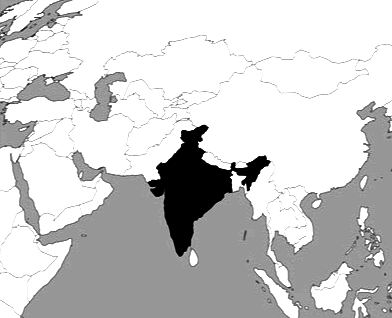
Mumbai is one city that has been experiencing such trends, as its ambition to become a world class city has meant that it is increasingly oriented towards, and linked to, the global economy. Combined with the lack of available well-connected land in the city, the result has been an intensification of contestations for inner-city spaces. Slum(3) dwellers, who represent almost 55 per cent of the city’s population,(4) face growing threats of eviction and relocation as the price and desirability of the spaces in which they live increases.(5) As a result, government housing initiatives such as the Slum Rehabilitation Scheme have opted for high rise solutions, delivered by the private sector, as a way of unlocking land and space in the inner city, to be absorbed by the formal market system.
The impacts of such social and spatial change on the well-being of urban dwellers, in all of their diversity, are still inconclusive. Furthermore, to understand and influence these processes, there is a need for analytical frameworks that can explore social complexities and the connections between spatial changes (in urban form and the built environment) and social relations (through which people interact in urban spaces, for example those relations structuring systems of entitlement, economic behaviour, social status or political influence).
With that in mind, this article aims to understand the implications of urban change processes on gender and other social relations. More specifically, it aims to understand how civil society organizations that set out to represent the needs of different categories of urban residents in the context of urban change engage with the intersecting identities of these residents. This will be explored through the case study of Leonard Cheshire’s Asha Community-based Rehabilitation project in Mumbai.
II. Urban Change and Gender
Gender refers to a universally important set of social relations that underpin context-specific expectations about the social practices and the relations between and among women and men, and girls and boys. Many frameworks have been developed to explore how gender relations structure the lived experiences, well-being and opportunities of different groups of women and men.(6) What these frameworks have in common is an understanding of gender as a primarily socially constructed set of relations, around which are built a set of cultural and institutional logics that influence expectations and norms about women’s and men’s different social roles, their entitlement to accessing and controlling a range of resources, and thus their different “gender needs”(7) or “gender interests”.(8)
In light of this, the urban context and gender relations interact as determinants of city dwellers’ different abilities to achieve well-being. A number of conceptual models have been developed to understand well-being as an over-arching goal for development, including Sen’s influential capability approach,(9) but broadly it can be defined as: “…an interplay between the resources that a person is able to command; what they are able to achieve with those resources; and the meanings that frame these and that drive their aspirations and strategies.”(10) More specifically, a growing body of literature has explored the contribution of the capability approach to understanding gender inequalities.(11)
A wealth of research shows how gender relations and urban change processes interact in ways that can create different opportunities for women and men to realize their aspirations for well-being. Such research shows how both urban form and urban relations are gendered. For example, in terms of urban form at the micro level, the evolution of different styles of housing responds (or fails to respond) to the needs of different household structures. This is because state and private sector housing is often designed according to principles based on gendered assumptions about households, with the belief that the “normal” household type is the nuclear family. This means that such housing provision often fails to cater for the needs of other household types, such as female-headed households.(12)
The form of housing at this micro level also influences the opportunities for women and men to carry out their gender roles in line with the customary gender division of labour. In many contexts, low-income women undertake productive activities in the home as a result of the need to balance care work, such as child care, with income generation.(13) In this case, housing design and infrastructure can represent a critical asset, or constraint, for conducting such productive activities in the home. For example, Moser’s ethnography of low-income communities in self-built stilt housing over lagoons in Guayaquil, Ecuador(14) showed how the lack of water connections represented a critical constraint on women’s economic opportunities to undertake laundry work (a typical home-based productive activity for low-income women in the city).
An associated point is that planning laws (an urban relation that determines the right to produce particular urban housing forms) may often inhibit the development of housing designs that allow women to work from their homes – for example, laws around operating shops from houses, or relating to food production on domestic premises. Furthermore, where housing policy focuses on slum upgrading, from self-built housing to apartment blocks, the new spaces provided in these housing upgrading schemes are often less appropriate for home-based economic production,(15) due to smaller floor areas and lack of outdoor spaces or yards that again may prevent low-income women (and men) from engaging in home-based economic activities.
At the city scale, urban forms that are based around a stricter segregation of land uses, with distinct areas for housing, business, retail and public services as typified by Park and Burgess’ study of Chicago in the 1920s,(16) favour a similar division of the lives of women and men into different roles (and particularly a division of productive and reproductive activities). This kind of spatial segregation in planning is underpinned by a division of the domestic and public spheres, reinforcing gendered assumptions about women’s and men’s roles that conform to a traditional male breadwinner/female housewife pattern. However, the reality for most people, and in particular for low-income women, is that they balance a number of different gender roles, including reproduction, production and community level engagement, which blur domestic/public boundaries. In this case, the spatial segregation of the urban sites in which these activities are carried out becomes problematic. This, in turn, has implications for transport planning and the extent to which transport infrastructure reflects the different mobility and accessibility needs of women and men in order that they may carry out their customary gender roles, as well as the different access they have to the modes of transport available (with women typically more reliant on public modes of transport and more likely to make frequent, short trips for a mix of activities such as shopping, schools trips and paid work, as opposed to the typically “male” daily commuting model).(17)
In terms of urban relations, the different social and economic relationships that underpin entitlement to housing are also strongly gendered. Research clearly shows that in most contexts, the formal and informal systems of entitlement that determine tenure rights (such as titling rules that specify the “household head” as the signatory as opposed to joint tenure systems; inheritance laws and practices that favour male heirs; divorce laws and practices that are disadvantageous to women’s tenure rights; or patrilocal residence patterns that mean that married women live with their in-laws) conspire with gendered economic inequality (which weakens women’s market access to housing) to result in lower security of tenure for many women and female-headed households and frequent dependence on close relationships with male relatives or partners to ensure security of tenure.(18)
In light of this, because urban form and urban relations are both demonstrably gendered, urban change will interact with gender norms and practices in ways that can be emancipatory or that can consolidate existing gender inequalities. As a result, urban change has frequently been a catalyst for women’s political engagement.(19)
III. Gender, Diversity and Intersectionality
However, while urban change undoubtedly has gendered impacts on well-being and capabilities, one of the lessons learnt by those working on gender equality as a development goal is the importance of not making generalizations about “women” and “men”. This binary oversimplifies the diversity of lived experience and interests of women and men, and ignores the ways in which development processes such as urban change will also be influenced by other social relations built around factors such as class, ethnicity, age, sexuality and disability.
While popular ideology (such as communitarian ideology) and some social theorists and many organizational policies treat people as though they have what Sen describes as “singular affiliation”, “…which takes the form of assuming that any person pre-eminently belongs, for all practical purposes, to one collectivity only”,(20) this does not reflect the reality of social identity. People have multiple, intersecting social identities that they may mobilize strategically and according to specific contexts and situations. In light of this, understanding the overlapping nature and fluidity of social groups means recognizing the importance of “difference within difference”.(21) It is therefore crucial to understand gender as a social
Recognition of people’s multiple sources of identity has led to a growing field of study, stemming largely from feminist theory, about the nature and significance of “intersectionality” as “…the notion that subjectivity is constituted by mutually reinforcing vectors of race, gender, class and sexuality.”(23)
Clearly, recognition of the intersectional nature of identity makes understanding the relationship between gender and urban change more complicated. Social research (including research into the impact of urban change on women and men’s well-being) typically attempts to group people according to shared experiences or characteristics, such as their gender, but clearly an intersectional focus problematizes this approach.
Nonetheless, a number of research strategies do attempt to incorporate an intersectional perspective,(24) and these approaches were the starting point for a pilot research initiative conducted by the authors of this paper, which attempted to explore how intersecting social relations, based around gender, class, age and disability, influenced the well-being of children targeted by a project run by the NGO Leonard Cheshire, in Mumbai, and the different impacts that these children faced in relation to the Slum Rehabilitation Scheme, a key ongoing urban change process in the city.
IV. The Asha Project
Andheri East is a district in Mumbai that is undergoing rapid urban change, constituting, as discussed above, the intertwined transformation of both urban form and social relations in the area.
Central to these change processes is Mumbai’s Slum Rehabilitation Scheme (SRS), which is based on the Slum Rehabilitation Act of 1995 and allows private developers to replace slum communities with formal housing blocks, conditional on their offering replacement housing or compensation to slum residents who have been recognized as informal structure owners during census surveys.
Andheri East sits on the northern boundaries of the city centre, and the availability in past decades of vacant land and lower land values has meant that this has long been an area that attracts low-income households, including migrants from other parts of India. The district is therefore characterized by a checkerboard of slums and informal settlements sitting between areas of formal housing. Since the construction of the Maharashtra Industrial Development Corporation (MIDC) in the district in the 1960s, Andheri East has experienced rapid growth. Today, it is the most populous district in Mumbai with more than four million inhabitants. Due to its relative proximity to the city centre and the opening of the new metro in 2011, the desirability of Andheri East for residential purposes has increased considerably in recent years, thus affecting land prices and intensifying the construction of middle-class residential housing. In this context, the SRS has become a good way for land speculators to replace slums with high rise buildings, thus clearing land for property development.
The SRS typically involves developers offering slum structure owners an apartment in a newly constructed high rise building − to be built on the existing low level (one to three storeys) informal settlement sites − in exchange for the tenure rights to their existing slum housing. If the new apartment block is to be built on the original site of the old slum dwelling, the developers pay a lump sum to cover rental accommodation during the construction period. In other cases, developers build a rolling stock of new housing so that households can move straight into new apartment buildings.
This implies two critical urban change processes. One is the spatial transformation of low rise, largely pedestrian neighbourhoods of informal housing, with limited sanitation and water infrastructure, into serviced high rise apartment blocks. The other change process is the transition from a context in which people’s entitlement to tenure is based on a complex arrangement of informal home ownership (evidenced through ration card registration of structure owners during census surveys), informal rental arrangements and the kin and social ties of migrant networks, to an increasingly market-based set of entitlements to tenure that focus on the formalization and commodification of housing (and the associated exclusion of those who had been reliant on low-cost rental tenure in informal settlements).
As discussed earlier, such changes are typically gendered. The fact that women are primarily responsible for reproductive (or care) work means that the opportunity to move to a new apartment has attractions for them; these include individual toilets and piped water, compared to previous informal settlements where access to water was normally outside the home and where households used public toilets, with associated implications for women’s time spent not only on personal hygiene but also on the hygiene of dependents such as children or elderly and disabled household members. In addition, research shows that public toilets (or the lack of them) often present a personal security issue for women living in slum settlements in India,(25) again meaning that toilet provision in the new homes is particularly attractive to women and girls.
However, not all the spatial implications of the move are positive. One of the aspects of the SRS in Mumbai that has been widely criticized, and that has led to communities refusing to participate, is the small size of the replacement apartments.(26) As noted earlier, this may be particularly problematic for women who have primary responsibility for housework and care in the home, spend more time in the home or conduct informal sector work (such as garment piece work or food production) from their homes.
In terms of urban relations, the SRS also constitutes a change in the system of entitlements through which women and men access housing in Andheri East, with a move from de facto occupation and development of land and a low-cost private rental market, to more formal market-based entitlement to housing. Generally, this transformation represents a hazard to low-income households in that households that rented in the original slum communities are not eligible for replacement housing through the SRS, and also, poorer eligible households may struggle to pay costs, such as service charges, in the new apartments.
The formalization and increasing commodification of housing also has gendered implications. Globally, research indicates that female-headed households are more highly represented as rental tenants because of inheritance norms, their exclusion from office housing programmes, lower incomes and the lack of skills and labour to build self-help housing.(27) According to National Sample Survey data, urban female-headed households in India are more likely to be in poverty;(28) research also shows that they are likely to be over-represented as rental tenants in Indian urban slums,(29) although where there are high patterns of male in-migration this may not be the case. On balance, it would appear that the tenure impacts of the scheme on poorer and rental households from the original slums are more likely to be felt by female-headed households. Furthermore, as ownership is formalized in replacement apartments, women living with male partners also become increasingly dependent on their spouses for secure access to tenure, and the payments made for temporary accommodation costs are made to the (typically male) household heads − with mechanisms to guarantee that this money will be spent on housing rather than other expenditures − again leading to tenure insecurity.
However, trying to understand the urban change processes reflected in the SRS in terms of broad, gendered impacts, while in many ways valuable, can also mean that other, more specific, gendered experiences of urban change are not revealed. Some insight into these was highlighted by pilot research conducted by the authors with the Leonard Cheshire Asha Community-based Rehabilitation (CBR) project, in Mumbai.
This project, based at the Cheshire Home in Andheri East, is designed to support children with disabilities in their own homes and communities rather than in specialist homes and centres through, for example, supporting access to schools, health services and forms of transport that help their mobility. CBR is an established approach for supporting people with disabilities, based on their own participation as well as the participation of the community as a whole.(30) It has been used primarily in rural areas and smaller settlements, and the Asha project is one of the first of these schemes to operate in a large urban area such as Mumbai.
V. Methodology
The research, which was undertaken in 2010, aimed to understanding the extent to which particular components of the well-being of the children with whom the project works are influenced by their disabilities or by factors relating to other aspects of their social identities (such as their gender, ethnicity, class, caste, religion or age).
We worked closely with the Mumbai Cheshire Home staff, applying a series of qualitative methodologies that aimed as much as possible at communicating directly with children in order to understand how they see themselves and to identify the issues that influence their ability to pursue their aspirations. In so doing, we were attempting to confront the issues of intersectional identity discussed above.
The research was based around in-depth interviews, transect walks and shadowing of the Asha project’s five community-based rehabilitation staff (most of whom were also resident in the slum communities in which they worked) during their daily community visits, as well as research activities with children that the Asha project is working with (this involved around 50 children).
The methodologies developed and used were designed to respond to the particular methodological challenges related to working with children with disabilities. This required unpacking their values and aspirations in the context of ideas and practices that limit their autonomous agency (e.g. the tendency of parents, carers and project staff to act as gatekeepers or to speak on behalf of children). The research tools included a game with picture cards, drawing exercises and a photo-elicitation exercise (using disposable cameras given to the children over a weekend), all of which were designed to give children the space to identify things in their lives that they liked/disliked and the aspirations that they were, or were not, able to realize. The game and the outputs from the drawings and photo exercises were then used as a basis for discussion.
In many cases, these research activities also involved the parents and carers of the children, both through semi-structured interviews about their experiences as carers and through their involvement in the exercises undertaken with the children. Their involvement in these activities was in part a response to the ethics of working with children and in part a pragmatic consideration, as the young age of many of the girls and boys interviewed, or the limitations that their impairment placed on their ability to communicate (for example, children with limited speech or cognitive ability who, in many cases, had developed ways of communicating through their carers with signs or movements) meant that communication was necessarily mediated through the carers.
On the one hand, the involvement of carers appeared to limit the research process to some extent. In some cases, it was clear that the children involved in the research exercise would have been able to communicate more of their ideas and opinions directly, but held back in the presence of their parents, project staff and foreign researchers. The extent to which this was the case depended on the characteristics (e.g. age, impairment, personality) of the children involved, but also on the research tools, as some methods (including drawing exercises and the photo-elicitation exercise) appeared to be more successful in encouraging children to lead discussions.
On the other hand, while the involvement of carers in the research did appear to limit to some extent the agency of children in voicing their opinions and views, the process also reinforced the importance of involving carers. This is because research that involves working with children with disabilities needs to recognize both the impairments that could limit children’s scope for communication, and the relationships of care that children with disabilities are in, and must therefore not attempt to map out individuals’ aspirations and values in isolation from the context of these relationships.
In light of this, even where children were not able to communicate directly but, rather, through or with their parents and carers, this is not necessarily a problem for research into their well-being. Uyan Semerci has pointed out that many capabilities are “relational” in that they are dependent on the achievements of others.(31) Given that, as Sarah White points out when discussing child rights,(32) the nature of childhood means that it is more appropriate to approach children in terms of relationships of care rather than as purely autonomous actors, then maybe it is important to understand relational capabilities or well-being not only in terms of the achievement
VI. Findings: Disability, Gender and Social Participation
The intersectional nature of children’s experiences of living in the city and of urban change can be well illustrated by the patterns that the research revealed about their different opportunities for social engagement. During the research exercises, one of the important, valued aspects of well-being that was consistently identified by children with whom the project works was the opportunity for social engagement, from which children with disabilities are often excluded due to stigma and prejudice related to disabilities and to the limitations related to their impairments (for example, in mobility and communication). Furthermore, social engagement was highly valued (by children as well as by carers), both in intrinsic terms and in instrumental terms, as children and households who were more socially engaged in their neighbourhoods were more able to rely on non-household members for care and support. However, the research found that while disability, and the nature of specific disabilities, was an important factor in structuring children’s opportunities for social engagement, other factors of identity, including gender, also had an important impact on the freedom to socialize of the children involved in the research.
The case of one 16-year old girl living in Subashnagar (an informal settlement close to the Mumbai Cheshire Home) illustrates this well. She is involved in the Asha project because she is unable to hear or speak. She lives with her parents and a six-year old brother and eight-year old sister who are also deaf and who were also involved in the research, and one other younger, hearing, sister. Until last year, when the CBR team from the Asha project started working with them, none of the three deaf siblings went to school. Since being involved in the project, the six-year old boy and the eight-year old girl have been attending a special school for deaf children, but the 16-year old was told she was too old to enrol. Instead, she now attends sign language classes at the Mumbai Cheshire Home, where she is the only hearing-impaired child, and has individual sessions with the sign language teacher.
Like many of the children involved in the research, she identified socializing as very important to her. During the drawing and photo-elicitation exercises, she produced many images related to her new ability to communicate and socialize, explaining that before she started working with the project she mainly stayed at home, was unable to communicate with others and was lonely.
However, while her deafness has affected her scope to socialize, it also became clear that this was not the only aspect of her identity that has limited her opportunities for sociability. For example, although they share the same impairment, her six-year old brother has far more scope to socialize as his parents allow him to play outside their house with other local boys, while she and her sisters are not allowed to do so because their parents do not consider the area safe for girls. In addition, she has less free time for socializing than her brother and younger sisters because, as well as her sign language class and attending a tailoring school, as the oldest daughter in the family she is responsible for much of the family’s housework and cooking. Thus, many of the limitations to her ability to socialize and play relate to her age, which has excluded her from a special school where she could meet other hearing-impaired children, and also means that she has more responsibilities than her younger brother and sister and so less free time. The limitations also relate to her gender, meaning that she is expected to undertake time-consuming housework duties, as well as her mother being more concerned for her and her sisters’ security in the immediate neighbourhood than for her brother’s.
The research also highlighted how the impact of the SRS was simultaneously influenced not only by the interaction of a complex web of social relations built around different children’s multiple identities, including their disabilities, but also, importantly, their gender. For example, the combined changes in urban form and urban relations resulting from the SRS appear to lead to particular problems for some children, which stem from combined social responses to their gender and their disability. As discussed earlier, sociability is a component of well-being that is prioritized by most of the children who were involved in the research. However, attitudes towards some disabilities coincide with attitudes towards gender in ways that affect the scope of children to socialize. This includes the belief that, in particular, girls with learning disabilities are especially vulnerable to being sexually attacked by strangers if they are left alone at home (which is something that many low-income households of children with disabilities have to do in order to go out to work). In the original slum communities, where households were well established in their neighbourhood, these problems could be dealt with because of the close levels of engagement between neighbours based on relationships between households that had been built up through years of living in close proximity, and also because of the physical layout of the houses and communities − with street level doors that opened onto largely pedestrian streets. This meant that girls with disabilities could more confidently be left at home alone while other members of the household went to work, because they were often watched over by neighbours; and also because in such close-knit slum streets, the appearance of a stranger would be noted and monitored by neighbours. In contrast, in households that had less of a relationship with their neighbours, including those that had already moved to the SRS replacement blocks, the presence of a disabled daughter was kept secret and/or the girl was kept locked up alone in the apartment, in the interests of her safety, while family members were at work.
On the other hand, some of the changes that resulted from the SRS were experienced in common by both girls and boys with disability. For example, the availability of toilets in the new apartments was a particular advantage for those with mobility impairments; however, the fact that apartments were allocated by lottery meant that households with disabled family members might be placed on higher floors, and typically elevators only work for a few hours a day, creating a real accessibility crisis.
VII. Institutional Responses to Gender, Social Identity and the City
The research provided some insight into both how the experience of disability − and the way in which the SRS affected children living with disabilities − was gendered and also how the gendered impacts of the urban changes constituted by the SRS are experienced differently by those living with disabilities than those without disabilities. But what implications does this have for organizations engaged in lobbying urban change processes on behalf of specific, identity-based interest groups such as Leonard Cheshire?
Dealing with some of the non-disability-related factors (such as gender norms) that affect the children they work with poses particular challenges for the Asha CBR team. It requires creative thinking, as the team’s limited numbers and resources means that they have to spend the majority of their time addressing basic issues that are critical for children with disabilities to access their legal rights and provisions. In practice, most of their time is spent helping the children and their families with school enrolment and negotiating the complex bureaucracy around disability certification and health insurance, which requires registration and also requires that the child and their family possess a “ration card”, which proves their residency. For a number of reasons, this is nearly impossible to obtain for the poorest households and for those households in rented accommodation (with the result that some of the most vulnerable children with disabilities are the least able to access state support mechanisms for disability). The disruption to this registration process caused by the SRS means that much of what the team has already achieved is under threat. There is little time left for the CBR team to attempt to address the interlocking factors of gender, age and class inequality that reinforce the problems faced by the girls and boys they work with (and indeed ethnicity, which is an important factor for many of the migrant households in the slum communities where the project works). Furthermore, Leonard Cheshire is an NGO whose mission is to promote the rights of people with disabilities − could they justify project interventions that worked on issues related to gender equality or the exclusion of rental tenants from the SRS?
These sorts of challenges are not peculiar to this project. While research highlights the importance of intersecting social relations for well-being, most organizations working on behalf of city dwellers tend to advocate on behalf of target or constituent groups based around a common identity – for example, the urban poor, women, people with disabilities or youth. This is because such organizations are rarely able to tailor their interventions to the specific needs of individuals and the myriad of identity-based interests that make up each individual’s life experience. Rather, institutional prerogatives mean that they have a tendency to identify social groups, with presumed shared needs, as a target for their interventions.
Stewart notes that “…policy needs to aim at reducing group inequalities; and at the same time to generate tolerant societies in which multiple identities co-exist peacefully…”(33) Clearly, a first step must be to identify the relevant group identities along which lines inequalities are experienced. Thus “target” populations of development interventions are normally defined based on the identification of group identities that are associated with deprivation or unequal treatment (e.g. “women” or “people with disabilities”). Working with specific identity-based groups also allows scope to build that group’s sense of collective interests and, indeed, one of the important contributions of feminism that may be threatened by a wider focus on “gender” was to “…mobilize the category ‘women’ as a politically salient interest group.”(34)
There are also institutional realities that increase the tendency to target specific social groups. Organizations try to structure themselves in ways that reduce complexity in terms of staffing, responsibility and organizational structure, which tends to lead to addressing social groups through separate policies, teams or interventions. In light of this, the experience of those engaged in gender-mainstreaming actions across development institutions has been that organizational practice typically reverts to the simpler norm of targeting women through separate interventions and organizations.(35)
However, organizations that target one identity-based group run into a number of dangers. One is that the group identities (or “target groups”) seen as of primary importance for human well-being by development organizations may not reflect the priorities or interpretations of people in the “target” populations themselves. Thus, the practice of defining target groups by development organizations has been criticized as constituting a process of labelling and the imposition of social identities by outsiders.(36) It has also been argued that a targeted approach may lead to the solidification of identities that might otherwise not be prioritized in a given context. For example, White, in her analysis of the treatment of race in development argues that there is the danger that “…in making race an issue, one actually reconfirms essentialist notions of racial difference.”(37)
Another critical danger of single identity-based actions is what has been referred to as the “intersectional invisibility”(38) of those with “multiple subordinated identities” (in most contexts, identities such as female, disabled, homosexual, black). Thus, as the experience of Asha reveals, the understanding of and research into the “gendered” impacts of urban change processes such as the SRS are likely to reflect the experience of able-bodied, adult women rather than girls with disabilities.
It is therefore highly problematic to approach social identities such as gender as though they were singular. However, it is important to stress that there is nonetheless a vital role to be played by organizations mobilizing around specific aspects of identity such as disability or gender. The question is, how can such organizations best work to promote the rights and well-being of all of their constituents, including those with multiple subordinated identities?
VIII. Conclusions and Implications
We would argue that there are two implications for such organizations. First, they should ensure that their strategies are based on sound research that examines the intersection of the identity rights that they are supporting with other aspects of identity; and second, they should seek to develop alliances with other (identity- and issues-based) organizations around common agendas for social justice.
In relation to the first point, a fundamental component of applied research by identity-based organizations should be an effort to reveal the diversity of experiences that exist under the umbrella of a given identity and to guard against the invisibility of multiple subordinated identities.
In relation to the second point, it is critical that different identity and issue-based organizations, such as advocacy groups working on gender equality, disability rights or housing rights, find common ground that unites the different (identity-based) interests that they are attempting to defend, rather than fragmenting, and creating competition between, the demands of different interest groups. As Levy points out, this requires “…political alliance building, on the basis of intersecting identities, where common sources of exclusion, exploitation and oppression are acknowledged and the interlinked agendas for recognition and redistribution are brought together.”(39)
Central to this effort, therefore, is identifying common ground in demands for social justice. In the case of the challenges that the constituents of the Asha project face in relation to the SRS, the common ground that exists between children with disabilities, women’s groups and housing rights groups would seem to be a critique of an increasingly market-based system of housing and land allocation: the SRS comprises a move to an urban system of entitlement that is increasingly based on commodification of housing entitlements and that does not take into account identity-based inequalities in economic power or differences in the needs of households and individuals. This is likely to further entrench the inequalities faced by people with disabilities, women and rental tenants, and as such represents a shared agenda of demands for social justice.
However, developing calls for social justice that unite rather than fragment identity-based interests may require a specific set of strategies that address the deeper roots of inequality. Fraser argues that this would require employing “transformative” strategies, which attempt to restructure the causal processes leading to inequality, rather than “affirmative” strategies, which try to correct unequal outcomes without changing the broader social arrangements that have caused them.(40) In light of this, affirmative strategies normally divide identity-based groups through the special treatment of vulnerable target groups, whereas transformative strategies focus on developing universally inclusive systems of entitlement. The importance of transformative strategies with such a universal focus is increasingly being recognized as a means of addressing the roots of inequality in general,(41) but research has also demonstrated its relevance in the context of urban change.
In light of this, therefore, attempts by civil society organizations to lobby for such transformative strategies must be based on research with people who experience marginalization based around identities such as gender, age or disability. Such research can act as a basis for understanding how intersecting social identities are affected by, and shape, socio-spatial urban changes, and thereby for identifying the common roots of inequality and shared claims for justice.
Footnotes
1.
Zetter, R and M Hamza (editors) (2004), Market Economy and Urban Change: Impacts in the Developing World, Earthscan Publications, London, 224 pages; also Roy, A and A Ong (editors) (2011), Worlding Cities: Asian Experiments and the Art of Being Global, Wiley-Blackwell, Oxford, 376 pages.
2.
Jarvis, H with K Kantor and J Cloke (2009), Cities and Gender, Routledge, Abingdon, 384 pages.
3.
The term “slum” usually has derogatory connotations and can suggest that a settlement needs replacement or can legitimate the eviction of its residents. However, it is a difficult term to avoid for at least three reasons. First, some networks of neighbourhood organizations choose to identify themselves with a positive use of the term, partly to neutralize these negative connotations; one of the most successful is the National Slum Dwellers Federation in India. Second, the only global estimates for housing deficiencies, collected by the United Nations, are for what they term “slums”. And third, in some nations, there are advantages for residents of informal settlements if their settlement is recognized officially as a “slum”; indeed, the residents may lobby to get their settlement classified as a “notified slum”. Where the term is used in this journal, it refers to settlements characterized by at least some of the following features: a lack of formal recognition on the part of local government of the settlement and its residents; the absence of secure tenure for residents; inadequacies in provision for infrastructure and services; overcrowded and sub-standard dwellings; and location on land less than suitable for occupation. For a discussion of more precise ways to classify the range of housing sub-markets through which those with limited incomes buy, rent or build accommodation, see Environment and Urbanization Vol 1, No 2, October (1989), available at  .
.
5.
Arputham, J and S Patel (2010), “Recent developments in plans for Dharavi and for the airport slums in Mumbai”, Environment and Urbanization Vol 22, No 2, October, pages 501–504.
6.
See, for example, Moser, C (1993), Gender, Planning and Development: Theory, Practice and Training, Routledge, London and New York, 304 pages; also Rao, Aruna, Mary B Anderson and Catherine Overholt (1991), Gender Analysis in Development Planning: A Case Book, Kumarian Press, West Hartford CT, 103 pages.
8.
Molyneux, M (1995), “Mobilization without emancipation? Women’s interests, states and revolution in Nicaragua”, Feminist Studies Vol 2, No 20, Summer, pages 227−254.
9.
Sen, Amartya (1985), “Well-being, agency and freedom: the Dewey lectures”, Journal of Philosophy Vol 82, No 4, pages169−221.
10.
McGregor, J A (2006), “Researching well-being: from concepts to methodology”, WeD Working Paper 20, ESRC Research Group on Well-Being in Developing Countries, page 2.
11.
Chattier, P (2012), “Exploring the capability approach to conceptualize gender inequality and poverty in Fiji”, Journal of Poverty Vol 16, No 1, pages 72−95; also Dejaeghere, J and S K Lee (2011), “What matters for marginalized girls and boys in Bangladesh: a capabilities approach for understanding educational well-being and empowerment”, Research in Comparative and International Education Vol 6, No 1, pages 27−42.
12.
Larsson, A (2001), “Gender perspectives in housing and planning”, Building Issues Vol 11, No 1, Lund University, Sweden, pages 4−18.
13.
Kabeer, N (2000), “Renegotiating purdah: women workers and labour market decision-making in Dhaka”, in N Kabeer, The Power to Choose: Bangladeshi Women and Labour Market Decisions in London and Dhaka, Verso, London and New York, Chapter 4, pages 82−141.
14.
Moser, C (2009), Ordinary Families, Extraordinary Lives: Assets and Poverty Reduction in Guayaquil, Ecuador, 1978–2004”, Brookings Press, Washington DC, 360 pages.
15.
Jiron, P (2010), “The evolution of informal settlements in Chile: improving housing conditions in cities”, in F Hernandez, P Kellet and L Allen (editors), Rethinking the Informal City: Critical Perspective from Latin America, Berghahn Books, Oxford and New York, pages 71−90.
16.
Park, R and E Burgess (1925), The City, University of Chicago Press, 250 pages.
17.
Levy, C (1992), “Transport”, in L Ostergaard (editor), Gender and Development: A Practical Guide, Routledge, London, pages 94−109.
18.
Varley, A (1993), “Gender and housing: the provision of accommodation for young adults in three Mexican cities”, Habitat International Vol 17, No 4, pages 13−30; also Varley, A (2007), “Gender and property formalization: conventional and alternative approaches”, World Development Vol 38, No 10, pages 1739−1753.
19.
Patel, Sheela and Diana Mitlin (2004), “Grassroots-driven development: the alliance of SPARC, the National Slum Dwellers Federation and Mahila Milan”, in Diana Mitlin and David Satterthwaite (editors), Empowering Squatter Citizen; Local Government, Civil Society and Urban Poverty Reduction, Earthscan Publications, London, pages 216−241.
20.
Sen, Amartya (2006), Identity and Violence: The Illusion of Destiny, Penguin Books, page 20.
21.
Harrison, Malcolm and Cathy Davis (2001), Housing, Social Policy and Difference: Disability, Ethnicity, Gender and Housing, Chapter 2: Difference within Difference, The Policy Press, Bristol, pages 25−54.
22.
Connell, R W (2005), Masculinities, Allen and Unwin, Sydney, 349 pages.
23.
Nash, Jennifer C (2008), “Re-thinking intersectionality”, Feminist Review No 89, page 1.
24.
McCall, Leslie (2005), “The complexity of intersectionality”, Signs: Journal of Women in Culture and Society Vol 30, No 3, pages 1771−1800.
25.
, “Unheard voices − some voices of India’s underprivileged women”, based on a study undertaken by Water for Asian Cities (WAC) programme in partnership with Vikram Sarabhai Foundation, International Centre for Women and Child (ICWC), Institute of Social Studies Trust (ISST), Self-employed Women’s Association (SEWA), Centre for Women’s Development Studies (CWDS), Mahila Chetna Manch, Aga Khan Foundation and SPARC, 20 pages.
26.
27.
28.
Gangopadhyay, G and W Wadhwa (2004), “Are Indian female-headed households more vulnerable to poverty?”, India Development Foundation, available at , 27 pages.
29.
Baruah, Bipasha (2010), Women and Property in Urban India, UBC Press, Canada, 247 pages.
30.
Cornielje, H (2009), “The role and position of disabled people’s organizations in community-based rehabilitation: balancing between dividing lines”, Asia Pacific Disability Rehabilitation Journal Vol 20, No 1, pages 3−14; also Sharma, S (2007), “Community participation in community-based rehabilitation programmes”, Asia Pacific Disability Rehabilitation Journal Vol 18, No 2, pages 146−157.
31.
Uyan Semerci, P (2007), “A relational account of Nussbaum’s list of capabilities”, Journal of Human Development Vol 8, No 2, pages 203–221.
32.
White, Sarah (2002a), “Being, becoming and relationship: conceptual challenges of a child rights approach in development”, Journal of International Development Vol 14, pages 1095−1104.
33.
Stewart, Frances (2005), “Groups and capabilities”, The Journal of Human Development Vol 6, No 2, page 201.
34.
Cornwall, A, E Harrison and A Whitehead (2007), “Gender myths and feminist fables: the struggle for interpretive power in gender and development”, Development and Change Vol 38, No 1, page 2.
35.
Levy, C (1998), “Institutionalization of gender through participatory practice”, in I Guijt and M K Shah (editors), The Myth Of Community: Gender Issues in Participatory Development, Intermediate Technology Publications, pages 254−267; also McGuire, A (2009), “Gender mainstreaming and the public policy process: round pegs in square holes?”, Policy and Politics Vol 37, No 2, pages 215−233.
36.
Eyben, Rosalind (2007), “Labelling people for aid”, in J Moncrieff and R Eyben (editors), The Power of Labelling: How People are Categorized and Why it Matters, Earthscan Publications, London and Sterling VA, pages 33−47.
37.
White, Sarah (2002b), “Thinking race, thinking development”, Third World Quarterly Vol 23, No 3, page 408.
38.
Purdie-Vaughns, Valerie and Richard P Eibach (2008), “Intersectional invisibility: the distinctive advantages and disadvantages of multiple subordinate group identities”, Sex Roles Vol 59, pages 377−391.
39.
Levy, Caren (2009), “Gender justice in a diversity approach to development? The challenges for development planning”, International Development Planning Review Vol 31, No 4, page viii.
40.
Fraser, Nancy (1995), “From redistribution to recognition? Dilemmas of justice in a ‘post-Socialist’ age”, New Left Review Vol 212, page 82.