




Abstract
Rare Earth elements (REEs) are known as the “vitamins of chemistry” have widely used in industries including aerospace, marine and electronics. Metals and ceramics are examples of existing durable materials that are typically hydrophilic and need to be modified with other materials to become hydrophobic. This research paper investigates the hydrophobic potential of the family of ceramics known as rare-earths, which belong to the lanthanide series. The distinct electronic structure of rare earths atoms hinders hydrogen bonding when water molecules come in contact with the composites. This results in a hydrophobic hydration structure, wherein the surface oxygen atoms serve as the only hydrogen bonding sites. Moisture can speed up the corrosion process, particularly when combined with oxygen and other impurities. Water has the ability to help electrolytes develop that accelerates aluminum corrosion. Aluminum corrodes more quickly at higher temperatures. Owing to their distinct physicochemical characteristics, rare earth metals have attracted a lot of attention to improve the performance of composites. When Rare Earth Oxides (REOs) are added to composite materials, their hydrophobicity is greatly increased. This is because passive films are formed and the microstructure is altered, which increases the materials’ resistance to corrosion. Apart from these fundamentals of hydrophobicity, corrosion behaviour and challenges are also discussed in this paper.
This is a visual representation of the abstract.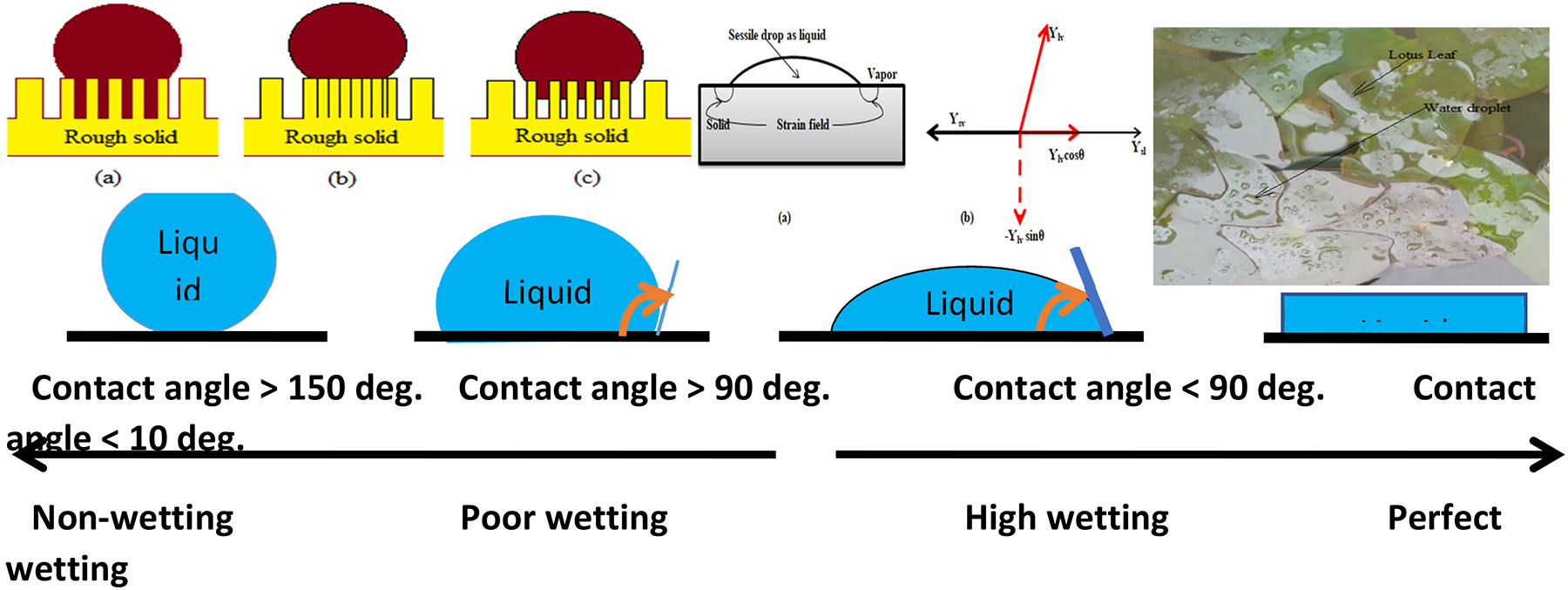
Get full access to this article
View all access options for this article.
References
Supplementary Material
Please find the following supplemental material available below.
For Open Access articles published under a Creative Commons License, all supplemental material carries the same license as the article it is associated with.
For non-Open Access articles published, all supplemental material carries a non-exclusive license, and permission requests for re-use of supplemental material or any part of supplemental material shall be sent directly to the copyright owner as specified in the copyright notice associated with the article.
