




Abstract
With the rapid development of autonomous vehicles, it is necessary to explore new business opportunities, especially under the assistance of internet of things, which accelerate the penetration in vehicle markets. Automated valet parking and shared autonomous vehicles will be the most active cases promoted by autonomous driving. In this paper, the business models of automated valet parking and shared autonomous vehicles were proposed, further, the cost structures of autonomous vehicles under two cases were investigated from points of car users and owners. In the business models, autonomous driving packages, internet of things devices, and service provider companies are considered as new stakeholders. The cost structure of automated valet parking users changes greatly, with the development of autonomous driving packages whose cost share decreases from ~60% to ~5%. The total cost of automated valet parking users is much higher than conventional parking before 2024. Additionally, the use of shared vehicles relieves financial burden, without trouble of periodical maintenance. For station-based and free-floating car sharing, the price drop of autonomous driving package brings about huge benefits for companies. Peer-to-peer car sharing business effectively decreases financial burden of car owners such that the decrease is less than 20% starting from 2017.
Keywords
Introduction
The development of autonomous vehicles (AVs) are primarily driven by the need for an optimal transport system and high quality of life.1,2 According to the previous studies,3,4 the adoption of AVs can contribute to decrease in energy and fuel consumption, pollution and traffic congestion, whilst increasing safety and transport accessibility, to some extent. As indicated by Igliński and Babiak, 5 AVs will be a predominate point of reducing energy consumption and emissions for road transport, with an estimated reduction of approximately 40%–60%. Furthermore, it has been estimated that through introducing AVs, traffic jams can be reduced and travel time can be saved, due to increased road capacity and improved traffic flow from better utilized transport infrastructure. 6 As demonstrated by Steck et al. 7 using mixed logit model that the autonomous driving (AD) effectively reduces the travel time for commuting trips, thereby, inducing more people to use AVs due to the benefits of shorter travel time. On the other hand, there is a large uncertainty in the impact of introducing AVs, with some studies indicating negative impacts on safety for non-AV road users, increased congestion and energy use, and issues of affordability and access. For example, a pedestrian was killed in the US by an autonomous Uber vehicle, which was under the self-driving mode in March 2018. 8 In order to assess the impact of AVs on travel activities, Wadud et al. 9 analyzed factors influencing people’s travel behaviors, such as reduced travel cost, saved energy consumption, and wider-scale user groups. Their results indicate an increase of travel demand in the overall vehicle travel, which may be detrimental to the efficiency of the transport system as a whole.
Many of the uncertainties and negative impacts that are predicted around AVs could be mitigated by the increased integration with the internet of things (IoT). IoT is a promising network system which communicates and transfers data or signal via a variety of smart devices (e.g. sensors, cameras, mobile phones) through cloud-based platform, without any interference from human.10–12 IoT technology, plays a crucial role in the development of AVs by improving the vehicle safety, security, and user acceptance. 13 Current development focuses on the contribution of IoT to the functionality of AV guidance system. For example, to track the vehicles’ locations in real time effectively, Global Positioning System (GPS) positioning devices, 14 Global System for Mobile (GSM), and General Packet Radio Service (GPRS) communication systems 15 with the control units were adopted and installed on the vehicles. A Smartphone app was also developed to monitor the movements of vehicle. Cyber-Physical System (CPS) sensors of autonomous vehicles were used to monitor a nearby traffic flow, which helped to optimize road traffic flow. 16 By selecting the optimal parameters, such as velocity, brake distance, vehicle distance, and density, the routes of vehicles can be defined and enhanced. Further to positioning and environmental detection, IoT can be used to provide additional useful information to the vehicle or the user, such as upcoming hazards on a journey, the movements of vulnerable road users, or even social or leisure-related opportunities.17,18 As indicated by literature, 19 a cloud-based smart parking system based on IoT was proposed to help users to reach an ideal parking spot more effectively, with the results of saving searching time.
The development of AV systems based on IoT 20 presents a huge potential for improving people’s quality of life in an effective way, which can be achieved by different activities, such as automated valet parking (AVP), 21 shared autonomous vehicles (SAVs). 22 SAVs for example, includes a variety of different mobility service modes, such as station-based, free-floating, and peer-to-peer car sharing. The test about free-floating car sharing service was conducted in London, 23 finding that 37% of users clearly indicated that their attitude on private vehicles ownership has been affected by the adoption of free-floating car sharing. Thus, it presents a potential to decrease the number of private cars and lead to a more eco-friendly environment for the public. AVP system, 24 as a part of travel planning, helps travelers to save travel time, increase energy efficiency, and improve the overall travel comfort. During the parking process, users’ Smartphone app and camera, as human machine interface and parking area infrastructures, play a vital role for parking effectively.
AVP and SAVs, as new mobility service, inevitably have the potential to change people’s living habits and compete with the current businesses related to personal conventional vehicles. All the businesses related to AVP and SAVs are in the process, and will bring about many affiliated businesses. Bellos et al. 25 investigated the car sharing economy, and the results showed that the original equipment manufacturer (OEM) increased the fuel economy of the vehicles through car sharing. It was achieved by contemplating car sharing and designing its product line. Cohen and Kietzmann 26 discussed the existing shared mobility business model to uncover the optimal relationship between service providers and local governments, with the results that the merit model in that work was the best alignment of agents and principals. Stocker and Shaheen 27 reviewed the business models about SAVs, which was thought to be widespread in the future. As indicated in this work, the relation between the AV owners and SAV platforms would promote the development of a SAV service. Meanwhile, the profit and efficiency of the business are greatly dependent on the technology available, the location, vehicle types used, and ownership schemes. Also, the comparison of the cost structures between the private autonomous vehicles and the conventional (non-autonomous) vehicles are conducted. 28 The results show that the AV technology helps to reduce the operating cost through lower insurance fees, maintenance, and fuel costs, although it raises the vehicle purchase price. It is consistent with Wadud’s 29 opinion that the vehicle operation will benefit from automation by performing the total cost of ownership analysis, which is because of the reduced driver costs through automation. The emergence of IoT poses a large impact on the current business model of manufacturing company. As indicated in the research, 30 the main changes caused by IoT are that machine and plant companies are more concerned about workforce qualifications, while automotive suppliers are focused on improving cost efficiency. Applications of IoT can also be found in smart water management, 31 aiming at a high efficiency in water distributions and consumptions, as well as system’s maintenance and improvements.
Based on the reviews of the current business models about autonomous vehicles and IoT, few studies are conducted on the business models of AVP and SAVs assisted by IoT to date. However, the analysis of business model is quite important for all the stakeholders. This paper provides an overview of the business models of AVP and SAVs, with focus on car users and owners. The structure of this paper is organized in four parts: the first section examines the development and challenges of AVs, followed by the second section, which describes the roles of IoT technology promoting the development of AVP and SAVs. The third section proposes business models related to AVP and SAVs while examining the relationship between different stakeholders and analyzing the value proposition. The final section provides the cost structures of AVP and SAVs from the viewpoint of the car users and owners while also providing a sensitivity analysis of the main segment of the cost structure. The innovation of this paper is the analysis of business models of AVP and SAVs driven by IoT technologies. Also, it provides the elementary evidence for the potentials of developing AVP and SAVs by analyzing the cost structures of AVP and SAVs from the viewpoints of different stakeholders.
Development and challenges of autonomous vehicles
Development of autonomous vehicles
The predicted AVs penetrations in the vehicle market both in optimistic and pessimistic situations are shown in Figure 1, with the assumption that level 4–5 AVs are commercially available in 2020. 32 The level of autonomous vehicles in this figure refers to level 1–5. It can be seen that in the first few decades, the market shares of AVs are low, which is limited by low vehicle performance (e.g. safety), high cost, legal issues, and low user acceptance. Due to the breakthrough of AVs technology, the market share increases significantly after 2040, where the estimated market share difference between optimistic and pessimistic situations is enhanced. Examining the figure below, it can be observed that until 2060, the travel percentage by AVs is lower than the market share, which indicates that the mobility preference of people’s travel is lower toward AVs. The development of AVs and the technology improvement thus, can greatly affect people’s travel behavior, as indicated by Mares et al. 33 that the travel distance miles can reach 85% higher if all vehicles are AVs. The changes of travel behavior can lead to the transformations of conventional business models to novel ones for all the stakeholders.
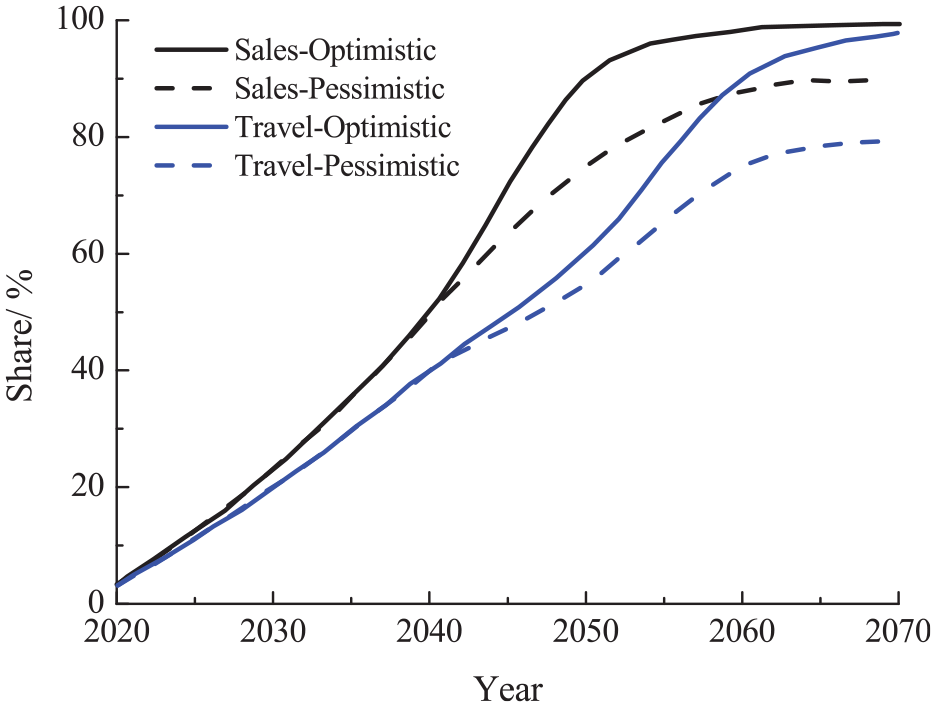
The prediction of autonomous vehicle penetrations in the vehicle market. 32
Challenges of autonomous vehicles
Autonomous vehicles can potentially overcome many current transport challenges, such as through improved road capacity, lower energy consumption, reduced pollution, and fewer accidents. 32 However, all of these advantages are under the precondition of safety. Different from conventional vehicles, AVs are with limited involvement of drivers, accompanied by new challenges, as shown in Figure 2. The challenges include technical aspects, legal issues, traffic safety, moral issues, environmental aspects, and market introduction. For example, the AVs need to make decisions fast in a very short time, which also includes many moral dilemmas. 34 The driverless aspect of the AVs makes the legal aspects significantly different from the conventional vehicles. The legal aspects of AVs involve not only technical aspects but also ethical aspects, such as data sharing in the process of AVP 35 and SAVs. 36 Another most important legal issue is the liability of autonomous vehicles, which has been reported in references.37,38 In order to implement the AVs, laws are needed from different levels of administrative, civil, insurance, infrastructure, and criminal aspects, whose challenges were discussed in detail by different studies.39–41 The improvement of the related law can accelerate the penetrations of autonomous vehicles.
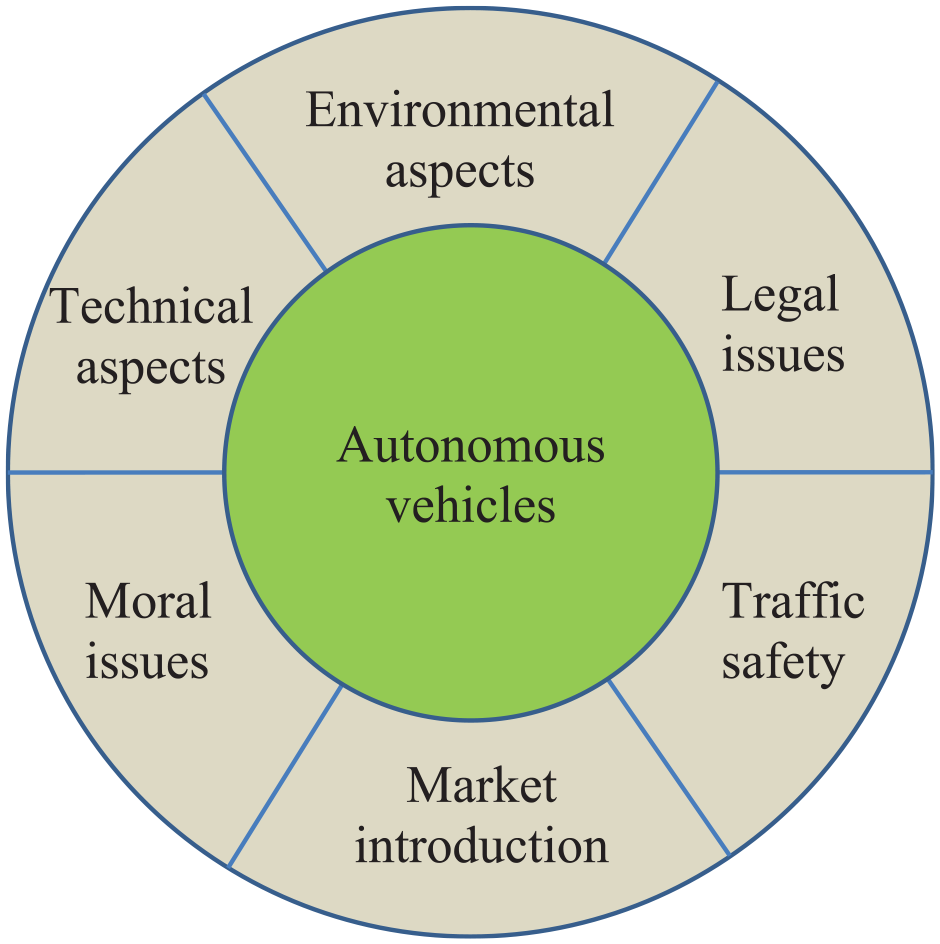
Challenges of autonomous vehicles.
Autonomous vehicles promoted by internet of things technology
Tesla Model X SUV and Tesla Model 3, the pioneer of AVs, involved two fatal incidents, which caused more worries about the safety of the AVs. These incidents have been considered to be a serious block for the widespread user application of AVs. Fortunately, IoT, as a novel technology, can be applied to AVs to improve the safety of autonomous driving. 42 IoT can assist AVs to detect the hazards to avoid potential accidents. Surely, IoT technology still has many technical challenges to the applications of AVs, e.g. reliability, robustness, sustainability, and resilience.43,44 Except for technical problems, the implementation of IoT technology allows private data sharing between customers and companies that may lead to financial or personal damages.45–47 Figure 3 shows one application of IoT technology assisting autonomous driving. IoT devices (e.g. cameras, sensors) both on vehicle and roads can detect hazards, such as potholes and obstructions, which may threaten the comfort or safety of the AV journey. The detected hazards will be reported to IoT processor (a cloud-based platform), which will upload the hazardous situations to a map server. Thus, other vehicles can get the information in advance from map server, and avoid the potential accidents. Note that some of this service can also be of benefit to non-autonomous drivers.
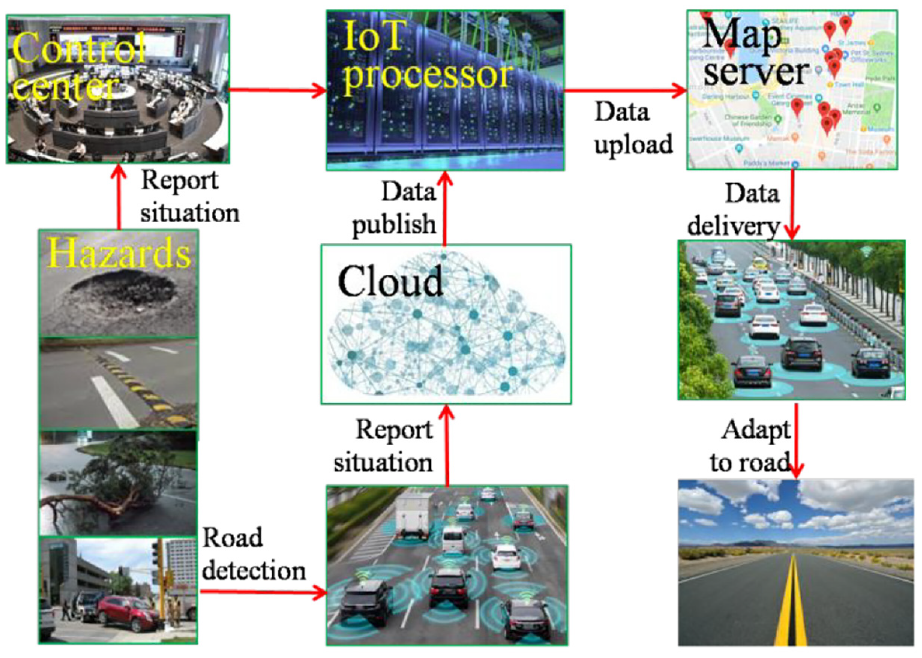
The approaches of internet of things assisting autonomous driving.
As indicated in some studies, 48 IoT technology applied to AVs will increase greatly from year 2022, significantly driving the upgrade of AVs development from low level to high level (Figure 4). In the future, IoT technology will become more necessary to increase the security, users’ acceptance, and experience. Under the development of IoT technology, AVs can have a higher market share. IoT technology not only promotes the development of AVs, but also stimulates the evolutions of the current related businesses. Additionally, it can change people’s travel behavior, as shown in reference, 33 that the miles traveled increase could reach 85%, which implies the huge changes of travel behavior brought about by AVs. More registered vehicles with IoT devices conduces to the transitions from conventional vehicles to AVs.
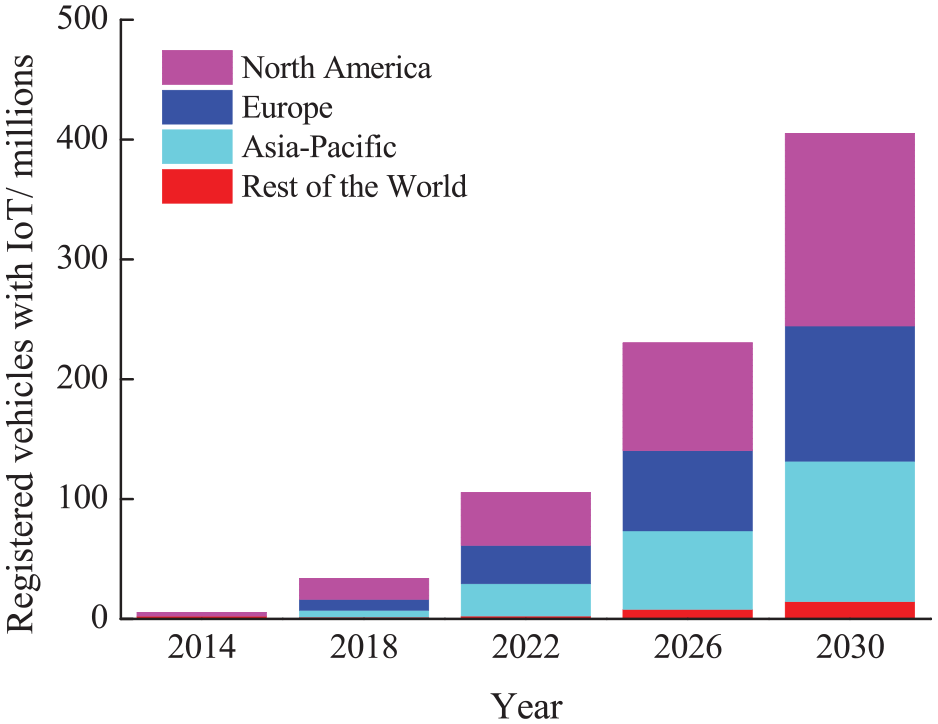
Autonomous vehicles development under the drive of internet of things. 48
The simple explanations of the way promoting AVP and SAVs are shown in Figure 5. AVP allows customers to get off anywhere,49,50 with the advantages of avoiding looking for a free parking spot with parking assistance of IoT. The operation of AVP needs the cooperation of AVs and parking spots that parking spots report their availabilities continually to the service provider, and AVs can get the free parking spots information. Meantime, the optimal route to parking spots can be planned to avoid the routes with hazards on the way. All these actions are done with the help of IoT, which makes the real time information available for all the related stakeholders. Shared autonomous vehicles usually includes three models:51,52 (1) station-based car sharing allows customers to collect and return the shared vehicle at the same place, the connections between the customers and autonomous vehicles are achieved by Radio Frequency Identification (RFID) access cards or apps installed on their mobiles. This type of car sharing is similar to car rental. (2) Free-floating car sharing provides customers flexibility of picking up and returning the shared cars in any authorized place, which addresses the one-way trip. As expected, the customers with SAVs need to pay further for the convenience compared with station-based car sharing. (3) Peer-to-peer car sharing allows the vehicle owners to make their personal vehicles shared with other users when available.
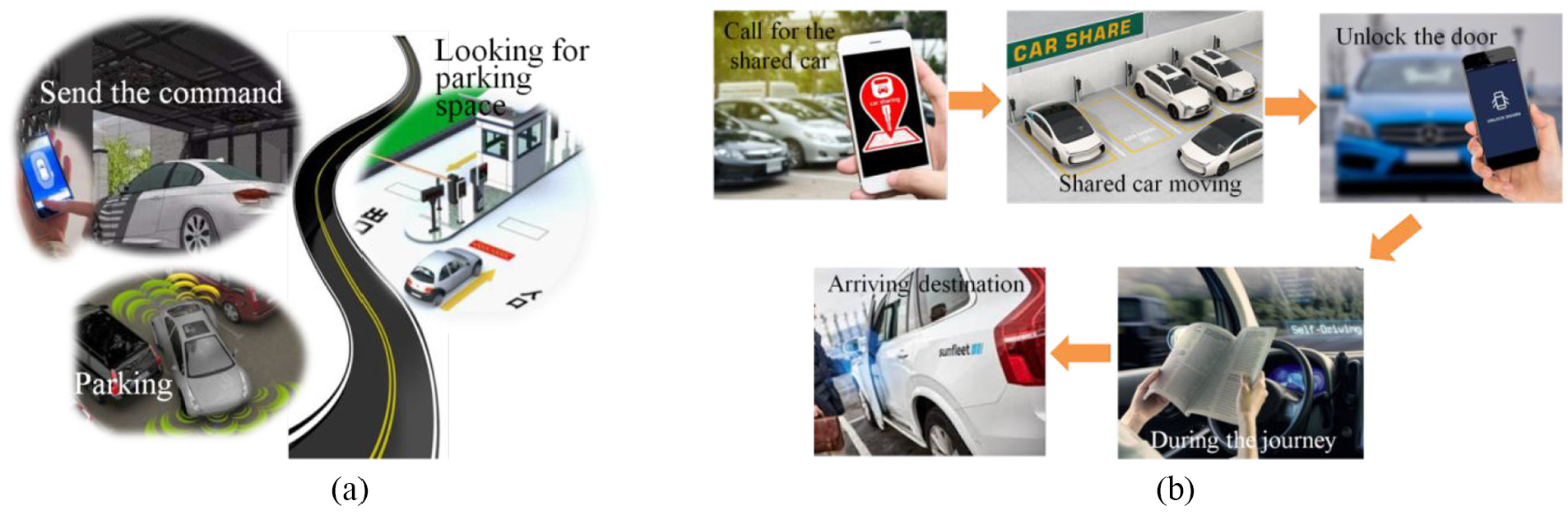
Operation models of automated valet parking and shared autonomous vehicles: (a) automated valet parking and (b) shared autonomous vehicles.
Analysis of the automated valet parking and shared autonomous vehicle business models
In this part, new business models of AVP and SAV are proposed, the revenue flows among the stakeholders are firstly analyzed; then, the business model canvas of AVP and SAV are used to explore the value proposition, infrastructure, customers, and finances among the stakeholders over the involvement of the IoT.
New business models of automated valet parking and shared autonomous vehicles
In July 2019, a milestone was reached by Bosch and Daimler on the way to AVP, whose license was approved from relevant authorities in Baden-Württemberg. AVP service was accessed by a Smartphone app, by which the automated parking order was sent. 53 The application of IoT to AVP has contributed to the generation of new businesses and stakeholders. In this part, AVP and SAVs are taken to illustrate the new business models related to AVs (Figure 6). In the simplified traditional business model, only the car companies and car owners are related, while the AD package (software and hardware) companies, IoT device industries, service providers (AVP and SAVs), novel car parking companies, and fleet operators are also involved in the new business models. Especially for the service providers, which combine the car users and owners, the service quality from the providers greatly influences the experience of the two stakeholders, further affecting the business development. As for car sharing, if only the licenses of service provider and fleet operator are approved, the finance flow in the car sharing process can be generated. The adoption of IoT technology increases the reliability and security of AVs, which accelerates the acceptance of AVs. In the shared autonomous vehicles mode mentioned above, the car owners have incomes by sharing their cars. However, the car owners have the priority of using the vehicle in peer-to-peer car sharing, without influencing their own travel plan. Hence, the car sharing releases their financial burden to some extent but increases car maintenance. In the process of the AVP and SAVs, the government needs to devote much to the implementation from the regulations and infrastructures. The infrastructure is the foundation that ensures the functions of IoT technology to be achieved.
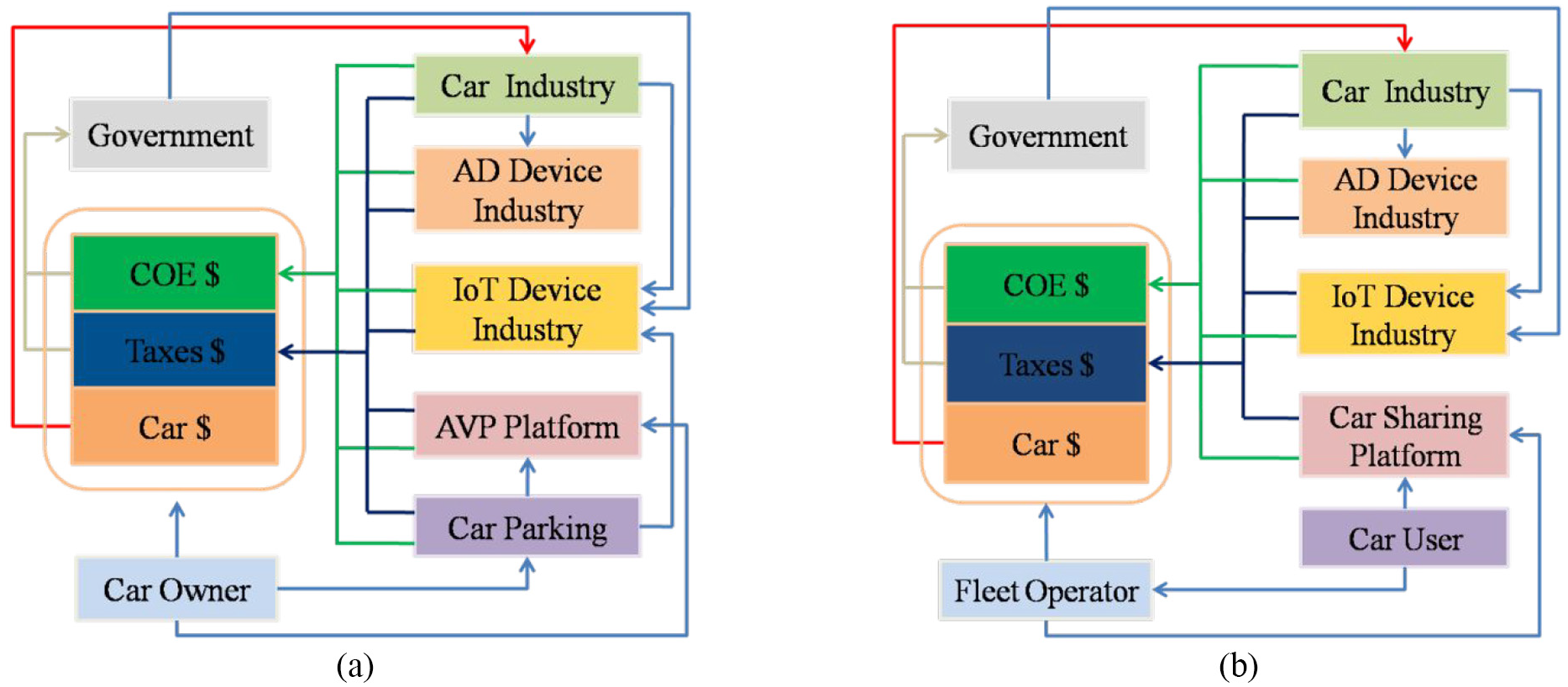
Simplified representation of new business models for automated valet parking and shared autonomous vehicles: (a) automated valet parking and (b) shared autonomous vehicles.
Business model canvases of automated valet parking and shared autonomous vehicles
The aim of the analysis of business models is to identify the aligned firms’ activities by illustrating potential trade-off. 54 The business model canvas (BMC) as a strategic management template and a visual chart with nine different building blocks, is used to describe a firm’s or product’s value proposition, infrastructure, customers, and finances.55,56 In this part, the identified BMC for AVP and SAVs will be presented, which can be treated as a supplement further to explain the business model.
The value propositions of AVP solution can be considered from different viewpoints, as showed in Figure 7. The business model canvas is based on a workshop. Private car owners will benefit from time saving, more available parking space, more convenience and comfort, less damages, and optimized routes to the free parking space. For parking operator, AVP service assisted by IoT significantly decreases car damages and increases security in theory, meanwhile saving parking space and increasing the attractiveness of parking location. This service also contributes to the company by increasing efficiency and decreasing car damages, which is affirmed by Arnold et al. 30 The changes of the current businesses are focused on the service quality and cost efficiency. The relations between IoT-assisted AVP and parking efficiency are shown in Figure 8. With the assistance of IoT, the available parking spots are easily found, which is one of the most important advantages promoting the AVP development, especially for those who have emergency appointments with limited parking space and far parking spots. Periodical maintenance is necessary to keep high reliability of AVP. The service provider is also an important aspect for AVP system. It collects all the dynamic information of parking spaces, and shares the information with AVP users. The data processing efficiency of the service provider significantly determines the parking efficiency and accuracy, which influence the experience of AVP users and AVP development. The service providers thus, have a huge challenge due to its importance in the AVP business.
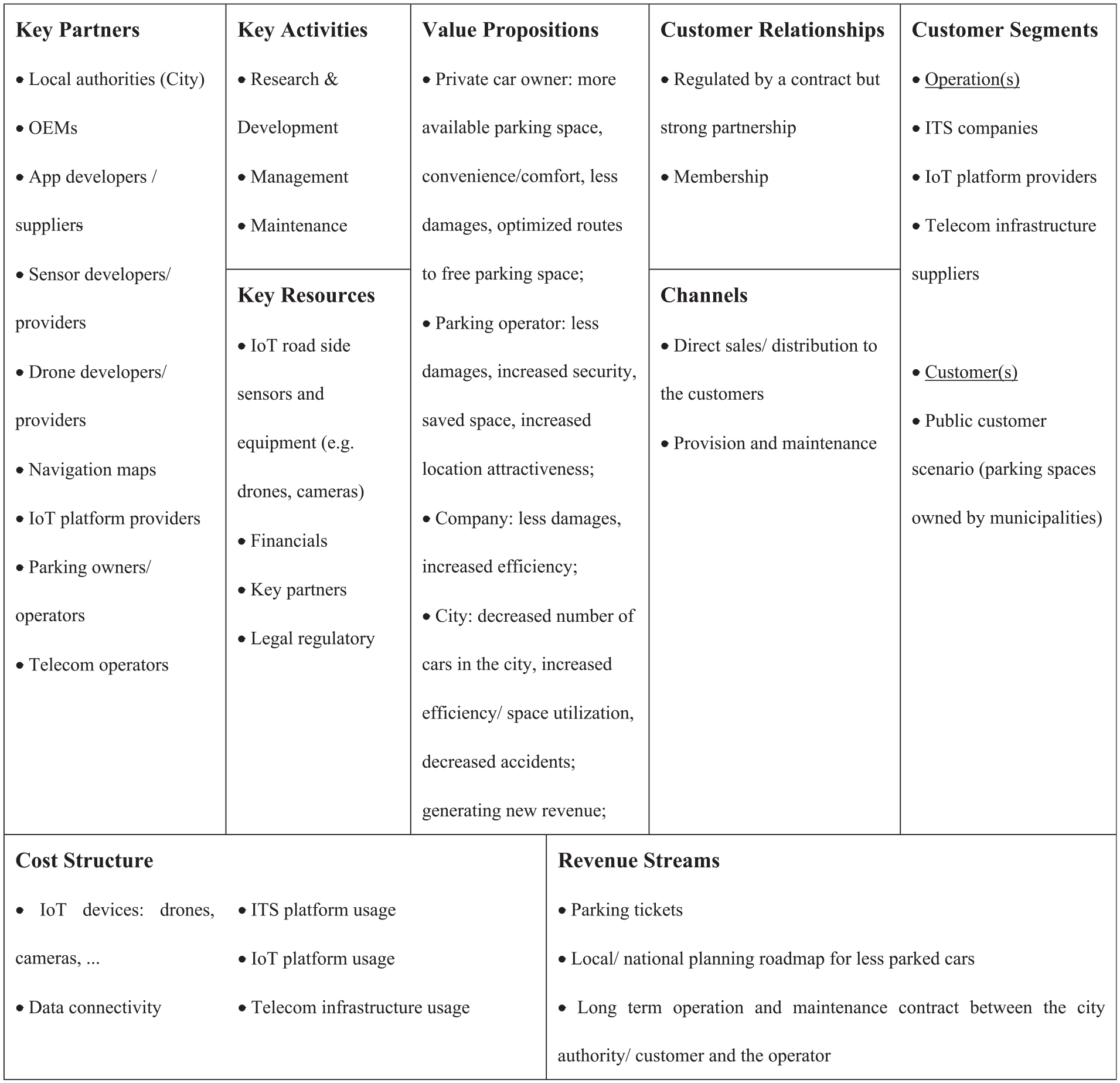
Business model canvas for automated valet parking.
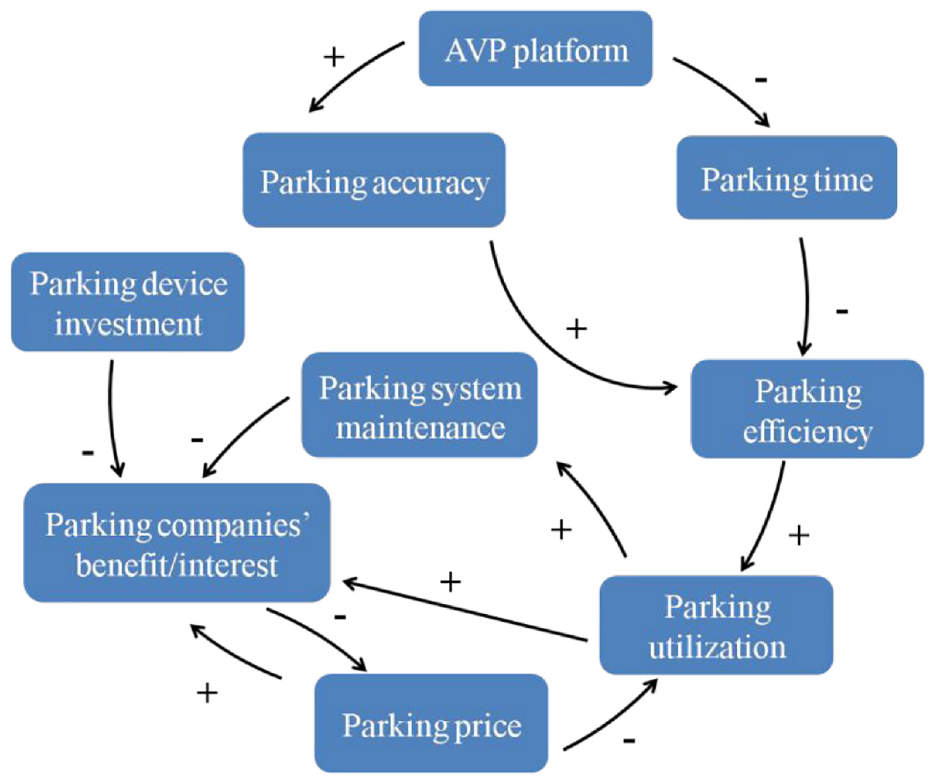
The relations of automated valet parking with parking efficiency and price.
The business model canvas of SAVs 56 is shown in Figure 9. The value propositions of SAVs solution is contributed to the reduced congestions. The alleviated road congestions stimulate more people to use shared cars, as indicated in Figure 10. As the consequence, the finance flows between stakeholders change correspondingly. With this business model canvas, the actors and their interactions along the value train of SAVs can be well captured and structured, which facilitates a better understanding. Compared with autonomous driving business, new parts suppliers and activities are involved, which also leads to the transformation of the focuses in conventional business. The relationships in Figures 8 and 10 make the foundations of the system dynamic models that will be used to investigate the impacts on the revenue flows related to AVs. In the future system dynamic models, only the main factors mentioned in both figures will be used due to limited available data for other factors.
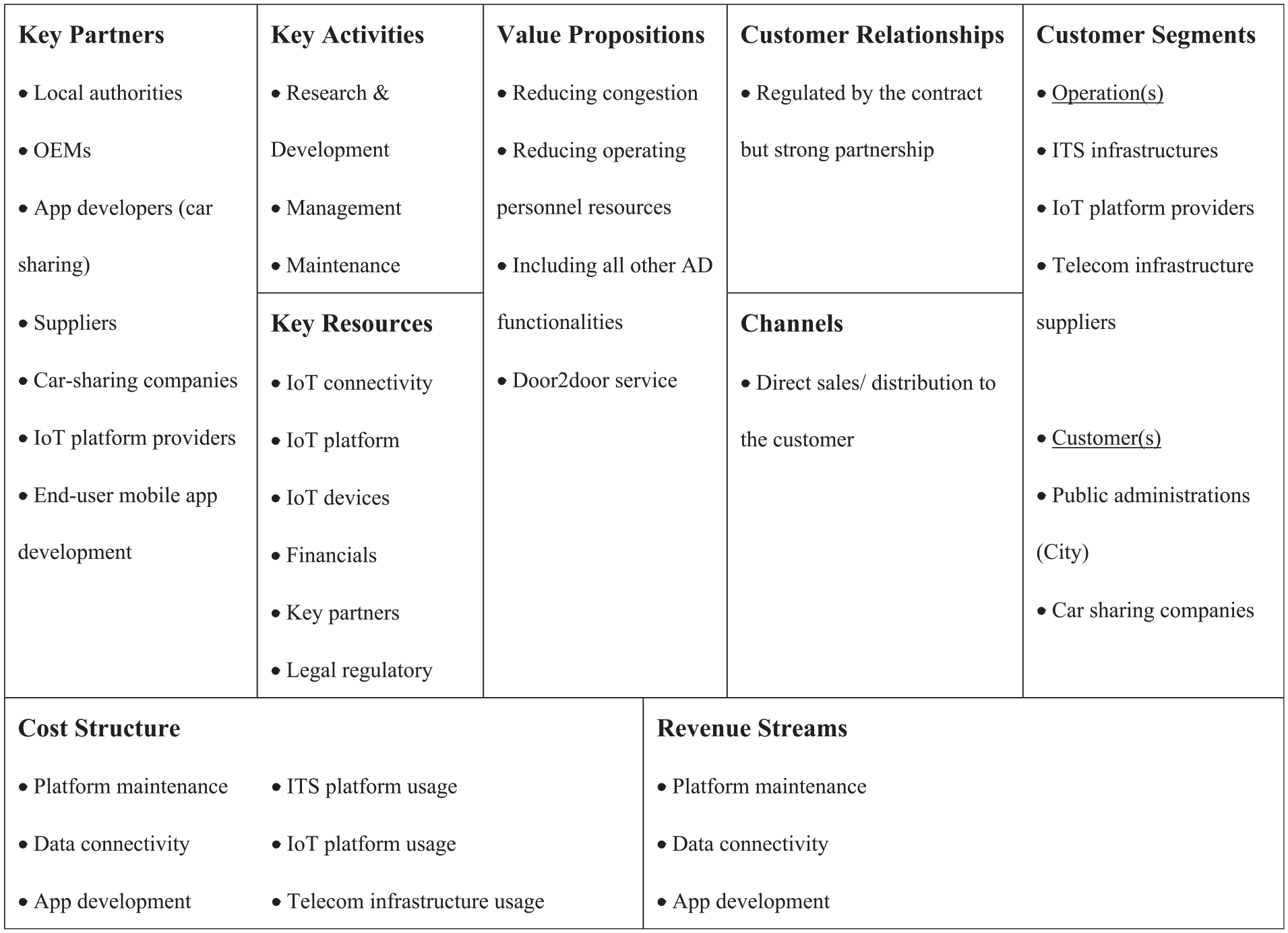
Business model canvas for shared autonomous vehicles.
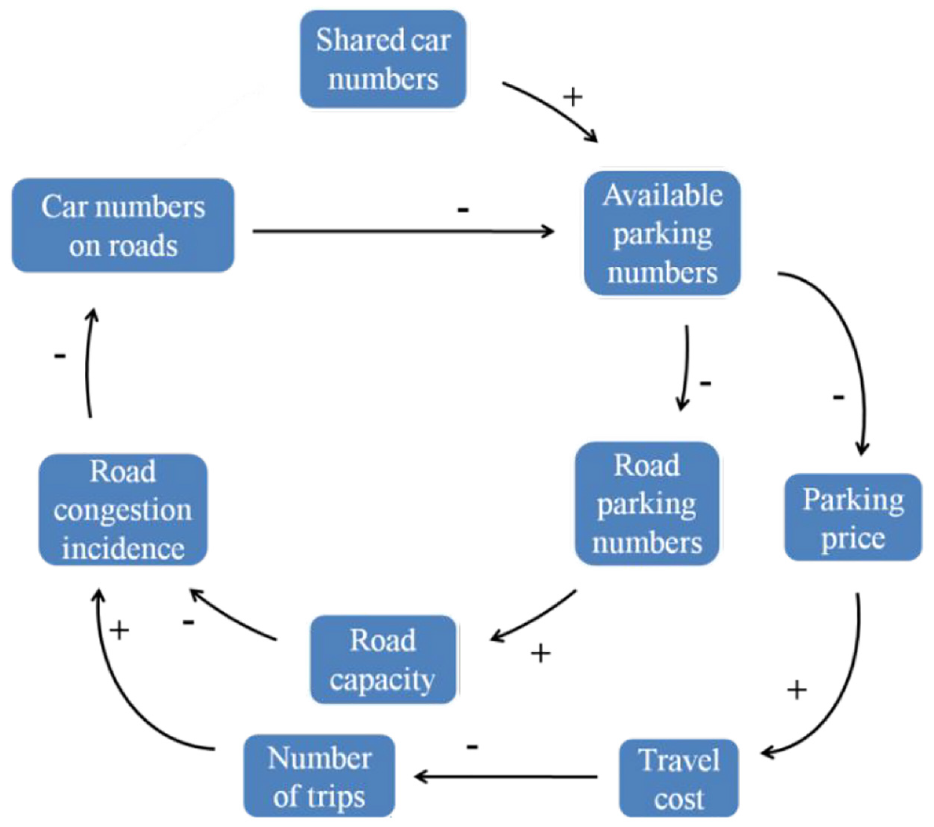
The relations of shared autonomous vehicles with road congestion and parking price.
Cost analysis of automated valet parking and shared autonomous vehicles for car users and car owners
The use of AVs and IoT technology will put much pressure on the conventional car sharing business and promote their evolutions to shared autonomous vehicles, also, making the automated valet parking a reality. Parking activities and private car users will be mostly affected by people’s travel habits such that large amounts of private car users will transfer to SAVs. This will contribute to the generation of new businesses, being completely different from the currently existing car sharing businesses. For example, the pick up stations need less receptions, but the high quality of online service and shared autonomous vehicle system should be guaranteed, which can be partly strengthened by the use of IoT technology. In this part, the conventional vehicle and the autonomous vehicle are used to analyze the cost structures of AVP and SAVs. It should be noted that the AVs are from the conventional vehicles (Mercedes-Benz C 180) by adding the AD package, and the detailed cost is based on London data. All the cost values are referred from the published materials and reasonable assumptions, as shown in the support information (Supplemental Tables S1–S5). The average vehicle age in European countries is 11–12 years, 57 here 12 years are taken as the vehicle age in this paper.
Automated valet parking
Due to the generation of new business related to AVP, the cost structures will be changed. Bösch et al. 28 compared the cost structures of different types of autonomous vehicles with private conventional vehicle, the depreciation increased from 42% to 48%, but other costs remained almost the same. A shortcoming of the work 28 is that the cost of AD package was neglected. However, the package cost was even higher than the vehicle itself, and the price dropped by 95% in the following 7 years. 58 Figure 11 shows the cost structure of the conventional parking, which is taken as the baseline. In the first several years, the car depreciation and parking are the first two highest costs, and fuel cost is approximately 10%, which is similar to that found in Bösch et al. 28 The parking dominates the cost from the fourth year due to the high parking cost in London area. The total cost of the first year is the highest due to high depreciation rate, vehicle tax, and registration fee. A high depreciation rate means the value of a vehicle reduces significantly, and it was observed that the depreciation rate is less than 10% from the fourth year.
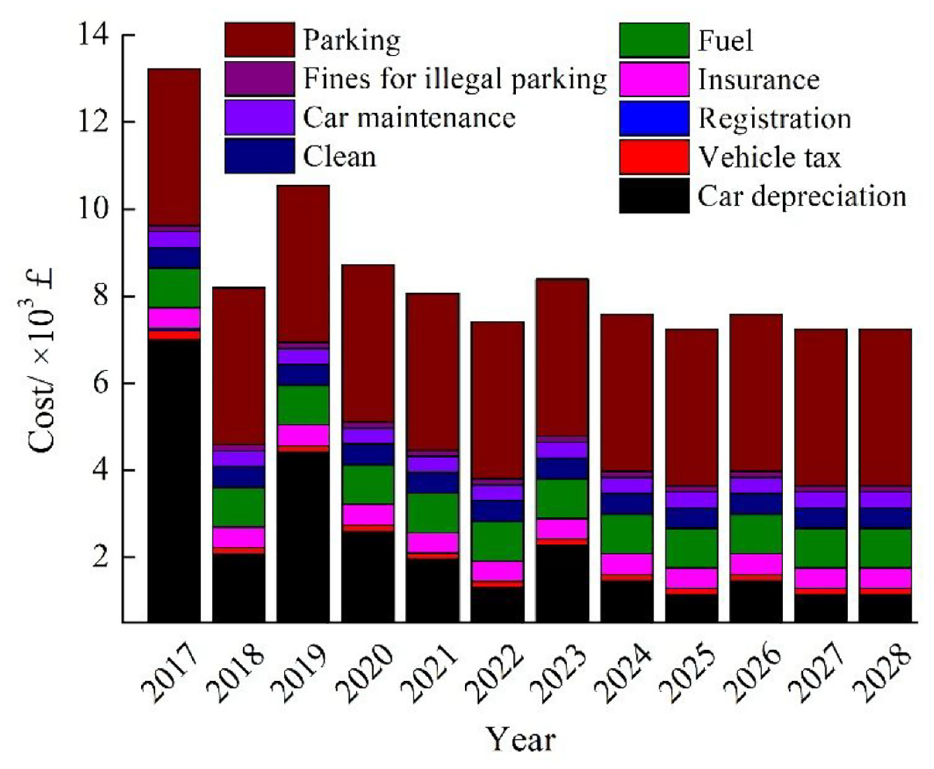
Cost structure of conventional car parking users.
Although the cost of AD package decreases by 95% in the following years, and it is still high in the first several years, the cost structures of AVP will be quite different if AVs are purchased at different date, as shown in Figure 12 (starting years of 2017 and 2025). Compared with the conventional vehicle, the AD package dominated the cost structure distributions if the autonomous vehicle was purchased in 2017. The AD package cost was ~60% at most in the first several years (Figure 12(a)). However, it decreases to less than 5% when purchased in 2025 (Figure 12(b)). The price drop of the AD package is caused by the development of the technology and enlargement of the production. Due to the use of autonomous driving, the car owners have to pay for the navigation and security fees. In AVP cost structure, the parking fee is assumed to be the same as conventional parking. As the vital technology, IoT can increase the parking efficiency and avoid the potential hazards on the way to the available parking spots. It effectively promotes the development of AVs and influences the businesses related to AVP. The IoT technology does not put much cost on customers since AVP does not need new devices to be installed, but rather the services. The services are based on the AVs and need to be authorized by nation, users and parking companies, and some paid software or apps needs to be installed in the vehicles or mobile phones. The service fees will be charged by the providers.
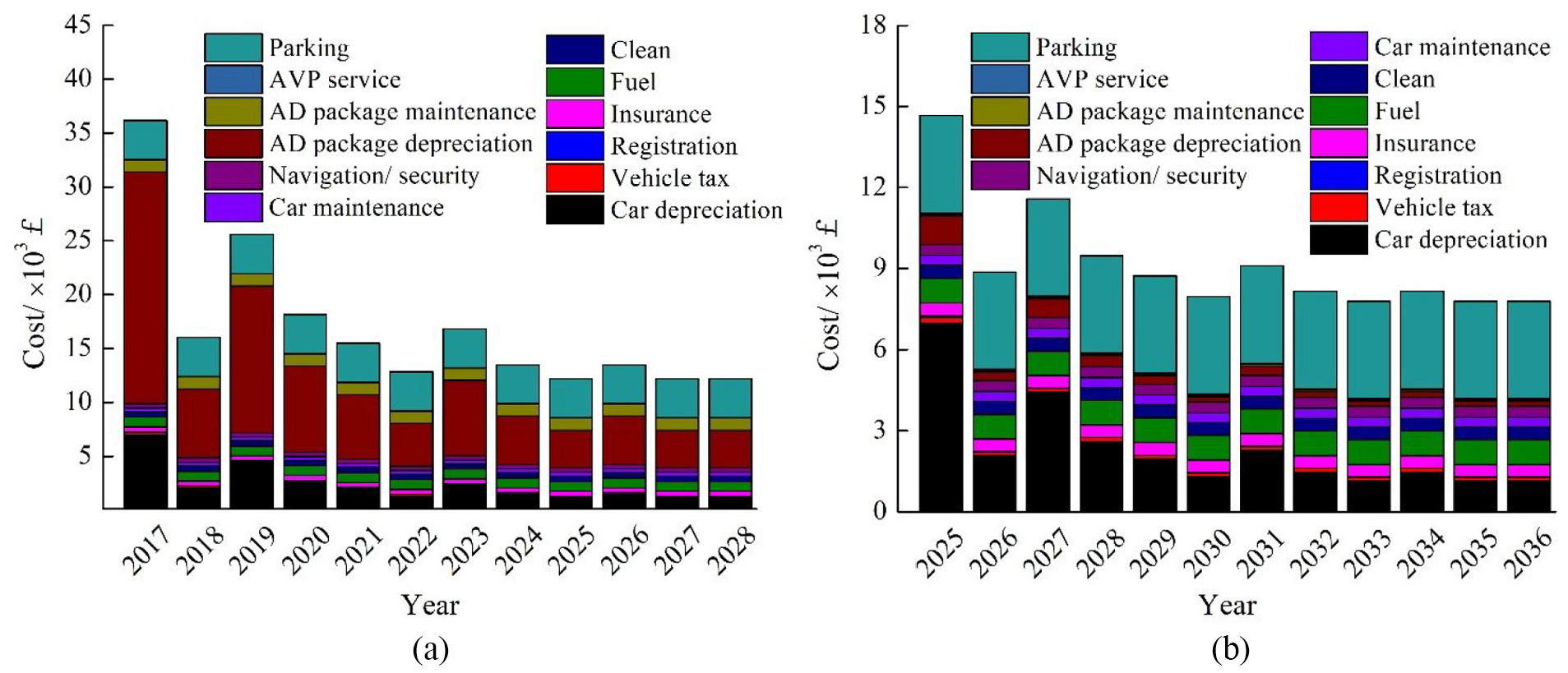
Cost structure of automated valet parking users: (a) starting year: 2017 and (b) starting year: 2025.
The adoption of AVP also effectively increases the parking efficiency, further decreasing the parking fee to some extent. The role of the parking fee increases gradually with the popularization of autonomous driving, as shown in Figure 12. Figure 13 shows the total cost (12 years, the average age of a vehicle) of AVP, with the variables of AVP starting year and the decrease of parking fee (parking discount) after the adoption of AVP. As can be seen, the total cost of AVP is much higher than the conventional parking before year 2024 due to the high cost of AD package if the parking fee decrease is less than 50%. As indicated by the British parking association, British drivers take 4 days on average (48 days for 12 years) to look for parking spaces annually. 59 It was also indicated by Shoup 60 that it takes 3.5–14 min per car trip to find a parking space, and 8%–74% of traffic was cruising for parking. AVP is not only related to saving time, but the parking experience also affects people’s emotion and life quality. It is related to the balance between the cost and the convenience benefit from AVP so that it deems the initial users are the rich who prefer high level of living standard. Conventional parking takes much time and it has the potential of making the parking spots more distant from the destinations, which may cause indirect loss to the customers, such as money, late for dating, missing for conferences. Moreover, cruising for parking consumes large amounts of energy (fuel and electricity). As indicated by Le Fauconnier and Gantelet, 61 the average parking space searching time is 3.3, 11.8, 10, and 7.7 min for Grenoble, Paris, Commerce district, and Saint-Germain district, respectively. During AVP process, IoT helps to identify available parking space, which significantly reduces the time of looking for parking spots, with the results of cruising time reduction.50,62 Further, the road congestion and car energy consumption will decrease to some extent. In fact, except for the direct time benefit of parking, it also brings about much indirect merits, such as being punctual for meeting, avoiding illegal parking charges, and emergency cases. The indirect benefits are hard to be estimated due to the different situations, and it is related to the customers’ willingness and budget to pay for the possibility of avoiding some indirect loss.
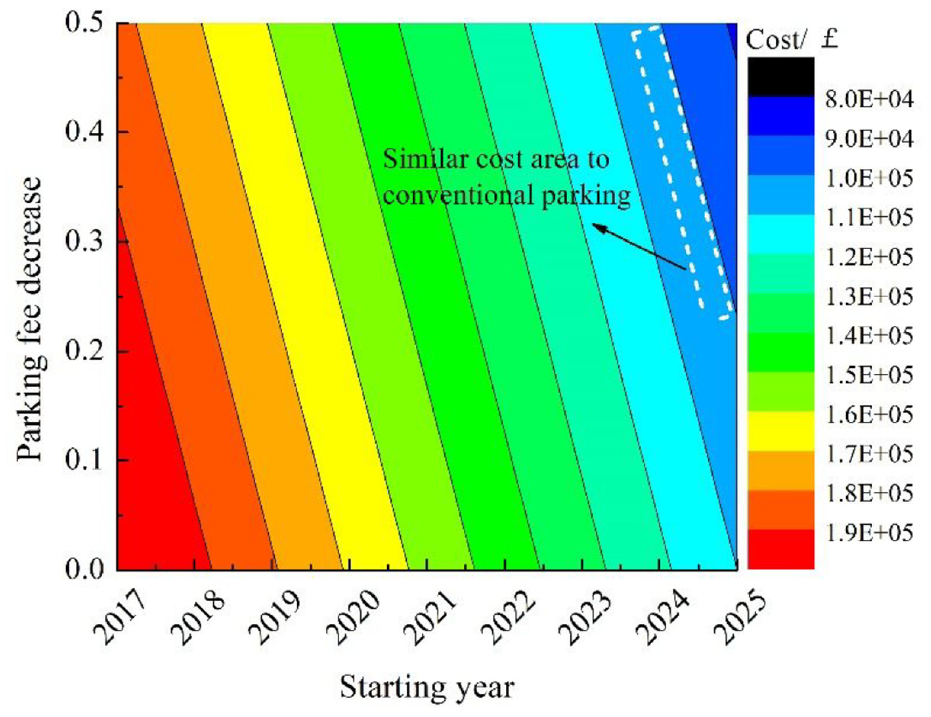
Twelve years’ total cost of automated valet parking users.
Shared autonomous vehicles
As mentioned above, the shared autonomous vehicles include three modes: station-based car sharing, free-floating car sharing, and peer-to-peer car sharing. The costs of these types of car sharing are completely different due to the services for both the car users and owners. In this part, the cost structures of these three types of car sharing are compared with conventional driving.
As indicated in Bösch et al., 28 the payment for car owners in taking taxi accounted for 88% of the total cost, and this part of cost could be cancelled if autonomous taxis are used. The cost structures of private cars are complicated by large amounts of aspects, however, the cost structure is much simpler for SAVs, including rental fee, car sharing service fee, fuel cost, register fee, and illegal parking fee, which leads to the linear cost increase with the year. Compared with the fuel cost and rental fee, the car sharing service fee, register fee, and illegal parking fee are much lower. The total cost of car sharing as the function of year and monthly rental fee is shown in Figure 14, and it is compared with that of the private car. The cost of car sharing for users is at the same level with private car owner when the monthly rental fee is around £650. Regardless of the cost, car sharing could provide the opportunity of enjoying different types of cars. Also, the users will not be troubled by periodical car maintenance.
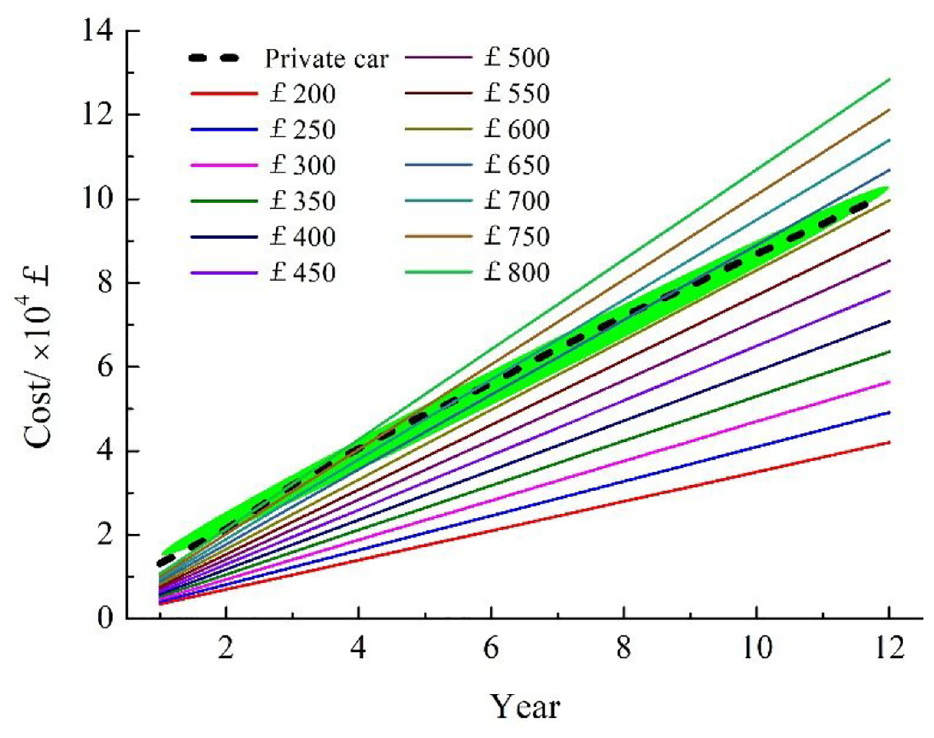
Twelve years’ total cost of car sharing users.
As discussed in the above section, car sharing modes mainly include station-based car sharing, free-floating car sharing, peer-to-peer car sharing. The cost segments are the same for the station-based car sharing and free-floating car sharing, except for monthly income. The monthly rental price of free-floating car sharing is higher than station-based car sharing, since the customers enjoy the conveniences caused by the flexibility of car picking up and dropping. The cost structure of station-based car sharing fleet operator is shown in Figure 15. The rental fee is the same as the value mentioned above in the cost structure of users. The assumption in the cost structure is that one vehicle can meet 1.5 people’s travel requirements without any influence of users’ plan. Similar to AVP cost structure, AD package dominates the tendency of the annual cost. The service cost in this paper only accounts for a small percentage, which is inconsistent with Bösch et al., 28 who made a comprehensive cost analysis for various types of autonomous vehicles and hold the opinion that the service cost is the main cost factor of shared autonomous vehicles. Station-based car sharing is somewhat unrealistic for small towns being distant from the car stations. This is because the customers have to pick up and return the car to the distant station. Free-floating car sharing is suitable for huge city with large amounts of population and high demands of travel. However, it is more reasonable to compare the total cost in a vehicle’s lifespan due to different depreciation rates. Figure 16 shows the total cost of station-based car sharing for fleet operator in 12 years, as the function of monthly rental income and the year that the autonomous vehicle is put into use. Profit zone means that the total cost of the station-based autonomous car sharing is less than the conventional car sharing. The rental fee is expected to be quite high if the fleet operator wants to get profit while the SAVs are put into use before 2020. As indicated by Münzel et al., 63 the business of car sharing and private car will co-exist in a short time before the cost of the car owner decreases and the technology has a breakthrough in shared autonomous vehicles. The conclusion is consistent with the authors’ opinion although the starting points of analyses are slightly different.
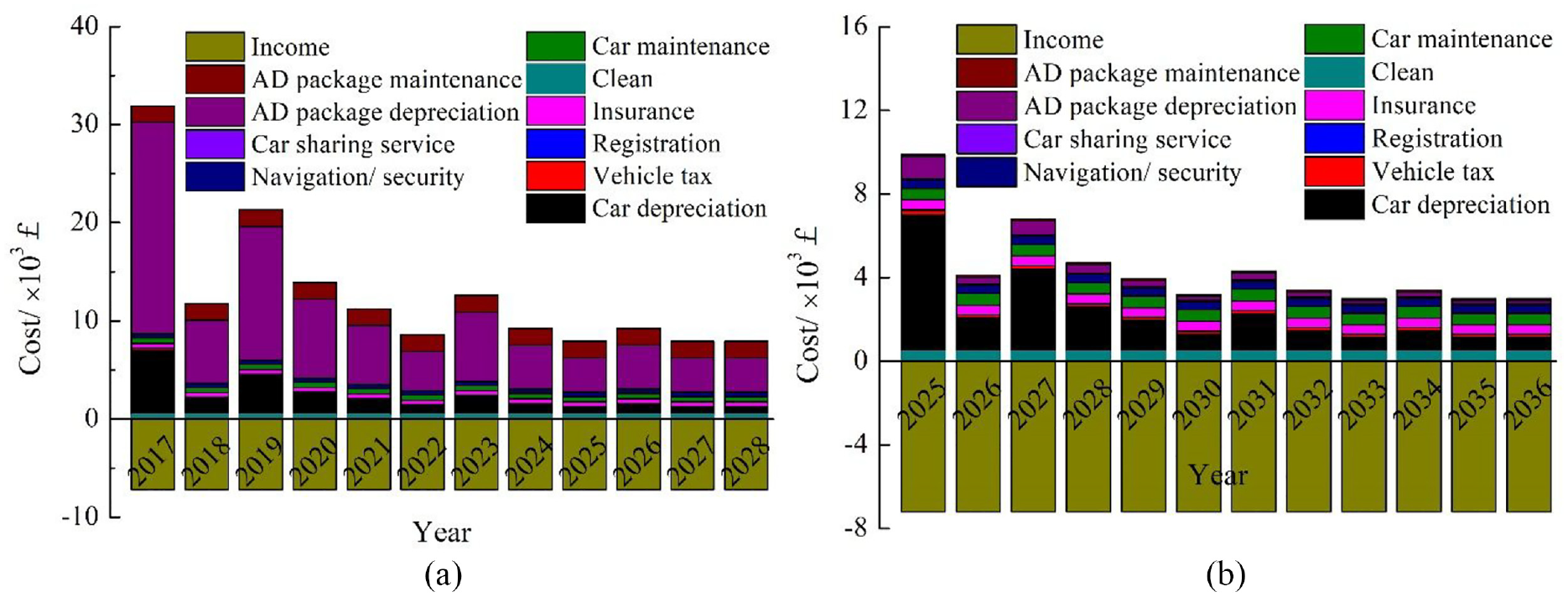
Cost structure of station-based car sharing fleet operator: (a) starting year: 2017 and (b) starting year: 2025.
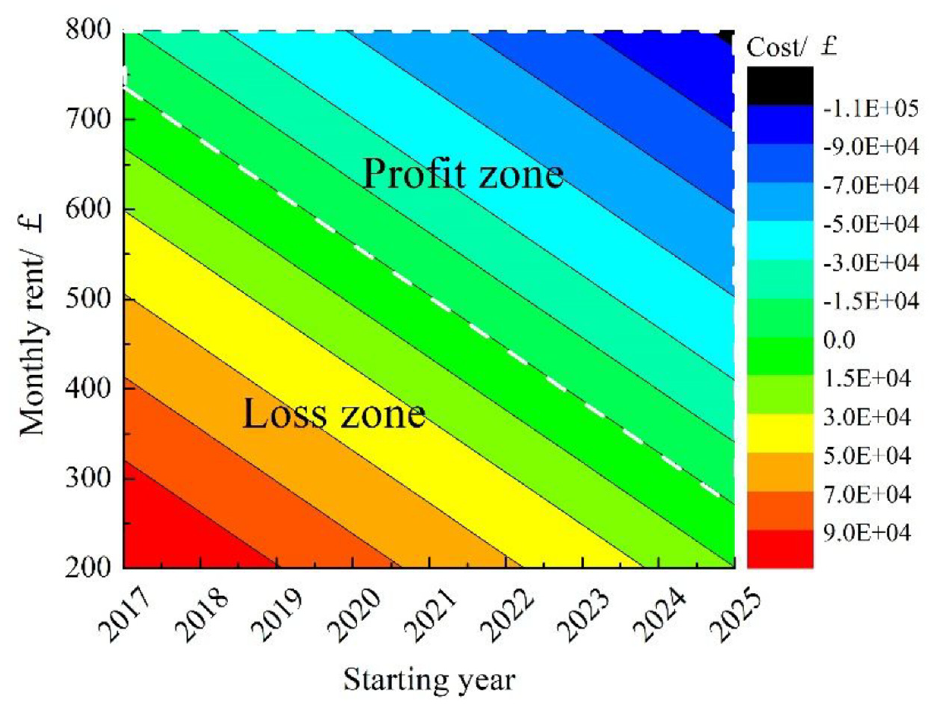
Twelve years’ total cost of station-based car sharing fleet operator.
Different from the station-based and free-floating car sharing, car owners of peer-to-peer car sharing are both the users and car sharing providers. Car sharing can decrease their financial burdens under the conditions of their travel being free from the effect of car sharing actions. Figure 17 shows the cost structure of peer-to-peer car sharing for car owners, with the assumption that one autonomous vehicle can meet extra 0.5 people’s requirement, and the maintenance cost increases in the same percentage accordingly. The cost structure of car owners is similar to AVP, but results in higher maintenance cost (both car and AD package) due to higher mileages by the car sharing users. The car sharing will not decrease much financial pressure for car owners if the AV was purchased in 2017, the decrease is less than 20%. The AD package depreciation dominates the cost in the first several years, and the percentage of parking fee is significant. However, the cost of peer-to-peer car sharing users starting from 2025 decreases by ~60% in the first year compared with 2017 start users. The rental income is much similar to parking fee, which accounts for a huge share. Figure 18 shows the total cost for peer-to-peer car sharing owners. The autonomous car will add more financial burden on the car owners compared with conventional car before the breakthrough of autonomous driving, which results in the significant decrease of self-driving package price. Plenter et al. 64 also analyzed the business model of peer-to-peer car sharing, where the peer-provider’s own business was addressed. In order to ensure the car owners’ and users’ benefits, the SAVs can be put into the market only after year 2022, in the authors’ opinion.
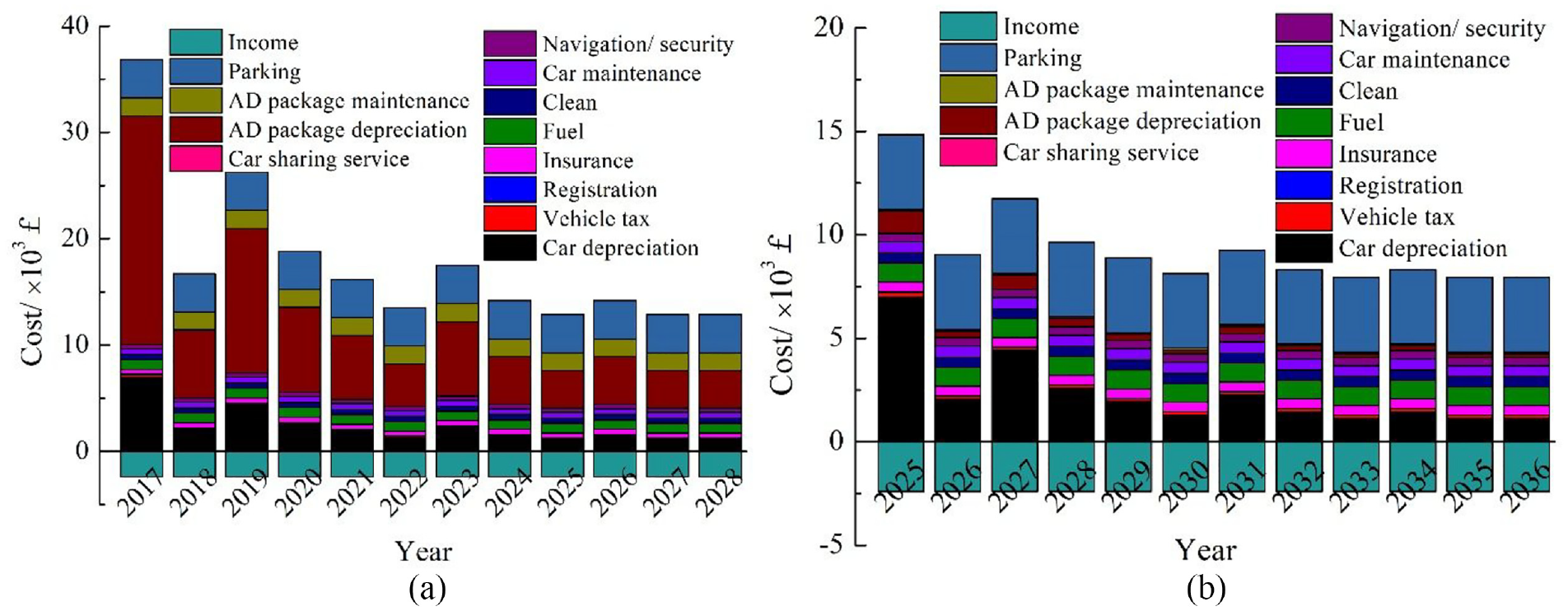
Cost structure of peer-to-peer car sharing owners: (a) starting year: 2017 and (b) starting year: 2025.
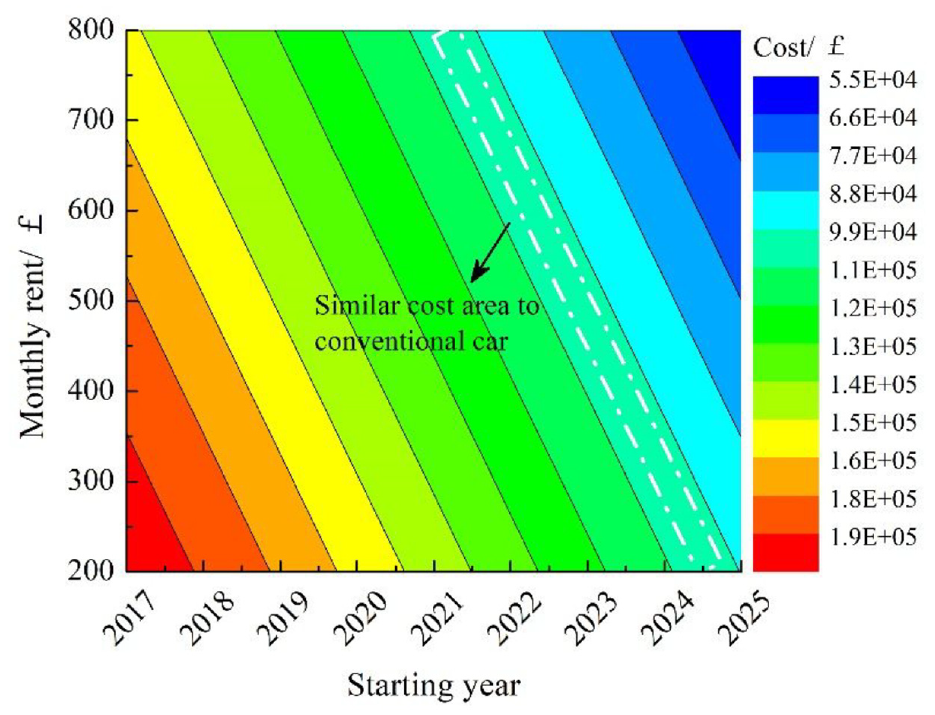
Twelve years’ total cost of peer-to peer car sharing owners.
In the authors’ opinion, another car sharing mode should be developed, such as the home-to-destination car sharing such that users can order the car which will come to the place which is the most convenient for users, and return to the nearest station by itself after use, without the cars being picked up and returned by the users. This mode of car sharing is easy to realize due to the characteristics of autonomous driving. It will be beneficial for people living in the town, and not far from the car sharing stations. It is evitable that the car users should pay for the fees between stations and home. Additionally, the combinations of AVP and SAVs will bring more convenience for the users and promote the evolutions of current car sharing businesses.
In order to meet the requirement of autonomous driving, and enhance user acceptance, the producers of AD package (software and hardware) should improve the quality and decrease the package cost by developing the technology. Being the direct link between car users and car owners, the service provider is the foundation of AVP and SAVs businesses. It significantly influences the users’ experience of autonomous driving and further affects its popularization. With the development of autonomous driving, the infrastructures and related regulations should be implemented to accelerate the development of autonomous vehicles. These new kinds of things will bring about large amounts of new businesses and job opportunities.
Conclusion
Autonomous driving, as a new travel activity, will significantly change people’s lifestyle. The development of autonomous vehicles will be accelerated by the use of IoT, which will make autonomous driving more safe and acceptable. Meantime, new businesses will be generated and cause the transformation of the current business model. This paper introduces business models related to two cases of autonomous driving, AVP and SAVs. The cost structures under the two cases are analyzed from the points of different stakeholders. The conclusion is as following:
In the business models, AD package and service providers of AVP and SAVs are new stakeholders, which link the car owners, car industry, also car parking for AVP and fleet operator for SAVs. The existence of AVP and SAVs will bring about more jobs opportunities, and increase the revenue of the nations. IoT plays an important role in promoting autonomous driving so that it provides much more convenience for car users. The adoption of IoT technology also promotes the evolution of the current business models related to AVs.
Parking fee and car depreciation dominate the total cost of conventional parking, however, the parking fee, car depreciation, and AD package are the main cost for AVP. The AD package fee is approximately 60% of the total cost, however, the value decreases to 5% at most. The total cost of AVP for users are more than the conventional parking before 2024. For car parking companies, the adoption of AVP with IoT assistance can effectively increase parking efficiency and parking utilization.
When the monthly car rental fee is less than £650, car sharing decreases the total cost of travel, also making them free of the trouble of periodical maintenance for users. The cost structures are similar for the station-based and free-floating car sharing businesses, except for the monthly income. The benefits greatly depend on the AD package price. The peer-to-peer car sharing owners effectively decrease their financial burden if the business begins from year 2025, however, the benefit is less than 20% starting from 2017.
Supplemental Material
sj-docx-1-pid-10.1177_0954407021994445 – Supplemental material for Business models and cost analysis of automated valet parking and shared autonomous vehicles assisted by internet of things
Supplemental material, sj-docx-1-pid-10.1177_0954407021994445 for Business models and cost analysis of automated valet parking and shared autonomous vehicles assisted by internet of things by Junyan Chen, Haibo Chen, Jianbing Gao, Kaushali Dave and Romina Quaranta in Proceedings of the Institution of Mechanical Engineers, Part D: Journal of Automobile Engineering
Footnotes
Definitions/Abbreviations
AD: autonomous driving
AV: autonomous vehicle
AVP: automated valet parking
BMC: business model canvas
COE: certificate of entitlement
CPS: cyber-physical system
GPRS: general packet radio service
GPS: global positioning system
GSM: global system for mobile
IoT: internet of things
ITS: intelligent transport system
OEM: original equipment manufacturer
RFID: radio frequency identification
SAV: shared autonomous vehicle
Declaration of conflicting interests
The author(s) declared no potential conflicts of interest with respect to the research, authorship, and/or publication of this article.
Funding
The author(s) disclosed receipt of the following financial support for the research, authorship, and/or publication of this article: The research described in this paper was supported in part by the EU-funded project AUTOPILOT (grant agreement No. 731993).

Supplemental material
Supplemental material for this article is available online.
References
Supplementary Material
Please find the following supplemental material available below.
For Open Access articles published under a Creative Commons License, all supplemental material carries the same license as the article it is associated with.
For non-Open Access articles published, all supplemental material carries a non-exclusive license, and permission requests for re-use of supplemental material or any part of supplemental material shall be sent directly to the copyright owner as specified in the copyright notice associated with the article.
