




Abstract
Platoon services are being driven by the development of Internet of things, prompting changes in existing businesses and the generation of new businesses. In this paper, a business model and business model canvas related to platoon services are proposed, and the cost analysis of heavy freight transport platoon services from the perspective of platoon leaders and followers is conducted. In addition, the fuel consumption saving brought about by platoon services in freight transport of 28 European Union countries is estimated. The results indicate that the providers of the autonomous driving package, Internet of things devices and the platoon service platform are new stakeholders in the business model. The business model canvas shows the value propositions of platoon services, such as increased traffic efficiency, decreased energy consumption, and the opportunity of involvement in other activities. In addition, the analysis of cost structures for platoon leaders and followers shows that the autonomous driving package has the highest percentage of cost in the first year of a vehicle’s lifespan and decreases rapidly in the years that follow. The platoon services ease the financial burden of the leaders due to decreased fuel consumption and income from the leading service, with the highest value up to 4.7%. As for the fuel consumption reductions benefited from platoon services, Germany may have the largest potential of national annual fuel saving, followed by France, Spain and the United Kingdom, while the countries that may benefit the most from fuel savings in international freight transport are Poland and Spain.
Introduction
Autonomous vehicles (AVs) are undergoing rapid development, which is fostered by various potential beneficial effects for public, such as improved road safety, increased driving comfort and time-saving efficiencies.1–3 To realise a cleaner and more efficient transport system, AVs present a potential to change the existing transportation system. According to a study released by the Energy Information Administration (EIA), the reduced fuel consumption predicted due to the adoption of AVs may be up to 44% for passenger vehicles and 18% for trucks by 2050. 4 Vahidi and Sciarretta 1 also investigated the energy-saving potential of AVs, and the result showed that they can contribute 3%–20% in energy savings. In addition, the adoption of AVs has the potential to improve the traffic conditions from different levels.5,6 According to the research conducted at Rutgers University, AVs can help to improve the traffic flow by controlling the pace of vehicles and prevent traffic jams. 7 The study by Friedrich 5 showed that the flow rate and traffic capacity caused by AVs increased significantly, achieved by the reduced gaps between vehicles. It was demonstrated that the capacity had greatly increased by 77% (from 2200 vehicles/h to 3900 vehicles/h). AVs potentially play an important role in an effort to promote road safety, because the majority of accidents are mainly caused by human operating errors.8,9 The frequency of accidents on public traffic roads could be reduced, due to the high sensitivity of AVs and their ability to monitor the surrounding environment such as road hazards, traffic signals, other vehicles and pedestrians, further controlling the vehicle’s speed, trajectory and route.2,8,10,11
Platoon is a promising mode of AVs, which may decrease vehicle energy consumption and improve driving comfort for operators. A number of individual vehicles can join together as a group by means of a common communication infrastructure, actively coordinated in formation.12,13 The platoon system is an Autonomous Transportation System (ATS) composed of a lead vehicle, driven by an operator and followed by a number of autonomous following vehicles. 14 Compared with traditional individual driving, a platoon can benefit the public, by significantly improving energy efficiency, road capacity and safety. 15 Such a platoon-based driving pattern results in potential fuel consumption saving for drivers. For example, in one representative use case, two semi-trucks were platooned at a constant speed of 64 mph with a 36-foot following distance. The results showed an average fuel consumption saving of 4.5% for the leading truck and 10% for the following truck.4,16 The research on an automated truck platoon also showed that the fuel consumption and CO2 measured could be reduced by approximately 14% and 2.1% by tracking the test truck along the expressway. 3 The special characteristics of a platoon, such as the function of coordinated acceleration and braking, and a higher vehicle flow, make it possible for a reduction in the road area used for traffic. 5 Also, the road capacity can be further increased due to the decreased gap between the following vehicles. 1 The adoption of a platoon system could provide users with additional time to engage in secondary activities during the driving process, given that they no longer have to direct all of their attentions towards driving. 17
Automated platoon vehicles, as one of the new mobility service modes, have the potential to change travelling habits of public and would compete with the conventional mode of individual vehicles. Inevitably, it will bring about significant changes to the existing businesses related to conventional vehicles. The studies 18 reviewed several business models presented in different platooning projects. The Safe Road Trains for the Environment (SARTRE) project 19 provided several solutions to improve the effectiveness of platoon services for both passenger and commercial vehicles. For example, the model implied that users or their companies would be required to pay a monthly fee for joining the platoons. The TNO (Netherlands Organisation for Applied Scientific Research) innovation project 17 further analysed how four different stakeholders, including vehicle users, developers, policy-makers and regulators, influenced the process of the platoon, explaining the costs and benefits. The German project KONVOI (Germany’s Federal Ministry of Economics and Technology) 20 also evaluated the economic benefits of platoon services for companies or countries, and made a case for the implementation of platoon services. Although these projects attempt to describe the relationships between different stakeholders in supply chains which are influenced by platoon services, they do not provide detailed solutions on how the new model could function.
The Internet of things (IoT) is a primary technology, supporting the functions of AVs and enhancing AV development. 21 IoT, as a networked system, is created by a number of connected devices, including radio-frequency identification (RFID), smart sensor or wireless technology, and Quick Response (QR) codes, which allows the seamless communication of real-time information including data or signals. 22 AVs with IoT will affect public transportation, for example, location-based data enable users to decide more efficient driving routes. 23 In addition, the applications of IoT to platoon services will significantly accelerate its practical utilisation.
Since IoT-enabled platoon services are new technology, these services are likely to have a significant impact on existing businesses and the generation of new businesses. The business model is the bridge which links the market and technology, as indicated by Yun et al. 24 who developed a casual loop diagram based on dynamic relations between technology and the market for autonomous vehicles (AVs) and intelligent robot industries, with a business model as the facilitating intermediary. The system dynamic model was also set up to research the new business models related to AVs and to examine how new technologies affected the AV market. Attias 25 insisted that competition between the conventional manufacturers and AV companies would impose the new business model. Ju et al. 26 developed a genetic business model framework for IoT-related businesses, which provides a starting point for the analysis of IoT-assisted platoon services. Bösch et al. 27 analysed the cost of different types of AVs for current and future transport, with the discovery that public transport will remain the principle choice for the urban area due to the lower cost to the consumer compared to autonomous taxis and private cars. Meanwhile, service costs will be the main cost factors for AV transportation.
Few studies are available on the cost analysis related to platoon services from business perspectives, and the analysis of business model is important for the development of AVs. This paper investigates the business model of automated platoon vehicles, with a focus on platoon leaders and followers. The structure of this paper is organised into four parts. The first section examines the development and challenges of platoon. The second section proposes the simplified representation of the new business model, which analyses the relationship between stakeholders, followed by the business model canvas (BMC) related to platoon services. The third section provides the cost structure of platoon services from the perspective of vehicle leaders and followers while also providing a sensitivity analysis on the main segment of the cost structure. Based on the cost structure in the third section, the final section presents a fuel consumption saving map in 28 European Union (EU-28) countries. The analysis of the new business model provides detailed information about the utilisation of AVs and promotes the uptake of AD.
Development and challenges of automated platoon vehicles
As mentioned above, the IoT technology plays an indispensable role in the development of AVs. Automated platoon vehicles, facilitated by the IoT technology, will feature as an important application in transport mobility. For example, when other vehicles join/leave a platoon, the inter-vehicle gap must be changed and adjusted, 28 which can be achieved with the assistance of IoT devices. Maintaining and adjusting a constant distance between vehicles is crucial within a platoon. During the joining or leaving procedure, the Autonomous Cruise Control (ACC) system operates to make the fleet vehicles accelerate or decelerate simultaneously according to the inter-vehicle distance. 29 The demand for IoT has resulted in the development of diverse wireless communication technologies. These include vehicle-to-vehicle and vehicle-to-infrastructure communications which enable an effective information exchange and the collection of data such as traffic condition and vehicle information within a wireless sensor network. Distance sensing, the detection of improper driving and accident prevention are also monitored in a real-time environment to adjust driving behaviours and improve road safety,30–32 while traffic efficiency is greatly improved due to increased road capacity. The California partners for advanced transportation technology (PATH) project demonstrated that platoon services increase the maximum traffic flow to 1500 trucks per lane per hour, which is twice that of individual driving. The PATH project also indicated a 5% direct fuel consumption saving for the leader, and 10–15% for the followers, 33 which was consistent with the results from University of California, Berkeley. 34
The development of IoT assists platoon services to reach full potential. Figure 1 shows the simple explanations of automated platoon vehicles with IoT. The process includes two steps: the joining and leaving procedures. 35 The joining procedure provides that any vehicles can join a platoon at any time as long as the number of vehicles in the platoon does not exceed the maximum value. As Figure 1 shows, vehicles 2 and 3 send the joining request to the platoon leading vehicle 1, and then vehicle 1 sends an agreement back to vehicles 2 and 3. Meanwhile, vehicles 2 and 3 receive useful information from vehicle 1 and they will operate according to the commands from vehicle 1, such as changing lanes and adjusting the speed. Once vehicles 2 and 3 join the platoon successfully, they will follow the leading vehicle. The leaving procedure provides that the following vehicles can request to leave the platoon at any time. As vehicles 2 and 3 approach their destinations, they will send the leaving request to vehicle 1 and wait for authorisation. Upon receipt of leaving authorisation, vehicle 1 will operate to increase their gap space, further allowing vehicles 2 and 3 to leave safely. Once the maximum distance has been achieved, vehicles 2 and 3 will change their lanes and the platoon operation is finished. 35
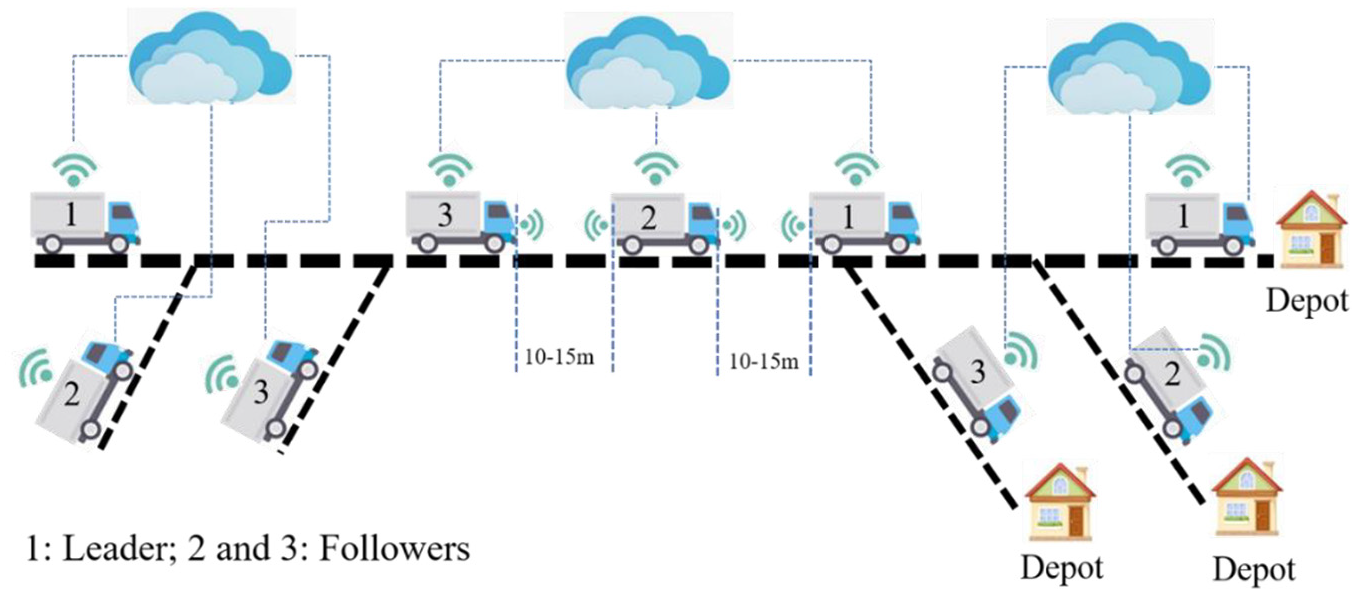
Operations of automated platoon vehicles.
Automated platoon vehicles present a significant opportunity to improve traffic efficiency and the safety of vehicles within the platoon. However, there are many challenges to be overcome,17,36 as shown in Figure 2. (1) Safety and security: For example, the reliable and safe braking behaviour in emergency situations, and reliability of the IoT systems, including sensors, components/ parts, and wireless communications, play a crucial role to improve user acceptance. (2) Technical aspects: It is important to estimate the safe gap distance between vehicles in a platoon in real time and in an effective way. 36 The technical improvements provide a solution to these issues to foster the development of platoon services. (3) Legal issues: Legislation between jurisdictions requires harmonisation, for example, vehicle type approval and inter-vehicle gap distance. (4) Infrastructure: The traffic management should take measures to prioritise platoons to make it more attractive. For example, road lanes should be allocated to platoons, especially during the night or in busy traffic situations. Clear segmentation should also be considered, based on different factors such as road network suitability and reliable traffic information in real time. (5) Logistics operation/business: The identification of potential partners to join platoon operations is a challenge. The certification of transport companies and drivers could help improve driver acceptance, especially for the following drivers. (6) User (including road users, drivers and society) acceptance and human behaviours: The improvements of technology could increase user acceptance, for example, by automating the gap for other road users.
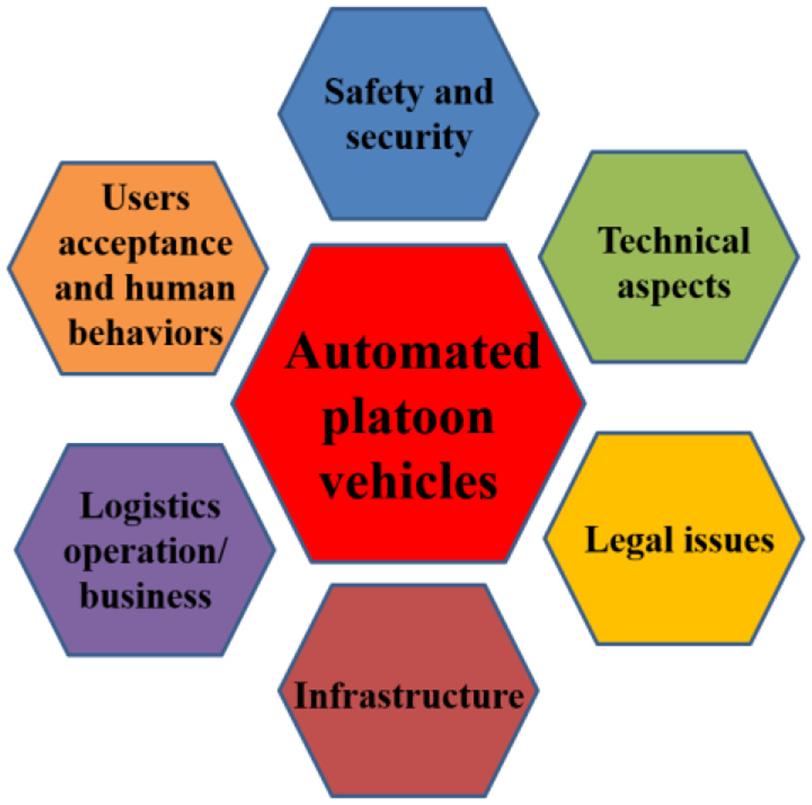
Challenges of automated platoon vehicles. 36
The business model for automated platoon vehicles
Existing businesses will be influenced by the introduction of automated platoon vehicles. In this paper, by analysing the simplified business model and BMC, new business and the changes to existing business caused by platoon services will be demonstrated, providing guidance for stakeholders planning for the future.
Simplified business model
Upon the introduction of platoon services, the key categories of stakeholders will be the AD device industry, the IoT device industry, and the platoon service platform providers, differing from conventional vehicles, whose stakeholders focus on car users and car owners, as shown in Figure 3. The arrow signals the direction of cost payment between different stakeholders, which indicates how each stakeholder could benefit while showing how payments made by stakeholders could in turn contribute to the benefit of other stakeholders, creating a balance between costs and benefits. In the model, the platoon leaders are not only the service users, but they also form part of the service providers. The driving safety and comfort of the platoon leaders significantly influence the penetration rate of platoon services. This differs greatly from other AD modes where car owners are not directly involved with user acceptance of the platoon service. Platoon service platform providers directly interfere with platoon users, platoon followers, and the IoT device industry. The performance of the platoon platform has a huge impact on the uptake of platoon services, although the platoon platforms do not produce any products, but only provide the services. The challenge is the development of a new business which can compete with conventional driving. At the inception of the new business, developments in technology and access to suitable finance will be necessary to improve the reliability and accessibility of the platoon services to the public, which allows a lower service price for platoon followers and more payments for platoon leaders. For example, research and development should have a priority of being provided more funding for research in this field. From the view of platoon service providers, a low price should be provided at the inception of the business to attract more customers, such as the success of Uber. Mouth-to-mouth effect will generate more potential customers if the service really brings about many benefits. In the previously mentioned TNO platooning project, 17 the relationship between users on the road and government support was explained. If societal benefits are significant, governments will be encouraged to adjust regulation and to facilitate the generation of platoon services and to invest in the development of fundamental infrastructures. In addition, other stakeholders, for example, insurers and customers, who could influence the platoon users were addressed. Meanwhile, the costs and benefits were also analysed, which helps to explain how other stakeholders could affect the platoon users. However, to make the business model function well, all stakeholders need to take action in a coordinated fashion.
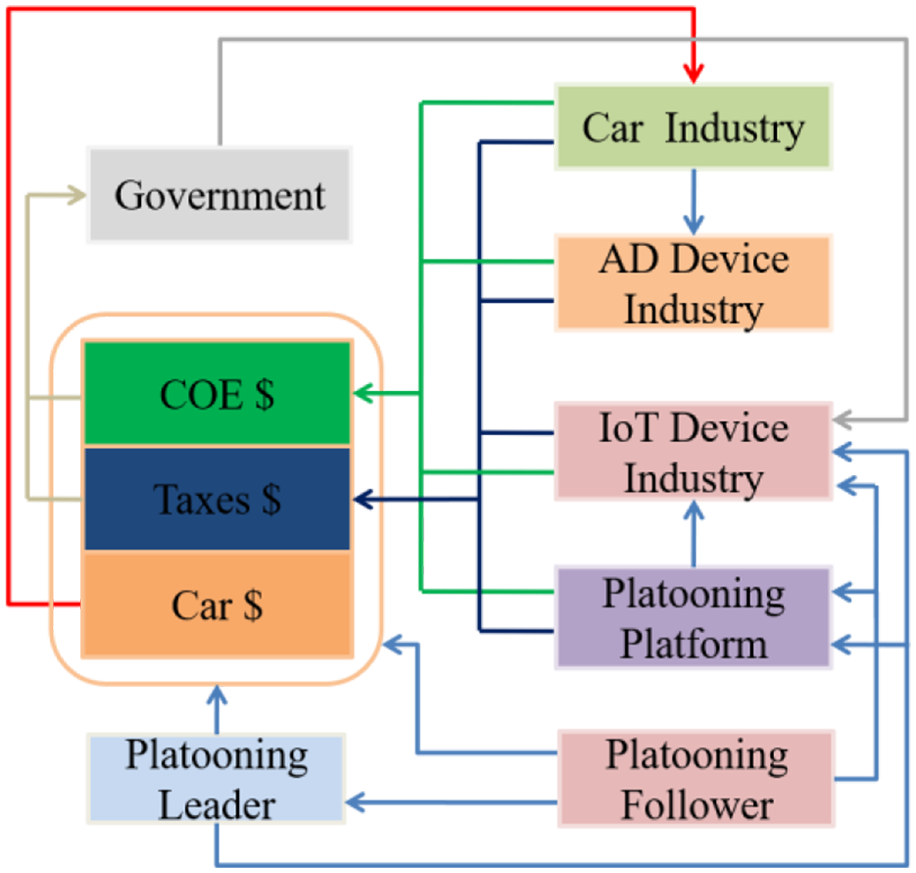
Simplified representation of new business model for automated platoon vehicles.
BMC
As described in the above simplified business model of platoon, different stakeholders are linked through various activities. The BMC is proposed as the most effective methodology for describing, analysing and designing business models, and is used to clarify the platoon service business model, which includes nine components, as shown in Figure 4. Nine elements are presented to show the logic of developing profit for the business.
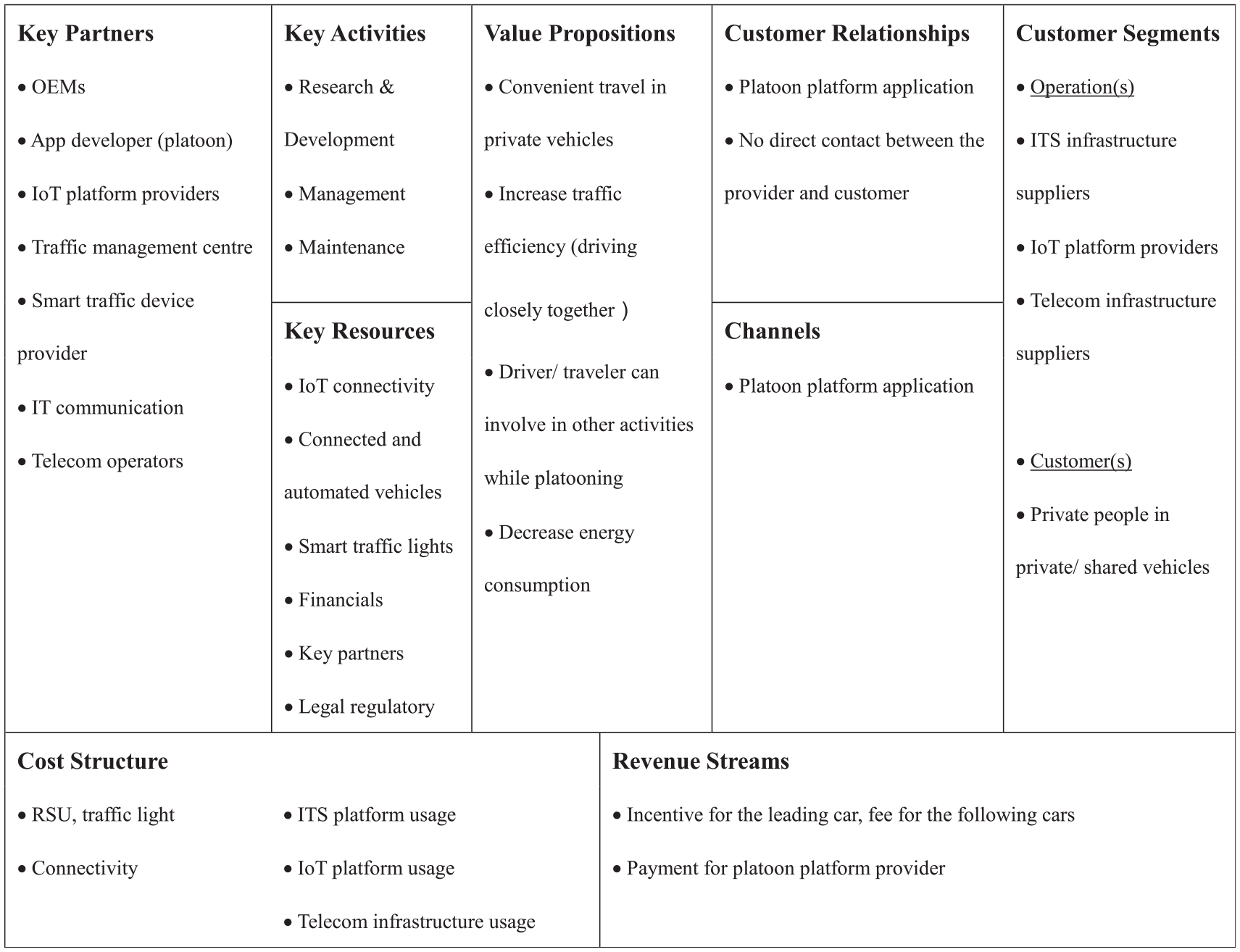
Business model canvas for automated platoon vehicles.
In the BMC, the ‘Key Partners’ are mainly the product and service providers, which are directly and indirectly related to customers. They are the foundation of the platoon business. The performance of their ‘products’ significantly influences user acceptance, and their ‘product quality’ can be improved by ‘Key Activities’. For example, ‘product reliability’ can be enhanced by the inputs of research and development, and management by traffic centres to improve service efficiency and maintenance. The merits of platoon services are shown in ‘Value Propositions’, such as increased traffic efficiency due to the shorter gap distance, decreased energy consumption and followers having the opportunity of involvement in secondary activities such as taking a nap or reading a book while platooning. As can be seen in the canvas, many new cost elements emerged in the ‘Cost Structure’, which are the new investments for the platoon development based on the existing businesses. User acceptance and popularity of platoon services significantly depend on the activities among these stakeholders.
Cost analysis of automated platoon vehicles
The cost of the platoon services heavily influences user acceptance. For the purposes of this investigation, the AVs are retrofitted from the conventional vehicle (Mercedes Actros 6555 12×6 Chassis cabin) by adding the AD package (software and hardware), and the associated costs have been based on London, England. All the cost values are supported by published materials and reasonable assumptions, as annexed in Table S1–S3. The average vehicle age in European countries is approximately 12 years; 37 consequently, 12 years is taken as the lifespan in this paper. The platoon service is suitable for long-distance regular freight transport trucks, which not only eases driving burden but also decreases fuel consumption. Figure 5 shows the cost structure of the conventional vehicle during its lifespan, taken as the baseline. The car value decreases with year due to the depreciation rate which accounts for 21.5% in the first year (Table S2). The result also shows fuel cost accounts for a significant share, up to 68.3%. As a freight transport truck is taken as the sample, the annual travelling distance is much higher than a private car. Once the technology is mature, freight transport would benefit significantly from platoon services due to the distance travelled.
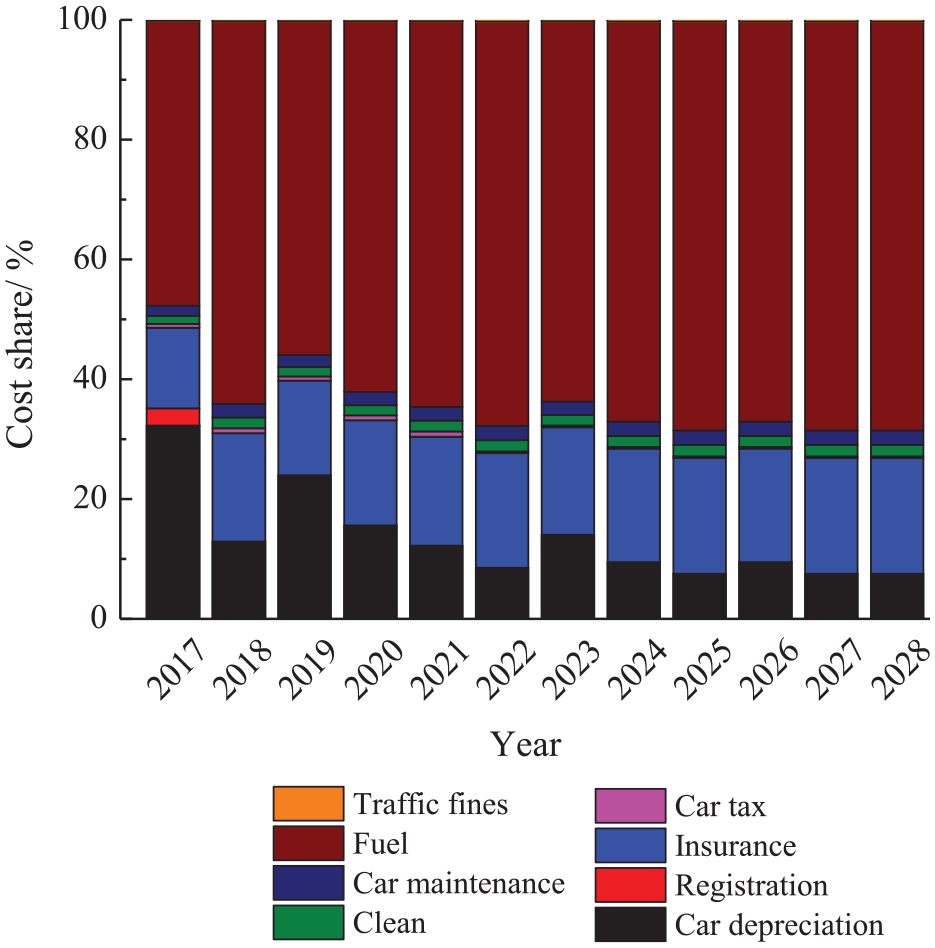
Cost structure of the conventional vehicle.
Platoon leaders
The adoption of AVs and IoT technology brings about a new mobility mode, which will induce the generation of new businesses. With the emerging businesses related to automated platoon vehicles, the cost structure will differ from conventional vehicles. Figure 6 presents the cost structure of platoon leaders in different starting years. As the AD package price decreases significantly with the development of technology, the starting year of the business has a great influence on the cost structure. The role of leading a group generates an income for platoon leaders. The AD package accounts for a medium share (23.7% maximum, 8.4% minimum) of cost structure distribution for ‘business starting year of 2017’. However, the value is the highest in the first year of ‘business starting year of 2017’, and the value decreases from 23.7% to 1.6% for ‘business starting year of 2025’. In addition, the fuel cost still accounts for a significant share of a vehicle which is similar to the conventional vehicle, although the fuel consumption saving for the platoon leader is assumed to be 5% based on the literature.33,34 According to the cost structure, the share of fuel cost can represent up to 66.2% for the ‘business starting year of 2025’. The insurance cost of the vehicle also accounts for a large percentage, which is similar to the level of truck depreciation. Due to the high frequency of freight transport, the high insurance cost protects against losses in the event of an accident. Furthermore, the income from the driving service of acting as a platoon leader can help offset the financial burden caused by the total cost per year, by up to 4.7%.
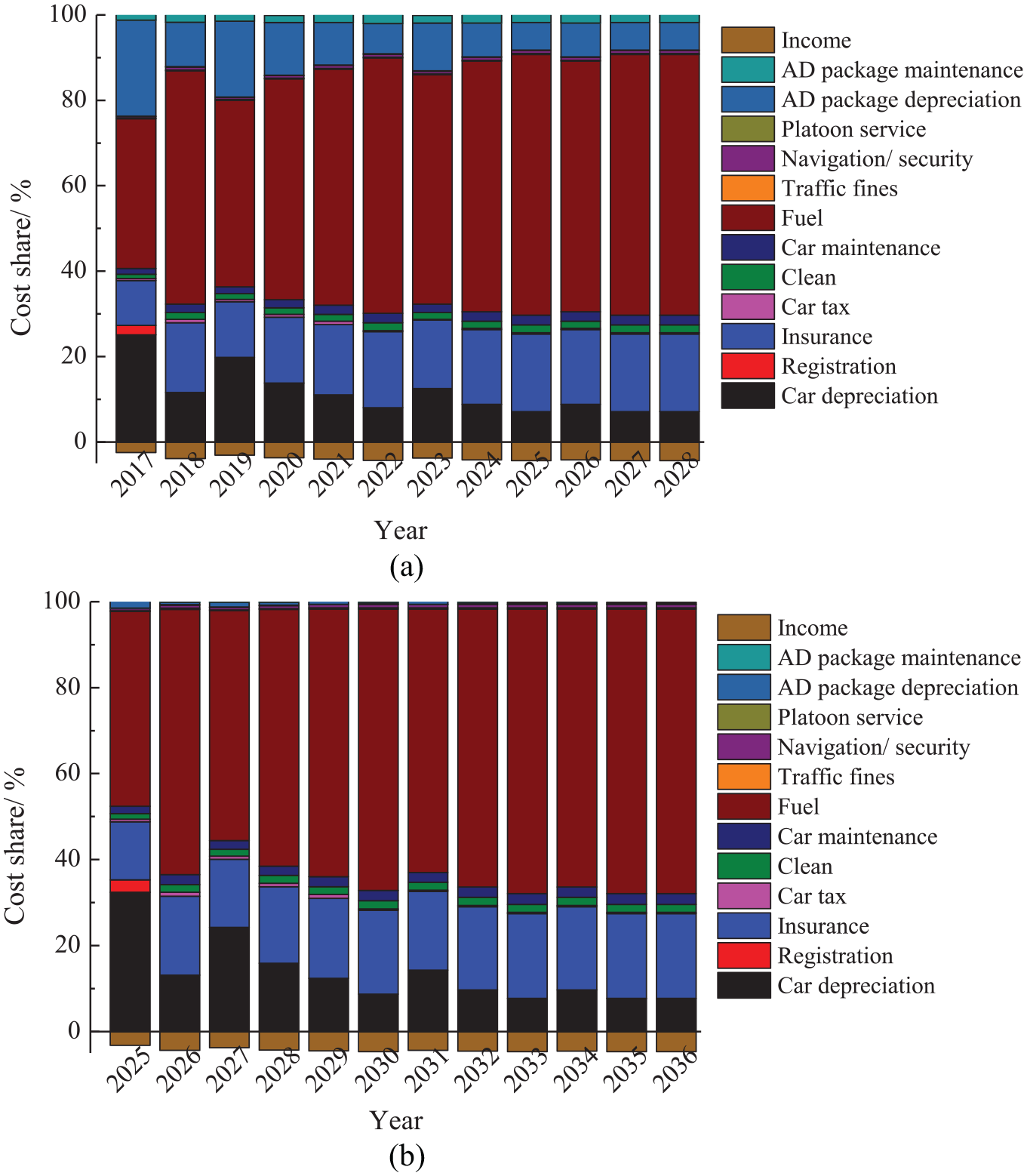
Cost structure of platoon leaders. (a) business starting year of 2017 and (b) business starting year of 2025.
The leading vehicle in a platoon is driven by an experienced driver for the safety of the whole platoon and to make the platoon function in an orderly manner. As the model in the SARTRE project implied, the users or their companies pay a monthly fee to participate in a platoon led by professional truck driver. 19 However, the total cost in a vehicle’s lifespan will change if the monthly income for leaders changes, as shown by the analysis of the impact of escalating monthly incomes on the contribution of the total cost. Figure 7 shows 12 years’ total cost for platoon leaders, with the function of different ‘business starting years’ and monthly incomes. The results show that the total cost is much higher than the conventional vehicle before ‘business starting year of 2023’, if the monthly income is less than £600. The high cost may be caused by fuel consumption and AD package according to the results from Figure 6.
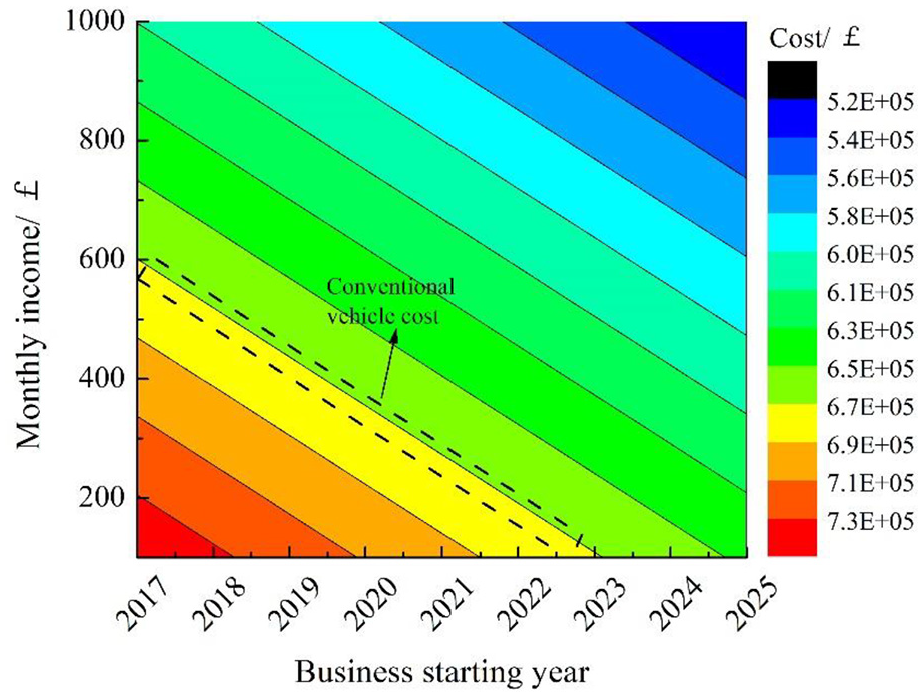
Twelve years’ total cost of platoon leaders.
Platoon followers
The platoon followers pay a monthly fee for the platoon services, paid to the platoon platform, which provides income for business costs and investment. According to the results shown in Figure 8, the payment for this service accounts for a small part although it increases the burden of platoon followers (without considering fuel saving). In addition, the AD package comprises the highest percentage (23.8%) of cost in the first year for ‘business starting year of 2017’. However, the cost decreases rapidly with the ‘business starting year’ and accounts for just 1.6% in the first year for ‘business starting year of 2025’, attributable to the development of AVs. Furthermore, the fuel consumption cost accounts for a significant percentage in the total cost per year, although the fuel consumption saving for platoon followers is assumed to be 10% based on the literature.33,34 The values can represent up to 58.3% and 63.5% for the ‘business starting years of 2017 and 2025’, respectively.
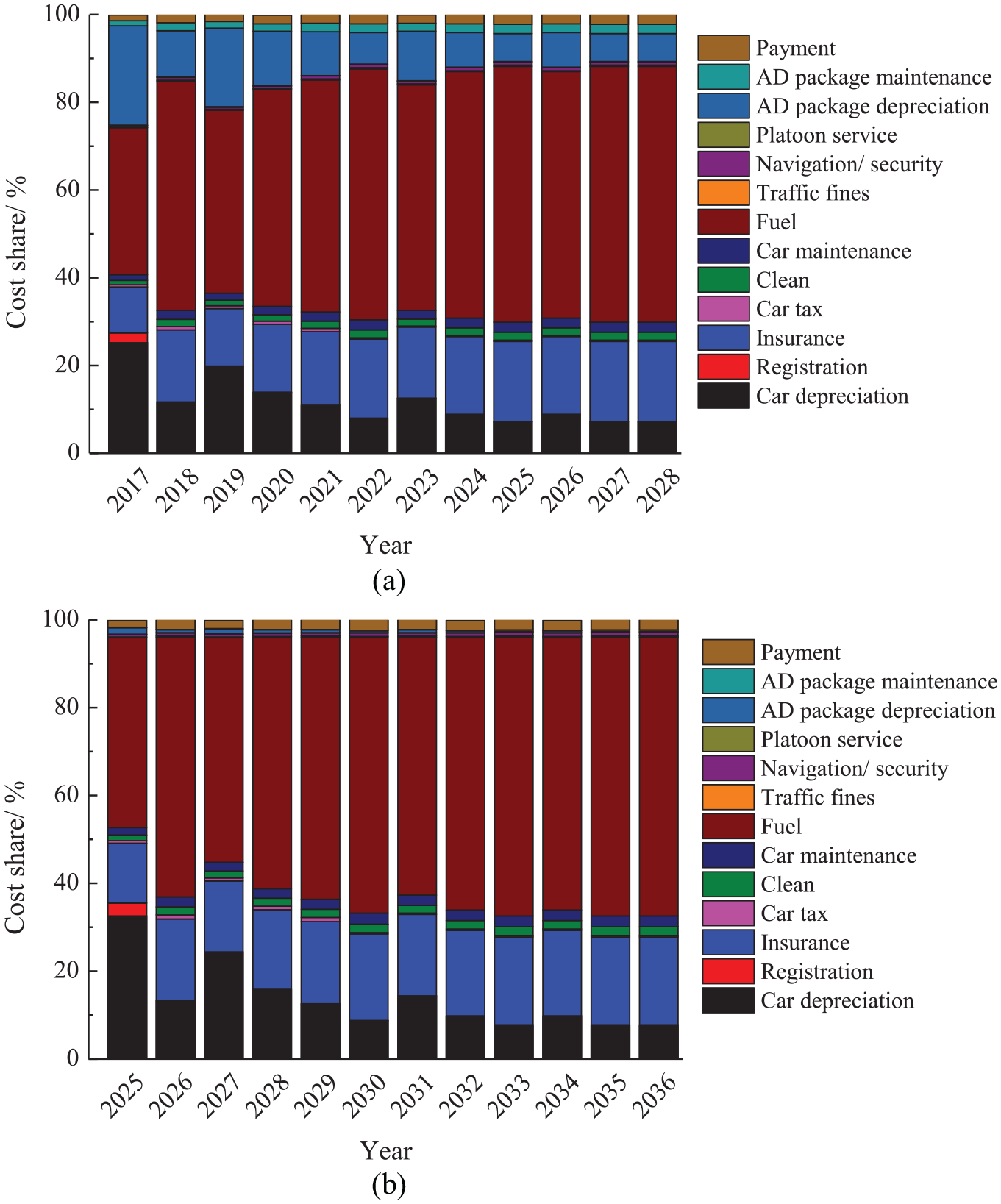
Cost structure of platoon followers. (a) business starting year of 2017 and (b) business starting year of 2025.
The total cost in a vehicle’s lifespan, as a function of monthly payment and different ‘business starting years’, is also analysed based on the cost structure for platoon followers. As shown in Figure 9, the total cost decreases with the ‘business starting year’ as the development of IoT-based technology. From ‘business starting year of 2023’, the total cost for platoon followers becomes lower than that caused by conventional vehicle, demonstrating that the IoT technology could help enhance and improve AD. However, the total cost is much higher before ‘business starting year of 2023’, which could be caused by fuel consumption, AD package, and monthly payment, according to the results from Figure 8.
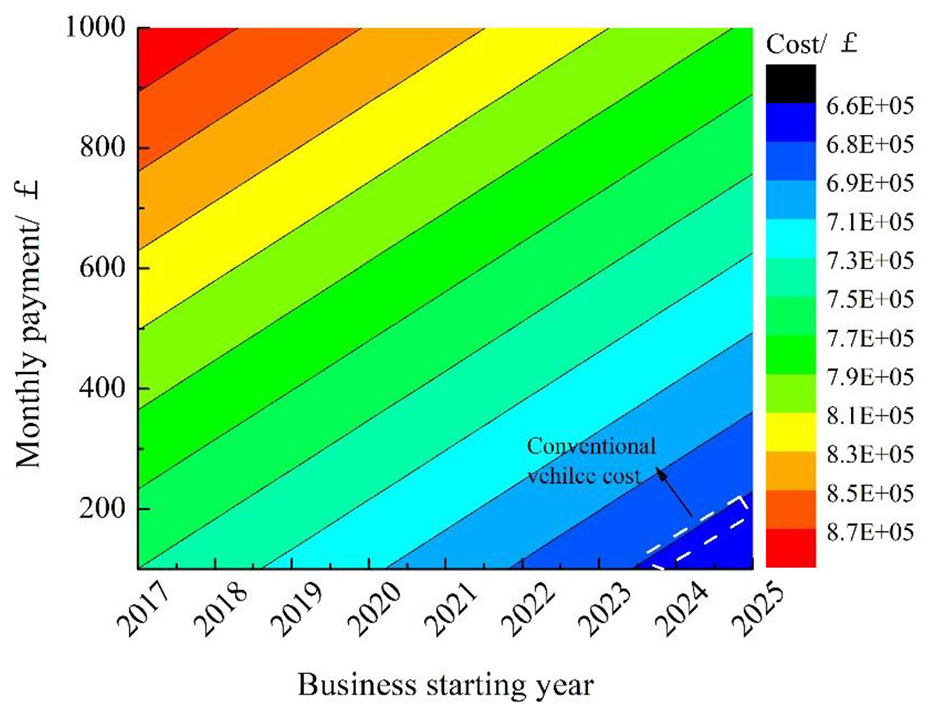
Twelve years’ total cost of platoon followers.
Scaling up of fuel saving
Based on the above discussions of cost structures in platoon leaders and followers, the fuel consumption is a primary factor that affects total cost, although the fuel consumption saving is assumed at 5% and 10% for platoon leaders and followers, respectively, based on the reported work. 33 As fuel consumption is the main cost for the freight delivery trucks, even a small fuel saving can bring huge benefits for businesses. In this part, the fuel consumption saving by national and international freight transport is estimated across different EU countries on the basis that platoon services are taken up. For this purpose, a platoon consists of eight vehicles (a leader and seven followers) by reference to PATH. 38 Short-distance freight transport, being less than 50 km, is not considered, because platoon services are more suitable for long-distance transport. The statistics of freight transport in EU-28 countries (Table S4) are referred to in the published data in Eurostat website. 39
Based on the assumption above, Figure 10 shows the potential of national annual fuel saving in these countries for heavy freight transport. The fuel saving caused by platoon depends not only on the territorial area of the nations but also on the freight transport mode. According to the data of platoon leaders (Figure 10(a)), the most significant potential fuel consumption saving is from Germany (~14 million litres), followed by France, Spain and the United Kingdom. For the platoon followers, it shows the same tendency as platoon leaders (Figure 10(b)), but a higher value of fuel saving. The fuel saving benefits the freight transport businesses and decreases exhaust emission and energy consumption. The fuel saving distributions in EU-28 countries for international freight transport scenarios are different from the national freight transport, as shown in Figure 11. For platoon leaders, the highest fuel saving is from Poland, followed by Spain. Poland has the highest value in fuel saving (more than 3 million litres), due to high dependency on the freight import. The fuel saving by international transport is low despite a large territorial area, which is caused by small populations in these countries (e.g. Finland, Norway and Sweden).
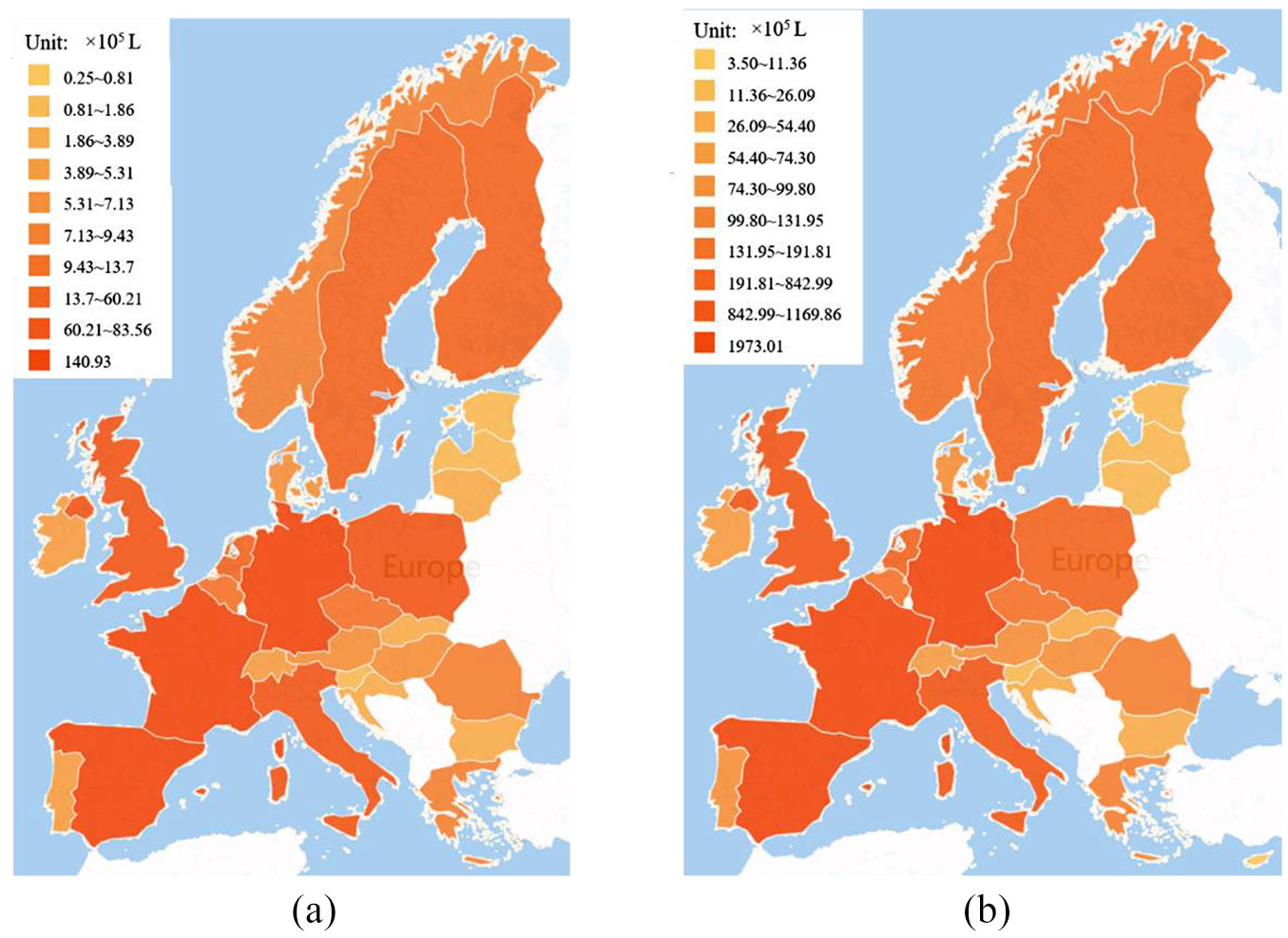
National annual fuel consumption saving potential in EU-28 countries (note: the country whose fuel saving is lower than 0.25 × 10⁵ L (or 3.50×10⁵ L) is indicated in white colour in EU-28): (a) leaders and (b) followers.
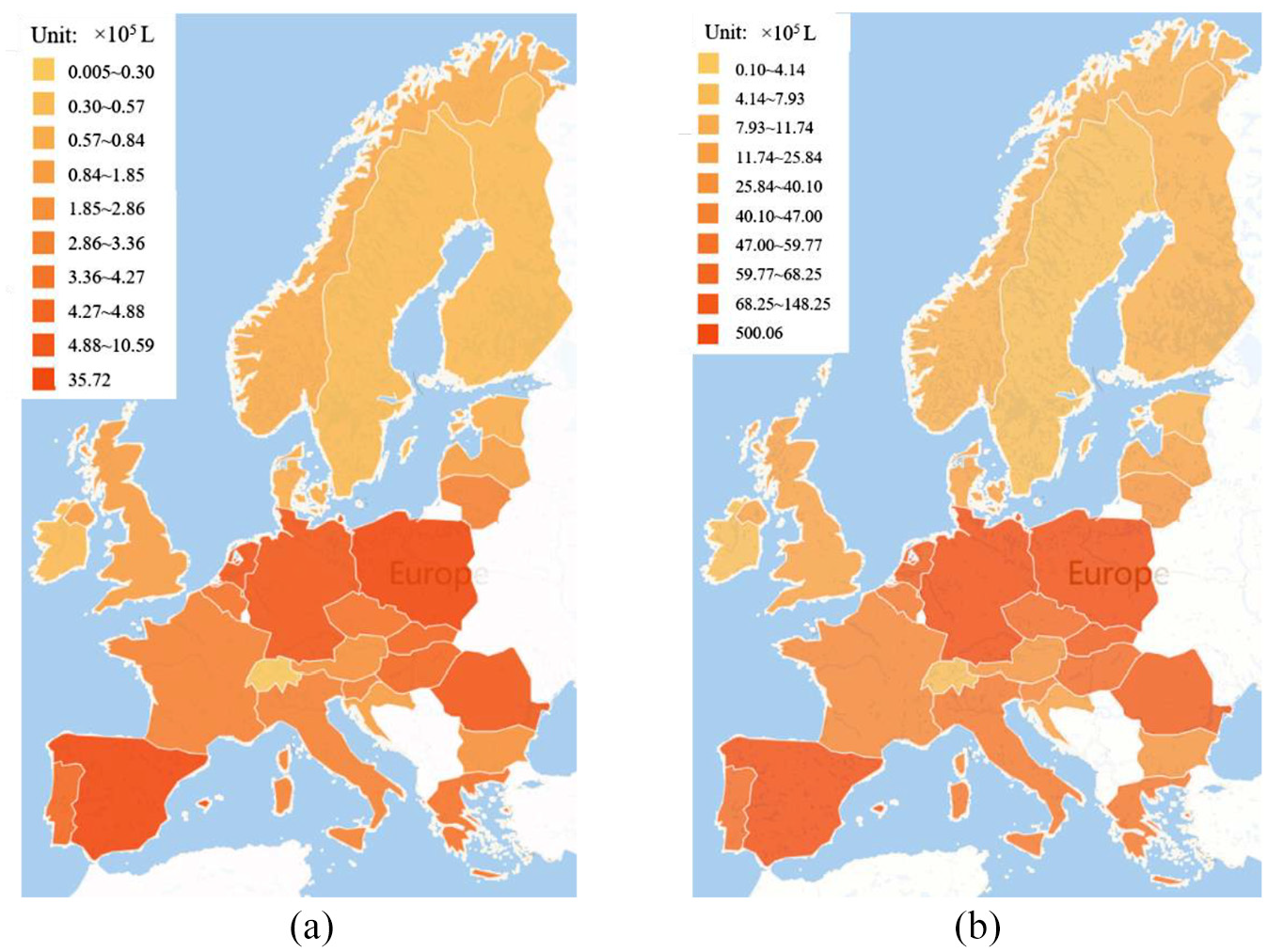
International annual fuel consumption saving potential in EU-28 countries (note: the country whose fuel saving is lower than 0.005 × 10⁵ L (or 0.10 × 10⁵ L) is indicated in white colour in EU-28): (a) leaders and (b) followers.
Conclusion
The automated platoon, as a novel mobility service, has attracted much attention due to its potential positive effect on traffic efficiency, fuel consumption and travelling comfort. The adoption of this service will bring about many new businesses and has the potential to have a significant effect on existing businesses. The user acceptance of platoon services is greatly dependent on the service cost. In this paper, the authors introduced a novel business model related to automated platoon vehicles. The cost structures were analysed from the perspectives of platoon leaders and followers. Finally, the fuel consumption savings in EU-28 countries are presented based on the freight transport. The findings are as follows:
In the proposed business model, the AD package and service providers of automated platoon vehicles are new stakeholders, compared with the conventional vehicles, which link platoon leaders and followers with the car industry. The BMC shows the relations among different stakeholders and related activities.
The AD package has the highest percentage of the total cost in the first year of a vehicle’s lifespan and decreases rapidly with year. In addition, the insurance of the vehicle represents a significant cost, which is similar to the level of truck depreciation in the first couple of years. The income of leaders can help relieve some financial burden, up to approximately 4.7%. Meanwhile, the fuel saving will bring about significant benefits for the heavy freight transport company which relies on regular long-distance routes. The fuel consumption saving for platoon followers will balance part of the cost in AD package.
Regarding the national annual fuel saving in EU-28 countries for heavy freight transport, the largest potential fuel consumption saving was found in Germany, followed by France, Spain and the United Kingdom. For the international freight transport scenario, it is in Poland, followed by Spain.
Supplemental Material
Support_information – Supplemental material for A business model and cost analysis of automated platoon vehicles assisted by the Internet of things
Supplemental material, Support_information for A business model and cost analysis of automated platoon vehicles assisted by the Internet of things by Junyan Chen, Haibo Chen, Jianbing Gao, Jo-Ann Pattinson and Romina Quaranta in Proceedings of the Institution of Mechanical Engineers, Part D: Journal of Automobile Engineering
Footnotes
Declaration of conflicting interests
The author(s) declared no potential conflicts of interest with respect to the research, authorship, and/or publication of this article.
Funding
The author(s) disclosed receipt of the following financial support for the research, authorship, and/or publication of this article: The research described in this paper was supported in part by the EU-funded projects AUTOPILOT (grant agreement no. 731993) and PAsCAL (grant agreement no. 815098).

Supplemental material
Supplemental material for this article is available online.
References
Supplementary Material
Please find the following supplemental material available below.
For Open Access articles published under a Creative Commons License, all supplemental material carries the same license as the article it is associated with.
For non-Open Access articles published, all supplemental material carries a non-exclusive license, and permission requests for re-use of supplemental material or any part of supplemental material shall be sent directly to the copyright owner as specified in the copyright notice associated with the article.
