In this paper, an approach based on the refined plate theory and Airy stress function has been proposed to investigate the vibration and buckling behaviors of functionally graded (FG) rectangular plates. The significant feature of the proposed approach is considering only two unknowns in the displacement field in which the contribution due to shear and bending to the total transverse displacement are clarified. Using the extended Hamilton’s principle and defining an Airy stress function corresponding to the compatibility equation, the equations of motion, which do not explicitly include the in-plane displacements, are derived. The accuracy and effectiveness of the current model is shown by comparing the natural frequencies and buckling loads of various FG rectangular plates calculated by the proposed approach with even three-dimensional (3-D) and quasi-3D solutions. Besides, the exact dynamic response of a square FG plate due to a harmonic central force is investigated using modal analysis. This approach is capable of handling quasi-3D models, by selecting proper functions in the displacement field to consider the thickness stretching effect. By doing this, behavior of FG square plates with various coefficient functions are compared with each other. Therefore, through implementing the Airy stress function, the number of variables is reduced, in turn, simplifying the dynamic model. Consequently, it can be used for wide range study of static and dynamic behaviors of FG plates.
In laminated composites, stepwise changes of elastic properties and thermal coefficients lead to high inter-laminar stresses causing delamination. FG materials are a class of composites having continuous material properties from one point to another, eliminating not only thermal and residual stresses, but also stress concentrations found in the usual composite materials. They are high thermal, wear and corrosion resistant materials widely used in many engineering applications such as mechanical, aerospace, nuclear, civil, fire retardants, and automotive industries.
Various theories have been presented through the history for investigating the mechanical behavior of plates. The simplest model is based on the classical plate theory (CPT), which ignores both transverse shear and normal deformation effects.
Numerous researchers have attempted to refine the CPT. The first order shear deformation theory (FSDT) developed by Mindlin1 accounts for the shear deformation effect with a linear variation of the in-plane displacements through the thickness.
Using FSDT with four variables, Rezaei et al.2 investigated natural frequencies of FG plates with porosities considering two boundary layer functions to decouple the governing equations.
Since in FSDT, a uniform shear strain is assumed through the plate thickness, a shear correction factor is needed. As a result, higher-order shear deformation theories (HSDTs) have been introduced in the literature. These theories do not need shear correction factor and lead to more accurate shear stress distribution.
HSDTs consider higher order variations of in-plane displacements or both in-plane and transverse displacements (i.e., quasi-three-dimensional (quasi-3D) theory) through the thickness. Based on an exact 3D method, Vel and Batra3 studied vibration of rectangular FG plates. Using various shear deformation theories, Sarangan and Singh4 investigated static, buckling, and free vibration behaviors of laminated composite and sandwich plates. Based on a non-polynomial HSDT, Mantari et al.5 investigated free vibration behavior of FG plates resting on an elastic foundation. Ferreira et al.6 studied free vibration of FG plates based on the FSTD and third-order shear deformation theory (TSDT) using the collocation method with radial basis functions.
Neves et al.7 investigated bending deformation and free vibration of FG plates based on a quasi-3D hyperbolic sine shear deformation theory. Additionally, based on a quasi-3D higher-order shear deformation theory and a meshless technique, Neves et al.8 studied static, free vibration and buckling of isotropic and sandwich FG plates. Thai et al.9 investigated bending and free vibration of FG plates based on a quasi-3D hyperbolic shear deformation theory. Matsunaga10 studied natural frequencies and buckling loads of FG plates considering the effect of transverse shear and normal deformation and rotary inertia.
Hellal et al.11 investigated vibration and buckling of FG sandwich plates supported by elastic foundation in hygro-thermal environment based on a HSDT. Free vibration, buckling, and static responses of graphene-reinforced sandwich plates under mechanical and thermal loadings were investigated by Yaghoobi and Taheri12 based on a refined shear deformation plate theory. Other variations of HSDTs to study buckling and vibration behaviors of FG plates under various conditions are also proposed.13,14
The idea of partitioning the transverse displacement into the bending and shear parts was first proposed by Huffington15 and later adopted by Murty16 and Senthilnathan et al.17 By implementing this idea, not only the number of unknowns is reduced but more importantly the contributions to the total displacement due to shear and bending are clarified. Shimpi18 developed a refined plate theory (RPT) for isotropic plates by dividing the displacements into bending and shear components. Thai and Choi19 studied bending, buckling, and free vibration behaviors of FG plates resting on elastic foundation using RPT based on the Navier and Levy approach. Free vibration behavior of FG plates based on a four-variable RPT was studied by Benachour et al.20 Hadji et al.21 analyzed free vibration behavior of rectangular FG sandwich plates, applying four-variable RPT. El Meiche et al.22 studied buckling and free vibration of thick FG sandwich plates through implementing a hyperbolic shear deformation theory. Thai and Choi23 investigated bending and free vibration behaviors of FG plates using various HSDTs, neglecting the effect of thickness stretching. Vu et al.24 analyzed static deflection, free vibration, and buckling of FG plates with a meshfree method by implementing a refined third-order shear deformation theory. Thermo-mechanical behavior of FG sandwich plates resting on elastic foundation was investigated by Mahmoudi et al.25 based on a quasi-3D shear deformation theory. Rouzegar et al.26 studied dynamic behavior of composite laminates integrated with a piezoelectric fiber-reinforced composite (PFRC) actuator layer, based on a four-variable RPT. It was concluded that their approach can predict the dynamic behavior of smart composite laminates accurately. Other kinds of refined theories were also proposed to consider through the thickness deformation effect.27,28 It should be noted that wide usage of FG materials were studied more in detail for not only rectangular plates but also for other various mechanical models/components, for example, nano-plates, shells, cylinders, disks, beams, vessels, and spheres.29–37
In this paper, a new method based on the RPT is proposed to investigate the vibration and buckling of rectangular FG plates. This approach does not require a shear correction factor while satisfying shear stress free surface conditions. Furthermore, by using Airy stress function, the in-plane variables are excluded and thus this approach includes only two state variables; transverse bending deformation and transverse shear deformation; compared to HSDTs containing a greater number of unknowns. Moreover, the contributions of shear and bending to the total displacement are completely clarified. The accuracy and effectiveness of the current model is shown by comparing natural frequencies and buckling loads with those computed using other approaches.
Furthermore, through implementing modal analysis, the exact responses of a square FG plate under a harmonic concentrated force are investigated. By using various coefficient functions in the displacement field to model quasi-3D thin and thick FG plates, the variations of transverse displacement and shear stress along the thickness direction are compared with each other by considering only two variables.
Displacement field
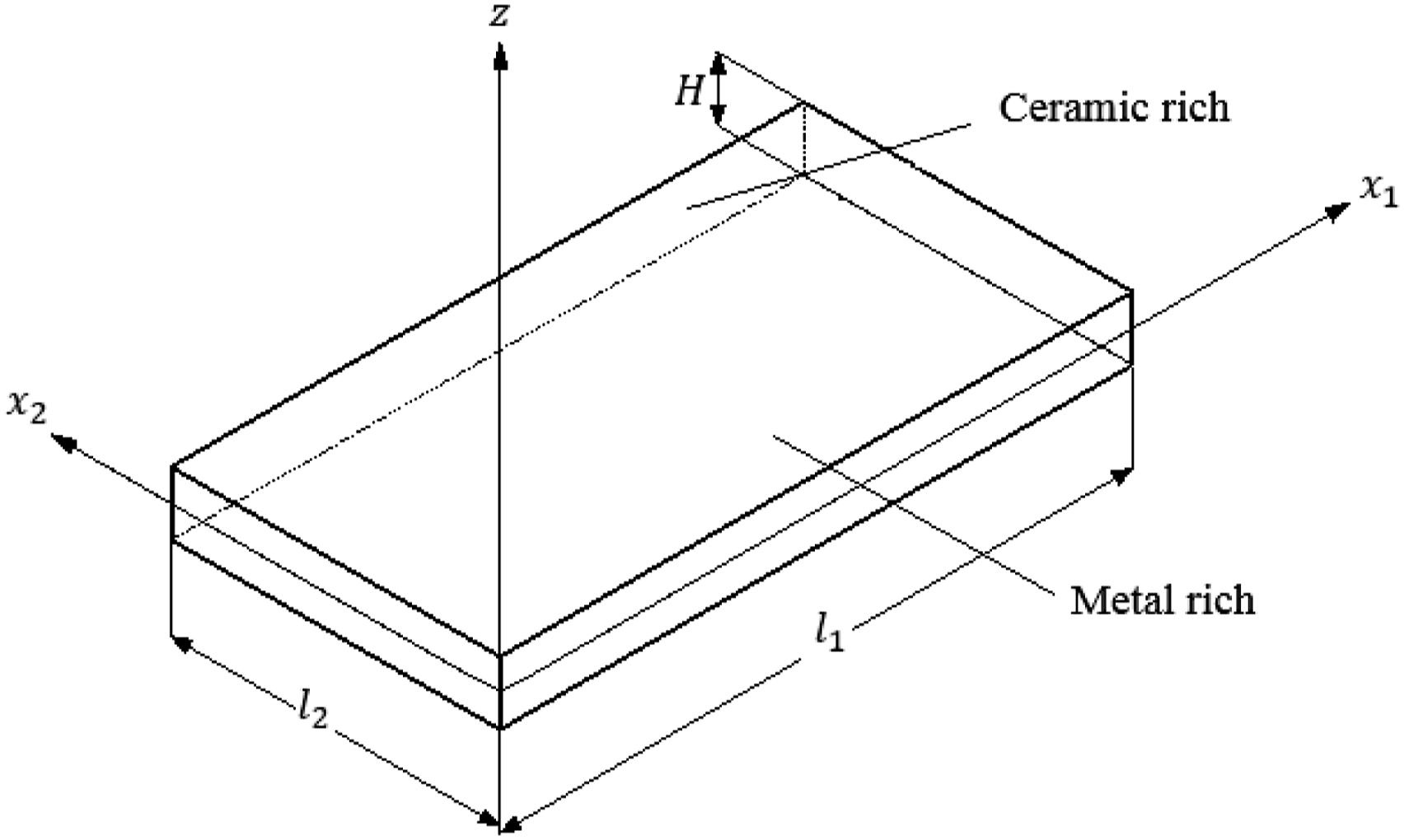
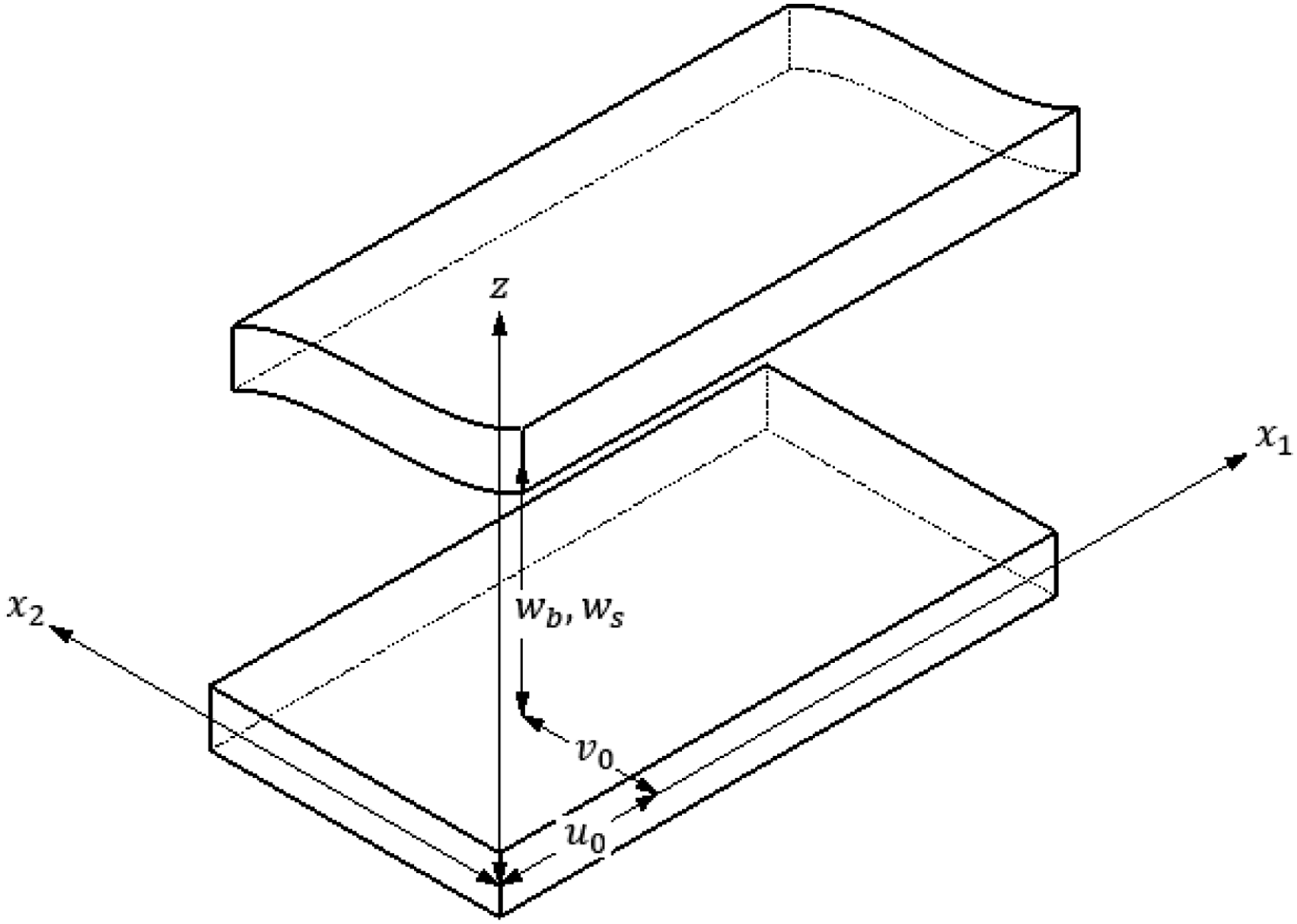
The geometry of an FG plate with top and bottom surfaces, being ceramic and metal rich, respectively, is shown in Figure 1. The in-plane coordinates are along x1 and x2 directions, while the out of plane coordinate is on the thickness direction z, with zero value in the middle of the plate. H is the plate thickness in z direction and and are the plate lengths in and directions, respectively. Figure 2 shows the deformed configuration of the FG plate with and , the in-plane displacements of the mid-plane in the and directions, respectively. and are transverse deflections of the mid-plane due to bending and shear, respectively.
Functionally graded plate and coordinate system.
Deformed and undeformed configuration of the FG plate.
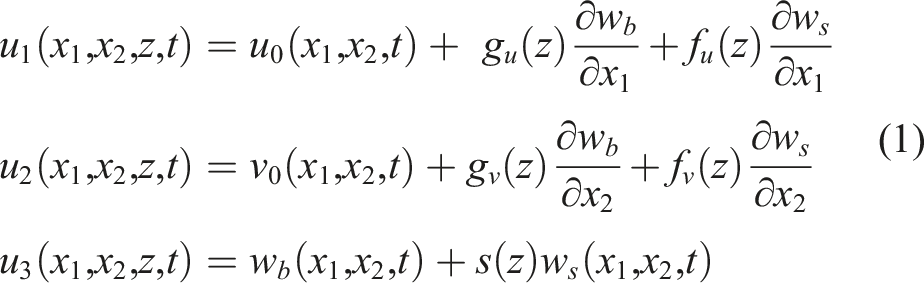
Considering the displacement field used by Senthilnathan et al.17 and further improving the model by considering undefined functions, new displacement field is considered to be
where , , and , are the displacements of each point in the , , and directions, respectively, while t shows the time. The second terms in and , containing derivatives of , express the effect of bending on the in-plane displacements as used in the classical plate theory. The third terms, containing derivatives of , show the effect of shear. The transverse displacement consists of two parts, and representing the contribution of bending and shear, respectively.
Functions , and , called coefficient functions in this paper, used in the displacement field equation (1) should be selected in a manner for which the condition of zero transverse shear stress on the free surface is satisfied
Material properties
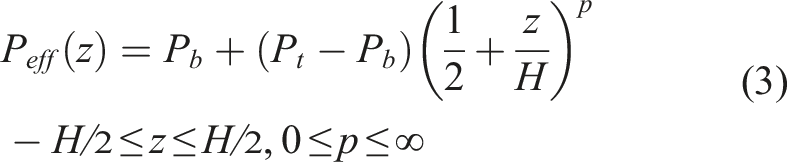
Due to gradual change in the volumetric ratio of the constituent materials, functionally graded material (FGM) properties vary continuously along the z direction based on a simple power law distribution in the following form
where p is the power law index taking a positive value. is the effective material property of the FG plate, and and are the properties of the top and bottom faces of the plate, respectively. z is the position in the thickness direction of the plate, with zero value in the middle of the plate thickness, while the full thickness of the plate is H.
Strain–displacement relations
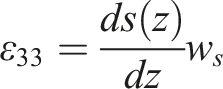
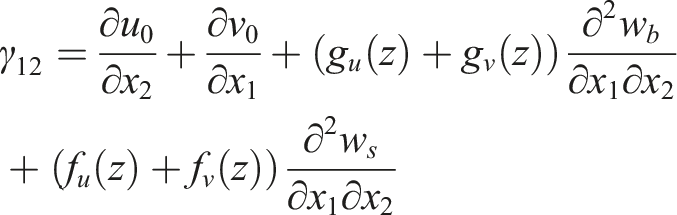
Linear strains due to the displacement field equation (1) are
Constitutive equations
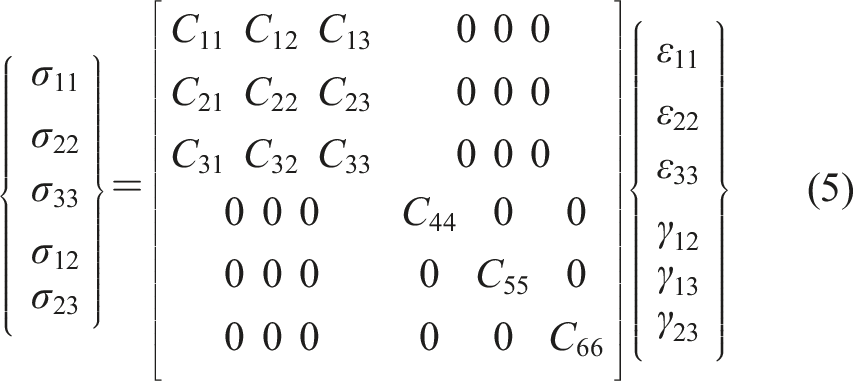
Three-dimensional stress–strain relations can be expressed as
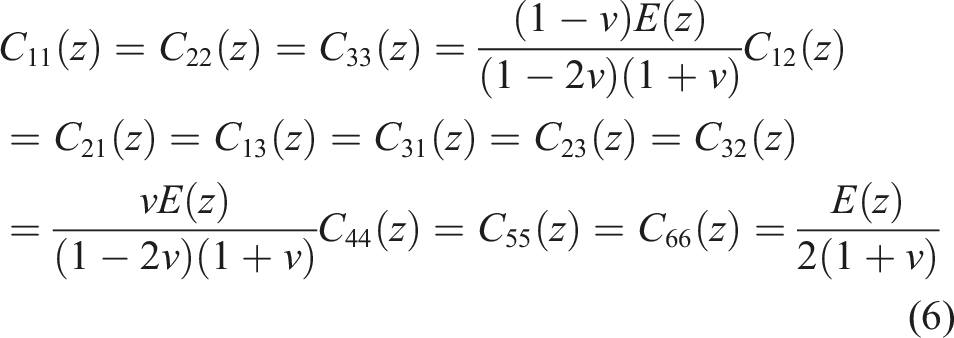
For elastic isotropic FGMs, are given in terms of Young’s modulus and Poisson’s ratio as
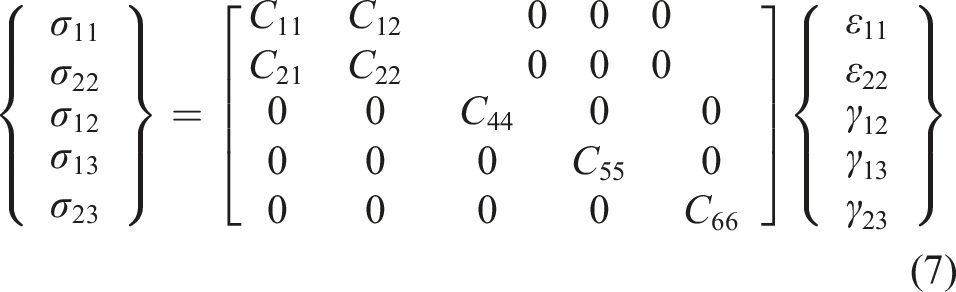
If the thickness stretching effect is neglected (), the constitutive relations of equation (5) can be rewritten as
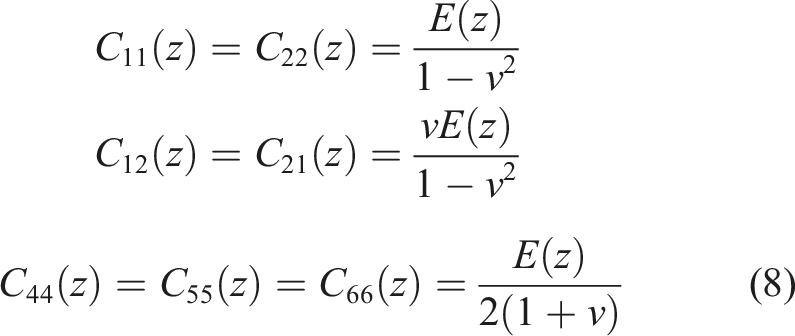
where elastic constants are
Governing equations
The extended Hamilton’s principle can be used to obtain the equations of motion
where is the variation of strain energy, is the virtual work done by the applied external loads, and is the variation of kinetic energy.
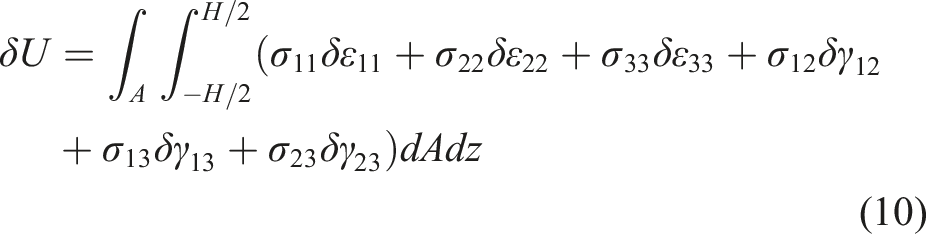
Variation of the plate strain energy can be expressed as
The work done by the external transverse uniform distributed force q acting on the top surface of the plate () is
The work done by the uniform in-plane compressive distributed loads (i.e., and both negative with the dimension of force/length) applied along the sides at the edges and , respectively, which are due to the slope of the plate along and directions, can be written as
Total work done by the external forces is the sum of equations (11) and (12), that is
Also, the Kinetic energy of the plate is given by
where dot-superscript convention represents the partial differentiation w.r.t. time and is the effective mass density of the FG plate.
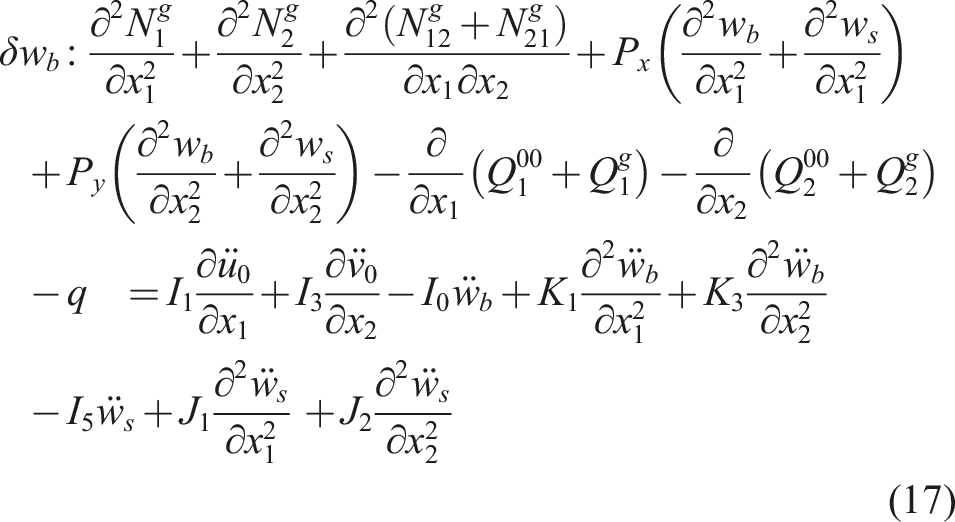
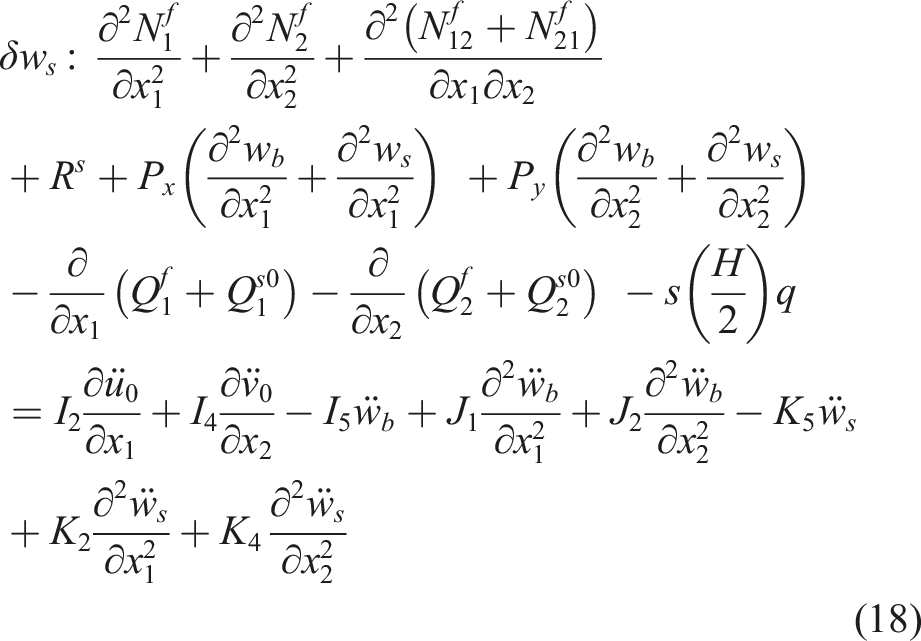
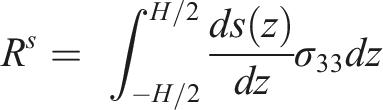
Based on the divergence theorem and collecting the coefficients of each variable, the equations of motion are derived as
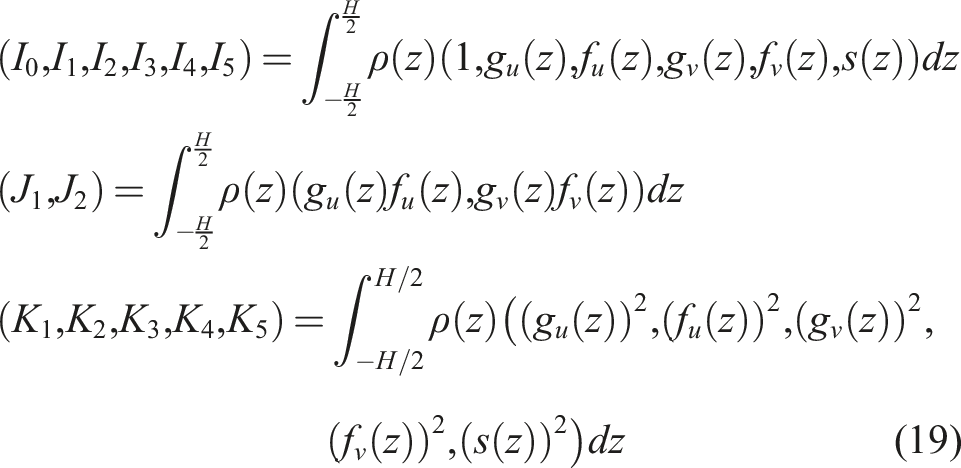
where , , and are various inertias of the plate defined by
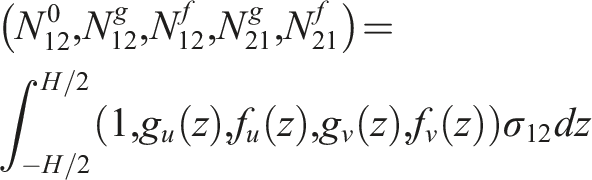
Stress resultants of the plate shown in equations (15–18) can be obtained by writing the expressions for , using the strain–displacement relation equations equation (4)
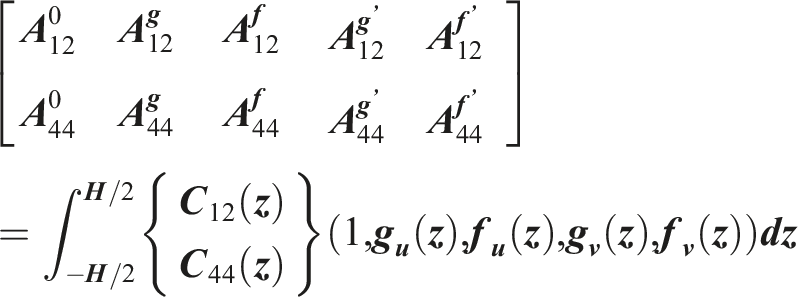
By substituting the strain-displacement relations equation (4) and the stress–strain relations equation (5) in the stress resultants , , and described in equation (20), various coefficients used in equation (22), are obtained as
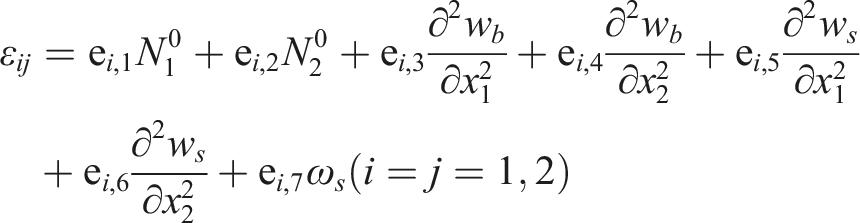
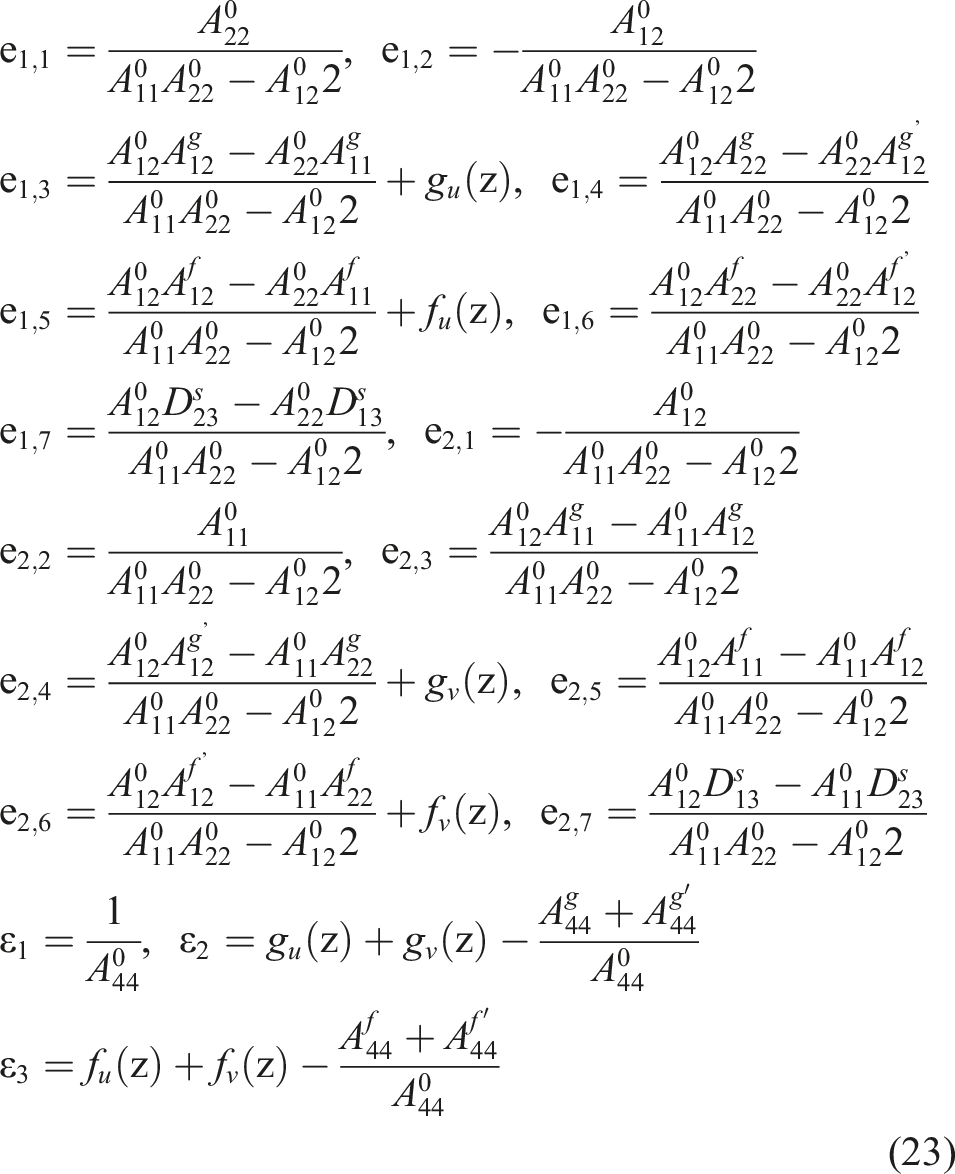
Derivatives of the in-plane variables and can be obtained in terms of the stress resultants , , and described in equation (20) and the derivatives of variables. Substituting derivatives of the in-plane variables into the strain-displacement relations equation (4), normal strains along and directions and in-plane shear strain are obtained as
where coefficients and can be presented as
Solution procedure
The compatibility equation of an FG plate can be expressed as
, the stress function, should be selected in such a way that both the left side of equation (15) and the left side of equation (16) become zero. In other words, various in-plane stress resultants can be obtained as
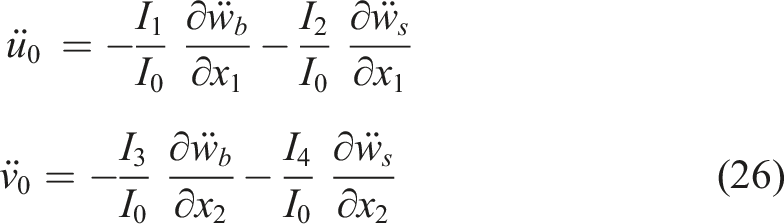
Therefore, the in-plane accelerations can be written as
By substituting equation (26) into equations (17) and (18), it can be easily seen that the equations of transverse motion are dependent of only and . Thus, the in-plane accelerations are taken into account in equations (17) and (18), while their related equations are omitted. Therefore, the total number of equations and variables is reduced without neglecting the effect of in-plane motions.
For movable simply supported boundary conditions, the moments at plate boundaries are zero and other conditions are
where and are compressive loads per unit length applied on the four sides of the plate.
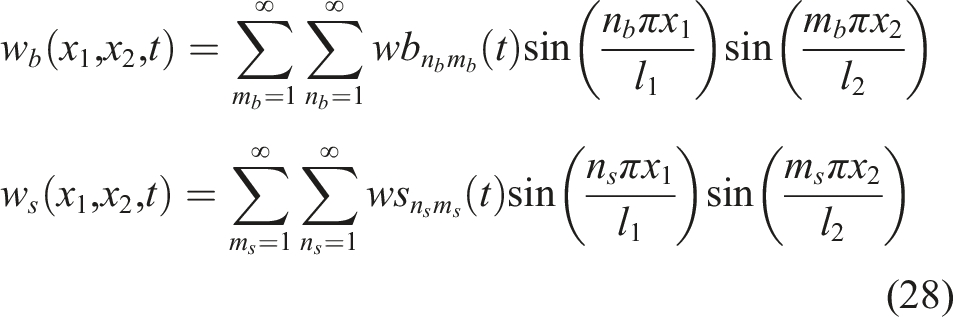
The series to satisfy the mentioned boundary conditions can be selected as
where and are time dependent variables.
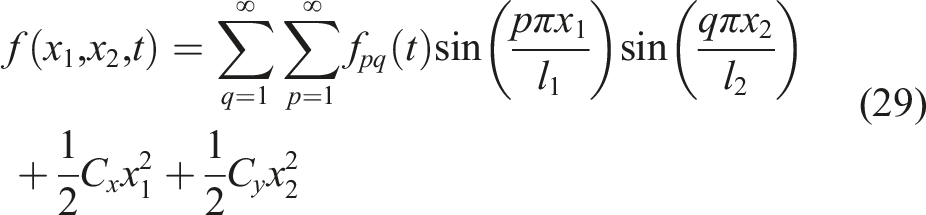
By using the expression of normal strains and in-plane shear strains in terms of , , and and variables of the problem described in equation (22) with the aid of definition of a proper stress function based on equation (25), the compatibility equation (24) gives the equation in terms of the stress function , bending variable , and shear variable . Using the series solution of variables (equation (28)), the compatibility equation gives the stress function f in the following form
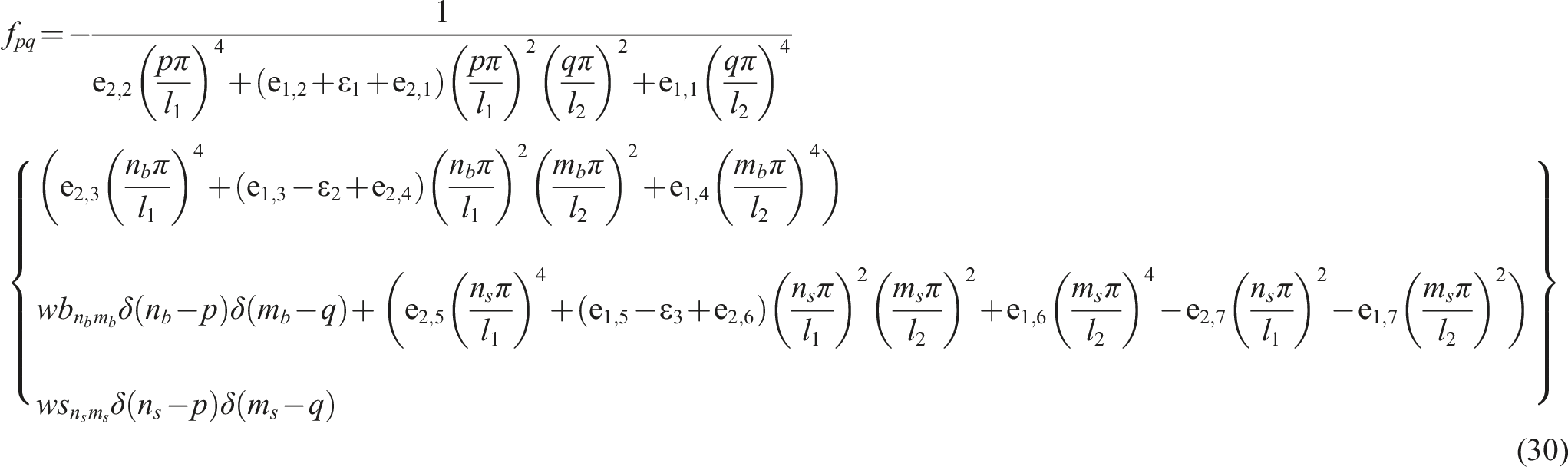
where is a function of and , obtained in the following form
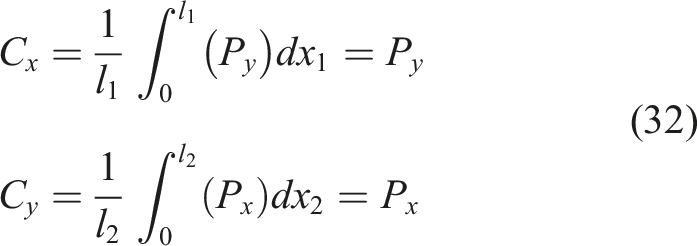
In equation (3) is Dirac delta function. and shown in equation (29) are caused by uniform in-plane compressive loads and , applied at edges , and as
Thus and can be obtained by averaging shown by the following equations
Based on the normal strains and in-plane shear strains relations equation (22) described in terms of , , , , and , various stress resultants (equation (20)) are obtained without including the in-plane variables, whereas , , and are related to the stress function described in equation (25). Based on equations (29) and (30), is a function of variables and . Hence, the stress resultants are obtained only in terms of and .
Furthermore, using proper forms of the coefficient functions used in the displacement field (equation (1)) and using the series solutions of variables described in equation (28) with any number of terms, equations (17) and (18), lead to the following matrix form of approximate equations of motion
where , , and are the mass matrix, the stiffness matrix, and the force vector, respectively. Therefore, by using only two continuous variables and , which can be each approximated by any arbitrary number of terms, the behavior of FG plates under various loads can be investigated efficiently and effectively.
Results and discussions
To demonstrate the validity and effectiveness of the proposed approach, two different FG materials are selected. Material properties of constituents of Al/ZrO2 and Al/Al2O3 FG materials are shown in Table 1.
Material properties of FG plate constituents.
Material property
Material Set-1
Material Set-2
Al, Metal layer
ZrO2, Ceramic layer
Al, Metal layer
Al2O3, Ceramic layer
E (GPa)
70
200
70
380
(Kg/m3)
2702
5700
2702
3800
0.3
0.3
0.3
0.3
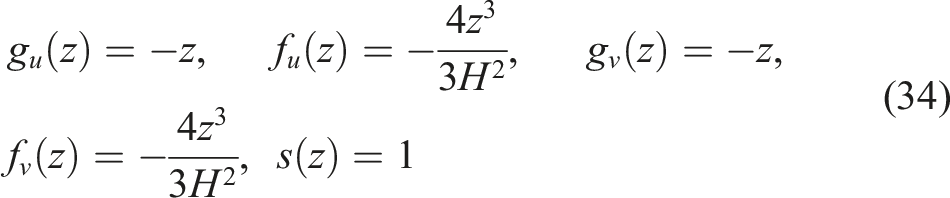
In this study, functions used in the displacement field to satisfy equation (
2
) are chosen similar to those used by Senthilnathan et al.17 as
Hence described in equation (4) becomes zero and the constitutive equation (equation (7)) must be used to study the behavior of FG plates.
Free vibration analysis
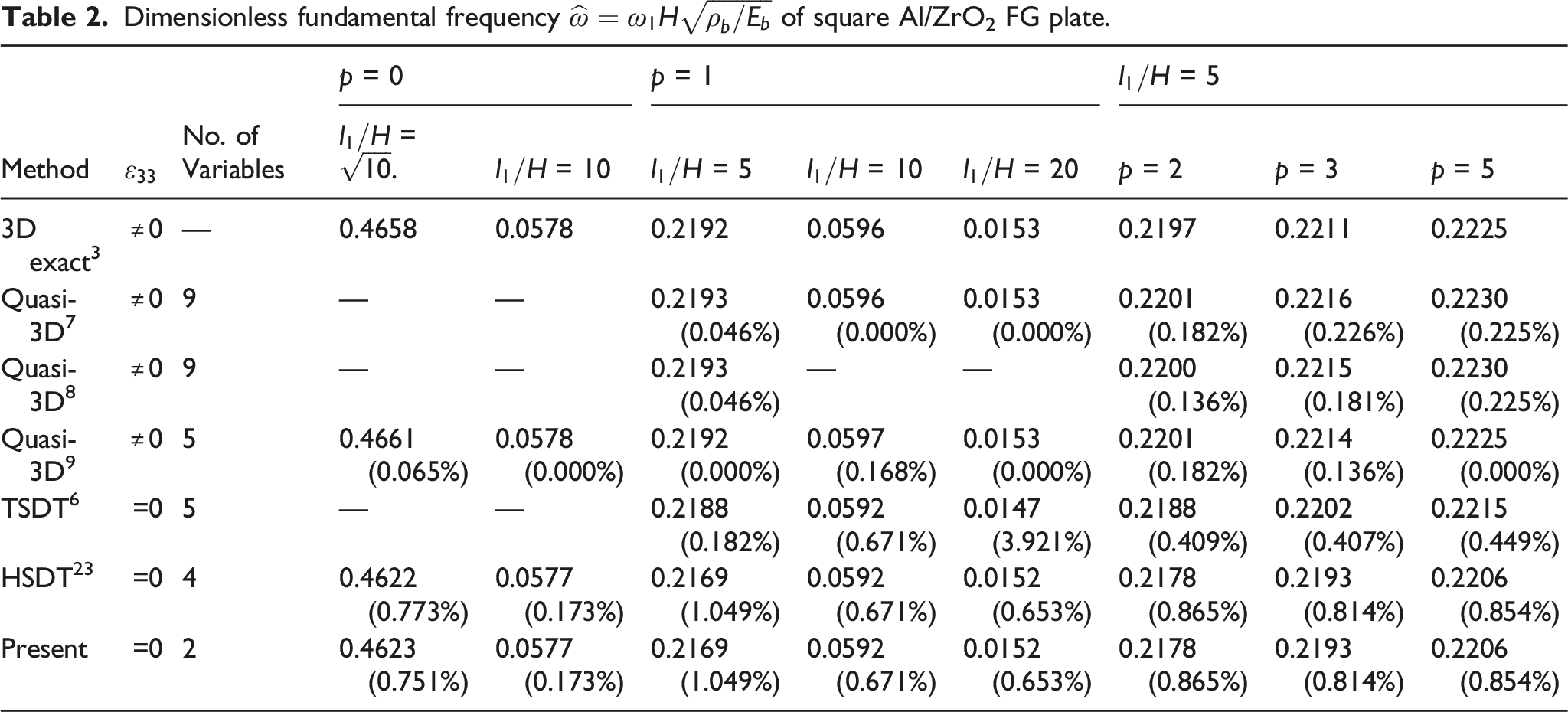
In order to see how well the proposed approach works, non-dimensional fundamental frequency of a movable square simply supported Al/ZrO2 FG plate (Material Set-1), with various thickness and power index, is obtained. The dimensionless frequency in the form of with as the first natural frequency of the FG plate is used.
In Table 2, the non-dimensional fundamental frequency obtained by the proposed approach is compared with those obtained by 3D solutions of Vel and Batra,3 quasi-3D solutions,7–9 TSDT solutions,6 and HSDT solutions.23 As it is shown in the second column of Table 2, References 6 and 23, like our work, neglected the thickness-stretching effect. Number of variables used by each approach is shown in the third column. The numbers shown in the parenthesis present the percentage differences between the results of various studies with those of 3D solutions3 as the most accurate results.
Dimensionless fundamental frequency of square Al/ZrO2 FG plate.
By softening the system through increasing the value of the power law index , the fundamental frequency decreases. As Table 2 shows, the natural frequencies of thin plates obtained by the proposed approach considering only two variables, namely transverse bending deformation and transverse shear deformation, are in good agreement even with the 3D solutions.3 Showing that implementing Airy stress function simplifies the model in an effective way. The natural frequencies obtained by the proposed approach, just like those obtained by References 6 and 23, are slightly underestimated due to ignoring the thickness-stretching effect. Though the thinner the plate, the lower the difference percentages become.
Buckling analysis
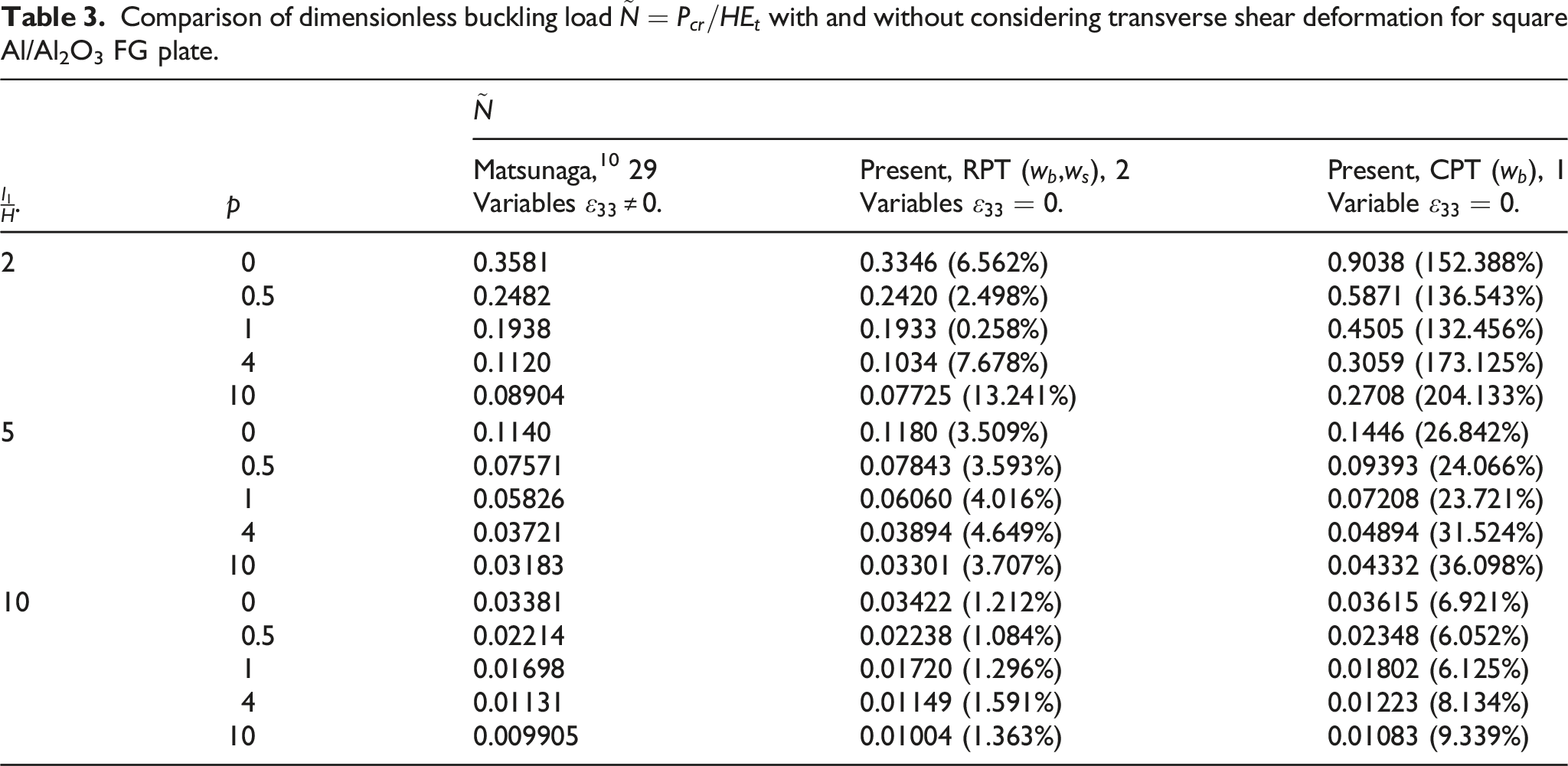
The effect of transverse shear deformation variable on the dimensionless buckling behavior of square Al/Al2O3 FG plates (Material Set-2) is investigated in this part. The dimensionless buckling load along direction obtained by the proposed approach is compared in Table 3 with the results of Matsunaga10 in which 29 variables were used to model the dynamic displacement field, including the effects of transverse shear and normal deformations and rotary inertia. The relation is used to obtain the results where is the critical buckling load of the FG plate.
Comparison of dimensionless buckling load with and without considering transverse shear deformation for square Al/Al2O3 FG plate.
Numbers shown in the parenthesis demonstrate the percentage differences of the results obtained by the proposed approach (with and without considering shear deformation effect ) with Matsunaga.10 It is evident that the results of the current study considering only two variables, are in good agreement with those of Matsunaga.10
Considering only the bending deformation variable results in higher errors specifically in thick and even moderately thick plates. Thus, higher order theories must be used for modeling the aforementioned plates.
Harmonically excited vibration
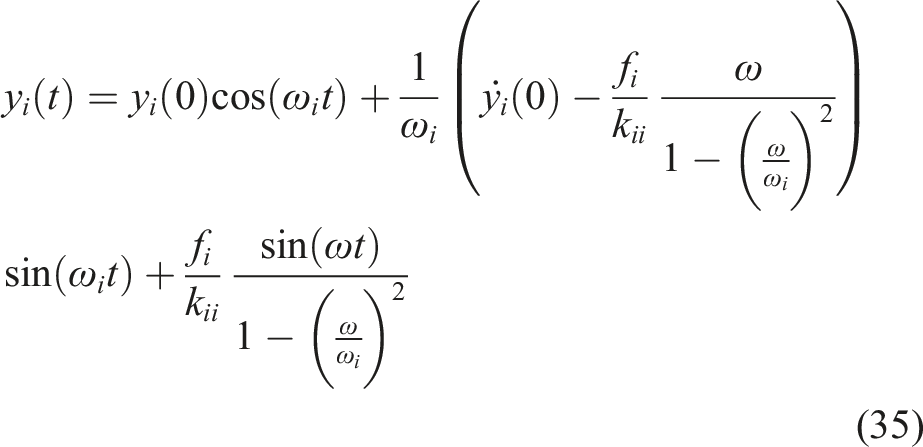
Consider a harmonic concentrated force with frequency of ω and magnitude of applied at the FG plate center with geometrical properties: . The mechanical properties are shown in Table 1 (Material Set_1). To decouple the equations of motion Eq. Error! Reference source not found., the modal matrix of the system (i.e., P) is used. Assuming X as the vector containing finite approximate degrees of freedom (i.e., X=), through implementing the coordinate transformation X=PY, the system of equations is decoupled using orthogonality of the normal modes (modal analysis). Then, the exact solution of each degree of freedom can be written as
where is the i-th natural frequency of the system, and are the initial conditions of the i-th degree of freedom, kii is the i-th generalized stiffness, and fi is the i-th generalized force.
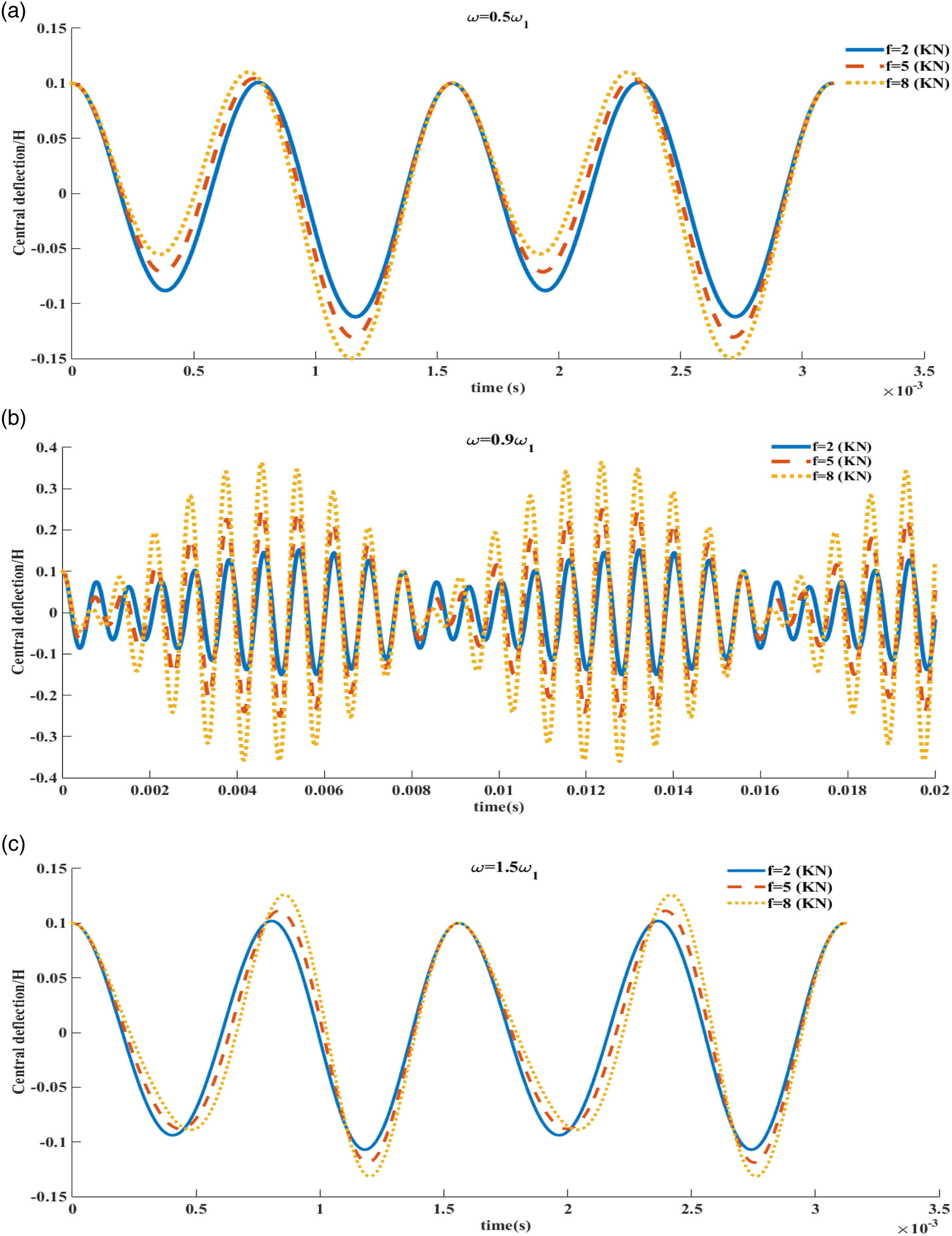
Assuming zero initial velocity, the central deflection of the plate versus time for various frequencies and amplitudes of load is plotted in Figure 3, considering the first four symmetric terms for variables and . Initial condition of the plate considered here is while other degrees of freedom are assumed to be zero. First natural frequency of the plate is . A beating phenomenon can be seen occurring when , because of the frequency of the applied load being close to the first natural frequency of the FG plate.
The effect of frequency and amplitude of the concentrated harmonic force on the dynamic responses of the square Al/ZrO2 FG plate.
Furthermore, for the frequencies of the applied force lower than the natural frequency of the system, as the load amplitude increases, the response of the system shifts to the left, while for frequencies bigger than the natural frequency of the system, it is vice versa.
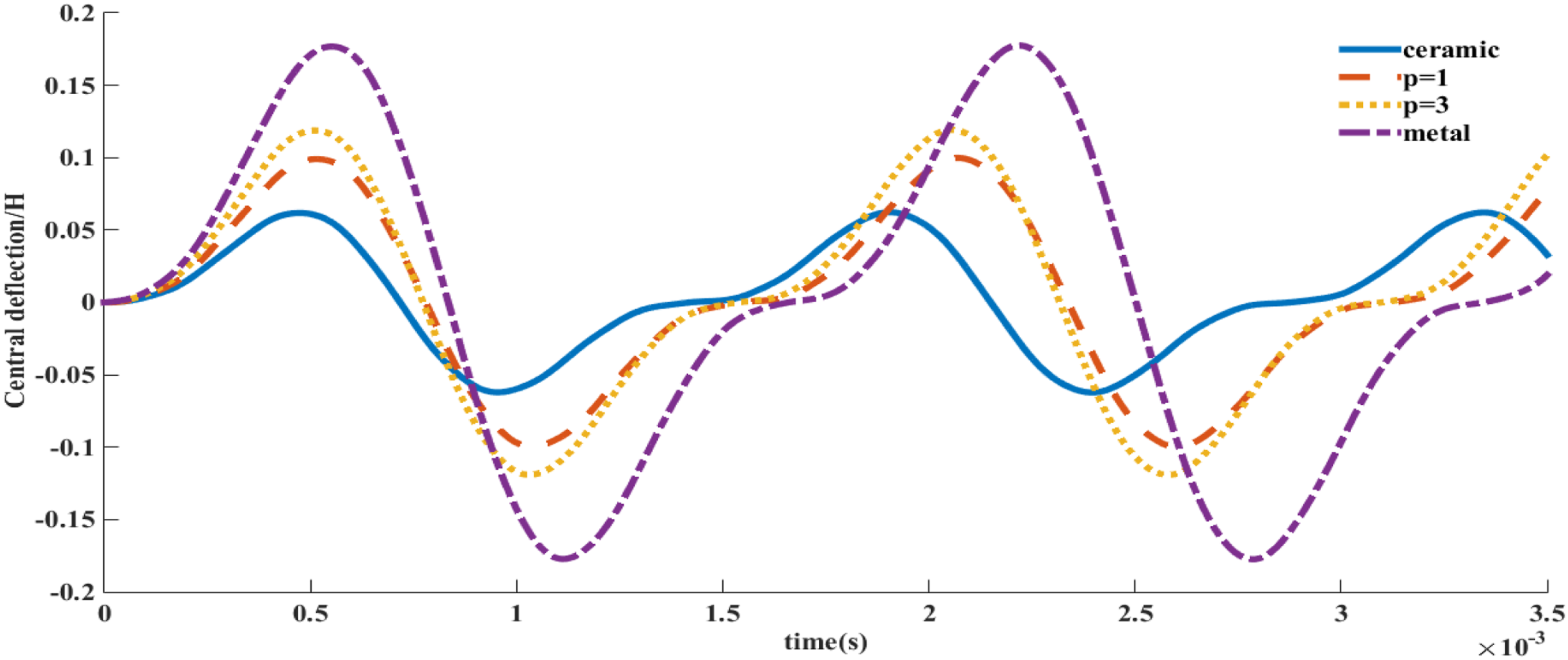
Figure 4 shows the central deflection of the aforementioned plate with zero initial displacement and velocity (with various power law indices ) under a harmonic central force with magnitude of 15 (KN) and a frequency half of the first natural frequency of the system for each power law index. As can be seen the maximum response of the system is increased by increasing ; which means that the flexibility of the plate is enhanced subsequently.
Dynamic responses of the square Al/ZrO2 FG plate for various power law indices .
Coefficient function analysis
According to the displacement field equation (1), coefficient functions can be selected in a way that not only the condition of zero transverse shear stress equation (2) is satisfied, but also . This means that by considering only two variables, the effect of thickness stretching along the direction is also included, which leads to more accurate results for moderately thick and thick plates.
In this part, transverse displacement and transverse shear stress under the sinusoidal distributed load , with as the maximum load, obtained by using various coefficient functions are compared with each other.
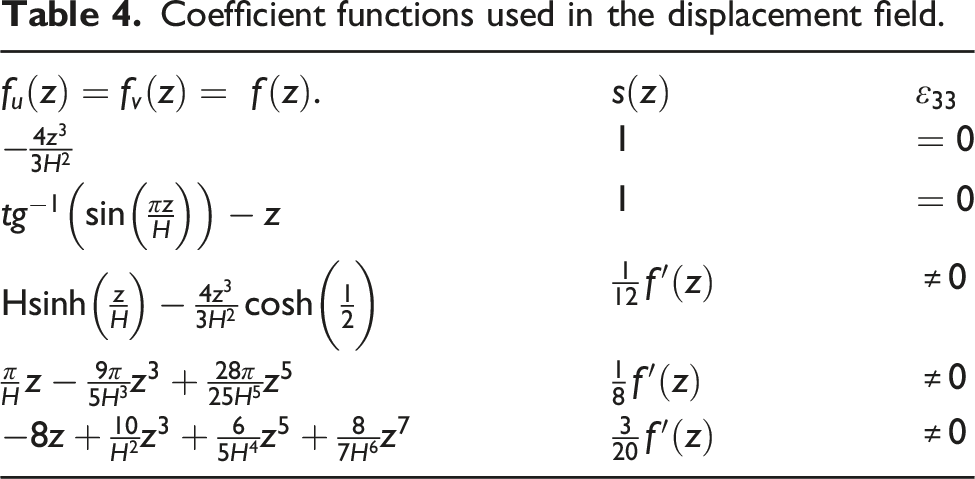
The coefficient functions shown in Table 4 are extracted from studies with and without considering the thickness stretching effect.17,27–30 It is worth mentioning that . The comparison is done for a square FG plate with Material Set-2 properties. Dimensionless transverse shear stress and transverse displacement are used to obtain the results.
Coefficient functions used in the displacement field.
.
1
1
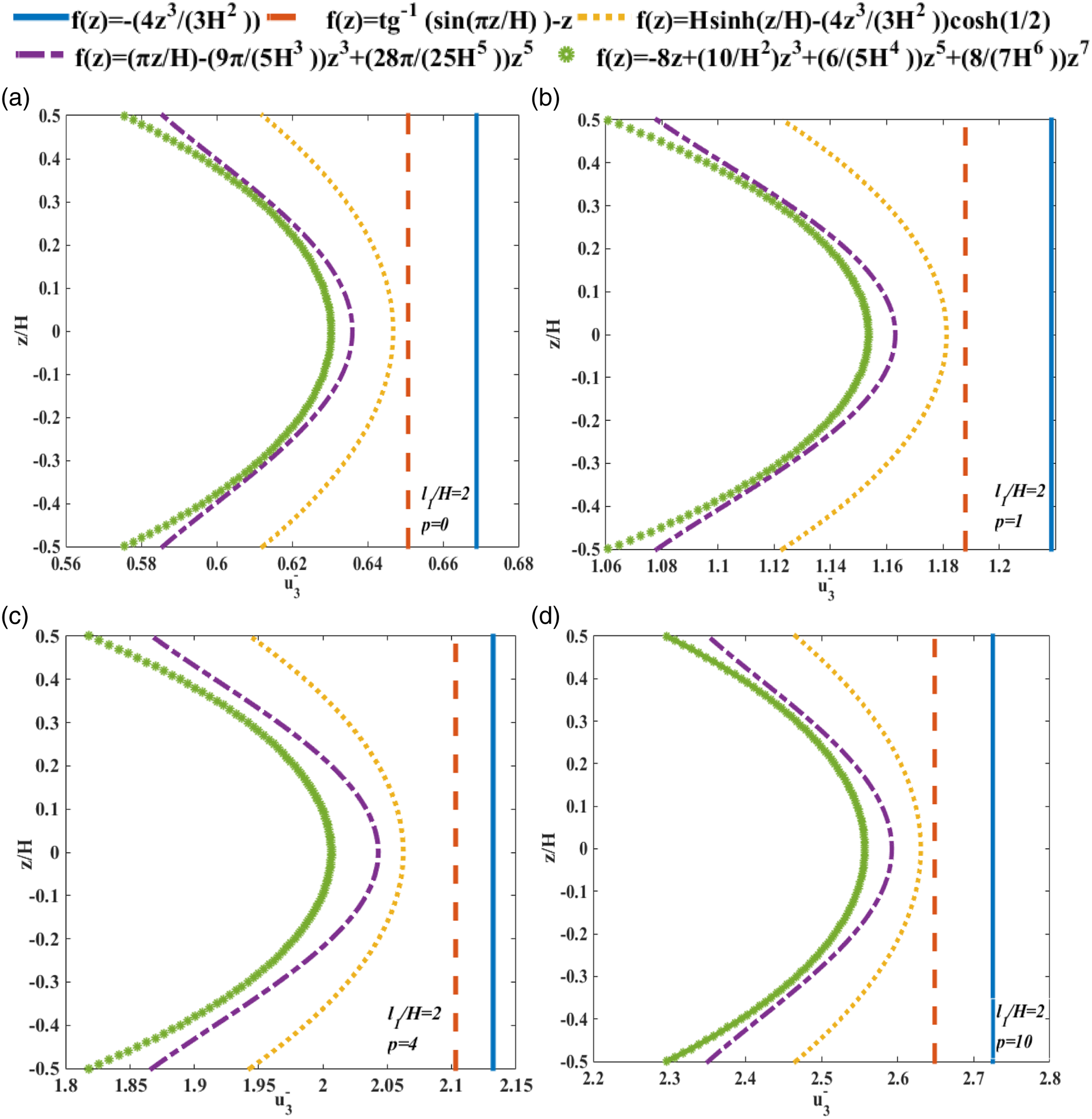
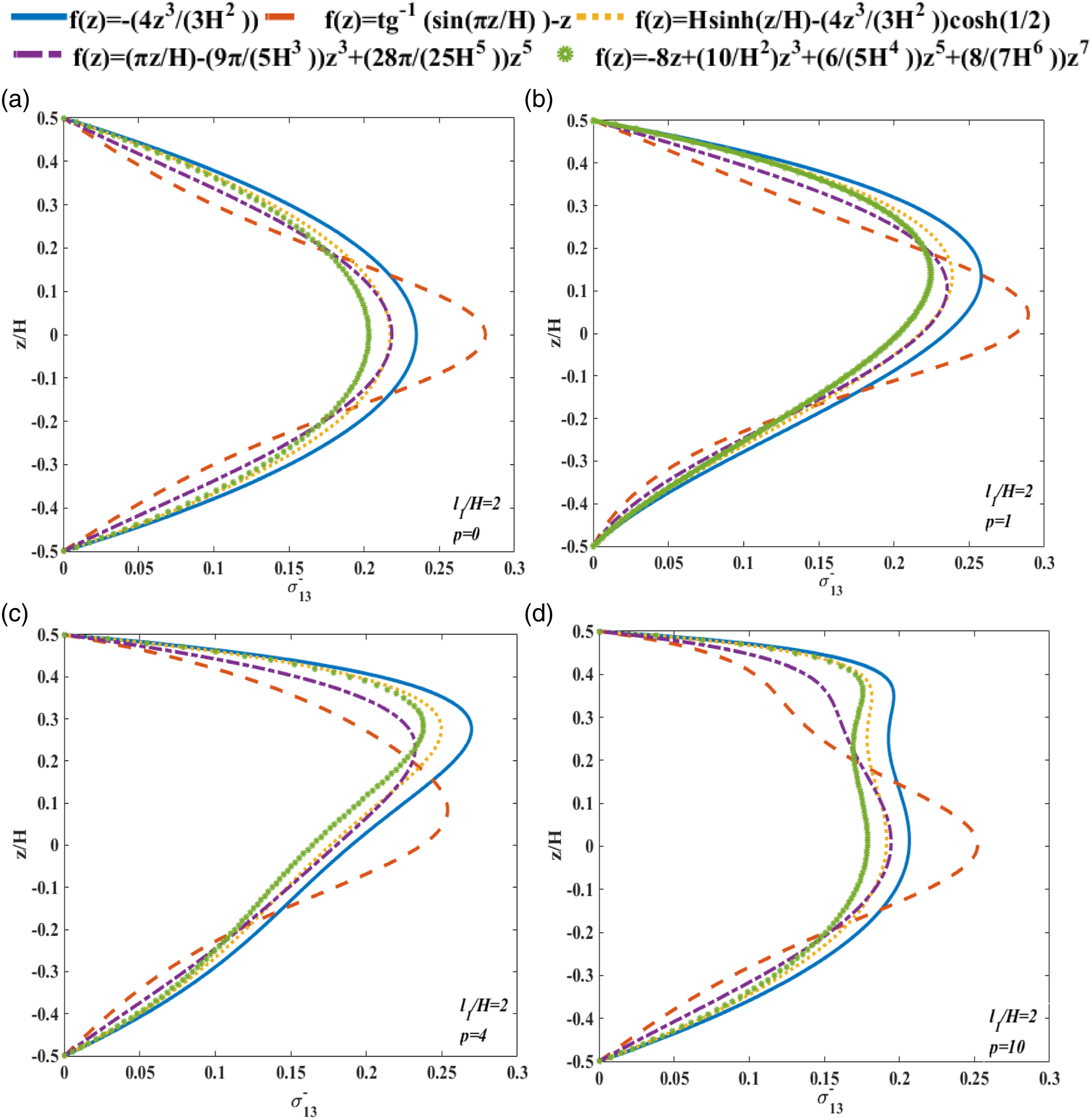
Figure 5 and Figure 6 show variations of and along the thickness direction of the thick square FG plate (e.g., ) based on the five coefficient functions shown in Table 4 using various power law indices.
Variation of across the thickness of thick square Al/ZrO2 FG plate under sinusoidal distributed load considering various power law indices (), (a) , (b) , (c) , (d) .
Variation of across the thickness of thick square Al/ZrO2 FG plate under sinusoidal distributed load considering various power law indices (), (a) , (b) , (c) , (d) .
As can be seen in Figure 5, for functions with and thus , a straight line with no variation for is observed. Although in quasi-3D models (), curved variations with smaller transverse displacement values compared to simple RPTs can be seen. Furthermore, it is shown in Figure 6 that quasi-3D models predict smoother behavior with smaller transverse shear stress across the thickness. For the homogenous plate (), variation is parabolic along the thickness direction.
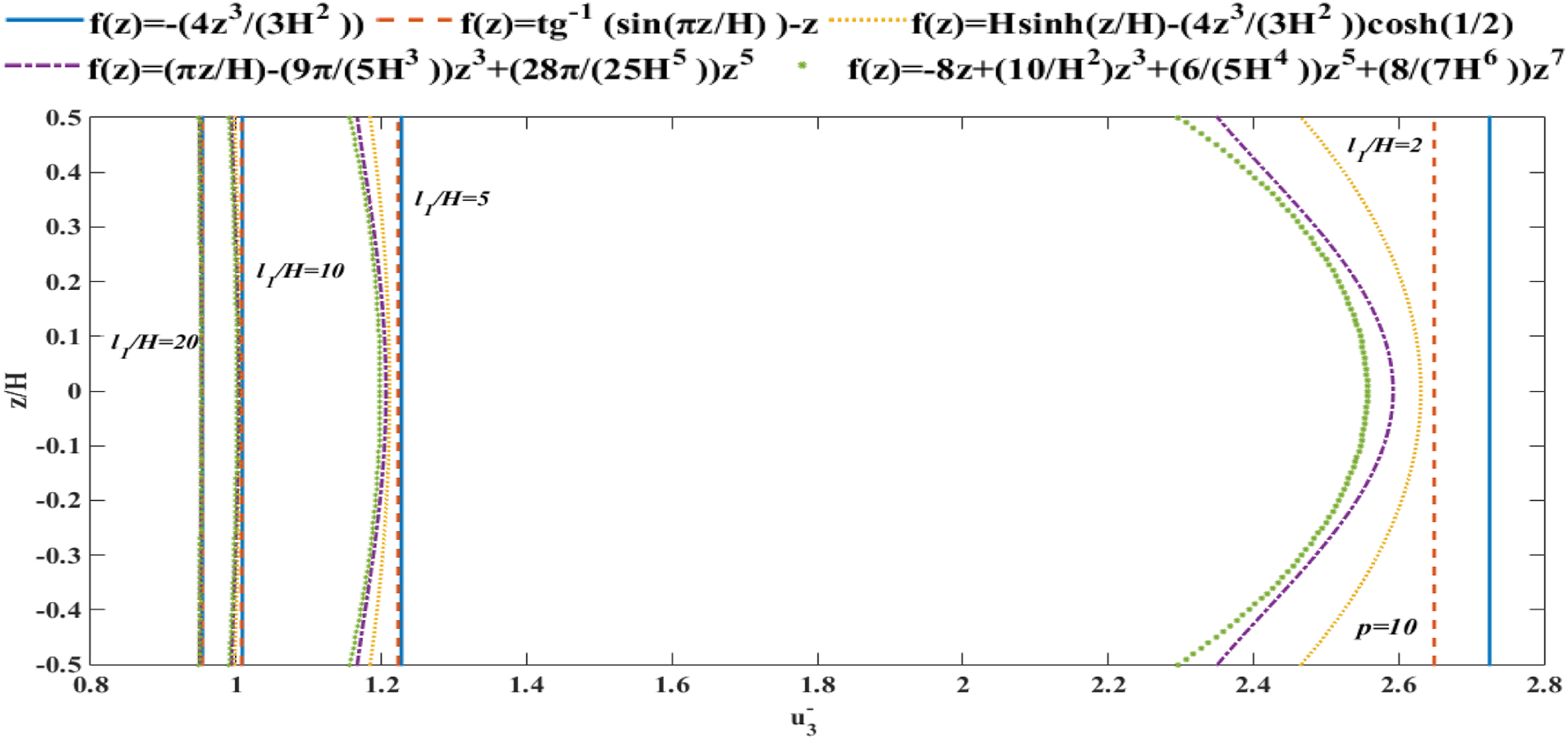
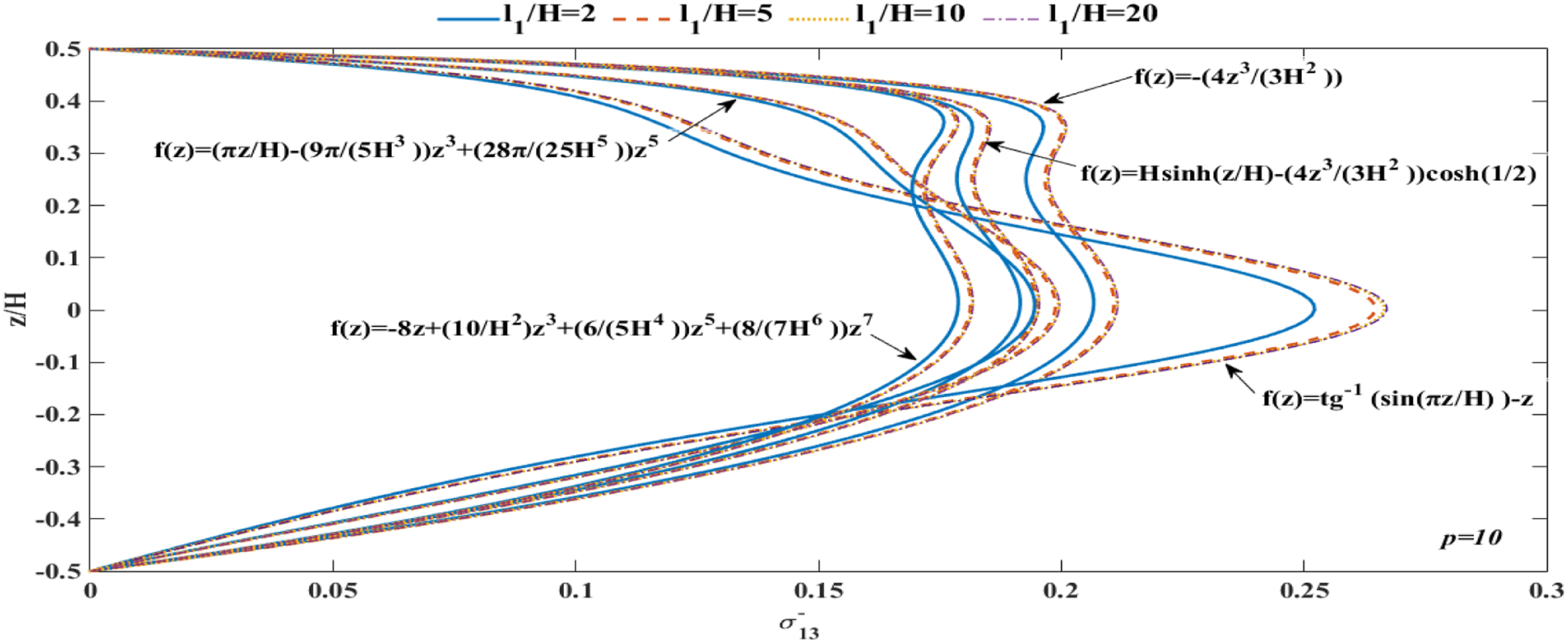
Figure 7 and Figure 8 shows variation of and along the thickness direction for thin and thick square Al/ZrO2 FG plates with and various thickness ratios based on the five previously mentioned coefficient functions (Table 4). For thick plates (), noticeable differences in among the five curves are observed. It should be noted that the zero transverse shear stress condition on free surfaces of the plate (e.g., ) is satisfied for all models indifferent of whether the thickness stretching effect is considered or not. Moreover, as the plate becomes thinner, discrepancies among the models for both and values are reduced, meaning that the stretching effect has the most influence on thick ones.
Variation of across the thickness of square Al/ZrO2 FG plate (), under sinusoidal distributed load considering various plate thickness ratios ().
Variation of across the thickness of square Al/ZrO2 FG plate (), under sinusoidal distributed load considering various plate thickness ratios ().
Conclusion
An approach based on the refined plate theory was proposed for vibration and buckling analyses of FG plates with movable simply supported boundary conditions. By using the Airy stress function, the in-plane displacements and corresponding equations were omitted and only the transverse equation of motion containing two variables, transverse bending and transverse shear deformation, remained.
Validation and effectiveness of the proposed approach was demonstrated by comparing the obtained fundamental frequencies and buckling loads with those obtained using other studies containing a greater number of unknown variables, whether excluding or including the thickness stretching effect. It has been concluded that the refined plate theory containing only two unknowns is efficient enough to investigate the linear vibration and buckling of thin and thick FG plates.
Using modal analysis, the dynamic response of a square FG plate due to a harmonic central force was investigated. As the frequency of the applied load moves closer to the first natural frequency of the plate, a beating phenomenon can be observed.
The proposed approach is capable of handling wide variety of other theories with selecting proper coefficient functions defined in the displacement field.
In order to use quasi-3D modeling of thin and thick FG plates, various coefficient functions in the displacement field were used. Variations of transverse displacement and shear stress along the thickness direction, with and without considering the thickness stretching effect, were studied. It was shown that quasi-3D models lead to not only smaller transverse displacement and shear stress values, but also smoother stress behavior.
Since by using the proposed approach including only two continuous variables, FG plate modeling is simplified, this approach is a powerful tool for studying dynamical behavior of various FG plates.
Footnotes
Declaration of Conflicting Interests
The author(s) declared no potential conflicts of interest with respect to the research, authorship, and/or publication of this article.
Funding
The author(s) received no financial support for the research, authorship, and/or publication of this article.
ORCID iDs
Leila Monajati
Navid Farid
Appendix
References
1.
MindlinR. Influence of rotary inertia and shear on flexural motions of isotropic, elastic plates. J Appl Mech1951; 18: 31–38.
2.
RezaeiASSaidiARAbrishamdariM, et al.Natural frequencies of functionally graded plates with porosities via a simple four variable plate theory: an analytical approach. Thin-Walled Struct2017; 120: 366–377.
3.
VelSSBatraRC. Three-dimensional exact solution for the vibration of functionally graded rectangular plates. J Sound Vib2004; 272: 703–730.
4.
SaranganSSinghBN. Higher-order closed-form solution for the analysis of laminated composite and sandwich plates based on new shear deformation theories. Compos Struct2016; 138: 391–403.
5.
MantariJLGranadosEVSoaresCG, et al.Vibrational analysis of advanced composite plates resting on elastic foundation. Composites Part B2014; 66: 407–419.
6.
FerreiraAJBatraRCRoqueC, et al.Natural frequencies of functionally graded plates by a meshless method. Compos Struct2006; 75: 593–600.
7.
NevesAFerreiraACarreraE, et al.A quasi-3D hyperbolic shear deformation theory for the static and free vibration analysis of functionally graded plates. Compos Struct2012; 94: 1814–1825.
8.
NevesAFerreiraACarreraE, et al.Static, free vibration and buckling analysis of isotropic and sandwich functionally graded plates using a quasi-3D higher-order shear deformation theory and a meshless technique. Composites Part B2013; 44: 657–674.
9.
ThaiHTVoTPBuiTQ, et al.A quasi-3D hyperbolic shear deformation theory for functionally graded plates. Acta Mech2014; 225: 951–964.
10.
MatsunagaH. Free vibration and stability of functionally graded plates according to a 2-D higher-order deformation theory. Compos Struct2008; 82: 499–512.
11.
HellalHBouradaMHebaliH, et al.Dynamic and stability analysis of functionally graded material sandwich plates in hygro-thermal environment using a simple higher shear deformation theory. J Sandwich Struct Mater2019. DOI: 10.1177/1099636219845841
12.
YaghoobiHTaheriF. Characterization of the vibration, stability and static responses of graphene-reinforced sandwich plates under mechanical and thermal loadings using the refined shear deformation plate theory. J Sandwich Struct Mater2021. DOI: 10.1177/1099636221993865
13.
TahirSIChikhATounsiA, et al.Wave propagation analysis of a ceramic-metal functionally graded sandwich plate with different porosity distributions in a hygro-thermal environment. Compos Struct2021; 269: 114030.
14.
ZaitounMWChikhATounsiA, et al.Influence of the visco-Pasternak foundation parameters on the buckling behavior of a sandwich functional graded ceramic–metal plate in a hygrothermal environment. Thin-Walled Struct2022; 170: 108549.
15.
HuffingtonNJ. Response of elastic columns to axial pulse loading. AIAA J1963; 1: 2099–2104.
16.
MurtyKA. Flexure of composite plates. Compos Struct1987; 7: 161–177.
17.
SenthilnathanNRLimSPLeeKH, et al.Buckling of shear-deformable plates. AIAA J1987; 25: 1268–1271.
18.
ShimpiRP. Refined plate theory and its variants. AIAA J2002; 40(1):137–146.
19.
ThaiHTChoiDH. A refined plate theory for functionally graded plates resting on elastic foundation. Compos Sci Technol2011; 71: 1850–1858.
20.
BenachourATaharHDTounsiA, et al.A four variable refined plate theory for free vibrations of functionally graded plates with arbitrary gradient. Composites Part B2011; 42: 1386–1394.
21.
HadjiLAtmaneHATounsiA, et al.Free vibration of functionally graded sandwich plates using four-variable refined plate theory. Appl Math Mech2011; 32: 925–942.
22.
El MeicheNTounsiAZianeN, et al.A new hyperbolic shear deformation theory for buckling and vibration of functionally graded sandwich plate. Int J Mech Sci2011; 53: 237–247.
23.
ThaiHTChoiDH. Efficient higher-order shear deformation theories for bending and free vibration analyses of functionally graded plates. Arch Appl Mech2013; 83: 1755–1771.
24.
VuTVKhosravifardAHematiyanM, et al.A new refined simple TSDT-based effective meshfree method for analysis of through-thickness FG plates. Appl Math Modell2018; 57: 514–534.
25.
MahmoudiABenyoucefSTounsiA, et al.A refined quasi-3D shear deformation theory for thermo-mechanical behavior of functionally graded sandwich plates on elastic foundations. J Sandwich Struct Mater2019; 21: 1906–1929.
26.
RouzegarJKoohpeimaRAbadF. Dynamic analysis of laminated composite plate integrated with a piezoelectric actuator using four-variable refined plate theory. Iran J Sci Technol Trans Mech Eng2020; 44: 557–570.
27.
NguyenHXNguyenTNAbdel-WahabM, et al.A refined quasi-3D isogeometric analysis for functionally graded microplates based on the modified couple stress theory. Comput Methods Appl Mech Eng2017; 313: 904–940.
28.
ZenkourAM. A simple four-unknown refined theory for bending analysis of functionally graded plates. Appl Math Model2013; 37: 9041–9051.
29.
NguyenNTHuiDLeeJ, et al.An efficient computational approach for size-dependent analysis of functionally graded nanoplates. Comput Methods Appl Mech Eng2015; 297: 191–218.
30.
Nguyen-XuanHTranLVKulasegaramS, et al.Isogeometric analysis of functionally graded plates using a refined plate theory. Composites Part B2014; 64: 222–234.
31.
KhorsandM. Dynamic analysis of a functionally graded piezoelectric spherical shell under mechanical and thermal shocks. Proc Inst Mech Eng Part C: J Mech Eng Sci2014; 228: 632–645.
32.
AbdallaHMCasagrandeDMoroL, et al.Thermo-mechanical analysis and optimization of functionally graded rotating disks. J Strain Anal Eng Des2020; 55: 159–171.
33.
KurpaLVShmatkoTV. Buckling and free vibration analysis of functionally graded sandwich plates and shallow shells by the Ritz method and the R-functions theory. Proc Inst Mech Eng Part C: J Mech Eng Sci2021; 235: 4582–4593.
34.
LiZXuYHuangD. Accurate solution for functionally graded beams with arbitrarily varying thicknesses resting on a two-parameter elastic foundation. J Strain Anal Eng Des2020; 55: 222–236.
35.
Salehi KolahiMRRahmaniHMoeinkhahH, et al.Mechanical analysis of shrink-fitted thick FG cylinders based on first order shear deformation theory and FE simulation. Proc Inst Mech Eng Part C: J Mech Eng Sci2021. DOI: 10.1177/09544062211012729
36.
KarimiaslMEbrahimiFAkgözB, et al.Buckling and post-buckling responses of smart doubly curved composite shallow shells embedded in SMA fiber under hygro-thermal loading. Compos Struct2019; 223: 110988.
37.
MoallemiABaghaniMAlmasiA, et al.Large deformation and stability analysis of functionally graded pressure vessels: an analytical and numerical study. Proc Inst Mech Eng Part C: J Mech Eng Sci2018; 232: 3300–3314.