




Abstract
The product development is a multidisciplinary process but also involves different areas of knowledge ranging from creativity in concept generation to refinement of design and finally the validation of the product. There are different approaches that attempt to define the best product development process, and thereby establishes a reliable method for efficiently transforming ideas into products. The use of a method that systematically establishes a work process seems to be highly advantageous, not only because it defines a critical and guiding path of work, organizing the tasks and their results, but also facilitates the communication of the development team. The methodology can provide records and other graphic documents that allow the development team to access these for future developments. The work presented here is the development of a systematic method supported by the use of structured tools to support the decisions, data processing and transposition of the same to the project in the approach to the new Product Development process. This research methodology was introduced and already implemented in projects at Department of Mechanical Engineering, University of Aveiro. The work developed on it, both at the level of the students’ project and in the work of Development cooperation with companies presented good results. This method result in a structured way to transforming ideas into products.
Introduction
Industrial design is a process of creating and developing concepts and establish specifications that optimize the function, value and product appearance, with mutual benefit to users and manufacturers.1–4
An industrial designer brings together the artistic form with the engineering needs. It develops a process in which elements of human perception such as shape, color or texture are combined with elements of engineering in the product in order to intentionally reach people who experience the product or those who wish to experience it ergonomics.5,6
Arrived here, we can ask the following questions:
What methods and tools are needed to transform an original idea of a product from its concept to physical production? How to progress? How to turn a “brilliant” idea into something like a product?
The answer is that there are two main factors involved. The design elements that generate the idea and transform it into a product, and the engineering elements needed to develop it and transform it into a product capable of being produced and marketed.
Today, the success of an industrial company depends on its ability to develop new products and this emphasizes the importance of the company having a safe and accurate product development process in order to increase international competitiveness. The product development process (PDP) involves the integration not only design and engineering, but also the marketing among other areas and all must effectively “speak a common language.”7–9 This process consists of a complex series of interactions between marketing, design and engineering requirements and the complete achievement of customer satisfaction is vital to success.8,10
The PDP nature is very dynamics because it is constantly challenged to adapt itself to unexpected contexts, new paradigms, new technologies and new client requirements.11,12
Despite the importance of PDP, companies currently have difficulty designing or choosing from an extensive array of Product Development processes. There is a wide spectrum of categories for the activities and phases that can constitute the PDP, where each phase consists of a set of activities necessary or recommended to move on to the next phase. The number of phases, and steps included in each phase, can also varies according to the author or company.13–15
Usually generic reference models are developed by institutions or organizations or are the result of works developed by reference authors, such as Pahl and Beitz 16 ; Cooper 13 ; Ulrich and Eppinger, 8 among others.
Successful implementation of product requirements and specifications is central to the process of developing new products; however, intangible aspects such as brand values and emotional concepts can be problematic 17 when design teams are multidisciplinary and come from different intellectual sensitivities.
The objective of this work was to identify a method that uses structured tools in areas such as design and engineering and adapt them to establish a critical path (a method) between the idea and the final product and capable of developing large projects at any time. A generic reference model can be adapted for a given context, resulting in a specific reference model of a prescriptive character (to-be), that is, an instance of the generic model.18–20
Currently there are several product development processes in literature, but a large majority do not use structured tools, which limits the construction of a critical path, or when using structured models such as Quality Function Deployment use an approach too extensive which requires a large expenditure of time in the project documentation and large project teams. This approach is intended to be a proposal to define a critical path for product development in a context of small organizations and reduced development teams.
The process of product development
Product development is an interdisciplinary activity that involves the contribution of different areas of knowledge. This process has been studied, systematized and structured in reference models that describe it and are assumed as a guide to driving its applicability. This model consists of a set of steps, activities and tasks organized in order to improve the process and consequently, the development of new products.21–23
The reference models intend to establish a methodology to improve the results and ensure the repeatability of the projects development, besides being a factor of communication and transmissibility of information between team members, as well as repositories of best practices. From a generic reference model a company can define its specific model, and make it a “procedures manual” that can serve as guide of product development projects.
The methodology of developing new products differs from company to company, and between products of the same company. However, despite organizational differences, normally a good new product is almost invariably due to adequate methodological development, as well as, not least, a correct definition of project specifications and objectives.
The product development phases are often assigned different denominations, where the beginning and the end often merge. However, the product development process cannot be structured in a unique way, because each project contains different characteristics and the projects are themselves a set of activities unique and temporary.24,25
A PDP, systematized and documented, ensures that the particularities of each project are solved and at the same time, ensures the application of best practices presenting a unified vision to all involved.7,26 It is usually found during the development process of new products that there are neglected aspects of product operation.
In this sense, in recent years, there have been attempts to develop increasingly structured and systematized models, based on the issues of functionality and improvement of product quality. 27 Thus, the emphasis is on adapting industrial design and engineering techniques. 28
One of the best-known models in the product development process is the one advocated by Ulrich and Eppinger. 8 For these authors, the process begins with the planning phase, which results in the project specifications, which in turn serves as an initiation to the conceptual development phase. The process concludes with the product launch phase, at what point the product is put on the market.
The proposal model
The use of a methodology in the PDP facilitates the exchange of knowledge between companies and customers, being a motivational and guidance tool to improve the management of PDP, allowing control and establishing a network of procedures necessary to produce and deliver products with a high quality.
The model presented here is a first approach to the definition of a methodology, aims to help the development group to incorporate into the project the real needs of the clients and transforming them into technical product specifications. Promoting not only customer satisfaction, but also obtaining a more functional product. In addition, the formal registration of the PDP, using structured tools, such as the QFD, FMEA, etc., allows planning the work, making a critical assessment of it and establishing priorities for customer requirements and product characteristics, making the project more efficient. It should make explicit the relationships between customer needs and product characteristics, allowing the harmonization and ordering of the various decisions taken during the PDP, as well as enhancing teamwork throughout the project.
The main core of this is creating a methodology, using structured tools that allow developing and building functional and concise descriptions of the products. Industrial designers tend to be less familiar with functional product analysis techniques and tend to restrain themselves from using these methods, calling them “numeric,”“very limited” or “very reducing.”
In this sense, it is important that the project team has a good understanding of the scientific principles inherent in the new product to be developed, adequate knowledge of relevant technologies and high demanding standards. The team may also “recruit knowledge and competence” from other areas of project intervention, hiring specialists. However, it was the objective of this work to establish and describe a model that can be used in small and medium organizations using small teams.
The model involves three main phases of the project: informational project, representational project and product project that establish a set of tasks that must be executed during the development process in its conceptual design, embodiment design and detail design phases (Figure 1).
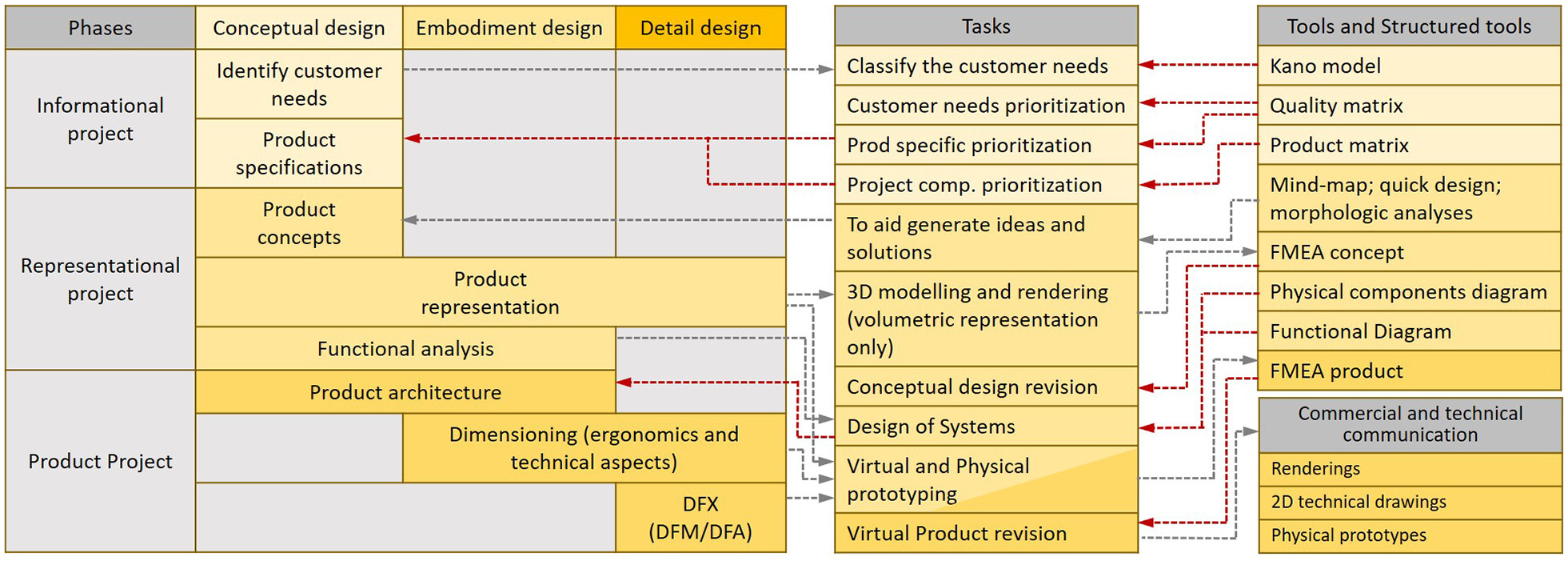
The proposal model.
Phases of product development
Conceptual design
The conceptual design phase is decisive to ensure a good outcome of the process, since it is during this phase that the needs of the target market are identified, competitive products are analyzed and product specifications defined according other proposed models.29–32 This phase starts with a selected concept and the economic analysis is based and the outlines of the development project are established. At this stage, all the development work is established and this decision conditioning the final product.33–35
Embodiment design
The Embodiment Design phase begins with the project developed in the conceptual design phase and attempts to mold it into a system, so that it can be produced. Decisions during this phase should, where possible, be justified by physical constraints. The Embodiment Design is part of the design process where, from the principle solution or the initial concept of a technical product, the project is developed according to technical and economic criteria, up to the level of detail that can lead to the production. 36
One of the goals of this phase is to design the product architecture. Product architecture defines the chunks and the primary functional systems and subsystems and how they are organized to operate as a unit. The division of the product into chunks and the way they are integrate into the final product has a significant impact on the modularity of the system, on the definition of options that can be changed later, on the facility of manufacture and on the subdivision of the project development itself.37–42
The definitive proposal for the product must be fully developed in such a way that a clear verification of the function, durability, production, assembly, operation and associated costs. This phase involves a large number of corrective measures of analysis, synthesis and constant evaluation of alternatives models.
The first step is to identify the requirements that are of crucial importance in the Embodiment Design such as for example: dimensional requirements, production, performance; determine the layout and organization requirements of the components; determine material requirements, corrosion resistance, shelf life, specified materials; determine requirements, based on safety, ergonomics, production, assembly and recycling and special considerations which can affect size and selection of materials.
Next step must be identified the spatial constraints that determine or restrict the design (e.g. installation requirements, component positions, clearances, etc.).
Once the space requirements and constraints have been determined and incorporated, the component layout is elaborated, with emphasis on the components that perform the main functions. This can be elaborated considering the following aspects:
Determine the size, arrangement and respective forms of the components responsible for carrying out the main functions;
Determine what are the main functions, to be fulfilled by each component and if they are performed jointly or separately.
Process selection
Products presents some physical variables such as size, shape, complexity and utilization, so it’s hard to generalize about anything about product design. A set of design decisions about the shape and geometry of the product will have to be made in accordance with the material and process used to build the product. Often this information is incomplete or doubtful, which makes it even more difficult to choose the manufacturing process.
Design teams must consider in this analysis all the potential technologies will be to be used, from the most conventional processes to the latest additive manufacturing technologies. Therefore, it is necessary to evaluate: the quantity that will be produced; type of materials and their costs; part size, tolerances and roughness of the part.
Detail design
In the development of a well-designed solution, the detail design is the next step in a process that begins with the conceptual design, goes through the embodiment design and concludes with the detail phase. At this stage the project is refined and the specifications of the product/parts are definitively established in terms of tolerances and dimensions detail and estimated costs.
One of the most important steps in detail design is design for manufacturing (DFM). In the detailed design phase, the detailed definition of each component of the product is made according to the specifics of the manufacturing process. In this phase, the geometric characteristics, dimensions and tolerances, surface finishes for each part or component are defined and technical documentation (2D drawings) is also carried out. At this stage, it is common to use CAD 3D software for modeling product, which can be integrated with other CAE (Computer Aided Engineering Tools) and CAM (Computer Aided Manufacturing) applications.
Main activities of project
Informational project
This phase consists of developing the project as an information processing system. The process starts with company guidelines and goal setting, as well as the assessment of available capabilities and technologies, including product platforms and production systems available within the company. From this moment a diverse set of activities and processes of collection and treatment of information like identification of target market, needs of the clients, benchmarking of market, the definition of specifications of the product, concepts and drawings are developed was collected. The process concludes when all the necessary information to support production and sales has been completed and communicated.
Representational project
This step consists of creating and represent a vast set of alternative concepts or solutions of products and subsequently restricting them, increasing the specification of the product until it can be materialized and fabricate in a particular production system.
Concept model: Sketch and representation
Considering that creativity is a personal characteristic, it is sometimes necessary to create the ideal conditions for the creative process occurs, and although the ideas are spontaneous and original. It is possible use tools to support creativity as a way to “force” the generation of ideas and solutions for the product. In that process, more than believing a “recipe for generating new ideas,” it is a process that allows us to overcome and unblock focused and restrictive views of the problem. There are several tools that can be used to support the concept development process: as brainstorming, mind-map, morphological analysis, sketching and drafting, quick design.43–48
Computer modeling and CAD 3D
The proper use of 3D CAD tools assumes as relevant in the work of the industrial designer, allowing to provide a more faithful result to his ideas. The 3D CAD tools offer greater capacity to generate solutions and alternative forms during the elaboration of product proposals,7,49–54 making the realization process more efficient.
After defining the product, the computer can be used to generate a three-dimensional representation of the product allowing a better visualization of the object. In this case, the product has a broad connotation; its representation may vary in detail, or as it should be considered at this stage in the absence thereof, that is, in conceptual design is important focusing our efforts on communication and development of the proposal without major concerns in the definition of functional and manufacturing details.
Product project
The Product Project consists of the design and dimensioning of the isolated components and the presentation of the operation mode of the systems implemented in the product. This step includes the establishment of the final size of the product in the different configurations.
The Product Project phase involves the detailed definition of each aspect of the project/product, its complete description through 3D modeling and the elaboration of its technical documentation for manufacturing (drawings and specifications). The specifications may include: material requirements; manufacturing dimensions and tolerances; assembly of components; finishing and surface treatment; maintenance and testability provisions; packaging requirements and external marking.
The use of structured tools in product development
The use of structured tools in the process of developing new products allows us to define a critical and organized pathway between ideas to the final product. 55
For a better example of the methodology developed in this work and the application of structured tools in the definition of a critical path for the PDP, a case study of the development of a coffee machine is presented. Figure 2 presents the first idea sketches and the final virtual prototype of product. As can see is possible visualize different colors and materials selected for the final product.
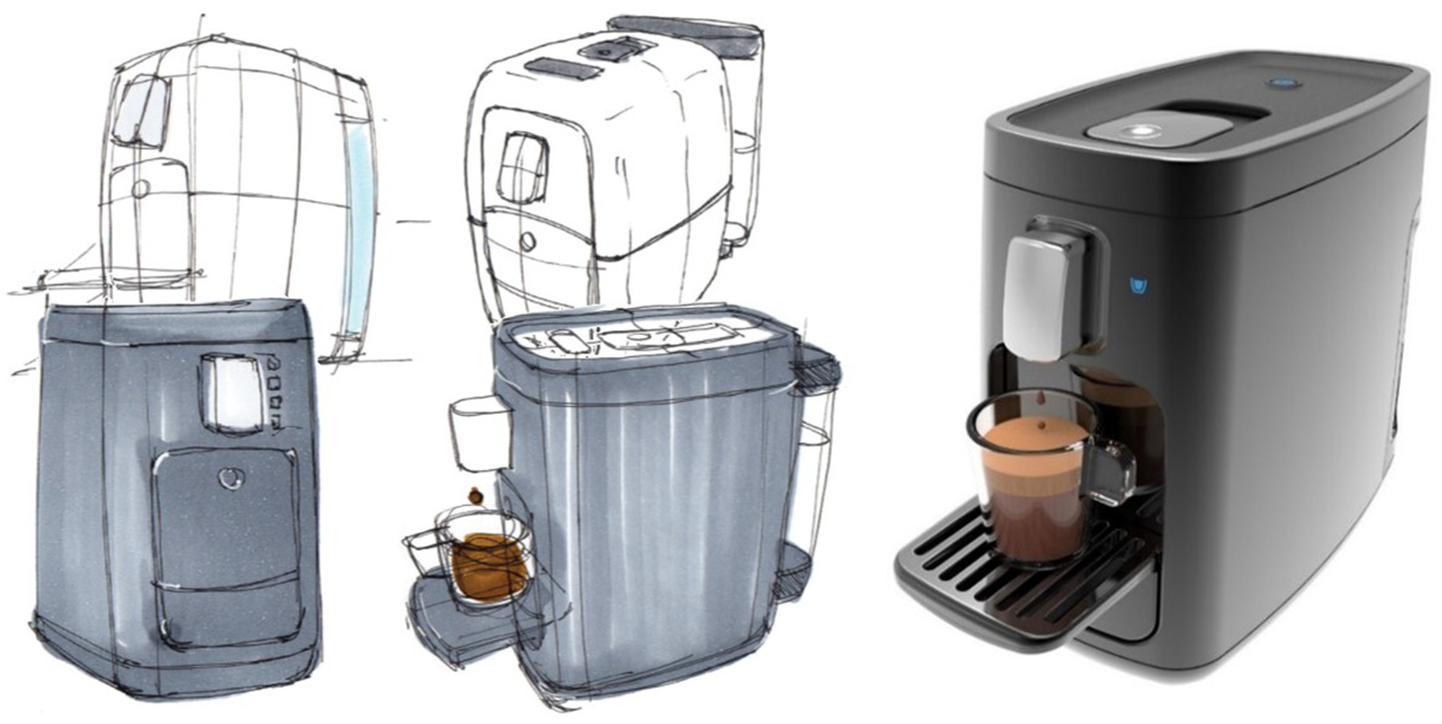
Initial sketches and CAD 3D rendering of the final coffee machine.
Quality and KANO model (first structured tool)
From the different definitions of “Quality,” one can say that everyone wants and needs at end good quality products. But do all definitions mean the same? Is it possible to establish or quantify quality? Is there a clear definition of quality and can one measure and evaluate quality without meeting a concrete definition?
Most people use the word “quality” to mean “have a high degree of excellence” but, like beauty, quality is in the eyes of those who see it. A quality indicator can be gauged when the customer returns or does not purchase the product. Customer loyalty to the brand or to the product is probably the most basic measure of quality.
An important concept in quality control is listening to the customer. It is common to designate this listener by VOC (Voice of the customer). Although this task may seem simple, reality shows us that this request is rarely made in a clear and explicit way and so we do not know exactly what consumers or customers need, because they cannot explicitly present their needs. The client usually has three wishes: they want it to be good; they want it fast; they want it to be cheap.
However, consumers rarely receive all three equally, so it becomes necessary to identify which is the most important in customer buying decisions and we need to be sure that we are able to meet those needs. It is considered that VOC is difficult to be heard because customers do not have all the specific and necessary elements for the development or improvement of a product. There are cases in which it is the customer who technically specifies the requirements, as for example in the case of machines and equipment. But for other situations it may be necessary to interpret vague ideas and the emotional language of customers.
There are several ways to listen to VOC, for example:
✓ Conducting questionnaires, interviews, analyzing complaints, listening to reference groups, analyzing buying patterns.
✓ Listen to the good ideas of your competitors. There should be no fear of using good ideas, no matter where they came from.
✓ You can use a good customer relationship management (CRM) system because it is a useful tool for collecting and analyzing data about them.
The evolution of the definition of Quality was made through better understanding of customer needs. In the beginning, “quality” was understood as compliance with the requirements and its control was done only with the inspection, at this time, the presence of the customer took place implicitly and indirectly. In the 1980s, Kano 56 introduced a customer perception analysis model, whose requirements indicate directions to follow in order to meet and exceed customer expectations. 30
Kano developed an approach on “attractive quality creation” commonly referred to as “KANO Model.” This model is different from traditional customer satisfaction models based on the “The more is better” and who feel that customers are more satisfied the more attributes the product has or performs.
The customer satisfaction model proposed by Kano 56 aims to classify customer needs and desires in a logical way, considering that the performance and attributes of products are not all equal in the eyes of customers. The performance in certain categories of attributes produces higher levels of satisfaction than others. Customers evaluate the quality of a product or service according to attributes and dimensions.
Kano’s model is a useful tool for ranking and prioritizing customer needs based on how they affect customer satisfaction. The model is able to captures the non-linear relationship between product performance and customer satisfaction. In practice, four types of product attributes are identified:
✓
✓
✓
✓
The KANO Model is a way of analyzing customer requirements and their satisfaction, showing that there may be different types of requirements for products. What do customers expect? Which increase satisfaction? How can companies differentiate themselves? How can you exceed customer expectations as well as non-customer expectations? What can be despised?
Matrix of quality (second structured tool)
The matrix of quality is a tool to support the development of products and services, which seeks to identify the desires and requirements of customers, in order to design products and services that satisfy them. It is a structured tool in which customers’ needs and expectations are converted into requirements for product development.29,57–60
The main objective of the matrix of quality is to ensure that the final design of a product or service meets the needs of its customers and prioritize them. Customers may not have been explicitly considered since the concept generation stage, so it is appropriate to verify that the product design will meet those needs.
Customers’ requirements are linguistic expressions of customers, converted qualitatively into real needs. They are obtained directly by customers through market research and after grouping, analyzing and classifying these needs. Requirements may be functional (what the product needs to do) or non-functional (the qualities that the product must possess). The global requirements of the product are considered as restrictions.
The matrix of quality in Figure 3 is formed by three activities: systematization of the true qualities required by customers (prioritized by the KANO model), transformation of the qualities required by customers into product requirements (product specifications) and relationships between them (desired quality) and product specifications (actual quality).
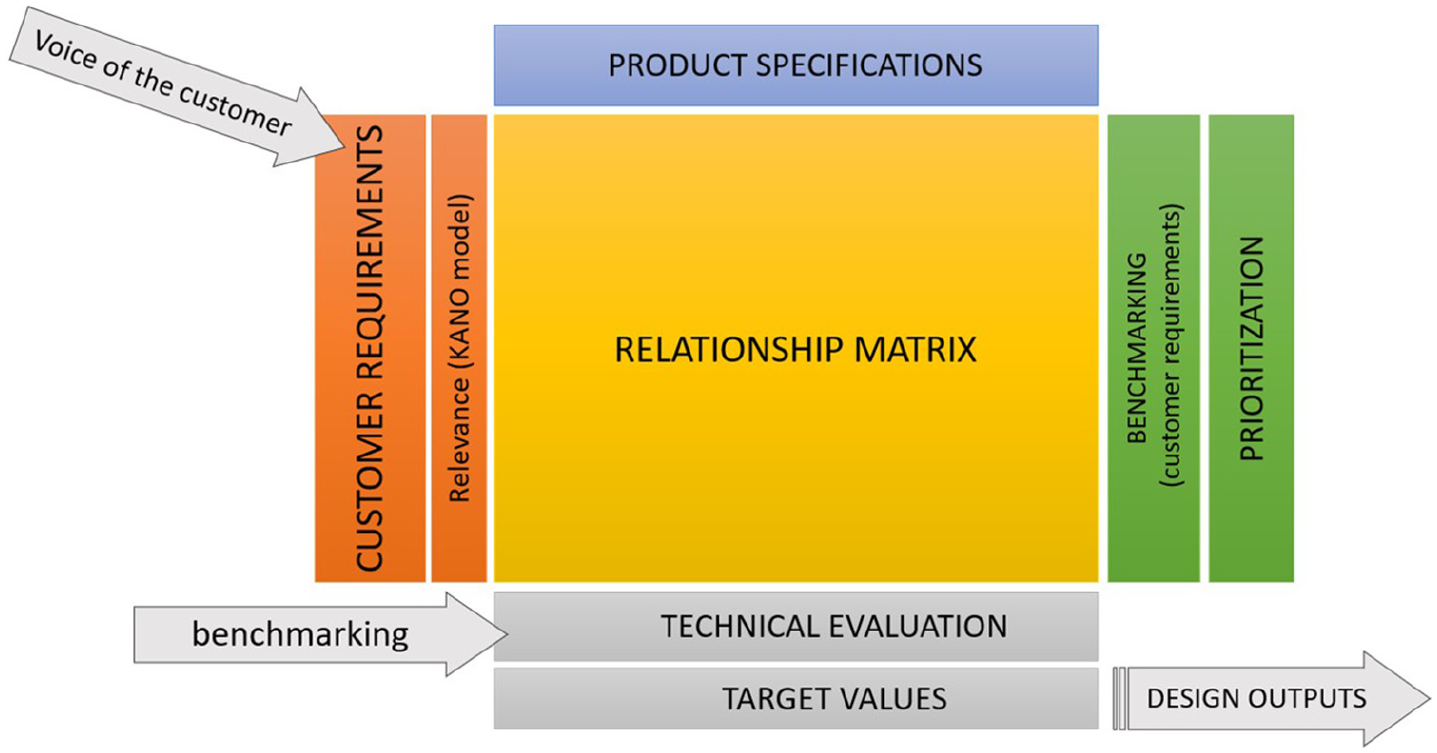
The matrix of quality.
The product specifications are quantitative and measurable parameters that the product should have. The specifications must have values (units) that establish the required performance (metrics). The specifications, besides acting as guides for the generation of solutions to the project problem, provide the basis upon which the evaluation and decision-making criteria will be defined.
This tool aims to help the development team to incorporate into the project the real needs of the customers, making clear the requirements of the customers and making sure that they are considered in the development of the products.
A quality matrix (QFD) presents solutions for customer requirements and evaluates their importance. The requirements and specifications are also compared with the players in the market in order to be able to conclude what is best for the customer. Figure 4 shows a quality matrix for the development of an coffee machine.
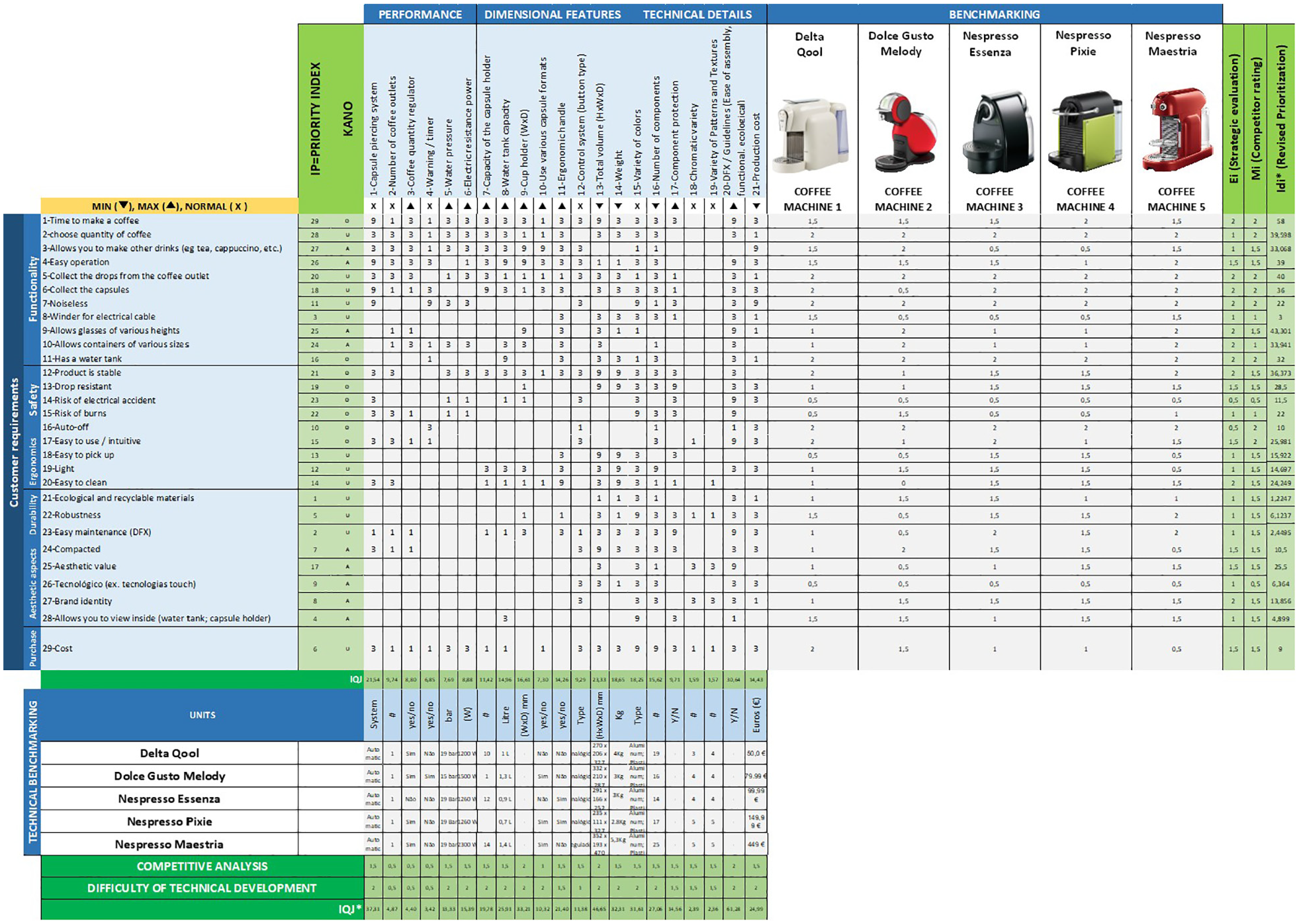
Example of quality matrix developed.
From the quality matrix, we extracted two prioritization charts, one related to the customer’s requirements (Figure 5) and the other related to product specifications (Figure 6). In order to establish the importance of each requirement or specification.
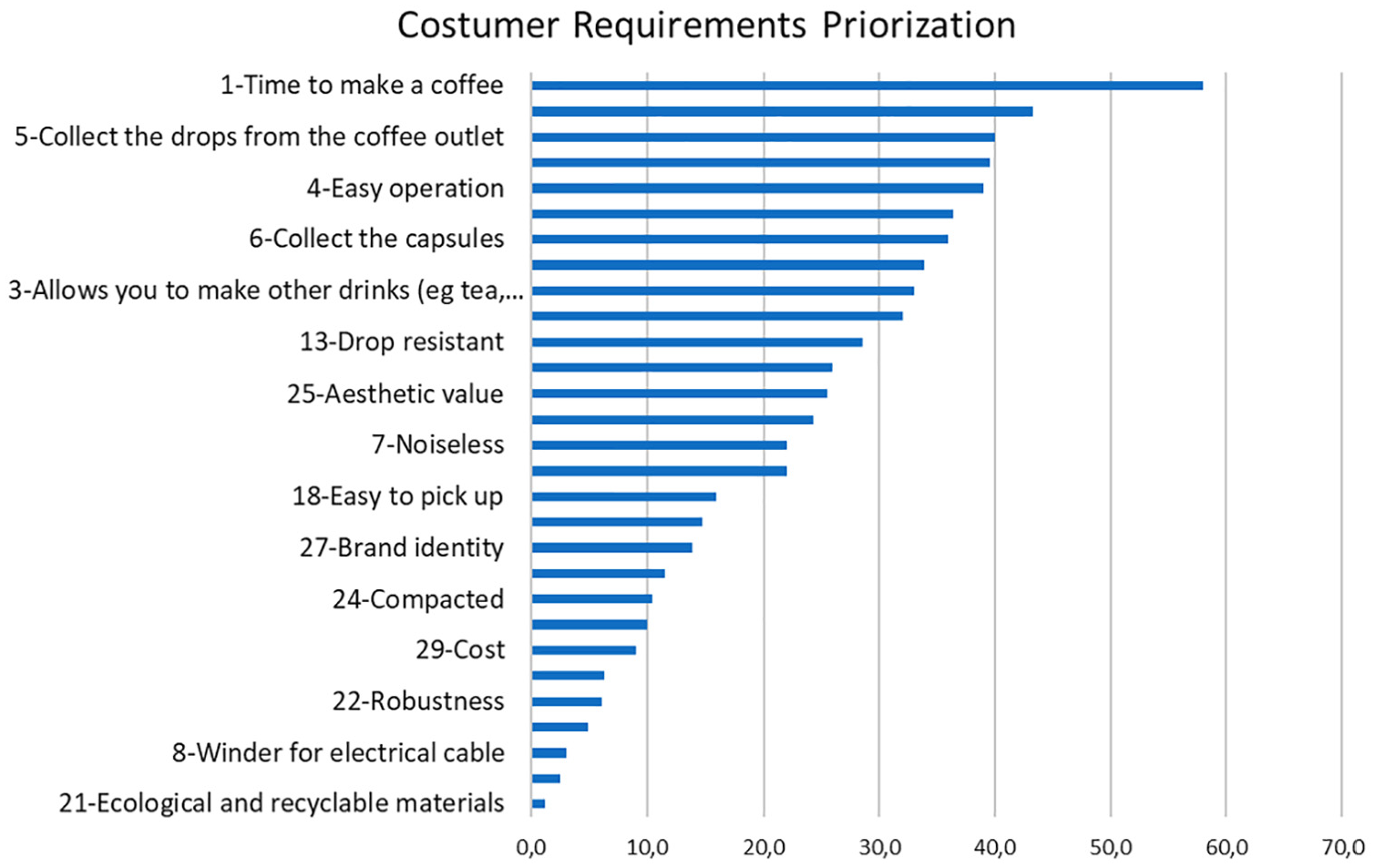
An example of the customer requirements prioritization for a coffee machine.
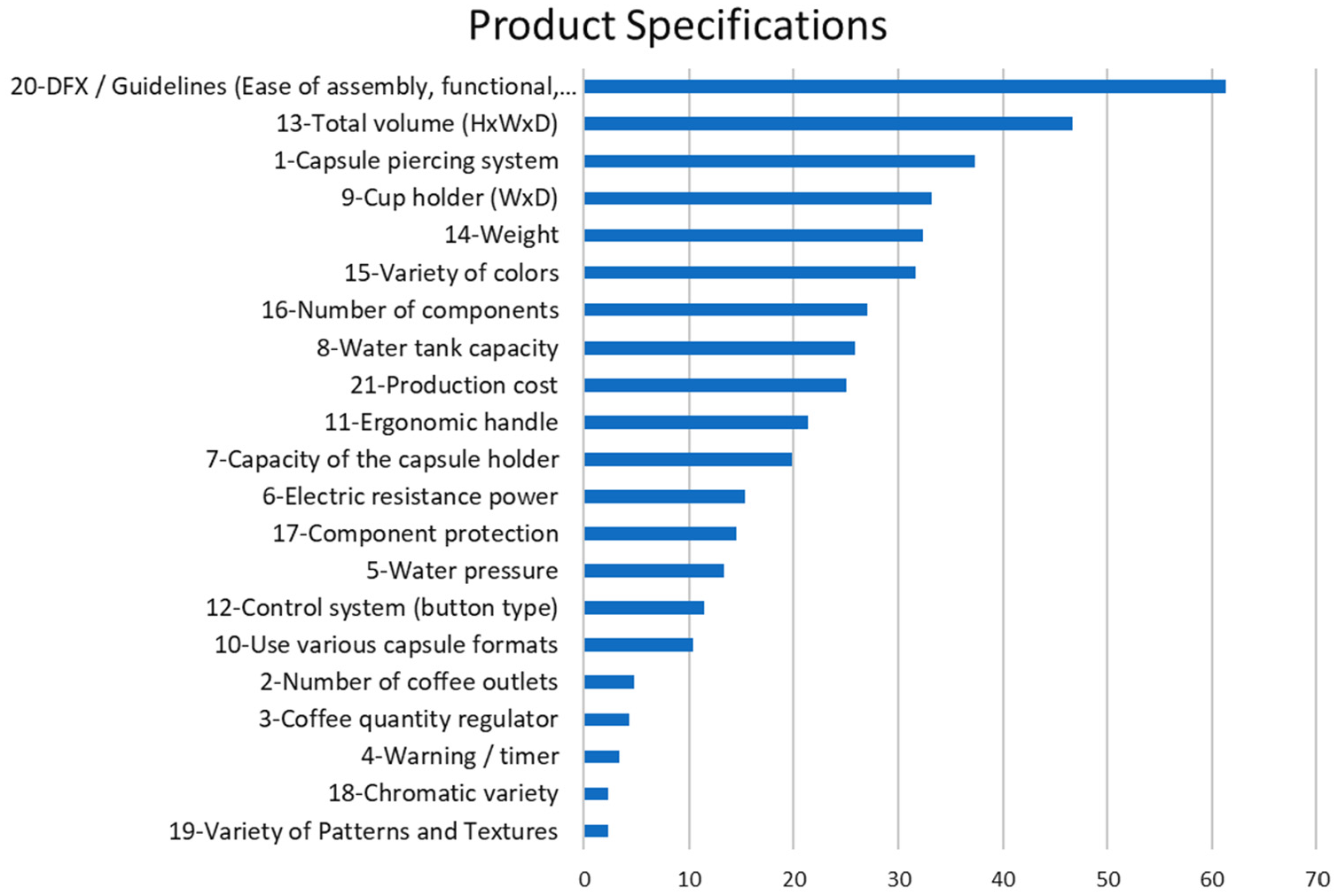
An example of the prioritization of the specifications for a coffee machine.
Matrix of product (third structured tool)
In a first step, the input is the “Voice of the Customer” and the output is the product specifications, i.e. the set of technical characteristics of the product with their respective projected qualities (specifications values). In the second step the product specifications are related to the parts or components that constitute it, obtaining the matrix of product.
In the matrix of product, the product is broken down into components and all the critical components that make up the final product are identified. This matrix aims to make explicit, organize and hierarchize the parts that make up a product.
The first step in filling the matrix of product is to identify the various components that make up the product. The components must be organized in a complete way so that there are no omissions of elements that constitute the product, but not in a very exhaustive way, otherwise the project will be ingested. We must begin with the components that will be specially developed for this project.
Functional analysis and physical components diagram (fourth structured tool)
One of the goals of conceptual design is to develop a proposal for solution of the product so that it fulfills all the necessary and foreseen functions. In order to obtain the functional concept of the product it is therefore necessary to explore, define and organize the functional structure of the product. Each product is designed for a particular purpose and the function of its components is that independently or together, allows the product to perform the functions for which it was designed. 61
Functional analysis is the foundation of architecture definition and product modularization. 62 Therefore, before dividing the product into modules, it is necessary to analyze the functions of the product and establish the relationship between each physical component of the product and its function. The central idea underlying functional decomposition is that a product can be defined by a hierarchical set of functions and some functions can be thought as modular and implemented through replaceable components.
Functional decomposition focuses on the cognitive ability to fractionate a larger system into smaller elements so that they can be worked on separately. There are several methods to perform the functional analysis, however usually two approaches prevail:
✓ Decomposition of physical components. It focuses on the physical component of the product and decomposes it into subsets and components, followed by the development of the product structure.
✓ Decomposition of product functions. It focuses on identifying the critical functions of the product and its factors / attributes that describe those functions.
Figure 7 shows the functional diagram of the development of a coffee machine.
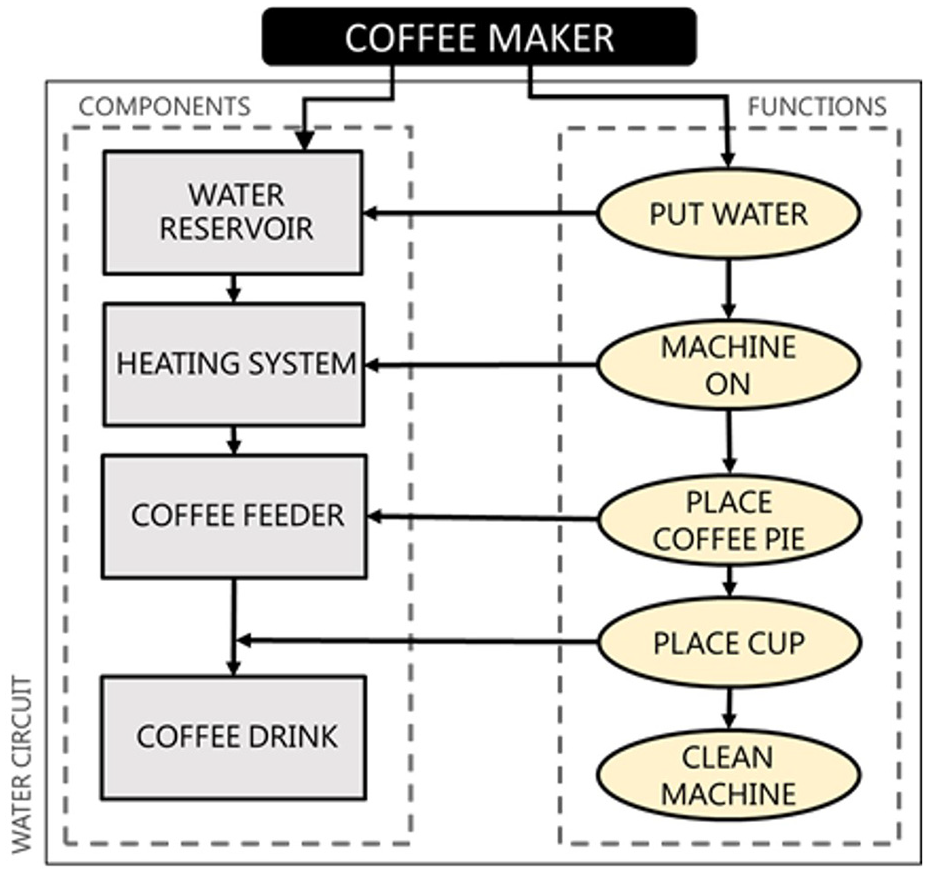
Functional analysis and physical components diagram of a coffee machine.
Failure mode and effect analysis (FMEA) (fifth structured tool)
The purpose of this tool is to detect failures before producing a product. Its purpose is to reduce the probability of the product or process to fail and increase its reliability.63–66
Reliability has become increasingly important for consumers, even if promptly repaired and fully covered by the warranty, causes at least consumer dissatisfaction by depriving it of the use of the product during a certain time.67,68 In addition, certain types of product failures, such as automobiles, airplanes and hospital equipment, can have drastic consequences for the consumer, where malfunctioning may be life risk.
The FMEA methodology (Figure 8), despite being developed for the design of new products and processes, today and for its usefulness, is applied in several areas to reduce the existing product and process failures.

The failure mode and effect analysis table.
The development of the FMEA tool is done by filling out a table that is basically similar. Two different methods can be used in the FMEA to establish failure assessment ratios: Quantitative or qualitative methods. The Quantitative method is based in reported data (severity, occurrence and detection) extracted from current and previous products. Qualitative method is based on previous experience about severity degree of failure in the product.
The steps of an FMEA and the way of performing the analysis are the same, differing only in the objective. Thus analyzes can be classified in:
FMEA CONCEPT: In this type of analysis are considered the failures that could potentially occur with the product due to non-satisfaction of the customer requirements. The purpose of this analysis is to avoid future product failures resulting from the conceptual design. The FMEA concept is geared towards its application in the process of developing a new product that begins at the conceptual design stage.
Allowing explore and test a product and detect flaws in the concept, in order to know if it meets or not the customer requirements presented by a particular target market. For this, the main functions that the future product is expected to accomplish are verified, and their potential failures in terms of inability to meet customer requirements are verified. The FMEA concept is elaborated exclusively on product performance operations in meeting customer requirements. The functions should be clear and help evaluate the future product conceptually, assessing functional requirements and design alternatives. Detecting potential failures early in product development will not only create stronger, more reliable products, but also reduce development costs and shorten lead times.
FMEA PRODUCT: In this type of analysis are considered the failures that may occur with the product, against the specifications of the project. The purpose of this analysis is to avoid product failures resulting from the design or manufacturing process.
The FMEA product aims to analyze and detect potential failures and present proposals for improvement actions that occur in product design, thus improving the reliability of the product. Identifying the potential failure modes of a product is the main objective, where their potential catastrophic and critical failures can be eliminated or minimized by correcting the design as early as possible.
Figure 9 presents an example of FMEA Product for a coffee machine development using qualitative method.
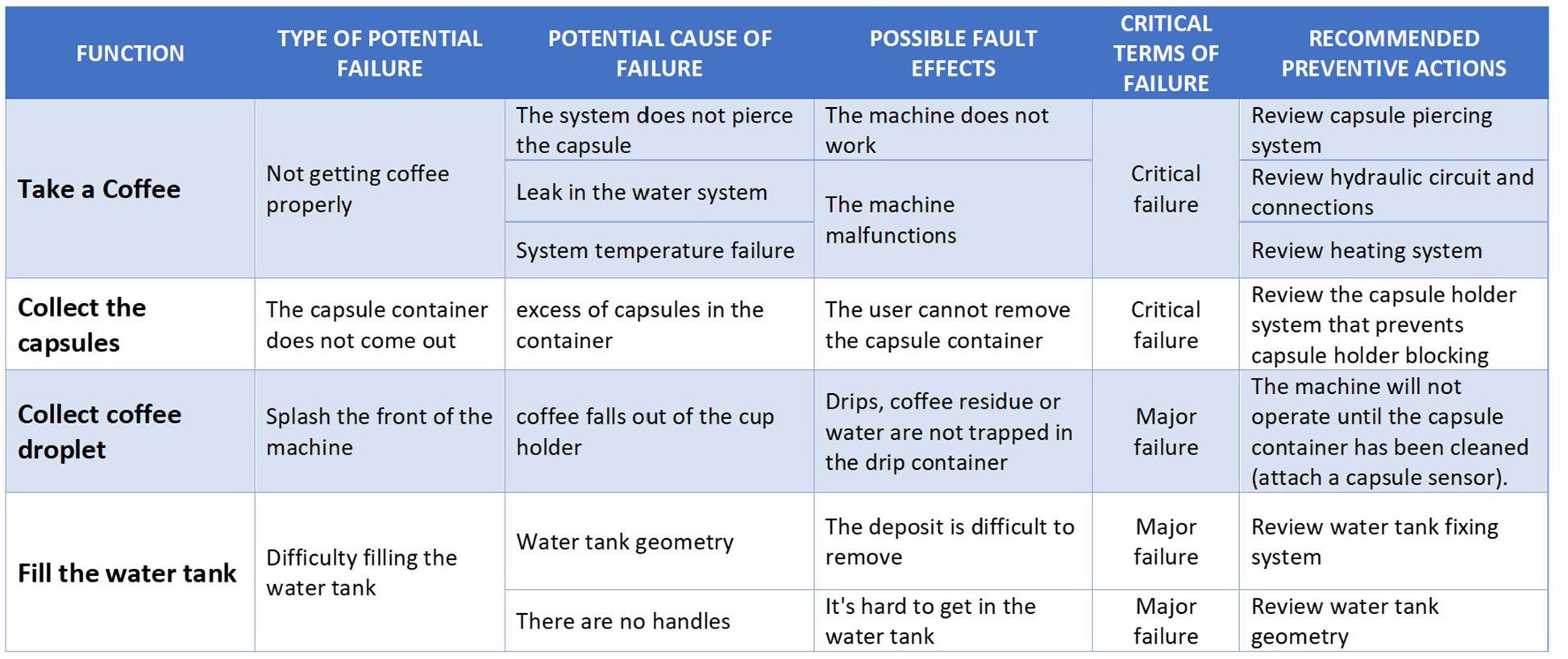
Example of the FMEA product for the coffee machine.
Other support tools in the PDP
Digital and physical prototypes
Sometimes there is a tendency to think only of preproduction prototypes, which are often more useful in the final stages of testing and development. However, it may be considered consensual to agree on the importance of refining and developing an idea through the use of prototypes during the development phase.28,69 In designing the implementation projects, many details need to be clarified, confirmed and optimized, and in some cases it may be necessary to build prototypes digital or physical to perform specific tests. During the design process it is normal to create one or two test prototypes to check the basic function and find out as early as possible where the main problems are. Then one or two development prototypes can be produced to refine the project, finalize all the details and make sure the project will work as intended. In the end, we can also produce one or several fully operational production prototypes for customer usability testing.
Physical prototypes can be very time-consuming and expensive to develop, especially if changes resulting from project reviews require building new jigs and tools or modifying existing ones. From this difficulty, emerged the development in digital format.
A complete digital prototype is a true virtual representation (Figures 10 and 11) of the entire final product and can be used to visualize, test the form, characteristics and functions and also simulate the product, thus reducing the need to physically build prototypes that would certainly be more expensive and time consuming.70–73
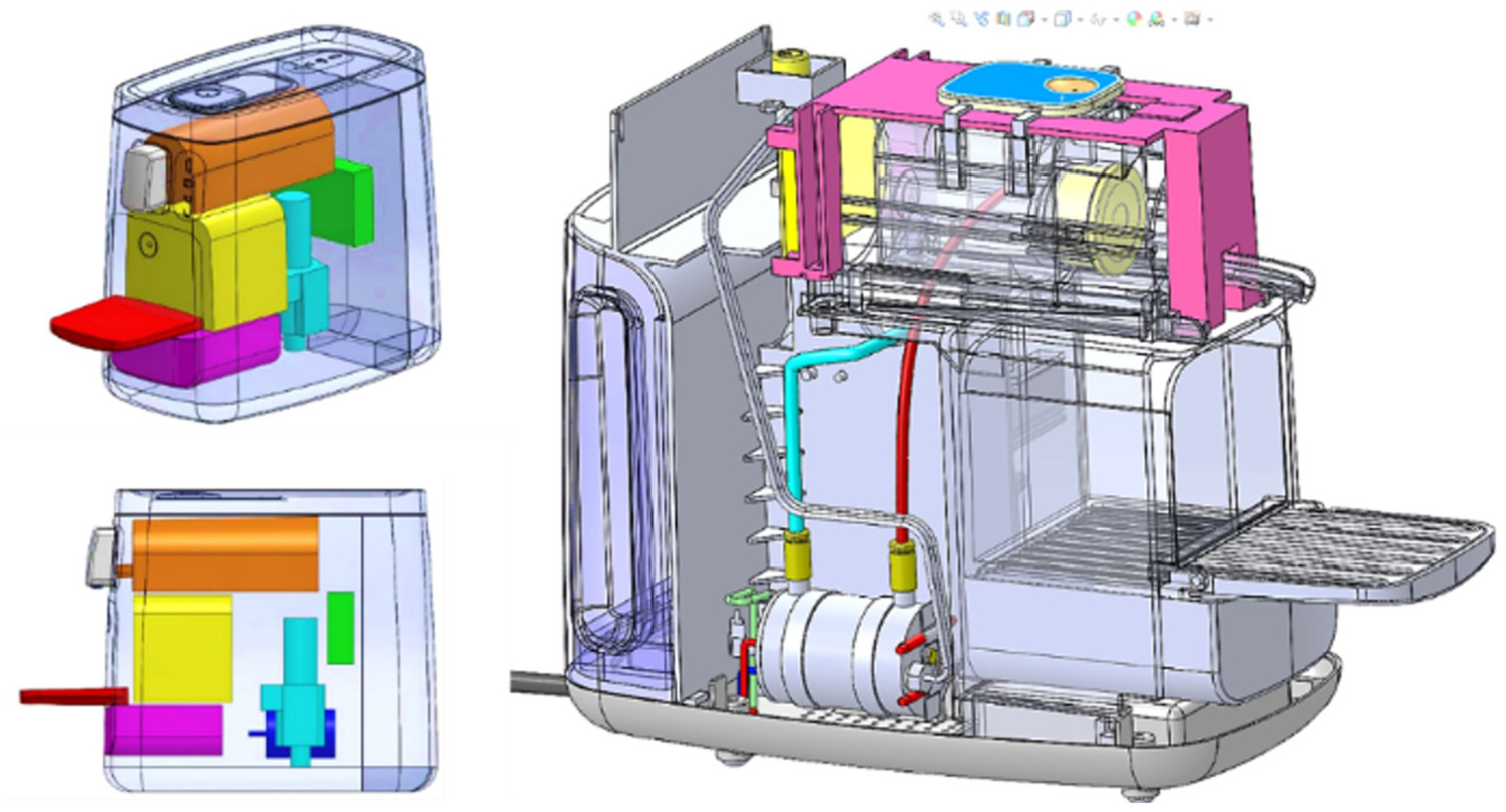
CAD representation of functional components and their architecture.
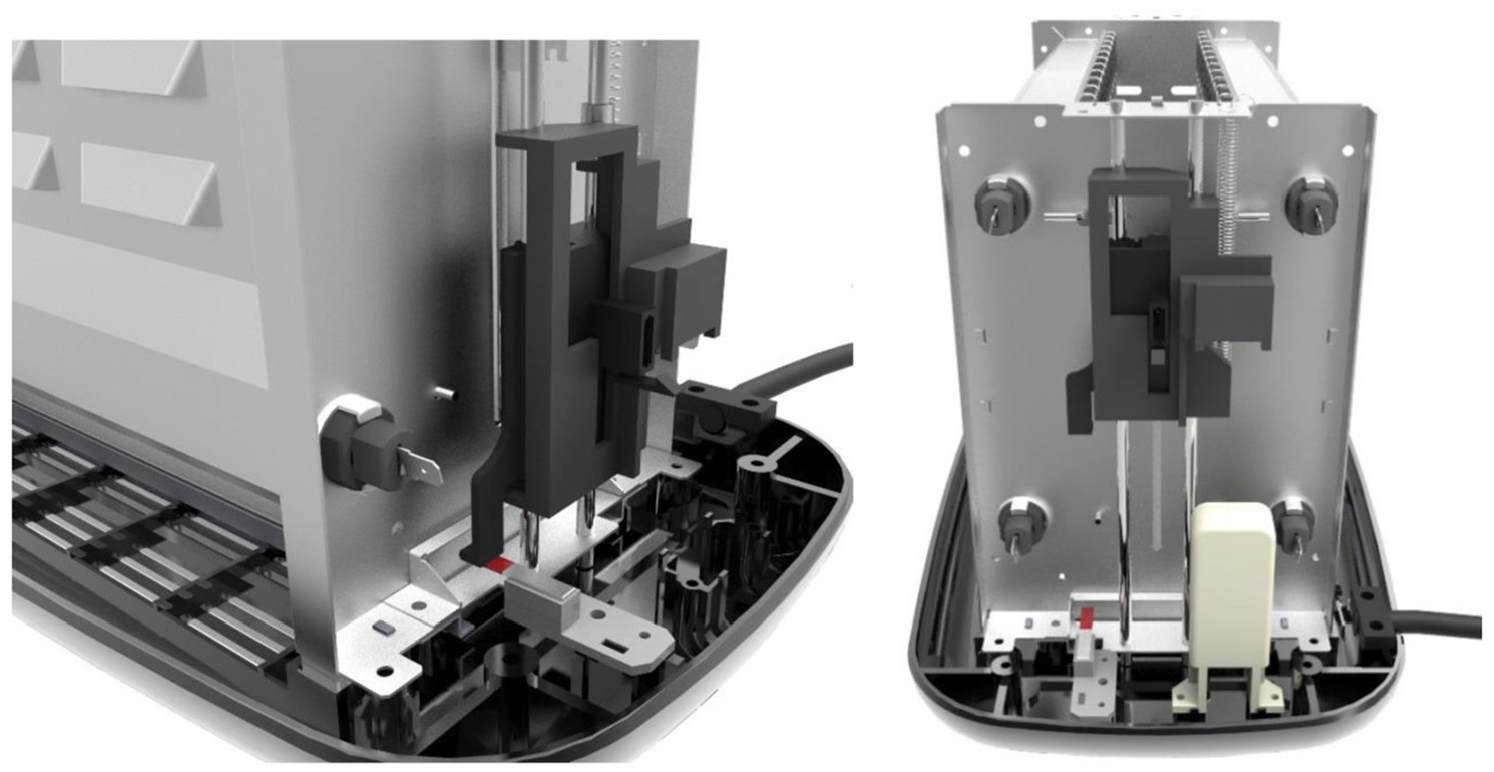
CAD representation of final detailed product and their components.
Ergonomic study
It is assumed that the development of more ergonomic products usually allows the company to differentiate itself from the competition, since the products produced by it can better meet the expectations of the user. In fact, the purchase decision is based on criteria of price, quality and aesthetic attributes of the product, but also based on the comparative analysis of the ease of use. 74
With increasing complexity of products, its broader range of functionalities, as well as the requirement of user procedures, highlights the importance given to human-centered design. This is demonstrated by the success of the “user-friendly” product market.
Through the ergonomic analysis can be established guidelines for actions that aim defining criteria that should guide the choice of appropriate solutions. Ergonomics plays an important role in the identification of risk factors and its field of action is represented by man-system interactions and aims to optimize it according to efficiency, safety and comfort criteria. In the field of product ergonomics, the analysis of usability that can be measured through product experience and the measurement of people’s subjective reaction (likes, dislikes) and objective measurement during the end use (ease of use, access, movement, actions …).75,76 Figure 12 shows the ergonomic study and some of the volumetric models used in its realization.
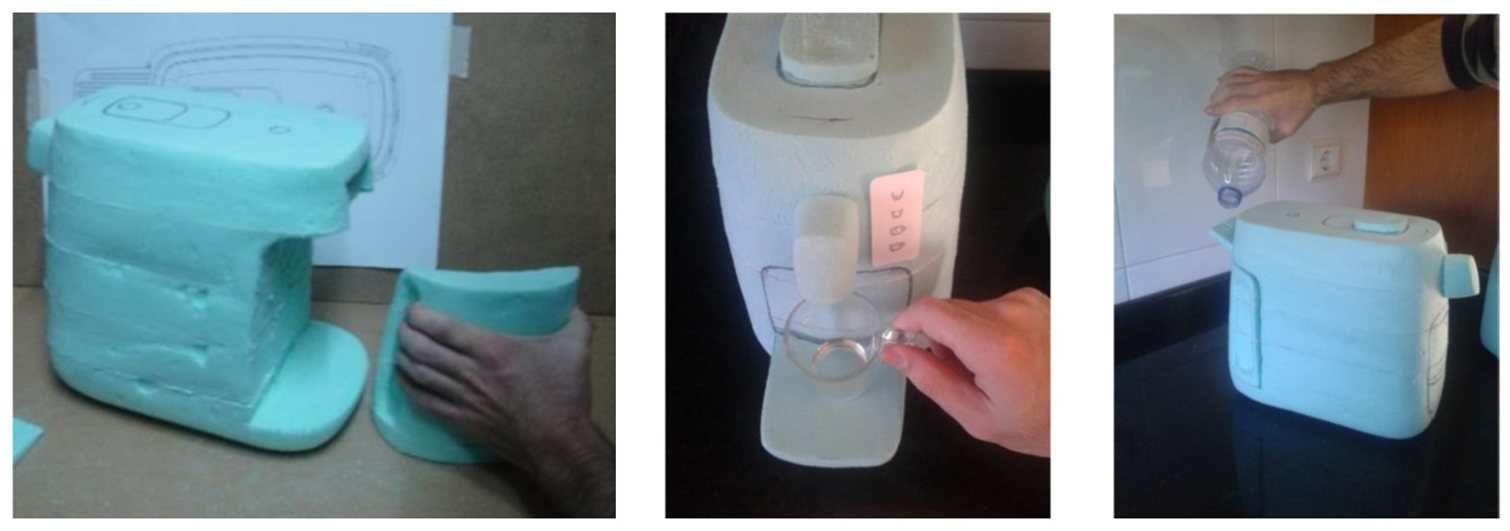
The ergonomic study to aid development of the coffee machine (prototype).
Communication and rendering
Rendering allows better communication and understanding of product aesthetics aspects. The rendering function, perform in computer, allows designers and engineers to show pieces in the desired materials and also allows the client to look over the model and recognize not only the shape and function but also its final appearance (Figure 13). Show the different refractive and reflective qualities produced by the different materials that are allowed. This tool is important for example, to distinguish a polycarbonate, a strong and translucent plastic from a glass or a metallic part in the body.
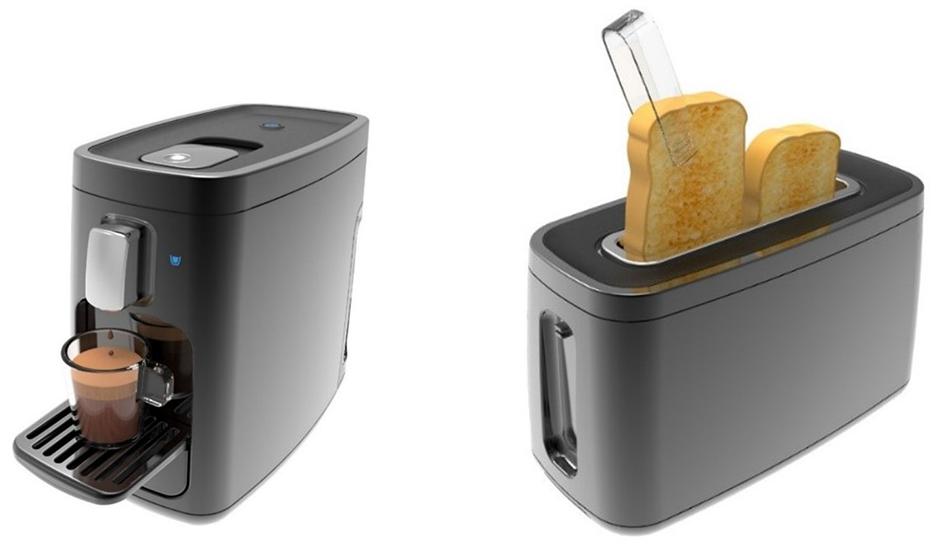
CAD rendering of the coffee machine and the toaster.
Results
This methodology has been implemented under the class module of engineering and product development of the master’s degree in mechanical engineering and of the master’s degree in engineering and product design at the University of Aveiro in Portugal. It was also used in dissertation/project work involving product development in both courses. Figures 14 to 19 illustrate some themes/projects developed using the presented methodology.
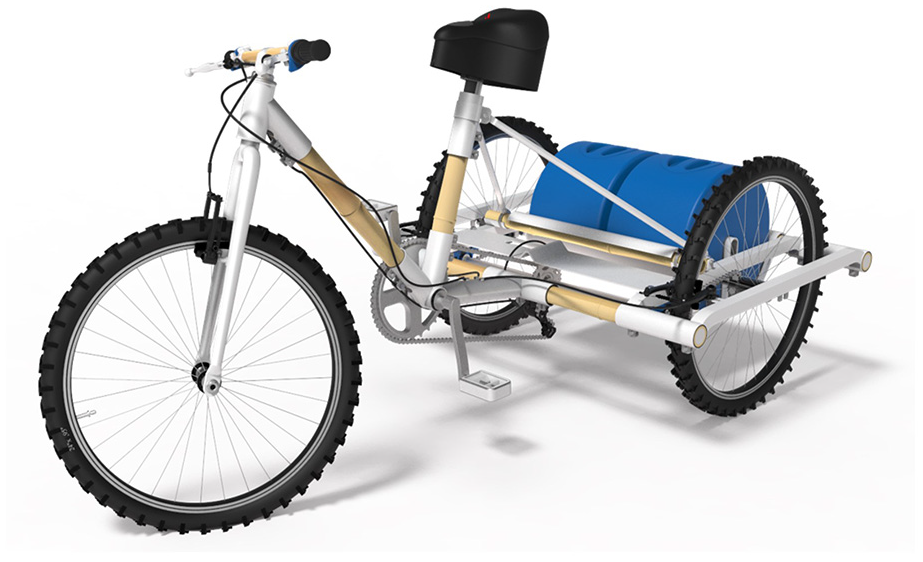
Bike for water transport.
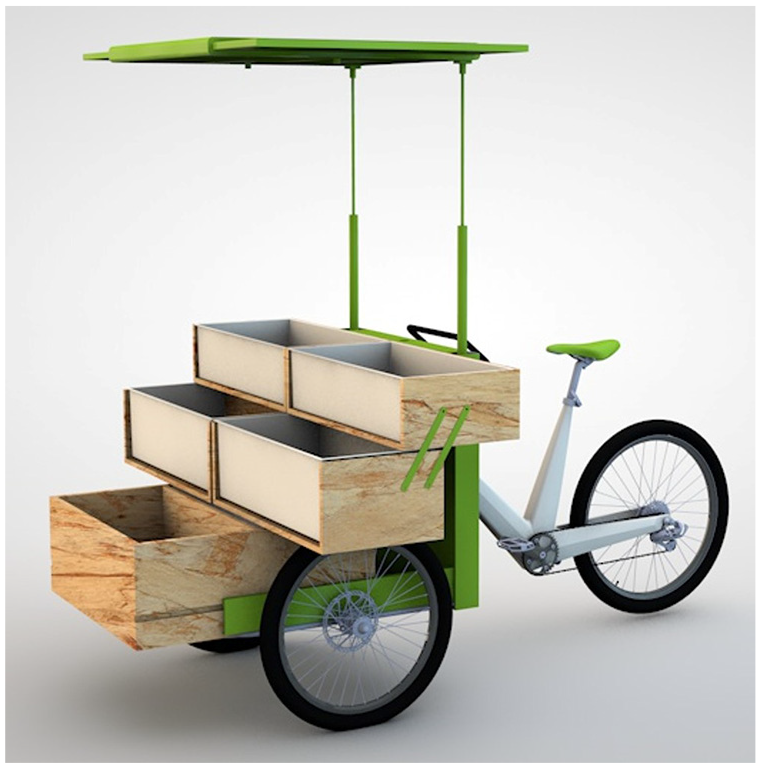
Cargo–bike.
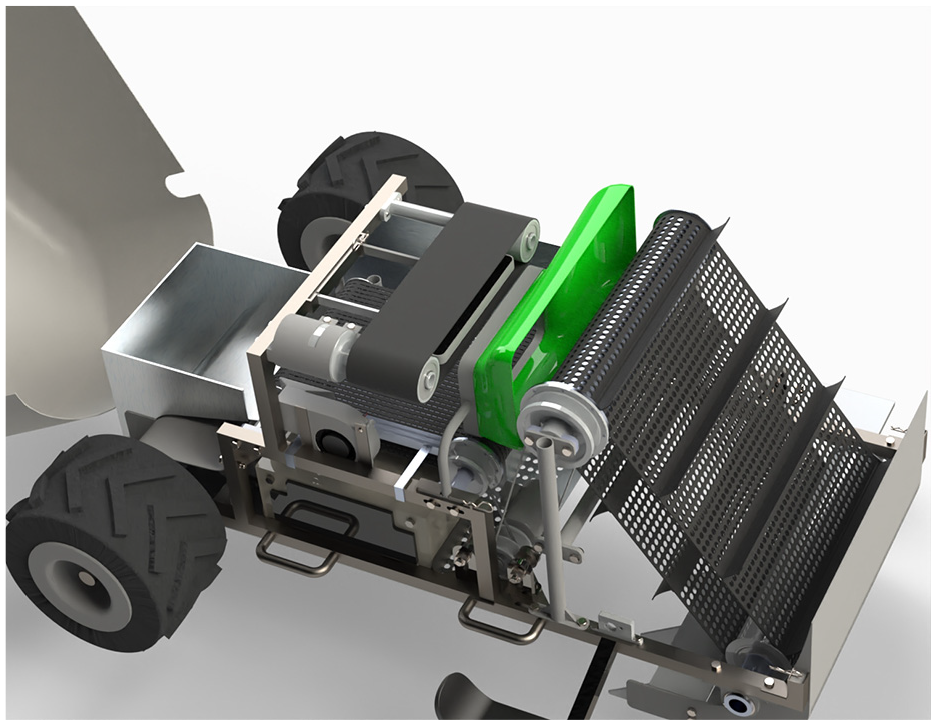
Beach cleaning machine.
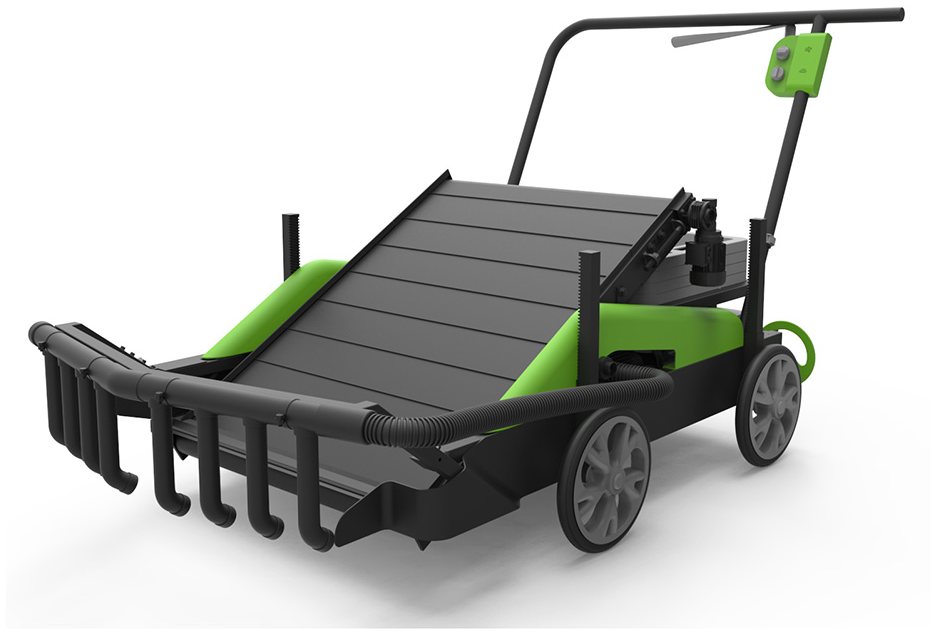
Cutting grass machine.
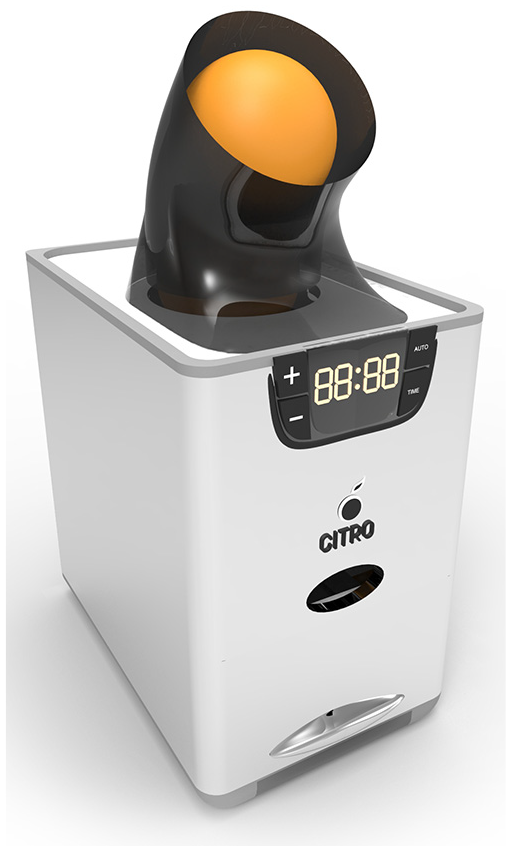
Juice machine.
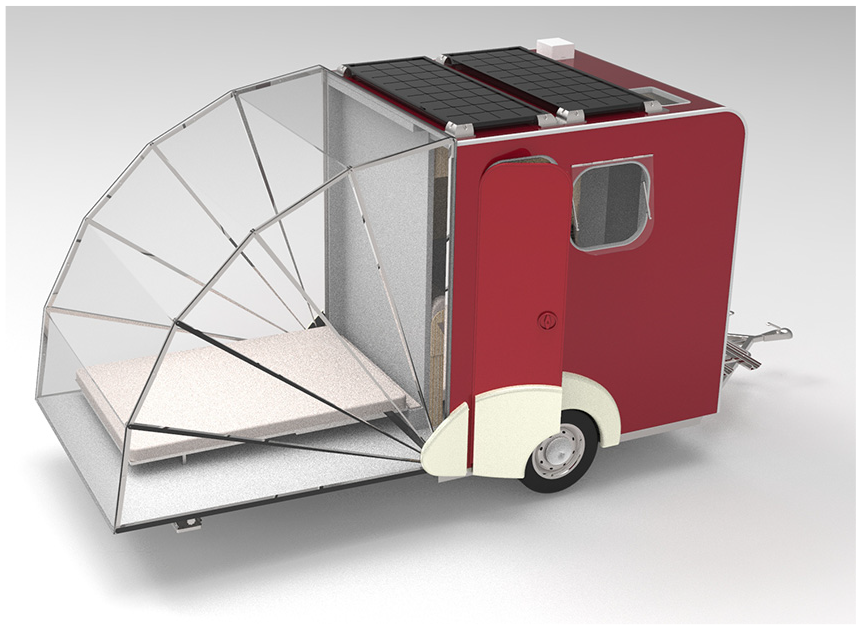
Camping trailer.
Between years of 2011 and 2019 students used these tools to develop their own projects and ideas, six master’s degrees in engineering and product design were completed, using this methodology in their dissertation work, and 10 other master’s degrees in mechanical engineering.
In the projects developed under the module of engineering and product development, a total of 264 projects were carried out, distributed in different areas of products distributed in graph of Figure 20: packing crusher (45); juice machine (14); bikes (46); cargo bikes (47); pedicaps (12); wheelchair (15); disability aids (31); and others (54). The results refer to 8 years of functioning of the module and the projects were carried out during one semester involving groups of four or five students, totaling approximately 100 h of work per student.
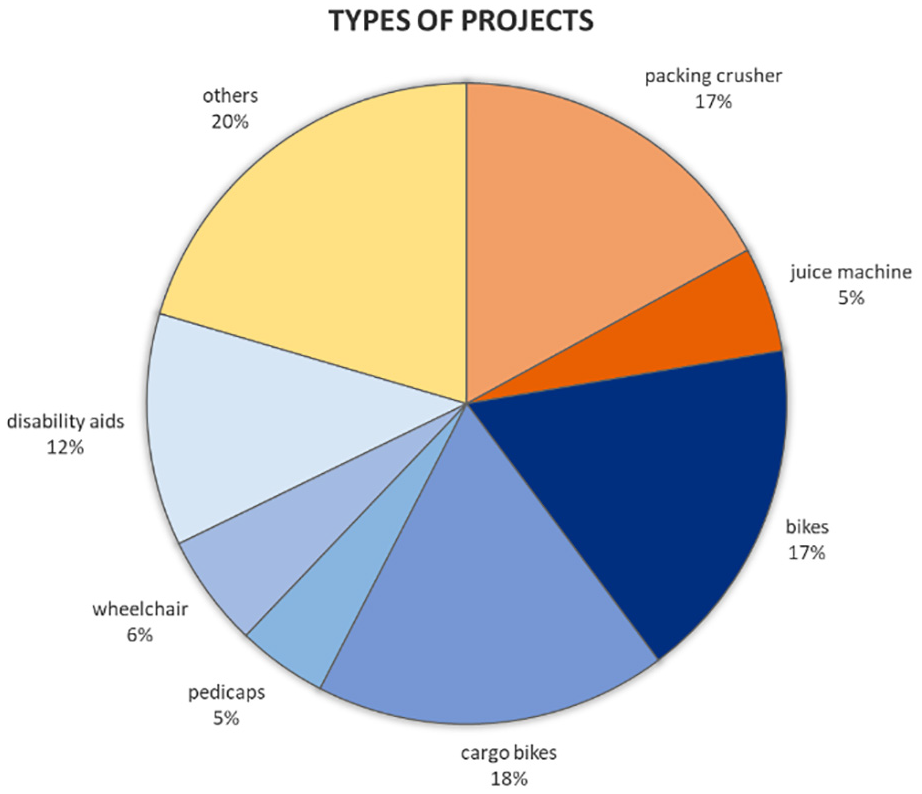
Graphic of the distribution of the projects performed.
Final remarks
The use of a methodology in the Product Development Process allows establishing a critical way from the idea to the product proposal with application of structured tools to support the methodology. This methodology allows the path to be carried out more quickly, without shortcuts or deviations. With the definition of a methodology and the use of tools to support development, the process is developed in a more organized way where the whole team communicates and shares information and is focused on a common goal.
The use of tools such as the KANO model and QFD in the initial phase of the project (informational project) allows the collection and subsequent processing of data. The structured tools and the methodology that helps to guide the project in aspects such as identification of differentiating factors and attractiveness of the product, without prejudice or forgetting “must be” requirements and not verbalized by the market. It also helps the development team to prioritize of the most and least relevant client requirements. Also the specifications of the product are developed and oriented according to the priority requirements defined by the customer or consumer.
The conceptual design is a phase were the solution are generate and this solution tends to conciliate what is requested by the market (customer requirements) with the competencies and resources of the company, establishing product specifications that can meet the identified requirements.
The FMEA allows, in the initial phase of Development (FMEA Concept) and in later stages (FMEA Product) to correct potential failures or errors and indicate corrective solutions, before the product get in production.
In summary, in relation to the informational project, the application of the KANO model, the QFD method and the FMEA in small companies is viable, increasing customer satisfaction through the emergence of a new product capable of satisfying the expectations of the customers.
In the methodology presented here, the representative project is oriented by the driving lines of the informational project and although it may be considered as losing creativity, we believe that the benefit of objectivity allows us to lead the development process faster and more oriented towards the aspects valued by customer or by the market. The integration of functional analysis tools and ergonomic analysis allow us to define in a more concrete and objective way the main and secondary functions of the product, its architecture and define it in functional, geometric and dimensional terms according to the user and they usability (ergonomic study).
The product design is the area of comfort of engineering, but equally relevant for the concretion of idea in a tangible, manufacturable and economically viable product. Hence the importance of the analysis and selection of materials and manufacturing processes, as well as the capacity of the development team to incorporate the constraints arising from them in the early stages of the development process. Looking for new technological developments, ecological trends and sustainability and understand your potential to perform final idea.
In summary a methodology provides a structured way to achieve product quality through its development process and reduce the development process time by establishing a common communication focused on objectives and capable of detecting and correcting project failures at much earlier stages and also probably resulting in a very likely reduction of development costs and the final product costs.
Footnotes
Declaration of conflicting interests
The author(s) declared no potential conflicts of interest with respect to the research, authorship, and/or publication of this article.
Funding
The author(s) disclosed receipt of the following financial support for the research, authorship, and/or publication of this article: This work was supported by the Program Compete 2020, Portugal 2020 and Fundos Europeus e Estruturais e de Investimento da União Europeia, Projeto em co-promoção n. 33325 – BrickITsmart and by the projects UIDB/00481/2020 and UIDP/00481/2020 – FCT – Fundação para a Ciencia e a Tecnologia; and CENTRO-01-0145-FEDER-022083 – Centro Portugal Regional Operational Programme (Centro2020), under the PORTUGAL 2020 Partnership Agreement, through the European Regional Development Fund.
