




Abstract
Abrasive jetting stream generated from accelerator tank is crucial to the precision machining of industrial products during the process of strengthen jet grinding. In this article, its effectiveness prediction using normalized sparse autoencoder-adaptive neural fuzzy inference system is carried out to provide an optimal result of jetting stream. A normalized sparse autoencoder-adaptive neural fuzzy inference system capable of calculating the concentration density of abrasive impact stress by normalized sparse autoencoder and identifying the effectiveness indexes of abrasive jetting by adaptive neural fuzzy inference system is proposed to predict the stream effectiveness index in grinding practices, indicating that when turbulence root-mean-square velocity (VRMS) is 420 m/s, turbulence intensity (Ti) is 570, turbulence kinetic energy (Tc) is 540 kJ, turbulence entropy (Te) is 620 J/K, and Reynolds shear stress (Rs) is 430 kPa (Error tolerance = ± 5%, the same as follows), the optimized effectiveness quality of abrasive jetting stream could be ensured. The effectiveness prediction involve the following steps: measuring the jet impact data on the interior boundary surface of accelerator tank, calculating the concentration density of abrasive impact stress, establishing the descriptive analytical frame work of normalized sparse autoencoder-adaptive neural fuzzy inference system, adaptive prediction of abrasive jetting stream effectiveness through normalized sparse autoencoder-adaptive neural fuzzy inference system computation, and performance verification of actual effectiveness prediction in the efficiency quantification and quality assessment when it compared to that of alternative approaches, such as genetic, simulated annealing–genetic algorithm, Taguchi, artificial neural network–simulated annealing, and genetically optimized neural network system methods. Objective of this research is to adaptive predict the abrasive jetting stream effectiveness using a new-proposed prediction system, a stable and reliable abrasive jetting stream therefore can be achieved using jetting pressure (Pw) at 320 MPa, mass of cast steel grits (Mc) at 270 g, mass of bearing steel grits (Mb) at 310 g, mass of brown-fused alumina grits (Ma) at 360 g, and mass rate of abrasives (Fa) at 0.46 kg/min. It is concluded that normalized sparse autoencoder-adaptive neural fuzzy inference system owns an outstanding predictive capability and possesses a much better working advancement in typical calibration indexes of accuracy and efficiency, meanwhile a high agreement between the fuzzy predicted and actual measured values of effectiveness indexes is ensured. This novel method could be promoted constructively to improve the quality uniformity for abrasive jetting stream and to facilitate the productive managements of abrasive jet machining consequently.
Keywords
Introduction
Nowadays, abrasive machining and grit cutting are rapidly developing and widely employed for removing materials to form regular micro-patterns on free-form surfaces, especially in the condition of strengthen jet grinding for plate profiling and engineering material processing. Best of jet grinding process relies on the grit impact of abrasive laden jet for cutting and decaling materials at higher rates. A bunch of abrasives is introduced and entrained into jet slurry so that liquid momentum is partly transferred to abrasive grits. The primarily roles of accelerator tank include accelerating large quantities of abrasives to high velocity and producing a highly coherent jet. Unfortunately, the adaptive prediction of abrasive jetting stream effectiveness, as changes in the morphology properties and distributive density of jetting mediums at the micro-scale are taking place, which highly valued for the generation of jetting energy and improvement of cutting efficiency, was rarely focused on its detailed investigation from the prospects of effectiveness predictions, remains in an obscure unknown state.
When considering recent research on abrasive turbulent flow, some original ideas have been presented already on the effects of flow pressure, particle size, and material density on grit velocity development.1–3 Furthermore, Papini and colleagues 4 and Gao et al. 5 have presented the prediction of material removal rate during the machining of rotating and translating ductile and brittle rods. Srinivas and colleagues 6 reported that the contribution of water pressure and traverse speed on jet penetration found higher compared to that of abrasive mass flow rate. Although these works provided valuable references for our investigation, a systematic analysis concerning the jetting stream effectiveness not limited only to traditional discussions rooted in pure experimental investigations or direct quality assessments has not been presented yet.
Regarding the instantaneous characteristic prediction of turbulence flow in a closed container, Lane 7 used node mesh to ensure higher controllability of turbulence predictions in the contained vessel. Simultaneously, Gao and Stenstrom 8 and Monaghan and Mériaux 9 focused on the computational fluid dynamics (CFD) method to study the underflow hydrodynamics and abrasive distribution. Additional endeavors on the CFD simulation of turbulent flow within the Euler–Euler framework of interpenetrating continua can be learned from literature,10–12 while Karadimou et al. 13 have presented the numerical simulation of two-phase turbulence in an accelerated-tank reactor. Saloux and Candanedo 14 and Gong et al. 15 developed an advanced rate distribution of turbulent flow for modeling the stratified storage container. Most of them showed that the mixing characteristics of flow-accelerated tank, and the applicability assessment of numerical flow models, deserve higher significance and more attentions.
In the domain of turbulence characteristic predictions, Gharabaghi and colleagues 16 found that both artificial neural networks (ANNs) and gene expression programming (GEP) models are most sensitive to the accuracy of turbulence properties. Gasiunas et al. 17 and Braun et al. 18 concluded that the increase in turbulent intensity is beneficial and helpful to enhance jetting performance. Brucato and colleagues 19 have simulated two different baffled tanks by employing the Eulerian–Eulerian multi-fluid model (MFM); moreover, references20–22 reported their latest progresses on the working parameter optimization coupled with adaptive neural fuzzy inference system (ANFIS) to predict turbulence effectiveness. It is evident that the effectiveness prediction of abrasive turbulence covers the majority of jetting applications and presents original suggestions to enhance grit-accelerating effectiveness; however, this new topic is still in a state of infancy and its advancement is the motivation for the current work.
Motivated by the need to adaptive predict the effectiveness of abrasive jetting stream for promoting the efficiency and capability of strengthen jet grinding, section “Multi-phase flow models and stream effectiveness indexes” presents the flow models and the index calibration of abrasive stream effectiveness, section “NSAE-ANFIS” establishes NSAE-ANFIS and explains its working mechanism. An example of adaptive prediction for abrasive jetting stream effectiveness is detailed by section “Simulation and experiment.” Based on the efficiency quantification and quality assessment of NSAE-ANFIS prediction in section “Assessments of adaptive prediction,” section “Conclusion” concludes this article eventually.
Multi-phase flow models and stream effectiveness indexes
The stochastic nature of multi-phase turbulent flow makes it impossible to precisely simulate every details of abrasive jetting stream. It is assumed that the abrasive jetting stream of strengthen jet grinding be accelerated in an accelerator tank and travel continuously through the orifice of outlet passage. In the absence of external interference, according to Hisayoshi et al. (1980), 23 the three directional components of mass point movement in abrasive jetting stream can be expressed as
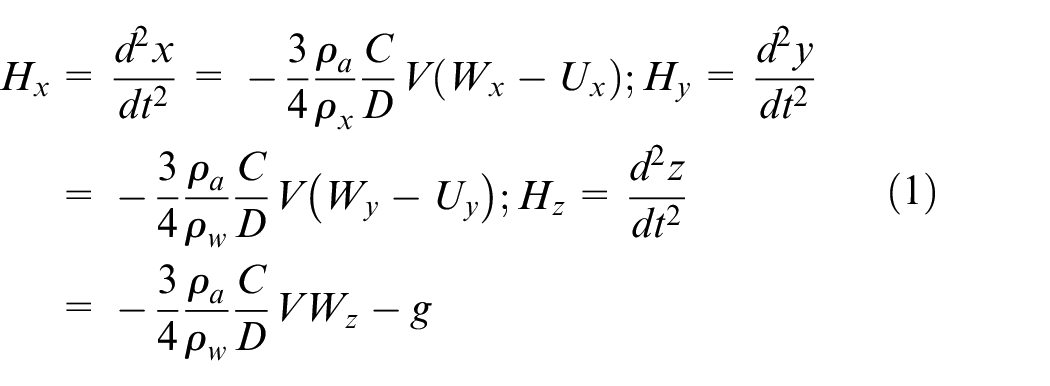
where x, y, and z are the coordinates referring to the abrasive jetting origin in accelerator tank, t the time, ρa the air density, ρw the water density, H the acceleration of mass point in the air, D the diameter of abrasive grit, and C is a drag coefficient expressed as the function of Reynolds number based on the concentrated stream and the kinematic viscosity of air. 24
Since abrasive jetting stream is very difficult to be measured directly, typical flow models should be used for flow demonstration and principle investigation in practices, to study their constructive influences on the prediction of stream effectiveness, with the k-ε, k-ε-Rt, Spalart–Allmaras, Reynolds stress, and large-eddy simulation (LES) models be focused sequentially. 25 Besides, some calibration properties selected out as the qualified mathematical indexes calibrating stream effectiveness, such as turbulence RMS velocity (VRMS, m/s), turbulence intensity (Ti), turbulence kinetic energy (Tc, kJ), turbulence entropy (Te, J/K), and Reynolds shear stress (Rs, kPa), 26 are employed to quantify abrasive jetting stream thanks to their clear illustrations of physical properties and working effectiveness of multi-phase turbulence and keep independent from external signals or environmental interference.
NSAE-ANFIS
The concept of NSAE-ANFIS is proposed and employed based on the integrated combination of normalized sparse autoencoder (NSAE) and ANFIS. It first uses NSAE to calculate the concentration density of abrasive impact stress on the interior boundary surface of accelerator tank, which obtained and identified by strain gauge array, thereafter ANFIS accurately predicts the effectiveness indexes of abrasive jetting stream for the convenience of working provision and performance promotions of strengthen jet grinding.
The working mechanism of NSAE
NSAE is used to calculate the concentration density of abrasive impact stress from the measured raw data of surface strain. It incorporates probability extraction and process quantification into a general purpose fuzzy prediction system, which makes this novel network less depending on prior knowledge and complicated calculation. According to this approach, the concentration density of abrasive impact stress at a given meshed area of boundary surface can be denoted as an unlabeled data

where WNSAE1 or WNSAE2 is the weight matrix of NSAE, σr is a rectified linear unit used as the activation function in NSAE since it allows more efficient training for network prediction than any other traditional function does, so that it encourages the sparse activation and could be denoted as

The encoder of NSAE reconstructs

H (i, j) is the inverse of Hessian matrix with its computation was detailed by Byrd & Nocedal (1990), 29 and η is the step size accordingly. In this function, η(i+1, j+1) could be iteratively determined by

After the weight optimization of NSAE was completed, its weight matrix WNSAE is actually normalized by an orthonormality constraint, thereafter NSAE would be trained for adequate times so that the concentration density of abrasive impact stress be calculated, and then be inputted into ANFIS for a high-efficient prediction of abrasive jetting stream effectiveness.
The working mechanism of ANFIS integrated with NSAE
After the concentration density of abrasive impact stress was calculated by NSAE, a prediction system based upon the working principle of ANFIS is developed to predict the effectiveness indexes of jetting stream, including VRMS, Ti, Tc, Te, and Rs, with the working structure and data flow of NSAE-ANFIS as shown in Figure 1. In this architecture, NSAE identifies the concentration density of abrasive impact stress, while ANFIS possesses an excellent capability of adaptive prediction for the numerous data sets of jetting stream effectiveness characterized by complex mutual influences and fuzzy correlations, and Figure 2 gives its logical diagram of calculation. This prediction could be categorized as a high-efficient numerical conversion from strain concentration densities to effectiveness indexes that quantifies the jetting influences on boundary surface. Based on this design, this proposed system is composed by NSAE monitoring level and ANFIS prediction level. 30
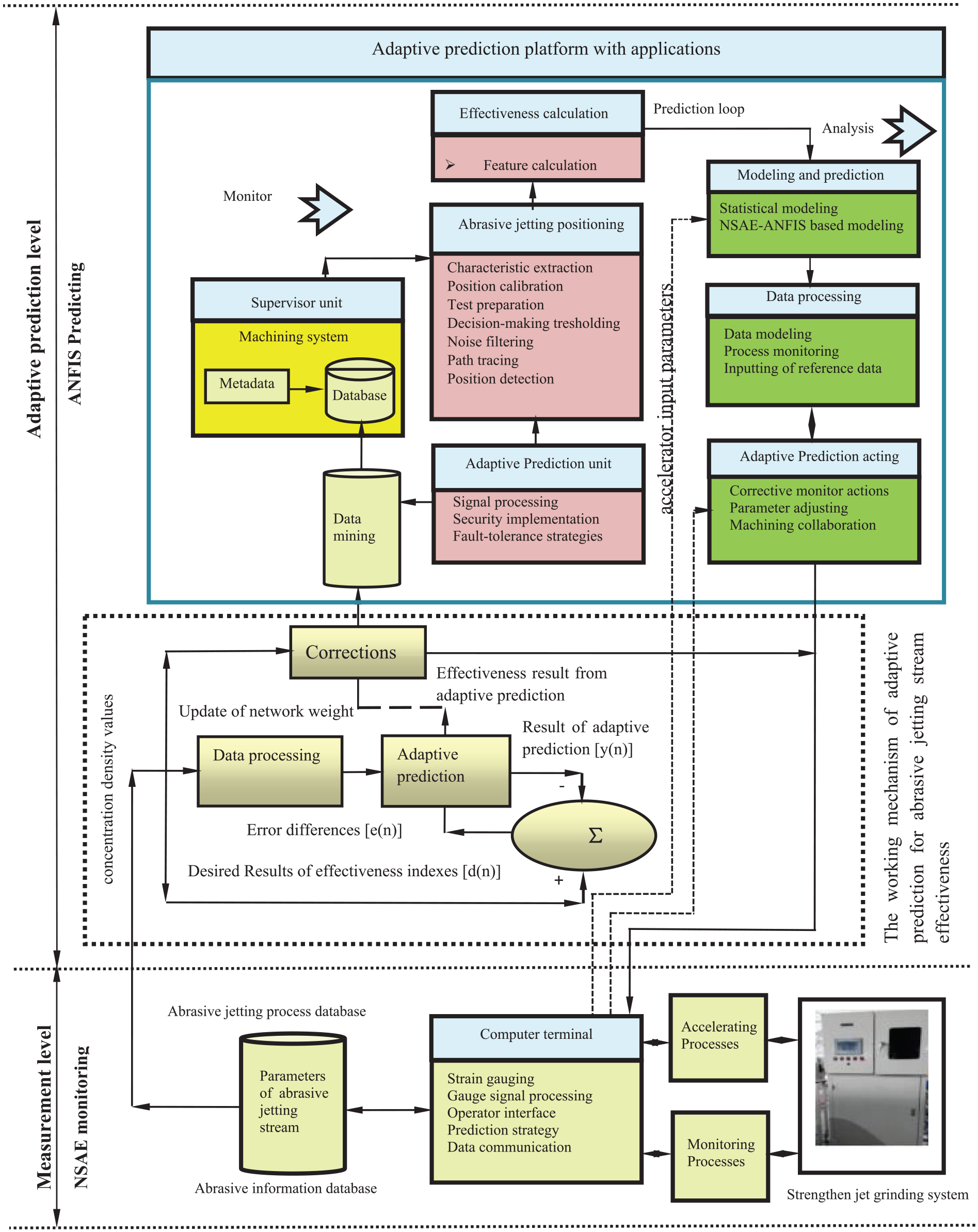
The working structure and data flow of NSAE-ANFIS.
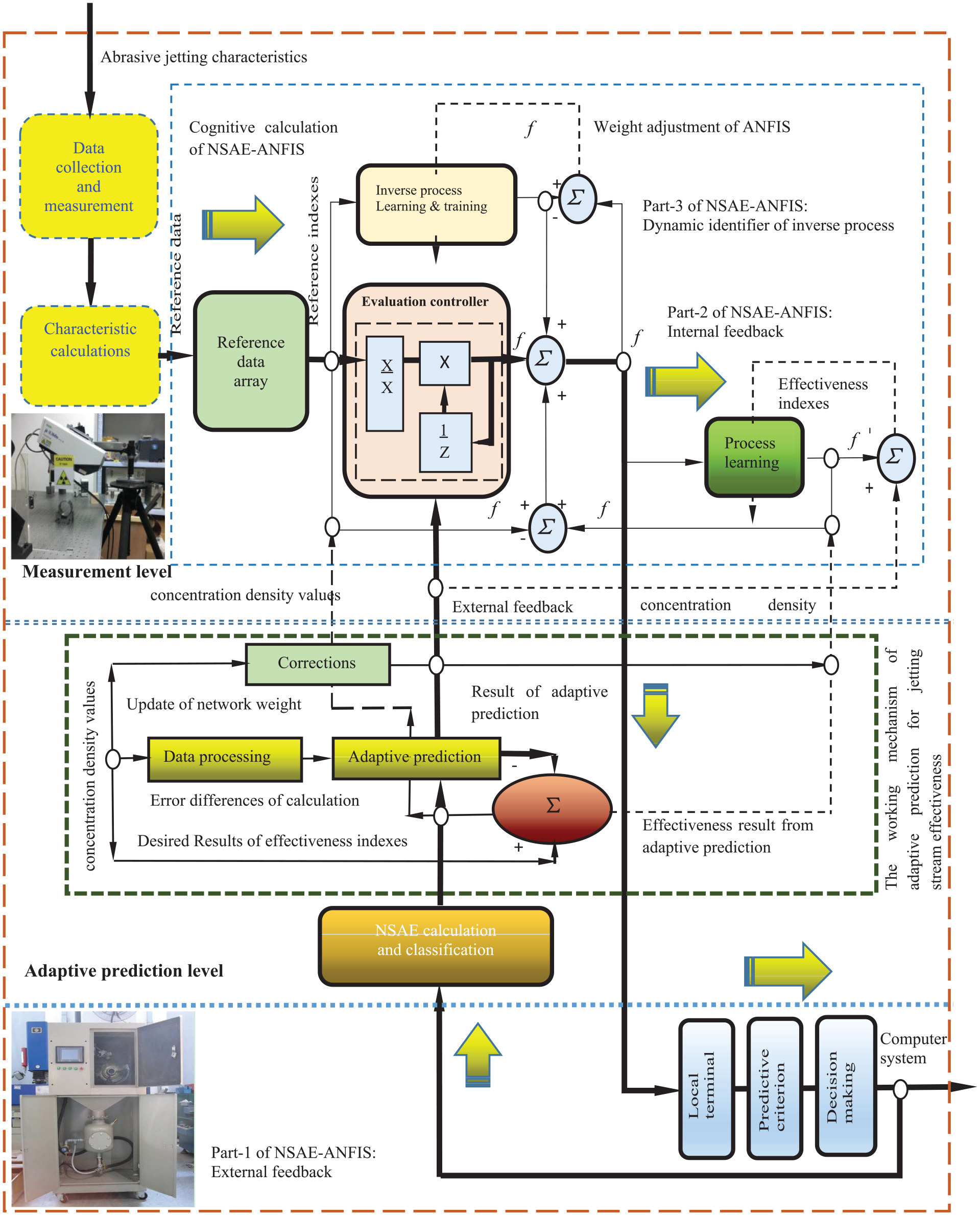
The general logical diagram of NSAE-ANFIS calculation and prediction.
Here NSAE collects the process input (the signals of abrasive impact stress measured from a prearranged array of strain gauges, which embedded on the interior boundary surface of accelerator tank in a regular form of planar lattice), then calculates the process output (the concentration density of abrasive impact stress at the targeted contact area), and learns the predetermined fuzzy computation algorithms. It operates as a cognitive process classifier to recognize the important mathematical features from various kinds of mass data. After all these listed tasks were completed, the ANFIS prediction level sends back the amend actions/decision signals with the data representation of effectiveness indexes to the NSAE monitoring level (measurement level).
Furthermore, in this research, an efficient global optimization of NSAE-ANFIS prediction based on Gaussian process model is applied to ensure the optimal calculation of effectiveness results. Since Gaussian process could be regarded as a surrogate model, it is suitable to build data response for the analytical tractability of VRMS, Ti, Tc, Te, and Rs. It provides a natural frame work to incorporate parametric data into the information database of abrasive jetting stream, including Pw, Mc, Mb, Ma, Fa, for the dynamic calculation steps in data communication, gauge signal processing, and the update of network weights.
To realize the global optima of fuzzy network prediction instructed by Gaussian process model, as the processed data set of NSAE-ANFIS be denoted by

Based on this, the mean prior function and the squared exponential covariance function could be defined as
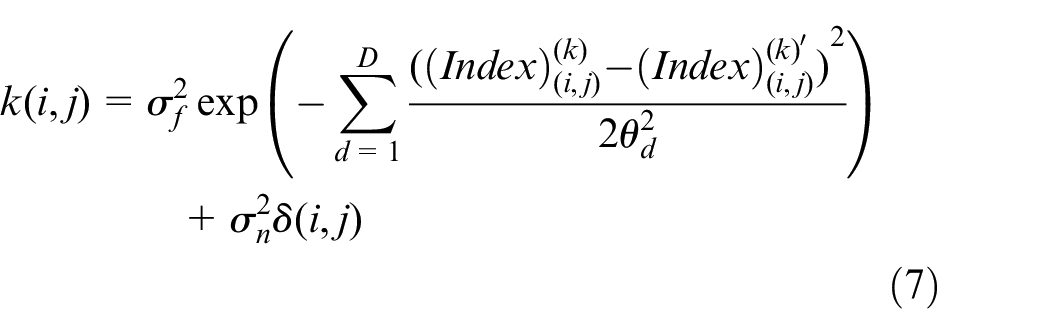
where

To estimate the objective function value at an optimal state, f is augmented to the following matrix
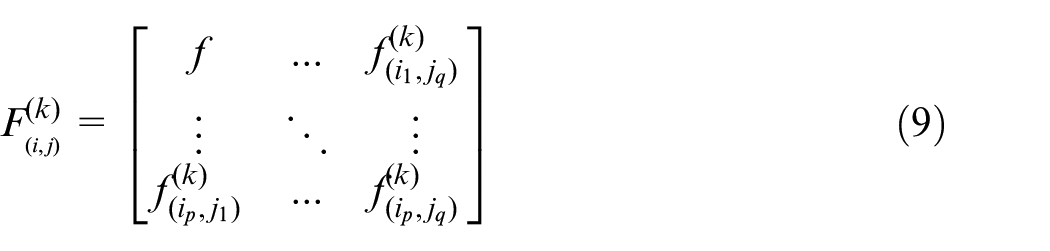
Then the optimal evaluation of effectiveness prediction



where μ and σ are the mean value and variance of
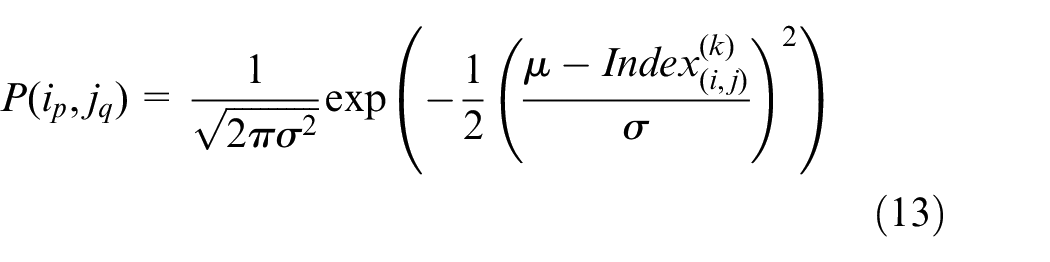


Based on these steps, the next sample

Simulation and experiment
Platform preparation and data measuring
For the purpose of platform preparation, the accelerator tank of strengthen jet grinding system is installed at the end of a vertical tube and 0.5 m above the water pump that is positioned on the ground. Figure 3 demonstrates the accelerator tank and its interior structure observed, which is capable of providing a maximum stream jetting pressure up to 300 MPa. In this experimental setup of accelerator tank, an inlet hole with diameter in 20 mm, locates 200 mm below the upper brim of accelerator tank and connected with a short PVC pipe using a set of metal connector. The PVC pipe carries abrasive jetting stream into an outlet passage tube of 800 mm in length. A thin layer of gauze of 3 mm thickness is placed on the bottom of accelerator tank to hold the abrasive material in place.
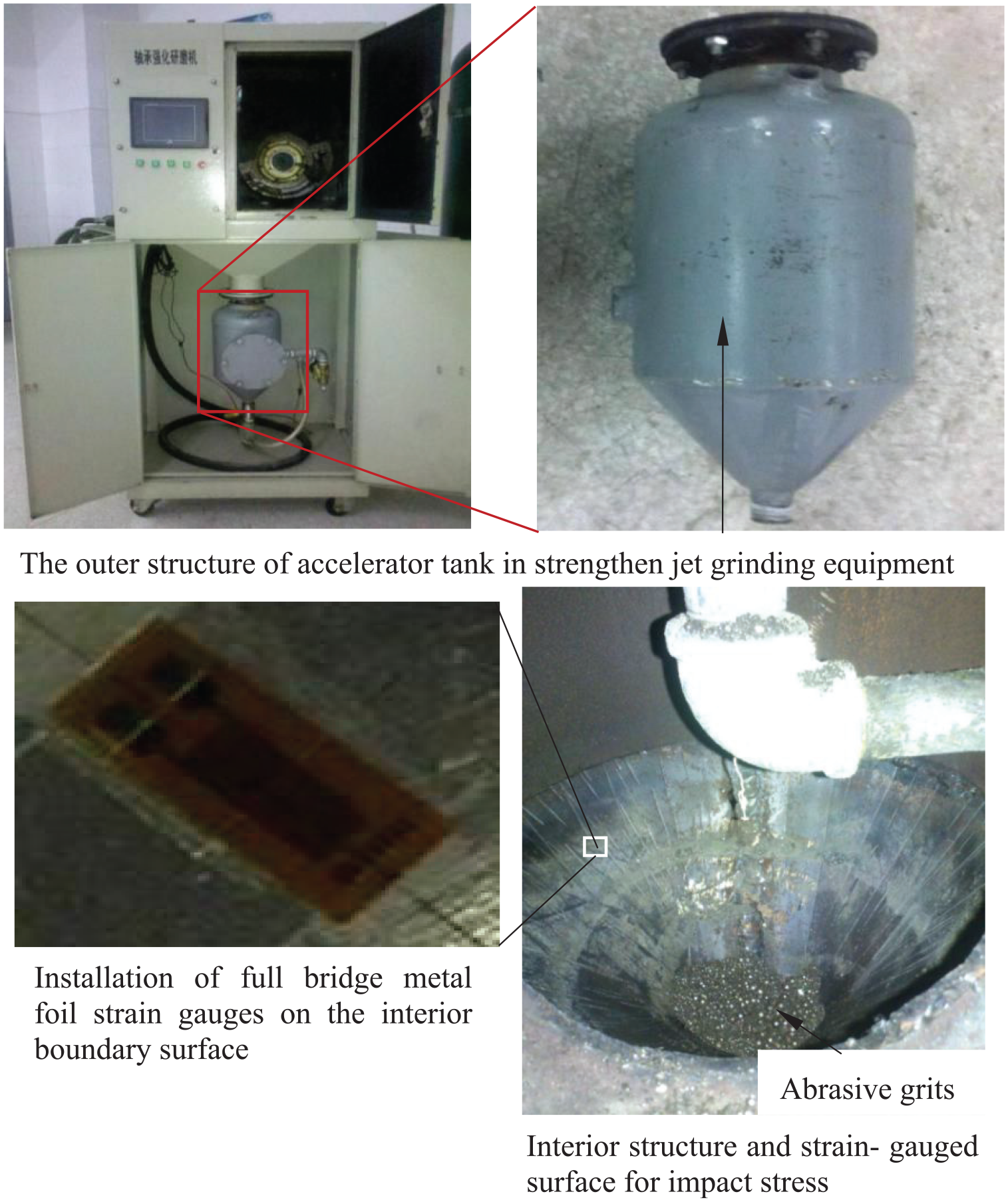
The accelerator tank and its interior structure focused.
Here the primarily roles of accelerator tank are first combining the abrasive materials (Grit diameter = 500–800 μm) and the enhance liquid together, with the latter composed by liquid water and the special-purposed chemical enhance materials, including the water-based nitrogen boric acid ester, to appropriate quantity of qualified abrasive slurry; second, pressuring air into the inner space of accelerator tank that makes the air jet travel to create partial vacuum; third, accelerating the large mass of abrasive slurry to high velocity and producing a highly coherent multi-phase jet for product grinding. So that the accelerator tank investigated here could be regarded as a high-efficient stirring container of grinding materials and accelerator of jet slurry prepared for abrasive jetting stream, which traverses through the tank outlet passage in high speed subsequently.
Since abrasive jetting flow makes the calibration of stream effectiveness important at the outlet passage of accelerator tank, a spontaneous and precise monitoring of abrasive impact stress should be carried out to meet some or all of the experimental rules, including a sufficient volume of slurry flow, appropriate jetting velocity, sufficient grit masses to achieve a complete coverage of jetting stream, and adequate abrasive density to obtain high kinetic energy which could be easily measured and clearly differentiated from other noise interference. As Figure 4 demonstrates the abrasive impacting condition on the interior boundary surface of accelerator tank during the process of abrasive accelerating experiment, the array distribution of strain gauges measuring abrasive impacting data on the interior boundary surface of accelerator tank could be learned from Figure 5. Here, a mixed portion of abrasive grits, including brown-fused alumina grits, cast steel grits, and GCr15 grits is prepared; as Figure 6 presents their microscopic morphology and surface topography, their specific physicochemical properties and chemical compositions could be searched from literature.21,22 The following representative parameters of strengthen jet grinding, or called as the input parameters of NSAE-ANFIS, which impose great influences on the working effectiveness of abrasive jetting stream are identified, including jetting pressure (Pw/MPa), mass of cast steel grits (Mc/g), mass of bearing steel grits (Mb/g), mass of brown-fused alumina grits (Ma/g), and mass rate of abrasives (Fa/kg/min). They could be acknowledged from literature32,33 when the aforementioned flow models are applied accordingly; based on these preparations, the characteristic profile and morphology variation of abrasive jetting stream could be analyzed closely.
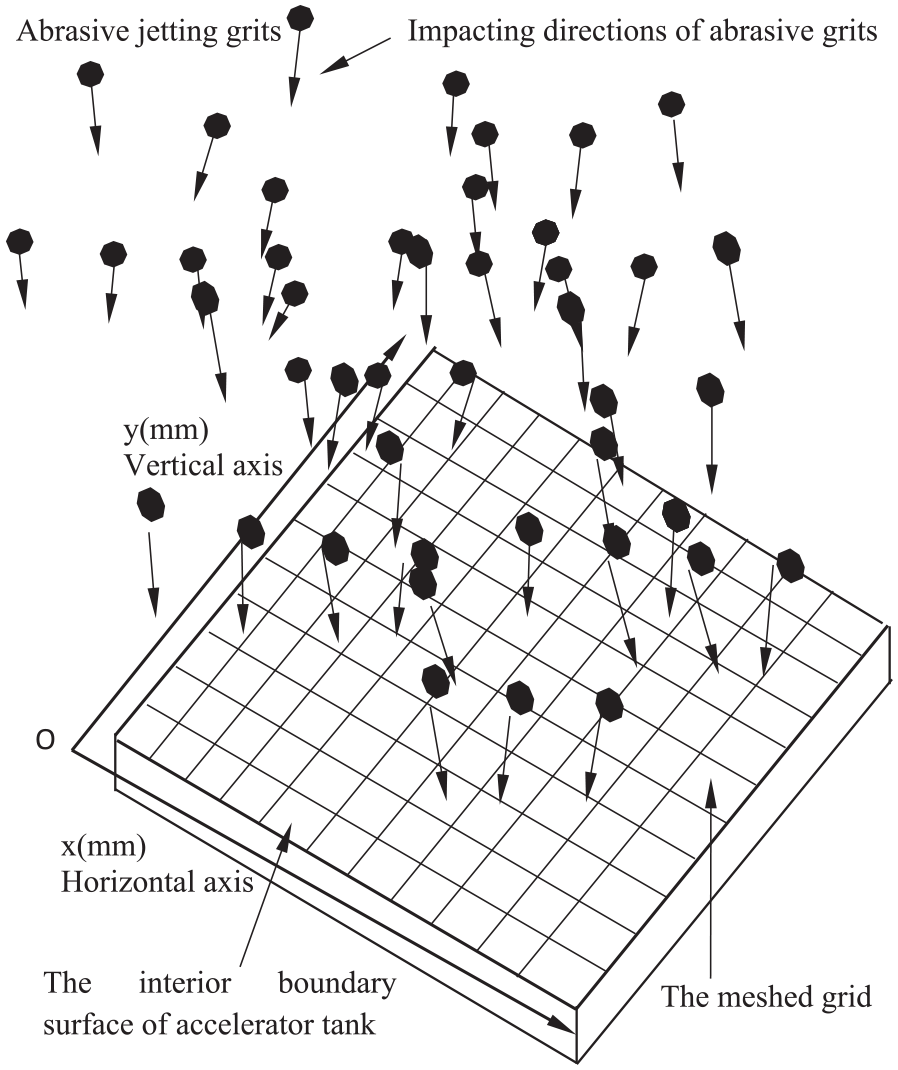
The abrasive impacting condition on the interior boundary surface of accelerator tank during the process of abrasive accelerating performance.
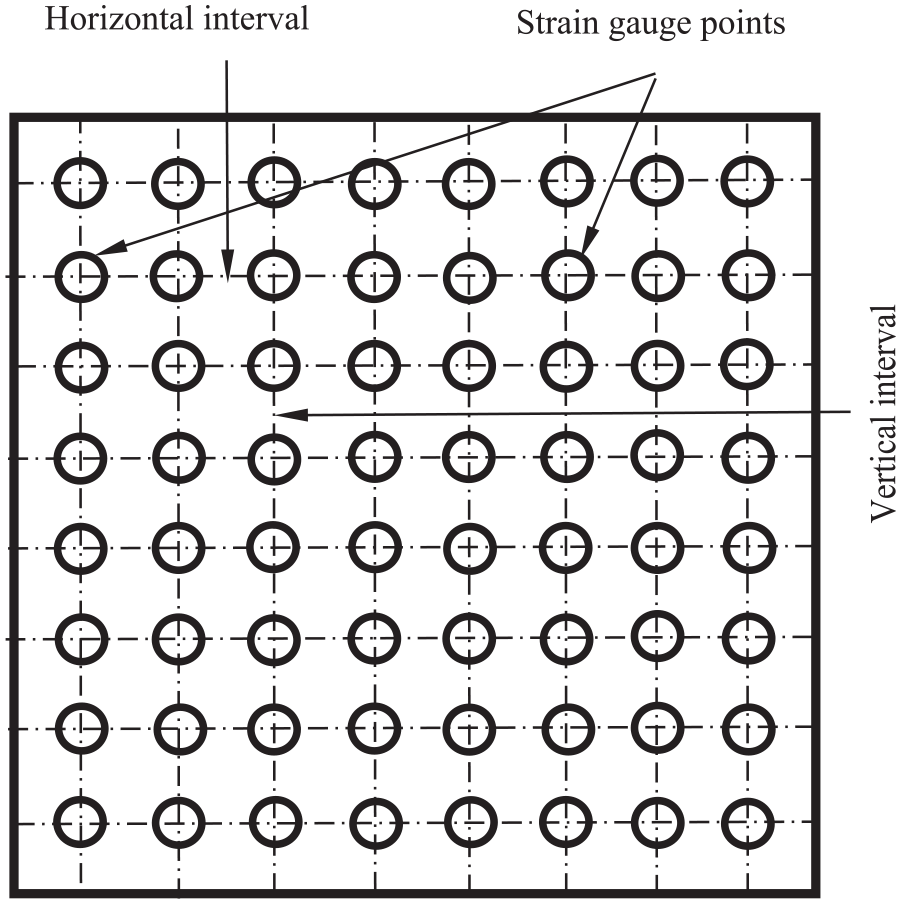
The array distribution of strain gauges measuring abrasive impacting stress data on the interior boundary surface of accelerator tank.
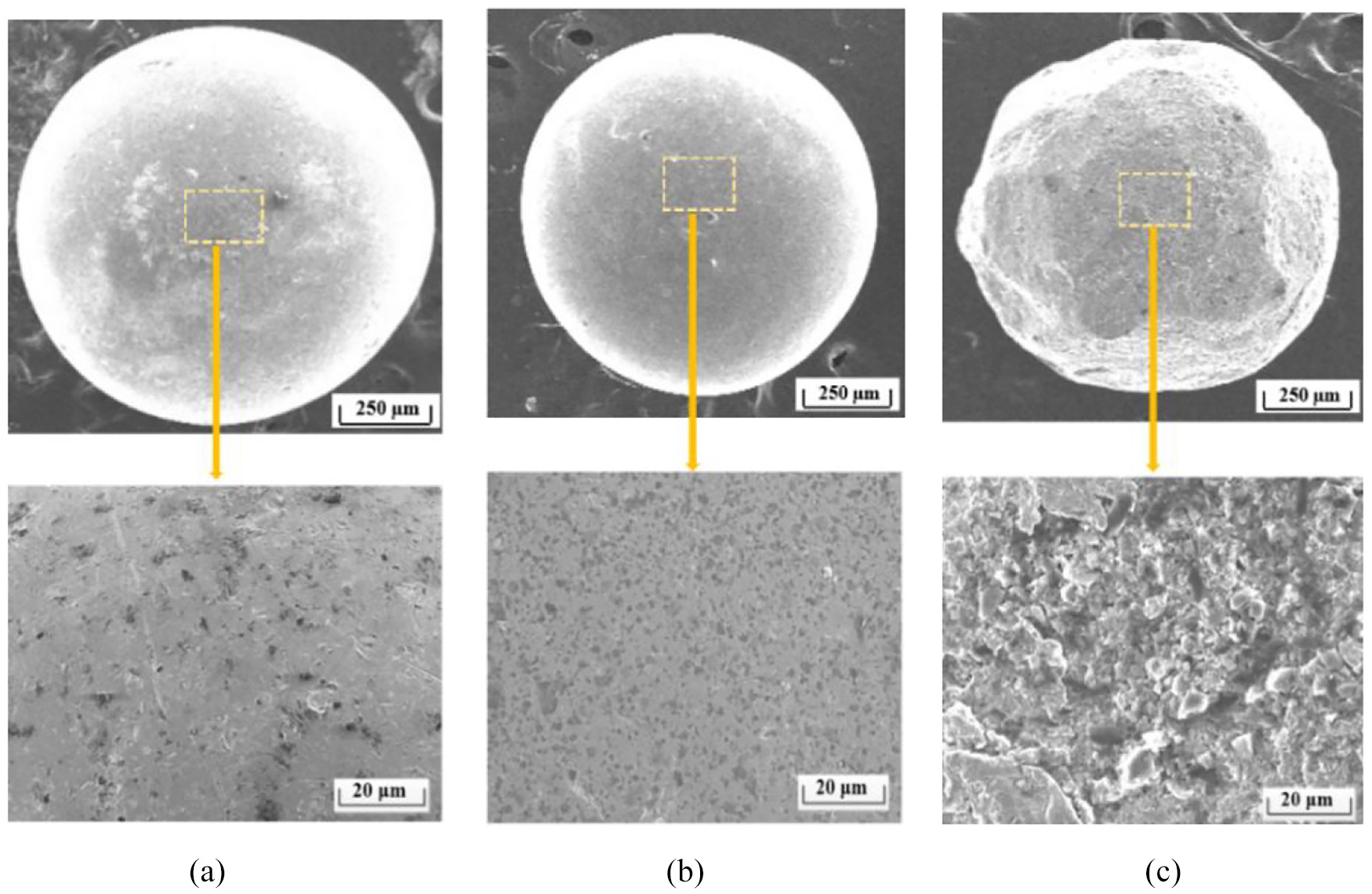
The microscopic images and surface topography of abrasive grit being used. (a) Brown-fused alumina grit. (b) Cast steel grit. (c) GCr15 steel grit.
Although strengthen jet grinding involves a large number of influential variables, only those major and controllable ones are considered. This research pays high attention on the mutual influence mechanism between accelerator input parameters (Pw, Mc, Mb, Ma, and Fa) and stream effectiveness indexes (VRMS, Ti, Tc, Te, and Rs), so that their precise measurements should be highlighted to realize accurate data preparation for the fuzzy prediction of NSAE-ANFIS. To ensure the high repeatability of testing conditions, here Pw could be determined by the BF1000-3EB-X full bridge metal foil strain gauges installed on the interior boundary surface of accelerator tank, as Figure 6 illustrates the details; Mc, Mb, and Ma would be delivered by DN6-DN300 metering system and calibrated before each test, and Fa is monitored by Coriolis mass flow meter and transmitted on line through signal acquisition from the computerized quadratic encoder. On the other side, VRMS should be obtained by the application of EU-108 ultrasonic flow meter; Ti, Tc, and Te are determined by the calculation of relevant parametric data based upon the local measurements of abrasive impact stress mentioned above, with their detailed computation equations could be referenced from literature;21,22 and Rs is observed using a set of pressure-probe anemometer (IMFL anemoclinometer) also. Furthermore, it is noteworthy that computer software with graphic interface should be used here for the real-time control of data collection, online fusion, and mathematical analysis. All the participant measurement units are connected to a three-channel charge amplifier through a set of connecting cable, which in turn connected to PC by a 37-pin cable with A/D board. According to these arrangements a computer-controlled data acquisition system of abrasive jetting stream effectiveness would be used to collect and record the measured indexes from practical tests.
When strengthen jet grinding begins, a large volume of in-process measurement data in accelerator tank is prepared and utilized to analyze their complex influences on the abrasive jetting stream effectiveness obtained. As objective of this investigation is to accurately predict the effectiveness indexes, an important issue that appropriate jetting parameters selected to ensure an effective monitoring of jetting stream effectiveness should be considered deliberately in advance. By studying the initial state of abrasive slurry and the influence principle of jetting stream mechanism spanned from accelerator inlet to outlet passage, the parameter adjustment and robustness analysis are introduced into the dynamic monitoring of NSAE-ANFIS computation accordingly. The fuzzy system corrects the targeted jetting parameters to offer an effective experimental condition for accurate effectiveness prediction, based on the error differences between the desired results of effectiveness indexes and the measured ones on the adaptive prediction level of NSAE-ANFIS, by which the adjustment coefficients of network weight are defined and cognitive calculations are triggered subsequently, as shown in Figure 1. Furthermore, one kind of decision-making threshold selection in prediction acting unit based upon the least square error between jetting parameters and effectiveness indexes is employed, so the best value of jetting parametric data could be calculated to minimize the total prediction error, with the adjustment details are identified by Figure 2. Based on these steps of network optimization, the effective and ineffective jetting parameters are differentiated, with the latter ones redirected to the next cycle of parametric adjustment until effective abrasive jetting stream is ensured for the process stabilization and calculation convergence of effectiveness prediction.
To maintain an accurate process demonstration, there are 50 sets of accelerating tests prepared for abrasive jetting stream to circumvent all possible errors, and 10 featured positions on the interior boundary surface are targeted for the measurement of impact stress; therefore, the data set acquired from 500 measurement trials can be input into NSAE-ANFIS system for data processing, covering 90%–94% of overall tested conditions; therefore, the mean values of all these parametric data should be averaged as
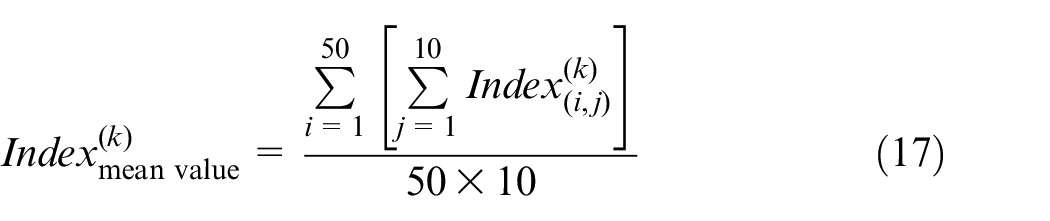
here
CFD modeling and process simulation
As the computation platform equipped by Intel CPU 2.83 GHz, 16GB of RAM, the CFD modeling approach is used to improve the predictive precision of abrasive jetting stream effectiveness, and those mentioned typical flow models of k-ε, k-ε-Rt, Spalart–Allmaras, Reynolds stress, and LES are used for CFD simulation to check their constructive influences on the effectiveness prediction in sequence. The inlet condition is set as “invelocity-inlet” with uniform fluid velocity being set, the solver type of liquid phase is pressure-based, and the gravitational velocity is 9.81 kg/m2/s. The boundary surface of tank interior structure is made of carbon steel characterized by the material density is 7800 kg/m3 and Ra is 10 μm; In contrast, the outlet condition is set as “outflow,” the initial spatial distribution density of abrasive grits is 1000 kg/m3; SIMPLC algorithm, or called as Semi-Implicit Method for Pressure-Linked Equations, is applied to obtain higher computational precision and Discrete Phase Model (DPM) model is used for the steady-state tracking of abrasive grits. Non-slip conditions are applied here for the tank surface, and the moving mesh approaches are employed to analyze the significantly influence of abrasive jetting stream and stationary component interaction, respectively. In the presented numerical simulation, the time step is determined as 0.5 s to calibrate one complete behavior process of stream jetting spanned from slurry generating to nozzle jetting. Furthermore, total jetting pressure is specified at the inlet tube boundary, and static pressure is given at the outlet passage boundary accordingly.
Figure 7 gives the modeled structure of accelerator tank and the cross-sectional distributive variance of stream effectiveness. Here the density of air is 300 kg/m3, the inlet velocity of multi-phase turbulence (including gas, fluid, and solid phase) is 15–20 m/s, and the outlet condition be set as opening. Typical flow models are employed sequentially to calculate and analyze the specific effectiveness indexes of abrasive jetting stream, such as VRMS, Ti, Tc, Te, and Rs.
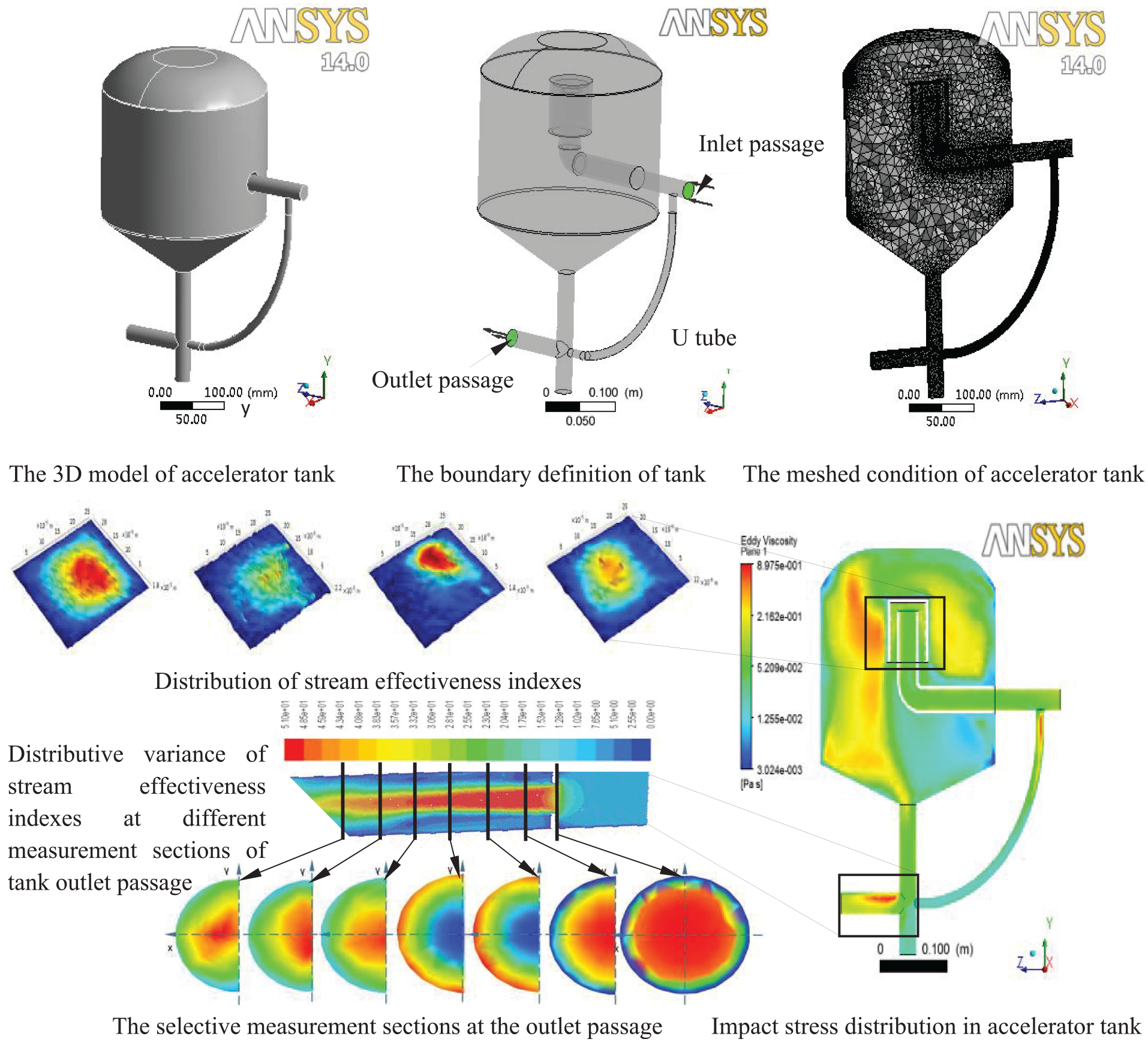
The general structure of accelerator tank and the cross-sectional distributive variance of stream effectiveness.
The entire meshed grid for the physical model of abrasive jetting stream could be generated by means of ANSYS Fluent (version 14.0). The physical model of the accelerator tank comprised by several components with very different geometry shape can be demonstrated as shown in Figure 7. The hybrid unstructured tetrahedral grids are generated for the mixing and accelerating passage, both face mesh and volume mesh, while the structured tetrahedral grids are established for the inlet/outlet passage and turbulence domains, respectively.31,34 To capture the unsteady multi-phase flow physics caused from the interaction between enhance liquid and solid grits, the mesh grids at the near wall regions of interior boundary should be refined to smaller sizes accordingly.
Considering abrasive jetting stream profiles determined by grid densities, the mathematical simulation at the higher grid density results to a tolerance difference within ± 2.0% at the accelerator tank inlet and within ± 3.0% at other interior locations of tank space, according to the initial grid density arranged. After 50 times of sensitivity comparison, a mixed grid consisting of tetrahedral and hexahedral grids by patch conforming is adopted to keep a stable performance of numerical jetting simulation.
Instructed by this grid arrangement, 432,862 mesh nodes and 2,264,481 units are sufficient for effectiveness prediction. Figure 8 proposes an exampled demonstration of spatial distribution and variation tendency of stream effectiveness using Spalart–Allmaras model (Error tolerance = ± 5%, the same as follows): variation of VRMS conforms to a roughly equalized distribution at about 250–300 m/s along with a swirling turbulent stream in accelerator tank; value distribution of Ti at about 300–350 shows an unbalanced situation with its most-concentrated area falls into the top and bottom annular section, meanwhile its comparatively sparse distribution falls in the middle; Tc presents a diffuse condition filled in the inner cylindrical space of accelerator tank, but an obviously concentration area up to 320–360 kJ be spotted at the very outlet shutter of tube passage; a similar situation could be identified from the value distribution of Rs, while its high value area of 460–520 kPa is transferred to the cross-sections of outlet passage; in contrast, variation of Te shows a rather sparse distribution on the inner boundary surface of accelerator tank, and an unique stable and equilateral condition valued by 650–700 J/K could be found, too. More effectiveness demonstrations using k-ε, k-ε-Rt, Reynolds stress, and LES models can be investigated with the employment of this method; all these results contribute accurate illustrations to describe the spatial distribution and dynamic variation of effectiveness indexes collectively.
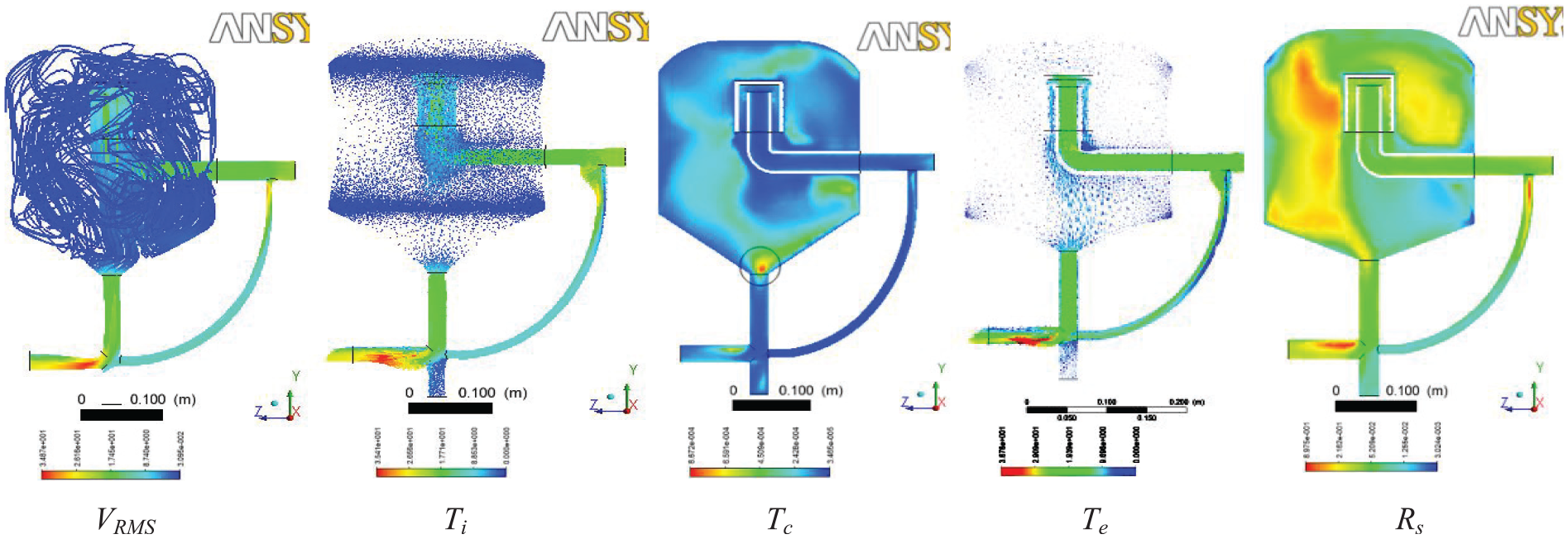
The spatial distribution and variation tendency of stream effectiveness indexes in accelerator tank.
Based on the explanation of spatial distribution and variation tendency for stream effectiveness, Figure 9 presents the obtained indexes of jetting stream as respected. It demonstrates that the planar distributive characteristics of VRMS, Ti, Tc, Te, and Rs keep roughly agreements in different CFD simulations when k-ε, k-ε-Rt, Spalart–Allmaras, Reynolds stress, and LES models are applied, which provide overall pictures and data evaluations on the predictive computation of effectiveness indexes. Take Te as example, it is changed from 432.5 J/K (±3%) to 758.1 J/K (±3%) with an increasing step of 10%, when the default value set as 567.3 J/K. Using a same error tolerance as above, distribution of VRMS shows an obviously concentration trend on the boundary surface, by its peak value up to 530–550 m/s; whereas Ti and Tc enjoy the uniform distribution all over boundary surface with their utmost values no more than 630 and 560 kJ, respectively; Te presents a data-clustering illustration from 750 to 770 J/K at specific regions, simultaneously Rs is featured by a significant aggregation of high values ranged from 590 to 620 kPa. Moreover, Figure 9 highlights the complex influences of flow models on the numerical simulations of stream effectiveness.
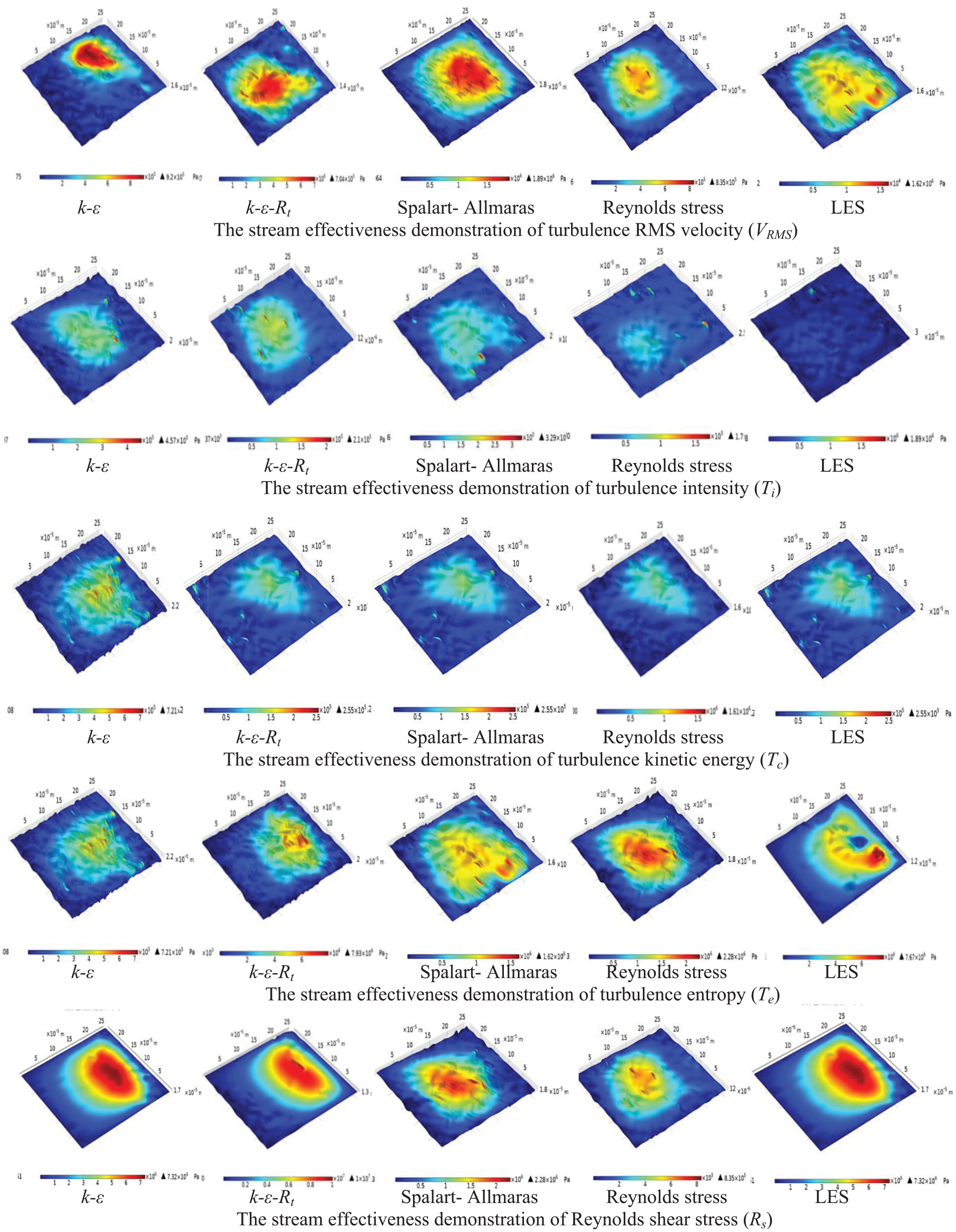
The obtained distribution of effectiveness indexes (VRMS, Ti, Tc, Te, and Rs) of abrasive jetting stream on the interior boundary surface of accelerator tank.
According to this tendency analysis, Figure 10 demonstrates the distributive characteristics of stream effectiveness at some representative cross-sections of tank outlet passage identified from section I to VII, so that their physical variation could be traced clearly: VRMS keeps stable throughout the whole stream passage, while its high value area of 470–520 m/s circles around the passage tube; Ti and Rs present a diffuse impression across different sections, with their highest value areas at about 570–640 and 530–570 kPa, respectively, could be spotted by equal probability; it is interesting to find out that Tc and Te share a counter-concentric tendency of high value area from section I to IV, as quantified by 460–510 kJ and 700–760 J/K accordingly, and then they convert to an equilateral and uniform state from section V to VII. All these physical characteristics demonstrate the dynamic variation and evolutive principle of jetting stream effectiveness throughout the outlet passage in a clear way and then provide important theoretical references and data preparations for the fuzzy prediction of effectiveness indexes effectively.
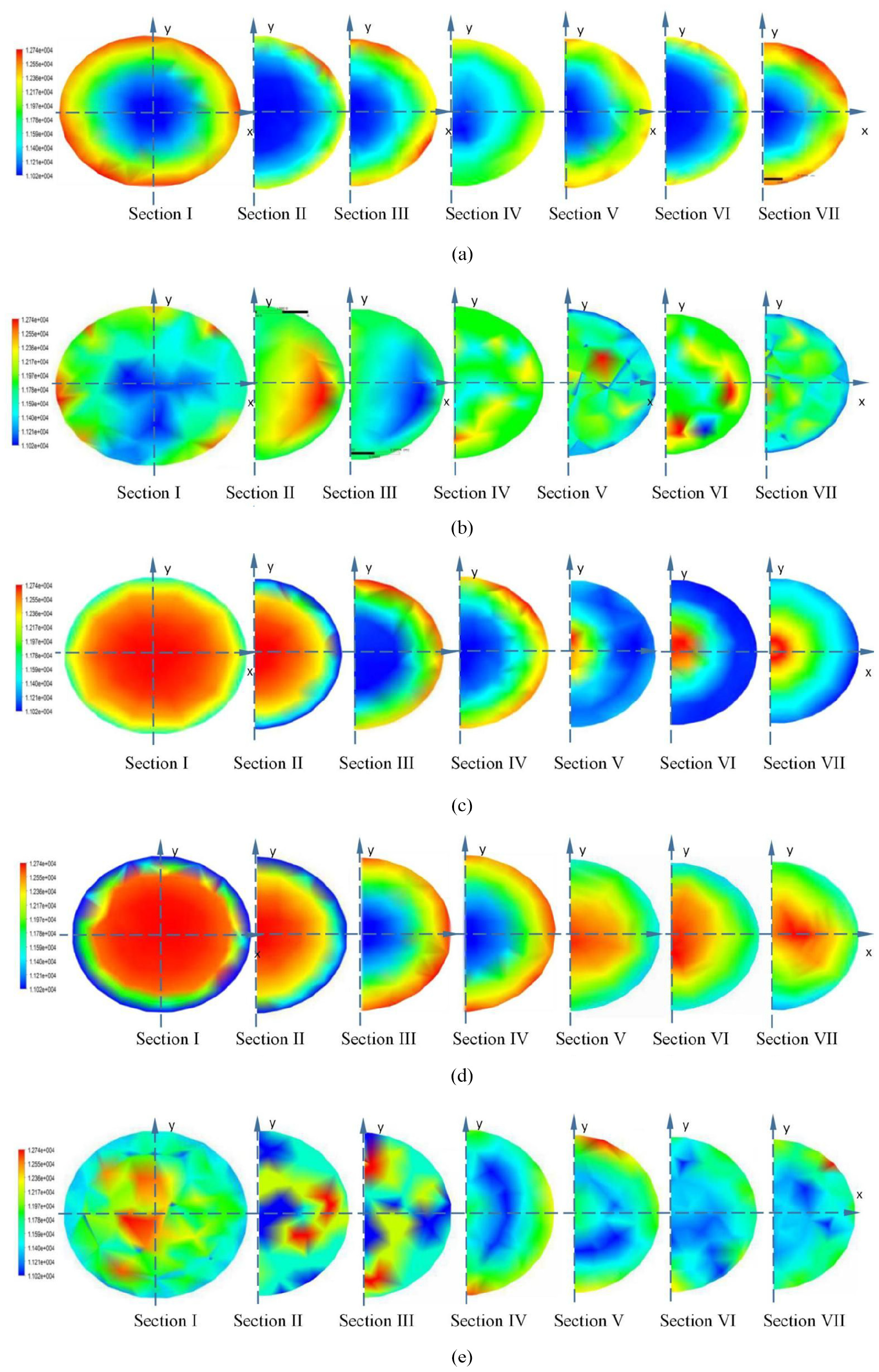
The distributive characteristics of abrasive jetting stream effectiveness at representative cross-sections of tank outlet passage identified from section I to VII. (a) VRMS. (b) Ti. (c) Tc. (d) Te. (e) Rs.
Adaptive prediction of abrasive jetting stream effectiveness
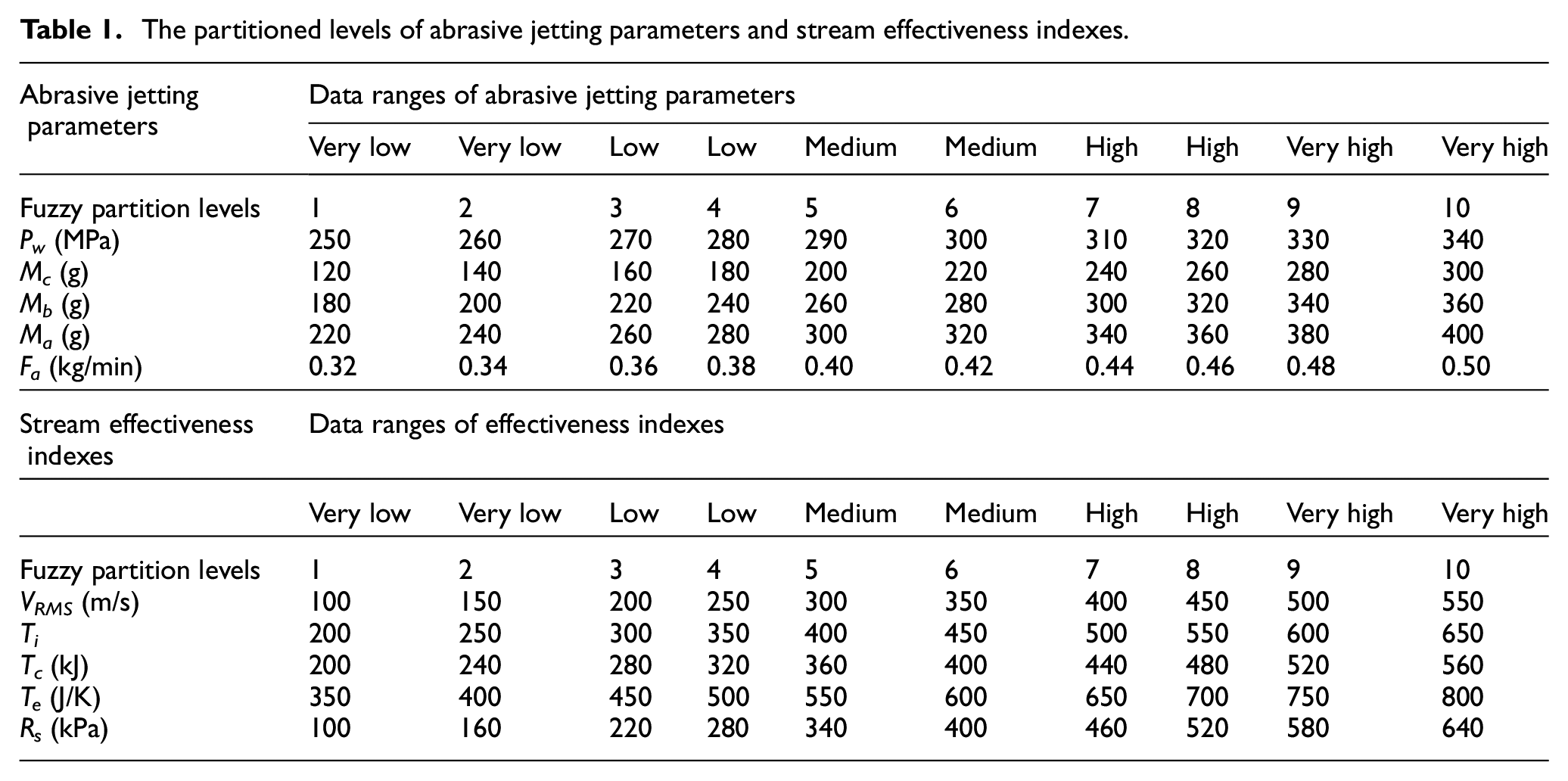
Based on the standard initialization, the iteration number of NSAE-ANFIS to be set as 12,000, the reporting interval as 0.1 s, and the update interval of simulation profile as 0.5 s. The combination of input (jetting parameters) and output (effectiveness indexes) illustrates a set of fuzzy relations; here Table 1 demonstrates the partitioned levels of them used for the fuzzy computation of NSAE-ANFIS prediction. As the prearranged input parameters and effectiveness indexes distribute uniformly in specific data ranges, it is imperative to classify them into appropriate data groups ranged from “Very Low,”“Low,”“Medium,”“High,” to “Very High,” for fuzzy prediction. Since the parametric data in Table 1 conform to the stochastic normal distribution of experimental variables, their equalized intervals are applied to cover 97% of possible values, with the lowest value denoted as “1” and highest referred as “10.” Concerning the complex correlations between the data group of “Low,”“Medium,” or “High,” and the quantitative ranges labeled from 1 to 10 they belong to, “Very Low” denotes “1–2,”“Low” as “3–4,”“Medium” as “5–6,”“High” as “7–8,” and “Very High” as “9–10.” For instance, Mb ranges from 180 to 360 g, its “Very Low” group could be spanned from 180 to 220 g, covering Level “1” by (180–200) g and Level “2” by (200–220) g; VRMS ranges from 100 to 550 m/s, in which its “High” group spanned from 400 to 500 m/s, including Level “7” by (400–450) m/s and Level “8” by (450–500) m/s accordingly. Based on this equalized interval, other parametric grouping are realized sequentially, so that their quantitative value ranges could be defined to ensure the high repeatability of testing conditions, providing a set of accurate data ranges and facilitating the quantified computation in NSAE-ANFIS prediction afterward. Besides, Table 2 gives a clear description of representative logic rules for adaptive prediction. To predict stream effectiveness, 25% of experimental cases are sampled out for training, by which 50 turns are focused for NSAE-ANFIS training and other cases for testing, for the purpose of reducing unexpected signal disturbances caused from test environment and data measurement.
The partitioned levels of abrasive jetting parameters and stream effectiveness indexes.
Logic rules for NSAE-ANFIS prediction.
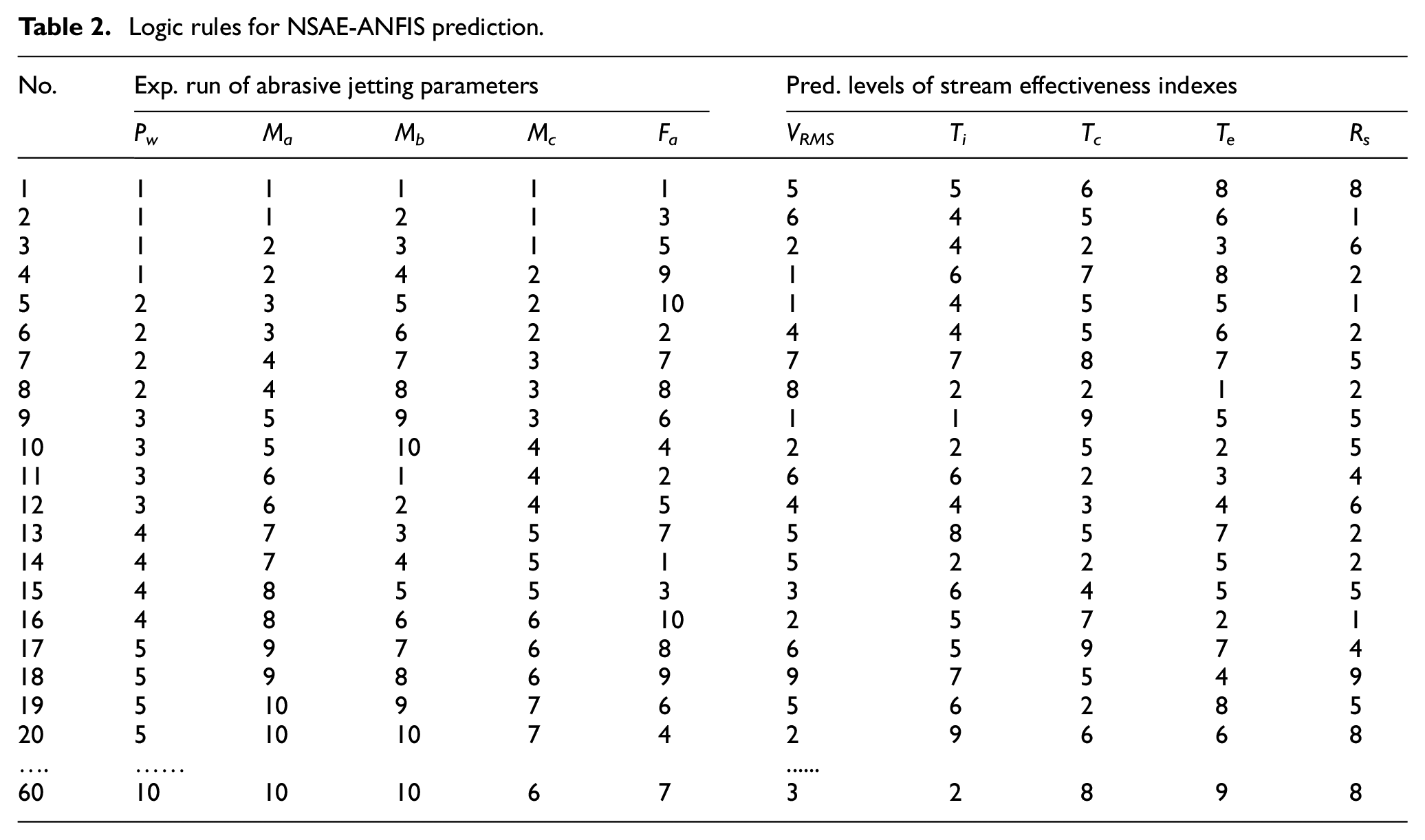
Figure 11 shows the featured positions for the effectiveness monitoring and characteristic identification of abrasive jetting stream. During its accelerating process, as Figure 12 shows, the mixed water-based abrasive jet scraping through the interior boundary surface of accelerator tank made of carbon steel, a continuous violent collision happens between abrasive grits and boundary surface, results to the lattice relaxation and structure cracking of metal atoms. Moreover, since abrasive grits being used are made of brown-fused alumina, cast steel, and GCr15, and the mixed enhance liquid obtained by combining water and chemical enhance materials, including water-based nitrogen boric acid ester, therefore plasma region emerges by a high-energy electron excitation, which induces micro-scale tribo-chemical reaction between the mixed enhance liquid and carbon steel material, and then leads to the generation and coating of nitrogen–metal complex on the interior boundary surface of accelerator tank, so that a thin hardened layer (about 30–120 μm in depth), mainly composed of some kinds of hard-to-machining alloy, such as Si3N4, GCr15SiMn, and Cu-2Be-0.3Ni, will be left. From these conditional tests, the variation in microscopic topography and hardened layer could be spotted and identified easily. It should be pointed out that the generation of hardened layer may be great helpful to reduce mechanical friction and resist chemical corrosion on the interior boundary surface in return. According to this phenomenon, variation of microscopic topography and hardened layer at position 1#–8# affected by the integrated influences of VRMS, Ti, Tc, Te, and Rs, together with the depth increment of hardness layer and quality improvement of boundary surface, could be acknowledged and calibrated clearly.
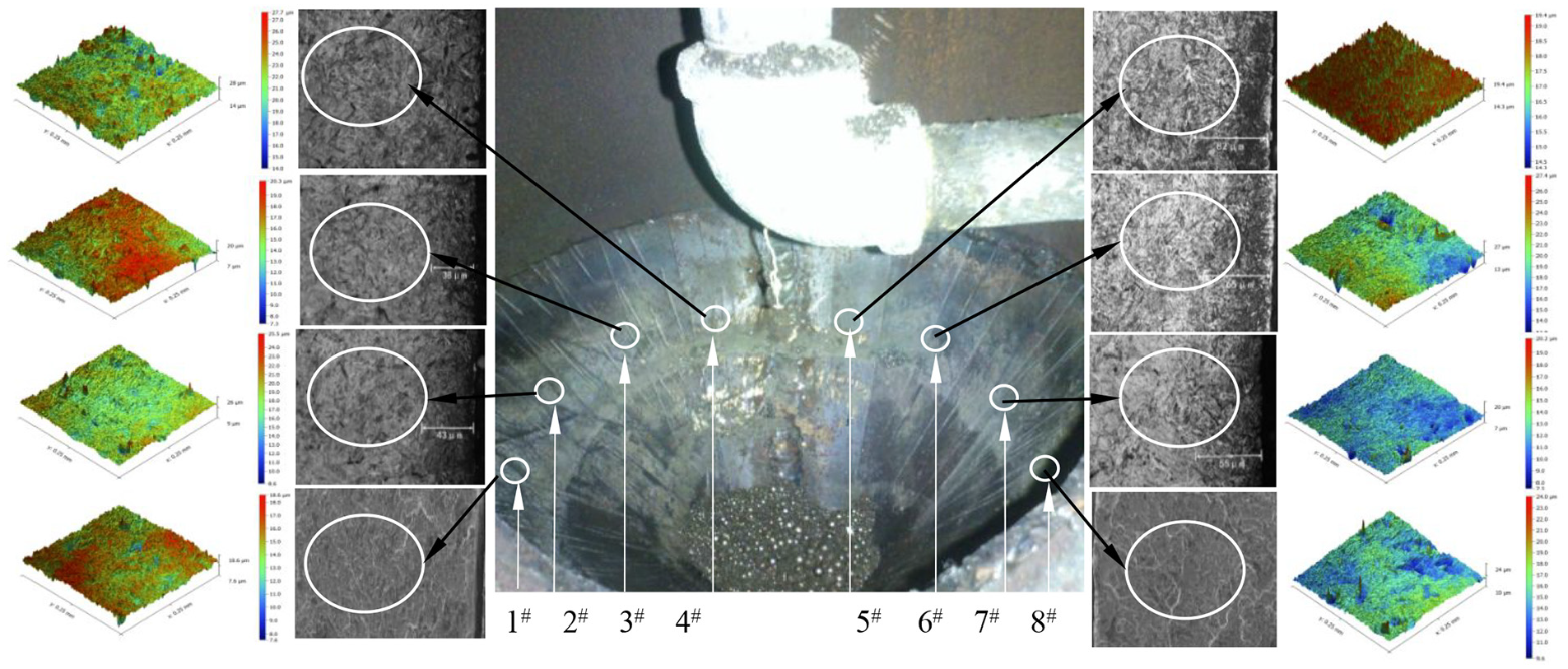
The micro-scale surface morphology affected by abrasive jetting stream at different positions of interior boundary surface.
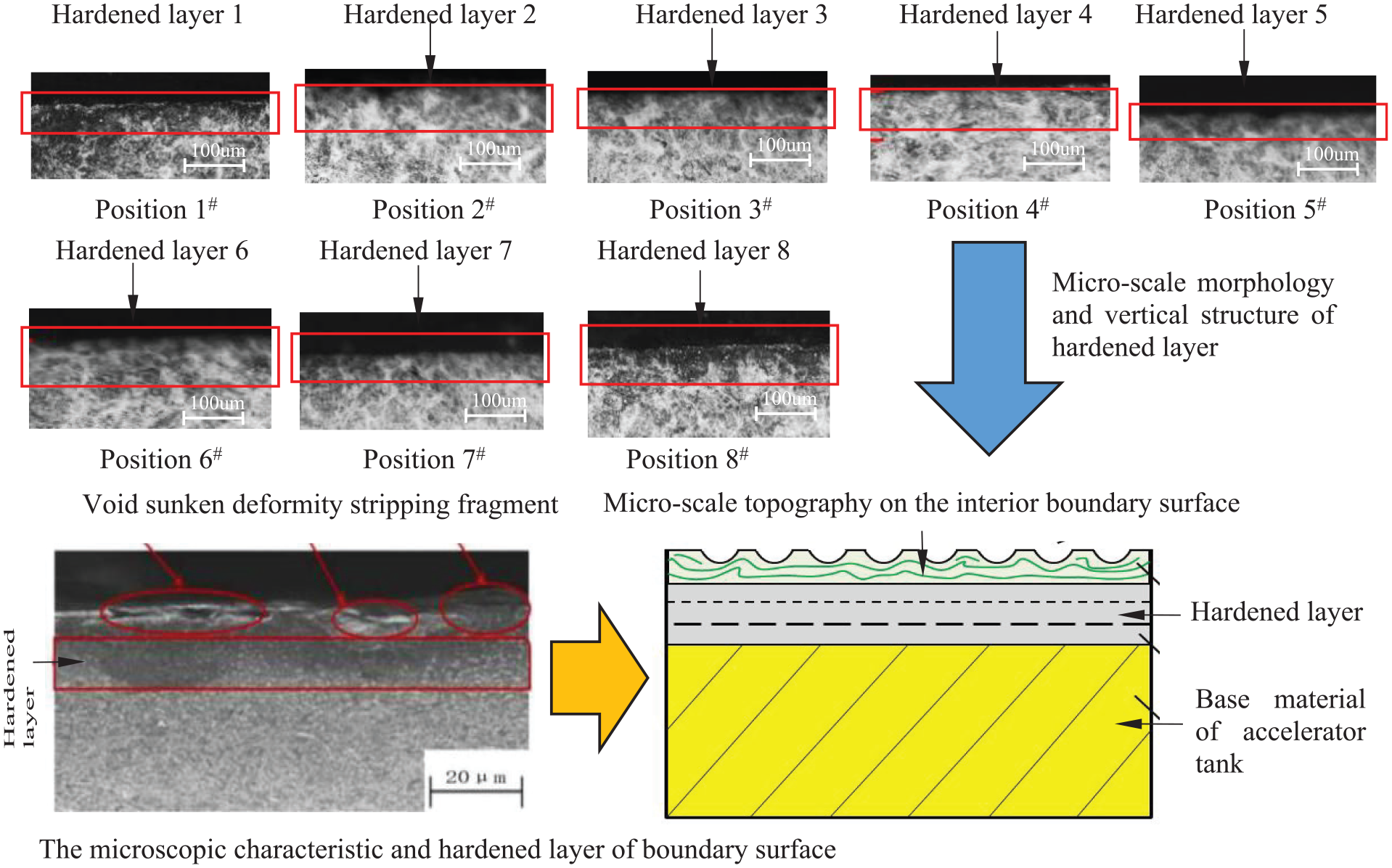
The vertical morphology of tank boundary surface affected by abrasive jetting stream.
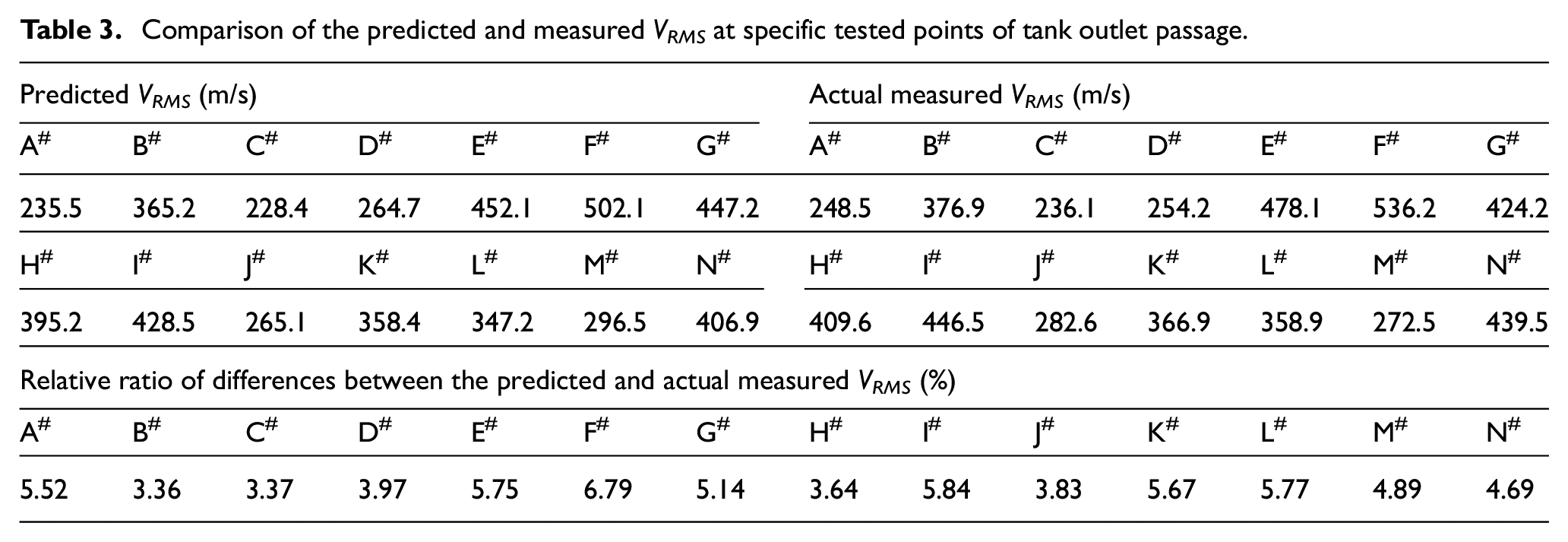
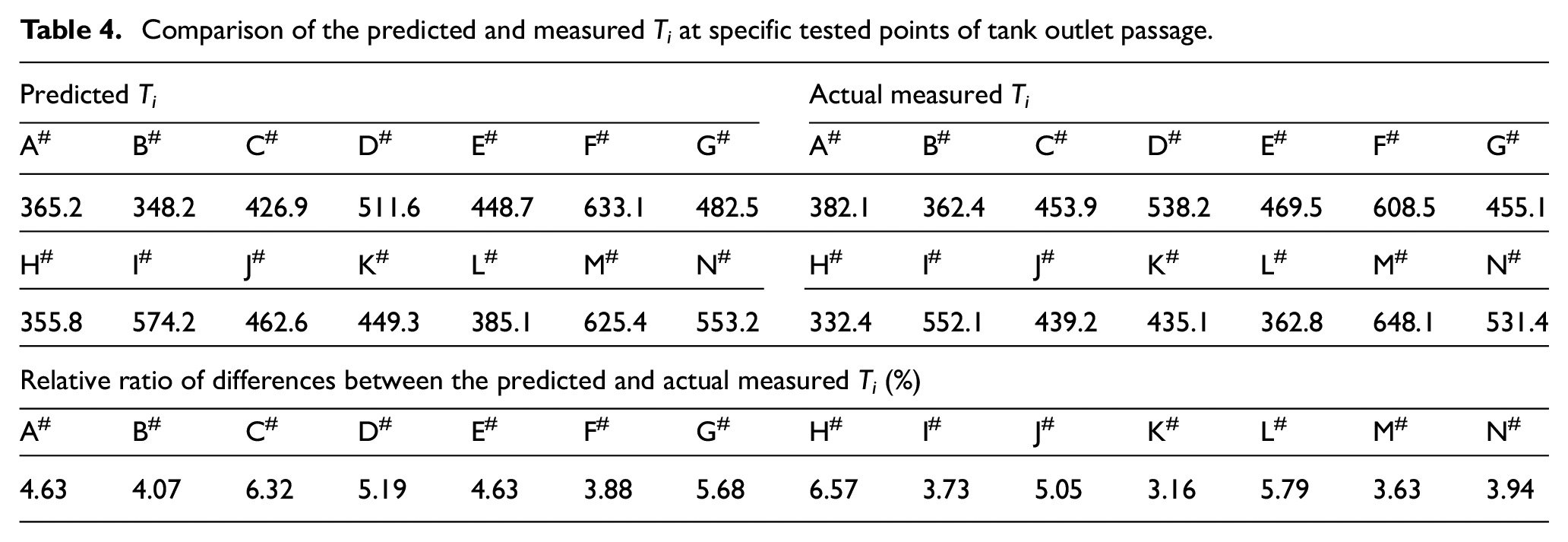
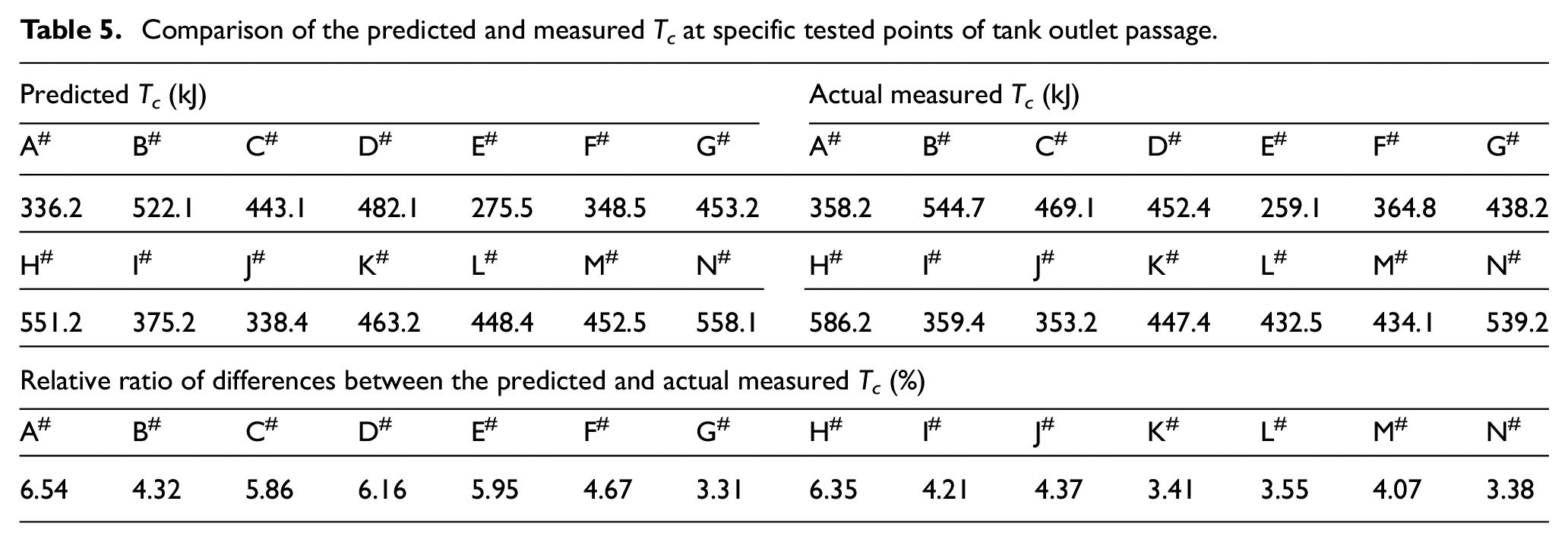
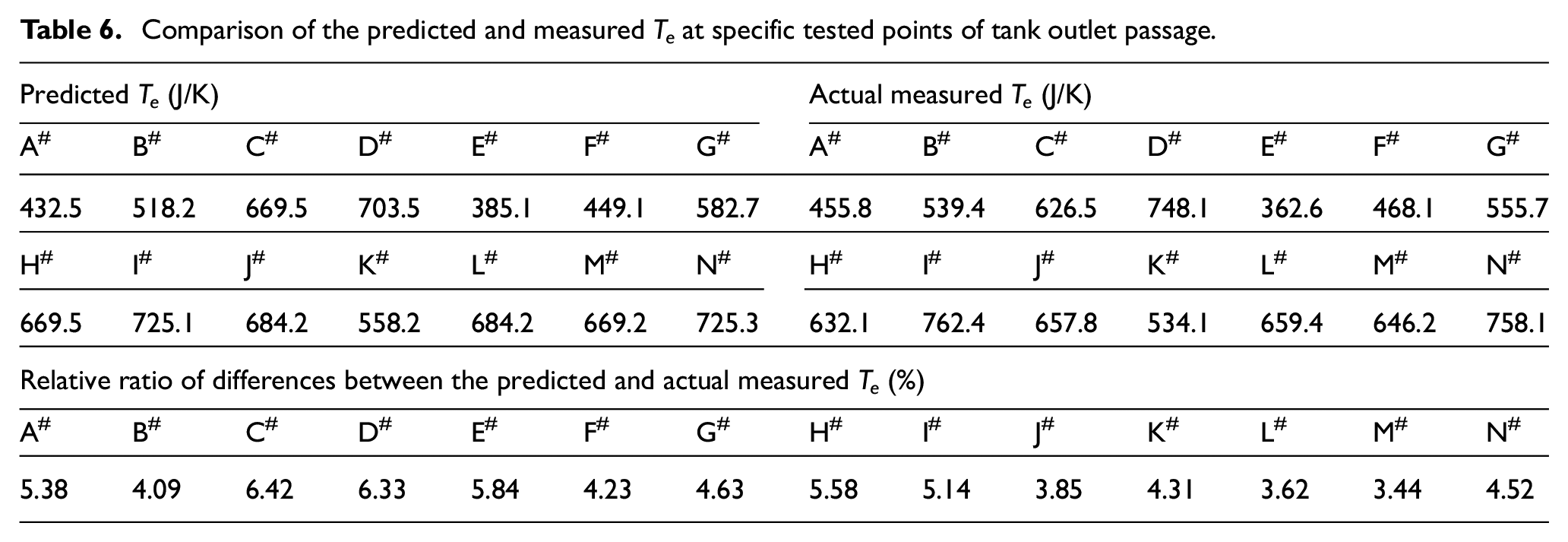
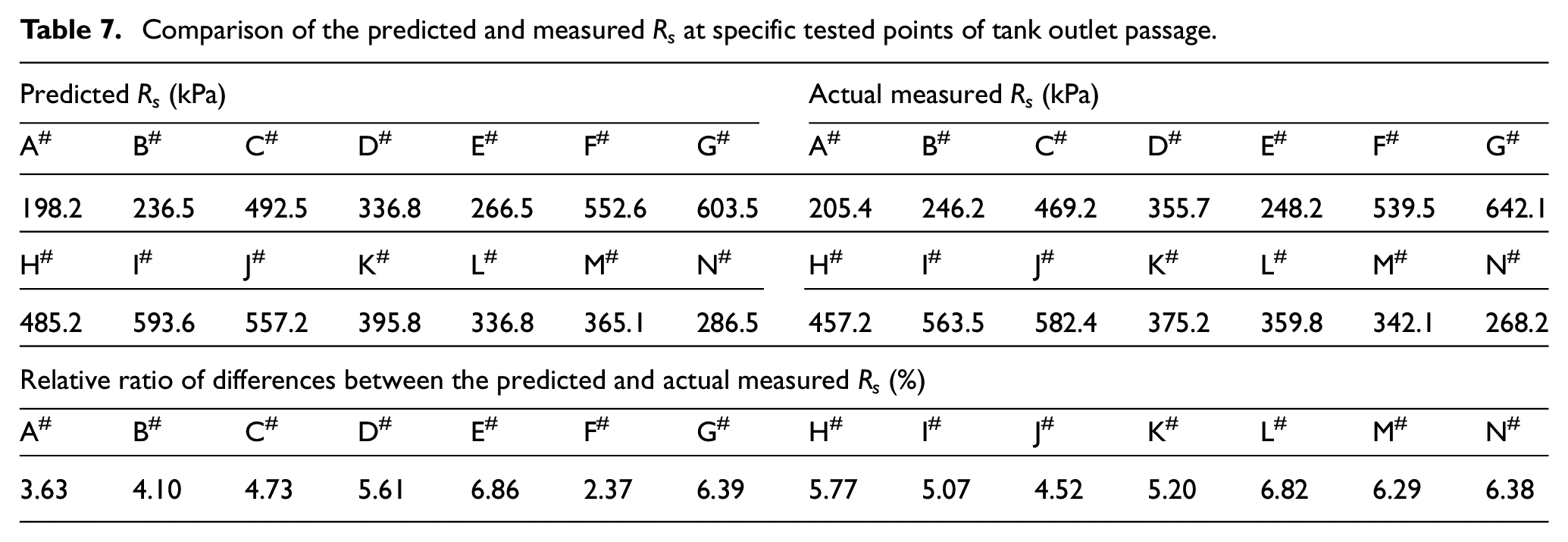
To quantify the numerical variation of effectiveness indexes, Figures 13–17 put forward their profile comparisons between the predicted and actual measured values, as some selective conditions A#–N# being exampled in Tables 3–7, showing the comparative relationship between the predicted and actual measured values in the form of line chart, with brown full line denotes the measured parametric values and blue dotted line denotes the predicted ones. Herein, a high agreement is ensured between the predicted and measured values, thus the mathematical errors between them should be quantified and traced back to the fluctuation of truncation error. This mathematical analysis explains that Pw and Mc should be focused to determine Ti as they influence on turbulence intensity and flow momentum remarkably, results to a more intensified turbulent flow up to 20%–25% in tank space after one completed run of stream generation. Ma and Fa bring about 15%–25% reduction in Te due to the increased turbulence entropy or turbulence chaos. Furthermore, the change tendency of Tc measured from the featured positions indicates that turbulence kinetic energy would be decreased by 20%–25% near the contact boundary, being impacted by Mc, Mb, Ma and their accompanied variation in mass rate. It could also be found that when VRMS is 420 m/s, Ti is 570, Tc is 540 kJ, Te is 620 J/K, and Rs is 430 kPa (Error tolerance = ± 5%), an optimal quality of abrasive jetting stream would be reached as respected. On the other side, VRMS is found most sensitive to the linkage correlation mechanism between Pw, Mc, Mb, and Ma, as a consequence of the spatial distribution of high flow velocity and kinetic energy; Rs is sensitive to Mc, Mb, and Ma, based on their respective reference level for the determination of shear stress. Based on the previous analysis, a stable abrasive jetting stream can be obtained using Pw at 320 MPa, Mc at 270 g, Mb at 310 g, Ma at 360 g, and Fa at 0.46 kg/min (Error tolerance = ± 5%). Nevertheless, as the calibration indexes of abrasive jetting stream effectiveness are very important for the improvement of grinding quality, 35 the accuracy and reliability of adaptive prediction for them should be assessed as follows.
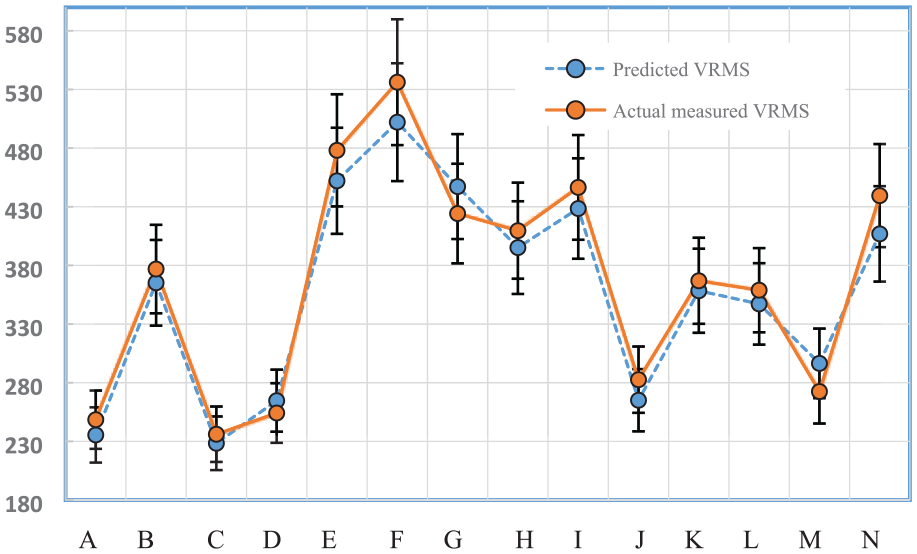
Profile comparison between the predicted and measured VRMS
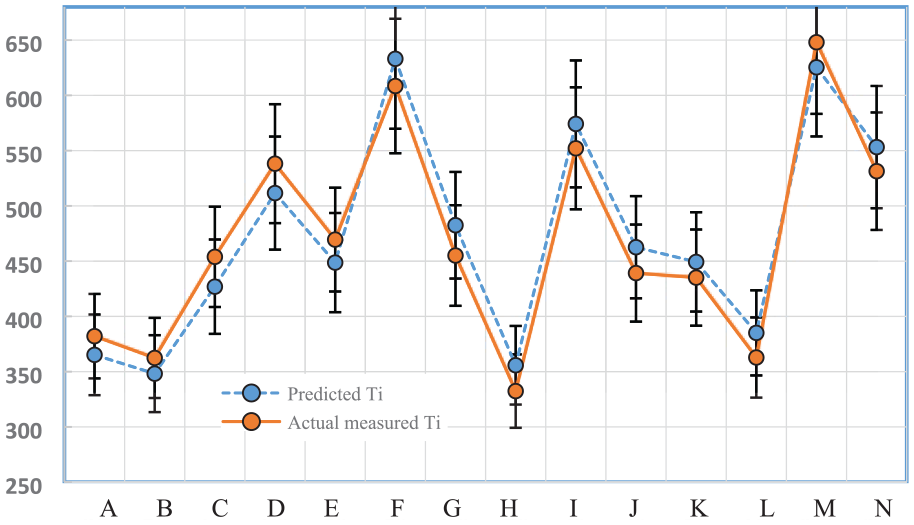
Profile comparison between the predicted and measured Ti
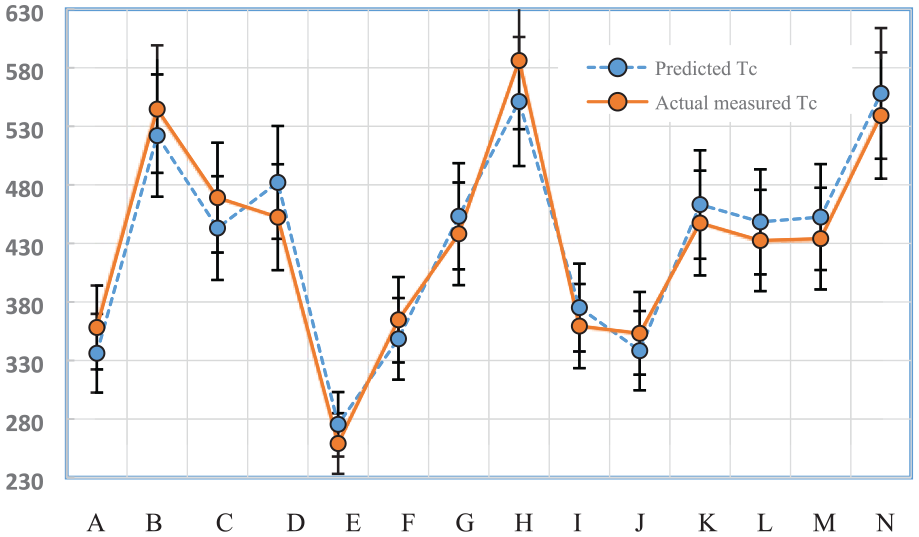
Profile comparison between the predicted and measured Tc.
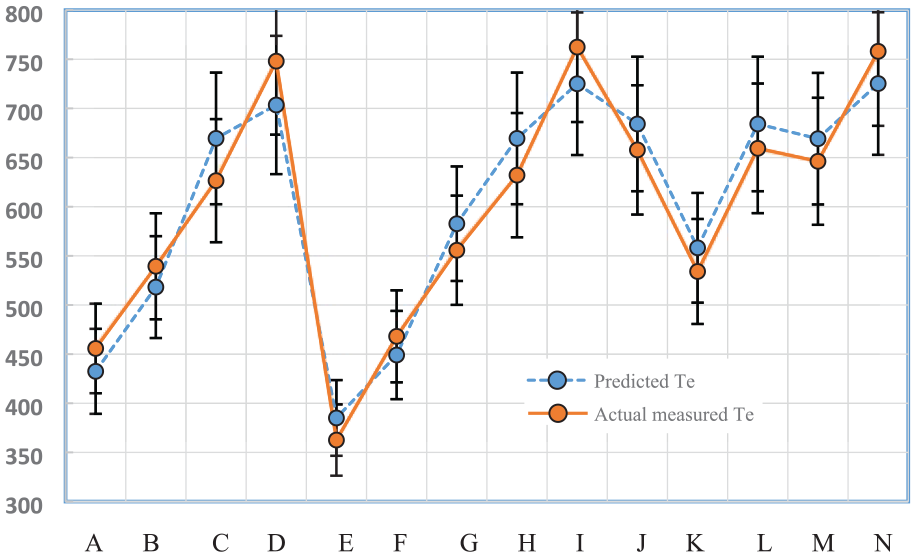
Profile comparison between the predicted and measured Te
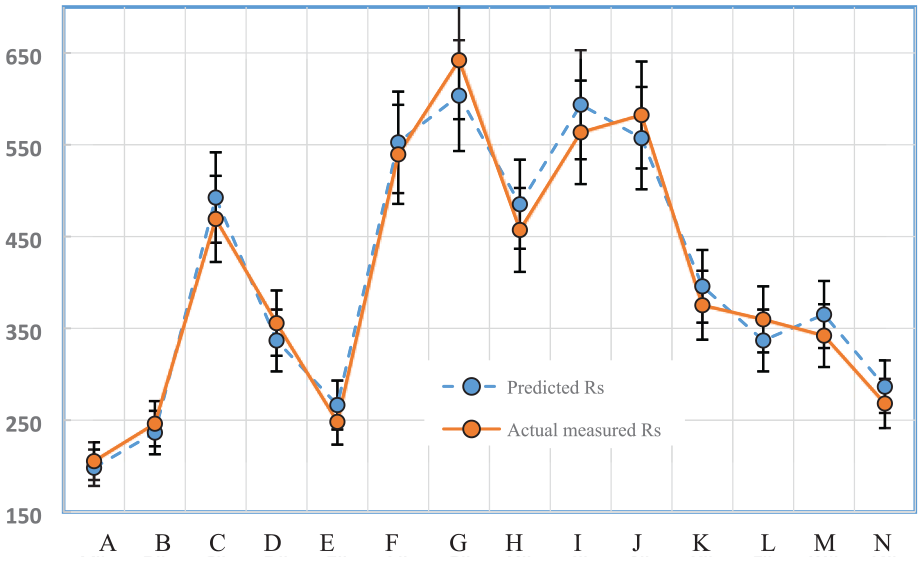
Profile comparison between the predicted and measured Rs.
Comparison of the predicted and measured VRMS at specific tested points of tank outlet passage.
Comparison of the predicted and measured Ti at specific tested points of tank outlet passage.
Comparison of the predicted and measured Tc at specific tested points of tank outlet passage.
Comparison of the predicted and measured Te at specific tested points of tank outlet passage.
Comparison of the predicted and measured Rs at specific tested points of tank outlet passage.
Assessments of adaptive prediction
In the interests of prediction assessment, Figure 18 presents the importance factor analysis using the method of F-ratio tests. As the combination samples are defined as 45 levels × 25 conditions = 1125 samples, they classify the fluctuation of calculated effectiveness indexes into the part of fluctuation caused by the usage of flow models and the other part of fluctuation caused by the variation of jetting parameters. In this figure, dark blue, median blue, and shallow blue, stand for highly significant, significant, and no impact correlation between typical flow models and different effectiveness indexes, respectively, which provide important references to demonstrate the complex influence of flow models on effectiveness prediction. Furthermore, to confirm the prediction qualities based on the comparative evaluations of significance level, a set of assessment indexes are designed or introduced specifically.26,28,32,33,36
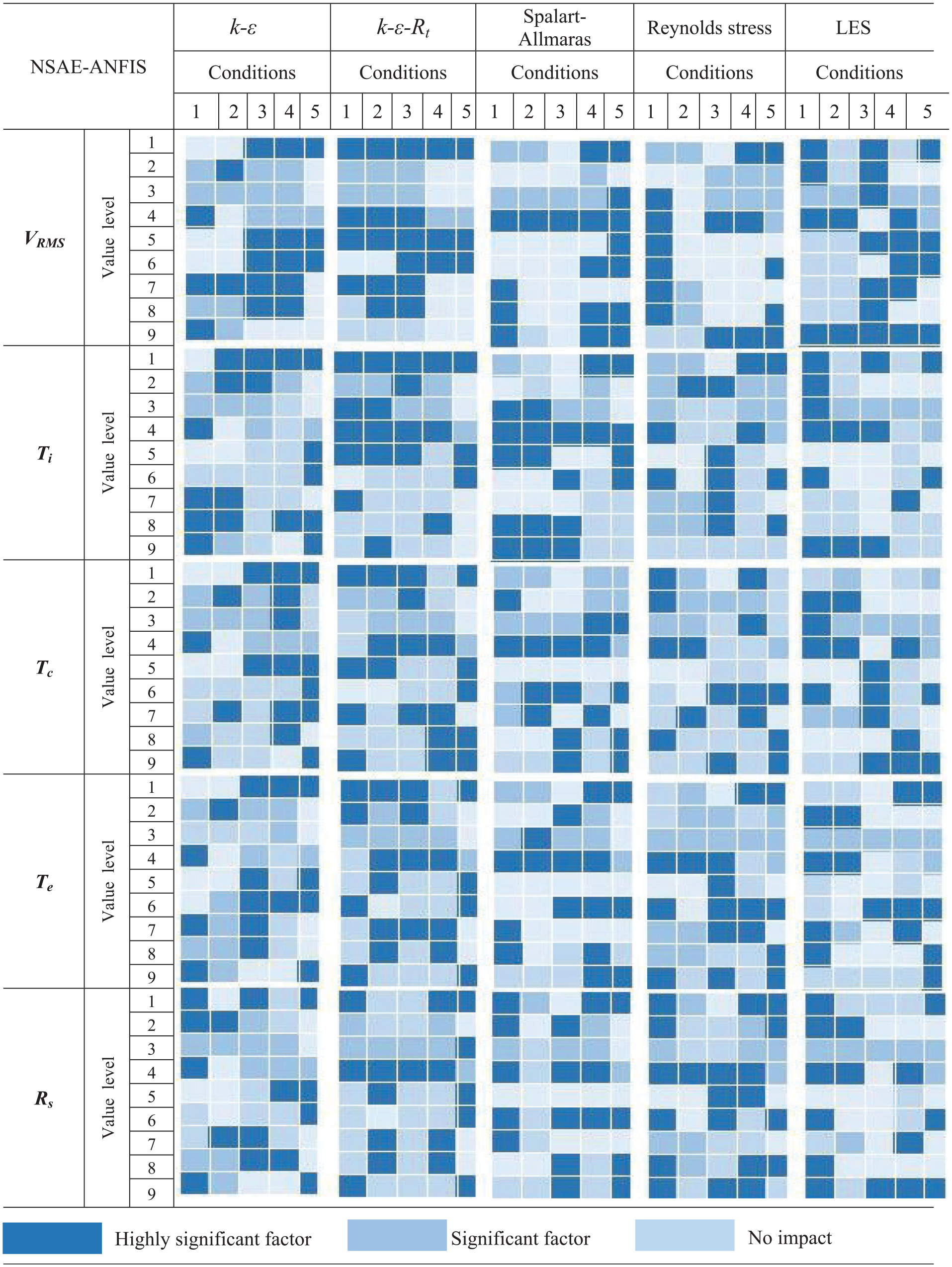
The importance factor analysis of NSAE-ANFIS prediction between each combination of flow model and stream effectiveness index.
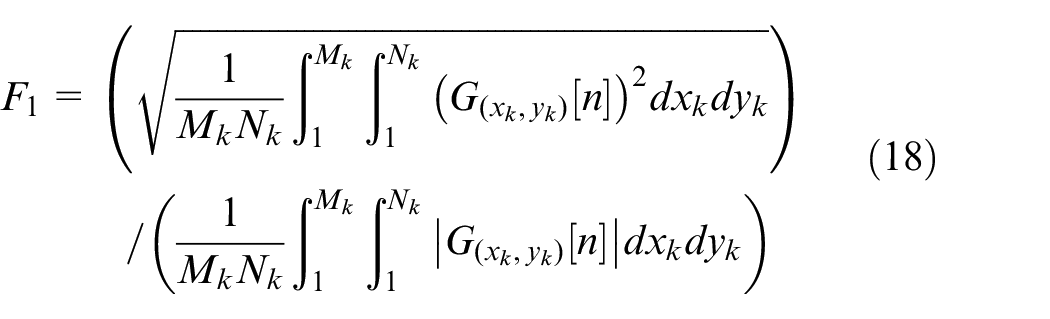
Recursive complexity index
Functional inclusion index
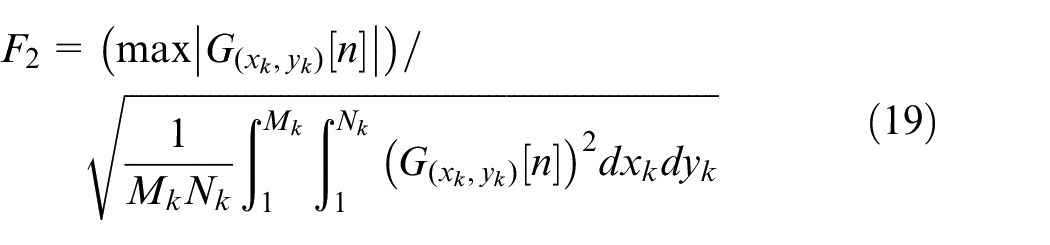
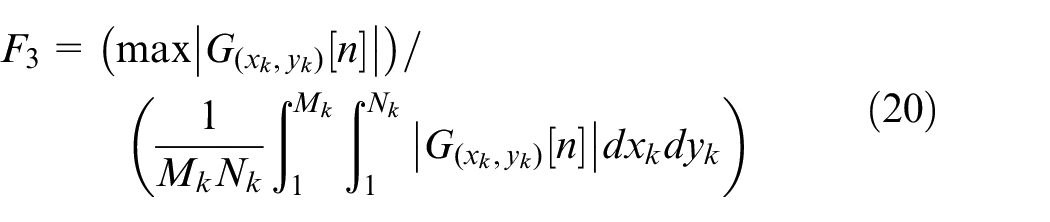
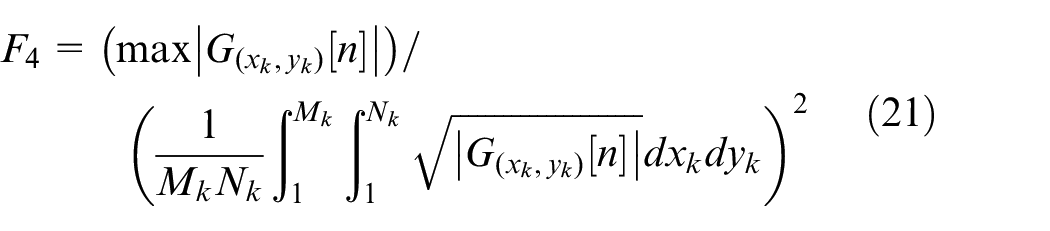
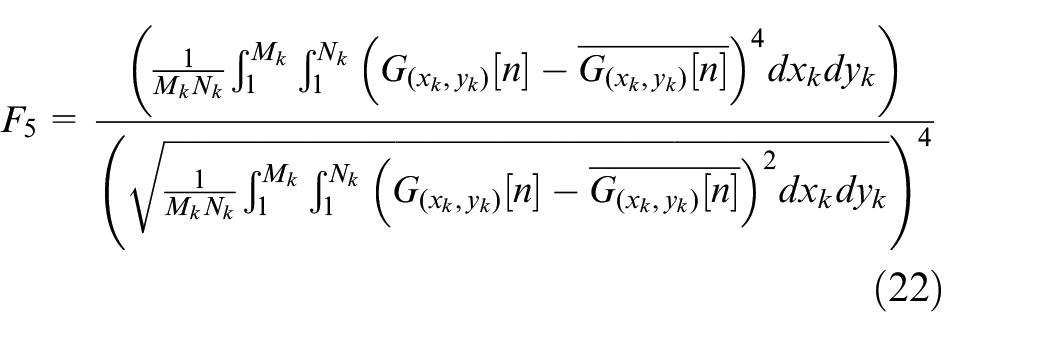
where G(xk, yk)[n] represents the predicted effectiveness indexes in the kth partitioned grid being positioned as (xk, yk), for n represents VRMS, Ti, Tc, Te, and Rs, respectively.
Computational compactness index
Cluster validity index
Kullback–Leibler divergence index
Fuzzy clustering uniformity index
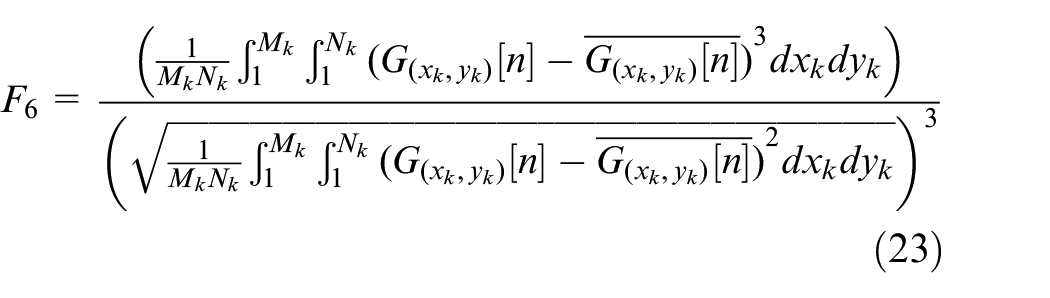
Where

Through computing all these assessment indexes for the predicted results of VRMS, Ti, Tc, Te, and Rs in sequence, they are compared with each other thereafter. Figure 19 demonstrates their cluster distribution for the performance evaluation of adaptive prediction. Here, the solid benchmark line denotes the standard ratio between the predicted and actual measured data, which being normalized and projected into identical data range for comparative analysis. As a detailed description of the picture labels mentioned in Figure 19(a), all labels denote the Recursive complexity index (F1) of VRMS, Ti, Tc, Te, and Rs respectively. Similarly, other evaluation for abrasive jetting stream effectiveness when such mathematical indexes as Functional inclusion index (F2), Computational compactness index (F3), Cluster validity index (F4), Kullback-Leibler divergence index (F5), and Fuzzy clustering uniformity index (F6), being applied in sequence, could be identified and illustrated with identical picture labels in Figure 19(a)–(f). Five colored frames of green, red, brown, blue, and purple highlight the assessment index clusters and each enumerated by 90 data points.
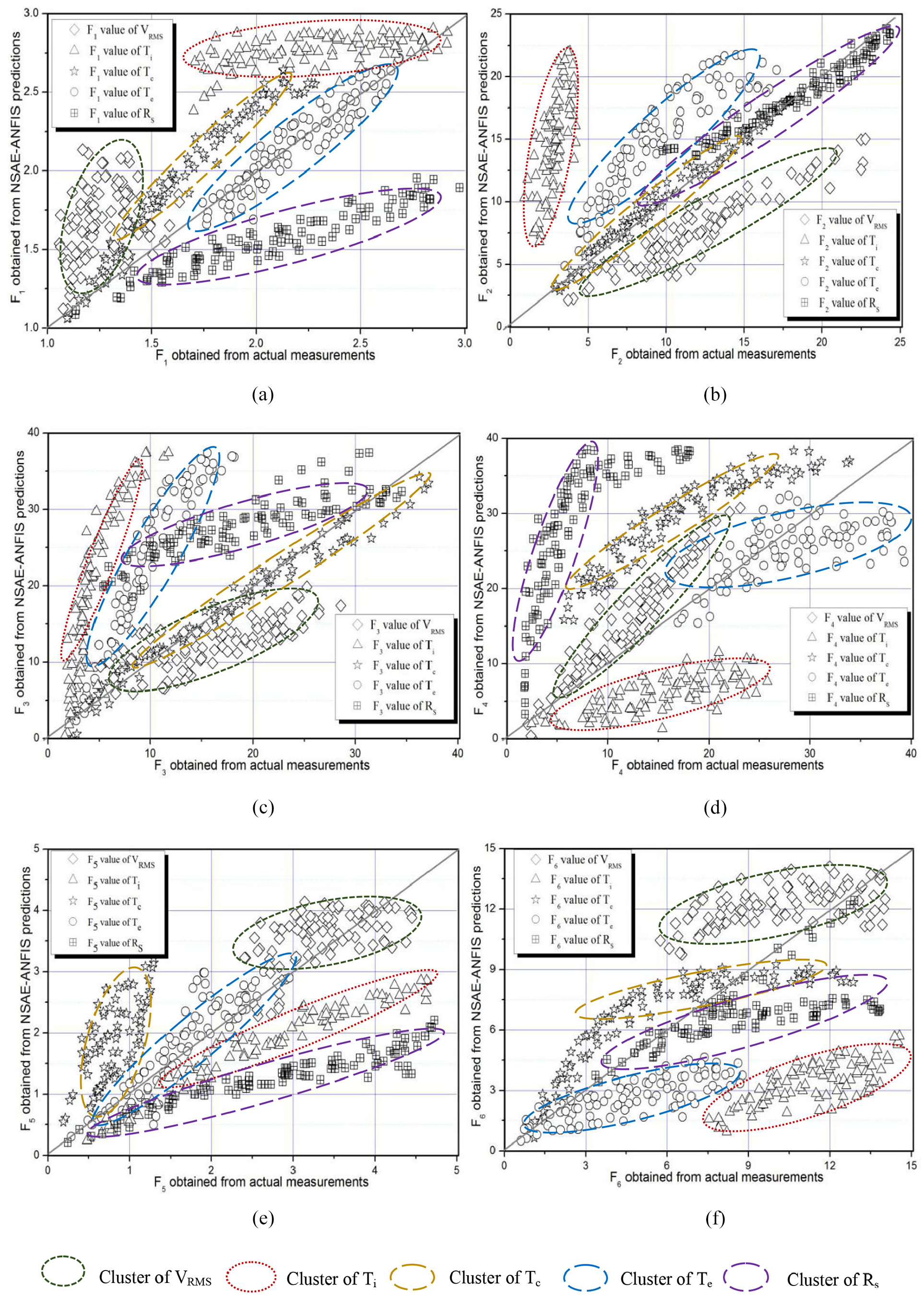
Cluster distribution of predictive evaluation indexes for abrasive jetting stream effectiveness in VRMS, Ti, Tc,Te, and Rs: (a) cluster distribution of Recursive complexity index (F1), (b) cluster distribution of functional inclusion index (F2), (c) cluster distribution of Computational compactness index (F3), (d) cluster distribution of Cluster validity index (F4), (e) cluster distribution of Kullback-Leibler divergence index (F5), and (f) cluster distribution of Fuzzy clustering uniformity index (F6).
With F1 shown in Figure 19(a), it can be obviously learned that the efficiency and reliability of adaptive prediction using the flow model of Spalart–Allmaras or k-ε keep remarkable correlations with the F1 of predicted results, including VRMS, Ti, Tc, Te, and Rs, especially when Mc and Mb are paid highly attention to;
Figure 19(b) illustrates that the F2 of NSAE-ANFIS predictive performance with respect to the concentration density of abrasive impact stress, obviously keeps a close linkage correlation with VRMS and Rs, when the flow model of k-ε-Rt or Reynolds stress is used. F2 proposes a critical emphasis on Pw, Fa, and Ma thereby;
As Figure 19(c) shows, F3 gives a reliable reference criterion relating to the accelerating efficiency and abrasive distributive balance when Pw, Mb, Ma, and Fa are focused on specially. Its value variation causes a correspondingly fluctuation in the predictive precision of Tc, Ti, and Rs when k-ε or LES model is used;
Figure 19(d) shows that when Spalart–Allmaras or LES model is regarded, F4 keeps a close correlation with VRMS, Rs, and Ti, when Pw, Ma, Mb, and Fa are looked through carefully, and it would be remarkably affected by abrasive mass redistribution and grit-collusion period during the process of effectiveness prediction;
F5 in Figure 19(e) can be used to regulate NSAE-ANFIS calculation and monitor abrasive impact stress at the interior boundary contact areas of accelerator tank. This index describes the critical influence of Fa, Mc, Mb, and Pw in LES or k-ε model on the abrasive loading and material properties of multi-phase jetting stream. It also highly depends upon the value range of Te and Rs, when such jetting parameters as Ma, Fa, and Pw are adjusted and observed closely;
F6 in Figure 19(f) shows that the calculative precision is influenced heavily by Pw and Ma, and its operational mechanism could be remarkably affected by the value accuracy of Pw and Mb also, especially in the employment cases of k-ε-Rt and Reynolds stress models;
Furthermore, an extensive analysis is performed here to quantify the applicability and efficiency of this new approach with other representative ones, including genetic optimization,37,38 simulated annealing–genetic Algorithm (SA–GA), 39 Taguchi estimation,40,41 ANN–SA prediction, 42 and genetically optimized neural network (GONN), 43 together with their detailed calculations being referenced from the above-mentioned literature; a statistical evaluation concerning with their respective predictive performances could be implemented in identical test conditions. Figure 20 (a)–(e) show that NSAE-ANFIS outperforms other approaches in precision and reliability, since it presents effectiveness indexes in accordance with the actual measured ones with lower estimation errors, demonstrating that this proposed approach ensures an optimal prediction for abrasive jetting stream effectiveness in experiments. As Table 8 shows, the confidence interval of this investigation be set as 94% of the reference level and covers almost all of the possible values of influencing factors. Based on the aforementioned experimental analysis it could be seen that the average computation accuracy of NSAE-ANFIS reaches 96.22% in training and 92.55% in testing to determine VRMS, Ti, Tc, Te, and Rs, with its standard deviation reaches 0.618% and 0.558% correspondingly. This system uses only about 1.89 s to complete the whole calculation of effectiveness indexes with the computation platform provided. Other excellent capabilities of NSAE-ANFIS can be learned from average computation storage (1382.2 kb), standard error of prediction (4.69%), and the upper and lower error limit (4.58% and 4.67%, respectively). Since the concentration density of abrasive impact stress calculated by NSAE can help ANFIS to obtain higher accuracy to calculate the effectiveness indexes, NSAE-ANFIS possesses much better working advancements than any alternative does. It could also be summarized that genetic optimization ensures a good predictive calculation of VRMS and Ti, and more suitable to illustrate the stress concentration of abrasive jetting stream; SA–GA returns excellent predictive performance for stream effectiveness when Tc, Te, and Rs are highly emphasized on; ANN–SA presents a precise prediction performance in Ti and Rs; meanwhile, Taguchi and GONN demonstrate satisfactory capabilities in the computation accuracy of VRMS and Tc, ensuring the robust predictive quality for abrasive jetting stream effectiveness eventually.
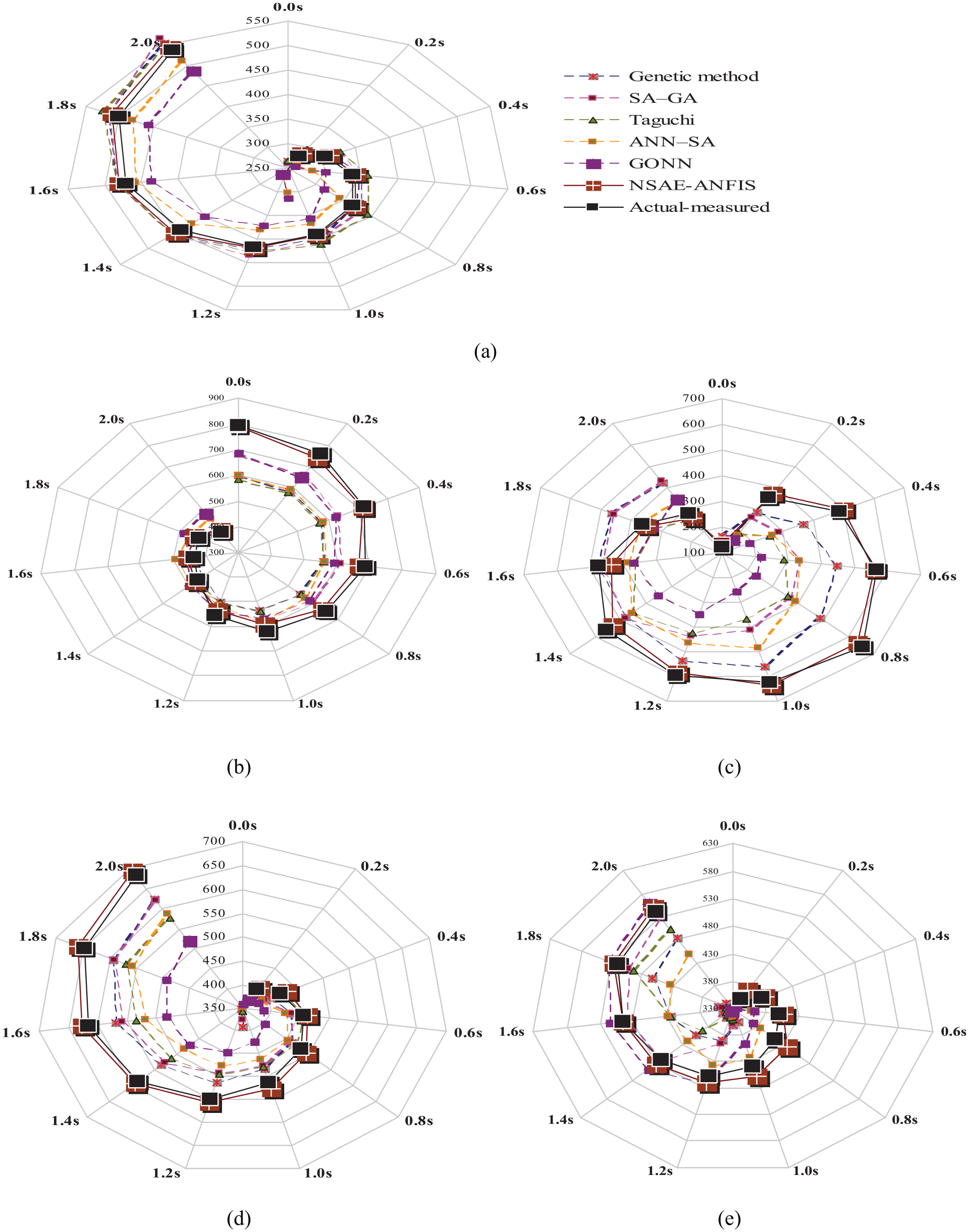
Data comparisons of stream effectiveness indexes obtained from different predictions and actual measurements in time domain. (a) Result comparisons of VRMS (m/s) variation. (b) Result comparisons of Ti variation. (c) Result comparisons of Tc(kJ) variation. (d) Result comparisons of Te (J/K) variation. (e) Result comparisons of Rs (kPa) variation.
Performance comparison of NSAE-ANFIS with alternative ones.
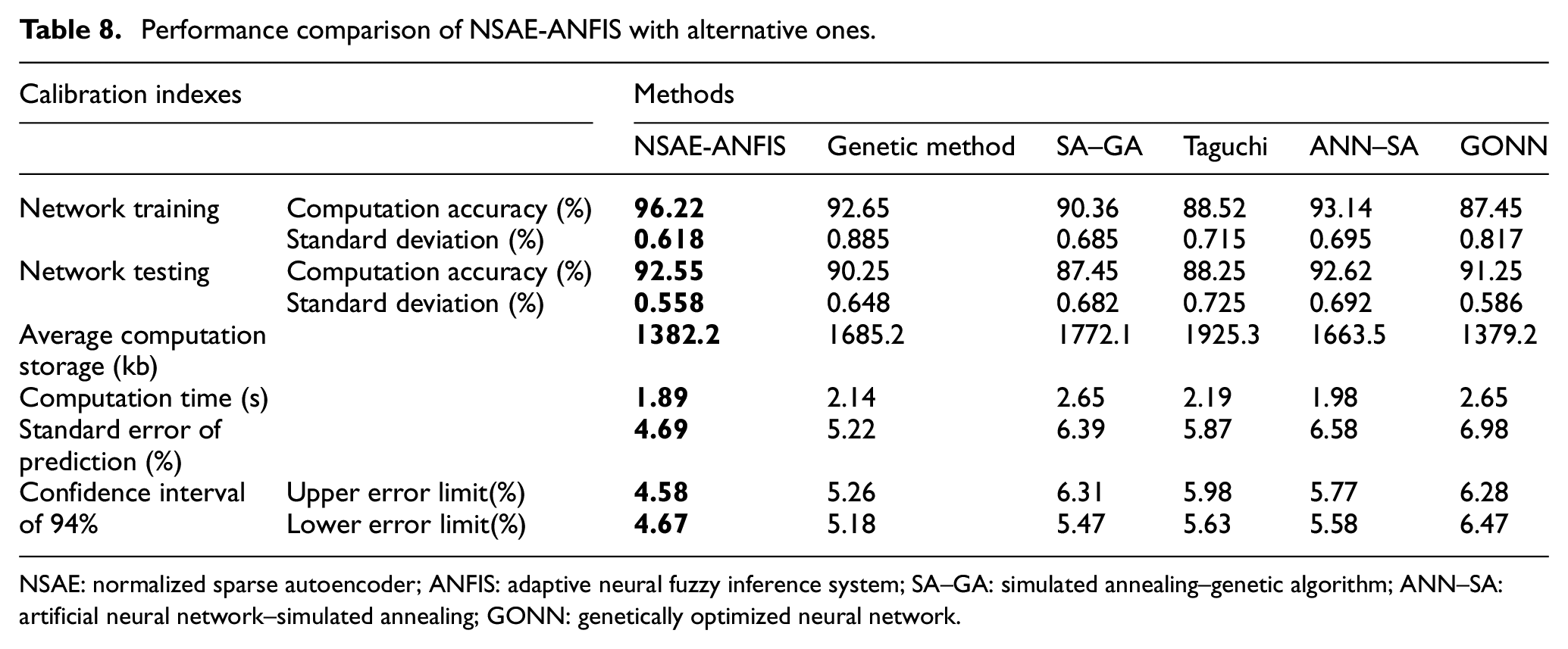
NSAE: normalized sparse autoencoder; ANFIS: adaptive neural fuzzy inference system; SA–GA: simulated annealing–genetic algorithm; ANN–SA: artificial neural network–simulated annealing; GONN: genetically optimized neural network.
Conclusion
A new adaptive prediction for abrasive jetting stream effectiveness using NSAE-ANFIS is proposed to evaluate the multi-phase jet acceleration and monitor the effect qualities of abrasive stream in the accelerator tank of strengthen jet grinding system. This research could be merited by the following theoretical superiorities and technical contributions: (1) it helps to implement accurate determination of effectiveness indexes for abrasive jetting stream in a higher efficient way both theoretically and technically; (2) a novel NSAE-ANFIS system is designed and presented in details, and thereafter its working mechanism and constructive influences on the predictive computation for stream effects are explained; (3) representative effectiveness indexes of abrasive jetting stream are introduced to assess its dynamic effects from innovative perspectives; (4) this research compares the predicted effectiveness indexes of abrasive jetting stream using NSAE-ANFIS with other measured ones, the extraordinary accuracy, prominent universality, and stable reliability of NSAE-ANFIS method can be valued, therefore the working efficiency and processing quality of accelerator tank could be planned precisely and monitored instantaneously for strengthen jet grinding eventually.
Footnotes
Appendix 1
Acknowledgements
The authors thank for the helpful instruction from Prof. Kornel F. Ehmann, and facility provision offered by the Advanced Manufacturing Processing Laboratory, Northwestern University, USA, deserves highly appreciations. They also thank the editors for their hard work and the referees for their kindly comments and valuable suggestions to improve this article.
Declaration of conflicting interests
The author(s) declared no potential conflicts of interest with respect to the research, authorship, and/or publication of this article.
Funding
The author(s) disclosed receipt of the following financial support for the research, authorship, and/or publication of this article: This work was supported by the National Natural Science Foundation of China (51975136, 51575116, U1601204), National Key Research and Development Program of China (2018YFB2000501), China National Spark Program (2015GA780065), The Science and Technology Innovative Research Team Program in Higher Educational Universities of Guangdong Province (2017KCXTD025), The Innovative Academic Team Project of Guangzhou Education System (1201610013), The Special Research Projects in the Key Fields of Guangdong Higher Educational Universities (2019KZDZX1009), The Science and Technology Research Project of Guangdong Province (2017A010102014, 2016A010102022), The Science and Technology Research Project of Guangzhou (201707010293), The Water Resource Science and Technology Program of Guangdong Province (2012-11), Guangzhou University’s 2017 training program for young top-notch personnels (BJ201701).
