




Abstract
Practising lean and green method has become important for organisations seeking competitiveness and environmental sustainability. The efficiency and validity of personnel (employees) in organisation management is an index to measure sustainability. Employees are the primary key factor in maintaining organisation management. In this study, a framework model was developed from the perspective of personnel integration, aiming to implement coordinated and sustainable management of lean-green enterprises. During the practice of lean-green in manufacturing companies, a model was constructed using an analytical network process and interpretation structural modelling. These models involve dynamic common indexes of cross-sector objective evaluation and artificial barriers in deep analysis. Horizontal and vertical personnel integrations were achieved based on this model. The proposed model is beneficial for deep personnel integration and lays a solid foundation for lean-green coordinated development.
Keywords
Introduction
The concept of lean production is to increase the efficiency and quality of the entire manufacturing process and to lower costs by eliminating waste in the product or service manufacturing process. 1 Lean production involves a series of practice methods and tools for reducing manufacturing waste, eliminating negative impacts on the environment, saving resources and energy sources, and increasing efficiency and benefits. 2 Lean production is also beneficial for relieving environmental pollution and emphasising the benefits to enterprises of doing that. Besides, the reduce, reuse, and recycle (3R) technologies used in green manufacturing are similar to those in lean production. Therefore, the philosophy of green manufacturing also provides a way for enterprises to reduce products or services that could adversely affect the environment, thereby increasing the enterprises’ environmental and ecological efficiency. This shows that lean and green are integrated naturally. Manufacturing companies can decrease costs and risks, increase income, and improve brand image by combining lean production with a green manufacturing strategy.
Research on lean-green has found that manufacturing companies can develop unique management of resources and abilities by implementing lean and green production techniques simultaneously. Enterprises can then realise three bases for sustainable development, namely, personnel, environment, and profit.3–5 In the current fiercely competitive globalised business environment, the above three bases must be met simultaneously to gain a dominant position in the market. 6 Traditionally, organisations have focused on profits but have given little consideration to personnel (society) and the environment. 7 Much attention must be paid to these three elements so the transformed conflict of interests does not hinder the decision-making process of organisations and thus increase difficulties in maintaining sustainable management. The aim of this study was to build a framework model. This model was to not only achieve personnel integration and reduce barriers against lean-green but also to help managers understand the effects of lean and green production on other resources and abilities as well as on the target performance of factories. Personnel integration is conducive to achieving the coordinated integration of lean-green with concerns for the environment and society. The sources of environmental and social influences are mainly human activities. Management efficiency and the validity of personnel (employees) in organisations are decisive indicators of sustainability. The level of motivation of their personnel is also one indicator of the sustainability of enterprises. 5 Employees are the primary ‘soft’ key factor to maintain organisation management.8,9
Research background
Lean and green relationships have been widely discussed and can be considered a relatively new approach to integrate and implement lean and green. To research and support lean-green integration, deployment, and evaluation, models of these systems have been developed. Cabral et al. 10 proposed an integrated lean, agile, resilient, and green (LARG) and analytical network process (ANP) model to evaluate whether a supply chain was lean and flexible. This model could support decision-makers in choosing the most appropriate practices and key performance indicators to be implemented by companies in a supply chain. However, implementing lean-green makes it difficult to maintain financial performance in the short term, and there have been problems of inconsistency in their multicriteria decision method between enterprises in the supply chain. To target the best-in-class practice, Verrier et al. 11 proposed a framework for lean and green management to benchmark their lean and green practices. Their method considered only the economic earnings generated through lean actions in various production improvement processes, which added environmental and social dimensions. Faulkner and Badurdeen 12 used sustainable value stream mapping to evaluate environmental performance, and Xiao-Yong Zhu et al. 13 proposed a green-modified value stream mapping model that contained a mathematical model of carbon efficiency. This was intended to assess the manufacturing process performance associated with integrating and implementing lean and green practices. A maturity model was proposed by Verrier et al., 14 but their study was very subjective in its early stage and was based on the maturity levels of the capability maturity model integration and did not contain a mathematical model to estimate the maturity levels. ROBECOSAM 15 proposed an extremely comprehensive tool whose model contained over 600 performance indicators and a set of 80–120 questions to define business maturity based on social, environmental, and economic pillars. The tool’s complexity limits its use by smaller companies and it was best suited for specific large companies. The ideas and tools of lean and green manufacturing have been used in the operation and management of manufacturing companies, which has greatly promoted the efficiency and energy optimisation.16–23
Objectives of the research
Among the models mentioned above, our research explored the integration of lean-green from the perspective of external performance output. This article is a quantitative study of lean-green integration from the perspective of personnel integration in manufacturing. It was built on the recent work by Kumar et al., 24 Wong and Wong, 25 Rabbani et al., 26 and Thakkar et al. 27 Integration of human resources was to be achieved from ‘horizontal’ and ‘vertical’ integration. Therefore, the framework constructed in this study was divided into two stages.
The first stage dealt with horizontal integration. Different departments in an organisation were assigned different goals. As a result, mismatched goals reduced the motivation of employees to achieve excellent performance through collaboration, which finally caused employee complaints and low communication efficiency among departments. Therefore, a common goal was developed by an ANP in this stage to coordinate the key emphases of all departments, realise horizontal personnel integration, reduce conflicts, and strengthen the cohesion of departments, which finally achieved sustainable development.
The second-stage solved problems of vertical personnel integration, including barriers against lean-green, the key influences of human resource management (e.g. employee training and management support), and the interaction of these factors. In this stage, we used interpretation structural modelling (ISM) to recognise a group of antecedent variables that influenced personnel and their interactions during lean-green. Based on recognition and review of relations among these key success factors, managers can deeply understand interpersonal dynamics. This is conducive to eliminating the recognised barriers and laying a solid foundation for implementing lean-green.
The objectives of the research can be summarised as follows:
To identify lean-green manufacturing key drivers (barriers) that influence both horizontal personnel integration and vertical personnel integration in a human resource management context.
To promote the importance of human integration by developing a division model using an ANP and ISM to help lean-green integration, deployment, and evaluation.
To evaluate the lean and green synergy by developing a maturity model in accordance with the calculated unified index-common indicator.
To generate a model to help build a strong foundation of lean and to facilitate green manufacturing implementation and guides about where to focus and prioritise.
Data collection instrument
The main goal was to observe and map lean and green practices within manufacturing companies in China’s Pearl River Delta. Therefore, this project was built around stakeholders from various fields. We selected medium and large manufacturing companies to participate in this research because only those companies could implement lean-green practices. Initially, 34 companies were contacted in this region. In the end, 15 companies agreed to participate in the research project and made themselves available to answer the questionnaire we prepared to evaluate lean-green. The enterprises included industries or departments such as electronics, metal machinery, motor manufacturing, tyre manufacturing, automobiles, household appliances, plastic products, and textiles.
Construction of horizontal personnel integration target model
Production modes have changed greatly in the past decades. Currently, manufacturing companies have improved the environmental-friendly efficiency and benefits of products and processes using various lean-green practices. 28 According to the resource-based view, where the source of the competitive advantage of enterprises is their special heterogeneous resources, and the sustainability of competitive advantage must reside in the non-imitation of resources, personnel is the engine of operation management. It achieves competitive advantages by facilitating effective collaboration under organisational management and the system. In operation management, personnel are often viewed as the ‘soft’ aspect. Compared with ‘hard’ aspects like facilities, logistics, product design, procedure, and network information technology required for normal operation of enterprises, this ‘soft’ aspect is superior for regeneration and duration. In Toyota’s lean production system, employees are also viewed as assets, and underuse of employee potential is regarded as a serious waste of the enterprise’s assets.
According to the objectives of the research, the first stage focuses on horizontal personnel integration. A common indicator system of lean-green is developed by an ANP technology. Also, one common goal is to coordinate the intentions of all departments and integrate personnel horizontally. Such integration can reduce conflicts and strengthen cohesion among departments, finally achieving the goal of sustainable performance. Because employees are the major drivers of the management system, it is hypothesised that manufacturing companies are to build a common lean-green goal system for effective high-efficiency management of employees and maintaining sustainable management of manufacturing companies. This section describes how the objective model was constructed by ANP technology to develop the cross-sector common indicator, which is a lean-green indicator related to horizontal personnel integration. Horizontal personnel integration, which is known to be a common performance measurement, is used to combine or integrate human resources from different departments.
Indicator system
Personnel (or employees) are viewed as a valuable asset of manufacturing companies during the implementation of lean-green. Employees are the pillars for the survival and development of organisations. Without the commitment and full support of employees, management reform plans and the validity of lean-green improved projects of the organisation might be restricted and boycotted. As major drivers of changes and improvement, personnel stimulus and management are necessary. Bowersox and Bowersox 29 also emphasised that personnel are the most important factor in organisational performance, and they directly influenced the success of management practices. Mahidhar 30 pointed out that disagreements among personnel in an organisation were often caused by conflicts of interest or different goals of different departments. Conflicts of concerns or goals among different employees affect their working enthusiasm and even trigger complaints about the enterprise, finally negatively affecting organisational management. 31 It is necessary to set up a common goal for employees of different departments in the same organisation to work together. Therefore, a common indicator for cross-department performance assessment must be built.
In this study, five key assessment indicators (economic, environment, society, internal process, and employee participation) were determined based on a literature review and by consulting with a lean production director, a production planning director, and an operation management director of manufacturing companies. Later, we constructed secondary indicators of five major fields that form activities supporting lean-green (Table 1).
Matching of organisation indicators to an ANP structure.
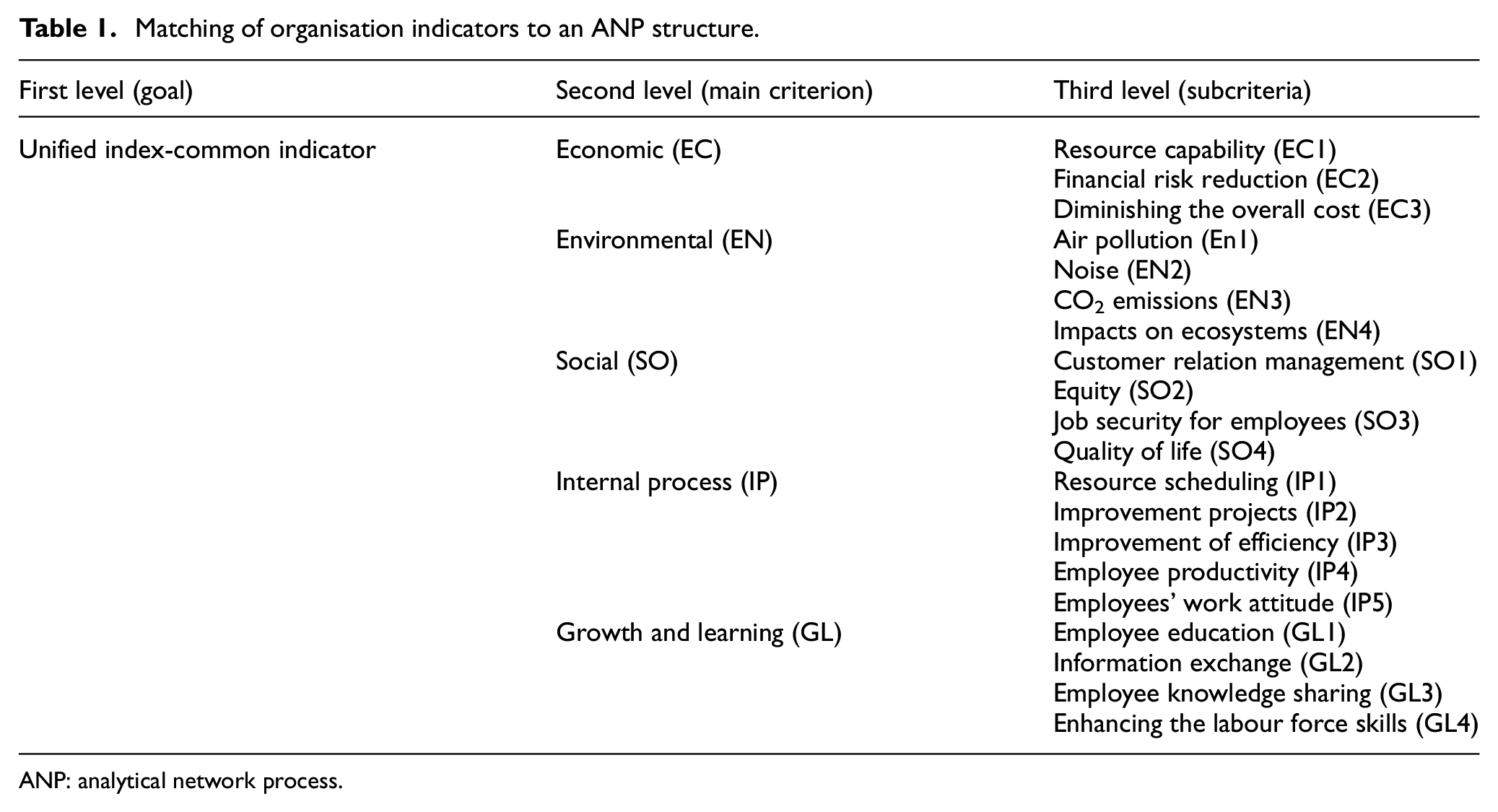
ANP: analytical network process.
Because the common analytic hierarchy process is easy and feasible, complex systems are often distorted due to an idealised hypothesis. For a more objective evaluation of complex systems, we determined weights of various levels of indicators by an ANP with full consideration of connections and restraints of various indicators. The criteria and subcriteria of the ANP model are shown in Figure 1.
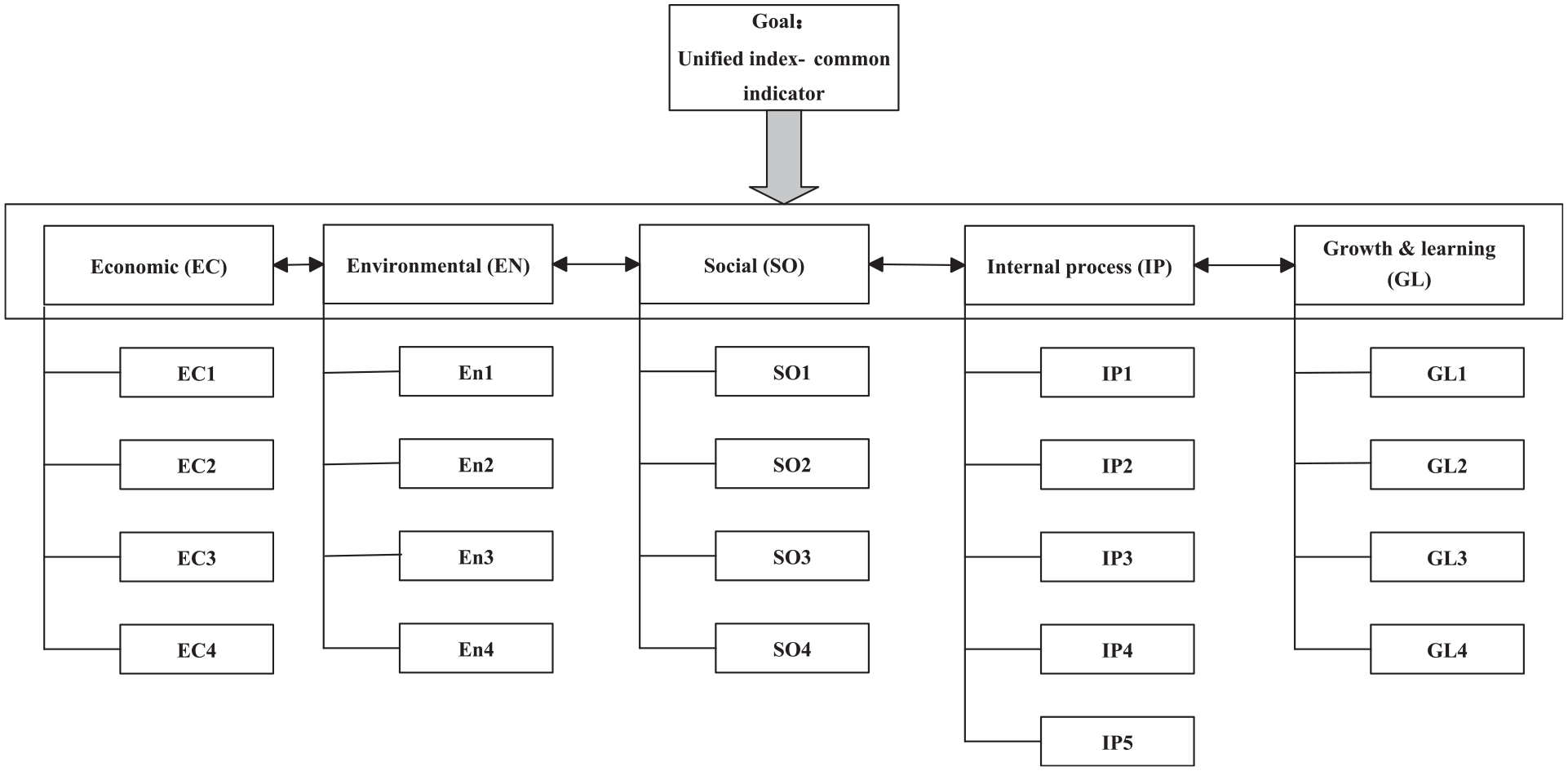
ANP-based framework for modelling an integrated lean-green index. The initials used are listed in Table 1.
Operation procedure of an ANP
In Figure 1, the major structure of an ANP comprises two levels: the control level, comprising a problem goal and decision criteria, and the network layer, comprising all elements controlled by the control layer. Internal elements might influence mutually. The procedure for calculating the weights of indicators by this method is shown in Figure 2.
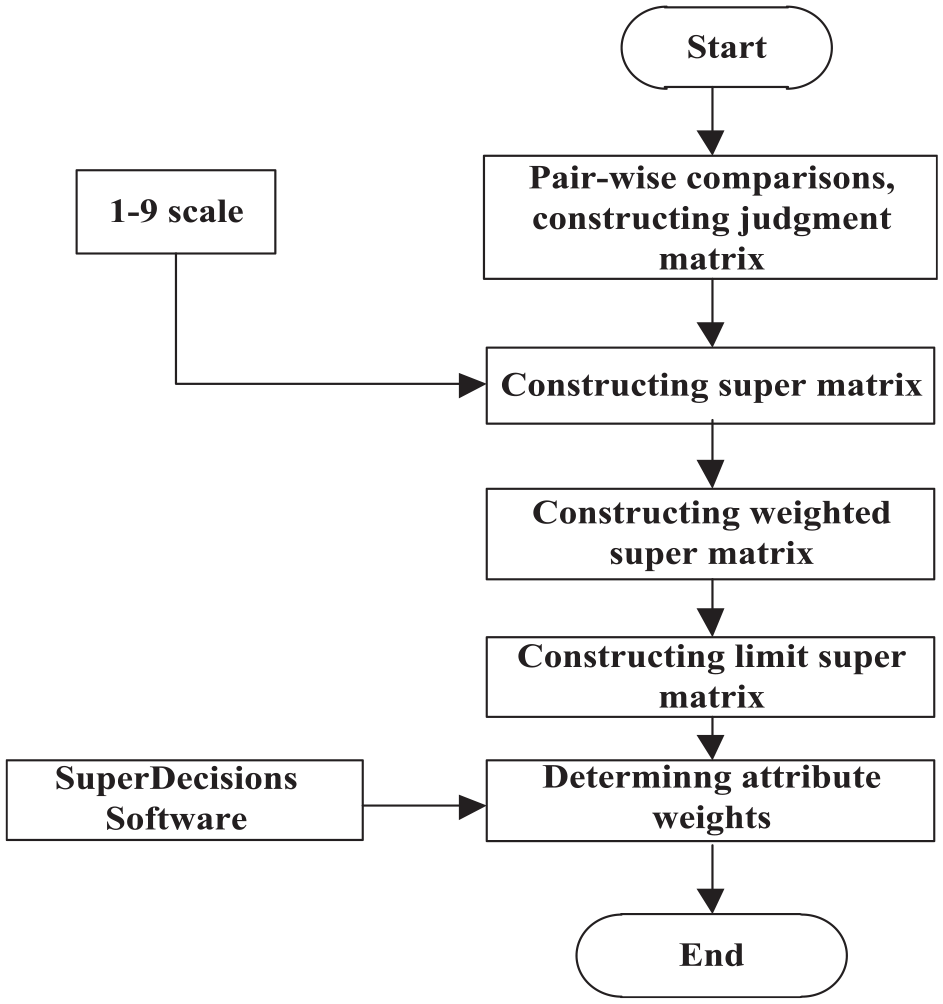
ANP-based procedure for weighting of indicators.
Interpretation of common indexes
The common index, which is the total weight calculated by the ANP, reflects the lean-green performance of manufacturing companies to realise sustainable development. It can be used as the standard for an organisation focusing on and integrating the goals of different departments during the lean-green practices. It is necessary to build a common indicator evaluation system for the cross-department integration of lean-green systems. Based on this system, managers can collect and calculate common indicators of different departments continuously using statistical techniques to monitor key performance indicators related to sustainable management. Moreover, managers can adopt corresponding improvement plans and irregular communications with employees according to monitored changes of common indicators to train the collective culture. A cross-department enterprise culture that emphasises team cooperation and efforts can significantly strengthen cohesion among different departments and employees’ satisfaction in the organisation.
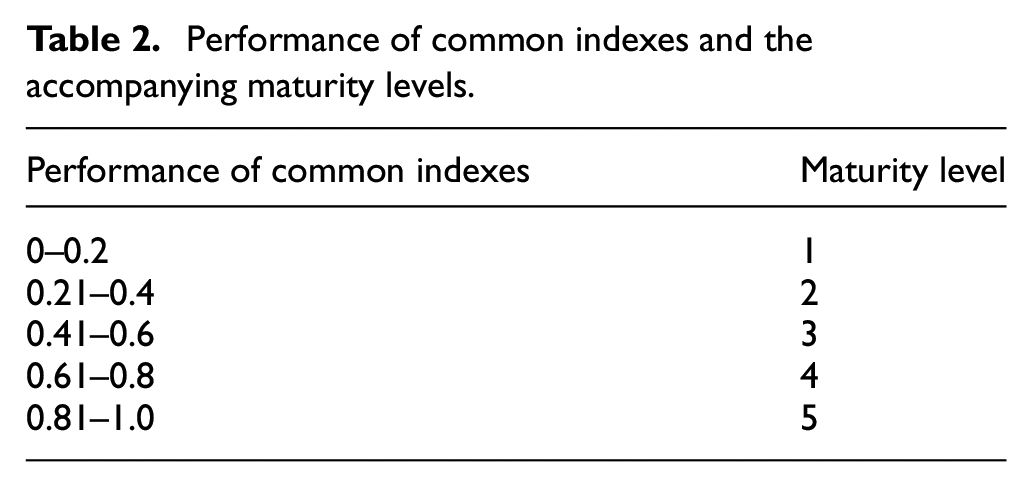
When the management implements a lean-green system, they need to provide the necessary information so that managers can use it to evaluate the lean and green maturity level. Our model proposes a division of lean and green maturity into five levels like the ladder structure proposed by Reis et al. 32 The lean and green maturity levels are defined (Figure 3). The level of maturity is also established based on the number of the calculated common index. Table 2 defines the levels of organisations according to this perspective. For example, after calculation, an enterprise is valued at 0.5. This shows that the enterprise is at level 3 of lean and green maturity. The degrees of cooperation among internal departments are consolidated, documented, and controlled by many indicators. At level 3, there is interest in improving the lean and green results, even though there is still little integration between them.
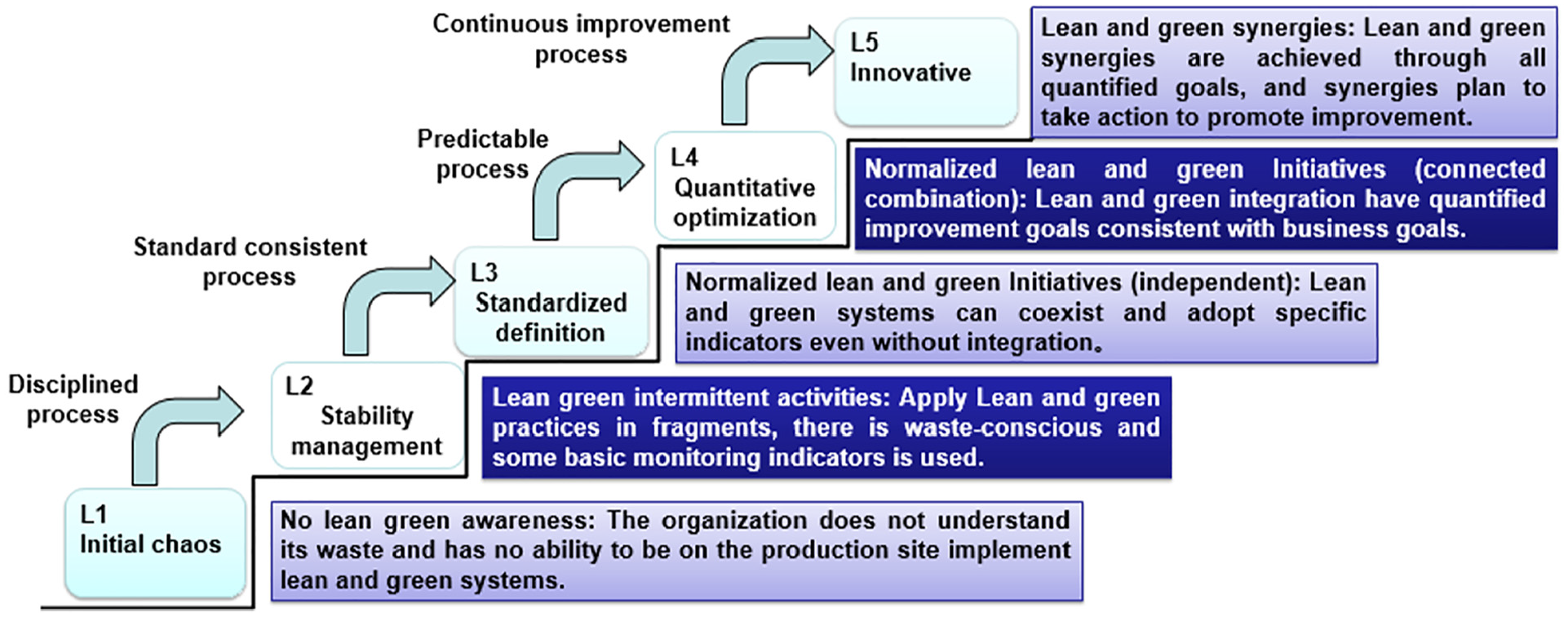
Description of lean-green maturity levels.
Performance of common indexes and the accompanying maturity levels.
Construction of vertical personnel integration target model
A strong basis for lean-green could be constructed by recognising the interactions of barriers. Managers can formulate lean-green strategies and maintain a sound enterprise operation by studying and understanding these interactions. Managers of manufacturing companies can recognise in advance key bottlenecks of lean-green related to personnel and then arrange time and resources reasonably to achieve maximum competitive advantages. In this study, human barriers involved in the implementation of lean-green were recognised. Therefore, the interaction of these factors was verified by ISM, thus enabling the achievement of the goal of vertical personnel integration.
ISM is a qualitative and explanatory method to solve complicated problems. In this study, steps of ISM were introduced as follows: (1) Recognise and list a series of key barriers against lean-green. (2) Determine relations between two elements and develop binary relations of system elements to express the structural self-interaction matrix (SSIM) of pairs of challenges. (3) Construct a direct reachability matrix and the last reachability matrix. These matrixes can examine the transmissibility of binary relations among various elements. (4) Based on the final reachability matrix, construct a horizontal partition, a level division, and a hierarchical relation model. (5) Group the barriers to lean-green and do a dynamic analysis of relations.
Recognition of barrier elements
We found barriers against lean-green in manufacturing companies by brainstorming based on a literature review and by consulting a decision-making team composed of senior managers in lean-green, production and management, and research. Major barriers and challenges25,33–40 are shown in Table 3.
Barriers to lean-green implementation.
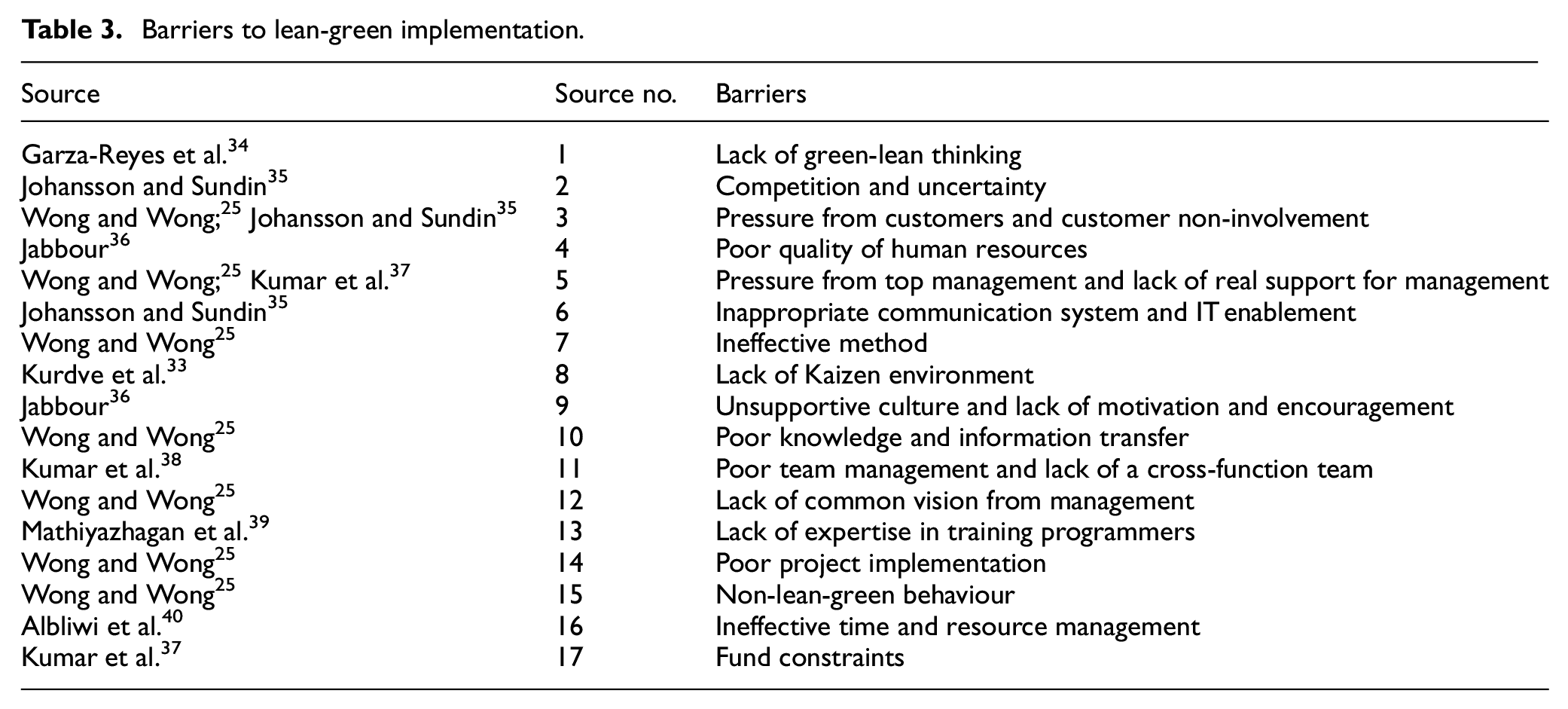
These barriers are difficult to eliminate during the early implementation of lean-green in manufacturing companies, which thus fail to gain the benefits and effects of lean-green. Instead, the barriers increase the workloads of departments and employees, which finally causes conflicts among departments and complaints and disagreements among workers. Therefore, it is necessary to analyse the barriers to lean-green; these barriers can be eliminated only by effective measures.
Construction of SSIM
After we determined 17 barriers against lean-green in manufacturing companies, ISM was required to determine relations among different barriers and construct an SSIM of barriers. The influence direction and relation types between any two barriers were expressed by four symbols. Pairwise comparisons of 17 barriers were implemented. We constructed an SSIM based on the four symbols (Table 4).
SSIM of barriers in lean-green.
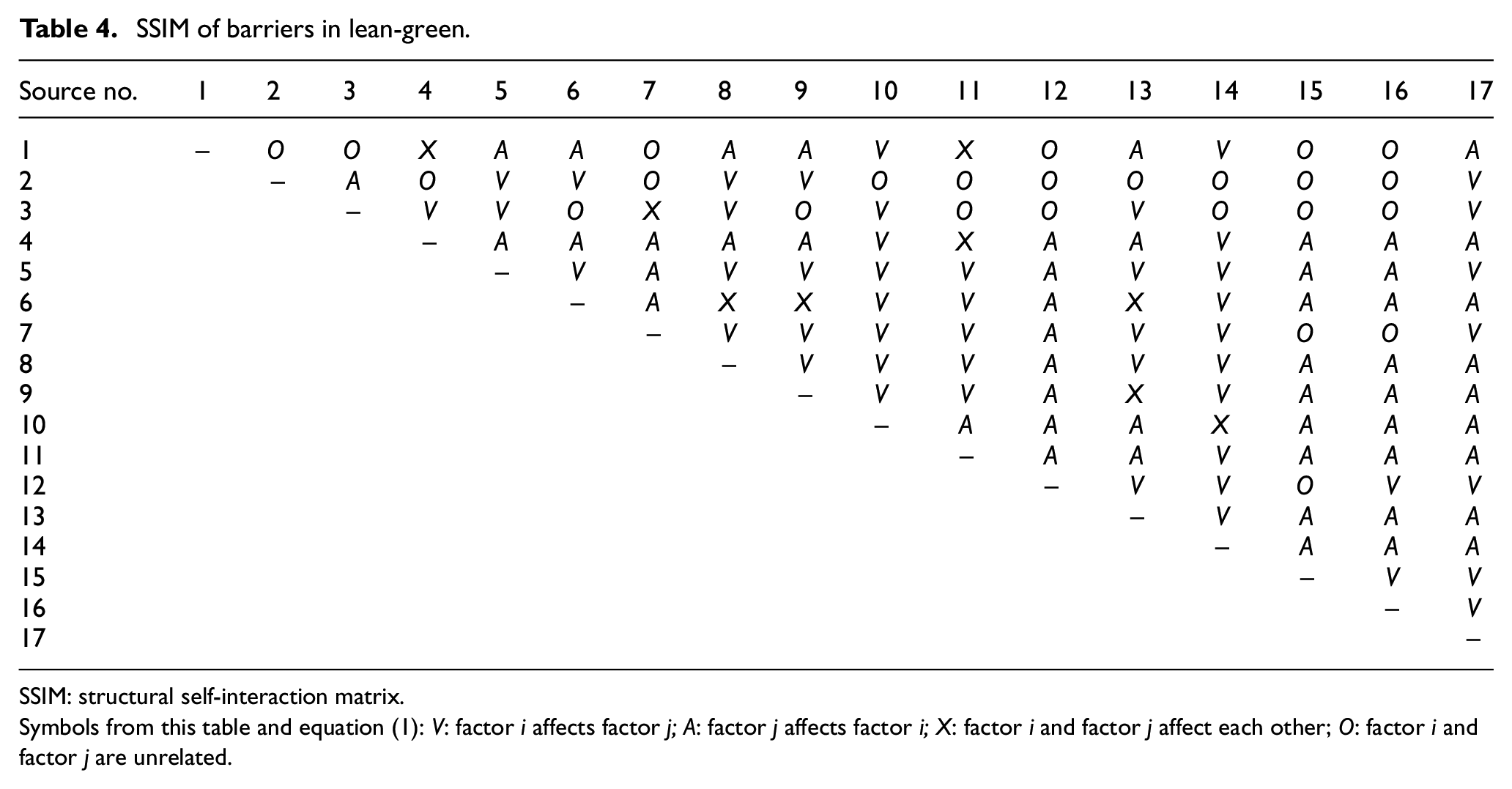
SSIM: structural self-interaction matrix.
Symbols from this table and equation (1): V: factor i affects factor j; A: factor j affects factor i; X: factor i and factor j affect each other; O: factor i and factor j are unrelated.
Constructions of initial and final reachability matrixes
The initial reachability matrix (A) can be constructed by binary relations of elements in Table 4, and elements in the matrix can be expressed as A = (αij)n×n. Then, it can be defined as

Based on the symbols have been utilised to symbolise the direction of contextual relationship between barriers (Table 4), and equation (1), the initial reachability matrix of barriers in lean-green is shown in Table 5.
Initial reachability matrix of barriers to lean-green.
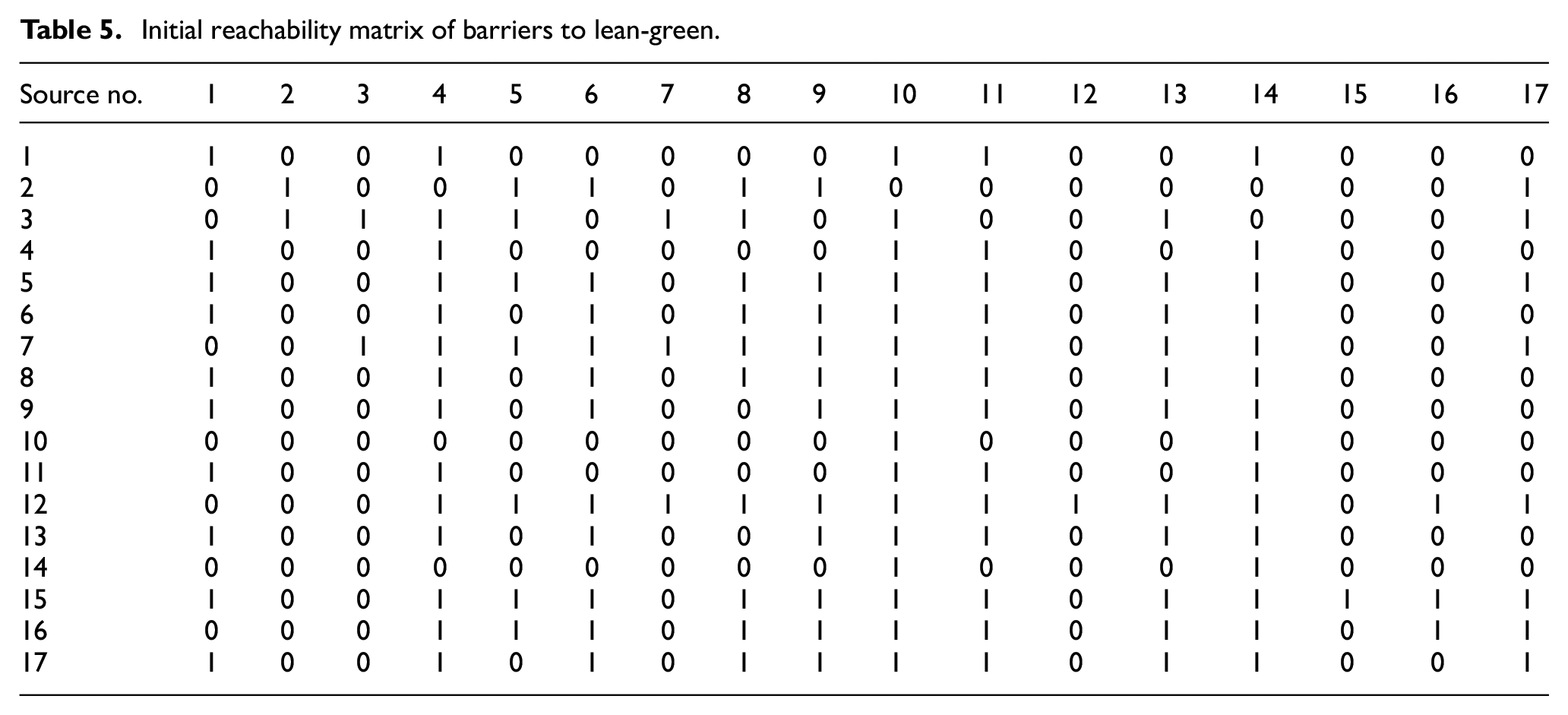
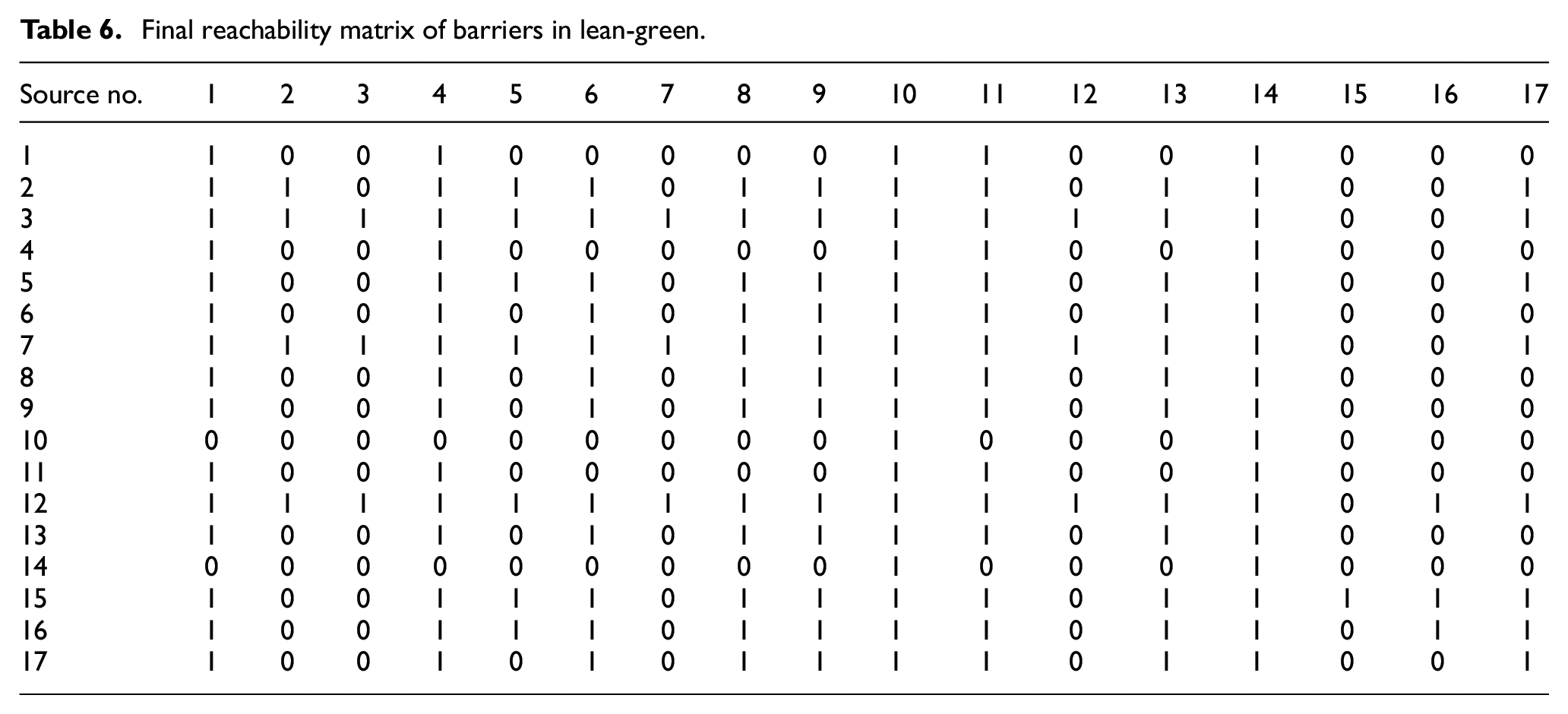
Next, key attention shall be paid to the construction of the final reachability matrix. According to the initial reachability matrix (Table 5) and the elements in the final reachability, matrix is deduced from the initial reachability by applying transitivity rule. This matrix considers all transmission relations among challenges and barriers to lean-green. The rule of transitivity states that if factor A affects factor B and factor B affects factor C, and then factor A necessarily affects factor C. Then, according to equation (1), the final reachability matrix is shown in Table 6.
Final reachability matrix of barriers in lean-green.
Level division
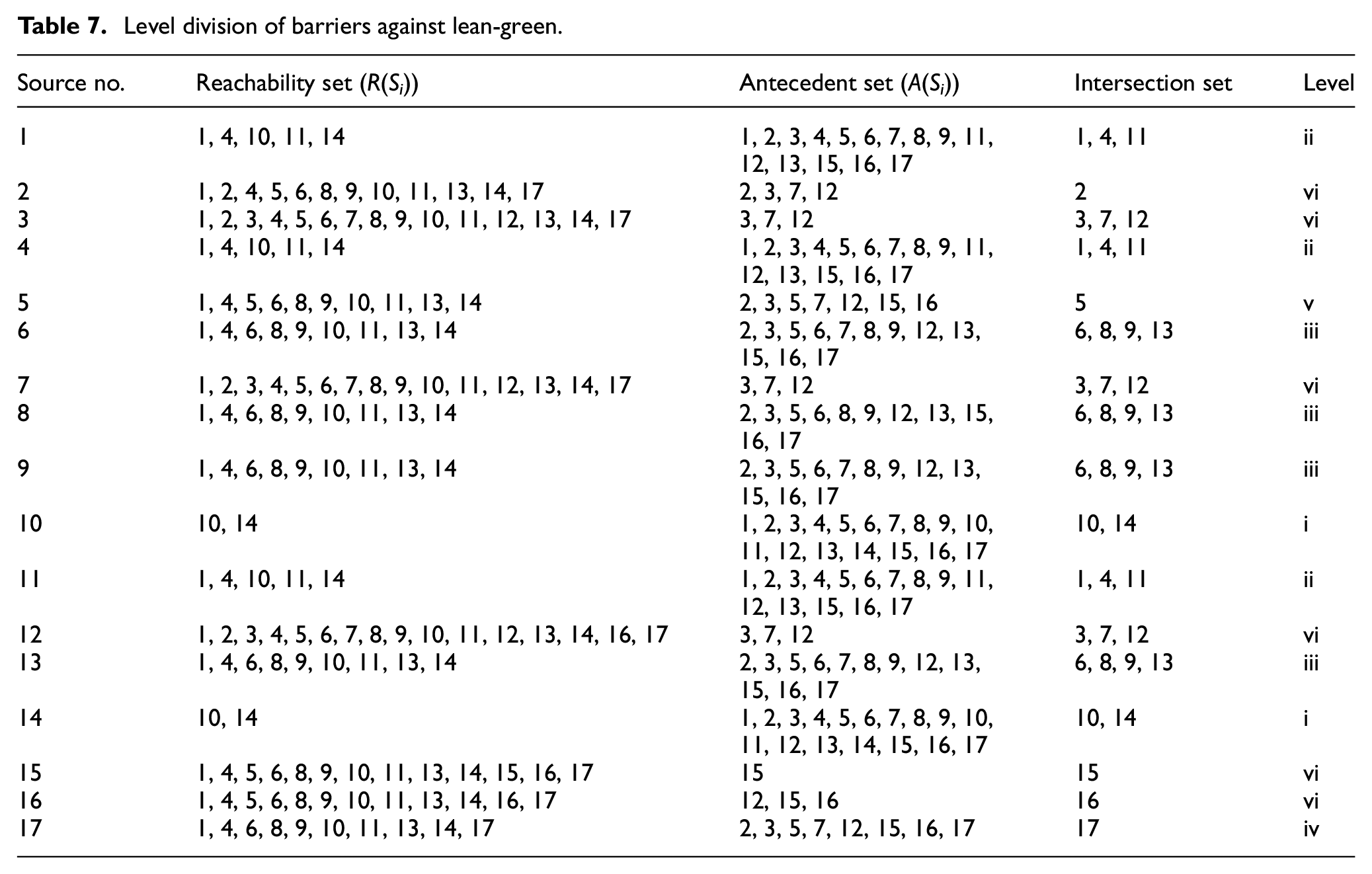
Barrier elements that are identical in the reachability set and interaction set are the highest-level elements in the hierarchical structure of ISM. The highest-level elements in the system are eliminated, and the highest-level elements in the remaining elements are collected according to requirements. Iterations are continued successively until the levels of each barrier are recognised (Table 7). Every barrier has been identified by analysing the final reachability matrix. The barrier for which reachability set and intersection set are identical is given a top-level position in the ISM hierarchy, which has been shown in Table 7. Then, it can be defined as



Level division of barriers against lean-green.
Construction of hierarchical structural relationship
Levels are divided according to the final reachability matrix in Table 7. All 17 barriers are arranged according to the existing hierarchical structure. The practical significance of all barrier elements is transformed into an ISM model. The ISM structure is shown in Figure 4. The ISM is composed of a hierarchical structure and relation directions.
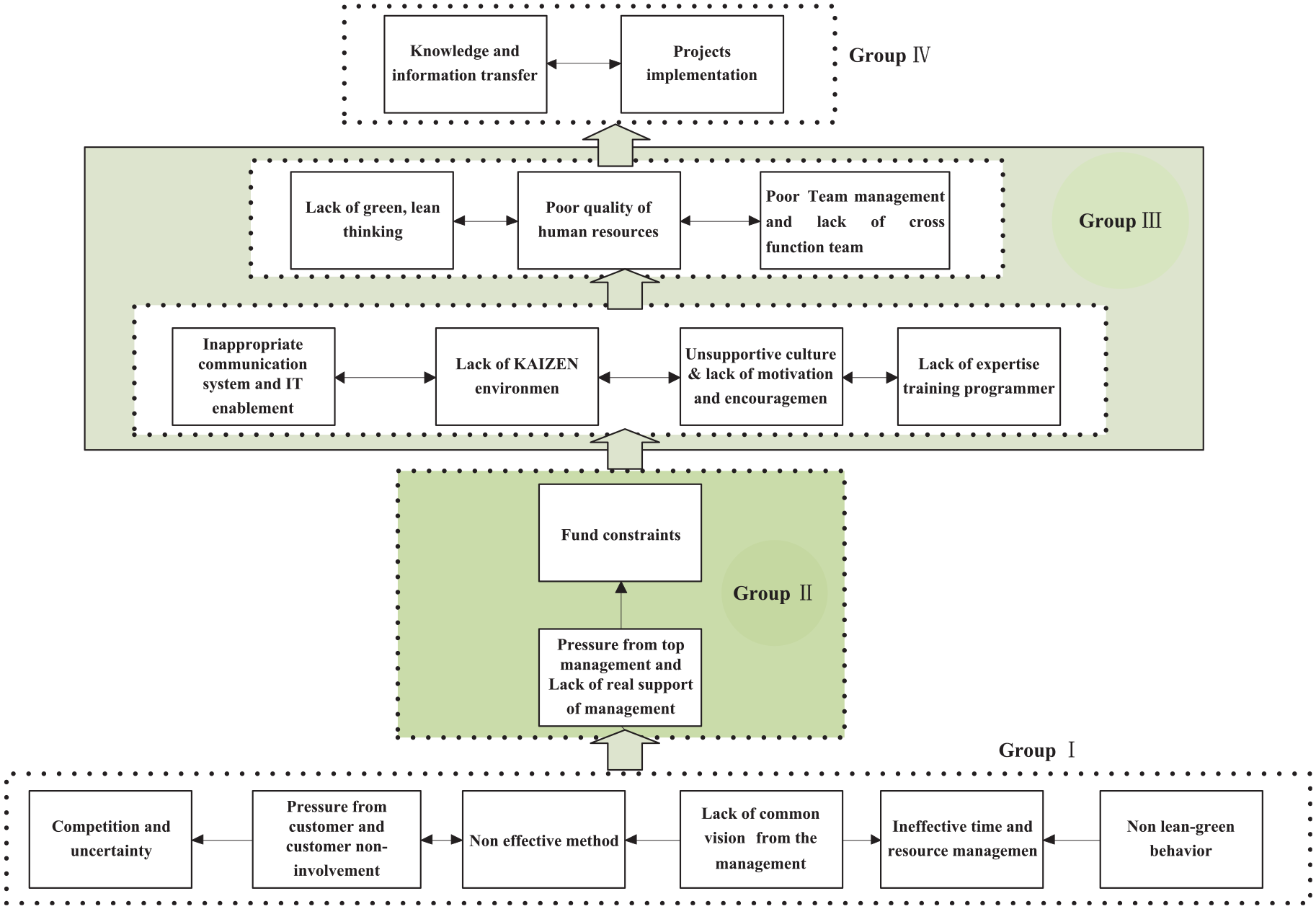
Hierarchical relationship model for barriers to lean-green manufacturing implementation.
Dynamic analysis of relations of barrier elements
We did a dynamic analysis of relations among barriers to lean-green that provides decision-making references for lean-green implementation and sustainable development of enterprises. For the convenience of the analysis, barriers at different levels of ISM are divided into different regions.
The first group includes the elements of competition and uncertainty, pressure from customers and customer non-involvement, ineffective methods, lack of common vision from management, non-lean-green behaviour, and ineffective time and resource management. This group is characterised by high independence and driving force, which can be called the root source of problems and receives high attention from enterprises. These elements become barriers against lean-green.
The second group includes the elements of pressure from top management, lack of real support of management, and fund constraints. This is because a proposal, participation, support, support, and commitments of managers, and enough funds and resources are necessary for enterprises to start and implement lean-green. Funds and resources are important barriers to initiation and implementation of lean-green.
The third group includes the elements of the soft environment related to artificial factors directly and indirectly: the cultural atmosphere, technology, behaviours, and management. These barriers are problems that must be solved currently. All these barriers must be selected, taught, solved, and cultivated appropriately to form an organisational environment and culture conducive to a successful implementation of lean-green and infrastructures for technological growth and management.
Finally, all barriers pertain to a lack of ‘project implementation’ and ‘knowledge and information transfer’. These are also adverse outcomes, manifested by poor implementation of lean-green or failure to achieve the expected implementation. This causes complaints from and dissatisfaction of employees, conflicts among departments, and poor communication among different departments and among different employees.
Conclusion
The common indicator of lean-green that is used across departments of manufacturing companies can adjust and focus on the action goals of different departments. During the implementation of lean-green, employees from different departments can use this indicator to pursue coordinated development of department goals, enterprise goals, and cross-department goals. If employees focus on the same concern, there is stronger cohesion among different departments.
Human resources are a key resource element to achieving sustainable development of enterprises. In this study, an ANP and ISM provided a visual, transparent, and feasible route for personnel management and enterprise management under the strategic environment of lean-green. In particular, the ANP dynamic statistical evaluation framework of cross-department common indexes under horizontal personnel integration was constructed. Personnel integration is the key that contributes to the lean-green management mode of enterprises. In return, lean-green facilitates the sustainable development of enterprises. Thus, higher values could be created through horizontal and vertical personnel (or employee) integrations.
This study expands the resource-based view and the theory of sustainable lean-green to a preliminary exploration of enterprise management. Research results can further support the applicability and operation of the explored theories. However, this needs to be further verified by case studies. At the same time, the gained academic insights must be perfected, enriched, and further explored by other research. Follow-up studies can enrich the research framework from larger levels (e.g. the supply chain) and test theories through specific examples from service enterprises rather than of only manufacturing companies.
Footnotes
Declaration of conflicting interests
The author(s) declared no potential conflicts of interest with respect to the research, authorship, and/or publication of this article.
Funding
The author(s) disclosed receipt of the following financial support for the research, authorship, and/or publication of this article: This study was supported by the National Natural Science Foundation of China (Project number: 51775392), the project of the Education Department of Hunan Province (Project number: 17C0454), and the project of the Hengyang Science and Technology Board (Project number: 2017KJ255).
