




Abstract
Genetics-based design is an effective approach to develop novel products for conceptual design. It could reduce innovation blindness by providing logically structured procedure. However, the major challenge of genetics-based engineering method is that how to identify what information is genetic information and how to use it in a conceptual design process. To solve this problem, this article proposes a conceptual design method driven by product genes. First, a functional expansion model is established based on analyzing the conceptual design process. Second, to respectively compare the functions and structure schemes in the model to biological traits and proteins, a product gene definition composed of behaviors and attributes is put forward. Then, a modeling and coding method of product genes is given analogous to that of biological genes. Third, operation technologies of product genes are analyzed, including breakdown, crossover, recombination, transcription, and translation. Based on this, a conceptual design method driven by product genes is advanced. Finally, an example shows that this method is able to extract key information of products and gives a method of how to use the information in a conceptual design process. Moreover, structure schemes obtained through this method are of high feasibility and have more possibilities of innovation.
Keywords
Introduction
Faced with rapid changes in consumer demand and fierce competition, most modern enterprises focus on low-cost, time-efficient research and the development of highly innovative, high-quality products. 1 Improving product innovation to meet the needs of the consumers has become the key factor influencing the competitiveness between enterprises. 2 Product innovation is achieved through the design process. Conceptual design, as the early stage of product design, is recognized as having the minimum constraints for designers and the greatest innovation possibilities. Thus, it is able to best showcase experiences, wit, and creativity of the designers. 3 Research 4 has shown that conceptual design, with an input equivalent to 5% of the total cost, determines 70%–80% of the cost and more than 80% of product attributes. Moreover, bad judgment at this stage can cost 30–70 times of cost and time during the trial production stages. 5
However, sometimes it is hard to develop novel solutions for a conceptual design. Genetics-based design (GBD) method is an effective approach to develop novel products. 6 It provides a logically structured procedure to reduce the blindness to innovation and is a research highlight that has caused a strong interest in researchers in recent years. At present, the major challenge of GBD is to identify the genetic information and use it in a conceptual design process. 7 As such, in order to solve these problems, the authors propose a new conceptual design method driven by product genes in this article. Product genes are analogues of genes or DNAs in biology. The main idea of this article is to first analyze the conceptual design process through function modeling, then abstract the definition of product genes from the function model, establish a model and analyze the operating techniques of the product genes, and finally propose a new conceptual design method driven by product genes and verify the method using a piercing device of a toy car.
Relevant literatures
The function–behavior–structure model
Conceptual design is the process of generating a structure scheme for a product from its functional requirements. 8 The generation is through specific design procedures and is in essence a process of functional expression. Over the past few years, many methodologies3,9–14 have been proposed around functional decomposition and partial solution manipulation techniques originally introduced by Pahl et al. 15 The main idea of these methodologies is to first decompose a design problem into many smaller problems and then build conceptual solutions based on intended functions. Function modeling methods abstract the intended functions of a solution from customer needs, which will ideally remove the designers’ biases that may be introduced by focusing on specific solutions too early in the design process. This abstraction helps designers generate more complete conceptual solutions and balance design choices among alternative components with the same functions. 16 Therefore, function modeling is often considered as a fundamental and a key stage in a conceptual design process. 3
Various function models have been proposed during last few years. In 1990, artificial intelligence (AI) research scientist Gero 17 proposed a real-time design-thinking prototype based on behavioral reflection theory. He analyzed the influence of an ever-changing design situation on design process, combined design process with real-time information processing, and put forth a scenario-based function–behavior–structure (FBS) model that received widespread recognition in the design community. The FBS model is in line with designers’ thoughts and product design process and is generally accepted as the most typical functional expression model at present.
Many researchers have attempted to apply and expand this model. Gero and Kannengiesser 18 proposed eight basic design processes in a product design based on the FBS model framework and established a situated FBS model that can realize conceptual expression of the dynamic world. Based on an analysis of relationship among elements in the FBS model, Qian and Gero 19 established a formulation of design knowledge that provides theoretical support for the analogous design of the products. Umeda et al. 20 defined the relationship between product attributes and various objects as states and established a function-expression model based on functions, behaviors, and states. This model can provide support for a conceptual design in the analysis and integration stage. Vermaas and Dorst 21 clarified two problems that existed in the FBS model proposed by Gero 17 and tried to solve these problems from a philosophical point of view.
FBS model proposed by Gero involves several pitfalls in the context of practical application, the biggest pitfall is that it does not consider the key elements affecting the function-expression process. Scholars therefore have expanded it to add environmental factors, state factors and so on. However, not all such factors are related directly to products, which are wide ranging, involve complex knowledge, and are difficult to control.
GBD
GBD is a design mode to solve engineering problems. It uses bio-genetic principles as analogues and is a benefit for knowledge reuse and product innovation. 7 However, GBD is still at the exploring stage and relative researches are few. Some researchers introduced a product gene concept. They tried to extract key information that impacts conceptual design process through learning from bio-genetic engineering technologies. For example, by analyzing similarities between the evolution of living beings and the development of manufactured products, gene-engineering techniques have been applied to develop a bionic design theory and methodology for product innovation. 22 Virtual chromosomes for products were proposed via artificial differentiation for product innovation. These virtual chromosomes must be deduced according to their function requirements because products do not have physical chromosomes. It has been suggested that product genes are collections of knowledge consisting of functions, principles, and structures. 23 By analyzing the division of product examples, methods for expressing and acquiring product genes were analyzed, and an evolutionary design method based on a product family was proposed. A biomechanical engineering idea was applied to a product-assembly system, and a method for modeling a product-assembly system involving constraints was proposed. 24 Based on object-oriented thinking, a feature-based functional expression model was put forward. 25 Product genes were defined as the information collection of characteristics of objects and solutions and then gene operation technologies were analyzed and a conceptual design framework was proposed. Based on an analysis of biological and product similarities, a product gene definition based on functional surfaces was proposed, and its corresponding data structure was established by Engstr et al. 26 Chen et al. 27 presented a genetics-based approach for solving conceptual design problems when dealing with changes in functional relationships. A functional representation model based on verb attributes was proposed to supply computers with sufficient functional information for a principle conceptual design. Product genes bridge the gap between relationship change–based functions (RCFs) and their corresponding principle solutions (PSs). However, the proposed method needs to consider the relationship among changes in objects, environments, and other related information, which is very complicated. Besides, the method can solve only the function–behavior mapping problem and does not consider the behavior–structure mapping problem.
Due to the different research fields, research perspectives and focus of each researcher, the definition of product genes has not been unified so far. Moreover, the conceptual design based on product genes is still in the exploratory stage, which requires more in-depth research. In this article, the connotation of product genes is extracted by analyzing a conceptual design process by establishing a functional model. Based on existing researches, this article considers critical product attributes that affect the function-expression process and formulates an FBAS function model based on functions, behaviors, attributes, and structure schemes. Then, a product gene definition composed of behaviors and attributes is proposed. After that, modeling, coding method, and operation technologies of product genes are researched, and a conceptual design method driven by product genes is proposed.
Function-expression model
Conceptual design of products analyzes functional requirements to ultimately produce structure schemes. It is in essence a process of function realization and expression. When making a purchase, consumers look for both functions and quality. A change in attributes of an object indicates a change in its nature. Therefore, attributes have great impacts on product performances. Functions and attributes appear together and are inseparable. 26 A functional analysis includes an attribute analysis, and for completeness should be called a “function and attribute analysis.”
In this article, the key elements in the conceptual design were analyzed by functional modeling. Key attributes affecting the function expression were added to the classic FBS model, and a function-expression model was established based on functions (F), behaviors (B), attributes (A), and structure schemes (S), as shown in Figure 1.
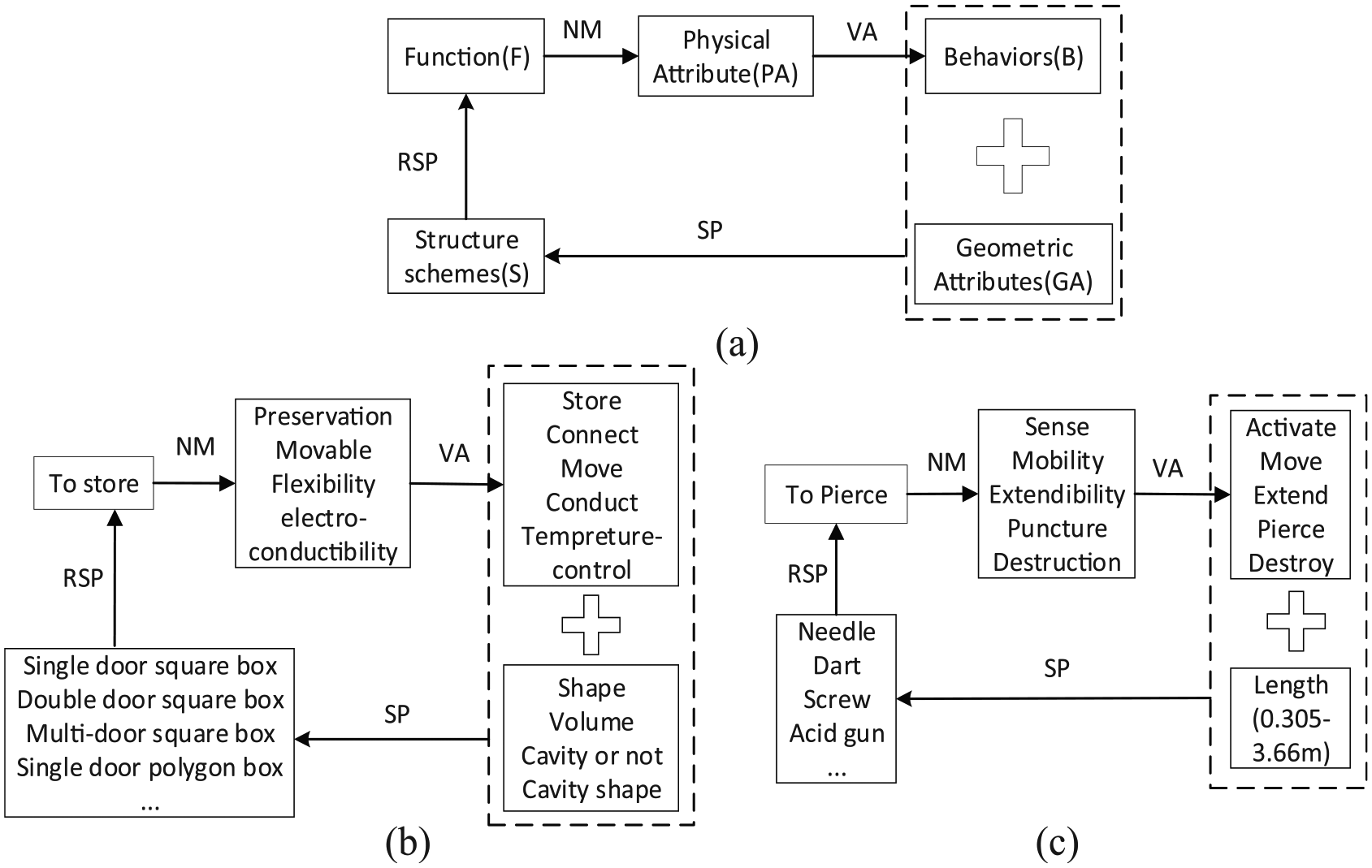
FBAS function-expression model and examples: (a) FBAS function-expression model, (b) function “to store” expression model of refrigerator, and (c) function “to pierce” model of a toy car.
In Figure 1(a), functions answer the question of what to do, referring to the purpose of product design, which can be expressed in the form of “to + verb + object.”
Behaviors represent how functions are implemented and they can be expressed using behavioral verbs. Functions are achieved through a series of actions. Actions achieving a certain function are related, sometimes in a parallel way and sometimes sequentially, in the order of their execution. For example, to affix part A to part B, the responding actions are grasping, locating, and fixing, successively. Research has shown that any behavior can be deduced from a product attribute and certain physical phenomenon. 12
Attributes refer to characteristics of an object, which define objects of different categories and can be expressed by parameters. Attributes here refer to key attributes affecting implementation of functions, which are mainly physical attributes (PAs), geometric attributes (GA) of products. It is worth noting that attributes are sometimes related, such as the relationship between product quality, volume, and density ρ = m/V. 25 PAs and GAs act as a bridge in function–behavior mapping process and behavior–structure mapping process, respectively. In the former mapping process, if key PAs affecting this process are not taken into account, behaviors derived from functions may be incomplete. For example, as shown in Figure 1, if key PAs “Preservation,”“Movable,”“Flexibility,” and “Electro-conductibility,” affecting function “to store” are not taken into account, behaviors derived from this function may only be “store.” In the later process, it not only needs to know behaviors that a structure scheme needs to have, but also has to consider key GAs that define a product structure. In this way, structure schemes can finally be determined. GAs here are fixed information collection of shape, external dimension, and internal characters.
Structure schemes refer to supporters of functions, generally including selections and layouts. A product structure can be divided into product, units, and parts. Product can form through units assembling. Here, material information is not taken into consideration in structure scheme determination.
To describe relationships among various elements in the FBAS model, ontology language of engineering domain is adopted. Therefore, relationships between any two elements can be expressed by relationships between ontologies.28,29
F–PA relationship
Functions are generally nouns or noun phrases, and attributes are generally adjectives or adverbs. Therefore, relationships between these two elements can be expressed by noun-modification (NM) relationship.
PA–B relationship
Behaviors are generally expressed by verbs. Therefore, relationships between behaviors and attributes can be expressed by verb-modification (VA) relationships.
B–S relationship
Structure schemes can be recognized as action implementers. Thus, B–S relationship can be represented as subject–predicate (SP) relationship.
F–S relationship
In a conceptual design, functions can be seen as problems to be solved, and structure schemes can be seen as solutions to these problems. Therefore, relationships between them can be expressed by terms of problem–solution relationships (RPSs).
PA–GA relationship
Sometimes, PAs and GAs are not always in dependent. Take refrigerator as an example, the PA “preservation” and GA “volume” influence each other: the better the preservation is, the larger the volume is; the reverse is also true. However, in an FBAS model, PAs are considered before GAs. Moreover, the merits of PAs are not considered in this model. Thus, GAs in this model do not have influences on PAs. As GAs are considered behind PAs in the FBAS model, the influence of PAs on GAs is indirectly considered.
The FBAS model has been illustrated through two examples. As shown in Figure 1(b), function “to store” of a fridge derives corresponding key PAs (e.g. “Preservation,”“Movable,”“Flexibility,” and “Electro-conductibility”) through NM relationships. Then, corresponding behaviors are derived through VA relationships, including “Store,”“Connect,”“Move,”“Conduct,” and “Temperature control.” Key GAs are generally information of “Shape,”“Volume,”“Cavity or not” and “Cavity shape.” This GA information together with behaviors will determine the final structure scheme, such as “Single-door square box,”“Double-door square box,”“Multi-door square box,” and so on. In addition, as shown in Figure 1(c), function “to pierce” of a toy car derives corresponding key PAs (e.g. “Sense,”“Mobility,”“Extendibility,”“Puncture,” and “Destruction”) through NM relationships. Then, corresponding behaviors are derived through VA relationships, including “Active,”“Move,”“Extend,”“Move,”“Pierce,” and “Destroy.” Key GA is generally information of “Length,” whose value is required between 0.306 and 3.66 m. This GA information together with behaviors will determine the final structure scheme, such as “Needle,”“Screw,” and so on.
The derived structure scheme exhibits its own functions. If these functions do not match objective functions, PAs will be revised and the derivation process will be repeated. This process is iterated until it reaches the best functional scheme that meets the design requirements.
Compared to FBS model, the FBAS model can better represent the conceptual design process because it considers the key attributes, and the behaviors gained according to the model are more comprehensive. In this way, more solutions can be obtained according to these more comprehensive behaviors.
Product genes
Definition of product genes
The biological genes, basic units of heredity, are specific nucleotide sequences carrying genetic information on DNA or RNA molecules. 30 Genes are passed to next generation by gene replication so that offspring will show traits similar to their parents. There are two basic features of biological genes. One is the ability to replicate themselves faithfully to maintain basic characteristics of organisms. The other is the ability to undergo variation, which produces predominantly pathogenic genes with only a small portion being nonpathogenic. The nonpathogenic variation, however, can provide raw material for natural selection so that individuals with best adaptive ability can be selected by nature.
Similar to biological genes, product genes also have characteristics of heredity and variability. Offspring can retain beneficial properties of parents through product gene replication and achieve innovation by means of variation.
In this article, analogous to the structure of biological genes, functions in the FBAS model are analogous to biological characteristics such as single or double eyelids. Furthermore, structure schemes are analogous to biological proteins such as hemoglobin. Therefore, product genes can be defined as a collection of standardized, heritable essential information specific to expression of particular functions, including behaviors and key attributes for achieving functional elements. Behaviors and attributes for performing functional elements are defined as bases, and the mapping relationship between them as hydrogen bonds. The structure of product genes can thus be expressed as a double helix, as shown in Figure 2.
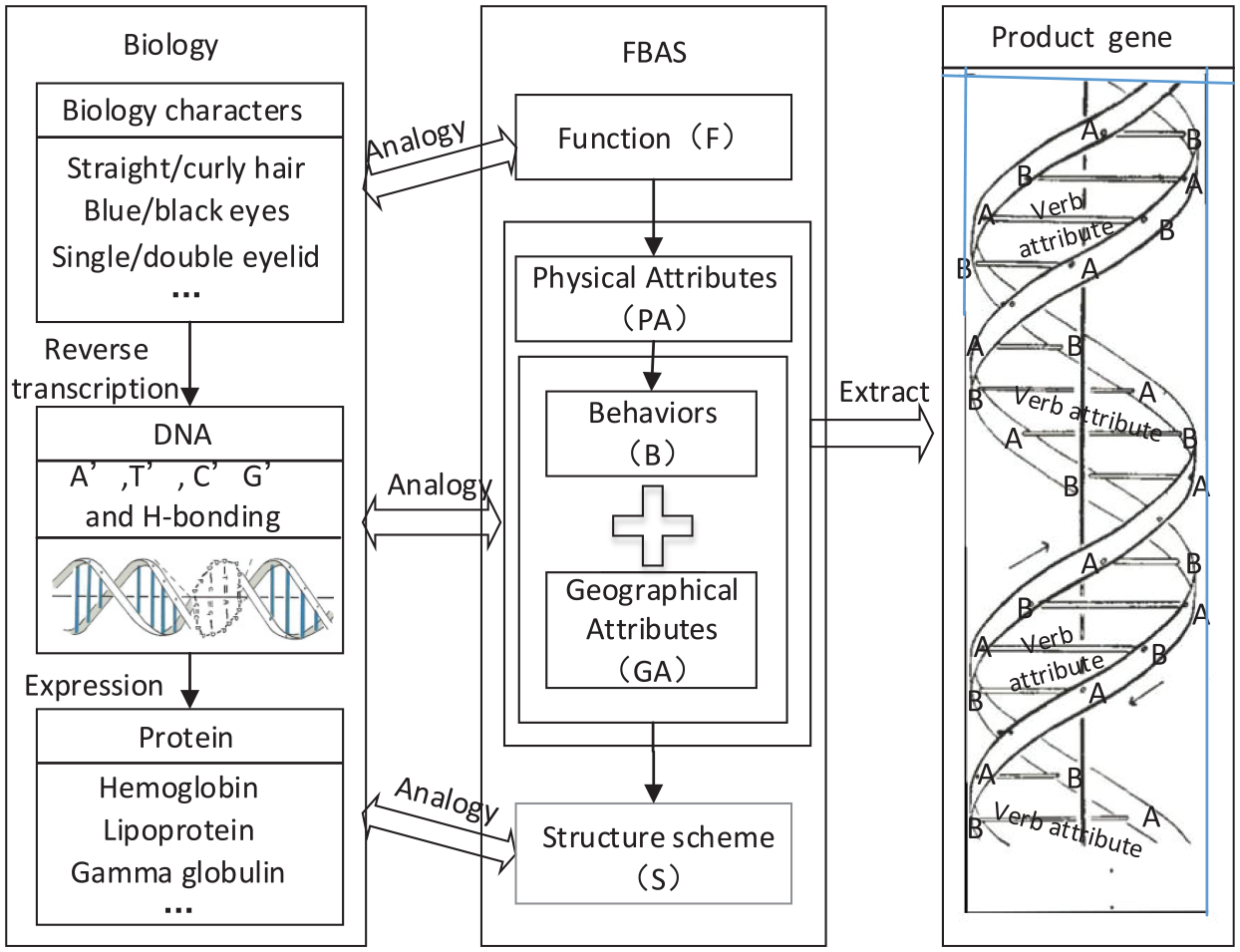
Definition and extraction of product genes.
This definition is a further modification and perfection of the double-stranded structure of product genes given by Li et al. 31 It summarized the old version of knowledge in a conceptual design process and clearly defined it as behaviors and key attributes influencing function expression.
Product gene model
According to the definition of product genes, the product gene model can be expressed as

where PG is the product gene, N is the product gene address, B is the behaviors, A is the attributes, R is the relationship between behaviors and attributes.
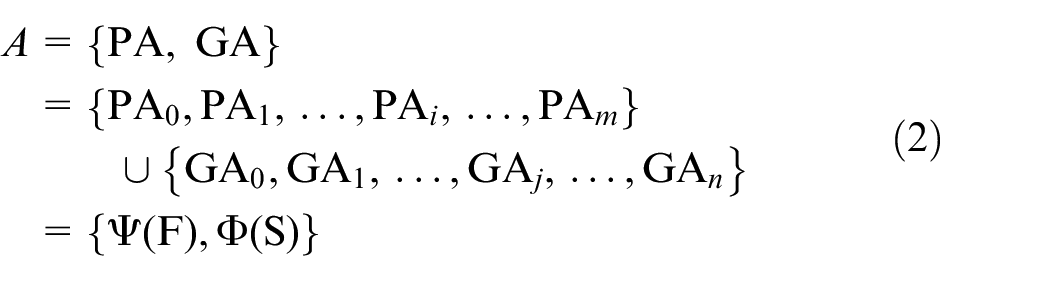
A is composed of PAs and GAs, in which PAs are physical attributes supporting function units, GAs are geometric attributes that make limitation functions in scheme generation. Assume that the
Similarly, assume that the

The relationships between B and A are actually relationships between B and PA. Therefore, R can be expressed as

A coding method of product genes
Analogous to genetic coding method, product genes can be divided into coding and non-coding regions. One product gene or some product genes mapping with one function unit is/are connected into a chain. Many chains together can finally determine objective functions of a product. Coding region encodes gene address and bases, whereas non-coding region includes functional units corresponding to genes, start, and termination codons, as shown in Table 1.
A coding chain of product genes.

PA: physical attribute; GA: geometric attributes.
In the coding chain,
This coding form is very similar to the coding form of biological genes. This makes it easier for designers to research product genetic engineering by learning from bio-genetic engineering. In a coding chain, each piece of product genes is separated by their corresponding function elements, Start and End. The composition of product genes is clear. In this way, designers are easily able to encode product genes according to their function elements.
Conceptual design based on product genes
Manipulation technologies of product genes
In bio-genetic engineering, biology genes or DNAs operating techniques mainly include breakdown, crossover, recombination, transcription, and translation. Analogous to DNA operating techniques, manipulation technologies of product genes also mainly include breakdown, crossover, recombination, transcription, and translation. These techniques are simply described as follows.
Breakdown
A product gene is broken at a random location in the coding region and forms a gap for crossover operation, while the non-coding area remains unchanged. In this operation, each position of the coding area has opportunities to be traversed.
Crossover
Any of the two broken product gene chains are crossed by inserting base sequences of one chain into the gap of the other. Base sequences mainly refer to information of B and A of product genes.
Recombination
Base sequences inserted into a gene gap are combined with base sequences of the inserted gene to obtain a combined gene.
In crossover and recombination processes, two specific rules need to be followed:
Rule 1
When a fragment of one gene chain is inserted into a gap of the other, only base sequences at this gap address of the second chain are randomly recombined with the fragment of the first chain. For example, two product gene chains and their breakdown addresses are as follows.
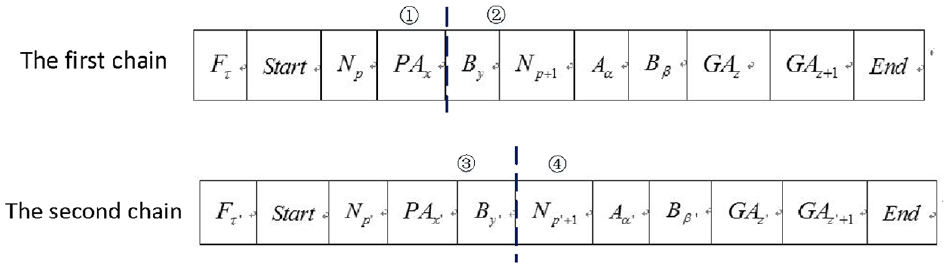
Suppose that ① of the first chain is crossed into a gap of the second chain, regardless of the non-coding area and gene address of the first chain,
The recombined gene chain table.

PA: physical attribute; GA: geometric attributes.
Rule 2
Only if two functional units, which are at the same level in functional decomposition hierarchy and one executed next to another do, can their corresponding gene chains be crossed and recombined. Otherwise, they cannot be crossed and recombined. This is because, if functional units corresponding to two genes are not at the same level, behaviors and attributes of these two genes, respectively, achieving function elements are not coherent. This would lead to a situation in which new function units corresponding to combined gene chains does not meet objectivity. Therefore, these crossover and reorganization operations would make no sense. In order to avoid such operations, Rule 2 was put forward. Take a car as an example, its function hierarchy is shown in Figure 3. F11 and F32 are not at the same level, their corresponding product gene chains cannot be crossed and recombined. Suppose F31, F32, and F33, respectively, refer to “to go straight along the north-south road,”“turn left at the crossroads,” and “go straight along the east-west road.” According to Rule 2, corresponding genes of F31 and F33 cannot be crossed and recombined.
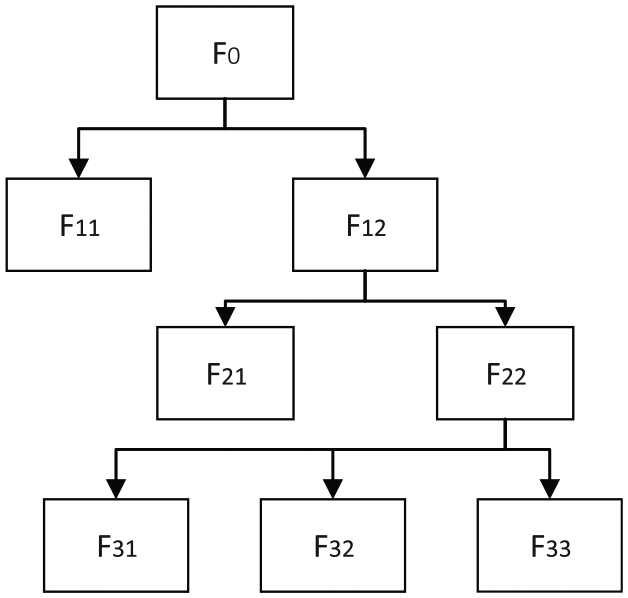
Function breakdown hierarchy.
Transcription
A combined gene, obtained through crossover and recombination operations, will only be transcribed if its corresponding function element obeys objective laws. Function units conforming to the objective law refer to some functions that a particular product can objectively possess. Otherwise, no transcriptions perform. Then, effect solutions will generate. Effect solutions here refer to feasible realizing ways of the function element corresponding to this combined gene.
Translation
This refers to the generation processes of structure schemes corresponding to effect solutions obtained by transcriptions. These structure schemes correspond to a product gene and implement its corresponding function unit. Structure schemes for all function units are combined randomly to form the final structure scheme of a product.
Conceptual design method driven by product genes
Analogous to the central dogma of bio-genetic engineering, the central dogma of product conceptual design can be expressed as shown in Figure 4. Product genes generate effect solutions through transcription, followed by the formation of structure schemes through translation.
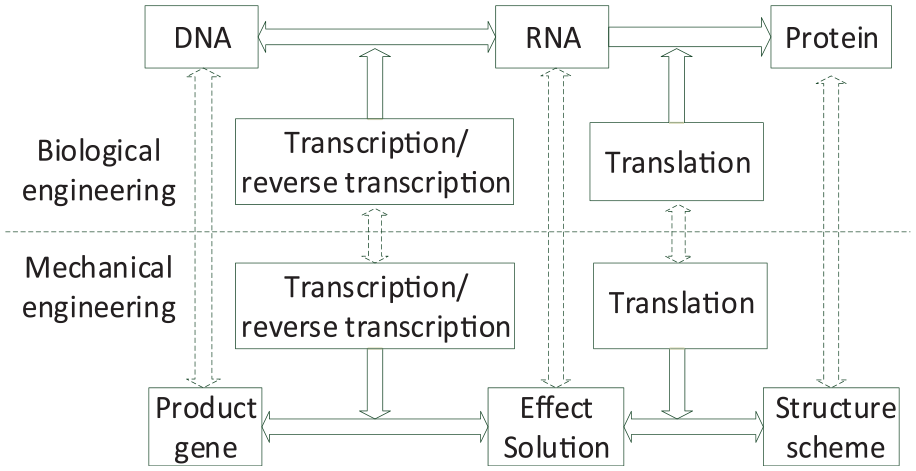
Central dogma.
According to the central dogma, a framework for product conceptual design can be drawn using an analogy of biological organism-generating process, as shown in Figure 5.
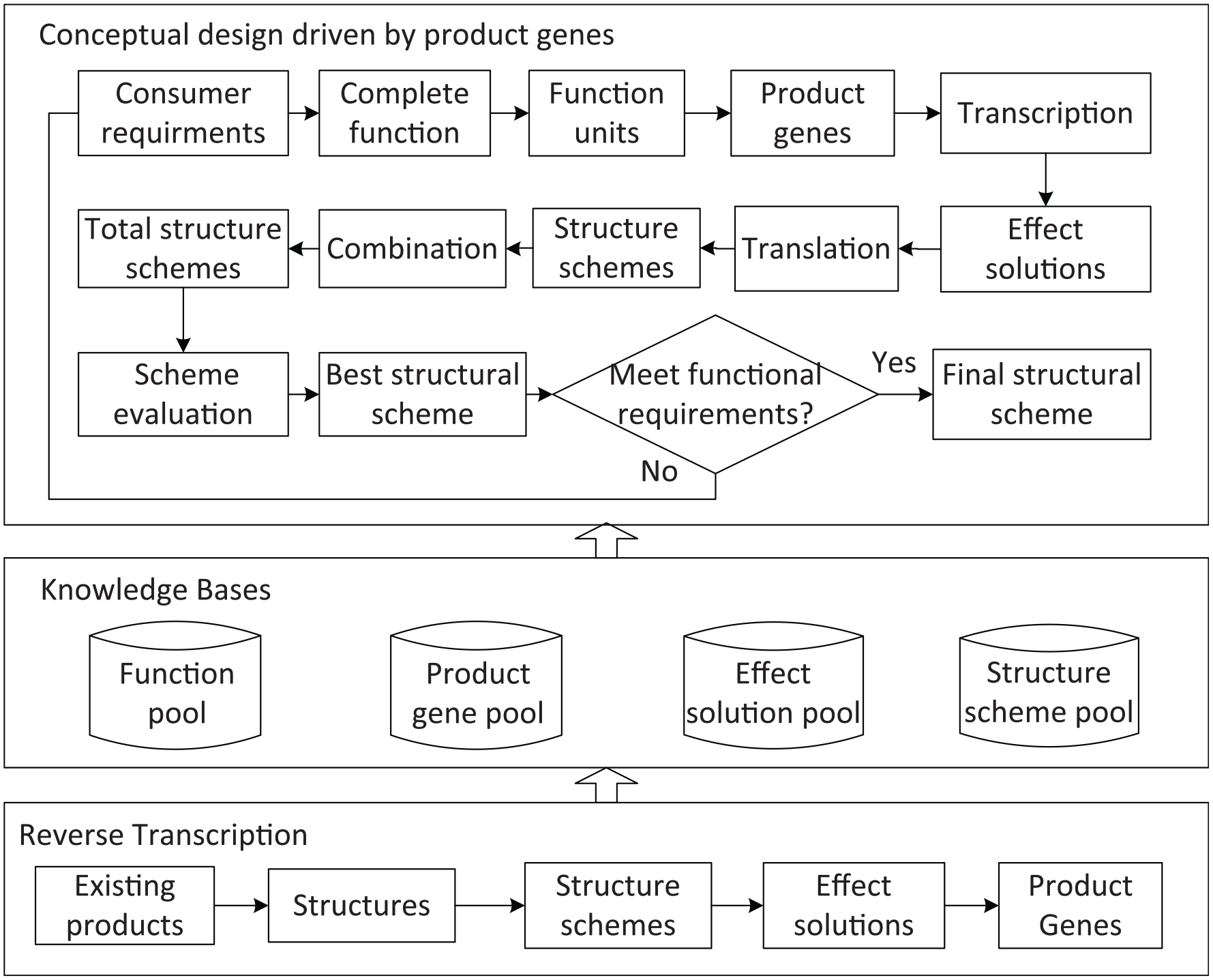
Framework for conceptual design driven by product genes.
According to this framework, conceptual design process mainly includes the following seven steps:
Functional decomposition: Analyze product design requirements to extract functions that the product must meet and then use decomposition and reconstruction principles to arrange them into a hierarchy.
Product gene acquisition: According to functional units obtained in step (1), corresponding product genes satisfying functional units could be found from product gene pool. If there is no matching product gene, product genes need to derive them according to relationships among elements in the FBAS model, and save them into product gene pool.
Breakdown, crossover, and recombination technologies: Perform breakdown, crossover, and recombination to produce more recombinants of product genes, and store the ones fulfilling function requirements and obeying natural law into product gene pool.
Transcription: Transcribe the original product genes and combined genes meeting function requirements and obeying natural laws to obtain their corresponding effect solutions.
Translation: Translate the effect solutions obtained in step (4) to gain their structural schemes.
Combination: Structural schemes obtained in step (5) are combined randomly to gain feasible solutions of the designed product. It should be noted that the structure schemes were combined, according to the execution order of their corresponding function elements, to form structure schemes of the components that form the design product or the structural schemes of the product itself.
Optimization: According to appropriate evaluation standards, a solution that best meets design objectives is selected from feasible solutions received in step (6). This best solution is the final structure scheme of the objective product. The optimization method selected could be a simple optimization equation based on multiple targets, or a complex optimization method, such as genetic algorithm, 32 neural network, 33 and decision tree. 34
Through breakdown, crossover, and recombination technologies of product genes, new combined genes and sometimes innovative function units could be received. According to them, corresponding structural schemes could be obtained through the method provided in this article. Therefore, this method sometimes could provide more possibilities for product innovation.
As shown in Figure 5, conceptual design knowledge pools mainly includes function pool, product gene pool, effect solution pool, and structure scheme pool. The function pool can refer to existing function libraries, such as the function basis provided by Stone and Wood. 35 Then, product gene pool, effect solution pool, and structural scheme pool can be deduced according to the FBAS model proposed in section “Function-expression model.” According to existing product cases, structure schemes of a product could be summarized and then effect solutions are abstracted according to them. Finally, product genes are deduced according to the effect solutions. This is a general creation process of knowledge bases. The creation of knowledge bases is not the focus of this article. Due to space limitations, it will not be described in detail.
Example
The design method proposed in this article was verified by a toy car example. The car’s running track was designed, as shown in Figure 6. 36 The track is L-shaped and the lengths of the two right-angled sides are 10 and 8 ft., respectively. At the end of the track, a balloon is located below a 1” thick plastic foam. In addition, many obstacles are placed on the track, including a hump, a swamp, a gravel plain, a grease plain, and a sand pit area.
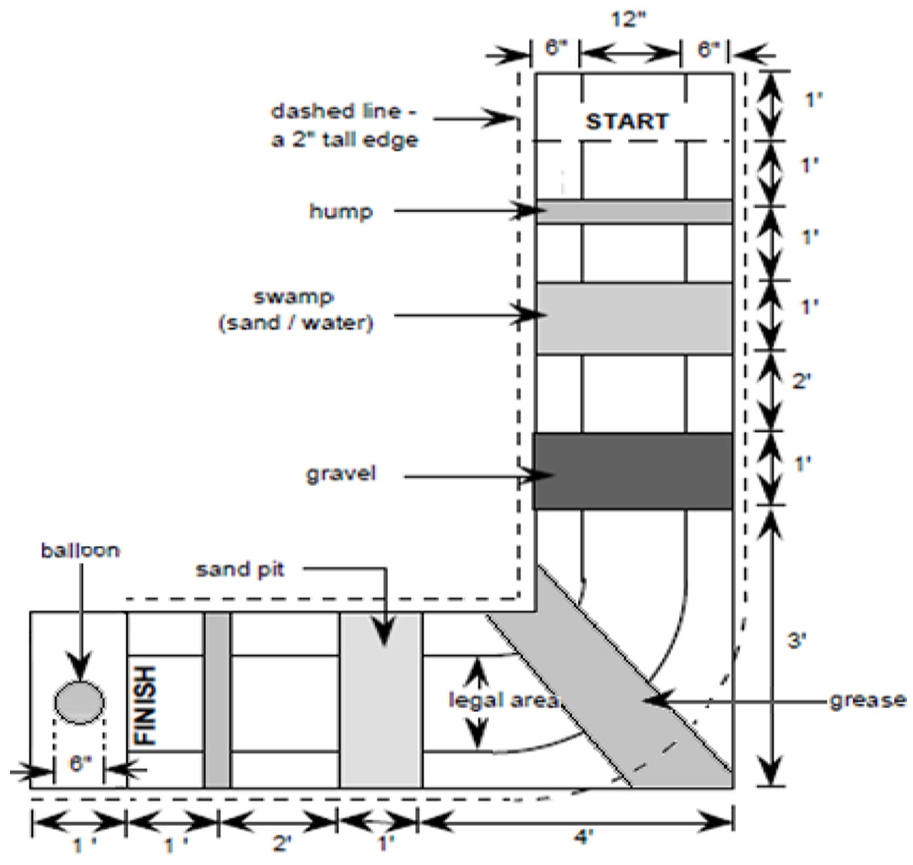
Diagram of a toy car running track.
The goal function of the car is to pierce the balloon at the track end successfully. To achieve this goal function, the car not only needs to be capable of navigating obstacles including a hump, a swamp, a gravel plain, a grease plain, and a sand pit area but also go through the “L” shaped track. In addition, the car must pass through a plastic foam and pierce the balloon at the end. In the working process, the car cannot go beyond the dotted line on both sides.
Conceptual design process
According to the requirements, the toy car should have the following components: a traveling system, a barrier-crossing device, and a piercing device. Here, the pierce device was used as an example to verify our method.
To accomplish the piercing function, the piercing device must have three functions: activate the piercing device and extend it to the position of the balloon, and pierce the balloon.
1. Function decomposition.
According to decomposition and reconstruction principles, the goal function is divided and numbered. A hierarchical structure is obtained as shown in Figure 7.
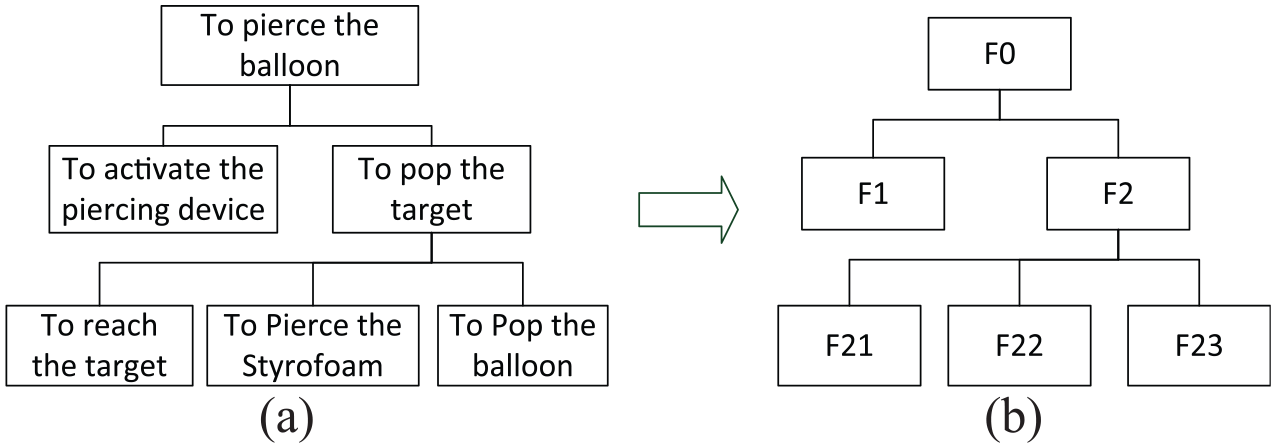
A hierarchical structure of piercing device function: (a) symbolic representation of Figure and (b) breakdown of piercing device function.
2. Product gene acquisition
As shown in Figure 7, functional units of the piercing device are mainly
Section of product gene.
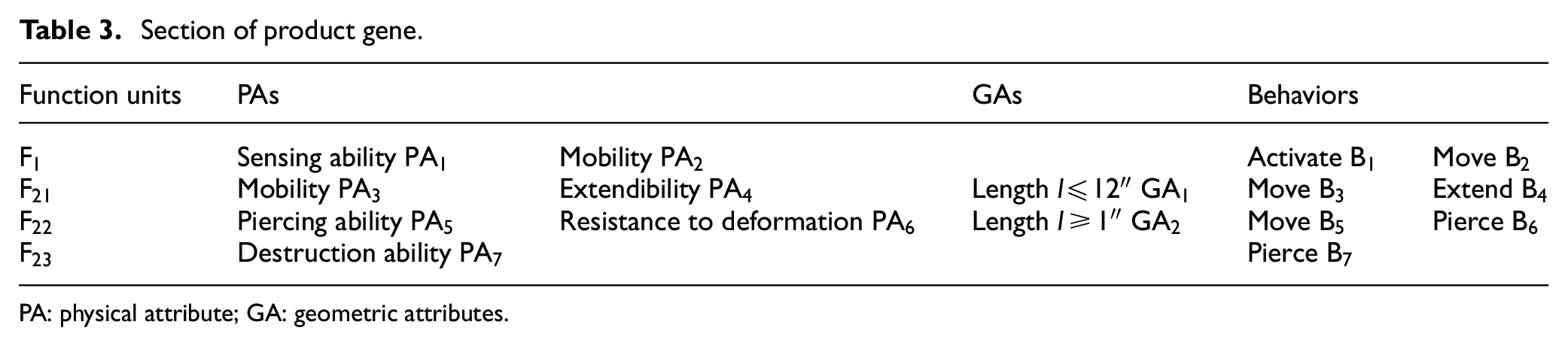
PA: physical attribute; GA: geometric attributes.
3. Decomposition, crossover, and recombination process of product genes
Encoding every product gene chain:
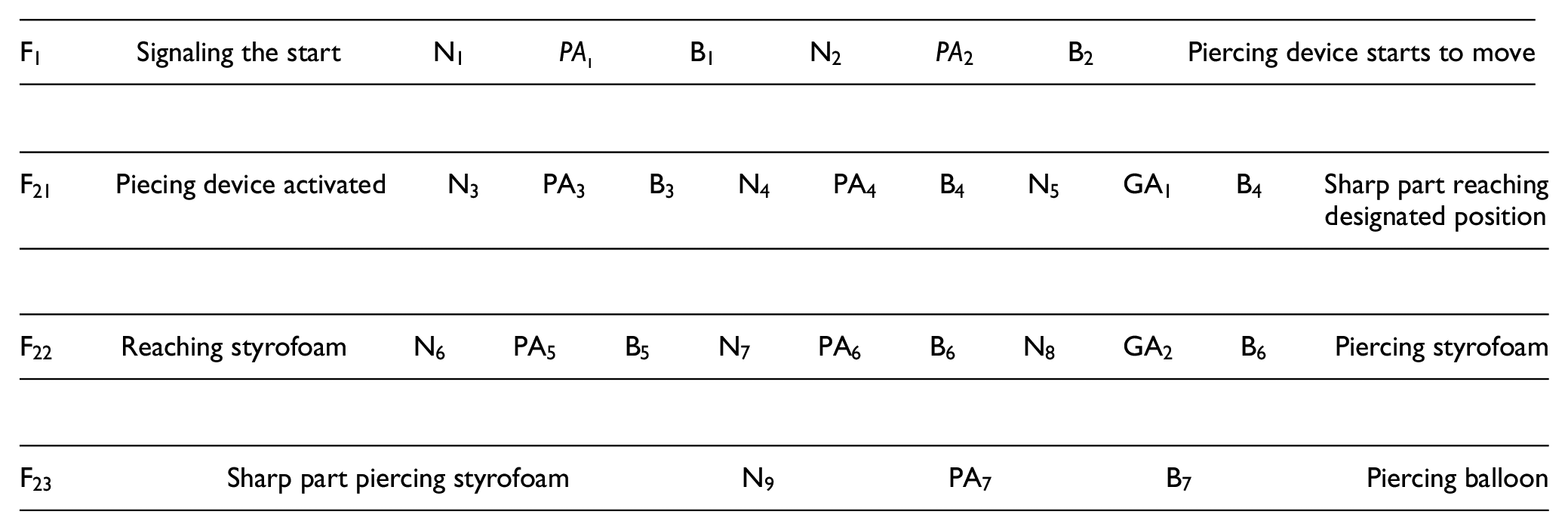
Decomposition
Gene chains corresponding to function unit
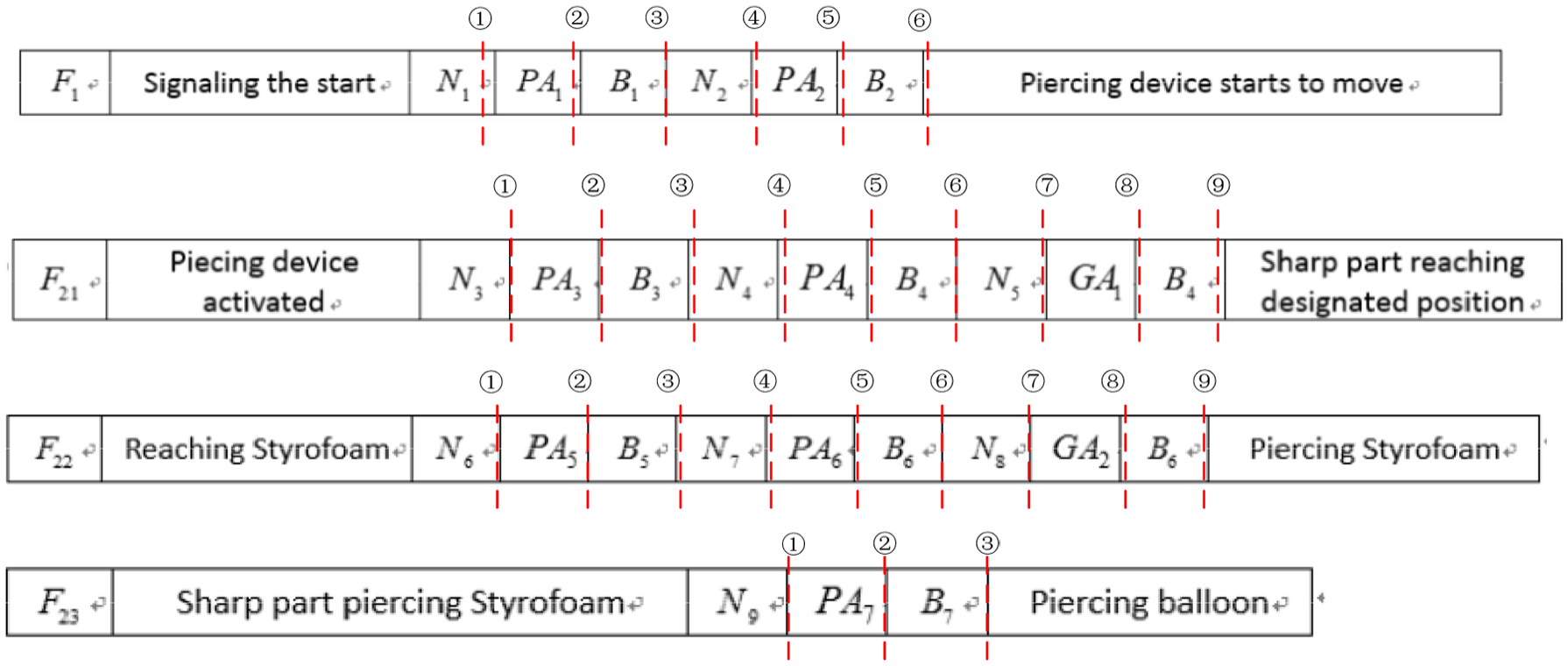
Possible decomposition positions of gene chains corresponding to
Recombination
Suppose the top half
Possible combinations and achievable function units.
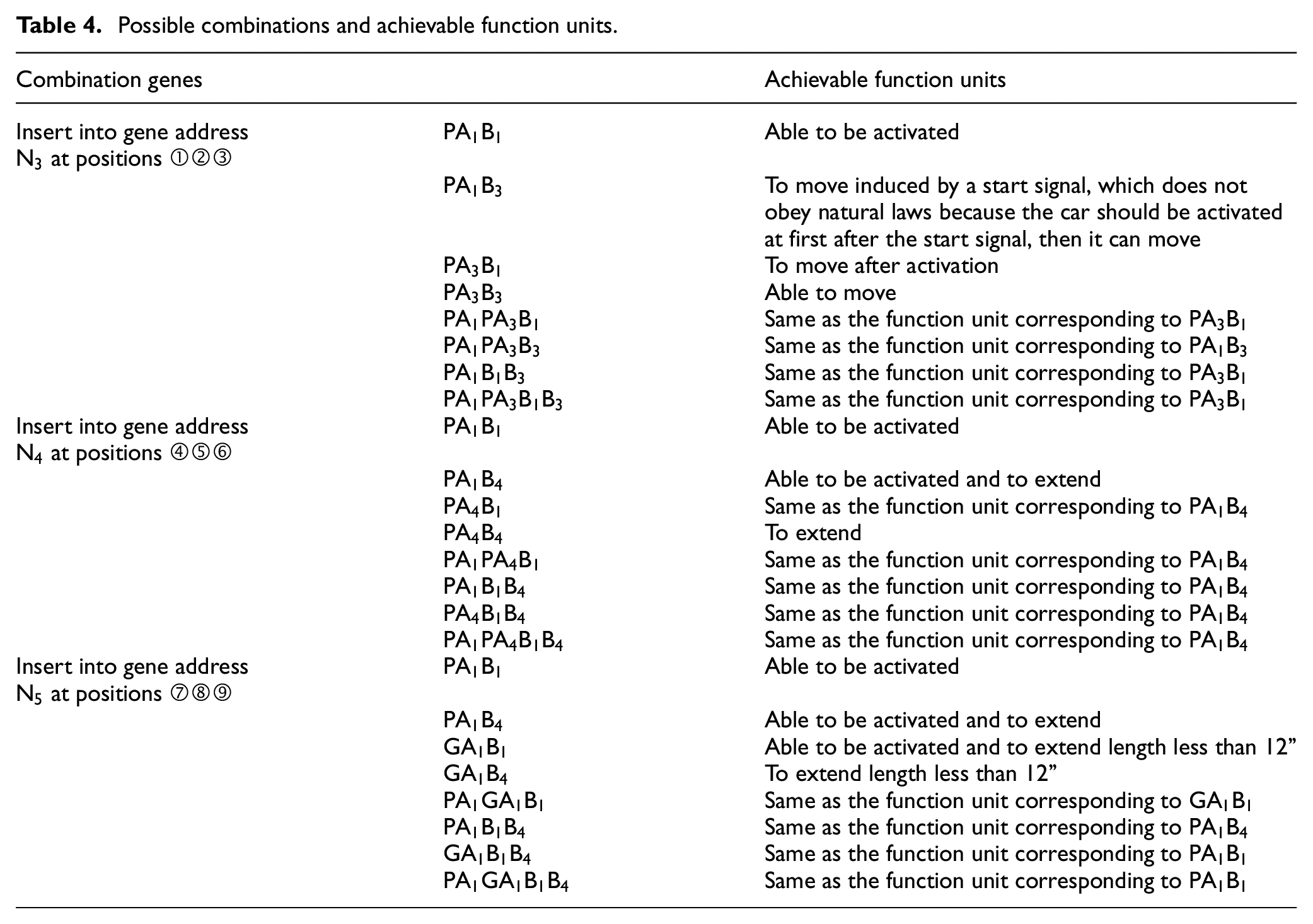
According to Table 4, function units conforming objective laws gained after the aforementioned recombination are as follows: (1) “Able to be activated,” (2) “Able to move after activation,” (3) “To extend,” and (4) “To extend to a length
Since function units
Assume break positions of gene chains for
It is worth noting that one gene chain can only be crossed into another one once in a structure-generation process. Take the gene chain for
4. Transcription of product genes.
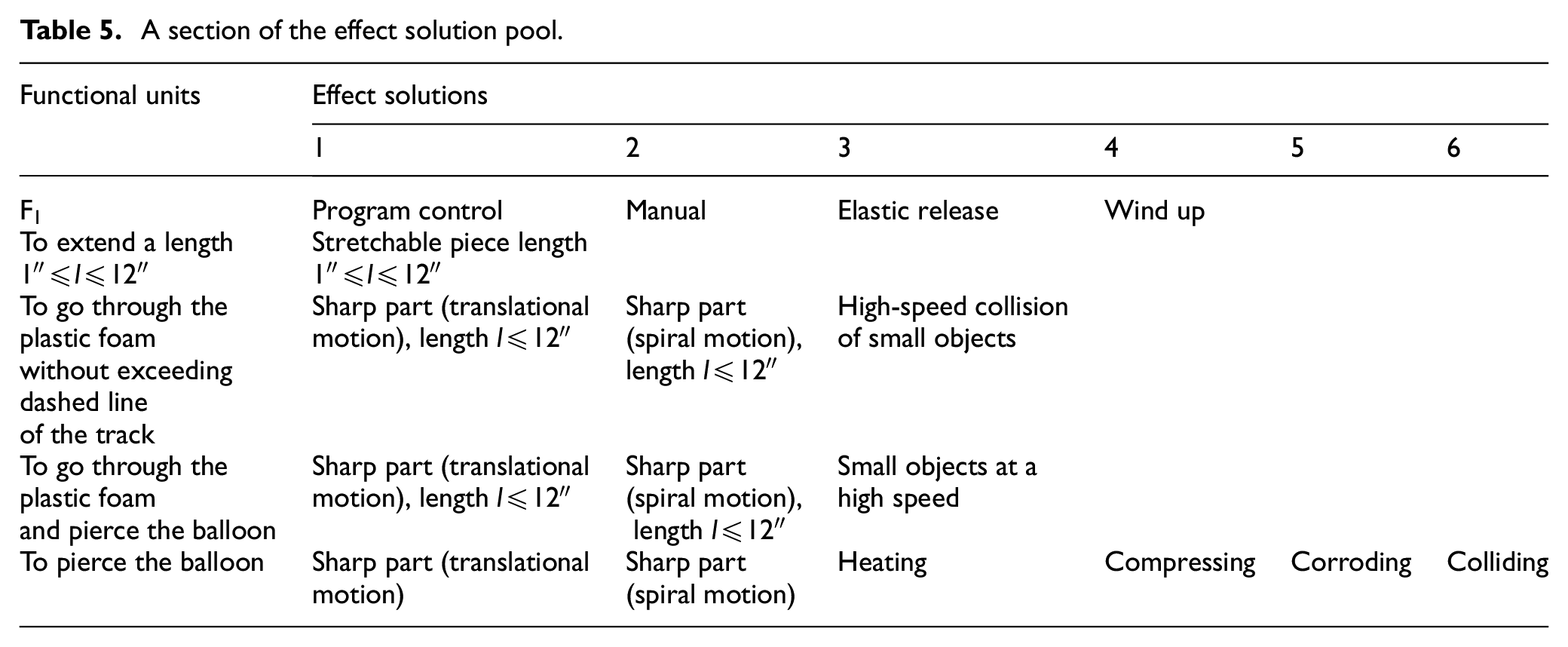
According to functional units obtained in step (3) that comply with objective laws, corresponding effect solutions were obtained, and a section of the effect solution pool was proposed in Table 5.
A section of the effect solution pool.
5. Translation process
Based on the effect solutions obtained in step (4), the corresponding structure schemes mapping with function elements were found as shown in Table 6.
A section of a structure scheme library.
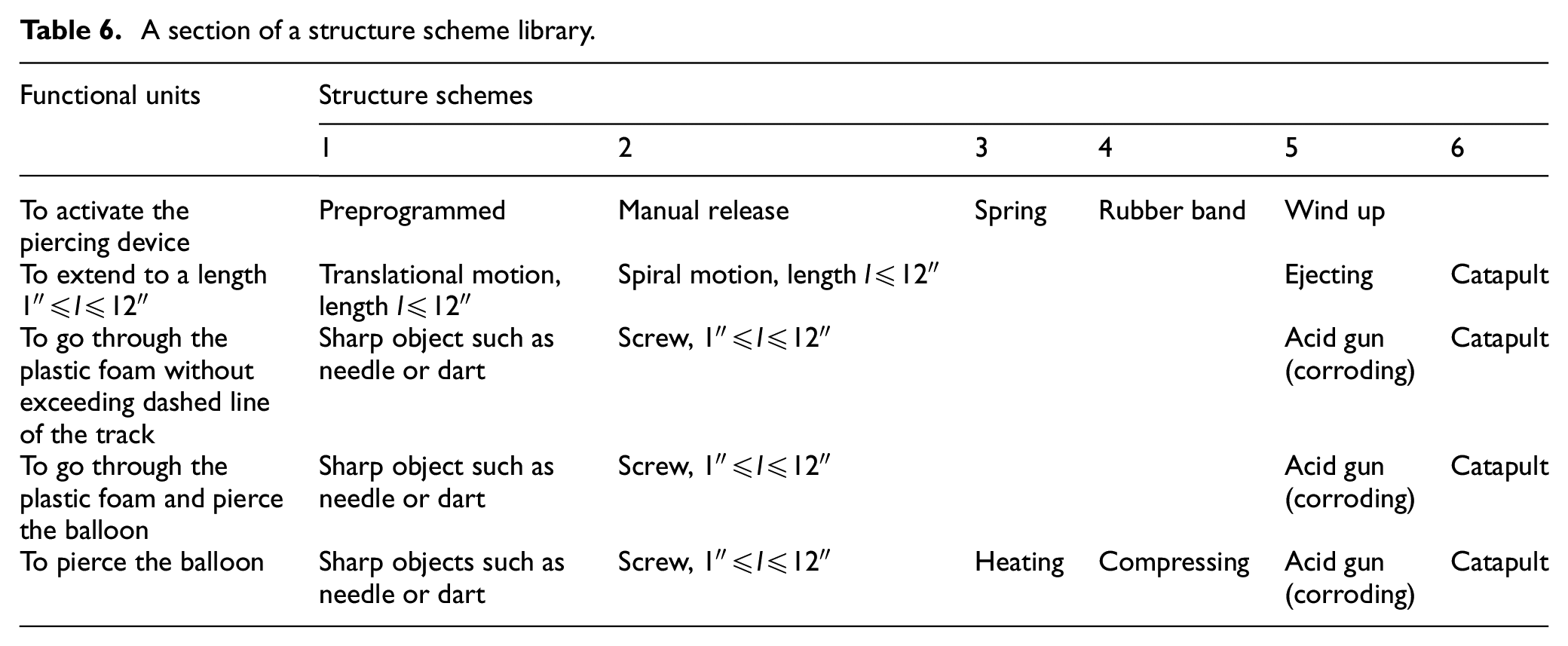
Table 6 lists the main function elements that the piercing device needs to meet. Among them, the last three function units could be summarized as “To go through the plastic foam and pierce the balloon.” Therefore, a total of three function elements need to be implemented, including “To activate the piercing device,”“To extend to a length
Combination schemes.

6. Optimization of structure schemes.
Taking safety, cost, and efficiency as evaluation standards, structure schemes got in step (5) were optimized. Suppose security, cost, and efficiency are respectively,
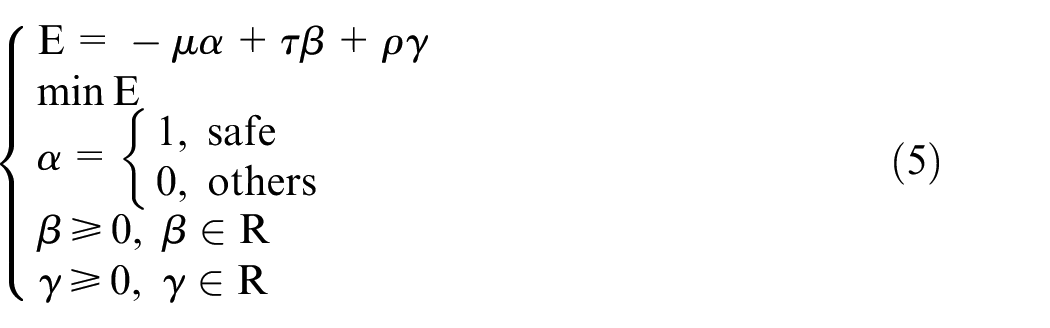
According to importance to this design, the values of
Data of structure schemes.
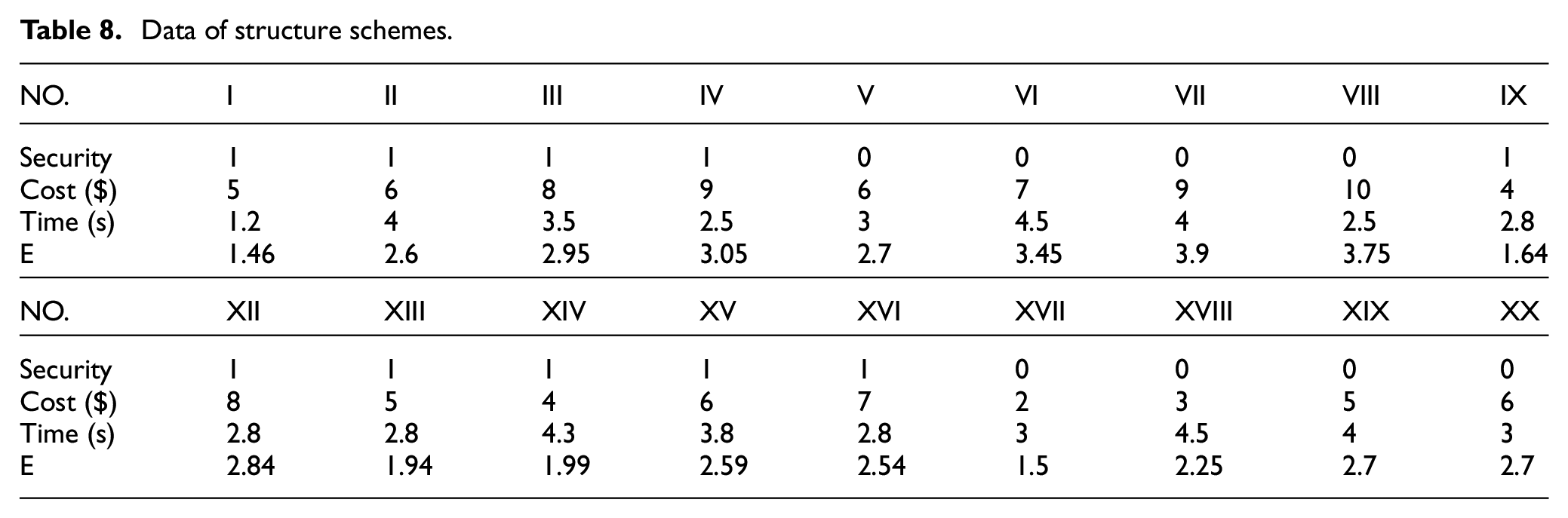
Calculated results shows that
Similarly, other parts can also be obtained through this method. Owing to space limitation, the generation process of other parts is not present in this article. After assembling structure schemes of the parts and optimization process, a structural scheme of the toy car could be obtained. The schematic diagram for it is shown as Figure 9.
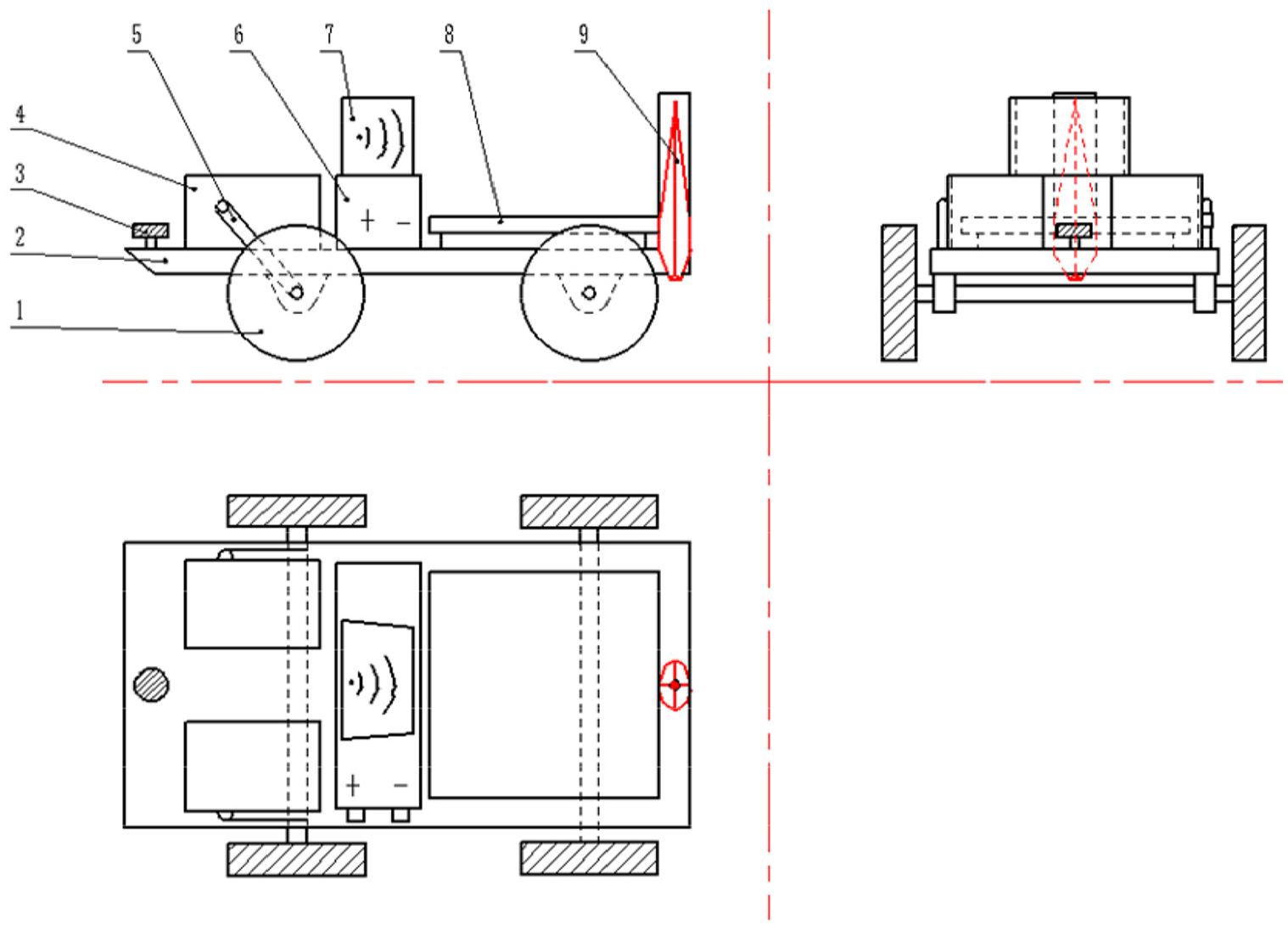
Schematic diagram of structural scheme of the toy car.
Case analysis
A conceptual design method driven by product genes is used for piercing device of a toy car to obtain a scheme with quick piercing, a high level of safety, and low cost. This method has two advantages over the existing methods.
1. The concept of product genes proposed in this article is more comprehensive than existing product gene concepts.
In this article, an FBAS function model was first put forward to analyze key influential factors of conceptual design process. Analogous to bio-genetic engineering process, a product gene concept composed of behaviors and attributes was extracted from the FBAS model. Attributes here only refers to PAs and GAs that support function units and limit the geometry of structure schemes. Behaviors here are deduced from PAs. Compared to existing product gene concept that consists of behaviors and attributes, in which one function unit usually corresponding to one behavior, such as, 27 the concept proposed in this article is more comprehensive. Besides, this definition has identified what the attributes are. Furthermore, these attributes are only relative to the design product itself, which will be simpler than that relative to both the design product and environment.
2. Compared to conventional conceptual design methods, advantages of the solution obtained through the method proposed in this article mainly include two aspects.
i. Reduce blindness to innovation and improve the reuse of design knowledge.
This is a common advantage of genetics-based methods. Gene-engineering techniques have been used to develop a bionic design theory and methodology for product innovation. It innovates products via artificial differentiation of virtual chromosomes (or genes) of products, which is totally different from conventional methods. First, it provides a logically structured procedure analogous to bio-genetic engineering technology. More importantly, virtual chromosomes or genes are used as key information to drive design process.6,7,27 Perhaps, some conventional methods also could present a logically structured procedure to drive design process, but the design information they used are not essential information of products. Thus, the innovative design based on this information has blindness. Besides, the feasibility of design solutions obtained is hard to guarantee, if the solutions still does not meet the design requirements, this common information will not be used in the next design. Thus, the reuse of knowledge is low in conventional design. The method proposed in this article uses products’ essential information to drive conceptual design process, the solutions obtained are more likely to meet design requirements. This will reduce blindness to innovation and also improve the reuse of design knowledge.
ii. Structure schemes obtained through the proposed method are more feasible.
In this article, the initial population of genes is derived from the FBAS model. Since the FBAS model consists of key factors influencing conceptual design process, the derived product genes are vital to the conceptual design process and to functional requirements. Compared with conceptual design methods with searching design knowledge, structure schemes obtained through the proposed method will be more feasible because they are developed according to essential information of products. Furthermore, the crossover technology of product genes provides more innovative possibilities for functions and structure schemes. Besides, this method could avoid local optimum because the final product scheme is evaluated from all feasible solutions.
In order to illustrate the superiority of the proposed method, the Spearman correlation coefficient (SCC) has been used to compare the feasibility of the scheme obtained by the proposed method with the feasibility of the scheme obtained by Autrey et al., 36 as shown in Figure 10. In a study by Autrey et al., 36 a cognitive design method combined with morphological chart was used to develop concepts of the toy car. In the reference, five “moving forward” surveys were carried out using SCC 37 of Concept feasibility–evaluated concepts. The generated concepts and their corresponding SCCs have been shown in Figure 10. Similarly, five experiments have been done, the corresponding SCCs of concept feasibility–develop concepts and concept feasibility–evaluated concepts have been calculated, and the results have been shown in Figure 10. It suggested that the moving forward between concept feasibility and develop concepts, concept feasibility and evaluated concepts in this article are larger than that in the reference on average. Furthermore, the lowest and the largest SCC corresponding to concept feasibility–develop concepts and concept feasibility–develop concepts in this article are larger than that in the reference.
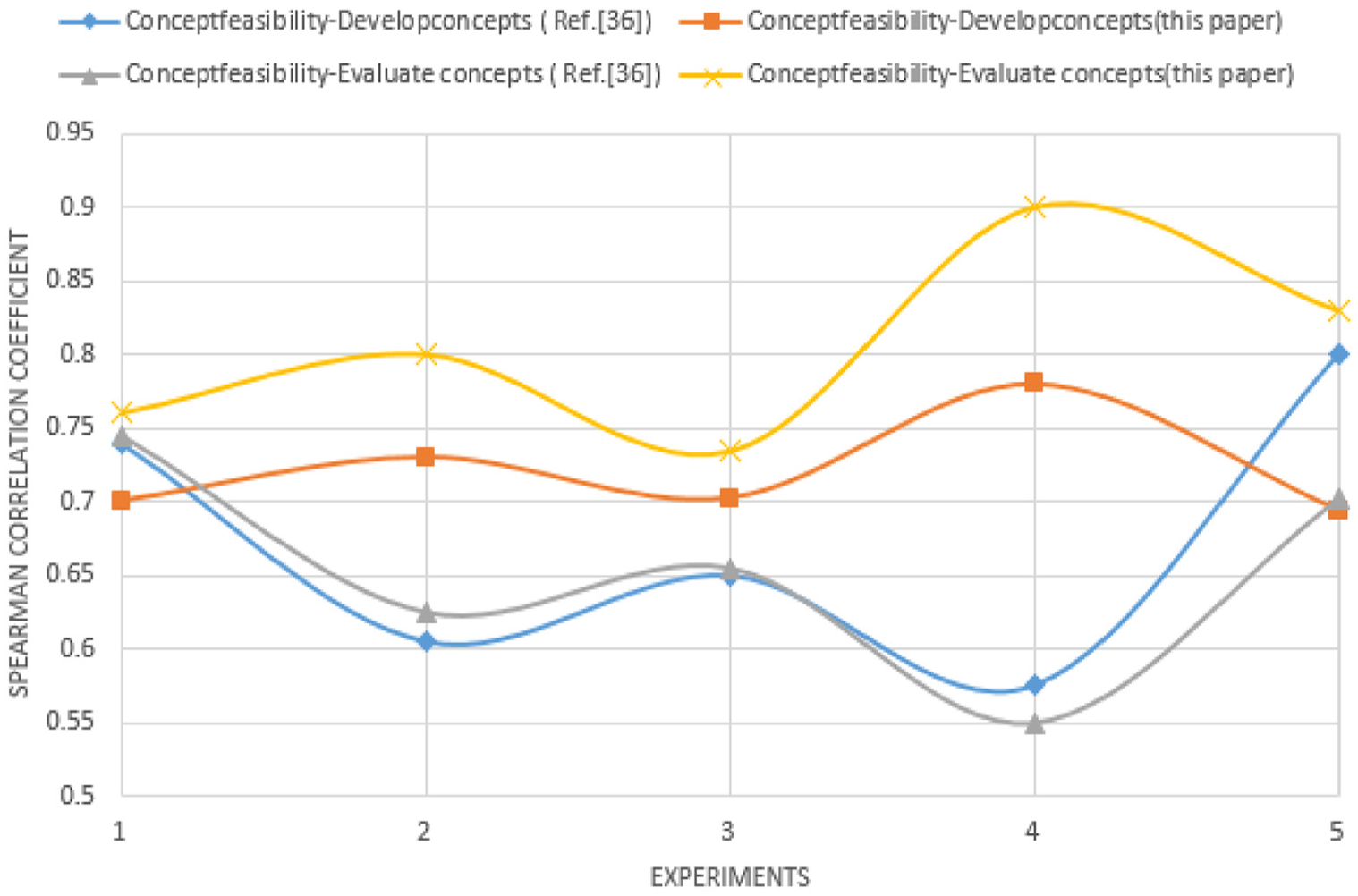
Comparison between the proposed method and the cognitive design method presented by Mendenhall et al. 37
GBD methods could increase the solution space than cognitive methods.7,27 Furthermore, the crossover technology proposed in this article has increased the possibility of feasible concepts. Piantadosi et al. 38 stated that the SCC indicates the relative direction of two objects. If it is positive, one object will increase as the other one increases and decrease as the other one decreases. In Figure 10, every SCC is positive and the average SCC of concept feasibility–develop concepts and concept feasibility–evaluated concepts are larger than that in the reference. This means that the feasibility of concepts obtained in this article is more relevant to the obtained develop concepts and evaluated concepts. Therefore, the average concept feasibility in this article will increase faster than that in the reference when the number of the develop concepts and evaluated concepts increase and decrease faster as they decrease. As the number of concepts obtained in this article is larger than that in the reference, the average feasibility of the develop concepts and evaluated concepts obtained in this article is larger than that in the reference. Besides, in the reference, the feasibility of the concepts generated by students may be low because students have not enough experiences in design, and the design information they choose perhaps not very useful to the design. However, concepts generated in this article are obtained according to key information to products and to conceptual design process. Therefore, the feasibility of concepts generated in this article is larger than that in the reference.
In addition, as the proposed method carrying out with identified key design information–product genes and the feasibility of the obtained structure schemes is improved, the time for searching useful information will shorten and the iteration times will be lesser. Therefore, the conceptual design cycle will shorten and the total cost will be reduced.
Conclusion
Enlightened by bio-genetics, this article presents a conceptual design method driven by product genes in the engineering field. A new function-expression model, FBAS model, has been proposed to describe key influential information in conceptual design stage. Based on it, a concept of product genes, composed of behaviors, vital physical and GAs, is extracted and a model is established. Likened to bio-genetic engineering, an encoding method of product genes is put forward and then corresponding operative techniques of product genes was proposed like breakdown, crossover, and recombination. Finally, a conceptual design method driven by product genes is proposed. As an example, product genes of a toy car are analyzed and a final structure scheme was presented. This example shows that the method proposed in this article has solved the problems of identifying what information is the genetic information and how to use it in a product design process. From managerial insights, the proposed method has captured products’ essential information to drive conceptual design process. In this way, the blindness to innovation, the design time, and cost will be reduced. This is very important to improve the competitiveness of enterprises. The idea and the proposed method of this article can be extended to other fields, such as materials, energy, and aerospace.
In future, researchers will explore how to obtain product genes from product information and how to use them to support the entire design cycle.
Footnotes
Appendix 1
Acknowledgements
The authors would like to thank the anonymous reviewers for their valuable comments on this paper. The authors acknowledge the financial supports from the National Ministries (grant no. JCKY2016602B007) and the National Natural Science Foundation of China (grant no. NSFC 51375049).
Declaration of conflicting interests
The author(s) declared no potential conflicts of interest with respect to the research, authorship, and/or publication of this article.
Funding
The author(s) received no financial support for the research, authorship, and/or publication of this article.